



Two strand twists with Bantu knots do something plain twists never quite manage: they give a bob shape, a little lift, and a reason for the eye to keep moving. On short hair, that matters. A chin-length or jaw-length cut can look sharp on its own, but add a few knots at the crown or hairline and the whole style starts to feel deliberate instead of random.
The nice part is that this combo works with texture, not against it. Two-strand twists keep the length neat and stretched, while Bantu knots break up the silhouette so the style doesn’t fall flat against the head. On bob cuts, that balance is the whole game. Too much bulk, and the style turns boxy. Too little structure, and it loses shape by the middle of the day.
There’s also a practical side people don’t talk about enough. Short natural hair can be fussy when you want it to look styled, because every parting line and every puff shows. Clean sections, a little tension at the roots, and the right knot placement make a bigger difference than another layer of product ever will. That’s why the best versions of this style look crisp at the scalp and soft at the ends.
These ten looks lean on the same ingredients, but they play very different roles. Some use the knots as the star. Some use them as a frame. A few keep the twists chunky and the knots tiny, which is a trick I always like on bob-length hair because it keeps the shape from getting heavy.
1. Two Strand Twists With a Deep Side Part and Crown Knots
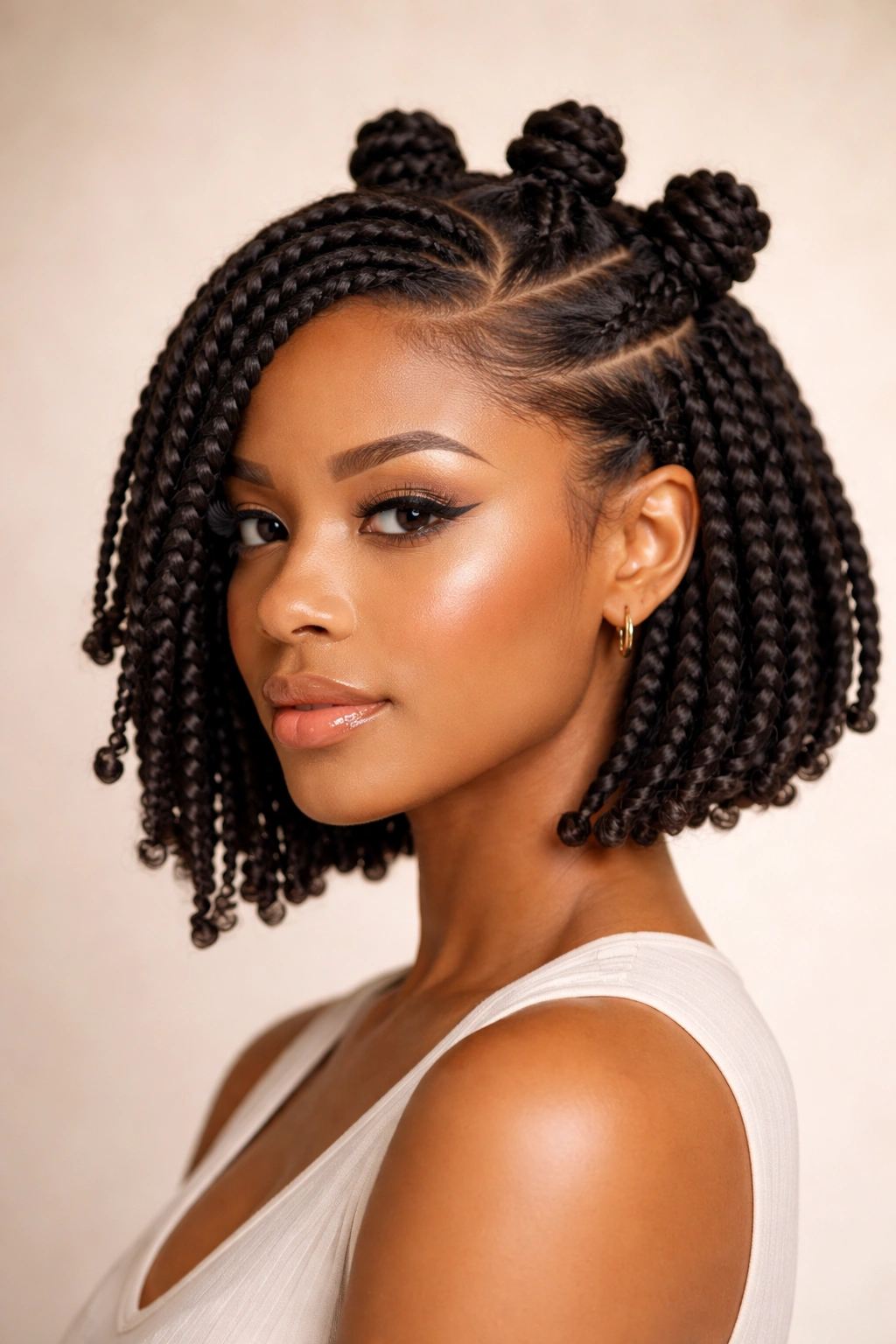
A deep side part changes everything. Shift the front line of a bob just a little, and the whole cut stops reading as plain and starts reading as styled on purpose. Add three Bantu knots near the crown, and the top gets lift without needing a bunch of teasing or extra hair.
Why this shape works on a bob
The side part pulls the eye diagonally, which is useful on short hair because diagonal lines make the style feel longer. The crown knots sit where the head naturally curves, so they add height right where a bob can sometimes go flat. I like this one on jaw-length hair most, because the ends still swing a little.
Keep the twists medium-sized, about half an inch to three-quarters of an inch per section. That keeps the style neat without making the scalp look crowded. Place the knots about one inch behind the hairline, not right on it, or the front can look too tight.
Quick details to get right
- Use a deep side part from the arch of one brow toward the opposite temple.
- Make the first knot slightly larger than the others so the crown has a focal point.
- Twist the remaining sections straight down so the bob keeps its line.
- Smooth the roots with a pea-size amount of edge control only where needed.
- Set the twists with mousse and let them dry fully before touching them.
Tip: If your hair is dense, don’t crowd the knots together. Space them out by about three-quarters of an inch so the crown still breathes.
2. Center-Part Mini Twists With a Knot Halo
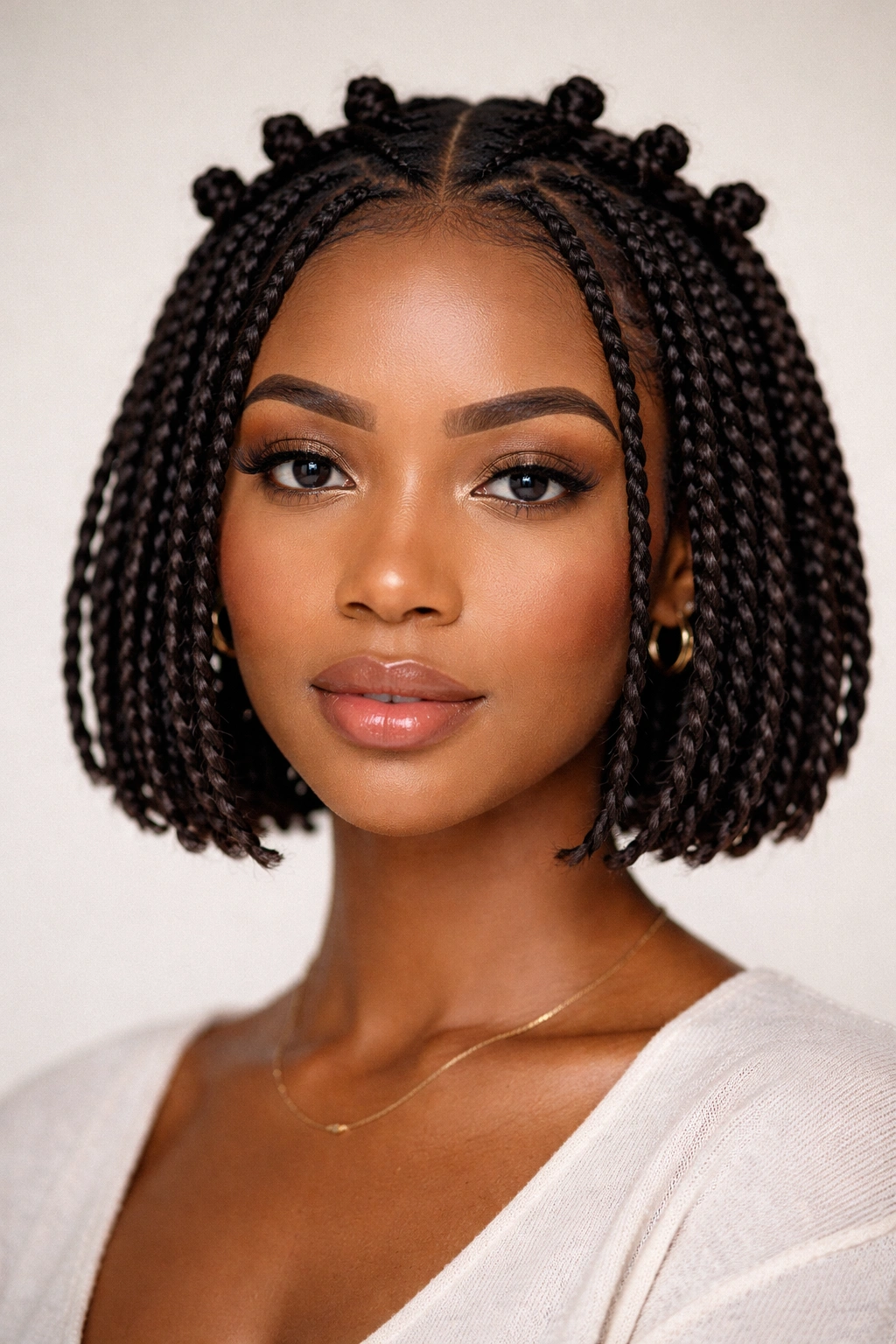
Why does a center part look so good with tiny Bantu knots? Because symmetry is unforgiving in the best way. If the sections are clean, the style looks crisp. If they aren’t, you’ll see it fast. That honesty is what makes this version so satisfying on a bob.
Mini twists keep the length close to the head, which gives the knot halo room to stand out without the style turning bulky. I like this on shorter bobs, especially when the hair ends at the jaw or just below it. The halo can sit along the front edge, around the temples, or just across the upper crown. Any of those choices works, but the front-line halo is the one that really frames the face.
The trick is section size. Go too big and the knots lose their tidy look. Go too small and you spend forever twisting. A 3/8-inch section is a sweet spot for most people, especially if the hair has a tight curl pattern.
How to keep the halo even
Use the mirror before you start the first twist. Seriously. Check both sides from the front and the side, because a center part can drift faster than you think. Once the part is set, keep the knots the same distance from the hairline on both sides.
This style looks best when the twists are finished with a soft hold foam, not a stiff gel cast. You want the knot edges neat, not crunchy. And if your roots puff easily, tie a satin scarf around the front for 10 to 15 minutes after styling. That little pause saves a lot of frustration later.
3. Asymmetrical Twists With One Temple Knot
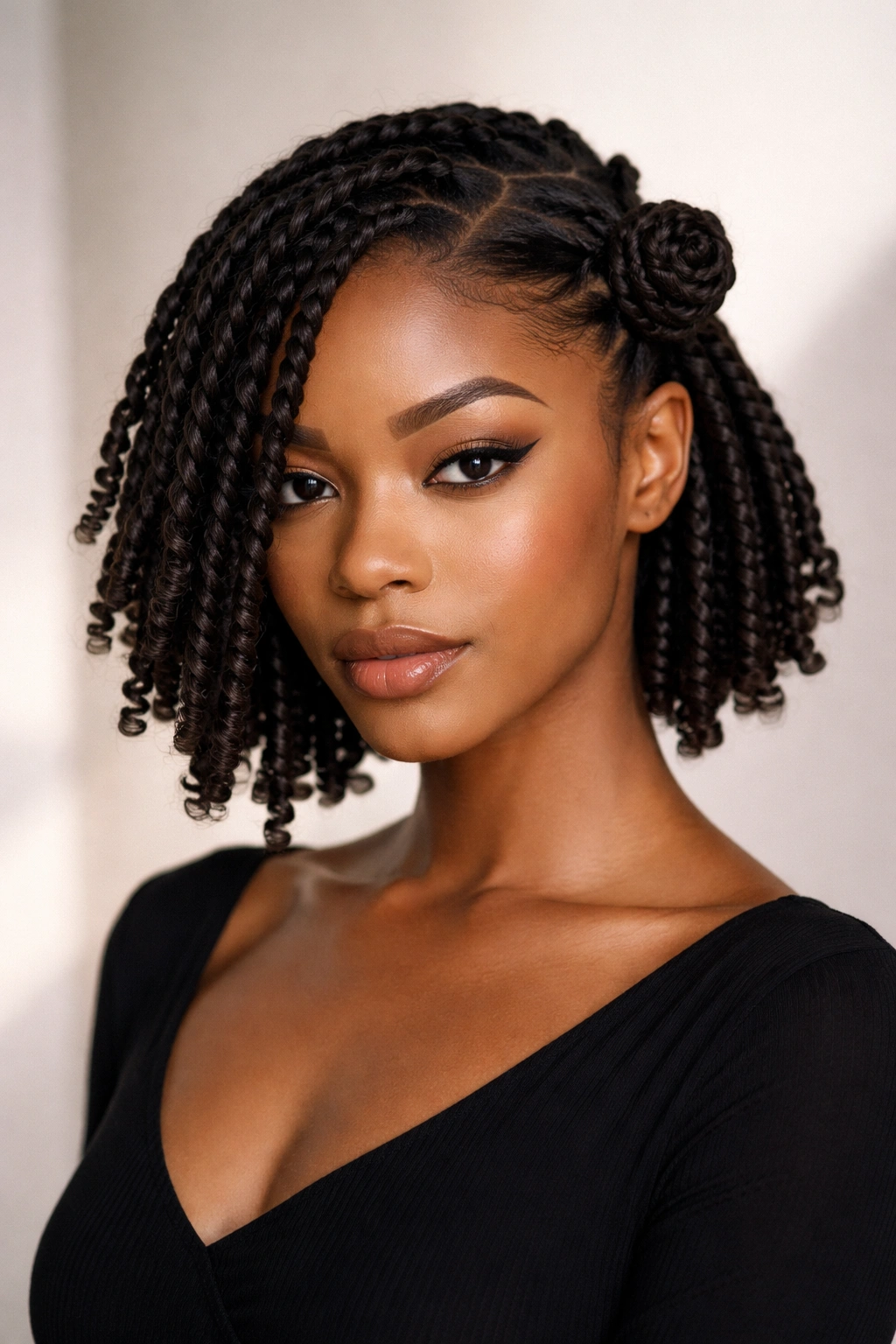
If one side of your bob always flips out more than the other, stop fighting it. Build the style around that imbalance instead. A single temple knot on the fuller side gives the look a focal point, and the shorter side can stay all twists, which makes the whole thing feel sharp instead of lopsided.
This one has a nice edge to it. Not loud. Just pointed. The asymmetry works because the eye lands on the knot first, then follows the twist pattern down the longer side. On a bob, that creates a little drama without needing extra length.
What makes it different
- Put the part slightly off center, about 1 to 1½ inches from the middle.
- Form the knot above the temple, not at the crown.
- Keep the twists on the opposite side slightly longer so they skim the cheek.
- Let one or two front twists hang looser near the jaw to soften the line.
- Use a light oil on the ends only, not the roots.
The style is especially handy if your bob has layers. Those layers can be a headache in uniform styles, but here they help the shape look intentional. A single knot gives the short side a visual anchor, and that’s enough.
Best for: people who like a little attitude in their hair without going full statement piece. It reads clean, not fussy.
4. Two Strand Twists With a Half-Up Knot Crown
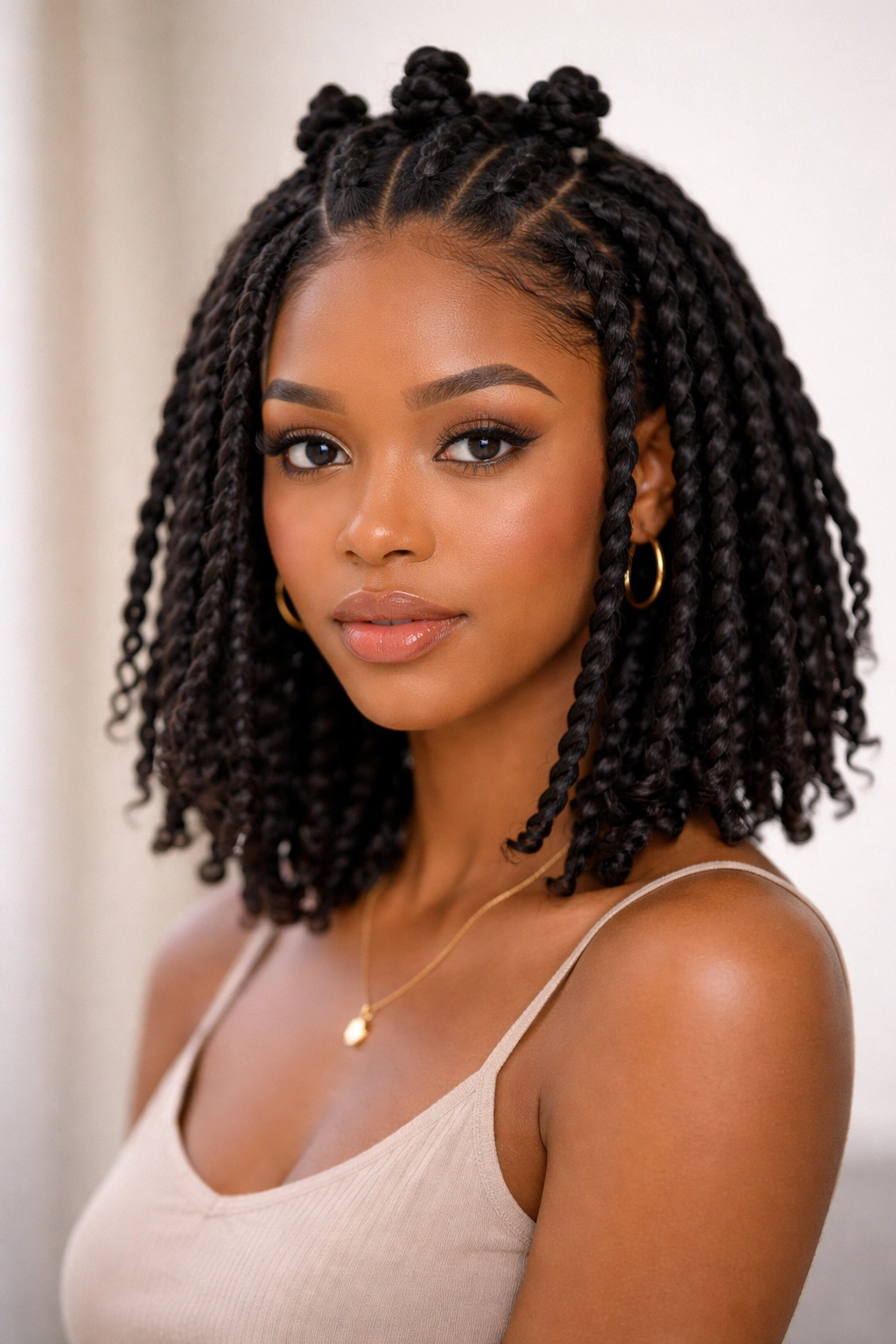
Half-up styles can go wrong on short hair fast. They can look squeezed, pinched, or like the top section is fighting the bottom. This version avoids that mess by keeping the knot crown small and the lower twists loose enough to hang with some movement.
The crown is where the work happens. Pull the top third of the hair up, twist it back, and wrap those twists into three to five small Bantu knots across the upper head. Leave the lower section alone so the bob keeps its weight at the bottom. That contrast is what makes it interesting.
I like this style for days when you want the hair off the face but still want the cut to show. It shows the neck, keeps the front tidy, and still lets the bob do its thing. The knots also add a little height, which helps if the cut sits close to the jaw.
A simple way to keep it balanced
Use an ear-to-ear parting line to separate the top section. Clip the bottom away first. Then twist the top with just enough tension to stay smooth at the roots. When you wrap the knots, keep them flat against the head instead of stacking them upward. That keeps the crown from becoming lumpy.
A half-up knot crown looks best when the lower twists are slightly thicker than the top ones. That difference gives the eye a place to rest. And if you want a softer finish, leave two thin face-framing twists out at the front. They keep the style from feeling too strict.
5. Chunky Twists With Scattered Mini Knots
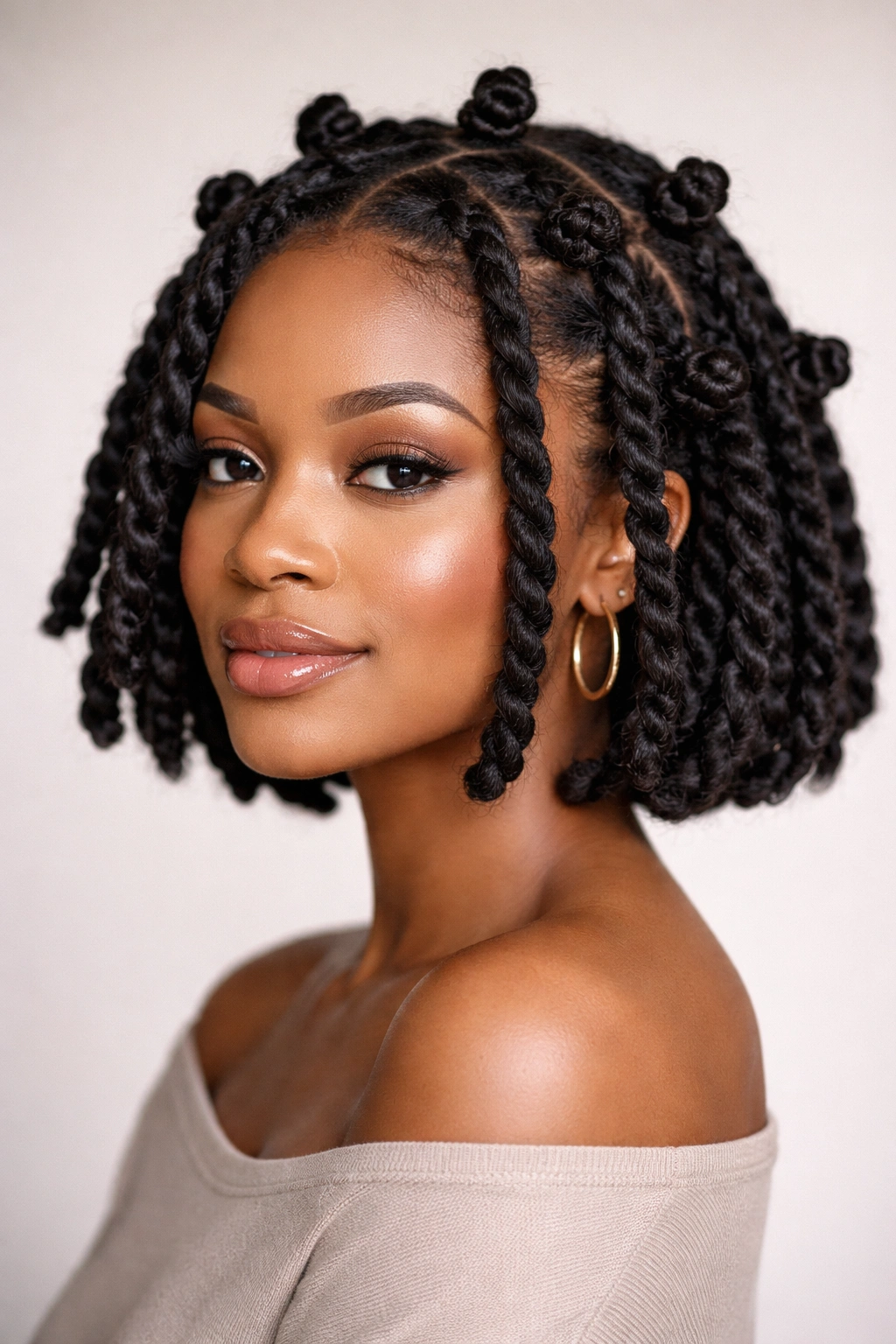
Chunky twists and tiny knots is one of those combinations that sounds odd until you see it on a bob. Then it makes perfect sense. The bigger twists give weight and texture. The smaller knots break up that weight so the style doesn’t look heavy or square.
This is the one I reach for when the hair is thick and naturally full. Smaller twist patterns can make dense hair look busy fast, but chunky sections calm it down. The mini knots, spaced here and there, stop the style from becoming one solid block of texture. It’s a good balance, and on short hair balance matters more than perfection.
Spacing is everything.
If you place the knots too close together, the top loses shape. If you scatter them too far apart, they stop reading as part of the style. Aim for one knot every 2 to 3 twists, and keep them near the perimeter where the eye naturally lands. That gives the bob a little rhythm without making it crowded.
The other advantage is wearability. Chunky twists dry faster than tiny ones, and they’re easier to refresh with a spritz bottle in the morning. A light mist, a few fingertip twists, and the style wakes back up. No drama. No need to start over.
For extra polish, twist the ends in the same direction on each side of the face. That tiny detail keeps the shape from getting messy when the hair starts to move.
6. Flat-Twisted Roots With Knotted Ends
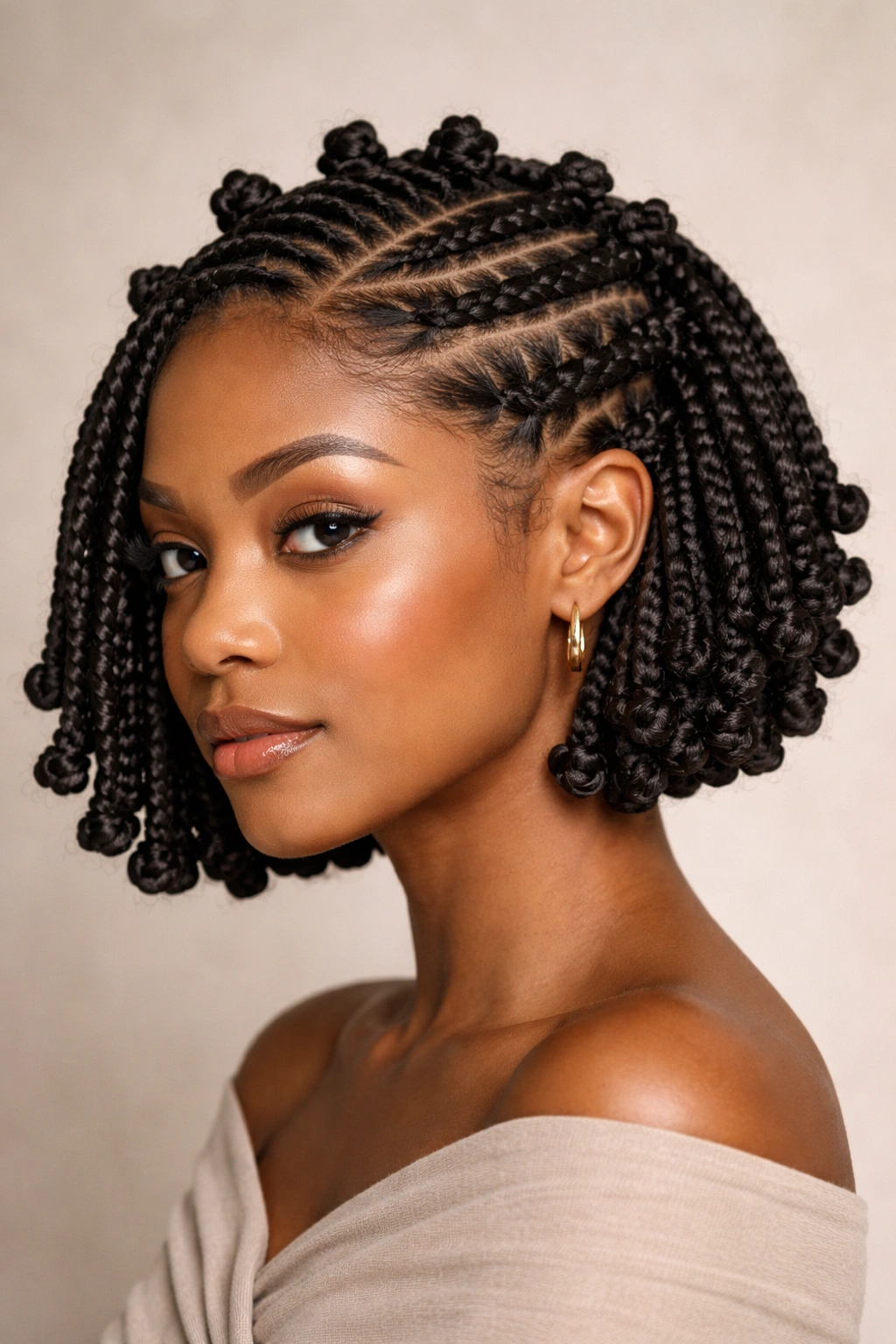
Unlike loose twists, flat-twisted roots keep the top of the head tidy from the start. That makes this style a strong choice for bob cuts that puff at the root or swell around the crown. The flat twist lays the hair close to the scalp, then the ends break away into little Bantu knots, so the finish feels structured without being stiff.
This style has a neat, almost architectural look. The scalp pattern is clean. The ends are playful. And because the knots sit lower, the whole cut keeps its bob shape instead of floating upward.
Why people with short hair like it
- It controls root puff on tight textures.
- It makes a short bob look longer at first glance.
- It keeps the front line smooth near the forehead and temples.
- It gives you more hold if your hair slips out of regular two-strand twists.
The best part is that it works on day-two hair too, as long as the roots are refreshed a little first. A mist of water, a little leave-in, and a dab of cream through the flat twist section usually does it. Don’t soak the hair. Damp is enough.
If you want the style to last, anchor each flat twist with a firm grip at the start and then ease off once you reach the mid-lengths. That helps the base stay clean while the ends stay soft. A tight root and a looser end are the whole point here.
7. Two Strand Twists With Beads and Knot Pockets
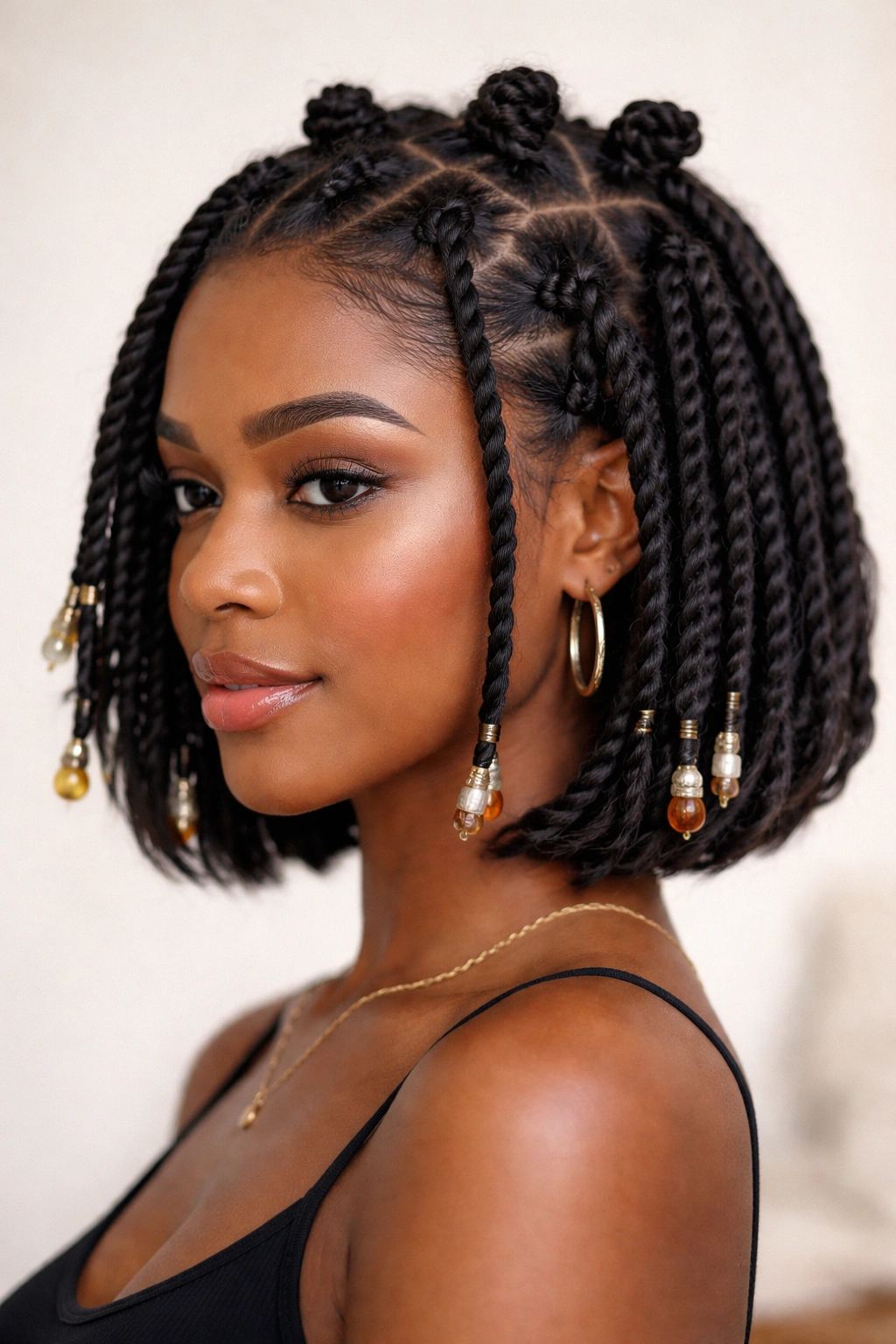
Beads and Bantu knots can look busy if you throw everything in at once. Keep the bead count low, and the style gets better. That’s the part people miss. One or two bead accents near the ends, paired with small knot pockets placed through the bob, gives texture without turning the hair into a craft project.
This version is good when you want movement. The beads click a little when you turn your head. The knots hold the shape in place. On short hair, that contrast is lively in a way that plain twists don’t always manage. I’d keep the beads on the outer twists only, not all over. Three or four beaded ends are enough.
The knots themselves should stay small and close to the surface. Think accent, not centerpiece. If the knots are too large, the beads stop mattering. If the beads are too many, the knots get lost. The style works because each piece gets a job.
A few things to watch
- Use lightweight beads so the twists do not pull at the roots.
- Put the heaviest bead only at the very end of a twist.
- Keep the knot pockets near the top and sides, where they can frame the face.
- Choose clear or wood beads if you want the look to stay soft.
This one can be fun on a side part, but it also works with a soft center part. Either way, the accessories should feel like punctuation, not clutter.
8. Two Strand Twists With a Side-Swept Knot Line
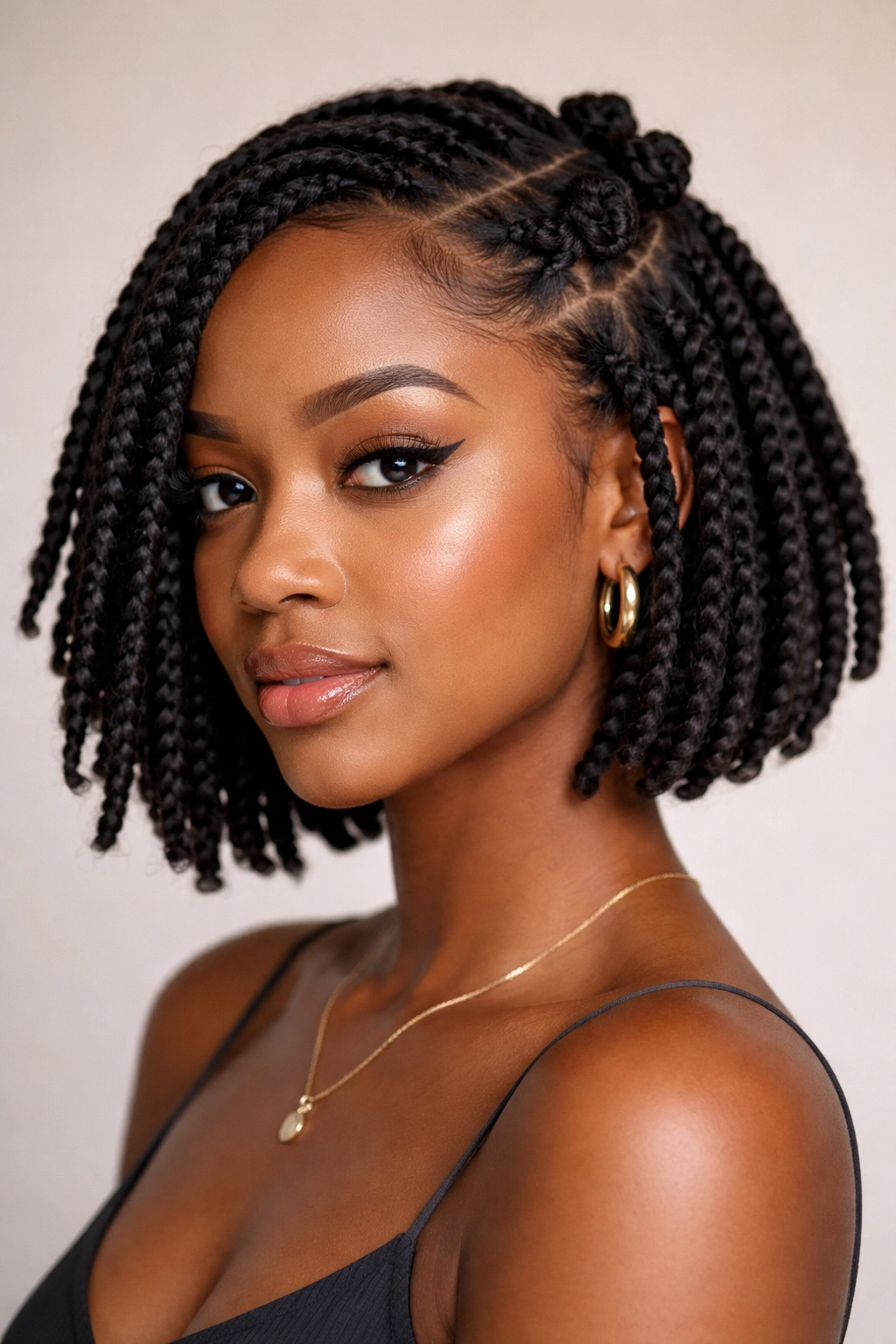
How do you keep a side-swept twist bob from looking like it just fell that way? Give it a line to follow. A diagonal part from one temple toward the opposite crown, plus two small knots along the sweep, makes the shape feel chosen instead of accidental.
The front of the style does most of the talking here. One side lies flatter, the other carries the curve. That means the twists need to be sectioned with care. If the front pieces are too thick, the sweep loses its bend. If they’re too thin, the style can look sparse around the face.
How to set the sweep
Start the part at the high point of one eyebrow and angle it back toward the opposite side of the crown. That line gives the bob a strong direction. Then twist the front sections back and slightly down so they follow the part instead of fighting it.
A good side-swept layout usually uses two knots near the hairline and keeps the rest of the twists hanging freely toward the jaw. That keeps the front interesting without crowding the face. If your hairline is delicate, leave a fine front edge out and smooth it later with a soft brush and a tiny bit of gel.
This style is one of the easiest to make look polished on a short cut. The reason is simple. The eye always finds the diagonal first, and diagonals are forgiving. They hide uneven shrinkage better than straight lines do. That alone makes the style worth a try.
9. Two Strand Twists With Low-Nape Bantu Knots
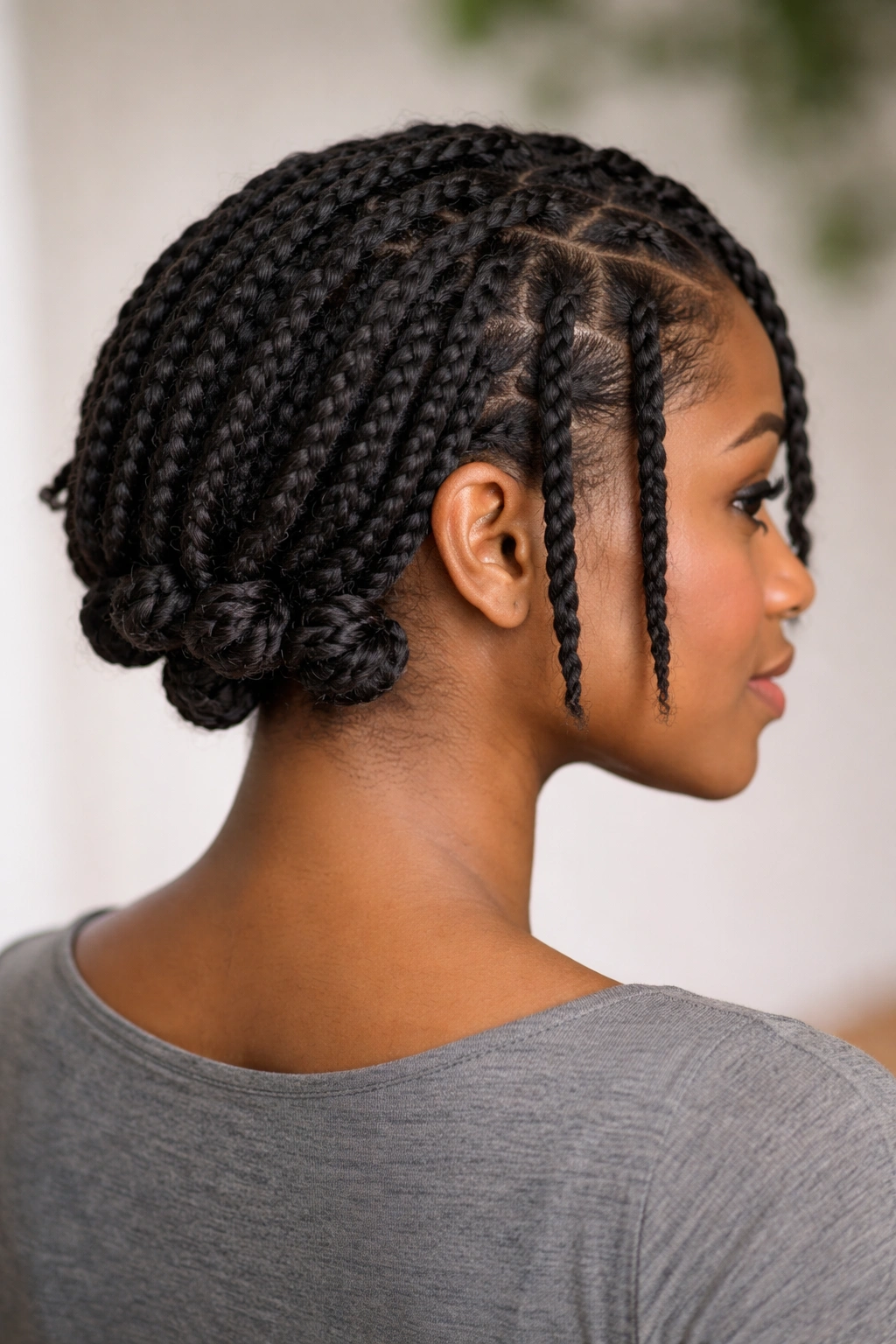
Not every twist bob needs to sit high or frame the face. Some of the nicest ones stay low, close to the nape, where the knots can tuck under a collar and the twists can swing just enough to move. This version feels calmer. More grounded. Less showy, which is probably why it wears so well.
I like this when the bob is slightly longer at the back. The low knots keep the shape from puffing upward, and the twists at the front still give face-framing texture. It’s a good fit for people who want a short style that doesn’t get in the way. The neck stays free, and the outline stays neat.
The low placement also helps if the hair is thick at the crown. Instead of stacking knots high and creating a lump, you keep the volume low and let the shape travel downward. That gives the bob a smoother line from top to bottom.
A practical setup
- Part the hair into horizontal rows so the nape stays controlled.
- Make the lowest knots small and flat.
- Leave the upper twists slightly longer so the shape falls naturally.
- Pin any loose ends under the knots if the hair is slippery.
- Use satin at night, because the nape area rubs first.
This is a strong choice for work, travel, or any day when you want hair that behaves. It’s not flashy. It does not need to be. The clean nape and low knot line carry the style on their own.
10. Two Strand Twists With Tiny Front Knots
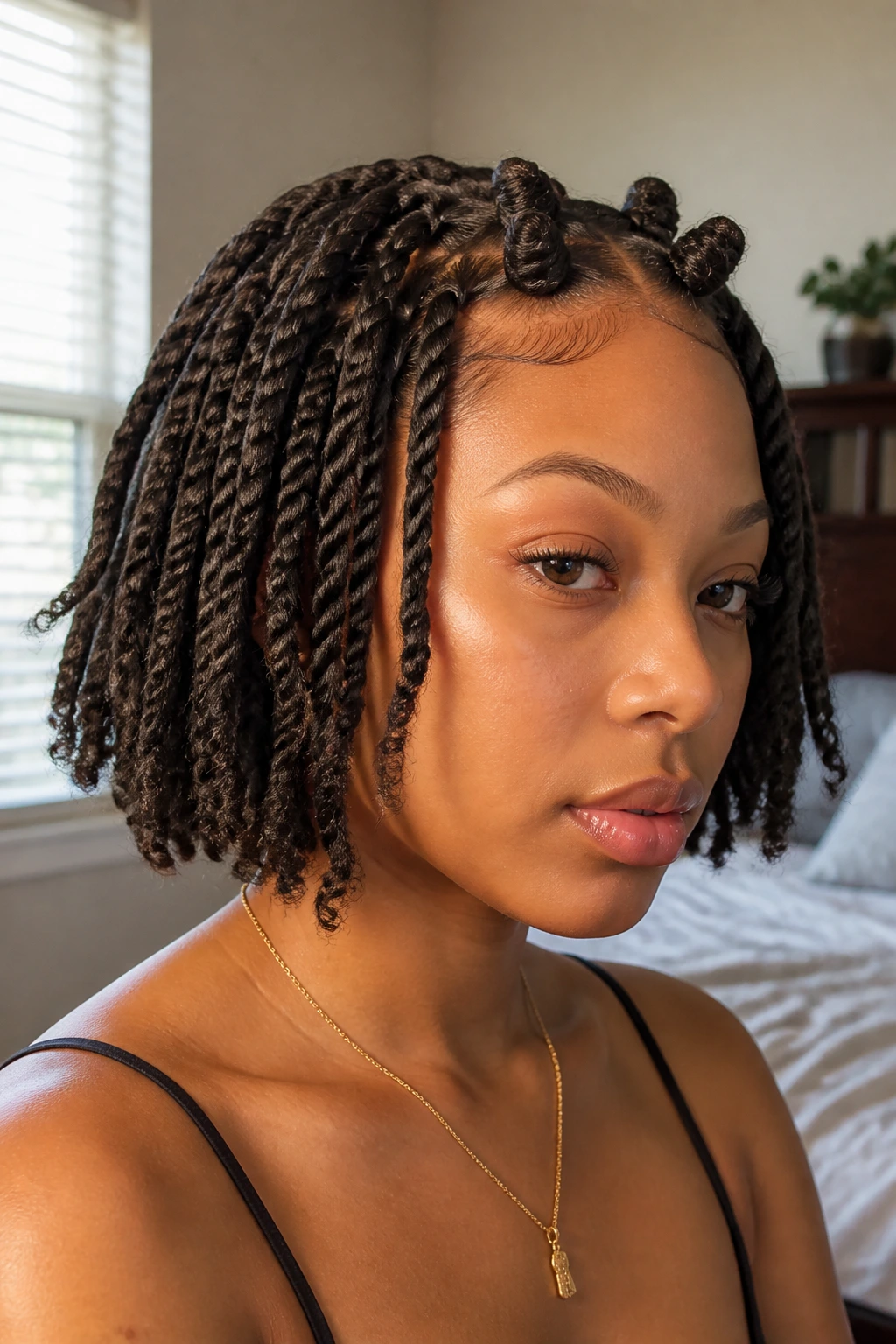
Tiny front knots do a lot of the talking on short hair. They sit right where people look first, and they give the bob a little expression without taking over the whole cut. The rest of the twists can stay simple, which is part of the charm. You don’t need every section to compete.
This version is especially good if your bob has a soft fringe or shorter front pieces. The tiny knots can live just above the brow line or near the temples, where they frame the face without blocking it. Keep them small enough that they read as detail, not bulk. A knot that takes up more than about an inch of width starts to overpower the front on shorter cuts.
The rest of the hair should stay clean and easy. Medium two-strand twists, slightly stretched ends, and a smooth root line are enough. If the front knots are doing their job, the back does not need to overwork.
One thing I like here is the contrast between the knots and the movement at the ends. The front is tight and focused. The sides and back can sway a little. That difference makes the style feel lived-in, not stiff.
If you want to keep the finish soft, don’t line the front knots up in a perfect row. Offset them by half an inch. That tiny mismatch keeps the look from feeling too rigid, and short hair usually looks better with a little looseness anyway.
