
A round face does not need to be hidden. It needs a cut with a little direction. That’s why the best bob cuts for round faces usually have one thing in common: they create lines that pull the eye up, down, or diagonally instead of letting it sit right on the cheeks.
A blunt shape at chin level can make a face feel wider. A cut that falls a little lower, has a side part, or opens up around the face tends to do the opposite. The difference is often only an inch or two, which sounds small until you see it in the mirror.
I keep coming back to the same practical idea: if the hair ends exactly where the face is fullest, the cut can fight you. If the shape drops below that point, or breaks it up with angle and movement, the whole face looks longer and leaner. That is the game here.
So let’s get into the cuts that do that well, from sharp and sleek to soft and lived-in.
1. Angled Lob for Round Faces That Follows the Jaw
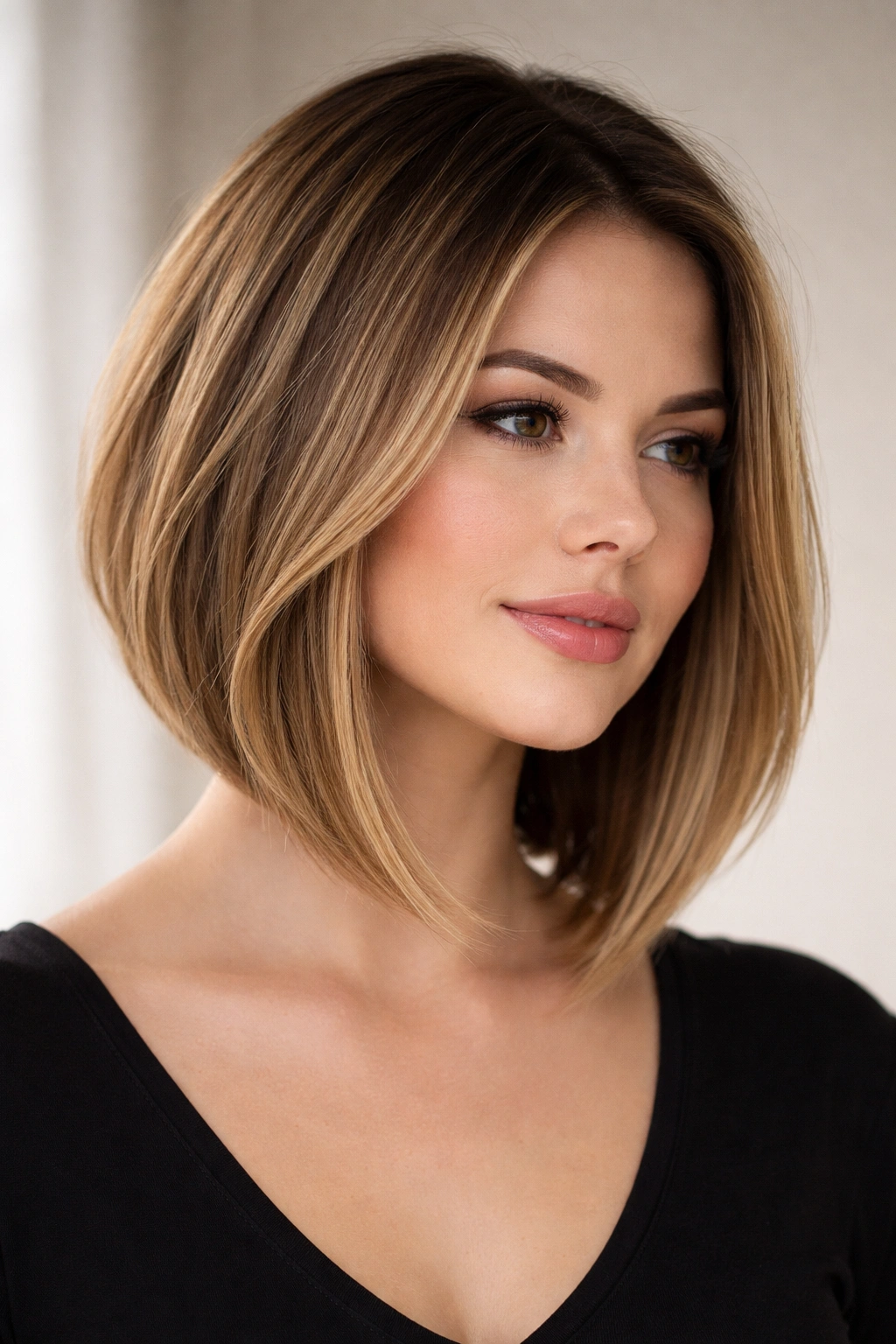
An angled lob is one of the safest bets for a round face, and I mean that in the best way. The front pieces sit longer than the back, so the eye moves along a diagonal instead of stopping at one wide horizontal line. That diagonal is doing real work.
The cut looks even better when the front lands a little below the chin, not right on it. If the longest pieces brush the collarbone, the face gets a longer frame and the jaw looks less broad. A slightly shorter back keeps the shape lifted without making the sides puff out.
What Makes It Work
The angle creates movement before the hair even moves. That matters. A face can look softer or narrower just because the shape has a clear direction.
- Ask for at least 1 to 2 inches of extra length in the front.
- Keep the back shorter, but not stacked into a hard shelf.
- Style it with a side part or soft off-center part for more length.
- Blow-dry the front pieces forward first, then flip them back with a round brush.
Best tip: tell your stylist you want the front to skim the jaw, not sit right on top of it.
2. Chin-Length Bob With a Deep Side Part
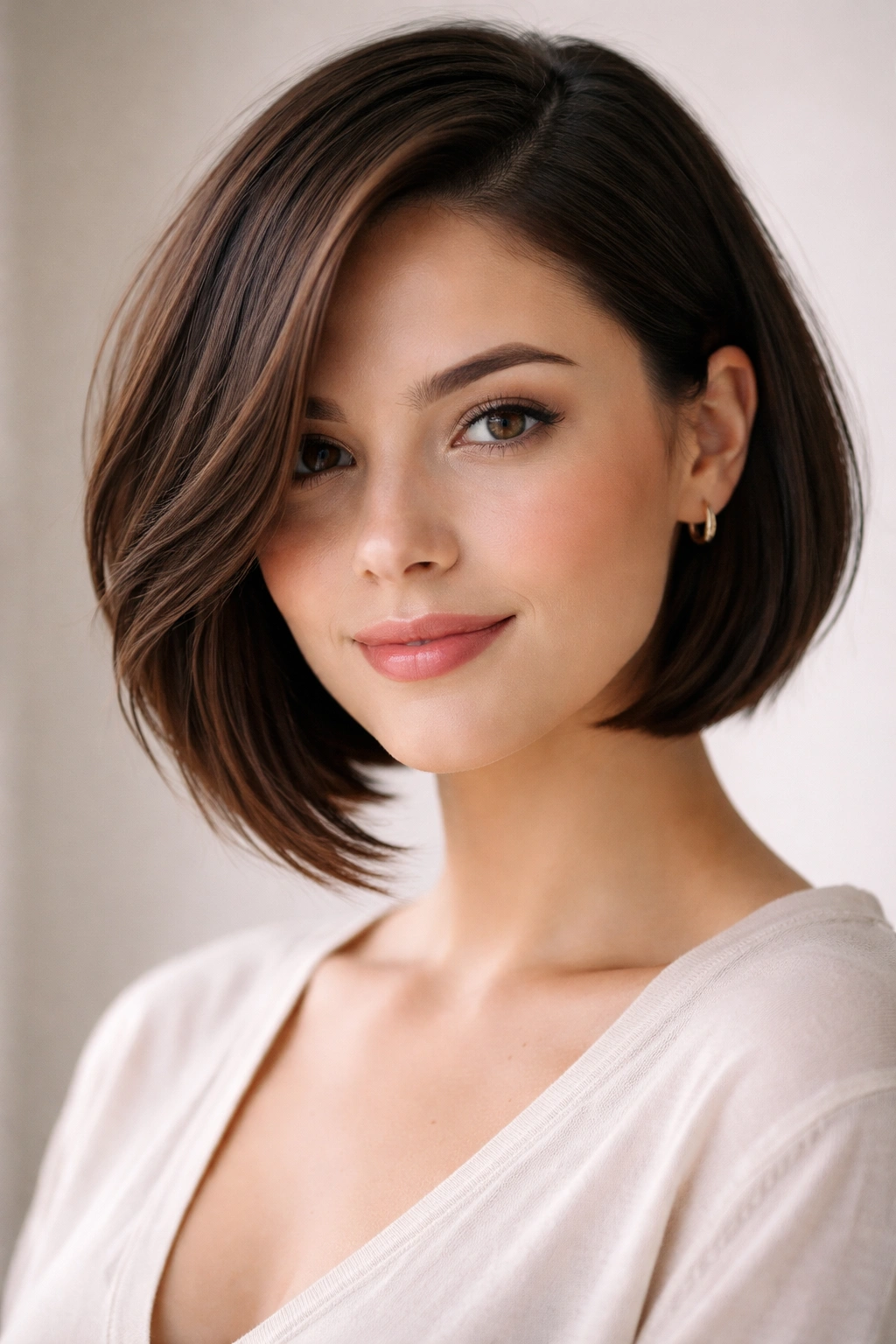
A chin-length bob can work on a round face, but only if it has some attitude. A dead-center part with equal sides can make the face feel very circular. A deep side part changes the whole thing. It breaks the symmetry and sends one side of the hair across the forehead, which lengthens the face fast.
This cut looks clean and crisp when the line sits at the chin, but the part is doing the slimming. The hair on one side can tuck behind the ear while the other side falls forward a little more. That tiny difference makes the face look less wide and gives you a more sculpted shape.
The bluntest version of this cut is not the point. The point is control. If the ends are too heavy and the part is too neat, the bob can start to feel boxy. A little bend at the ends helps. So does a subtle side sweep around the forehead.
I like this cut most on straight or slightly wavy hair, where the line stays clean. If your hair poofs at the sides, ask for the ends to be softened just enough to move instead of flare.
3. Asymmetrical Bob With One Longer Side
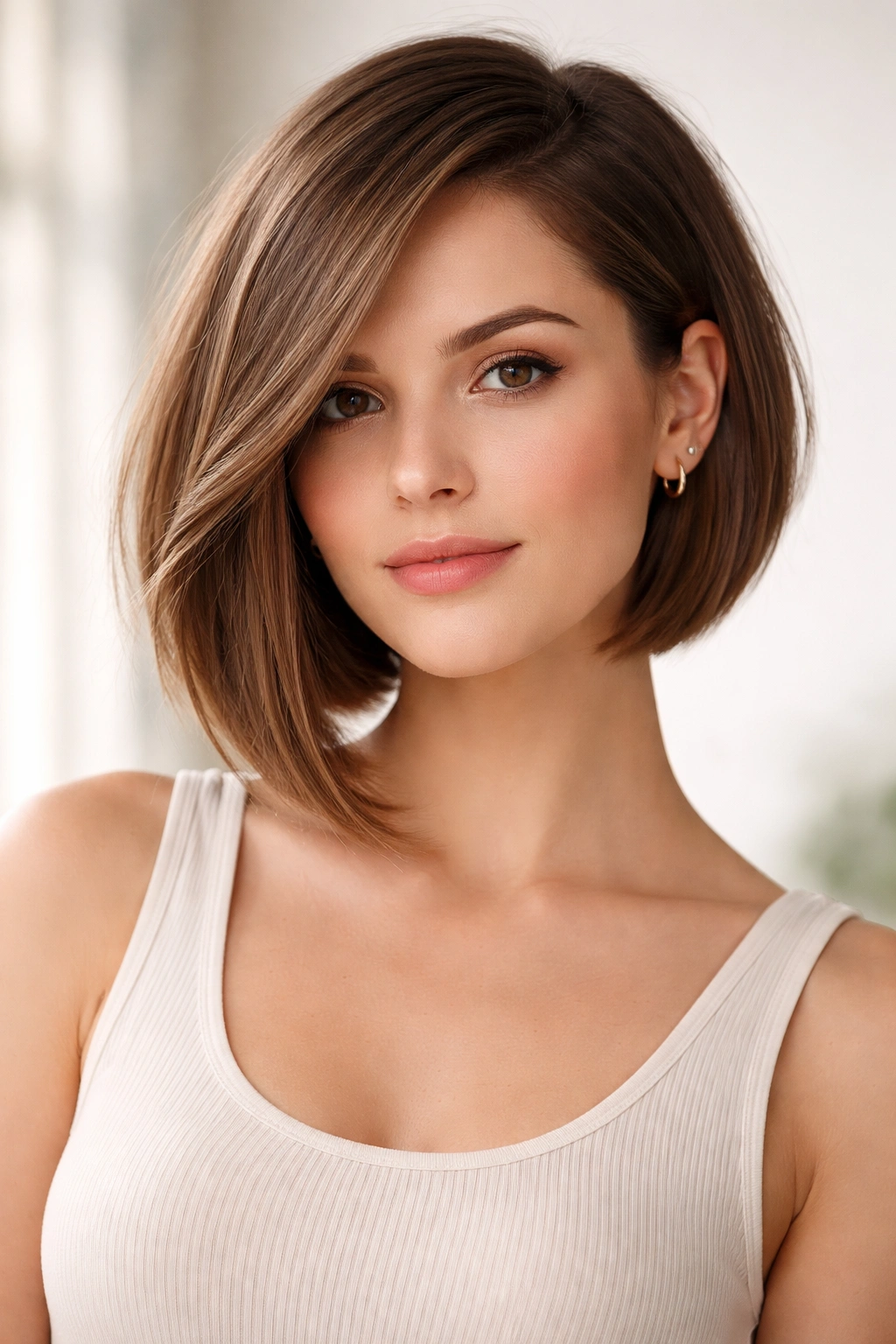
Why does asymmetry flatter a round face so well? Because the eye keeps traveling. A perfectly even cut can sit there and announce the width of the face. One longer side changes the rhythm and makes the face feel a little longer, a little sharper, and a little less predictable.
Why the Shape Works
The longer side does two things at once. It creates a vertical line down one cheek, and it breaks up the widest part of the face with movement. That’s why a subtle asymmetrical bob usually looks better than a dramatic one that screams for attention. You want quiet structure, not costume drama.
The shorter side should still graze the jaw or sit just above it. If it gets too short, the face can look rounder, not slimmer. The longer side can fall to the top of the neck or even the collarbone, depending on how much contrast you want.
What to Ask For
- Keep the difference soft, not severe.
- Ask for the shorter side to be slightly tucked under.
- Let the longer side fall in a clean line without too many choppy pieces.
- Wear it with a side part for the strongest lengthening effect.
One more thing. If your hair is thick, this cut needs interior weight removal or it can balloon out on the fuller side.
4. Textured Bob With Piecey Ends
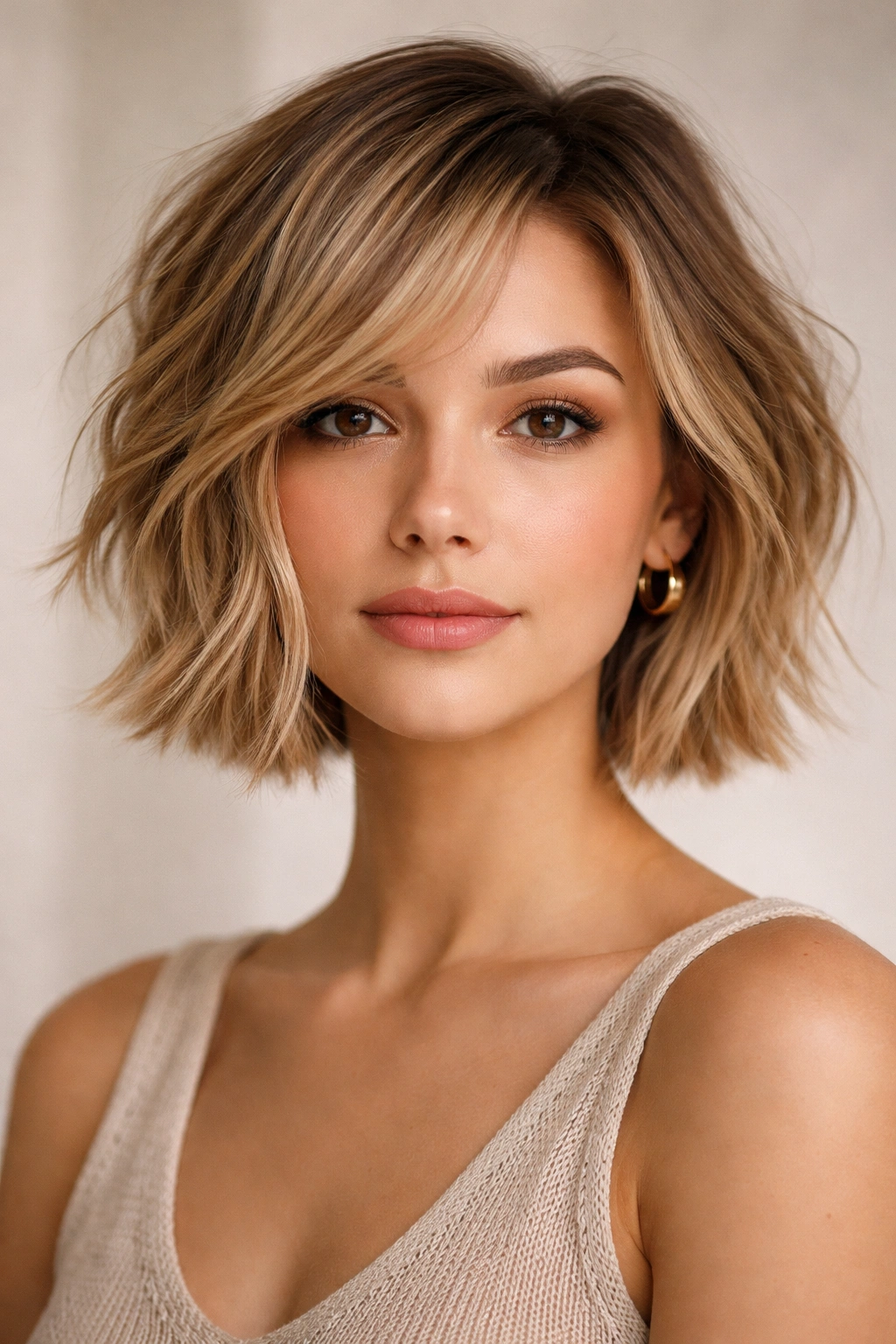
A textured bob can be a gift for a round face, but only if the texture is placed with some common sense. Random fluff is not flattering. Piecey ends, on the other hand, break up the outline of the face and stop the cut from looking heavy at the sides.
The best version feels light through the perimeter and a little roughed up through the ends. That makes the bob move around the cheeks instead of sitting in one solid block. I’d call this the anti-helmet bob, and that’s a compliment.
What to Watch For
Heavy, blunt ends can widen the face. Sharp little pieces at the jawline can do the same if they stick straight out. The better approach is soft texture with a slightly uneven finish.
- Ask for point cutting or light razor work, not a jagged chop.
- Keep the length a little below the chin if your cheeks are very full.
- Use a small amount of mousse or styling cream, then scrunch and air-dry.
- Finish with a flat iron bend, not pin-straight stiffness.
One good rule: texture should look intentional, not frayed.
5. Inverted Bob With Lift at the Crown
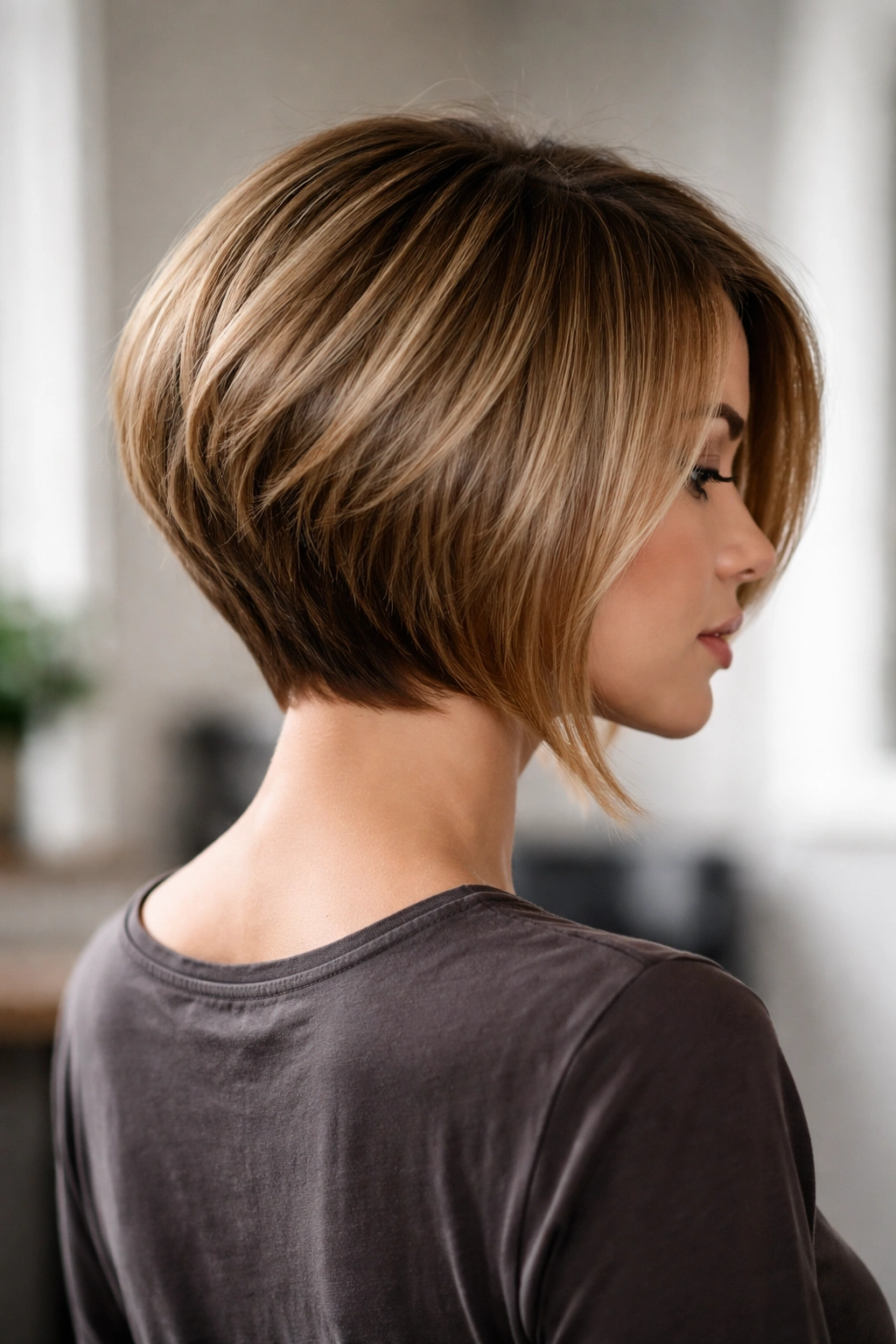
The inverted bob is one of those cuts that looks more technical than it feels. Shorter in back, longer in front, it gives the crown some lift and the sides some direction. On a round face, that extra height at the back matters because it adds a vertical line where the eye starts.
A lot of people think this cut is all about the angle in front. It isn’t. The rear shape is the real engine. A little graduation at the nape gives the head more lift, and lifted hair makes the face seem longer. That’s plain physics, not magic.
This style works especially well if your hair falls flat at the roots. Fine hair gets a boost from the stacked back. Medium hair gets structure. Thick hair can handle the shape if the stylist removes bulk inside the back so it doesn’t look bulky or dated.
The catch is over-stacking. Too much height in back can look stiff. I prefer a softer version with a smooth curve, not a hard pyramid. The front should still skim below the jaw so the face has room.
6. Layered Lob With Face-Framing Pieces
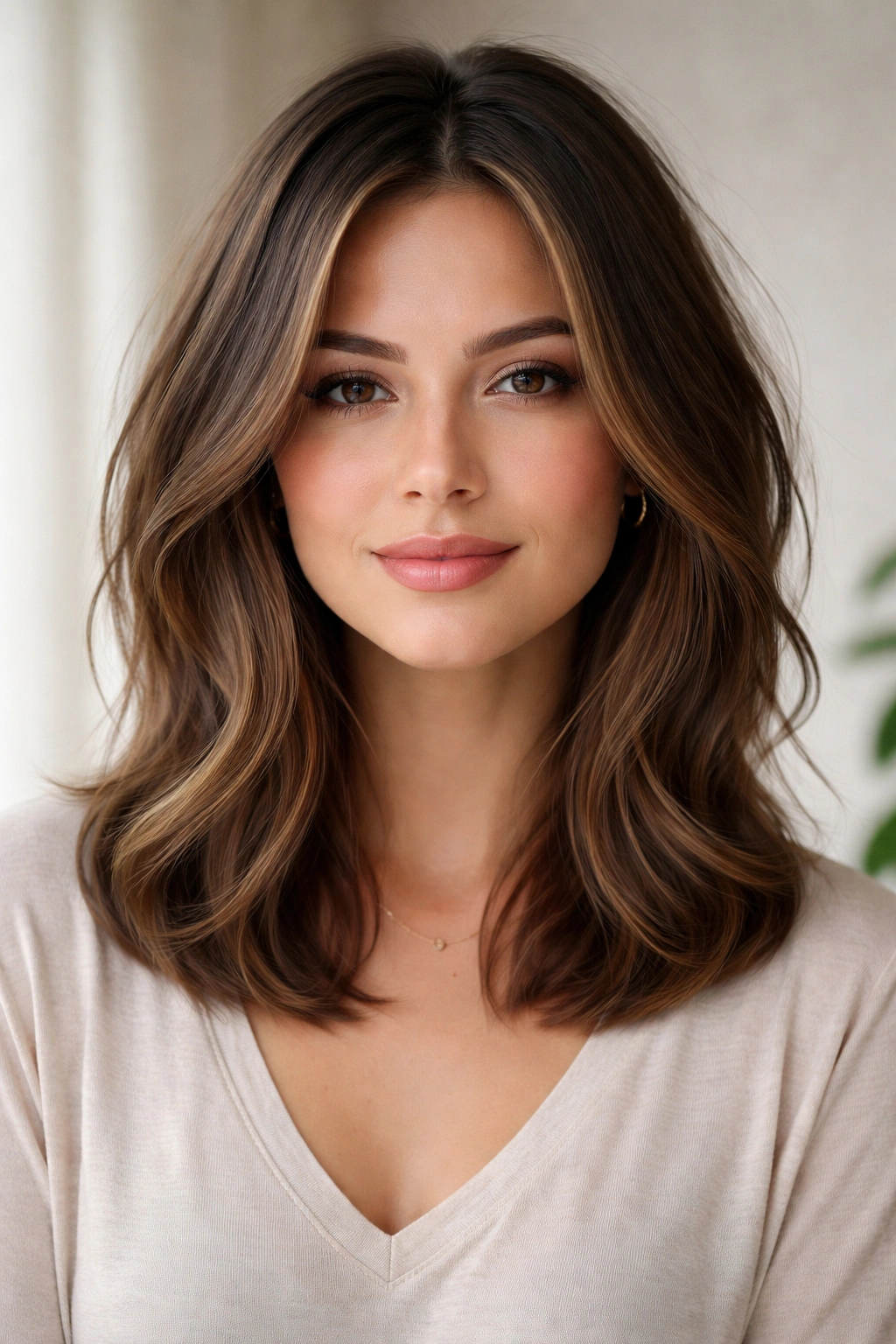
If you like a little softness around the face, this is a smart place to land. A layered lob keeps the length long enough to stretch the face, while the face-framing pieces give shape without boxing in the cheeks. It’s less severe than a blunt lob and easier to live with when you want movement.
Unlike a one-length cut, a layered lob doesn’t sit as one flat wall. The layers make the hair separate a little as it falls, which keeps the sides from looking too wide. That matters on a round face because width is the thing you’re always trying to manage.
Where the Layers Should Start
The first face-framing layer should usually begin below the cheekbone or near the upper lip, not right at the fullest part of the cheek. That small shift changes the whole effect. The line opens the face instead of outlining it.
This cut is a good match for wavy hair, because the shape stays loose and natural. Straight hair can wear it too, but you’ll want a slight bend in the front so the layers don’t go limp and sit flat against the face.
If you want one bob that feels easy on most mornings, this is a strong pick.
7. Blunt Bob Sitting Just Below the Jaw
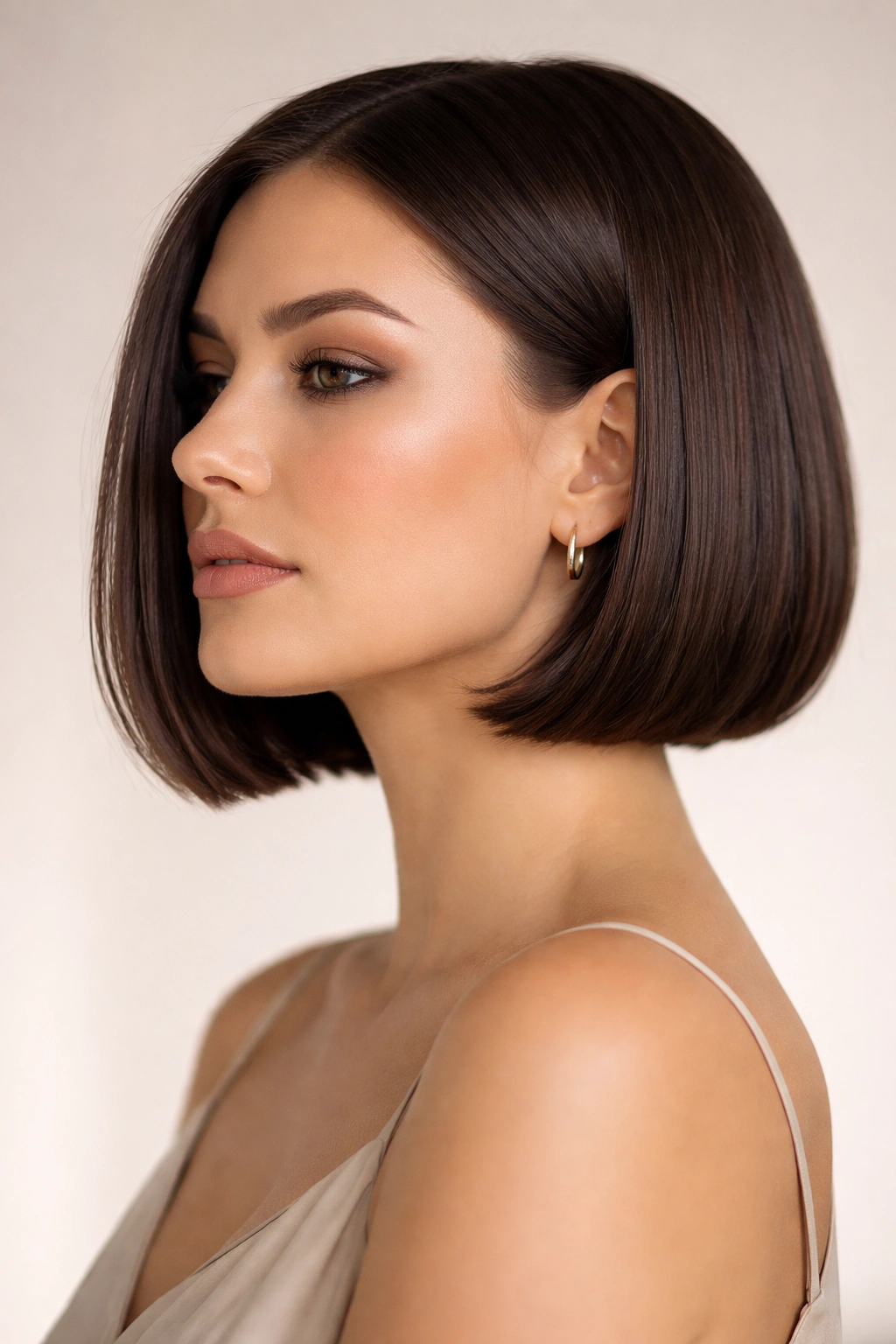
Blunt cuts get blamed a lot on round faces, and sometimes that blame is fair. A blunt line at jaw level can make the face look wider. But drop that same line just below the jaw, and the whole story changes. The extra length gives the face a little vertical room.
That’s the part many people miss. It’s not the bluntness that causes trouble. It’s the location. A crisp edge a touch below the jaw can look elegant, clean, and surprisingly slimming because the hair creates a straight frame under the widest point of the face.
This works best when the front is not too thick. A heavy curtain of hair at cheek level can flatten the whole effect. A clean center part can work if the hair is sleek and the length is right, but a soft side part often gives a better shape.
I like this cut on hair that naturally falls smooth. It can also be good for someone who likes polish and does not want a lot of layers. Just keep the line under the jaw, or the bob gets bossy in a bad way.
8. Lob With Curtain Bangs
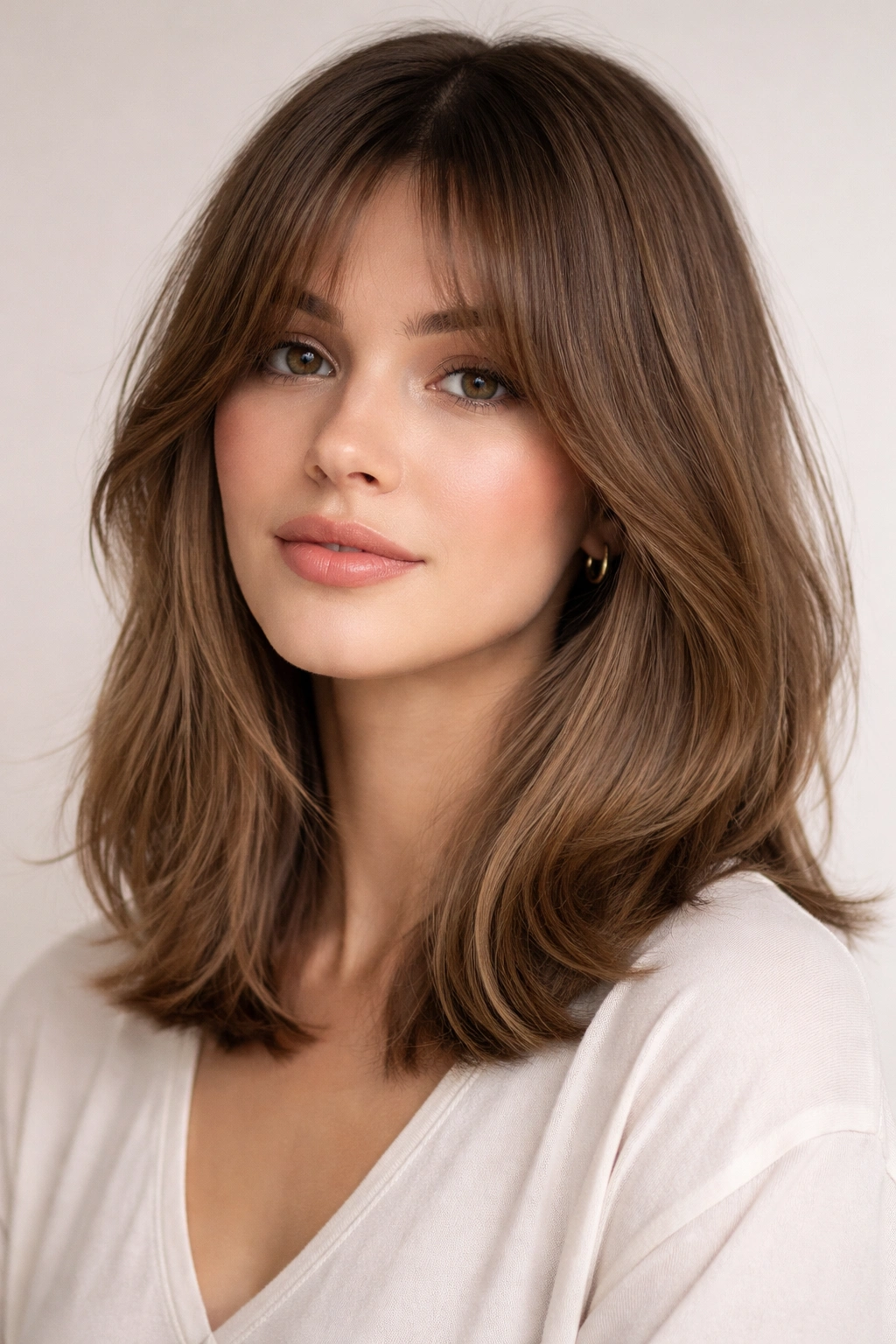
Can bangs work on a round face? Absolutely. The wrong bangs can make the face look shorter and wider. Curtain bangs do the opposite when they’re cut properly. They open in the middle, sweep out toward the cheekbones, and create a vertical frame that pulls attention upward.
The magic is in the shape, not the fringe itself. A heavy, straight-across bang lands like a shelf. Curtain bangs move. They blend into the sides of the lob and soften the whole face without crowding it.
How to Style Them
A round face does well with curtain bangs that hit around the cheekbone or slightly below it. That length lets the hair fall away from the middle of the face instead of cutting it in half. Blow them with a round brush, pulling the center up and the sides out.
Keep the rest of the lob loose. If the lengths are too pin-straight and the bangs are too perfect, the cut can feel rigid. A small bend in the body of the hair keeps it from looking severe.
What Not to Do
- Don’t cut the bangs too short.
- Don’t let them sit flat and heavy.
- Don’t pair them with a bob that ends right at the widest part of the cheeks.
A soft curtain fringe can be flattering in a way that still feels easy, which is probably why it keeps showing up on people with round faces who want shape without fuss.
9. Stacked Bob With Subtle Back Volume
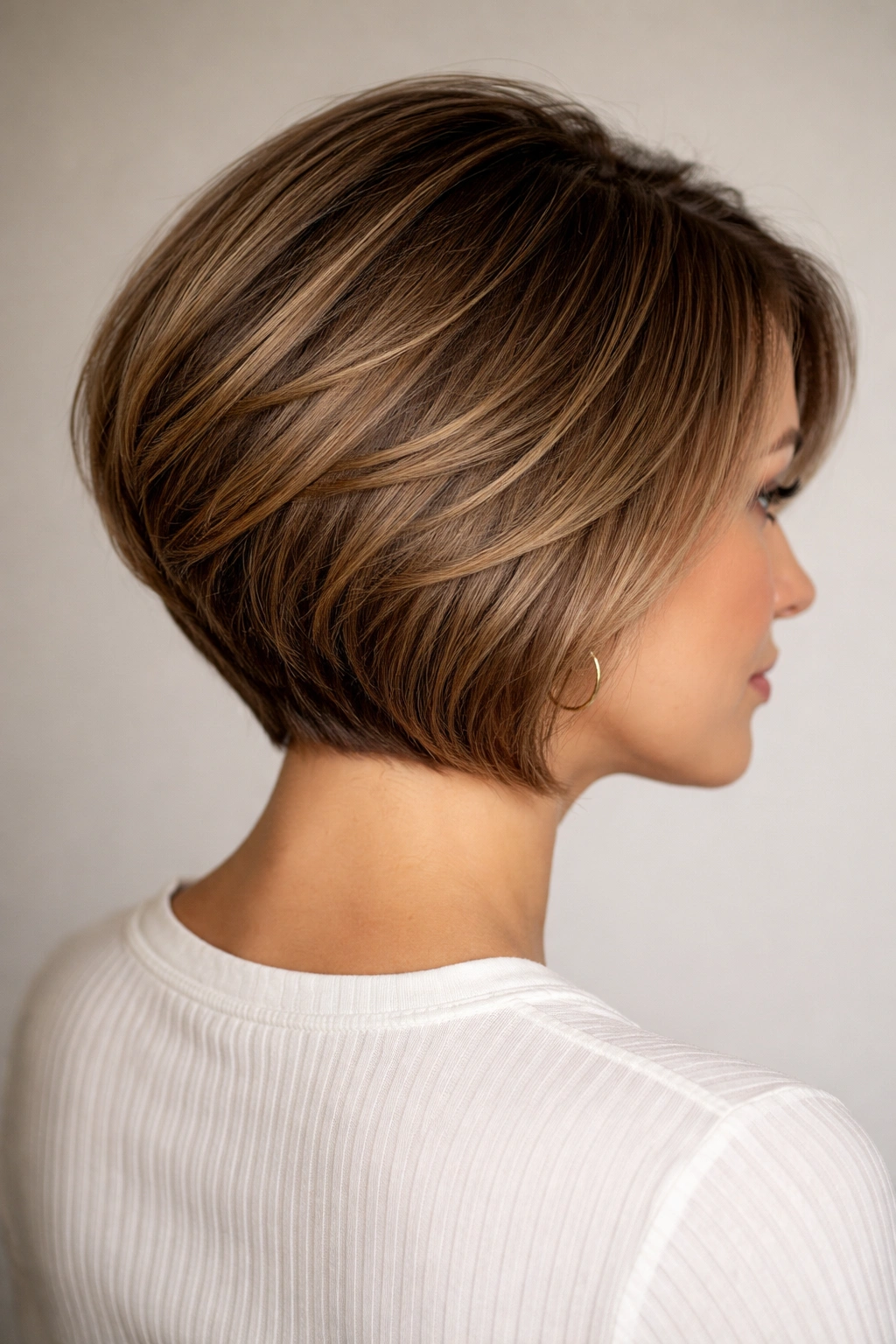
Picture a bob that lifts at the back, hugs the nape, and doesn’t balloon at the sides. That’s the sweet spot. A stacked bob can flatter a round face because the extra volume sits higher and farther back, which gives the face a longer look from hairline to chin.
The trick is keeping the stacking subtle. Too much height at the back can turn the style into a hard triangle. Too little, and you lose the lift that makes the face feel less full. The shape should feel rounded at the crown and tapered at the neck.
- Best for fine to medium hair that needs support.
- Ask for graduation in the back, not choppy layers all over.
- Keep the front a little longer so the cheek area stays open.
- Style with root lift at the crown and smooth the sides down.
This cut tends to look best when the nape is neat and the crown has a bit of lift. It gives a polished, tidy shape that still does the job of slimming the face. And yes, it can grow out nicely if the stacking is soft enough.
10. Wavy Bob With a Loose Bend
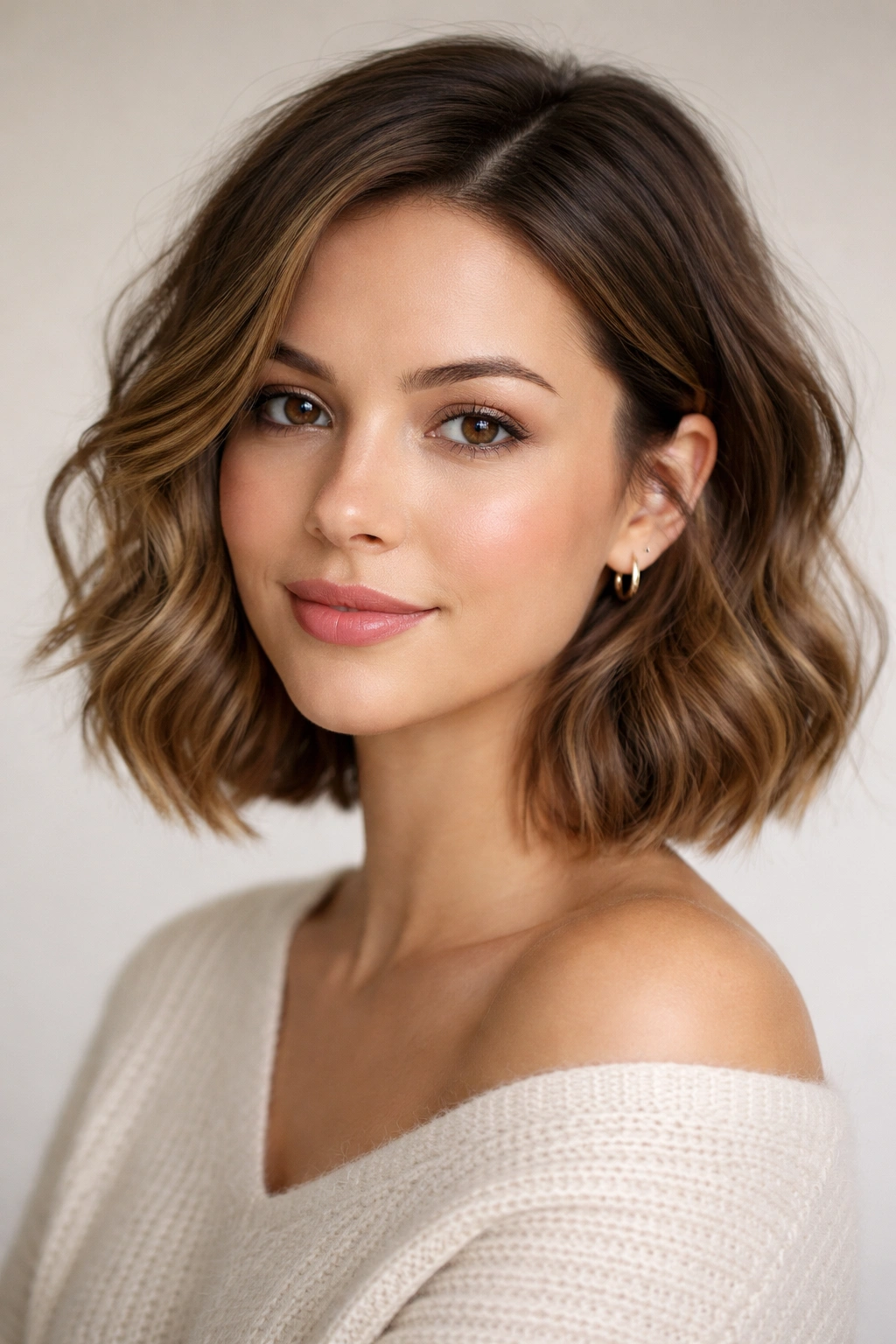
A wavy bob changes the whole mood of a round face. Straight sides can map the face too closely. Loose waves break up that line and keep the hair from sitting like a hard frame around the cheeks. The result feels softer, lighter, and more lengthening.
But there’s a catch. Too much curl at cheek level can add width. So the wave should be loose, more of a bend than a ringlet. Think shoulder brush, not prom curl. The best version has waves that start lower, with the top and sides kept a little smoother.
I like this cut on hair that already has some bend. It’s easy to make it look casual in a good way. A 1-inch iron, wrapped away from the face on alternating sections, gives a nice uneven pattern that keeps the shape from looking too matched.
This is one of those cuts that works because it does not try too hard. The shape is relaxed, but the face still gets length. That balance is what makes it useful for round faces that need softness without extra width.
11. Italian Bob With Heavy Ends and Swing
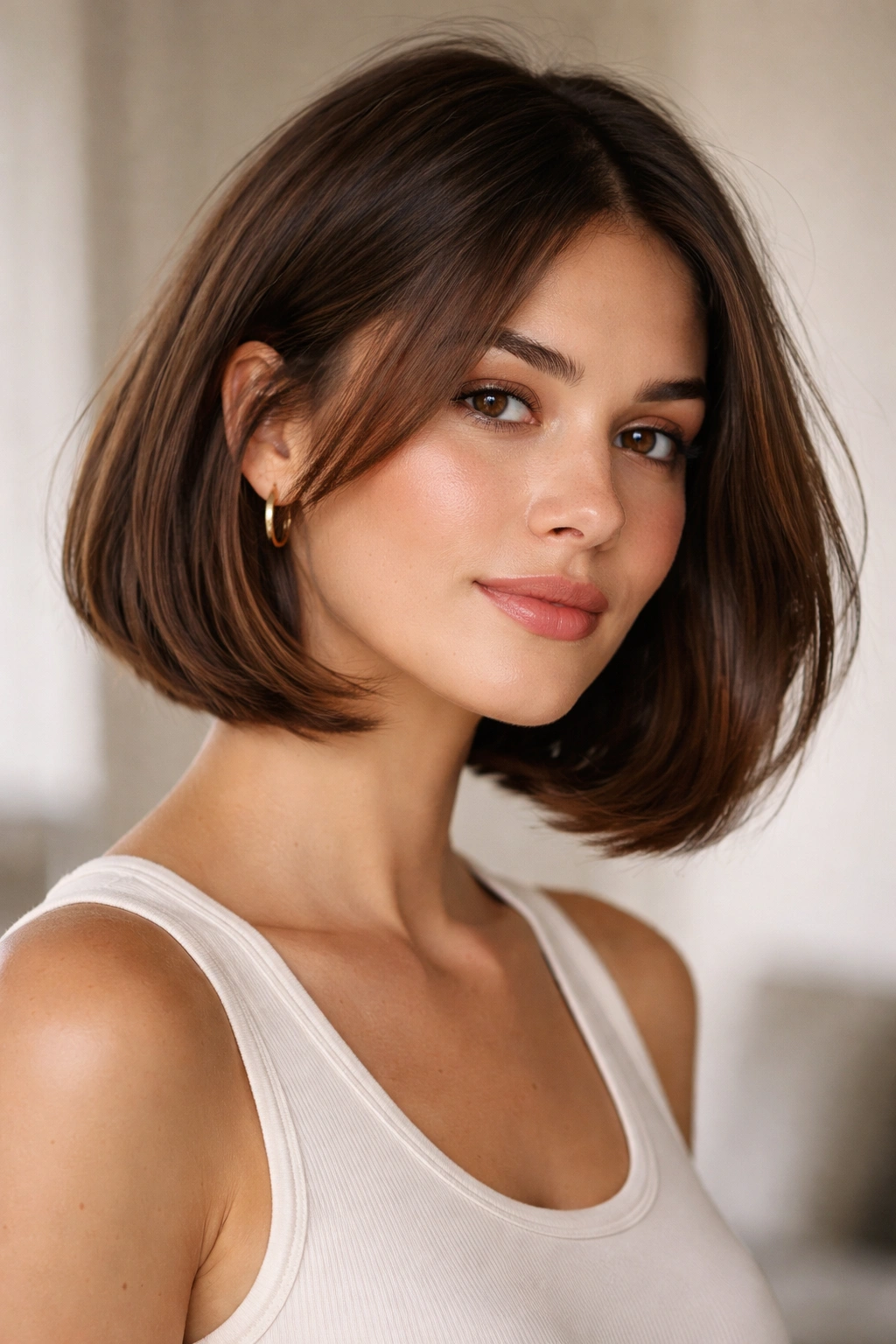
The Italian bob has a lot of presence. It sits fuller than a French bob, usually around the jaw or just below it, with a swingy shape that looks rich and deliberate. On a round face, it works when the length is long enough to drop past the widest point and the ends have movement instead of puff.
Unlike a tiny, clipped bob, this one has more weight in the perimeter. That sounds risky, but the heavy ends help if they hang below the jaw rather than on top of it. The style feels less neat and more relaxed, which is part of why it flatters. It gives the face a frame without squeezing it.
I’d steer this toward medium-thick hair. Fine hair can do it, but it needs a little help from blow-drying and root product so the shape doesn’t collapse. A center part can work if the hair is smooth and the front is long enough. A soft side part adds even more length.
This is one of my favorites when someone wants a bob that looks expensive without being fussy. It has body, but not a lot of noise.
12. Jaw-Grazing Bob With Tucked-Under Ends
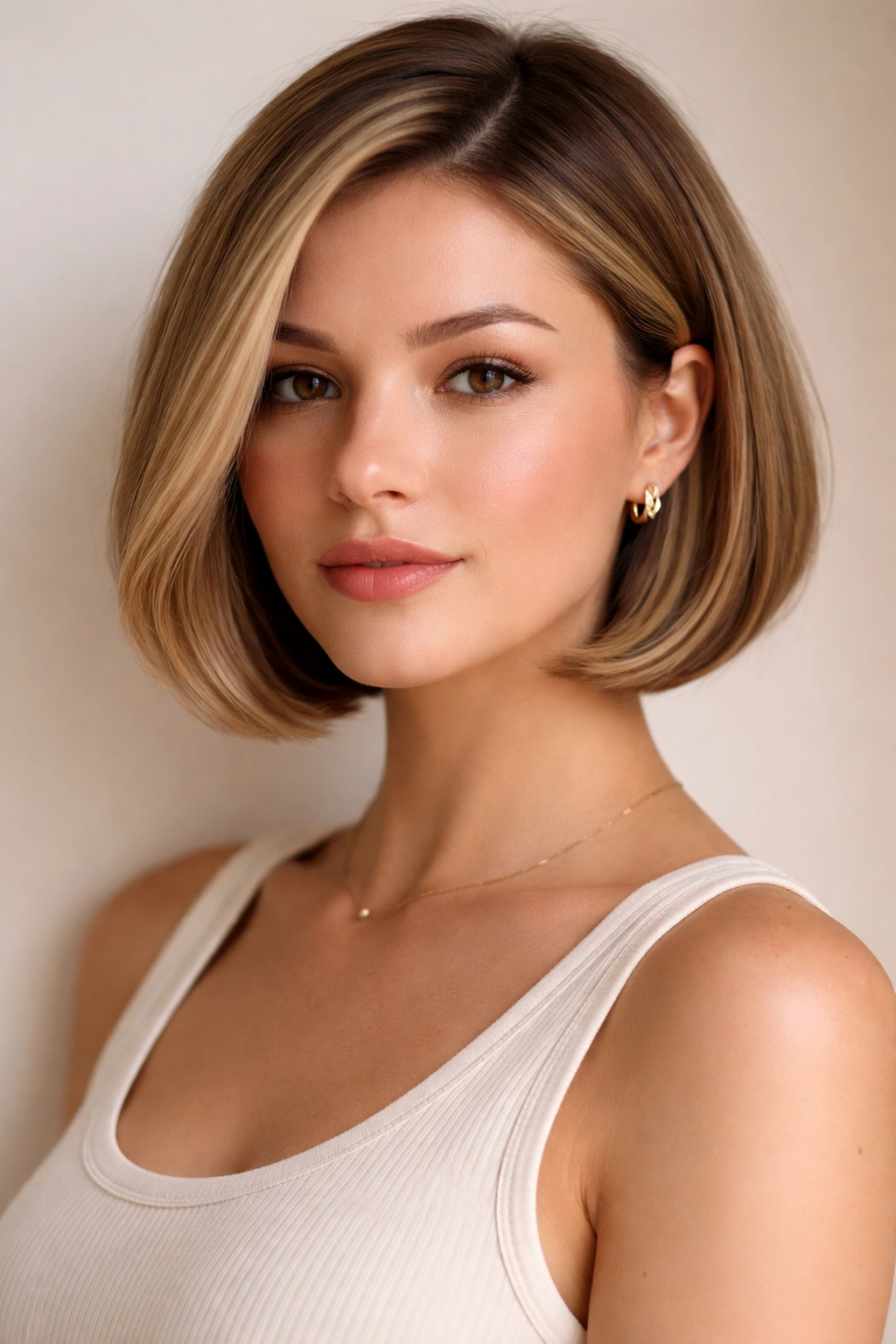
What if you want the shorter feel of a bob but don’t want the face to look wider? Go for a jaw-grazing cut with ends that turn slightly under. The tucked shape keeps the bob neat, while the length just clearing the jaw helps avoid that broadening effect.
How to Cut It
The perimeter should sit right around the jaw, but not land squarely on the fullest part of the cheek. A tiny bit lower is better than a tiny bit higher. That difference can be the line between flattering and fussy.
The ends should not kick out. They should curve in softly, either from the cut itself or from the way you style it. A round brush or a blow-dry brush can help the hair fold under at the ends and create a smoother line along the jaw.
How to Wear It
This cut looks best with a side part or a slightly off-center part. That gives the face a little movement and stops the shape from sitting too evenly. Keep the roots lifted at the crown and the sides controlled.
It’s a clean look. Sharp, but not harsh.
13. Choppy Bob With Airy Interior Layers
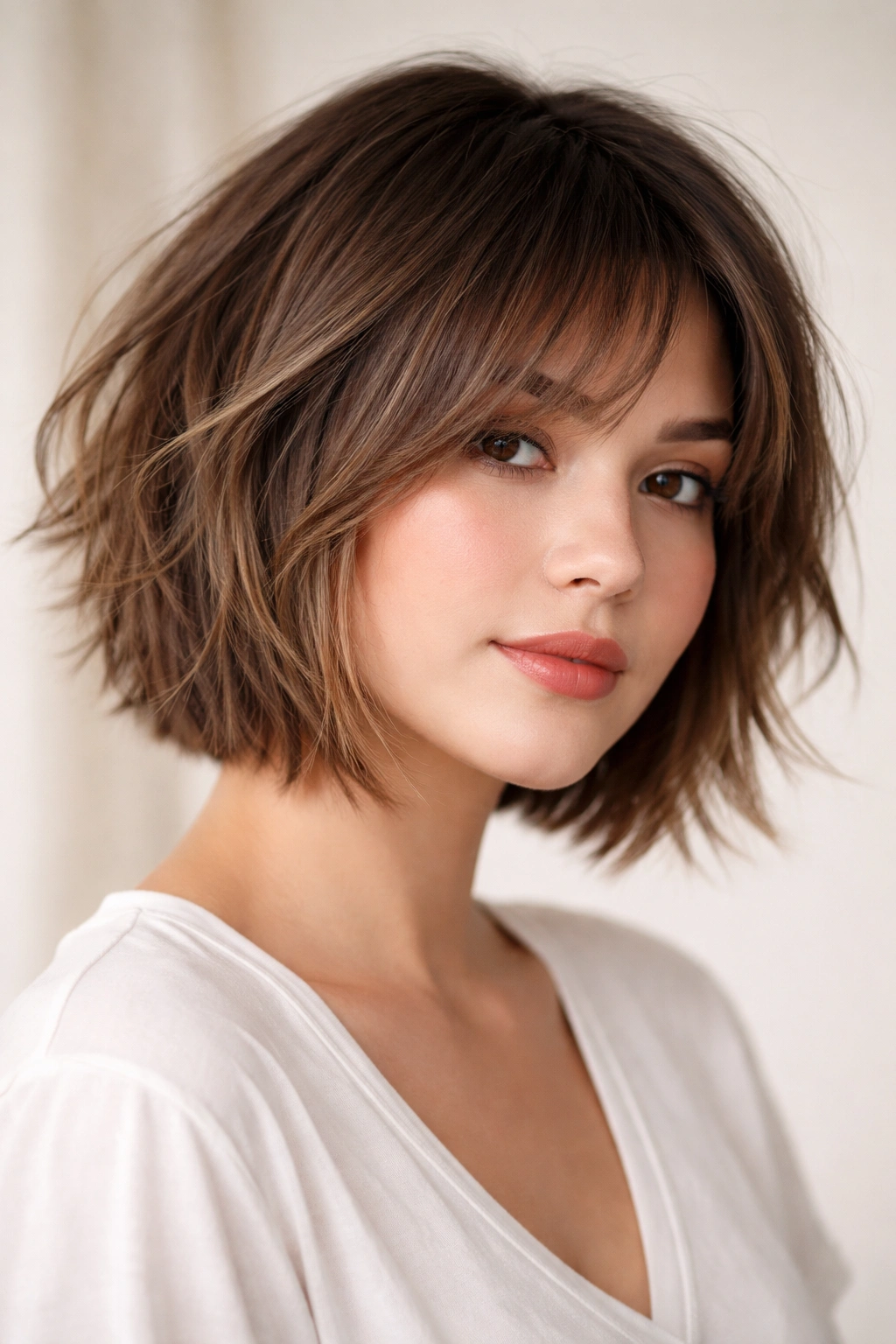
A choppy bob can be a smart choice for a round face if the layers stay inside the shape instead of sticking out all over the sides. The point is to remove weight, not add little wings that widen the head. Done well, the cut feels airy and casual, with texture that keeps the outline from getting too full.
This is one of those cuts that looks better when it isn’t perfect. A little unevenness around the ends gives the hair room to move, which helps avoid the solid roundness that can happen with a one-length bob. The interior layers matter most. They take bulk out of thick hair and let the shape fall closer to the head.
- Best for dense hair that needs lightness.
- Ask for interior layers, not obvious choppy steps.
- Keep the perimeter a touch longer than the chin if your cheeks are full.
- Finish with a matte cream or light texturizer, not sticky paste.
A choppy bob is not the softest choice on the list, but it can be one of the most flattering when the texture is controlled. Think pieces, not puff.
14. French Bob With a Soft Fringe

The French bob gets treated like a tiny rule book, and I think that’s a shame. On a round face, it works best when it is a little looser than the classic photo version. The line can still be short, but the fringe should be soft, and the edges should not sit like a sharp box around the face.
A round face needs room at the cheeks. So if you want this style, keep the fringe light and a little broken up, not heavy and straight. The length should hit around the cheekbone or just under the jaw, depending on how much width you want to hide. Shorter than that, and the face can start to feel crowded.
This cut has charm when it looks a touch undone. Not messy. Just less rigid. A slight bend at the ends and a fringe that parts naturally make it much kinder to a fuller face shape.
I like this on hair that has some natural wave. Straight hair can wear it too, but it benefits from a little texture spray so the shape doesn’t turn severe. The French bob can be chic, sure. More than that, it can be surprisingly practical when it’s cut with the face in mind.
15. Collarbone Bob With a Center Part and Long Layers

If you want the most forgiving bob on the list, this is probably it. A collarbone bob gives the face room because it sits below the jaw and well below the cheekline. That alone makes it a strong choice for round faces, especially if you do not want the haircut to call attention to the width of the face.
The center part works here because the length carries the shape. Long layers keep the hair from turning into one flat curtain, and the ends can be bent slightly away from the face for even more length. This is the kind of cut that looks calm, polished, and easy to grow out without an awkward stage.
It’s also one of the best choices if you’re unsure about going shorter. You still get the bob feel, but the face stays open. If you wear glasses, this length can be especially nice because it leaves space around the frames instead of crowding the cheeks.
I’d call this the safest first bob for round faces that want slimming, movement, and low drama. If you’re nervous, start here. It gives you room to breathe.
The best bob for a round face is rarely the shortest one. It’s the one that understands where the face is widest and knows how to work around that point with angle, length, or a little lift at the crown. That’s the real pattern behind all 15 cuts.
If you want the most reliable path, look first at the collarbone bob, the angled lob, or the side-parted chin bob. If you want more shape, the asymmetrical and inverted versions bring stronger structure. And if you like softness, curtain bangs, loose waves, and face-framing layers can do a lot of quiet heavy lifting.