



A bob can look polished, neat, even a little restrained—until one side drops lower than the other and the whole haircut changes attitude. That’s the magic of asymmetrical bob cuts: they take a familiar shape and give it tension, movement, and a sharper point of view without asking you to shave your head or bleach it silver.
The part most people miss is that asymmetry is not random. The line has to fall with purpose. A difference of half an inch can read subtle and smart; a drop of 1½ to 2 inches starts to feel graphic. Where the longer side lands—jaw, chin, collarbone—changes the entire mood of the cut.
Hair texture matters too. Straight hair shows every line, every angle, every tiny cutting choice. Waves blur the perimeter and make the look feel looser. Curls do something else altogether: they turn the asymmetry into shape control, which is why a good curly asymmetrical bob can look bold and easier to wear than a blunt even cut.
Get the structure right, and the edge looks intentional from every side, not like you fell asleep halfway through the appointment.
The Side-Length Drop That Gives an Asymmetrical Bob Its Bite
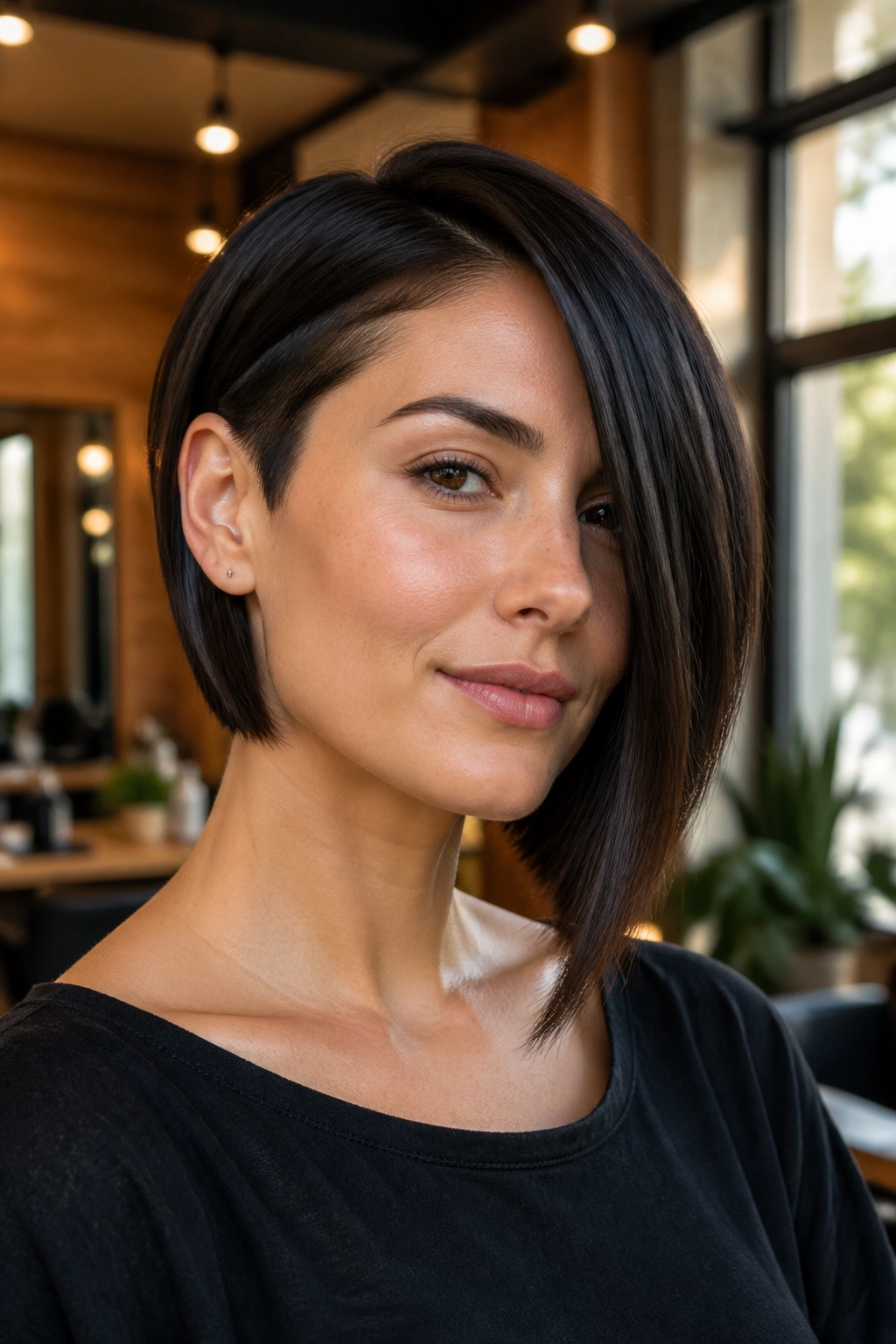
The edge in an asymmetrical bob is usually measured in inches, not ideas. People talk about these cuts as if the attitude comes from vibe alone. It does not. It comes from the relationship between the short side, the long side, the part line, and the nape.
A tiny drop—about ¼ to ½ inch—creates a bob that still feels office-friendly, clean, and easy to tuck behind one ear. Push that difference to ¾ inch or 1 inch, and the haircut starts to announce itself the second you turn your head. Go beyond that, and you’re in dramatic territory, which can look incredible if the rest of the shape stays crisp.
Where the long side should land
The longer front panel does different jobs depending on where it hits.
- At the cheekbone, it sharpens the face and puts more focus on the eyes.
- At the jawline, it creates a strong geometric effect and works well on straight hair.
- At the collarbone, it softens the shock of the asymmetry while still keeping the cut edgy.
- Below the collarbone, the look starts drifting into asymmetrical lob territory, which is good if you want movement without a severe finish.
Texture changes the visual math. On pin-straight hair, every millimeter shows, so your stylist has less room for error. On waves, the cut can tolerate a rougher perimeter because the broken line becomes part of the charm. Curly hair needs shrinkage built into the shape; otherwise the side that’s meant to look longer can spring up and disappear.
Half an inch changes a lot.
The Salon Consultation Details That Matter Before You Choose an Asymmetrical Bob
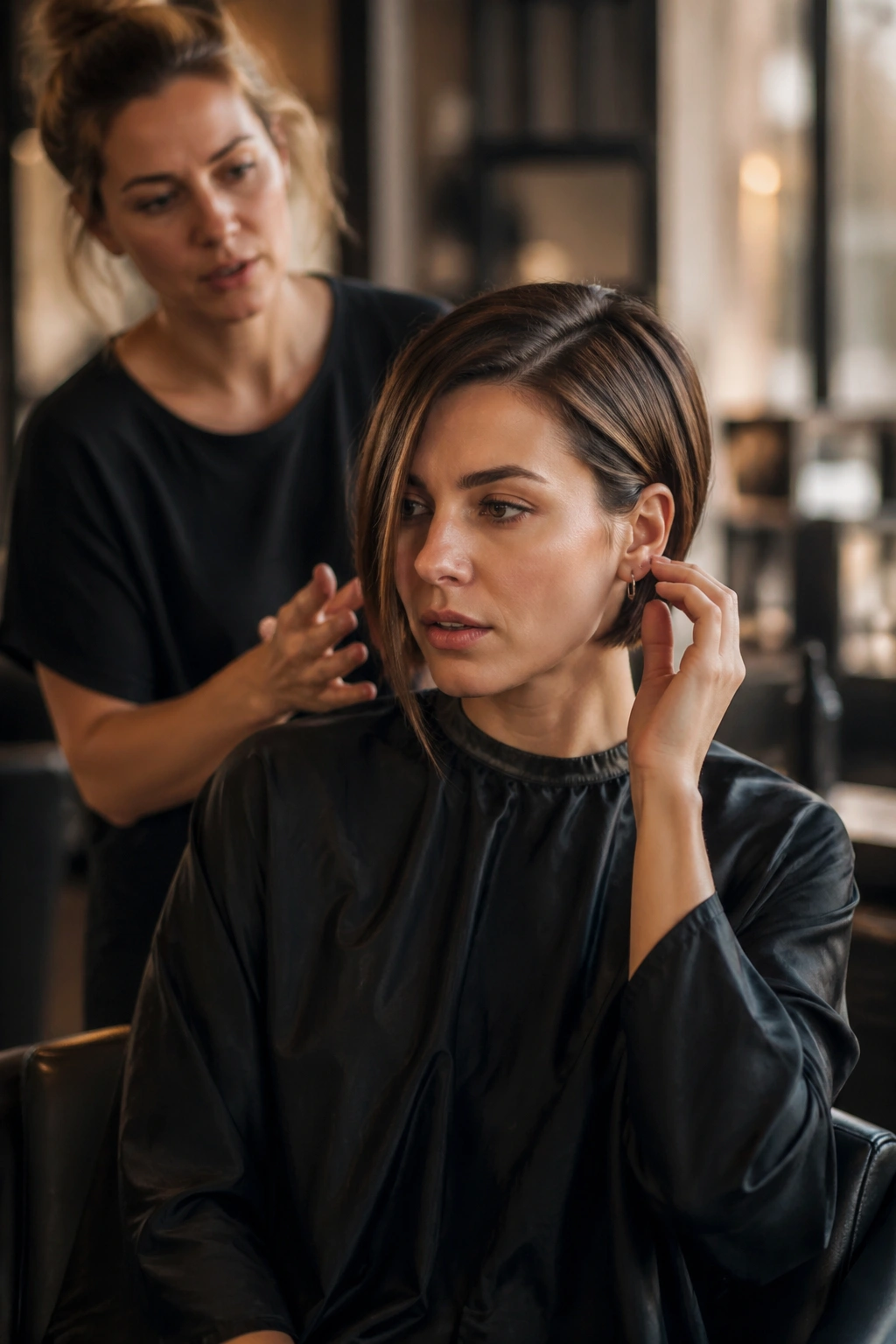
What ruins this haircut most often? Not nerve. Not face shape. Bad planning.
An asymmetrical bob asks more from the consultation than a blunt one-length cut. Your stylist needs to know where you part your hair on a normal weekday, not where you part it for a photo. If your hair splits at the crown, kicks out at the nape, or swells near the ears, that needs to be part of the plan from the first snip.
Bring photos from the front, side, and back if you can. A front-only image hides the stacking, the undercut, the neckline, and the amount of weight left behind the ear. That is where a bob either behaves or fights you every morning.
Tell your stylist these five things
- How much time you’ll spend styling it. Five minutes and a round brush is different from a 20-minute flat-iron routine.
- What your hair does when air-dried. Does it puff, bend, separate, or stick flat to your head?
- How often you’re willing to trim it. A sharp asymmetrical bob usually needs reshaping every 6 to 8 weeks. Undercuts often need cleanup in 2 to 4 weeks.
- Whether you tuck one side behind your ear. That small habit changes how the perimeter should sit.
- How strong you want the asymmetry to read. Subtle and graphic are not the same haircut.
One more thing. If your jawline is the feature you want to highlight, say that out loud. If you want to soften a fuller cheek, say that too. Hairdressers can only cut toward the target you give them.
1. Sharp Side-Part Jaw-Length Asymmetrical Bob
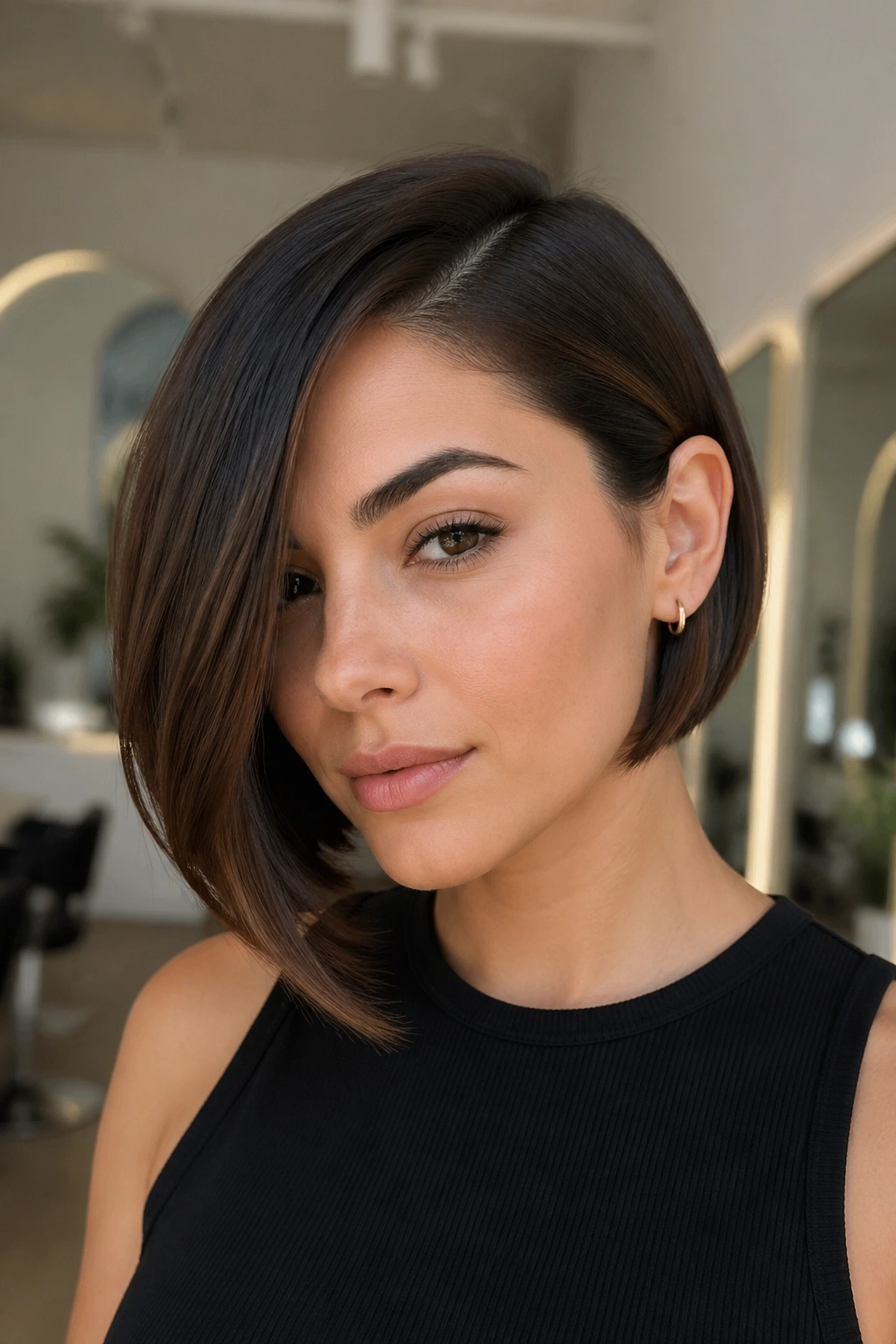
This is the entry point for anyone who wants edge without diving straight into shaved panels or dramatic length jumps. The cut sits around the jaw, the side part is deep, and the longer section usually drops ¾ inch to 1 inch below the shorter one. Clean. Direct. No fluff.
The reason it works so well is precision. A jaw-length asymmetrical bob frames the lower face like a drawn line, which makes the look feel deliberate even when the styling is minimal. One side can skim the cheek and tuck behind the ear, while the longer side hangs forward and keeps the haircut from feeling polite.
Why the side part changes everything
A center part can make a short asymmetrical bob look clever, but a deep side part gives it more bite. It creates instant imbalance at the root, which supports the asymmetry in the perimeter. You are not only seeing one side longer than the other; you’re also seeing the crown shift with it.
Quick fit check
- Straight hair shows this cut best because the jawline stays visible.
- Soft waves work too, though the perimeter will look less exact.
- Ask for the back to sit snug at the nape so the front pieces stay the star.
- Use a flat iron at 325°F to 375°F and turn the ends in by only a fraction, not a full curl.
Best for: someone who wants an asymmetrical bob haircut that reads sharp in a blazer and still looks good with a T-shirt and messy eyeliner.
2. Deep A-Line Asymmetrical Bob
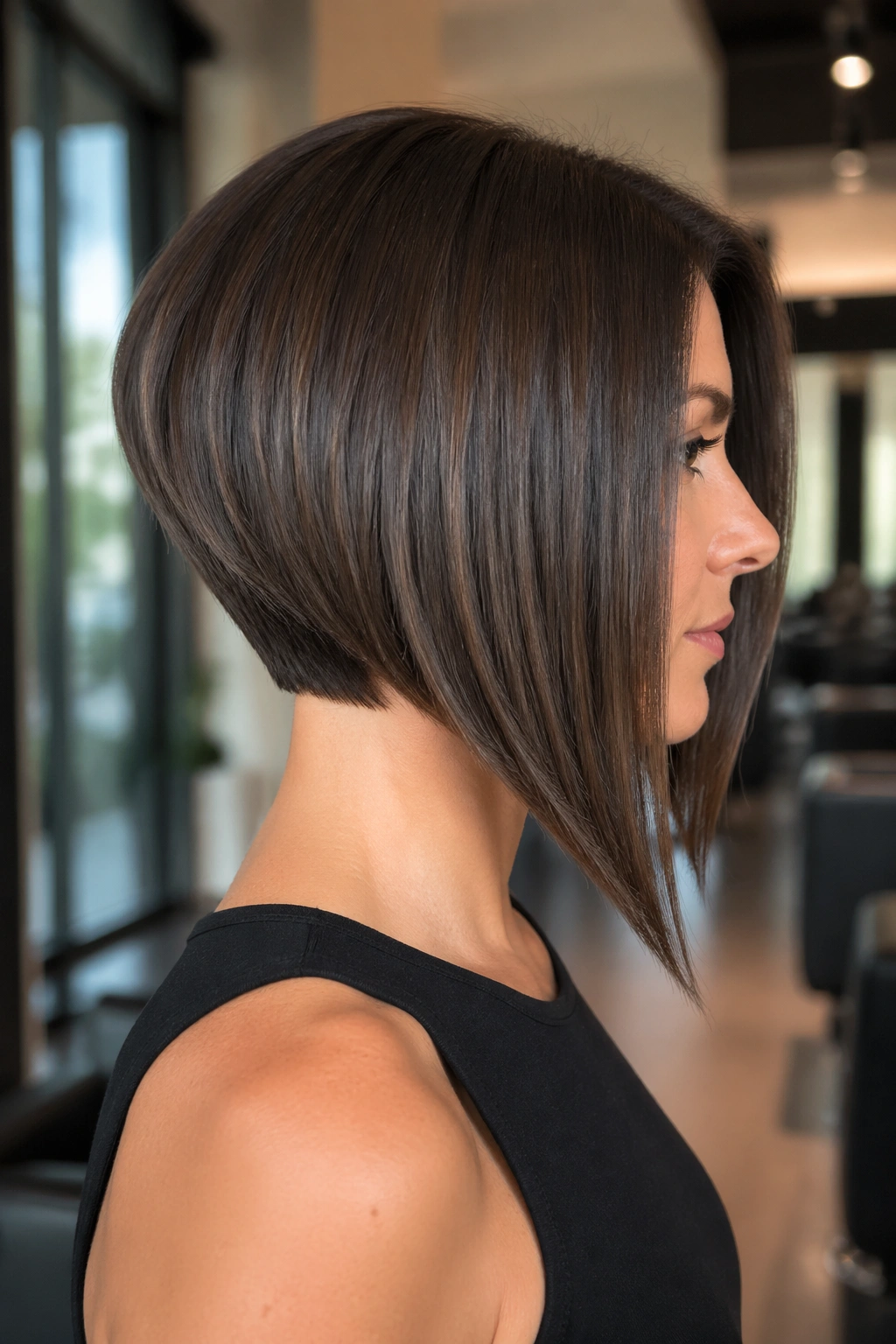
This is the cut that makes your profile do the heavy lifting. The back sits shorter and tighter, the front stretches forward, and the asymmetry pushes one side even farther out. You get an angle on top of an angle, which sounds like a lot—and it is—but when it is cut well, the result looks strong rather than fussy.
A deep A-line asymmetrical bob works especially well on dense straight hair or thick hair that can hold a crisp shape. The graduation in the back takes out bulk where bobs often puff, and the longer front panel keeps the haircut from turning into a helmet. That matters. Thick hair can swallow an edgy cut if the internal weight is left untouched.
There is a catch, though. This shape does not forgive lazy maintenance. Once the neckline starts growing out, the sharp slant blurs and the whole thing loses tension. Plan on trims every 6 weeks, or accept that the cut will drift from sleek to bulky faster than a collarbone lob would.
A round brush and a nozzle attachment do most of the daily work here. Dry the roots flat at the crown, then pull the front panels forward and slightly down so the angle stays visible. Skip heavy oils near the ends. They can make the line look stringy instead of strong.
3. Razored Asymmetrical Bob With Piecey Ends
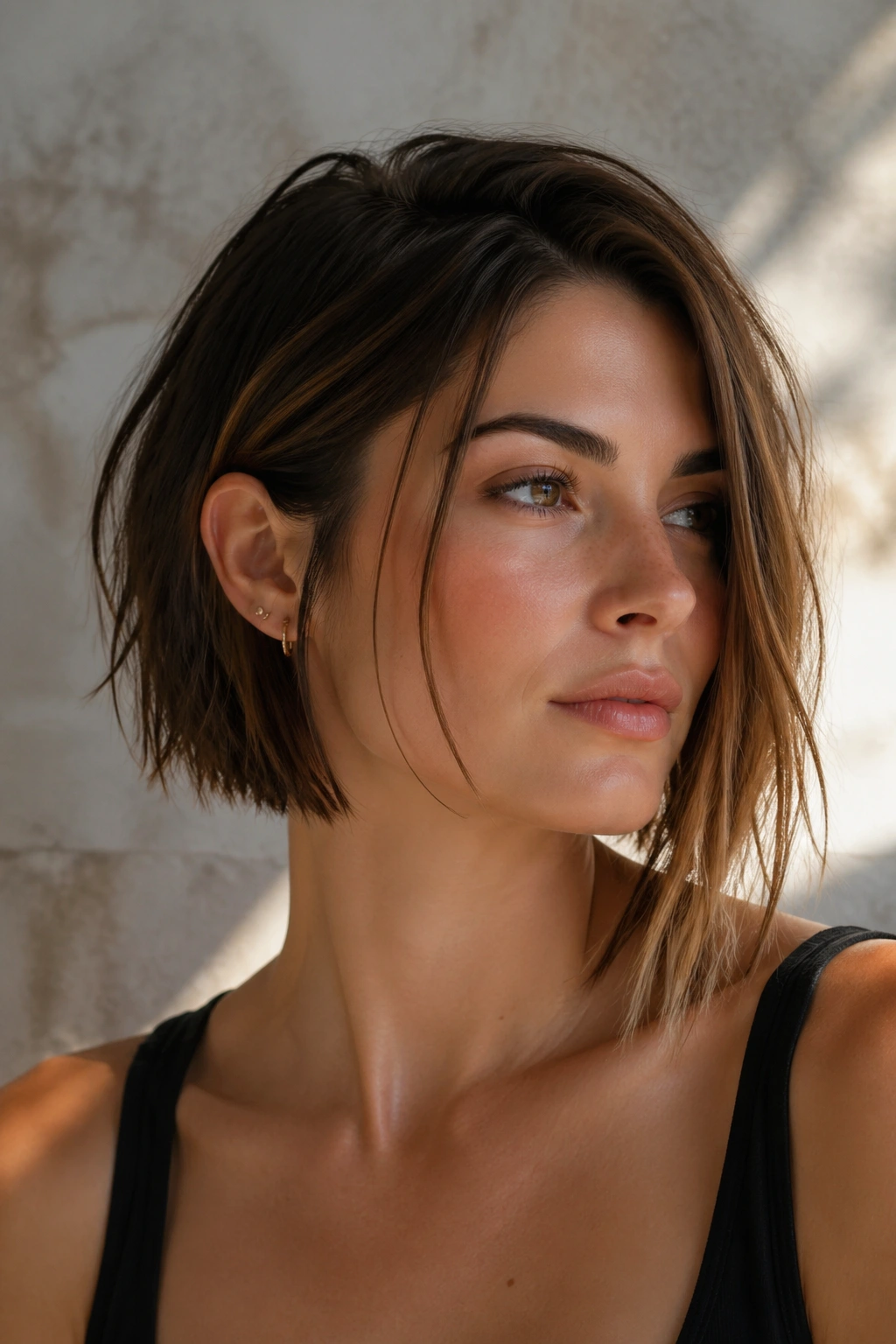
Do you want an asymmetrical bob that feels less geometric and more unruly in a good way? A razored version does that job.
Instead of a hard blunt edge, the perimeter is cut with a razor or softened with slide-cutting so the ends split into lighter pieces. The asymmetry is still there, but it reads as movement rather than architecture. On medium-density hair with a natural bend, this can look cooler on day two than it did on the salon chair.
The trick is restraint. Too much razor work on fine hair can make the ends look thin, and too much on coarse hair can make the silhouette frizz. What you want is a broken edge that still has body—think airy, not shredded. A difference of ½ inch to 1 inch between sides usually lands best for this style because the texture already adds drama.
How to style the broken edge
Mist a salt spray or light texture spray from mid-length to ends, then scrunch lightly with your hands. Dry with a diffuser or let it air-dry until it is about 80 percent dry, then finish the front pieces with a flat iron only where the shape needs direction.
A waxy pomade the size of a lentil is enough. Rub it between your fingers and pinch a few end pieces on the long side so the asymmetry stays visible.
The finished look should feel touchable, a little uneven, and fully on purpose.
4. One-Side Tucked Asymmetrical Bob With a Hidden Undercut
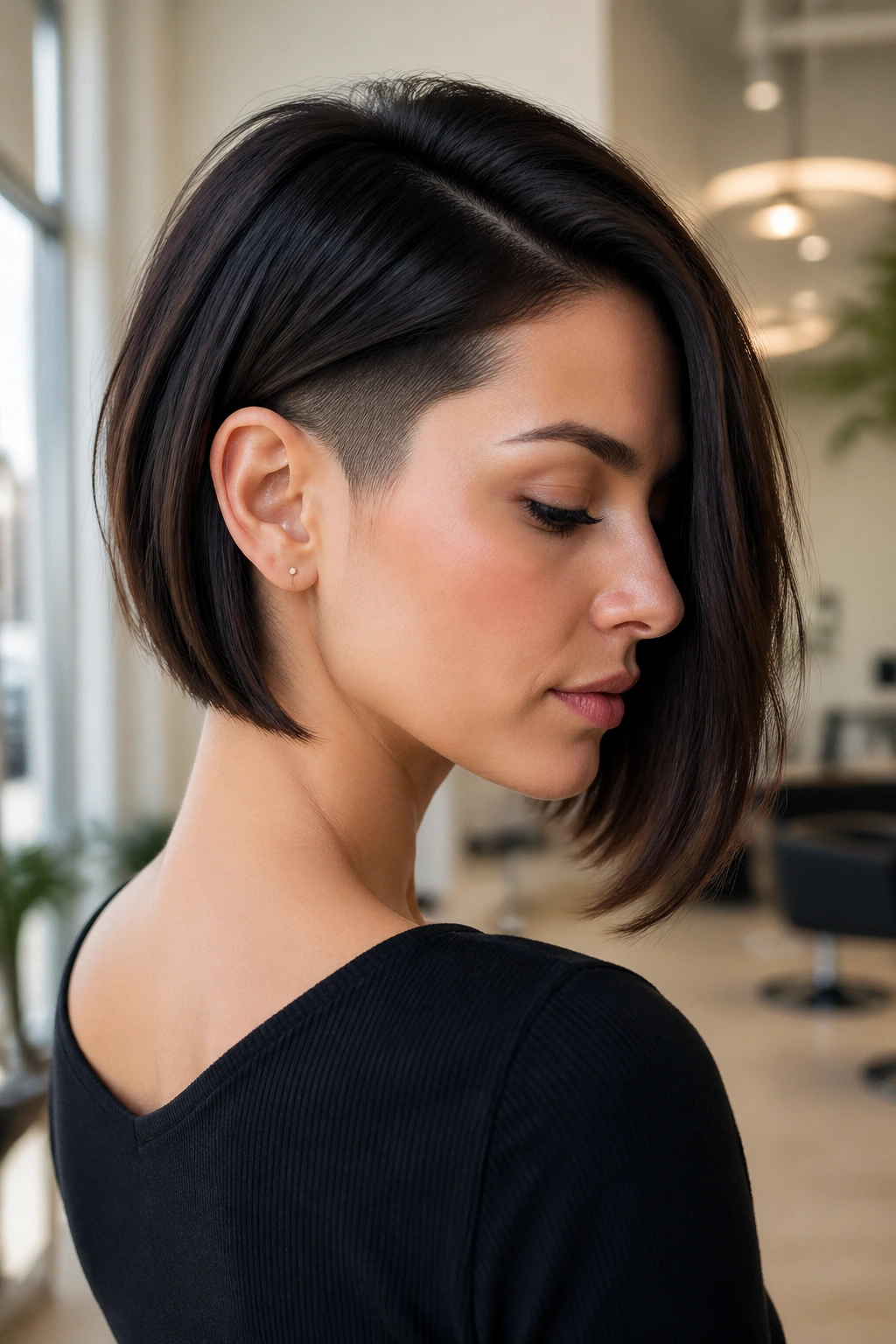
From the front, this one can pass as a sleek short bob. Then you tuck the shorter side behind your ear and the undercut flashes into view. That reveal is the whole reason people love it.
The hidden undercut keeps the haircut tight around the ear and nape, which helps if your hair is thick, hot, or inclined to mushroom out at the bottom. It also gives the asymmetrical shape a cleaner edge because there is less bulk crowding the short side. The contrast between the close-cut section and the longer front panel creates a harder finish without forcing the entire haircut to go severe.
What makes this version stand out
- The undercut can be clipped down to a #2 or #3 guard for a visible contrast, or left longer for a softer peek.
- Keeping the top layer heavy enough to cover the shaved section lets you switch between discreet and bold.
- A side tuck is not optional here. It is part of how the haircut is meant to be worn.
- The long side looks strongest when it lands between the chin and collarbone, not far below.
Maintenance comes faster than people expect. The bob shape may hold for 6 or 7 weeks, but the undercut itself often wants a cleanup in 2 to 3 weeks. Still, if you like your hair to have a quiet front view and a sharper side profile, few cuts do that better.
5. Collarbone Asymmetrical Lob With a Clean Front Angle
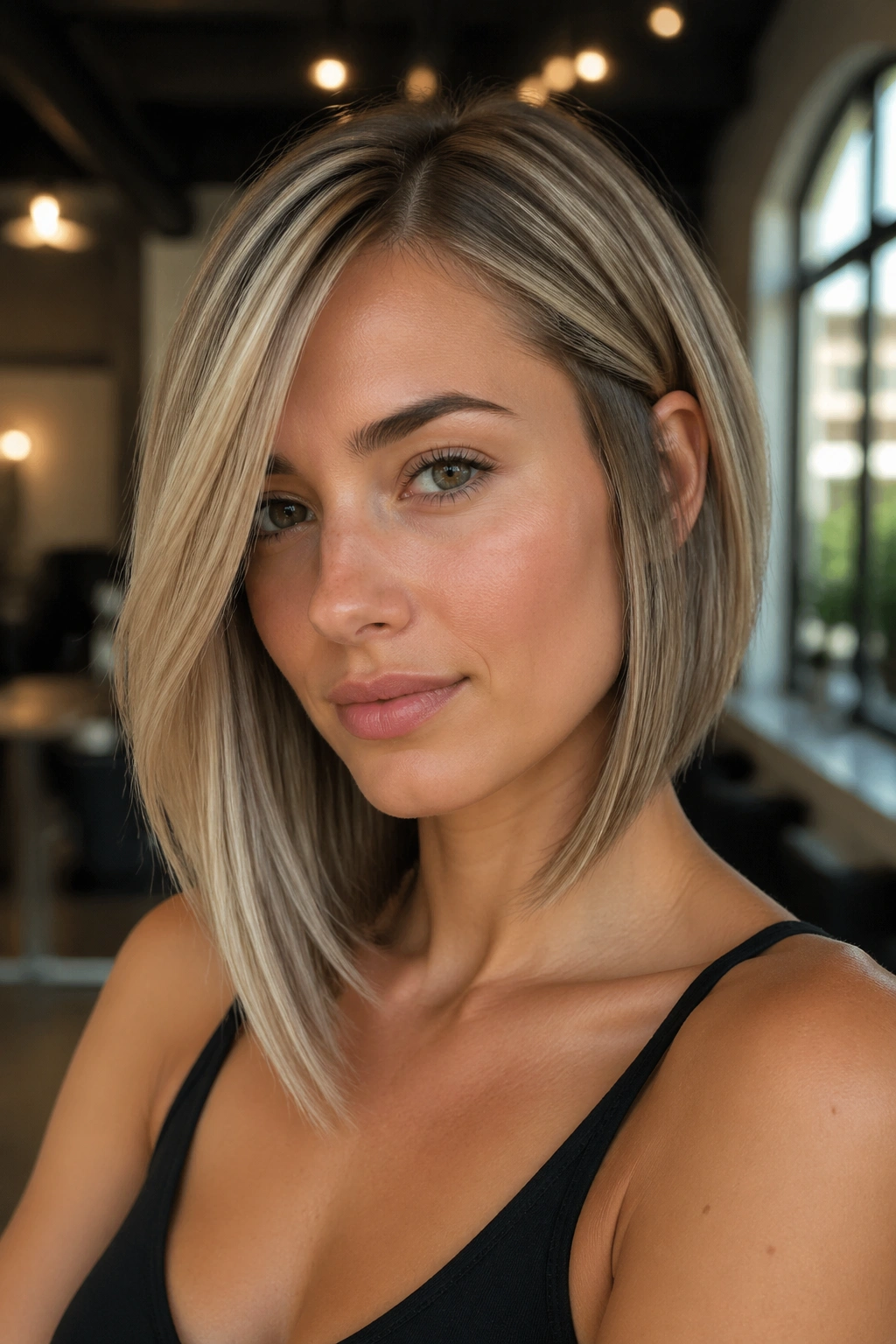
Not everyone wants their edgy bob cut to sit at the jaw. Some people want a little swing, a little softness, and enough length to pull one side back with a clip on rough hair days. That is where the collarbone asymmetrical lob earns its keep.
The shorter side usually lands near the top of the shoulder while the longer side drops 1 to 2 inches lower, often grazing the collarbone. Because the overall length is longer, the asymmetry looks less abrupt. You still get the off-balance line, but the mood is more sleek than severe.
This cut is useful on hair that bends, swells, or refuses to hold a pin-straight finish for more than an hour. A longer asymmetrical bob has more weight, so it sits better through humidity and does not puff as quickly around the jaw. If your hair has a blunt short-bob history of turning triangular, this can be a smarter move.
Blow-dry it with a paddle brush if you want the angle to read clearly. Add a slight bend at the ends with a 1-inch flat iron if you want the long side to swing more when you move. Neither approach fights the cut.
The best part? It grows out better than sharper short versions. You still need trims, but you get more grace between appointments.
6. Curly Asymmetrical Bob With a Longer Front Curl Curtain

Unlike a blunt even curly bob, which can bunch up around the cheeks and turn square, an asymmetrical curly bob gives the shape somewhere to go. The longer front side acts like a curtain of curls, pulling the eye downward and breaking up the width.
That makes this one of the smartest edgy bob haircuts for curly hair, even though people often assume asymmetry belongs only to straight styles. It doesn’t. In curls, the uneven length is less about a razor-sharp line and more about silhouette. You are using shape to control volume.
Shrinkage has to be part of the plan. A stylist cutting curly hair dry or curl-by-curl will usually leave the longer side at least 1 inch longer than you think you need, because once the curls spring up, that length disappears fast. Loose waves can handle a smaller difference. Tight curls often need more contrast.
Who suits it best? Hair with medium to high density, especially if the curls stack up at the sides. Keep the back rounded and slightly lifted off the neck, then let the front curl panel land anywhere from the lip to the collarbone depending on how bold you want it.
Use a curl cream on soaking-wet hair, then a gel with medium hold. Diffuse on low heat or air-dry. Do not over-fluff the roots. The asymmetry works because the outline stays readable.
7. Beachy Asymmetrical Bob With Chopped Ends
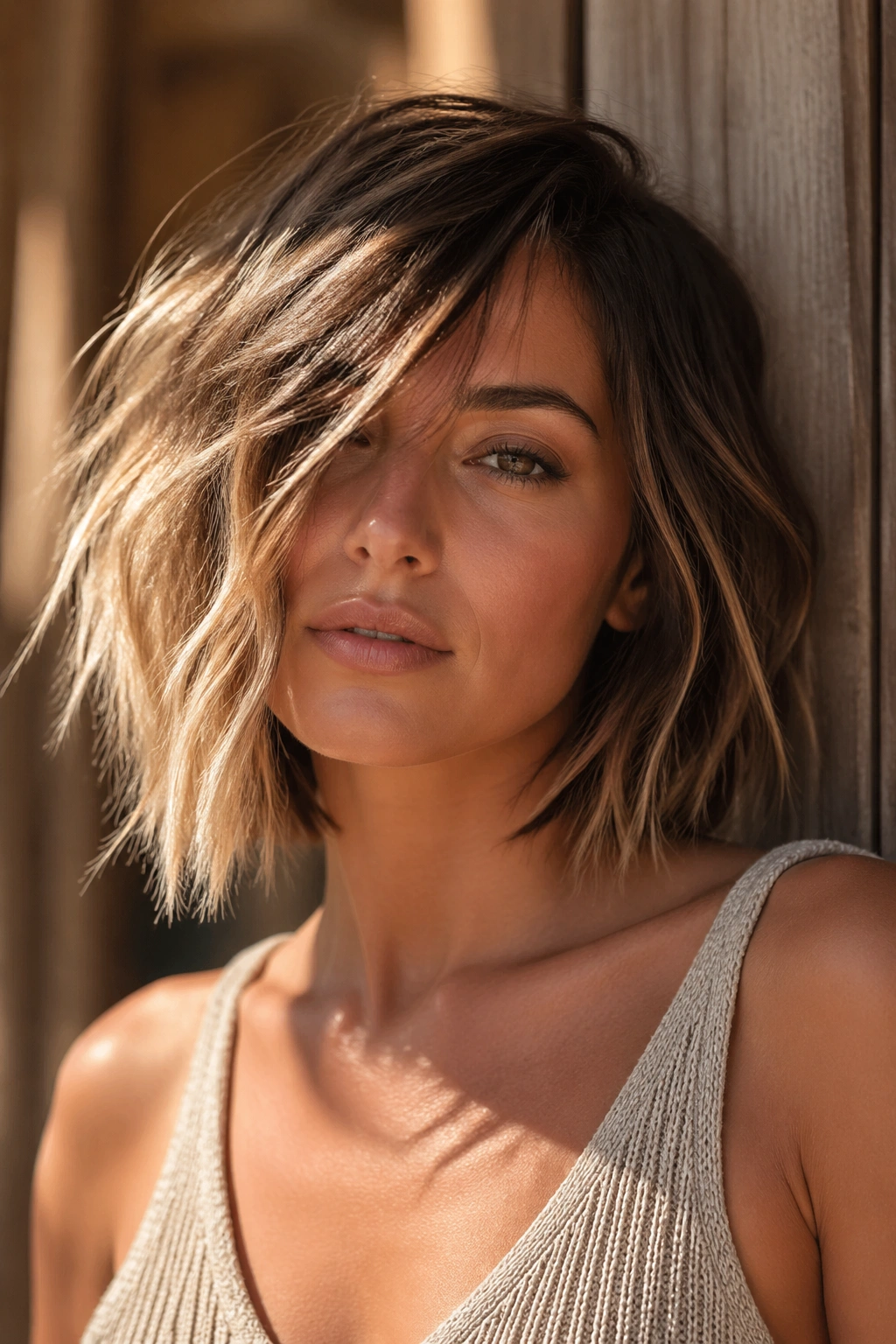
This one looks as if a classic bob went to a loud show, stayed out late, and came back better for it. The perimeter is uneven on purpose, the waves are bent rather than polished, and the cut has enough asymmetry to feel sharp without looking stiff.
A beachy asymmetrical bob is strong on medium hair with some texture already in it. The choppier ends keep the look from turning precious, and the side-length difference shows up in movement instead of a hard line. That makes it easier to wear for people who like edge but hate looking overly done.
Why waves help this cut
Broken waves create pockets where the long side peeks through. On a dead-straight cut, you see the line immediately. On this version, the asymmetry reveals itself in flashes—when you turn your head, when the wind catches it, when one side collapses and the other keeps swinging.
Fast styling notes
- Use a 1-inch or 1¼-inch iron and leave the last inch of the ends out.
- Alternate the bend direction so the wave pattern does not merge into one soft curl.
- Spray dry texture spray at the root and mid-length, not just the ends.
- Tug a few sections straight after curling so the finish stays irregular.
Skip: thick shine serums. They can make chopped ends clump together and erase the airy, gritty feel that gives this cut its edge.
8. Sleek Glass-Finish Asymmetrical Bob
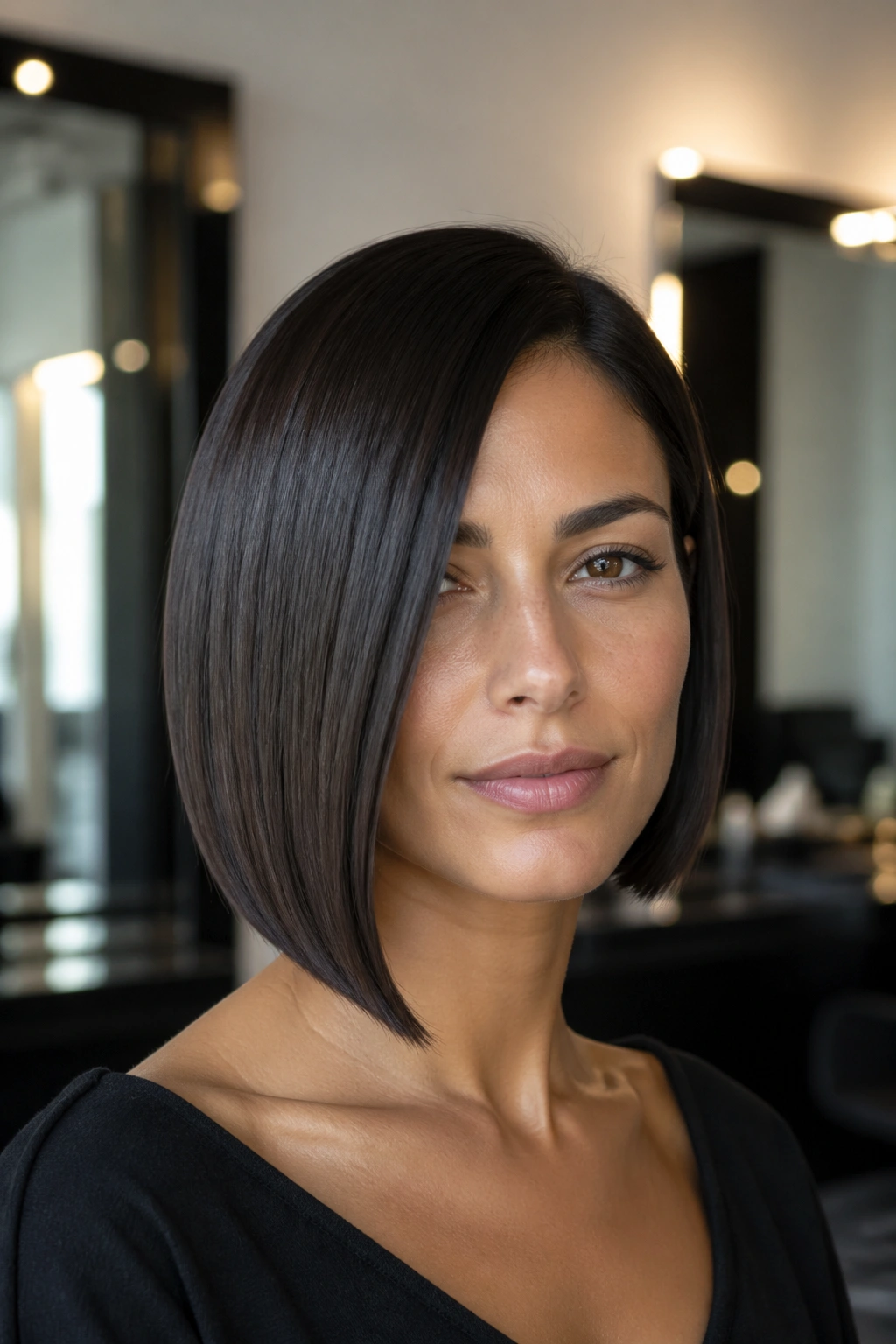
Nothing shows off asymmetry like a glossy, pin-straight surface. If your goal is impact from across the room, this is one of the strongest options on the list.
A glass-finish asymmetrical bob depends on sharp lines, blunt ends, and disciplined heat styling. The short side often sits between the cheekbone and jaw, while the long side drops to the chin or just below. When the hair is smooth enough to reflect light evenly, the angle looks almost drawn with a ruler. That kind of polish is unforgiving, which is part of the appeal.
Heat protection matters more here than with textured versions. A sleek bob needs repeated passes from a blow-dryer and flat iron, and hair that has been fried at 420°F loses the crisp shine that makes this haircut sing. Fine hair usually behaves better around 300°F to 340°F. Coarser hair may need 375°F to 400°F, plus tension from a boar-and-nylon round brush during the blowout.
Do not overload the ends with oil. Use one pump at most, spread it thinly through the mid-lengths, and keep the roots clean. A light anti-humidity spray can help the line hold when the air gets heavy.
This style asks for effort. On the days you give it that effort, it gives plenty back.
9. Short French-Inspired Asymmetrical Bob With Baby Fringe
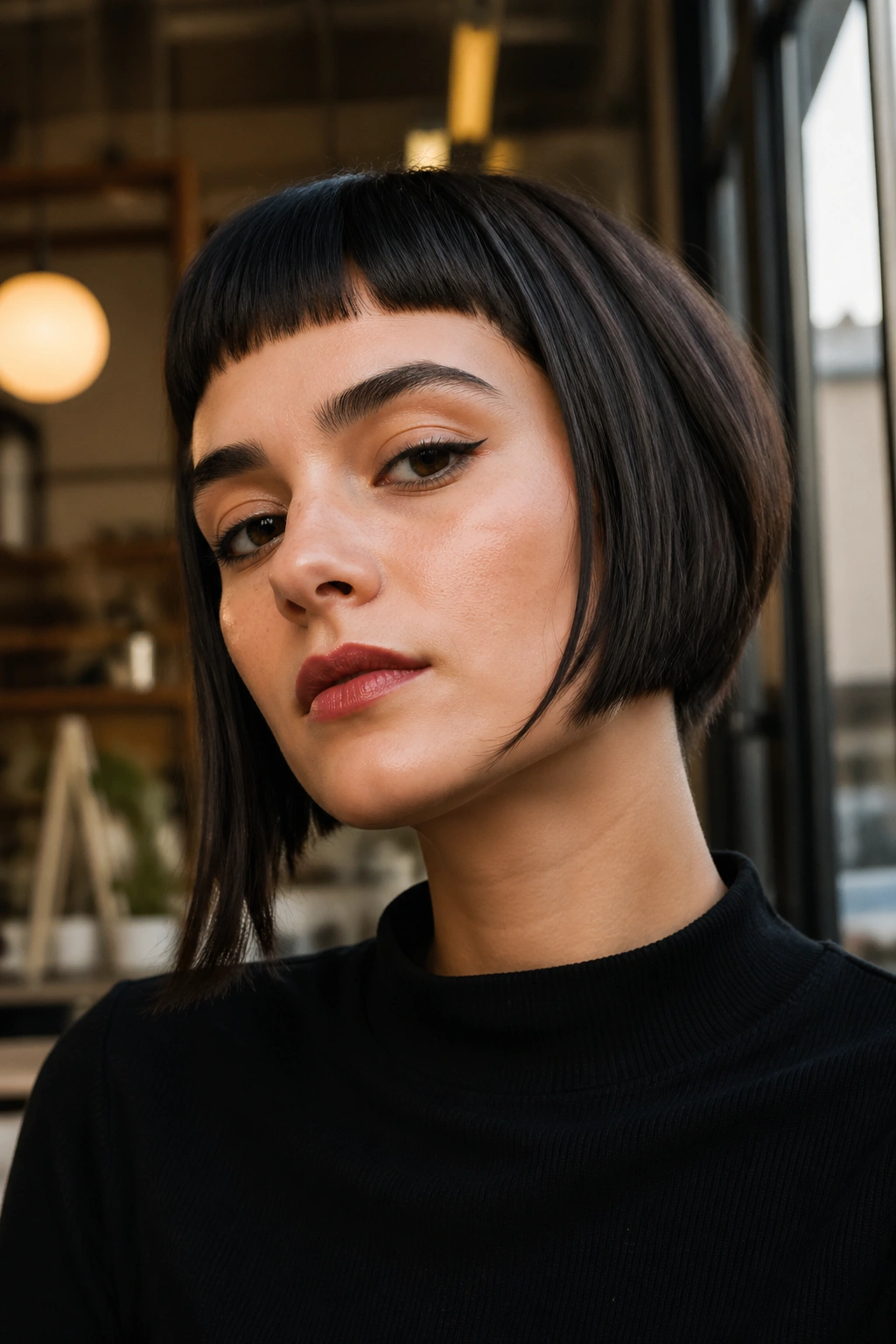
Can a short fringe and an asymmetrical bob live in the same cut without looking like costume hair? Yes—if the proportions are tight.
The base of this style is a short bob that sits around the cheek or upper jaw, then one side drops lower and breaks the neatness. A baby fringe, cropped somewhere above the brows, adds another deliberate line across the face. You end up with a haircut that feels arty, sharp, and slightly defiant.
This is not the easiest asymmetrical bob to wear, which is exactly why it works for the right person. Strong brows, visible cheekbones, or a long neck help. So does confidence with makeup, earrings, and clothes that do not compete with the haircut. The fringe is always in the room with you.
Who this shape flatters most
Hair with a straight or lightly wavy texture shows the structure best. A dense cowlick at the hairline can make a micro fringe split in annoying ways, so your stylist needs to map the front growth pattern before cutting. Keep the asymmetry clear but not cartoonish; around ½ to ¾ inch of difference is often enough when the fringe already brings drama.
A smoothing cream, tiny round brush, and a few flat-iron passes at the ends keep this one sharp. Miss a trim cycle and it loses its whole argument.
10. Stacked Asymmetrical Bob With Lift at the Crown
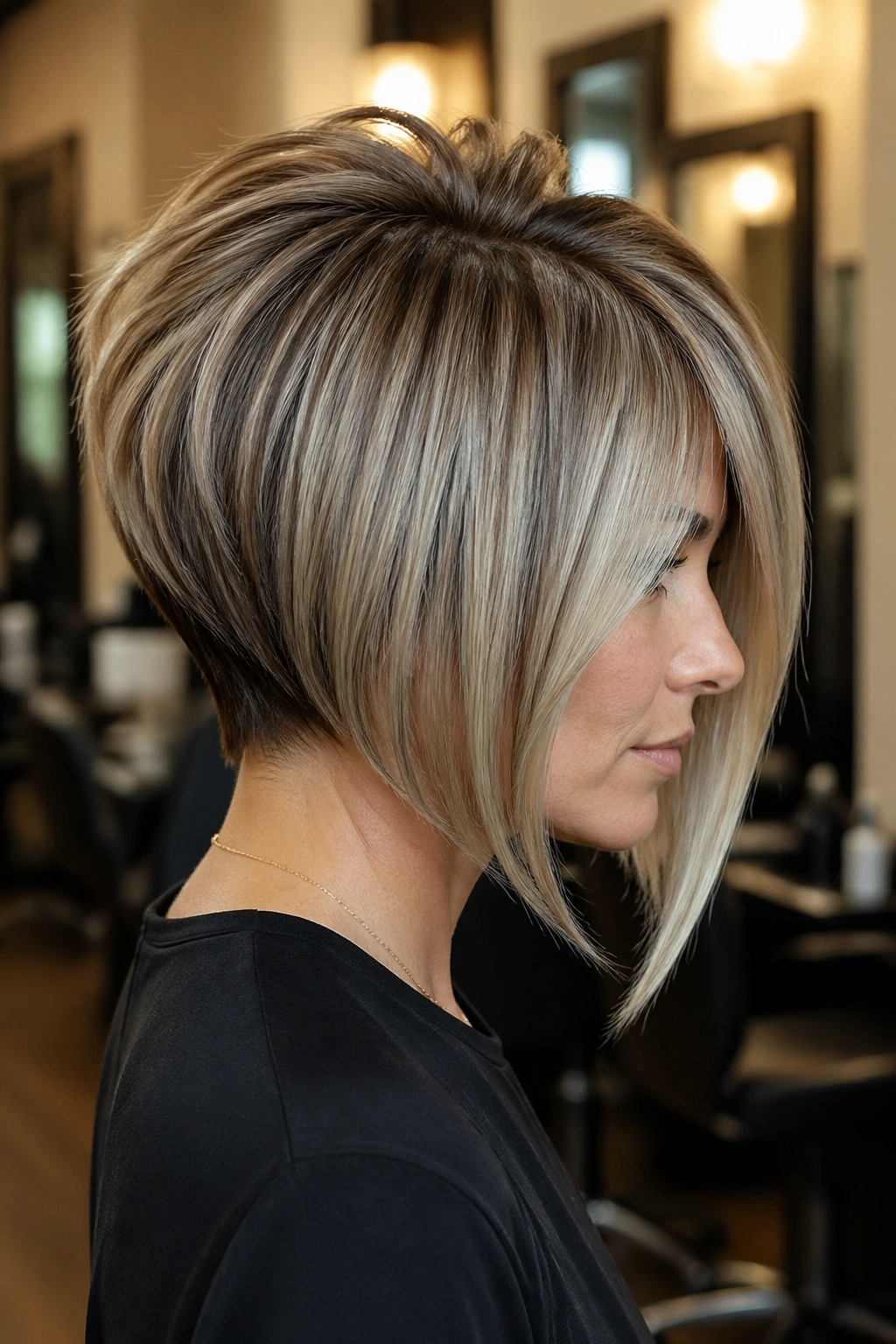
You can spot this cut from the back. The nape is graduated, the crown has lift, and the front swings longer on one side so the shape does not collapse into a regular stacked bob.
That little change matters. A standard stacked bob can lean suburban if the front is cut too evenly and the back gets too round. Add asymmetry, and the silhouette sharpens up. The cut starts reading less sweet, more architectural.
What to ask for in the chair
- Keep the stack soft, not bubbly. Too much graduation can age the cut.
- Leave length through the front on one side so the profile keeps tension.
- Cut the crown with enough weight to lift, not enough to poof.
- Taper the nape cleanly so the back view still looks deliberate after a few weeks.
Fine to medium hair often loves this style because the stacking creates built-in fullness. Thick hair can wear it too, though it usually needs some internal debulking or the crown can get too round.
A vent brush and root-lift spray are usually enough. Blow the back upward at the crown, smooth the sides flat, and let the longer front section lead the shape. If you want an edgy bob cut with body, this one earns a hard look.
11. Asymmetrical Bob With a Heavy Side Bang
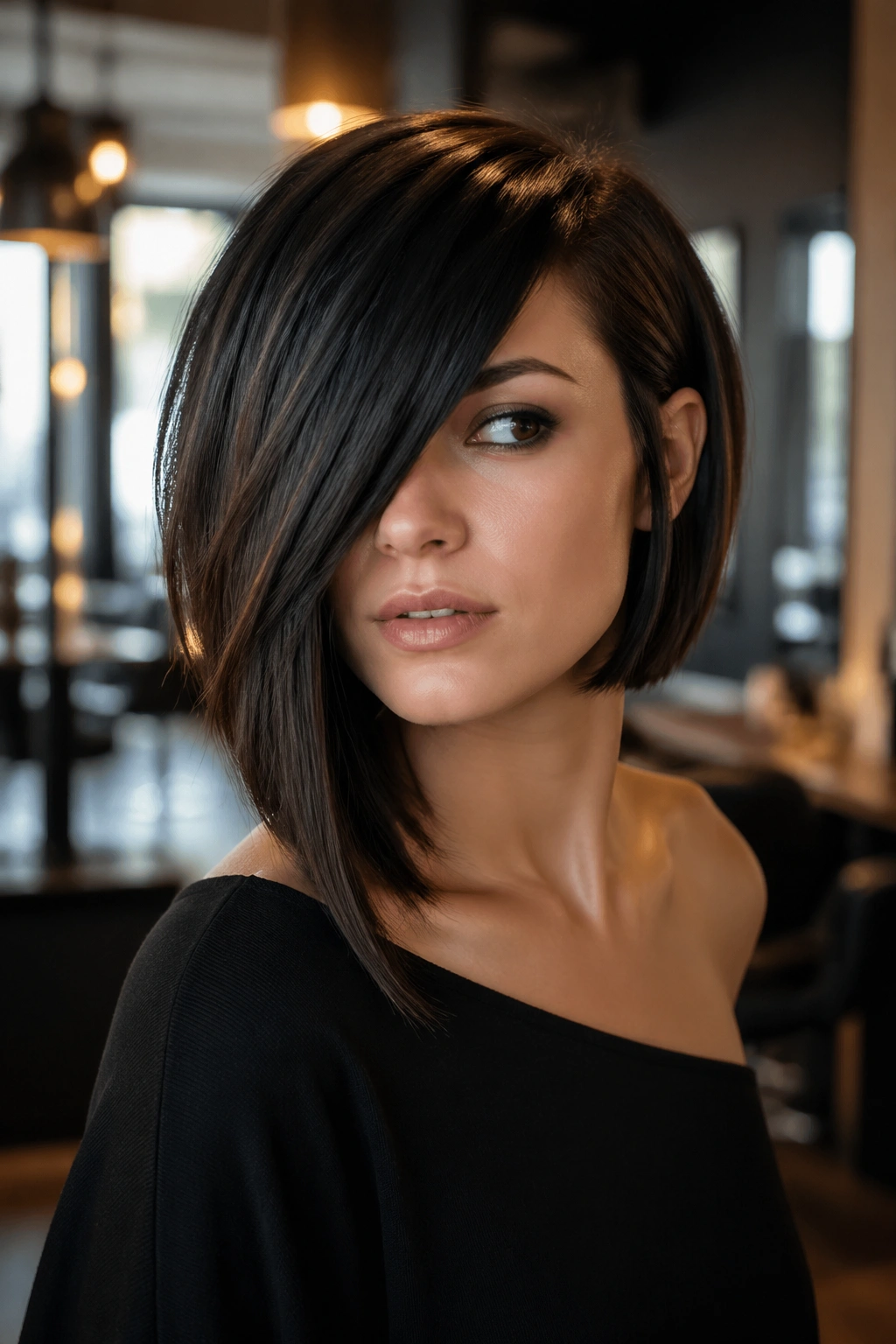
A heavy side bang changes the emotional tone of an asymmetrical bob fast. The cut stops feeling only geometric and starts looking moody, cinematic, maybe a little dangerous. In a good way.
The bang usually sweeps from a deep side part and melts into the longer side of the bob, creating one continuous diagonal across the face. That diagonal works well on fuller cheeks, broader foreheads, and anyone who likes a bit of mystery around one eye. You do need commitment, though. A long side bang has to be blown in the right direction every morning or it will split and expose the whole setup.
This style suits straight hair and softly waved hair best. Tight curls can wear a side-fringe bob, but the line becomes less controlled unless the fringe is stretched or styled. The short side of the bob should stay clean around the cheek or jaw so the heavier front section does not turn the whole haircut into a curtain.
The daily routine is not hard, but it is specific: direct the roots from the heavy side to the opposite side while blow-drying, then flip them back so the bang sits with lift. Finish the ends with a small bend toward the face on the longer side.
Done well, it looks sharp, a touch dramatic, and far from timid.
12. Choppy Asymmetrical Bob for Fine Hair
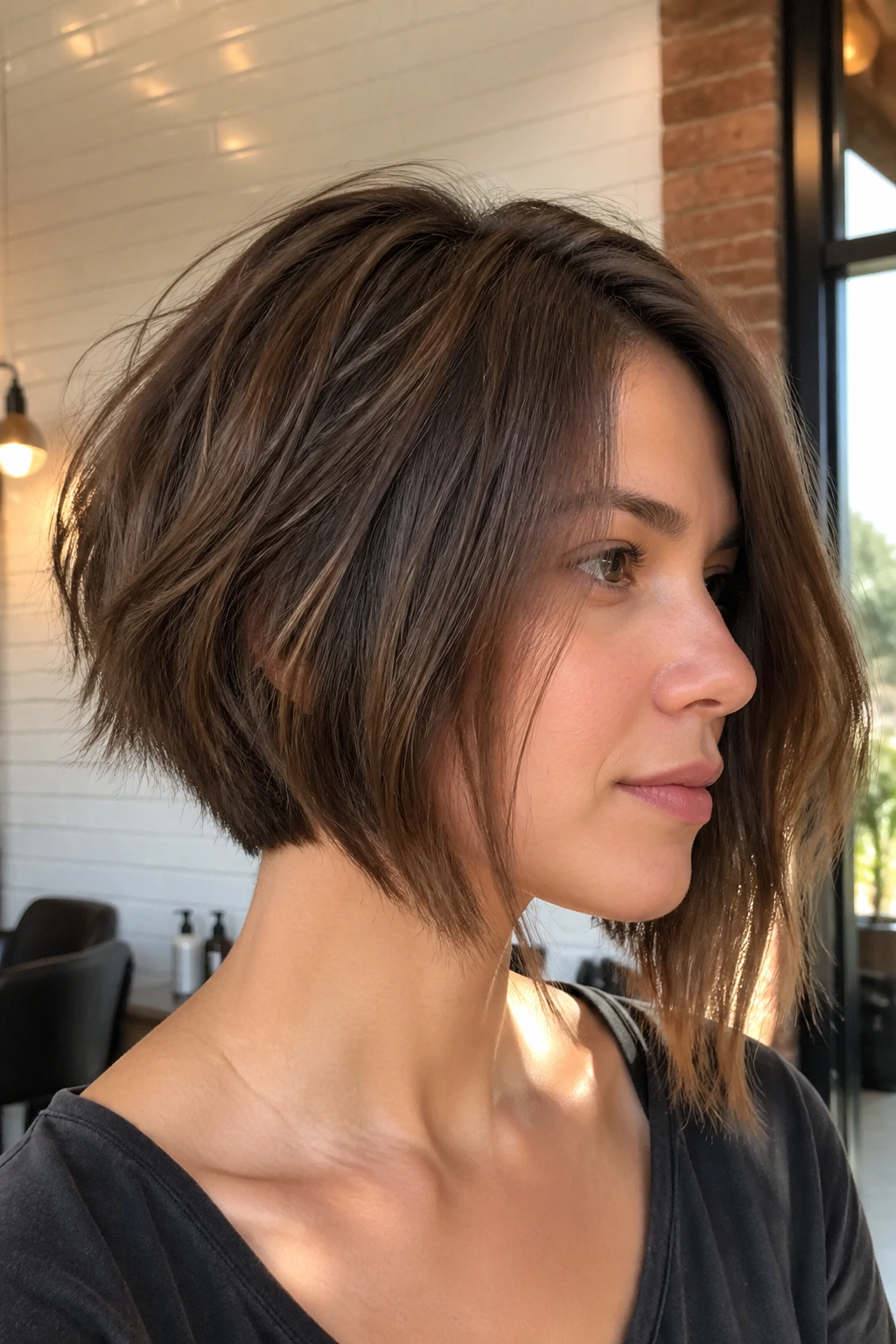
Unlike a blunt one-length bob, which can make fine hair look flat when it sits too close to the head, a choppy asymmetrical bob creates the impression of more density by breaking up the perimeter and shifting the visual weight to one side.
That is the trick. You are not adding hair; you are redirecting attention. Soft chop through the ends keeps the cut from looking stringy, and the asymmetry stops the shape from hanging in one sad curtain around the face. Fine hair often needs that push.
Keep the difference between sides modest—around ½ inch to 1 inch works well. Extreme asymmetry can expose how little bulk is actually there. Ask your stylist for bluntness through the baseline with selective point-cutting only at the last ¼ inch of the ends. Too much texturizing is the enemy here.
Who should try it? Anyone with fine straight hair, fine wavy hair, or low-density hair that collapses after lunch. Use a volumizing mousse at the roots, rough-dry until almost dry, then refine the ends with a flat iron or small round brush. A dry texture spray at the crown helps the cut keep its lift without turning sticky.
This version proves a point people forget: edge does not have to come from more hair. Sometimes it comes from smarter lines.
13. Inverted Asymmetrical Bob for Thick Hair
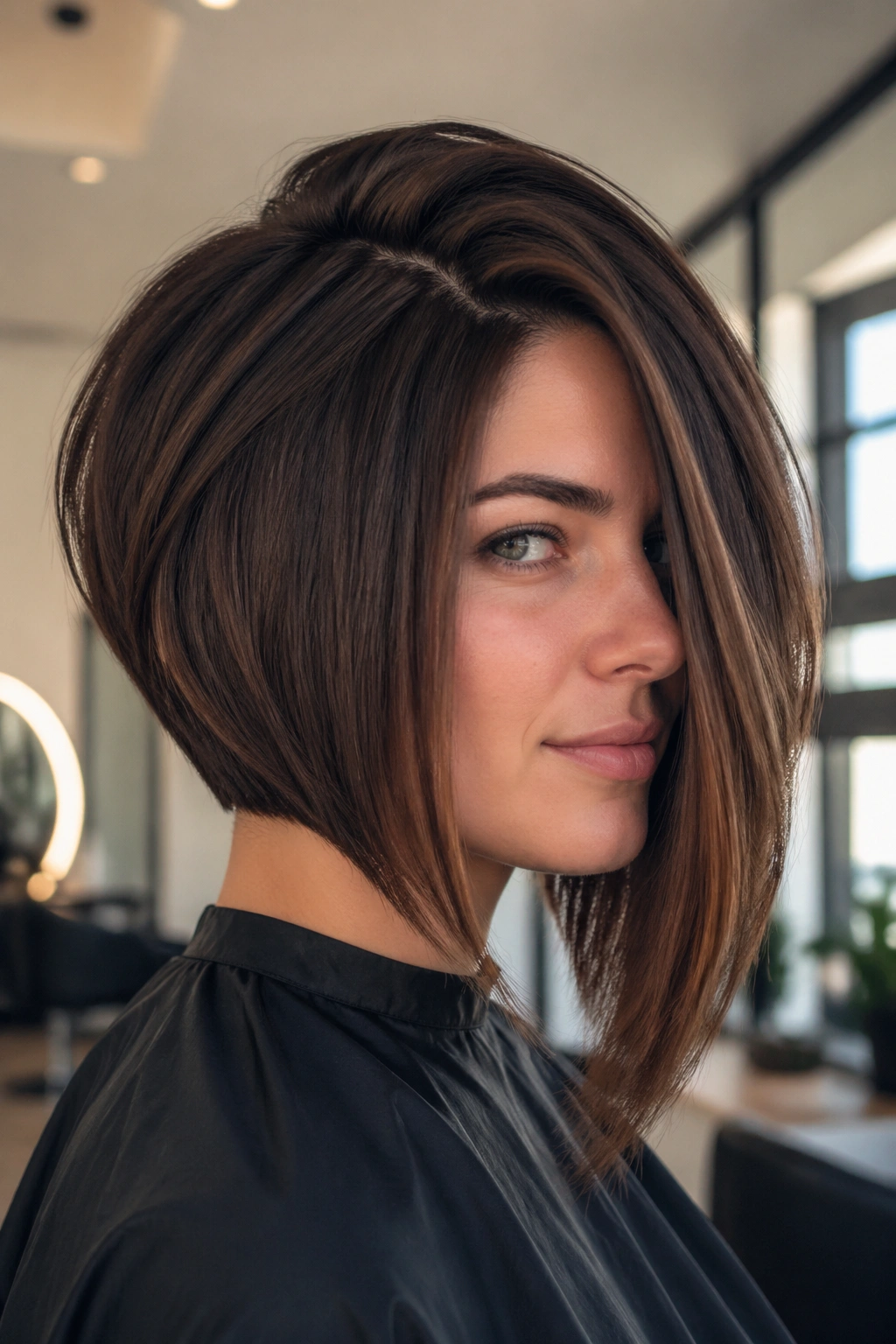
Thick hair can make a bob look rich and expensive—or wide and heavy. The inverted asymmetrical bob solves that by cutting the back shorter, keeping the neckline neat, and stretching one front side longer so the shape stays narrow where it counts.
The inversion removes bulk from the rear of the cut. The asymmetry keeps the front from feeling predictable. Put the two together and you get a bob that sits close to the head without losing presence.
The weight-removal trick that matters
What makes this cut work is not only the outer line. It is the internal removal. Thick hair often needs hidden channels of weight taken out near the occipital bone and behind the ear, while the perimeter stays solid. If a stylist chops into the ends too heavily instead, the bob can puff and fray.
Ask for these specifics
- A shorter back that hugs the nape instead of stacking outward.
- The longer side to land no lower than the collarbone unless you want a lob.
- Controlled internal debulking, not random thinning at the ends.
- A strong perimeter so the asymmetry still shows after a few weeks of growth.
Good choice if: your hair is dense enough to overwhelm a blunt chin bob but you still want a crisp, edgy outline.
14. Nape-Undercut Asymmetrical Bob With a Long Face-Framing Panel
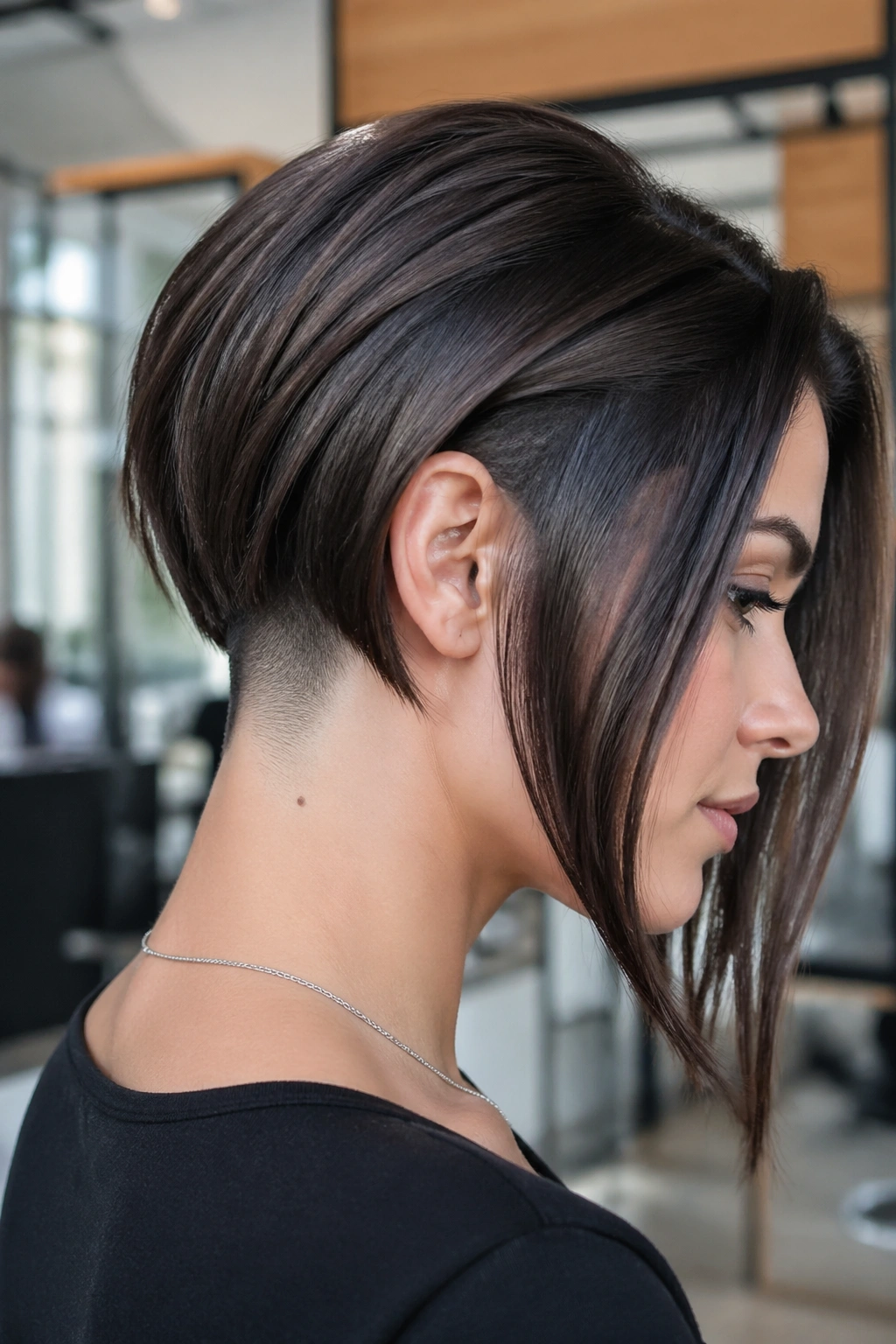
This one is all contrast. Tight at the neck, longer through one front section, and impossible to mistake for a standard salon bob.
A nape undercut removes the bulk that usually gathers at the bottom of thick or coarse hair. Then the stylist leaves a pronounced long panel on one side of the front—often 2 inches longer than the other side—so the haircut keeps one fluid, face-framing ribbon of hair against the close-cropped back. From the side, it looks sharp. From behind, it looks deliberate. From the front, it can read sleek until you turn your head.
This cut shines on straight hair, relaxed hair, and dense wavy textures that need the neckline cleaned out. It can also feel cooler on the neck during hot weather, which is not glamorous advice, but it matters when you live with the haircut every day.
The upkeep is real. The nape undercut often wants clipper work every 2 to 4 weeks, and the front panel needs its line maintained if you want the asymmetry to stay crisp. The payoff is a bob that does not bulk out at the back and does not vanish into safe territory.
Some haircuts whisper. This one does not.
15. Soft Asymmetrical Bob With One Side Grazing the Collarbone
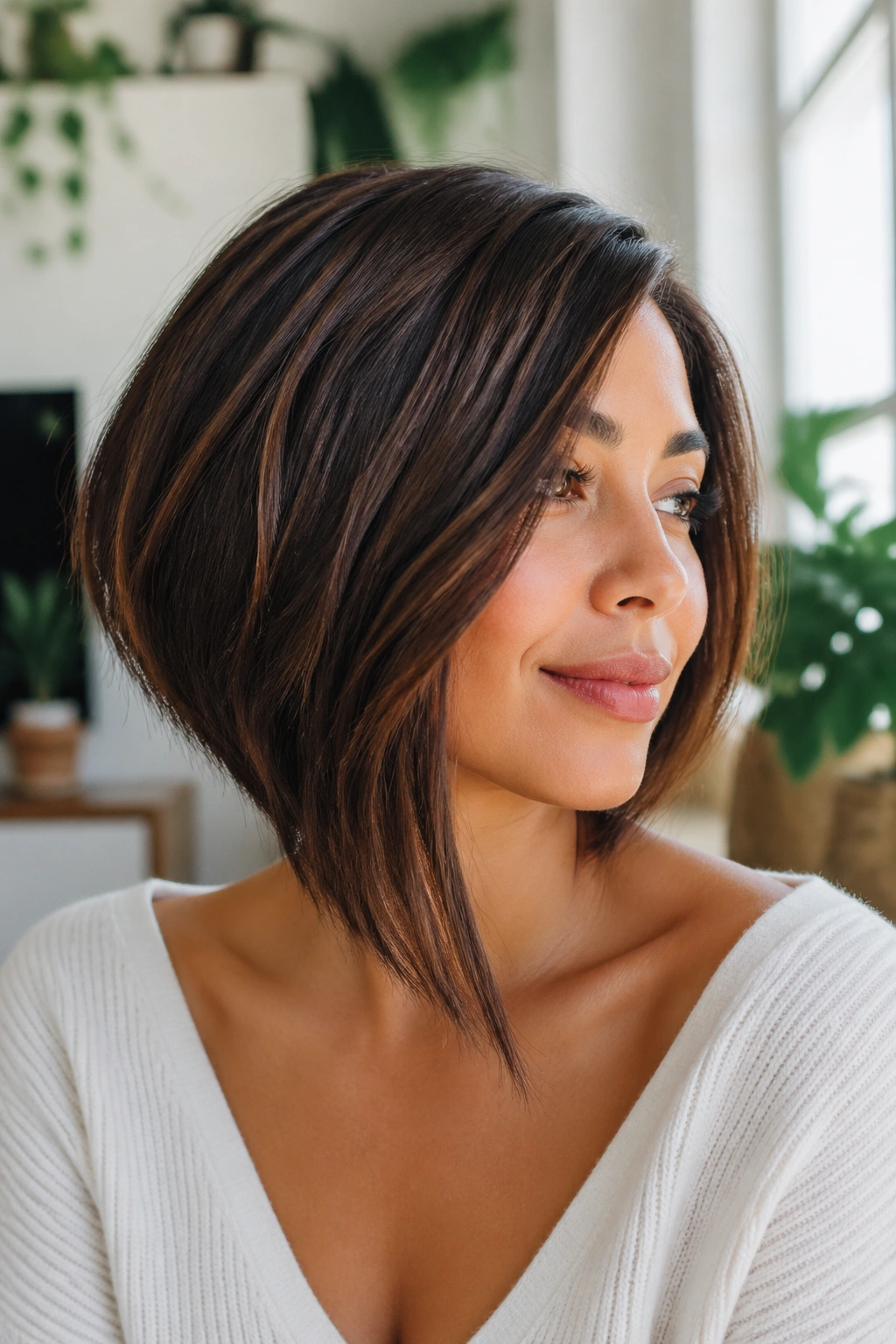
Need an edgy look without a hard, severe finish? This is where to land.
A soft asymmetrical bob keeps the uneven length but relaxes the line. The short side might sit around the chin while the longer side brushes the collarbone, and the ends are softened so the shape moves when you walk. The effect is quieter than a razor-sharp jaw bob, though it still has that off-balance coolness that makes asymmetrical cuts so good.
This version is strong on hair that has a natural bend and on anyone easing into a shorter length after years of long layers. It does not demand a strict flat-iron routine, and it grows out with less drama than shorter, more graphic shapes. That makes it a smart first asymmetrical bob if you like the idea of edge but do not want to babysit the cut every morning.
How to keep the softness from turning flat
Use a lightweight cream or blowout lotion, then dry the longer side with a bit more tension so it stays visible. Add one loose bend below the cheekbone on the long side and leave the short side cleaner. That imbalance is enough.
The soft finish is not a compromise. It is its own mood—cooler than a standard lob, easier than a glass bob, and strong in a way that sneaks up on people.
Final Cut
The best asymmetrical bob is not always the boldest one. It is the one whose length drop, texture, and maintenance level line up with how you actually wear your hair. A hidden undercut looks sharp for someone who loves structure. A broken, beachy bob makes more sense if you prefer movement and a little mess. A curly version can do more for shape than a blunt even cut ever will.
Pick where you want the edge to come from. The line. The texture. The shaved detail. The fringe. Once that part is clear, the haircut gets easier to choose.
Bring your stylist three photos: one from the front, one from the side, one from the back. Then talk in inches, not vague mood words. That is how edgy turns into flattering instead of accidental.
