



A blunt bob can look clean, but if the line sits flat and heavy, it loses the snap that makes short hair memorable. A line bob cuts solve that problem by pulling the eye forward: shorter at the nape, longer toward the chin, and sharp enough to make your jawline look more deliberate even on a rushed morning.
That angle is not a tiny detail. When the back is cut too rounded, the shape turns soft and sweet. Leave the front pieces 1 to 3 inches longer than the nape, though, and the whole haircut starts to read crisp, modern, and a little architectural.
I like A-line bobs best when they do one clear job well. Maybe they slim a fuller cheek. Maybe they take thick hair out of triangle territory. Maybe they stop fine hair from hanging limp by giving it a solid edge. A good one looks simple. It is not.
Small choices decide whether the cut feels sharp or sloppy: where the angle starts, how much weight stays behind the ear, whether the ends are blunt or lightly shattered, and how much length you keep in front. Those details are where the good versions live.
1. Classic Chin-Length A-Line Bob Cut
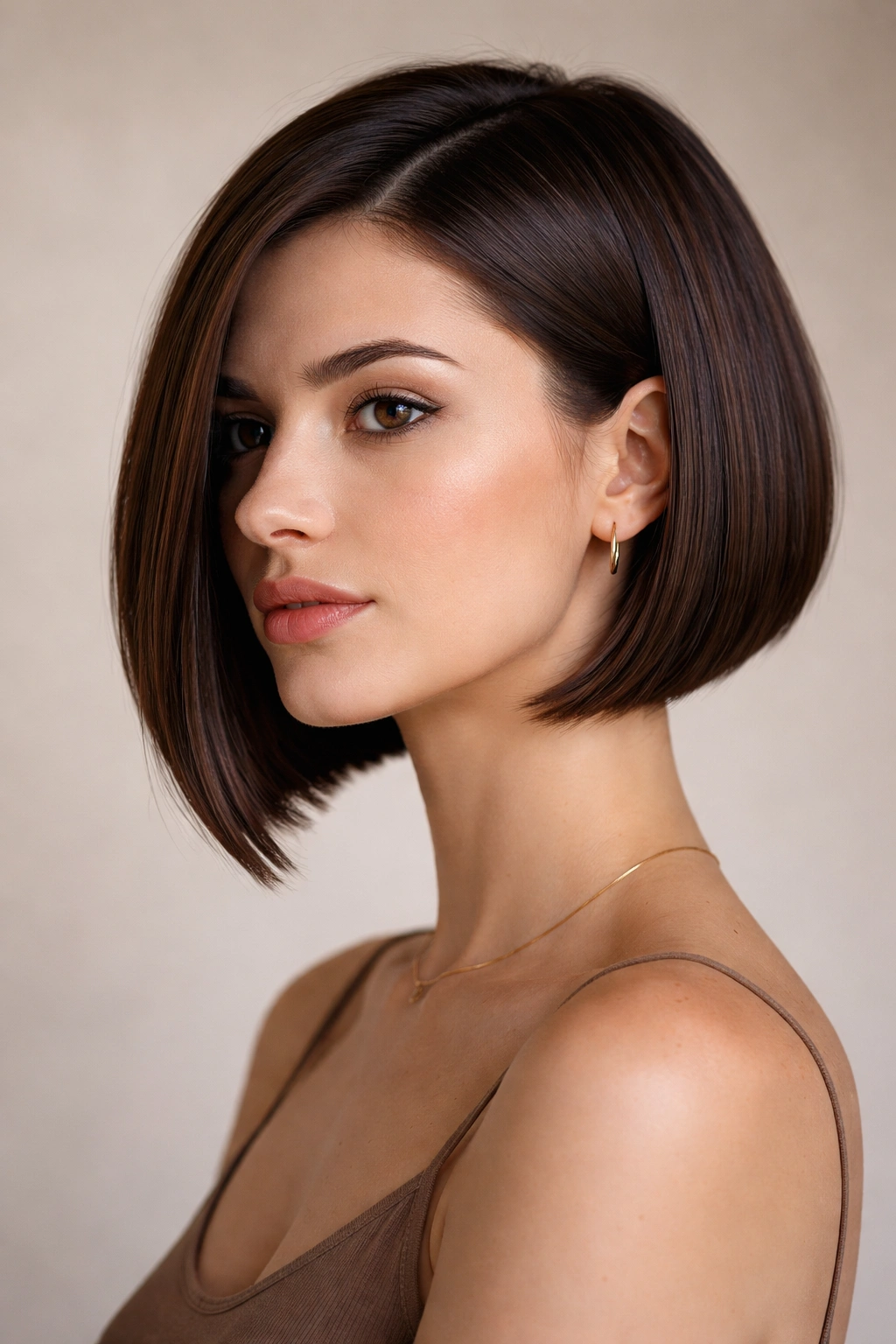
Nothing beats the classic. A chin-length A-line bob cut gives you the cleanest version of the shape: short and snug at the back, then gradually longer until the front pieces land right at the chin. On straight hair, it reads polished. On slight waves, it gets a softer edge without losing the line.
This is the haircut I think of when someone says they want a bob with a sharp angle but do not want it to drift into trend-chasing territory. It frames the lower face in a clear, graphic way, and it usually looks strongest when the perimeter stays blunt rather than feathery.
What gives this one its bite
The secret sits in the difference between back and front. About 1½ to 2 inches of length change is enough for a visible angle without making the haircut feel theatrical. Ask for minimal layers through the crown, because too much layering breaks the line that makes this shape work.
What to ask your stylist for
- Ask for a one-length perimeter through the front with only light softening at the tips.
- Request the nape to sit close to the head, especially if your hair pushes outward at the neck.
- Mention where your chin hits exactly, because half an inch higher or lower changes the whole mood of the cut.
- If your hair flips out at the jaw, ask for the front to land either above that bend or below it — not right on top of it.
Best move: pair this cut with a center part if you want the angle to look strict and symmetrical.
2. Deep Side-Part A-Line Bob Cut
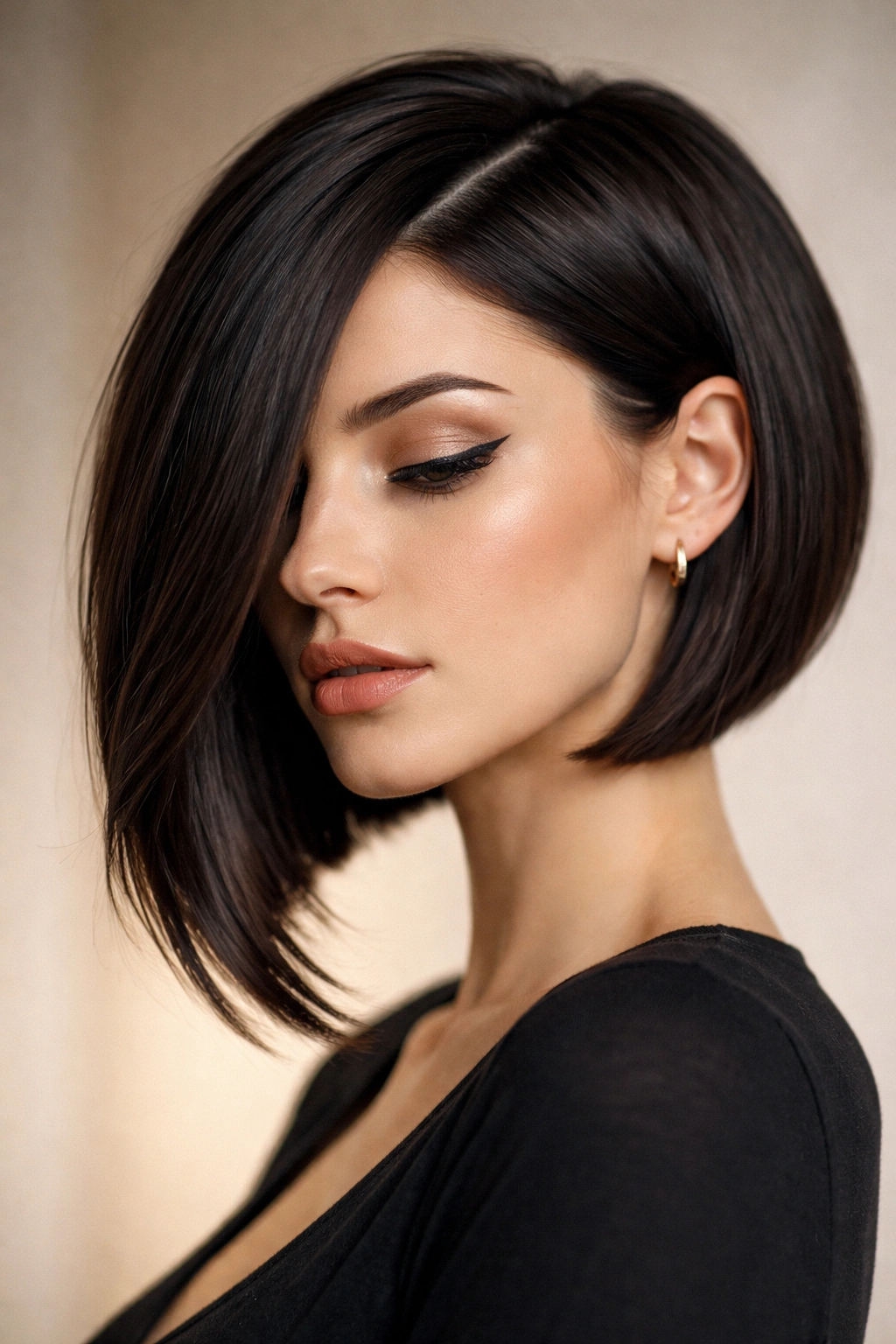
Nothing sharpens an angled bob faster than a deep side part. Same haircut, different parting, and suddenly the whole thing looks more dramatic.
The reason is simple. A deep part throws more hair across one side of the face, which makes the longer front section feel longer than it is. You get contrast without asking your stylist to build a wild angle into the cut itself. That makes this version smart for anyone who wants edge but still needs the hair to tuck behind one ear for work, glasses, or plain convenience.
Rounder face shapes often benefit from this trick because the diagonal line breaks up width through the cheeks. Fine hair likes it too, since the heavy side part gives the crown a lift that a center part sometimes flattens. Blow-dry the roots opposite the way they want to fall, then flip them over once the hair is about 80 percent dry. That little bit of root tension matters.
One caution. If your hairline splits or cowlicks near the temple, a deep part can fight you every morning. Not impossible. Just annoying. In that case, keep the part softer and let the angle do the work instead of forcing a line your hair refuses to hold.
3. Sleek Jaw-Skimming A-Line Bob Cut
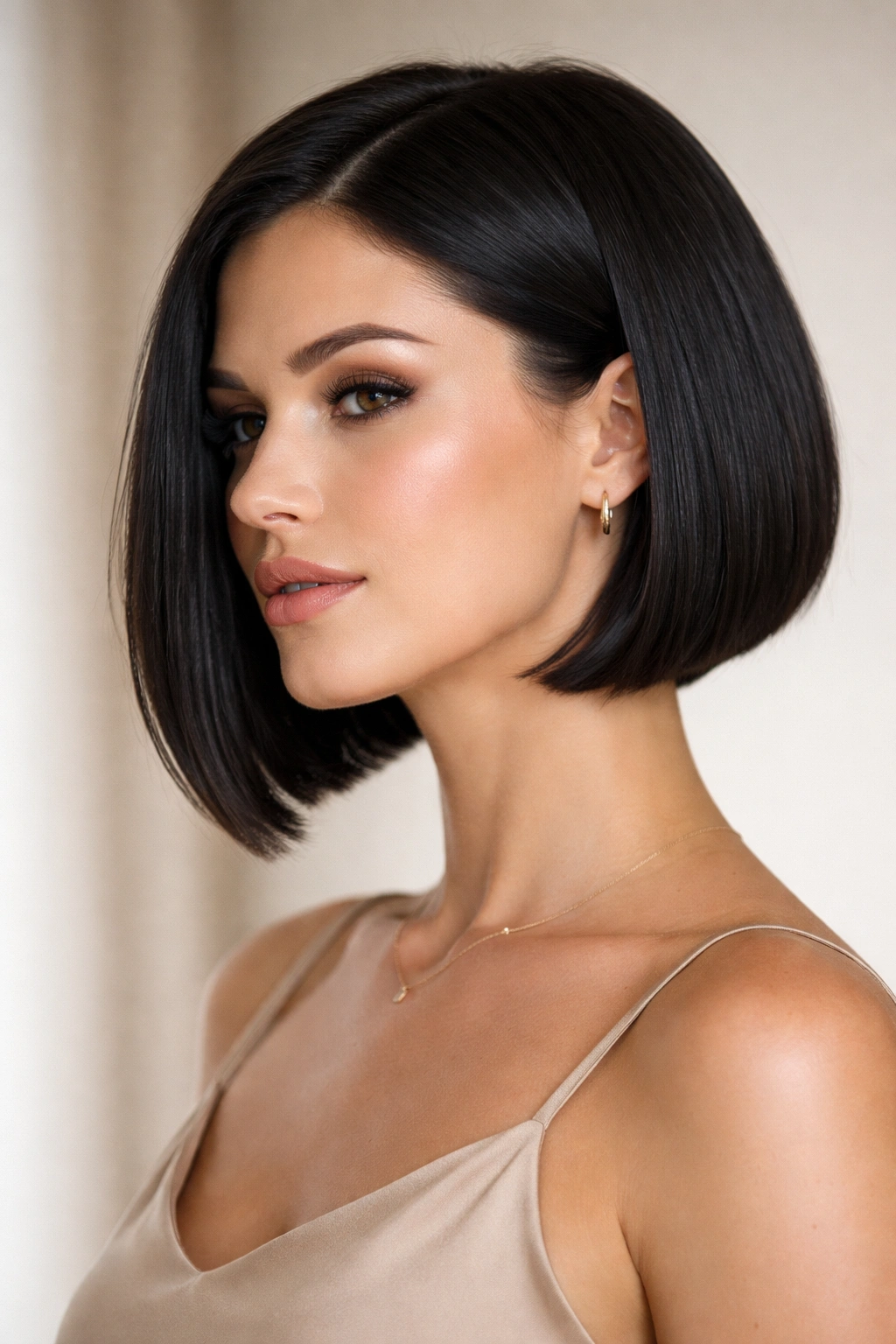
Want the cut that looks strict in the mirror and expensive from across the room? Go jaw-skimming.
A sleek A-line bob cut that lands right at the jaw has almost no room for sloppiness. The line is visible from every angle, so the ends need to be crisp, the front panels need to match, and the back should sit flat against the neck instead of puffing outward. Done well, this shape makes cheekbones stand out and gives the whole face more structure.
Humidity is the enemy here. So is over-layering. If your stylist chips away too much weight at the ends, the cut stops reading sharp and starts looking tired after two hours outside. I would rather see a jaw-length bob with a little too much weight than one that has been texturized into mush.
How to style it without killing the line
Start with a smoothing cream on damp hair, then blow-dry with a flat brush or small paddle brush, directing the ends under with light tension. After that, run a flat iron through 1-inch sections at about 325°F to 375°F, depending on your hair texture. Keep the wrist straight. Flicking the iron around adds bends you do not want.
Finish with a drop of lightweight serum rubbed through the mid-lengths and ends. Not the roots. Never the roots. Glass-smooth hair shows the angle best, and too much oil near the scalp collapses the shape.
4. Collarbone A-Line Lob with Sharp Front Pieces
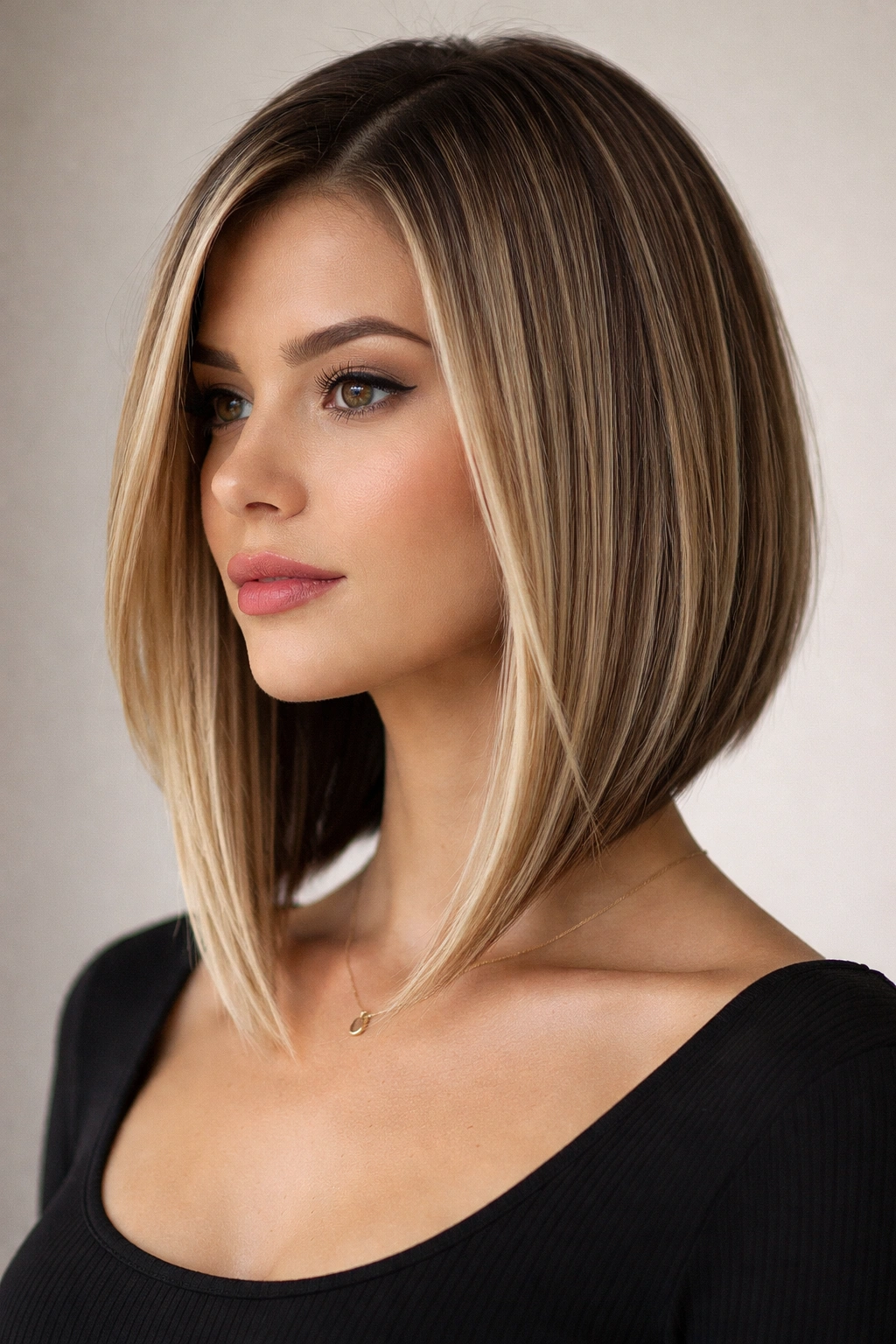
Say you want the angle of a bob but cannot deal with a bare neck, constant trims, or that awkward feeling short hair can bring the first week after a big cut. This is where the collarbone version earns its keep.
A longer A-line bob — some people call it a lob, and that is fair — keeps the back around the nape or upper shoulder while the front pieces stretch toward the collarbone. You still get the forward pull that makes an angled cut look intentional, but the extra length buys you softer grow-out and more styling room. Ponytail on day three? Still possible.
This shape works well on hair that bends a little on its own. Straight hair keeps the edge clean. Loose waves make it look less severe. Either way, ask for the front to stay 2 to 3 inches longer than the back if you want the angle to read from across the room rather than only in profile.
Who tends to like this cut most?
- People growing out a short bob who want shape during the awkward middle stretch.
- Anyone with a longer neck who likes the look of short hair but wants more coverage.
- Thick-haired clients who need weight to stop the sides from ballooning outward.
- First-timers who want a sharp angle without committing to chin length.
The collarbone A-line has one quiet advantage I do not hear talked about enough: it looks good air-dried more often than the shorter versions do.
5. Stacked Nape A-Line Bob Cut
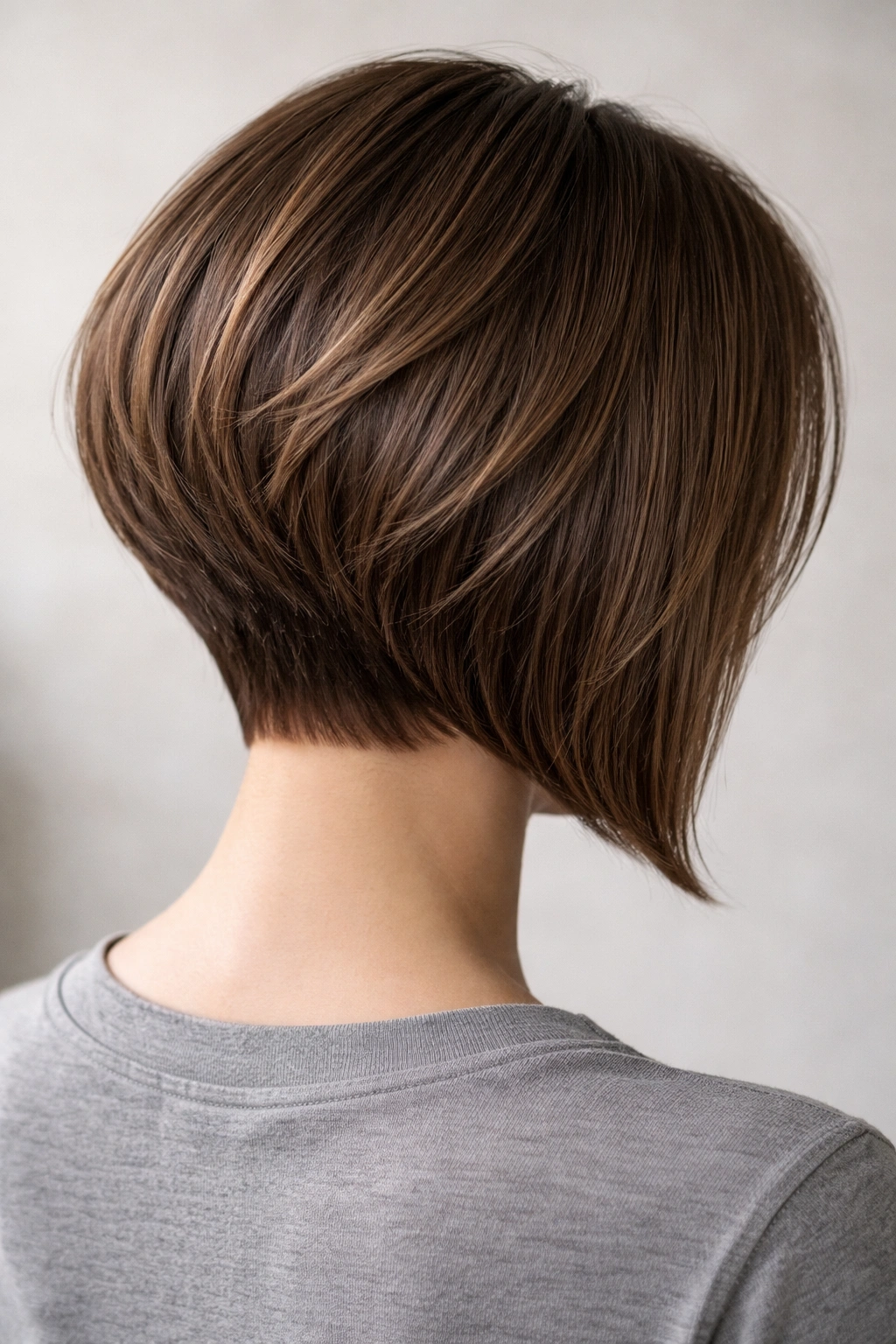
A sharp angle does not have to mean flat hair. The stacked nape version proves it.
Instead of keeping the back all one length, this cut uses short graduated layers at the nape to build lift. The hair hugs the neck, then rounds out a little through the back of the head before sliding forward into longer face-framing pieces. You get shape from two directions at once: height in back, length in front.
Done right, it can make fine or medium hair look fuller. Done badly, it turns into helmet hair. That is the risk. If the stacking is too aggressive, or if the shortest layers sit too high above the occipital bone, the bob starts to look dated fast. I prefer a softer stack — enough to support the shape, not so much that you can count the ledges.
This one suits people whose hair collapses at the crown or grows flat against the scalp. The graduated back gives the illusion of density where you need it. A clean neckline matters here, so expect trims closer to the 5- to 7-week mark if you want the cut to stay crisp.
Back-view haircuts can be deceptive. You might love the lift in the salon mirror, then hate it once it grows out and hits your collar. Ask your stylist where the shortest point will land before the first snip. Small question. Big difference.
6. Blunt A-Line Bob Cut for Fine Hair
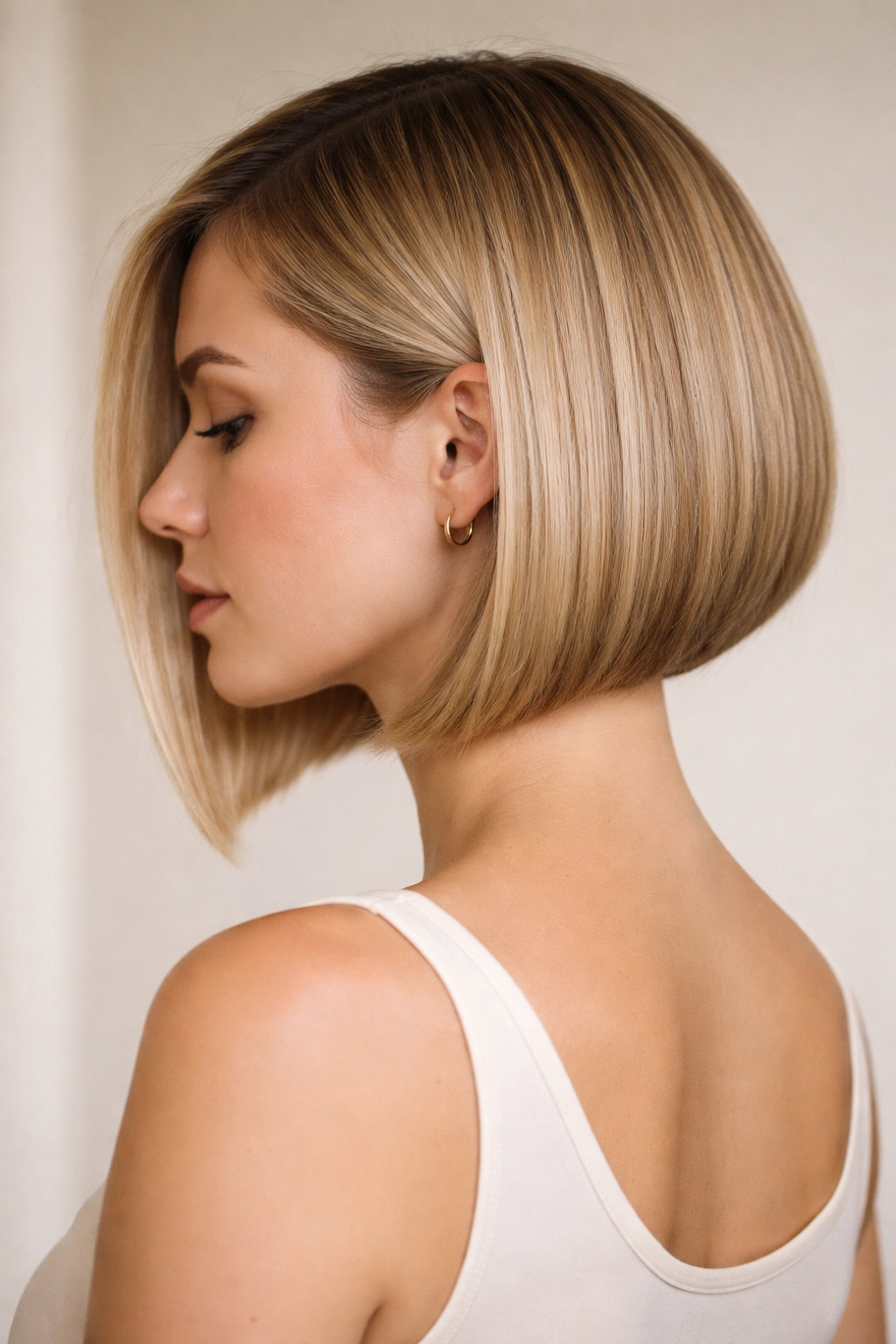
Unlike layered bobs that try to fake volume with movement, a blunt A-line bob cut for fine hair wins by keeping every strand it can.
Fine hair often looks thicker when the ends land as one firm line. Remove too much weight, and the haircut turns wispy. Keep the perimeter blunt, angle it forward, and suddenly the hair has a shape that feels denser even if the actual amount of hair has not changed at all. That is the magic of this version — and yes, I know “magic” sounds gushy, but if you have ever watched thin ends disappear under thinning shears, you know what I mean.
This cut is best for straight to lightly wavy textures. Ask for little to no texturizing at the bottom inch of the hair. If you need movement, get it from styling, not from carving away the line. A thickening spray at the roots and a round brush directed under the ends usually does more for fine hair than layers ever will.
Who should skip it? Anyone whose hair mats easily at the nape or curls hard at the jawline. Those patterns can make a blunt perimeter fight back. Everyone else should give this one a close look, because few cuts make fine hair look as deliberate.
7. Textured A-Line Bob Cut for Thick Hair
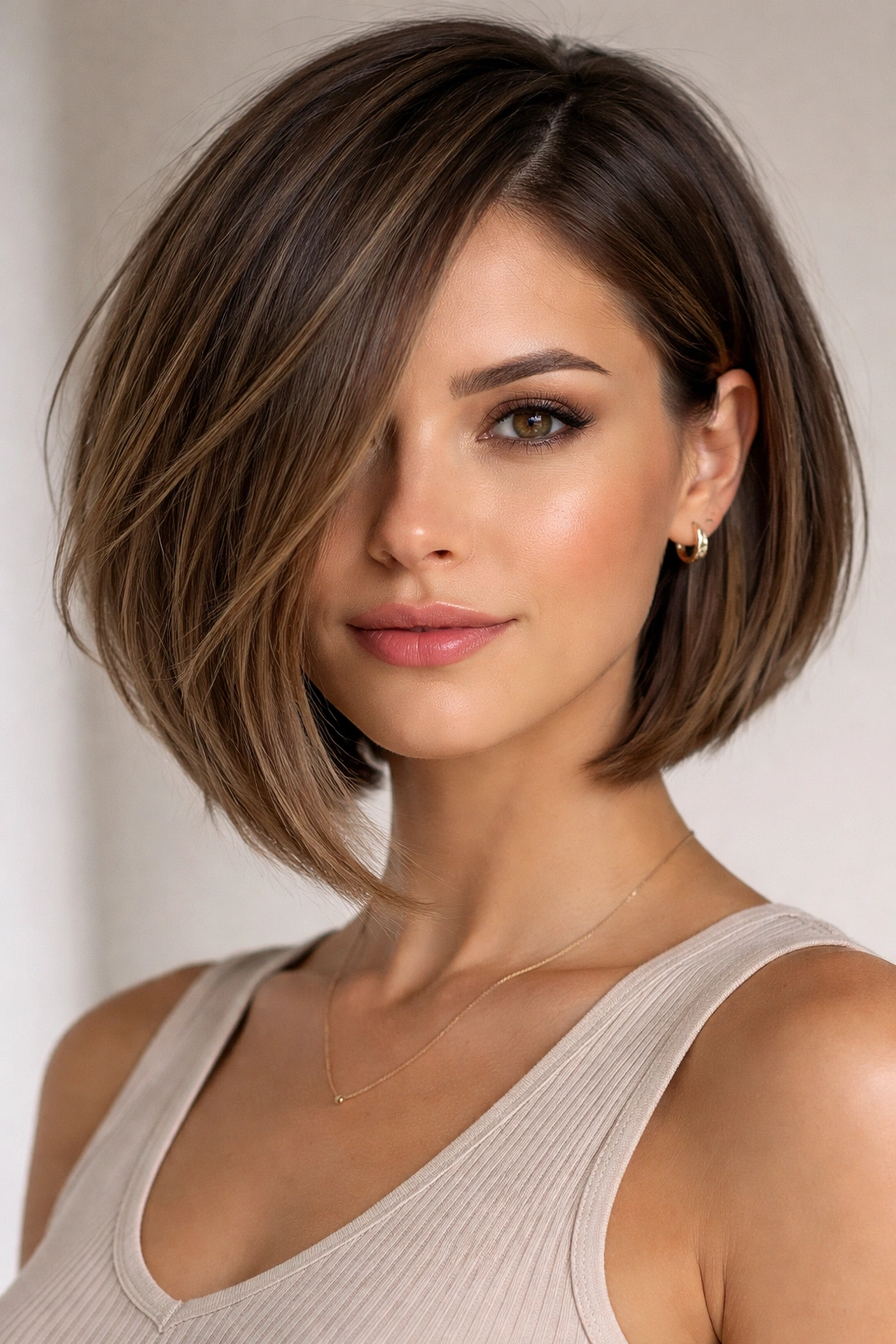
Bulk is the problem.
Thick hair can make an angled bob look huge in the wrong way — wide at the sides, solid at the ends, and heavy enough to push the front forward like a shelf. A textured A-line bob fixes that by removing weight inside the haircut while keeping the outer shape sharp.
Where the weight should come out
The best stylists do not shred the ends first. They take weight from the interior, often around the lower occipital area and behind the ears, so the bob can collapse inward instead of outward. The perimeter still needs to read as one clean angle. Textured does not mean ragged.
A razor can work on dense, straight hair. Slide-cutting can work on thick waves. Point-cutting can work when you want a softer finish without visible chunkiness. Different tools, same goal: less bulk, same shape.
Quick checks before you commit
- If your hair takes 30 minutes to dry naturally, you probably need internal weight removal.
- If the sides turn triangular by midday, the cut is carrying too much bulk below the cheekbones.
- If your last bob felt wide but not full, the issue was likely placement of weight, not lack of layers.
- If the ends look stringy after texturizing, too much was taken off the perimeter.
I keep coming back to that last point because it matters. Thick hair still needs a boundary. Once the line is gone, the angle goes with it.
8. Asymmetrical A-Line Bob Cut with One Longer Side
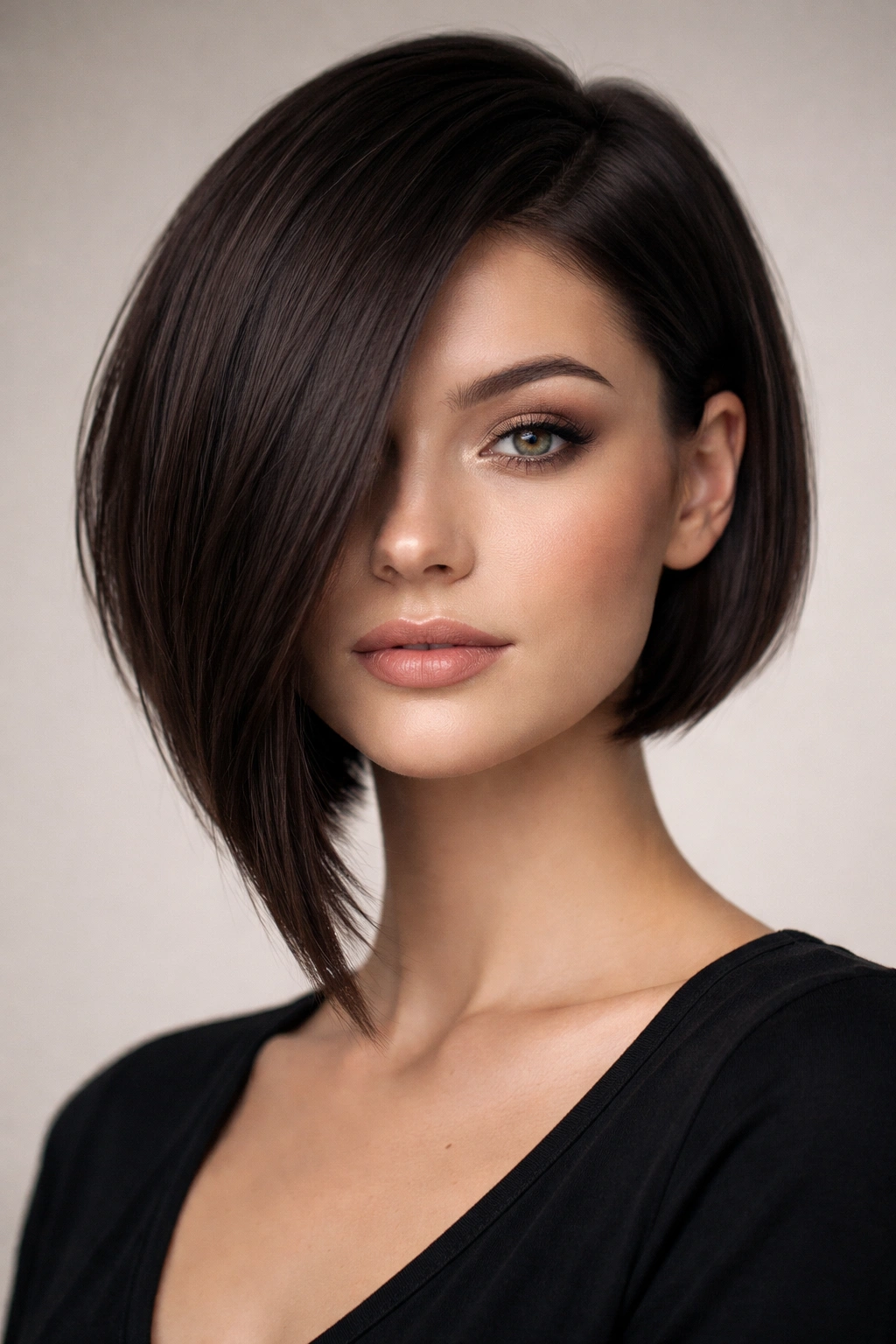
Two extra inches on one side can change the whole personality of a bob.
An asymmetrical A-line bob cut already has angle from back to front, then adds a second layer of tension by keeping one front side longer than the other. It is sharper, moodier, and a little less forgiving than the classic version. Not hard to wear. Harder to ignore.
This works best when the difference is visible but controlled. I like a 1- to 2-inch length gap between the two front sides. Push it much farther, and the haircut can drift into novelty. Keep the shorter side around the jaw or just above it, then let the longer side skim below the chin toward the upper neck.
Straight textures show the asymmetry cleanly. Soft waves can still carry it, though the effect gets hazier. Curly hair can do it too, but the stylist has to account for shrinkage on each side separately or the “intentional imbalance” turns into plain old imbalance.
There is one daily styling note worth knowing: asymmetrical cuts look best when your part supports the longer side. Fight that, and the bob can read lopsided instead of deliberate. Work with the cut. Do not wrestle it into a different shape every morning.
9. A-Line Bob Cut with Soft Curtain Fringe
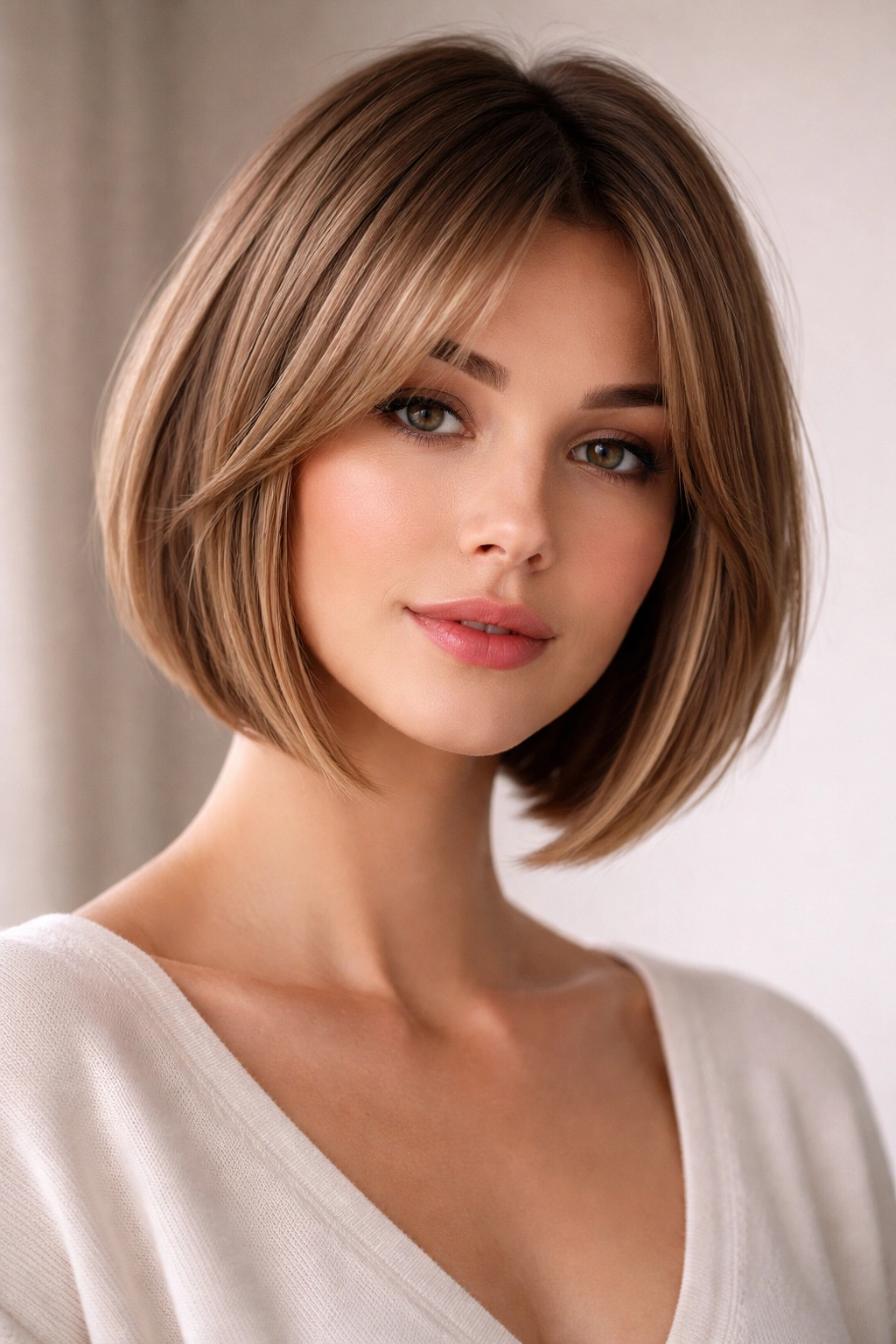
Can a sharp angled bob live with bangs? Yes — if the bangs are the right kind.
A heavy straight-across fringe can crowd an A-line shape, especially when the cut already has strong lines around the jaw. Soft curtain fringe does the opposite. It opens the center of the face, blends into the longer front pieces, and keeps the haircut from looking too boxed in. The result feels lighter, even when the perimeter stays blunt.
The key is connection. Those shorter front sections should slide into the bob around the cheekbone or upper lip area, depending on your face length. If the fringe stops abruptly and the bob starts abruptly, you get two separate haircuts arguing on the same head.
What to watch for
Cowlicks at the hairline can make curtain fringe a pain, especially if the shortest part sits above the brow. Ask your stylist to cut the fringe dry or near-dry so the split and spring show up before you leave the chair. A tiny round brush — think 1-inch barrel, not 2-inch — gives the bend enough control without turning the fringe into a pageant swoop.
This version suits someone who wants the clean geometry of an angled bob but wants a little softness near the eyes. Sharp line, gentler entry. Good combination.
10. French-Inspired A-Line Bob Cut with Tucked Ends
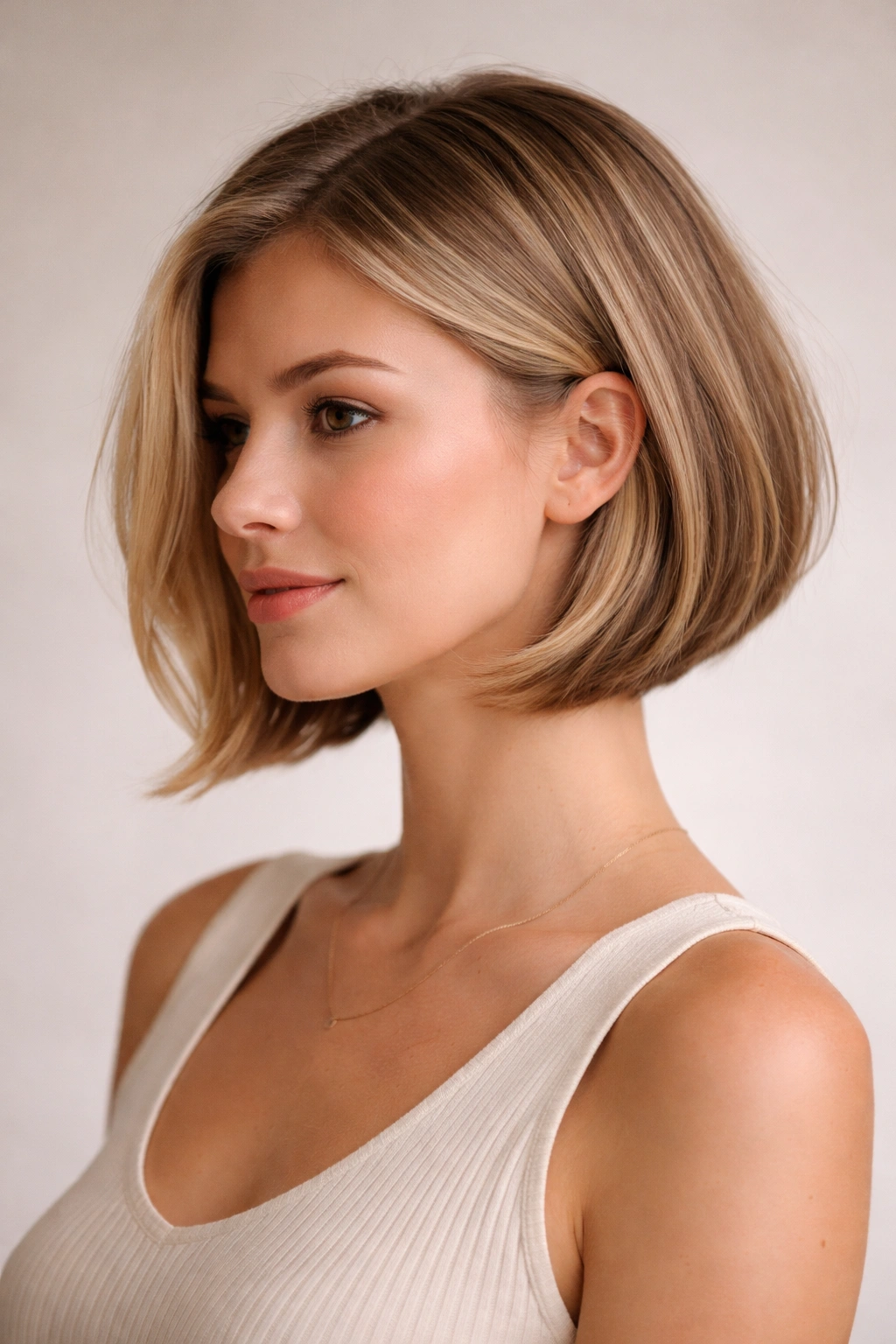
You know that small inward bend at the bottom of a bob, where the ends tuck under the jaw instead of sticking straight out? That detail changes everything.
A French-leaning A-line bob keeps the angle, but the finish is less rigid than the glassy jaw-skimmer. The back sits close. The front drifts longer. The ends curve inward just enough to hug the face. It feels lived-in rather than stiff, which is why this one works so well on medium-density hair that has a soft natural bend.
I would not call it messy. Loose, maybe. Deliberate, yes. The haircut still needs a clear perimeter or it loses the shape.
Ask for these details
- A length that lands between the chin and the top of the throat in front.
- Soft internal movement through the ends, not heavy layering through the crown.
- A bend-under finish from a brush or flat iron, not a full curl.
- Enough length at the back to avoid exposed scalp if your hair separates at the nape.
A little dry cream or pomade worked through the tips helps hold that tucked shape. Skip stiff hairspray. This cut wants movement when you turn your head.
11. Razor-Finished A-Line Bob Cut with Piecey Ends
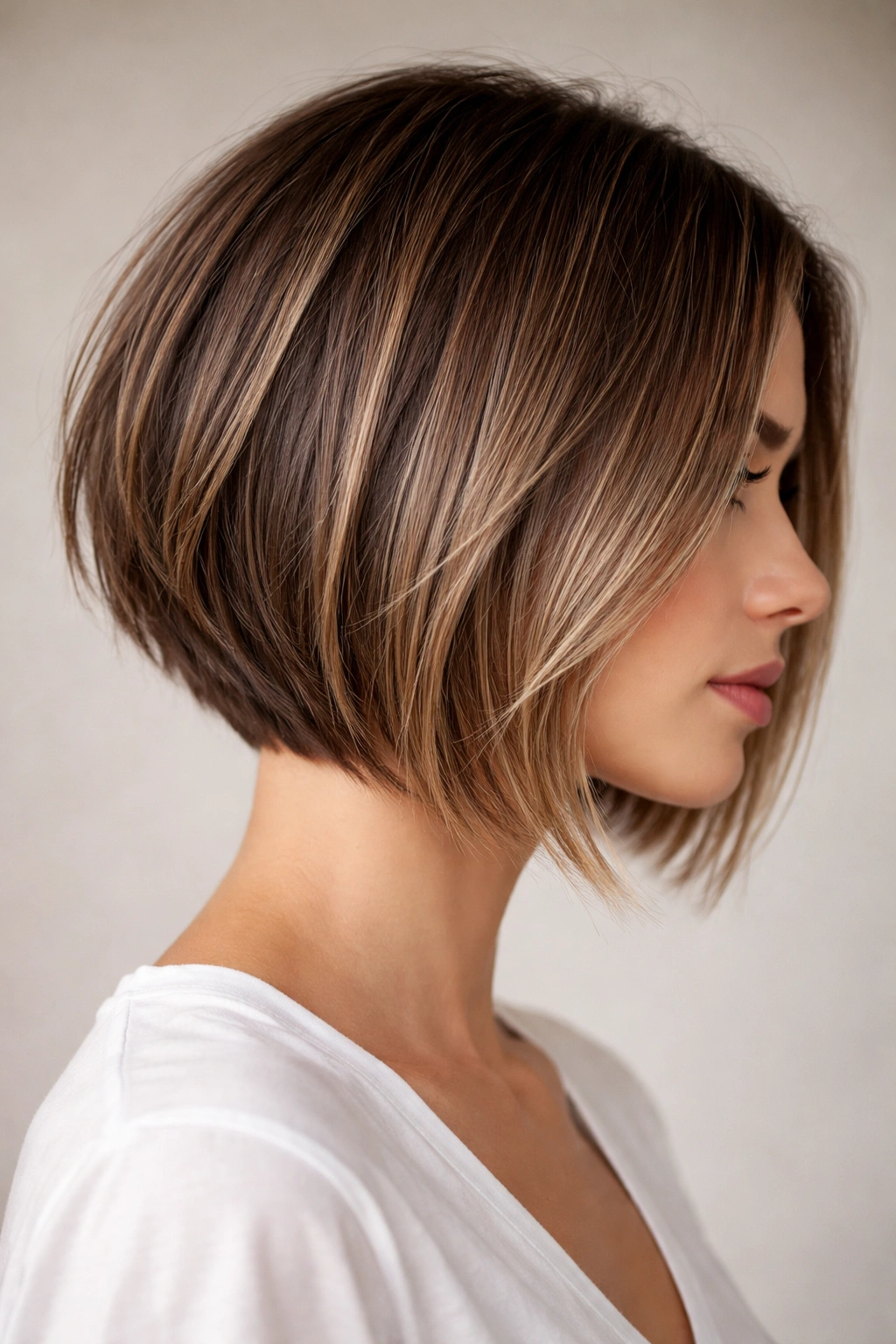
A razor can save an angled bob — or wreck it.
When it works, a razor-finished A-line bob looks lighter, sharper, and more mobile than a standard blunt cut. The angle still reads, but the ends separate into soft little sections instead of sitting like one hard shelf. That makes this version good for thick straight hair, dense waves, and anyone who hates the heavy “block” feeling some bobs get at the jaw.
When it fails, the ends look frayed by week two. Dry hair shows the damage first, especially if the strands are fine or highlighted. That is why I would keep a razor far away from fragile hair unless the stylist knows exactly how your texture reacts.
This cut benefits from a rougher styling finish. Blow it dry, then break up the ends with a pea-size dab of styling paste or texture cream. You want separation, not crunch. A middle part makes it look cooler; a side part makes it look looser. Both can work.
Short warning. Razor-cut ends grow out softer than blunt scissor-cut ends, which some people love and some people cannot stand. If you like a haircut to hold a hard line for six solid weeks, this may not be your best match.
12. Curly A-Line Bob Cut with Built-In Shape
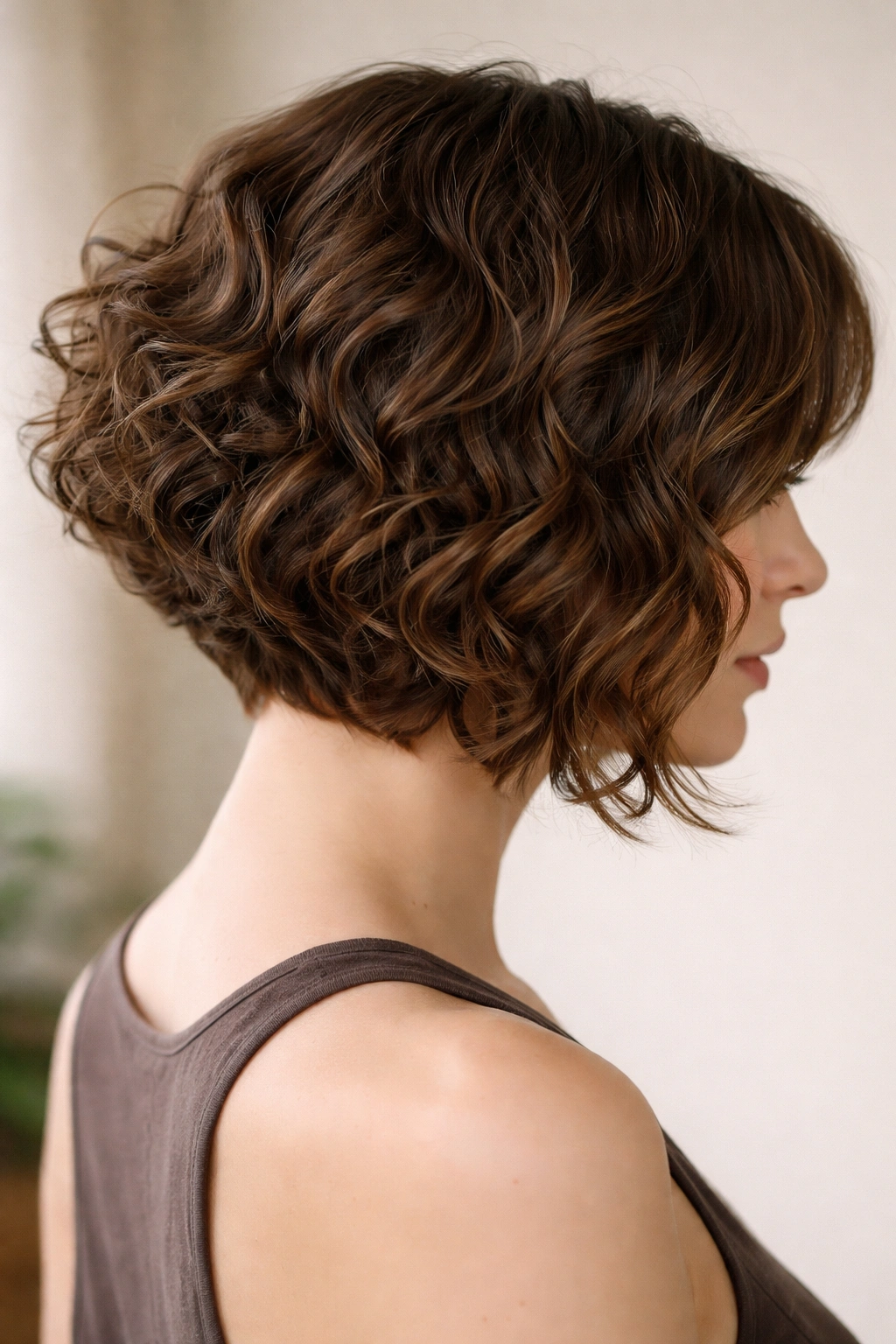
If your curls spring up the second they dry, the usual bob rules do not apply.
A curly A-line bob cut needs the angle to be mapped with shrinkage in mind. Hair that looks collarbone length when wet can jump to jaw length when dry, and the front often springs differently from the back. That means a stylist has to plan the shape curl by curl or section by section, not copy the same line used for straight hair.
Why the front usually needs extra length
Curls around the face tend to lift and bounce more because they are handled more, diffused more, and tucked more. Leaving the front 1 to 2 inches longer than you think you need gives the final shape room to settle into an actual angle after drying.
What makes a curly version work
The best curly A-lines keep weight where it matters. Too much layering at the sides can make the cut widen out near the cheeks. Better options include light internal shaping, a clean baseline, and strategic removal of bulk near the lower back section so the nape does not push forward.
Air-dryers can wear this cut. Diffuser users can too. Product matters more than tools here. A curl cream under a light gel often gives enough hold to show the angle without turning the curls stiff. And no, curly bobs do not have to be perfectly symmetrical to look good. They do need intention, though.
13. Wavy A-Line Bob Cut with Broken Perimeter
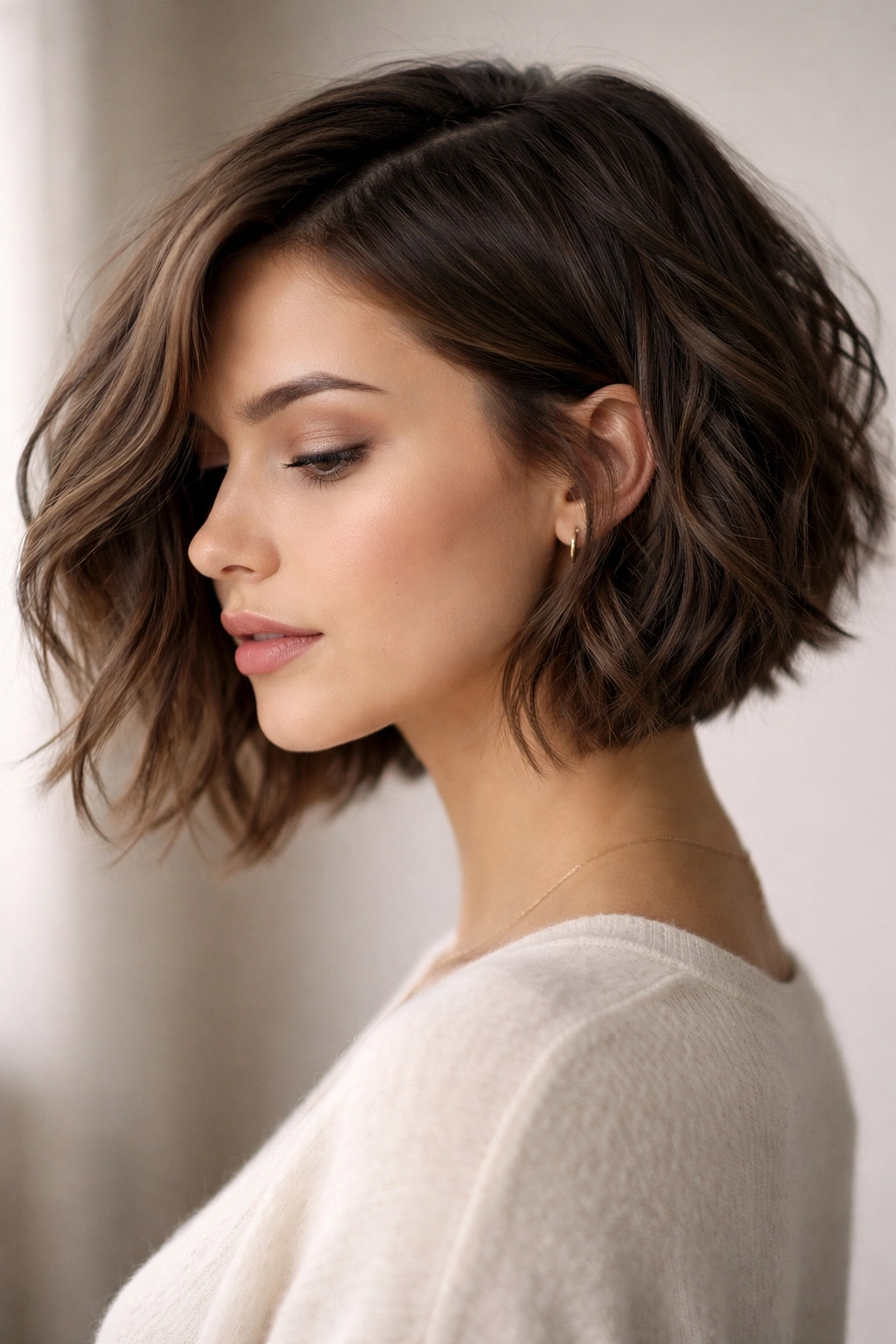
Unlike the sleek version, a wavy A-line bob does not need a razor-straight bottom edge to look sharp. It needs a line that suggests order while letting the wave break it up a little.
That is where a broken perimeter comes in. The back and sides still follow an angle, but the ends are chipped into slightly uneven pieces so natural bends can sit where they want instead of fighting a blunt wall. On the right head of hair, this looks easier and cooler than a polished finish, especially if your wave pattern starts around the cheek or ear.
I prefer this style on hair with a loose S-wave rather than tight curls. Mist in a salt spray or wave foam on damp hair, scrunch lightly, then either diffuse on low or let it dry on its own. Once dry, touch a few front pieces with a 1-inch iron if the angle needs more definition. Not the whole head. Only the sections that need a nudge.
The danger is over-texturizing. Too much chipping, and the bob loses its edge. Too little, and the waves stick out in odd directions. This is one of those haircuts that looks casual but needs a precise hand.
14. Undercut A-Line Bob Cut for Dense Hair
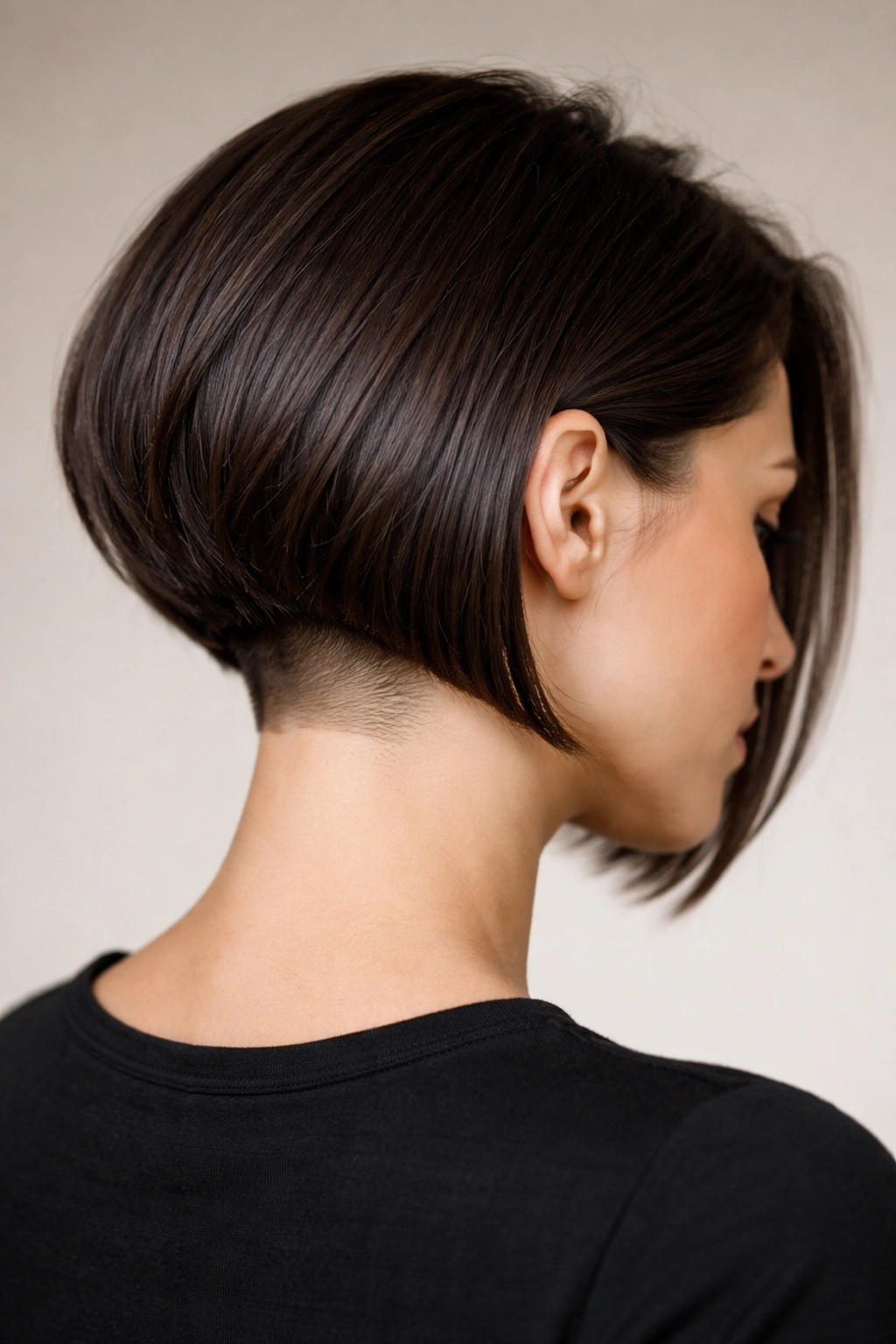
There is nothing delicate about dense hair packed at the nape. It can push an angled bob straight off course.
An undercut A-line bob removes a hidden section underneath the back or lower sides so the top layer can fall closer to the neck. From the outside, you still see a sharp bob. Underneath, though, there is less hair creating bulk, heat, and that familiar shelf effect that thick-haired clients know too well.
I like this option most for hair that feels hot, heavy, and slow to dry. If your nape stays damp long after the rest of your head is dry, that tells you something. If your bob turns into a mushroom by lunch, that tells you more.
Signs this cut might solve a real problem
- Your hair is dense enough that the nape stays wet for 20 minutes longer than the crown.
- Standard thinning shears have made your ends puffy instead of lighter.
- You wear your hair up at home because a full bob feels warm against the neck.
- The weight behind the ears makes the front pieces kick forward.
One catch: undercuts have a distinct grow-out phase. You will feel the hidden section sooner than you see it. Some people love that secret structure. Others get tired of maintaining it. Good to know before you say yes.
15. Glossy Dark A-Line Bob Cut with Glass-Hair Finish
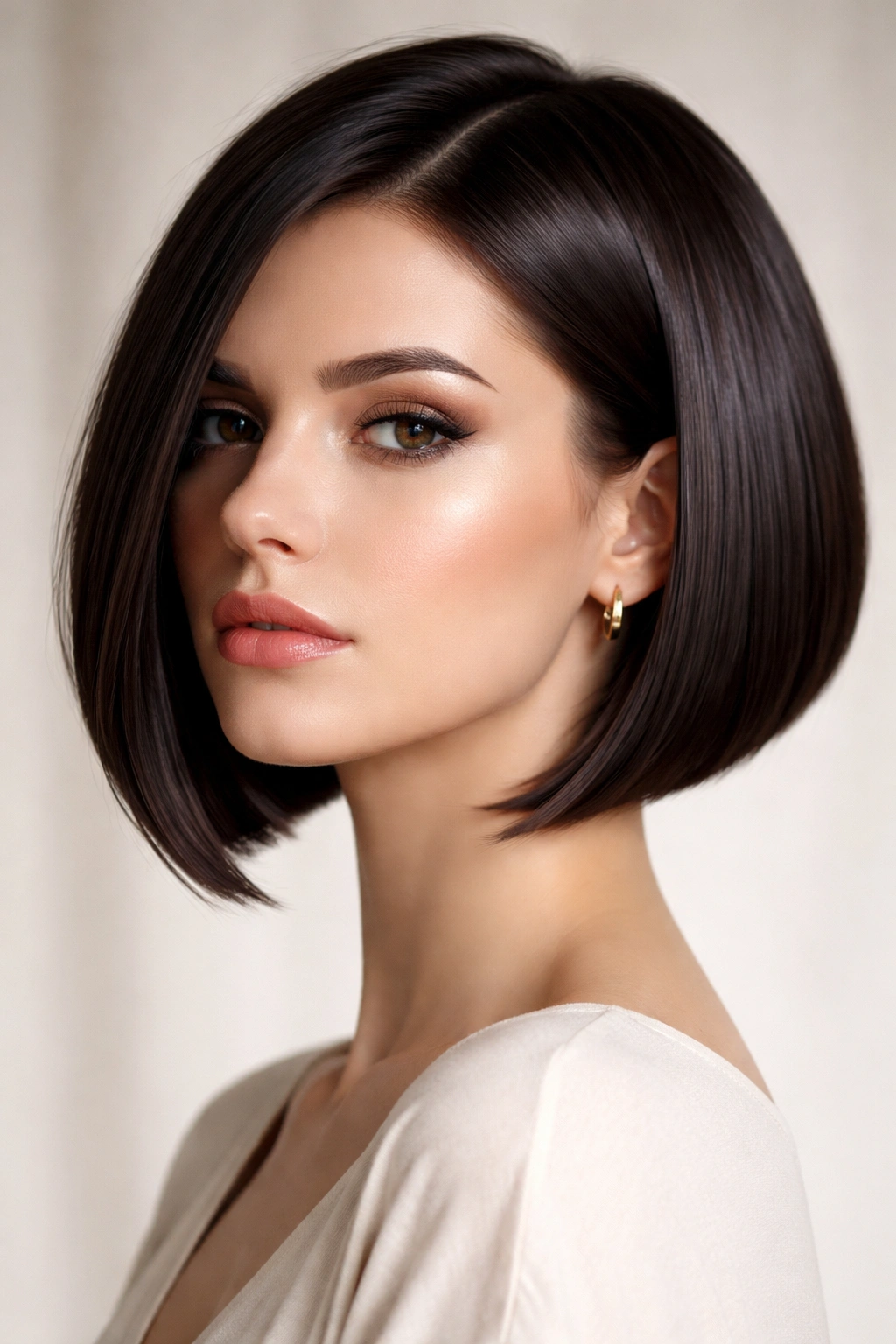
Dark, reflective color turns a simple angle into a graphic one.
I am folding color into the last spot because the cut stays the star, yet shade can change how sharply an A-line reads. A glossy dark A-line bob cut — espresso, soft black, deep brunette — shows the perimeter with almost ink-like clarity when the surface is smooth. You see the line first. Then the shine.
This version works best when the haircut is blunt or close to blunt. Heavy texturing scatters the light and softens the outline. If you want that glassy, blade-like edge, keep the ends compact and style with discipline: heat protectant first, then blow-dry with tension, then one pass of a flat iron through clean sections. Finish with a shine spray held 8 to 10 inches away so the mist falls lightly instead of wetting the hair down.
Lighter hair can wear an angled bob well. No question. Dark color just makes the shape easier to read from a distance, especially indoors where subtle layers disappear. If your hair is naturally dark, a clear gloss treatment and a precise trim can do more for this look than a whole new color appointment.
And yes, the upkeep is real. Shine shows fingerprints from bad styling. Split ends show faster. Still worth it, if you love a haircut with a little edge.
Final Thoughts
The best A-line bob cuts do not depend on drama alone. They depend on proportion. A sharp angle looks good when the back sits clean, the front has enough length to matter, and the stylist keeps or removes weight in the right places for your texture.
Hair type decides more than face shape does, if I am being blunt. Fine hair usually needs a firm perimeter. Thick hair often needs hidden weight removal. Waves need a broken edge that still holds shape. Curls need length planning before the first curl springs up and surprises everybody.
If you are booking one of these cuts, go in with measurements and reference points, not only photos. Say where you want the front to hit. Say whether you want the nape exposed. Say how often you are willing to trim it. Those small details are what separate a sharp bob from a bob you spend six weeks trying to fix with a flat iron.
