



A good pixie bob doesn’t ask permission.
It walks into the room, shows the neck, and leaves a little edge behind.
That’s why pixie bob cuts keep getting picked by people who want short hair with shape, not a helmet, and not a safe little trim that disappears the second you tuck it behind the ear. The sweet spot is right there between a cropped pixie and a fuller bob: enough length to swing, enough structure to look intentional, and enough bite to feel modern without trying too hard.
What makes the cut work is where the weight lands. A half inch at the nape can change the whole profile. So can a fringe that stops at the cheekbone instead of the eyebrow. Dense hair, fine hair, wavy hair, straight hair — they all behave differently once the back gets shorter and the front stays a touch longer. That’s the real game with pixie bob cuts.
The 15 looks below cover the versions that actually matter: soft, sharp, fluffy, sleek, choppy, grown-out, and a few in between. Some are easy. Some are a little bossy. All of them can give you a short bold look without making your hair feel like it lost an argument with scissors.
1. Classic Pixie Bob with Side-Swept Fringe
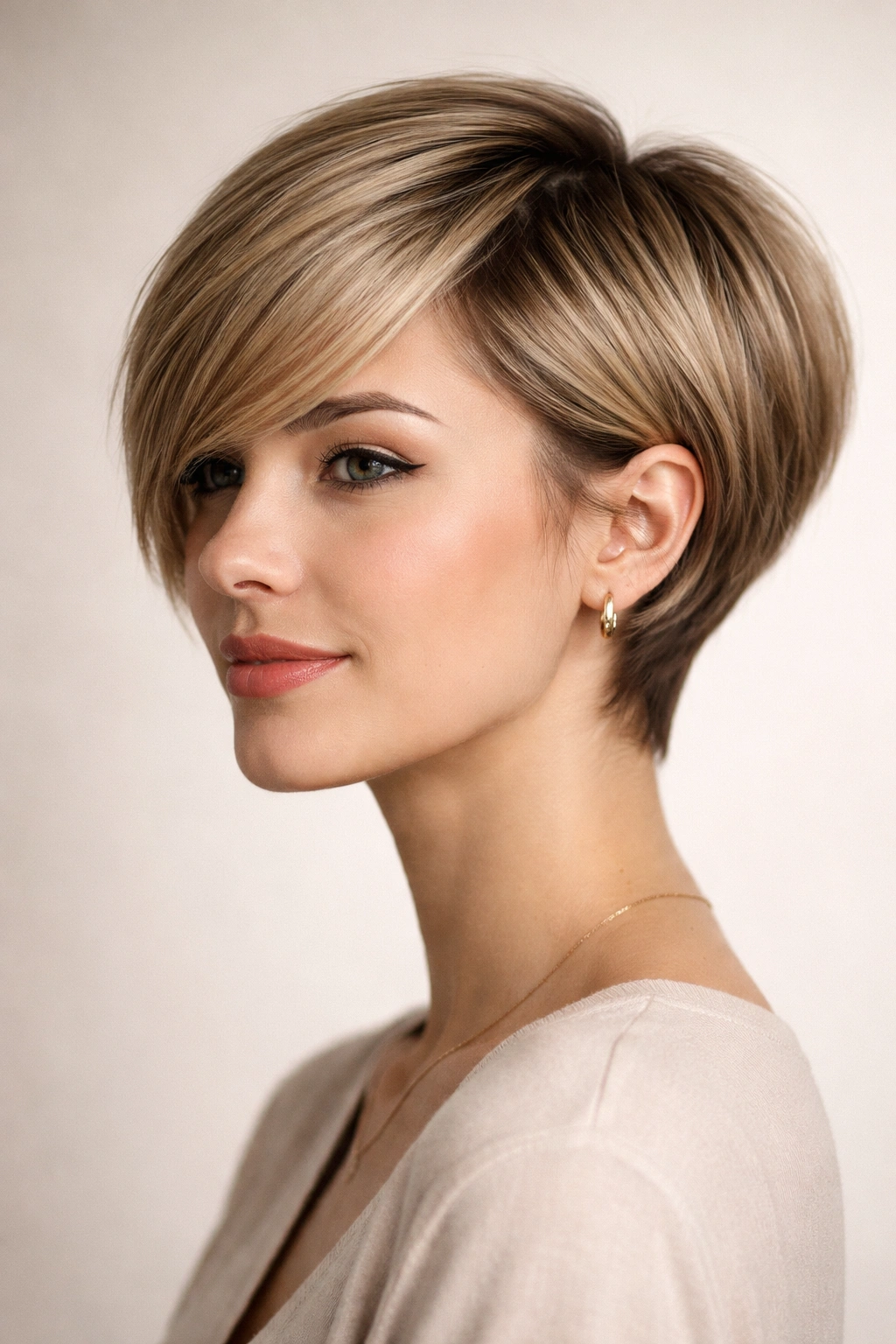
If you want the easiest entry point, start here. This version has the most forgiving shape of the bunch. The back is short enough to feel clean, but the side-swept fringe keeps the cut from looking severe.
Why it works
The side fringe breaks up the forehead area, and that matters more than people think. Short hair can look harsh fast when everything is cut to the same length. A longer front piece — usually grazing the eyebrow or cheekbone — keeps the whole shape softer and more wearable.
Ask your stylist for 2 to 3 inches on top, a gently tapered nape, and fringe that can sweep across the face without fighting the rest of the cut. If your hair is thick, that fringe should be lightened a little at the ends. If it’s fine, keep the interior layers modest so the top doesn’t collapse by noon.
What to ask for
- Keep the nape snug, not shaved
- Leave the front long enough to tuck or sweep
- Build soft layers through the crown
- Avoid blunt bangs that stop the cut from moving
Best tip: blow-dry the fringe in the direction you want it to live. Short hair remembers shape. It’s annoying, but true.
2. Tapered Nape Pixie Bob
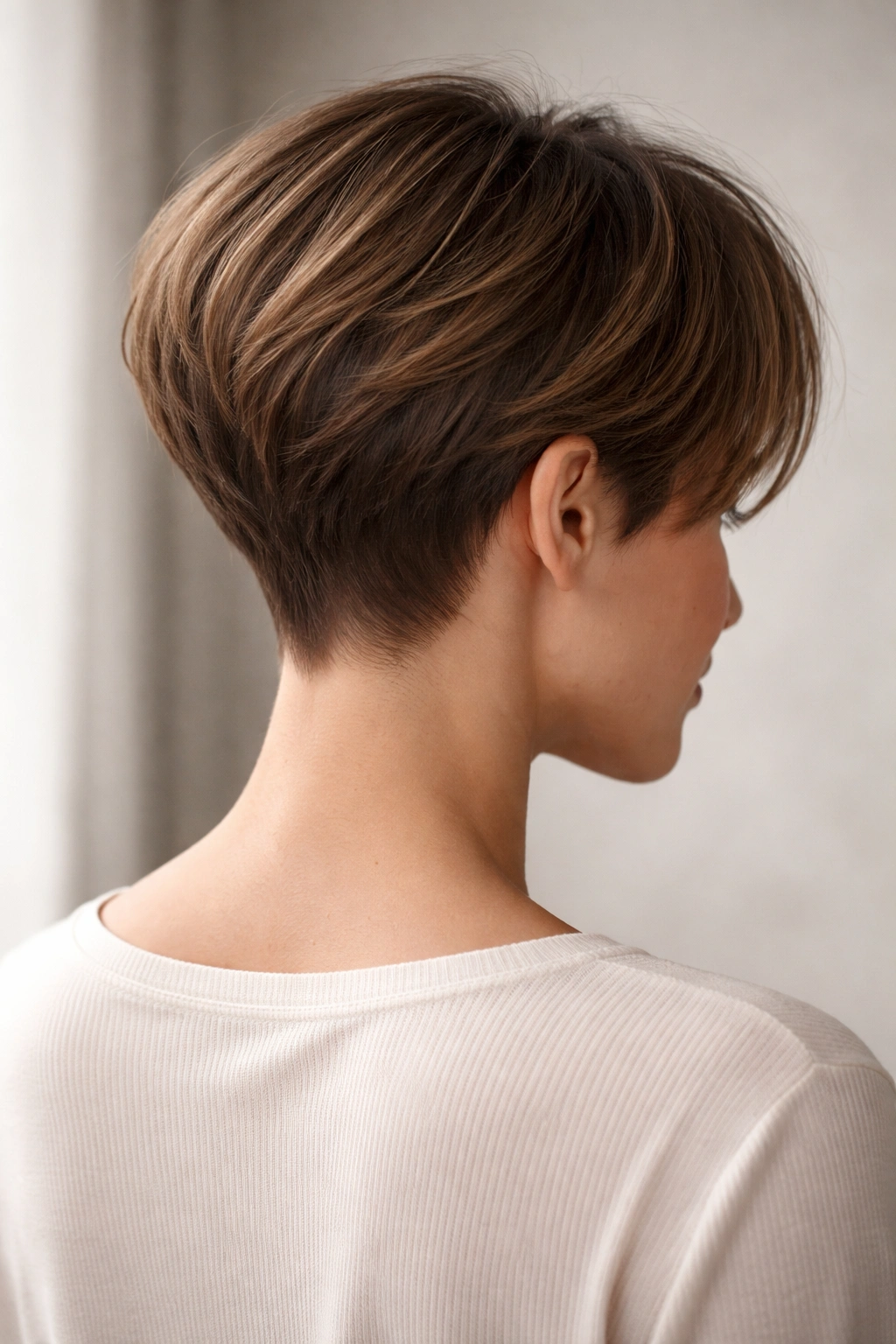
This is the cleanest-looking pixie bob cut on the list. The taper at the nape gives the back a crisp line, which makes the whole cut feel sharper from every angle.
A tapered nape works especially well if your hair grows out bulky at the neckline or sticks out under coats and collars. The short back removes that puff, and the longer top keeps the style from drifting into full pixie territory. It’s one of those cuts that looks neat even when the rest of your styling is minimal.
I like this version for people who don’t want to fuss every morning. A little blow-dry at the roots, a pea-sized amount of cream or paste, and you’re done. The nape does the heavy lifting. That’s the point.
If you have thick hair, this cut can take out a surprising amount of weight without making the top feel thin. If you have fine hair, keep the taper soft rather than too close to the scalp. Too much removal at the back can make the head look narrower than you want.
One small warning: this shape grows out fast in the neckline. Not a flaw. Just the price of looking sharp.
3. Layered Pixie Bob with Piecey Ends
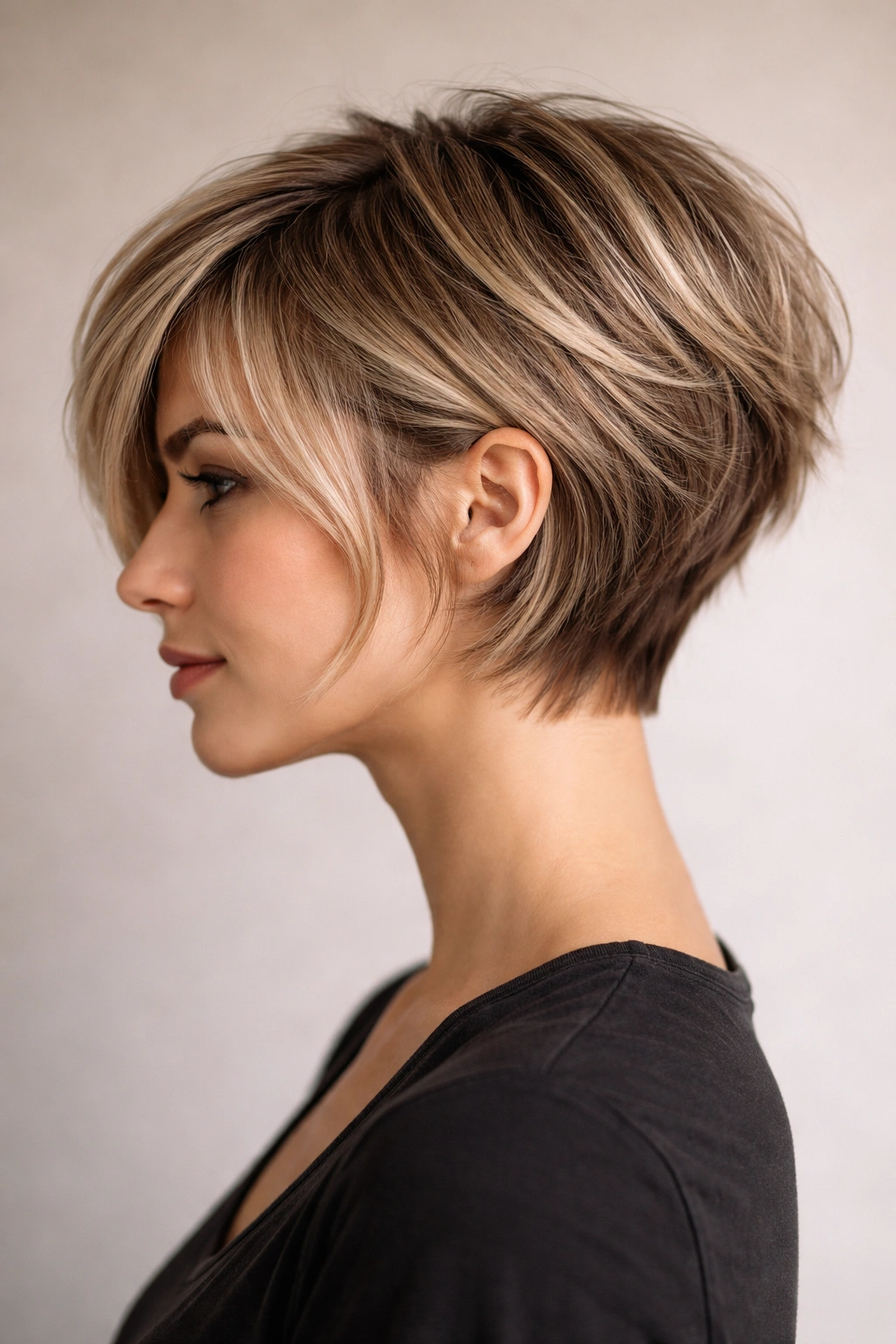
Why does one layered pixie bob look airy and another look frizzy? The difference is in how the ends are cut and styled. Piecey ends need movement, not random thinning.
How to get the right texture
Tell your stylist you want internal layers, not a shredded outline. Point-cutting the ends keeps the shape broken up without making the perimeter look fuzzy. The goal is separation, not chaos.
When you style it, work a small amount of mousse through damp hair, then twist 1-inch sections with your fingers while drying. Don’t blast it dry like you’re trying to flatten it into submission. Leave a little bend. Leave a little space between the strands. That’s what makes it look piecey instead of puffy.
What to ask for at the salon
- Soft layering through the crown
- Lightly textured ends
- A perimeter that still looks deliberate
- No heavy razor thinning on already fine hair
Quick note: if your hair is naturally smooth, this cut needs product. A dry texture spray or light wax will help the pieces hold their separation.
4. Undercut Pixie Bob
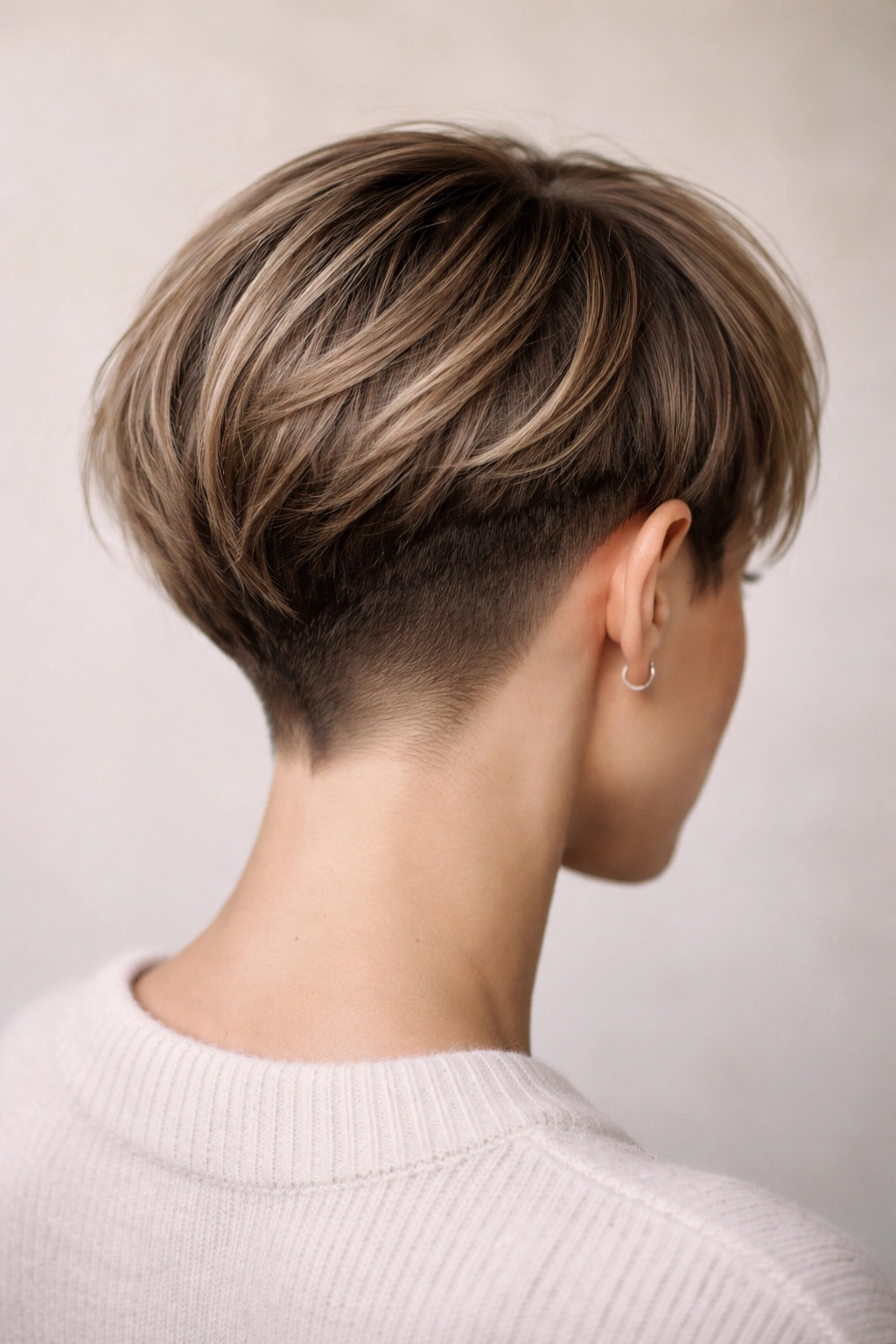
You know that annoying moment when thick hair swells out at the sides and makes your head look wider? The undercut pixie bob fixes that fast.
This version hides a shorter section underneath the top layer, usually at the nape or around the sides. On the surface, it still looks like a pixie bob. Underneath, there’s less bulk, which keeps the silhouette tighter and lighter. The best part is that it doesn’t always announce itself. You can wear it tucked, swept, or messy, and the hidden short section just sits there doing its job.
Hidden undercut details
- Works well on coarse or very dense hair
- Can be placed at the nape, temple, or both
- Lets the top layer fall smoother
- Grows out more gracefully than a fully shaved style
This cut is a smart choice if you want drama without losing all softness. It feels bolder when the wind hits or when you tuck one side back. On ordinary days, it just looks neat. That balance is why people come back to it.
And yes, it does need upkeep. If the hidden section grows too far, the shape starts to swell. Not a disaster. Just a reminder to keep the back tidy.
5. Curly Pixie Bob with Soft Shape
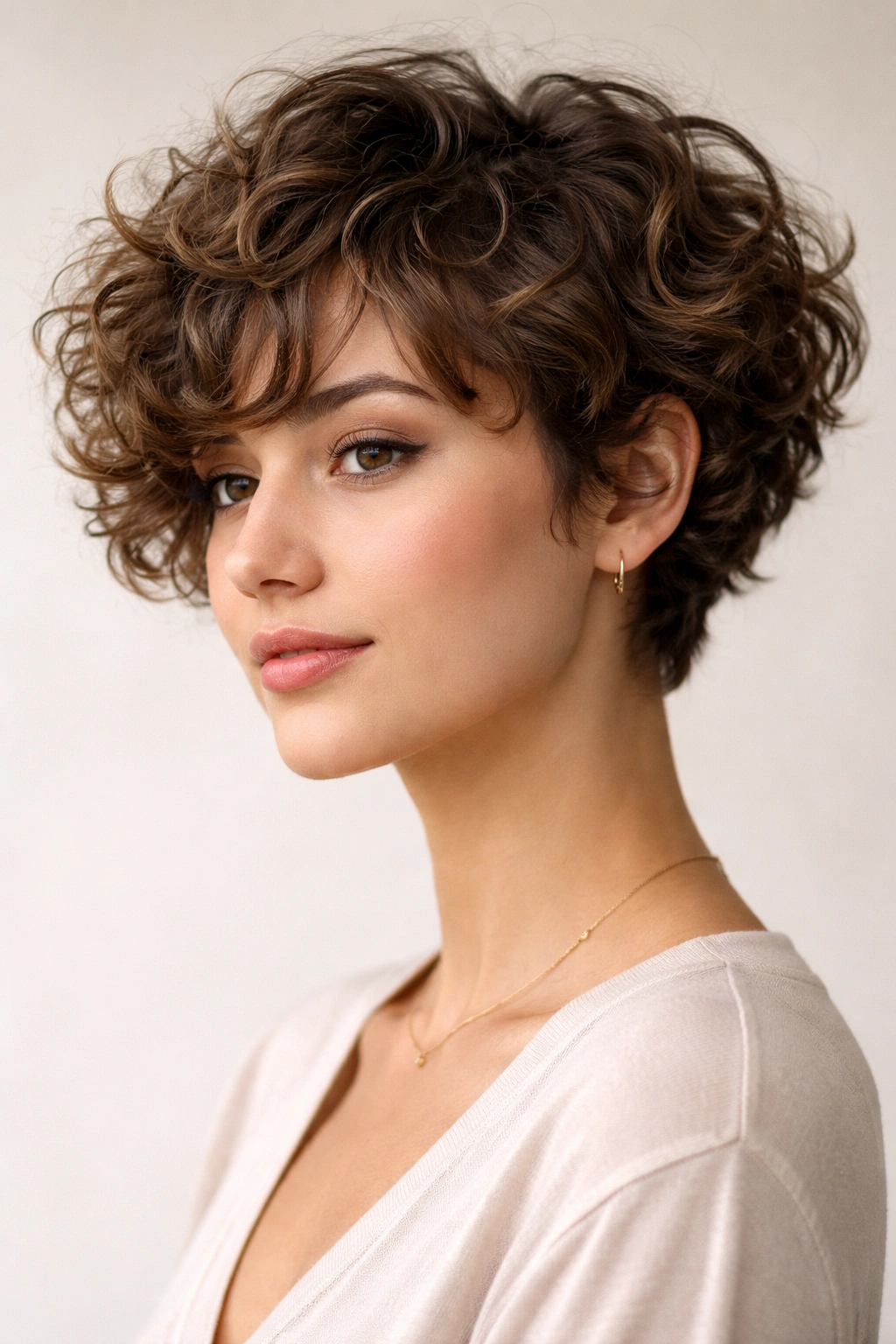
Curly hair and short cuts can be a mess if the shape is wrong. They can also be brilliant. A curly pixie bob works when the cut respects the curl pattern instead of bullying it into a straight-hair idea.
The main move is leaving enough length on top for the curls to spring instead of stacking up into a triangle. The sides should stay slightly longer than you’d use on straight hair, because curls bounce upward once they dry. That little bit of extra length saves you from the dreaded mushroom effect.
I prefer this cut when the curls are loose to medium. Tight curls can wear it too, but the shape needs more room at the crown and around the ears. Dry cutting helps a lot here, since curls lie about their true length when wet. They always do. Curly hair has a habit of shrinking at the last possible second.
Use a curl cream or light gel on damp hair, then diffuse gently or air-dry with hands off as much as you can manage. The trick is letting the curls clump on their own. If you keep separating them, they’ll puff.
One honest warning: don’t over-layer the sides. Short curly hair needs shape, not a hundred tiny pieces.
6. Shaggy Pixie Bob with Airy Texture
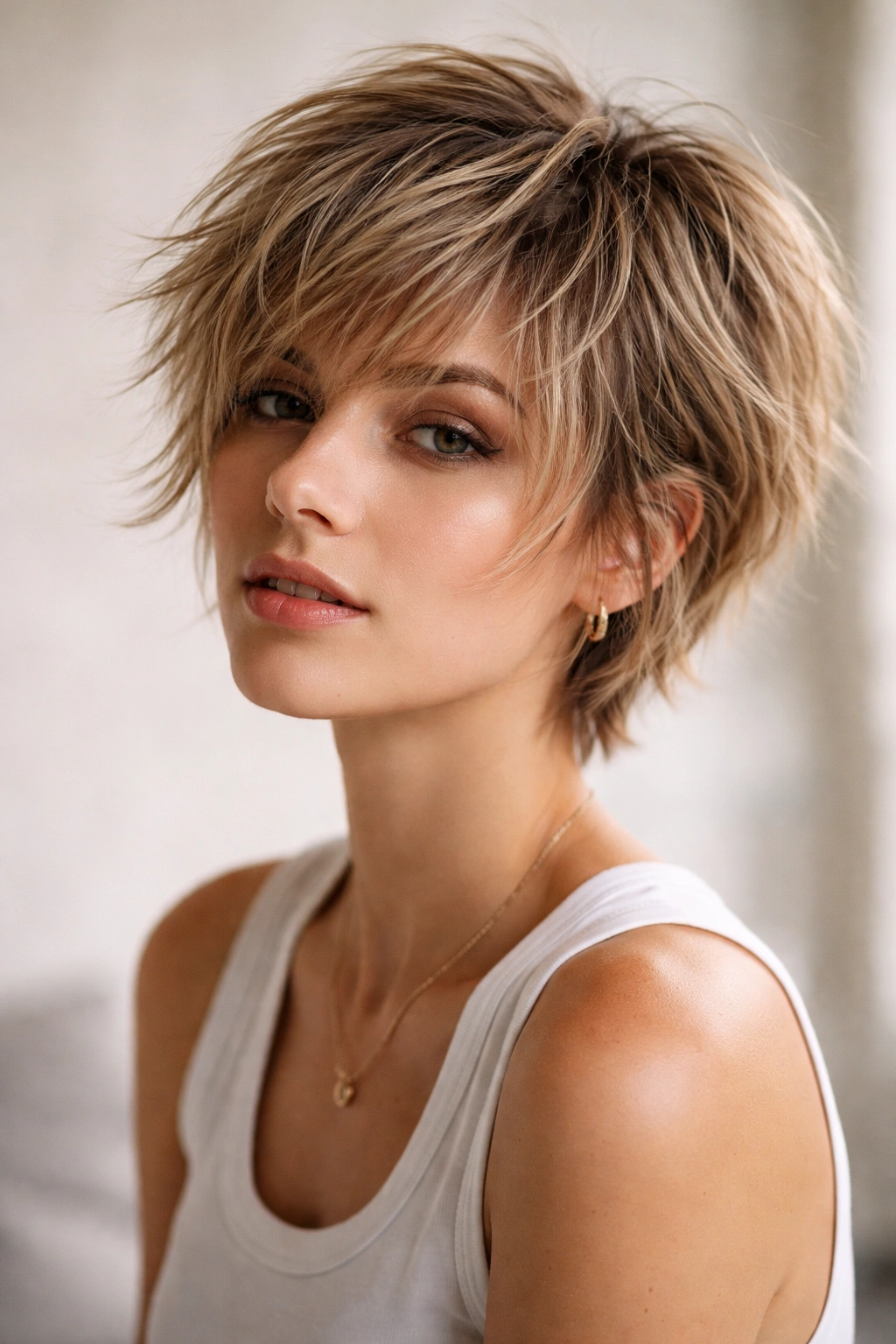
This is the least polished, and that’s the appeal. A shaggy pixie bob leans into rough texture, uneven movement, and a little rebellion around the crown.
What makes it different
Unlike a sleek bob, this cut doesn’t rely on clean lines to do the work. It uses broken layers, a choppy fringe, and soft ends that don’t sit in a single plane. The effect is lighter, messier, and a bit cooler in that offhand way people try to copy and usually overdo.
The styling needs to stay loose. Work a salt spray or texture mist through damp hair, scrunch once or twice, then let the hair dry without combing it straight. If you want more shape, twist two or three random sections around your fingers while it’s still damp. That gives the cut a bend without forcing it into curls it doesn’t have.
Who should choose it
- Wavy hair that likes to frizz a little
- Fine hair that needs more visual body
- People who don’t want a polished finish
- Anyone who likes hair that looks better a bit undone
This one can go wrong if you keep touching it. Seriously. Hands off once it’s set. The shape gets better when you stop trying to fix it.
7. Angled Pixie Bob with Longer Front Pieces
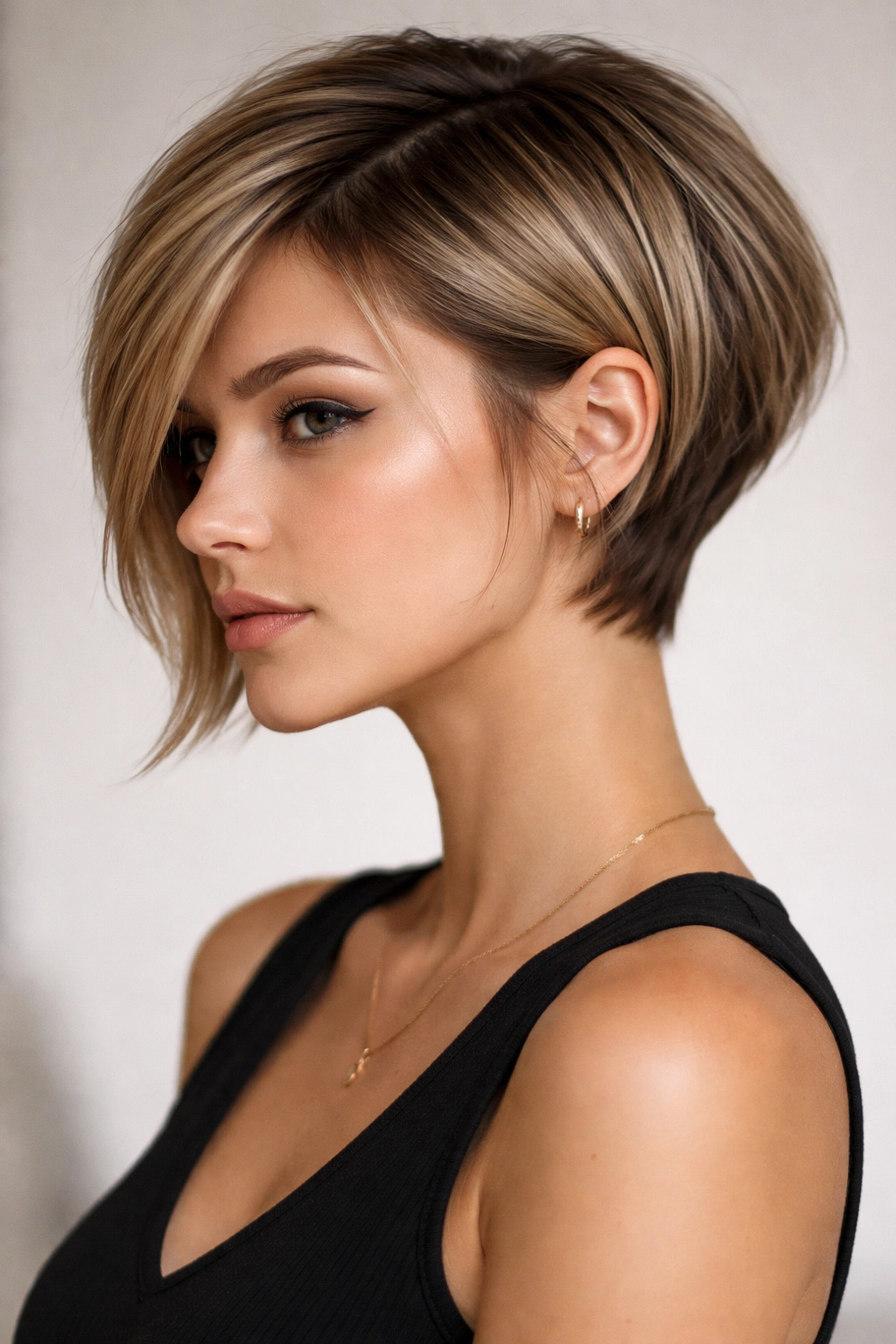
This is the most face-lengthening version in the group. The angle does a lot of work without needing much styling. Shorter in the back, longer in the front — simple, but effective.
The point is to create a clear line from the nape toward the jaw. That line pulls the eye downward and forward, which gives the face a slimmer, sharper outline. It’s especially useful if you want your cheekbones to stand out or if you like hair that looks a little architectural.
What I like here is the tension between the back and front. The back stays neat and cropped, while the front pieces keep enough length to move around the chin. Usually, the longer front lands at the jaw or just below it. Any longer and the cut starts acting like a bob. Any shorter and you lose the angle.
This cut likes a flat brush, a quick blow-dry, and a little smoothing cream. Don’t drown it in product. The line should stay visible.
If you’re after a short bold look that still feels polished, this one is hard to beat.
8. Choppy Pixie Bob with Micro Bangs
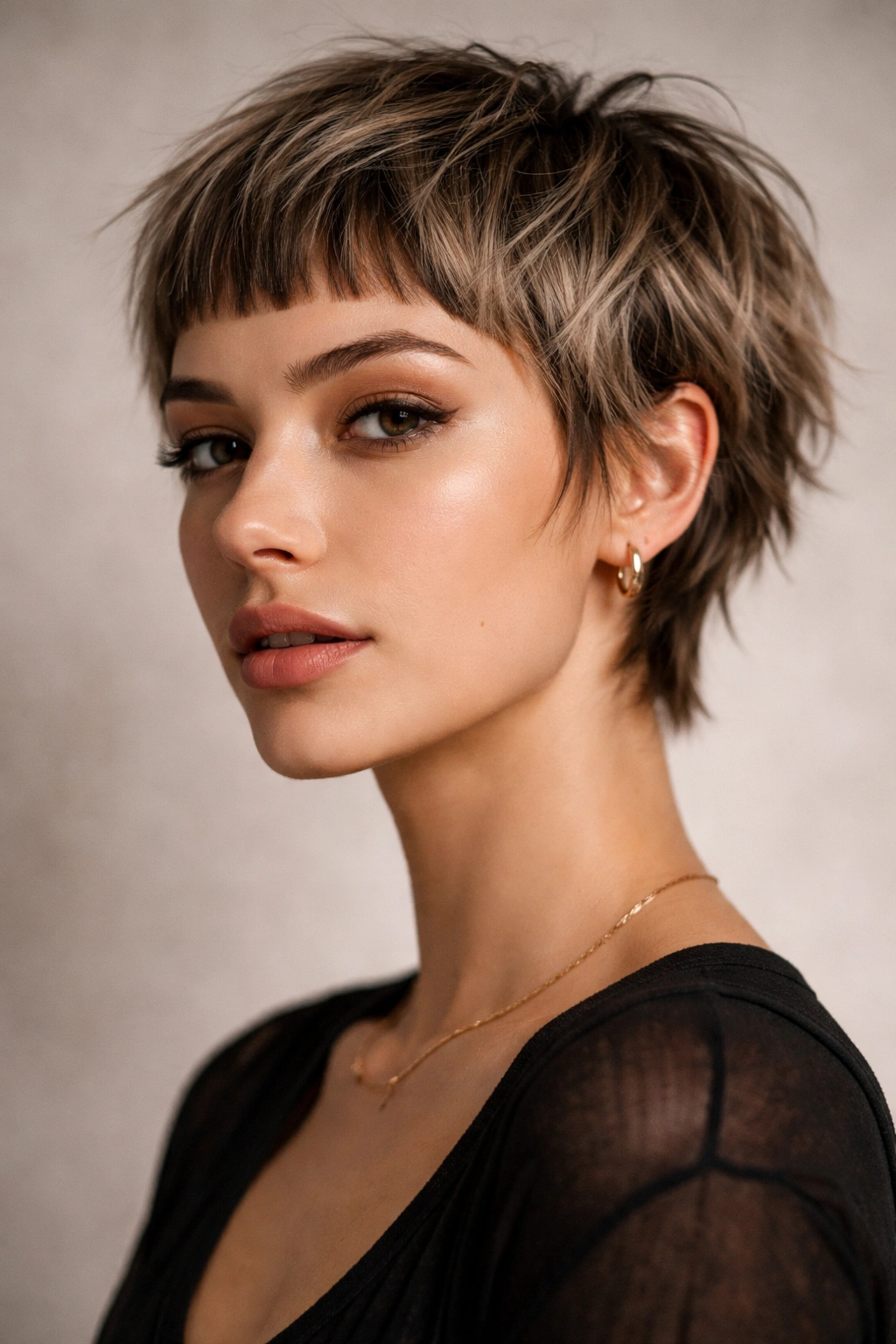
Can micro bangs work with a pixie bob without looking severe? Yes — if the rest of the cut stays soft enough to balance them.
Micro bangs sit high on the forehead, usually well above the eyebrow. That makes them look sharp, sometimes even a little cheeky. The danger is that they can dominate the face if the surrounding hair is too flat or too neat. The fix is texture around the ears and crown, which gives the fringe something to lean against.
Keep the fringe soft
The fringe should be cut with movement, not a hard blunt line. Ask for point-cutting or a light razor finish at the ends. Then style it with fingers instead of a brush. A touch of paste on the tips is enough. Too much product and it turns sticky fast.
This cut works best if you want a strong, graphic look and you don’t mind people noticing your bangs first. It’s not subtle. That’s the whole point.
A few details matter a lot here:
- Keep the sides slightly broken up
- Leave texture around the temples
- Avoid a heavy crown that makes the bangs look disconnected
- Trim the fringe before it starts poking into your eyes
Small truth: micro bangs are commitment hair. If that sounds fun, go for it.
9. Sleek Pixie Bob with Deep Side Part
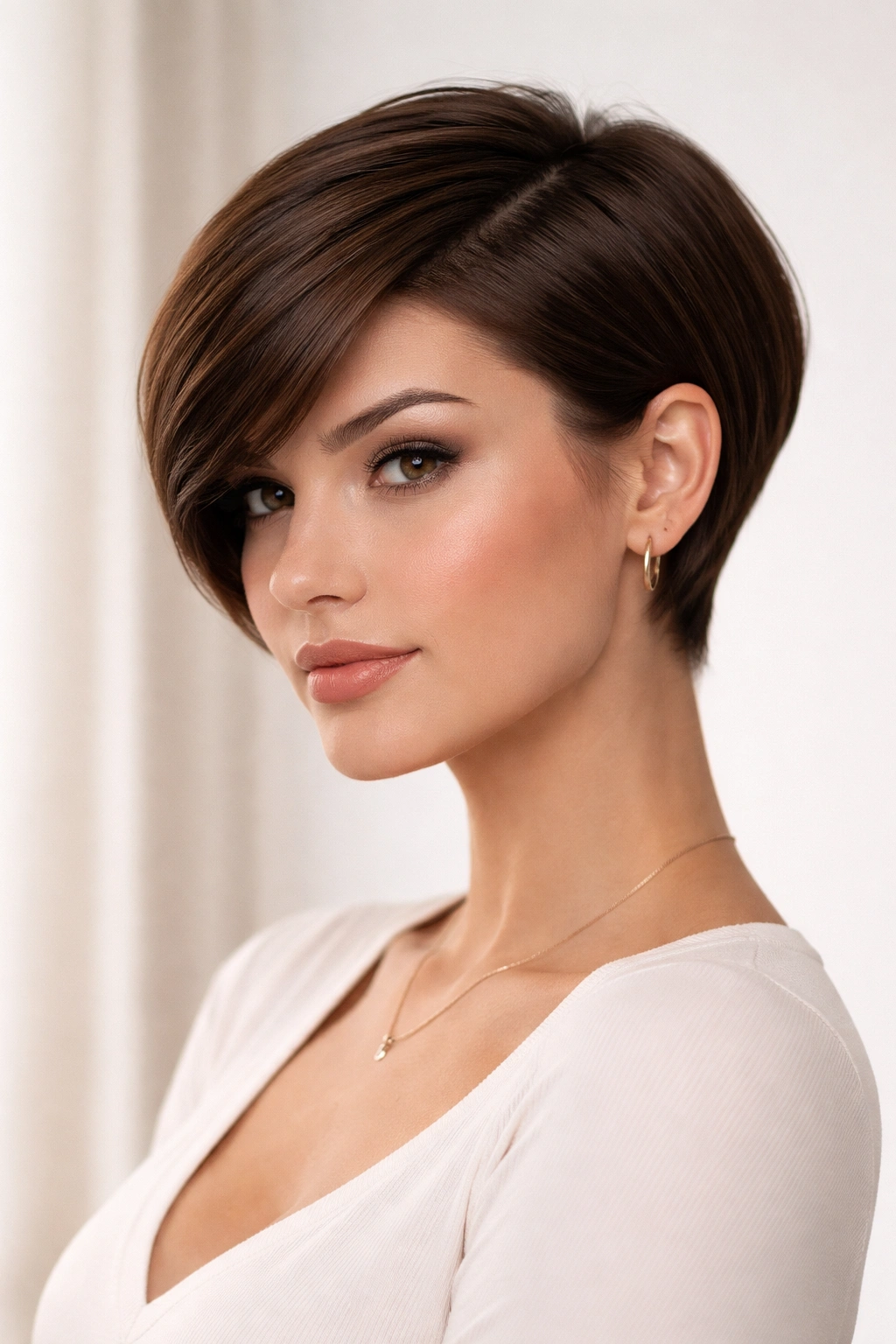
Picture a clean blowout, a deep side part just past the arch of one eyebrow, and hair that hugs the head without looking flat. That’s the mood here.
A sleek pixie bob works because it turns short hair into a line study. The side part gives you height on one side and control on the other. The front pieces sweep across the face, which adds softness, while the back stays trimmed and tidy. It feels polished, but not stiff.
This is a good choice for straight or lightly wavy hair. Very curly textures can wear it too, but the styling gets more involved. You need smoothing cream on damp hair, a flat brush, and a blow-dryer aimed from root to tip. Finish with a little shine serum on the ends, not the roots. Roots need lift. Heavy serum kills that in about thirty seconds.
What to notice
- The part should sit low enough to create shape
- The crown needs a bit of lift, not a helmet
- The side closest to the ear should tuck cleanly
- Ends should fall smooth, not stick outward
This cut looks sharp with earrings. It also gets along well with strong brows. Funny how that works.
10. Asymmetrical Pixie Bob
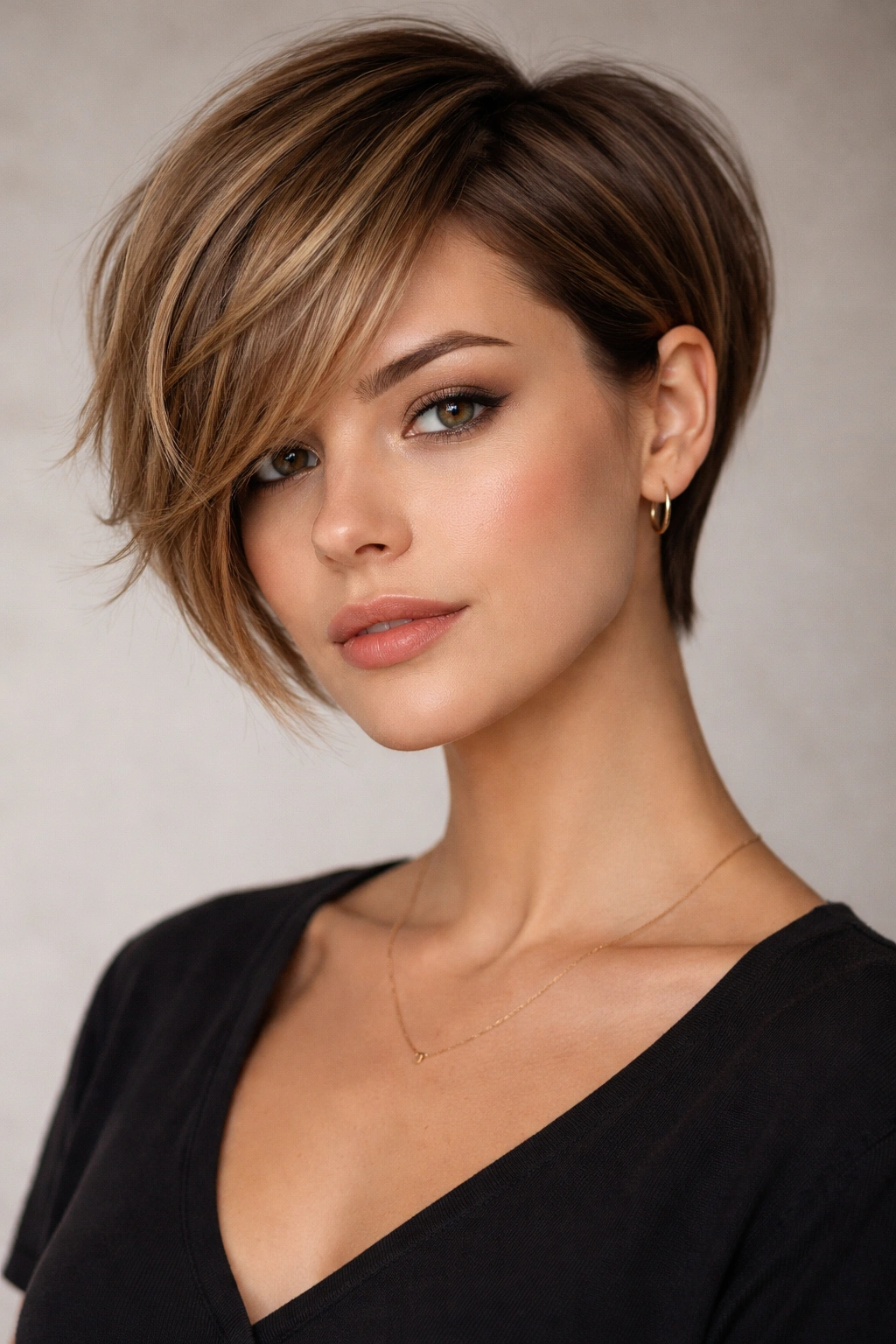
One side longer than the other can change everything. The asymmetrical pixie bob brings the drama without needing bright color, shaved lines, or anything fussy.
The length difference doesn’t have to be huge. Sometimes an inch or two is enough. The shorter side keeps the neckline open, while the longer side brushes the jaw or cheek. That unevenness makes the cut feel deliberate and modern, not accidental.
This version is especially good when you want to soften one side of the face or draw attention to the eyes. It also works well if your part tends to live on one side anyway. Fighting your natural part is a waste of time. Let the haircut work with it.
I like this style on straight hair because the line reads clearly. Wavy hair can wear it too, but the asymmetry gets a little more relaxed and less graphic. That may be exactly what you want.
Tell your stylist to keep the shorter side clean around the ear and let the longer side land somewhere near the jawline. If the difference is too drastic, the cut can start looking lopsided instead of designed. There’s a line there. You know it when you see it.
11. Messy French-Girl Pixie Bob
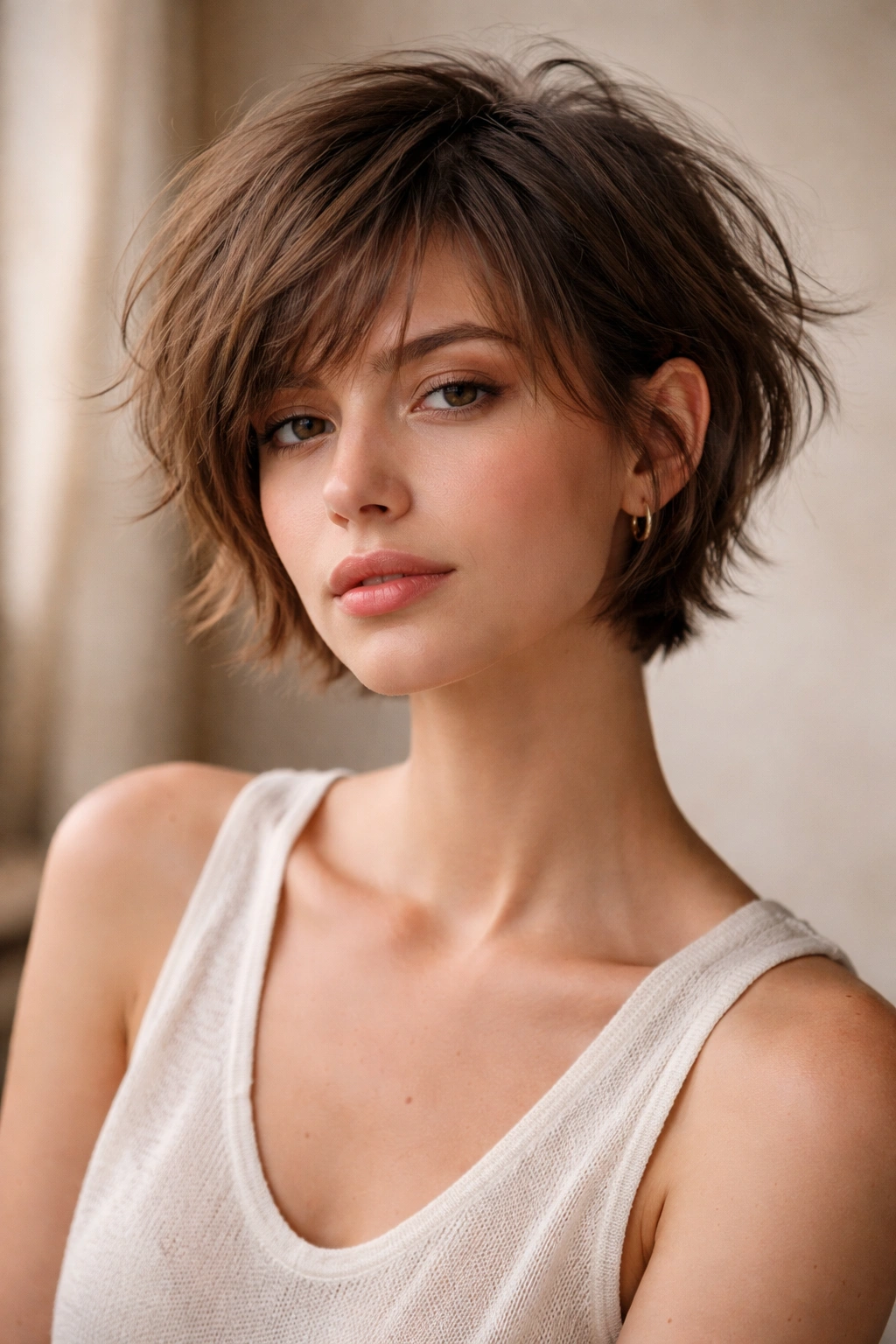
This one lives in the space between “I did something” and “I didn’t try too hard.” That’s the charm.
A messy French-girl pixie bob usually has soft, uneven pieces around the face, a little bend through the crown, and an overall shape that looks better after a full day of wear. It is not a perfect haircut. If it were, it would miss the point. The beauty comes from a bit of looseness — the kind that makes the style feel lived in rather than set in stone.
The styling should stay minimal. Use a light cream on damp hair, then rough-dry it with your fingers. If the ends flip out a little, fine. If the fringe separates into two pieces, also fine. The cut is supposed to look touchable, not sealed under a finishing spray.
I’ve always thought this version works best on hair that has some natural bend. Straight hair can still wear it, but it needs a little help from a flat iron or a quick twist with a round brush. The goal is just enough movement to keep the shape from sitting too neatly.
Too neat kills the point.
12. Feathered Pixie Bob for Fine Hair
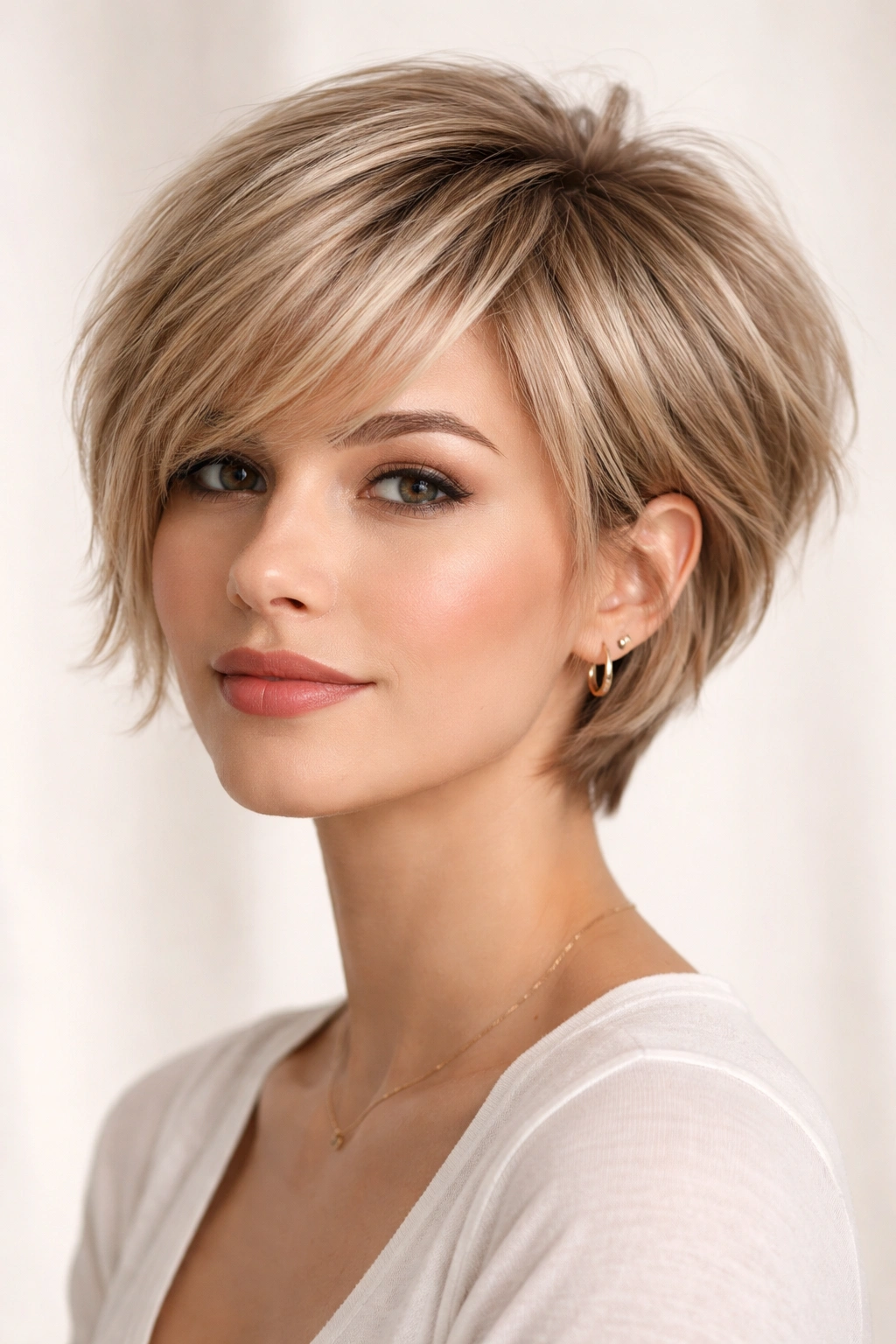
Feathering is one of the smartest tricks for fine hair. It keeps the cut from sitting flat and heavy, which is the usual problem with shorter lengths.
Why feathering helps fine hair
Feathered ends create a softer edge around the face and crown. Instead of one blunt shelf of hair, you get little light layers that move separately. That movement makes the hair look fuller without turning it puffy. The whole cut feels lighter at the temples and less heavy at the bottom.
Ask for soft slicing or feathering through the top and side sections. Don’t let the stylist over-thin the ends. That’s a common mistake, and it’s a bad one. Fine hair can look wispy fast if too much is removed. You want airiness, not see-through edges.
Styling note
- Use a root-lifting spray at the crown
- Blow-dry with the head slightly forward
- Lift the roots with a round brush for 10 to 15 seconds per section
- Finish with a small amount of paste on the ends
This cut is best if you like short hair with movement but hate anything that looks sharp or heavy. It has a softer finish than the angled versions, and that softness can be a relief.
13. Pixie Bob with Long Crown Layers
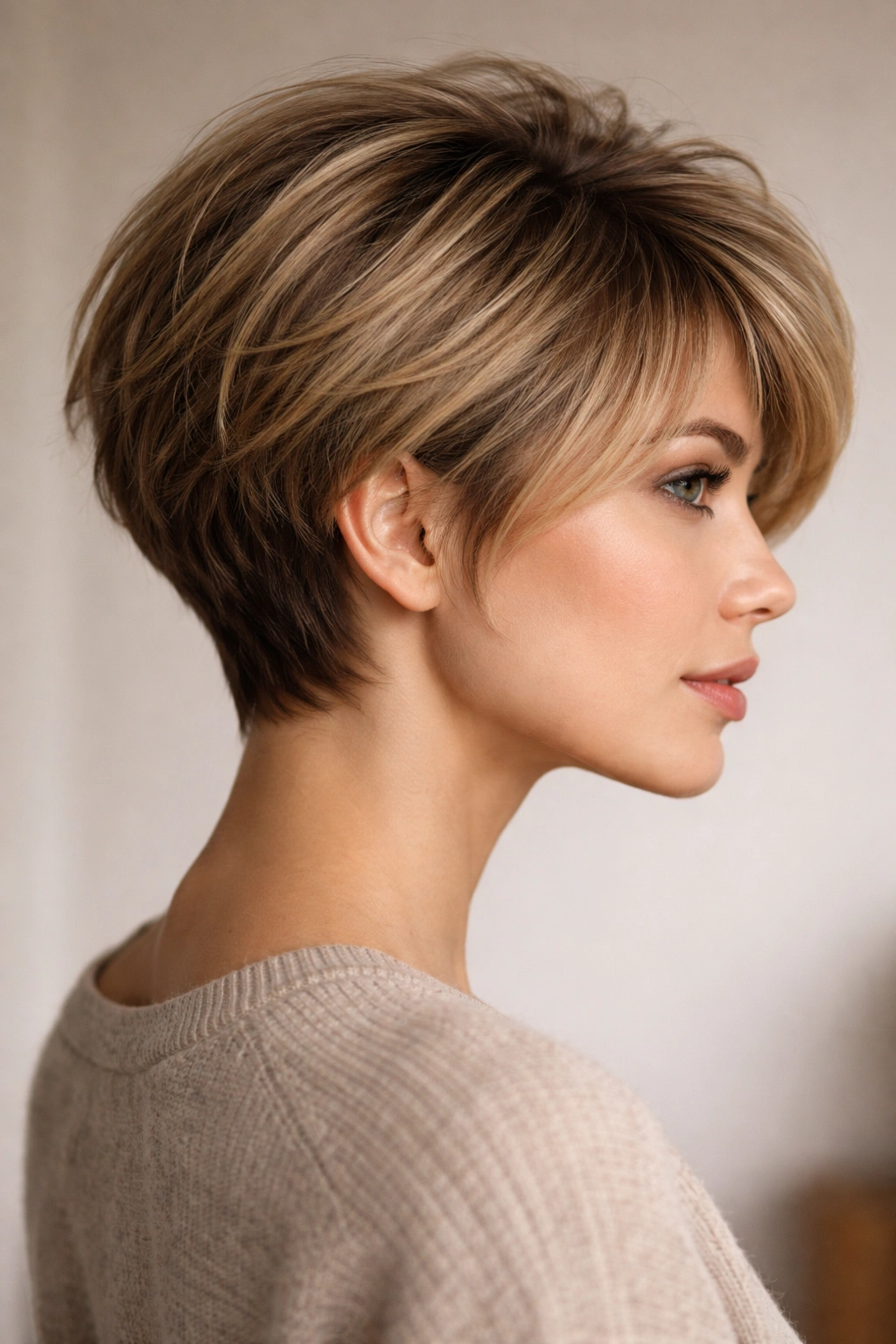
Need height without teasing the crown into a nest? Long crown layers do the job cleanly.
The idea is simple: keep the crown a little longer than the sides so it can rise and bend instead of lying flat. That extra length gives you shape at the top of the head, which is where a lot of short cuts go wrong. Too short at the crown and the whole style collapses. Too much texture and it starts fraying. Long crown layers sit in the middle, which is why they work.
Why the crown matters
The crown is where the silhouette lives. If you want the cut to look intentional from the side, that area needs enough weight to hold a curve. A round brush helps, but the cut has to support the brushwork. You can’t style your way out of a bad crown shape.
Ask for the top to stay longer by roughly 1 to 1.5 inches compared with the side sections. That gives you room to lift it with a blow-dryer and still keep the shape soft. On heavy hair, it also prevents the top from looking like a flat cap.
Use a volumizing mousse or root spray before drying. Then lift sections at the root and let them cool in place for a few seconds. That cooling part matters. It locks in the shape better than rushing straight through.
14. Blunt Pixie Bob with Sharp Edges
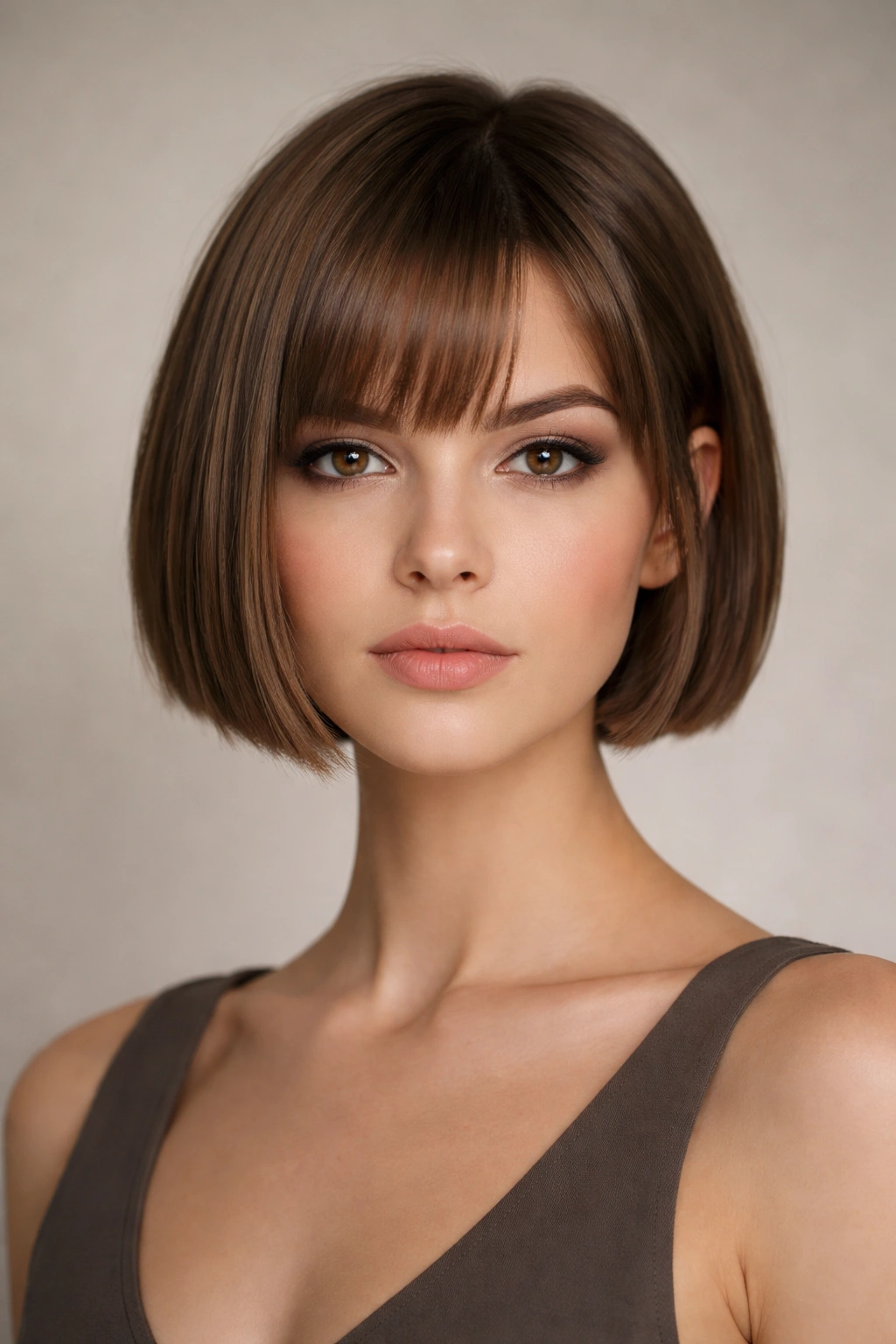
Not every bold cut needs texture. Sometimes the power is in the line.
A blunt pixie bob keeps the perimeter clean and the ends straight, which gives the haircut a stronger visual frame. There’s less softness here, and that’s fine. In fact, that’s the whole appeal. The shape feels disciplined, almost graphic, especially when the back is tidy and the front stops at the jaw.
This version usually works best on straight to slightly wavy hair. If your hair is very curly or very coarse, blunt edges can get pushed around and lose the clean outline. That doesn’t mean you can’t wear it. It just means you’ll be fighting the texture more often than you probably want.
I like this cut on people who want a short style that looks expensive without being flashy. It makes cheekbones, lips, and earrings do more of the work. The haircut itself is quiet. The line does the talking.
Keep the finish simple: a straight blow-dry, a middle or side part, and a light serum on the ends. Don’t over-style it into submission. A blunt cut needs clarity, not fuss.
15. Grown-Out Pixie Bob That Still Looks Intentional
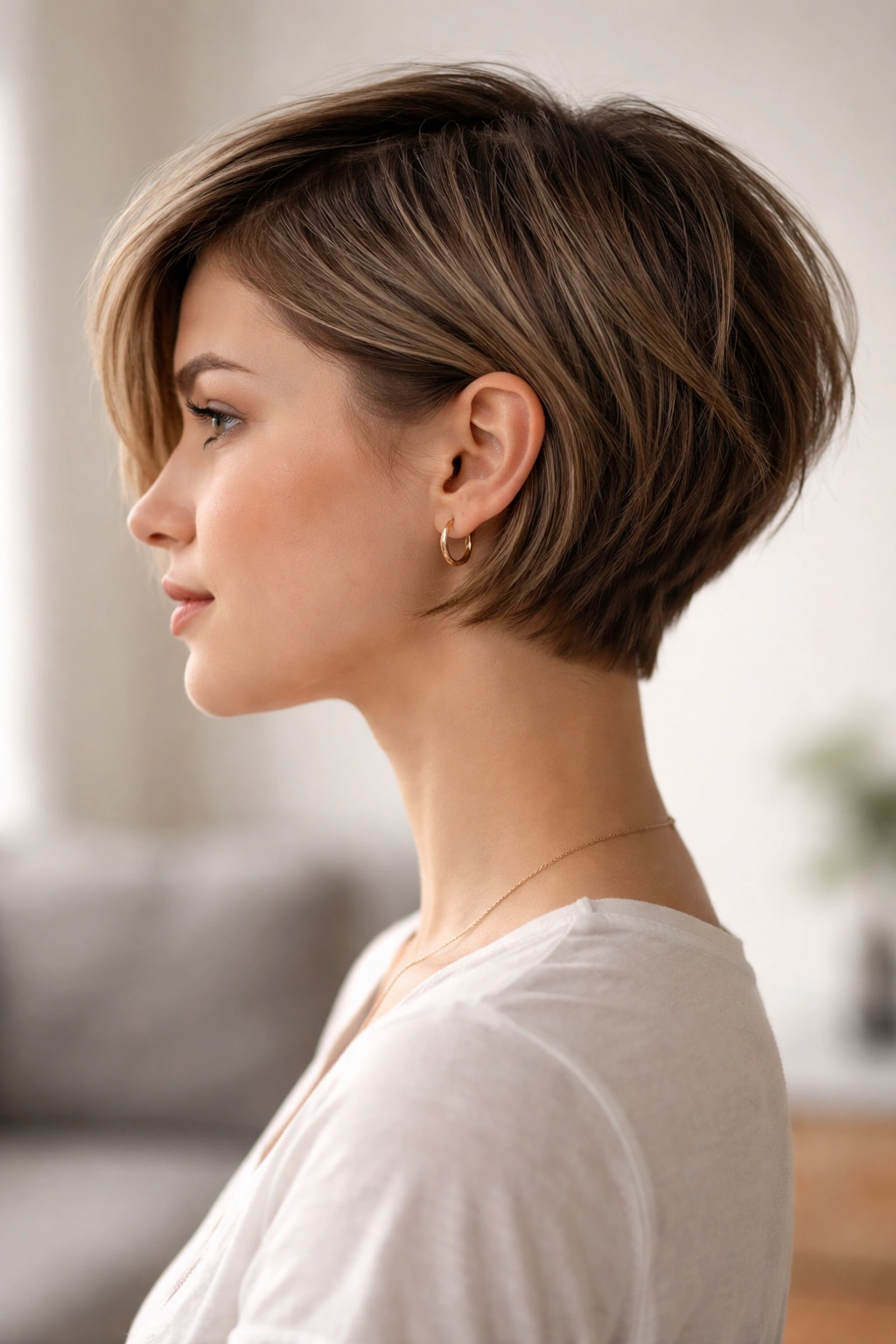
If you want a cut that doesn’t panic when it grows, this is the one.
The grown-out pixie bob sits in that useful middle zone where it’s no longer a pixie, but not yet a full bob. The nape stays neat, the sides soften a little, and the front pieces have enough length to tuck behind the ear or fall toward the jaw. It’s the kind of shape that can stretch for weeks without looking messy.
How to grow it out
- Keep the nape trimmed so the back doesn’t swell
- Leave the front slightly longer to preserve movement
- Use a side part if the crown starts flattening
- Add a little texture spray when the ends feel too blunt
This version is perfect if you like the short bold look but don’t want a strict salon schedule. It gives you room to breathe. The shape changes as it grows, but it changes in a way that still looks designed.
There’s also a nice honesty to it. It says you like short hair, just not short hair that demands constant obedience. Fair enough.
The trick is avoiding that awkward in-between stage where the back is too bulky and the front is too thin. A small cleanup at the neckline solves most of that. The rest is mostly about keeping the outline soft enough that the grow-out reads as style, not neglect.
Final Thoughts
The strongest pixie bob cuts all do the same basic thing: they keep the back short, give the front some movement, and let the haircut show a little attitude. The details change the mood fast. A side-swept fringe feels easier. A blunt edge feels firmer. An undercut feels leaner. A curly version feels warmer and less controlled.
What matters most is how your hair behaves on an ordinary day. If it puffs, build in taper. If it falls flat, save some length at the crown. If you hate styling, stay away from anything that depends on perfect piece separation. The cut should do some work on its own.
And that’s the part I’d pay attention to most. A good pixie bob haircut should still look like itself after a walk in the wind, a rough sleep, or a lazy morning. If it can handle that, it’s doing its job.
