



A Japanese bob cut has a way of looking calm even when everything else feels busy. The clean edge, the controlled shape, the small swing at the ends — it all adds up to a haircut that whispers instead of shouts.
That restraint is exactly why Japanese bob cuts work so well for a minimalist look. They lean on line, proportion, and a neat neckline instead of heavy layering or a lot of product, and when they’re cut well, they still move when you turn your head.
The mistake people make is asking for “simple” and then taking away too much structure. A bob that’s thinned out at the bottom or roughened up with too many short layers stops looking minimal and starts looking unfinished.
The 12 versions below stay in that clean lane, but each one changes the mood in a different way: sharper, softer, shorter, airier, or easier to grow out. Pick the one that fits your hair’s behavior, not the one that only looks good on someone else’s head.
1. Jaw-Length Japanese Bob with a Blunt Edge
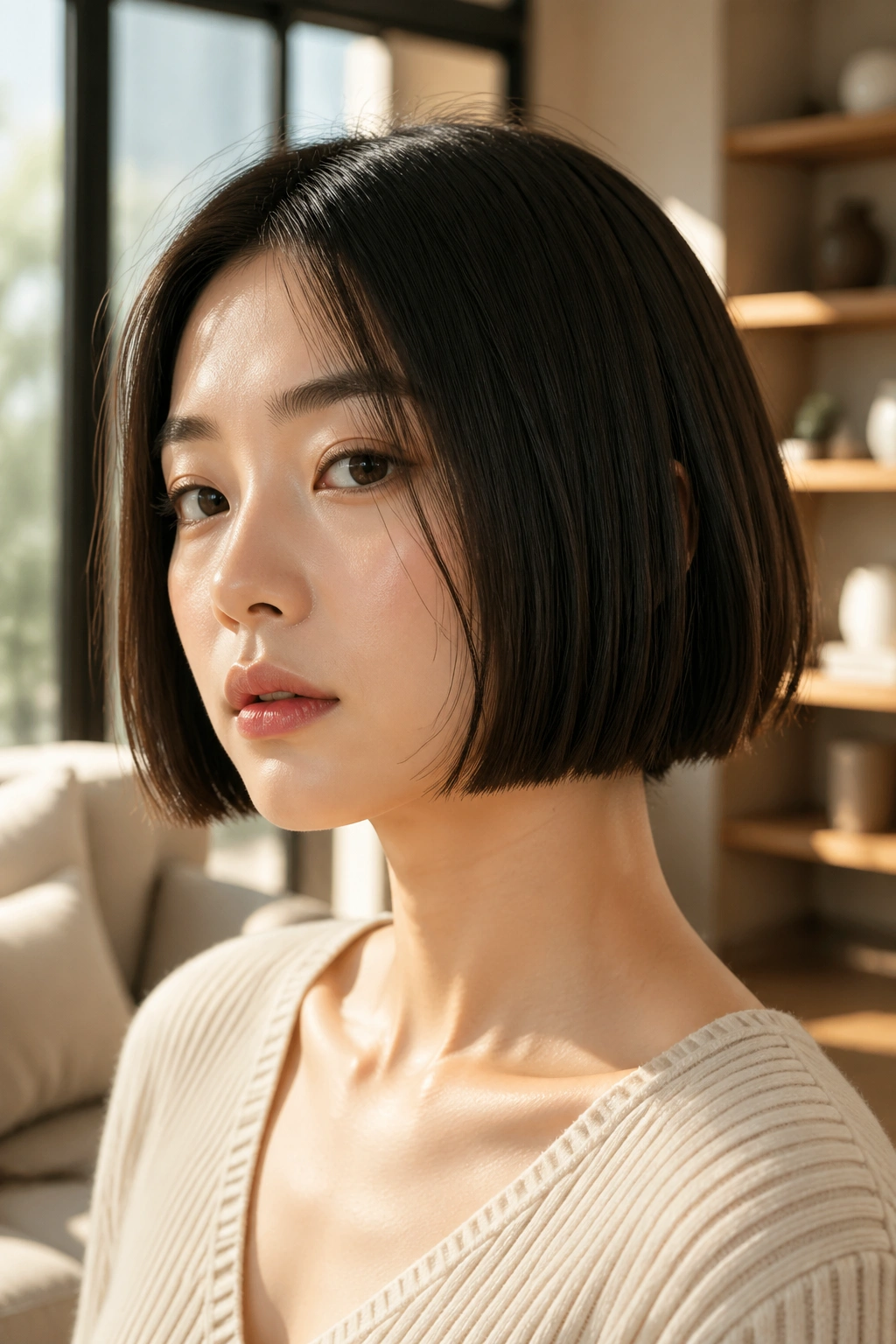
A jaw-length blunt bob is the first cut I think of when somebody wants low-drama hair. It sits right where the jaw turns, which means the haircut does half the work for you before styling even enters the picture.
The silhouette is the whole point. When the perimeter stays solid and the ends land in one clean line, the cut looks deliberate from every angle. That clean edge is what gives it that pared-back Japanese bob feeling, not a pile of styling products or a complicated blowout.
What makes the line work
- Keep the length at the jaw or just a touch below it so the shape stays crisp.
- Ask for the back and front to stay nearly even if you want the most minimal outline.
- Skip heavy interior layers; they make the edge look frayed.
- Trim it every 6 to 8 weeks so the shape doesn’t drift into a grown-out lob.
This version is especially good if your hair is naturally straight, slightly coarse, or just a little stubborn. It can also be a smart choice if you want your face, neck, and jawline to show instead of hiding under longer hair.
Pro tip: If your ends flip outward the second they hit air, ask for the last half-inch to be softened lightly at the tips only. Don’t let anyone thin out the whole bottom line. That’s how a clean bob starts looking tired.
2. Chin-Length Japanese Bob with a Soft Inward Curve
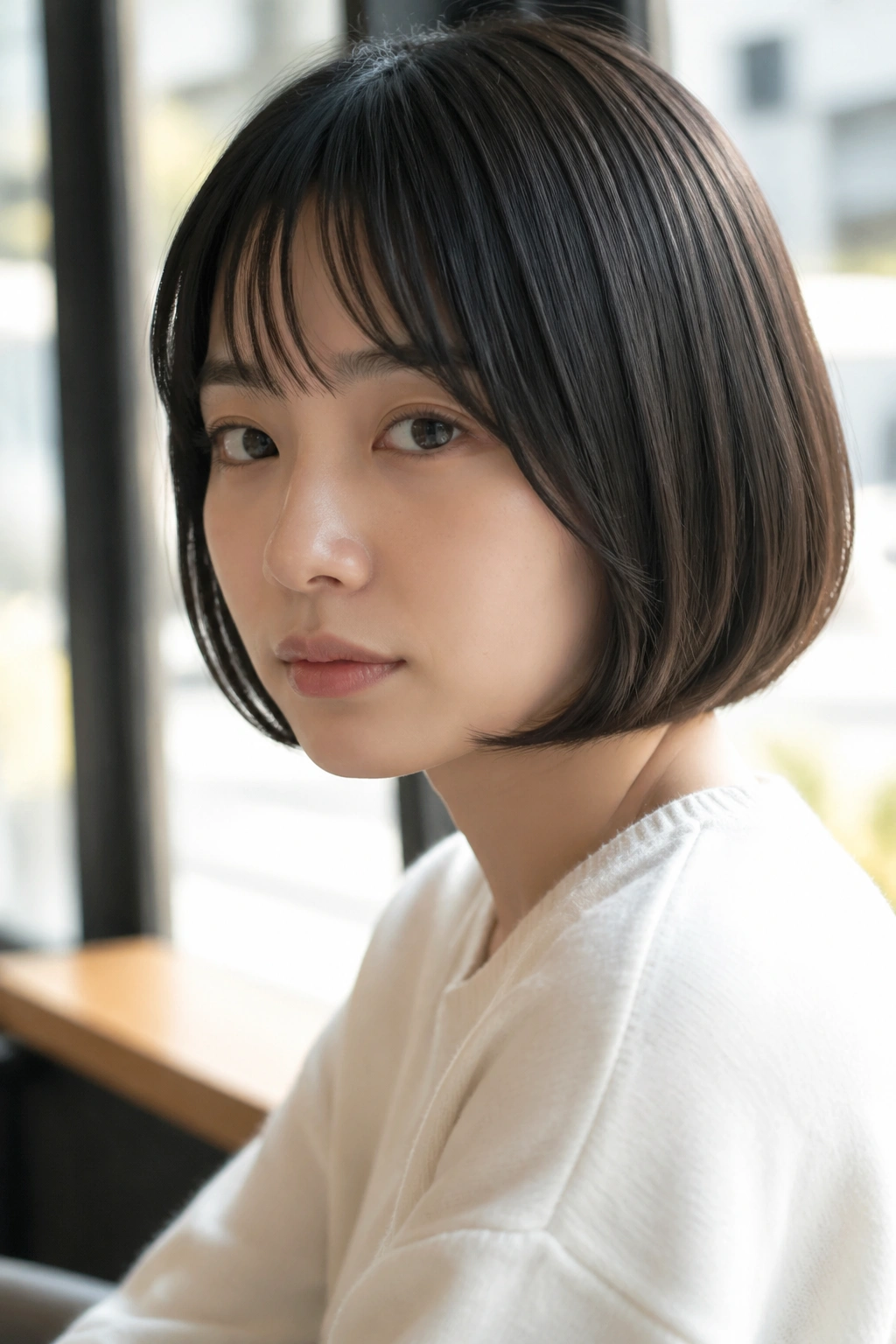
If you want the softest possible version of a Japanese bob, this is the one I’d start with. The length lands at the chin, but the ends are shaped to bend inward just enough to hug the face instead of sitting like a hard shelf.
That bend changes everything. It takes the sharpness out of the cut without making it fluffy, and that matters if you want a minimalist look that still feels gentle. A little inward curve can make the bob look more finished on longer faces, sharper chins, or hair that naturally sticks out at the bottom.
The trick is not curl. You do not want a blown-out swoop or a round-brush helmet. You want a bend that looks like the hair decided, on its own, to sit neatly.
At the salon, this usually means keeping the perimeter blunt and shaping the very ends with a round brush or a flat iron pass that turns under just once. At home, a pea-sized smoothing cream and a quick brush-under at the ends is usually enough. Too much product flattens the movement and makes the cut feel heavy.
This is one of those bobs that can look polished even when the rest of your styling routine is lazy. That’s a good thing. Lazy hair, but on purpose.
3. Tucked-Behind-the-Ear Japanese Bob
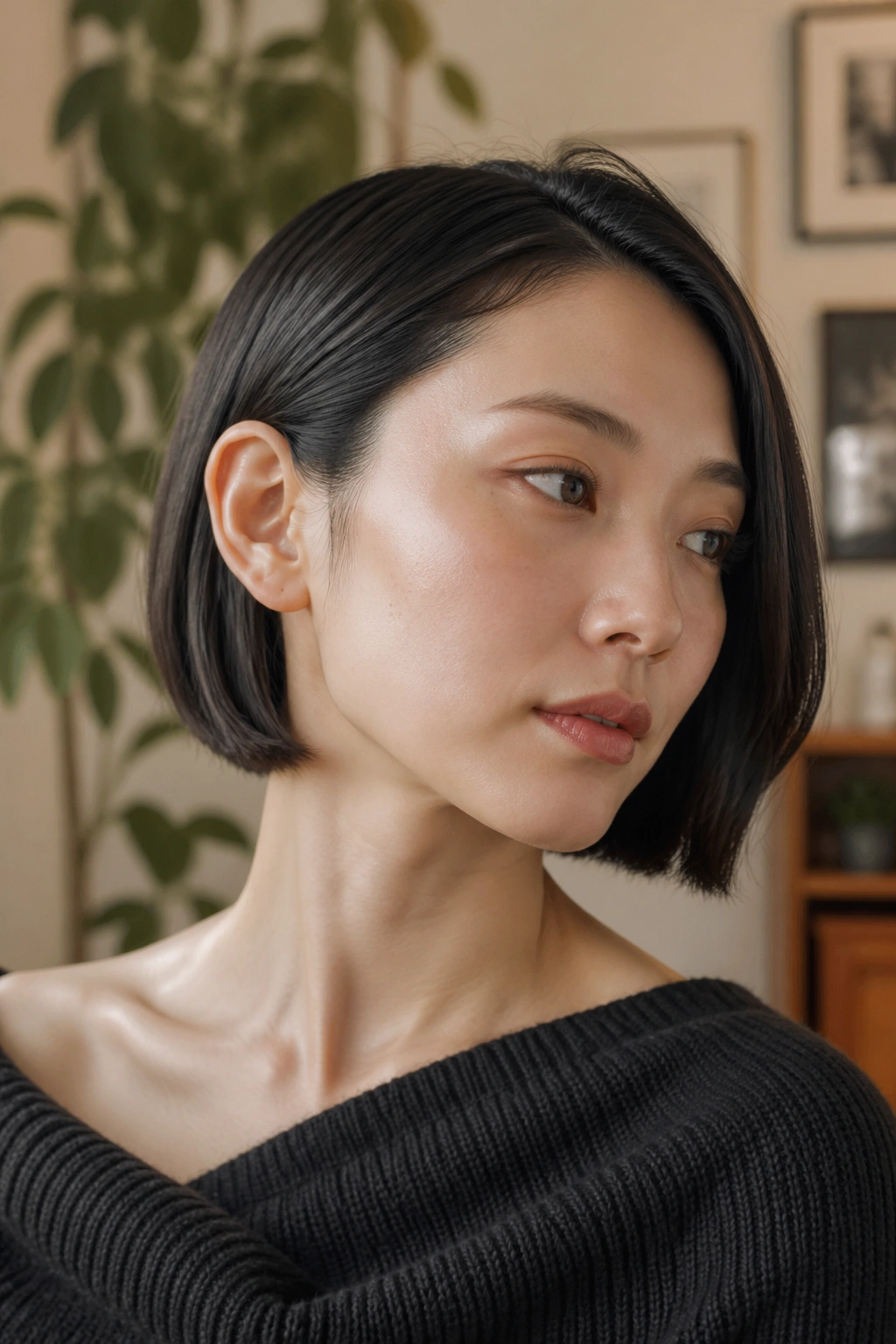
Why does a tucked-behind-the-ear bob feel so polished? Because the tuck changes the whole silhouette without changing the actual cut. One side opens up, the neck looks longer, and suddenly the bob feels clean in a way that a loose shape never quite does.
The best version lands just below the cheekbone or around the jaw so the tucked side stays in place instead of springing out. If the hair is too short, the tuck falls apart. If it’s too long, the shape loses that sharp little pause between exposed ear and hidden side.
How to get the tuck to stay
- Ask for enough length at the front corners to slide behind the ear without strain.
- Keep a little weight at the ends so the side doesn’t puff out after you tuck it.
- Use a light mist of hairspray on the tucked side if your hair is slippery.
- Leave the opposite side a touch fuller so the cut doesn’t collapse into your head.
This style works especially well with glasses, small earrings, or a simple collar. It also looks good when the part sits slightly off-center, because the asymmetry gives the whole haircut a more effortless shape. Not messy. Just less rigid.
One small thing people miss: the ear tuck shows your hairline and sideburn area, so the cut around the temples needs to be neat. If those pieces are ragged, the whole effect falls flat.
4. Japanese Bob with See-Through Bangs
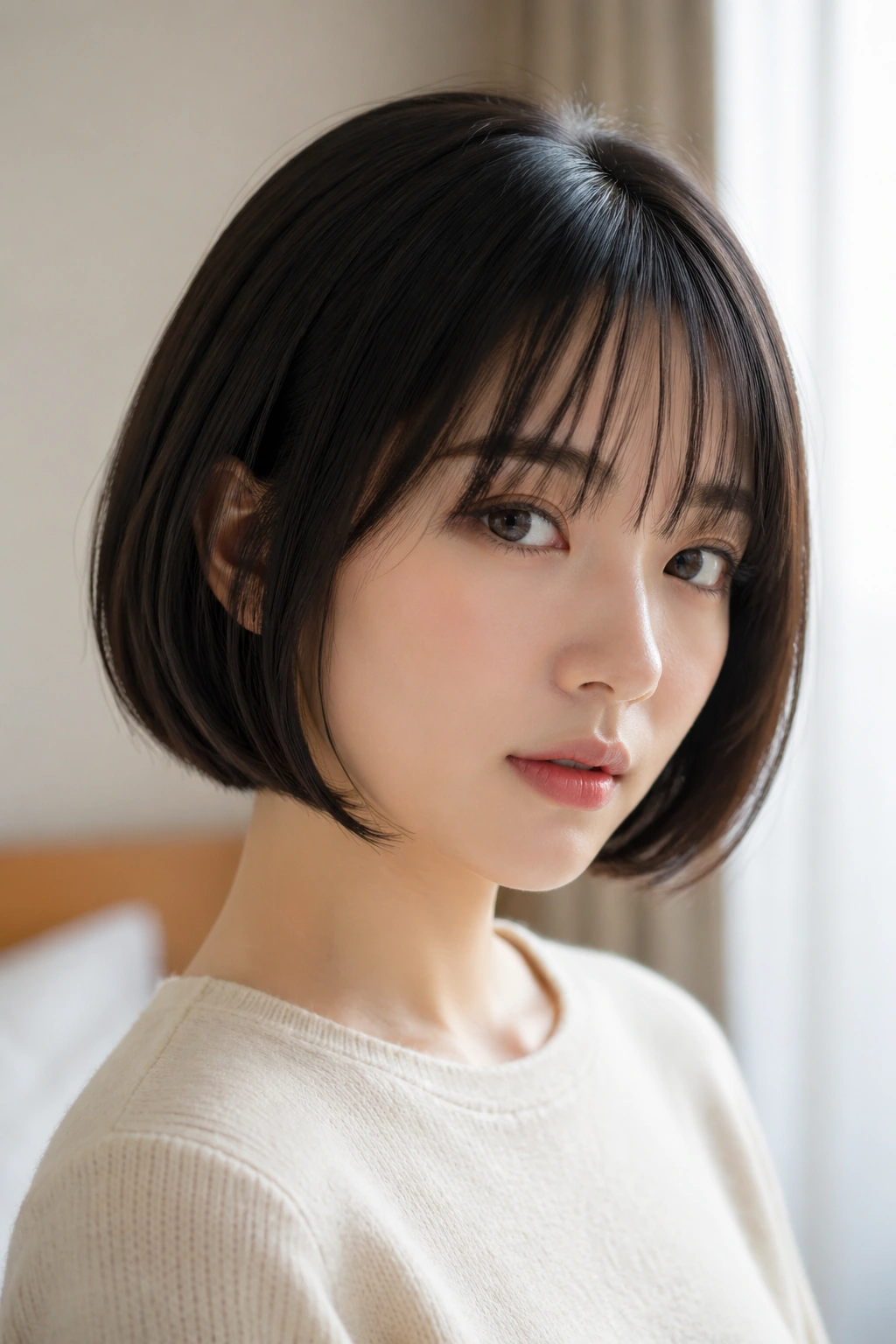
See-through bangs are all about air. That’s the whole appeal. The fringe is light enough to show some forehead through it, which keeps the haircut from feeling boxed in or heavy.
A full, thick bang can overwhelm a minimalist bob fast. See-through bangs do the opposite. They soften the front of the face, keep the top of the haircut from looking bulky, and add a little movement without turning the whole thing into a layered style. The bob still looks clean. The bangs just take the edge off.
This shape works especially well if you want a little coverage without hiding your face. The fringe can skim the eyebrows, sit just above them, or land at the brow line with a feathery finish. It also suits people who don’t want to commit to a dense bang that needs constant trimming and daily coaxing.
What to ask for at the salon
- A thin fringe section, not a heavy block of hair.
- Soft, point-cut ends so the bangs taper instead of sitting blunt.
- Length that brushes the brows or sits a few millimeters above them.
- Slight separation through the fringe so forehead skin still peeks through.
Bold tip: If your hairline has a strong cowlick, ask for the shortest pieces to stay a touch longer than you think. Bangs that are cut too short at the center will split and stick up by lunch.
This is one of the easiest ways to make a Japanese bob feel softer without losing its shape. The bangs do not need to be dramatic. They just need to breathe.
5. Rounded Japanese Bob with Light Crown Volume
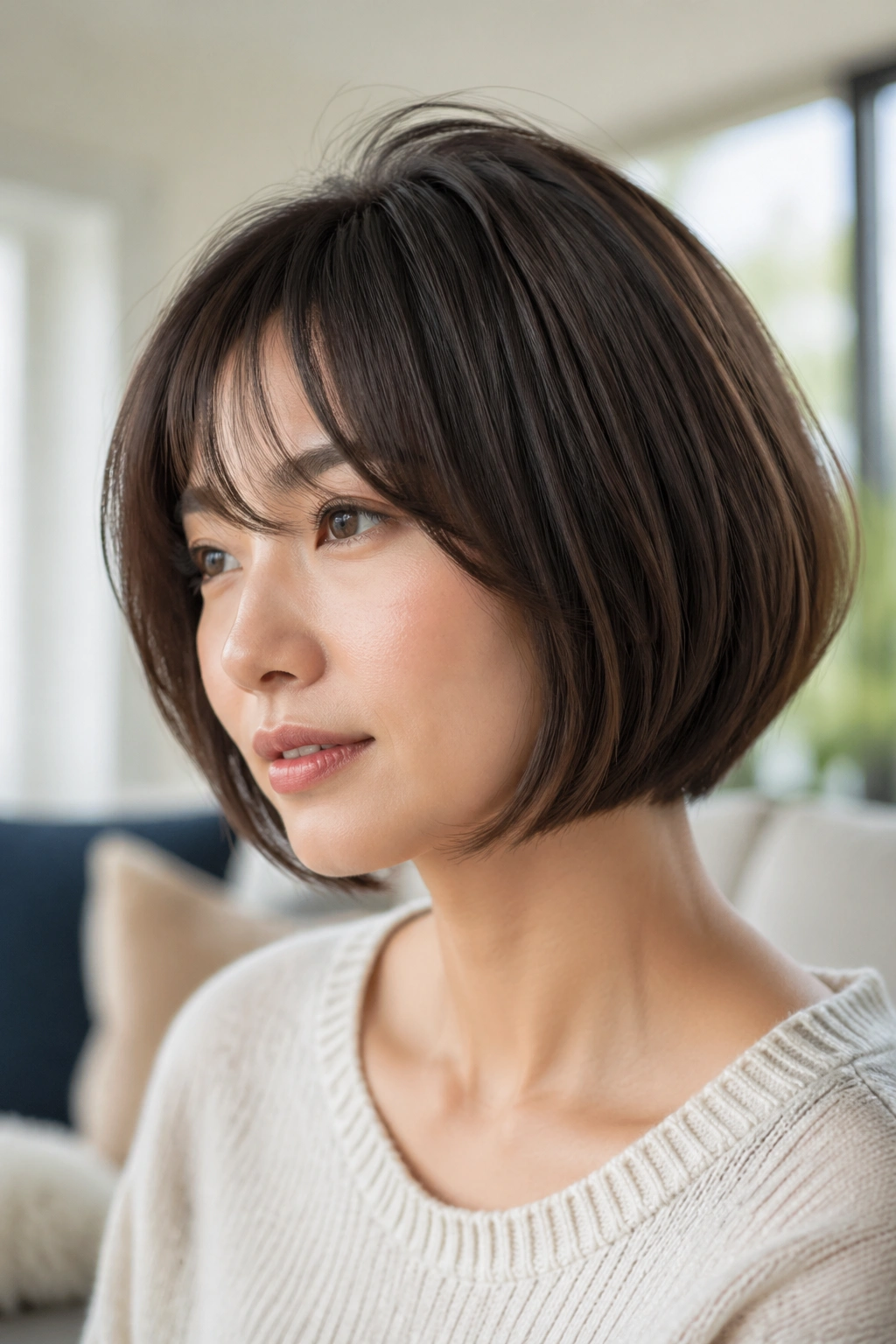
A rounded bob isn’t soft because it has lots of movement. It’s soft because the outline is controlled. The shape follows the head gently, with a little extra lift at the crown and a smooth curve around the sides.
That matters for fine hair, which can fall flat if the cut is too straight and heavy. A rounded silhouette gives the illusion of fullness without stuffing the haircut with visible layers. It’s a neat trick, and one that never gets old.
Puffy is the enemy, though. You want shape, not expansion. The sides should sit close to the head, while the top gets just enough lift to keep the cut from looking stuck to the scalp. Think of it as a quiet dome, not a bubble.
The easiest way to style it is with a round brush aimed upward at the crown and then slightly under at the ends. A little root spray can help, but don’t bury the cut under mousse or thick cream. The more product you pile on, the less that gentle outline can move.
This is also a good bob for anyone whose hair tends to stick out at the sides. The rounded contour smooths that out better than a boxy cut. It gives the haircut a finished shape even on days when you don’t have the patience for a proper blow-dry.
6. A-Line Japanese Bob with a Clean Nape
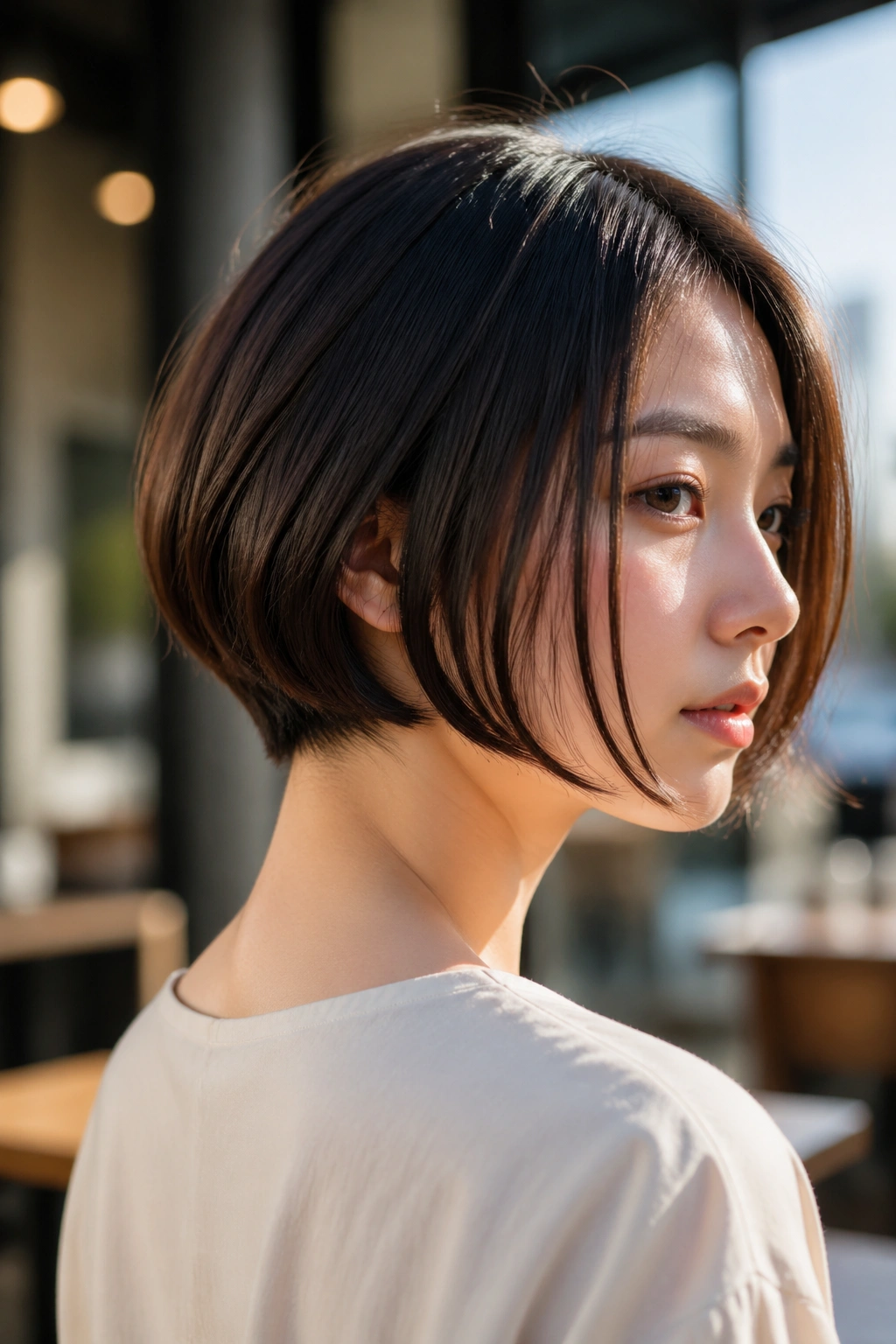
Unlike a one-length bob, the A-line version gives the profile some movement while keeping the nape neat. The back sits shorter, the front gets a little more room, and the angle quietly shapes the face without turning the haircut into a statement piece.
That front length is the reason people keep coming back to this cut. It lets you tuck the front pieces, frame the cheekbones, or soften a strong jaw while the back stays tidy and controlled. You get structure without the severity of a hard box shape.
It’s a smart choice if you want a minimalist bob that still has a little personality from the side. From the front, it can look almost straight. From the profile, the angle does enough work to keep the cut interesting.
Ask for these details
- A back length that sits snug at the nape.
- Front pieces about 2 to 4 cm longer than the back if you want a subtle angle.
- A sharper angle if you want more shape, or a softer angle if you want the cut to read understated.
- Clean ends with very little texturizing at the perimeter.
I like this version for people who want a bob that grows out gracefully. The angle softens as it lengthens, which means you don’t hit that awkward “what is this haircut doing?” stage quite as fast.
If your hair is thick, this shape also helps remove some visual bulk without chopping the whole style to pieces. The angle does the slimming for you. Quietly.
7. Collarbone-Length Japanese Lob with Barely-There Movement
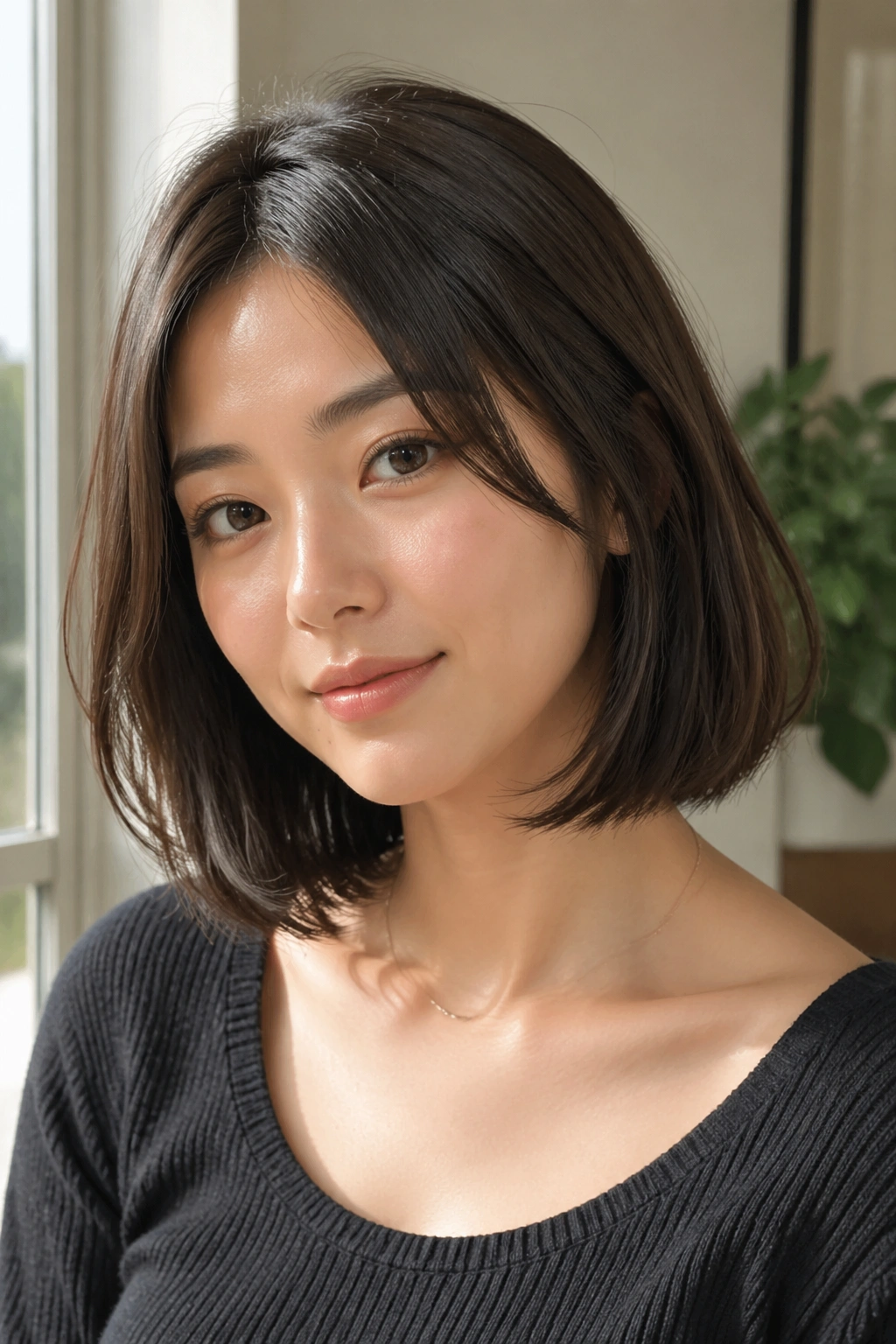
If your hair brushes your collarbones every time you turn your head, the collarbone-length lob is the peaceful answer. It gives you the clean feel of a bob, but with enough length that you’re not constantly thinking about growth, trims, or whether your face can “carry” short hair.
This is the easiest minimalist cut to live with. It works when you want polish but don’t want the maintenance of a jaw-length shape. The extra length lets the haircut fall flatter through the day, which is useful if your hair is wavy, dense, or a little prone to sticking out at the ends.
Why the extra length helps
The collarbone acts like a natural resting point. Hair at that length tends to lie down better, and the ends don’t kick out as aggressively as they sometimes do in a shorter bob. You still get the clean line, but the shape is softer and less fussy.
How to keep it minimal
- Keep the ends blunt or only lightly textured.
- Use one bend at the ends, not a full wave.
- Tuck one side behind the ear when you want a sharper look.
- Avoid heavy, piecey layers that break up the outline.
This cut is especially good if you want to air-dry your hair with a small amount of cream and call it done. It won’t scream “I spent an hour on this,” which is exactly the point. It just looks edited.
And honestly, that’s the appeal. It gives you the easiest possible version of a Japanese bob without forcing you into a short haircut you’re not ready to babysit.
8. Micro Japanese Bob with a Sharp Outline
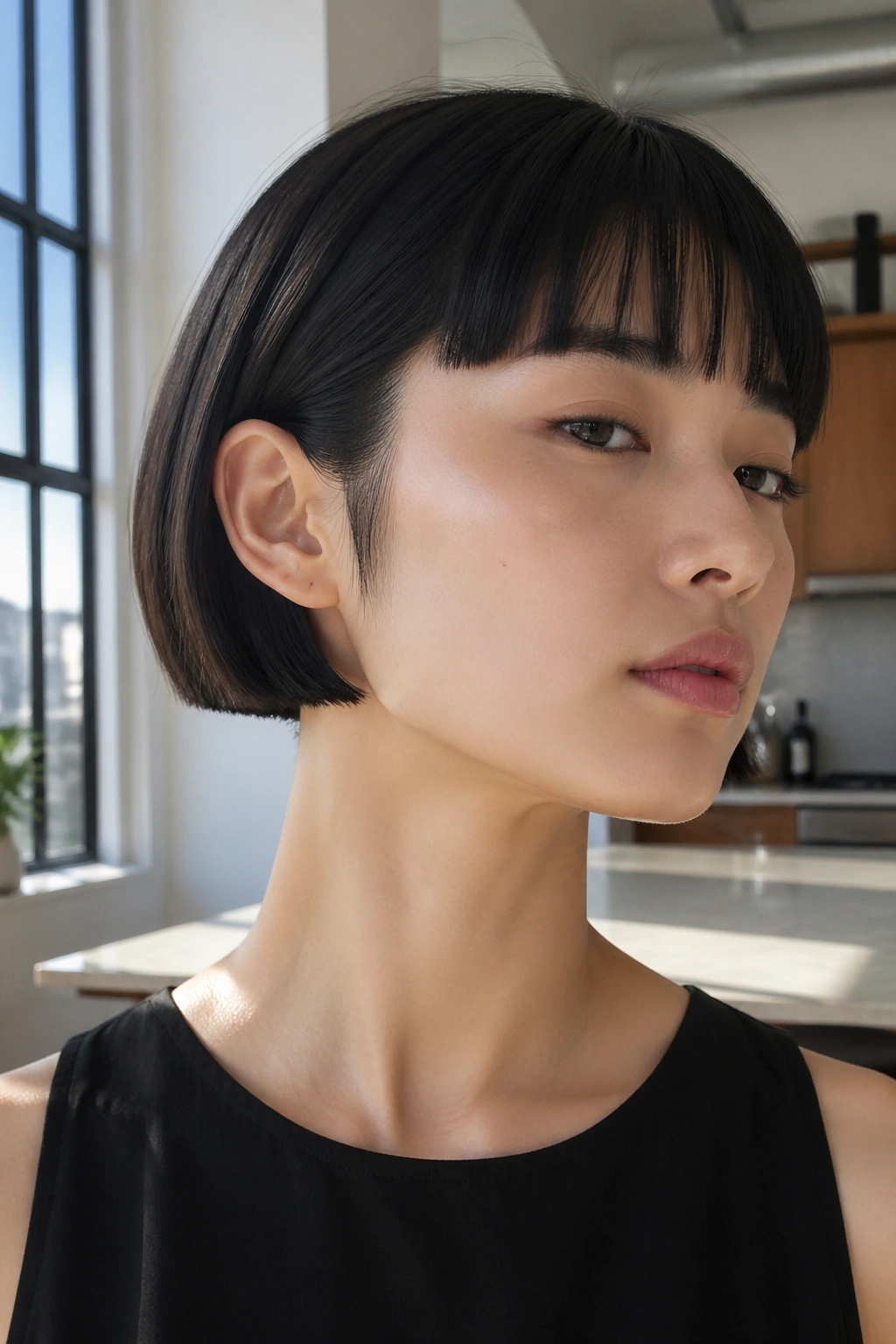
The micro bob is tiny, but it isn’t timid. It sits above the classic jaw-length line, often brushing the ear-lobe area or landing just under it, and the whole point is the clean, tight outline.
This cut looks best when the edge is blunt and the neck is visible. The shape feels crisp because there isn’t much length to hide behind. Every millimeter matters here, which is why it can look so striking in a minimalist way. There’s nowhere for the cut to wander.
It’s not the easiest bob to wear if your hair grows in a strong wave or cowlick at the nape. Short hair shows everything. That can be a gift, or it can be a headache, depending on how much you enjoy regular trims and smooth styling.
What makes it work is the discipline of the perimeter. Keep the ends straight. Keep the crown controlled. Keep the back neat. If the cut starts to feather or flip, the whole point disappears.
This style suits people who like a sharp neckline, a little edge around the ears, and a haircut that makes a plain T-shirt look intentional. It also looks excellent with a side part or a subtle off-center part, because that tiny shift gives the short shape some life.
If you want minimalism with a little bite, this is the one.
9. Soft Layered Japanese Bob for Fine Hair
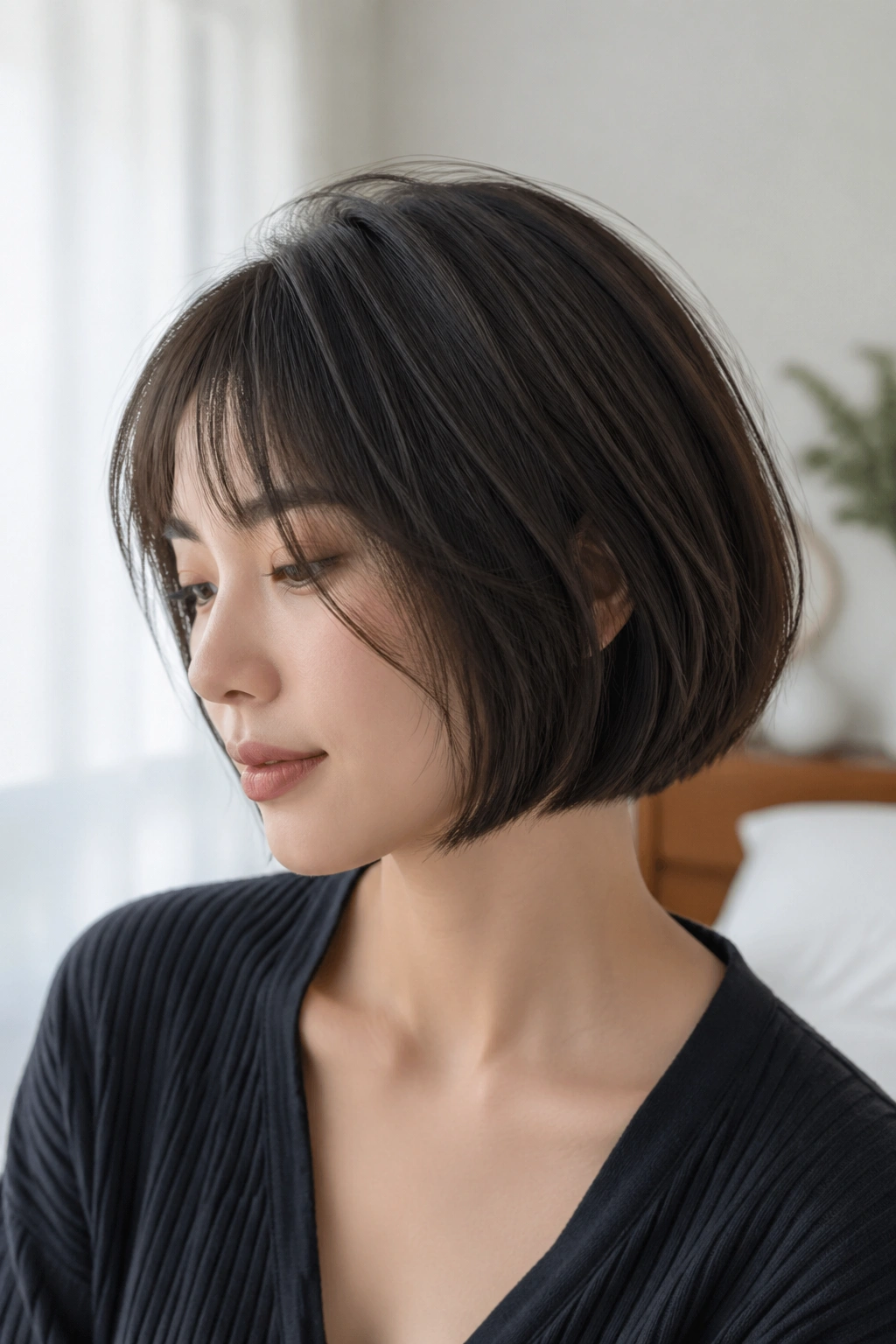
Can a bob have layers and still look minimalist? Yes, if the layers live inside the cut instead of sitting on top of it. That’s the difference between a quiet, airy bob and a choppy one that feels overworked.
This version is built for fine hair that needs help standing up without looking like it’s been shredded. The layers are there to remove weight from the inside, not to break up the outline. The perimeter still reads as a bob. The haircut just moves a little more.
That distinction matters. Too many visible layers make fine hair look stringy, especially at chin length. But a few carefully placed internal layers can give the crown lift, prevent the sides from hanging flat, and stop the ends from looking like one heavy curtain.
Invisible layers, not choppy ones
- Ask for weight removal under the top section, not around the outer line.
- Keep the perimeter blunt so the shape stays readable.
- Avoid razoring the ends if your hair is already soft.
- Use point-cutting inside the cut to keep it airy without showing obvious steps.
This bob is also a good fit for people who hate the feeling of hair collapsing against the face by noon. The hidden layers help the style keep some shape through the day, which saves you from constantly tucking, flipping, or redoing the front pieces.
A minimalist haircut doesn’t have to be severe. Sometimes it just needs enough structure to behave.
10. Wavy Japanese Bob with Loose Ends
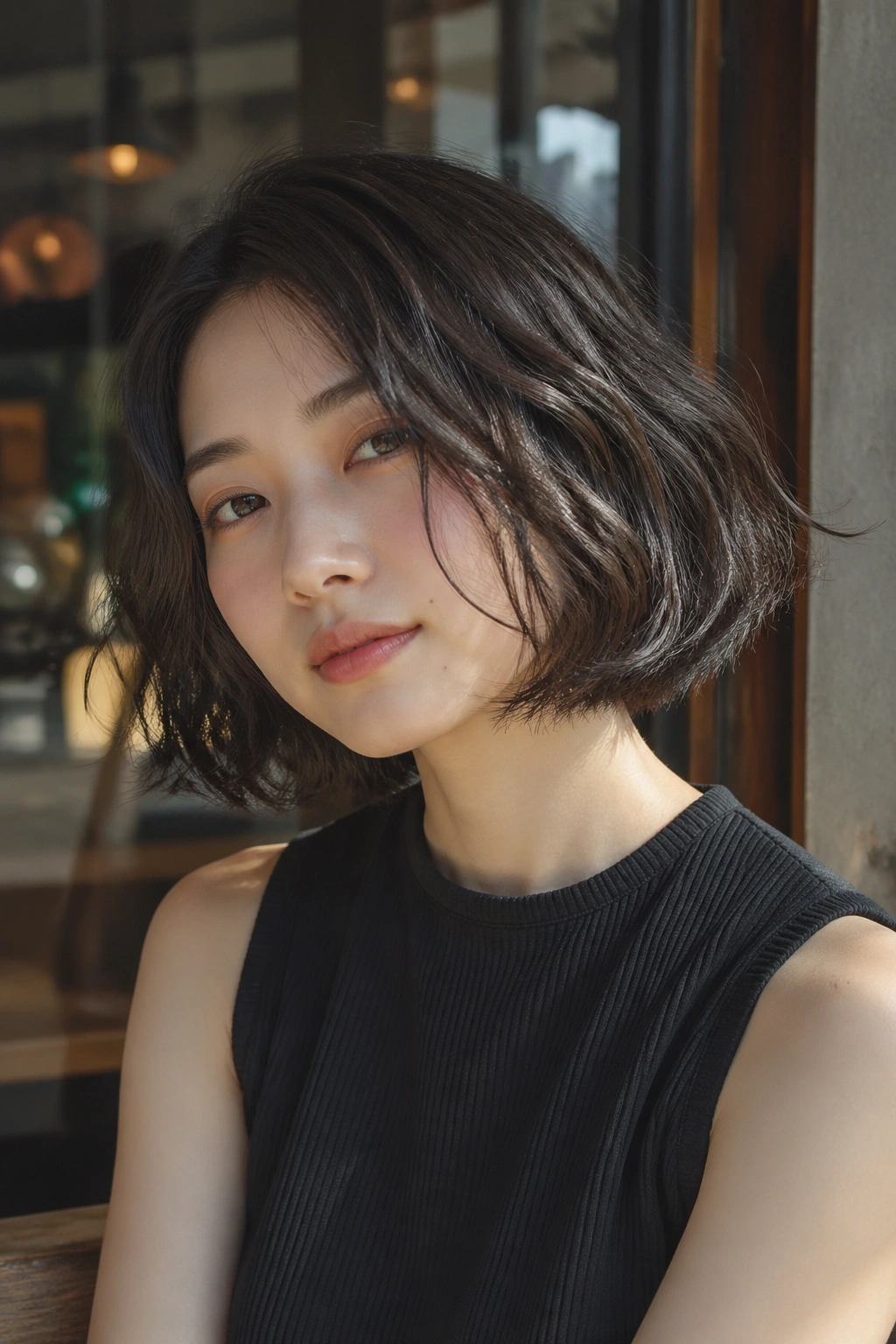
Loose waves can still look controlled when the ends are cut blunt. That’s the part people miss. A little texture doesn’t make a bob messy by default; it just means the cut has to be cleaner underneath.
This version works when your hair has a natural bend and you don’t want to fight it into glass-straight submission. Instead of flattening every wave, the style lets the movement live in the mid-lengths while the ends stay tidy. That combination keeps the look modern and calm at the same time.
The styling matters here. If you pile on too much cream, the wave can look oily and heavy. If you use too much heat, the whole thing becomes stiff. A light smoothing cream, a heat protectant, and a quick air-dry or diffuser pass usually get you where you want to go.
How to keep the wave from taking over
- Leave the roots mostly smooth so the shape stays clean.
- Scrunch only from the mid-lengths down if your wave needs a nudge.
- Use a wide-tooth comb instead of a brush when the hair is damp.
- Let a few bends stay imperfect; that’s what keeps it from looking overdone.
This cut is a good compromise for people who like movement but hate a fussy finish. It still reads as a Japanese bob because the outline is intentional. The wave just gives it a softer heartbeat.
And that softness can be a relief. Not every minimalist haircut needs to be flat and severe.
11. Center-Part Japanese Bob with Balanced Sides
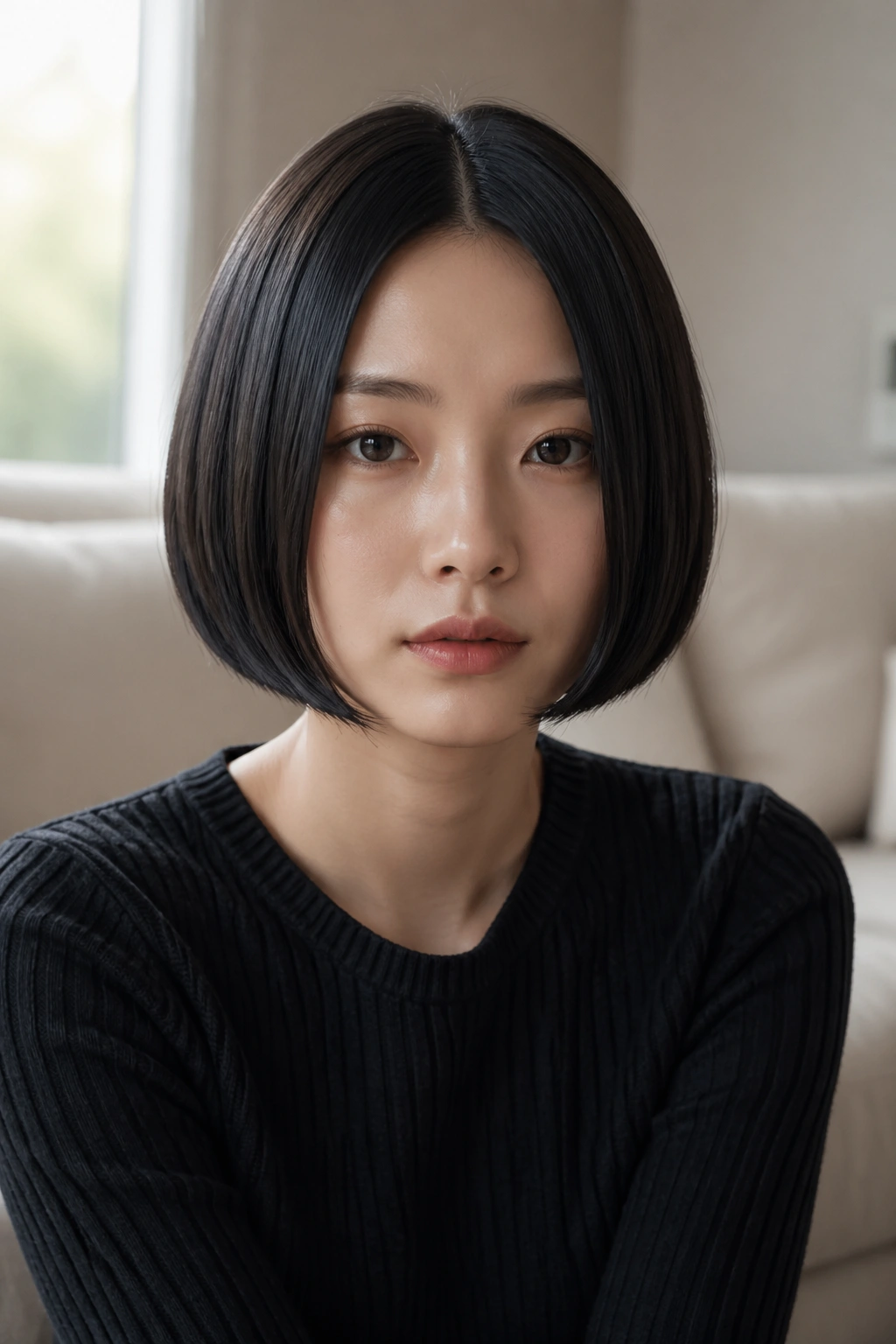
A center part changes the mood of a bob more than people expect. Put the part in the middle, and the whole haircut suddenly feels calmer, more symmetrical, and a little more architectural.
That symmetry is why the center-part bob works so well for a minimalist look. Each side mirrors the other, which lets the cut speak through its shape instead of through extra styling tricks. If the line is clean, the effect is almost quietly graphic.
It does ask for some honesty from your hair. If one side flips out more than the other, or if you have a strong cowlick near the front, the part may need to slide off center by half an inch. That tiny shift can save the whole look.
The best center-part bobs usually have enough length to frame the cheekbones without hanging past the jaw too heavily. Too short, and the part can feel severe. Too long, and the balance disappears into a regular lob.
This is a strong choice for oval faces, straight hair, and anyone who likes a face-framing cut that doesn’t depend on bangs. It also works nicely with a tucked side, because the straight part gives you a clean base while the tuck adds a little asymmetry when you want it.
The cut doesn’t need much else. Good balance is doing a lot of heavy lifting here.
12. Long-Front Japanese Bob with Soft Corners
When the front pieces fall a little longer than the back, the bob gets softer without losing its shape. That’s the appeal of the long-front version: it keeps the back neat, but the corners around the face ease the line so the cut never feels too rigid.
This is the style I’d point to if someone likes blunt hair but worries it will feel too harsh. The front can hit just under the chin while the back stays closer to the nape, and that tiny shift gives the haircut room to move. It frames the face without shouting about it.
It also grows out well, which matters more than people admit. A lot of minimalist cuts look fantastic on day one and then turn awkward too fast. The long-front bob stays readable for longer because the shape changes gradually instead of all at once.
A few things make it work:
- Keep the front pieces only slightly longer, not dramatically angled.
- Let the corners sit soft instead of razor-sharp.
- Use a flat brush or paddle brush to keep the ends smooth.
- Leave enough weight at the bottom so the shape doesn’t go wispy.
This version suits people who want one haircut that can live in different moods. Tucked behind the ears, it looks neat. Left down, it feels gentle. Bounced under with a small bend, it becomes a little more polished. No drama. Just options.
A minimalist bob should feel edited, not stiff. If you pick the length, corner shape, and fringe balance with a little care, the haircut does exactly what it’s supposed to do: look clean, wear easily, and leave the rest of your look alone.
