



A white bob cut has a way of looking sharp before you touch a styling tool. The line does a lot of the work, and the color turns every edge into a statement.
That is why white bob cuts can look so cool and clean when the shape is right. A blunt chin-length cut feels different from a French bob, and a stacked bob has a whole other energy. White hair does not hide sloppy layers or a weak outline. It shows everything.
I like this family of cuts because it can go minimal or edgy without asking for a lot of extra styling. A bit of polish, a good blow-dry, maybe a flat iron pass, and the whole thing reads crisp. When the tone leans icy white, pearl, or silver-white, the haircut becomes even more important because the silhouette is the first thing people notice.
The trick is choosing the shape that matches your hair density, face shape, and patience level. Some of these cuts are easy to air-dry. Others need a round brush, a heat protectant, and a little discipline. Start with the one that fits your real routine, not the one that looks best in a salon chair.
1. Chin-Length Blunt White Bob
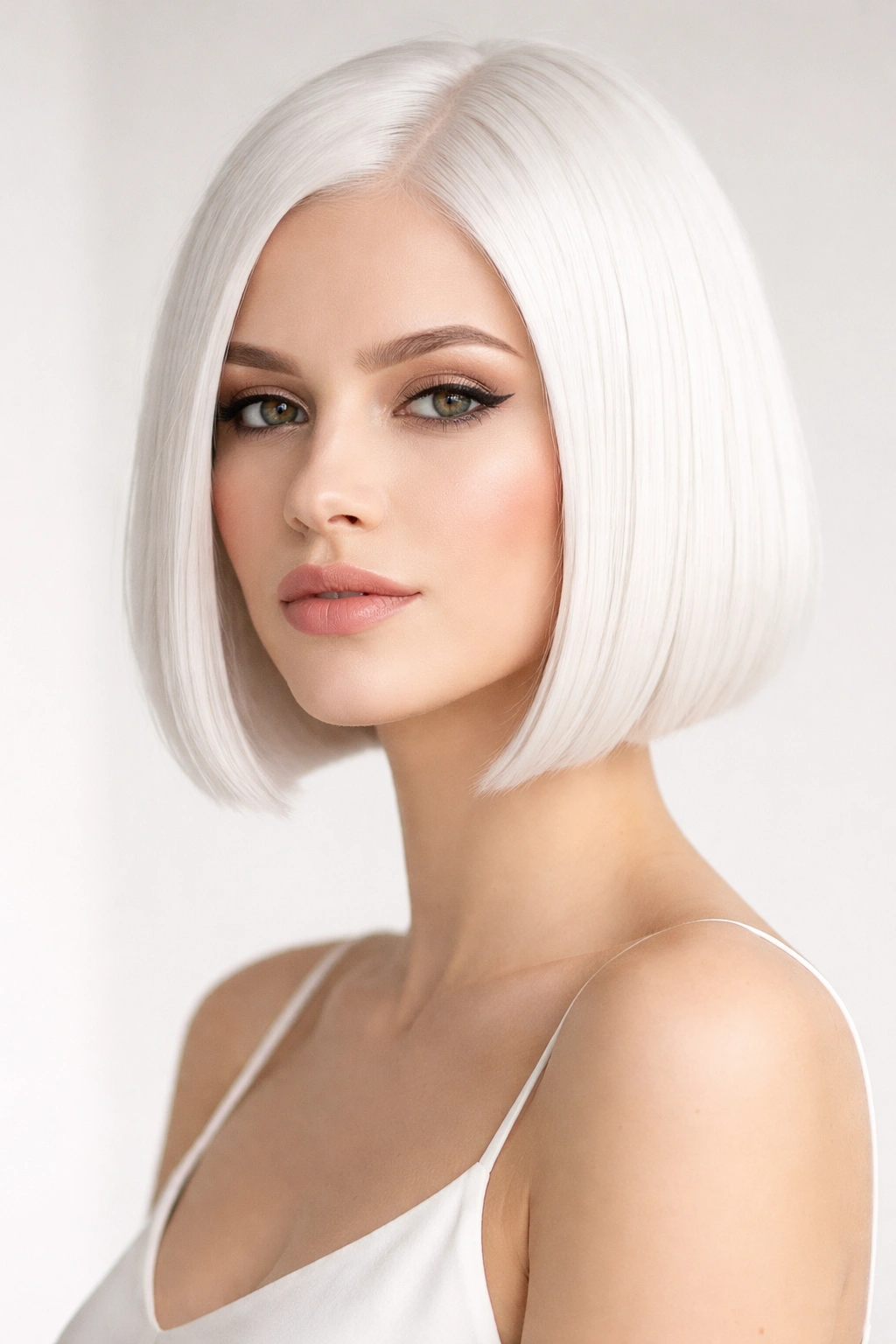
A chin-length blunt bob is the one I reach for when someone wants white hair to look neat without feeling flat. The outline sits close to the jaw, which makes the face look clean and the ends look solid. No wispy confusion. No overworked layers. Just a firm shape and a bright, icy color doing its job.
Why the blunt line works
White hair shows every uneven edge, so a blunt perimeter gives the eye something calm to land on. That line also makes fine hair look denser than it really is, which is one reason stylists keep coming back to this cut when a client wants that crisp, tidy finish. It works on straight hair best, but slightly wavy hair can wear it well too if the ends are ironed smooth.
- Length: Ask for the hemline to hit right at the chin or a touch below it.
- Texture: Best on straight to softly wavy hair.
- Styling: Use a paddle brush or flat brush while blow-drying so the ends sit close to the face.
- Maintenance: Clean up the line every 6 to 8 weeks, or it starts to lose that sharp shape.
This cut looks especially good when the part is dead simple. Center part, deep side part, either one works, but keep the roots flat and the ends tidy.
My blunt-cut rule: if the perimeter starts flipping out at random angles, it needs a trim, not more product.
2. French Bob with a Soft Fringe
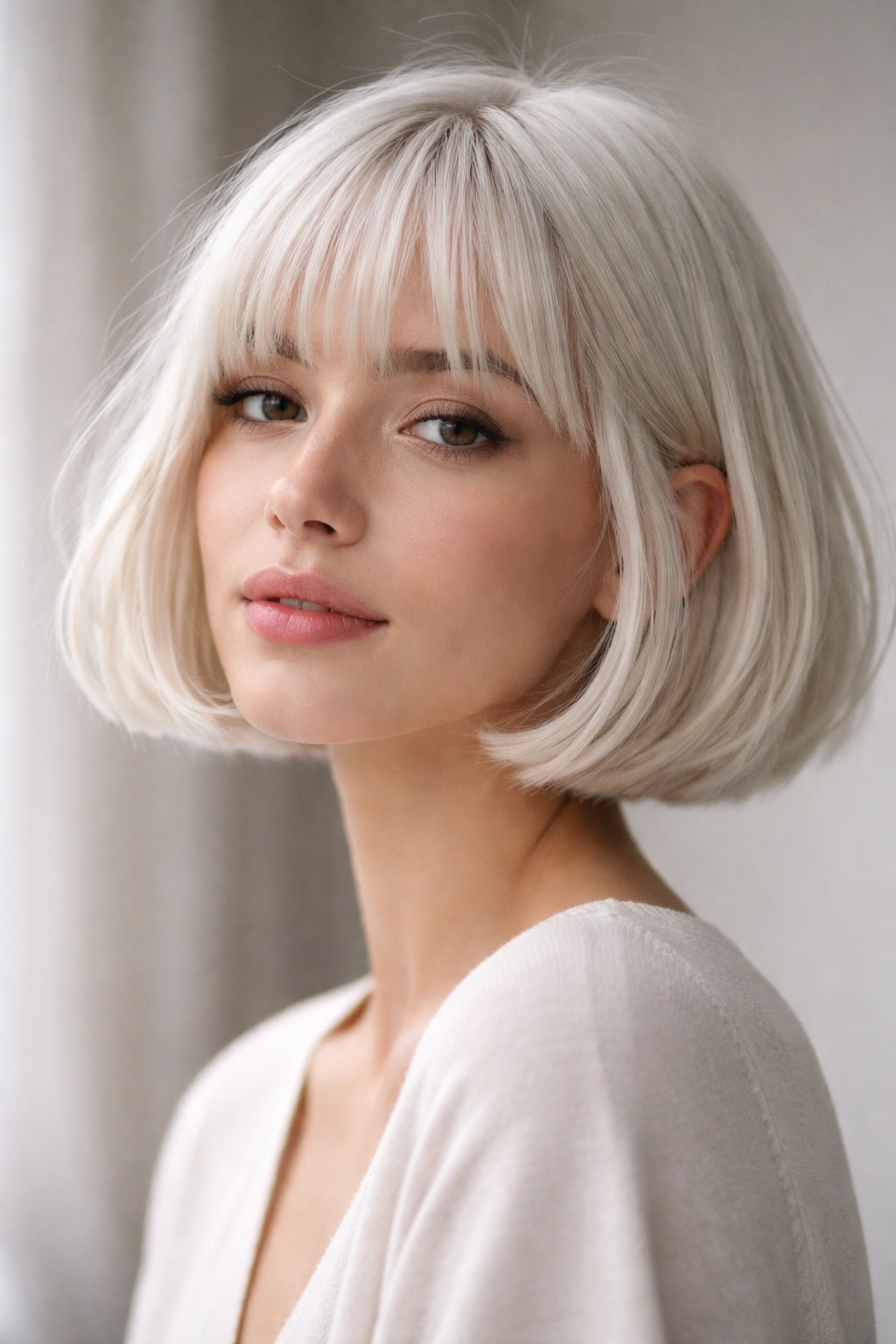
The French bob is the easiest way to make white hair look stylish without looking overdone. It sits a little shorter, usually around lip to cheekbone length, and the fringe softens the whole thing so it feels effortless rather than severe. That little bit of bend at the front changes everything.
The shape has a nice contradiction built into it. The line is clean, but the mood is relaxed. White hair can go very stark if the cut is too geometric, yet a French bob keeps some movement near the eyes and cheeks. That makes it a smart choice if your face shape feels too long for a blunt chin-length cut, or if you want something that looks good with almost no styling beyond a quick blow-dry.
A tiny fringe matters here. Not heavy bangs. Not a full curtain curtain-bang situation. Just enough softness to keep the top from looking hard. I like this cut on hair that has a little natural bend, because it wakes up fast. On straighter hair, a dab of lightweight mousse and a quick twist with a round brush at the front usually does the trick.
And yes, this one ages well between salon visits. The shape still looks intentional when it grows out a bit, which is more than I can say for some cleaner cuts that turn fuzzy fast.
3. Sleek Center-Part White Bob
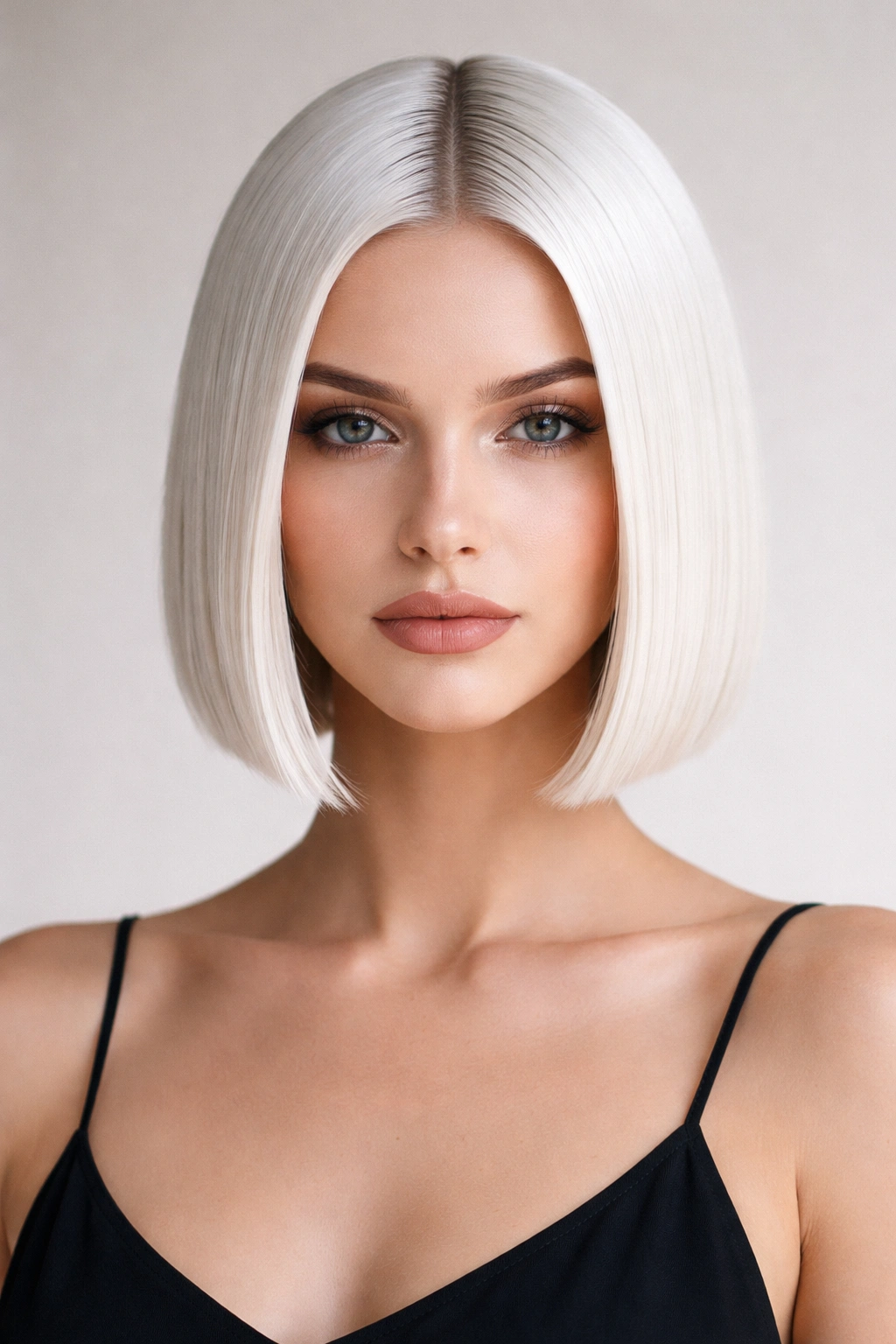
Can a center part make a white bob feel colder and cleaner? Absolutely. When the line is straight, the parting becomes part of the design, and the whole haircut reads sharper because both sides mirror each other. It is a simple move, but it has a big visual effect.
This version works best when the hair is sleek from root to tip. Think smooth crown, tucked-down ends, no puff at the sides. White and silver tones make symmetry stand out even more, so if your face is naturally angular, this cut can look almost architectural. If your features are softer, the center part creates a nice contrast and keeps the style from drifting too soft or too sweet.
How to style it
- Blow-dry with a heat protectant and a medium round brush.
- Aim the airflow downward so the cuticle lies flat.
- Finish with a flat iron only if the ends keep flipping.
- Use one drop of lightweight serum on the mid-lengths and ends, not the roots.
- Keep the part exact. A crooked center part makes this whole look fall apart fast.
The biggest mistake is adding too much volume near the temples. That changes the whole feeling of the cut. Sleek should mean sleek.
A center-part white bob looks best when the finish is deliberate. Not stiff. Just controlled.
4. Layered White Bob with Soft Texture
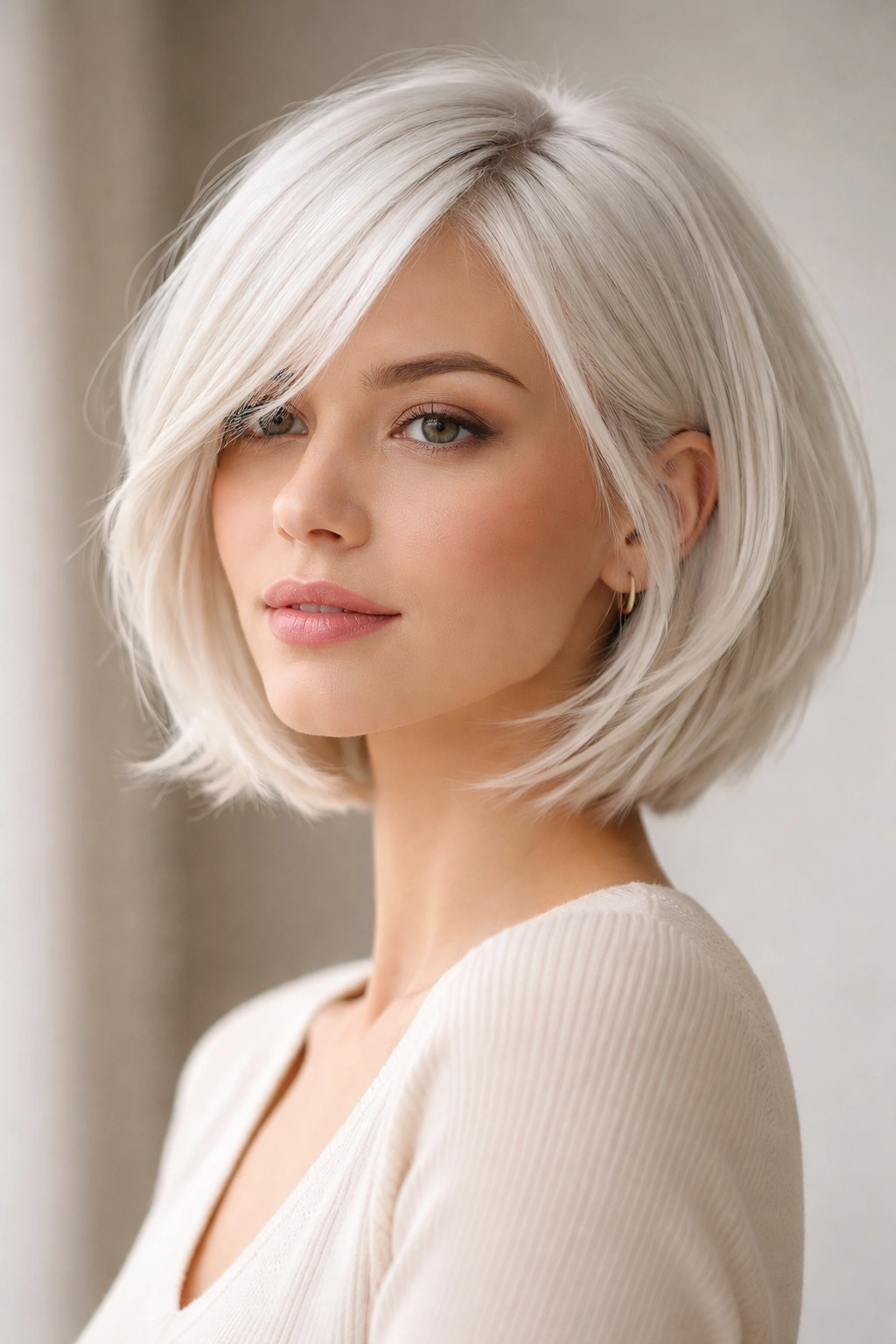
If your bob turns into a helmet by lunchtime, the problem is usually weight, not length. Soft internal layers can fix that without wrecking the clean outer line. That is the sweet spot here: enough movement to keep the shape alive, but not so much that the cut starts looking choppy.
The best layered white bob does not scream “layers.” You should see lift at the ends, a little bend around the cheekbones, and more air inside the shape. The outline still looks neat. The texture just keeps it from falling dead flat. On white hair, that matters because the color can make a heavy cut feel even heavier.
I like this cut on medium to thick hair, especially if the ends tend to sit bulky against the neck. A stylist can remove weight through the interior and leave the outside line strong. That means you still get the cool, clean look people want from a bob, but you don’t have to fight the same blocky silhouette every morning.
A round brush and a light mousse are usually enough. If you want a little more movement, twist two front sections away from the face while the hair is still warm. Small detail. Big payoff.
5. Asymmetrical White Bob
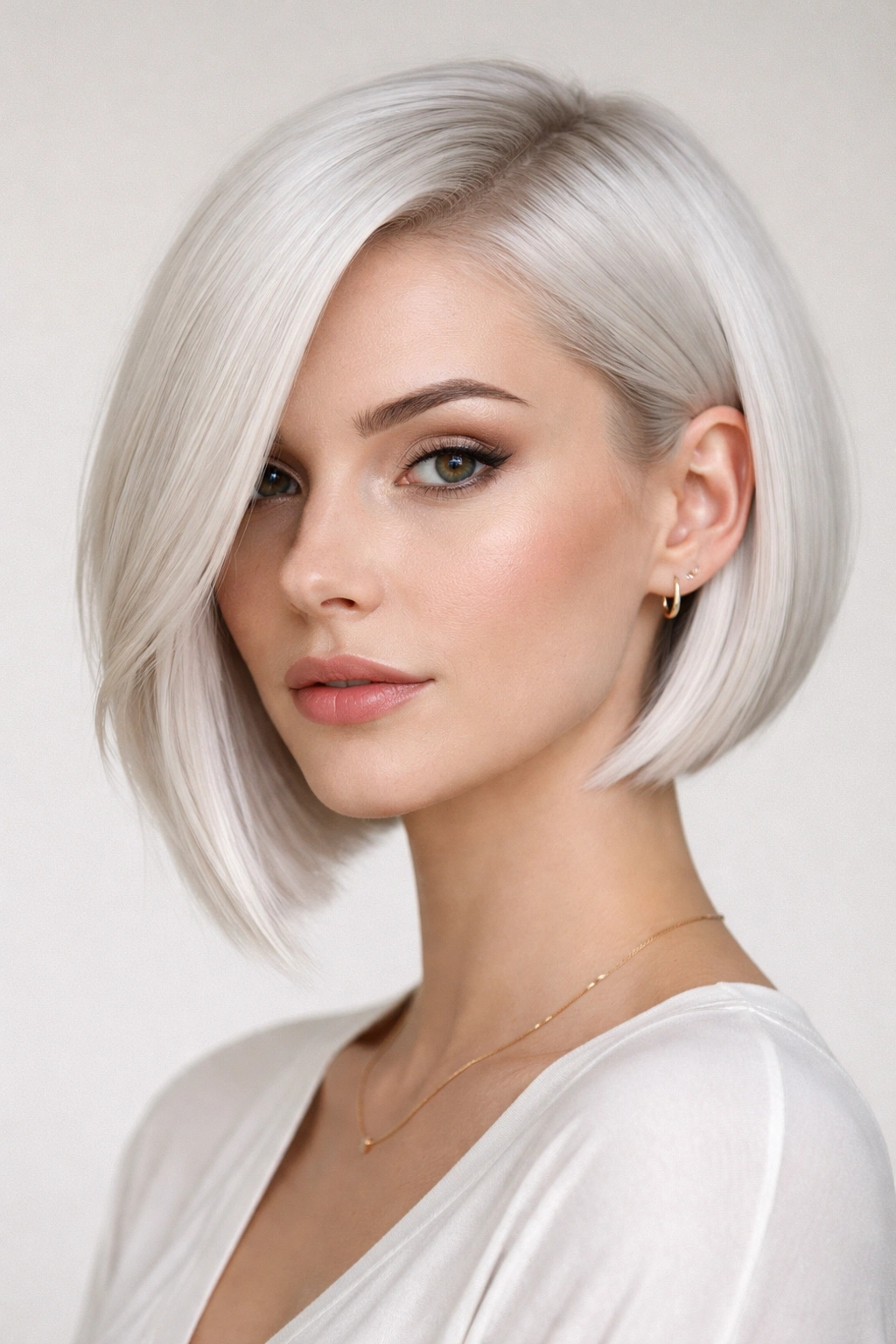
An asymmetrical bob is what happens when a classic white bob gets a little attitude. One side sits longer than the other, usually by an inch or two, and that small shift changes the whole mood. The cut stops feeling purely neat and starts feeling deliberate.
The best part is that asymmetry does not have to look messy. In white hair, the difference in length shows up clearly, so the haircut needs a crisp perimeter and a careful blend from one side to the other. If the line is sloppy, you’ll see it right away. If it is clean, though, the result looks modern in the plainest, least fussy way. I mean that in a good way.
This cut is strong on straight hair because the shape reads instantly. It also works if your hair has a little bend, but then you need to keep the longer side from curling under too much, or the angle disappears. Tucking the shorter side behind one ear helps the contrast show, especially if you wear small hoops or a single bold earring.
It suits people who want something clean but not predictable. There’s a little edge here, but not the kind that takes over your whole look. The haircut does enough on its own.
6. Stacked White Bob with a Lift at the Nape
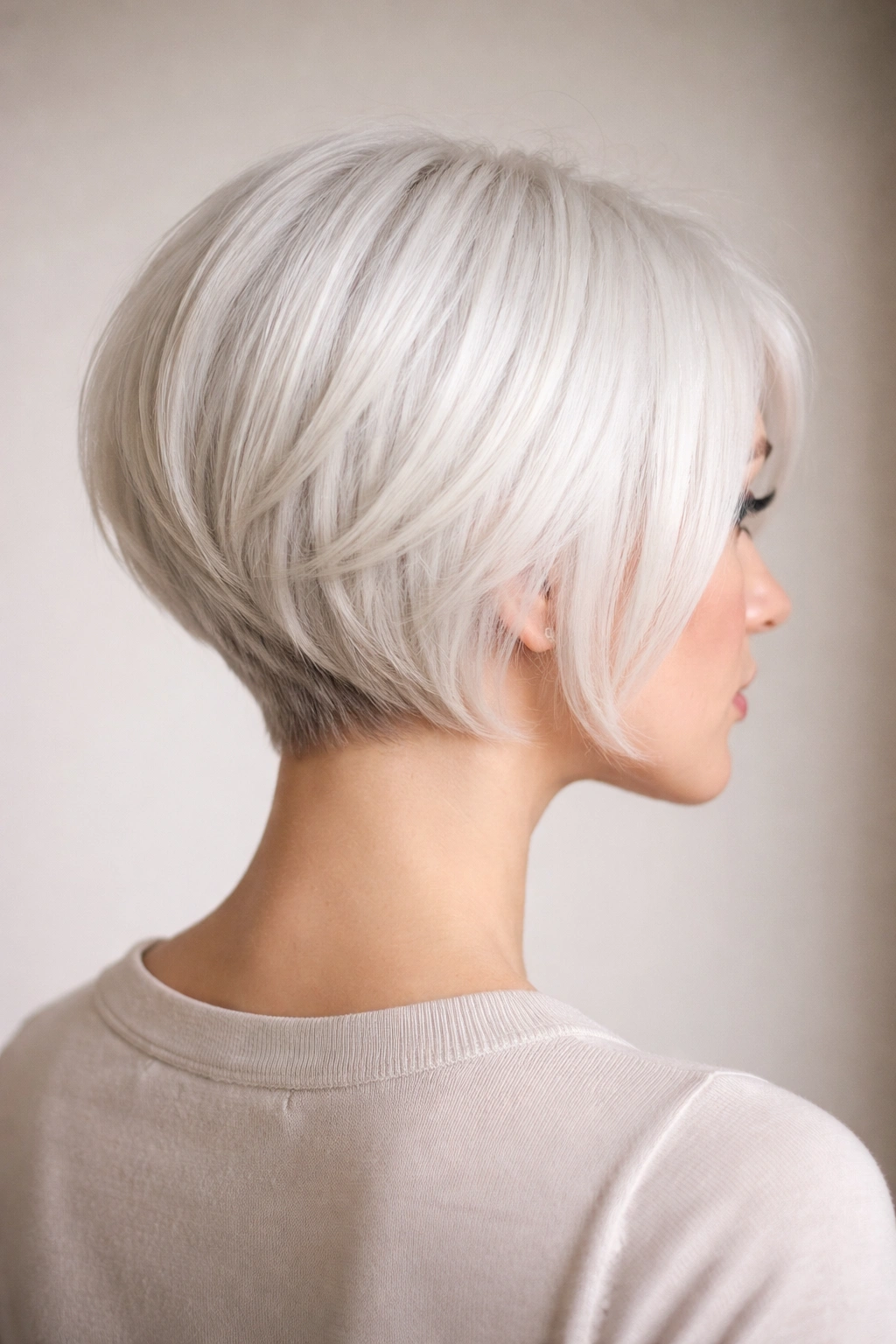
Unlike a one-length bob, a stacked bob gives you lift at the back without making the front feel bulky. That little graduation at the nape is the whole trick. It lets the hair curve inward neatly, which is why this cut stays so tidy around the neckline.
The shape is especially helpful if your hair is fine and tends to collapse. A stacked back creates a built-in cushion of volume, so the bob looks fuller without needing much teasing or heavy product. White hair makes that lift easier to see, too. The contrast between the shorter back and the longer front catches the eye in a clean, structural way.
This is not the cut I’d choose for someone who hates salon upkeep. The back needs regular reshaping or it starts to grow out awkwardly. But if you like a bob that sits neatly under a coat collar and keeps its line through the day, this is one of the smartest options.
Ask for graduation through the nape, not chunky layers through the crown. That detail matters. Too much top-layer stacking can make the head look too round, which is not the goal here. The best version is compact, lifted, and precise. Clean from every angle.
7. Micro White Bob with Barely-There Length
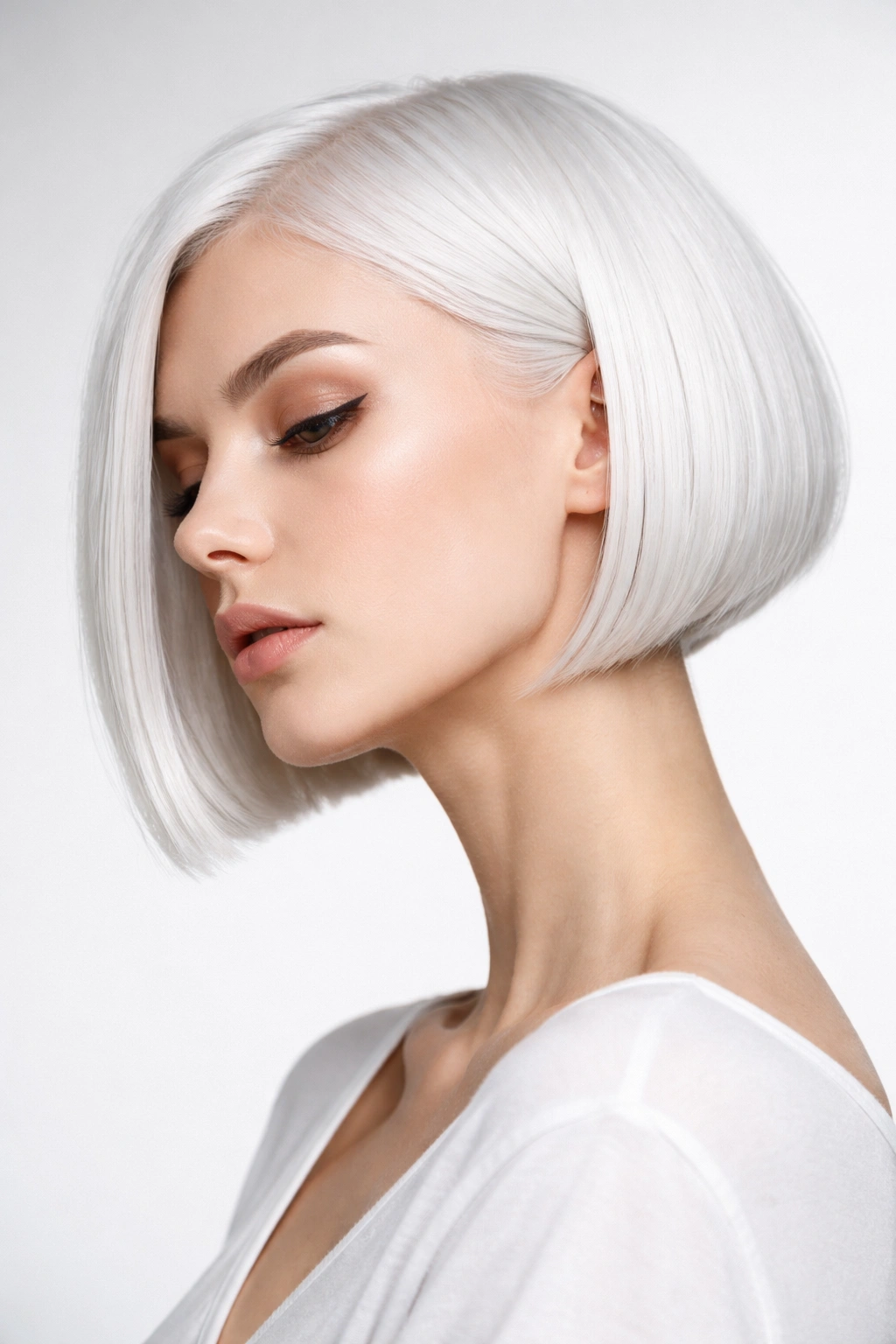
The micro bob is not shy. It lands around the jaw or even higher, often skimming the cheekbones and ears, and it makes white hair look almost graphic. If a blunt chin-length bob is a clean line, the micro bob is a clean slash.
Why it works on white hair
White and icy platinum tones make short hair look brighter because there is less length for the eye to wander through. The shape reads first. That is the whole appeal. A micro bob can make strong bone structure stand out, and it gives the neck a long, open look that feels fresh rather than fussy.
- Best for: straight hair or hair that can be smoothed easily.
- Not ideal for: very curly hair unless you want a lot of daily styling.
- Styling time: short. Usually 10 to 15 minutes if the cut is good.
- Maintenance: trim every 4 to 6 weeks so it does not lose the sharp edge.
The biggest mistake is leaving it too fluffy. That kills the clean line fast. Use a lightweight blow-dry cream, then flat iron only the surface if needed. The inside should stay soft; the outside should look controlled.
My blunt opinion: if you want a white bob that looks cool with almost no effort, this is one of the strongest choices on the list.
8. White Bob with Curtain Bangs
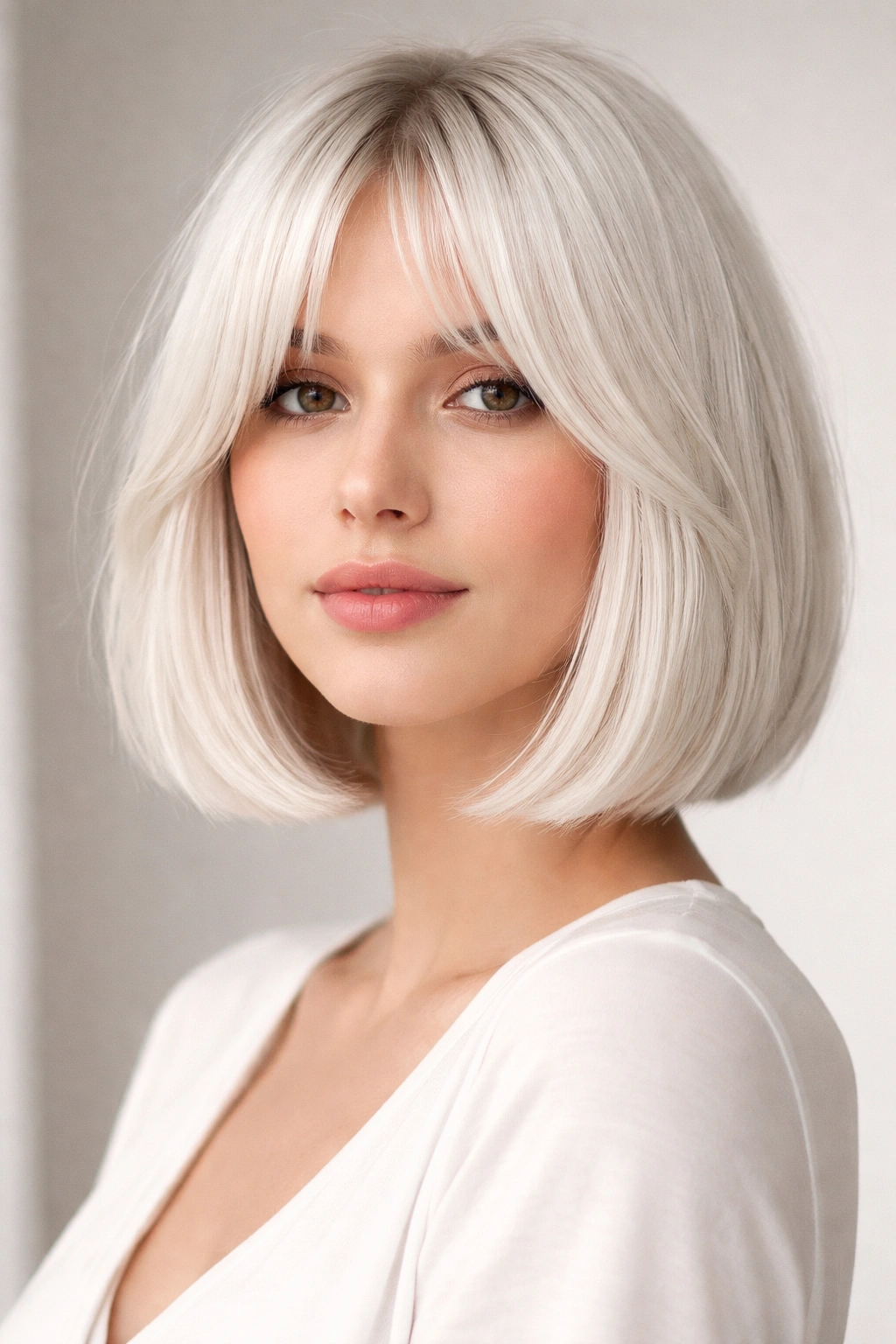
Can bangs soften a white bob without wrecking the clean line? Yes, if the bangs are kept loose and the rest of the cut stays tidy. Curtain bangs split the difference between polish and ease, which is why they work so well with bright white hair.
The trick is keeping the fringe light. Heavy bangs can make a white bob feel boxed in, especially if the ends of the cut are already blunt. Curtain bangs, on the other hand, open the face and guide the eye down into the bob itself. They also help if your forehead is long or if you want the haircut to feel less severe around the hairline.
I like this look on slightly wavy hair because the bangs can fall into place with a soft bend. Straight hair can wear it too, but the bangs need a round brush and a quick sweep away from the face. If they split too sharply, the whole thing can look accidental. That is not the vibe.
How to keep the fringe from taking over
- Dry the bangs first so they do not collapse.
- Roll the brush away from the face, then let the ends fall softly.
- Keep the bob itself smooth so the fringe stays the star.
- Use a light mist of flexible hairspray, not a helmet.
This cut has range. It can feel cool and spare, or a little softer and more lived-in. That depends on how much bend you leave in the bangs.
9. Wavy White Bob with a Side Part
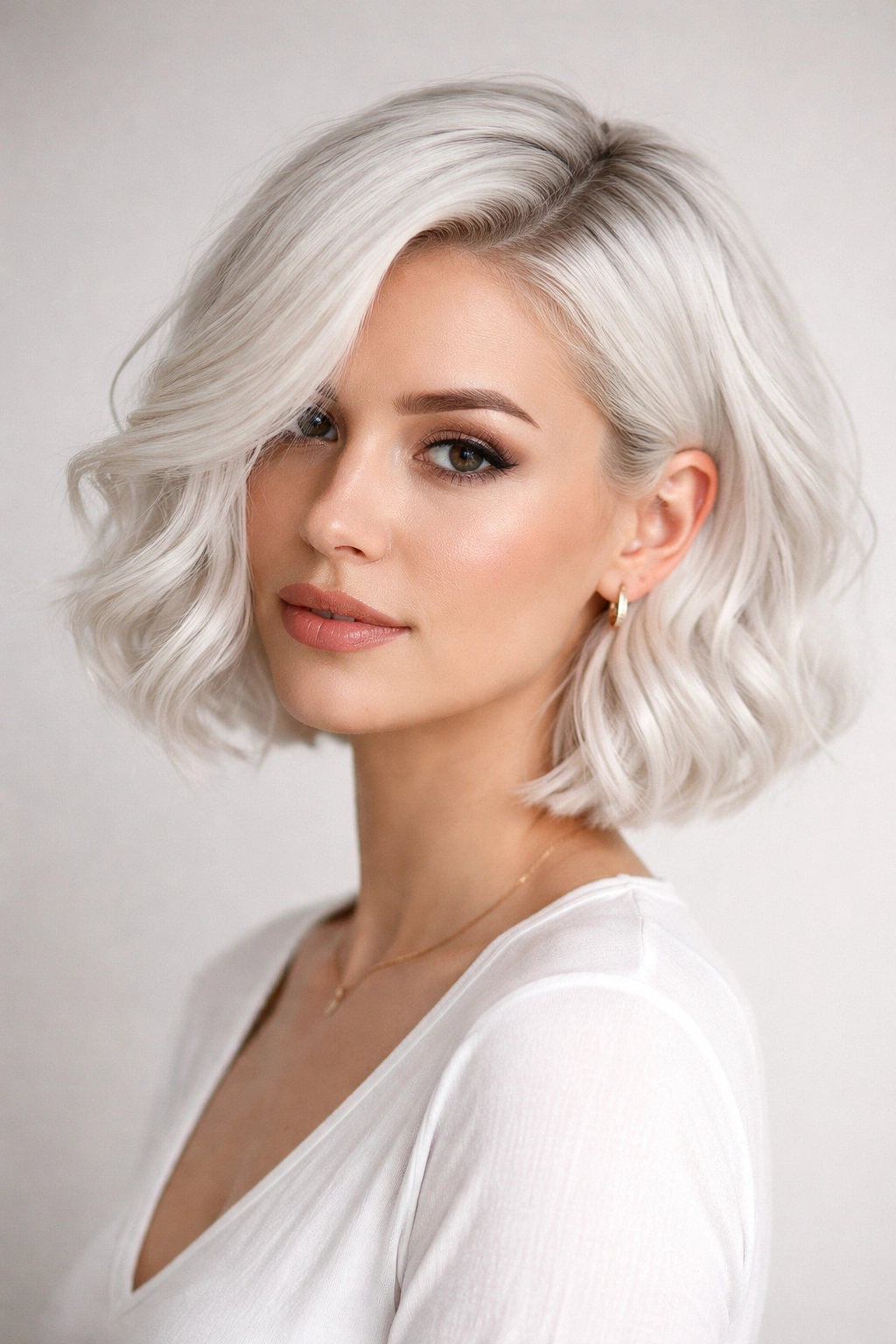
A white bob does not need to be pin-straight to look clean. In fact, a controlled wave can make the shape feel easier on the eyes, especially if your hair is thick or your face shape looks better with a little softness around it. The side part keeps the waves from turning too symmetrical, which gives the cut a bit of motion.
This works best when the waves are loose, not beachy to the point of frizz. Think one or two bends through each side, ends kept neat, root volume kept modest. White hair can show frizz fast, so the wave pattern needs to be smooth and intentional. A large-barrel curling iron or a flat iron wave technique can do the job. Small sections. Low heat. Slow passes.
It’s a nice choice for people who want white bob cuts that feel cool without looking severe. The side part adds a little drama, but the wave stops it from getting stiff. If the hair is too flat, the color can look harsh. If the wave is too loose, the cut loses shape. That middle ground is where this one lives.
I’d keep the finish shiny and the ends slightly tucked under. That little detail keeps the whole style from drifting too casual.
10. A-Line White Bob with a Hidden Undercut
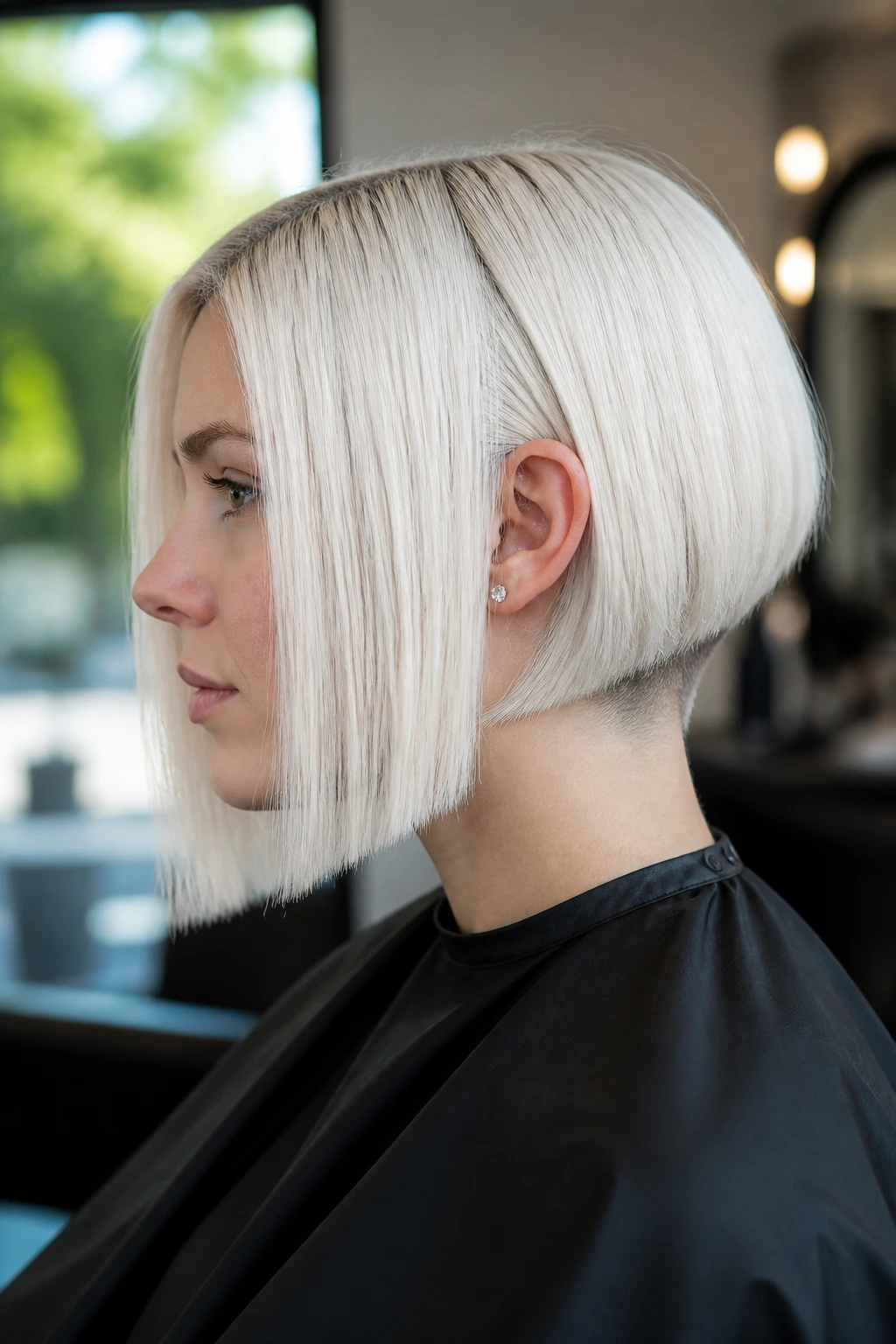
An A-line white bob with a hidden undercut is the cleanest answer for heavy hair. The front stays longer, the back sits shorter, and the underneath gets lightened just enough so the shape doesn’t puff out under its own weight. It sounds technical. It looks effortless when it’s done well.
The A-line shape gives the face a longer frame, which is handy if you want the white color to feel sleek rather than blocky. The hidden undercut does the unglamorous work. It removes bulk where nobody sees it, so the outer layer falls into a smoother line. That matters a lot with coarse or dense hair, because white tones can make thickness look broader than it really is.
This cut is also a good choice if you like wearing collars, scarves, or structured jackets. The longer front pieces skim past the jaw and the shorter back keeps the neckline tidy instead of bulky. It feels crisp with a turtleneck. It feels sharp with a plain black tee. No drama needed.
Ask your stylist for this
- A longer front that angles toward the collarbone or jaw.
- A shorter, controlled back with weight removed underneath.
- A smooth outer surface, not choppy layers.
- A finish that stays narrow at the nape and soft at the tips.
If you want one white bob that handles thick hair without turning boxy, this is the one I’d point to first.
