



A good bob can do more for a face than a stack of expensive products ever will. Bob cuts for women over 50 work because they put the shape where you want it: at the jaw, along the cheek, or just below the collarbone, where hair still moves but doesn’t look fussy.
That matters.
Hair often changes with age in ways nobody warns you about. The crown can flatten. The ends can get dry and a little wiry. Gray strands may feel coarser than the rest, and hair that used to hold a bend for three days may suddenly go limp by lunch. A smart bob takes those changes into account instead of fighting them.
The best cuts are not all short, and they’re not all sleek. Some need layers, some need a blunt line, some need a fringe, and some need a little lift in the back so the whole style doesn’t collapse by the end of the day. The trick is matching the line, weight, and movement to the hair you actually have.
1. Chin-Length Bob With Soft Ends
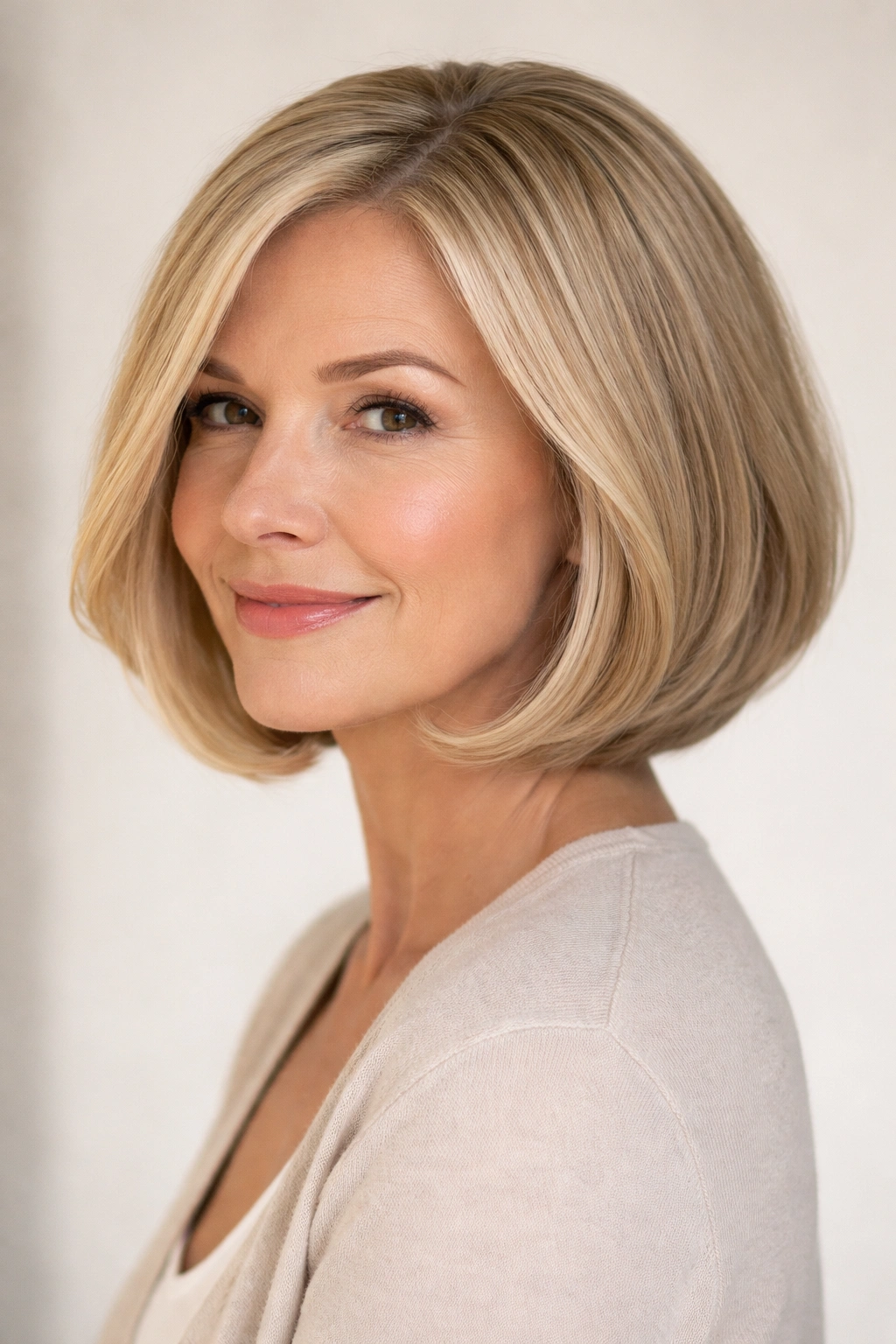
The chin-length bob is the cut I keep coming back to when someone wants shape without losing softness. It sits right where the jaw starts to matter, which gives the face a clean frame without making the neck look crowded. If the ends are cut with a slight bevel instead of a hard line, the whole style feels lighter.
That softer finish helps a lot if your hair has lost some density around the temples or if you wear glasses. A sharp, blunt edge can sometimes feel a little severe. A gentle curve at the bottom keeps the cut from looking boxy.
Ask for a one-length bob that grazes the chin with softened ends. Then style it with a round brush or a flat brush and a quick bend inward at the last inch. That small move changes everything.
A tiny bit of root lift at the crown is enough. You do not need big volume here. Just a clean shape and a neat edge.
2. Layered Bob That Lifts Fine Hair
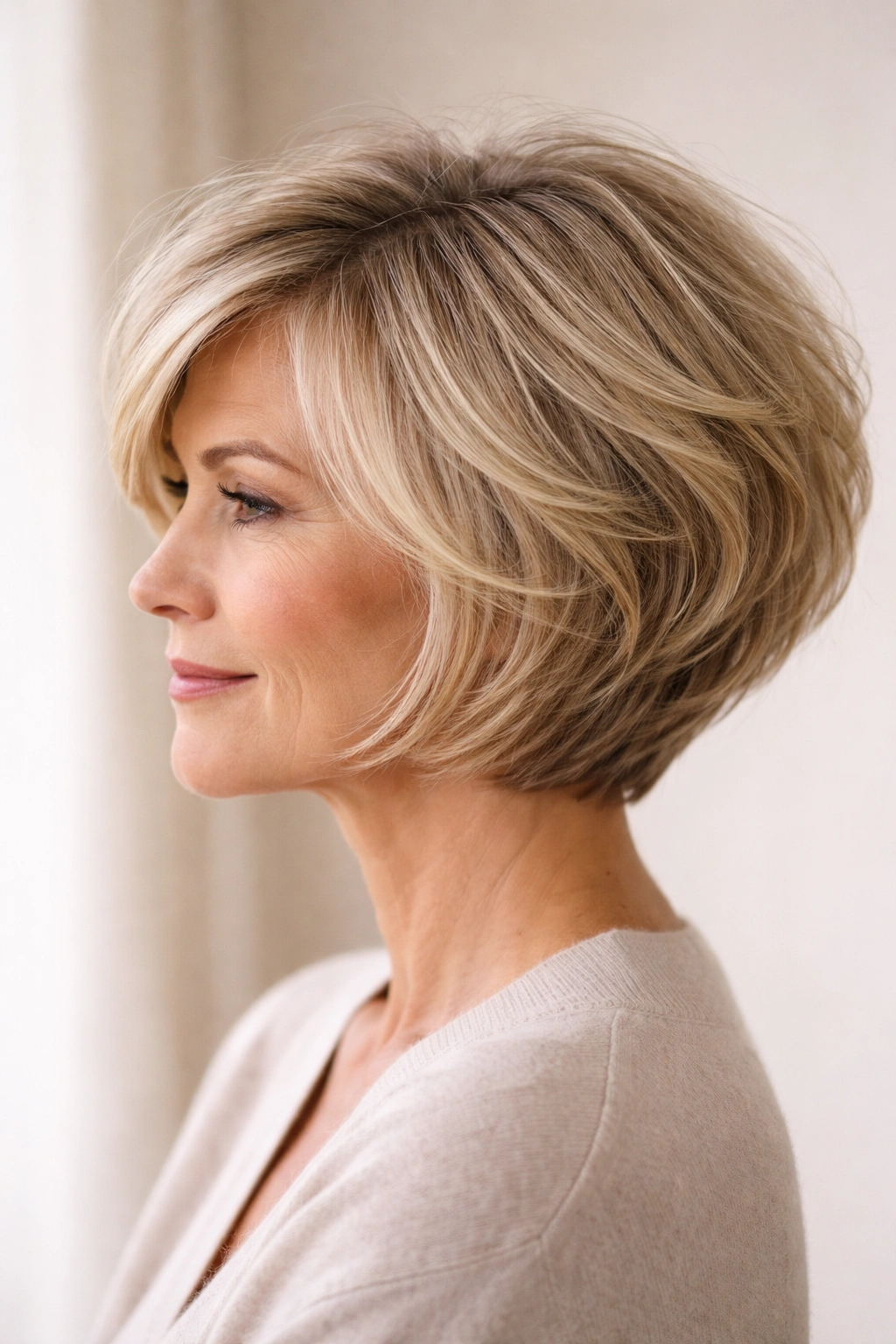
Fine hair needs help standing up, and a layered bob is usually the easiest place to start. The goal is not to shred the hair into pieces. The goal is to remove weight in the right spots so the top layers can float instead of lying flat against the scalp.
This cut works because the layers create air. Not a lot of drama, just enough space for the hair to move. If your hair collapses when it gets longer than your chin, a layered bob can bring the body back without making the ends look thin.
What to ask for
- Layers that begin below the cheekbone, not right at the top of the head
- Soft internal shaping instead of choppy, obvious steps
- A perimeter that still keeps some weight so the cut does not frizz out
- A light root spray or mousse for styling
Best for: hair that feels flat by midday, especially if the crown is the first place to go limp.
What I like about this cut is that it gives you options. You can rough-dry it, tuck one side behind the ear, or blow it out smooth. It holds up because the shape is doing the work, not just the product.
3. Stacked Bob With Crown Height
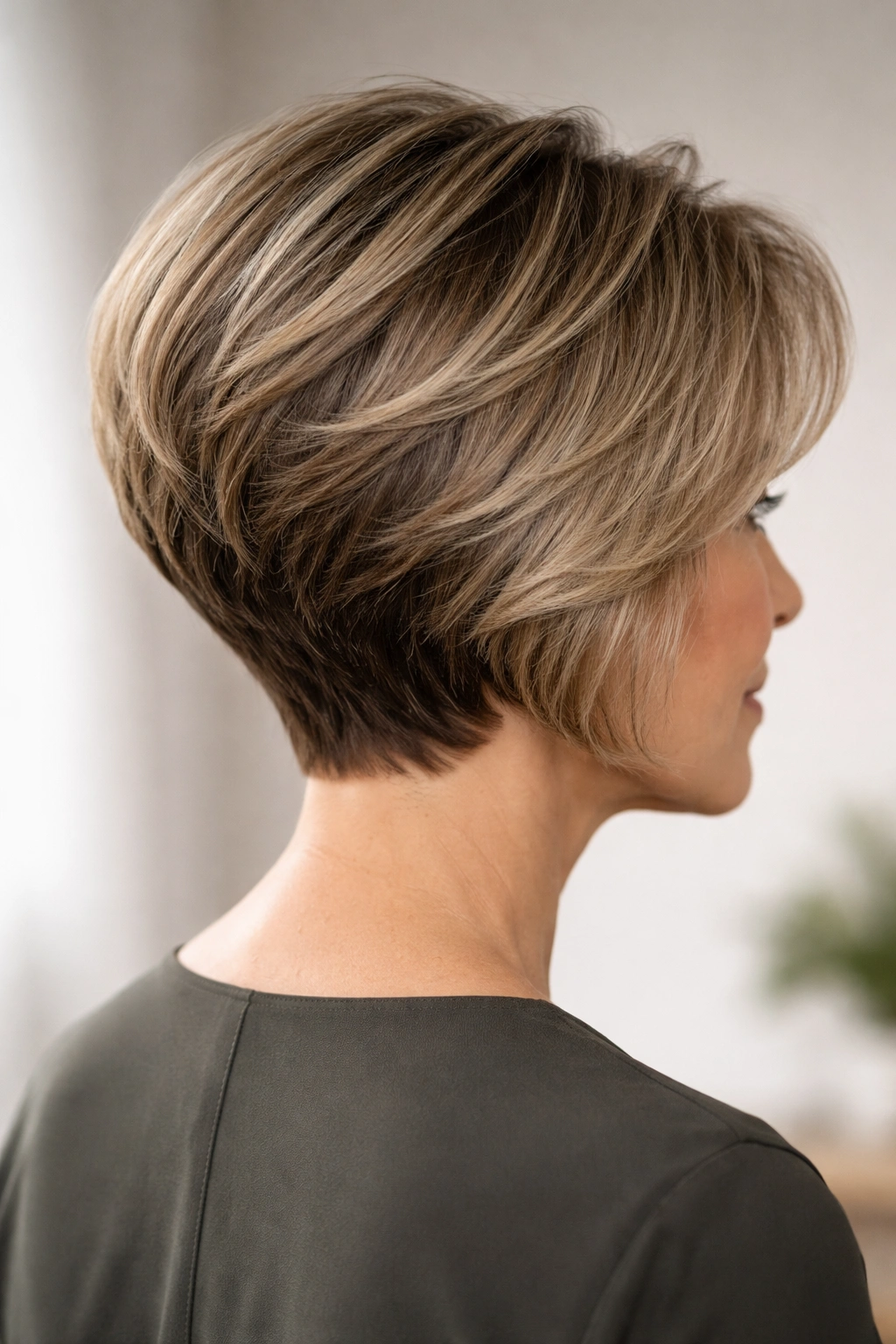
Why do stacked bobs show up so often on people who want a little more lift? Because they solve a real problem: flatness at the back of the head. The shorter layers in the nape let the hair sit up and back, which makes the crown look fuller without pushing the whole cut into helmet territory.
A stacked bob can be especially useful if your hair is thick but heavy. The weight gets redistributed, and suddenly the silhouette looks cleaner. If the back of your head tends to lie flat, this is one of the few cuts that changes the shape from the side in a way you can actually see.
Ask your stylist for this
- A tightly graduated nape
- More length left through the top layers
- A smooth connection between the back and the sides
- Enough length around the face to soften the profile
The catch is maintenance. This cut looks best when the stack is clean, so it does need regular reshaping. If you like tidy lines and a neckline that stays crisp, it’s worth it. If you hate salon upkeep, you may get tired of it fast.
4. French Bob With a Soft Fringe
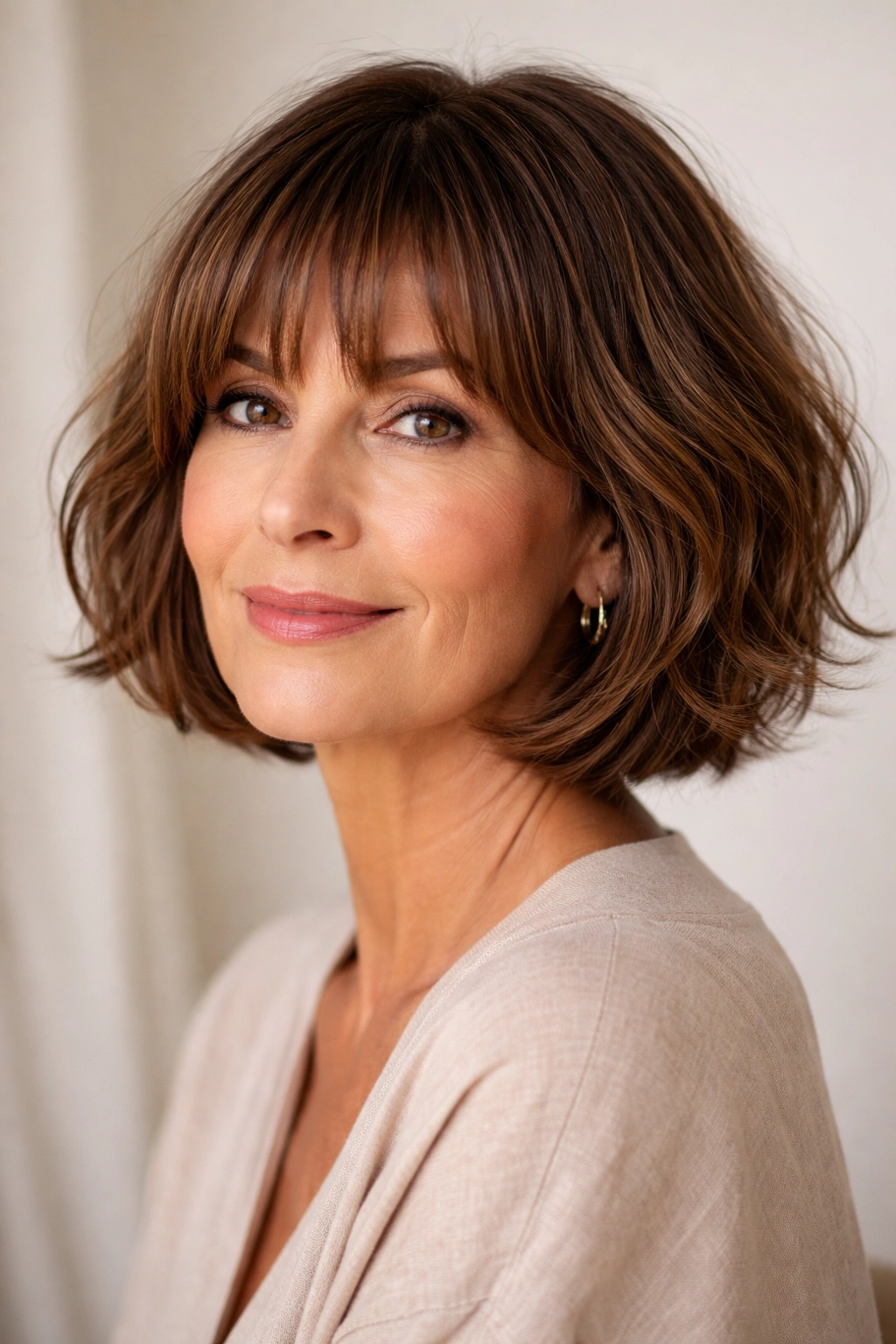
A French bob has a little attitude, but not the hard kind. It usually sits around the lip or jawline, and the fringe softens the whole thing so it feels relaxed rather than severe. That combination is why it works so well on mature faces: it draws the eye to the eyes and cheekbones without dragging attention to every line and angle.
The fringe matters here. A soft, piecey fringe is easier to live with than a heavy block of hair across the forehead. It also grows out in a way that doesn’t scream for immediate correction, which is a blessing if you don’t want to visit the salon every few weeks.
This cut loves natural texture. A little wave makes it look lived-in in the best way. Straight hair can wear it too, but then the line needs to be precise, and the fringe should be a touch longer at the temples so it doesn’t feel too blunt.
If you like lipstick, earrings, and a sharp collar, this is a lovely match. It has presence.
5. Collarbone Bob With a Gentle Bend
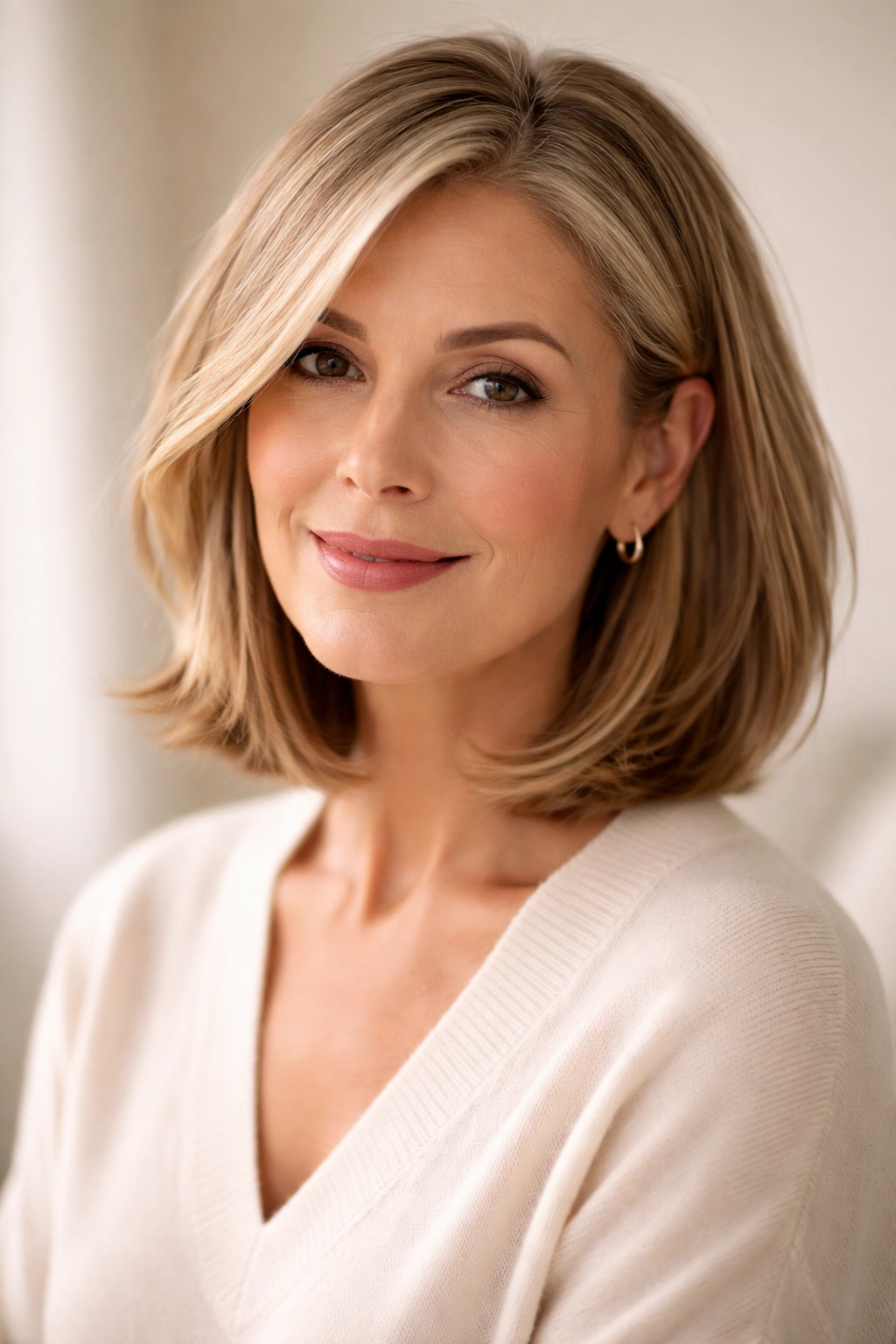
The collarbone bob is the cut for someone who wants the bob idea without giving up length. It lands low enough to tuck behind the ear or pull into a tiny clip, but short enough to feel intentional. That little bit of extra length also gives you room to work with hair that is a bit drier at the ends.
This is the cut I’d recommend to a woman who keeps saying, “I want something lighter, but not short short.” There’s a reason that sentence comes up so often. Collarbone length is forgiving. It softens a square jaw, skims a fuller neck, and keeps a narrow face from looking overexposed.
The bend should be gentle, not curled under in a pageant way. A one-inch iron or a round brush can add a loose arc around the ends. That’s enough. Too much curl and the style starts to look dated fast.
It also plays nicely with highlights or gray blending because the extra length gives color more room to move. Shorter bobs can look flat if the color is too uniform. This one doesn’t care as much.
6. Blunt Bob With a Clean Edge
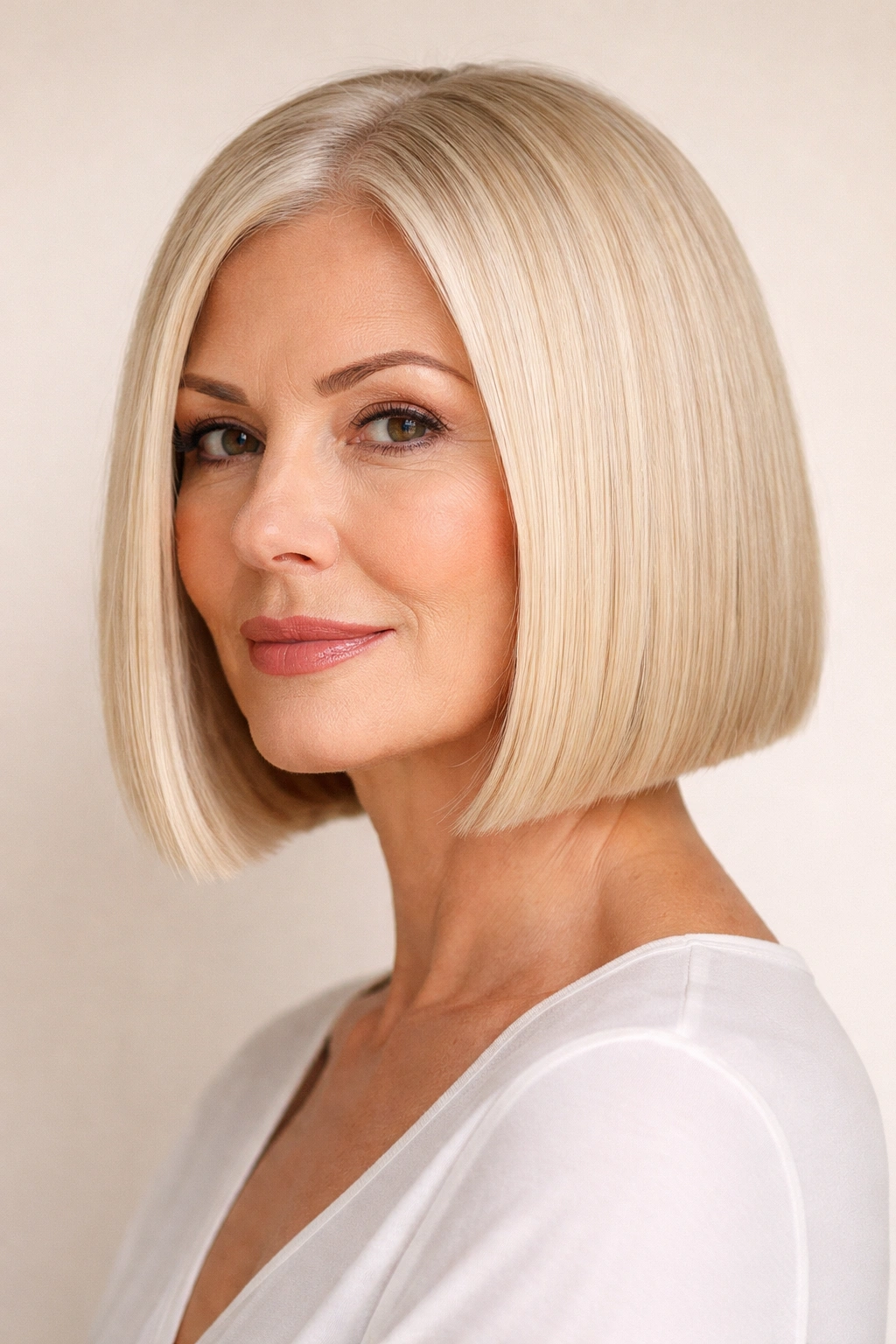
A blunt bob is not shy. It gives you a hard line, and that line makes hair look thicker at the ends, which is a big deal when density is changing. If your hair is fine to medium and naturally straight, this can be one of the most satisfying cuts to wear.
The key is precision. A blunt bob that misses its line by even a little can look heavy or unfinished. When it’s done well, though, it has a crisp, expensive-looking edge that doesn’t need much styling to read as polished. Air-dry it. Blow it smooth. Both work.
This cut is strongest when the hair has enough weight to hold the shape. If your ends are very wispy, a blunt line may need a tiny bit of internal support from your stylist so it doesn’t look see-through. That’s the part people miss. A blunt bob is not always a single, flat slab of hair.
It suits a woman who likes simple clothes and clean lines. Black sweaters, white shirts, strong frames, silver earrings. The haircut does not compete.
7. A-Line Bob With Longer Front Pieces
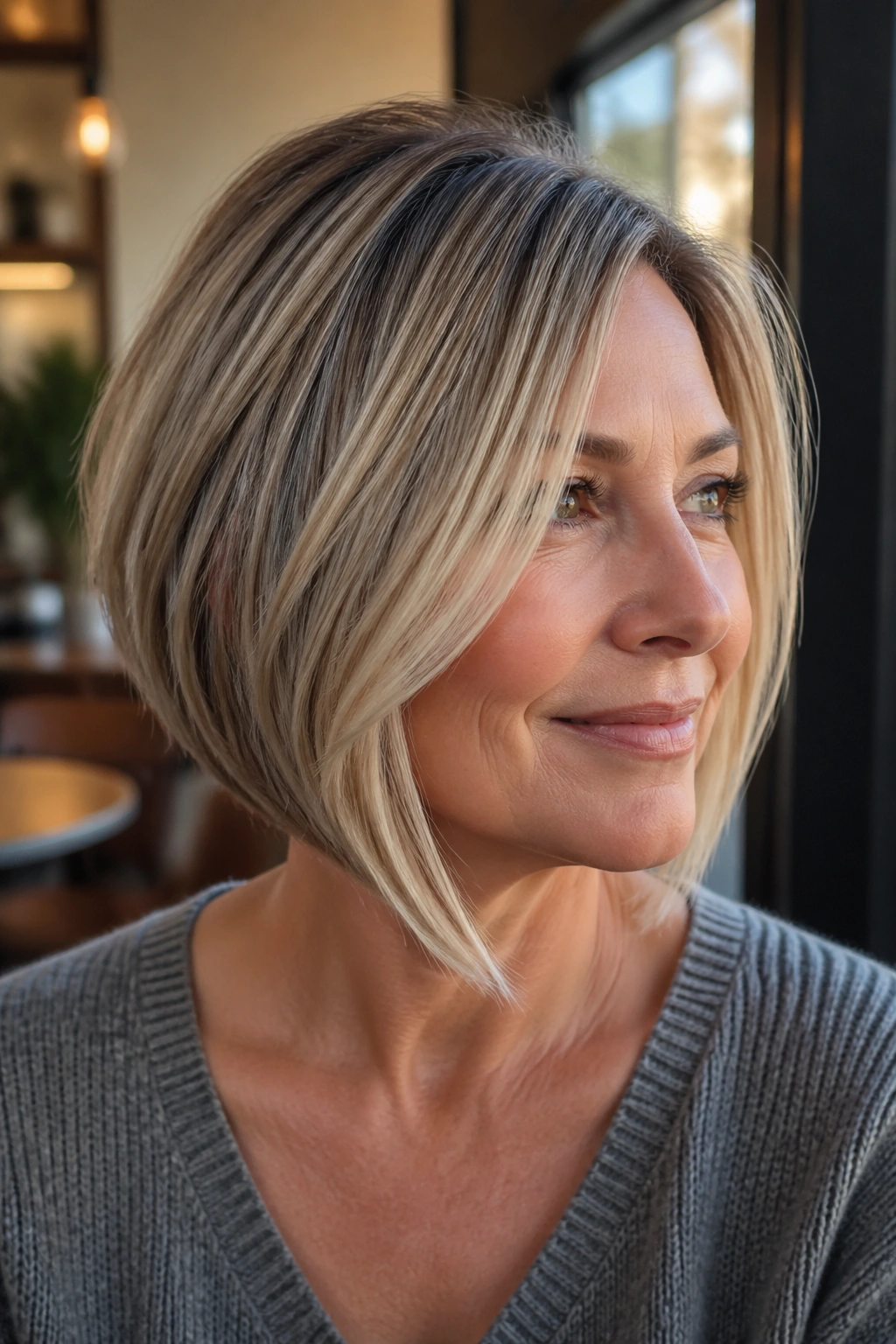
Ever notice how a little extra length in the front changes the whole mood of a bob? That’s the A-line trick. The back sits slightly shorter, while the front angles forward toward the jaw or collarbone. It creates movement without piling on layers.
Why the angle helps
The forward sweep draws attention downward, which can slim a wide cheek area and keep the face from looking too round. It also gives you some cheekbone framing without making the sides puff out. That matters more than people think. A bob that’s too even all the way around can feel boxy; the A-line shape breaks that up.
Styling notes
- Blow-dry the front sections forward first
- Keep the back smooth so the angle stays clean
- Use a flat iron only on the last inch if the ends kick out
- Ask for the angle to be subtle, not extreme
I prefer a soft A-line over a sharp one for mature hair. The dramatic version can look a little try-hard unless you have very straight hair and a strong sense of style. The softer version just works.
8. Shaggy Bob With Piecey Texture
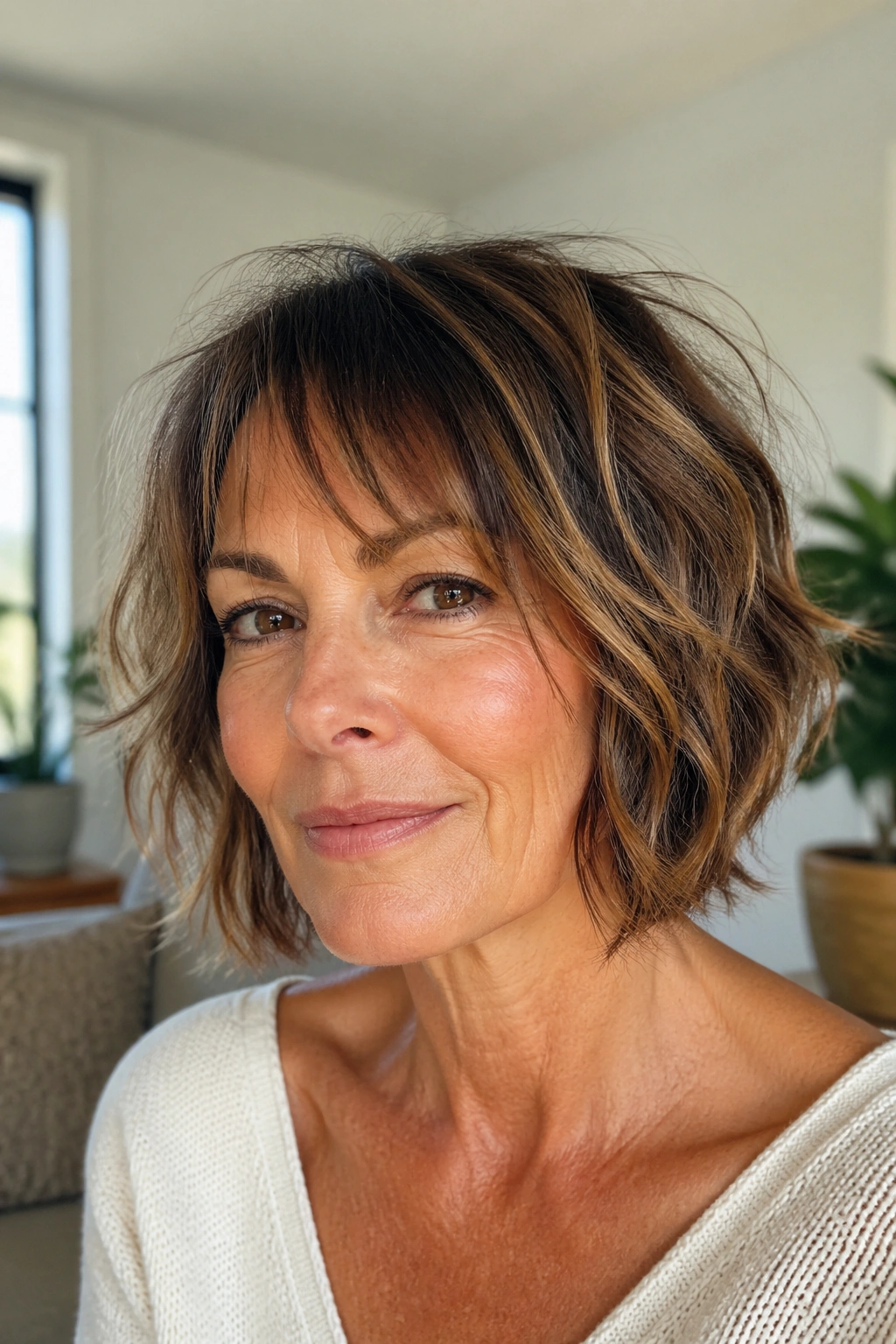
A shaggy bob can save hair that has gone limp, flat, or oddly puffy at the ends. It uses choppy layers, but not in a reckless way. The purpose is to break up heaviness and give the hair pieces to move around instead of hanging in one tired curtain.
I’ve seen this cut look especially good on women who have a little natural wave and don’t want to fight it every morning. You scrunch in a bit of mousse, rough-dry the roots, and leave the ends imperfect on purpose. That last part is the point.
What makes it different
- The layers are uneven on purpose
- The ends are soft, not blunt
- Texture spray works better than heavy cream
- It looks better a little messy than overdone
This is not the cut for someone who loves a smooth, tucked-in finish. It’s for someone who wants movement and does not mind a bit of edge. If your hair has gone stubborn and flat, though, this can wake it up fast.
9. Wavy Bob That Lets Natural Movement Show
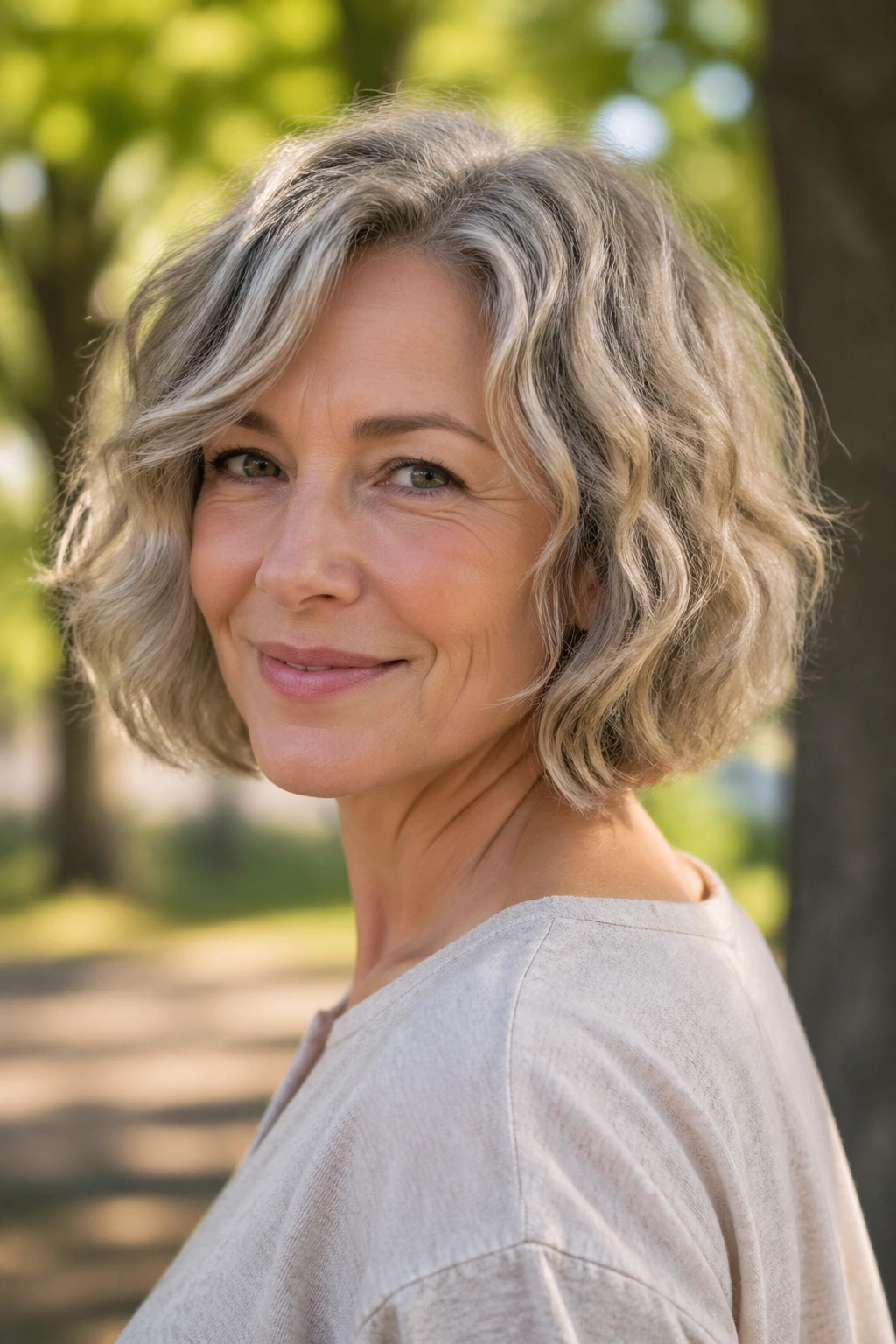
A wavy bob has one big advantage: it makes your natural texture the star instead of treating it like a problem. If your hair bends in loose S-shapes or flips a bit at the ends, a bob that hits above or around the shoulders can let that texture read as shape instead of chaos.
The best version keeps the layers controlled. Too many layers and the wave spreads out into frizz. Too few and the wave weighs down into a triangle. You want enough removal to let the pattern move, but enough length at the bottom to keep the silhouette calm.
How to style it
A light cream on damp hair goes a long way. So does a diffuser on low heat if your waves need a little encouragement. If the front pieces fall forward too much, tuck them behind the ears while the hair is still warm and let them set there for a few minutes.
This cut is especially friendly to silver and salt-and-pepper hair. The texture catches the light in a way that straight hair doesn’t, and the irregular movement keeps the style from feeling stiff.
10. Curly Bob That Keeps Shape and Bounce
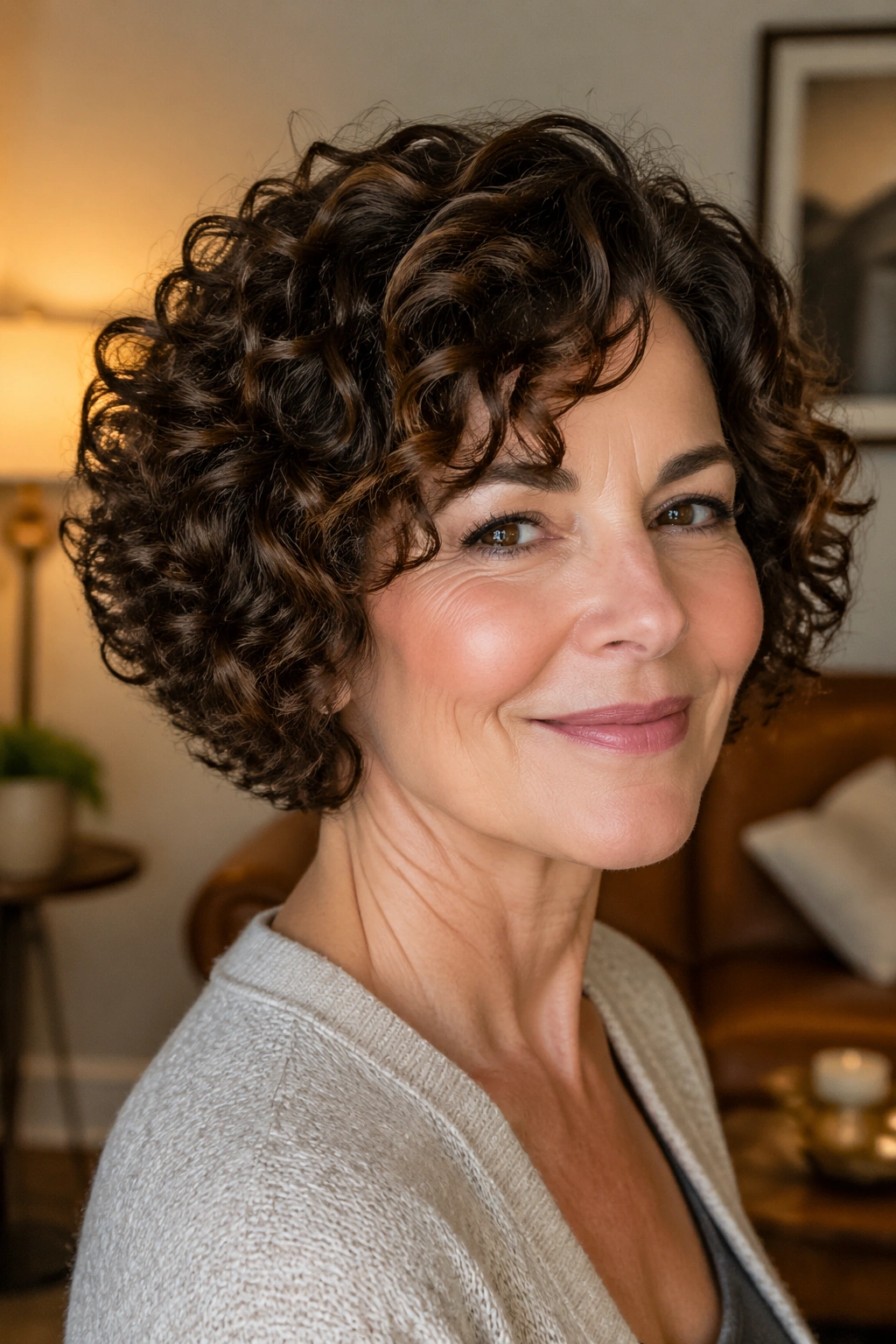
A curly bob should respect the curl pattern, not flatten it into a generic helmet. That means the cut usually needs to be shaped on dry hair or at least with the curls in their natural state. Otherwise, the real length and spring get lost, and the result is often shorter than expected.
Curly hair loves shape, but it hates being bullied. If the bob is cut too blunt, the curls can stack on themselves and make the sides too wide. If it’s cut too layered, it can frizz out and lose its roundness. The sweet spot sits somewhere in the middle, with a perimeter that follows the curls and a little internal shaping for movement.
A good curly bob can be chin-length, jaw-length, or a touch longer. The exact length depends on shrinkage. That word matters. A curl that looks like a medium length when wet may spring up several inches once it dries, so any cut should leave room for that bounce.
If you wear curls, skip the urge to brush them into submission. Use a wide-tooth comb in the shower, apply a leave-in while the hair is dripping, and let the cut do the rest. The shape should hold its own.
11. Side-Part Bob That Softens the Face
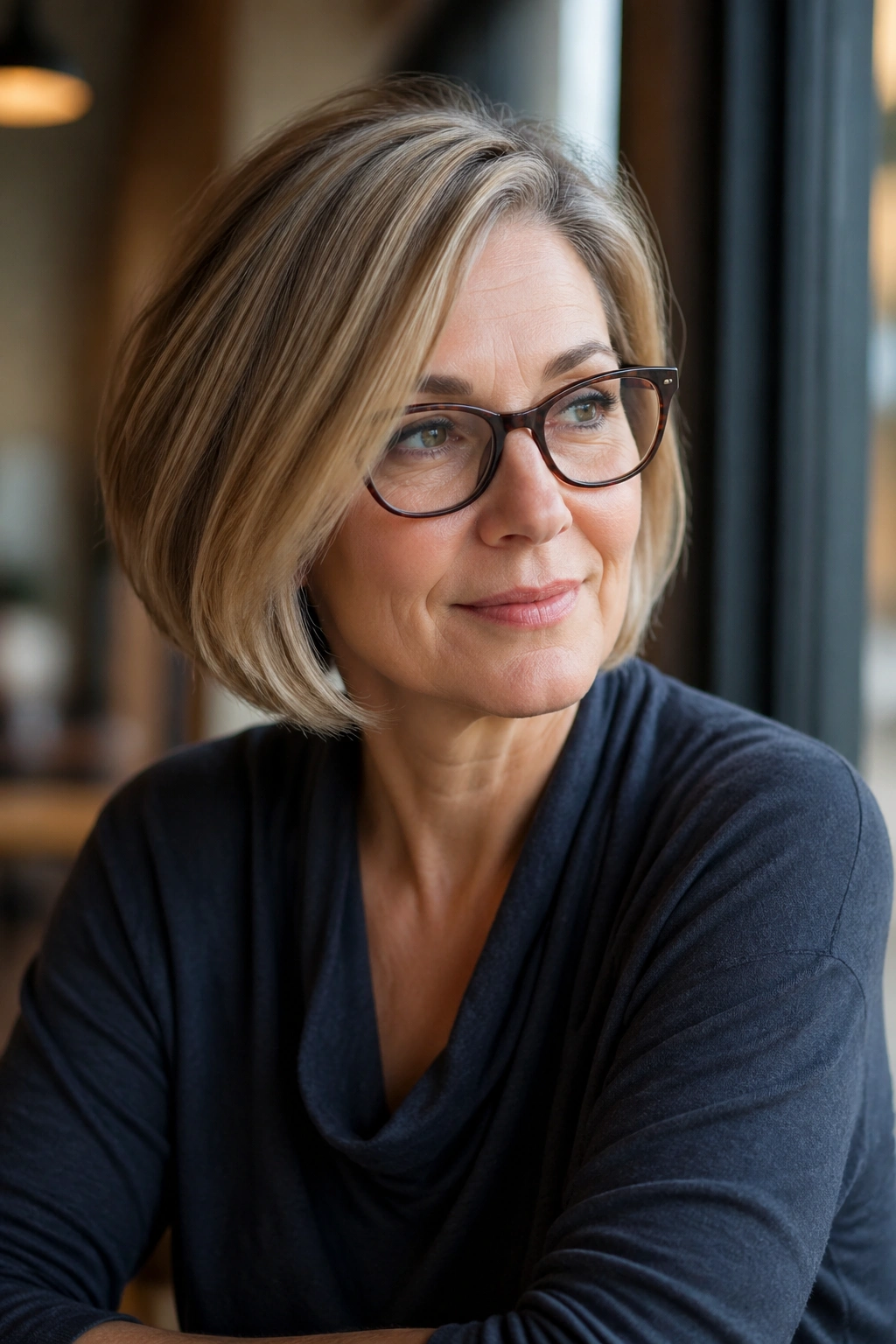
A side part can change a bob faster than cutting an extra inch off. Seriously. It breaks the symmetry, gives the front more lift, and softens areas that can feel too strong with a center part. If your face has a strong jaw, a broad forehead, or just needs a little asymmetry, this is a useful trick.
Why it works better than a center part for some faces
- It creates height at the crown
- It lets the front fall in a gentler diagonal
- It can hide thinning at the part line
- It makes glasses sit more naturally with the cut
The cut itself can be simple. A chin-length or shoulder-grazing bob often looks better with a side part than a sharp angular one does. You’re not trying to create drama for its own sake. You’re trying to redirect the eye.
The main thing to watch is collapse. If the hair is fine, the side part needs a bit of root spray or a blow-dry lift so it doesn’t slide flat by noon. Without that support, you lose the effect.
12. Feathered Bob With Airy Ends
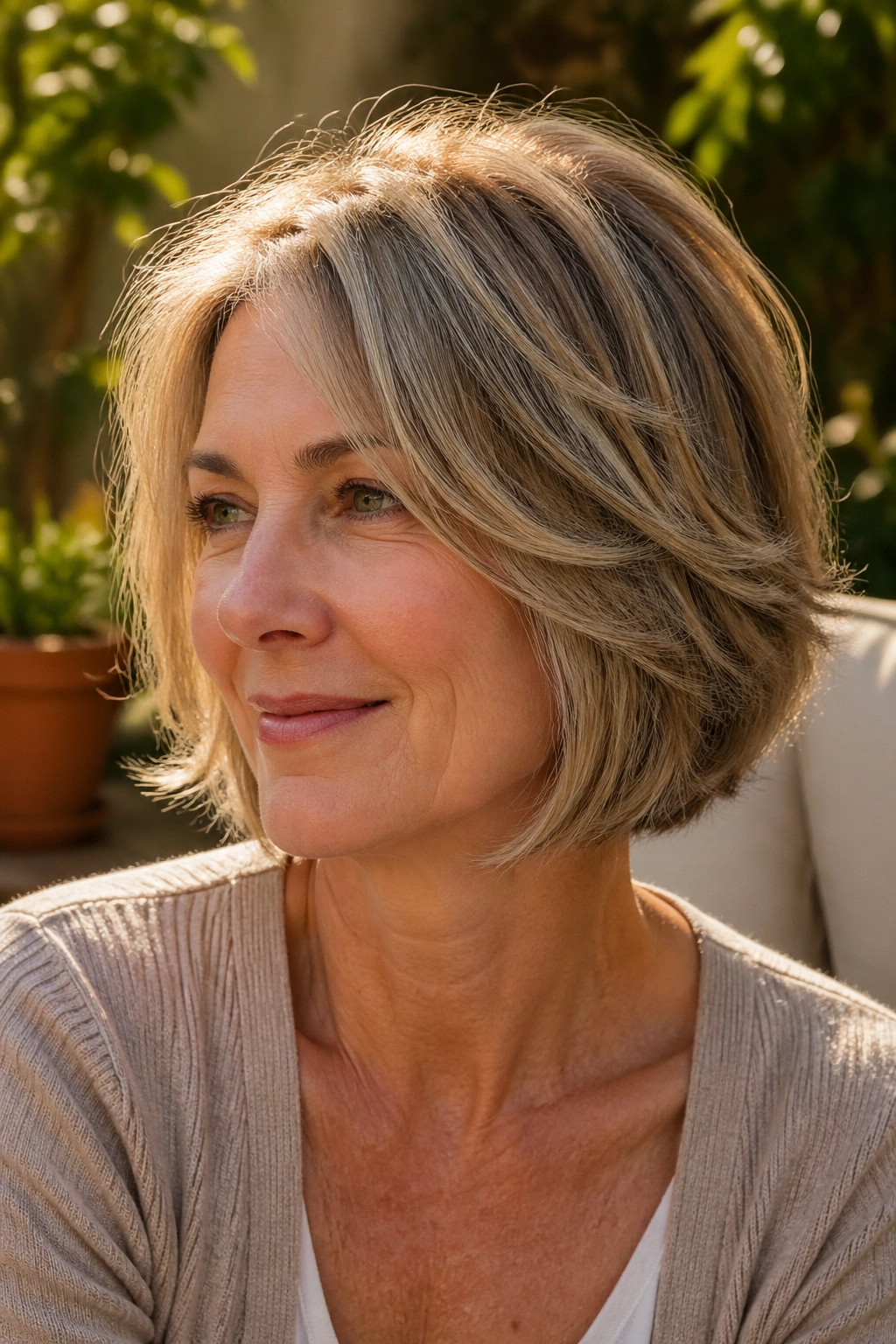
Feathering gets a bad reputation because people picture the overworked styles from decades ago. Done well, though, feathered ends can make a bob feel lighter, especially if your hair is dense and tends to sit like a block. The trick is soft removal, not visible chop marks.
This cut is one of the best choices if the ends feel bulky but you still want movement. The feathering should happen mostly through the lower half of the shape, where the hair can flare out if it is left too heavy. Around the face, the softer bits should skim rather than stick out.
It pairs nicely with a side part or a deep side sweep. The feathering adds motion when you turn your head, and that small movement is what keeps the cut from feeling static. Static hair can age a face faster than people expect.
A light blowout brush helps here. Too much product and the ends lose that airy quality. Too little and the shape frays. You want a middle ground. Not stiff. Not fluffy.
13. Graduated Bob With a Fuller Back
The graduated bob is a stronger, cleaner cousin of the stacked cut. It keeps more weight in the back while still building lift through the nape, which makes the silhouette look rounded and full from the side. If your hair is straight or slightly wavy and you want the back to look neat, this is a smart pick.
What to ask for at the salon
- Shorter lengths at the nape with a gradual rise toward the crown
- A smooth connection into the front pieces
- Enough interior weight to avoid a hollow back
- A neckline that follows your natural hairline
The big advantage is shape retention. The cut holds up well because the architecture is built into it. You do not need to curl it every day to see the benefit.
This one does best on hair that is not too frizzy. If the texture puffs up easily, the graduation can get fuzzy at the edges. A smoothing cream and a careful blow-dry help a lot. Skip the heavy oil; it can collapse the crown.
14. Bob With Curtain Bangs
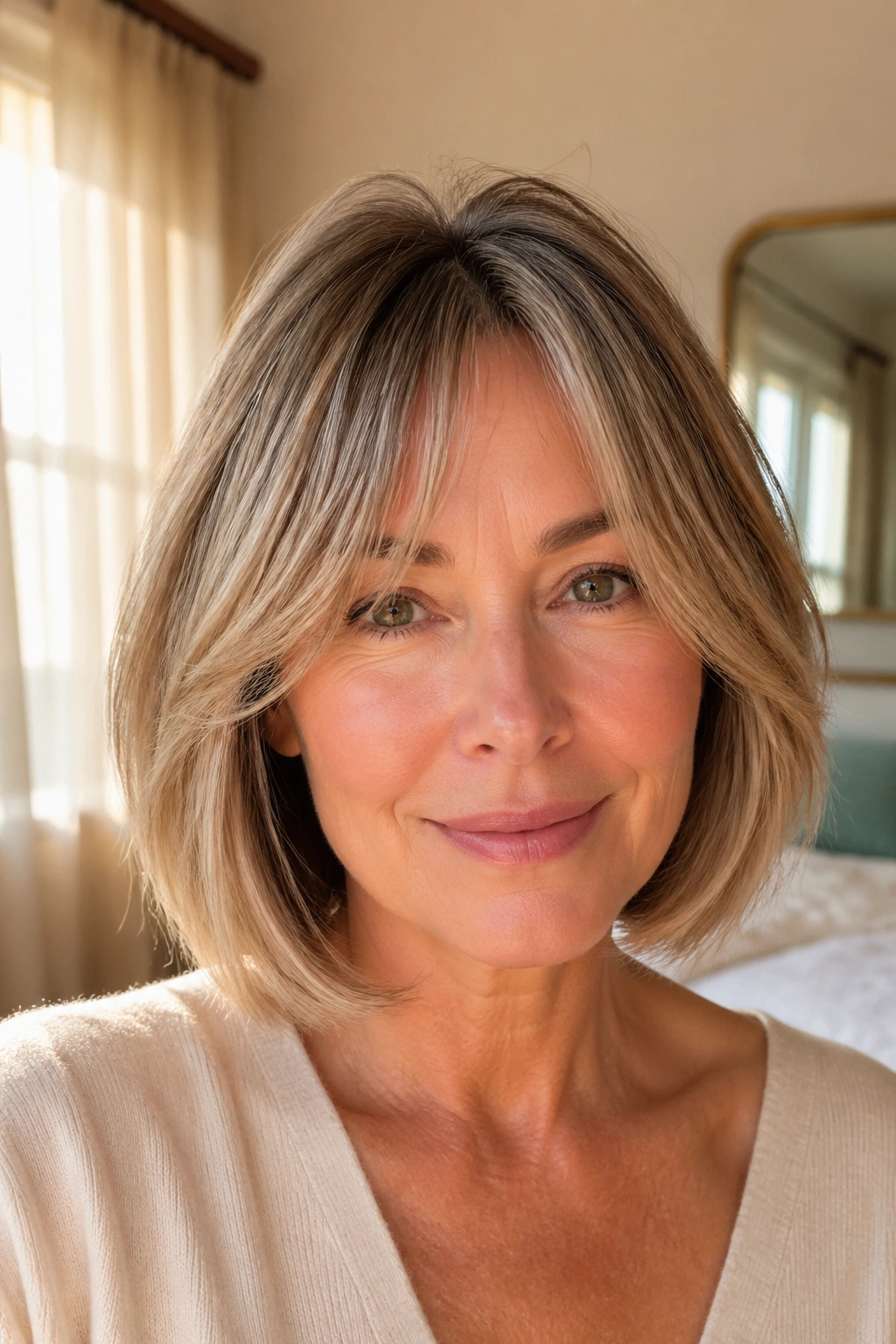
Curtain bangs have become a favorite for a reason. They open in the middle, sweep to either side, and give the forehead some coverage without dropping a curtain of hair across the whole face. On a bob, they add softness right where many women want it most.
The best part is the grow-out. Curtain bangs are forgiving. If you decide you do not want a full fringe anymore, they merge back into the sides instead of demanding a total haircut emergency. That makes them an easier leap than a blunt bang.
A bob with curtain bangs works especially well when the rest of the cut sits around the jaw or collarbone. The bangs bring the attention up, while the bob grounds the style below. If either part is too heavy, the whole thing gets crowded. Balance matters.
Keep the bangs a little longer at the outer corners so they skim the cheekbones. If they’re cut too short, they can look choppy in a way that’s hard to grow out gracefully.
15. Razor-Cut Bob for Thick Hair
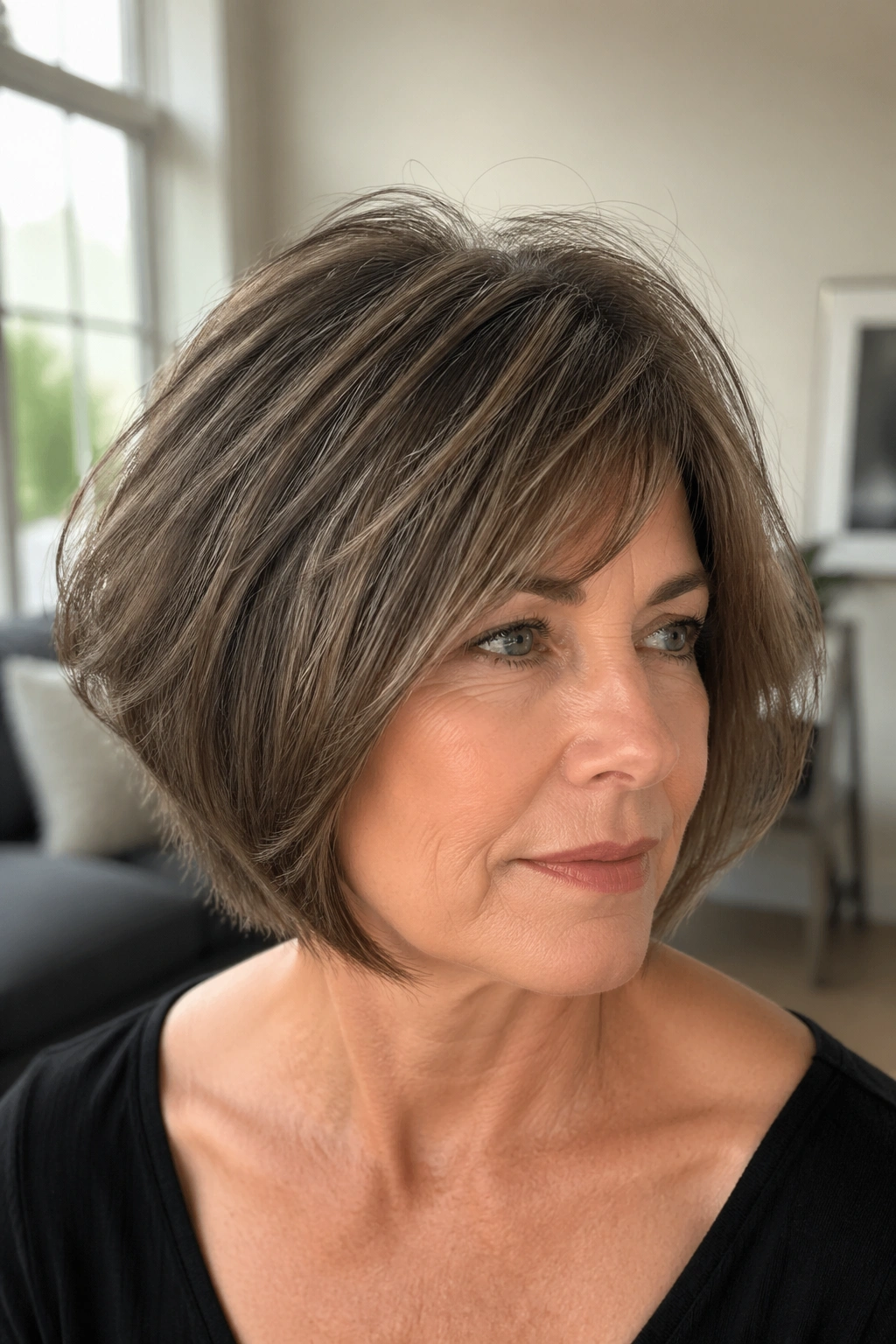
A razor-cut bob can be a relief for thick hair that feels too dense at the bottom. The razor removes bulk and creates softer edges, which keeps the hair from looking like a heavy shelf. When it’s done with a light hand, the effect is airy and controlled.
But this is not a cut for every head of hair. If your strands are already fine or fragile, a razor can make the ends look wispy too fast. On thicker hair, though, it can take away that triangle shape that shows up when the bottom gets too wide.
The style tends to look best when the ends are slightly separated and the layers are hidden inside the shape. You still want a bob outline. You’re just softening the weight inside it.
I’d pair this with a smoothing cream and a blow-dryer nozzle, not a ton of brush work. Thick hair can take a while to dry, and overhandling it tends to make the cut frizz instead of fall.
16. Rounded Bob With a Tucked-Under Finish
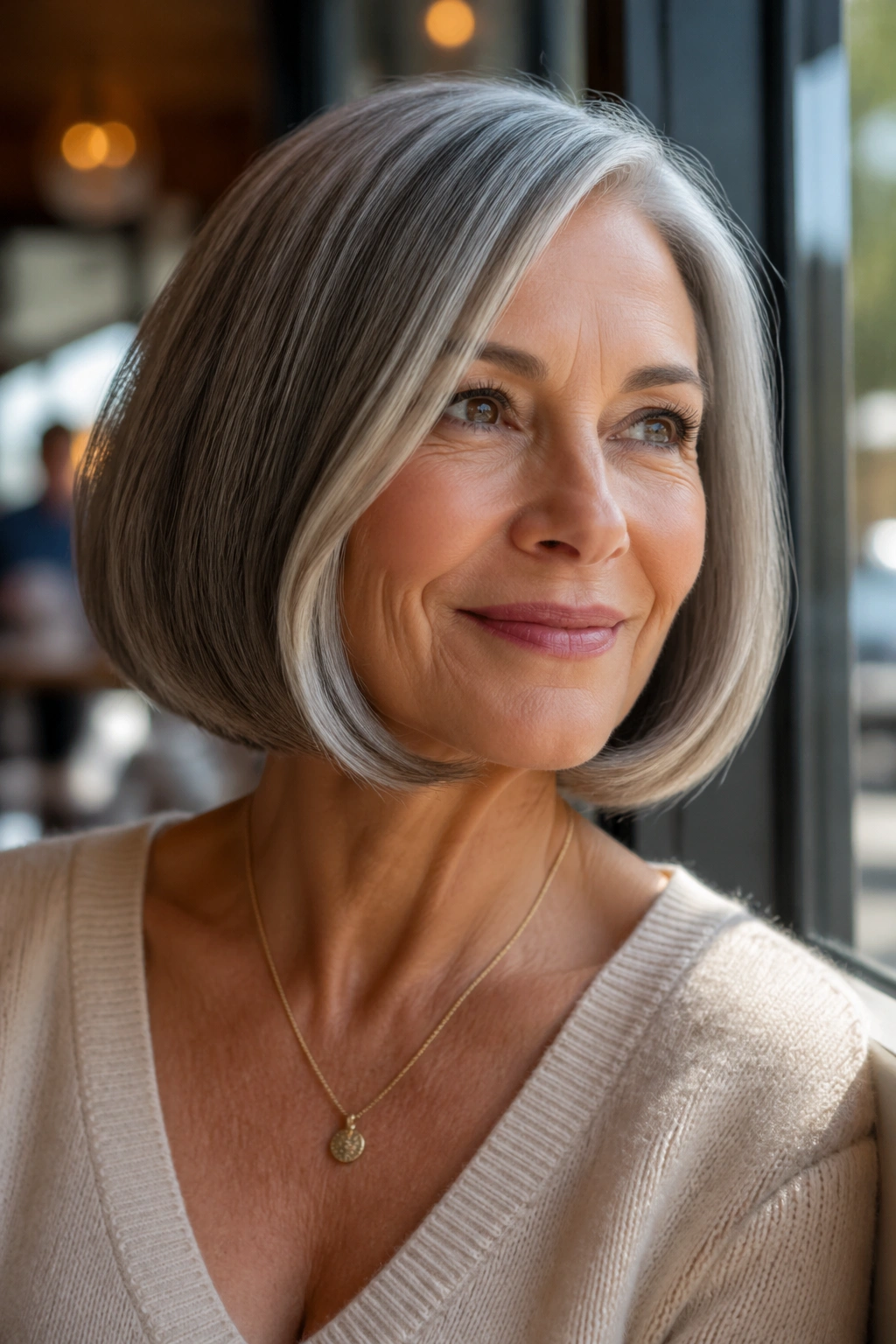
A rounded bob gives you a softer outline than a blunt cut, but it still feels neat. The sides curve gently toward the jaw, and the ends tuck under just enough to keep the shape contained. That makes it a good middle ground for women who want polish without looking severe.
Rounded versus blunt
A blunt bob reads sharper. A rounded bob reads warmer. That’s the main difference, and it changes how the haircut sits on the face. The rounded shape can soften a strong chin or a narrow face, while the blunt version tends to emphasize line and edge.
What helps this cut sit right
- A medium round brush during blow-drying
- Slightly shorter interior layers near the nape
- A small bend at the ends, not a full curl
- A trim before the shape grows past the jaw
This is one of those styles that can look very expensive with minimal effort, which I like. It’s tidy, but not stiff. That matters when you want a bob that can move through a normal day without falling apart.
17. Asymmetrical Bob for a Sharp Profile
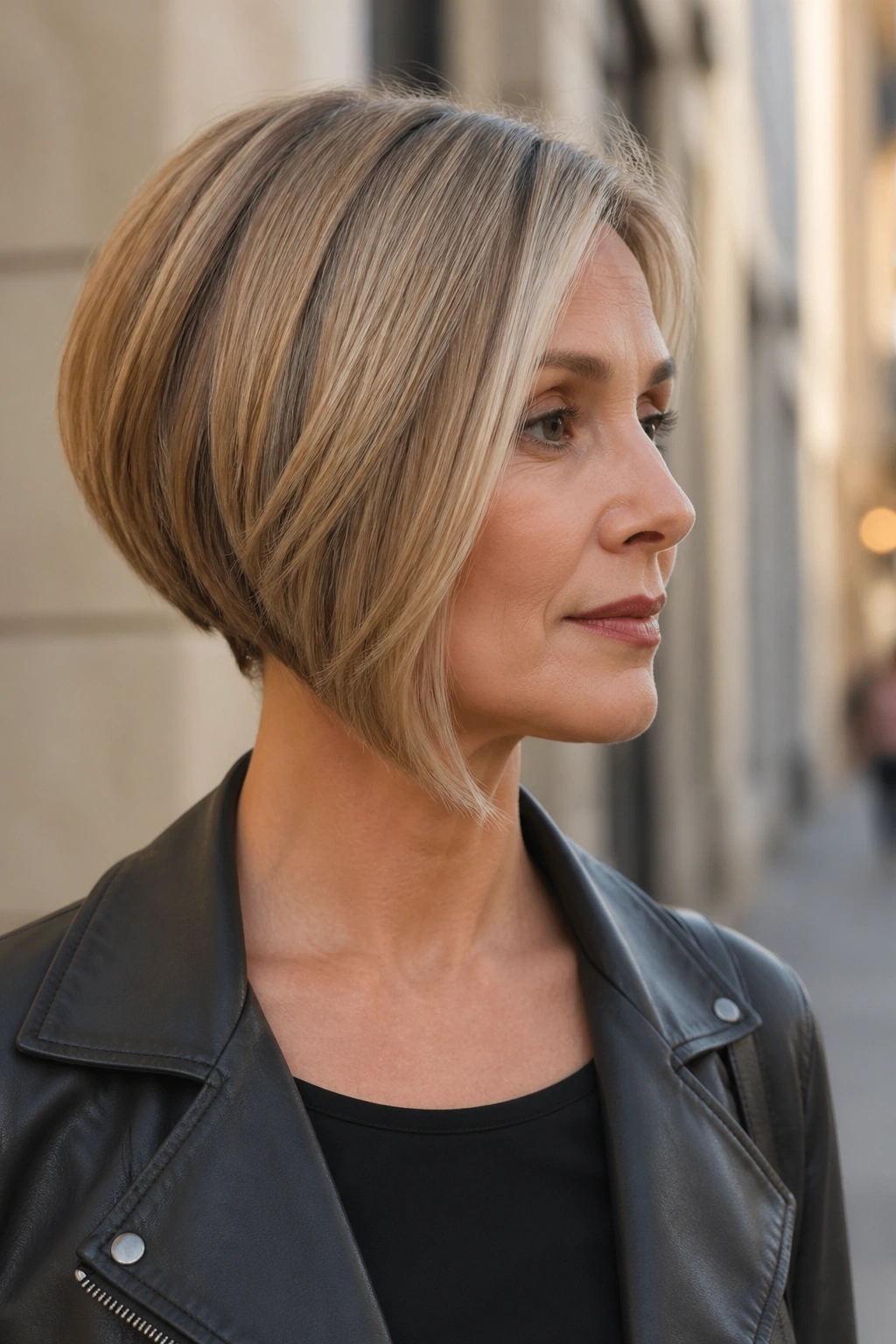
An asymmetrical bob gives one side a little more length than the other, and that imbalance can be a strength. It draws the eye diagonally across the face, which often makes the whole profile feel longer and leaner. If you like a haircut with a bit of edge, this one has personality.
I usually think this cut works best when the difference is subtle. A huge length gap can feel costume-like unless you lean that way stylistically. A slight asymmetry, though, is enough to keep the bob from feeling too familiar.
It’s a good choice if you wear one side tucked behind the ear a lot, or if your hair naturally falls more strongly on one side. Instead of fighting that habit, the cut can work with it. That’s often where the best haircuts come from, honestly.
The styling is straightforward: keep the shorter side clean and the longer side smooth. If the ends flip out too much, a quick pass with a flat iron on the lower third of the hair sorts it out.
18. Box Bob With a Neat, Modern Line
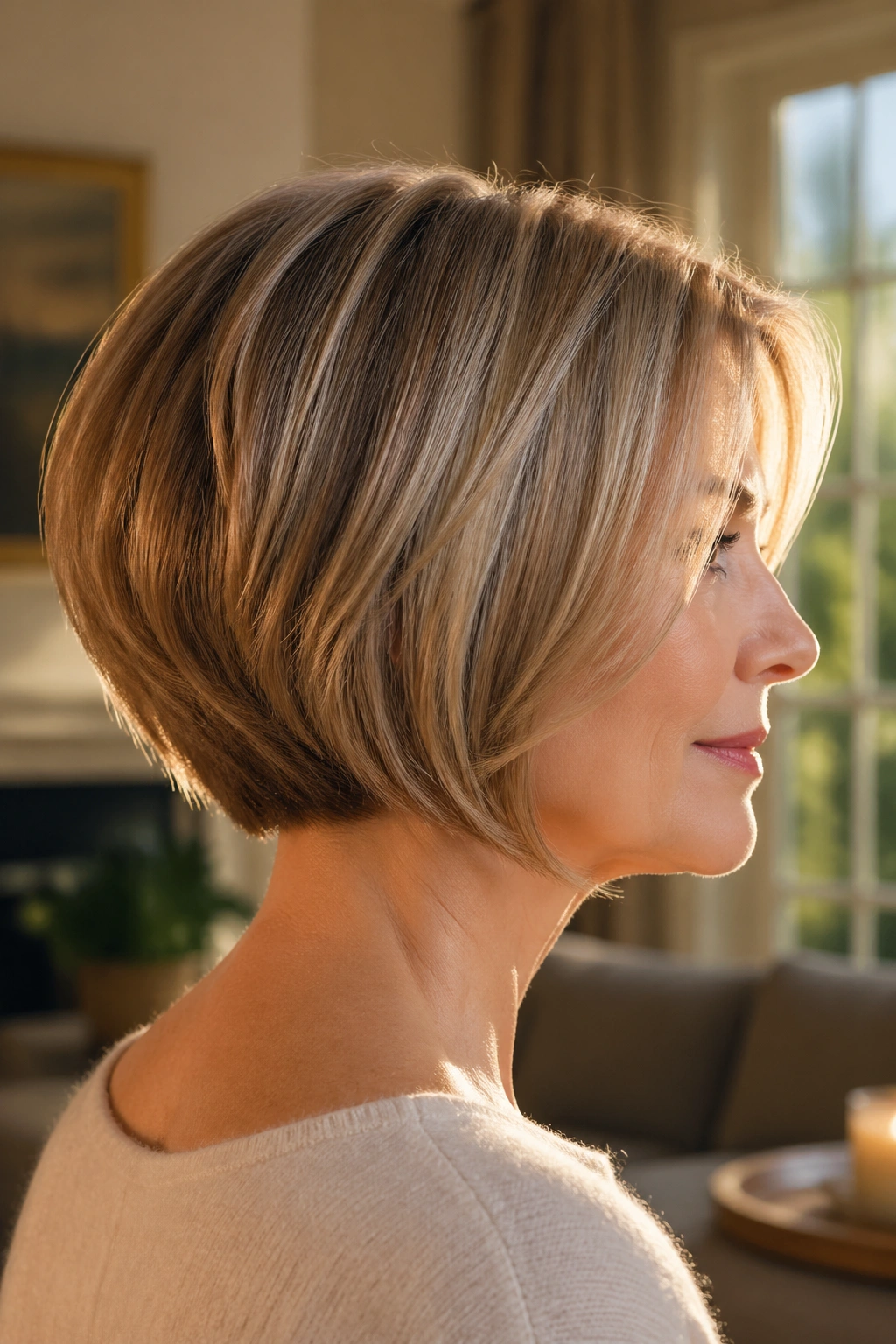
The box bob has a straighter outline and a little more width through the sides, which gives it a sharp, graphic feel. It can be stunning on hair with enough density to support the line. If the hair is sparse or very frayed at the ends, it can look unfinished. So yes, hair condition matters here.
What I like most about this cut is the clarity. It does not try to soften everything. It lets the line speak, which can be a relief if you’re tired of cuts that feel overly airy or layered. Paired with a strong brow, a square earring, or a crisp shirt collar, it has real presence.
This is also a smart choice for women who like a bob that shows off silver strands in a clean sheet of color. The shape lets the tone do the work. If the hair is healthy and the edge stays blunt, the whole cut looks intentional in the best way.
Ask for a boxy perimeter with minimal layering and a tidy neckline. Then keep the ends in good shape. This one is not forgiving if you let it grow too far. It wants a trim before it starts to lose its line.
If I had to name the most useful thing about bob cuts for women over 50, it would be this: they let you choose what to emphasize. Jawline, cheekbones, neck, eyes, texture, fullness — the cut can point the eye where you want it to go. That freedom is the real reason bob cuts keep winning.
And maybe that’s the part people miss when they ask for “something younger.” The goal is not to hide your face. The better move is to give it a shape that works with the hair you have, the neck you have, and the way you actually live.
