



Some bob cuts for heart-shaped faces work because they do one thing well: they pull the eye down toward the jaw instead of parking all the action at the brow. That sounds small, but on a face that’s widest at the forehead and narrowest at the chin, the wrong length can feel strangely loud.
The cut doesn’t need to hide your cheekbones. It needs to balance them. A bob that ends at the wrong spot can make the top half of the face look broader and the lower half look even smaller, which is usually the opposite of what people want when they walk into the salon asking for a bob.
Length matters. So does the part, the fringe, and whether the ends curve in softly or sit in a hard line.
Heart-shaped faces have a built-in advantage, too: cheekbones. They’re one of the most flattering face shapes for short hair because the bone structure can carry a clean line, a side sweep, or a little texture without looking heavy. The trick is choosing a bob that gives the chin some company. Fine hair, thick hair, curls, waves — they all change the equation a bit. A blunt perimeter can look perfect on one person and boxy on another. A wispy fringe can soften one forehead and make another look wider if it’s cut too short.
The 15 styles below cover clean, polished shapes, softer fringe options, and a few textured cuts for people who do not want to spend half the morning under a round brush. Some are classic. Some are slightly cheeky. All of them can work on a heart-shaped face if the length lands in the right place.
1. Chin-Grazing Classic Bob
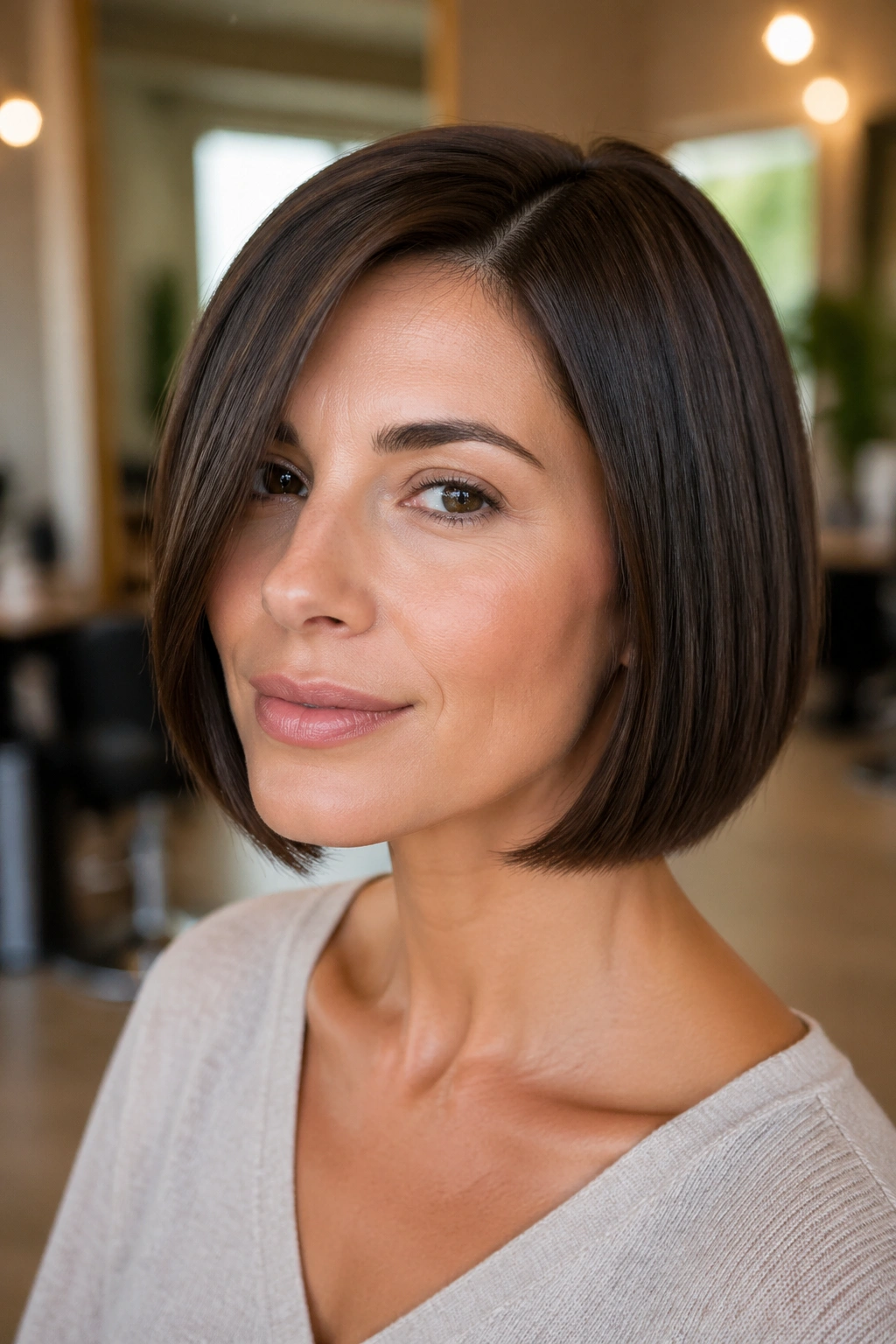
A chin-grazing bob is the safest starting point, and “safe” is not a bad word here. On a heart-shaped face, that length keeps the eye near the jawline, where you usually want a little more visual weight. It also gives the forehead room to breathe instead of letting the haircut shout from the top of the face.
The best version sits right at the chin or a hair below it, with a clean edge that doesn’t puff out. If your hair is fine, ask for a blunt perimeter and very little layering through the ends. If it’s thick, a stylist can soften the inside a touch so the bob doesn’t fan out at the sides.
A side part makes this cut even better.
A center part can work, too, but it needs a little softness around the front so the shape doesn’t feel too strict.
One thing I like about this bob is how easily it grows out. It still looks deliberate after a few weeks because the length remains in that sweet zone between jaw and neck. That means fewer awkward stages, which is worth a lot if you hate sitting through constant trims.
2. Side-Part Bob with Long Fringe
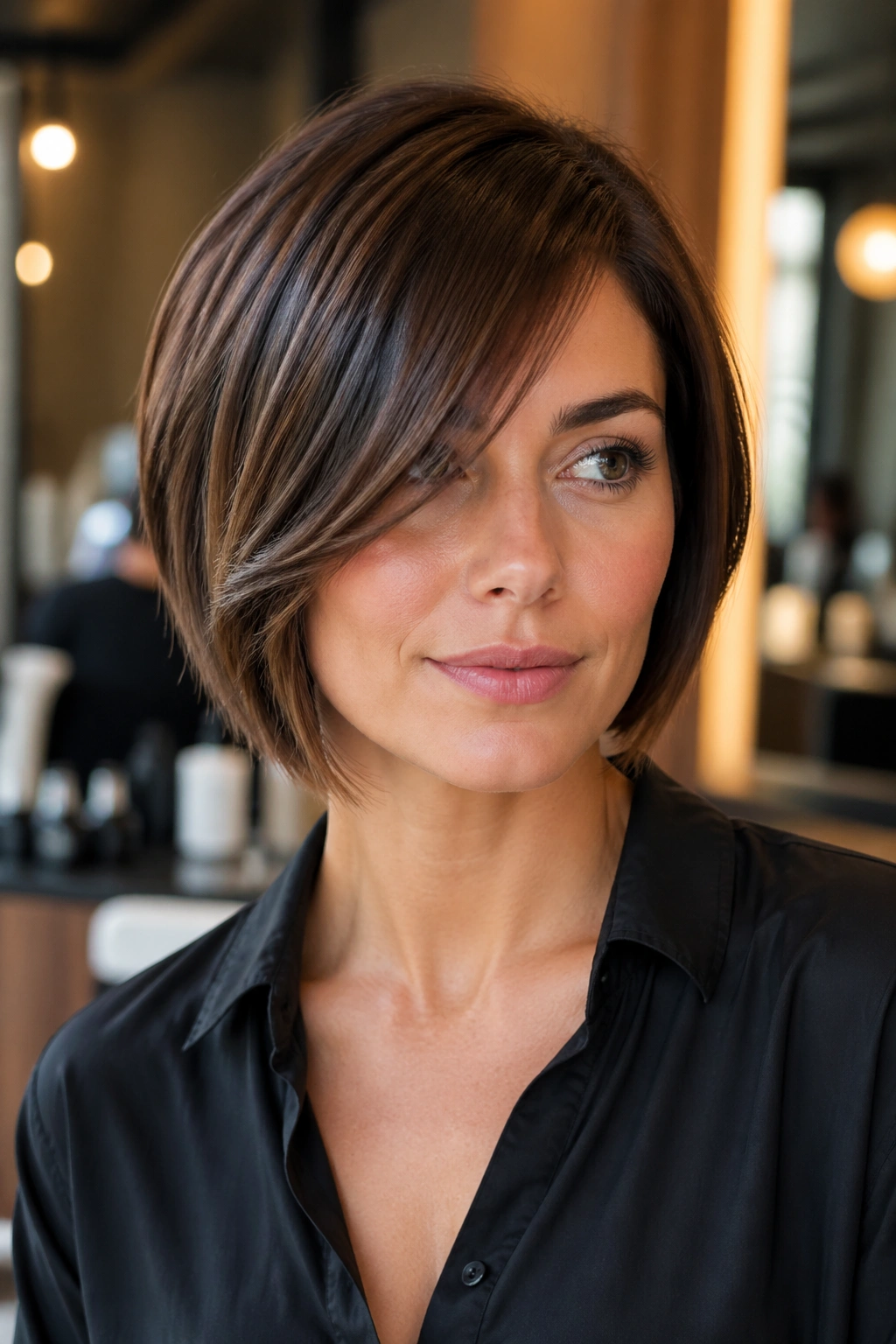
Need a bob that tones down a wider forehead without hiding the face? This is the one that comes to mind first.
Why the Side Part Helps
A deep or slightly off-center part changes the whole mood of the cut. Instead of dividing the face in half, it sends one side of the fringe diagonally across the forehead, which softens the upper width that heart-shaped faces often have. The bob itself can stay fairly simple — chin length, lip length, even just below the jaw — because the fringe is doing the heavy lifting.
The fringe should be long enough to move. Think eyebrow level at the shortest point, then falling toward the cheekbone rather than stopping high and blunt. That little extra length keeps the cut from feeling severe.
How to Keep the Fringe Airy
- Blow-dry the front section first while it’s still damp, using a small round brush.
- Aim the brush away from the wider side of the forehead so the fringe sweeps naturally.
- Keep the ends piecey, not heavy; a dense curtain of hair across the face can make the forehead look larger.
- If your hairline has a stubborn cowlick, leave the fringe a bit longer so it can bend instead of fighting you.
Pro tip: ask for the fringe to blend into the bob near the cheekbone, not at the temple. That tiny shift makes the whole cut look softer.
3. Soft A-Line Bob
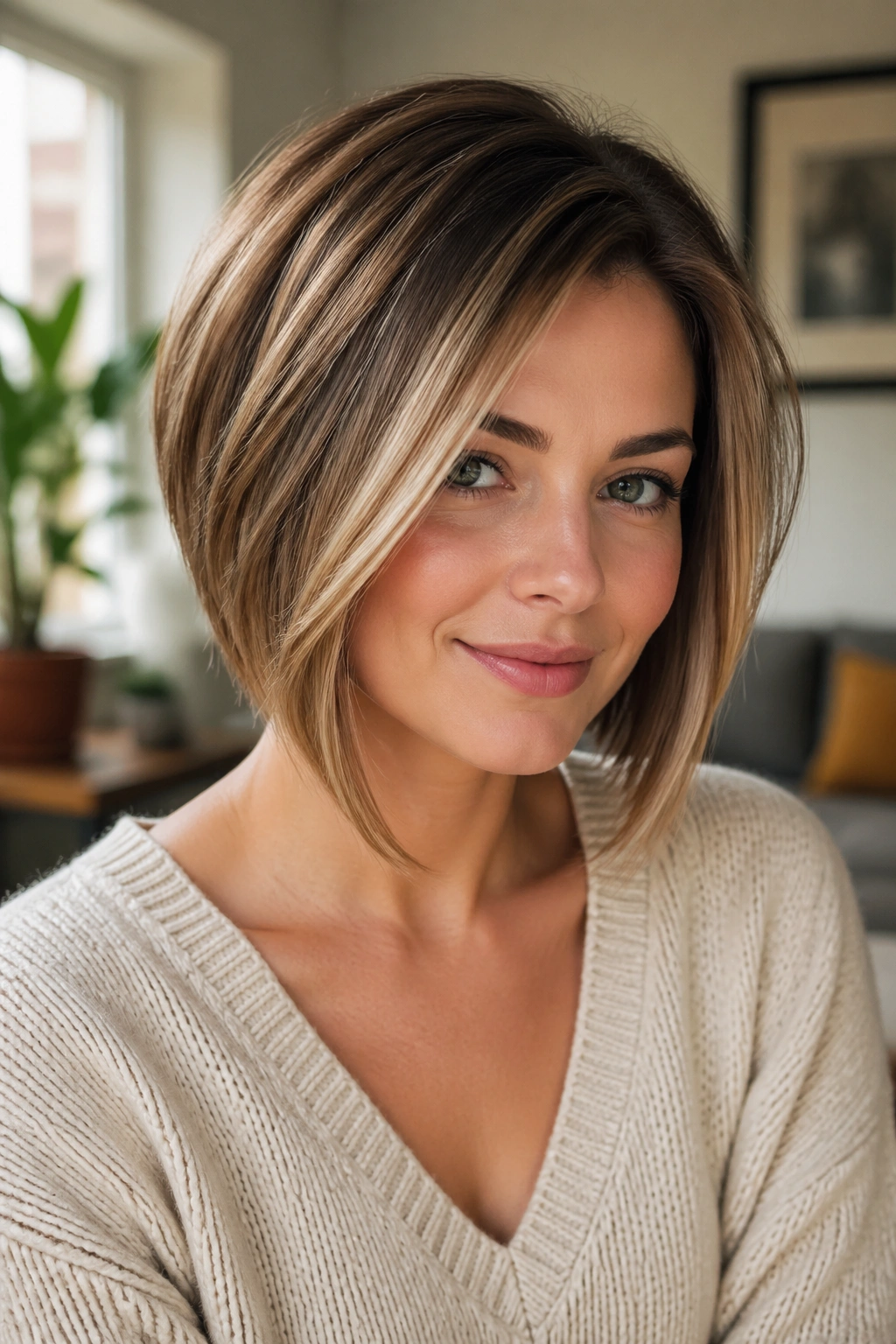
Picture a bob that sits a touch shorter in the back and glides forward a little longer in front. That diagonal shape is why the A-line bob works so well on heart-shaped faces.
The longer front pieces create a visual line that points downward, which helps balance a narrower chin. Meanwhile, the shorter back keeps the haircut from feeling heavy or helmet-like. It’s a neat trick. One line does two jobs.
This cut is especially good if your hair is medium to thick and tends to hang flat when it’s all one length. The A-line shape gives movement without needing a lot of layers. Ask for a gentle angle, though, not a steep one. A dramatic front-to-back difference can look edgy in photos and odd in real life.
If you want a number to keep in mind, a difference of about 1 to 2 inches between the back and front is usually plenty. More than that starts to read as a stacked style, which can pull attention upward in a way a heart-shaped face often does not need.
4. French Bob with Brow-Grazing Bangs

A French bob can be a knockout on a heart-shaped face when the bangs are soft and the length is kept close to the face. When it misses, it misses loudly.
The reason it works is simple: the cut brings attention to the eyes and cheekbones while the brow-grazing fringe keeps the forehead from taking over. The bangs should feel airy, not thick. Think of them as a whisper across the brow rather than a wall of hair. If the fringe is too blunt or too short, it can make the upper half of the face look boxier than it is.
This bob usually lands somewhere around the jaw or just under it. I like it best on hair that has a little bend, because the slight wave stops the cut from looking too rigid. Straight hair can wear it too, but it needs either a bend at the ends or a little polish with a round brush.
It has a bit of attitude. Not a bad thing. If you want a bob that looks intentional with minimal length, this is one of the sharpest choices on the list.
5. Collarbone Bob with Invisible Layers

This is the cut for anyone who wants bob energy without giving up the security blanket of a little extra length. The collarbone bob sits lower than a classic chin bob, and that matters on a heart-shaped face because it adds visible weight below the cheekbones.
Where the Length Should Sit
The ideal landing spot is usually somewhere between the base of the neck and the collarbone. Too short, and the face starts to dominate the shape. Too long, and it slides into generic lob territory without much structure. The point here is balance, not drag.
What to Ask For at the Chair
Ask for invisible layers or very light internal layering. That means the stylist removes some bulk inside the cut without making obvious choppy steps. It’s a smart move if your hair is thick or one-length cuts feel too blocky around the jaw.
- Ask for the front to skim the collarbone, not stop at the chin.
- Keep the perimeter soft, with just enough shape to move when you turn your head.
- Skip aggressive thinning if your hair is fine; it can make the ends look see-through.
- If you wear glasses, bring them to the appointment so the front pieces don’t compete with the frames.
One good rule: if you can toss the hair behind your shoulders and it still looks polished, the length is probably right.
6. Textured Wavy Bob with Air-Dried Ends
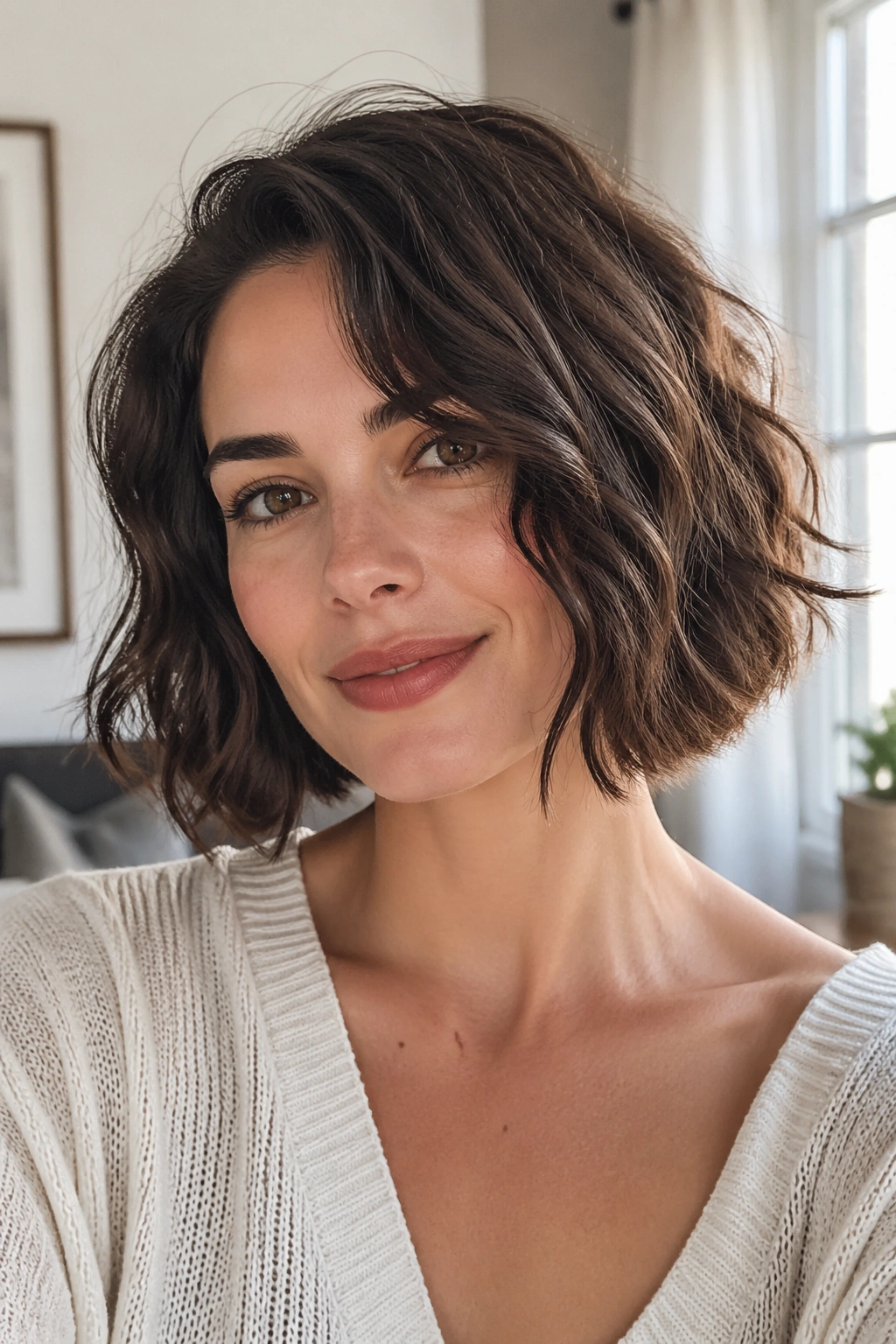
This is the bob for people who are done pretending every haircut needs a perfect round-brush finish. A textured wavy bob works because movement softens the upper face and keeps the whole look from feeling too structured.
On a heart-shaped face, that little bit of bend in the hair helps the lower half of the face read as fuller. The ends do not need to be pin-straight. In fact, a slight flip or irregular wave can make the cut look more expensive in real life because it feels lived-in instead of staged.
The sweet spot is usually just below the jaw or at the top of the neck. Longer than that, and you lose some of the bob shape. Shorter than that, and the face can feel too open at the chin. If your hair naturally falls in a wave pattern, let it. If not, a 1-inch iron and a few loose bends through the mid-lengths are enough.
A lot of people over-style this cut. Don’t. A pea-sized amount of mousse, a bit of scrunching, and a light mist of texture spray at the ends usually does the job. Too much product makes the waves collapse into clumps, and nobody needs that.
7. Blunt Bob with Soft Under-Curve
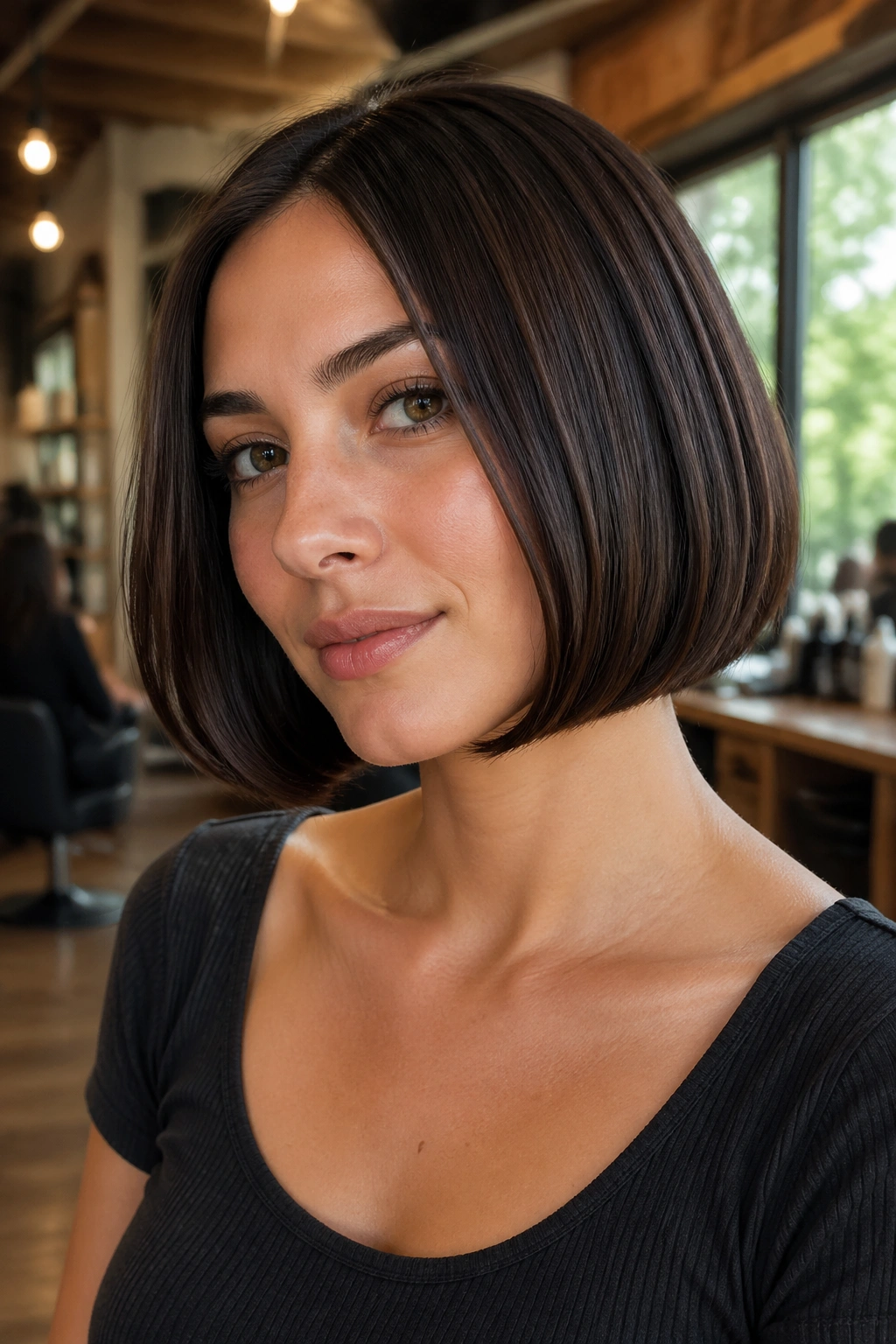
A blunt bob can work on a heart-shaped face — if the bottom edge is clean but not boxy.
That’s the part people get wrong. They hear “blunt” and picture a hard shelf of hair sitting like a ruler around the jaw. That’s not the idea. The better version has a neat perimeter with a slight under-curve, either from the cut itself or from a quick pass with a round brush. It gives the chin more presence without stacking width at the cheekbones.
This style is especially good for fine hair because the solid line makes the ends look thicker. The trick is to keep the length low enough that it doesn’t fight the face. Chin level works well. A little below chin level can be even better if the face is long through the middle.
Boxy is the enemy.
If you have thick hair, ask the stylist not to over-remove weight near the top layers. You want the cut to fall smoothly, not puff outward at the temples. When this bob is done well, it looks crisp from the front and soft at the edge — a small difference, but a real one.
8. Inverted Bob with a Tapered Nape
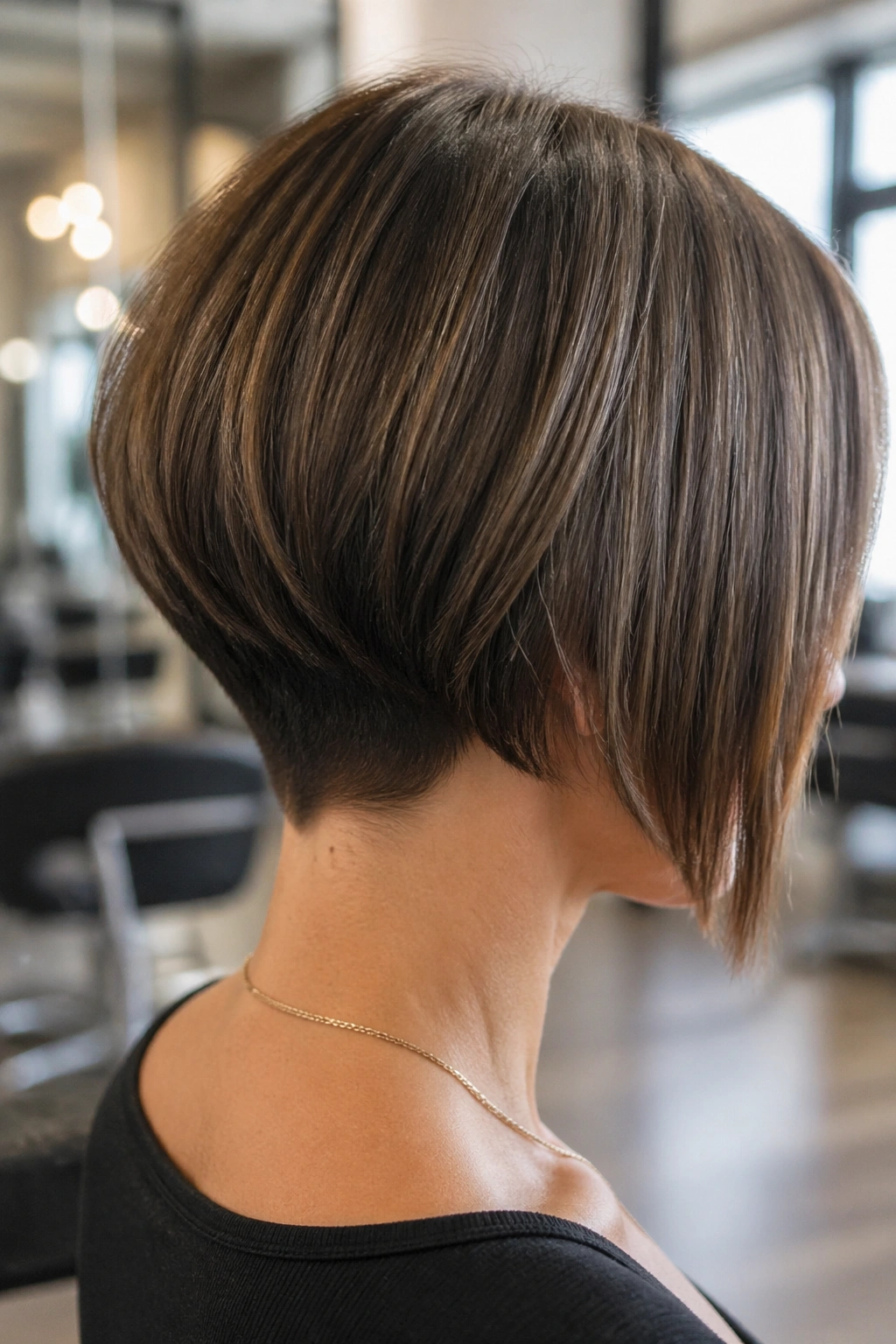
Why does the inverted bob keep showing up in short-hair conversations? Because the shape builds lift where the head needs it and lets the front sweep forward with purpose.
How to Keep It from Looking Too Stacked
The back should be tapered, not puffed. That distinction matters. A heart-shaped face usually already has width up top, so the crown does not need extra drama. Keep the back close enough to the neck to show the angle, then let the front pieces fall toward the chin.
- Ask for the front to stay at or just below chin length.
- Keep the graduation in the back soft, not wedge-like.
- If you have thick hair, ask for internal weight removal under the surface only.
- A side part can calm the shape if the front feels too sporty.
This cut is sharpest on straight or slightly wavy hair. Very curly hair can wear it, too, but the taper needs to be handled by someone who knows how curls expand when they dry. Otherwise the back can become a puffball, and that is not the effect.
The appeal here is clean contrast. Shorter at the nape, longer at the front, and enough angle to make the face look narrower where it should.
9. Curtain Bang Bob That Opens at the Cheeks
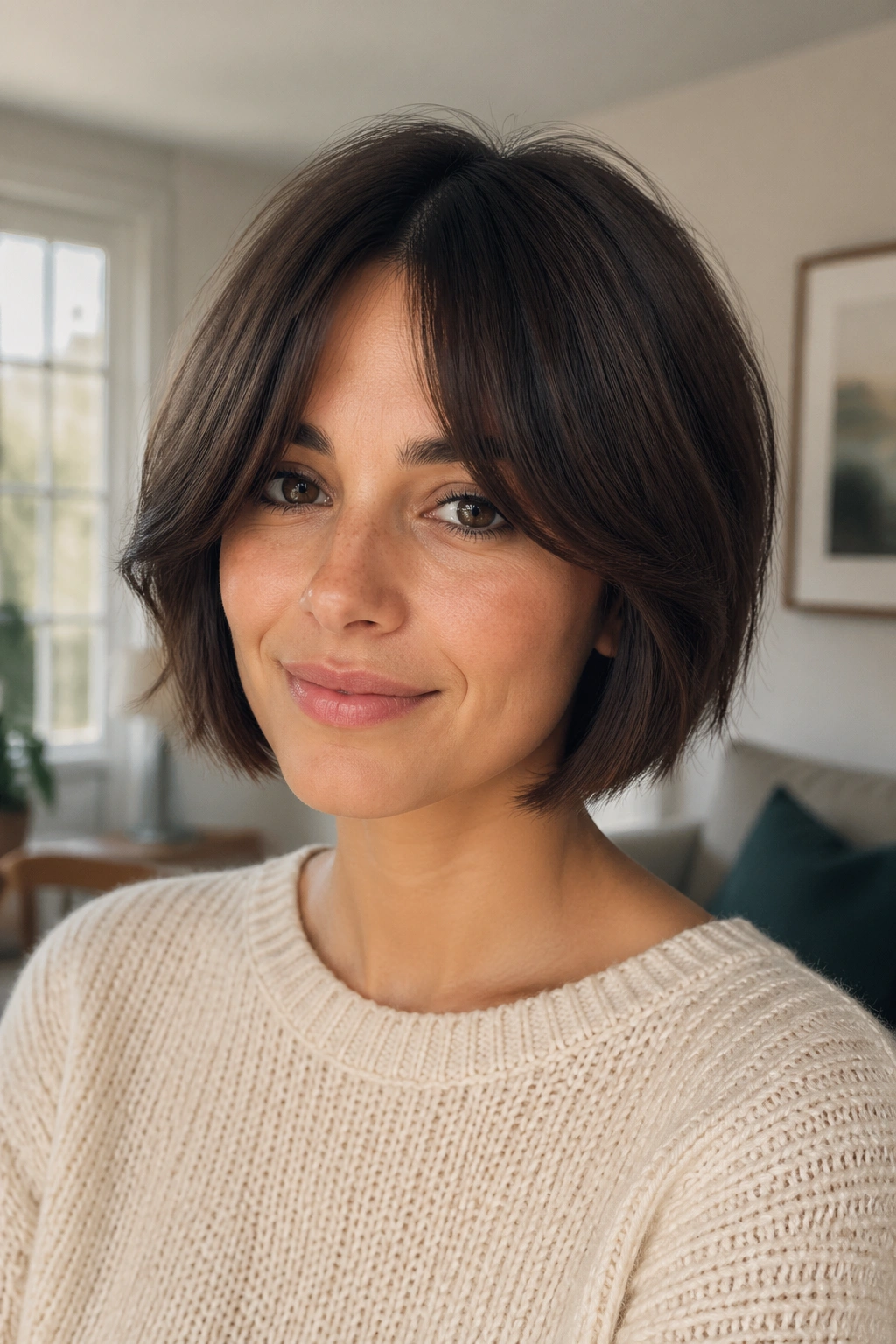
If you like fringe but hate the feeling of being boxed in, this one makes sense fast.
Curtain bangs split in the middle and fall away from the face, which gives a heart-shaped face exactly what it wants: softness near the forehead without a hard curtain of hair across it. The bob underneath can stay simple. The bangs are the point. They draw the eye down toward the cheeks and then guide it into the rest of the cut.
The best version usually starts somewhere between the bridge of the nose and the cheekbone, depending on how much forehead coverage you want. Shorter curtain bangs feel lighter and more open. Longer ones look softer and are easier to grow out. If you have a shorter forehead, keep the shortest pieces lower; if your forehead is tall, you can start them a bit higher without crowding the face.
- Blow-dry the bangs forward first, then split them with your fingers.
- Use a small round brush and curve the ends away from the cheeks.
- Keep the bob length around the jaw or just below it.
- Leave the ends slightly tousled so the fringe and haircut blend together.
This style has a forgiving feel. It’s one of those cuts that looks better after a little movement.
10. Curly Bob That Sits at the Jaw
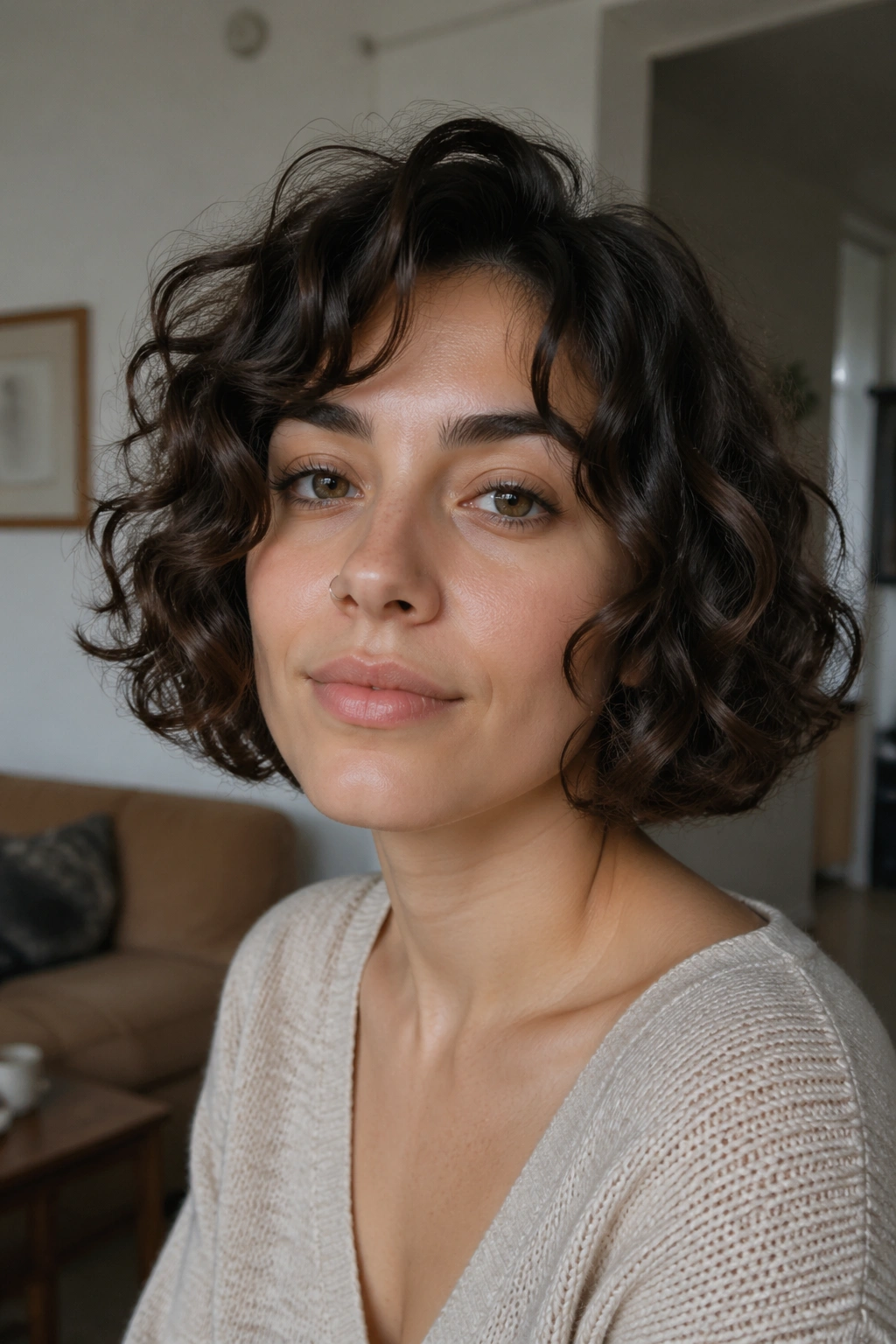
Curly hair and heart-shaped faces make a better pair than people often think, but the cut has to be done with shrinkage in mind. If the bob is shaped only when wet, it can spring upward later and land in the wrong place.
The goal is a curly bob that sits around the jaw when dry, not when the hair is still dripping. That usually means a dry cut, or at least a stylist who understands how your curl pattern actually behaves. A strong curl should not be forced into a flat outline. It should be shaped curl by curl so the lower half of the face gets some width and the top half stays light.
This matters because curls naturally add volume. If all the volume lands at the temples, the forehead can feel wider. If the curl pattern is guided toward the jaw and mouth area, the whole face looks more balanced. That’s the good stuff.
A little gel or cream can help define the shape, but don’t drown the hair in product. You want spring and movement, not a helmet. And if your curls are tight, give them a few extra minutes of diffusing with the head tipped to the side so the front pieces don’t all pile up at the crown.
11. Layered Lob With Face-Framing Pieces
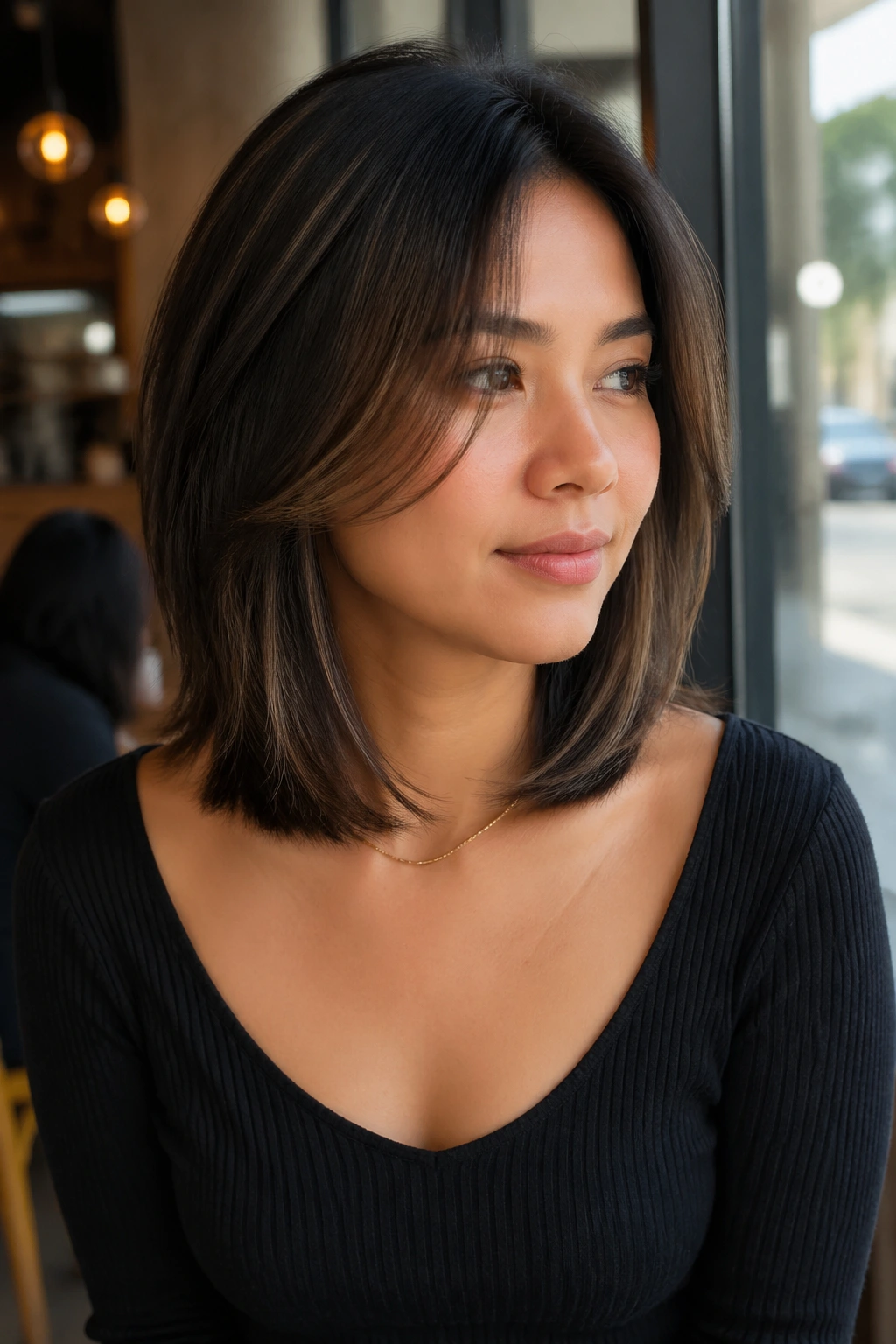
A layered lob is what happens when you want softness, movement, and a bit of length all at once.
Where the Layers Should Start
For a heart-shaped face, the safest place for the first layers is usually below the cheekbone. That keeps the width from building too high on the face. If the layers start at the temple, the haircut can widen the upper half of the face in a way that looks off, even if the cut is technically well done.
What the Front Pieces Should Do
The front should fall toward the lips, chin, or collarbone depending on how long you keep the lob. Those pieces act like a frame, but they should be loose. Too much shape around the face makes the haircut feel obvious. Too little shape makes it drift into plain.
- Ask for long layers that blend, not choppy steps.
- Keep the front just long enough to tuck behind the ear when you want.
- If your hair is thick, remove weight through the ends rather than cutting short layers at the top.
- A center part can work if the face-framing pieces are long enough to soften the cheek line.
This is one of the most flexible cuts on the list. It can be polished for work, bent with a flat iron for evenings, or air-dried if you are in a hurry and do not care about perfect symmetry.
12. Shaggy Bob With Broken-Up Ends

Unlike a polished bob, this one gets better when the ends look a little undone.
That is the whole point. The shaggy bob softens the forehead and cheekbones through texture, not through a perfect shape. On a heart-shaped face, broken-up ends keep the eye moving instead of making it stop at one hard line. The result feels lighter around the face, which is useful if your features already have strong contrast.
This cut works especially well on hair that has some wave, bend, or natural volume. A razor or point-cut finish can help the ends feel less solid. If the hair is pin-straight, you can still wear it, but it needs a texture spray, a little rough-drying, or a bend made with a small iron. Otherwise it can look too flat and the “shaggy” part disappears.
The nice thing about this bob is that it forgives mess. A day-old texture usually looks better than a freshly over-brushed finish. If you live for sleek precision, skip this one. If you like hair that feels a little lived-in and a little imperfect, it’s a good fit.
13. Tucked-Bob with a Deep Side Part
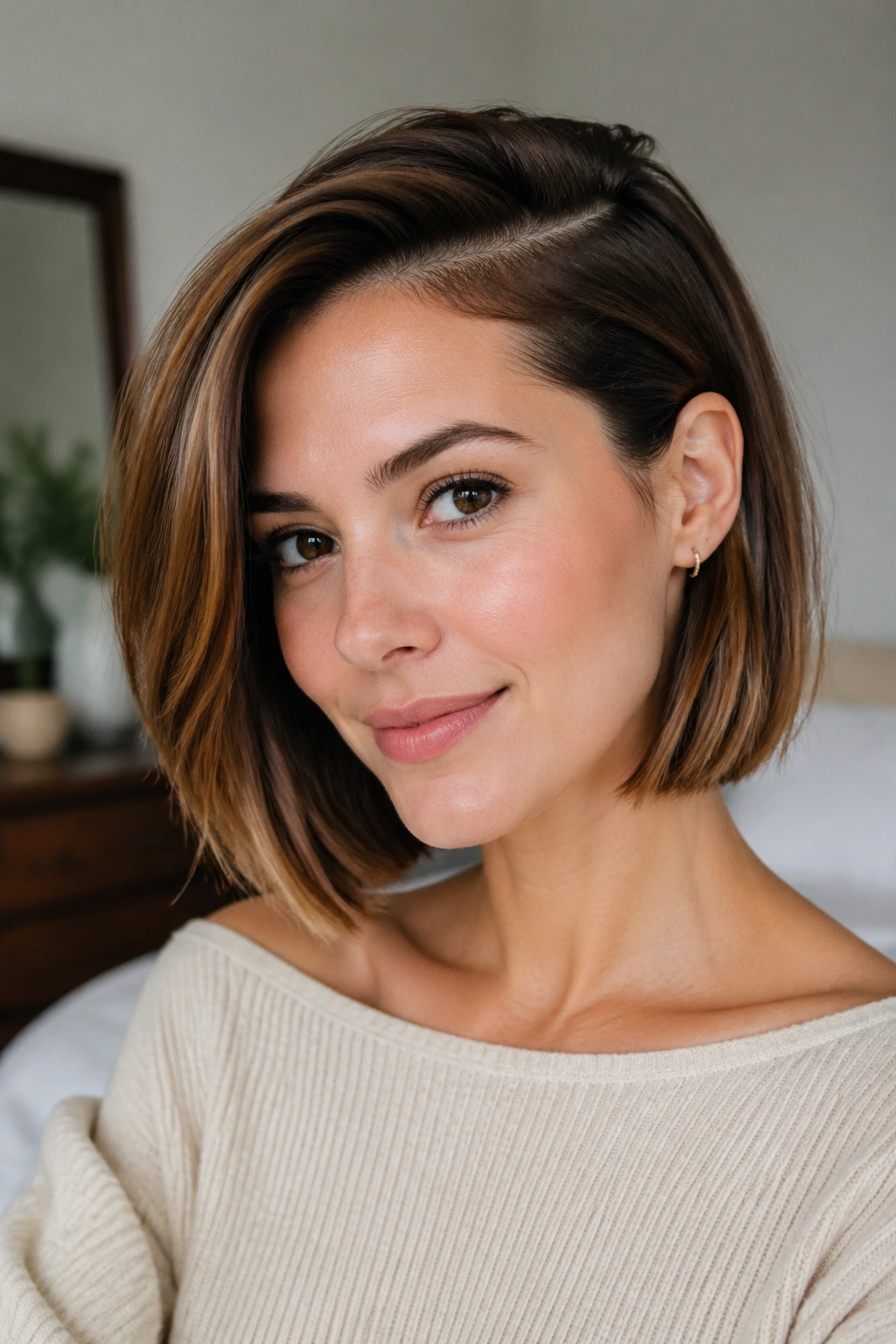
A deep side part and a clean tuck behind the ear can do more for a heart-shaped face than people expect.
The part shifts volume away from the center of the forehead, and the tuck reveals one cheekbone at a time. That asymmetry softens the upper width of the face without hiding it. It also makes the bob feel intentional instead of plain. A chin-length or collarbone-length bob works well here, especially if the front pieces are long enough to sit neatly behind the ear without popping out.
How to Wear the Tuck
- Smooth a small amount of serum through the front section so it stays flat.
- Tuck the shorter side fully behind the ear, then leave the other side loose.
- Use a bobby pin under the top layer if the hair keeps slipping out.
- Keep the ends blunt or slightly beveled so the cut stays sharp after the tuck.
This look is especially useful on second-day hair. The roots already have a little lift, which helps the part stay put. A quick blast of dry shampoo at the crown can keep the shape from collapsing. Don’t overdo it. Too much product turns the tuck stiff, and that ruins the whole thing.
14. Rounded Bob with Cheekbone Lift
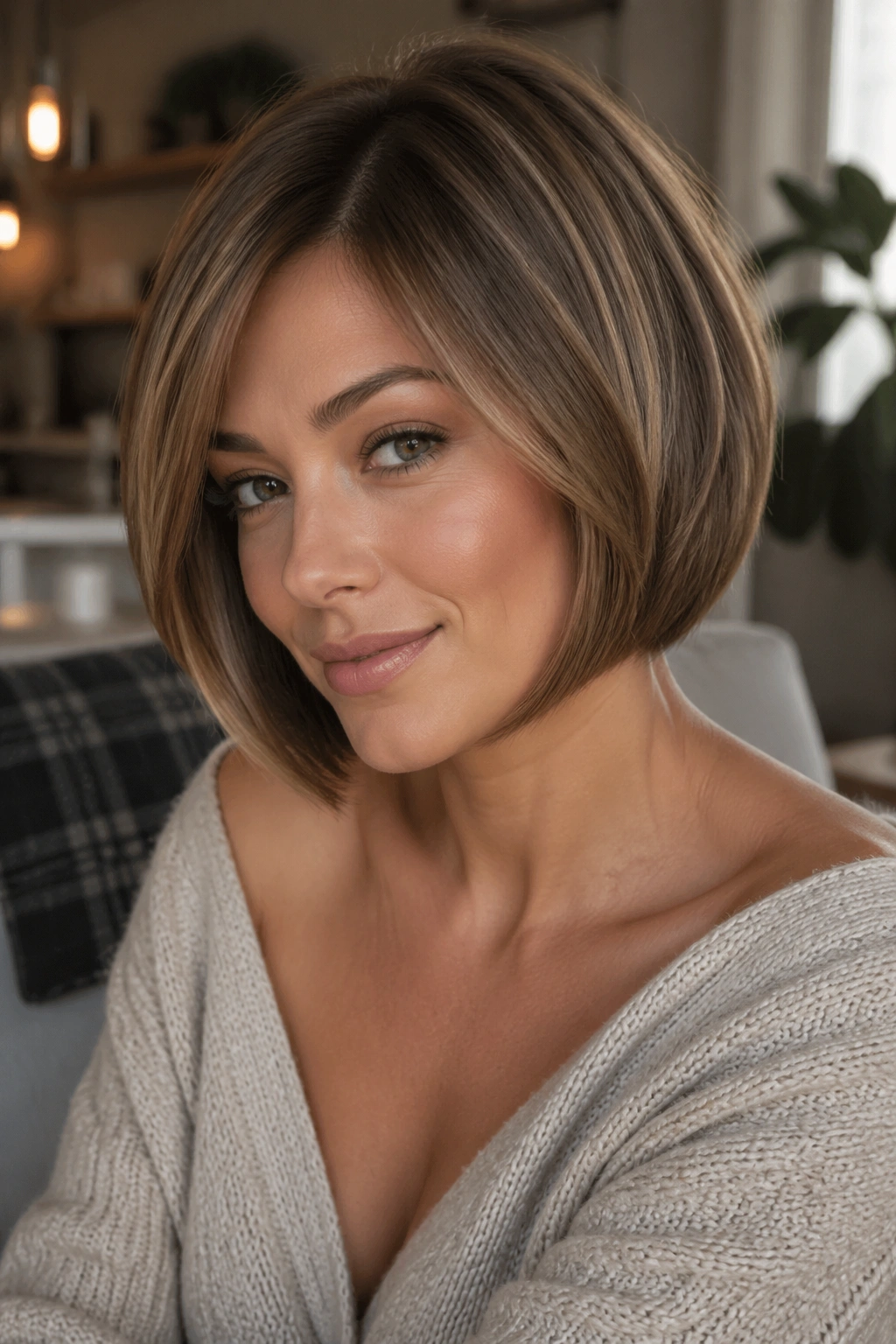
Why does a rounded bob work so well on some heart-shaped faces? Because it follows the head shape in a way that feels soft, not boxy.
The curve matters. Instead of letting the ends hang in a straight slab, the cut bends slightly under at the jaw and cheekbone area. That gives the lower half of the face more presence, while the rounded contour keeps the top of the head from looking too wide. If your cheekbones are one of your best features, this style is a smart way to keep them front and center.
This bob usually needs a little styling. A round brush or vent brush can create that gentle curve, especially if the hair is medium or fine. On thick hair, the shape may hold on its own once the stylist removes enough internal weight. That part can get messy fast if it’s overdone, so the hand of the cutter matters here.
One caution: if your hair is very flat and you refuse to blow-dry, a rounded bob can lose its shape and look like it’s sitting on the face instead of framing it. In that case, a softer lob may be the easier call.
15. Asymmetrical Bob That Drifts Longer on One Side
A slightly asymmetrical bob is a good choice when you want the face to look less symmetrical without turning the haircut into a statement piece that shouts across the room.
One side usually sits about 1 to 2 inches longer than the other. That tiny imbalance changes the way the eye moves. It breaks up the width at the forehead and lets the chin feel less narrow, which is useful on a heart-shaped face. The cut can be subtle or obvious, but I like the subtle version more. It ages better. It wears better. It also grows out in a way that still feels deliberate.
The shape works best when the longer side falls toward the jaw or collarbone and the shorter side stays clean near the ear. A side part usually helps, though a soft off-center part can keep the look from feeling too editorial. If you want to wear it sleek, a flat iron and a light serum are enough. If you want it messier, bend just the ends and leave the rest alone.
If you keep coming back to bob photos and still feel nervous about too much width at the top, start here. The asymmetry gives the face room to breathe, and it does it without making the haircut look complicated. That’s the kind of polish that tends to age well, which matters more than a flashy first impression.
