



A hime cut bob has a very specific kind of drama. The straight fringe, the cheek-skimming sidelocks, the blunt bob underneath—it all adds up to a haircut that feels a little graphic, a little storybook, and a lot more wearable than people expect when they first hear the name.
The cut can look severe if it’s done carelessly. It can also look expensive, sharp, and oddly soft at the same time when the line is clean and the proportions make sense. That’s the part I love most about it. A hime cut bob can lean into anime energy without tipping into costume territory, and the difference usually comes down to where the temple pieces land, how much weight stays in the bob, and whether the finish is glassy, airy, or slightly bent at the ends.
If you’ve ever liked the crisp hair framing in anime character design, this shape scratches that itch in real life. It gives the face structure. It makes eyes look bigger. It can sharpen a round cheek, soften a long forehead, or give a plain bob a lot more personality without adding layers everywhere.
1. Classic Blunt Hime Cut Bob
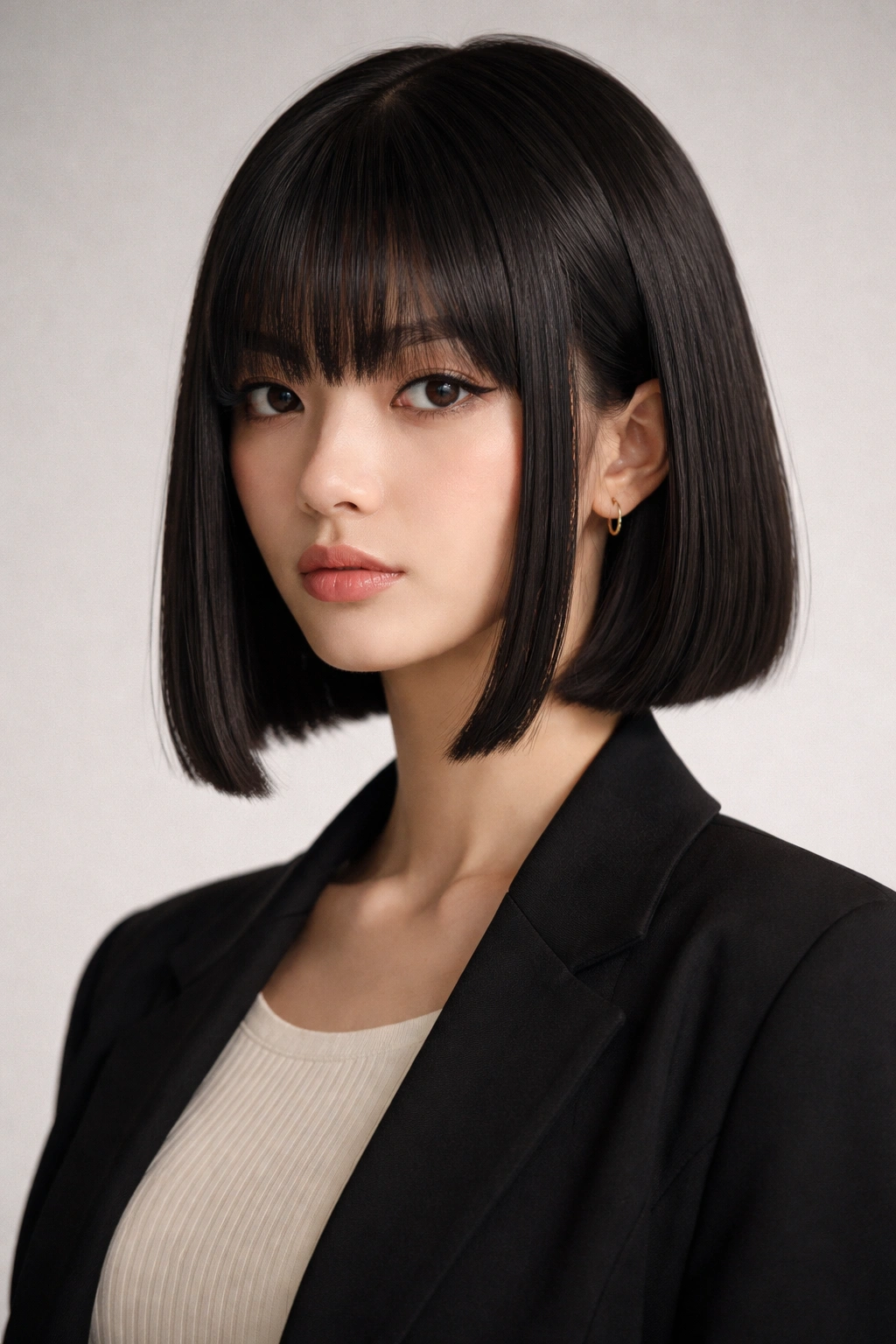
Sharp lines do the heavy lifting here. The classic blunt hime cut bob is the version most people picture first: full fringe, clean cheek-length side pieces, and a straight bob perimeter that sits around the jaw. Nothing is fuzzy. Nothing is wispy. The whole point is that the shape reads immediately, even from across a room.
That bluntness is what gives it the anime-inspired look. The haircut has contrast built into it. Your bangs create one frame, the temple pieces create another, and the bob underneath acts like a neat base. When the ends are cut with a strong line, the style looks deliberate instead of accidental.
What to ask for at the salon
- A blunt bob line that lands at the jaw or just below it
- Straight, eyebrow-skimming bangs with a soft edge if you don’t want them too heavy
- Temple pieces cut to the cheekbone or upper jaw
- Minimal layering through the body of the bob
If your hair is thick, this version is especially satisfying. The weight helps the cut hang in place and keeps the outline crisp. Fine hair can wear it too, but the stylist needs to be careful not to over-thin the ends. That’s the trap. Too much texture and the whole thing starts to lose the graphic feel.
A flat iron and a light shine spray are usually enough. Keep the movement small. The more polished the surface, the more the hime shape reads cleanly.
2. Soft Layered Hime Cut Bob
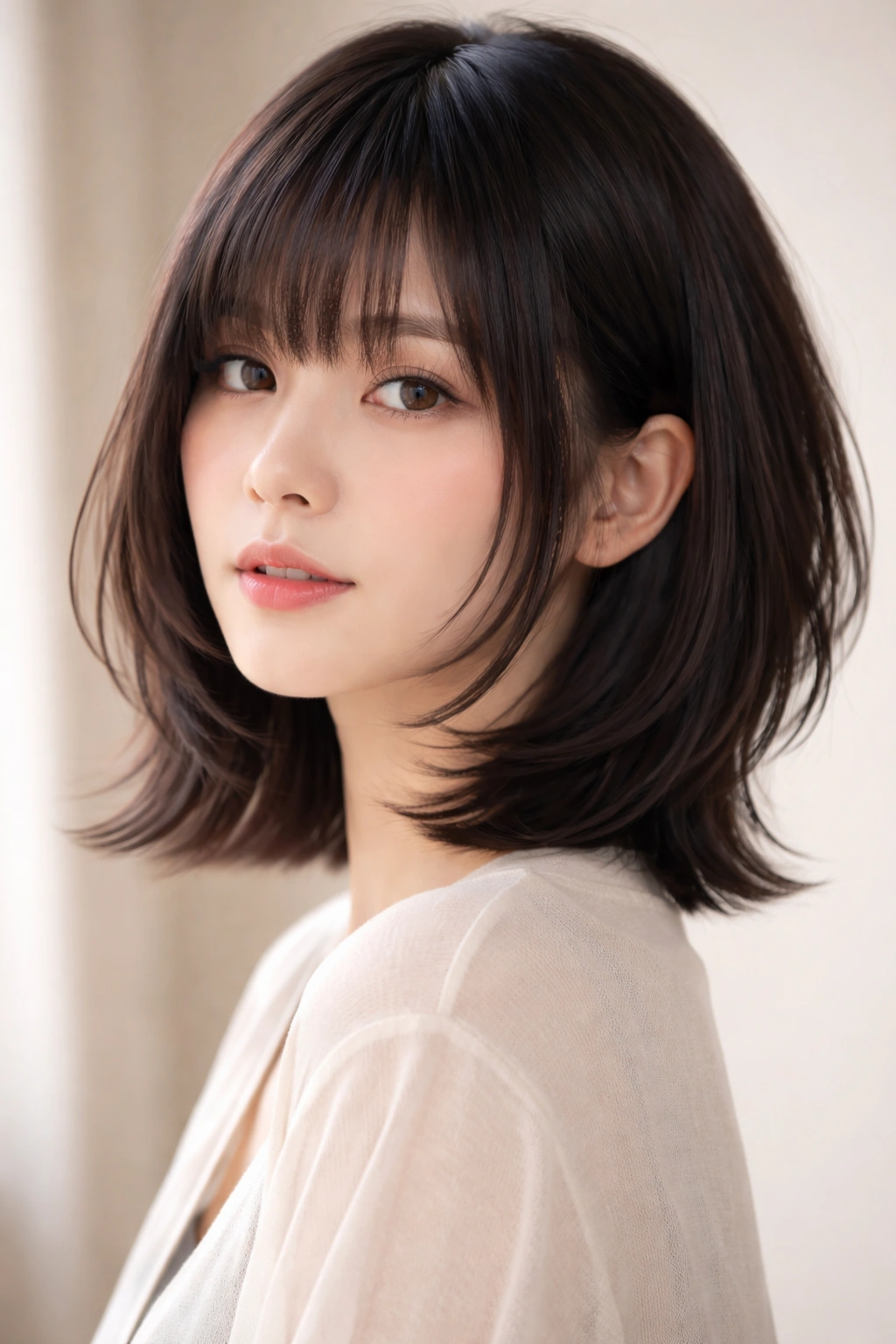
Can a hime cut bob feel gentler? Absolutely. The soft layered version keeps the temple pieces and fringe, but the bob itself gets just enough internal movement to stop it from looking like a hard helmet. The shape still says hime cut. It just says it in a quieter voice.
This is the one I point people toward when they want the anime silhouette without the extra stiffness. A few hidden layers near the nape or underneath the crown can help the bob sit better on fine hair, and they stop thicker hair from puffing out at the sides. The key is restraint. You want movement, not fray.
Where the softness belongs
Keep the front pieces defined. That part should still feel obvious. What gets softened is the interior of the bob and, if needed, the last half-inch of the temple pieces so they don’t stop in a harsh shelf.
A cut like this works well if you style your hair fast and do not want to fight it every morning. Air-dried texture can actually help here, especially if the ends are not pin-straight. A cream with a little slip, a quick blow-dry at the roots, and a bend at the bottom can be enough.
One sentence matters here: don’t over-layer the face frame. If the temple pieces get too feathered, the whole hime idea gets blurry. You want softness around the edges, not a haircut that has forgotten what it is.
3. Hime Cut Bob with Curtain Bangs
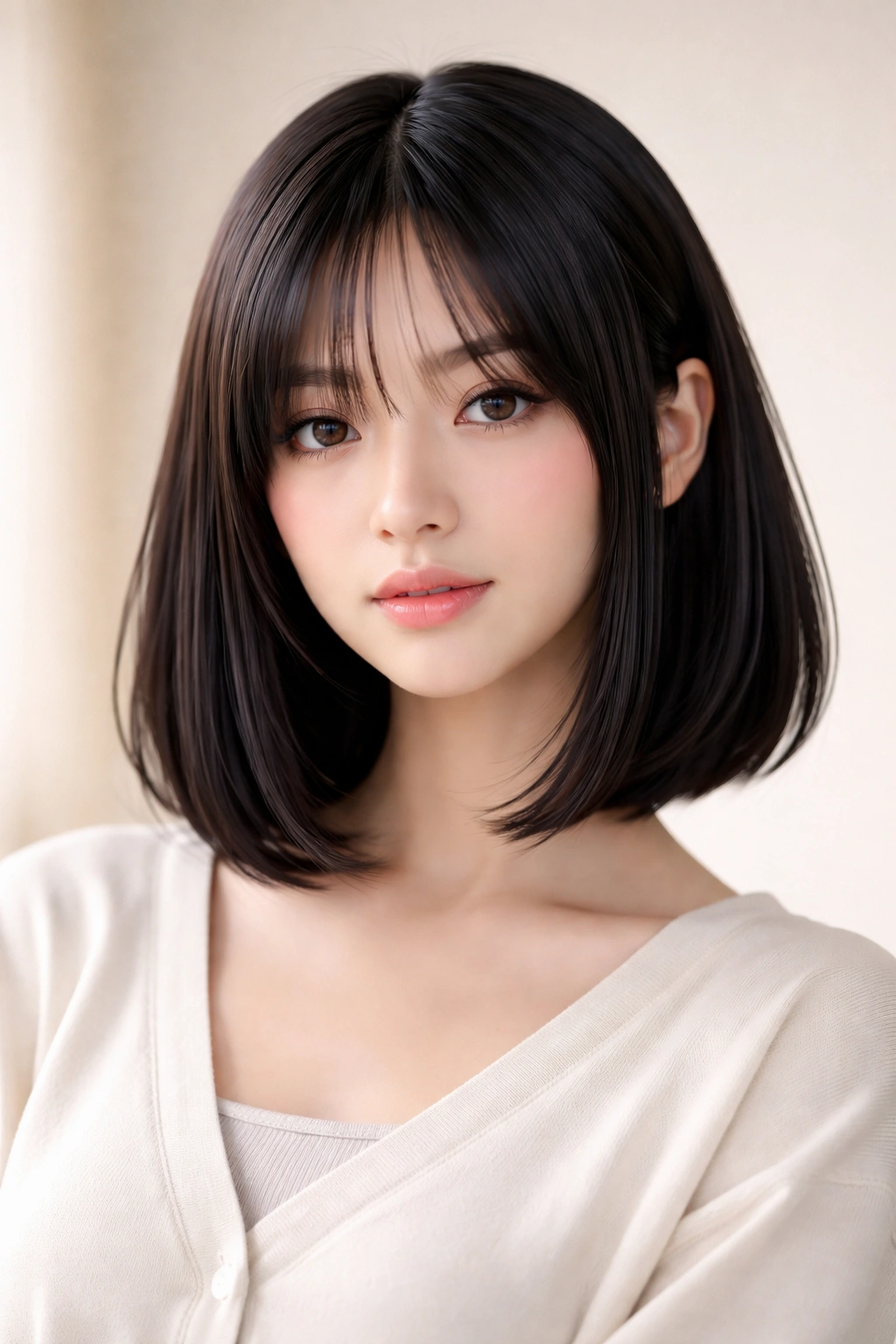
If your forehead feels boxed in by a full fringe, curtain bangs are the easy escape hatch. This version keeps the hime panels at the temples but swaps the straight bang for a center-parted fringe that opens away from the face. The result feels lighter, less severe, and easier to grow out if you change your mind later.
This style is especially good if you like moving your hair around during the day. Push it one way and the curtain bang falls softer. Split it down the middle and it gives you that anime-adjacent frame without the heavy block across the forehead. It’s a more forgiving shape, and honestly, that matters if you don’t want to book trims every few weeks.
Best face shapes for this version
- Round faces that want a bit of vertical length
- Heart-shaped faces that need a softer forehead line
- Oval faces that can carry almost any fringe
- Square faces that want some movement around the temples
The styling trick is simple. Blow-dry the curtain bangs away from the center using a round brush, then use the flat iron only on the ends if they need a bend. The hime pieces should stay cleaner and straighter than the rest of the fringe. That contrast is what keeps the haircut readable.
It’s a good compromise cut. Not timid. Just easier to live with.
4. Micro-Bang Hime Cut Bob
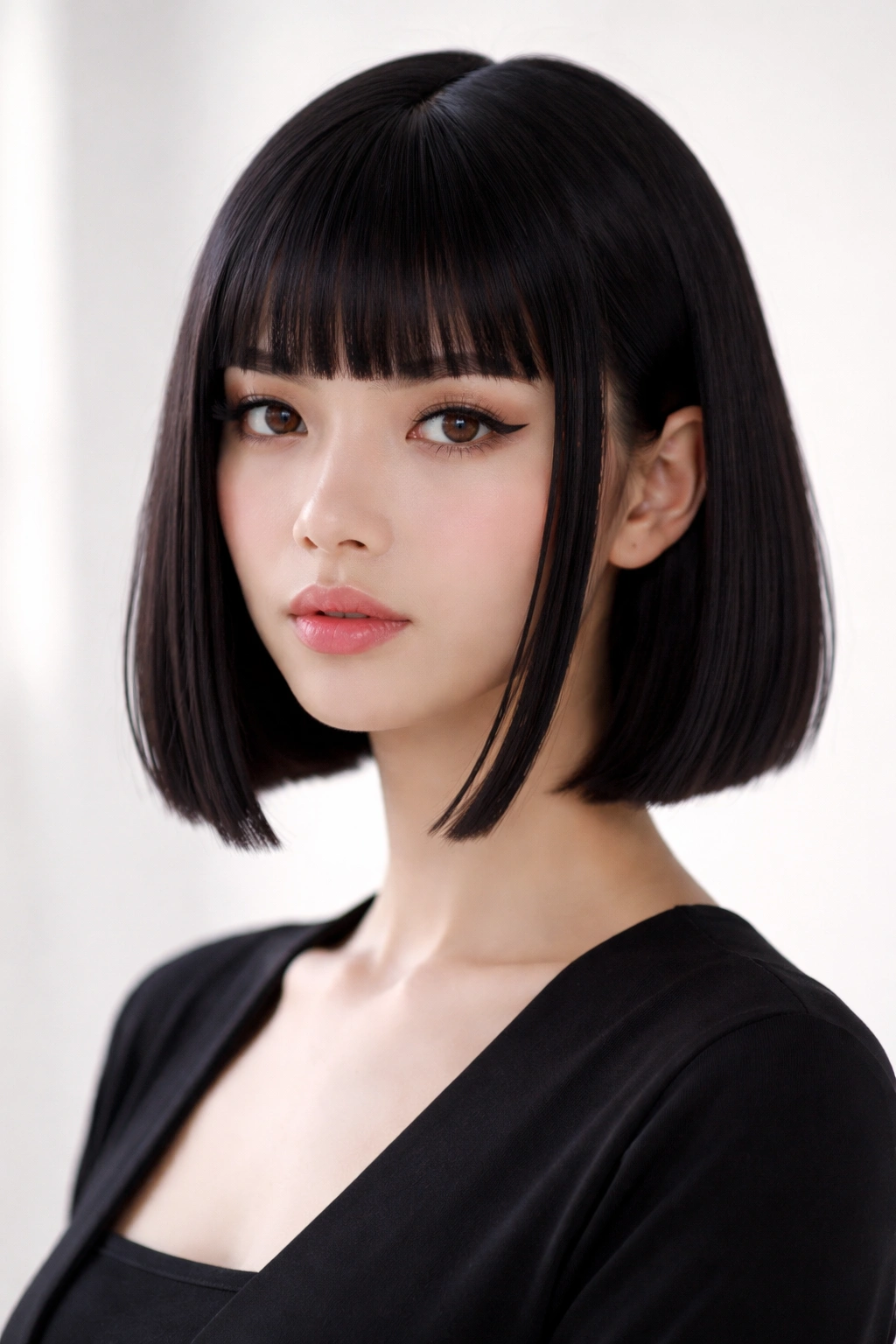
Micro bangs are not subtle, and that’s the whole point. Pair them with a hime cut bob and you get a haircut that feels sharp, graphic, and a little bit comic-book in the best possible way. The short fringe pulls attention upward, while the temple pieces pull the eye back down toward the cheekbones.
This version is bold, but it can be surprisingly balanced if the rest of the bob stays clean. The secret is not to overdo the rest of the haircut. Keep the perimeter neat. Keep the temple pieces sleek. Let the micro fringe be the loudest thing in the room.
Cowlicks can bully this cut. If your hairline fights short bangs, you’ll spend too much time fixing them. Straight, dense hair usually handles micro bangs better than wavy hair that springs up at the root. That said, a skilled stylist can often carve in a lighter, choppier fringe that sits a little easier.
A short fringe also changes the mood of the hime pieces. They should be long enough to offset the tiny bang, usually around cheekbone level, so the face still gets a frame. Without that balance, the haircut can look top-heavy.
If you want an anime look that feels a little rebellious, this is one of the strongest options. It has edge. It has attitude. It also needs regular trims, because half an inch makes a big difference when the fringe is that short.
5. Chin-Length Hime Cut Bob
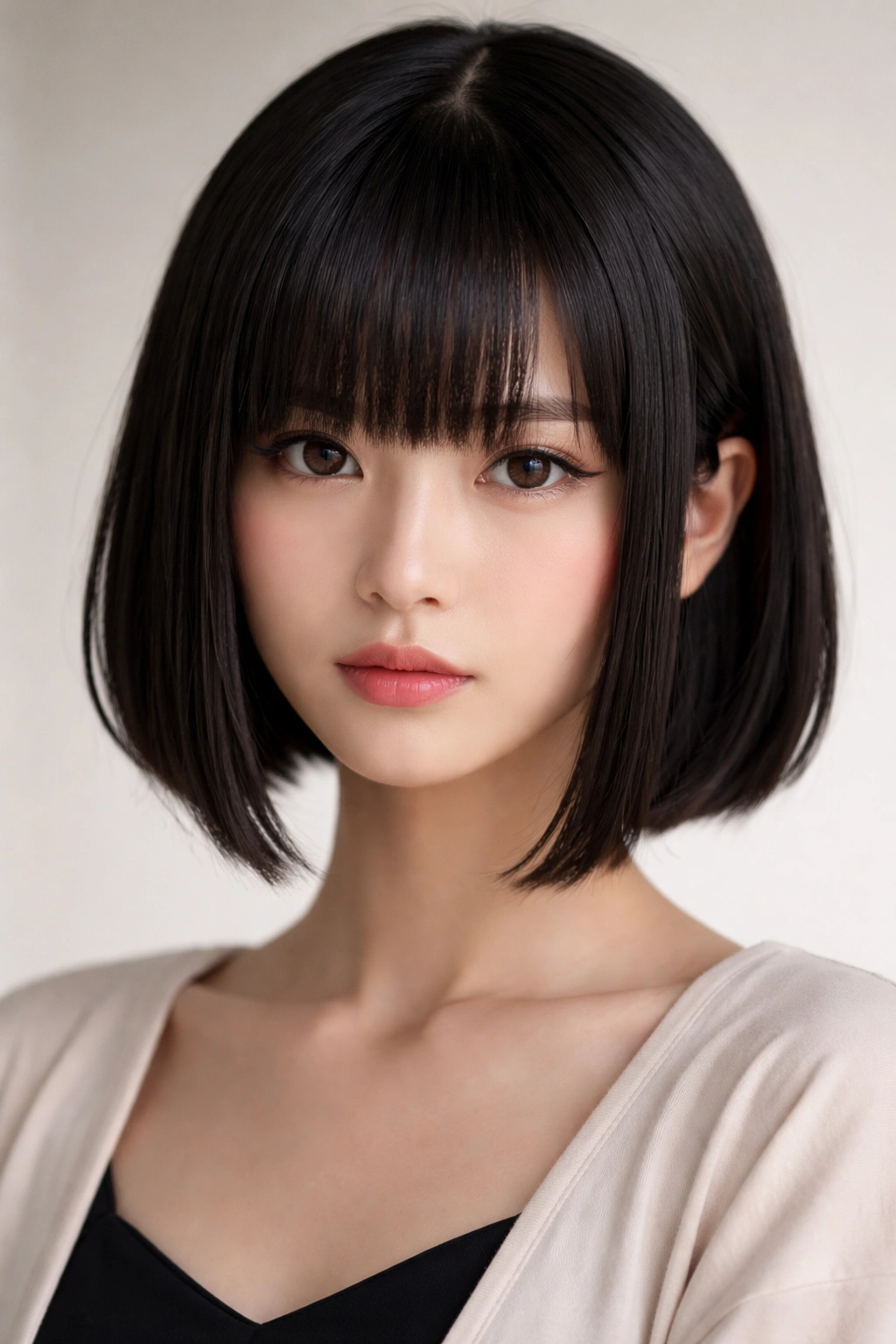
A chin-length hime cut bob has a clean, almost hollow sound when it moves. The ends skim the jaw, the fringe sits close to the eyes, and the temple pieces land where the face naturally starts to narrow. It’s compact, which makes the shape feel neat even when the hair isn’t perfectly styled.
This length is useful if you want the hime detail to stand out without adding much styling time. Shorter bobs tend to hold their shape better, and they also give the haircut a slightly more fashion-editor feel. The face frame does not have to work as hard because the overall silhouette is already strong.
A few things worth asking for
- Keep the bob no shorter than the chin line if you want movement
- Ask for temple pieces that sit right at the high cheekbone
- Leave enough weight in the bottom so the bob doesn’t flare out
- Keep the ends blunt unless you want a softer, more casual finish
This cut can be very flattering on people with defined jaws, but it can also work on softer faces if the front pieces are placed carefully. If the temple sections are too short, the cut can start to look busy. If they’re too long, you lose the graphic shape.
I like this version on straight hair because it falls into place fast. A smoothing cream, a paddle brush, and a quick bend under the ends are usually enough. If you want something that looks intentional even on a rushed morning, this is a smart place to start.
6. Wavy Hime Cut Bob
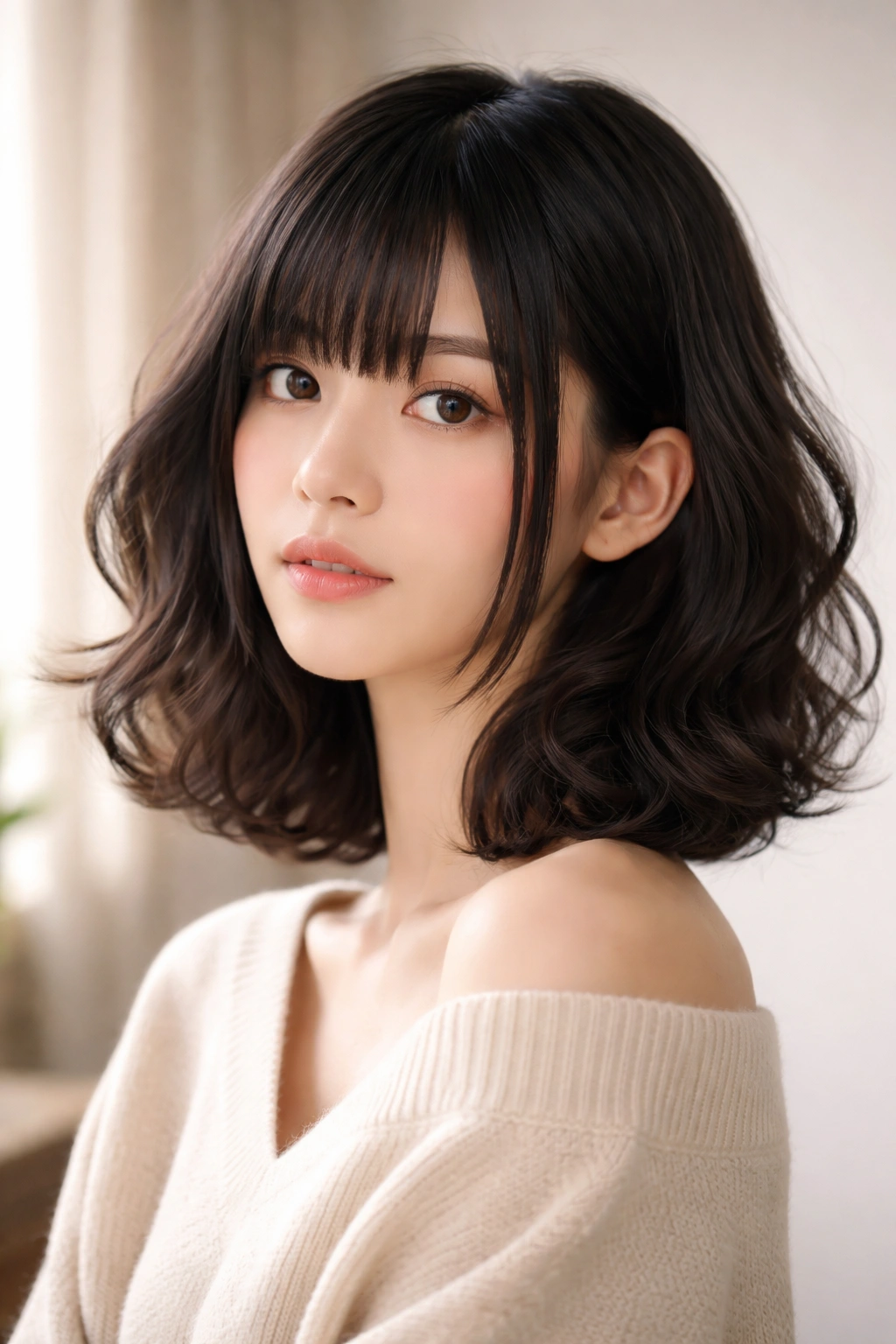
Waves change the mood fast. A wavy hime cut bob keeps the temple pieces recognizable, but the body of the bob bends and ripples instead of lying like a sheet. That softens the whole thing and makes the haircut feel less exact, more lived-in.
The trick is to keep the hime pieces a little straighter than the rest of the hair. If every section gets the same wave pattern, the shape disappears. You want the eye to catch the contrast between the crisp front frame and the looser body underneath. That mismatch is what keeps the style from turning into a regular wavy bob.
How to style it without losing the shape
- Start with a lightweight mousse on damp hair.
- Rough-dry the roots until they’re about 80 percent dry.
- Use a 1-inch curling iron or wand to bend the mid-lengths only.
- Leave the hime pieces straighter, or give them just a tiny curve at the ends.
- Finish with a flexible spray, not a stiff shell.
This version is forgiving if your hair already has movement. You are not fighting the texture; you’re steering it. The result feels a little softer and more relaxed, like a character who slept for five hours but still somehow looks put together.
It also buys you a bit of styling flexibility. You can wear the waves looser on casual days and smooth them down when you want the hime pieces to read more sharply. Both versions work.
7. Curved-Under Hime Cut Bob
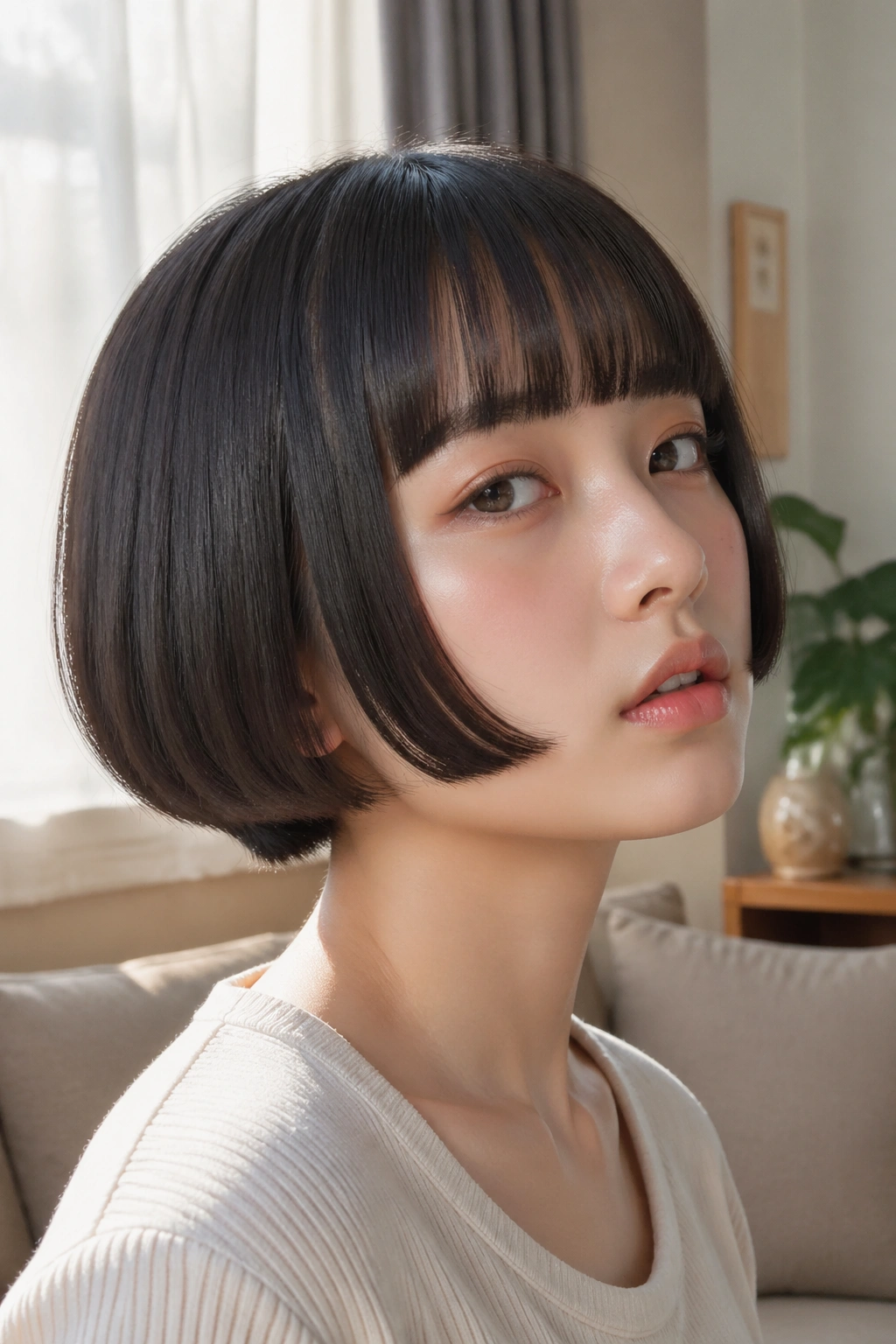
Two tools matter here: a round brush and a flat iron. The curved-under hime cut bob is all about that inward bend at the ends, where the bob hugs the jaw instead of kicking out. It has a polished shape that feels neat, a little doll-like, and very controlled.
This is the version I’d suggest if you like a haircut that looks finished with minimal fuss. The curve under at the bottom helps the whole silhouette stay tidy, while the temple pieces sharpen the face. The effect is clean and deliberate, almost like the hair was drawn with one continuous line.
The good part is that it does not need much complexity. Blow-dry the roots up for lift, then pull the ends under with a round brush or a quick pass of the iron. A tiny bit of smoothing cream on the mid-lengths helps keep the surface flat.
A stronger jawline usually looks great with this cut because the inward bend frames it instead of competing with it. Softer faces can wear it too, though the temple pieces may need to be a touch longer so they land in the right spot. That little detail changes everything.
It’s tidy. It’s precise. And if you like hair that behaves, this one behaves.
8. Sleek Glass Hime Cut Bob
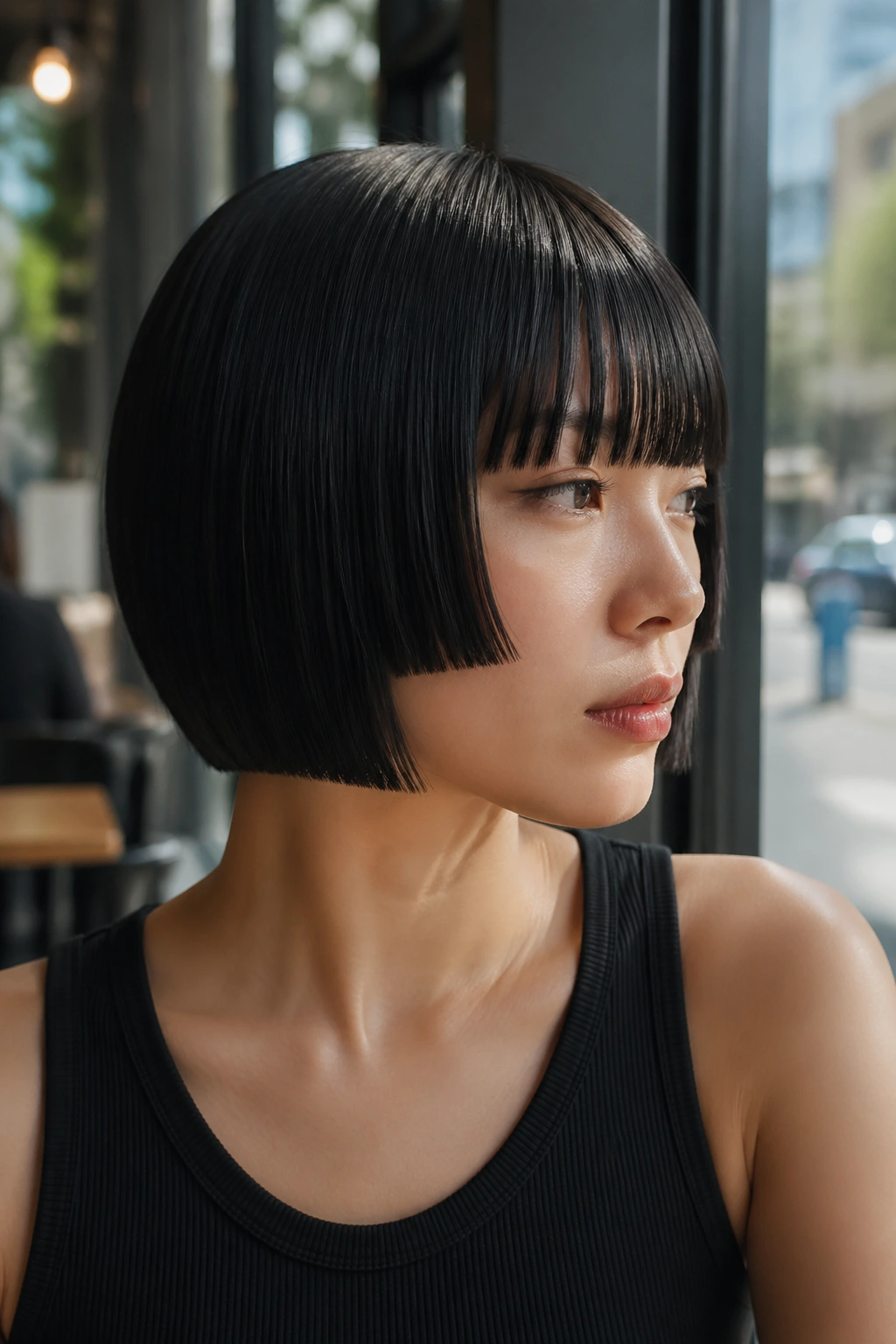
I like this version when the hair itself becomes the whole outfit. The sleek glass hime cut bob is all about shine, precision, and a surface that looks smooth from root to end. No rough texture. No airy layers. Just a glossy bob with sharp temple pieces and a fringe that sits exactly where it should.
This shape works especially well with dark hair, vivid color, or anything with a clean finish because the lines show up more clearly. The hime pieces become almost architectural. They carve the face the way eyeliner frames eyes. That’s a dramatic comparison, but it fits.
Use a heat protectant first. Always. Then blow-dry with tension, section by section, and finish with a flat iron if the hair needs extra polish. A pea-sized amount of serum on the ends is enough. More than that, and the whole thing starts to look greasy instead of glossy.
What makes it hold up
- A blunt perimeter with minimal layering
- A light product load so the hair doesn’t collapse
- A center or near-center part, depending on your face shape
- Regular trims to keep the line from blurring
This is not the easiest version if your hair puffs up the second humidity enters the room. Still, when it’s done well, the result is striking in a very clean way. It doesn’t shout. It just looks exact.
9. Asymmetrical Hime Cut Bob
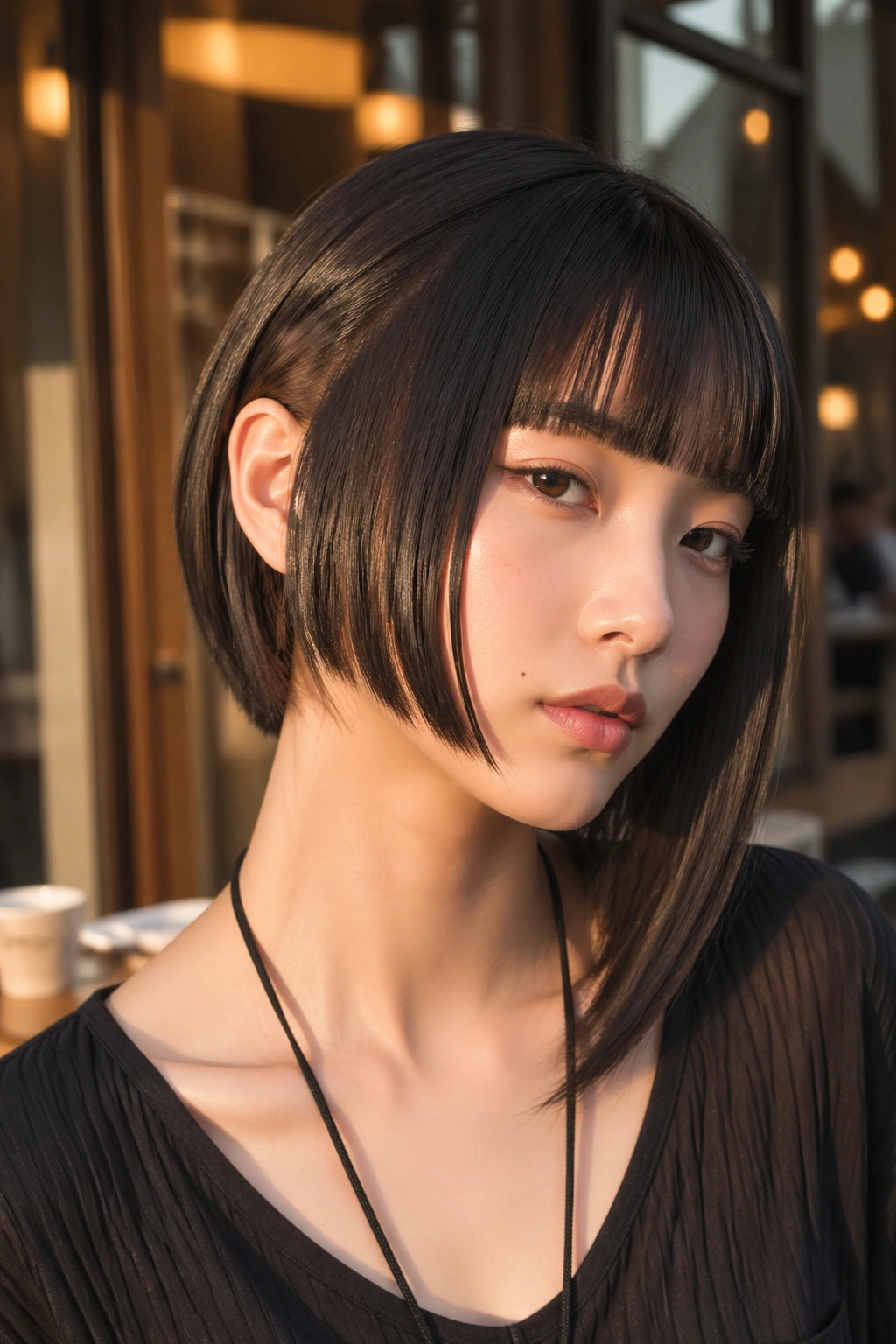
A tiny imbalance can make the cut look more interesting than perfect symmetry ever could. With an asymmetrical hime cut bob, one side may be a little longer, the front angle may sweep differently on each side, or the temple pieces may sit at slightly different lengths. That subtle offset gives the haircut movement without losing its identity.
This version feels more modern than strict. The hime shape is still there, but the edge gets broken up just enough to keep it from looking rigid. If you like anime villains, stylish side characters, or any haircut with a bit of tension in it, this is the one that gives you that energy.
What to keep balanced
- One side should be longer by half an inch to 1 inch, not four inches
- The fringe still needs to anchor the face
- Temple pieces should frame, not compete
- The bob underneath should stay clean so the asymmetry reads on purpose
A strong asymmetrical bob looks best when the difference is obvious enough to notice but small enough to feel deliberate. Too much imbalance and the cut starts to look like it grew out badly. That’s not the goal.
This one suits people who want a little edge without sacrificing wearability. It’s a solid choice if you like tucking one side behind the ear, because the shape changes depending on how you wear it. Small details. Big effect.
10. Two-Tone Color-Block Hime Cut Bob
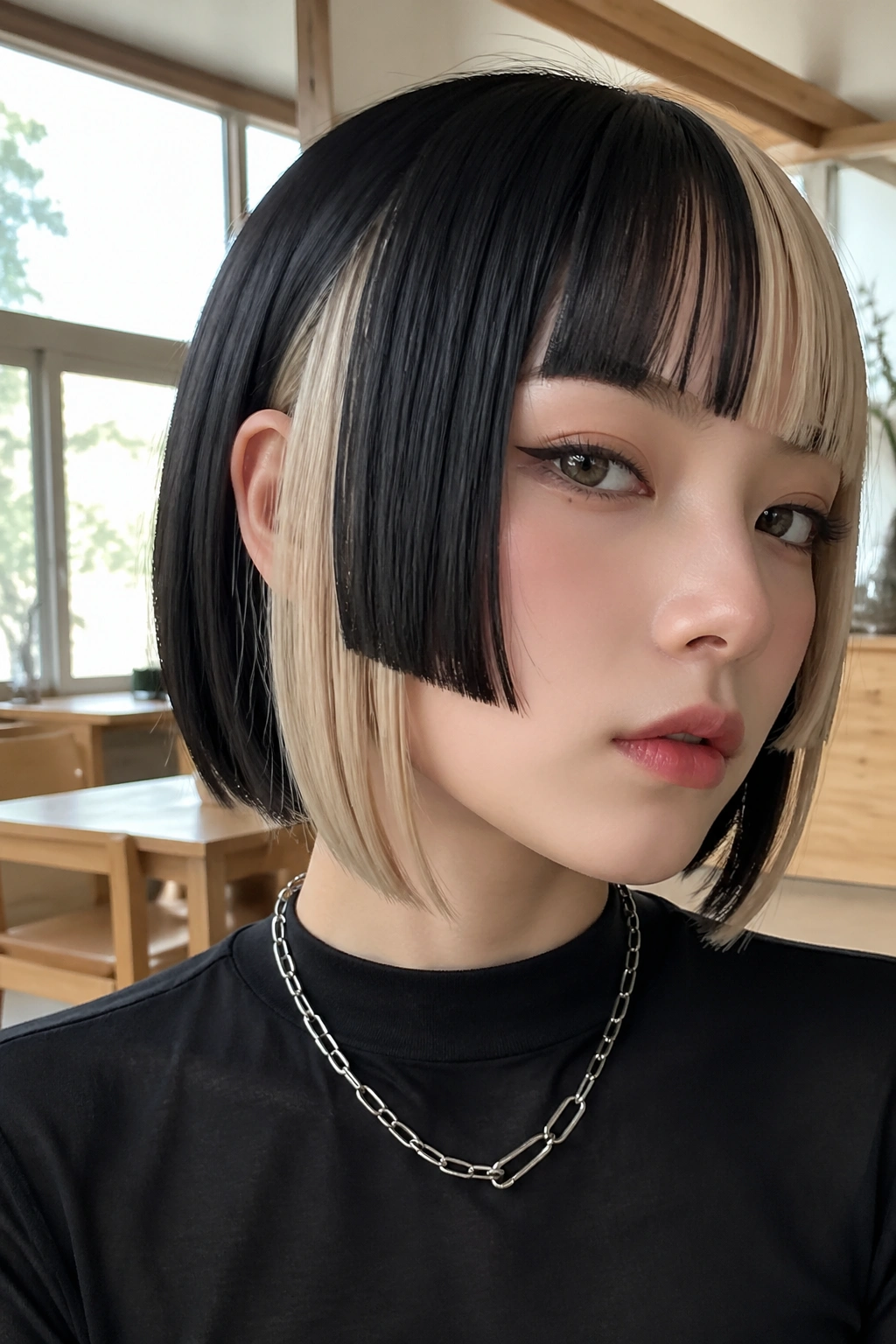
Want the haircut to read from across the room? Color does half the work. A two-tone hime cut bob keeps the shape relatively simple but uses contrast color to sharpen the lines. Think black hair with blonde hime panels, a deep brown bob with copper temple pieces, or a vivid underlayer hidden beneath a glossy top section.
The cut matters more here than people think. If the hime pieces are placed at exactly the right spot, color makes them look even more intentional. The eye picks up the change in shade and follows the face frame immediately. That can be very striking, especially when the bob itself stays one solid color and the front sections carry the contrast.
Where to place the color
- On the temple pieces for the strongest frame
- Around the fringe edges for a softer effect
- Underneath the bob if you want the color to show only when hair moves
- On one side only if you want a more graphic look
The maintenance is the trade-off. High-contrast color needs toning, root work, or both, depending on how bold you go. If you want something easier, keep the contrast subtle: two shades in the same family, like espresso and chestnut, still read clearly on a hime shape.
This version is a favorite for people who love the cut but want extra personality. The haircut becomes the outline. The color does the shouting.
11. Curly Hime Cut Bob
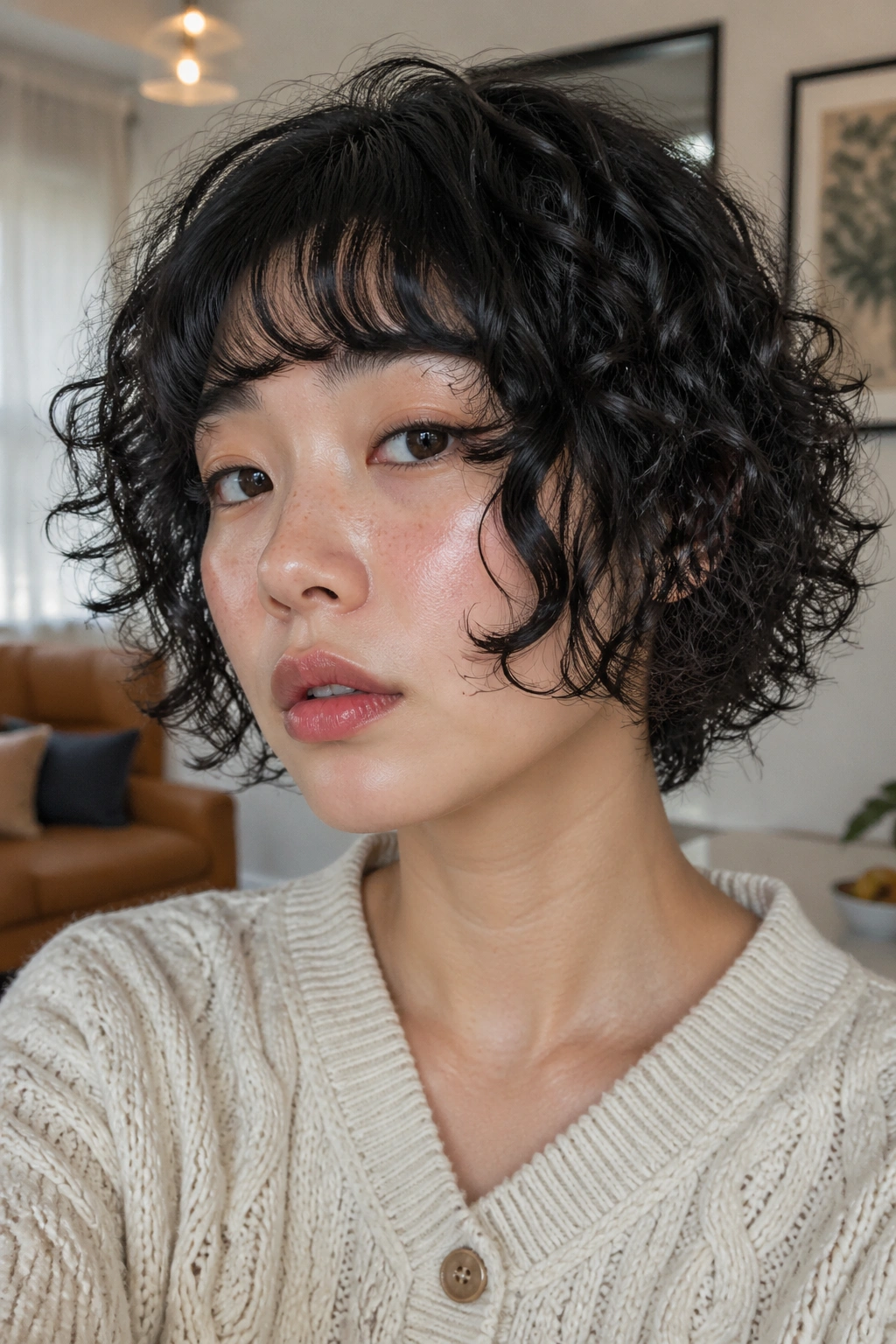
Curly hair can do hime cuts, and it often looks better when the shape is planned around the curl pattern instead of forced into straightness. A curly hime cut bob keeps the bob short and sculpted, while the temple pieces are cut so they fall near the cheekbones once the curls dry.
That last part matters. Curls shrink. A lot. If a stylist cuts the temple pieces too short while the hair is wet, those pieces may spring up higher than expected once the hair dries. The safest approach is usually a dry cut or a curl-aware wet cut that accounts for shrinkage.
How to ask for it
- Keep the bob shaped to the natural curl pattern
- Leave the hime pieces longer than you think you need
- Avoid razor-thinning the front sections
- Keep the fringe soft enough to move with the curls
A curly hime bob feels playful in a way that straight versions do not. The shape is still there, but the texture gives it more life. The face frame can look airy, sculptural, or full, depending on how tight your curls are.
Don’t flatten it to death. That’s the main mistake. A curl cream, a diffuser, and a little patience will usually give you a cleaner result than aggressive brushing ever will. The point is to shape the curls, not erase them.
12. Long Hime Cut Bob with Airy Fringe
This is the grow-out friendly version. The bob sits closer to the collarbone, the temple pieces still frame the cheekbones, and the fringe is lighter so the whole cut feels easier to wear day to day. It still gives anime inspiration, but the mood is softer and a bit more relaxed.
I think this is a smart choice if you like the hime look but do not want to commit to a short, blunt perimeter. The extra length gives you more styling options. You can tuck it behind the ears, wave it a little, pull half of it up, or leave it straight and sleek depending on the day.
This version is often the easiest to live with. The longer bob keeps the silhouette versatile, while the airy fringe stops the front from feeling too heavy. It works well if you are growing out a shorter cut and want the shape to keep making sense during the awkward middle stage.
A few details make it better:
- Keep the temple pieces distinct, even if the rest is soft
- Let the ends graze the collarbone or just above it
- Ask for light movement around the fringe, not full layering
- Use a smoothing cream only on the mid-lengths so the front does not go flat
If you want the anime-inspired look without locking yourself into a very short haircut, this is the one I’d choose first. It keeps the graphic frame, gives you room to move, and still feels like a real haircut instead of a styling experiment gone sideways.
There’s a reason the hime cut bob keeps showing up in so many different forms. The shape is simple enough to adapt, but specific enough to stay recognizable, which is a rare combination in hair. A blunt version says one thing. A wavy version says something else. Add micro bangs, color, curls, or extra length, and you can move the whole mood without losing the core idea.
If you’re taking the look to a stylist, bring a few photos and point out the exact part you care about most: the fringe, the temple pieces, the bob line, or the finish. That one detail matters more than the overall vibe. Haircuts like this live or die on proportion, and once the cut lands in the right place, the anime-inspired effect takes care of itself.
