



A good inverted bob has a very specific kind of drama. The back sits close and neat, the front falls forward with intention, and the whole shape makes the neck look longer without trying too hard. That is the appeal. It’s crisp. It’s controlled. And when the angle is right, it gives even simple straight hair a little edge.
What people often miss is that the cut does most of the work, not the styling. A flat iron can sharpen the ends, sure, but if the graduation in the back is weak, the shape goes soft fast. Too much stacking and it starts to feel boxy. Too little, and the haircut loses that clean diagonal line that makes an inverted bob worth wearing in the first place.
The best versions are the ones that match hair texture and bone structure instead of fighting them. Fine hair needs a different amount of lift than thick hair. A round face doesn’t ask for the same front length as a long one. And a sleek angle can be razor-sharp or gently sloped depending on how much of the nape you want to show.
Some cuts want to whisper. Others want to cut through a room. These 15 inverted bob cuts handle that angle in different ways, and the differences matter more than people think.
1. Classic Inverted Bob With a Clean Nape
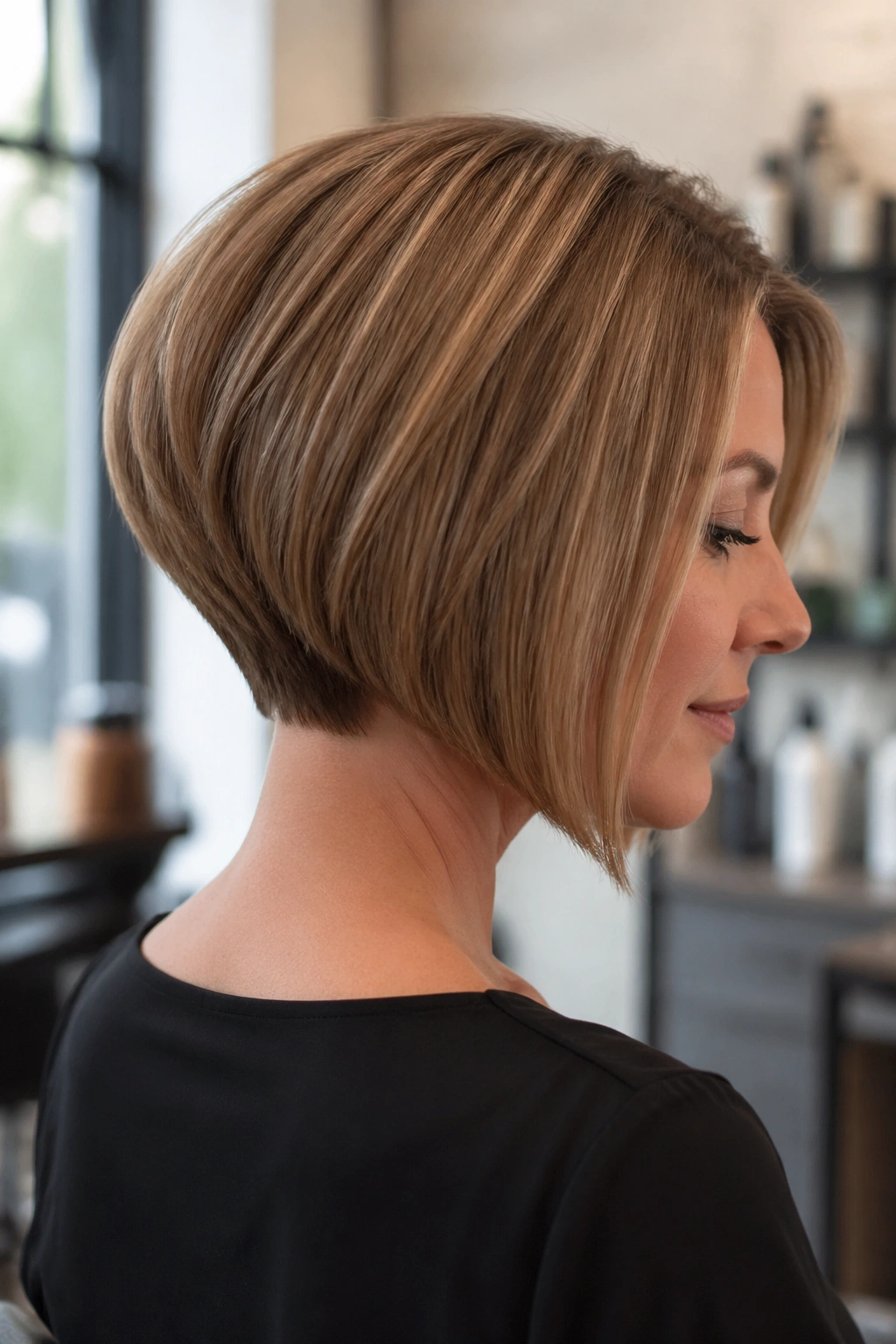
A clean nape makes this cut look expensive in the best sense of the word: no fuss, no fluff, no stray bulk hiding at the neckline. The back is clipped or trimmed close enough to show the curve of the neck, while the front drops just a little longer toward the chin. That small difference in length is what gives the bob its sharp slant.
The charm here is restraint. You do not need a huge stack in the back to make this work. In fact, too much stacking can turn the silhouette stiff. A classic inverted bob looks strongest when the line is obvious but not aggressive, like the haircut knows exactly where it wants to sit and doesn’t need to shout about it.
This is the version I’d reach for if you like clean clothes, simple makeup, and a haircut that holds its shape after a quick blow-dry. A little smoothing cream, a round brush, and one pass with a dryer can be enough. If your hair naturally bends a bit at the ends, even better. The cut will do half the talking for you.
Best for: straight to lightly wavy hair, oval or heart-shaped faces, and anyone who wants a neat neckline without looking severe.
2. Stacked Inverted Bob for Fine Hair
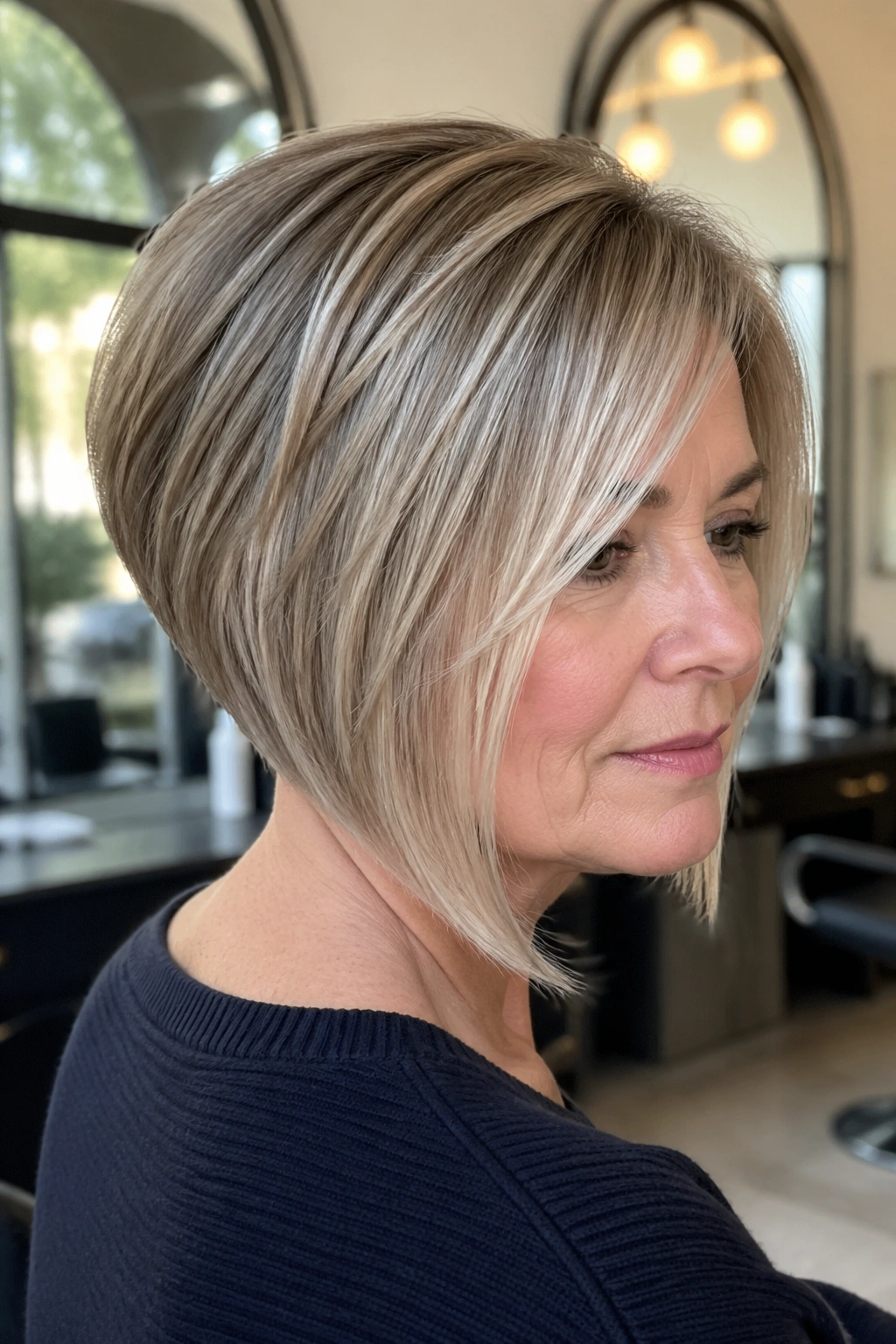
Does fine hair need more lift, or less? More lift at the crown, but not more fluff everywhere. That’s the trick, and this is where a stacked inverted bob earns its keep. The shorter layers in the back build height where fine hair usually collapses, while the longer front pieces keep the shape from turning into a helmet.
Where the Lift Should Happen
The crown and upper back are the spots that need the most help. If the layers are cut too low, the whole bob can look thin at the top and puffy at the bottom. No one wants that. A good stacked shape keeps the bulk tucked close to the scalp near the nape, then opens out toward the front in a controlled slope.
A root-lifting spray at the base can help, but the cut has to be right first. I’m a bigger fan of using a mousse at the roots and drying the hair upside down for the first few minutes, then smoothing the top section with a brush once the hair has some memory. That gives you volume without making the surface frizzy.
- Ask for graduation, not choppiness.
- Keep the shortest layers at the back tight enough to support the crown.
- Leave enough length in front so the angle reads clearly from the side.
- Finish with a light mist of flexible-hold spray, not a heavy lacquer.
Best for: hair that falls flat at the crown, finer strands that need structure, and people who want the bob to look fuller from behind without losing the sleek front line.
3. Side-Part Inverted Bob With a Deep Sweep
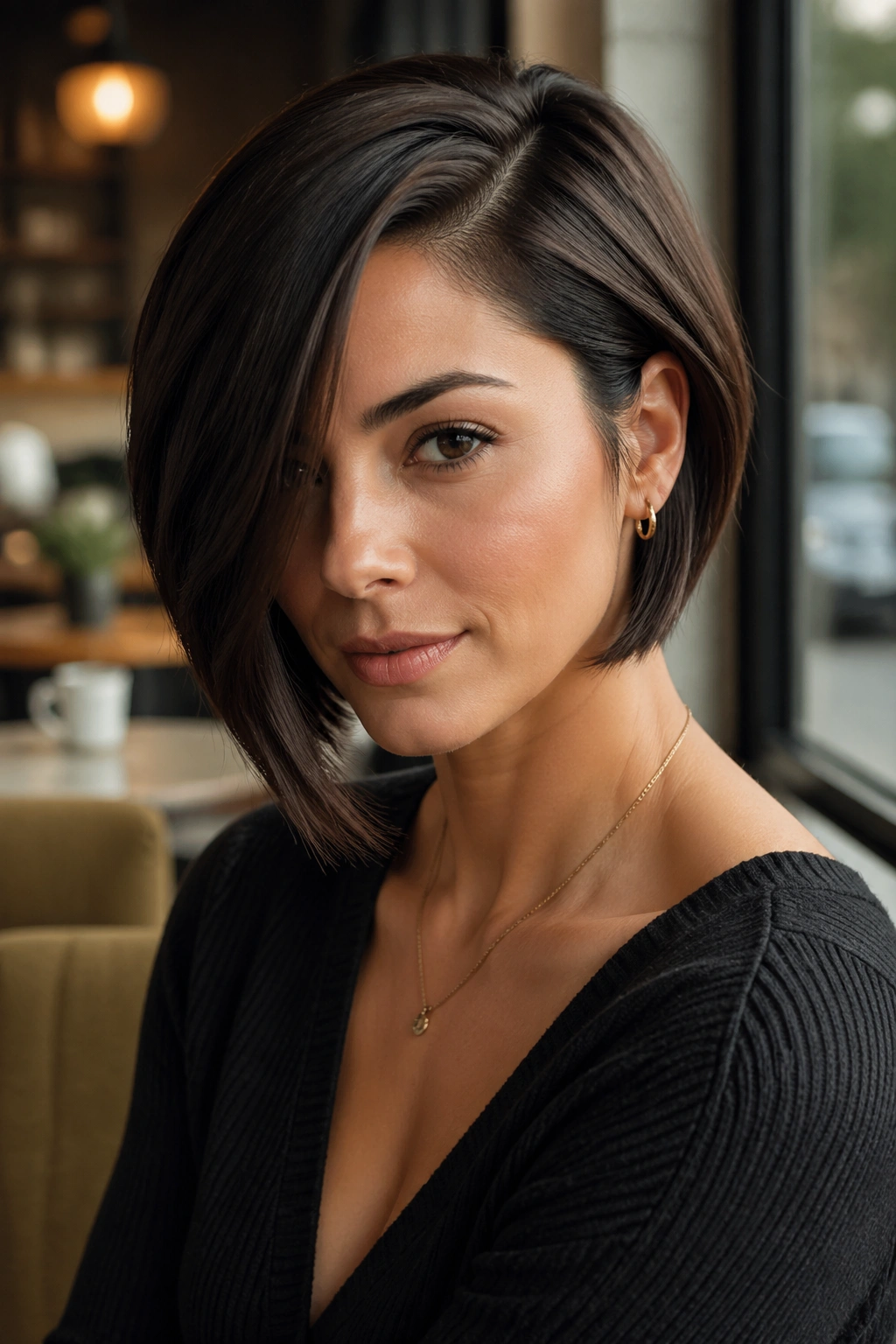
A deep side part changes the whole mood. The angle of the cut stays the same, but the weight shifts, and suddenly the bob looks a little more polished and a little less symmetrical. That can be a good thing if you want movement without giving up the clean geometry.
The front pieces on the heavier side tend to fall closer to the cheekbone, which is flattering on round faces and helpful if you want to soften a strong jaw. On the lighter side, the hair lifts away from the face and shows more of the slope toward the back. It sounds small. It isn’t. A part can make the same haircut read sleek, dramatic, or relaxed.
This version works especially well if your hair has some natural bend. Blow-dry the part in place first, directing the top section from root to tip so the hair remembers where it belongs. Then tuck one side behind the ear. That little move makes the line feel deliberate instead of accidental.
If you hate overly styled hair, this is a good middle ground. It looks finished even when it’s not perfect.
4. Jaw-Length Inverted Bob With Blunt Ends
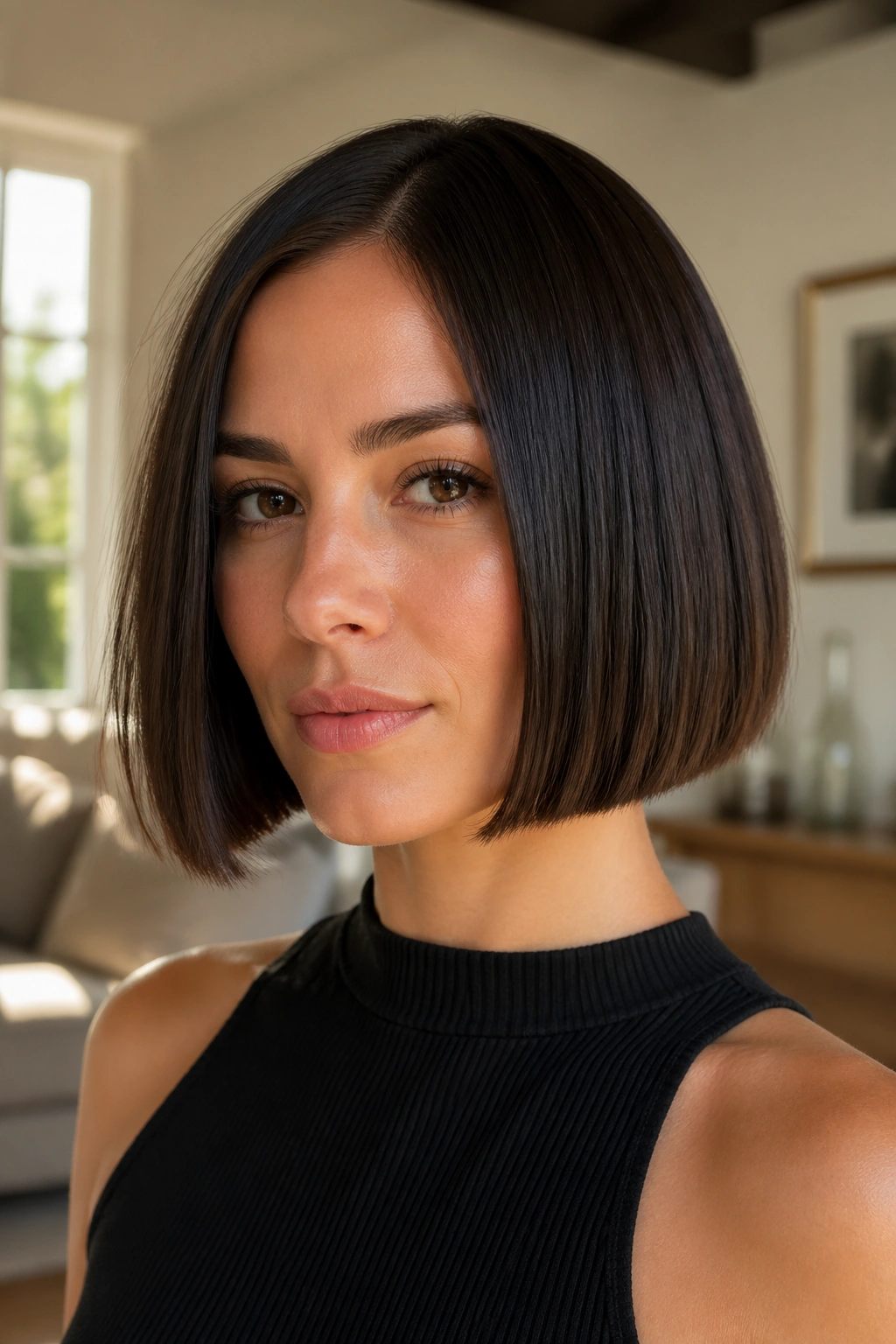
Jaw-length ends are blunt on purpose. There’s no softness hiding the line, and that is the whole point. This version gives you the sleek angle of an inverted bob, but the front stops right around the jaw, which makes the shape feel sharper and more graphic.
A blunt edge can be a smart move for thicker hair because it keeps the outline dense and clean. Thin ends can make an angled bob look wispy in the wrong way. Here, the haircut relies on weight, not movement, so the edge lands with more presence. It also means the styling can stay simple: dry the hair smooth, bend the ends under a touch, and leave it alone.
I like this cut on people who want a strong frame around the lower face. It can make the cheekbone line look more pronounced and gives the whole haircut a bit of bite. If your hair grows outward at the ends, ask for careful beveling rather than a huge curve. You want the line to look tidy, not curled under like a pageboy.
One warning. Don’t over-layer this shape. The bluntness is what keeps it crisp.
5. Curtain-Bang Inverted Bob
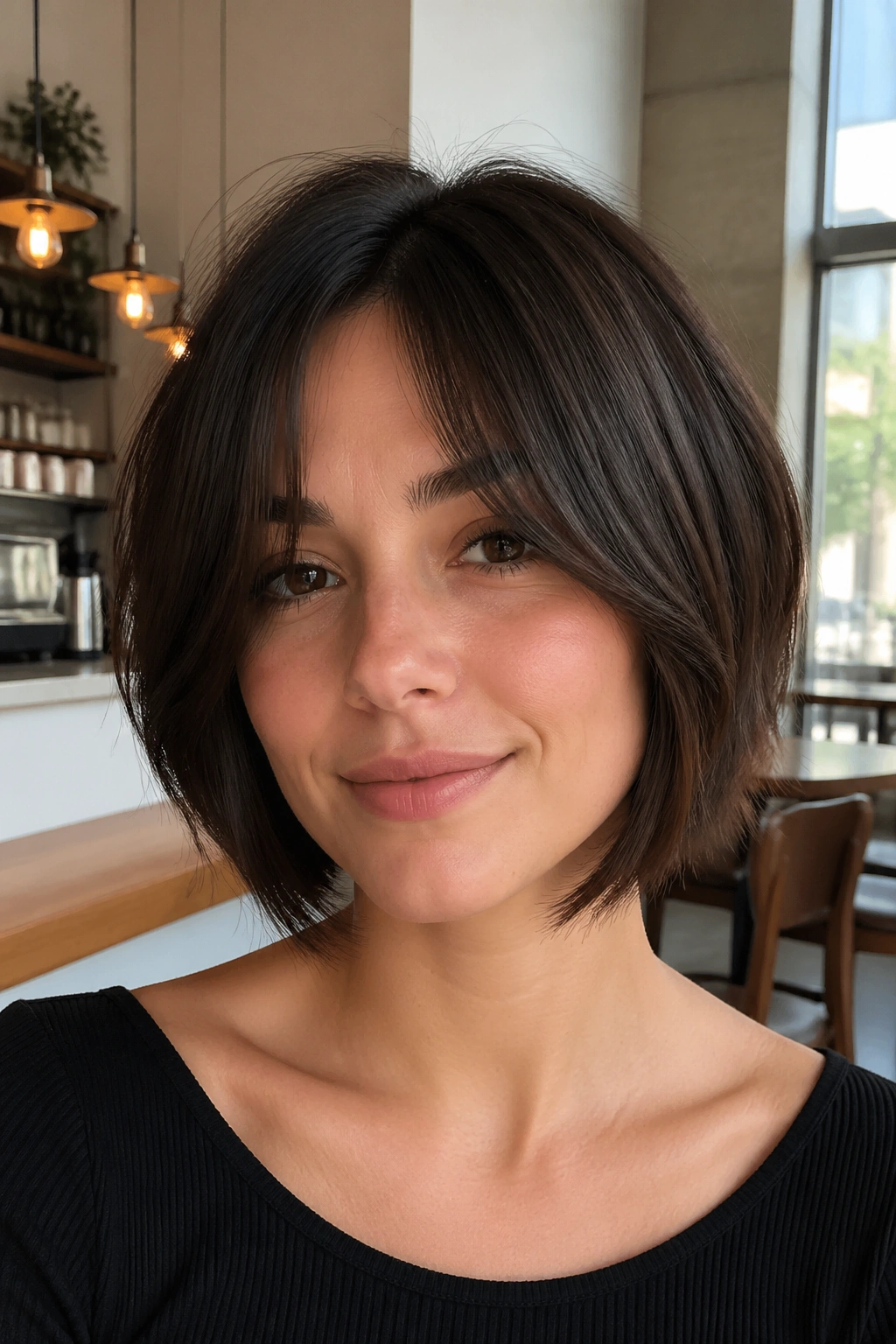
Curtain bangs can soften a sharp line fast. They take some of the structure out of the front while keeping the angled back intact, which is why this cut works so well for people who like the idea of an inverted bob but don’t want a hard edge around the face.
The Face-Framing Sweet Spot
The bang length matters more than people think. If the shortest pieces hit too high on the forehead, the cut can start to feel disconnected from the bob itself. If they’re too long, they disappear into the rest of the hair and lose their job. The sweet spot usually sits around the eyebrow or slightly below, with the side pieces melting into the front angle.
A curtain fringe also gives you more styling options on lazy days. You can blow-dry it with a round brush, split it down the middle, and let the ends curl away from the face. Or you can wear it a little piecey and let the bob do the cleaner work underneath. That’s a useful combination, especially if you want movement near the eyes but still like a neat neckline.
This is one of the easier ways to wear an inverted bob if your forehead feels a little wide or your face is long. The bangs break up vertical space without stealing the shape of the haircut.
6. Wavy Inverted Bob With Soft Movement
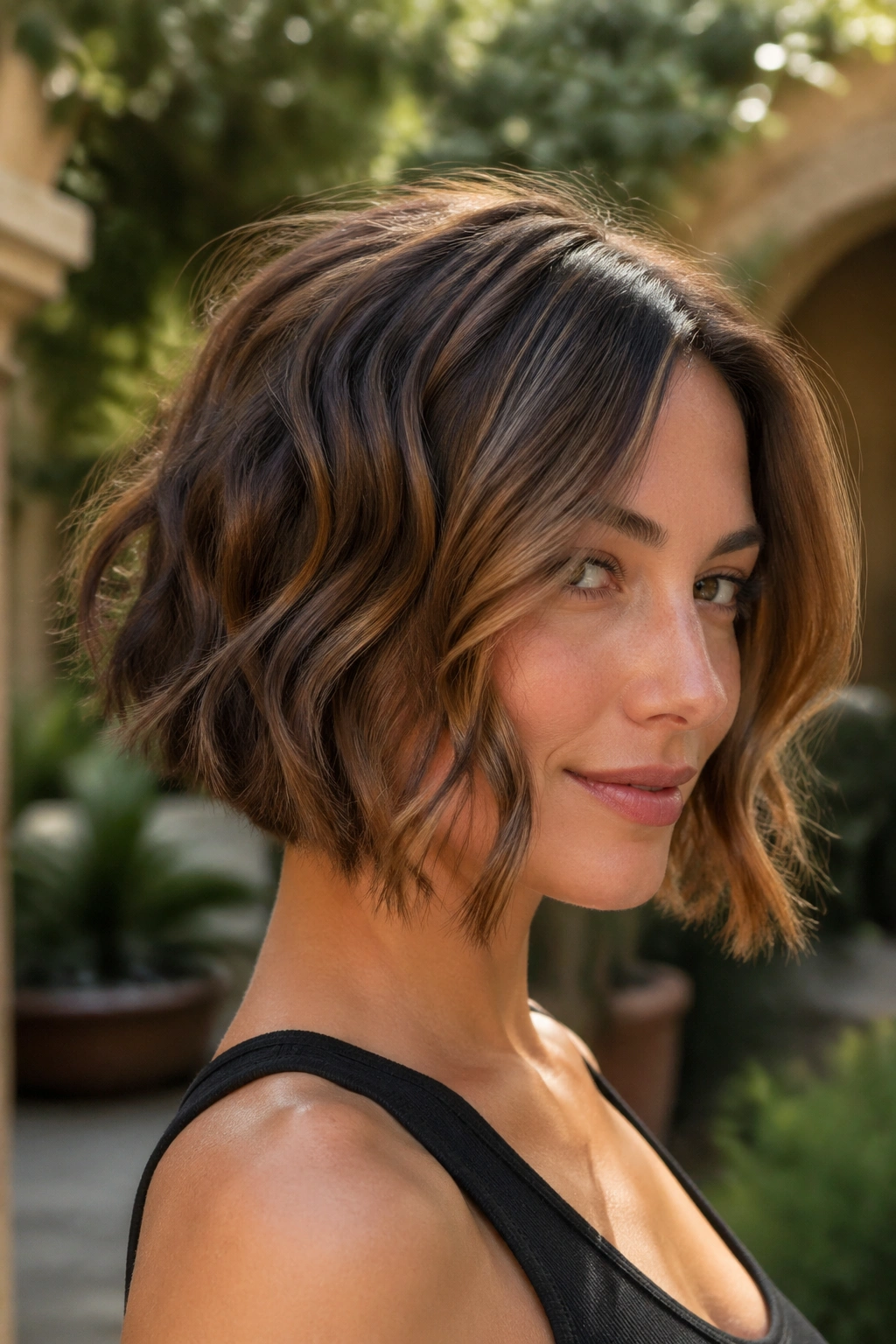
Waves and an inverted bob are not a mismatch. The cut can stay angular while the texture keeps it from looking too stiff, and that contrast is exactly what makes this version feel modern without needing any weird tricks. A little bend in the mid-lengths gives the front pieces a softer fall, while the back still sits close enough to show the graduation.
The key is not to fight the wave pattern. If your hair wants to bend, let it. Use a wide-barrel iron or a flat iron with loose, half-turn bends, then rake the waves apart with your fingers. The idea is not beach hair. It’s controlled movement with a clear shape underneath.
This cut is especially good when straight hair feels too formal and curls feel too bulky. You get the edge of the angle, but the texture breaks up the outline so it doesn’t look severe. A light mist of texture spray at the ends can help the front pieces separate instead of clumping together.
One thing I’d skip here: heavy serums. They can weigh the wave down and blur the very angle you’re trying to show.
7. Sleek A-Line Inverted Bob
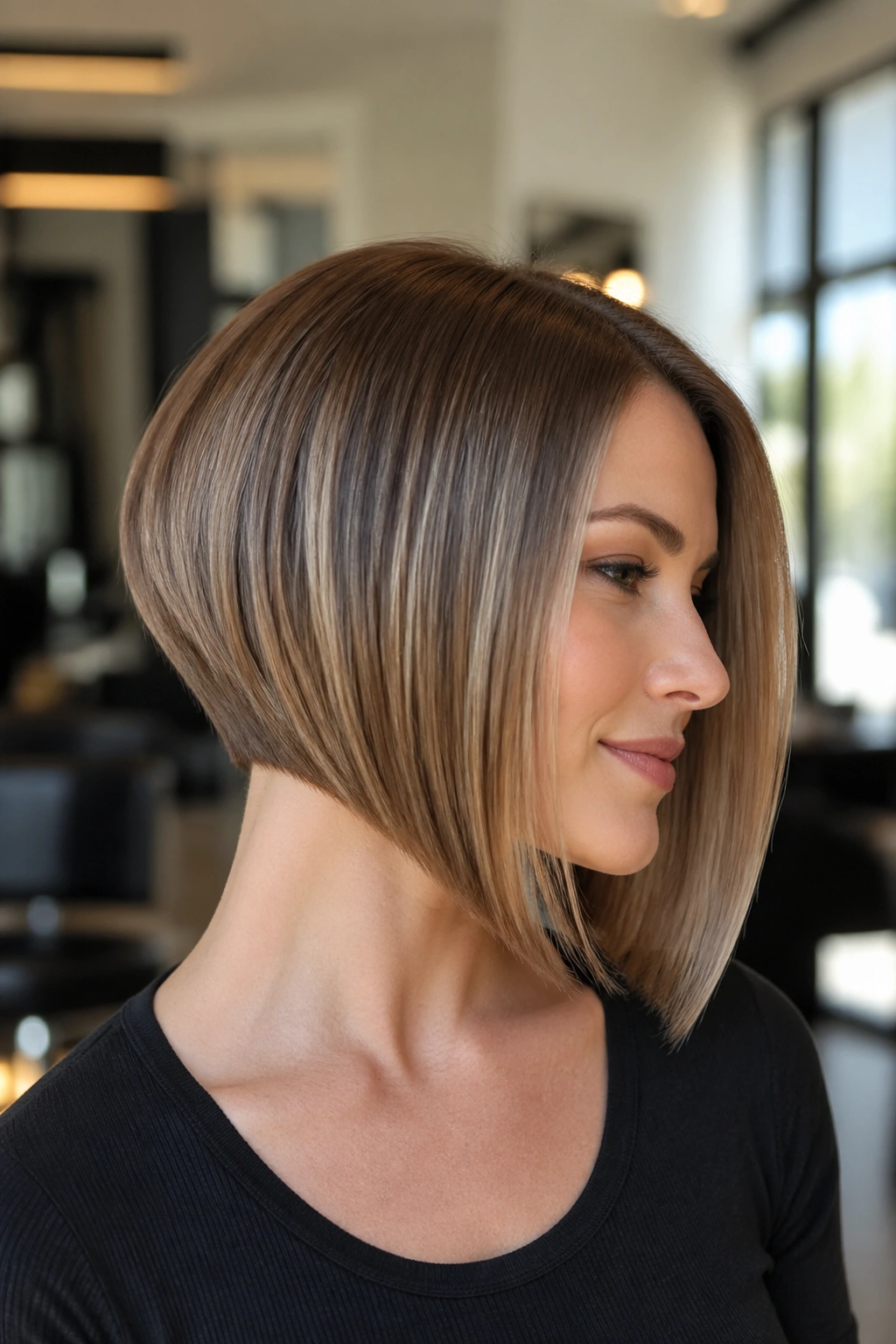
An A-line bob leans harder into the angle. The back stays shorter, the front gets longer, and the line between them is the whole personality of the cut. Some people use “A-line” and “inverted” almost interchangeably, but there is a difference in feel. An A-line usually looks smoother and less stacked, with more of a clean diagonal than a built-up back.
That makes it a good pick if you want polish more than volume. The silhouette sits close to the head, and the front pieces can skim the jaw or even brush the collarbone. On thick hair, this shape can be a relief because it removes visual heaviness without needing a lot of choppy layering.
How to Keep It Looking Sharp
A smoothing cream and a paddle brush can get you most of the way there. Blow-dry the hair in sections, pointing the nozzle down the shaft so the cuticle lies flat. If the ends kick out, tap them with a flat iron for a second or two, then stop. The point is to clean up the line, not flatten all personality out of it.
This is the bob I’d choose if I wanted something sleek enough for work but not stiff enough to feel uptight.
8. Undercut Inverted Bob for Extra Edge
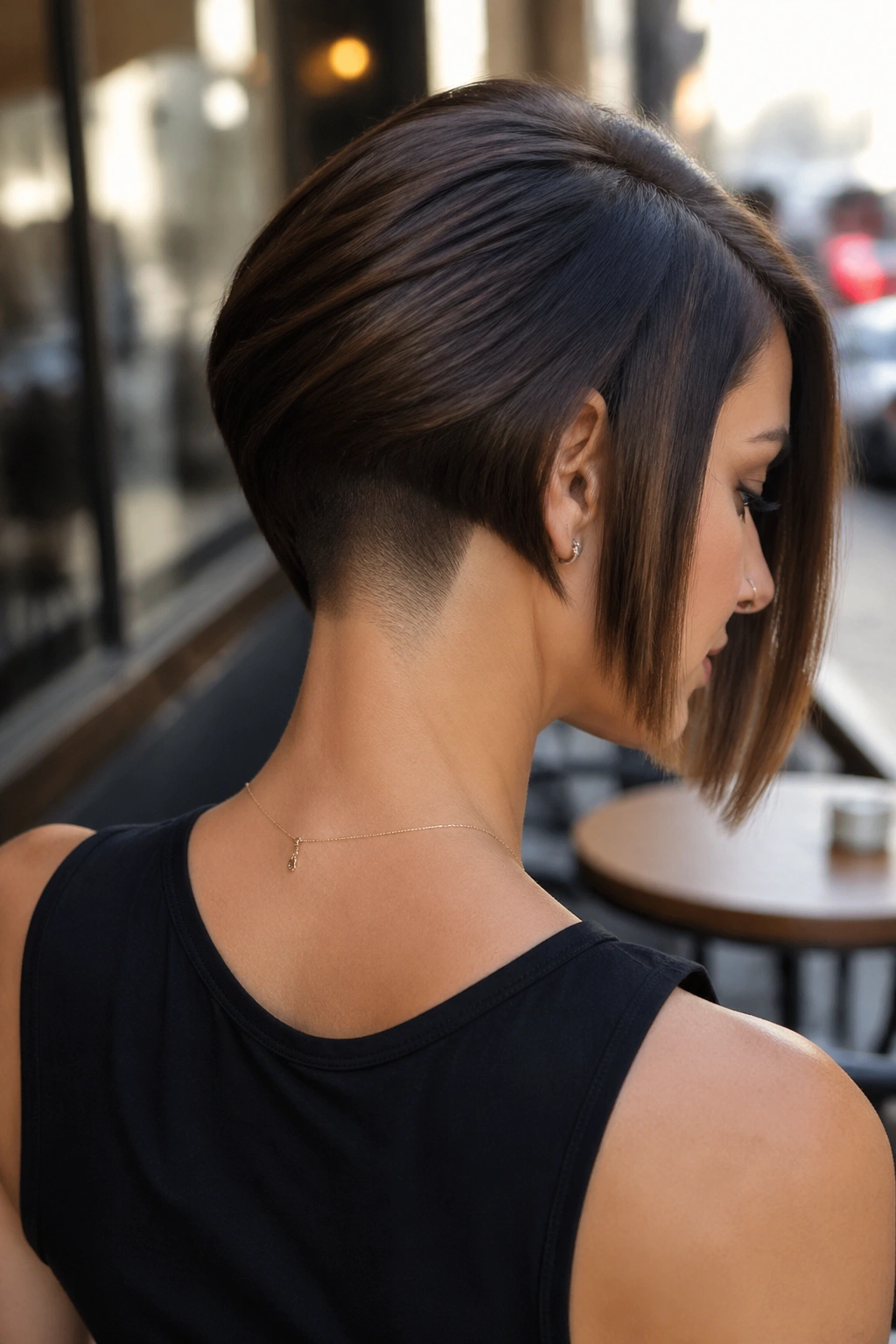
Thick hair can swallow a bob if you let it. An undercut fixes that problem fast by removing bulk at the nape, which lets the top layers sit closer to the head and keeps the angle visible from the side. The result is cleaner, lighter, and a little tougher in the best way.
This cut has a stronger personality than the classic versions. When you move your head, the hidden shorter section at the back keeps the shape from ballooning. That matters a lot if your hair is coarse, dense, or prone to puffing up when it dries. It also makes hot days easier, though I’m not pretending that’s the only reason to get one.
What to Watch For
- The undercut should stay hidden unless you want it visible.
- Keep the top layer long enough to cover the shaved or clipped section when dry.
- Ask for the nape to be cleaned up every few weeks, or the bulk returns fast.
- Use a light cream, not a paste that leaves grit in the ends.
The downside is upkeep. Skip the trims and the shape loses its neatness faster than a standard bob. But if you like a sharp back and a clean neck, it’s worth it.
9. Curly Inverted Bob With a Rounded Shape
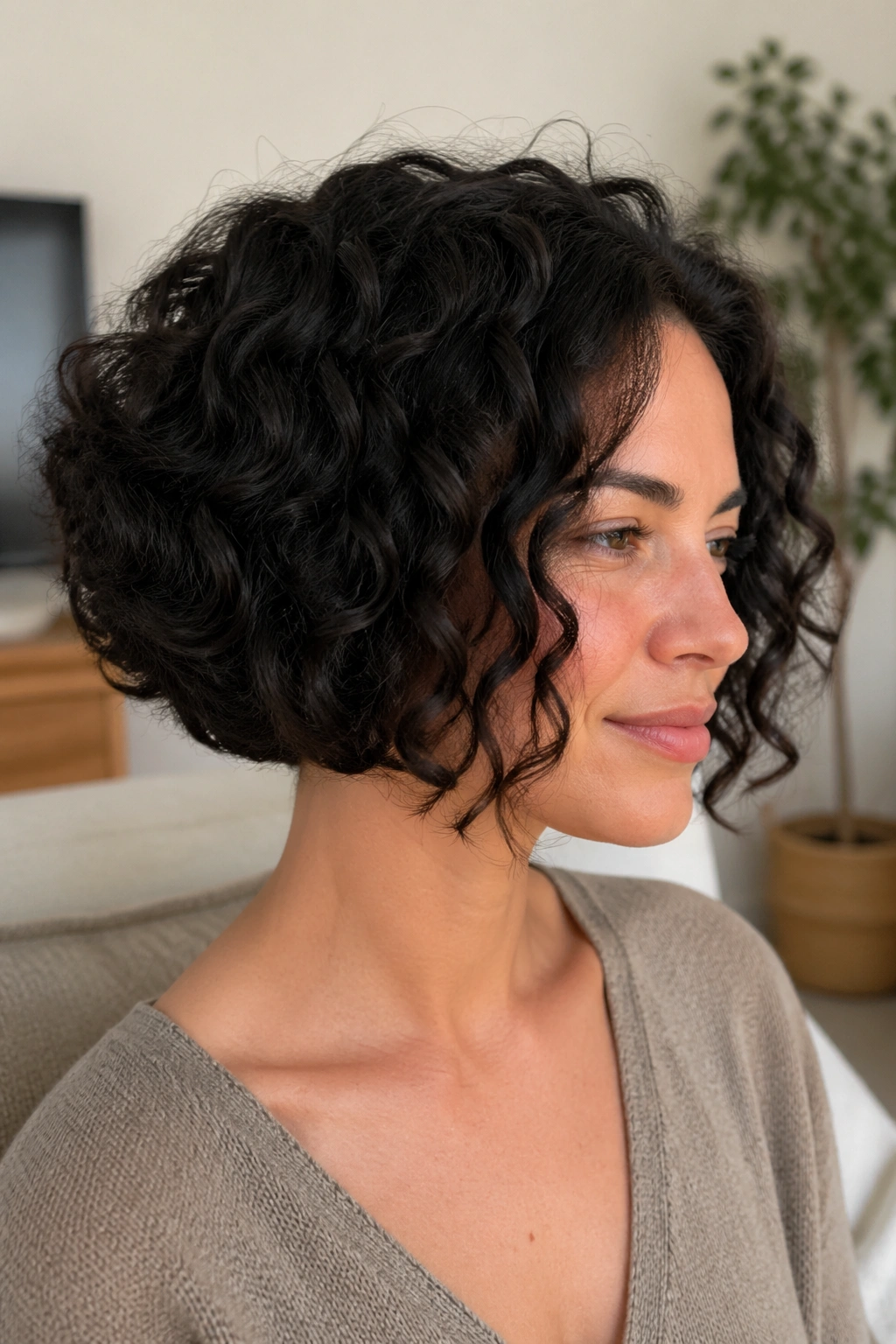
Curly hair needs a different rulebook. The angle is still there, but you usually see it through the silhouette and shrinkage rather than a straight, visible line from back to front. That’s why a curly inverted bob can look so good when it’s cut with the curl pattern in mind instead of treated like straight hair with extra bounce.
A dry cut or curl-by-curl shaping often helps because the stylist can see where the curls sit once they settle. If the back is cut too short without checking shrinkage, it can jump up and leave the front looking disconnected. Nobody wants that kind of surprise. The better version keeps the back tidy and the front just long enough to hold the angled feel once the curls spring up.
Diffusing works well here, but only if you handle the hair gently. Cup the curls, don’t rough them around. A leave-in conditioner plus a curl cream can keep the shape defined without turning the bob into a puffball. And if your curls are tighter, ask for the front pieces to be left a little longer than you think you need. They’ll rise.
Best for: waves, curls, and coils that need room to move while still keeping a clean outline.
10. Collarbone Inverted Bob for a Softer Drop
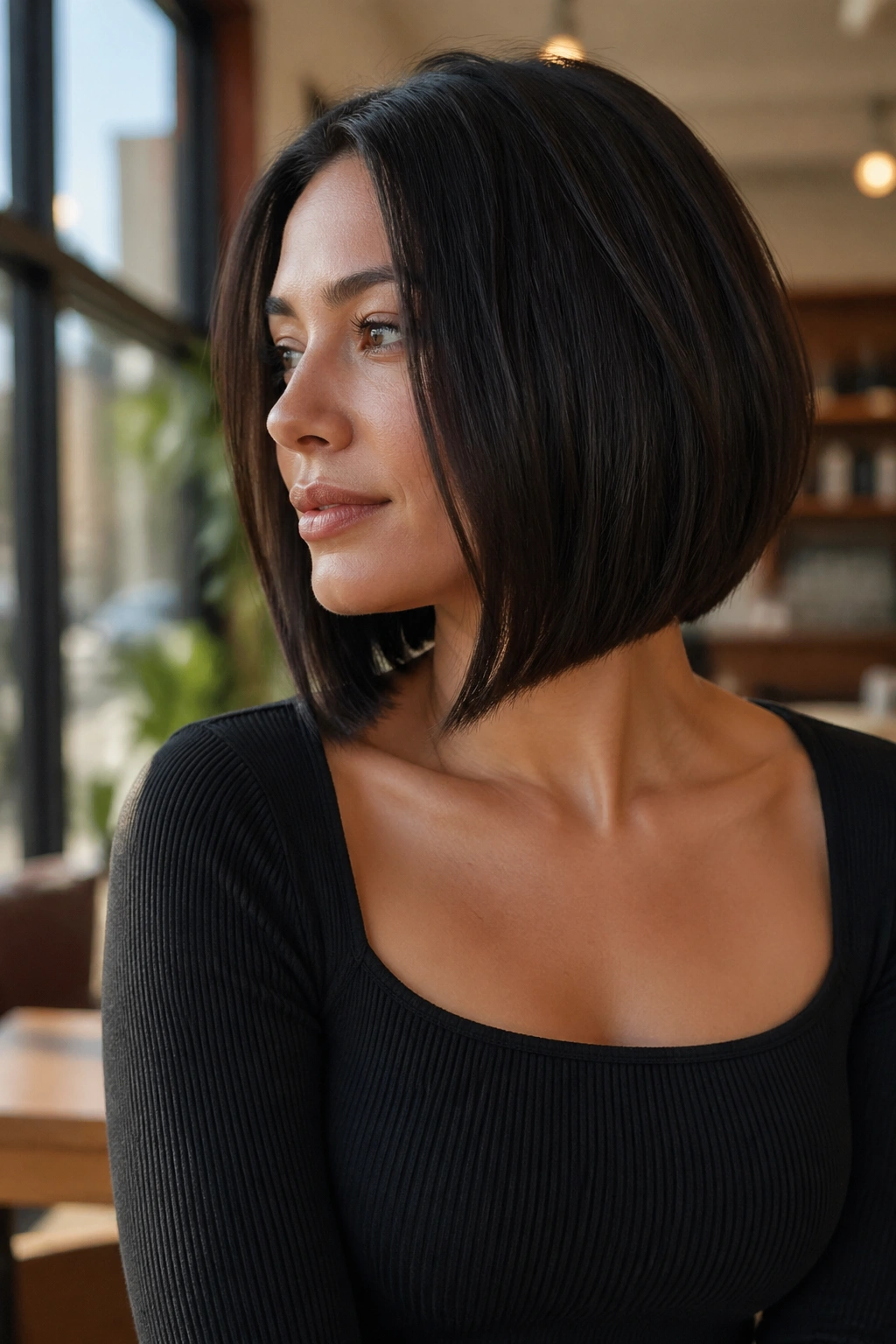
A collarbone finish gives you room to breathe. The back still sits shorter, but the front drops longer and grazes the collarbone instead of stopping at the chin or jaw. That longer line softens the whole cut, which is handy if you want the angled shape without a severe look.
This version grows out nicely too. Shorter bob cuts can hit that awkward stage where the front starts flipping in weird directions. A collarbone inverted bob tends to stay elegant longer because the length gives the hair more weight. It can also be tucked, pinned, or half-pulled back without losing its identity.
I like this shape for people who are bob-curious but not ready for a shorter cut. It gives you the sense of a clean neckline and a visible angle, yet the front still feels forgiving. If your face is longer, the extra length helps balance the proportions. If your hair is a little thick, the longer front keeps it from looking puffed out around the cheeks.
It’s a calmer bob. Still sharp. Just less demanding.
11. Asymmetrical Inverted Bob With One Longer Side
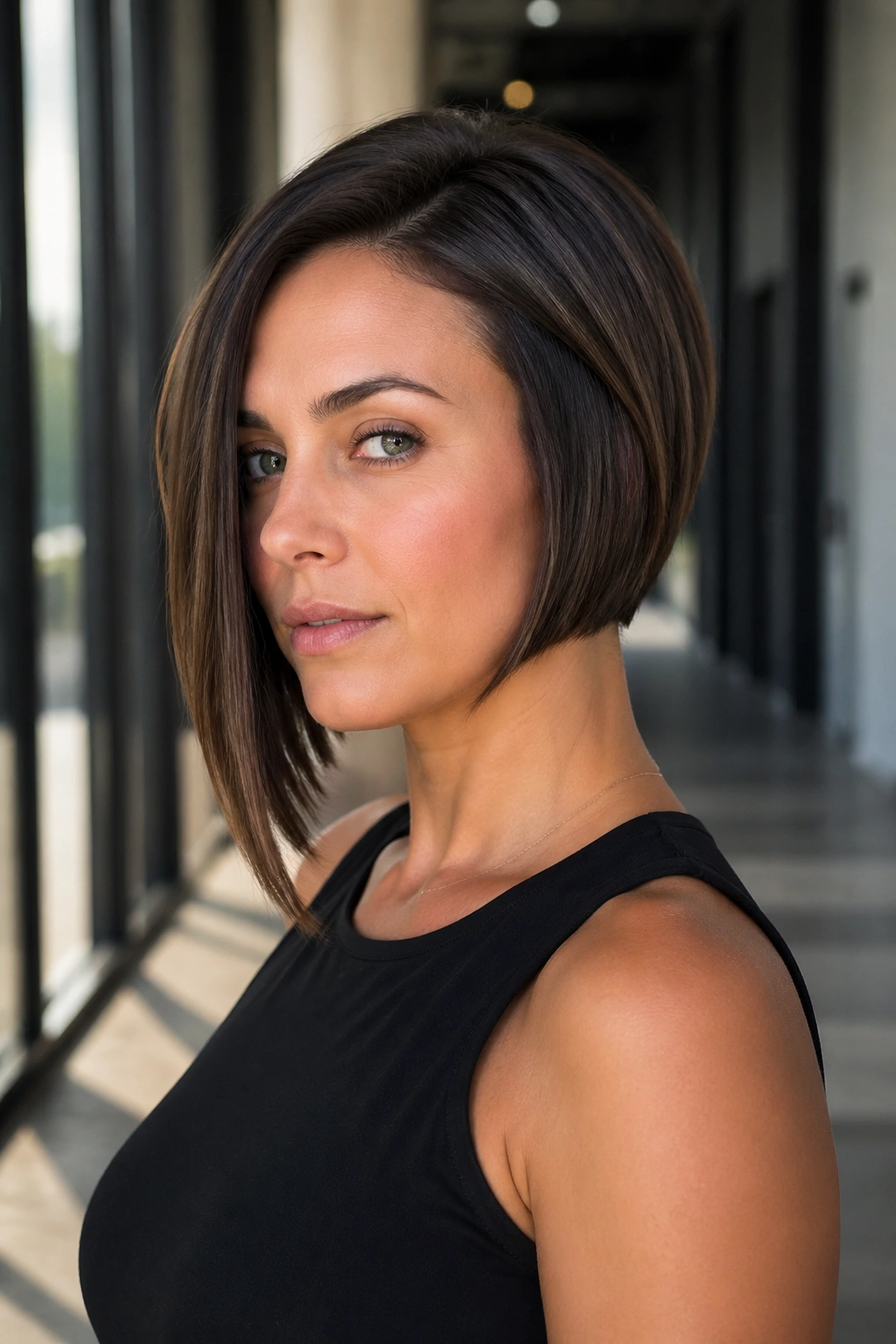
One longer side sounds simple. It isn’t. The whole haircut depends on precision, because the asymmetry only looks intentional when the rest of the shape is clean. If the back is sloppy or the angle is off by even a little, the cut reads uneven instead of edgy.
This is the version for someone who wants a little tension in the shape. The shorter side can sit just below the ear while the longer side skims the jaw or neck, creating a diagonal line that feels stronger than a symmetrical bob. It can also help balance out facial features that feel off-center to you. Hair has a funny way of doing that when the cut is clean enough.
The styling needs some discipline. Part it the same way most days. Dry it in that direction. If you change your part every morning, the asymmetry will lose some of its punch. A flat iron can sharpen the longer side, while the shorter side usually needs only a little bevel at the end.
This cut looks best when it’s worn with intention. Half-measures show fast.
12. Inverted Bob With Side-Swept Fringe
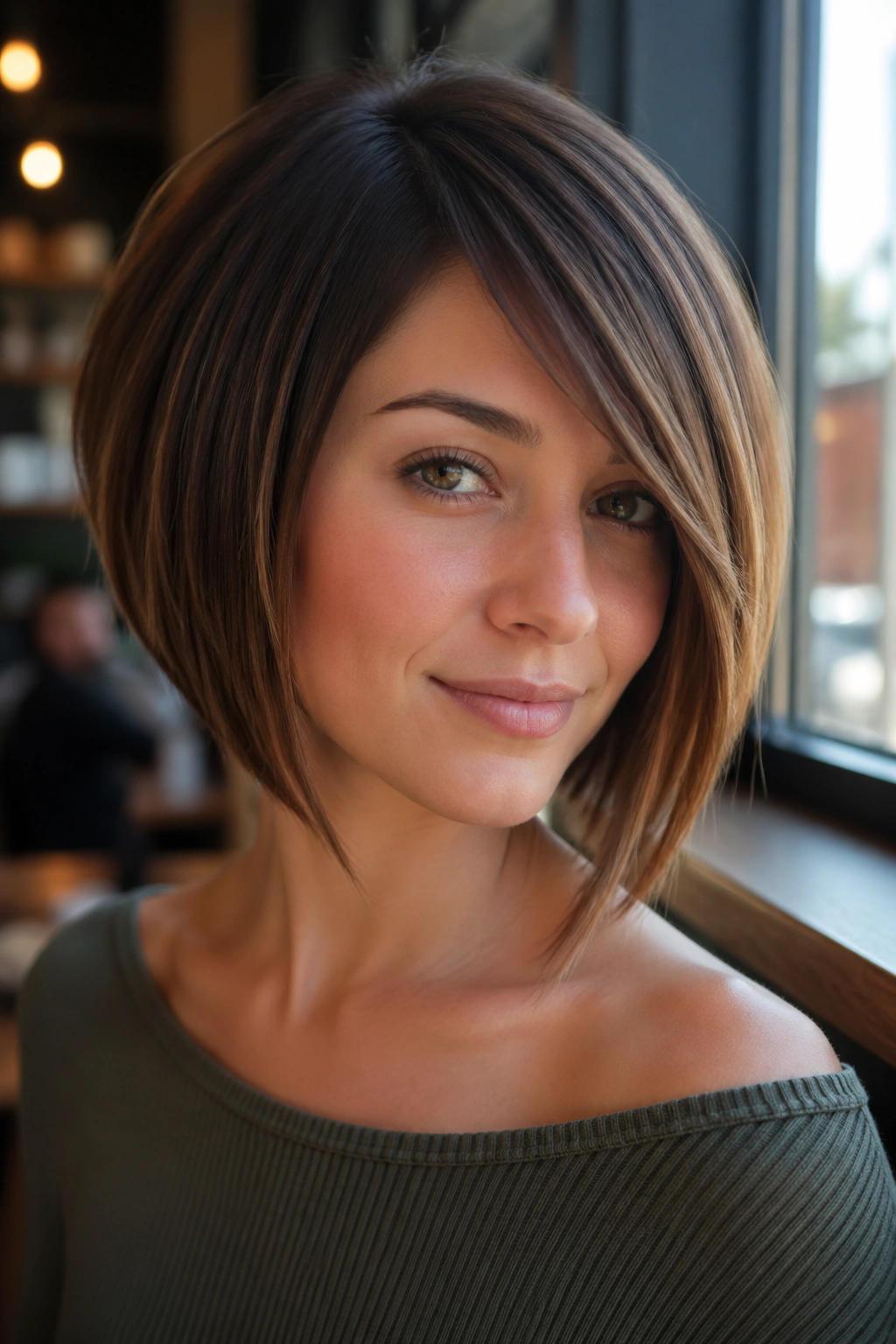
Side-swept fringe and an inverted bob play well together because both shapes lean in one direction. The fringe helps direct the eye forward and across the face, which softens the stronger diagonal of the bob beneath it. It’s a nice fix if you like angular hair but want something a little more romantic near the forehead.
The fringe should blend into the front pieces, not sit on top of them like a separate piece of hair. That means the shortest side of the fringe usually lives around the brow or temple, while the longer side falls into the bob’s front angle. When it’s done well, the cut feels smooth from top to bottom.
A Few Things That Help
- Dry the fringe first so it doesn’t twist weirdly later.
- Keep a small round brush near the roots for lift.
- Use a tiny amount of styling cream on the ends, not the roots.
- Trim the fringe often enough that it doesn’t hang into your eyes and lose its sweep.
This cut works especially well if you want to soften a strong forehead or break up a long face shape without giving up the clean bob line.
13. Textured Inverted Bob for Thick Hair
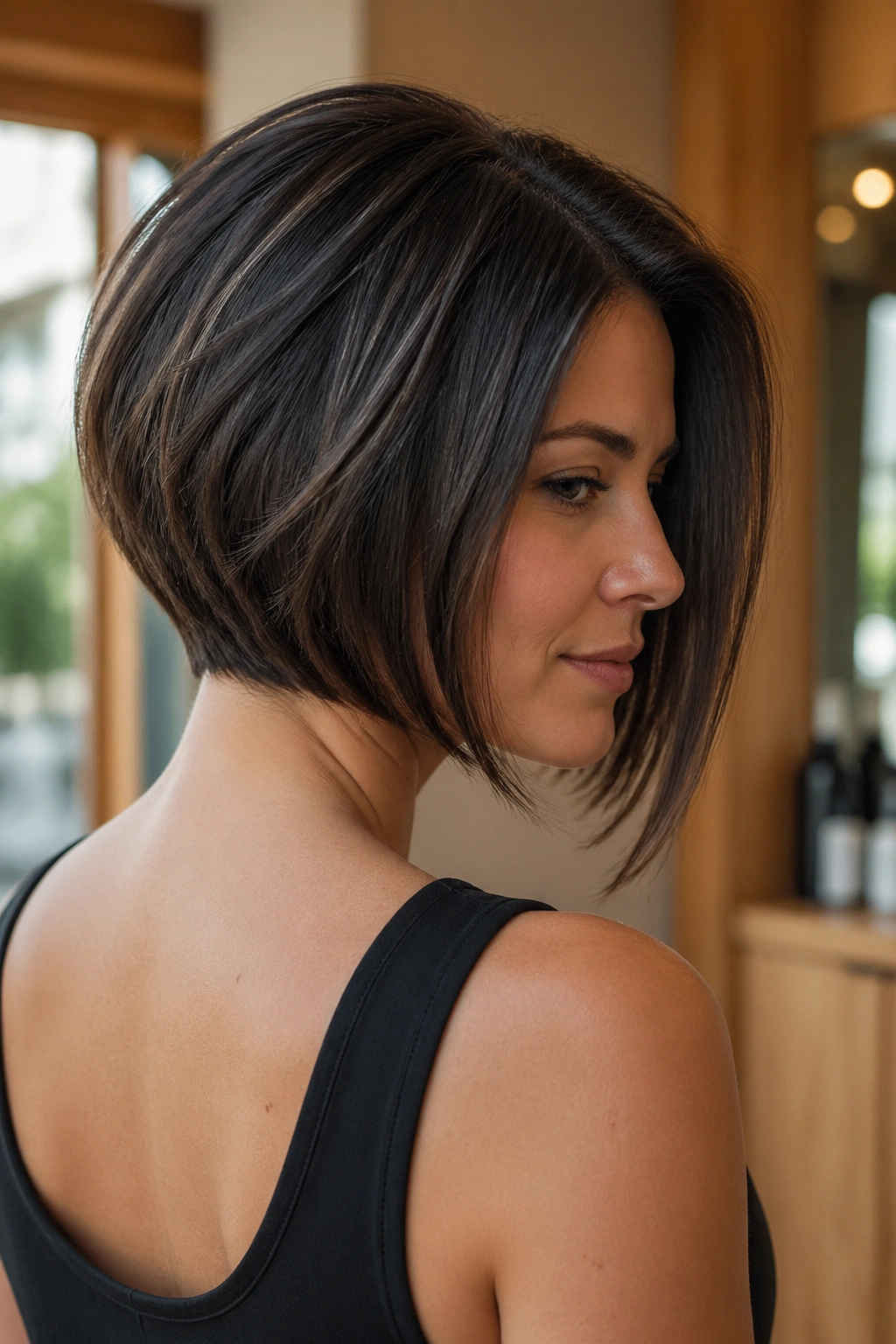
Texture can save thick hair from going boxy. If the shape is cut too blunt and too wide, the bob starts to sit like a brick. Nice in theory, awful in motion. A textured inverted bob takes some of that weight out through the interior and the ends, letting the cut collapse inward instead of puffing outward.
How to Thin Without Wrecking the Shape
The goal is controlled removal, not aggressive layering. Ask for internal texturizing or point-cutting through the lower half of the bob, especially if your hair expands when it dries. The perimeter should still hold a clear line. If too much is removed near the bottom, the cut can look scraggly by the end of the day.
A matte cream or a light paste can help separate the ends without making the haircut greasy. Thick hair often needs more structure than shine, and that’s fine. Not every bob needs to gleam like glass. Some need grip so the angle stays visible after a few hours of wear.
This one is a workhorse for dense hair. It takes some bulk out, keeps the angle readable, and makes styling a lot less of a wrestle.
14. Face-Framing Highlighted Inverted Bob
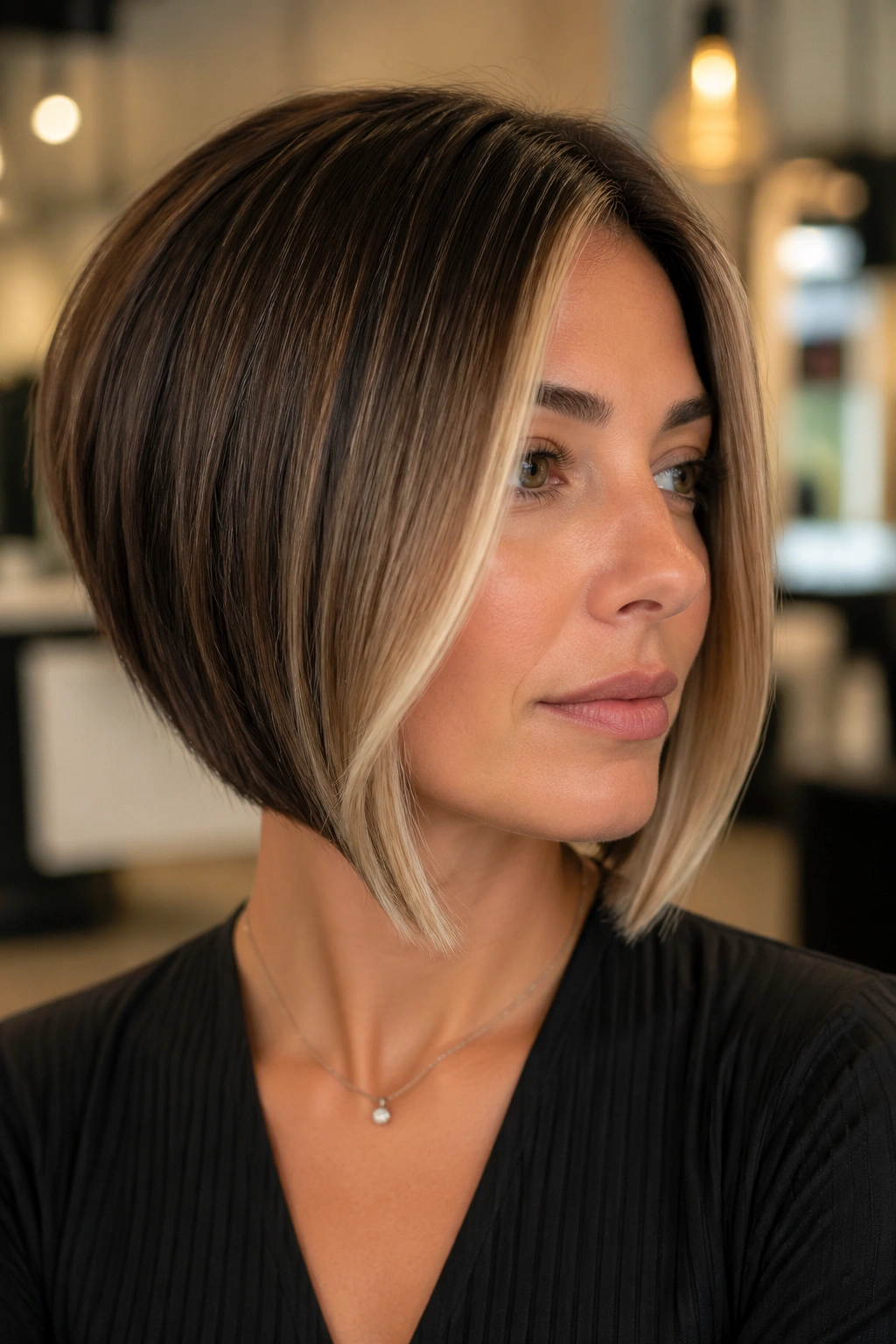
Highlights can make the angle look sharper. The cut is still doing the main job, but placing lighter pieces around the front edges gives your eye a place to land, which makes the front length pop against the shorter back. Darker depth underneath the crown can also help the stacked section look fuller and cleaner.
I like this approach when the haircut itself is simple but the wearer wants more contrast. A few ribbons around the cheekbone, a brighter piece near the jaw, and a softer blend through the crown can change the whole read of the bob. The color doesn’t need to scream. It just needs to follow the shape.
This is where placement matters more than brightness. Heavy highlights everywhere can flatten the structure and make the hair look busy. Strategic placement along the front edge keeps the sleek angle intact. If your stylist likes to paint pieces randomly, push back a little. The color should support the line, not compete with it.
And yes, this works on straight, wavy, and curled versions of the cut. The angle gets more visible when light hits the front pieces at the right spot.
15. Micro Inverted Bob With a Sharp Finish
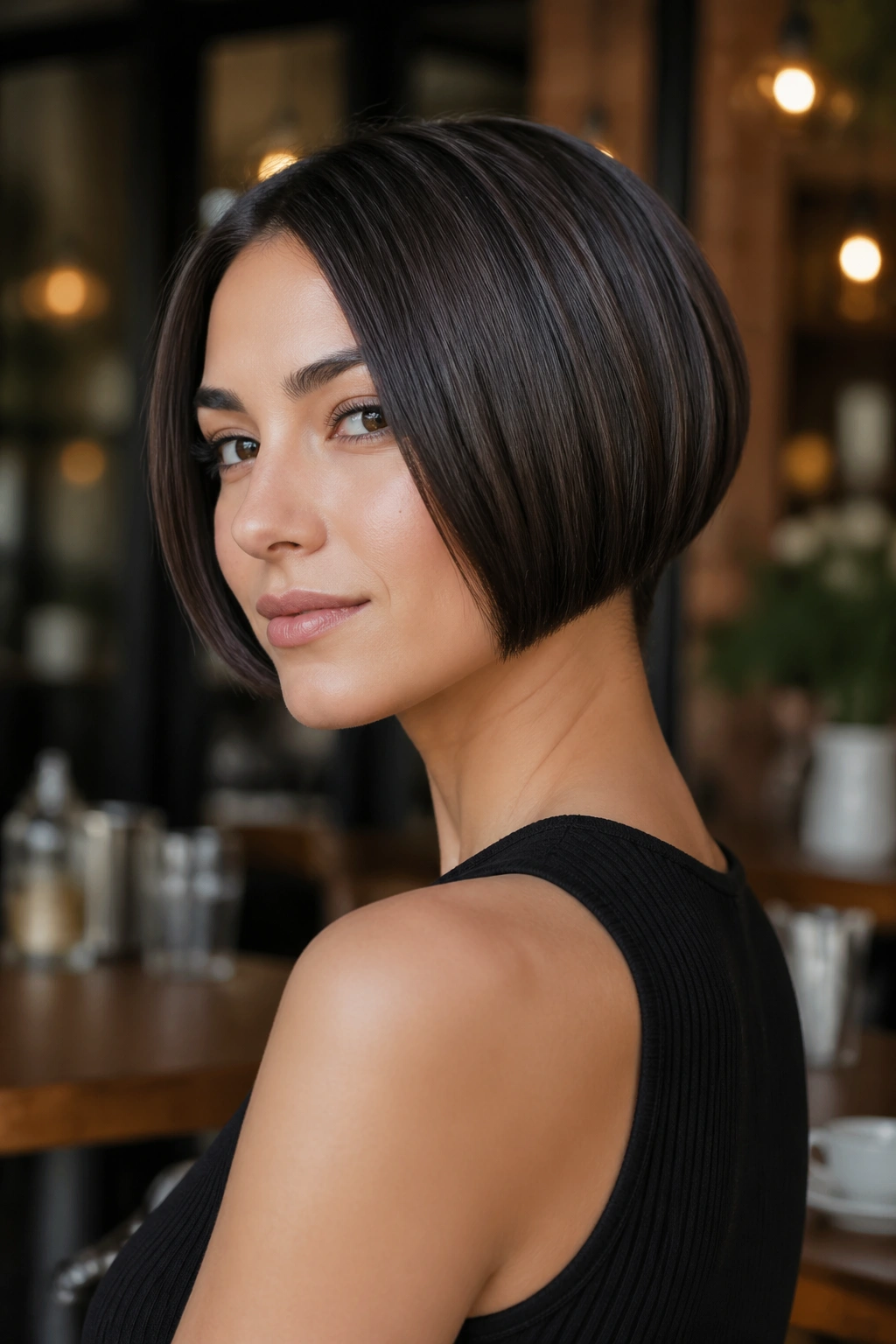
A micro bob is a strong choice. It sits above the jaw, often around cheekbone level or just under the ear in back, and the angle shows up fast because there’s less length to hide it. If you want a cut that looks crisp from the side and bold from the front, this is the one that gets noticed first.
The tradeoff is obvious: it asks for regular trims and a little more confidence. Short hair exposes growth faster, so the line can lose its snap if you wait too long between appointments. It also puts more attention on the jaw, neck, and ears, which is great if those are features you like showing off.
This cut is at its best when the ends are clean and the nape is tidy. A tiny bend under the edge keeps it from sticking out, but too much curl will fight the sharpness. Straight or slightly wavy hair usually wears this shape with the least effort. If your hair is very thick, ask for the inside to be removed carefully so the bottom doesn’t fan out.
The result is lean, bright, and a little fearless.
Final Thoughts
The best inverted bob is not the shortest one, or the shiniest one, or the one with the most layers. It’s the one whose angle actually fits your hair and your life. A clean nape, a smart amount of graduation, and the right front length matter far more than fancy styling tricks.
Some people will love the sharpness of a micro bob. Others will be happier with a collarbone version or a wavy shape that moves a little. That’s not indecision. It’s haircut math. The back, the front, the part, and the texture all change how the angle reads, and the details add up fast.
If you’re bringing one of these looks to a stylist, talk about where you want the front to land, how much neck you want to show, and how much time you’re willing to spend with a dryer. That conversation does more for a bob than any photo saved to a phone ever will.
