



A wolf cut bob earns its keep when the ends move. A clean one-length bob can look sharp, sure, but it can also sit there like a helmet if the hair is heavy or the cut is too polite. The wolf cut bob does the opposite: it breaks the shape open, adds air through the crown, and leaves the ends a little shaggy so the whole thing feels lived-in instead of stiff.
That looseness is the point. A good wolf cut bob still has a bob’s bite — you can see the line at the jaw, the nape, the shape around the face — but the layers keep it from reading flat. If you have hair that falls into the same shape every morning, or curls that need room to spring, this cut can feel like a small rescue. If the layering is too aggressive, though, it goes stringy fast. That’s the part people miss.
I’ve always liked this cut best when it looks slightly imperfect. Not messy in a lazy way. Messy in a deliberate way, where the fringe lands a little piecey and the ends flick out without being forced. The details matter: how high the shortest layers start, whether the nape is stacked or blunt, and whether the bangs are curtain-soft or choppy enough to show teeth.
Some versions lean softer, some lean sharper, and a few sit right in the middle with just enough grit to look interesting on a normal day. That range is why the wolf cut bob keeps showing up in salons; it can be tuned to fine hair, thick hair, curls, waves, and straight textures without losing its personality.
1. Chin-Length Wolf Cut Bob With Choppy Ends
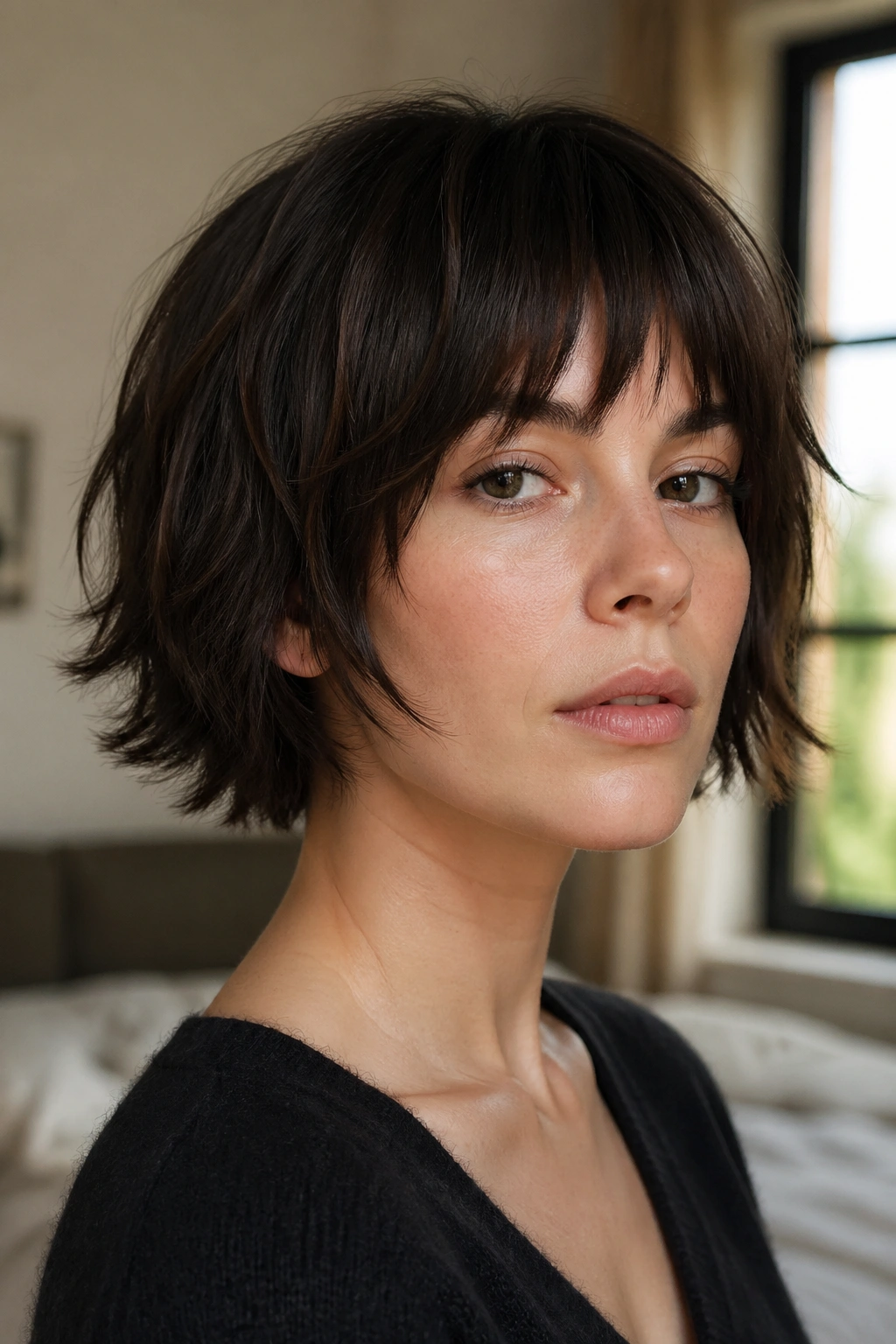
A chin-length wolf cut bob is the version I reach for when someone wants shape first and drama second. It sits right around the jaw, which gives the face a clean outline, and the choppy ends stop it from feeling boxy. The result is easy to wear but not boring. That balance matters more than people think.
Why It Works
The chin length gives you a clear silhouette, while the shag layers break up the line just enough to keep it airy. Ask for point cutting at the ends and soft internal layers that start around the temple or cheekbone, not way up near the crown. Too much crown layering on a short bob can make the top puff and the bottom disappear.
- Best on straight, wavy, and lightly curly hair
- Looks strong with a center part or a soft off-center part
- Usually needs a 1-inch curling iron or a flat iron bend for the ends
- Avoid heavy thinning shears if your hair is fine; they can make the perimeter look wispy
I like this version for people who want the wolf cut bob to read as cool rather than edgy. It has enough movement to feel modern, but it still behaves like a real haircut when you air-dry it on a busy morning.
One thing to watch: keep the nape neat. If the back gets too fuzzy, the shape starts to look accidental.
2. Curtain Bang Wolf Cut Bob

Some cuts only look good in photos. This one looks good after a grocery run, which is a higher bar in my book. A wolf cut bob with curtain bangs softens the whole haircut and gives you that easy, shaggy cool look without pushing the style into punk territory.
Curtain bangs work because they bridge the gap between the fringe and the layers. Instead of a hard line across the forehead, you get a sweep that falls away from the face and blends into the cheekbone pieces. That makes the haircut feel more fluid, especially if your hair has a bit of bend already. Keep the bangs long enough to hit around the nose or upper lip when they’re wet; they’ll lift once dry.
Styling is pretty forgiving. A quick blow-dry with a medium round brush, rolled away from the face for 20 to 30 seconds per side, is usually enough to make the bangs sit. If you want them looser, twist them with your fingers while they’re still warm.
This is the version I recommend when someone wants movement but hates the idea of looking like they tried too hard. It reads softer than a full shag, and it grows out in a friendly way instead of turning awkward at week three.
3. Curly Wolf Cut Bob
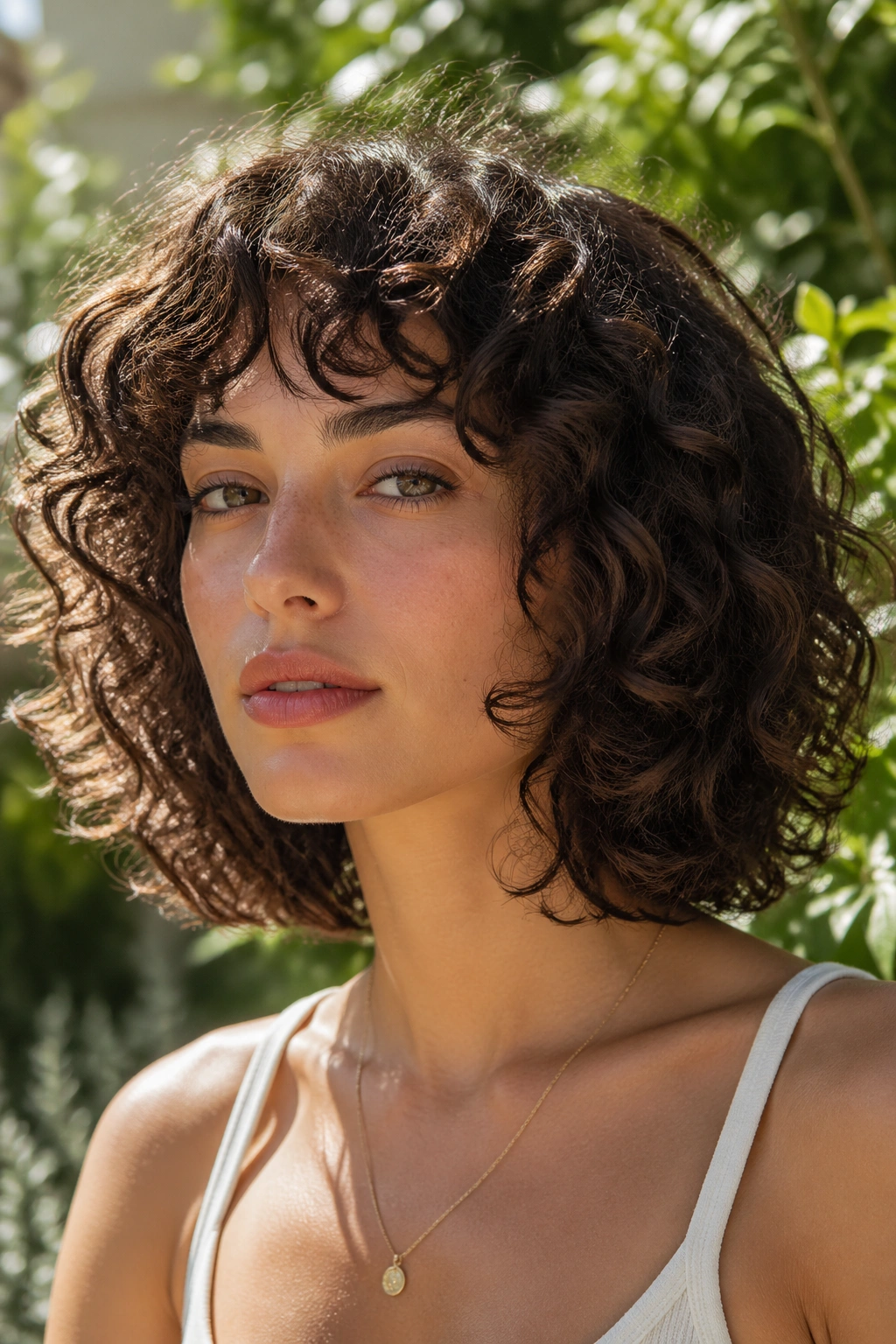
Why does a wolf cut bob work so well on curls? Because curls already know how to create volume; they just need room to move. A blunt bob can box curls in and make the bottom edge look heavy. The wolf cut bob opens that shape up, which is why it can feel almost unfairly flattering when the cut is done with care.
The trick is restraint. Curly hair does not need a dozen short layers stacked on top of each other. It needs enough internal shape to remove weight, plus face-framing pieces that let the curl pattern show off instead of collapsing into a triangle. A dry cut is often the better call here, because curls shrink and spring in ways wet hair can’t fully predict.
How to Style It
- Work a curl cream through soaking-wet hair, then add a light gel on top for hold
- Scrunch with a microfiber towel or T-shirt, not a rough bath towel
- Diffuse on low heat and low speed until the roots are set
- Stop touching it once it starts to dry; curls frizz when they’re fussed with too much
A curly wolf cut bob looks best when the layers are shaped to the pattern, not forced into one neat outline. If your stylist cuts it like straight hair and hopes for the best, walk out with caution.
4. Razor-Cut Shaggy Wolf Bob
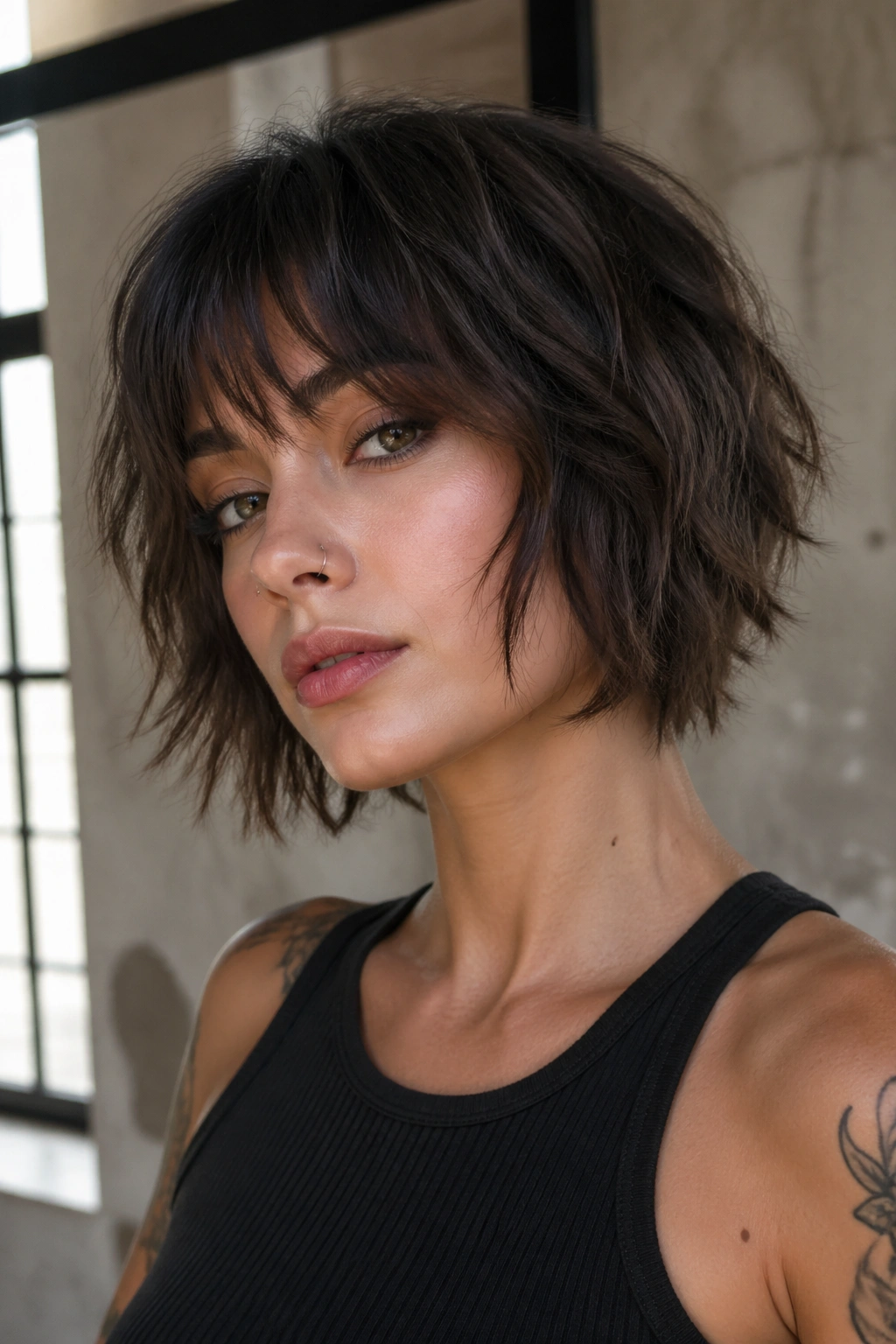
Picture a bob that looks a little torn up at the ends, but in a good way. That’s the razor-cut wolf bob, and it’s one of the easiest ways to get that shaggy cool look without asking the hair to do too much work on its own.
A razor cut softens the edge of the hair, which can be gorgeous on medium-density hair that needs movement. The danger is overdoing it. On very fine hair, a heavy razor pass can leave the ends thin and see-through. On coarse or frizz-prone hair, it can make the shape fray faster than you’d like. So this cut needs a light hand, not a theatrical one.
Ask for the razor mostly on the surface layers and a cleaner finish at the perimeter. That combination gives you the broken-up texture people want from a wolf cut bob without sacrificing the line that keeps it looking intentional. I also like a little bend around the cheekbones — it keeps the front from feeling too chopped.
- Good for medium hair with some natural body
- Best styled with texture spray or a light sea-salt mist
- Needs a trim a bit sooner if the ends start to split apart
- Works well with a side sweep or a middle part
The whole look lives or dies on the end texture. Too much razor work, and the haircut starts to look tired instead of shaggy.
5. Air-Dried Wavy Wolf Cut Bob
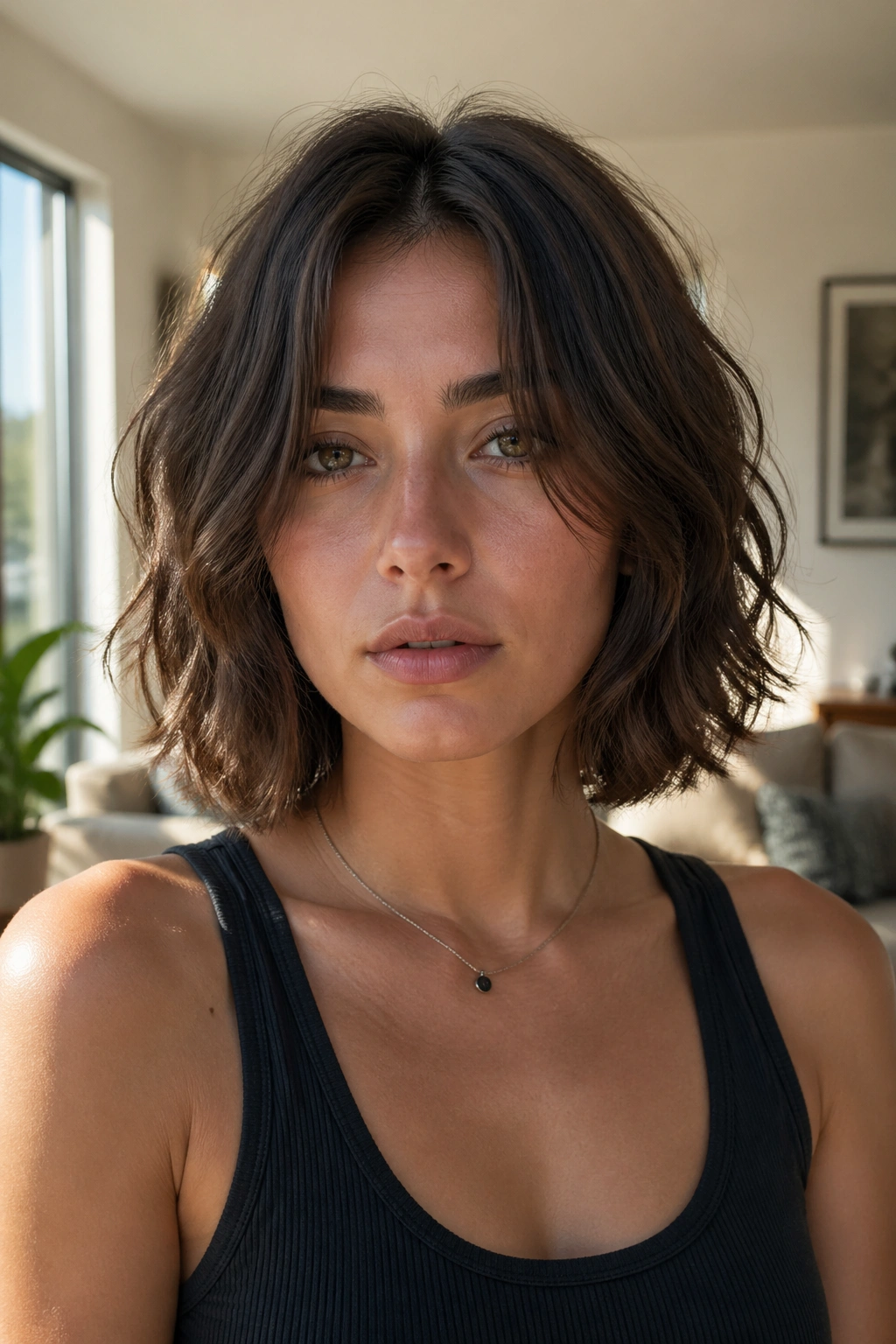
Air-dried hair and a wolf cut bob get along better than people expect. If your hair has a natural bend, this is the version that lets it do most of the work, which is exactly what I want from a low-fuss cut.
The secret is keeping the layers soft enough to catch the wave, not so short that they pop up in odd places. A wavy bob with wolf-cut shaping should feel loose at the ends and lightly lifted near the crown. That means you can scrunch in a little mousse, part the hair where it naturally wants to fall, and leave it alone while it dries. No need to turn every morning into a styling project.
I like this cut best when it’s finished with a small amount of leave-in conditioner on the mids and a pea-sized bit of cream on the ends. Too much product weighs the shape down. Too little, and the waves frizz out before lunch. The sweet spot is somewhere in the middle, with just enough grip to hold the bend.
If you want hair that looks cool without looking overworked, this is a strong place to start. It has a relaxed, slightly undone feel, but it still shows off the layers when the light hits the hair from the side.
And yes, a little bedhead helps.
6. Asymmetrical Wolf Cut Bob
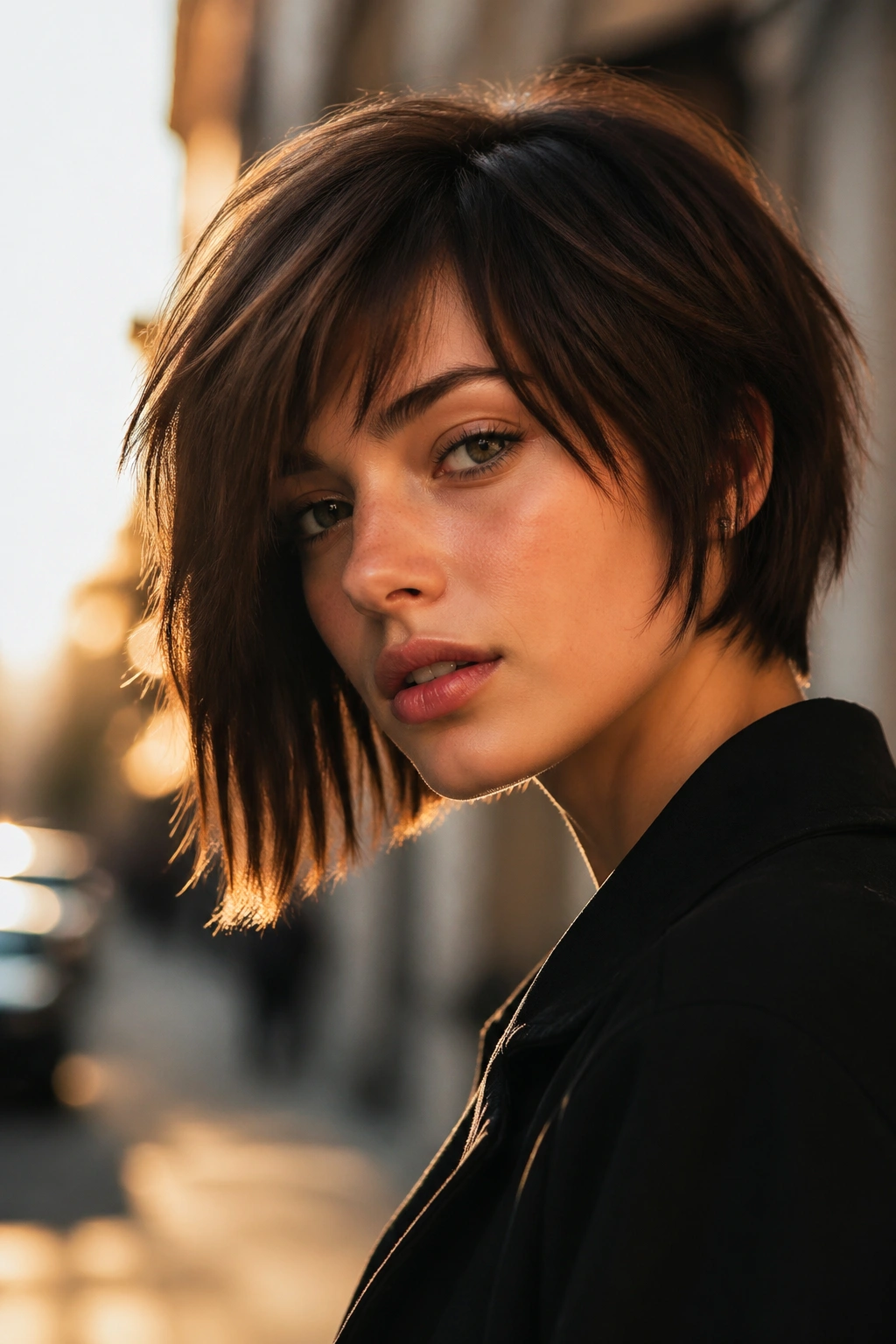
Compared with a blunt bob, the asymmetrical wolf cut bob feels looser and sharper at the same time. One side stays a touch longer — usually by about half an inch to an inch — and that tiny imbalance makes the whole cut feel intentional. It’s a small change with a big visual payoff.
The diagonal line draws the eye forward, which is handy if you want your haircut to frame the face instead of sitting like a block around it. I especially like this shape on people with strong jawlines or high cheekbones, because the uneven edge softens one side and sharpens the other. It gives the cut a little tension. Haircuts need that sometimes.
Keep the asymmetry subtle. If one side is dramatically longer than the other, it stops reading as a wolf cut bob and starts feeling like a separate statement haircut. The best versions look like the layers simply leaned that way on their own.
This cut also handles tuck-behind-the-ear styling well. One side tucked, the other loose, and the whole thing suddenly looks styled without much effort.
If you want movement but you’re bored by symmetrical shapes, this is a clean upgrade.
7. Fine-Hair Wolf Cut Bob With Lightweight Layers
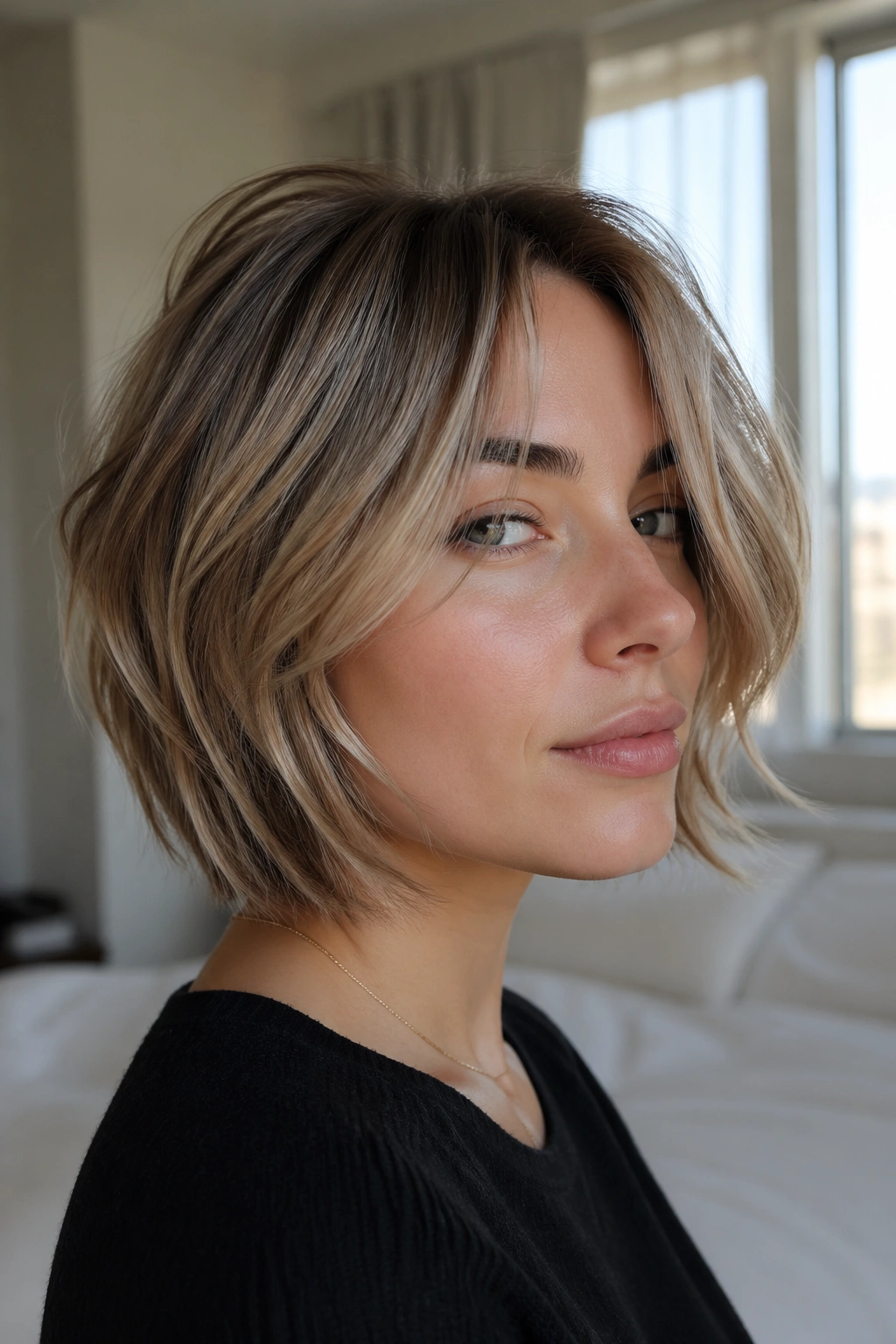
Fine hair can wear a wolf cut bob, but the layers need discipline. If the cut gets too shattered, the hair loses the very thing it needs most: visible density. That’s why I like this version to stay light on the inside and solid around the perimeter.
What Keeps It From Falling Flat
The goal is to create lift at the crown without striping out the ends. Ask for subtle internal layers and a softer face frame, then keep the heaviest removal below the topmost section. A few well-placed layers do more than a pile of choppy ones ever will.
- Use a root-lift spray at the crown before blow-drying
- Keep conditioner off the roots; fine hair gets limp fast
- Ask for a blunt-ish bottom line so the haircut still looks full
- Style with a small round brush or a quick blowout bend at the top
This version works especially well if your hair collapses by noon. A little texture spray at the mid-lengths can help, but I would not drown fine hair in dry shampoo right away. That usually makes it chalky before it makes it fuller.
The smartest fine-hair wolf cut bobs look airy, not sparse. There’s a difference, and it’s a big one.
8. Thick-Hair Wolf Cut Bob With Weight Removed
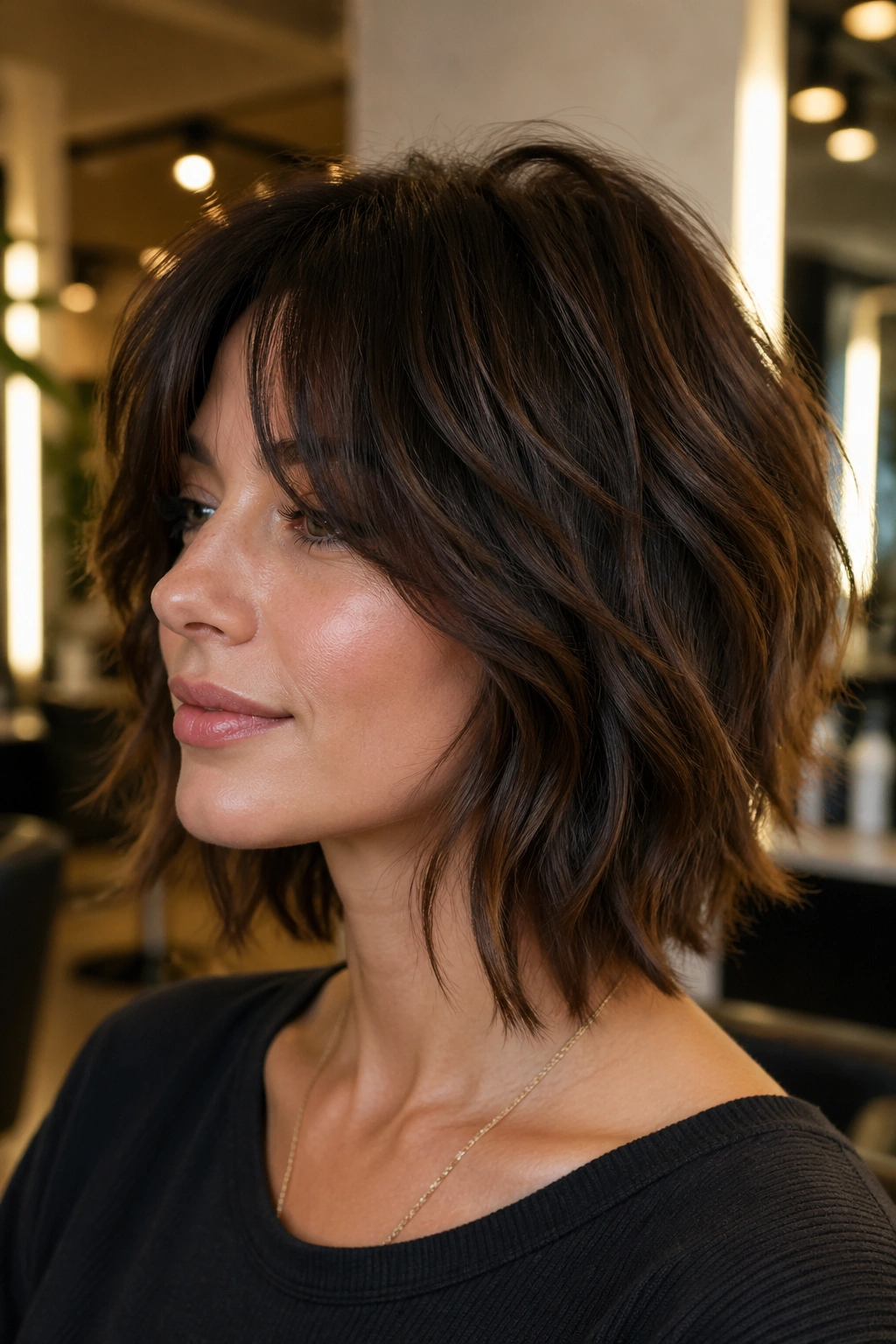
Thick hair is where this cut earns its reputation. A wolf cut bob gives thick hair room to breathe, and when it’s done correctly, the haircut can feel lighter without losing its body. Done badly, though, it becomes a puffball with random pieces hanging out. No thanks.
The stylist has to remove weight in the right places. That means internal layering, not just hacking away at the top. It also means keeping the ends controlled enough that the shape still lands as a bob. I prefer this cut with a slightly longer front, because thick hair tends to spring upward and shorten itself once it dries.
A good thick-hair wolf cut bob can handle air-drying, but it usually looks best with a fast rough-dry and a little tension at the nape. If the hair is coarse, a smoothing cream through the ends helps the layers separate without frizzing. If the hair has a natural wave, a diffuser can bring the shape forward instead of fighting it.
Be careful with over-thinning. That move can leave the canopy fluffy and the bottom stringy. The haircut should feel lighter, not hollow.
9. Wolf Cut Bob With Micro Bangs

Do micro bangs and a wolf cut bob belong together? They do, if you like a little attitude and you’re willing to keep them trimmed. The tiny fringe changes the whole mood of the haircut. It makes the face look more open, more graphic, and a little less soft around the eyes.
Micro bangs work best when the rest of the cut is shaggy enough to balance them. You want a bit of softness through the sides so the fringe doesn’t look like it was dropped onto the head by accident. I’d keep the bangs textured rather than blunt-cut straight across; a tiny bit of unevenness makes them far easier to wear.
How to Make It Wearable
- Ask for the fringe to sit well above the brows, not touch them
- Style the bangs separately with a mini round brush or flat brush
- Keep a dab of styling cream on the fingertips, then pinch the ends so they separate
- Pair the fringe with longer side layers that skim the cheekbones
This is not the best pick if you want a haircut you can ignore for six weeks. Micro bangs ask for maintenance. They’re worth it if you want edge, but they do not forgive laziness. Still, when they’re cut right, they give a wolf cut bob a sharp little personality kick that other fringe shapes can’t quite match.
10. Lob-Length Wolf Cut Bob
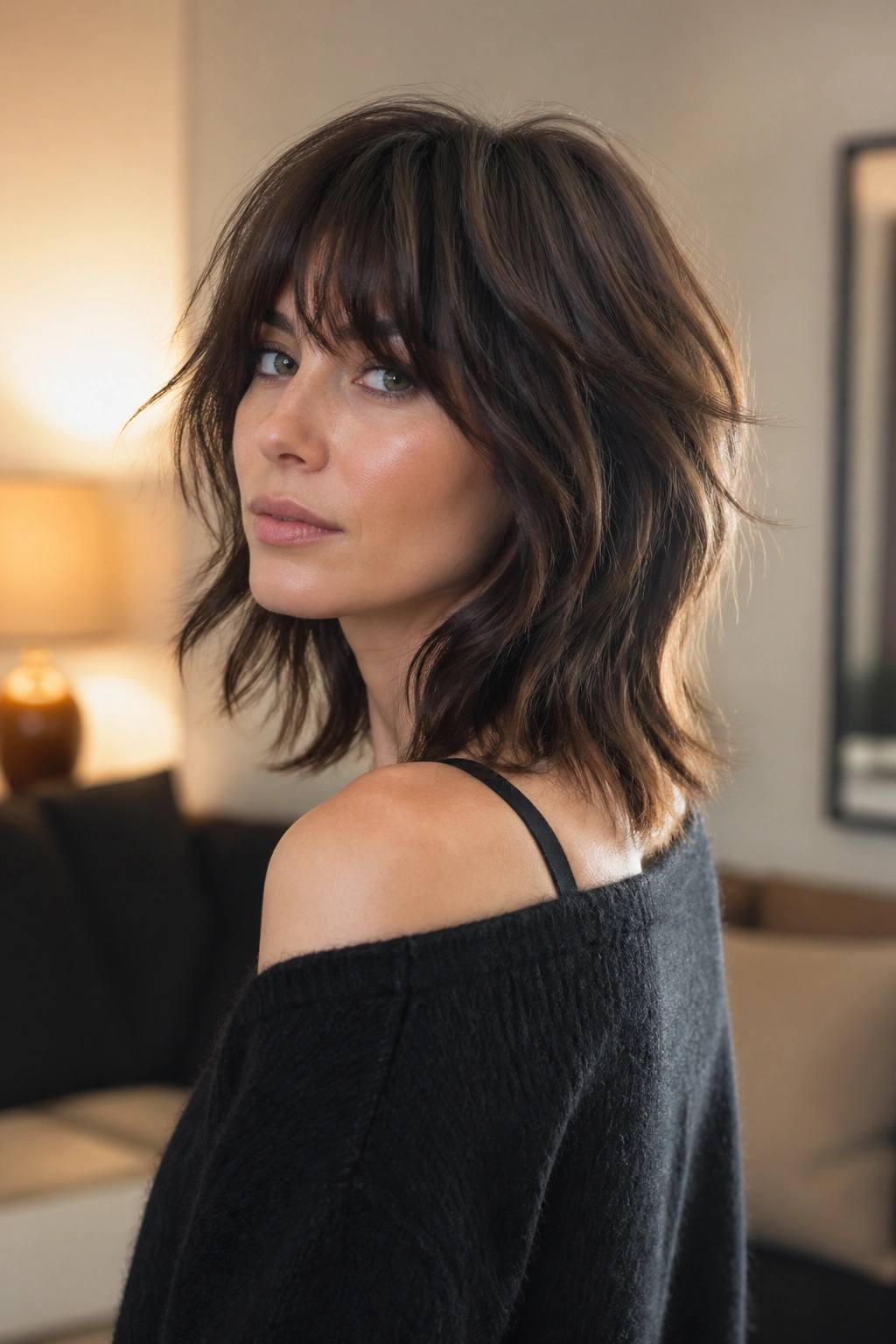
A lob-length wolf cut bob is the easy middle path. It keeps the shaggy layers and piecey movement, but the longer length gives you more room to tuck, clip, curl, or just let it fall around the shoulders. If chin-length feels like too much commitment, this is the safer place to land.
The extra length changes the attitude of the cut. Instead of looking sharp and cropped, it feels looser and a bit more relaxed. That makes it useful for people who want the wolf cut energy without the constant neck exposure that comes with a shorter bob. I also think it’s one of the best choices for hair that grows fast, because the shape stays flattering for longer.
- Good for round, oval, and heart-shaped faces
- Works well if you wear your hair down most of the time
- Easier to pin back than a shorter bob
- Keeps more length on the ends, which helps dense hair behave
Styling this one is fairly simple. A bend through the mid-lengths, plus a little separation at the ends, is enough. You don’t need a perfect curl. You need motion. That’s the whole point.
It’s a practical cut, which is why I keep liking it more than I expect to.
11. Soft Face-Framing Wolf Cut Bob
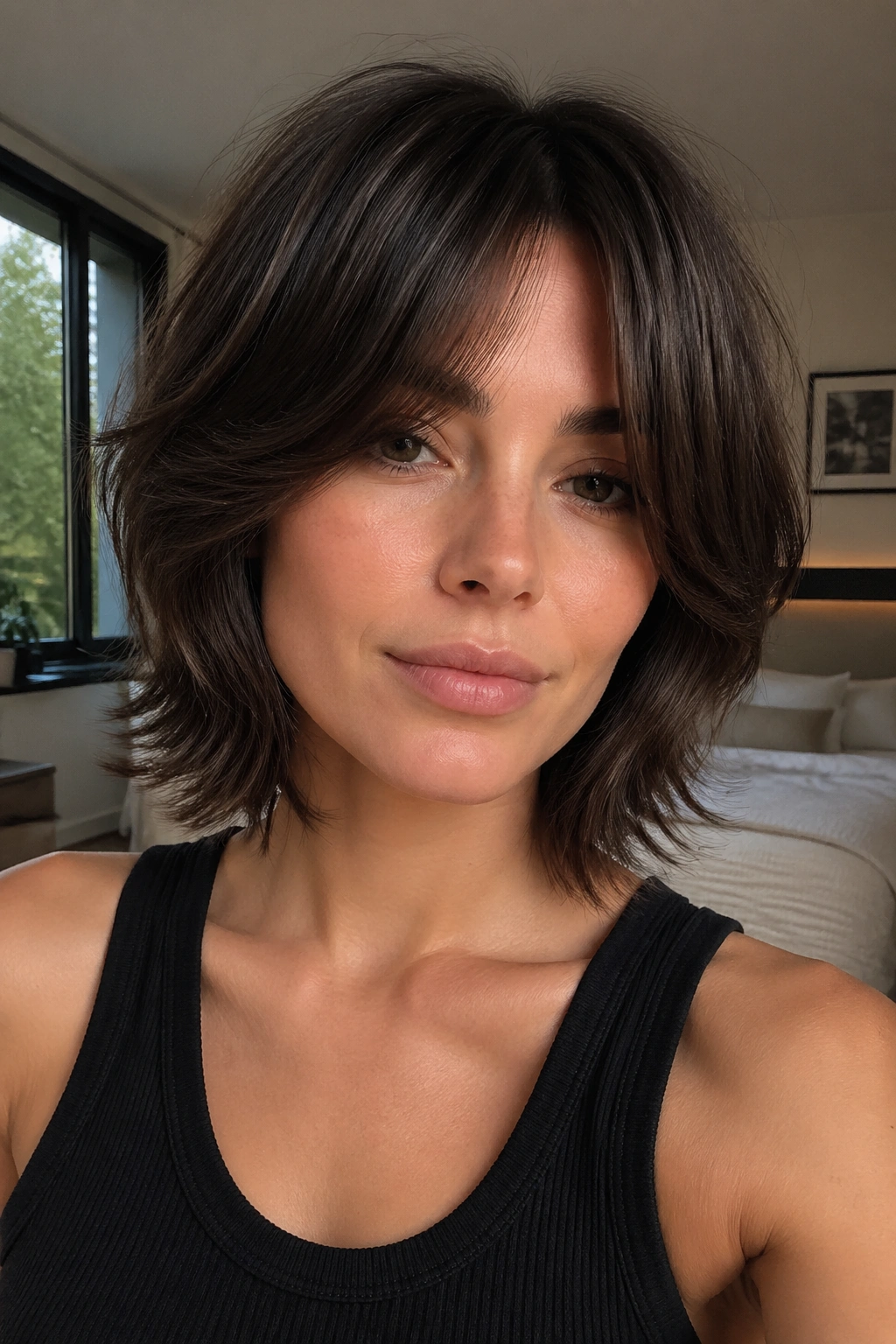
Soft face-framing layers are the version I recommend to cautious clients. If someone likes the idea of a wolf cut bob but doesn’t want anything too jagged, this is usually where I start. The silhouette stays bob-like, but the front pieces feather out around the cheeks and lips so the haircut feels easier to live with.
The best part is how forgiving it is. You can wear it tucked, flipped, pinned, or blown out, and the face-framing bits still do their job. I like layers that begin somewhere below the cheekbone and slide into the jawline, because that gives the cut movement without turning it into a full shag. There’s a difference between soft texture and a haircut that’s been shredded. We want the first one.
This version suits people who are new to layered hair or who’ve been burned by a bad shag before. It doesn’t ask for much from the styling routine. A round brush, a few minutes of heat at the front, and a light spray is enough to make it behave.
If your face tends to get swallowed by heavy hair, this shape helps. It opens things up without making the haircut shout.
12. Inverted Wolf Cut Bob
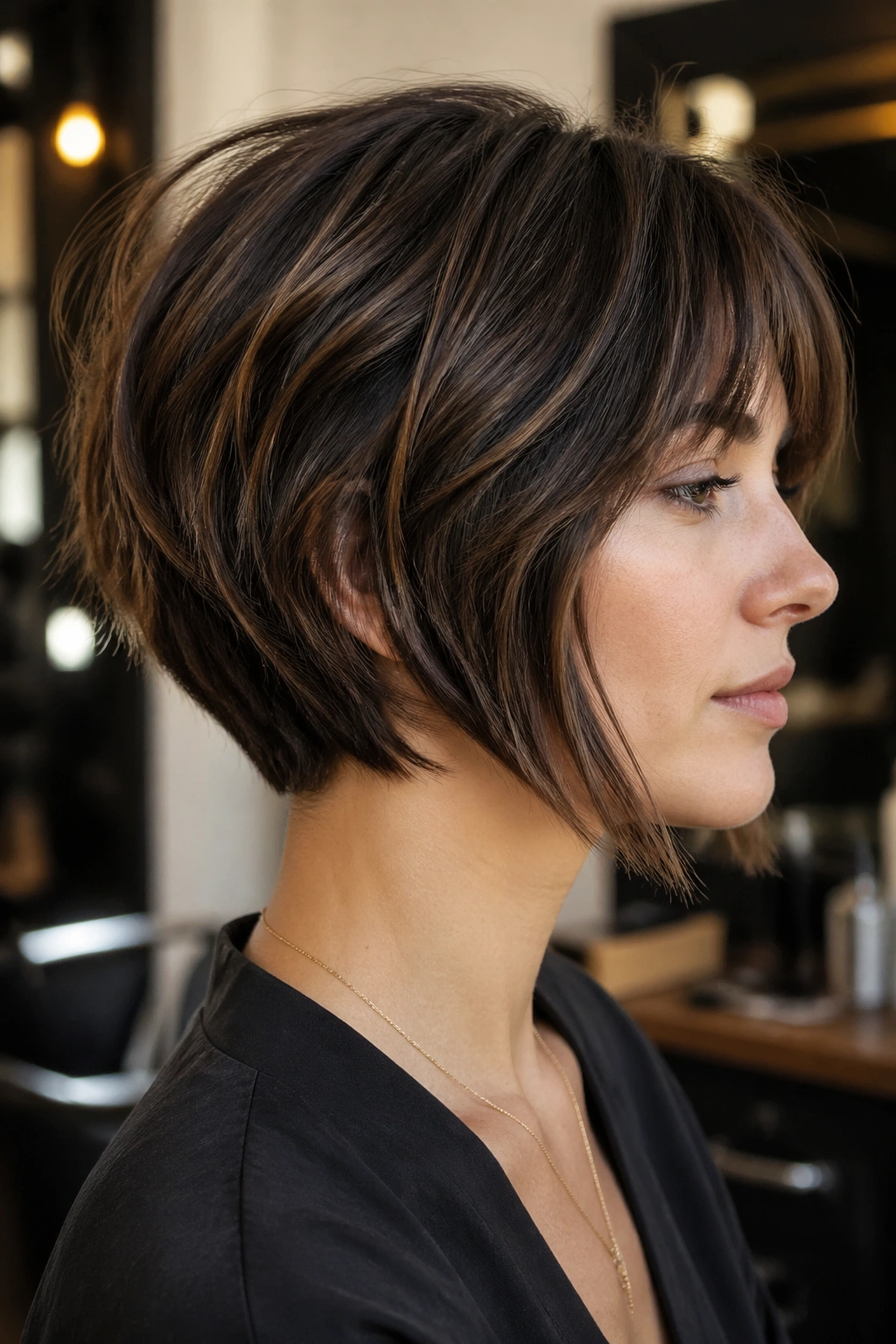
An inverted wolf cut bob looks sharper from the side than from the front. That’s the appeal. The back sits shorter and slightly stacked, while the front keeps enough length to swing around the jawline. You get movement, but you also get a clean slope that makes the haircut feel more architectural.
Compared with a regular bob, the inverted version gives the neck a cleaner look and the front a little drama. Compared with a classic wolf cut, it’s neater. I think that’s why it works so well for people who want texture without giving up structure. The nape is short enough to feel fresh, but the layers still break up the line in a shaggy way.
Ask your stylist for a soft graduation in the back, not a severe wedge. Severe stacking can look stiff fast. A softer version grows out more gracefully and still gives the haircut lift at the crown.
This cut suits straight or slightly wavy hair especially well, because the angle shows up more clearly. If the hair is very curly, the shape can blur unless the layers are mapped carefully.
It’s a tidy cut with some edge. That combination is hard to beat.
13. Color-Dimension Wolf Cut Bob With Ribbons of Light
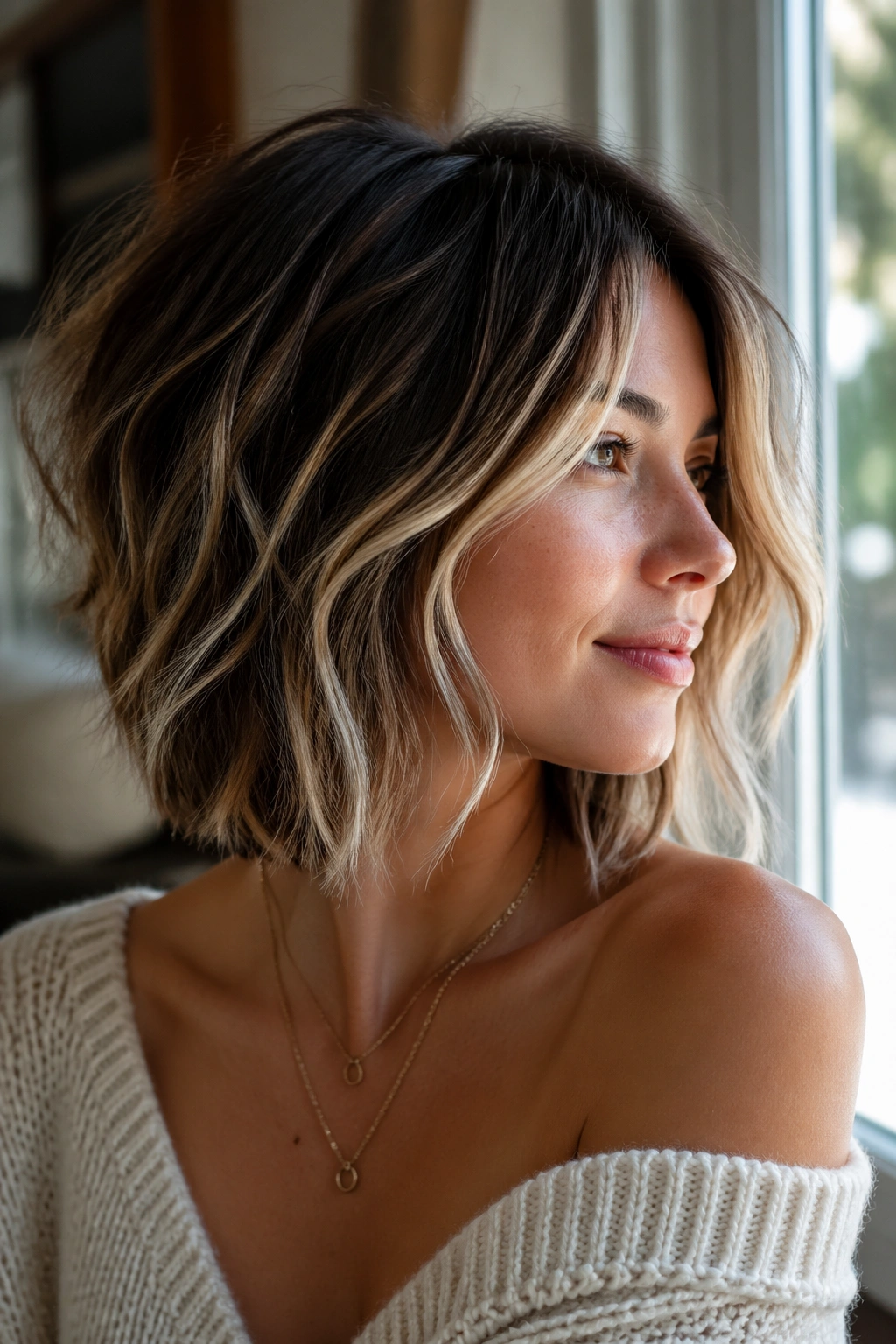
Color changes the whole cut. A wolf cut bob with dimension looks richer because the layers have something to catch, and the movement shows up the second the hair shifts. Dark roots, lighter mids, and a few ribbon pieces around the face can make every flip of the head feel more alive.
Where to Place the Light Pieces
The brightest strands should usually sit where the layers move most: around the face, through the outer surface, and near the ends. If the highlights are packed too evenly, the cut can look striped instead of textured. That’s a waste of good color.
A few placement notes help:
- Keep lighter pieces around the cheekbones to show off the face frame
- Add dimension through the top layers, not only the surface
- Use a gloss or glaze if the color starts looking dry or flat
- Ask for soft contrast, not chunky blocks, unless you want the haircut to look tougher
This version is a favorite of mine because the haircut and the color work together instead of fighting each other. The layers look sharper, the ends look piecey, and the whole shape feels more expensive in the normal, practical sense of the word — not because it’s flashy, but because it looks considered.
A wolf cut bob without color can still be great. Add the right highlights, and it starts to move in a different way.
14. Tapered Nape Wolf Cut Bob
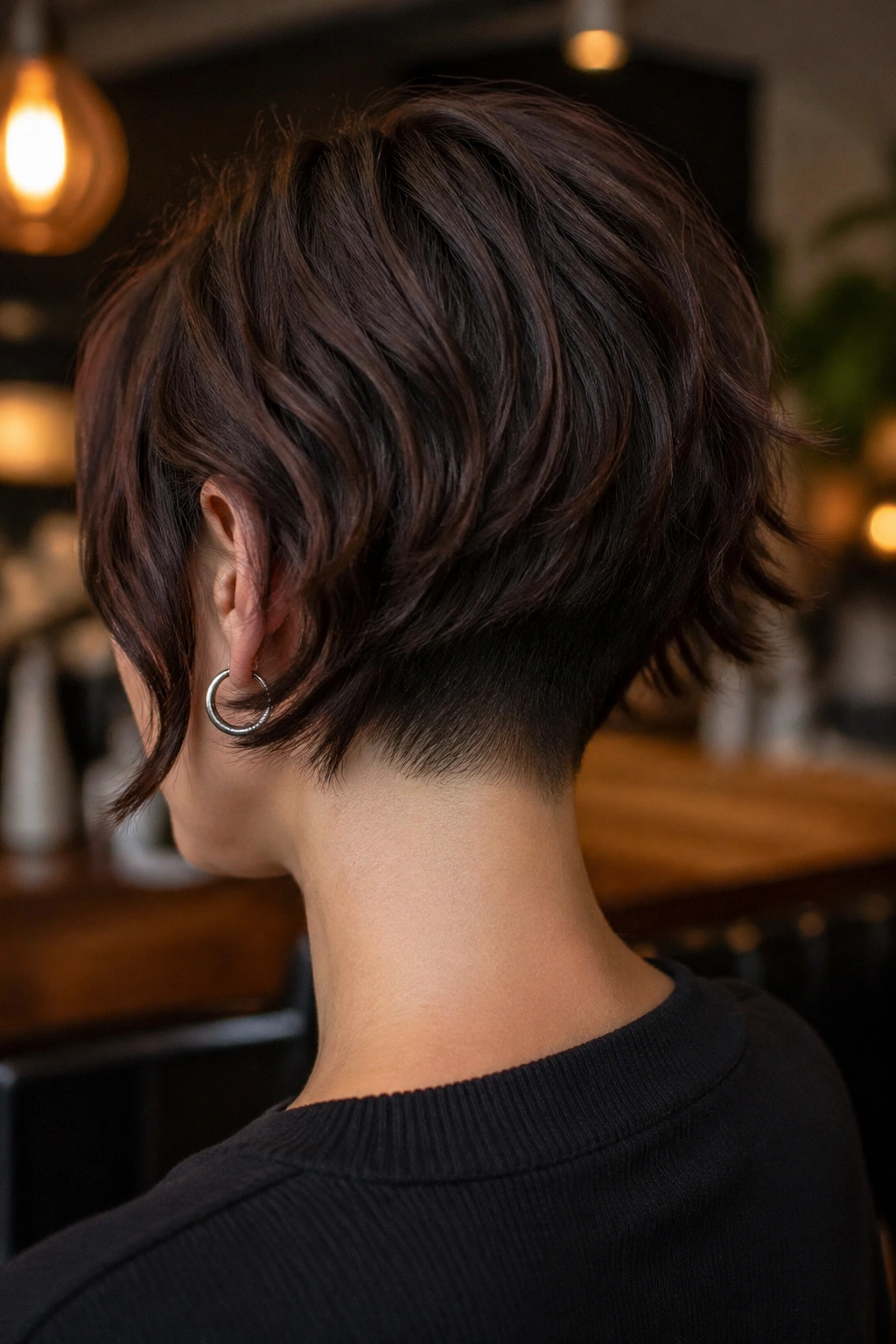
A tapered nape gives the wolf cut bob its bite. The back hugs the neck more closely, while the top and sides stay loose and shaggy. That contrast is what makes this version feel crisp instead of fuzzy. You see the shape right away.
This is a strong choice if you like your hair to look neat at the back but less precious through the front. The taper helps the bob sit flatter against the head, which can be handy for thick hair or for anyone who hates a bulky neckline. It also makes earrings and collars stand out, which sounds minor until you notice how often it changes the whole outfit.
I’d keep the taper gradual. A hard step in the back can read a little dated, while a soft taper still gives you that lifted shape without screaming for attention. The best version feels like the haircut naturally tightens at the nape and relaxes as it moves forward.
- Works well on medium to thick hair
- Looks clean with short jackets, crew necks, and open collars
- Needs a stylist who knows how to balance graduation and texture
- Grows out neatly if the nape is not overcut
This is the one I’d pick for someone who likes edge but still wants the back of the haircut to behave.
15. Rounded Bouncy Wolf Cut Bob
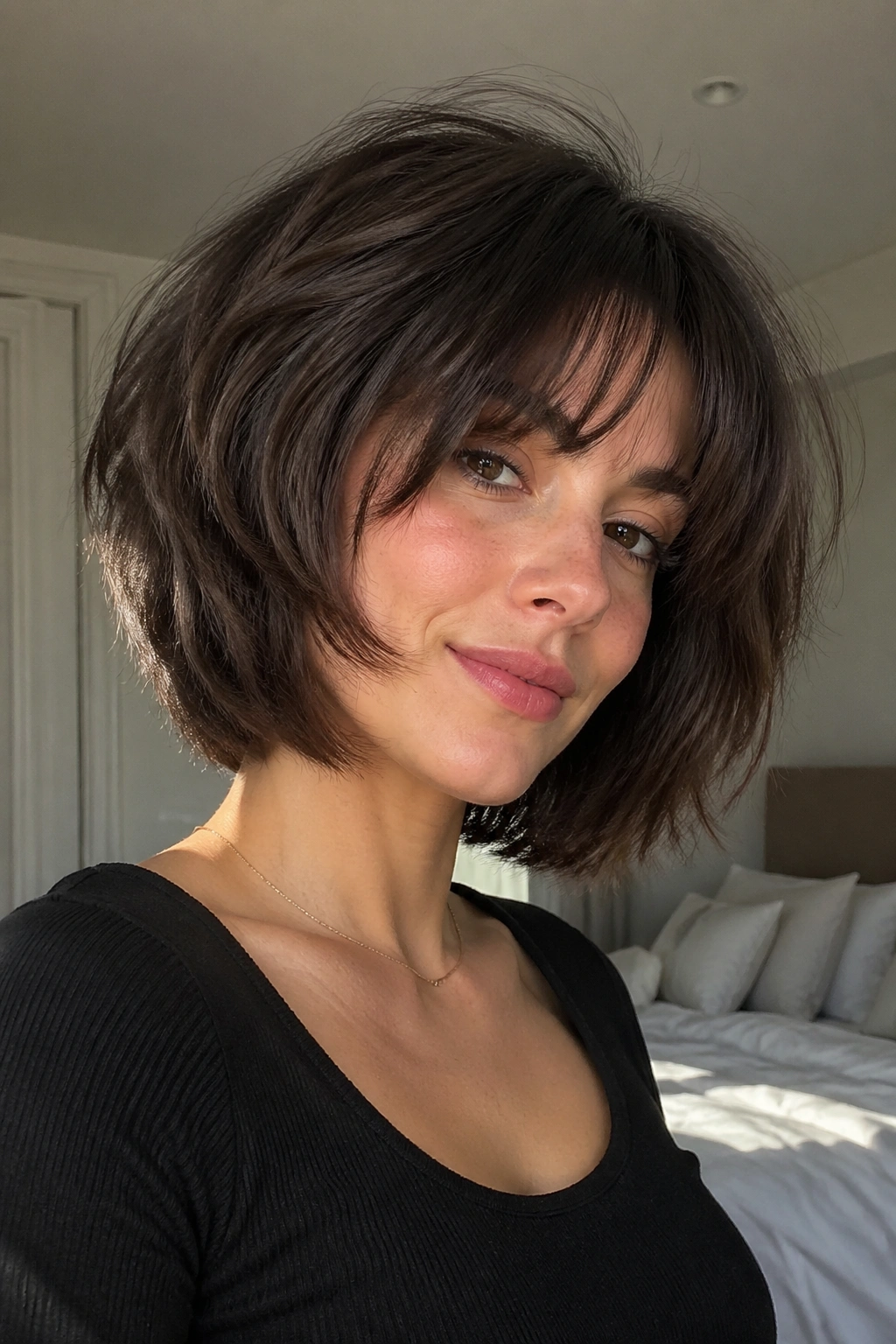
A rounded wolf cut bob sounds tame, and that is exactly why it works. The silhouette curves softly around the head, but the layers inside keep it from looking helmet-like. You get bounce, movement, and a little softness around the cheeks without giving up the shaggy character that makes the cut interesting.
I like this version when the goal is volume that feels controlled rather than wild. Blow-dry it with a medium round brush, lifting the roots at the crown and curving the ends under or slightly out, depending on how much movement you want. A couple of velcro rollers at the top for 10 to 15 minutes can give the shape more hold if your hair falls flat fast.
This cut is also kind to people who need a style that can go from casual to dressed up without a full reset. It looks good tucked behind one ear. It looks good with a clip. It looks good when the ends are a little tousled. That flexibility is a big part of its charm.
If the sharper wolf cut bobs feel too hard for you, this is the softer answer. Still cool. Just less bite.
Final Thoughts
The best wolf cut bob is the one that works with your hair’s real texture, not the version you imagine in a salon mirror. Fine hair usually needs a cleaner perimeter and lighter layering. Thick hair needs weight removed in the right places, or the shape turns bulky fast.
What I like most about this cut is how much control it gives you over the mood. Add curtain bangs and it softens. Add micro bangs and it gets braver. Keep the nape tapered, and it feels sharper. Leave it a little rounded, and it goes more relaxed.
If you’re asking for one small rule to bring to the salon, use this: keep the bottom line strong and let the movement live inside the cut. That’s usually where the good wolf cut bobs start.
