



The best French bob wolf cut is the one that knows when to stop. Too much shag, and the shape turns fuzzy. Too much blunt line, and it loses the looseness that makes the whole thing feel so good.
A strong version lives in the middle. The bottom edge stays clean, usually around the jaw or a touch below it, while the crown and front get softened with short layers that move when you turn your head. That mix is the whole point, and it’s why the cut can feel Parisian, edgy, airy, or a little rebellious depending on how the layers are handled.
I like this haircut most when it looks a little undercontrolled. Not messy. Just relaxed enough that it doesn’t sit like a helmet the second you step outside. If your hair is fine, the blunt base gives you body; if it’s thick, the layers keep it from turning boxy; if it’s wavy, the texture finally gets to do something useful.
Balance is everything here. And that balance can go in a lot of different directions.
1. The Classic French Bob Wolf Cut with Soft Crown Layers
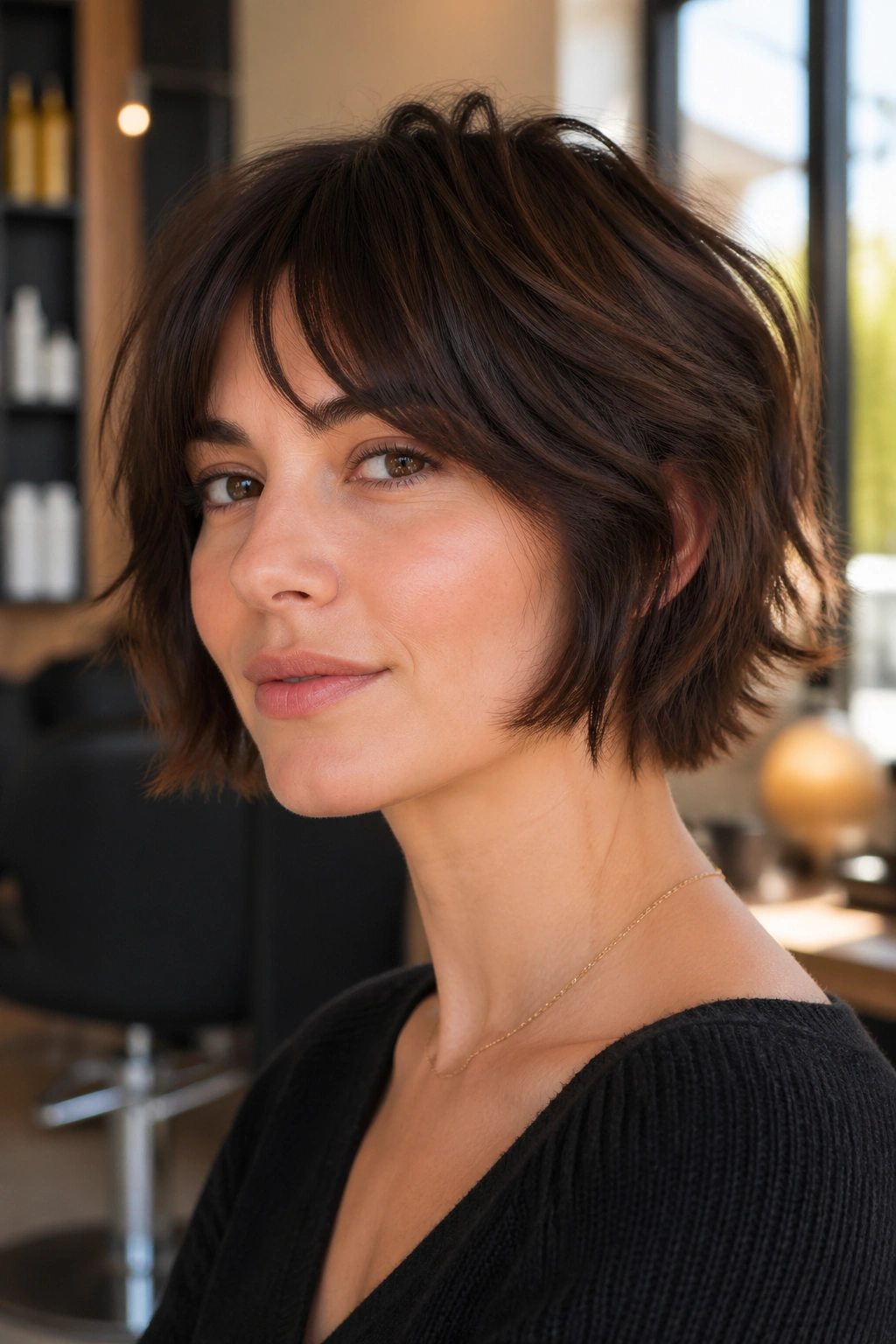
This is the version most people should start with. The perimeter sits at the jaw, the top is lightly broken up, and the whole shape still reads as a bob first, shag second. That matters. If the top gets too choppy, you lose the clean French-bob line that gives the haircut its backbone.
Why it works
The blunt edge keeps the cut looking polished, even when you finger-dry it and walk out the door. The crown layers add a bit of lift so the hair doesn’t collapse into one flat sheet. I also like that it gives movement without forcing you into a heavy styling routine.
A good stylist will usually keep the shortest layers around the crown and leave the ends more solid. That keeps the silhouette from fraying. The trick is contrast, not chaos.
- Ask for a jaw-grazing baseline with soft internal layers.
- Keep the front slightly longer if your hair tends to puff out.
- Use a light mousse at the roots and a pea-sized serum on the ends.
- Skip heavy thinning shears if your hair is already fine.
Best for: hair that needs shape but not too much volume.
2. Chin-Length French Bob Wolf Cut with Curtain Bangs
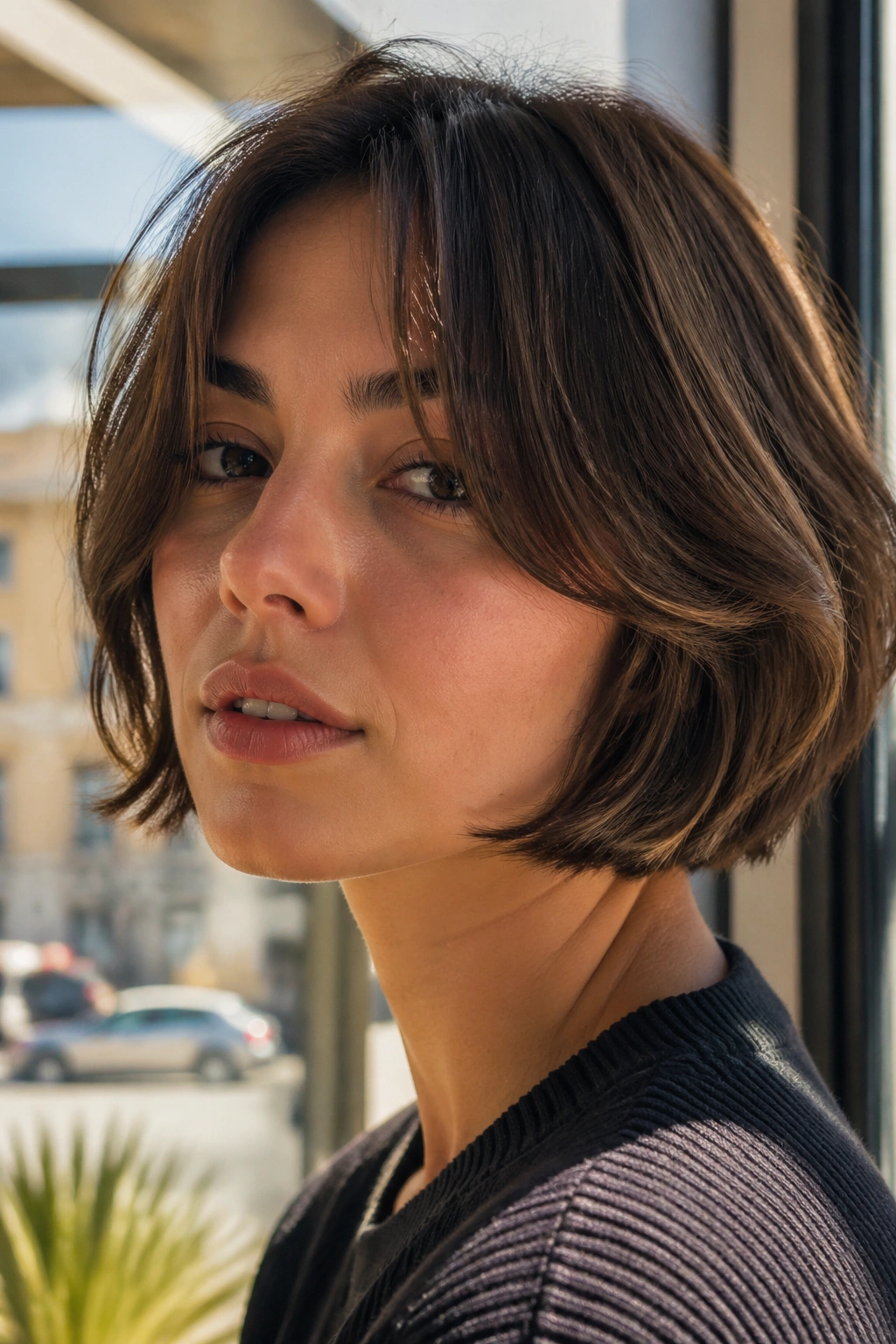
Why does chin length work so often? Because it sits in that sweet spot where the jawline gets framed, but the haircut still feels light. Add curtain bangs, and the whole thing softens even more. You get that easy face opening effect without committing to a full fringe that needs constant trimming.
This version looks especially good when the bang starts a little higher at the center and opens toward the cheekbones. That gives the eyes room, and it also keeps the cut from feeling heavy across the forehead. I’m a fan of this one for people who like structure but do not want anything too stiff.
The wolf-cut part should stay subtle here. A few broken layers at the top, a little bend through the sides, and that’s enough. If the layers get too aggressive, the chin-length shape can start to look mushroomy, which is nobody’s friend.
Air-dry it if you can. Or rough-dry with a round brush for the fringe and leave the ends a bit imperfect. That little bit of looseness is what makes the haircut feel lived in rather than overdone.
3. Jawline French Bob Wolf Cut with Piecey Fringe
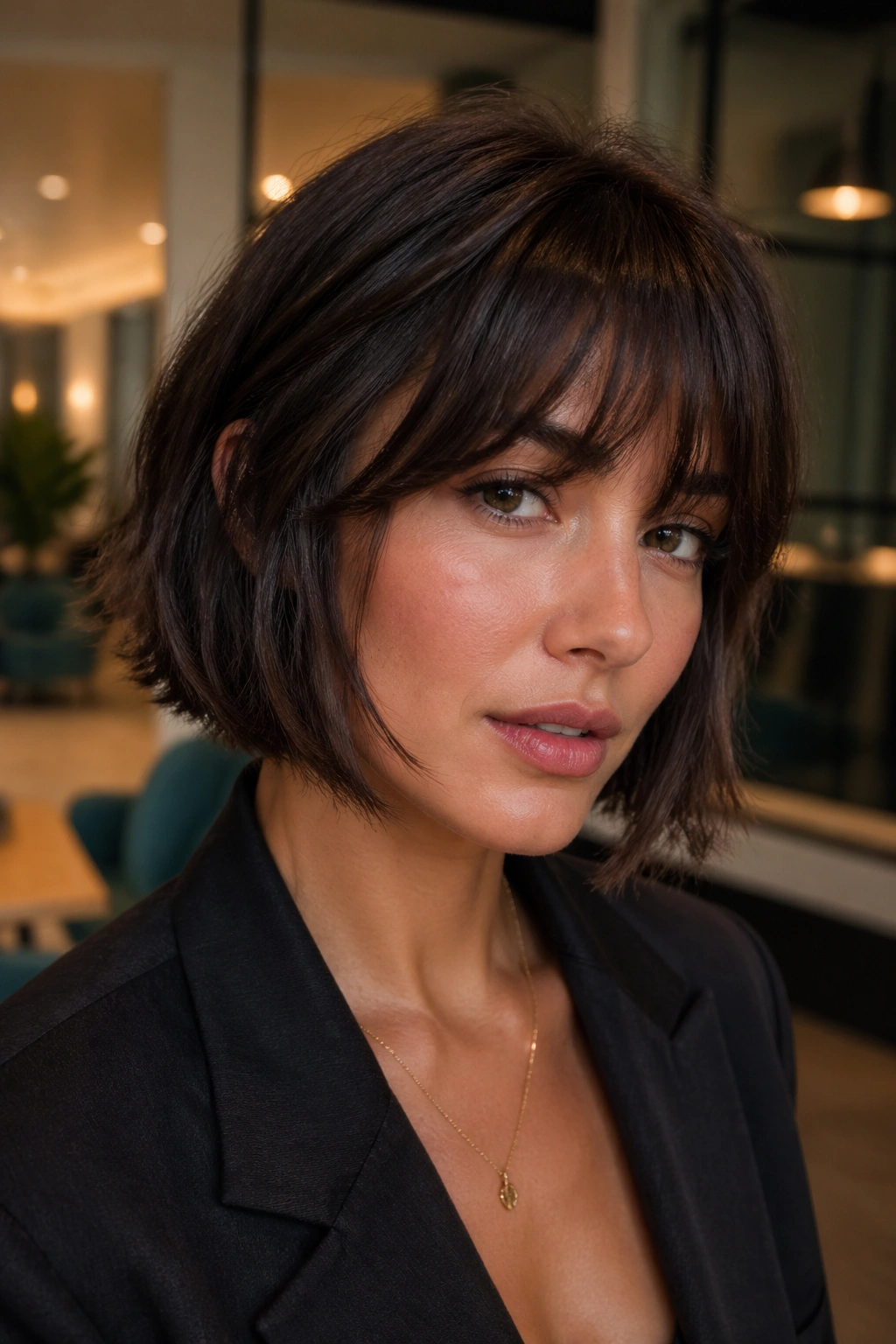
What if your jaw is the part you want to soften, not show off? Then this is the cut to look at. A jawline bob with piecey fringe shifts attention upward and keeps the lower half of the haircut light, almost flicked open. It’s sharper than a chin-length version, but also a bit more playful.
What makes it different
The fringe is usually broken into small sections instead of sitting as one solid line. That stops the front from feeling too dense. The layers around the cheekbones should be short enough to move, but not so short that they stick out like a triangle.
A small detail makes a huge difference here: the ends should be point-cut, not carved bluntly into tiny shards. That gives you texture without turning the whole front into static. If the fringe is too thick, the haircut loses its French feel fast.
This one suits people who like a cleaner silhouette with a little attitude. It can look polished with a blazer, then slightly undone with a T-shirt and dry shampoo. The haircut does both jobs without needing two different moods from you.
4. The Airy French Bob Wolf Cut for Fine Hair
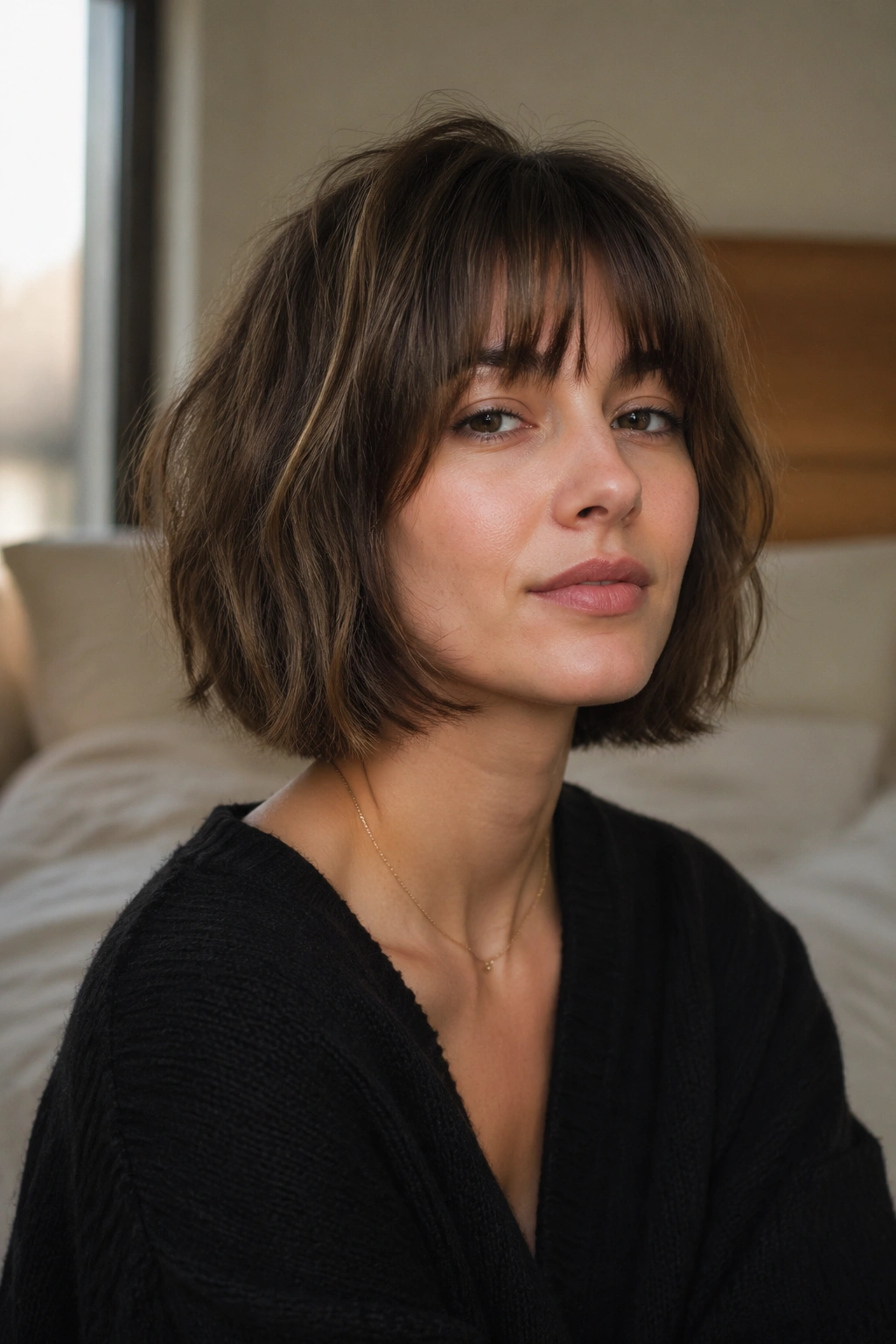
Fine hair can wear this shape beautifully, but only if the layers stay controlled. Too many of them, and you end up with see-through ends and no weight anywhere. Too few, and the bob sits flat against the head like a paper cutout.
What to ask for
- A blunt baseline that lands around the cheekbone or jaw.
- Very light crown layers, not all-over shredding.
- Soft texturizing at the very top, not through the whole head.
- A fringe or face frame that blends instead of disappearing.
The best fine-hair version keeps density where you need it most: the bottom edge. That gives the illusion of thicker hair, which is the whole point. A root-lift spray helps, but the cut has to do the heavy lifting first.
A lot of people think fine hair needs tons of layers. It usually doesn’t. Fine hair needs shape. Those are not the same thing. A blunt bob with a touch of wolf-cut movement gives you that shape while still letting the hair swing.
5. The Heavy-Texture French Bob Wolf Cut for Thick Hair
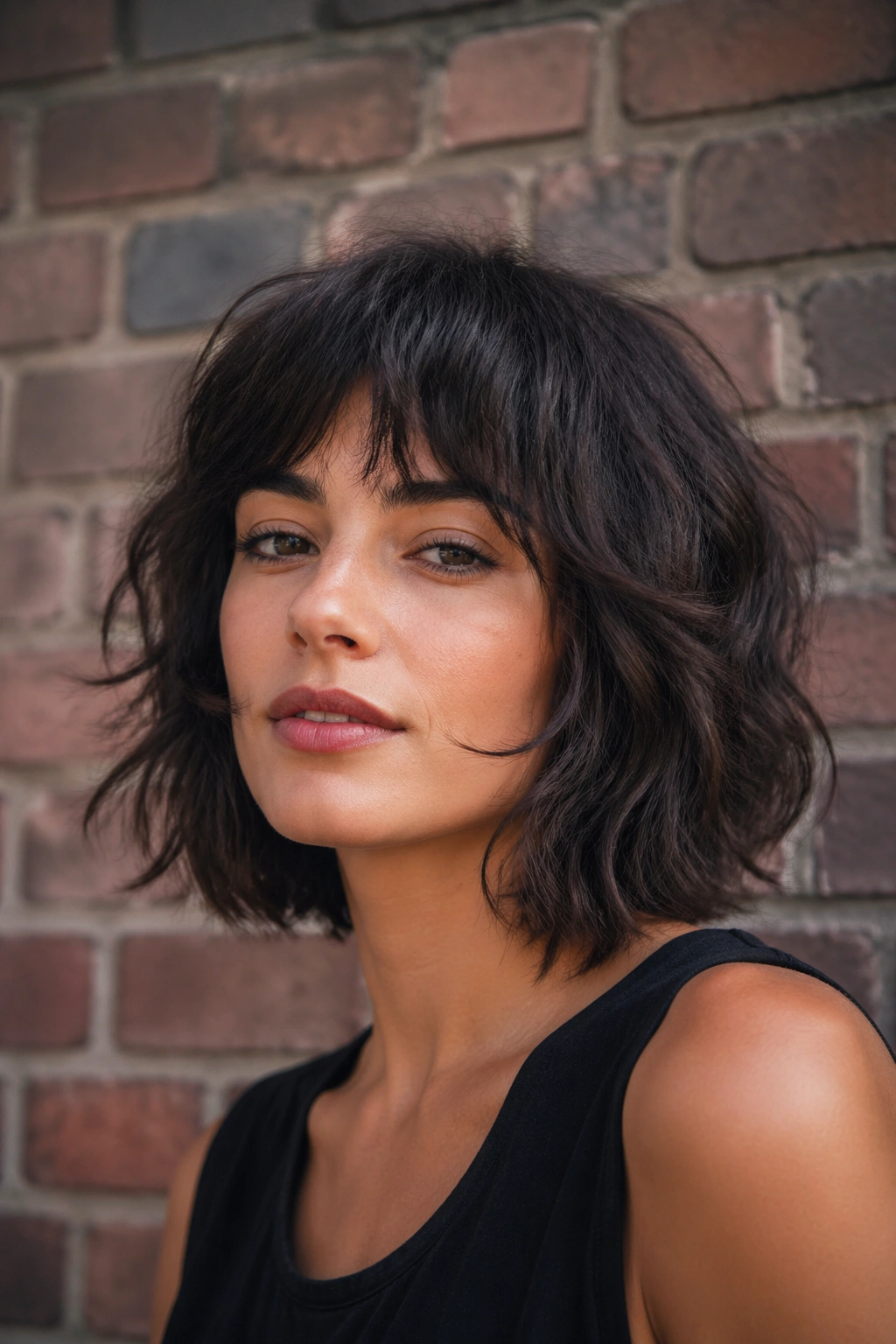
Thick hair is where this haircut can look expensive or completely wrong. There isn’t much middle ground. If the bulk stays inside the shape, the bob turns into a triangle. If the weight is removed in the right places, the haircut moves and breathes instead of sitting like a block.
The fix is usually internal layering and careful debulking near the crown and side panels. I like a strong perimeter here, because thick hair needs a line to obey. But the inside has to be broken up enough that the top doesn’t balloon outward the second humidity shows up.
Wet hair lies. That’s the truth.
A stylist should check how the hair falls dry before taking too much weight out. Thick hair can hide a lot of bad cutting while it’s damp, and then suddenly reveal it when you style it at home. You want controlled fullness, not helmet volume.
A little undercut at the nape can help if the hair is very dense. So can longer fringe pieces that blend into the sides instead of stopping hard at the cheek. This version works hard, but it needs restraint.
6. The Curly French Bob Wolf Cut with Rounded Ends

Curly hair and a French bob wolf cut get along better than people think. The shape already has natural movement, so the goal is not to force texture into place. The goal is to keep the outline soft and stop the cut from puffing too wide at the sides.
A rounded end shape helps a lot. It lets the curls stack in a way that feels deliberate instead of triangular. The top layers should support the curl pattern, not fight it. If the cut is done dry, even better, because curls tell the truth when they’re in their natural state.
This is one of those cuts that gets better once you stop fussing with it. A curl cream, a diffuser on low heat, and a hands-off finish are usually enough. Touching it too much after drying is where the frizz starts.
The best version keeps the face frame a little longer so the front doesn’t jump up too high. That’s the part many people forget. Curly hair shrinks, and a bob that looks chin length in the salon can sit much shorter once it dries.
7. The Wavy French Bob Wolf Cut with Internal Layers
Why does this version look so easy? Because wavy hair already gives you half the work for free. The internal layers make the waves stack instead of flattening, and the blunt edge keeps the shape from drifting into shag territory.
The best thing about this cut is the way it moves when you turn your head. A little bend falls forward at the cheekbones, a little lift stays near the crown, and the ends don’t feel heavy. That’s a rare sweet spot. Too many wavy cuts end up all texture and no shape.
How to style it
Use a lightweight mousse on damp hair, scrunch from the ends upward, and dry with a diffuser until the roots are about 90 percent dry. Then stop messing with it. Seriously.
If your waves are loose, keep the layers longer. If they’re tighter and more defined, the front can handle a little more shape. A little salt spray can help, but don’t drown it. The goal is bend, not crunch.
8. The Micro French Bob Wolf Cut That Skims the Ears
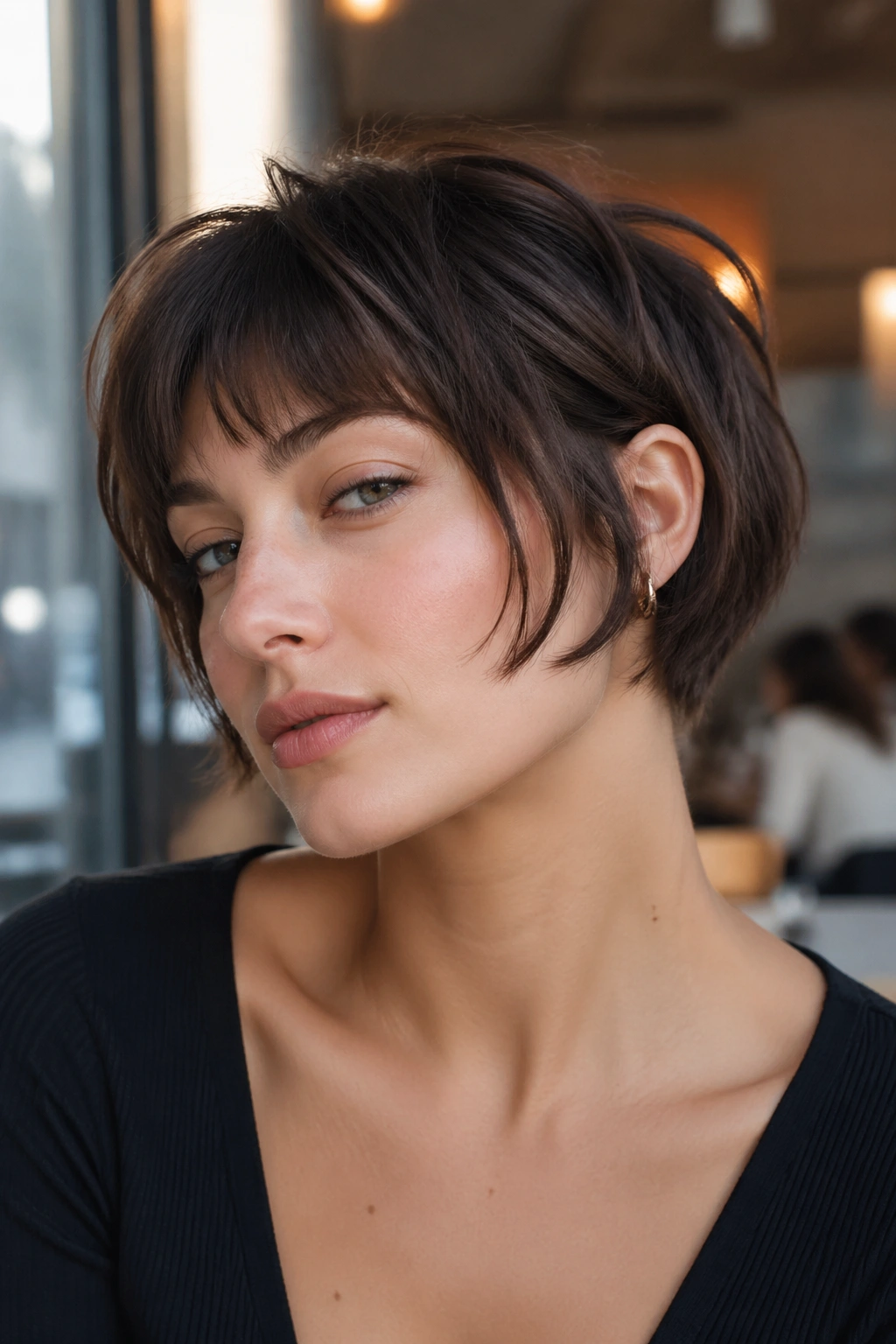
There’s something a little cheeky about a micro version. It sits above the chin, sometimes even right around the mouth line, and the top has just enough shaggy movement to keep it from looking severe. It’s the cut you wear when you want the neck and jaw to be part of the look.
Picture a short jacket, a sharp collar, and this haircut tucked close to the face. It does that kind of work. The ear line becomes visible, the nape looks tidy, and the top has enough texture to keep the whole thing from feeling too exact.
- Best when the hair is straight to slightly wavy.
- Needs regular shape-ups, because short hair shows growth fast.
- Works well with tucked styling and a side flip.
- Can look very strong with big earrings or a high neckline.
This isn’t the softest version in the bunch. It has presence. If you like your hair to feel a little graphic, this is the one to watch.
9. The Side-Part French Bob Wolf Cut
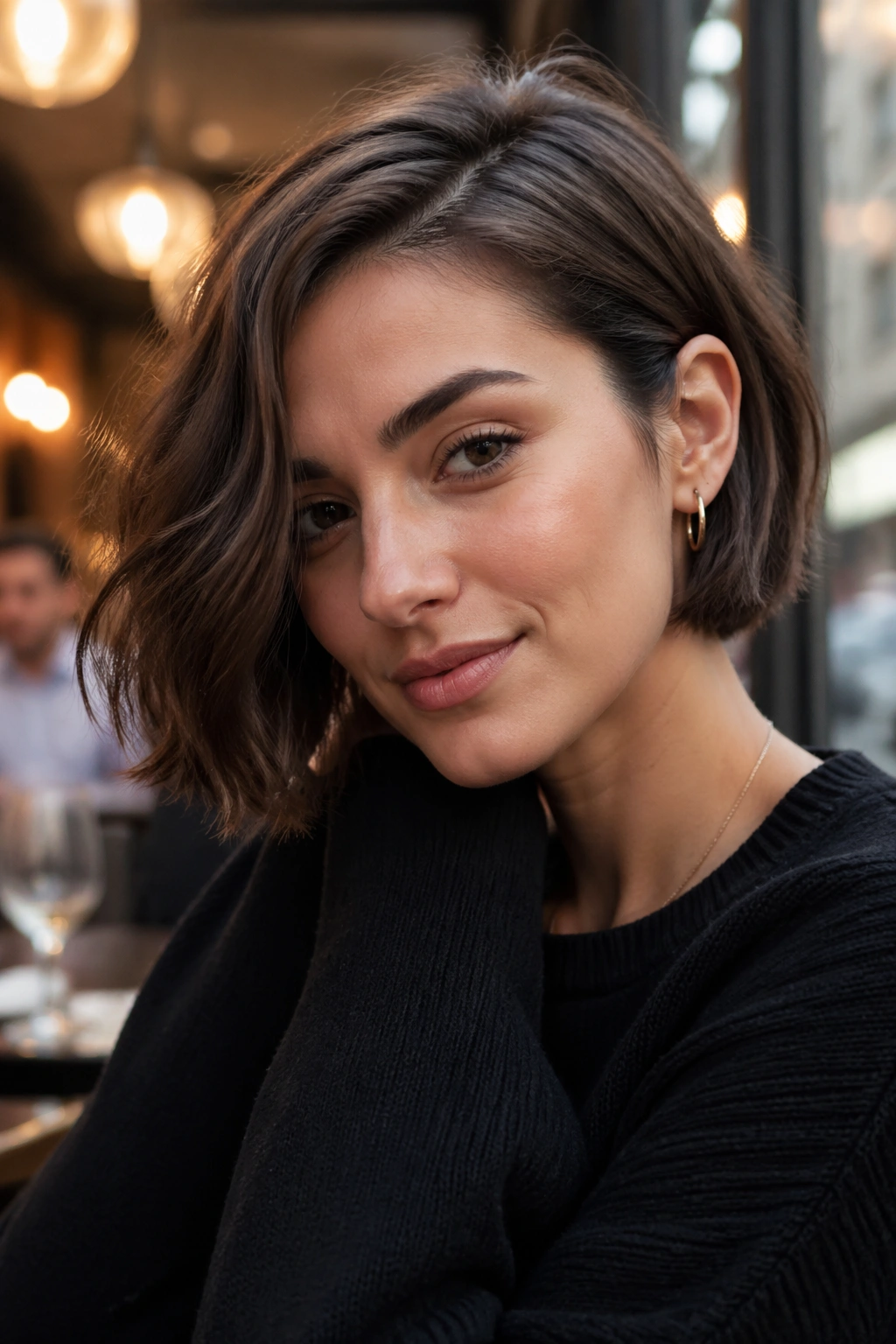
A side part changes everything. It lifts one side, collapses the other just enough, and gives the cut a natural asymmetry that feels less staged than a centered shape. The French bob stays chic; the wolf layers make the part look lived in rather than formal.
Unlike a center part, which can put the face frame dead evenly on both sides, a side part lets one section sit heavier and the other sit lighter. That helps if you have a cowlick, or if your hair insists on separating in one direction anyway. Fighting that usually wastes time.
The length can stay classic here, around the jaw or just below it. The magic is in the way the layers travel across the forehead and cheek. One side can tuck behind the ear, the other can fall forward, and suddenly the cut has movement without looking fussy.
I’d recommend this for anyone who wants a bob that feels a little less symmetrical and a little more alive. It’s not dramatic in the loud sense. It’s subtler than that.
10. The Tousled French Bob Wolf Cut with Bottleneck Bangs
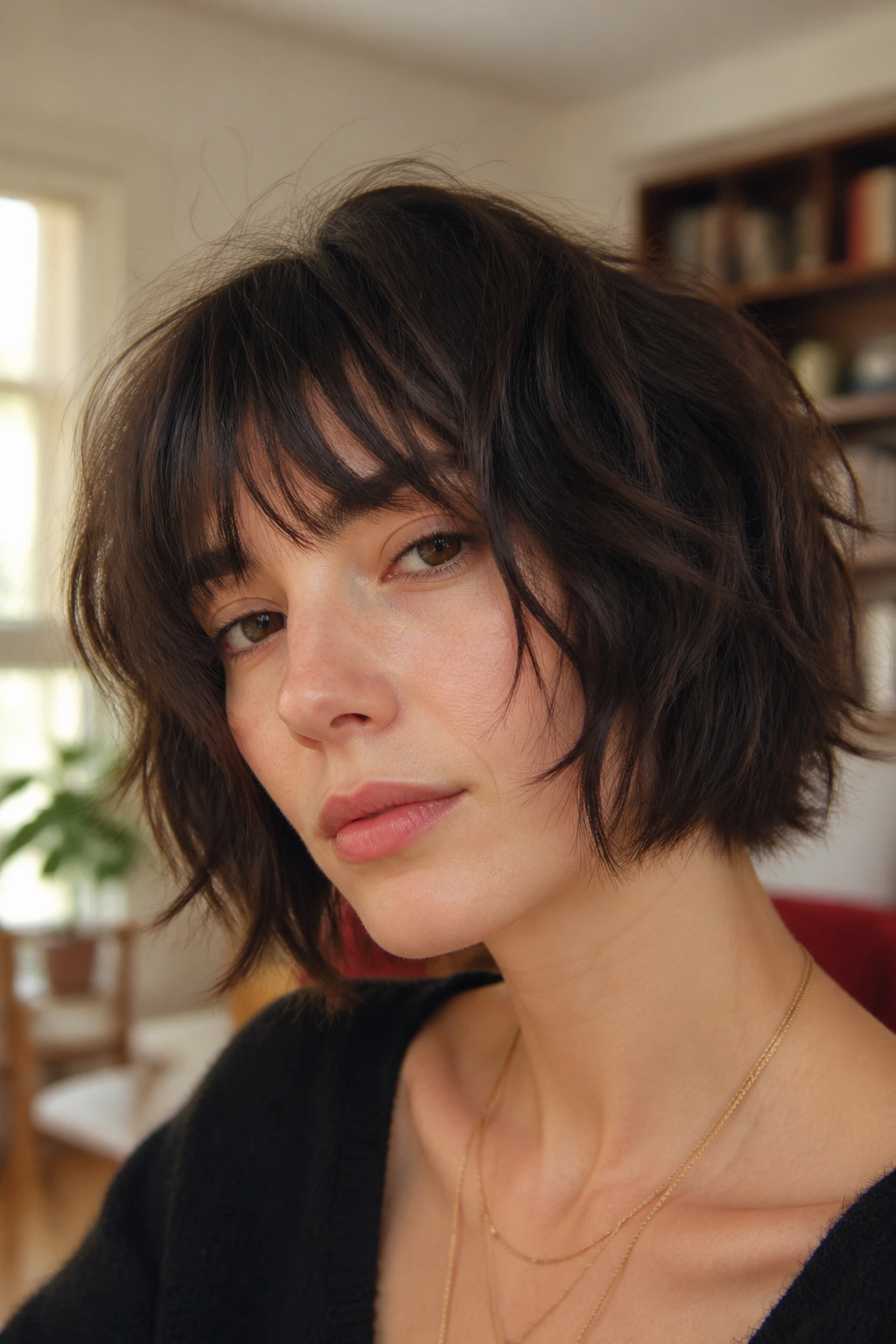
Bottleneck bangs are one of those details that make a cut look thought through. They start narrower near the center of the forehead, then widen gently around the cheekbones. That shape works well with a bob because it softens the top while the ends keep their clean line.
The tousled finish is what makes this version sing. Not polished. Just bent, separated, and slightly imperfect. The bangs should move a little instead of sitting like a curtain. The sides should feel touchable, not stiff.
A round brush can help at the front, but you do not need a blown-out look here. A quick bend through the fringe and a little grit at the ends is usually enough. If the roots go flat, the whole haircut gets sleepy.
This is a good choice when you want forehead coverage but don’t love heavy bangs. It gives shape without closing the face in. There’s a reason stylists keep coming back to this combination.
11. The Sleek French Bob Wolf Cut with Hidden Layers
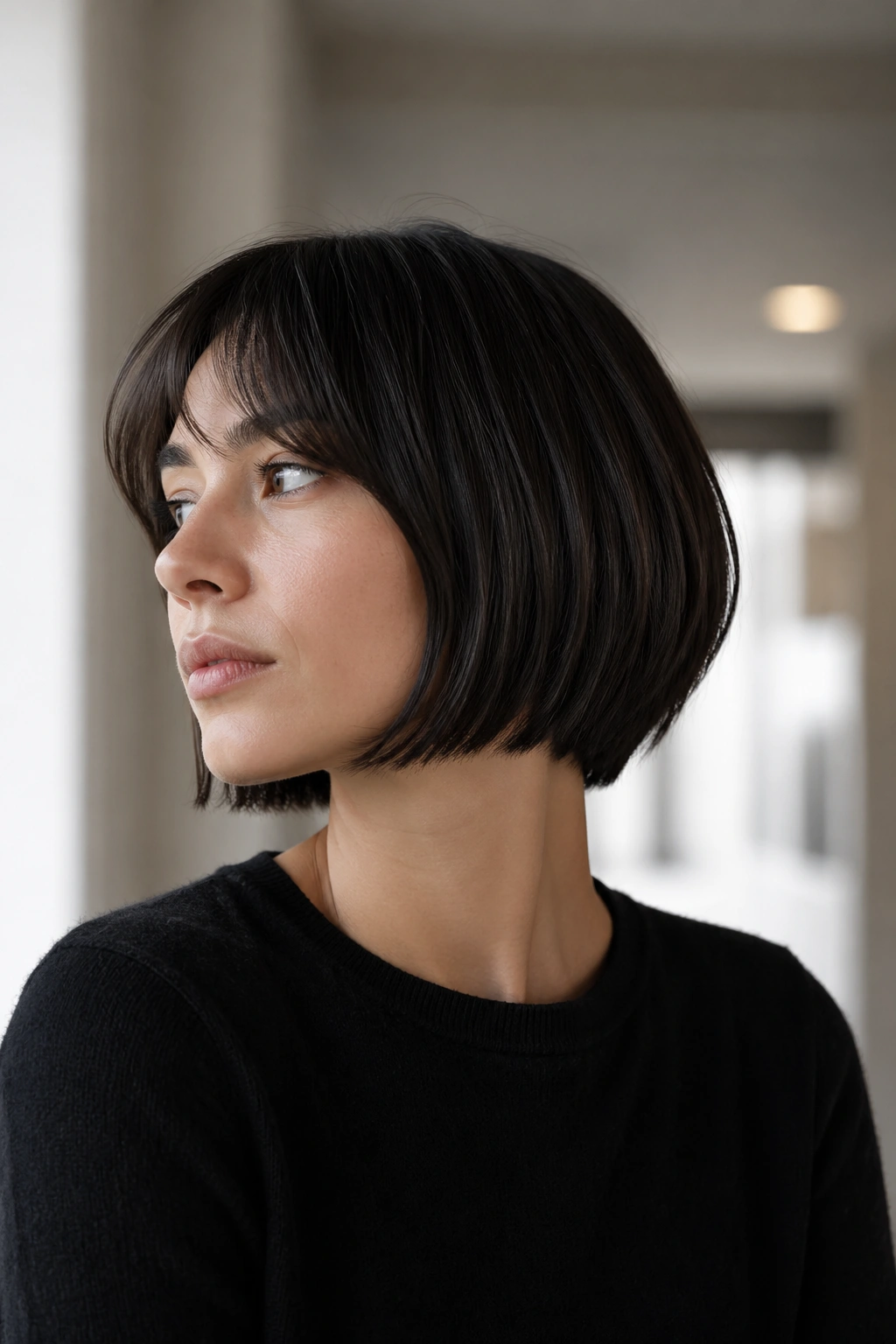
Not all wolf cuts need to look shaggy. I’ll say that plainly, because people sometimes assume texture has to mean mess. Hidden layers let the shape move while the outside stays sleek, and that can be far more elegant than a heavily razored finish.
The outside line remains clean. The layers live inside the haircut, where they lift the crown and take away bulk without shouting about it. That makes this version useful for straight hair, especially if you want a bob that still looks neat after a long day.
A paddle brush blow-dry or a flat brush finish helps keep it smooth. Finish with a light serum through the ends only. Too much product makes short hair look greasy fast. A tiny amount is enough.
This cut is the one I’d point to if someone likes the idea of a wolf cut but doesn’t want to look like they borrowed it from a music video. It’s polished, but not stiff. There’s a difference.
12. The Bixie-Inspired French Bob Wolf Cut
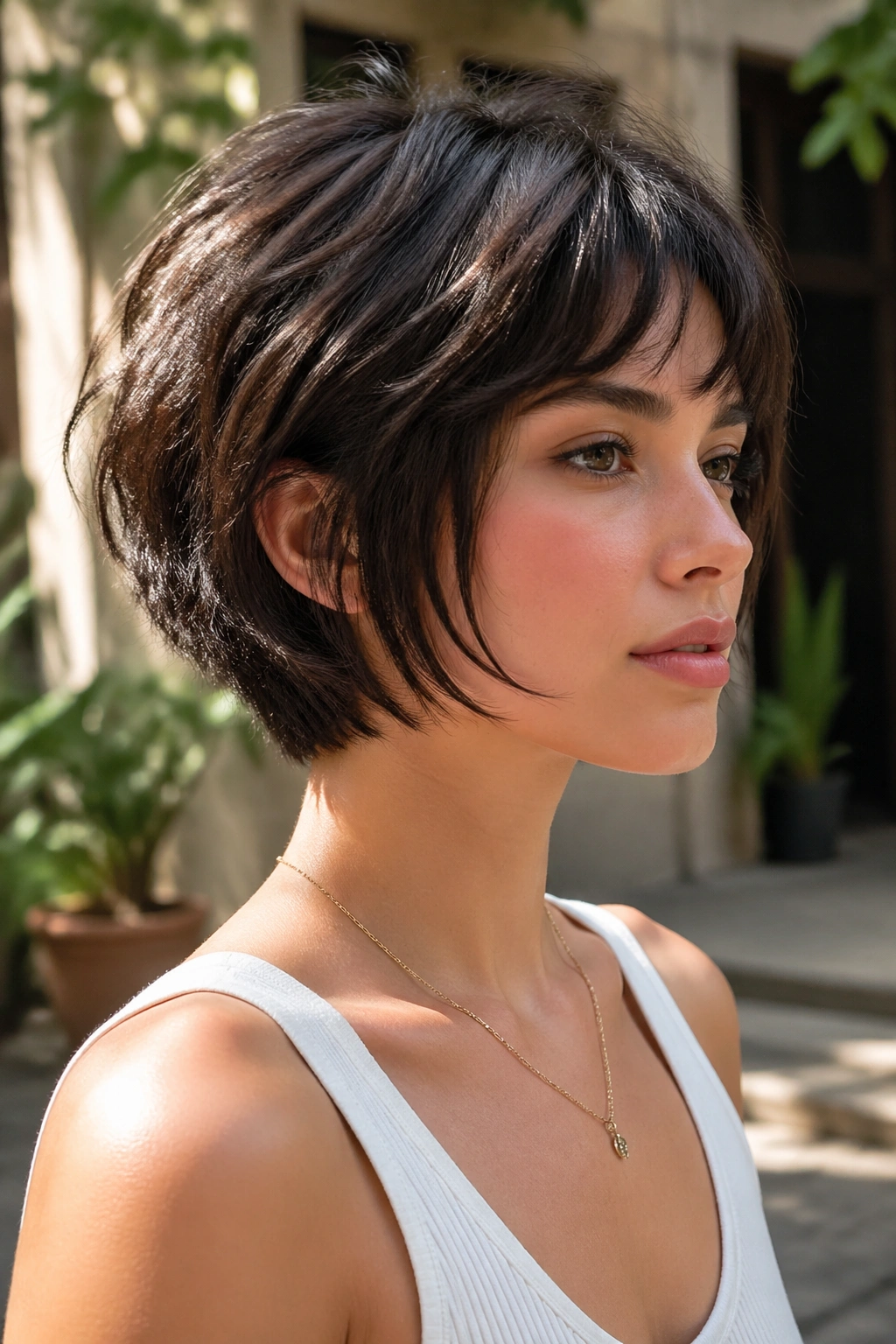
This is the bridge between a bob and a pixie, and it makes sense for anyone who wants shorter hair without losing softness. The back can sit a little shorter, the sides can stay closer to the head, and the top gets just enough lift to keep the shape from feeling flat or severe.
Who it suits
People with strong facial features usually wear this well. So do anyone who likes a short neck line and doesn’t mind showing a bit more ear. The cut feels confident, but not hard.
What keeps it in the French-bob family is the rounded front and the controlled edge. What pulls it toward the wolf cut is the slight disconnection through the crown and the bit of lift up top. That mix makes it look intentionally undone, which is a nicer phrase than “messy,” because messy can go very wrong very fast.
This one grows out in a useful way, too. The shape shifts into a longer bob before it turns awkward. That’s a real advantage if you do not want to sit in a salon chair every few weeks.
13. The French Bob Wolf Cut with Micro Bangs
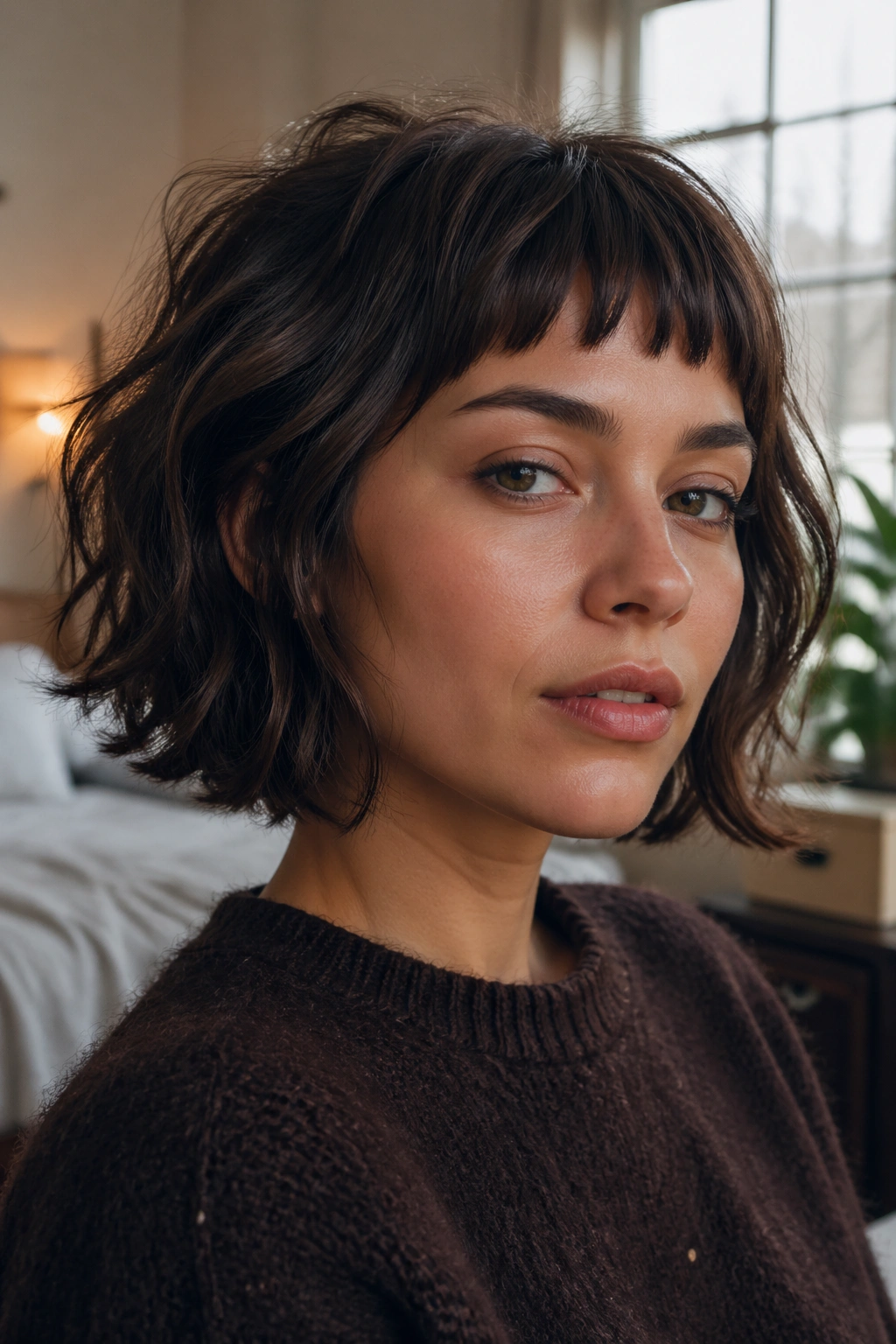
Micro bangs change the mood immediately. The haircut stops being soft and starts being graphic. That can look fantastic when the rest of the cut stays loose, but if the sides are also too sharp, the whole thing can tip into costume territory.
The trick is balance. Keep the bob edge rounded or softly blunt, and let the micro fringe do the loud part. The crown can still have small lifted layers, but they should be subtle enough that the bangs remain the focal point.
Why this version stands out
The forehead opens up. The eyes get stronger. The shape feels very direct. That’s the appeal.
It also asks more from the wearer. You need some comfort with attention, because micro bangs do not hide in the background. Styling them matters, too — even a small cowlick at the front can shift the whole look. A mini flat brush or a tiny round brush helps keep the fringe from kicking off in the wrong direction.
If you like sharp contrast and clean lines, this is a fun one. If you want softness first, skip it.
14. The French Bob Wolf Cut with Long Face-Framing Pieces
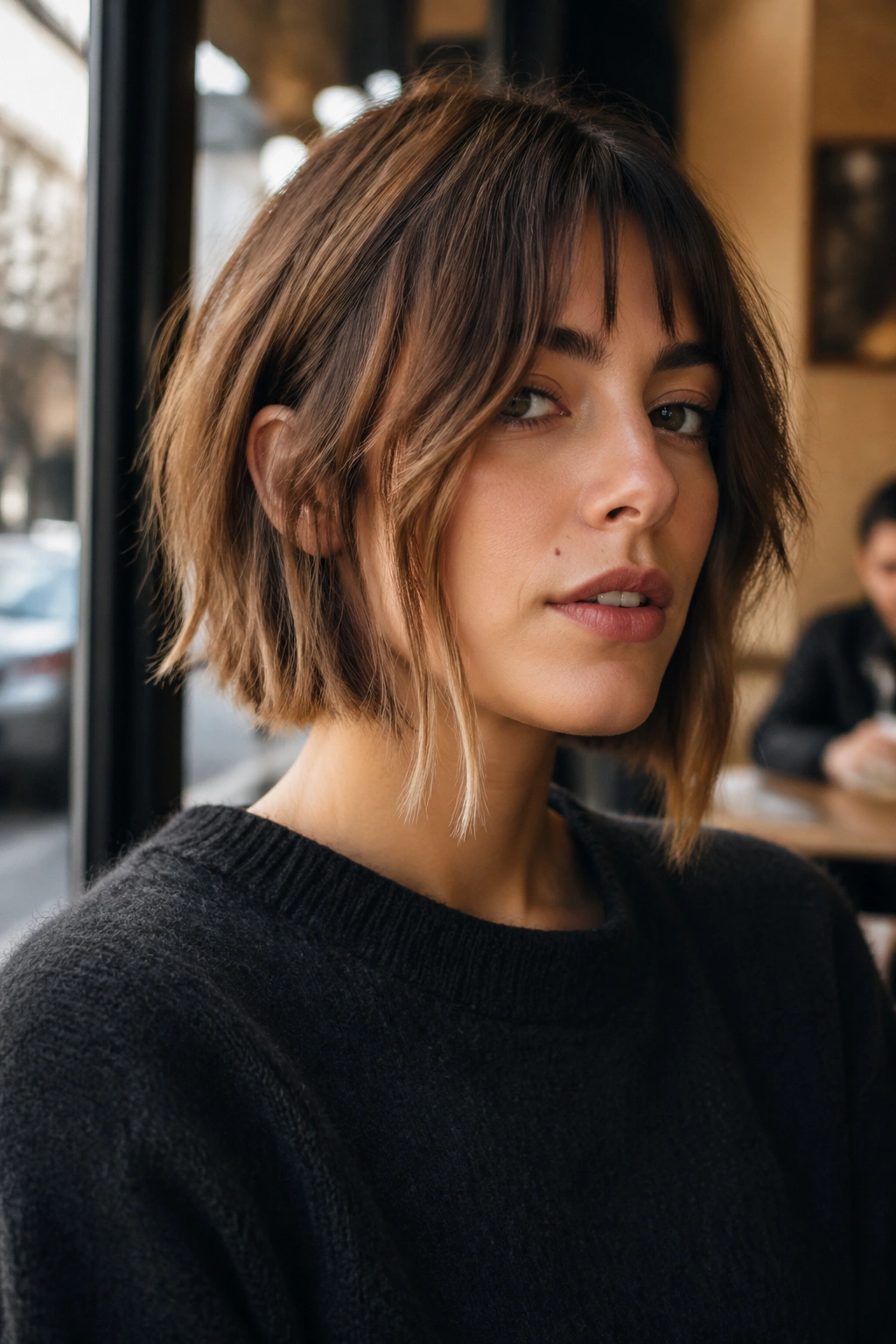
Sometimes the smartest move is to keep the front longer than the rest. Those longer pieces can skim the lip or chin while the back stays shorter and the crown stays lightly layered. That creates a shape that feels flattering without looking like it’s trying too hard.
This works especially well if you want to soften the cheeks or give the face a longer line. The shorter back keeps the bob energy alive, while the longer front pieces add movement and contour. It’s a small adjustment, but it changes the whole mood of the haircut.
A stylist can blend the face frame into the fringe or let it stand on its own. I prefer the blend. It feels less chopped and more natural. And it grows out better, which matters more than people like to admit.
Tuck one side behind the ear and leave the other loose, and the haircut suddenly looks more styled without any extra effort. That little asymmetry does a lot of work.
15. The Salt-and-Pepper French Bob Wolf Cut
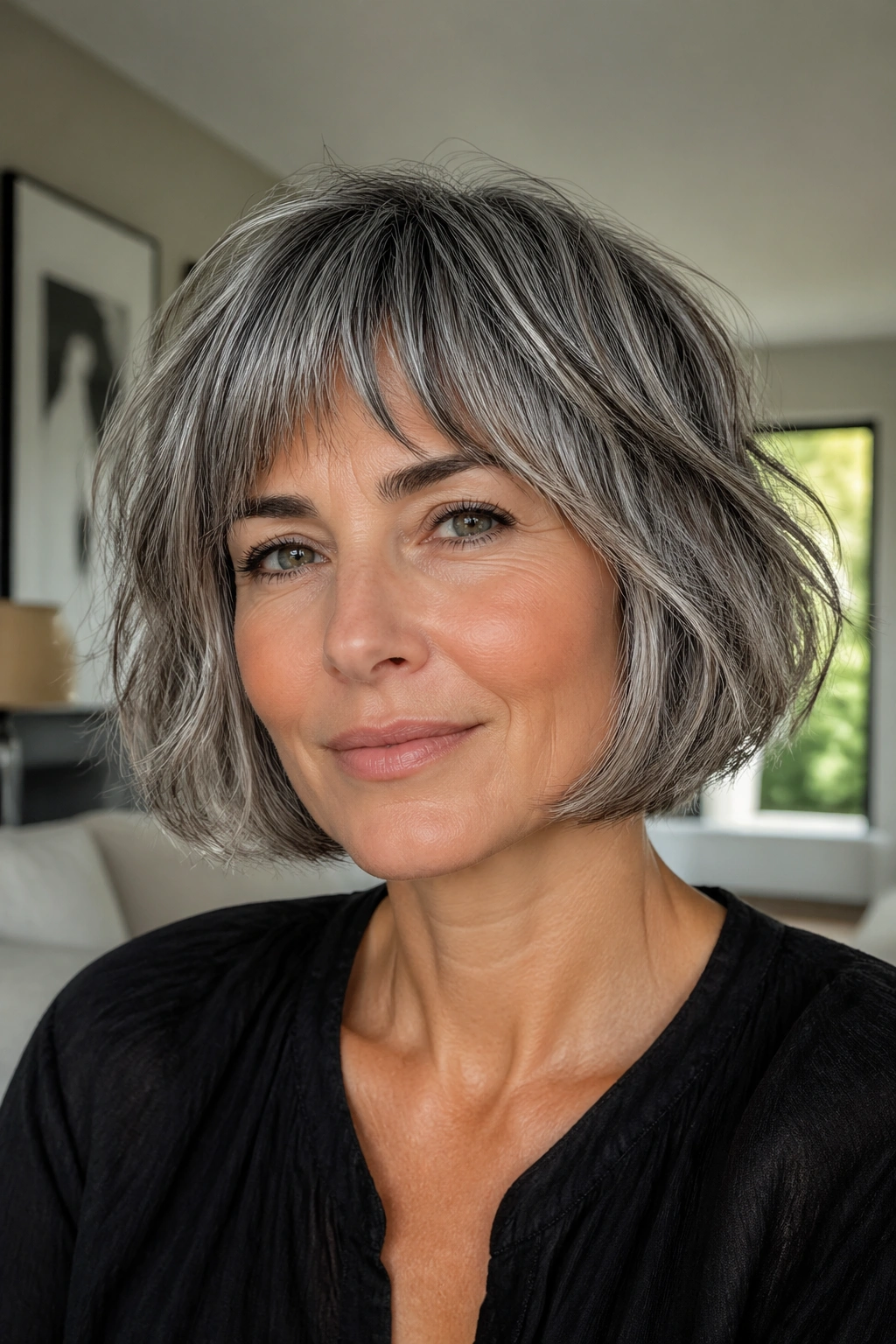
Gray hair has its own texture story. Sometimes it comes in soft and smooth, sometimes wiry, sometimes with a mix of both in the same head. A French bob wolf cut can make that texture look intentional rather than accidental, which is a nice change from trying to flatten it into submission.
The blunt edge gives gray hair a crisp outline. The light layers keep it from looking too helmet-like or puffy around the sides. That’s the real win here. Gray often reflects more light, so every shape change shows up more clearly, and a clean perimeter helps the whole cut read as deliberate.
I like this version with a bit of shine product, but not too much. A light cream or serum can calm the surface without making the hair limp. If the hair is coarse, a little more moisture helps. If it’s soft, keep the product whisper-light.
This is one of the most elegant pairings in the whole list, and it does not need to be fussy to work.
16. The Flipped-Out French Bob Wolf Cut
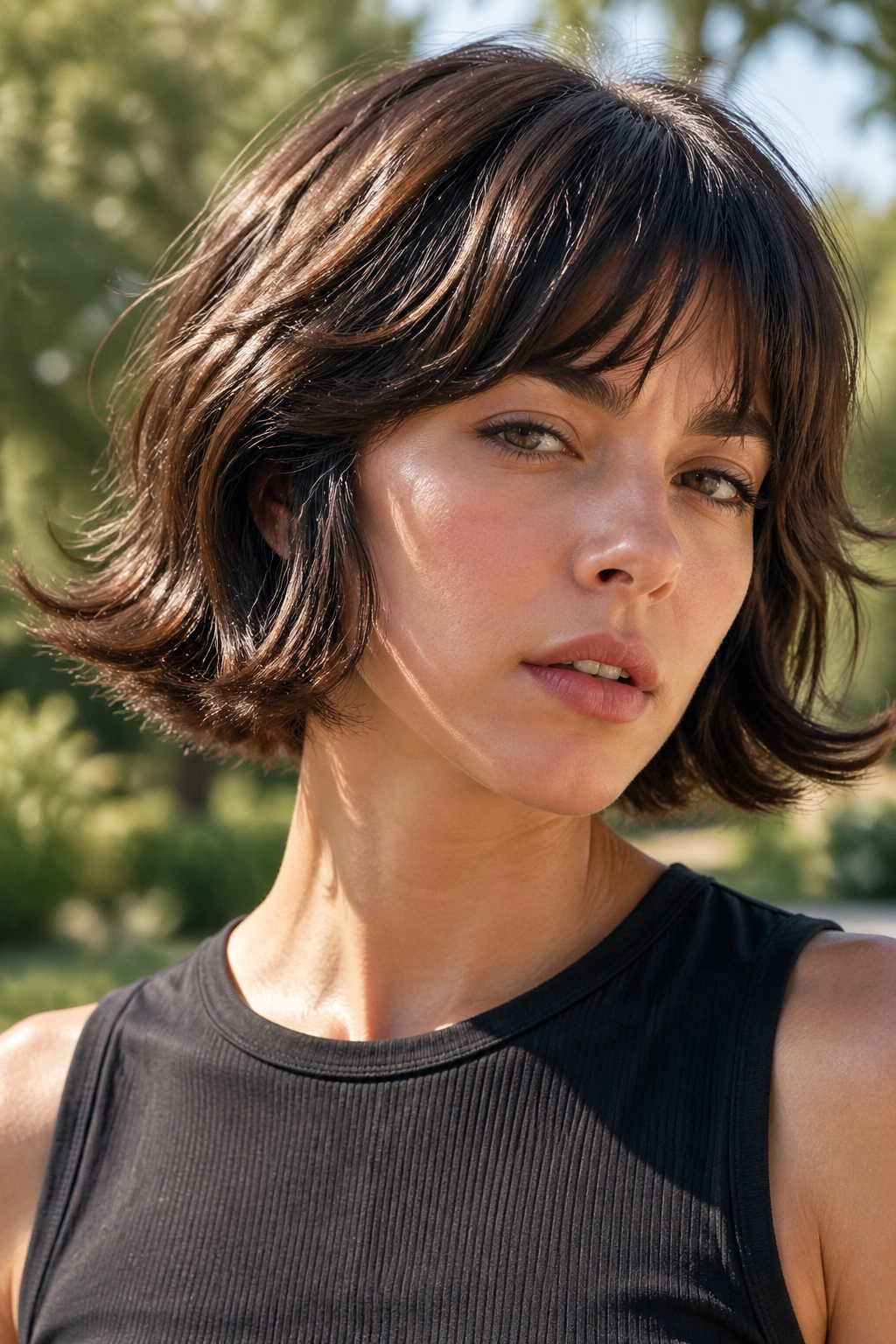
A flipped-out finish gives the bob some attitude without going full retro costume. The ends kick away from the neck, the shape opens at the bottom, and the wolf-cut layers keep the top from feeling too neat. It’s playful in a very wearable way.
How to get the bend
- Blow-dry the ends with a small round brush, rolling the brush outward at the last inch.
- Or use a flat iron to add a soft outward curve, not a hard bend.
- Keep the crown light so the flip stays visible.
- Finish with a flexible spray, not a crunchy one.
This version can lean ’60s, but it doesn’t have to. If the fringe stays soft and the layers are loose, the haircut feels modern instead of costume-like. That’s the difference between a cute shape and a dated one.
I’d reach for this when the bob needs a little energy. Sometimes short hair looks better with movement at the edges than with more layers at the top. The flip gives you that movement right where the eye lands.
17. The Razored French Bob Wolf Cut with Lived-In Ends
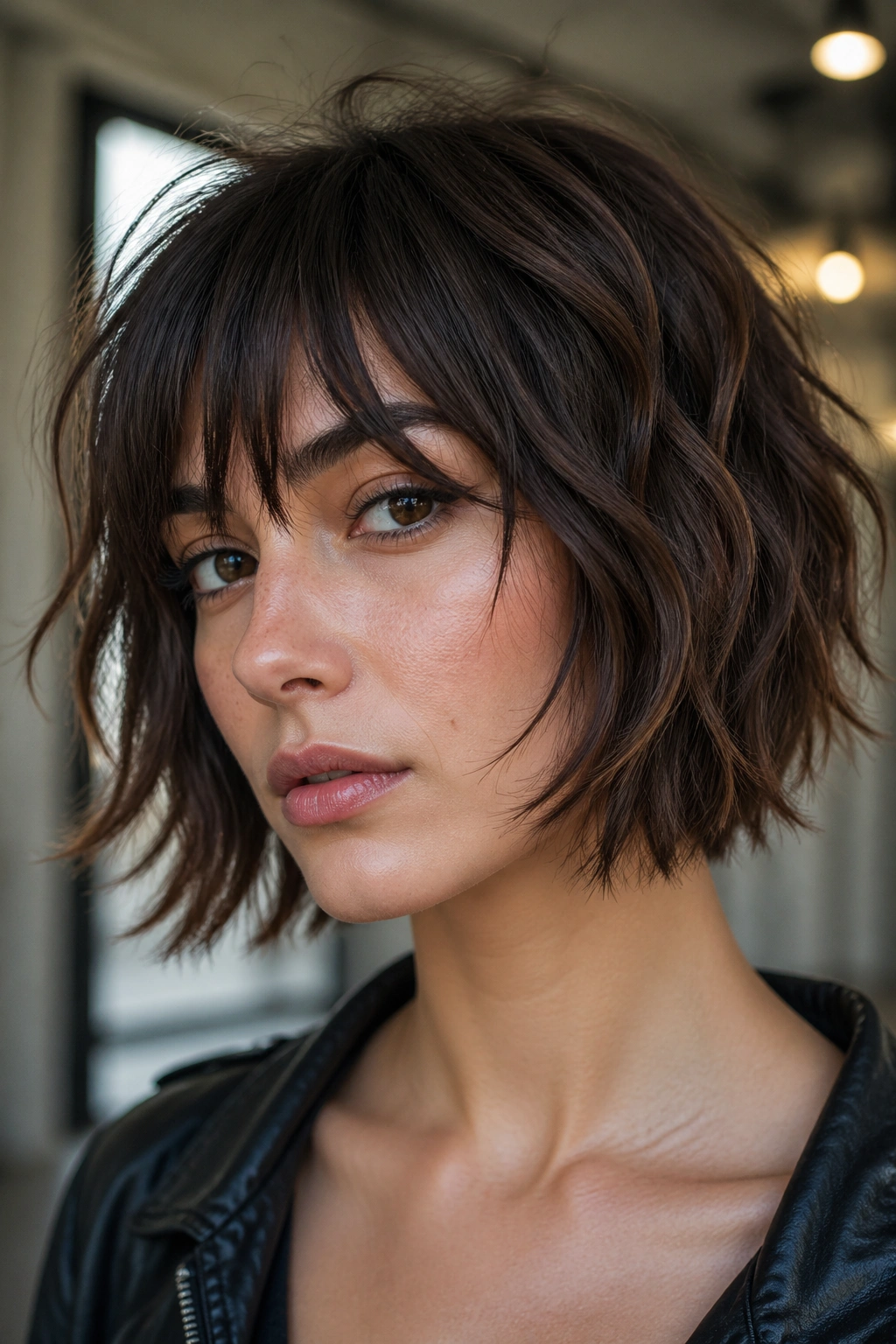
This is the most textured version here, and it is not for everyone. A razor creates softer, broken edges and can make the haircut feel airier, but it also removes weight fast. On the right hair, that’s a gift. On the wrong hair, it can make the ends look frayed.
Medium to thick hair handles this best because there’s enough density left to keep the shape strong. Fine hair can still wear it, but only if the razor work is very restrained. The perimeter should still read as a bob, even if the ends are a little wispy.
The lived-in look comes from not overstyling it. A bit of wave spray, a rough blow-dry, and maybe a dab of paste at the ends are often enough. If every strand is separated, you’ve gone too far.
I like this cut for people who want the haircut to feel a little tough, a little cool, and not too precious. It has edge. That’s the whole charm.
18. The Soft Mullet French Bob Wolf Cut
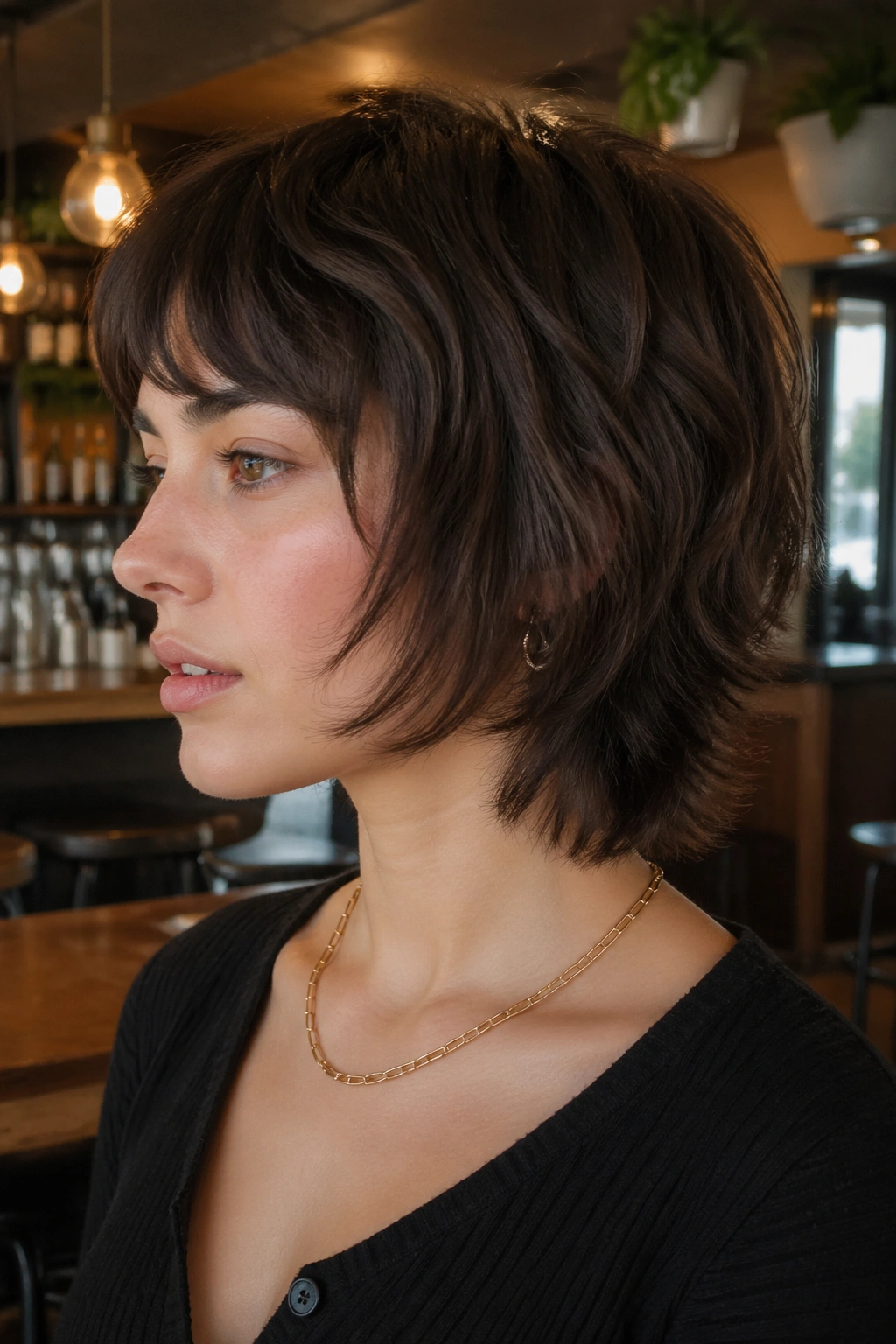
This is the boldest version in the set, but it’s also one of the most interesting when it’s done with control. The front and sides stay bob-like and tidy, while the nape keeps a little extra length so the haircut tapers back instead of stopping abruptly. That’s where the wolf-cut spirit really shows up.
It’s not a full mullet. Thank goodness. The softer version keeps the shape wearable by blending the back into the sides instead of creating a hard disconnect. The result is a cut that looks modern, slightly cool, and much more flexible than people expect.
This shape suits hair that already has movement or likes to sit with a bit of bend. It can be pushed flatter and neater, or mussed up for more edge. That range is why I think it works so well. One cut, several moods.
If you want the French bob to feel less sweet and more sharp, this is the version to try. It has structure up front and a little rebellion in the back. That is a good combination.
Final Thoughts
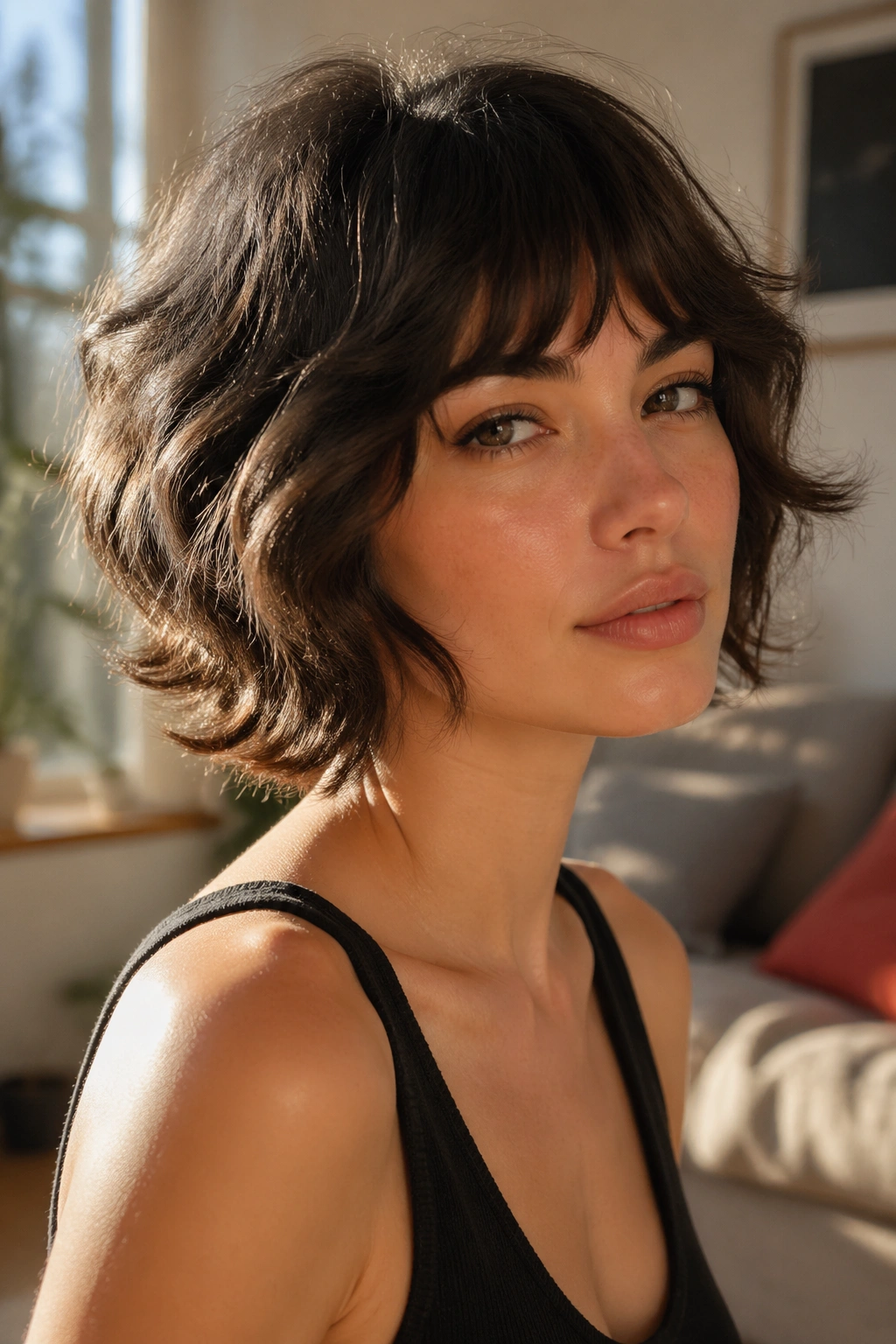
The strongest French bob wolf cut usually isn’t the most dramatic one. It’s the one that gets the ratio right: enough bluntness to hold a shape, enough texture to keep it from feeling stiff. That balance is the whole game.
If your hair is fine, protect the perimeter. If it’s thick, control the bulk. If it’s curly or wavy, let the texture speak, but keep the outline intentional. Those small choices matter more than chasing a trend photo that looked good in one specific light.
Bring two reference pictures if you can. One for the fringe. One for the shape. That’s often enough to keep everyone honest.
