



Straight hair makes the wolf cut bob look cleaner than people expect, but it also punishes lazy layering. Too many short pieces and the shape goes fluffy in the wrong places; too few and you end up with a plain bob that has no bite at all.
The good versions keep a real outline at the bottom and use texture where straight hair can actually show it — around the crown, the temples, and the cheekbones. That balance matters. Straight hair does not hide a bad cut, and it does not need a lot of help to look sharp once the lines are right.
I like this haircut most when it still looks like a haircut on day eight, not a rescue mission on day two. That means smart layer placement, not chaos. It means knowing when to leave the ends blunt and when to break them up a little so the whole thing moves instead of hanging there like a square sheet.
Soft, shaggy, sleek, face-framing, grown-out, cropped — the range is wider than most people think. And the best place to start is the version that gives straight hair movement without stealing its thickness.
1. Soft Razor Wolf Cut Bob
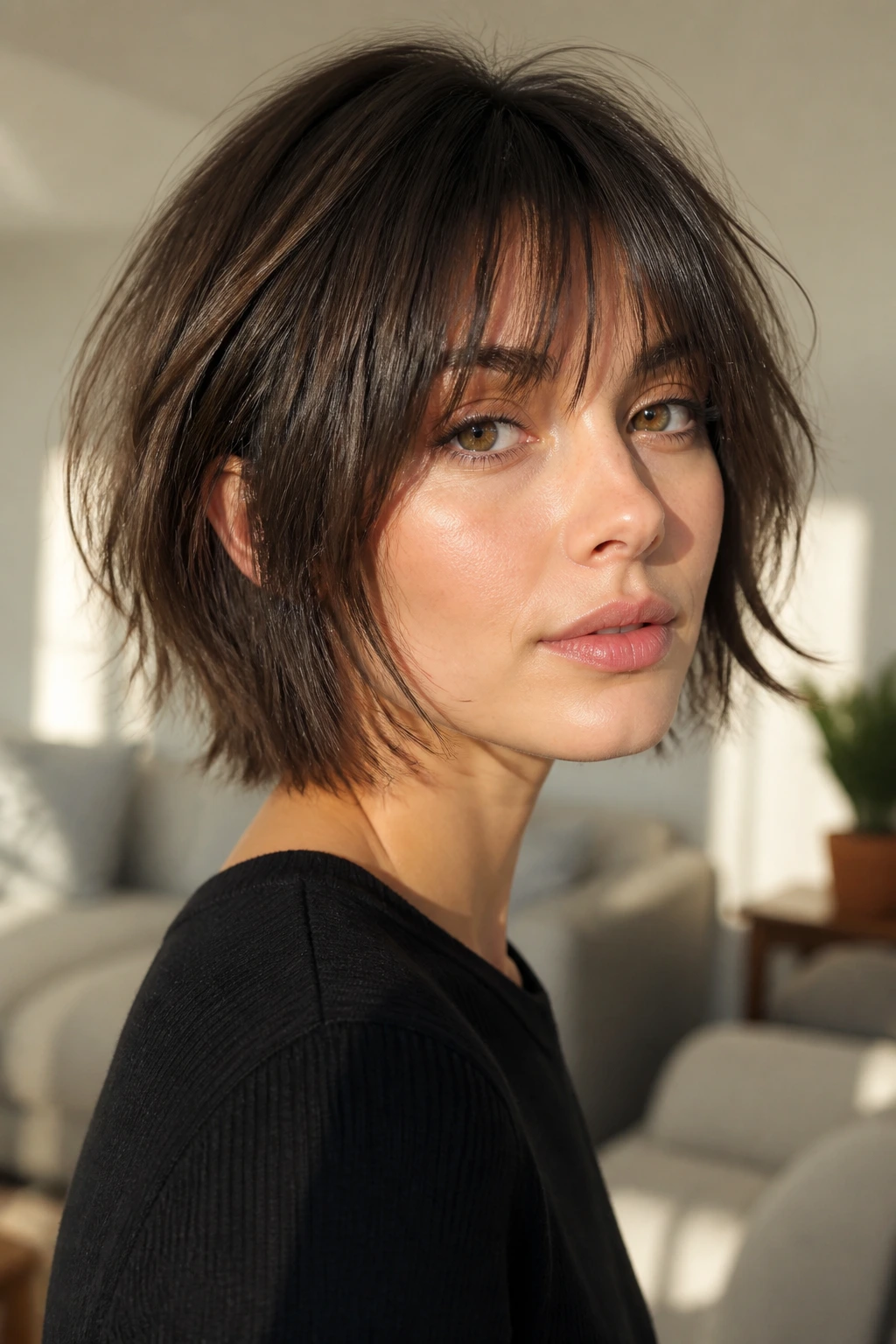
The soft razor version is the one I recommend when you want movement but not drama. It keeps the bob line readable while shaving off bulk inside the shape, which is a smart trade on straight hair. Too many razor cuts on straight, fine hair can look wispy in a bad way; this version keeps the edges soft without making the whole cut feel weak.
Why It Works on Straight Hair
Straight hair shows every line, so the razor has to be used with restraint. Ask for the perimeter to stay fairly full, with the softest texture built through the middle and around the face. That gives you that lightly broken, lived-in feel without turning the ends into see-through strings.
- Shortest layers should land below the cheekbone, not right at the jaw, if your hair is fine.
- Keep the bottom line almost blunt so the bob still has shape.
- A light mousse at the roots gives the cut more lift than a heavy cream ever will.
- If your hair is thick, this version takes weight out fast without chopping the whole head up.
Best tip: ask for texture where hair naturally bends, not everywhere. That one choice keeps the cut airy instead of frayed.
2. Chin-Length Wolf Cut Bob with Curtain Bangs
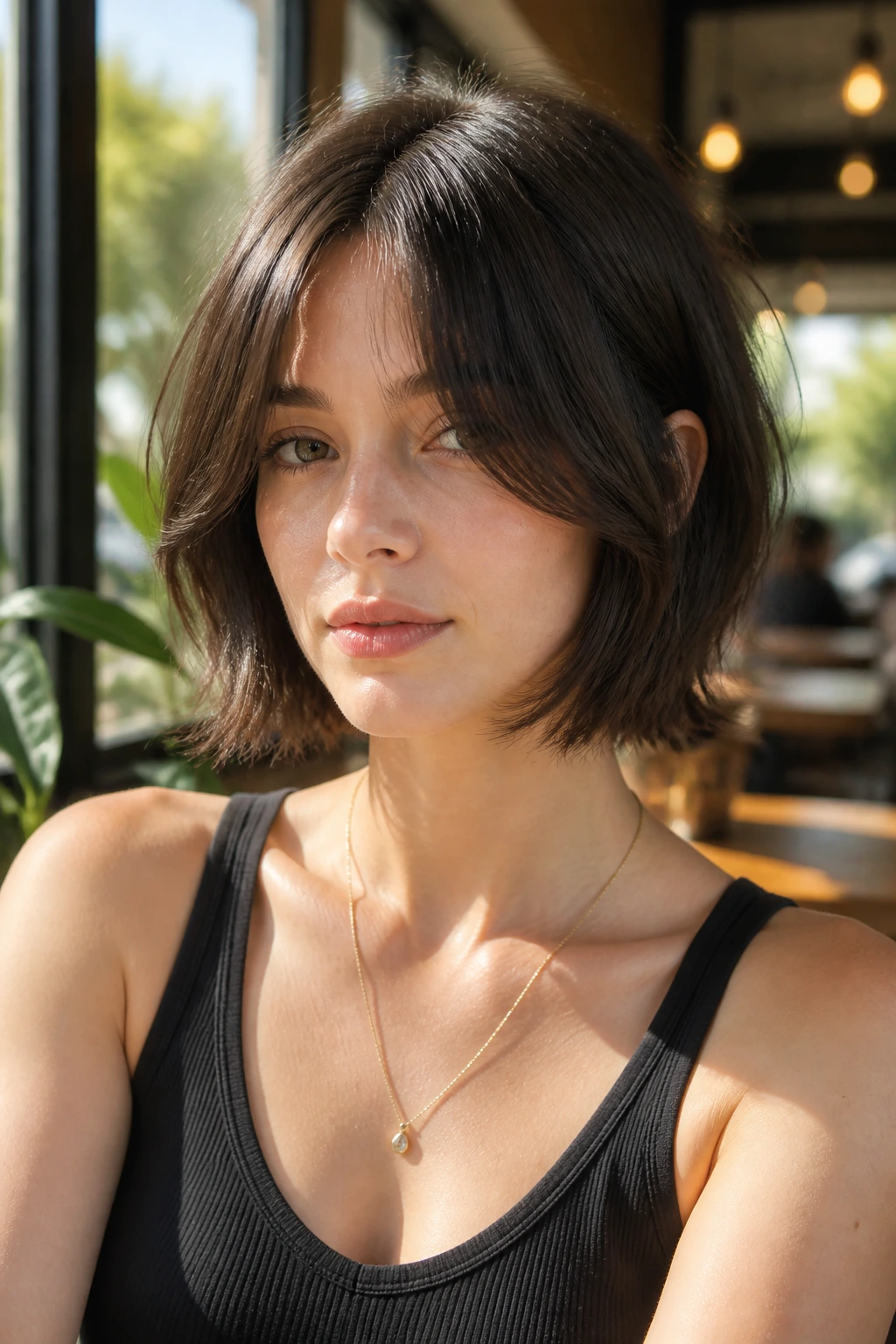
A chin-length wolf cut bob with curtain bangs is one of the easiest ways to make straight hair look intentional without a lot of styling. The length sits high enough to show off the neck and jawline, while the bangs soften the front so the cut doesn’t feel blunt or severe. It has a neat shape, but not a stiff one.
Curtain bangs do a lot of the work here. On straight hair, they fall in cleaner ribbons, which means you can see the parting and the face-framing effect without needing waves to sell the look. Keep the shortest part of the fringe around the bridge of the nose, then let it open toward the cheekbones. That gives the hair a little movement without stealing attention from the bob itself.
This version works especially well if your face feels wider through the cheeks or if you want to bring attention up toward the eyes. It also grows out kindly. A chin-length wolf cut bob can still look on-purpose when it gets a little longer, which is more than I can say for some short cuts that go awkward almost immediately.
The one thing I would avoid is over-thinning the bangs. Straight hair already separates easily. If the fringe is too sparse, it can look stringy by lunch.
3. Sleek Wolf Cut Bob with Invisible Layers
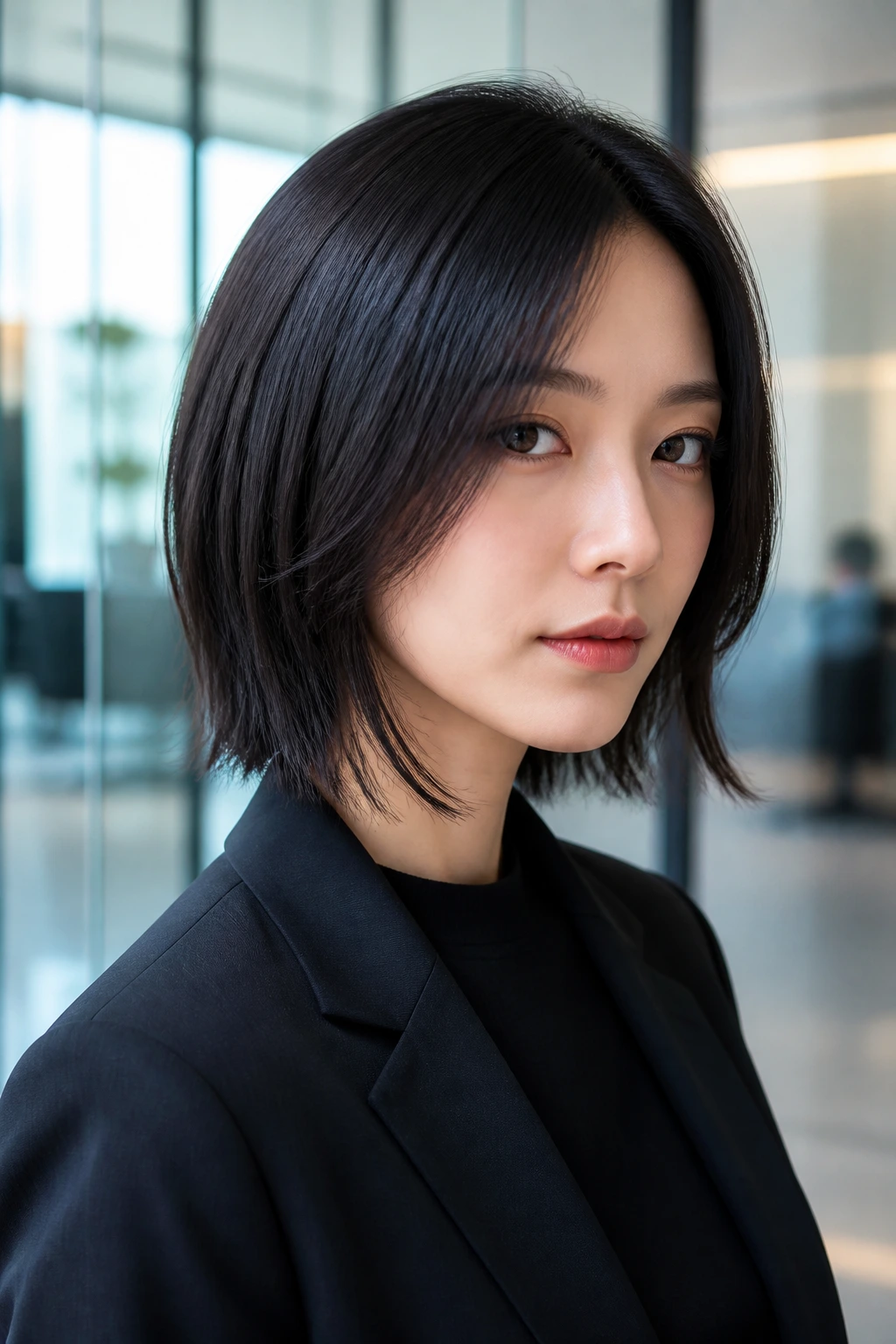
A wolf cut bob can look almost conservative until the movement hits the sides. That is the magic of invisible layers. On straight hair, the haircut stays sleek from the front, but the hidden interior cut gives the ends enough break that it never falls flat in one heavy slab.
This is the version I like for people who live in button-down shirts and do not want their hair shouting for attention. The shape is polished, the outline is clean, and the texture is tucked inside the cut where it can do its job quietly. Ask for soft internal layering rather than obvious choppy steps. The point is motion, not a dramatic staircase through the back.
Styling is simple, which is the appeal. A quick blow-dry with a flat brush, a bend at the ends, and a little root lift at the crown is enough. You do not need beach spray by the gallon. In fact, too much texture product can make the whole thing feel dusty and overworked.
If your hair is fine and pin-straight, this is one of the safest wolf cut bob options. It keeps density at the edges, where you need it most, and still gives the silhouette some swing.
4. Shaggy Wolf Cut Bob with Micro Bangs

Can straight hair pull off micro bangs with a wolf cut bob? Yes — if the layers stay soft and the fringe is kept deliberate. This pairing has a sharper, more editorial feel than curtain bangs, and it works because the short fringe makes the rest of the cut look even cooler by comparison.
Micro bangs are not forgiving, though. They show cowlicks, forehead texture, and bad cutting in a way longer fringes simply don’t. On straight hair, that means the line has to be clean and the density has to be right. If the bangs are too thin, they look accidental. If they are too heavy, they start to feel costume-y. The sweet spot sits somewhere in the middle: blunt enough to make a statement, soft enough to live in.
How to Wear It
Keep the bob itself a little shaggy, but not exploded. The bangs already bring edge, so the rest of the cut should support them instead of competing. A light bend through the ends and a matte styling paste at the fringe is usually enough.
- Best on straight hair with medium to thick density.
- Works especially well if your forehead is shorter or you like strong eye focus.
- Skip this if you hate trimming bangs every few weeks.
- Ask for a softly broken fringe edge, not a hard block, unless you want that severe look.
The whole effect is bold, but not messy. That matters.
5. Rounded Wolf Cut Bob with Face-Framing Wings
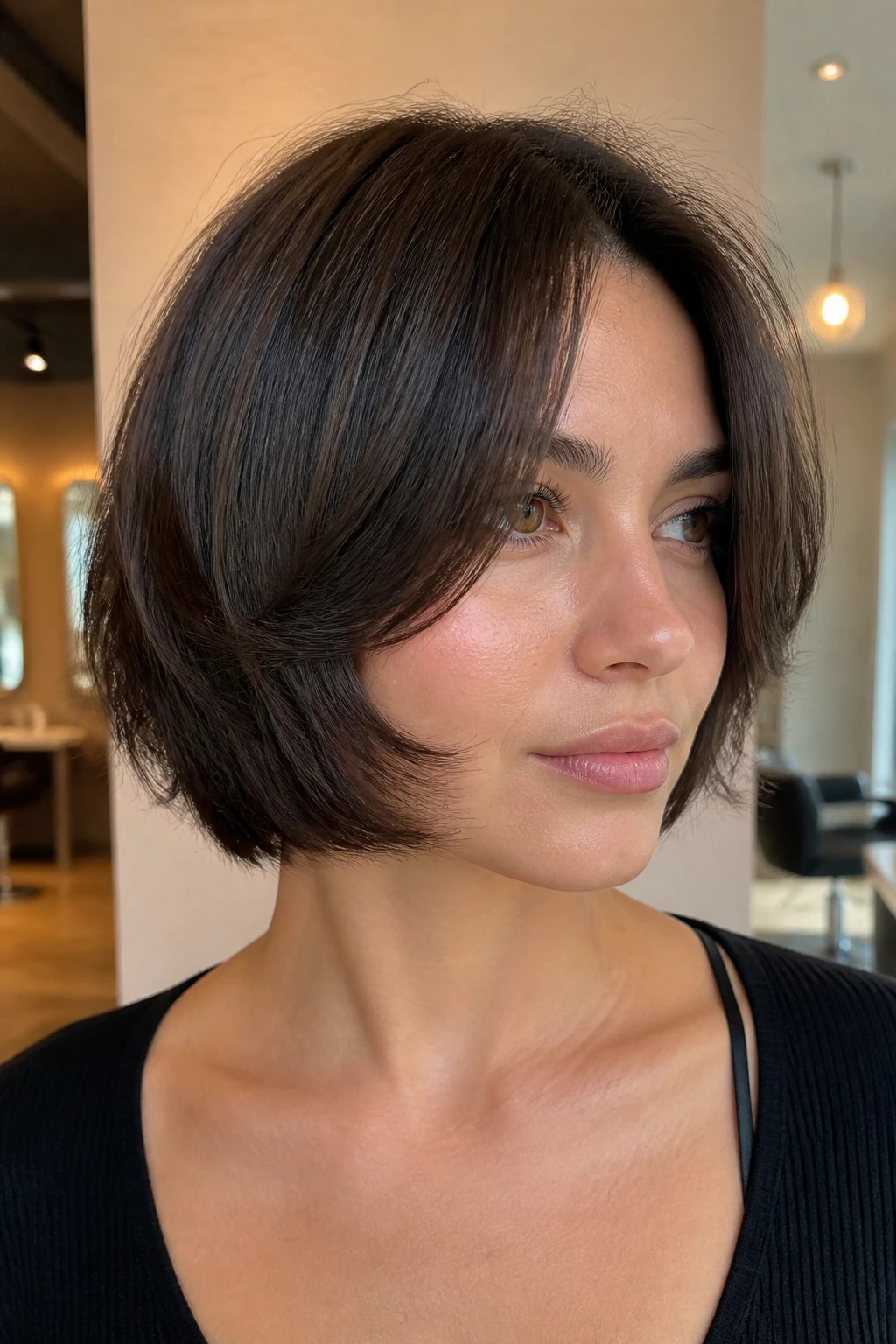
Picture a bob that curves in just enough to follow the jaw, then flicks away near the cheekbones. That is the rounded wolf cut bob, and on straight hair it reads as soft structure rather than shaggy chaos. It’s one of those cuts that makes a face look more open without trying too hard.
The “wings” at the front are the part people underestimate. They take the place of heavy layers by creating movement right where straight hair tends to hang the flattest. A few strategic pieces around the cheekbone and jaw can change the whole line of the face. It’s subtle in a salon chair and obvious in real life.
- Best front length: jaw to just below the chin for most face shapes.
- Keep the back slightly shorter to maintain the rounded feel.
- Ask for face-framing pieces that start around the cheekbone, not the mouth.
- Use a round brush or a large velcro roller if you want the front to tuck under.
This version is especially good if you want softness but do not want bangs. That sounds like a small distinction, but it changes the maintenance load a lot. No fringe means fewer styling decisions on rushed mornings, and straight hair usually behaves better when the front is left free.
6. Collarbone-Grazing Wolf Cut Bob with Long Layers
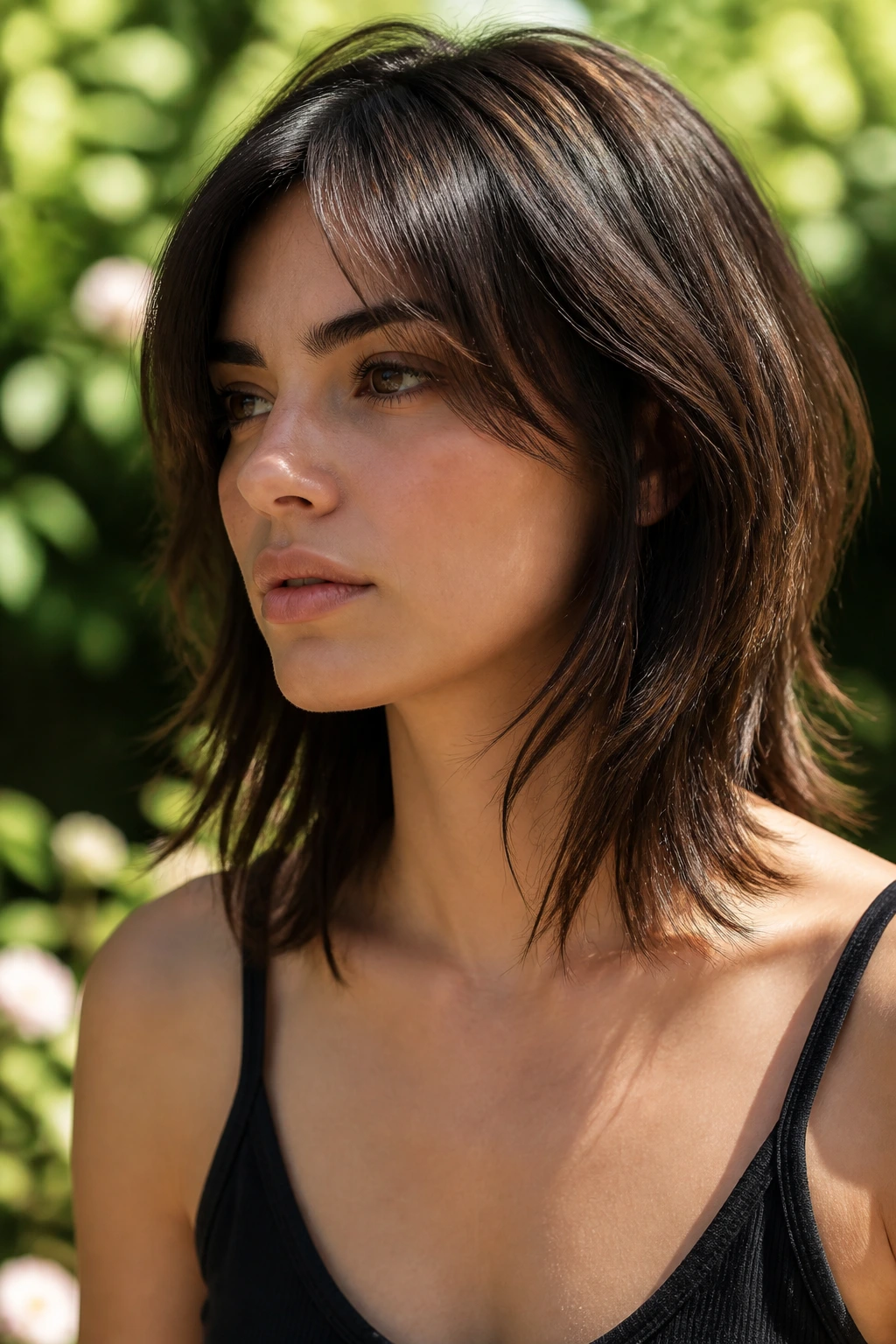
Unlike a chin-length bob, this version keeps enough length for ponytail days and awkward grow-out phases. That makes it a smart pick for straight hair that you do not want to babysit every four weeks. The collarbone-grazing wolf cut bob gives you the shape of a bob with a little more breathing room.
It also has one big advantage: longer hair shows layered movement better when it is straight. Short hair can collapse into one line if the texture is too subtle, but this length lets the layers travel. A few pieces around the face, some internal lift through the crown, and a slightly broken hem are enough to keep it from looking heavy.
This is the version I’d point thick-haired people toward first. It removes that bulky triangle feeling without making the ends thin. Fine hair can wear it too, but the layers need to stay conservative; otherwise the shape starts to disappear from the bottom up.
If you like a haircut that looks good tucked behind one ear, this is a strong choice. It has enough length to fall gracefully and enough texture to avoid the helmet effect. That’s a rare balance.
7. Tousled Wolf Cut Bob with a Deep Side Part
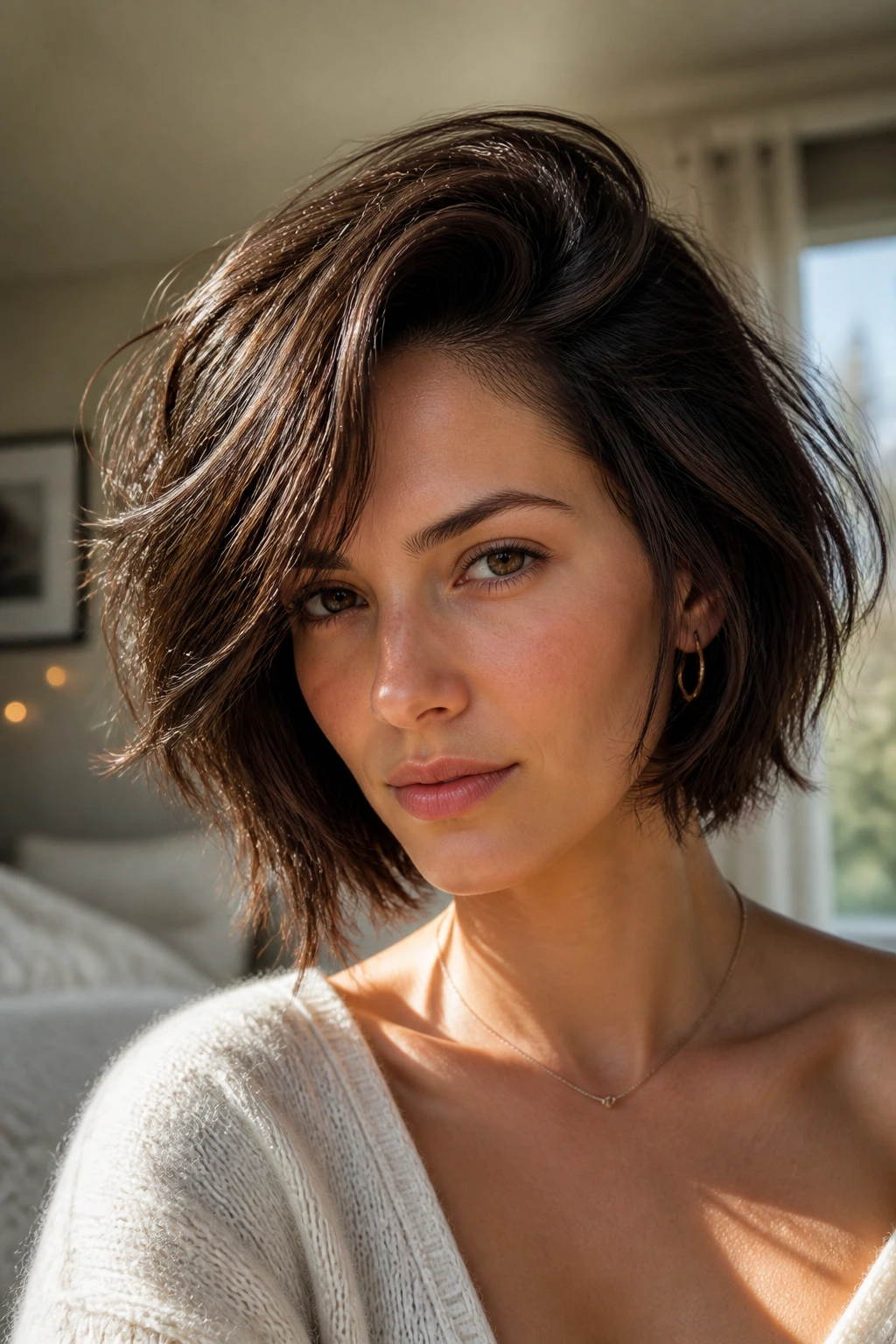
A deep side part changes the whole haircut. Same bob, same layers, different personality. On straight hair, the part builds instant height at the crown and gives the front pieces a little sweep that makes the cut feel more relaxed without actually adding more length.
The reason this works is simple: straight hair tends to lie where it is told, and a side part gives it a stronger direction. The longer side can skim the cheek and collarbone, while the shorter side lifts the root and keeps the top from going flat. That asymmetry is doing real work here. It is not just a style choice; it changes the silhouette.
What to Ask For
- Part the hair roughly above the outer arch of one eyebrow.
- Keep the shortest layers on the heavier side near the cheekbone.
- Add texture only through the mid-lengths, not through the ends.
- Use a root spray or light mousse at the part line for lift.
I prefer this version for anyone who wants movement without bangs. It gives the face some shape, and it is easier to grow out than a fringe-heavy cut. Also, it photographs in a very flattering way, which is useful even if you do not care one bit about photos.
8. French Wolf Cut Bob with Heavy Fringe
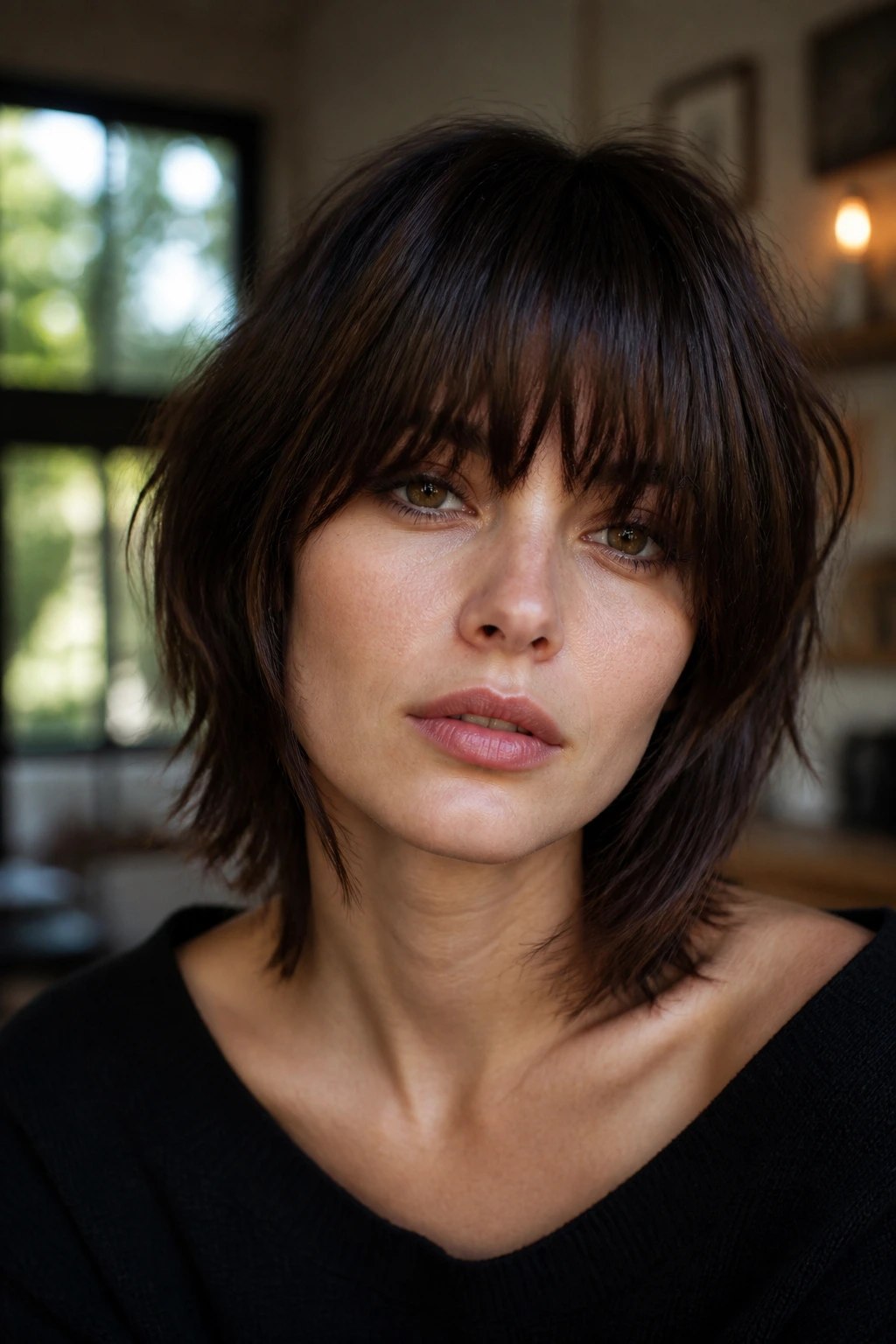
A heavy fringe gives straight hair the most attitude of any version on this list. It turns the wolf cut bob from airy and undone into something with a little more weight up front, and that contrast can be beautiful when it is cut well. The fringe frames the eyes, the layers keep the body from feeling blocky, and the ends stay slightly irregular so the whole thing does not look too neat.
The trick is density. Heavy fringe needs enough hair to sit solidly across the forehead, otherwise it looks like a sad curtain with commitment issues. Straight hair helps because it falls cleanly and does not split apart the moment humidity shows up. Still, the cut has to be precise. A fringe that is too short or too wide can make the whole style feel harsh.
This is a strong option if you like a little drama but not a lot of styling. Blow-dry the fringe side to side with a small brush, then let the bob do its own thing. A bend at the ends is enough. I would not over-curl it; that usually fights the point of the cut.
It suits sharper features, strong brows, and anyone who likes a haircut with presence. Not fussy. Presence.
9. Piecey Wolf Cut Bob with Tapered Ends

Why do some wolf cut bobs look airy instead of thin? Because the texture is placed with intent. The piecey version depends on tapered ends and separated sections, not random thinning. On straight hair, that distinction matters a lot. If the taper is too aggressive, the ends start to look sparse. If it is too mild, the haircut loses its grit.
This cut is built for movement you can actually see. Small, broken pieces around the face. A little separation through the mids. Ends that feather instead of hanging in one solid curtain. It works especially well on straight hair with some natural density because there is enough body to support the texture without it collapsing.
What Makes It Different
- The cut uses point cutting to soften the edges, not heavy razoring.
- The end result should still hold shape when tucked behind the ear.
- A pea-sized amount of styling paste goes farther than you think.
- It looks best when the pieces are visible, not fluffy.
I like this version for people who want their bob to feel touchable. Not messy. Touchable. There is a difference. The hair should separate in little sections when you move it, almost like the cut is creating its own rhythm.
10. Graduated Wolf Cut Bob with Crown Volume
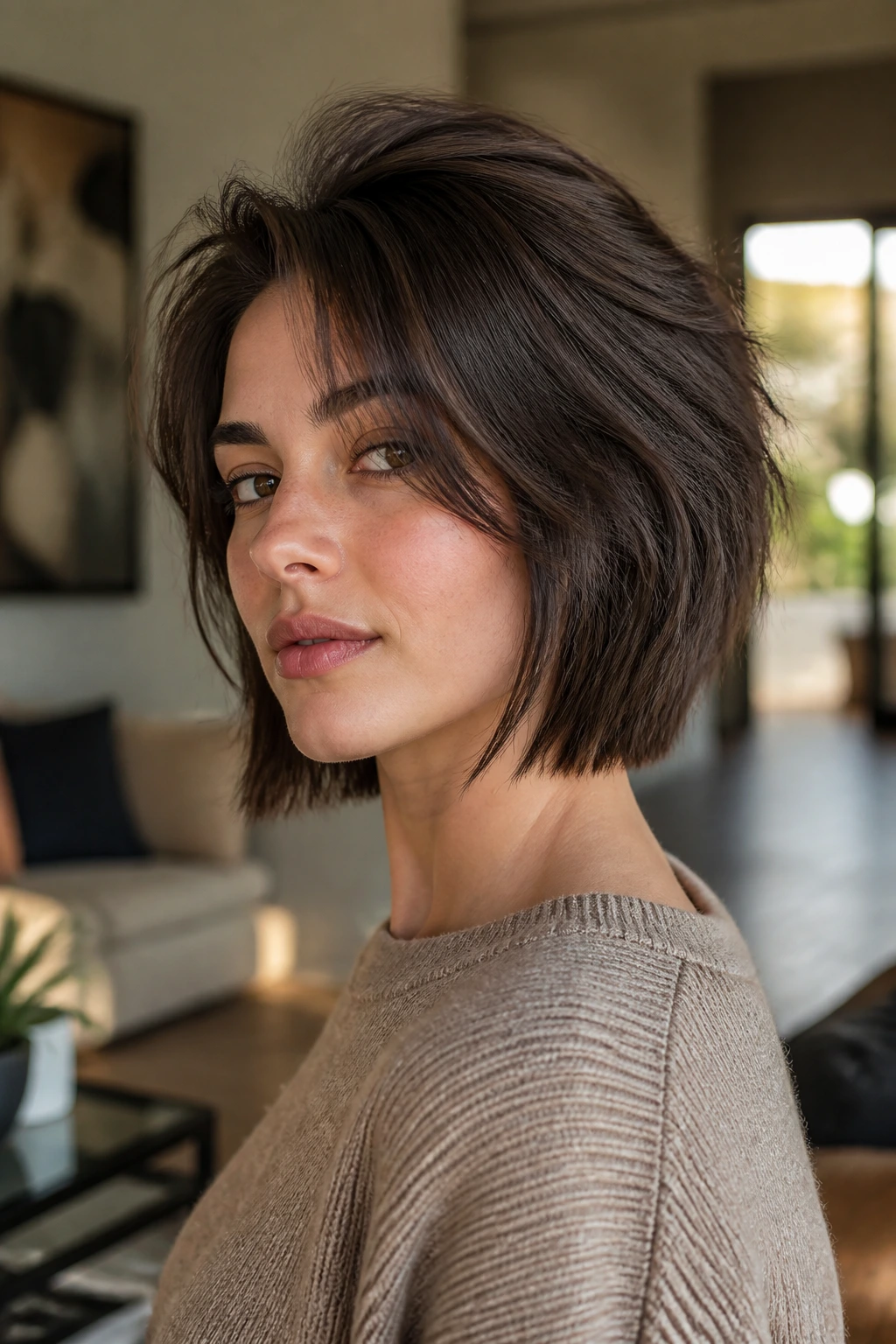
This is the version for people who want lift at the back without the helmet shape of an old-school stacked bob. A graduated wolf cut bob keeps the nape shorter, builds a little volume through the crown, and leaves enough softness around the top layers to avoid looking too formal. Straight hair can wear this shape beautifully because the clean texture makes every bit of graduation visible.
What gives it the wolf cut feel is the broken finish. You still get the stacked structure, but the top layers are not polished into a perfect dome. Instead, they’re lightly disconnected so the silhouette feels modern and a little rougher around the edges. I think that roughness is what saves it. Without that, you’re halfway back to the haircut your aunt wore in the wrong decade.
This cut is strongest on straight hair that is thick, heavy, or prone to collapsing at the back of the head. The shorter nape helps the shape sit up, and the crown layers stop the top from looking flat. If you have fine hair, the same cut can work, but it needs a gentler graduation so the lower half doesn’t look too bare.
Ask for lift, not bulk. That’s the difference between stylish and puffy.
11. Air-Dry Wolf Cut Bob for Low-Effort Styling
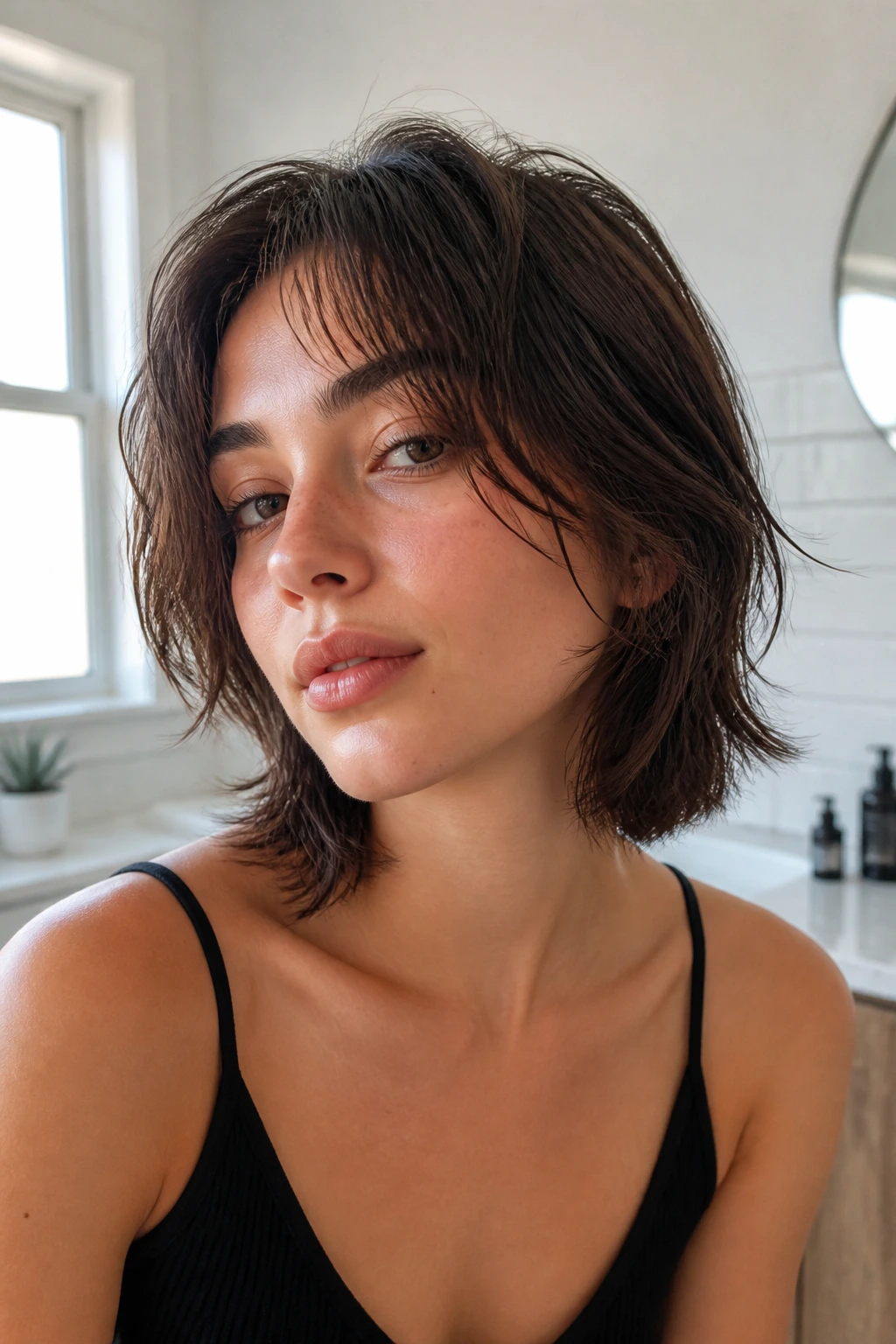
Can you make a wolf cut bob work without hot tools? Absolutely, and straight hair may need that low-effort route more than anyone else. The shape needs a little help at the roots, but once the layers are cut right, an air-dry routine can give you a relaxed finish that still looks deliberate.
The secret is product placement. Put a lightweight mousse or foam at the roots and a small amount of cream only on the mids and ends. If you dump product all over straight hair, it tends to go limp by noon. Clip the crown up while it dries if your roots fall flat, and rake the front pieces away from the face once before they set. That tiny move helps the shape open instead of sticking.
How to Get the Shape Without a Blowout
- Start with damp hair, not dripping wet.
- Work in a walnut-sized amount of mousse through the roots.
- Scrunch the ends once or twice, then stop fussing.
- Clip the crown for 10 to 15 minutes if you need extra lift.
- Let the hair dry on its own, or diffuse on low for 3 to 5 minutes if the ends need direction.
The finish should feel soft and a little undone, not crunchy. If it feels crunchy, there is too much product in the hair. Simple as that.
12. Blunt-Edge Wolf Cut Bob for Straight Hair
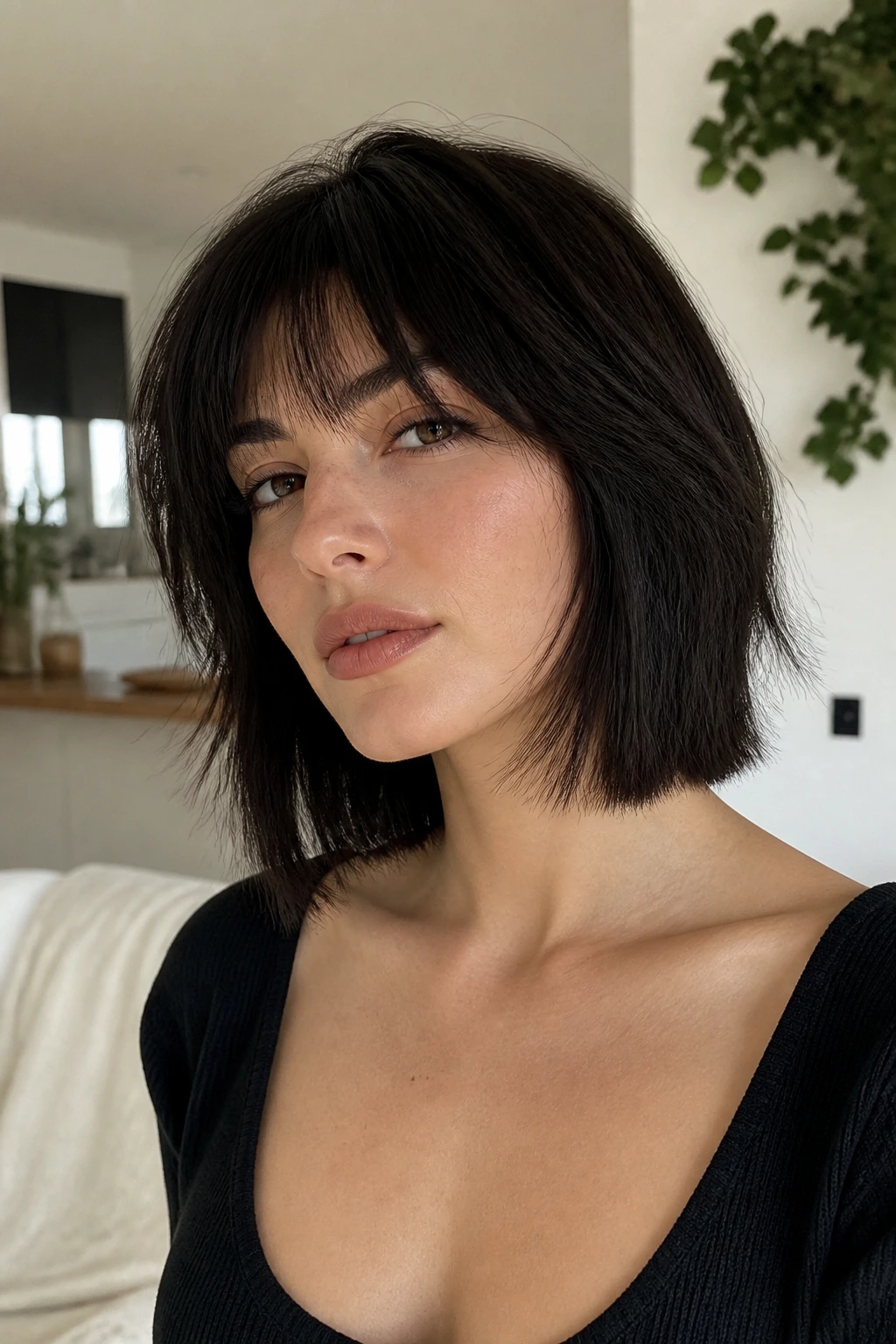
This is the version for people who hate fussy hair but still want the wolf cut feeling. The perimeter stays blunt and solid, which straight hair wears well, while the inside of the cut carries just enough texture to stop it from reading like a standard one-length bob. It is probably the easiest option to live with if you want shape without a lot of styling drama.
Straight hair actually helps here. The blunt edge gives the bob weight and shine, and the softer internal layers keep the whole thing from looking like a hard block. That mix matters more than people think. A wolf cut bob does not have to look messy to feel current. It can be clean, even a little sharp, and still have that broken, airy movement when you turn your head.
I’d point people toward this version if they wear their hair mostly down, want to keep thickness at the ends, or simply do not enjoy blow-drying for twenty minutes. It also grows out nicely because the line stays visible even as the layers soften. That is a relief if you do not like frequent salon visits.
If I had to pick one cut for straight hair that balances polish and edge, this would be near the top of my list. It is tidy without being dull, and that is harder to get right than it sounds.
A wolf cut bob on straight hair works best when the cut respects the hair’s natural behavior instead of fighting it. Keep the outline clean, place the texture on purpose, and do not let the layers get so short that the shape turns airy in the wrong way. When that balance is right, the haircut looks like it belongs to the person wearing it — not to the mood board that inspired it.
