



Sharp bob cuts do one thing better than almost any other haircut: they make the edge matter.
No fluff. No vague shape hiding under layers. A crisp bob puts the line right out front, and that line changes how the whole face reads. Sometimes it sharpens the jaw. Sometimes it makes the neck look longer. Sometimes it does the simple, satisfying thing of making straight hair look expensive without a lot of styling drama.
A good bob is not just about chopping hair shorter. It’s about where the cut lands, how much weight sits at the perimeter, and whether the ends are blunt enough to hold their shape. Miss those details and the cut can go square in the wrong way, or collapse after one bend from a hair tie or a humid walk outside.
Some bob cuts feel severe. Some feel polished. Some feel almost architectural. The best ones keep that clean, bold look without turning stiff, and that balance is what separates a strong haircut from a trendy one you regret by lunch.
1. The Classic Blunt Bob

The classic blunt bob is the one people picture when they hear the words sharp bob cut. One length, clean edge, no obvious layering at the bottom. It lands somewhere between the chin and the top of the shoulders, and the whole point is that the perimeter looks deliberate.
Why the blunt line works
A blunt bob gives hair more visual density because the ends all stop at the same place. Fine hair looks fuller. Straight hair looks crisper. Even slightly wavy hair gets a stronger outline, which is useful when you want the haircut to carry the look instead of piling on styling.
There’s a reason this cut keeps coming back. It’s honest. If your hair is healthy and the line is even, you don’t need much else.
A side part makes it feel a little softer. A center part makes it feel stricter. Both work, but the mood changes fast, which is half the fun. On a good day, a blunt bob can look like you spent twenty minutes on it when you really spent eight.
- Best length: chin to just below the jaw
- Best tools: a paddle brush, a flat iron, heat protectant
- Best finish: smooth ends with a slight bend inward
- Best for: fine to medium hair that needs more shape
Pro tip: Ask for the perimeter to be checked dry if your hair has a wave pattern. Wet cutting can hide tiny uneven spots, and those spots show up right away once the hair dries.
2. The Jaw-Length Bob
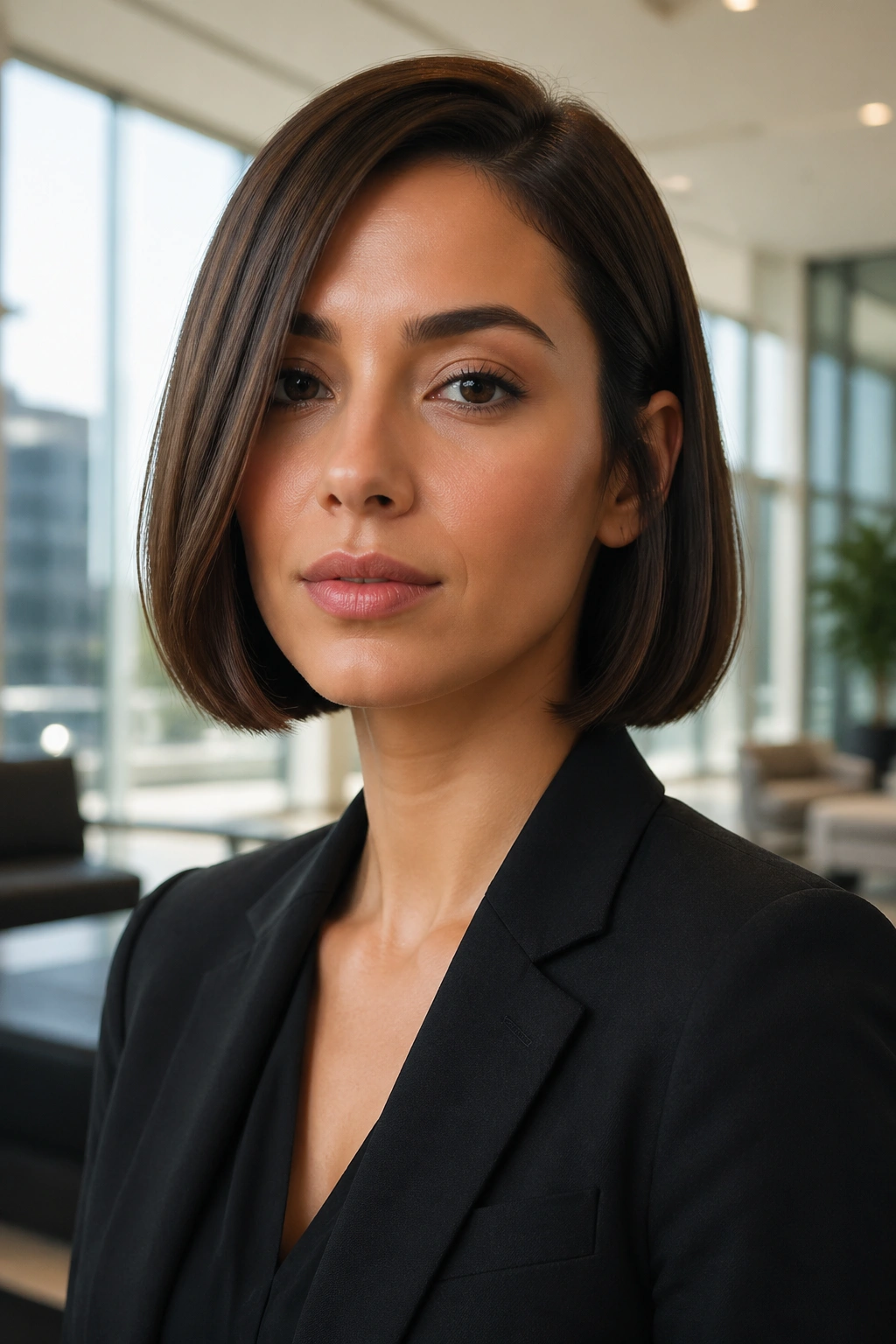
A jaw-length bob is short enough to feel bold, but not so short that it starts acting like a pixie’s cousin. It lands right where the jaw turns, which means the cut has a lot to say about the face. That sounds dramatic, but it’s true. A few millimeters matter here.
This bob is especially good when you want the haircut to show the structure of your face instead of softening it away. Strong cheekbones? Great. A neat jawline? Even better. The line sits close enough to the face that it looks intentional, not floppy.
The downside is that it leaves very little room for sloppy styling. If the ends bend out weirdly or the part gets messy, the whole shape loses its edge fast. That’s why this cut tends to look best when it’s either sleek and tucked or air-dried with a small amount of cream and a clean center part.
It also loves a good collar. Turtlenecks, crisp shirts, jackets with clean necklines — all of them make the haircut look sharper. Soft, oversized necklines can work too, but they change the mood from bold to casual in a hurry.
A jaw-length bob is not shy. That’s the appeal.
3. The French Bob

Why does the French bob keep showing up in style circles? Because it manages to look casual and precise at the same time, which is harder than it sounds. The cut is usually shorter than a classic bob, often around cheekbone or jaw level, and it usually comes with a fringe or a soft face frame.
How to wear it
The French bob works best when it doesn’t look overworked. A little bend in the hair is good. Perfectly ironed strands can make it feel too hard, and that takes away the charm. A light wave, a bit of texture at the ends, and a fringe that sits just above the eyes or grazes them lightly — that’s the sweet spot.
It’s a smart cut if you like a haircut that looks a touch undone but still has a clear shape. The line stays compact, which gives it that neat bob energy, but the fringe keeps it from feeling severe.
It can be especially flattering on smaller faces because the length doesn’t overwhelm the features. Still, the fringe matters. Too heavy and the whole thing can close in around the eyes. Too wispy and you lose the point.
- Works well with: soft natural bends
- Keep the fringe: lightly textured, not chopped into bits
- Style with: a round brush or fingers and a little cream
- Trim interval: sooner rather than later, because the line can blur fast
A French bob is a little cheeky. That’s why people like it.
4. The Box Bob
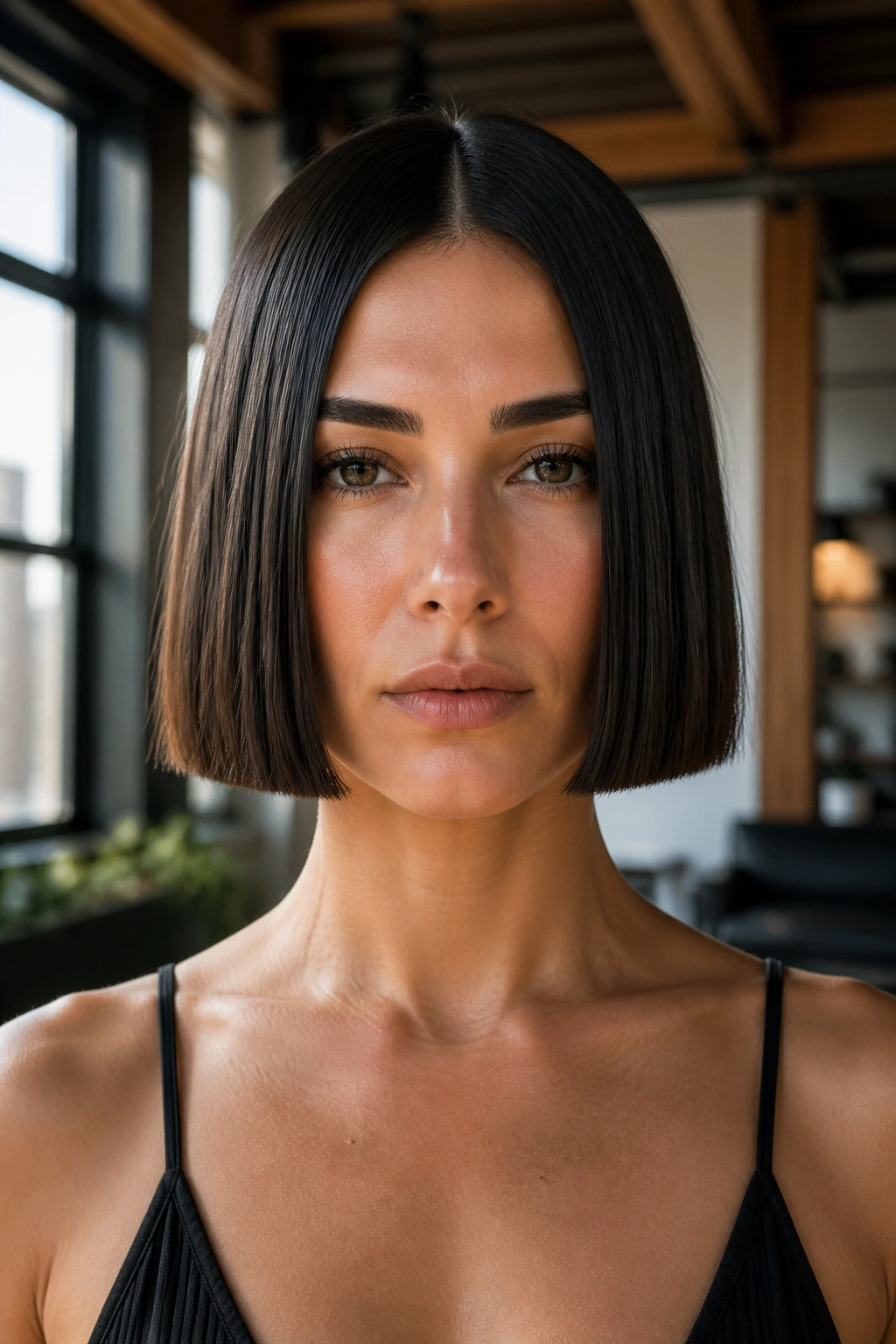
A box bob is the blunt bob’s tougher sibling. The shape is wider, straighter, and more squared off through the sides, so the haircut looks like one solid block of hair instead of something softly rounded. If you want a clean, bold look with real presence, this one delivers.
Picture a bob with the corners kept full. That’s the point. The shape usually sits around the jaw or just below it, and the ends are cut to hold a strong horizontal line. There’s less curve at the bottom than you’d see in a classic rounded bob, which gives it that boxy finish.
This cut makes thick hair easier to read. Not easier to manage, necessarily — that’s a different thing. But easier to shape. A good box bob controls bulk without making the hair look thinned out at the ends, which is where a lot of bad bobs go wrong.
What to ask for at the salon
- A strong perimeter line with no soft taper at the bottom
- Controlled fullness through the sides
- Minimal layering unless the hair is very dense
- A finish that sits flat or slightly tucked, not flared out
It’s a strong cut for people who like geometry in their hair. If you want softness, this is probably too blunt. If you want a shape that says something before you even speak, it’s a sharp place to land.
5. The Angled A-Line Bob
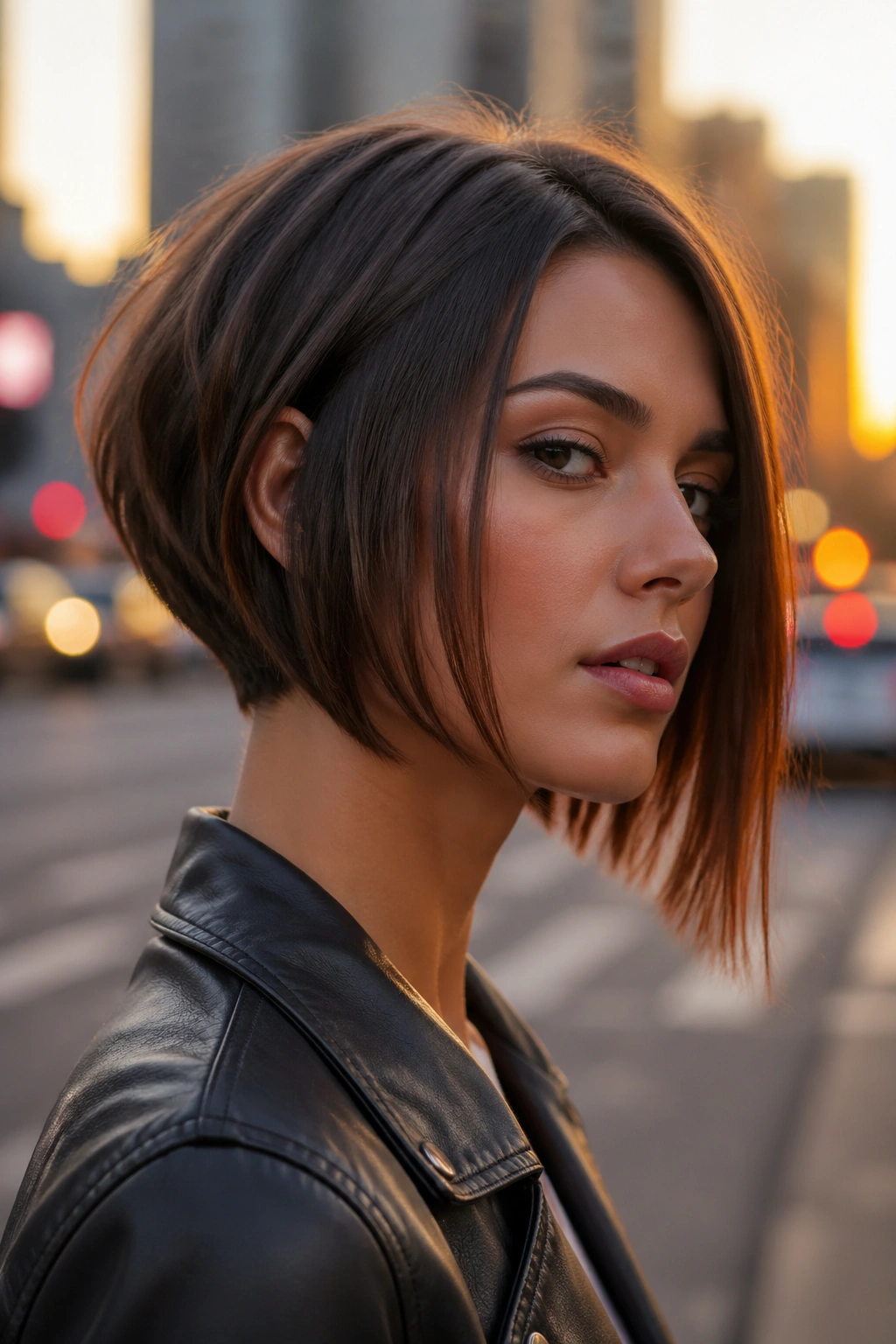
An angled bob gives you a clean front line and a little movement without losing the sharpness. Shorter in the back, longer in the front. That’s the basic shape, and it’s such a useful one because it creates a strong diagonal instead of a flat horizontal edge.
The angle can be subtle or steep. A subtle version just nudges the hair forward a bit, which gives the jawline a clean frame. A steeper angle makes the front pieces hang lower toward the collarbone, and that can add some length to the face without turning the cut into a long bob.
What I like about this shape is that it has built-in direction. Your eye goes from back to front, and that makes the haircut feel intentional even when the styling is simple. It’s also one of the best bob cuts for someone who wants a little drama but doesn’t want to lose the neatness that makes a bob feel fresh.
The trick is keeping the back from getting too stacked or too puffy. If the graduation is overdone, the cut starts looking dated. If the front is too long, it stops reading as a bob. That narrow middle ground is where the good versions live.
A flat iron can sharpen the front pieces fast, but a round brush can be kinder if your hair flips out at the ends. Either way, the front line should feel clean, not ragged.
6. The Inverted Bob
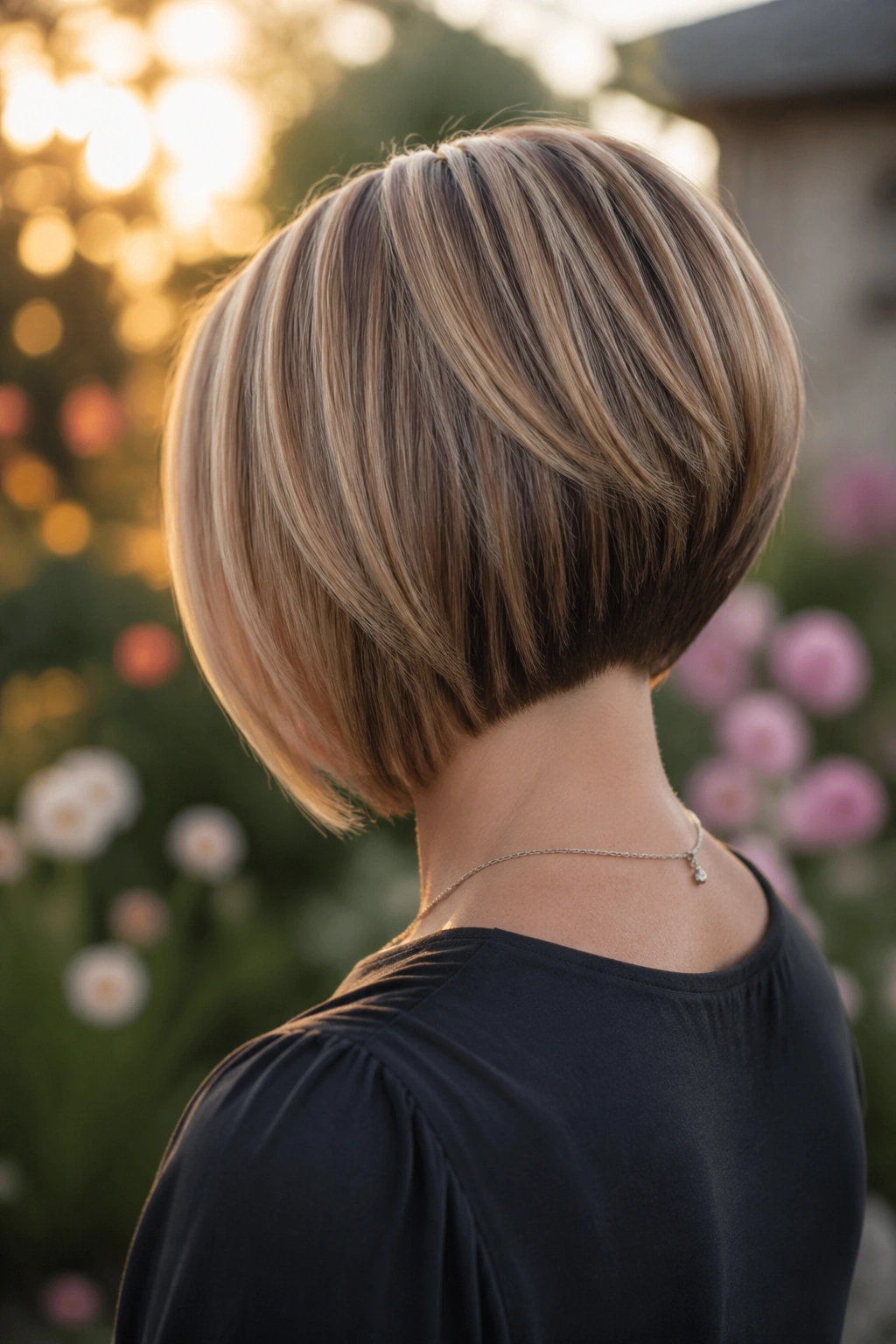
Unlike the A-line bob, the inverted bob leans harder into structure at the back. The nape is shorter, the crown often carries more volume, and the shape rounds upward before it falls toward the face. It’s a strong haircut. No mistaking it for something soft and shy.
That extra lift at the back gives the style a little spine. It also helps if your hair tends to lie flat around the crown, because the stacked shape creates a small amount of built-in fullness there. The result is a bob that feels shaped from every angle, not only from the front.
The clean part of this cut is that it still keeps a definite edge at the bottom. It doesn’t drift into shag territory. It stays focused. That focus is what makes the style look sharp instead of fussy.
This cut can be especially good for straight to slightly wavy hair that needs more life near the back of the head. Very curly hair can wear it too, but the stack has to be handled carefully or it bulks up fast. Too much graduation and the back starts to puff instead of lift.
It’s a haircut with a point of view. That’s not always easy to maintain, but when it’s done well, it has real shape from the nape up.
7. The Asymmetrical Bob
An asymmetrical bob is for someone who wants the bob shape, but not the polite version of it. One side is longer than the other, and the difference can be subtle or obvious. Either way, the imbalance gives the haircut tension, which is why it feels so modern even when the rest of the look is simple.
What makes it sharp
The sharpness here comes from contrast. The longer side often skims the jaw or collarbone while the shorter side stops higher, around the chin or just below the ear. That difference creates movement without needing layers all over the head.
This is a smart cut if your face has one feature you like to play up — maybe a strong cheekbone, maybe an eye shape, maybe a jawline that looks good with one side tucked back. The cut draws attention in a directional way instead of spreading it evenly.
A clean part matters. So does precision at the perimeter. If the lines get fuzzy, the whole point disappears and the haircut just looks uneven. There’s a difference, and it’s not a small one.
- Best for: straight or lightly wavy hair
- Styling move: tuck the shorter side behind the ear
- Watch for: too much contrast between sides if you want a subtler look
- Good detail: a sharp neckline makes the angle stand out
This bob has attitude baked into it. That’s the attraction.
8. The Micro Bob
The micro bob takes the shape all the way up and doesn’t apologize for it. It usually sits somewhere between the cheekbone and the jaw, sometimes even a touch higher, which means it shows a lot of neck and a lot of face. That’s why it feels so bold.
This is not the haircut for someone who wants to hide behind length. It exposes the bone structure, the ears, the neckline, all of it. That’s part of the appeal. The smaller silhouette makes the eyes and lips carry more of the visual weight, and that can be striking in a way longer bobs aren’t.
A micro bob has to be cut with precision. If the line wobbles or the ends are over-thinned, the shape gets flimsy fast. Keep the perimeter blunt. Keep the corners tidy. Keep the bulk under control without taking away the density that makes the cut read cleanly.
It usually needs regular trims to stay crisp, because even half an inch of growth can change the whole feel. That’s the price of going short. The payoff is a haircut that looks deliberate from across the room.
Not everyone wants that much exposure, and that’s fair. But if you do, the micro bob delivers a very clean silhouette.
9. The Stacked Bob
A stacked bob is the answer when the back of the head needs lift and the hair refuses to cooperate on its own. Shorter layers are built into the nape area, and they stack upward so the crown gets a little height. That makes the haircut look rounded in back while still keeping a neat edge around the face.
This cut is especially useful for hair that falls flat at the back or feels heavy through the nape. The stack removes some of that weight and gives the silhouette more shape. The front can stay blunt or slightly angled, which keeps the haircut looking tidy rather than overly layered.
What I like here is the way the shape does half the work for you. You don’t need a huge blowout to make it look intentional. A round brush and a bit of tension at the roots usually do the job. The back wants volume; the front wants polish.
The one catch: if the stack is pushed too high, the back can turn puffy and a little old-school. Keep it controlled. The haircut should feel lifted, not helmet-like.
A stacked bob suits people who want the back of the haircut to do more than sit there. It adds structure where many bobs go flat.
10. The Center-Part Sleek Bob
A center part turns a sharp bob into a line with real calm. The two sides mirror each other, and that symmetry makes the haircut look neat in a very direct way. No side drama. No accidental asymmetry hiding in the styling. Just clean balance.
This version tends to look best when the ends are straight or only slightly bent under. A strong middle part with glossy lengths makes the whole haircut read precise, especially if the bob lands at the jaw or just above the shoulders. It has a cool, almost architectural feeling without needing any extra ornament.
That said, the center part is unforgiving if your cut is uneven. Even a small difference on one side shows right away. So this style rewards a precise perimeter and a careful trim. It also works well with a light smoothing serum, especially if your hair has a bit of puff or frizz near the crown.
A lot of people assume center parts are only for oval faces. Not really. They can work on square and heart-shaped faces too, as long as the lengths are placed thoughtfully and the hair isn’t cut too high around the cheeks. The line needs to sit where the face can carry it.
Straightforward. Clean. A little severe in the best way.
11. The Deep Side-Part Bob
Unlike the center-part bob, the deep side-part bob brings movement right away. The part sits well off-center, which lifts one side of the roots and lets the other side fall lower across the face. That creates instant shape, even before you touch a styling tool.
This bob is good when you want sharpness without too much symmetry. The side part softens a blunt perimeter a little, and that can be helpful if a full-on center part feels too strict. It also lets the haircut frame one eye or cheekbone in a way that looks thoughtful instead of random.
A deep side part can make a bob feel more dressed up with almost no extra effort. Tuck one side behind the ear, leave the other side forward, and the shape changes right away. The contrast is small, but it matters.
What to watch for
- Keep the roots lifted at the heavier side so the part does not collapse
- Use a round brush at the crown if the hair falls flat
- Don’t over-flip the ends; the cut should stay neat
- Ask for a perimeter that holds up even when one side is tucked
This style is a useful middle ground. It keeps the boldness of a sharp bob while giving the face a little movement and shadow.
12. The Tucked-Under Polished Bob
The tucked-under bob is the one I reach for when a bob needs to look finished, not just short. The ends curve slightly inward, usually with the help of a round brush or a quick pass of a flat iron, and that small inward turn makes the whole haircut feel neat and grounded.
It is a simple thing, really. But simple things can be strong. When the ends tuck under cleanly, the line feels intentional from root to tip. The shape also sits close to the neck, which gives the haircut a crisp outline even if the rest of the style stays understated.
This bob works across a lot of hair types because the shape is in the finish as much as the cut. Straight hair gets a clean edge. Wavy hair gets a controlled bend. Thicker hair looks less bulky at the bottom if the ends are polished inward instead of left to swing out.
A middle or side part both work here. So does an ear tuck on one side if you want a little asymmetry. The real job is keeping the bottom line tidy. If the ends flip outward, the whole effect changes fast.
For anyone who wants a sharp bob that still feels wearable on a regular day, this is the one I trust most. It’s polished without trying too hard, and that’s exactly why it works.
