



A bob can look crisp in the mirror and still feel flat the second you step into daylight. Ash blonde bob cuts with highlights fix that by putting tiny shifts of tone into the haircut, so the shape moves instead of sitting there like one solid block of color.
Color does half the styling work here.
Ash blonde is cooler than golden blonde, but it isn’t one shade. It can lean smoky, beige, pearl, silver, or mushroom, and the right version is the one that plays nicely with your root color and the cut itself. On a bob, that matters more than people think. There just isn’t much length to hide behind, so if the highlights are too chunky or too bright, the whole look can go stiff fast.
The sweet spot is placement. Fine babylights around the hairline soften a blunt edge. Face-framing ribbons brighten the front. Lowlights keep pale blonde from washing out into a flat sheet. A good bob color should move when you turn your head, and the styles below stay in that lane while giving the ash-blonde idea a different mood.
1. Chin-Length French Bob With Ash Beige Ribbons
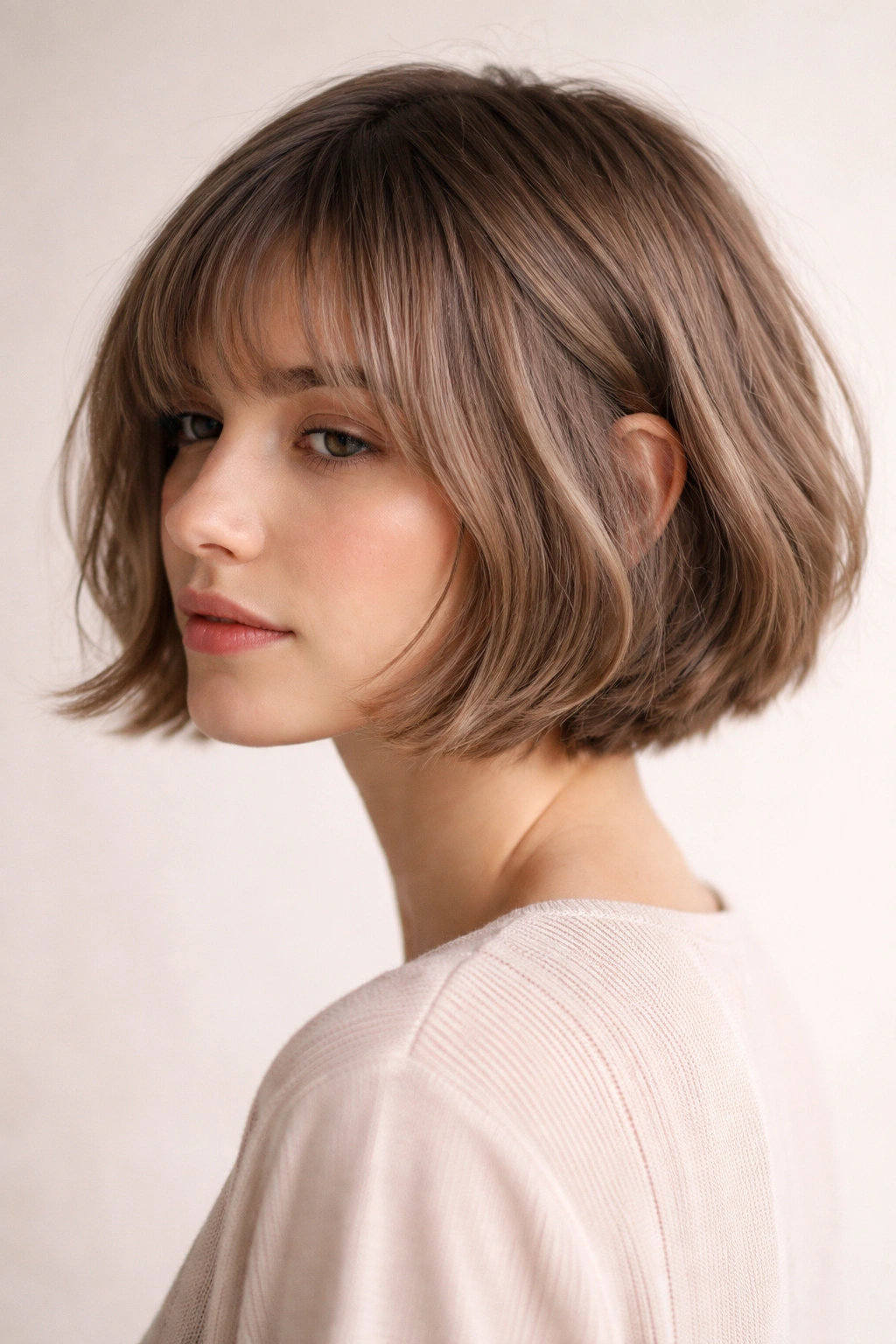
A chin-length French bob is one of those cuts that looks effortless only when the color is doing the quiet work behind the scenes. On its own, the shape is already strong: short, neat, and a little cheeky around the jaw. Add ash beige ribbons, and the whole thing softens without losing its edge.
Why the color placement matters
The best version of this cut uses highlights that sit close together near the front and top, then get a touch looser through the back. That keeps the face awake while the neckline stays clean. Beige ash is a smart middle ground if you want cool tones without going icy or gray.
A lot of people ask for “ash blonde” and end up with a flat silver cap. That’s not the same thing. This version should still feel warm enough to read as blonde, just muted enough to keep brass in check.
- Ask for micro-weaves, not chunky slices.
- Keep the root a shade deeper for a soft grow-out.
- Use a gloss that stays beige, not blue.
- Leave the nape slightly darker so the cut has shape from every angle.
My favorite detail here: the front pieces should barely skim the cheekbones. That tiny bit of brightness makes the whole bob look more expensive than it has any right to.
2. Blunt Micro Bob With Silver Ash Highlights
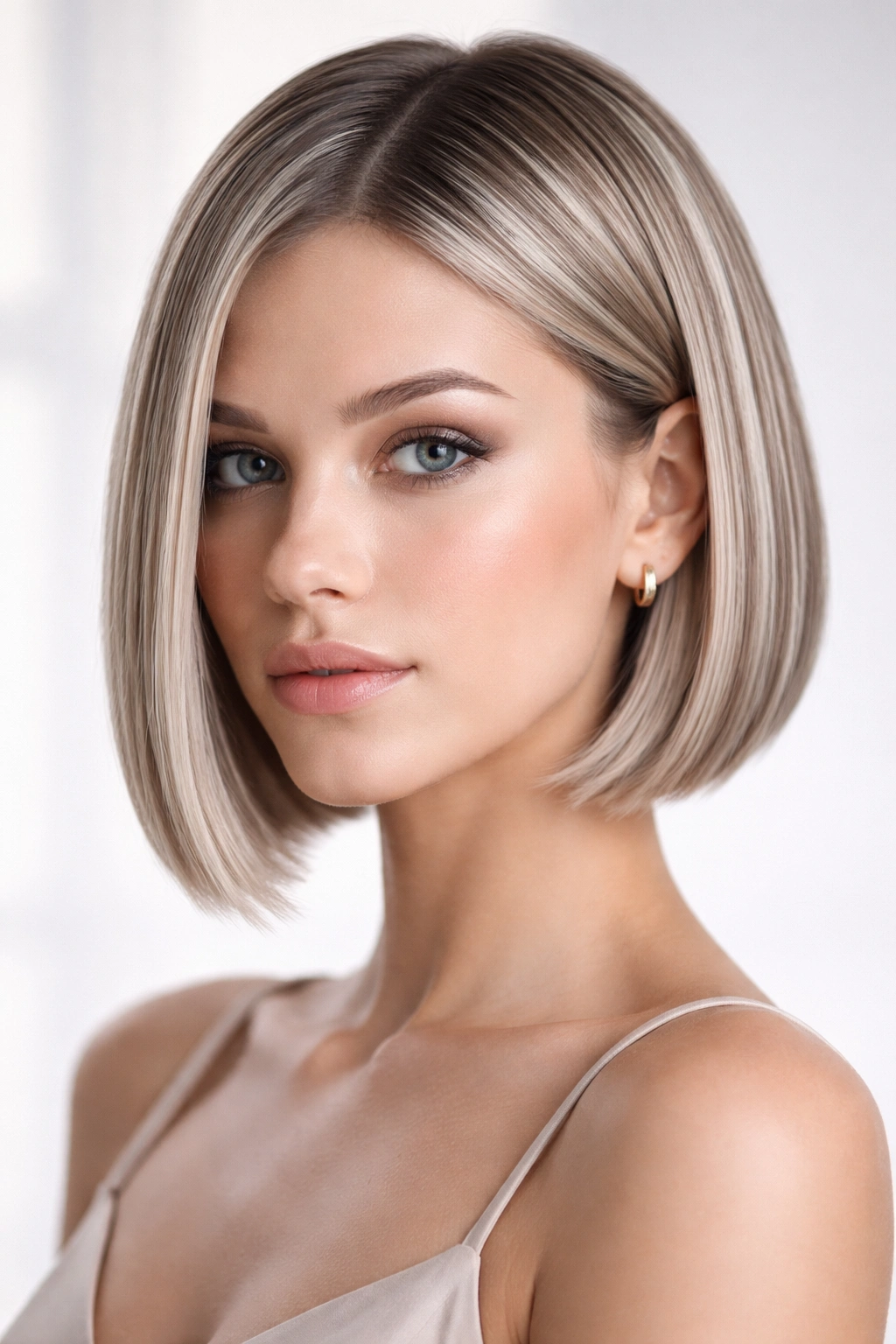
A blunt micro bob is ruthless in the best way. No fluff. No hiding. The line sits high, the ends land clean, and the whole haircut depends on precision. That’s exactly why silver ash highlights work so well here.
The danger with a blunt bob is that it can look like a helmet if the color is one-note. Silver ash breaks that up with small flashes of light along the top layer and around the perimeter. I like this look best when the highlights are fine enough to blur together from a few feet away but still distinct enough to catch light as you move. It keeps the cut sharp without making it feel severe.
This is also one of the better bob cuts for straight hair. The texture shows off every line, every tone shift, every tiny bend at the ends. If your hair is fine, the contrast between a cool root and brighter mid-lengths can make the whole style look fuller. If your hair is thick, the blunt line helps the lighter pieces sit neatly instead of puffing out.
One thing I’d skip: oversized chunky highlights. They fight the haircut. Thin, well-placed ash pieces do the job with less noise.
A blunt micro bob doesn’t need a lot. It needs restraint, and a colorist who knows when to stop.
3. Layered Collarbone Bob With Face-Framing Cool Blonde Pieces
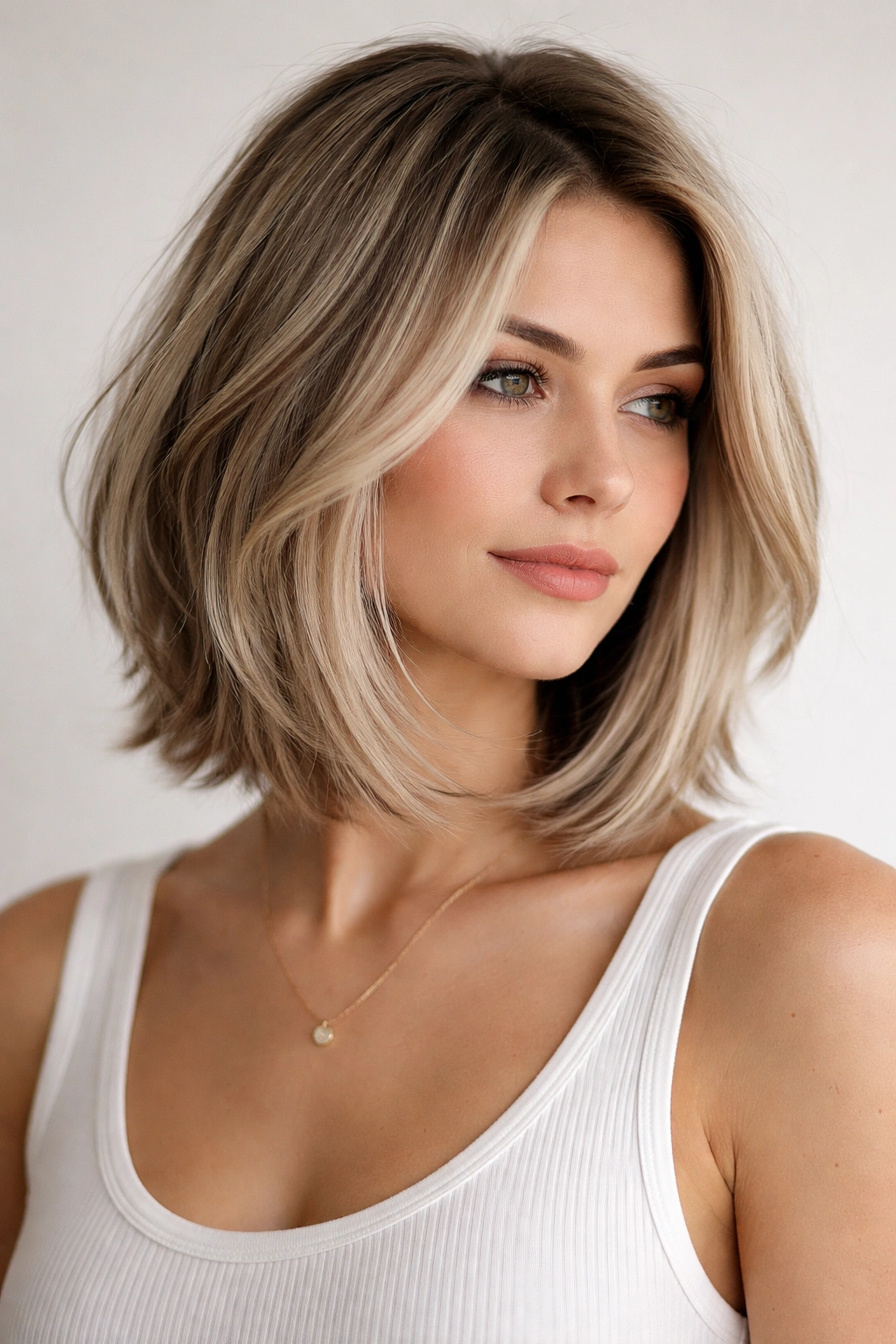
Why does this cut feel softer than a blunt bob? Because the layers do more than add movement; they give the highlights somewhere to live. A collarbone-length bob sits in that useful middle zone where you get swing, but not too much hair to manage every morning.
Face-framing cool blonde pieces are the whole story here. They should start around the cheekbone and taper down toward the ends, with the rest of the bob staying a little more muted. That keeps the front bright and the back grounded. If everything is equally light, the cut loses shape. If only the face frame is highlighted, the length can still feel flat. The sweet spot is a mix.
How to style it
- Blow-dry with a round brush if you want bend at the ends.
- Use a flat brush and a slight inward turn if you prefer a cleaner finish.
- Keep the face frame one half-shade lighter than the rest of the blonde.
- Add loose waves only through the bottom third if you want the color to show without looking busy.
This is one of the easiest ash blonde bob cuts with highlights to wear day to day. It grows out well, and it plays nicely with both glasses and bare faces. There’s a reason so many people keep coming back to this length. It is forgiving, but not boring.
4. Textured Wavy Bob With Smoky Balayage Highlights
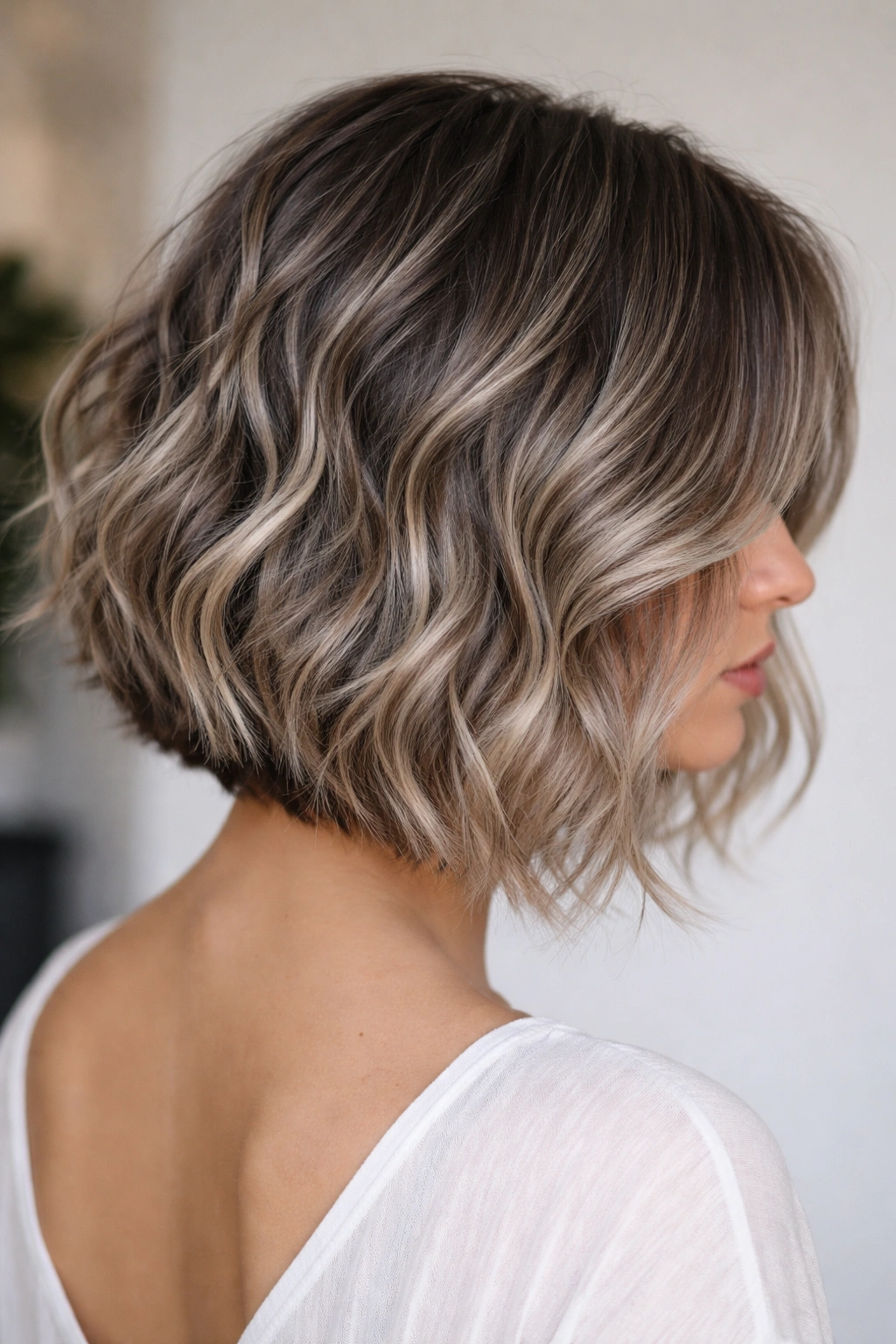
This is the bob I reach for when flat color would kill the shape. A textured wavy bob needs some visual messiness, and smoky balayage is what keeps it from looking overworked.
The cut itself usually sits somewhere between the chin and the shoulders, with light layering through the ends so the waves don’t collapse into one heavy strip. Balayage works here because it gives that soft, hand-painted lift through the mid-lengths and ends without hard lines. The result feels lived-in, not sprayed on. That matters.
The smoke in the blonde is the key. Instead of bright gold or icy white, think cool beige, taupe-blonde, and a little pearl. Those tones make the waves read as dimensional, especially when hair is air-dried or loosely diffused. A curly iron can help, but it should never look too neat. A wavy bob that’s too polished loses the whole point.
Here’s the part people miss: the highlight placement should follow the curve of the wave. If the brightest pieces sit in the wrong spots, the texture can look random. Put the lighter ribbons where the hair bends, and the whole cut suddenly makes sense.
A smoky balayage bob is a little messy, a little cool, and much more interesting than the average blonde lob.
5. Angled A-Line Bob With Ice Blonde Money Pieces
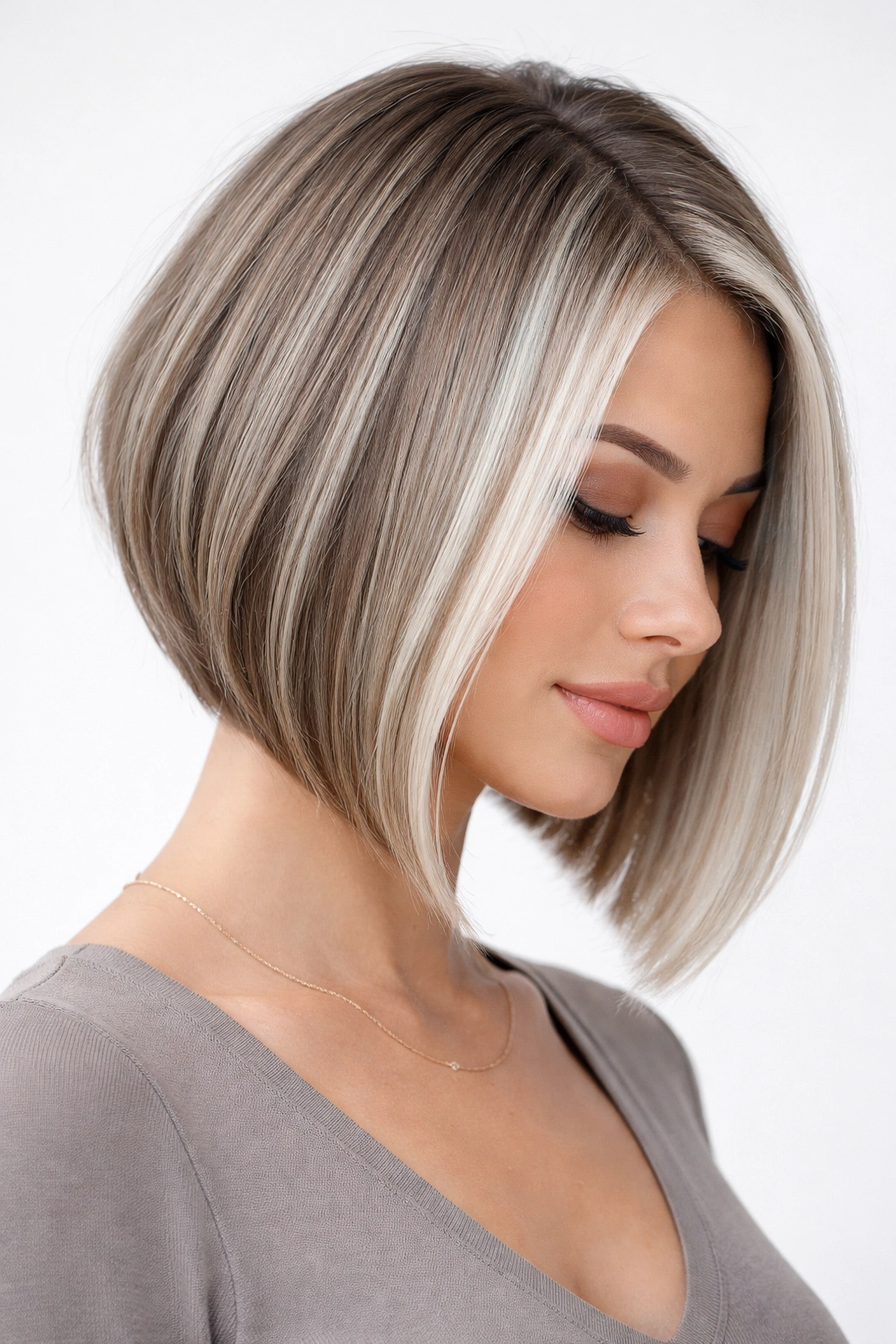
An angled A-line bob gives you built-in drama. Shorter in the back, longer in the front, it creates a clean forward swing that feels modern without trying too hard. Ice blonde money pieces sharpen that shape fast.
Unlike a straight bob, the A-line already guides the eye. The longer front panels create a diagonal line that feels sleek even when the hair is barely styled. Bright face-framing pieces intensify that line, so the haircut shows its shape the second you turn your head. That’s why this version works especially well when the rest of the blonde stays a touch softer and cooler.
The money pieces should not be wide slabs. Thin, bright front sections are enough. I like them a level lighter than the rest of the highlight pattern, with the roots kept shadowed so they don’t look like a stripe. That little depth at the base keeps the front from floating away from the rest of the cut.
Best hair types? Straight to slightly wavy, especially if your hair holds a smooth bend at the ends. Fine hair gets lift from the angle. Thick hair gets control from the shorter back.
If you like clean geometry, this is the bob. It’s crisp, a little bold, and far easier to wear than it looks in photos.
6. Curly Bob With Dimensional Ash Blonde Foils
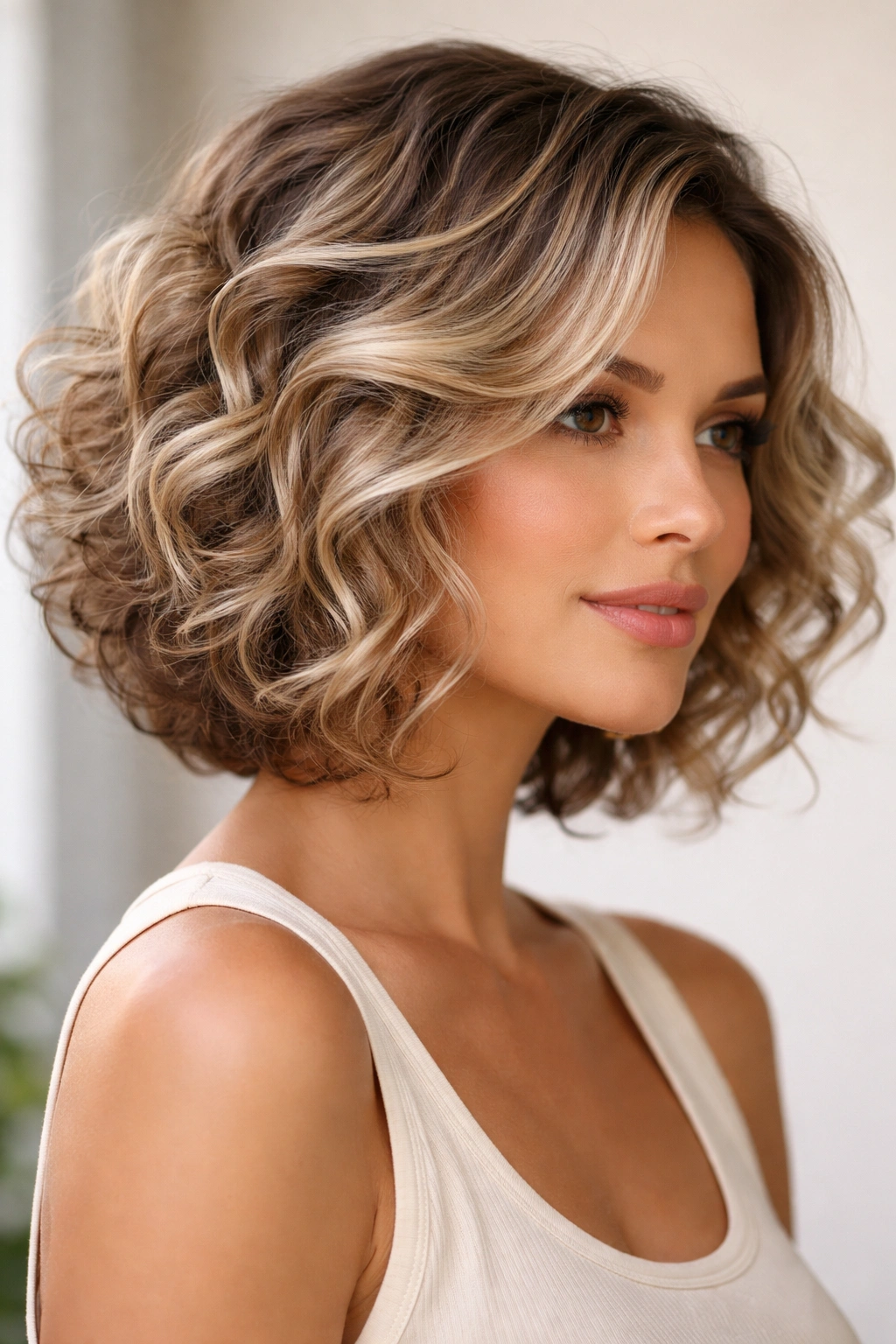
Curly hair needs a different game. Foils are the move here because curls want brightness in some spots and depth in others, not one blanket of blonde pasted over everything. A curly bob with dimensional ash blonde foils can look airy, but only if the color respects the curl pattern.
The best curly bob keeps the shape rounded and slightly layered so the curls don’t build into a triangle. Then the color is placed where the curls separate naturally. Foils give more lift than freehand painting, which matters when you want certain ringlets to pop without dragging the rest of the head into over-lightened territory.
What to ask for
- Brightness around the crown and outer curls.
- Slightly deeper tone underneath for contrast.
- Cool ash blonde on the higher curls, not the whole interior.
- A toner that keeps the finish beige-silver, not yellow.
The result is dimensional in a way a single-tone blonde rarely is on curls. Each curl catches light at a different angle, and that movement is half the charm. This style also grows out nicely because the darker base keeps the shape from looking unfinished.
I’d avoid over-thinning the ends. Curly bobs need body, and too many razored pieces can make the silhouette fall apart. Keep the cut full enough to let the color do its job.
7. Inverted Bob With Mushroom Blonde Highlights
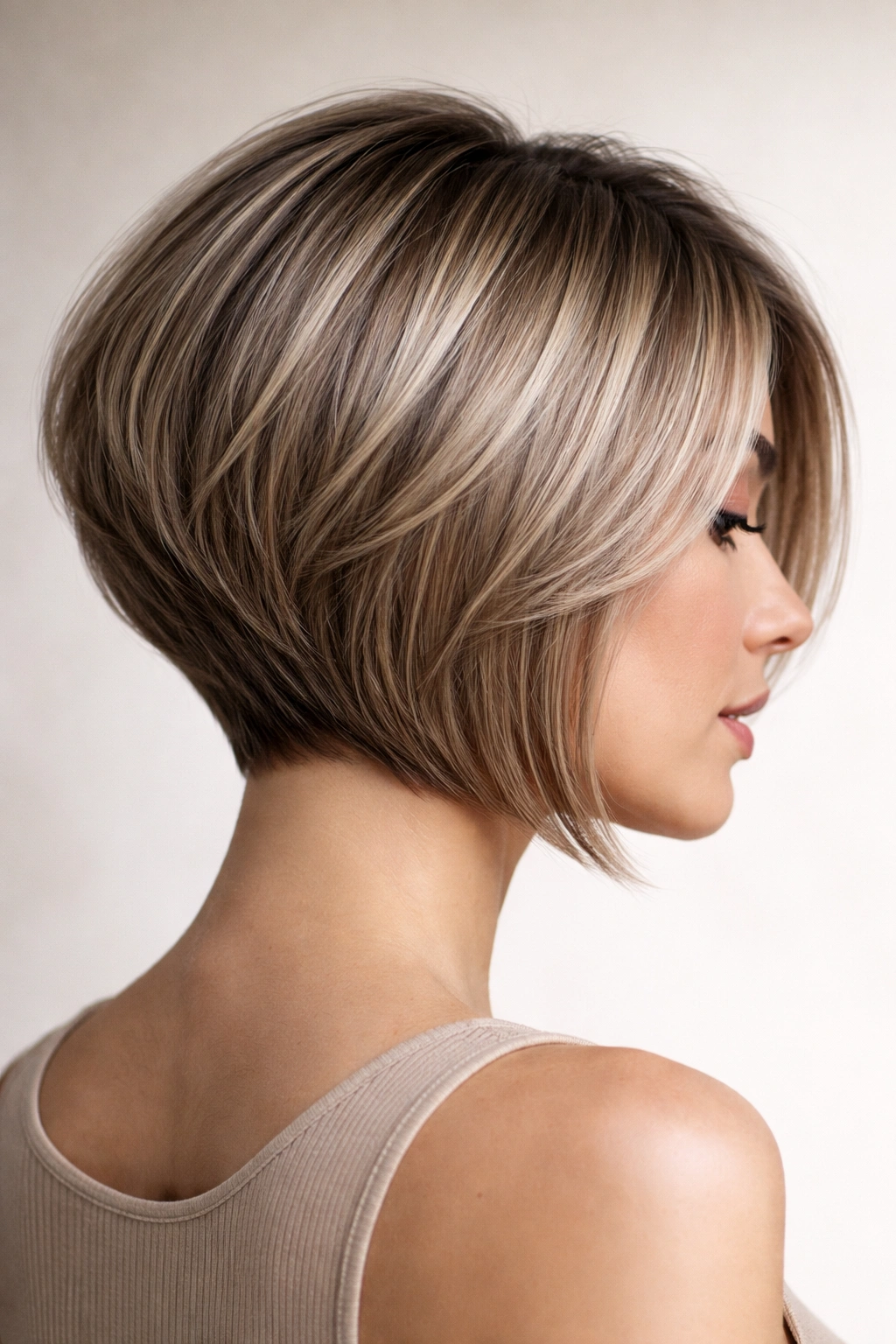
A stacked, inverted bob has a built-in lift at the back and a little extra length in the front, which gives the whole haircut a clean, sculpted feel. Mushroom blonde highlights suit it because that color has depth. It isn’t loud, and that’s the point.
Mushroom blonde sits in that cool beige-gray zone that makes layers look richer. On an inverted bob, that matters a lot, since the back is usually shorter and the shape can look too hard if the blonde is too bright. Keep the nape slightly deeper, then thread the lighter pieces through the longer front sections and the top layer. The haircut ends up looking fuller and more deliberate.
This style is especially good for thick hair. The stacked back removes bulk, and the cooler tone keeps the cut from puffing out visually. If your hair is fine, the shape can still work, but it needs soft layering rather than aggressive graduation. Too much stacking on fine hair can show the scalp more than you’d like.
Mushroom blonde is one of my favorite ash-blonde family tones because it doesn’t scream for attention. It just makes the cut look finished.
And a finished bob always wins.
8. Shoulder-Grazing Lob With Pearl Ash Babylights
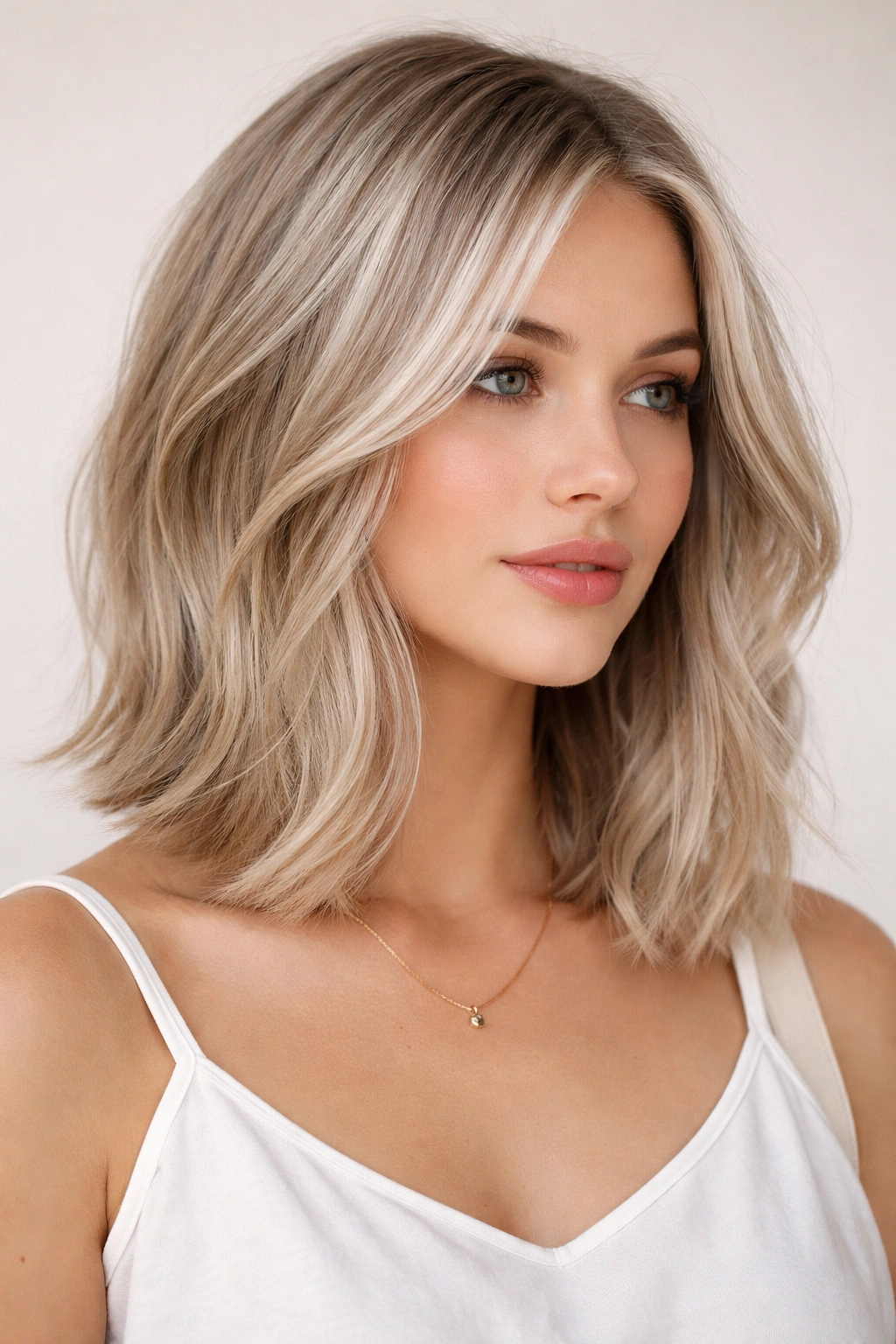
A shoulder-grazing lob is the one people call “safe” until it’s paired with the right color. Then it stops being safe and starts looking smart. Pearl ash babylights are a sneaky-good choice here because the highlights are tiny enough to blend, but fine enough to keep the long bob from reading as heavy.
Why babylights beat bigger pieces here
Babylights sit so close together that they look like natural brightness instead of painted streaks. On a lob, that means the ends don’t separate into blocks, which is a common problem when the length hits the collarbone. Pearl ash tones keep the blonde cool, but they still reflect enough light to keep the haircut awake.
This style is especially good if you wear your hair down most of the time. The subtle highlights show through the movement of the hair instead of relying on curls or waves to reveal the color. If you like a smooth blowout, even better. The layers will flip slightly at the ends and the color will shimmer without becoming flashy.
- Best for medium to thick hair.
- Works well with a center part or a soft off-center part.
- Needs very little daily styling if the cut is clean.
- Grows out gracefully because the babylights blur into the base.
This is the quietest look in the group, and I mean that as a compliment. It feels controlled, polished, and easy to live with.
9. Side-Parted Sleek Bob With Smoky Root Shadow
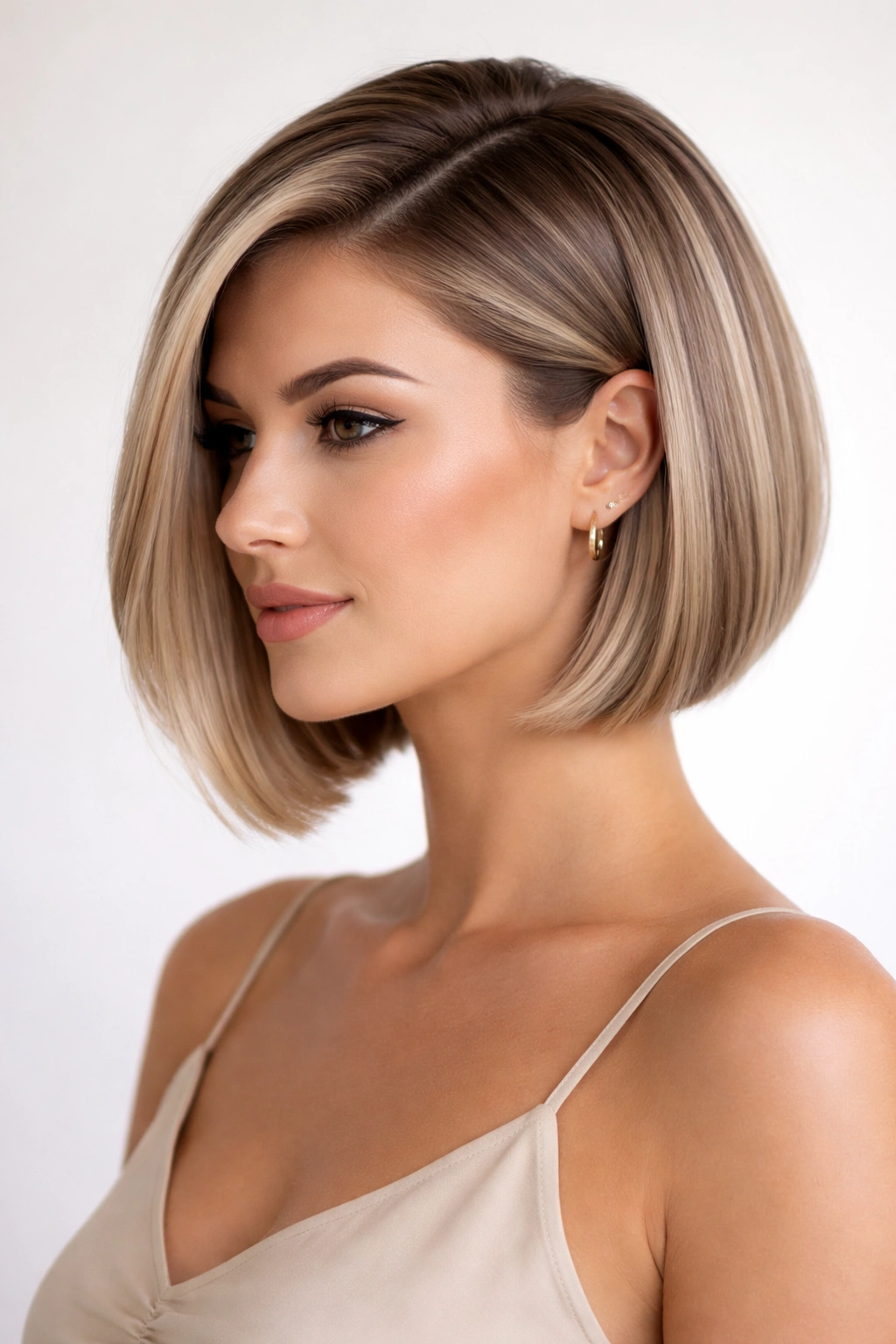
A side part changes everything. Same bob, same length, same blonde — and suddenly the face looks lifted, the crown gets height, and the whole haircut feels more deliberate. Add a smoky root shadow, and you get a sleek bob that holds its shape without looking over-processed.
Root shadow is the part people underestimate. It gives the blonde somewhere to start, which makes the highlights underneath look richer. On a side-parted bob, the shadow also stops the front from feeling too bright or too flat. That deeper root lets the lighter pieces show off instead of competing with each other.
This style likes smooth styling. A paddle brush blowout, a flat iron bend at the ends, or a round-brush finish all work. The key is keeping the crown controlled and the ends crisp. If you prefer a tuck behind one ear, even better. The asymmetry helps the side part do its job.
A smoky root shadow bob is one of those cuts that looks expensive without being fussy. Not because it is complicated — it isn’t — but because every piece is doing a job. The root grounds the color, the highlights brighten the mid-lengths, and the side part gives the face structure.
Clean. Sharp. Very wearable.
10. Shaggy Bob With Mixed Ash Blonde Lowlights
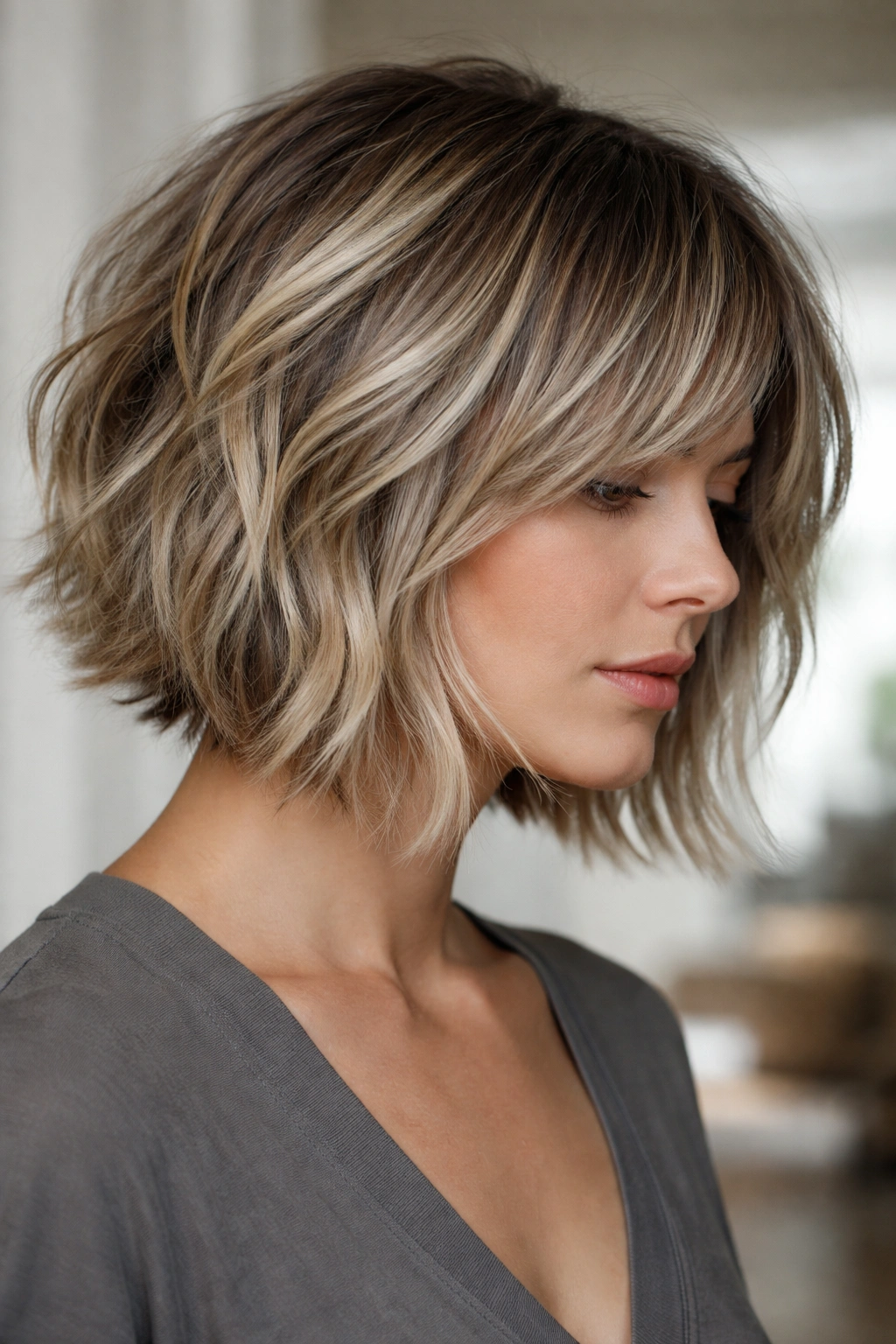
If your hair swallows one-tone blondes, this is the fix. A shaggy bob with mixed ash blonde lowlights and highlights has enough contrast to keep texture alive, which is exactly what a more tousled cut needs.
What lowlights change
Lowlights stop the blonde from turning chalky. They add a little depth between the brighter ribbons, so the layers look separated instead of pasted together. On a shaggy bob, that separation matters because the haircut depends on movement. If every strand is the same pale shade, the texture disappears.
This version works well with choppy ends and a little unevenness around the perimeter. You do not want a perfect line here. You want lift, edges, and a bit of swing. The mixed tones help the cut look fuller, especially near the crown and around the cheeks.
- Bright pieces near the surface.
- Ash lowlights underneath for depth.
- Softer blonde around the face.
- A rough-dry finish if you want the texture to show.
There’s a reason shaggy bobs stay around. They feel easy, but they still need good color to keep them from collapsing into a blur. Mixed ash tones give the haircut a bit of grit, and that grit is what makes it interesting.
11. Tucked-Behind-Ears Bob With Bright Cool Blonde Contour
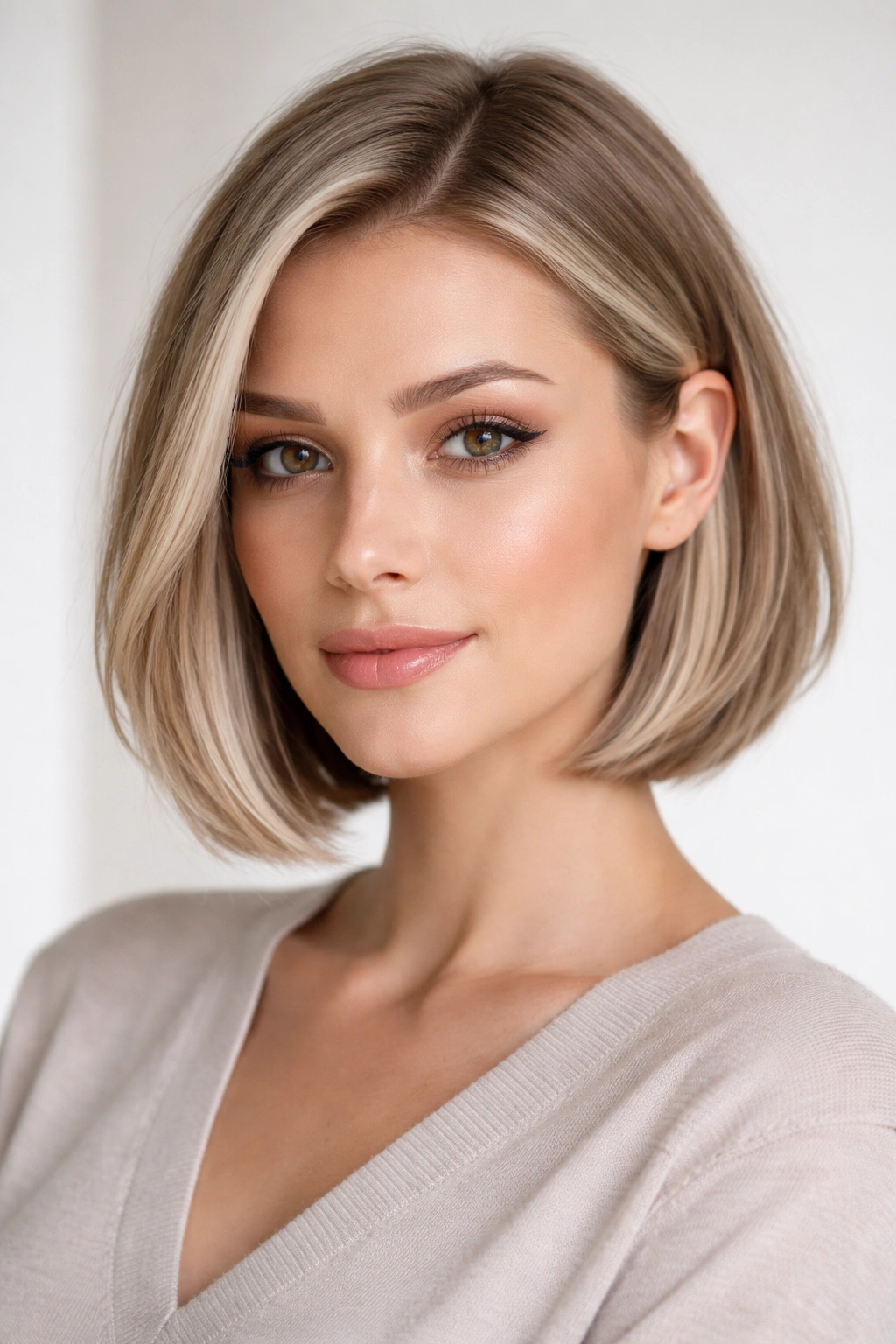
Why does a simple tuck behind the ears change the whole haircut? Because it exposes the line of the jaw and puts the front pieces on display. That’s exactly why contour highlights work so well on this bob.
The brightness should sit at the temples, along the cheekbone line, and just in front of the ears. Those pieces frame the face the moment the hair gets tucked back. The rest of the bob can stay calmer and cooler, which keeps the look from turning into a full bleach job. Bright contour pieces give shape without stealing the whole show.
This cut is a smart choice if you like your hair off your face but still want movement around it. The ear tuck makes it feel polished, almost tailored. The highlights should be soft enough to blend into the rest of the ash blonde, but bright enough to read as intentional when the hair shifts.
A small styling note
Use a light smoothing cream through the lengths, then finish with a touch of shine spray on the surface only. Too much product near the front can make the contour pieces disappear, and that would be a waste.
This is one of the easiest ways to make a bob feel styled without adding volume all over the place. Small move. Big difference.
12. Rounded Bob With Soft Champagne-Ash Highlight Blend
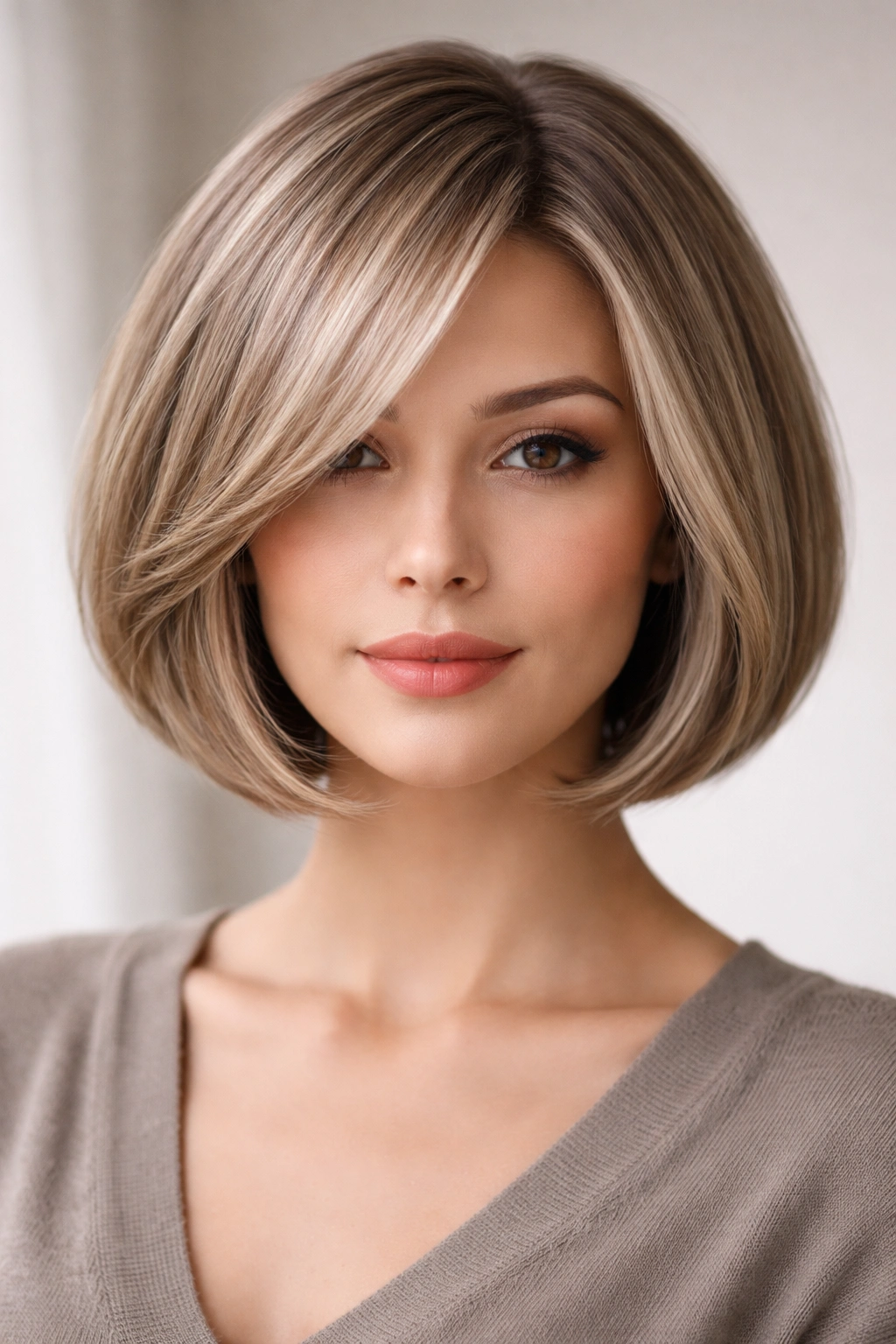
A rounded bob is the softer cousin in this group. The silhouette curves gently inward, usually at jaw or chin length, and the shape feels fuller than a blunt cut but less edgy than an angled one. Soft champagne-ash highlights keep it from tipping too warm or too flat.
Champagne and ash sound like opposites, which is part of why they work together. The champagne side adds a little glow, the ash side keeps the color grounded. On a rounded bob, that balance helps the cut look plush rather than puffy. The shape already gives structure, so the color should support it, not fight it.
This is a strong option for thicker hair, especially if you want something that feels neat without looking severe. The rounded outline helps the hair sit close to the head, and the highlight blend keeps the surface bright in a gentle way. If your hair has a natural bend, this style will cooperate. If it’s straight, a quick round-brush finish is enough to bring the curve back.
I like this version for anyone who wants cool blonde but not the sharpness that sometimes comes with icy tones. It feels softer around the face, kinder around the ends, and easier to wear with everyday clothes. No drama. Just a bob that looks put together.
Final Thoughts
Ash blonde bob cuts with highlights work because they solve two problems at once: they sharpen the haircut and keep it from looking flat. The right mix of lowlights, babylights, money pieces, or balayage makes a bob feel alive, even when the styling is minimal.
If you’re choosing between tones, lean cooler at the root and a touch softer through the ends. That keeps the cut from turning dusty. And if you’re choosing between highlight styles, match the technique to the cut’s shape — fine babylights for blunt lines, softer ribbons for layers, brighter contour pieces for shorter fronts.
The best bob is the one that still looks good when you tuck one side back, shake it out, and walk into a room without thinking about it. That’s the whole point.
