



A good wedding hairstyle should do two things at once: hold up through hours of photos, hugs, dancing, and heat, and still look like it belongs near a formal dress. That’s why Bantu knot updos for weddings keep showing up in bridal inspiration boards and real ceremonies alike. They’re structured, eye-catching, and far more flexible than people give them credit for.
What I like most is how many directions the style can take. A knot set can look regal and polished, soft and romantic, or sharp enough to pair with a sculpted neckline and a strong lip. The trick is in the scale of the knots, the parting pattern, and how much of the hair stays tucked versus shaped into a fuller updo. Get those three things right and the style stops reading as “just a look” and starts reading as intentional bridal hair.
They also work across a wide range of textures. Tightly coiled hair holds the shape naturally, while stretched natural hair, blow-dried hair, or added extensions can change the size and drama of the knots. That matters when you’re trying to match the hairstyle to a veil, a headpiece, or a dress with a lot going on at the top.
And yes, a wedding trial is worth it. Knot placement looks different in person than it does in a close-up mirror, and the parting pattern can make your face look longer, softer, or more angular. Small details. Big difference.
1. Crown Halo Bantu Knots with a Low Bridal Bun
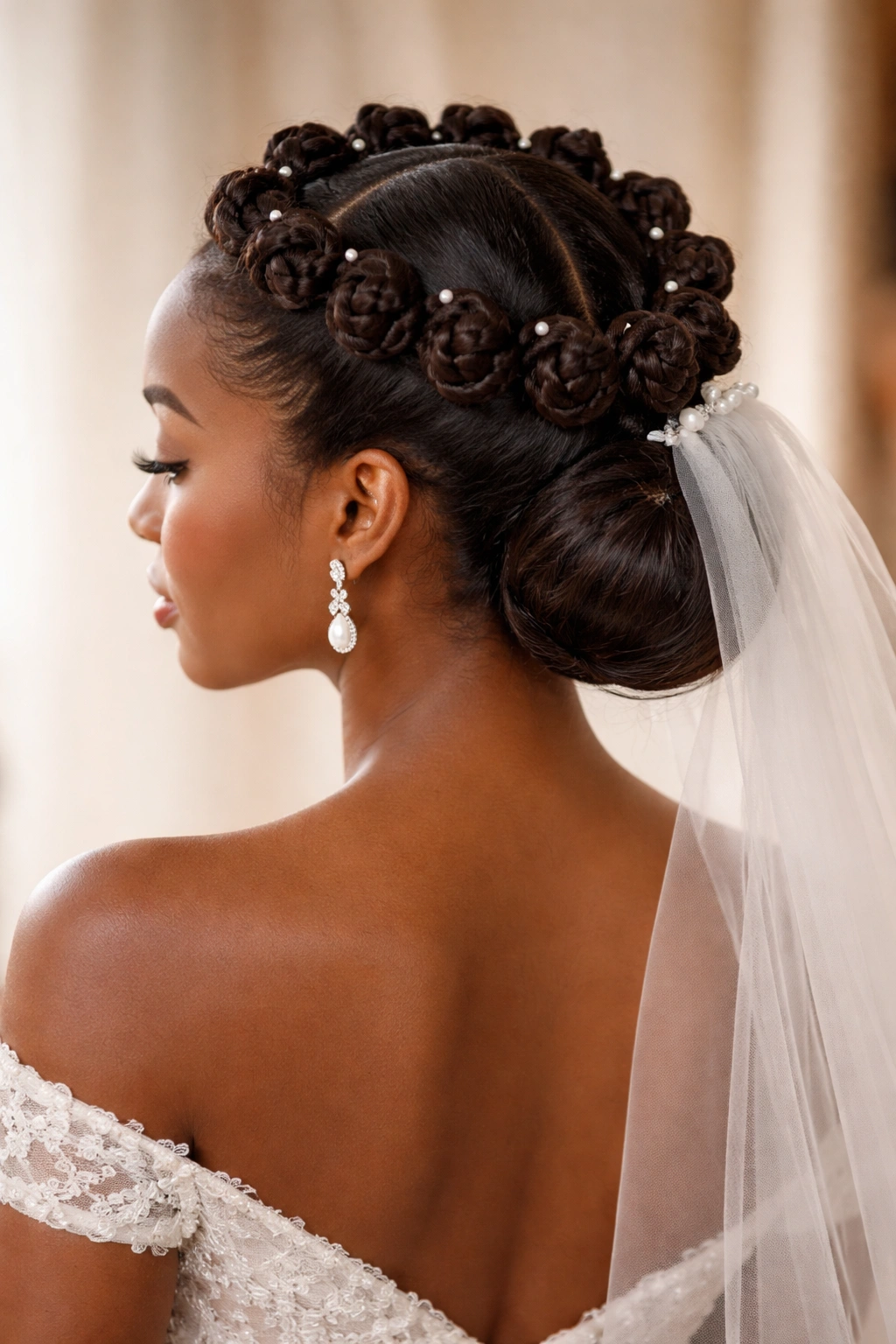
This is the style I reach for when the dress has a clean neckline and the bride wants something that looks composed from every angle. The crown halo gives you that circular, framed effect around the head, while the low bun keeps the back neat and grounded. It’s structured without feeling stiff.
Why this shape works so well
The halo sits like a built-in frame, which is handy if you want to wear earrings or a cathedral-length veil without the hair competing too hard. The low bun also gives the style a place to land, so the whole look feels finished rather than busy. That balance matters on a wedding day, because a hairstyle can be technically pretty and still feel fussy if it has too many competing lines.
A center part gives this version a formal edge. A soft side part makes it warmer and a little less severe. Both can work, but the part should be clean enough that the knot pattern feels deliberate rather than accidental.
Quick styling notes
- Best for: strapless gowns, off-the-shoulder necklines, square necks
- Works well with: pearl pins, a short veil, a comb placed above the bun
- Hair prep: stretch the hair first so the knots sit smooth and round
- Finish: a light mist of shine spray, not a heavy gloss
My favorite detail: keep the crown knots slightly smaller than the back section. That tiny shift makes the silhouette look balanced instead of top-heavy.
2. Sleek Side-Part Knot Row for a Clean Wedding Profile
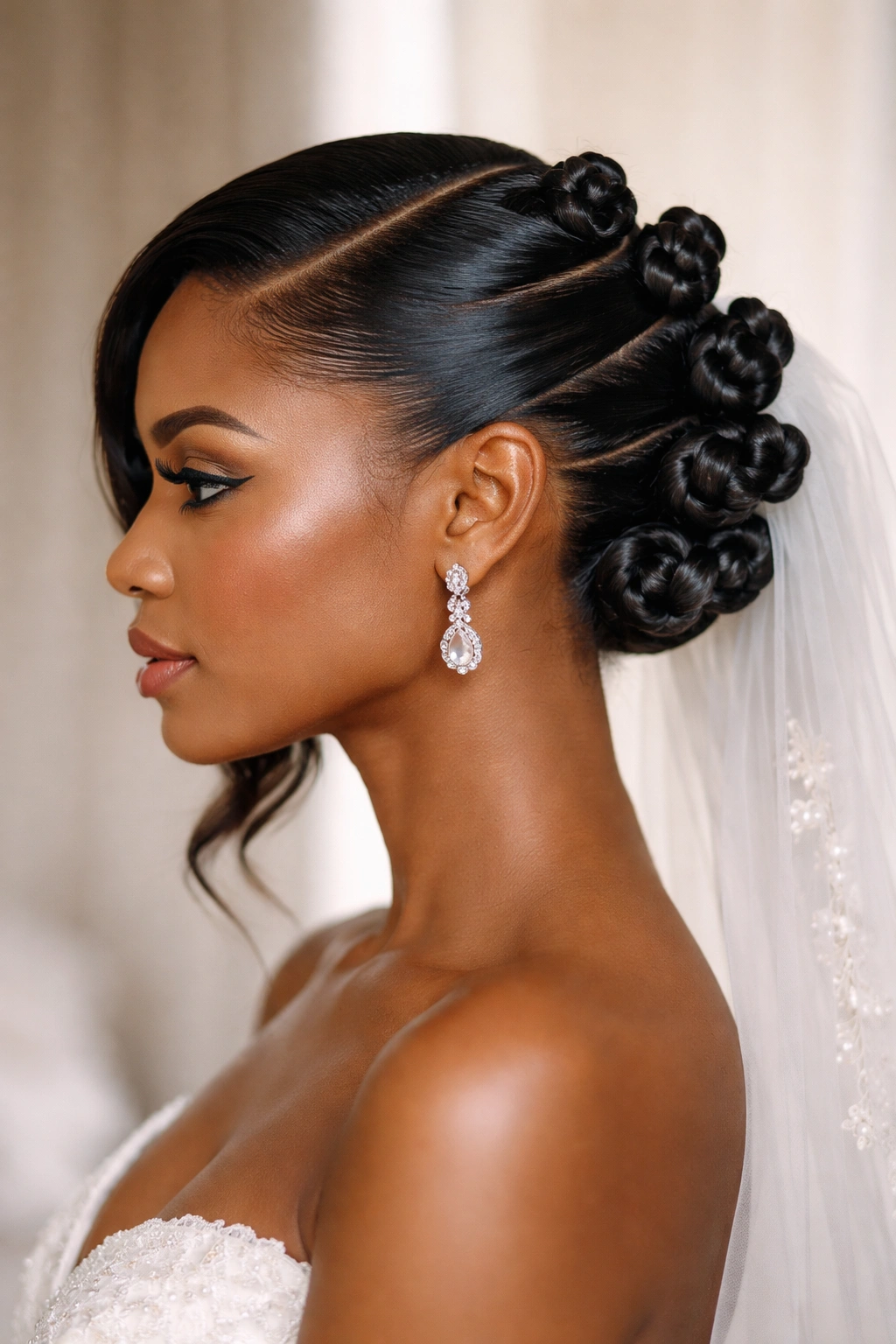
A side-part row of Bantu knots looks sharper than people expect. It gives you that clear bridal profile photographers love, especially if one side of the face is your best angle and you want the hairstyle to guide the eye there.
You can make this look as neat or as soft as you want, but the key is the parting. A deep side part changes the whole mood. It pulls the knot row into a graceful diagonal instead of a straight line, and that diagonal does a lot of work in pictures. It also leaves room for one statement earring or a single flower tucked near the temple.
What makes it different
Unlike a full crown or a symmetrical updo, this version has movement built into it. The eye travels from the part, across the knots, and down toward the nape. That makes it a smart pick for brides who want a clean shape without looking too formal.
The knots themselves should be uniform in size, about the size of a small plum if you want a refined finish. Bigger knots can look playful and sculptural. Smaller ones feel tighter and more tailored. Neither is wrong. The dress and the venue usually decide for you.
A sleek side-part row also plays nicely with short veils. Long veils can compete with the diagonal line. Short veils, birdcage veils, or a comb placed just behind the front knot tend to sit better. If you want the hair to do the talking, this is one of the quieter, smarter choices.
3. Gold-Cuffed Micro Knots for a Polished, Photo-Ready Finish
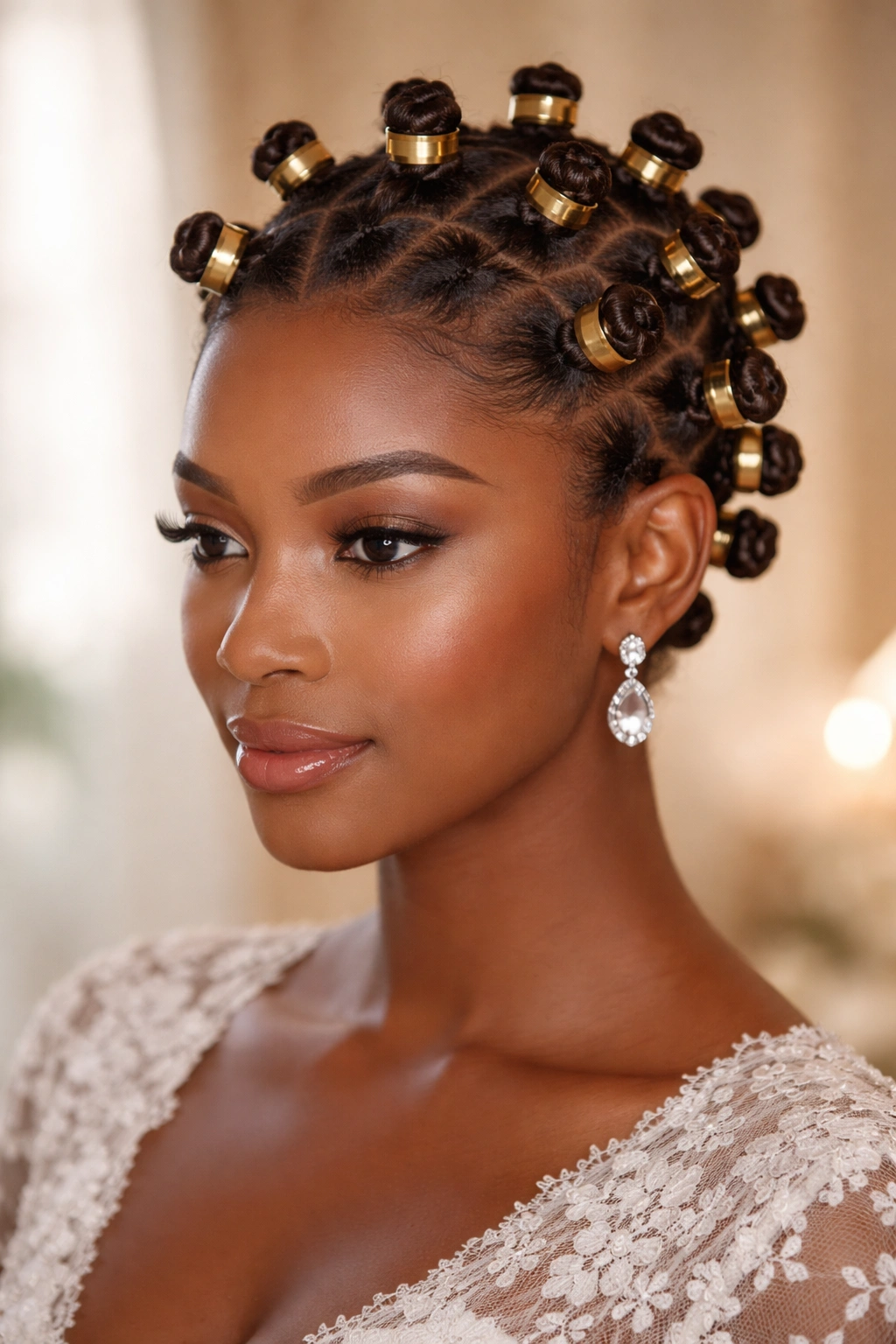
A bride in micro knots with gold cuffs always looks like she thought about the details. Not in a precious way. In a controlled, elegant way. The cuffs catch the light just enough to break up the pattern, and because the knots are smaller, the overall shape reads as refined rather than bulky.
This works especially well when the wedding outfit already has texture—lace sleeves, beading, a patterned veil edge, or jewelry with warm metal tones. The gold accents echo those elements and keep the hairstyle from disappearing into the background.
The parting pattern matters here
Micro knots need cleaner sectioning than large knots. If the parts are uneven, the whole style can look messy fast, because smaller units show every mistake. Use a tail comb, take your time, and keep the sections the same width from front to back. Tiny errors become obvious in close-up photos.
- Use cuffs sparingly, not on every knot if the hair is already dense
- Place the brightest pieces near the front and sides
- Keep the nape lighter so the style does not feel crowded
- Choose matte gold if the dress has ivory or champagne tones
The best part? This style can handle movement. When the bride turns her head or laughs, the little metal rings shift just enough to create life in the shape. That sounds minor. It isn’t.
4. Braided Base Bantu Knot Updo with Extra Lift at the Crown
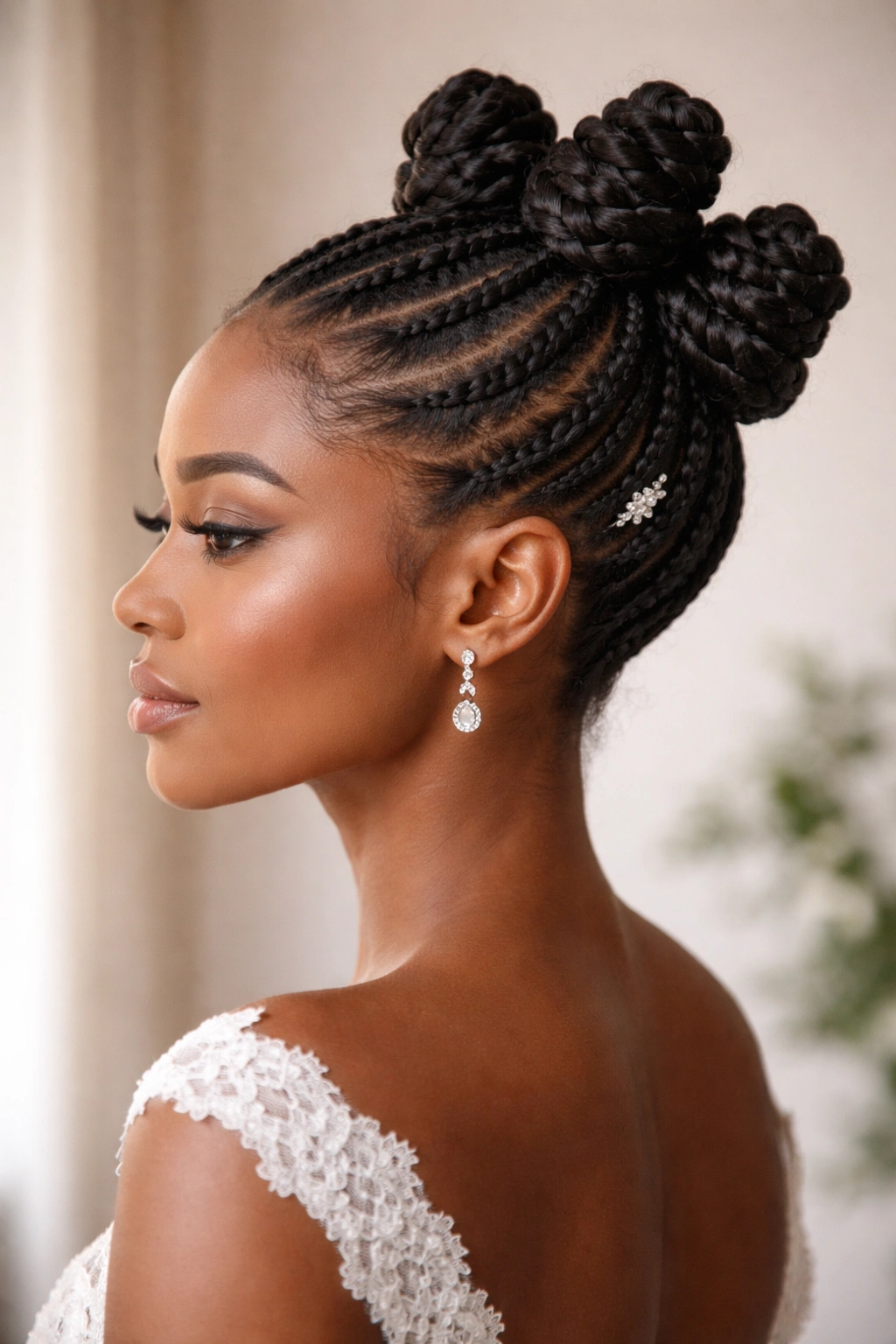
Braids under the knots give you structure. Plain and simple. If you want a wedding updo that stays put while still looking full, braided bases are one of the smartest ways to get there.
I like this version for brides who want height without a teased, overly airy finish. The braids anchor the knots close to the scalp, which keeps the style clean, and the knots themselves can be set a little higher to create lift at the crown. That makes the head shape look longer and more polished, especially in profile.
The texture contrast is what sells it. Braids at the base add a visible line, then the knots soften the look on top. It’s a nice blend of order and softness. Too many bridal styles lean one way or the other. This one doesn’t.
The style is also kind to accessories. A narrow vine comb can tuck into the braided section without fighting the knots. If you want flowers, keep them small and place them low so they don’t interrupt the lifted crown. Large blooms can crowd the shape fast.
One more thing: this version tends to hold better on long event days because the braid base gives the pins something to grip. That’s not glamorous, but it matters more than most people admit.
5. Half-Up Bantu Knot Bouquet with Loose Ends
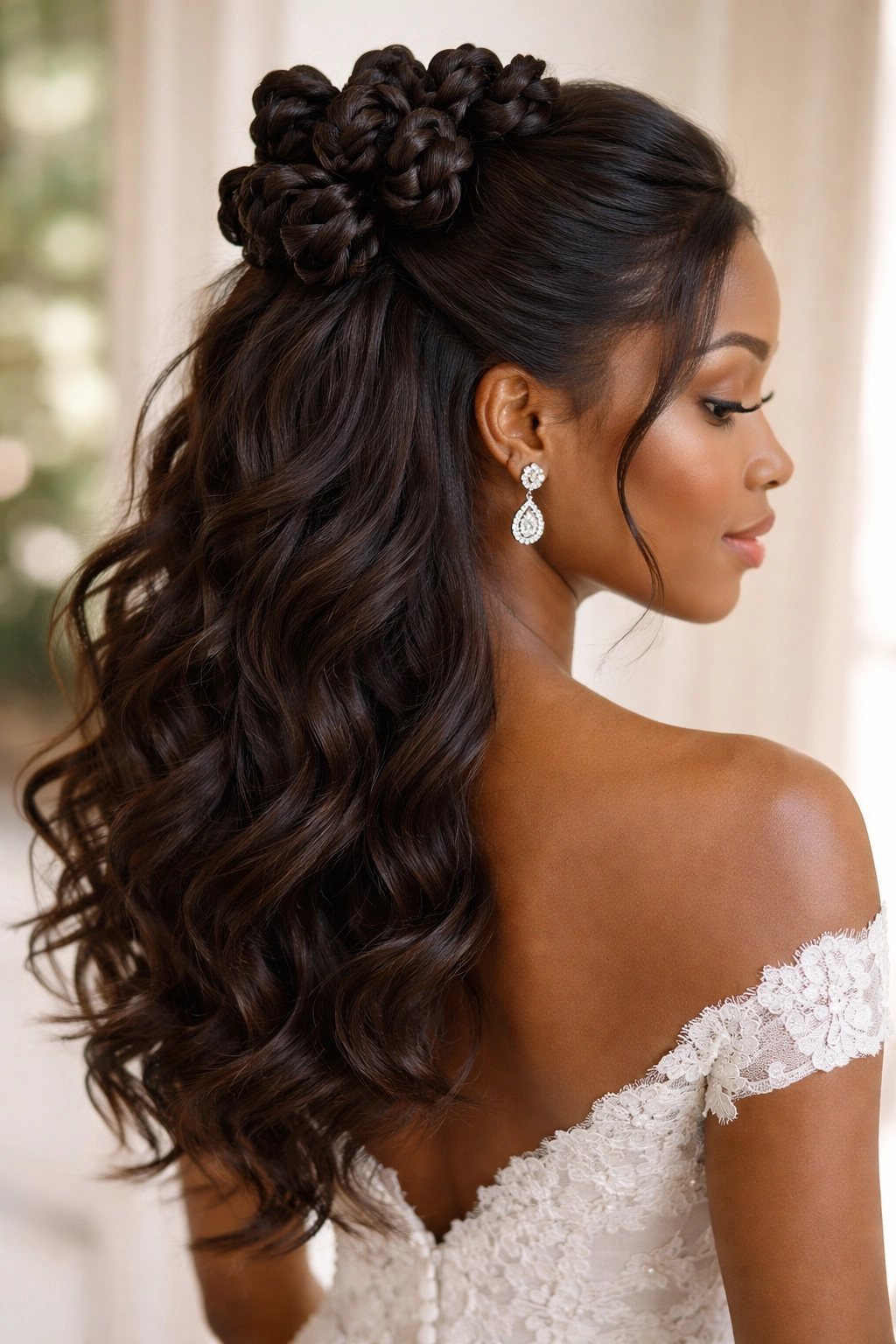
Can a half-up style still feel formal enough for a wedding? Absolutely, if the top section is controlled and the lower section is treated with care. A Bantu knot bouquet up top gives you shape and height, while the loose hair below keeps the whole thing softer.
This is the version for brides who don’t want a fully tucked-up look. Maybe the dress has a romantic back. Maybe the ceremony is outdoors and the full updo feels too severe. Or maybe you just like hair that moves when you walk. Fair enough.
How to keep it from looking unfinished
The lower section needs as much attention as the knots. Loose curls, stretched waves, or a polished twist-out can all work, but they should be consistent from side to side. Frizz is fine. Randomness is not. If the bottom looks like a separate thought, the style loses its shape.
The knot bouquet can sit high at the crown or slightly off-center for a more relaxed feel. High placement reads more bridal. Off-center placement feels less stiff and can be easier to pair with side-swept earrings.
A soft edge at the front helps here too. Not baby hairs plastered into shapes for the sake of it. Just enough detail to frame the face and connect the top section to the loose length. The style should feel airy, but not vague. That line matters.
6. Twisted Low Chignon with Bantu Knot Accents
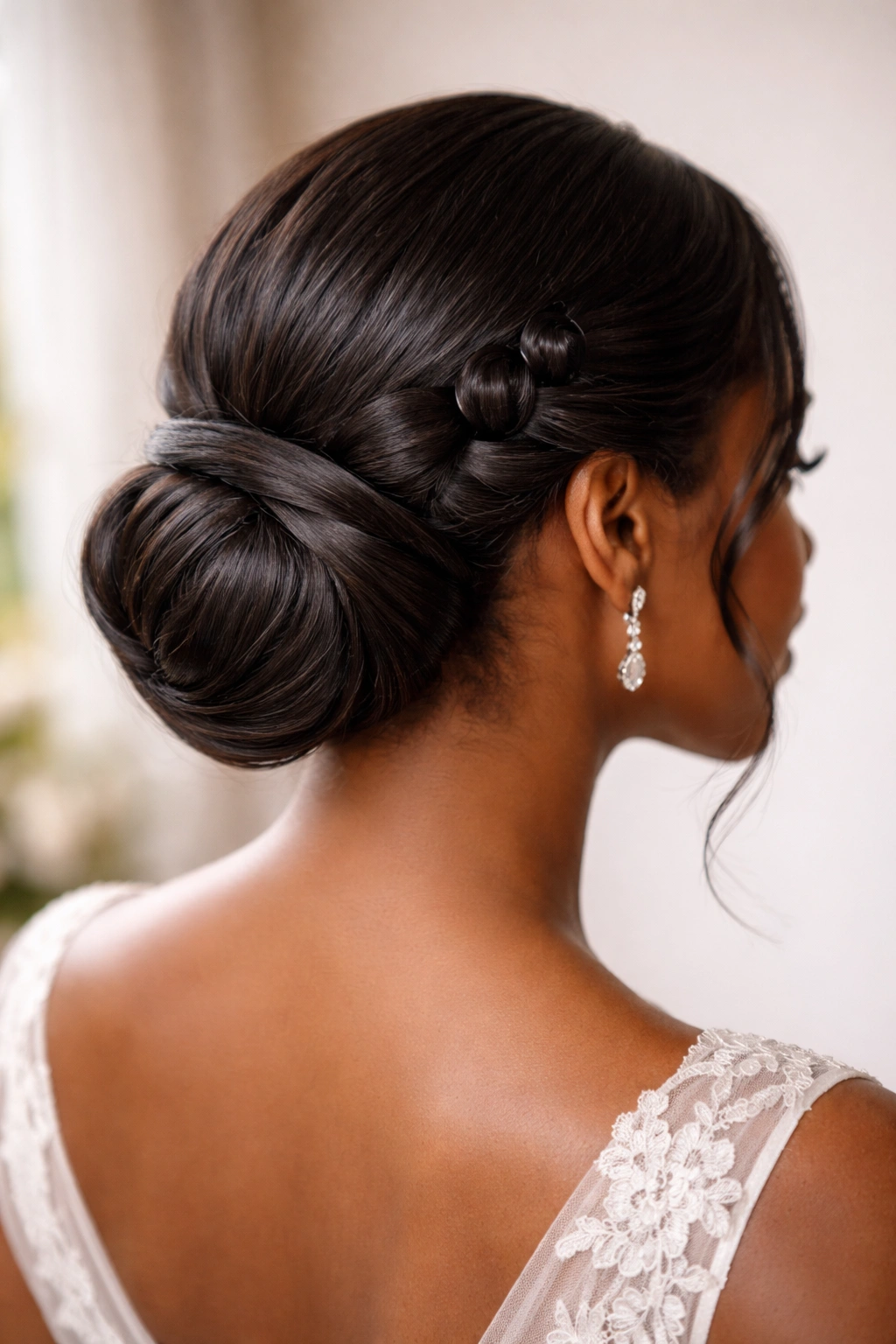
This is the smartest choice for brides who want a traditional silhouette with a little edge. The chignon keeps the base elegant and low, while the knot accents break up the smoothness and make the hairstyle feel personal instead of generic.
If you’ve ever seen a wedding updo that looked lovely but forgettable, this is the fix. The chignon gives you the familiar bridal shape. The knots give you personality. Together, they make the style memorable without turning it into a costume.
A low chignon also works well if the dress back is detailed. Lace, buttons, beading, scalloped edges—those details deserve space. A high or wide style can crowd them. This one sits below the line of the shoulders and keeps the back view clean.
Best placement for the knot accents
You do not need knots everywhere. Two or three accents are enough. Place them near the temple, at the upper side of the head, or just above the chignon where they can echo the curve of the bun. Too many accents and the style stops breathing.
A few brides worry this look feels too restrained. It won’t, if the knots have a slight roundness and the chignon is built with soft texture instead of a hard twist. The finish should look controlled, not shellacked.
This is also one of the better options for longer veils, since the veil can anchor under or just above the chignon without hiding the knot detail.
7. Asymmetric Sculpted Bantu Knot Updo for a Strong Bridal Profile
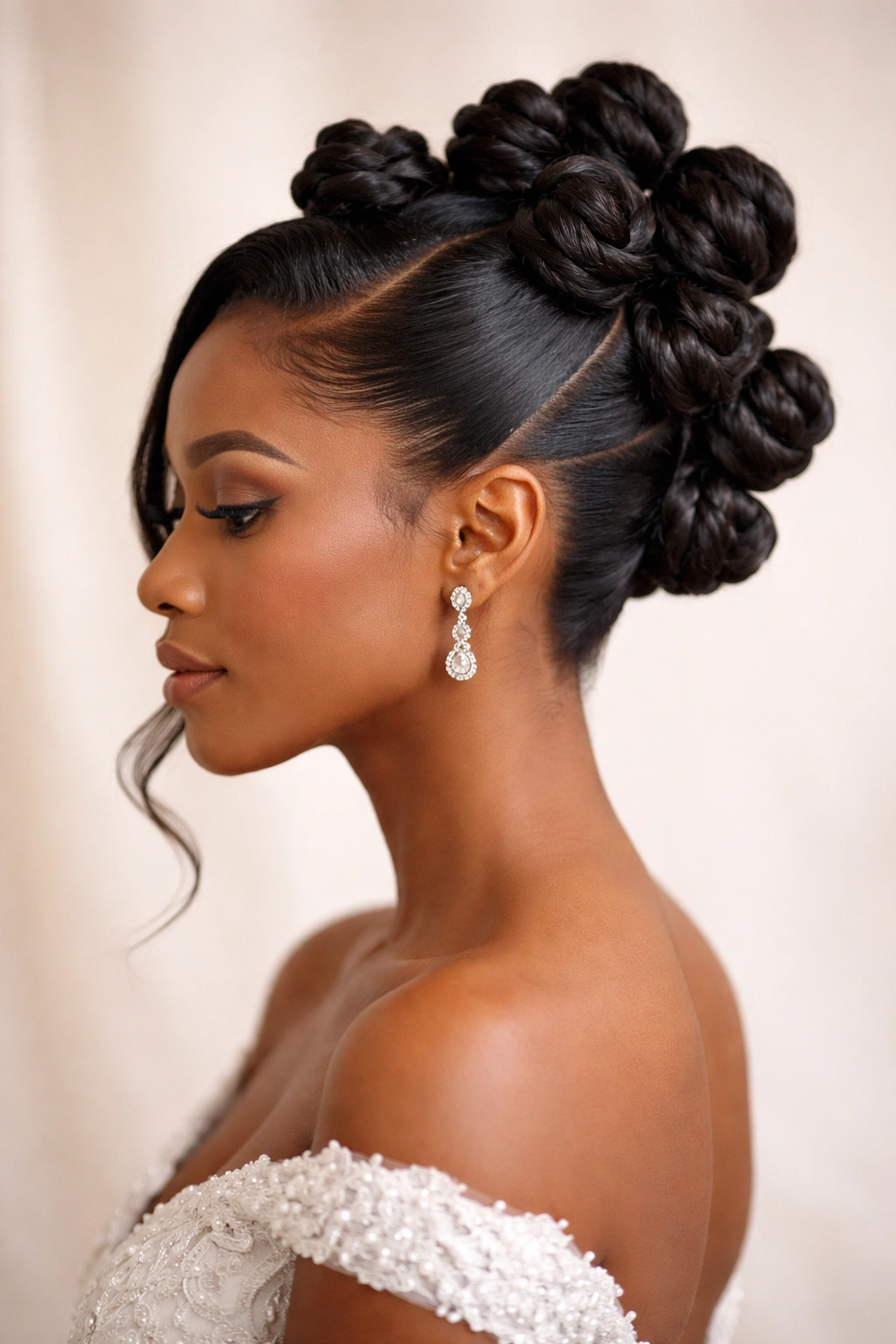
Asymmetry changes the mood fast. A style that sits slightly heavier on one side feels more editorial, more modern, and a little less expected than a centered updo. That can be a good thing on a wedding day, especially if the bride wears a dress with a dramatic shoulder, one-sleeve design, or a neckline that already breaks symmetry.
The shape should feel intentional, not lopsided. That’s the difference. One side may carry more knots, more height, or a larger braided base, while the other side stays sleeker to let the face and earrings show. It’s a visual pull, not a mistake.
What to ask your stylist for
- More volume on the side opposite your part
- Clean edges near the temple on the lighter side
- Knot sizes that shift slightly from large to small
- A strong anchor at the nape so the style doesn’t tilt
The reason I like this version for wedding photos is simple: it gives the camera something to work with. Straight-on shots feel balanced. Side shots feel sculpted. The profile looks thought out from every angle, which is exactly what you want when the photographer keeps circling.
If you’re wearing a bold lip or statement earrings, this style can hold them. If your dress is already very ornate, keep the knots more compact. Otherwise the whole look can become too busy. A little restraint helps here.
8. Soft Romantic Knots with Face-Framing Tendrils
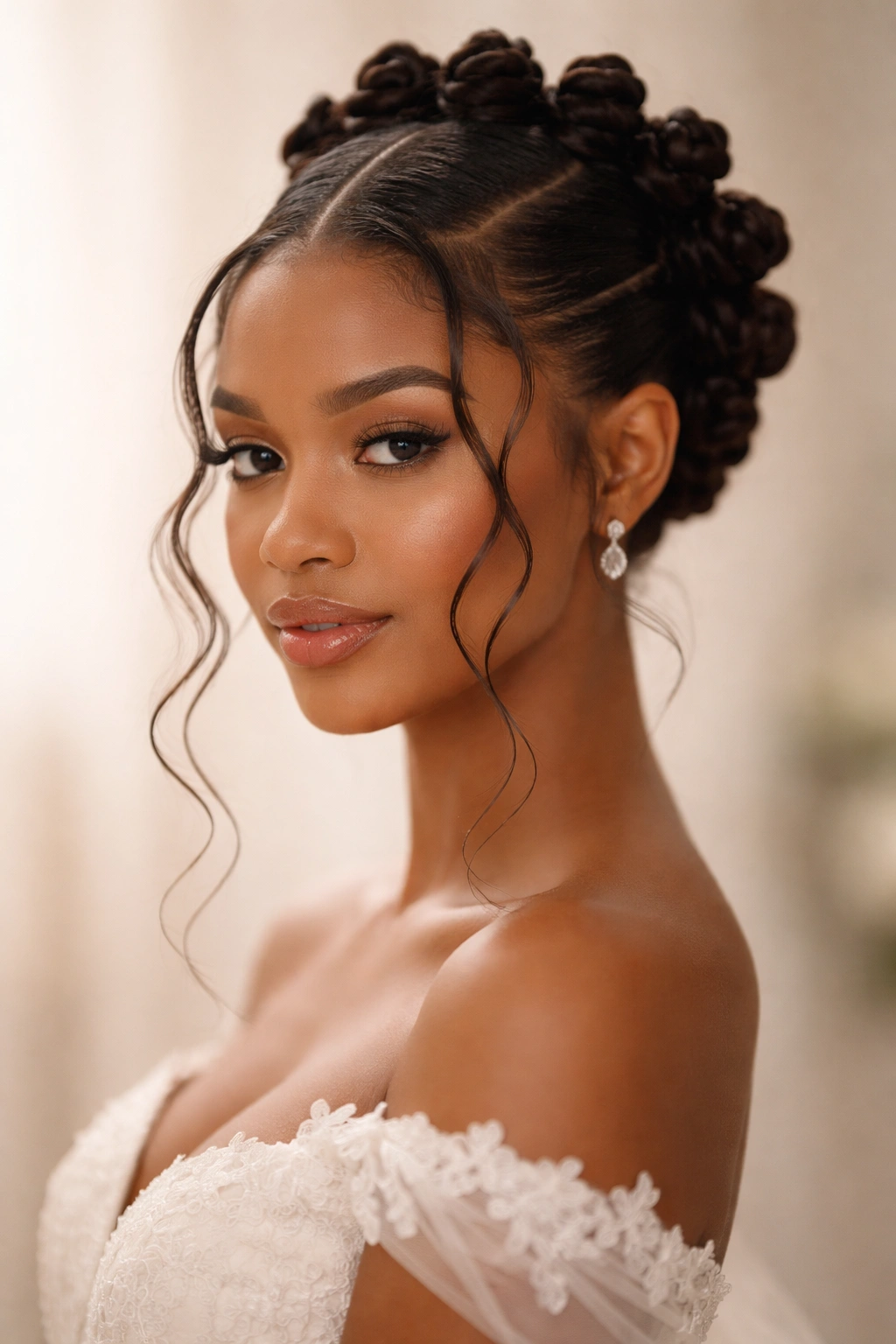
Some wedding hairstyles try too hard to be soft. They end up looking loose in a sloppy way. This one shouldn’t. The softness comes from the shape, the tendrils, and the way the front pieces are left to move, not from a lack of control.
This is the style for brides who want the texture of Bantu knots but still want the face to feel open. The tendrils can be curled lightly, stretched, or smoothed into a bend that follows the cheekbone. Keep them intentional. Stray pieces that are too short or too random will just read as flyaways.
The knots themselves can be placed in a curved line that follows the head, almost like a soft ridge. That line helps the style stay bridal instead of playful. You want romance, yes. You do not want it to look like you ran out of time.
A side note: this style works especially well with softer fabrics—silk, chiffon, fine lace. Heavy satin and super-structured gowns can make it feel too gentle unless you add a stronger accessory, like a jeweled comb or a pair of defined earrings.
Humidity can be a nuisance here. The tendrils need enough product to stay shaped, but not so much that they look stiff. Light mousse, a touch of curl cream, and a final mist of flexible hold usually get you there.
9. High Sculptural Bantu Knot Stack with Veil-Friendly Height
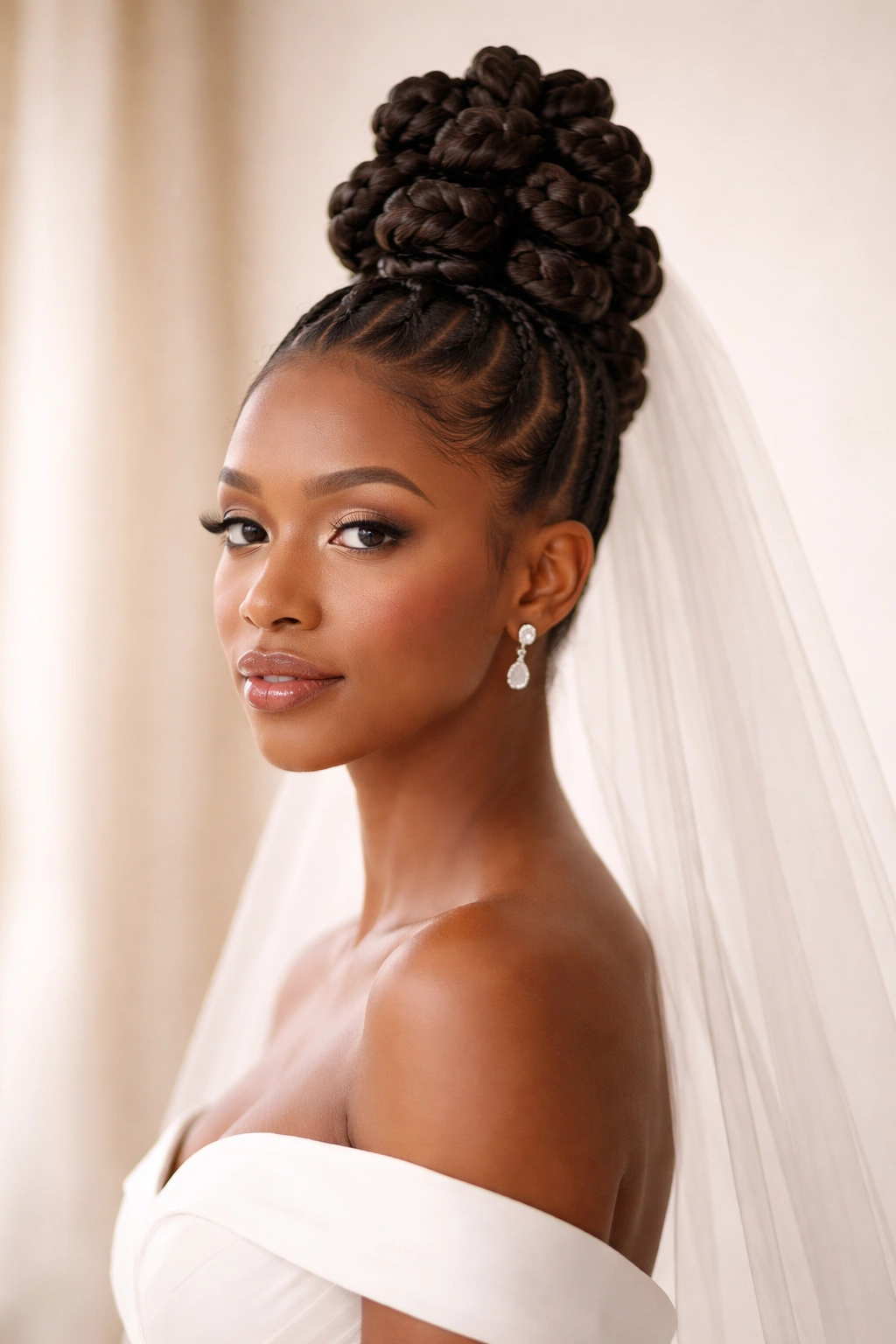
Height changes everything. A high sculptural stack turns the hairstyle into a real statement, which is useful if the dress is simple or if the bride wants the hair to carry more of the visual weight.
This style works by building knots upward in tiers instead of spreading them wide across the head. The result is a strong vertical line. It elongates the neck, shows off the jaw, and gives a veil a proper place to sit. Low veils tuck in cleanly. Mid-height veils float around it. Either way, the shape stays visible.
When this version makes the most sense
- The gown has a minimal neckline
- The bride wants visible height in photos
- A large headpiece would overpower a lower style
- The event calls for a formal, sculpted look
The stack should still feel balanced. Too much height at the center and not enough support at the sides can make the head look top-heavy. I prefer a gradual rise, with the tallest knot sitting just behind the front hairline and the back section tucked enough to keep the line smooth.
One practical note: this is not the easiest style for someone who wants to lean back against a chair all evening. It looks polished, but it can feel a little more delicate than a low bun. Worth it, though, if the goal is strong shape and a clean silhouette from every angle.
10. Minimalist Bridal Knot Crown for a Clean, Modern Finish
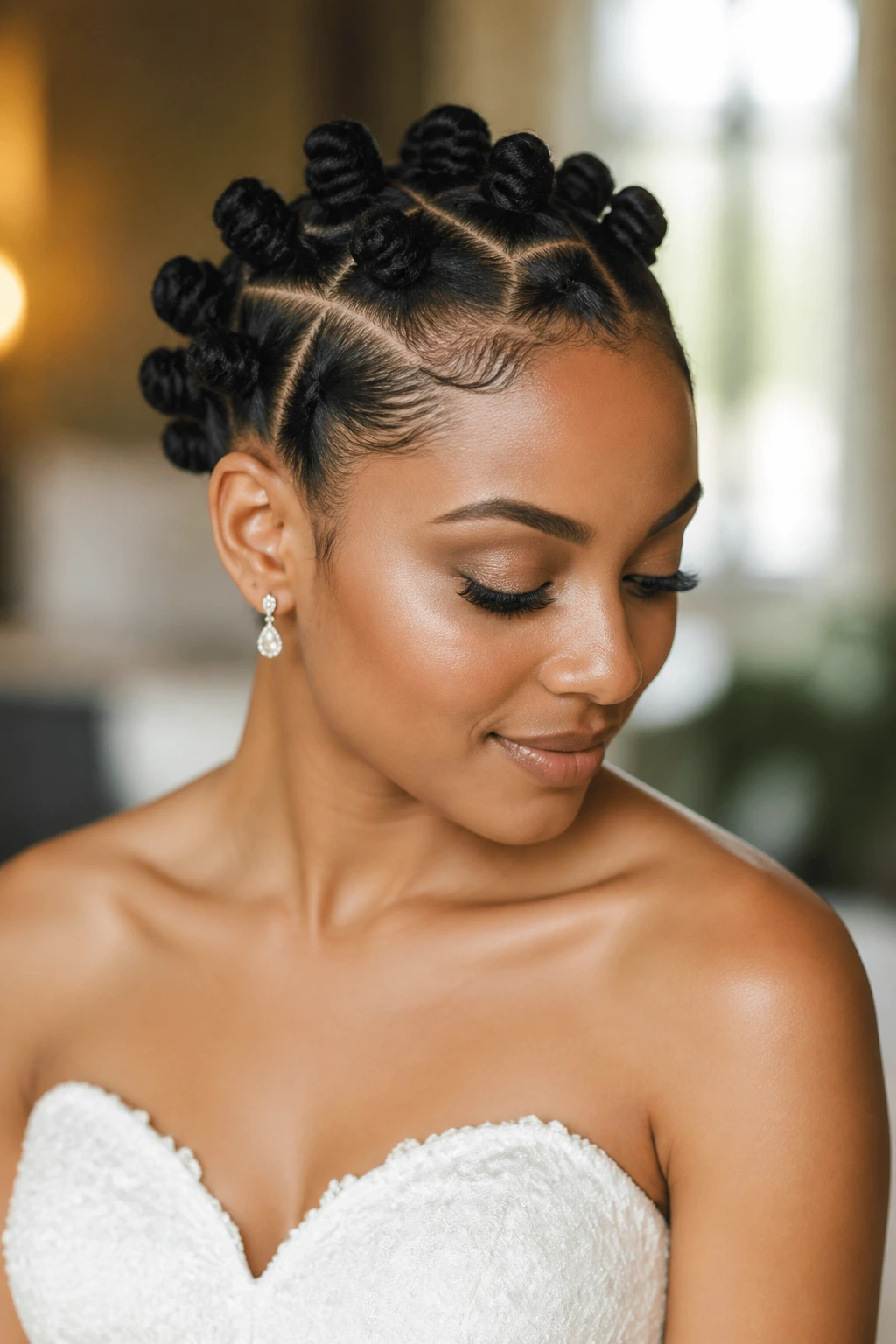
Not every wedding hairstyle needs ornament. Sometimes the strongest choice is the one that lets the shape speak for itself. A minimalist knot crown does exactly that.
There’s no heavy jewelry here, no pile of flowers, no extra braids trying to make the point louder. Just a precise crown of knots, neat parting, and enough sheen to look cared for. That restraint can feel more expensive than decoration, which is why it works so well with modern dresses, sharp tailoring, and understated makeup.
The style also suits brides who don’t love fuss. If you want to move freely, greet people, and never worry about a comb snagging or a floral pin drooping, this is a calm option. Calm is underrated at weddings. Honestly, more brides should ask for it.
The best way to finish this look is with clean edges, a smooth nape, and a single accessory if you want one. One pearl pin. One slim comb. Maybe nothing at all. If the parting is crisp and the knots are shaped with care, the style can stand on its own.
And that’s the real appeal of Bantu knot bridal hair. It doesn’t have to shout to be memorable. It can be soft, sharp, sculptural, or quiet, and still look fully at home beside a wedding dress, a veil, and a room full of people trying to remember every detail.
