



A bob can look sharp or flat in about five minutes, and bob cuts with highlights are usually what decide the difference. The haircut gives you the shape. The color does the moving. Without that second layer, even a great bob can read as a solid block, which is fine if that’s the goal, but most people want a little lift around the face, some depth at the back, and a finish that doesn’t collapse the second it’s air-dried.
Highlights matter more on shorter cuts than people expect. A long layer can hide a harsh foil line or a slightly patchy blend; a bob cannot. Every inch is on display, especially around the hairline and the ends, so placement has to be smarter, not heavier. That’s why the best versions of this haircut lean on techniques like babylights, balayage, money pieces, and root shadowing instead of one giant stripe of blonde running through the middle.
The other thing worth knowing is that not every bob needs the same color story. Fine hair often looks fuller with tiny, closely woven highlights. Thick hair can take bolder ribbons. Curly hair needs a softer hand so the pattern doesn’t turn stripey. Straight, blunt cuts can handle more contrast because the line itself is doing part of the work. Once you start seeing the shape and color as one package, the good versions get obvious fast.
And that’s where the fun starts. Some bob and highlight pairings feel soft and expensive, some look sharp and editorial, and a few are just plain practical in the best way — low drama, good grow-out, easy to wear. The trick is matching the right highlight placement to the right bob line, which is exactly where the strong looks live.
1. Soft Caramel Ribbons on a Chin-Length Bob
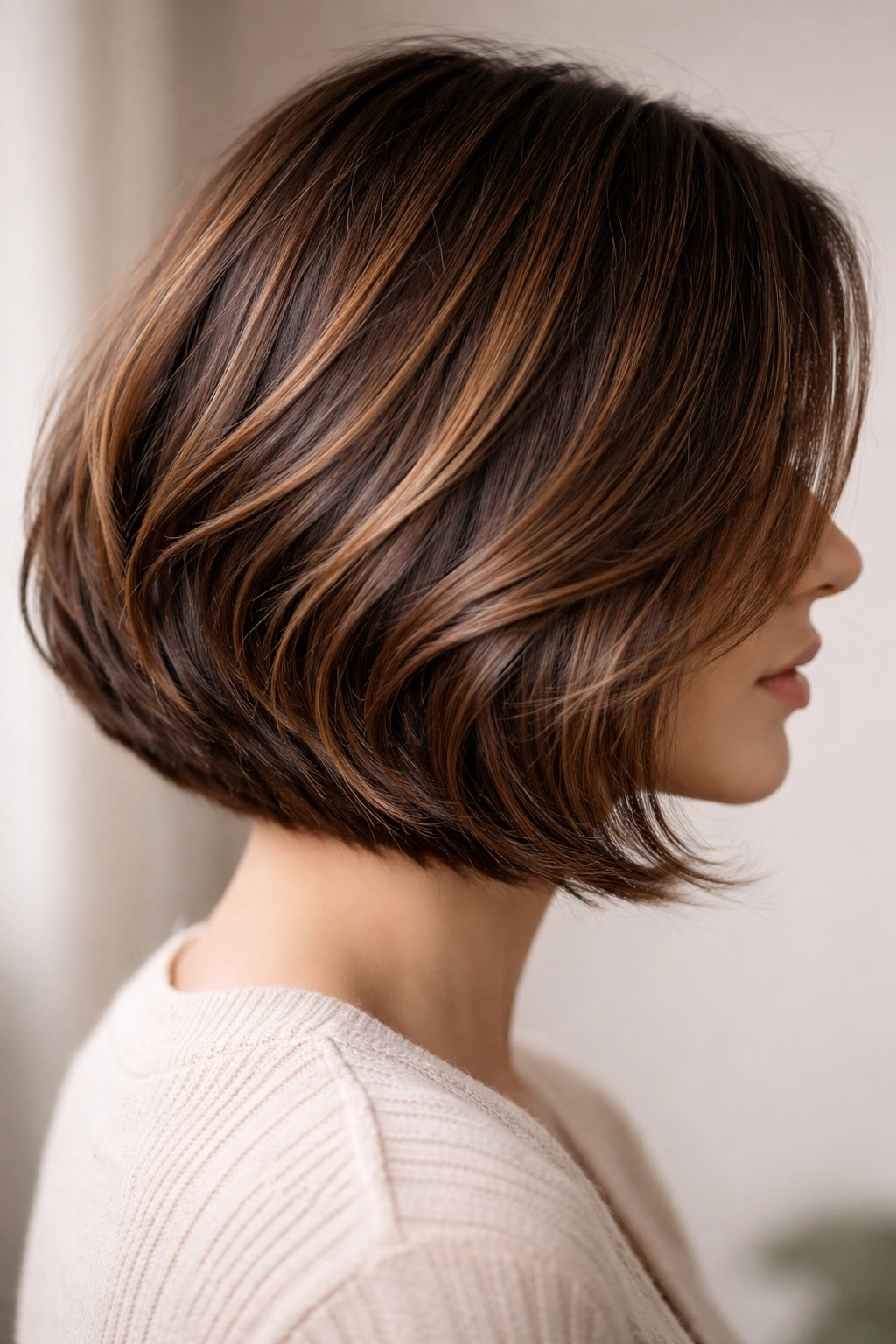
A chin-length bob with caramel ribbons is one of those combinations that never tries too hard. The cut sits close to the jaw, which already gives you shape, and the warm highlights soften the edge so the whole thing feels lighter around the face. It’s a smart choice if you want dimension without a loud contrast.
Why this placement works
The caramel tones should sit a little off the root, then sweep through the mid-lengths and ends in thin ribbons. That keeps the color from turning into a helmet stripe. On darker brunette hair, the warmth reads as glossy and rich; on medium brown hair, it gives the cut a soft sunkissed feel that still looks polished.
This version is especially good for hair that falls flat at the crown. The highlights create the illusion of movement even when the bob is straight. I also like it on round and heart-shaped faces because the warm pieces around the cheekbones draw the eye outward instead of straight down.
- Best on: fine to medium hair
- Color family: caramel, honey, light chestnut
- Maintenance: salon gloss every 6 to 8 weeks
- Styling trick: a 1-inch curling iron adds a loose bend at the ends
Small move, big payoff: ask for thin, broken ribbons, not chunky stripes. That one phrase changes the whole result.
2. Blunt Bob with a Bright Money Piece
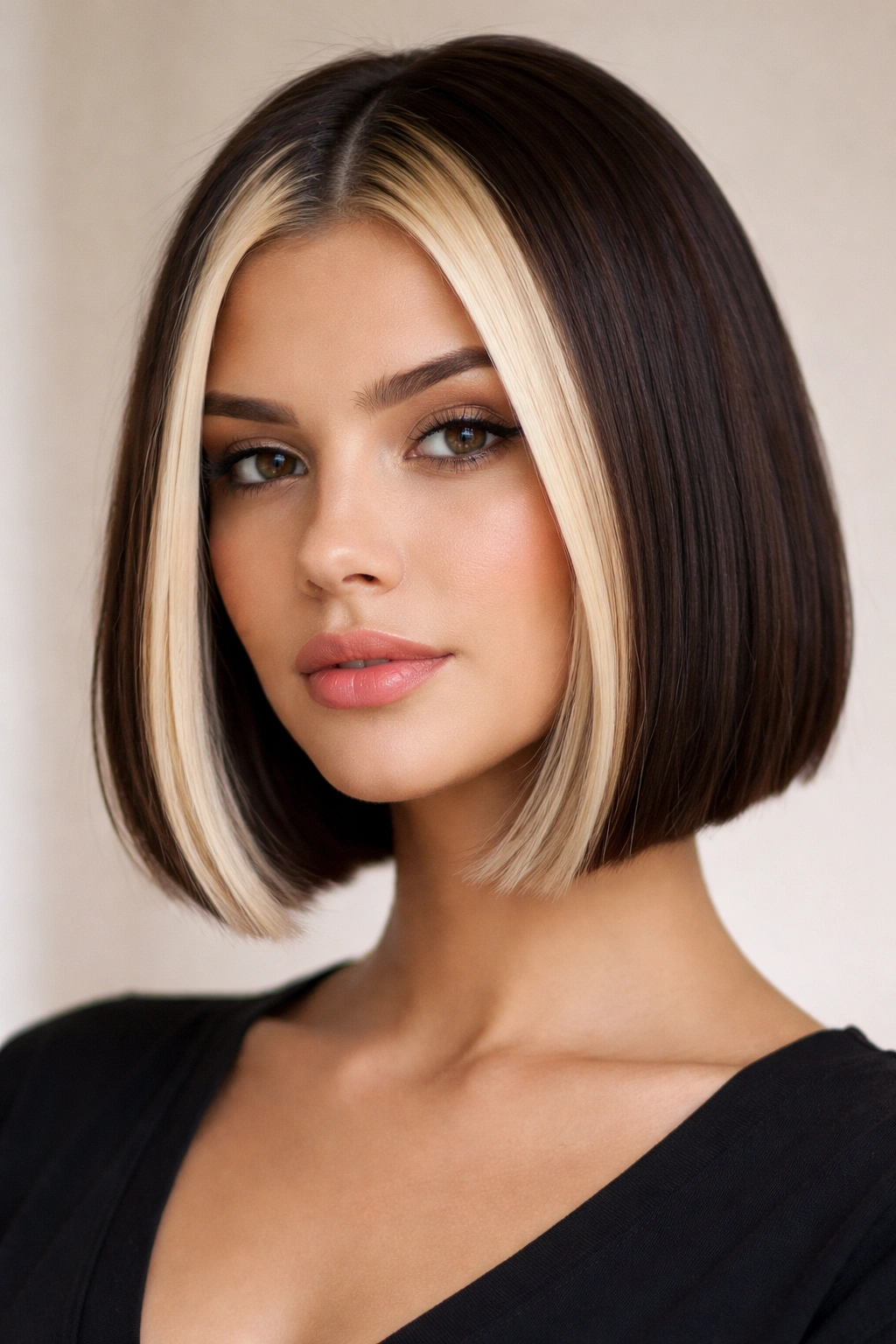
This one has attitude. A blunt bob already feels crisp, and adding a bright money piece at the front gives it a clean punch that frames the face in seconds. If you like hair that looks deliberate the moment you walk out the door, this is a strong pick.
The key is restraint everywhere except the front. Keep the back and underlayers a touch darker or more natural, then place the brighter pieces right where the hair falls around the temples and cheekbones. That contrast makes the cut look sharper, not busier. It also helps if your bob is very even through the perimeter, because the color draws attention to the line instead of competing with it.
I’d call this a higher-maintenance look, and I mean that in the honest way. The front pieces show regrowth fast, especially if you go several shades lighter than your base. But if you’re fine with a regular toner and touch-up schedule, the result has real impact. It looks clean in straight styles and almost graphic when tucked behind one ear.
If you want to soften it a little, keep the money piece just one or two levels lighter than the rest of the bob. That still gives you lift without drifting into harsh territory. And yes, this style photographs well in real life too — mostly because the lines are doing the heavy lifting.
3. Layered Bob with Feathered Babylights
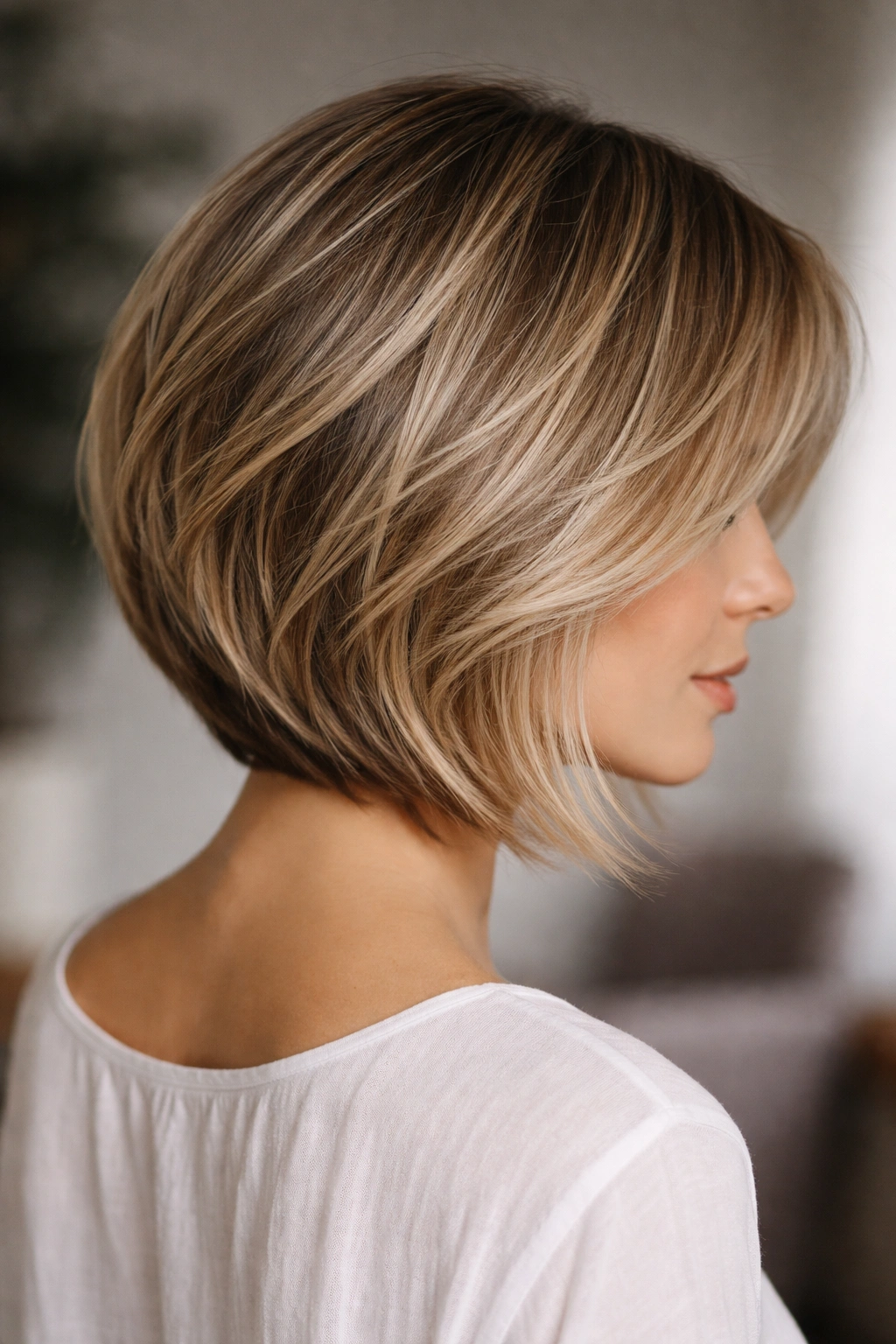
A layered bob and babylights are a very good match because they solve the same problem from two angles: the haircut builds movement, and the color keeps that movement visible. Babylights are ultra-fine highlights, almost threadlike, so the result looks like natural light catching the hair rather than obvious streaks.
What makes babylights different
They’re woven in smaller sections than traditional highlights, which means the finish is softer and more blended. On a layered bob, that matters a lot. Layers can look choppy if the color placement is too blunt; babylights keep the cut from turning piecey in the wrong way.
This is one of my favorite choices for finer hair. The hair often looks fuller because the eye reads the tiny shifts in tone as extra texture. It’s also forgiving if you don’t want a big maintenance schedule. The regrowth line is subtle, so the grow-out stays neat for a while.
How to wear it
- Blow-dry with a round brush if you want the layers to flip under slightly.
- Use a light mousse at the roots; heavy cream can kill the airy look.
- Ask your colorist for a soft beige or champagne tone if you want brightness without brass.
- Keep the highlights concentrated through the top and sides, not buried only underneath.
The whole point here is movement. Not drama. A layered bob with babylights should look like the hair has its own rhythm.
4. French Bob with Creamy Face-Framing Blonde
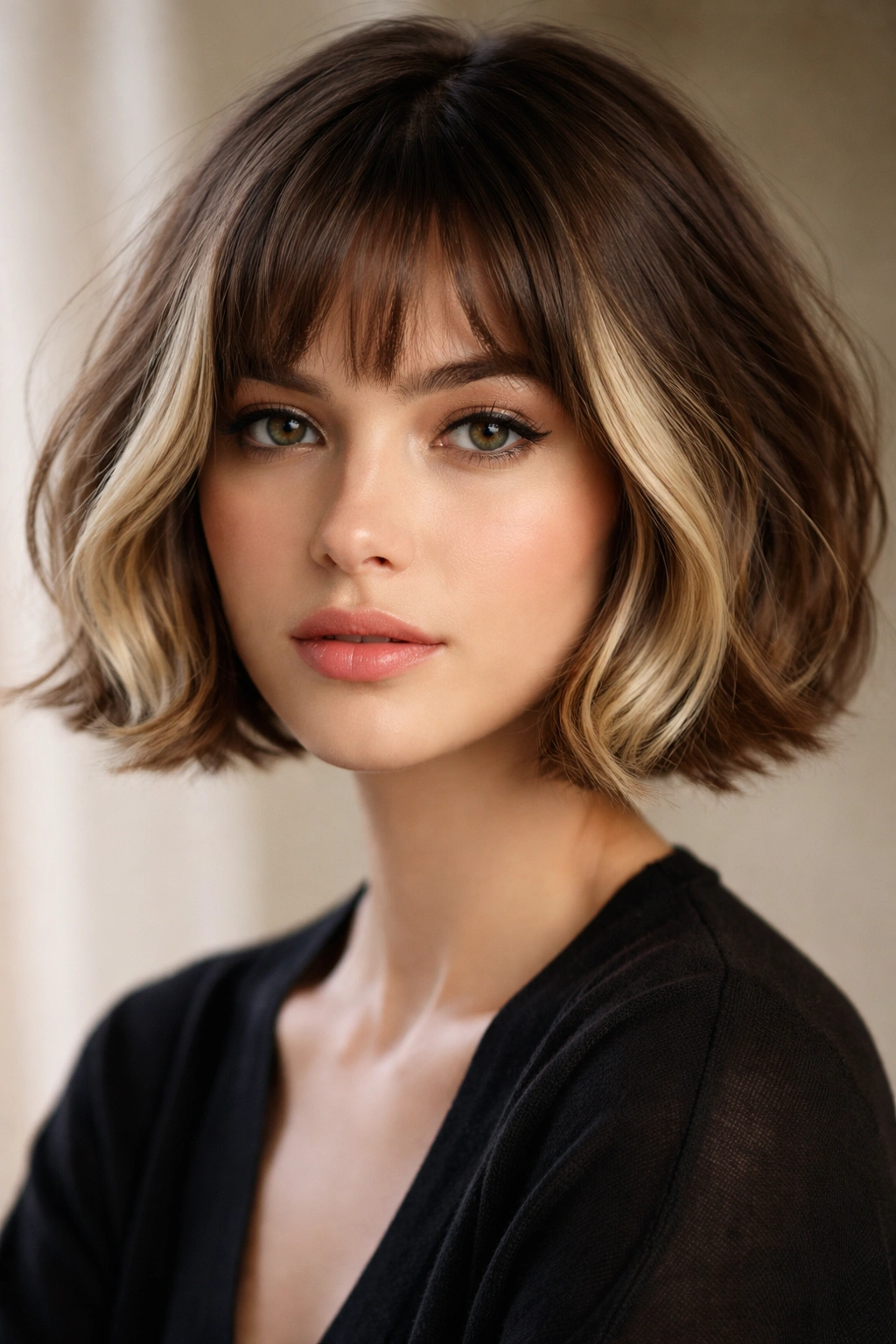
A French bob already has a little attitude — short, cheekbone-skimming, often with a soft fringe — so creamy face-framing blonde pieces suit it beautifully. Picture someone stepping out of a bakery in a black coat with slightly undone hair. That’s the mood. Casual, but not lazy.
The face-framing pieces should start near the temple and travel down toward the jaw, staying softer near the front fringe so the cut doesn’t lose its shape. Creamy blonde works better than icy blonde here because the French bob usually looks better with warmth at the edges. Too much contrast can make the style feel stiff.
The magic is in the balance. You want the bob to keep its compact, rounded shape while the front lightens the face and opens up the eyes. That makes the haircut feel fresher without turning it into a full color overhaul.
A few details matter more than people think:
- Keep the fringe slightly darker or only lightly highlighted so it still reads as a fringe.
- Use a gloss with beige or pearl tones if the blonde starts to look too yellow.
- Style with a quick bend, not perfect curls.
- Leave a tiny bit of texture at the ends; too much smoothing can make the cut lose its charm.
This one suits people who like a haircut with personality but don’t want it to look overworked. It has enough softness to feel easy and enough structure to feel intentional.
5. Angled Bob with Swept Balayage
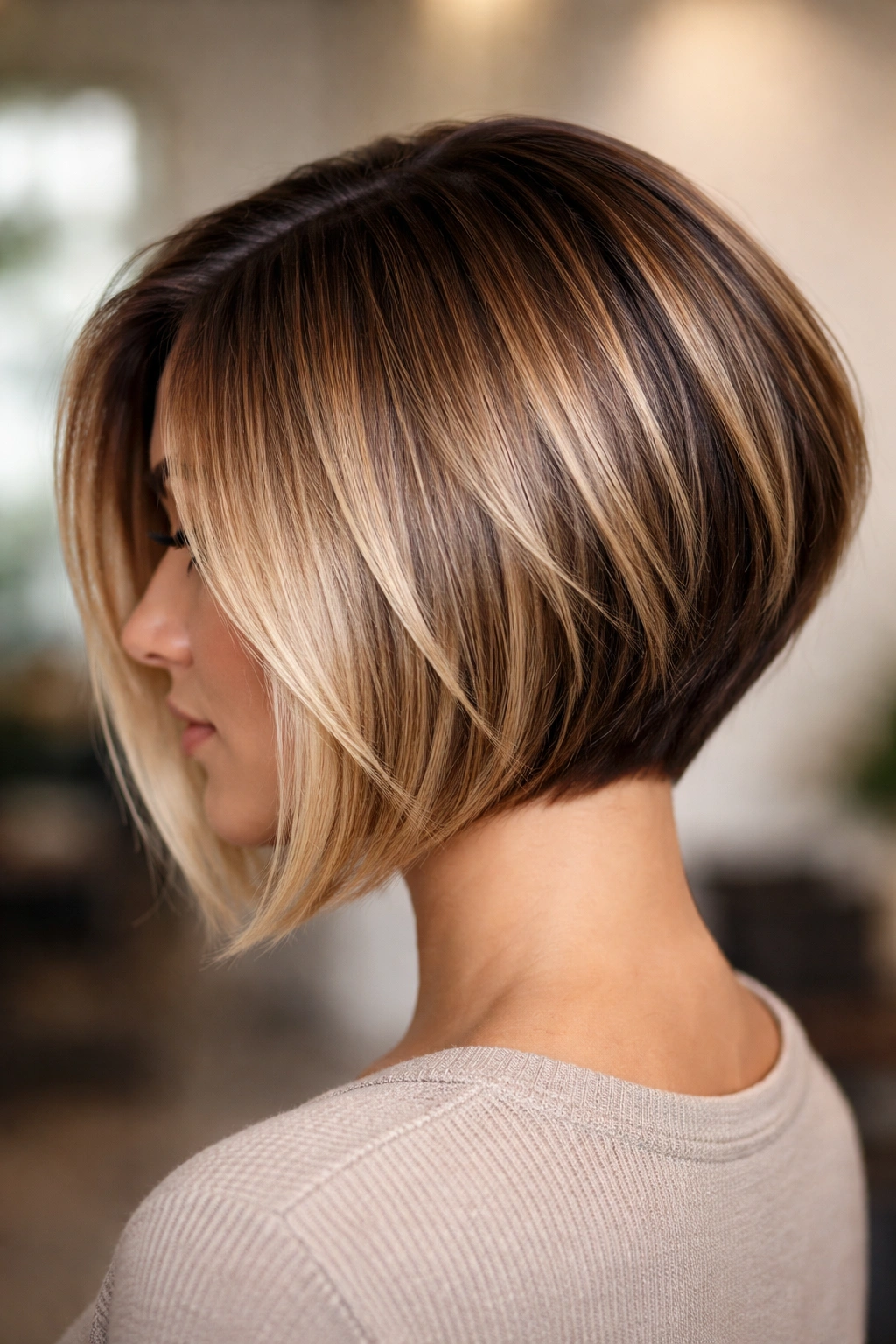
Unlike foiled highlights that can look very even, balayage on an angled bob lets the color follow the haircut’s own slant. That’s the whole advantage. The longer front pieces and shorter back already create motion, and the hand-painted lightness just rides that line instead of fighting it.
The best version starts darker near the nape and becomes lighter as it moves toward the front. That keeps the angle visible from every side. If the color is too bright all over, the shape gets muddy. If it’s too concentrated only on top, the underside can look heavy. Balayage lets you thread the light through the surface in a way that feels more natural.
This cut tends to look good on medium-density hair, especially if you wear it wavy or with a slight bend. The diagonal line gives the highlights a place to sit, and the color helps the eye follow the shape. It’s one of those styles that makes a simple blowout look more expensive than it actually was.
My favorite part? It grows out gracefully. You don’t get that hard shelf at the roots that some brighter bobs develop. If you don’t want a strict salon schedule, this is a solid lane.
6. Curly Bob with Honey and Wheat Highlights
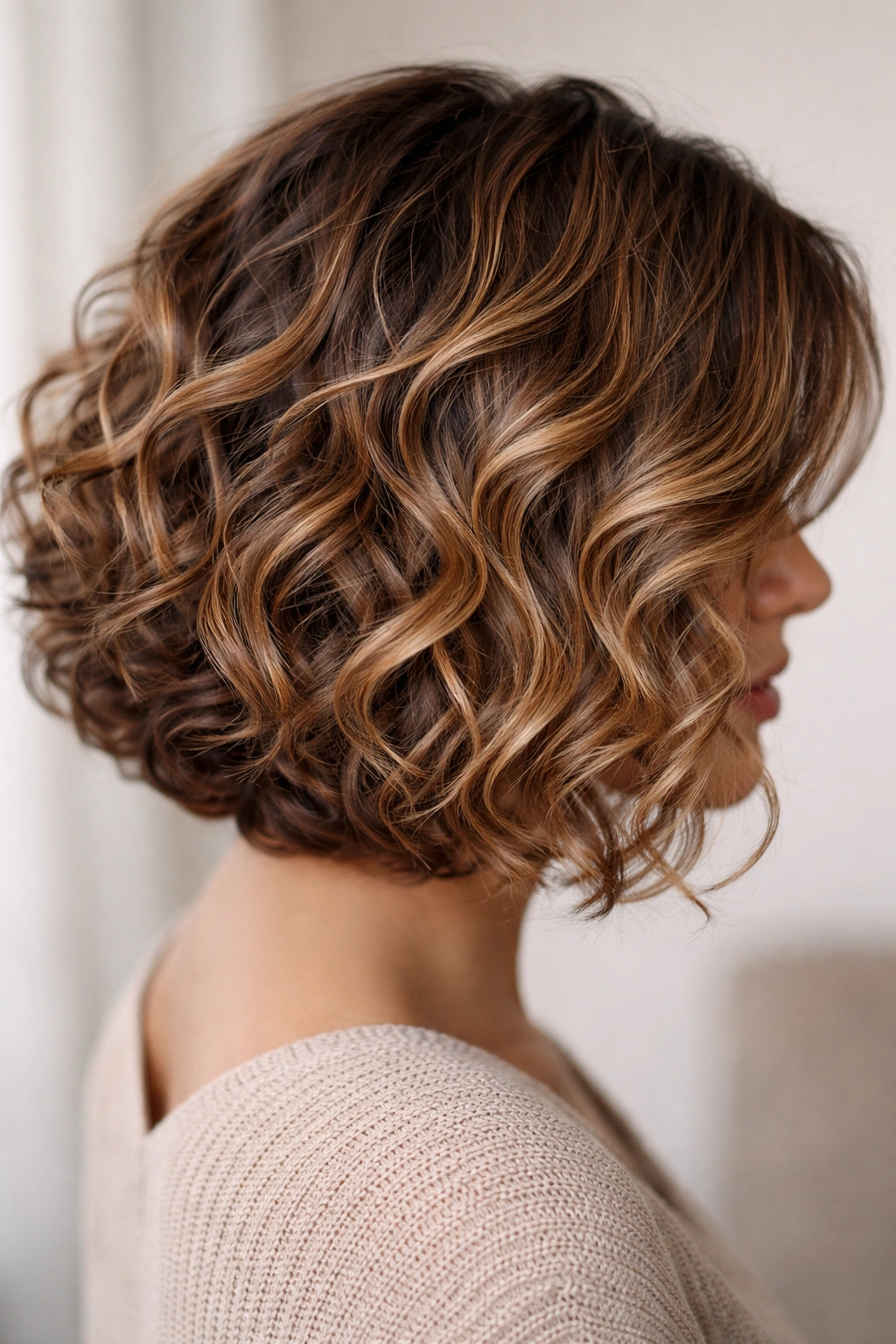
Curly bobs need a different color strategy. Straight hair can show every line, but curls move in loops and pockets, so highlights have to be placed with enough spacing to keep the pattern from getting noisy. Honey and wheat tones do that job well because they brighten the curl pattern without turning it into stripes.
The best curly bob highlight placement usually starts with larger painted sections through the top and around the face, then softer touches deeper in the curls. That way, the color shows up where the light naturally hits. A tiny foil scattered everywhere can look busy on curls. Bigger, deliberate placement usually reads cleaner.
This is one of those styles where tone matters as much as placement. Too-ashy highlights can flatten warm curls and make them look dull. Honey and wheat keep the texture lively. If your base color is deep brown, that warmth also adds visible contrast without making the hair feel harsh.
A good curly bob with highlights should still feel soft when it moves. No crunchy separation. No striping. Just enough contrast that the curl pattern pops when the hair dries.
And yes, styling matters. Use a curl cream or gel on soaking-wet hair, then let the shape dry without too much touching. If the curl clumps are intact, the highlights fall into place much better.
7. Inverted Bob with Cool Ash Ribbons
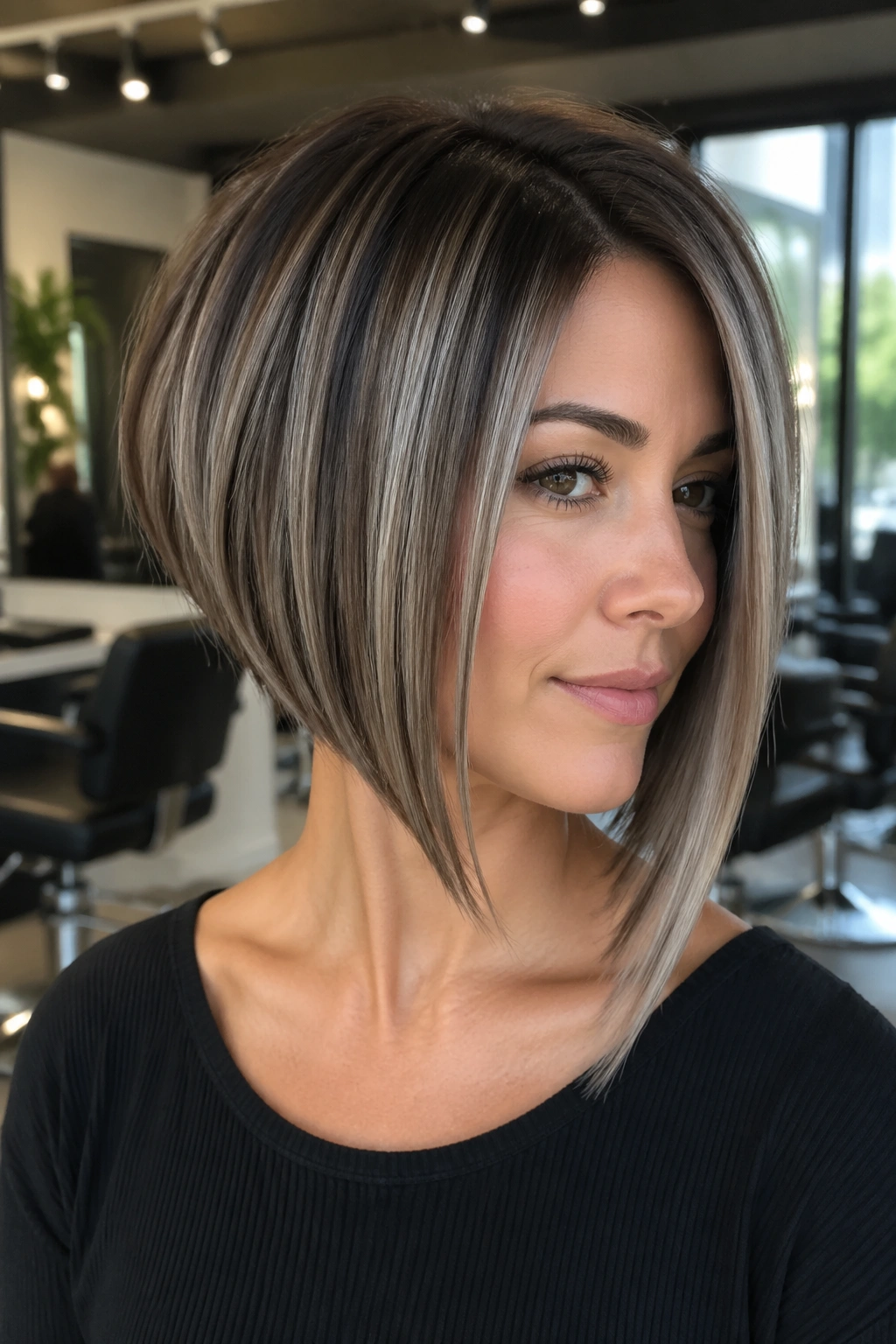
Cool ash highlights can make an inverted bob look sharper than almost any other color choice. The stacked back and longer front already create a clean slope, and ash ribbons reinforce that geometry instead of softening it. If you like hair that feels crisp and a little architectural, this is a strong direction.
What to watch for
Ash tones are unforgiving when they’re too dark or too muddy. On a short cut, there’s nowhere to hide that. The color should be clean, cool, and lifted enough to show the bend of the bob, not flatten it into a gray-brown blur.
- Works best on naturally cool or neutral brunettes
- Needs regular toner if the highlights pull warm
- Looks strongest on straight or softly rounded finishes
- Can be too severe if the front pieces are overlightened
The cut itself does a lot of the work here. Because the back is shorter, the eye reads the darker base near the nape and the brighter surface above it. That contrast makes the bob feel sculpted. I’d avoid this if you want something soft and romantic. It’s more tailored than sweet.
But if you wear silver jewelry, muted makeup, or crisp necklines, the whole look clicks into place fast. It has edge without shouting.
8. Wavy Lob with Beige Balayage
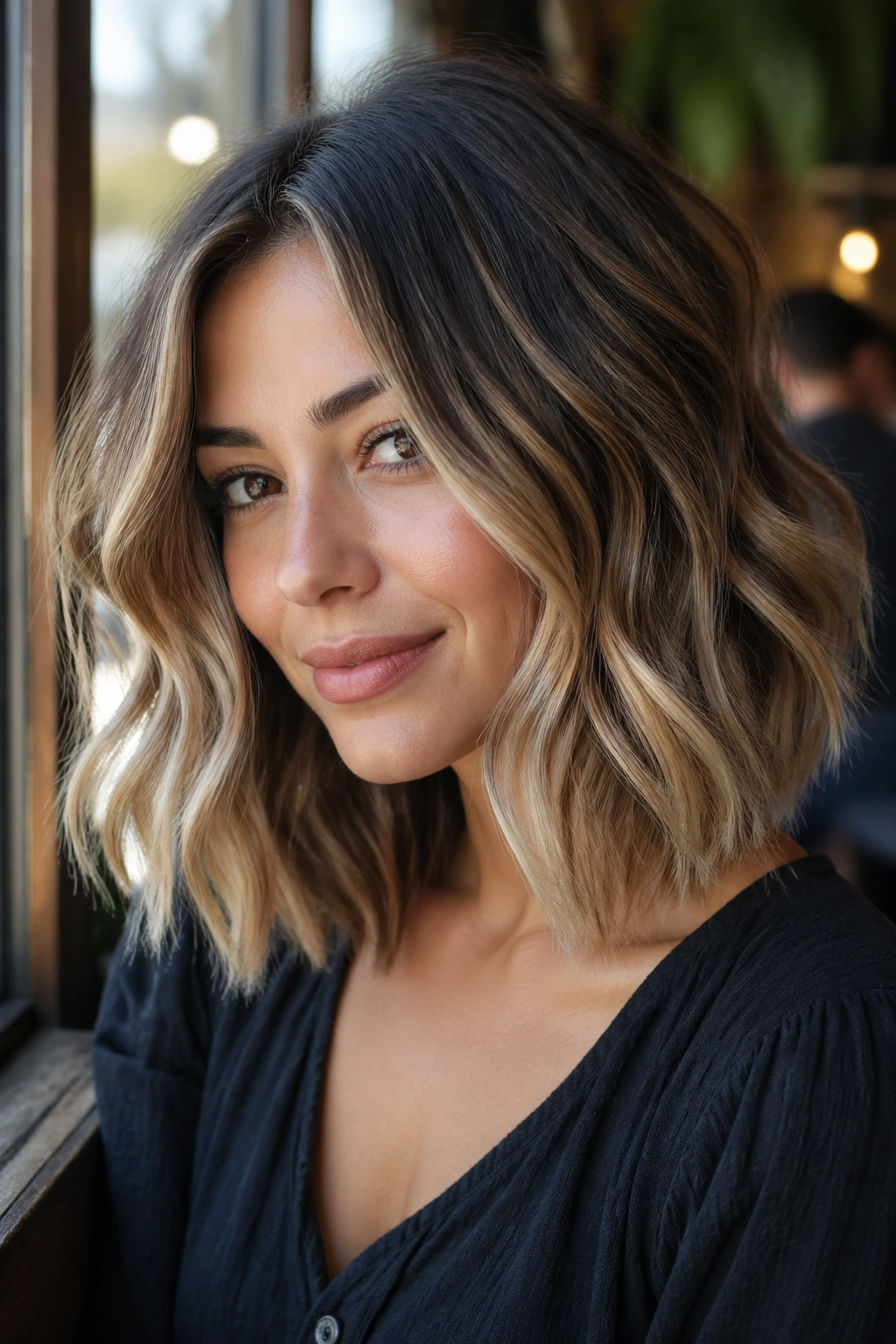
Why do so many people keep coming back to a wavy lob with beige balayage? Because it’s one of the easiest ways to make shoulder-length hair look deliberate without having to fight your texture every morning. The lob gives you enough length for movement, and the beige balayage keeps the waves from looking one-note.
The color should sit softly through the mids and ends, with a little extra brightness around the front sections. Beige is a useful middle ground. It’s not too golden, not too icy, and that makes it easier to wear across a range of skin tones and base colors. The effect is calm, which sounds boring until you see how good calm hair can look.
This cut works especially well if you air-dry. The waves break up the color, so you get a lived-in finish without needing perfect styling. A sea salt spray can help, but don’t overdo it. Too much grit and the blonde starts to look dry.
How to style it
A loose wave with a 1.25-inch iron is usually enough. Wrap only the mid-lengths and leave the ends out for a slightly undone finish. Then rake a drop of oil through the ends once the hair cools. That’s it.
The appeal here is simple: it looks easy, but the color keeps it from looking plain. That’s a very good place for a haircut to live.
9. Micro Bob with Chunky High-Contrast Streaks
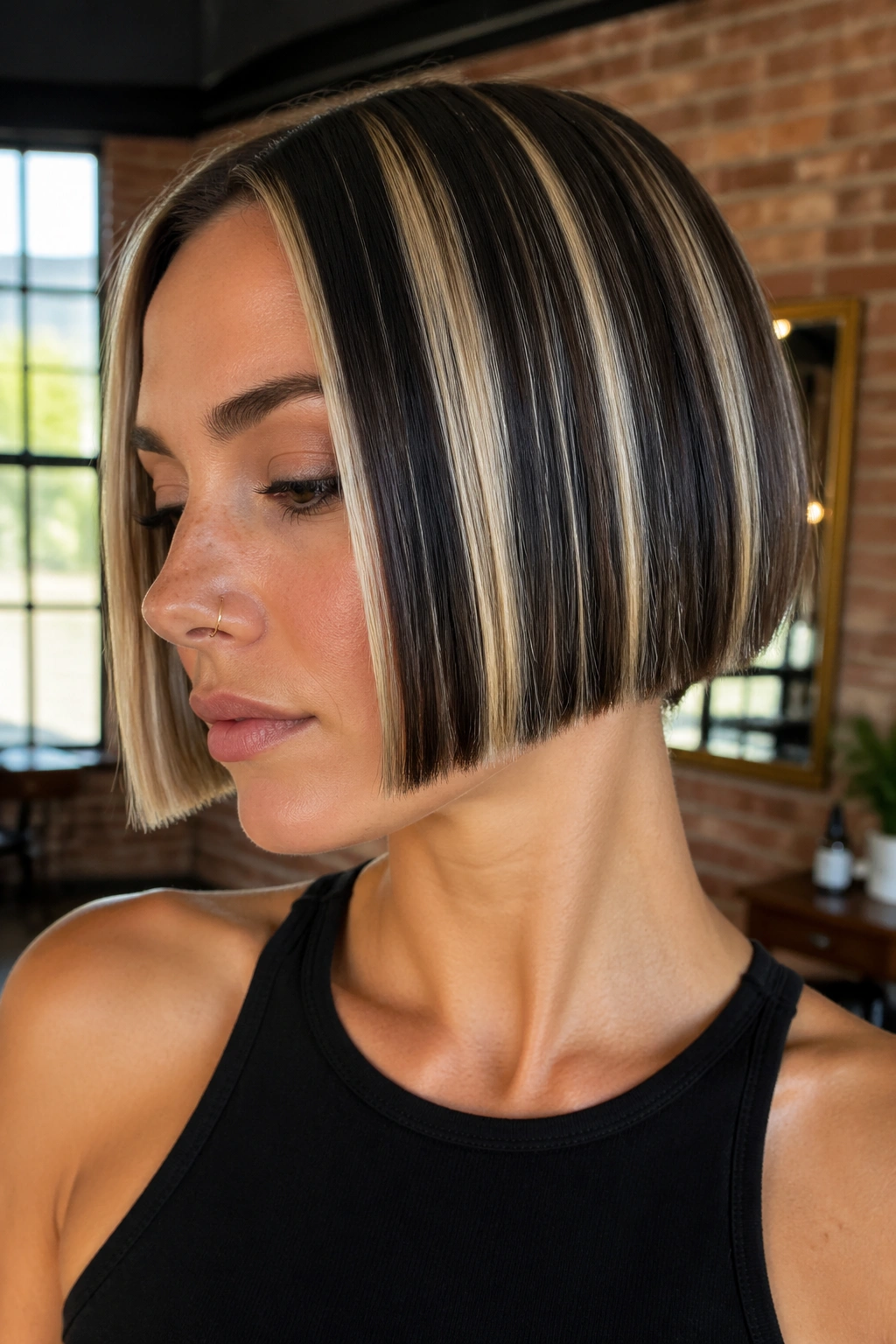
A micro bob does not ask for subtlety, and that’s the point. When the hair hits around the cheekbone or a little higher, strong highlight placement can turn the whole cut into a sharp little statement. Chunky high-contrast streaks give it a fashion-forward edge that fine, delicate highlights would lose.
This style works best when the color is bold on purpose. Think a darker base with clear light panels, not a mist of barely-there brightness. The short length shows the color immediately, so the streaks need enough width to matter. If they’re too thin, they vanish into the shape and the cut can look accidental.
I like this most on dense hair. The structure holds up to the contrast, and the short perimeter keeps the look from feeling heavy. Straight hair makes the graphic quality stronger, but a slight bend can make the panels look more modern and less severe.
A thing people often miss: the ends need to stay clean. If the bob is fuzzy or over-texturized, the streaks can look messy instead of intentional. A micro bob with strong highlights needs a neat edge, even if the styling is loose.
This is not the quiet choice. Good. Not every bob should whisper.
10. Shaggy Bob with Copper Highlights
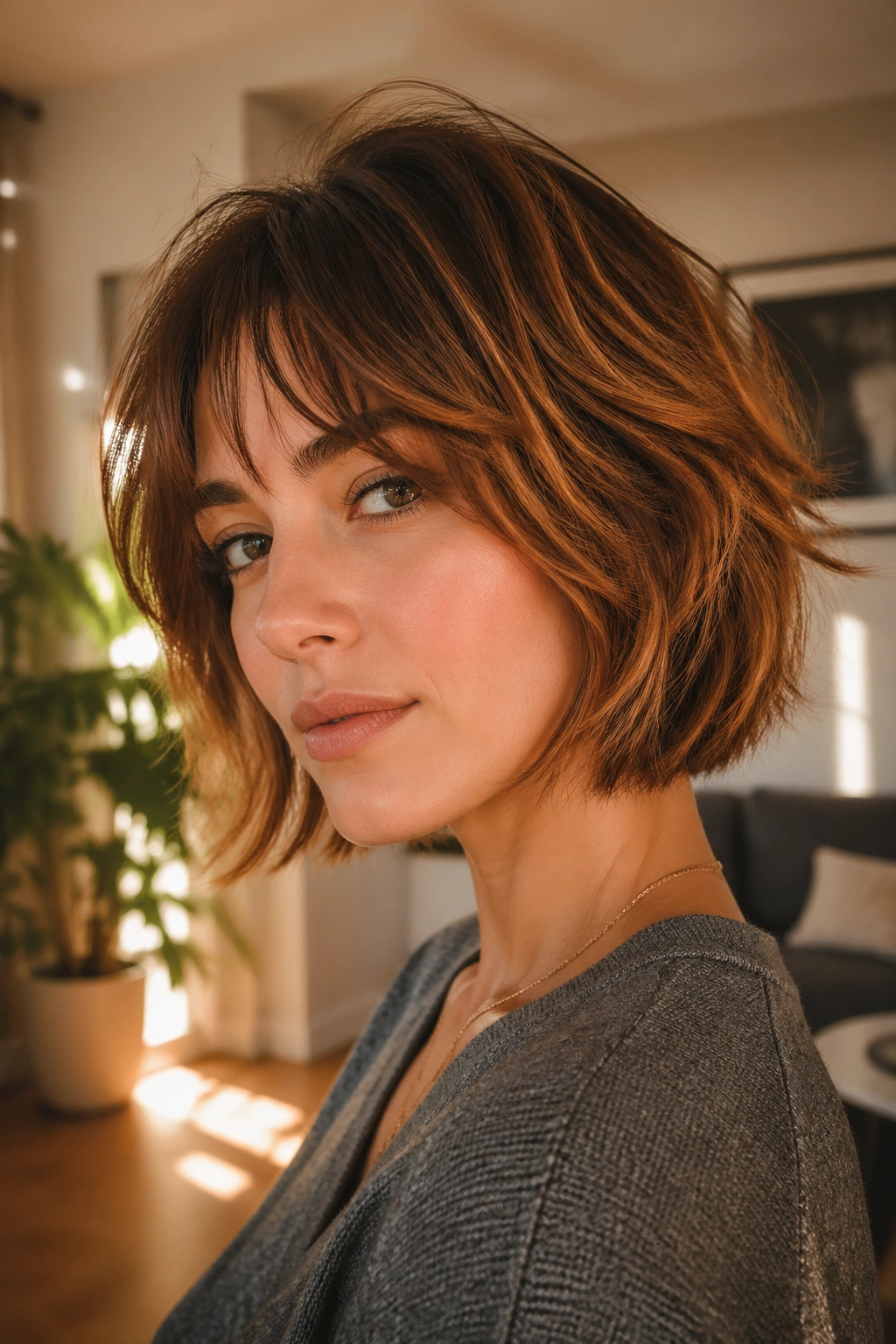
Copper is the best friend of a shaggy bob. The haircut brings the layers, the choppiness, the little uneven bends that make hair feel lived in. Copper highlights pick up every one of those movements and make them visible.
Why copper instead of blonde? Because the shaggy bob usually looks better when the color feels warm and dimensional rather than high-contrast and bright. Copper can sit somewhere between red, gold, and auburn, which gives the layers enough shine without making the cut feel overly styled. On medium brown or dark blonde bases, it adds warmth that looks rich rather than loud.
The trick is to avoid one flat copper shade everywhere. A better result uses a few related tones — soft cinnamon near the crown, deeper auburn in the underlayers, and brighter copper around the face. That kind of variation keeps the haircut from looking painted on.
If you wear it with a fringe, the color can make the fringe pieces stand out in a good way. If you part it off-center, even better. The offset makes the layers move more naturally, and copper reflects that movement like crazy.
This is a cut for people who don’t mind a bit of personality. It’s a little messy, a little warm, and a lot more interesting than a safe, flat bob.
11. Chin-Length Bob with Hidden Peekaboo Highlights
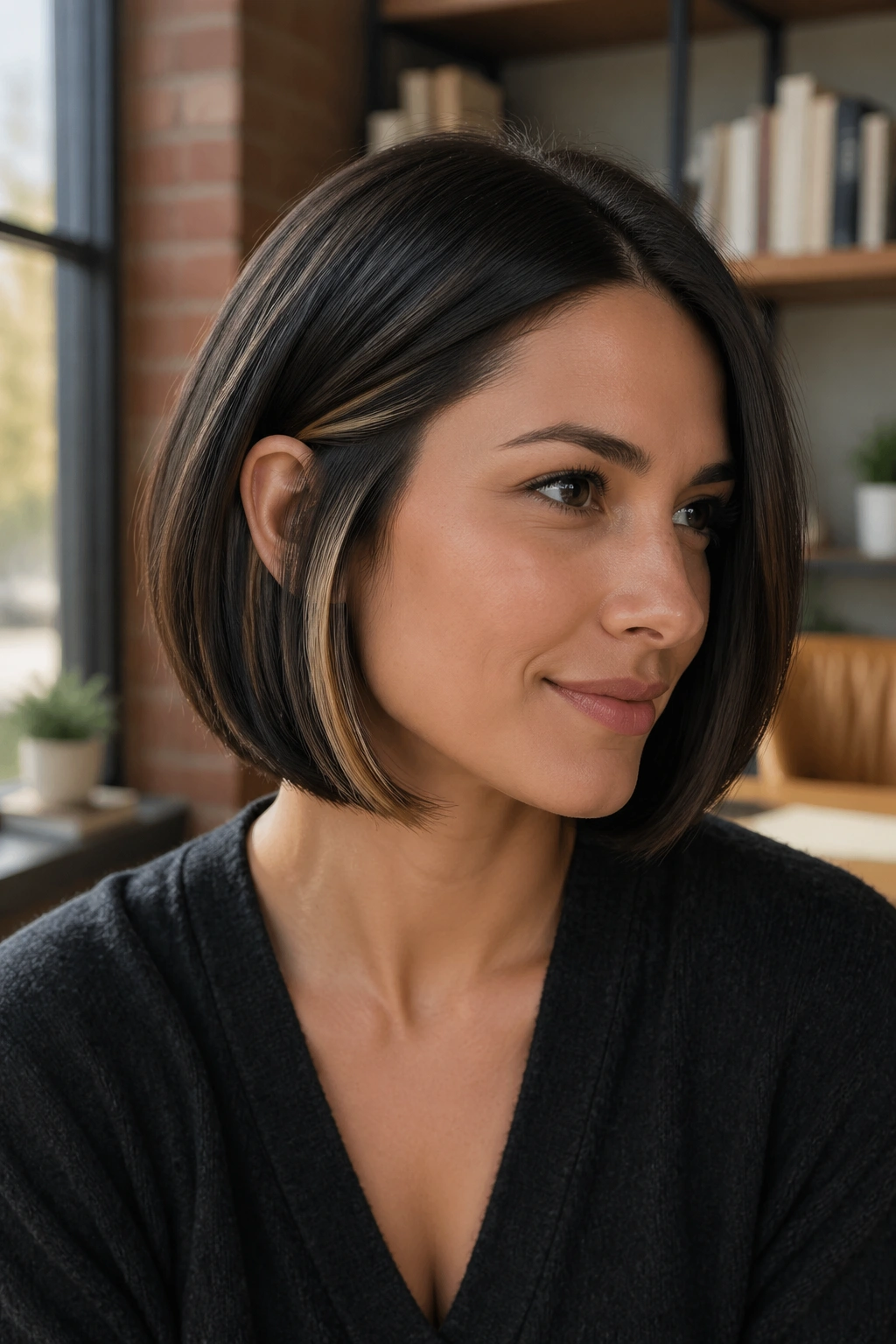
A chin-length bob with peekaboo highlights is for the person who wants color, but not color on display every second of the day. The bright pieces sit underneath the top layer, so they flash when the hair moves, when you tuck one side behind your ear, or when you catch a breeze. It’s subtle until it isn’t.
Where to place them
The best peekaboo placement is beneath the crown and around the lower sides, not just randomly underneath. That way the highlights show in motion instead of disappearing completely. You can keep them blonde, rose gold, or even a muted copper if you want the effect to feel warmer.
This is a clever option for conservative workplaces or anyone who likes having a little surprise built into the haircut. The top layer keeps the overall look neat. The hidden color keeps it from feeling ordinary. I also like it on bobs with a side part because the part line can reveal a nice strip of brightness without needing a full color overhaul.
A few notes make a difference:
- Keep the top layer dense enough to cover the color when you want it hidden.
- Ask for soft placement near the ears so the highlights peek out naturally.
- Use curl or wave styling if you want the hidden color to show more.
- Choose a gloss finish if the highlight tone needs extra shine.
It’s a smart, slightly playful choice. Not flashy. Just clever.
12. Sleek Glass Bob with Platinum Panels
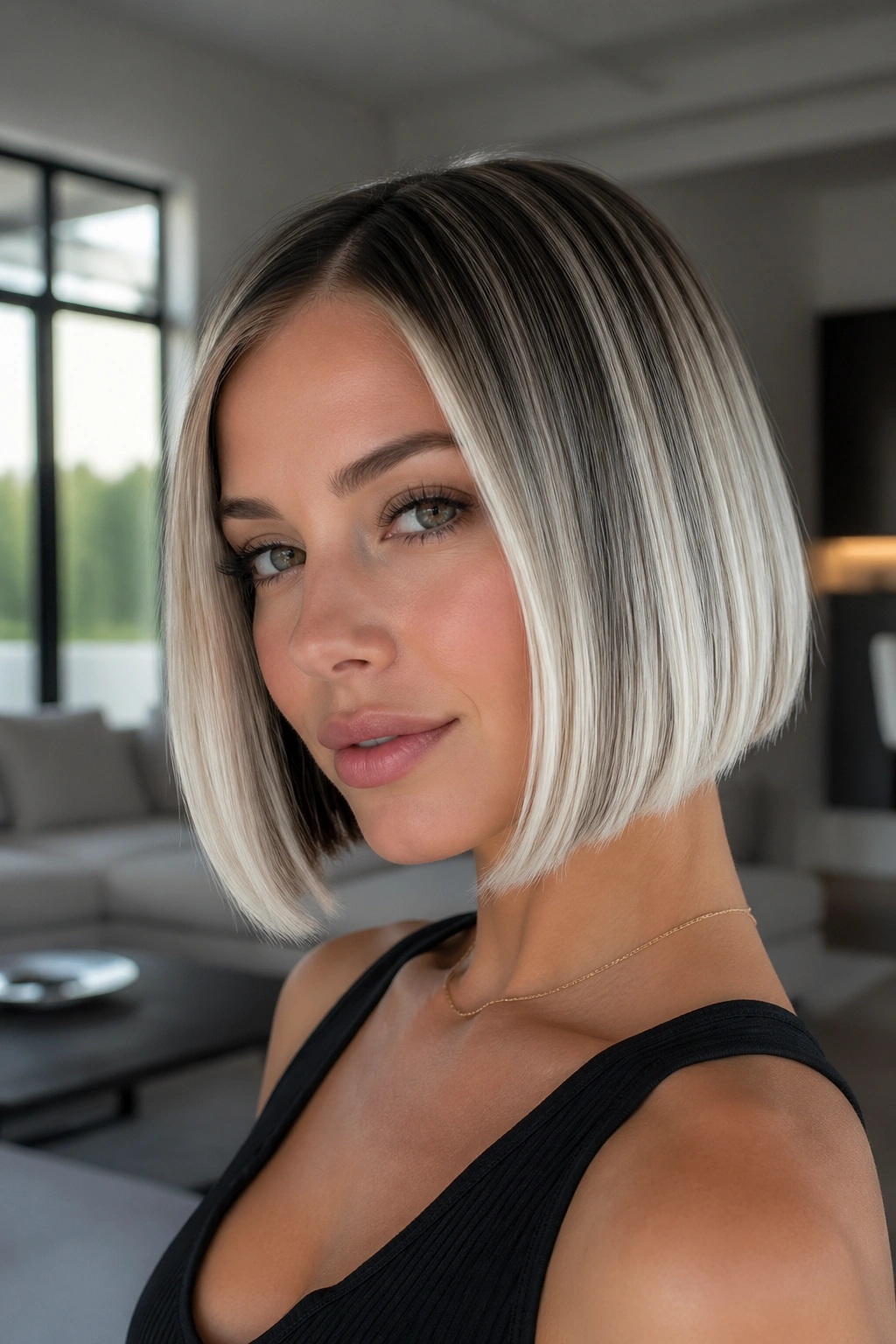
Unlike soft balayage, a sleek glass bob with platinum panels is all about precision. The finish is smooth, reflective, and clean, and the bright sections should look intentional enough that the haircut feels almost tailored. If you love a straight bob that sits like a blade, this is the bolder color route.
Platinum is unforgiving. There’s no point pretending otherwise. It shows dryness, rough ends, and uneven toning fast. But when the cut is sharp and the styling is smooth, it can look striking in a way that softer colors cannot. The platinum panels should be placed to emphasize the outer shape of the bob, not scatter it.
This style suits hair that can handle a flat iron pass and still keep its shine. If your hair frizzes easily, you’ll spend more time smoothing than enjoying the result. That’s not a moral judgment. It’s just the maintenance reality.
What helps it work
- Use a heat protectant every time you style.
- Keep the ends dusted regularly so the glass finish stays clean.
- Ask for cool or neutral platinum, not yellow blonde.
- Wear it with a center part if you want the lines to feel even sharper.
This look has a crispness that I personally never get tired of. It’s bold without needing a lot of length, and the short cut keeps the platinum from overwhelming the face.
13. Side-Part Bob with Chestnut and Honey Dimension
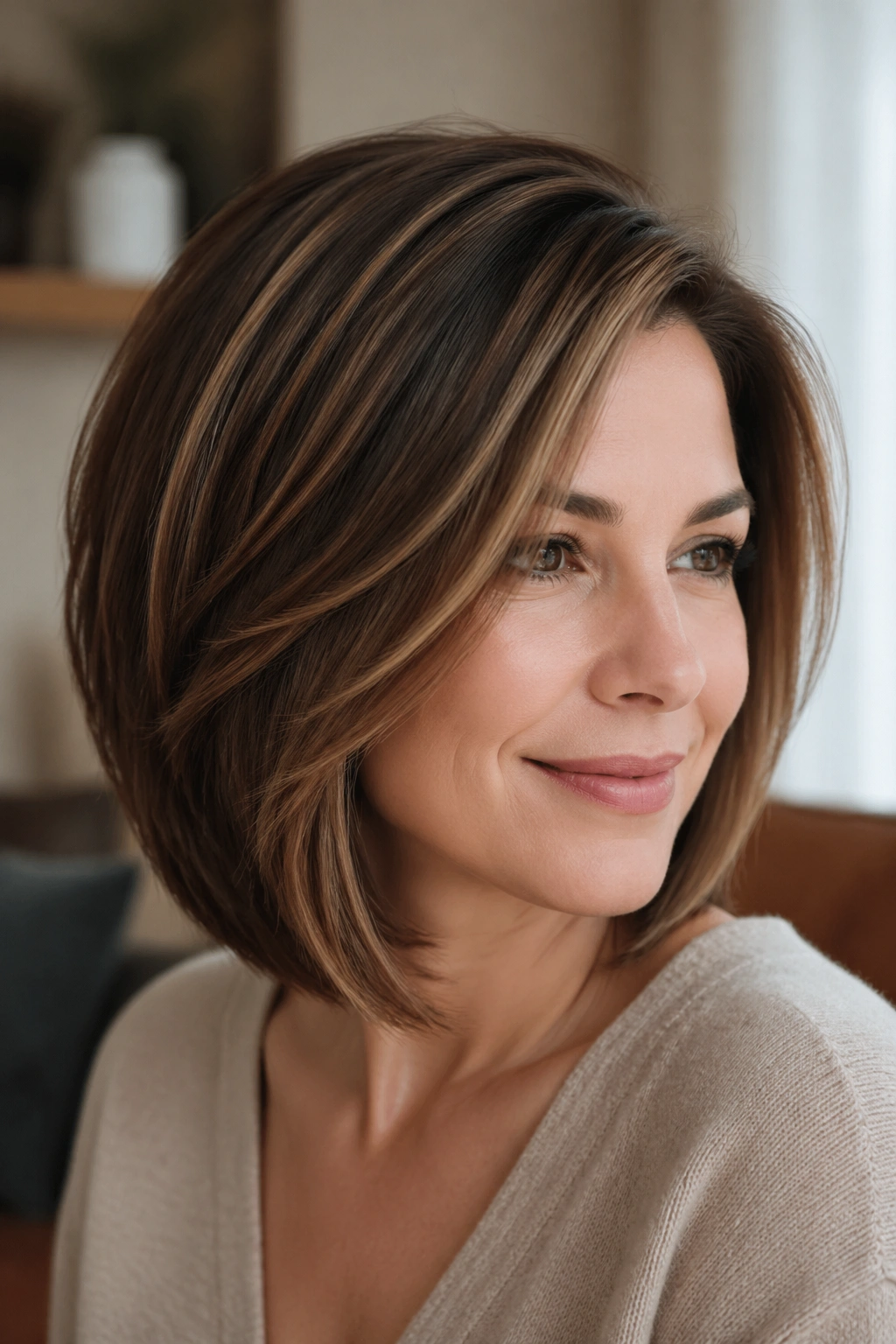
A side-part bob can do more than people give it credit for. The deeper part creates instant volume on one side, and chestnut-with-honey dimension keeps that lift from disappearing into a flat dark block. It’s one of the most wearable brunette bob color formulas because it adds depth first and brightness second.
The chestnut pieces should live near the mid-lengths and around the face, while the honey shows up in finer strands on the surface. That mix gives the hair movement without pushing it into full blonde territory. If you like brunette hair but feel like it sometimes disappears in low light, this solves that quietly.
This is a good one for people who work with a low-maintenance routine but still want a haircut that looks finished. The side part gives you shape even on days when the blow-dry is imperfect. The color keeps the part from looking severe.
I also like this style on medium to thick hair because the darker lowlights help control visual bulk. Too much all-over brightness can make a dense bob feel wider than it is. Chestnut tones keep the profile grounded.
A side-part bob with dimension is not flashy. That’s exactly why it works so often.
14. A-Line Bob with Cinnamon Highlights
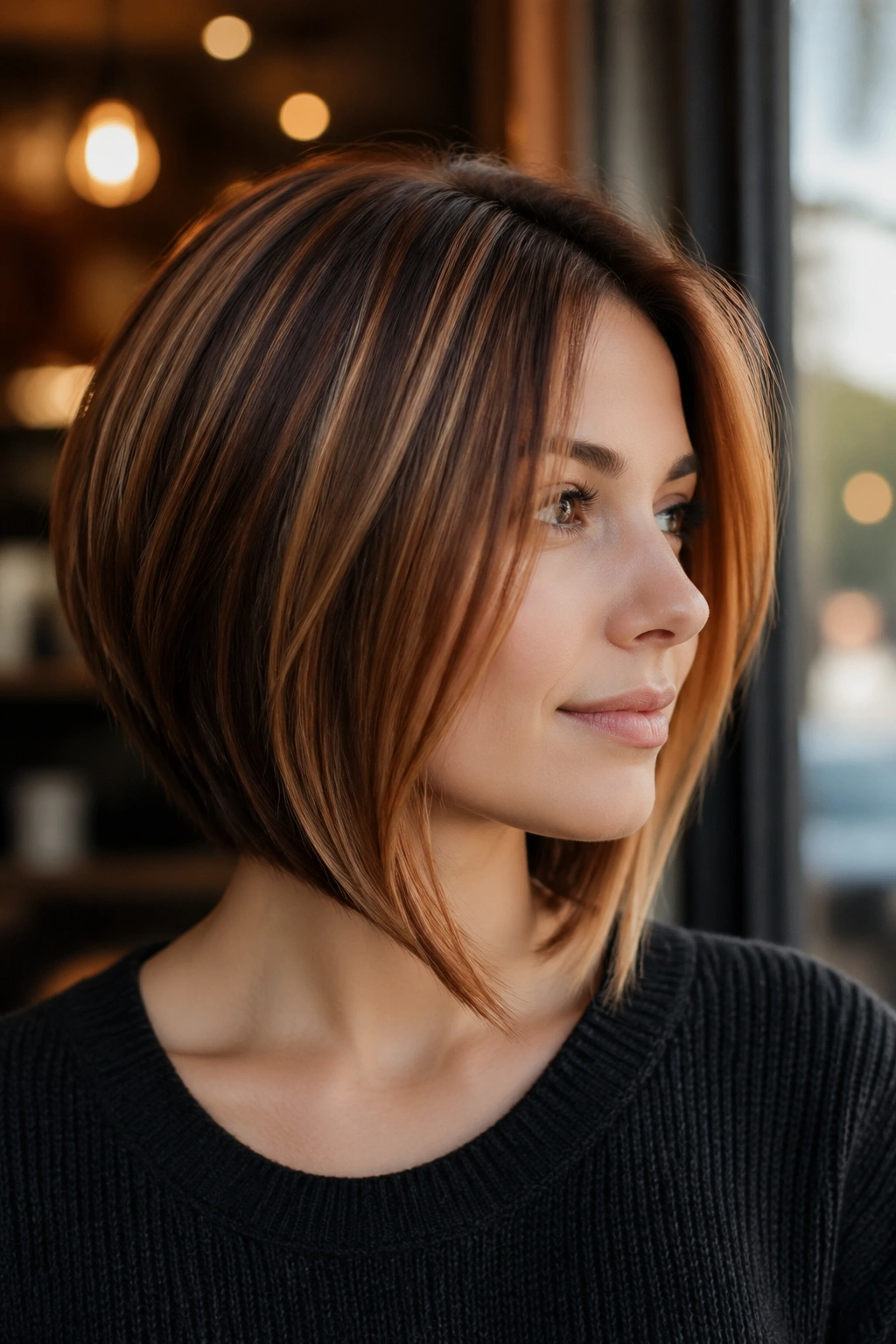
Can a bob look angled and soft at the same time? Yes, if the color is right. An A-line bob already gives you that longer-front, shorter-back shape, and cinnamon highlights round off the edge just enough to keep the cut from feeling too severe.
The front pieces should carry the brightest cinnamon tones because that’s where the angle is most visible. The back can stay a shade or two deeper, which helps the shape show from the side. That color map makes the haircut read as lifted and deliberate instead of simply shorter in the back.
Cinnamon works especially well on brunettes who want warmth without going full copper. It sits in that red-brown range that adds energy but doesn’t scream for attention. On olive or warm skin tones, it can look especially rich. On cooler skin, it’s still wearable if the shade is slightly muted.
Who this flatters
- People with straight or slightly wavy hair
- Anyone who wants an angled bob without harsh contrast
- Medium to dark brunettes looking for warmth
- Hair that holds a smooth blowout through the day
I’d avoid making the highlights too chunky here. The A-line needs a clean visual slope, and oversized streaks can break that line apart. Keep the color swept and directional. The result feels much more expensive than a heavy stripe pattern ever does.
15. Jaw-Skimming Bob with Champagne Highlights
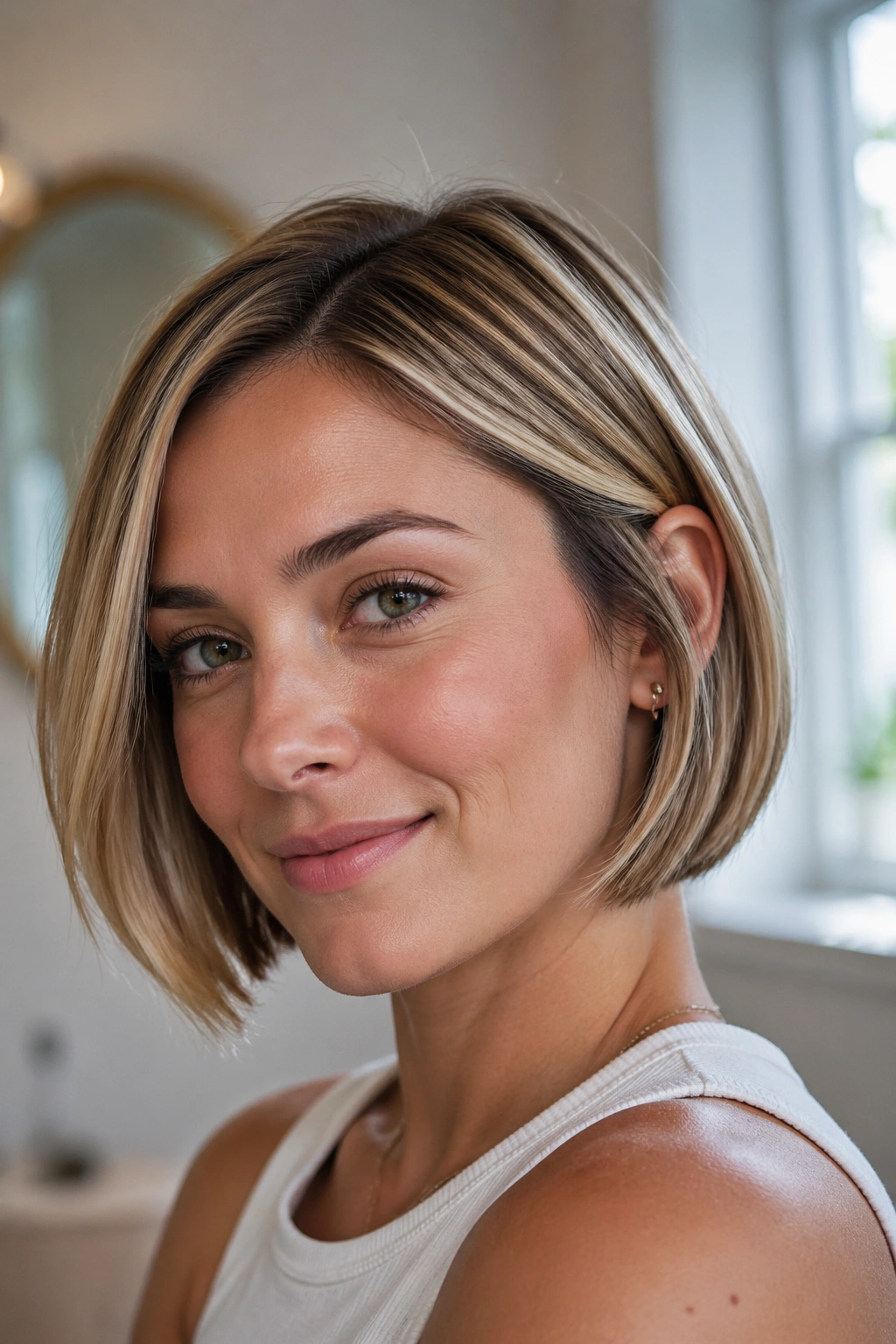
A jaw-skimming bob with champagne highlights is the sort of style that looks easy until you notice how carefully everything is placed. The cut sits right at the point where the jaw and neck meet, so the color has to lift the face without stealing the shape. Champagne does that job well because it brightens without going harsh.
This is one of the more forgiving blonde-leaning options for a short bob. Champagne tones sit between beige, pearl, and soft gold, which gives you brightness that still feels wearable. If the highlights are too icy, the cut can start to look stark. If they’re too gold, the shape can lose that clean edge. Champagne lands in the middle.
The placement should stay soft around the temples and slightly denser through the top layers. That gives the haircut a subtle halo effect, which is especially nice if the bob is worn straight with a tucked-behind-the-ear finish. It also works with a slight wave, where the light pieces catch the curve of the bend.
One thing I’d stress: don’t over-texturize the ends. On a jaw-skimming bob, the line is part of the appeal. You want the shape crisp enough to support the color.
If you’re bringing this to a salon, ask for a bob that sits right at the jaw and color that reads as champagne, not yellow. That small distinction matters more than most people realize.
Final Thoughts
The strongest bob-and-highlight pairings all do the same basic thing: they respect the cut. Short hair does not leave much room for sloppy color, so placement has to support the line instead of fighting it. That’s why the best versions look balanced in motion, not just in a mirror.
If you’re choosing one of these looks, think about three things first: how often you want to visit the salon, how much contrast you like near your face, and whether your hair is straight, wavy, curly, or dense. Those details matter more than chasing a color you saw on someone else.
Bring two photos if you can — one for the shape, one for the color. That’s usually the clearest way to get the result you actually want.
