



Stacked bob cuts have a simple promise, and they either keep it or they don’t: give the back more lift, more shape, and less of that sad, flattened look that happens when hair grows too long at the nape. The cut looks small from the front. The magic is in the architecture behind your ears.
A good stacked bob isn’t just shorter in back. It’s built with graduation, meaning the layers rise gradually so the hair can sit on itself instead of lying flat like a sheet. That’s why the same haircut can look airy on fine hair, tidy on straight hair, and sharp on thicker textures when it’s handled with a steady hand.
Bad stacking is easy to spot. The back balloons out in a hard little shelf, the sides flare, and the whole thing starts looking boxy by lunch. Good stacking is quieter than that. It hugs the head, lifts at the crown, and gives the back enough body to make the silhouette look expensive without trying too hard.
1. Classic Stacked Bob with a Soft Nape Curve
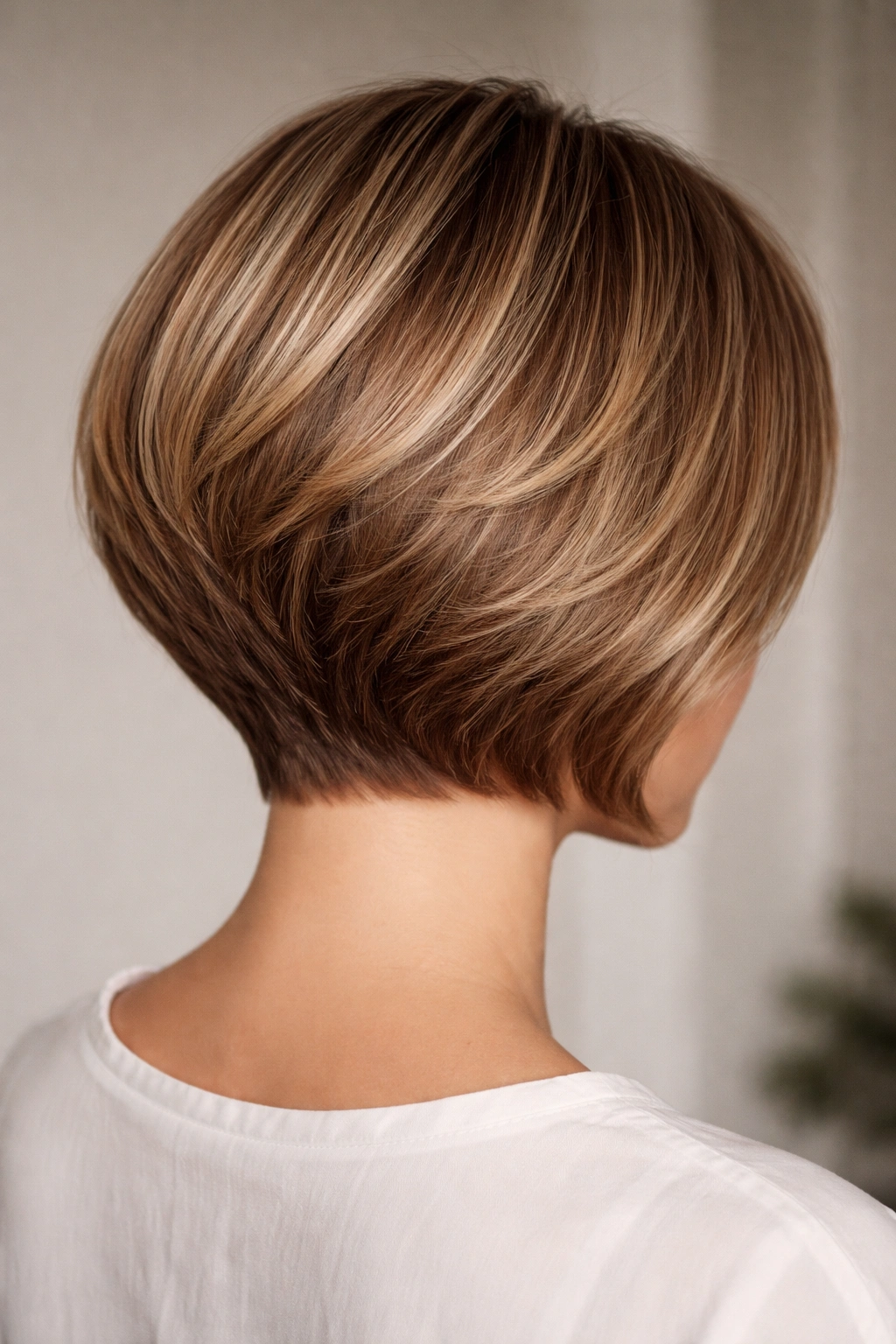
The classic stacked bob is the one I come back to when a client wants volume in the back without a haircut that shouts for attention. It’s clean, controlled, and built on a rounded graduation at the nape that lets the back sit full instead of flat. Nothing about it is fussy.
What makes this version so dependable is the way the layers rise from the neckline toward the crown. The shortest pieces hug the nape, then each section above them gets a little longer, so the back looks cushioned and lifted. That shape works especially well on straight or slightly wavy hair, because the contour shows up without a lot of styling drama.
Ask for a soft curve, not a hard shelf. That one detail changes everything. If the cut is too aggressive, the back can puff outward in a way that feels dated fast. If it’s too soft, you lose the lift entirely. The sweet spot sits in the middle, where the silhouette feels rounded but still tidy.
A light blow-dry with a round brush is usually enough. Direct the hair forward and slightly under at the nape, then let the crown dry with a little root lift. Small move. Big difference.
2. Short Stacked Bob with a High Crown
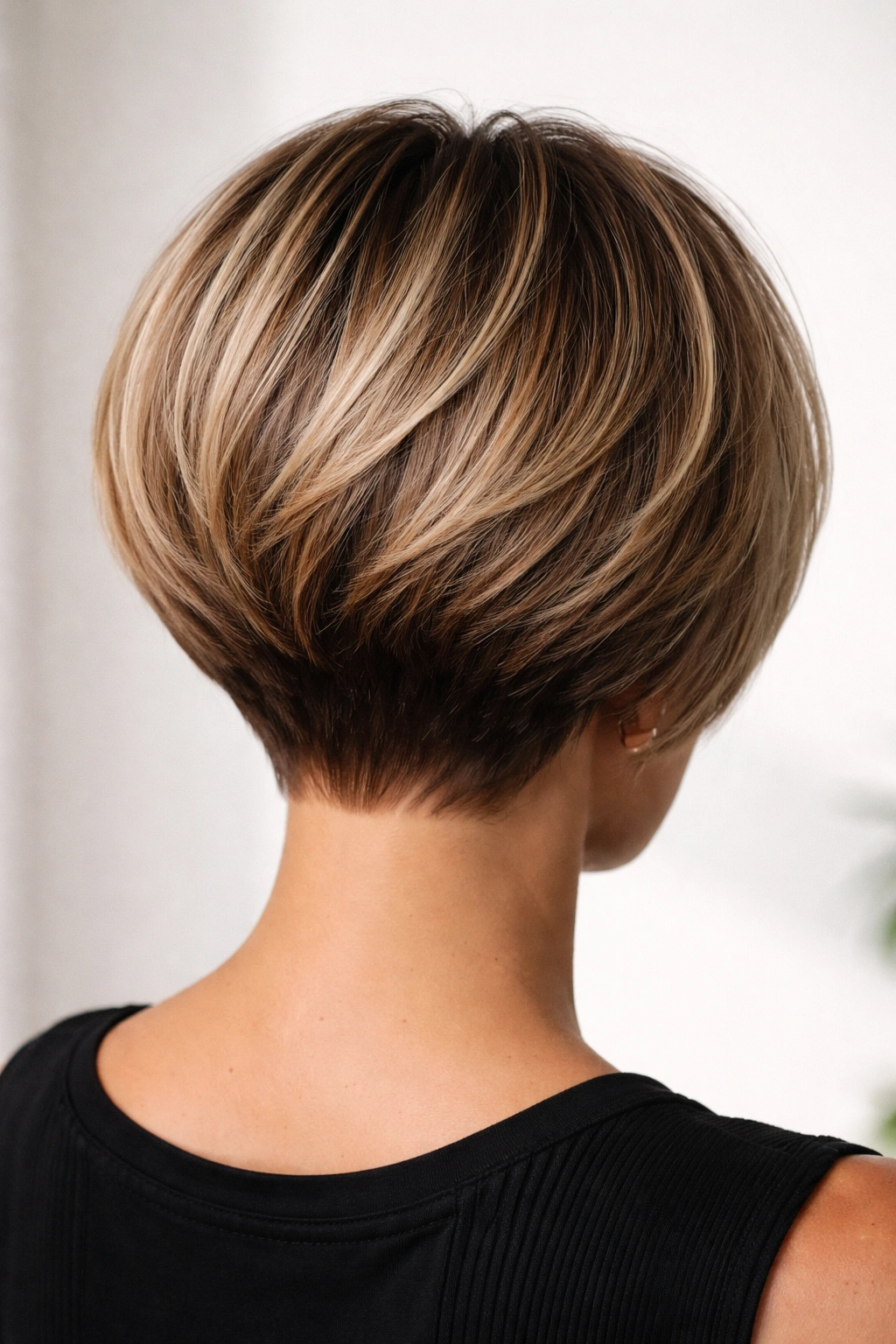
A short stacked bob gets the back to stand up faster than almost any other bob shape. If your hair collapses the moment humidity shows up, this is one of the few cuts that can fight back without needing a lot of product.
The reason is pretty simple: shorter hair loses weight. Less length means less pull, and that means the roots at the crown can rise more easily. The stack in the back gives the cut its shape, while the shorter overall length keeps the volume concentrated where you want it.
What to ask for
- A nape that sits close to the head with tight graduation.
- A crown that keeps enough length to avoid a helmet effect.
- Slightly longer side sections so the front doesn’t look severe.
- A trim schedule of about 6 to 8 weeks if you want the shape to stay crisp.
This cut is a favorite for fine hair, but it can also work on medium hair if the stylist removes bulk carefully. The back should feel buoyant, not bulky. There’s a difference, and it matters more than most people think.
If you style it with a root-lifting spray at the crown and a quick round-brush pass at the back, the shape stays visible even on lazy mornings. Not every haircut deserves that much credit. This one does.
3. Chin-Length Stacked Bob for Fine Hair
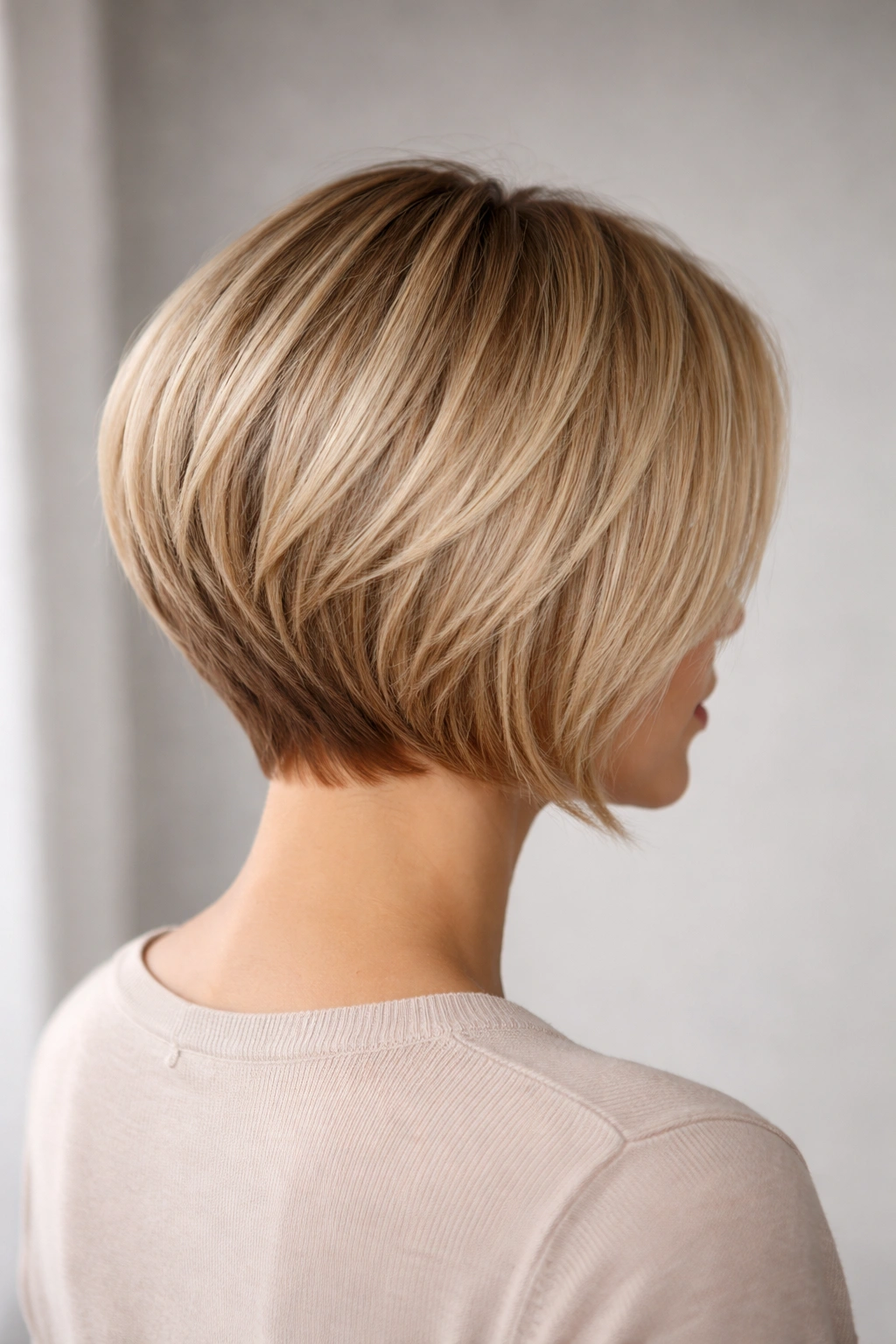
Why does fine hair love a chin-length stacked bob so much? Because the length is short enough to stay light, but not so short that it loses movement. That middle ground gives the back some honest lift.
Fine strands tend to lie down when they get too much length. They’re not being difficult. They’re obeying gravity. A chin-length stacked bob cuts that problem off at the knees by removing the extra pull and building shape through the back. The result is a fuller-looking outline, especially if the nape is graduated carefully and the crown keeps a touch more length.
How to ask for it
Tell your stylist you want stacking through the back, not just a blunt bob that happens to be shorter near the neck. That distinction matters. You want the weight removed in layers, with the shortest pieces sitting close to the nape and the longest pieces landing around the chin.
A center part can make this look sleek, but a slightly off-center part is often kinder if your hair is very fine. It gives the top a little lift without making the cut feel precious. And if you wear glasses, this length is especially nice; the shape sits neatly around the frame without fighting it.
Use a lightweight mousse before blow-drying. Heavy creams are often too much here. They can flatten the very volume you’re trying to keep.
4. Side-Parted Stacked Bob with Sweep
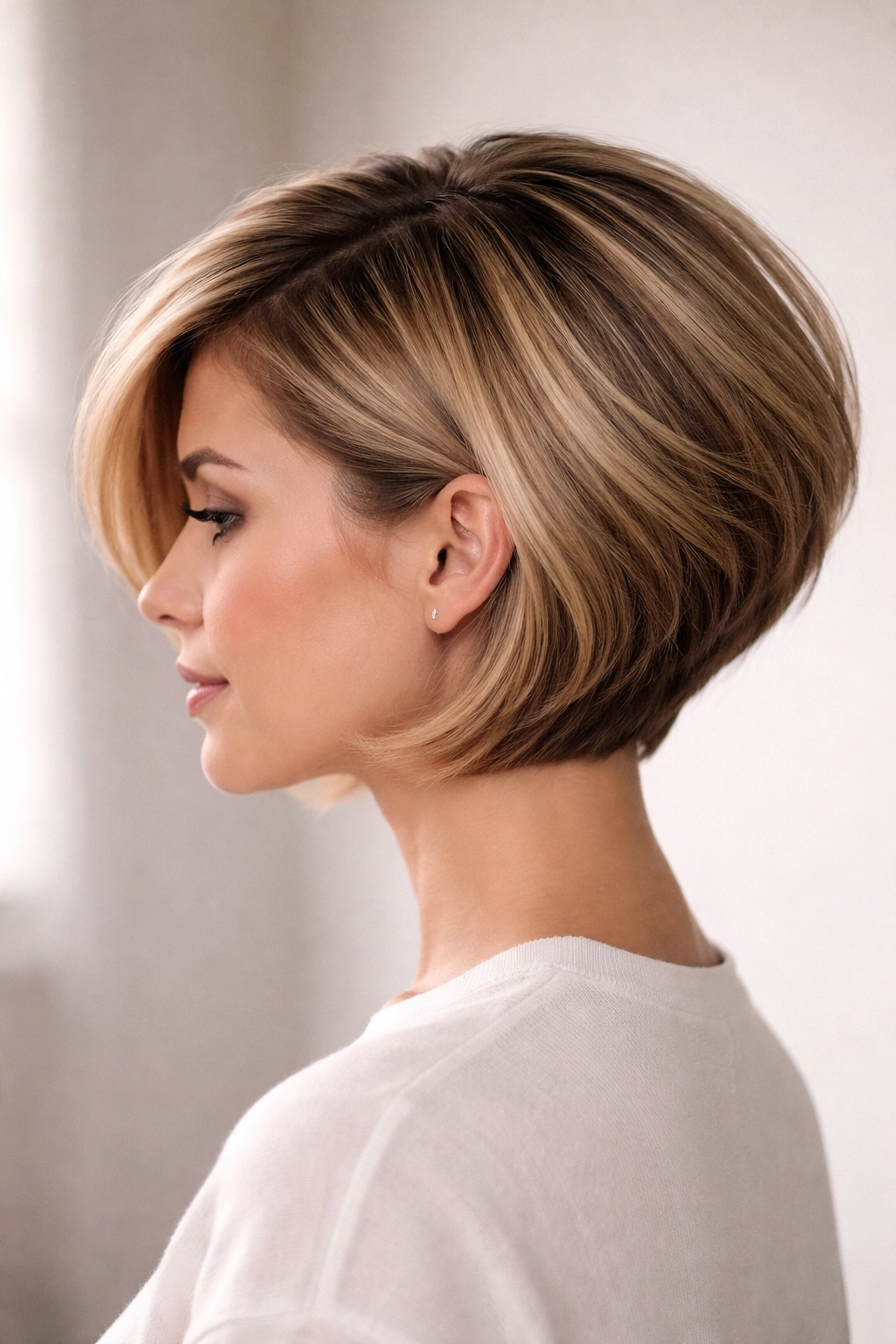
If your hair tends to stick to your scalp by noon, a side-parted stacked bob is worth a serious look. The part alone changes the game. It shifts weight, creates lift at the roots, and gives the stacked back a little more visual drama.
I like this shape because it does something subtle but useful: it makes the crown look taller without needing a ton of teasing. The sweep at the front also softens the profile, which keeps the cut from looking too technical. A stacked bob can get sharp fast. The side part smooths that out.
A good version of this cut leaves enough length on the heavier side to tuck behind the ear, then opens the opposite side a bit more so the silhouette feels alive. It’s a smart choice if you don’t love symmetry. Some people do. I’ve never been one of them.
The styling trick is direction. Blow-dry the hair in the opposite direction of the part first, then flip it back once it’s almost dry. That little detour gives the roots a lift that lasts longer than you’d expect. Finish with a small round brush at the crown and a light mist of flexible hairspray.
The back still carries the shape, but the side part adds motion. Without it, the cut can feel a touch too neat.
5. Angled Stacked Bob with Longer Front Pieces
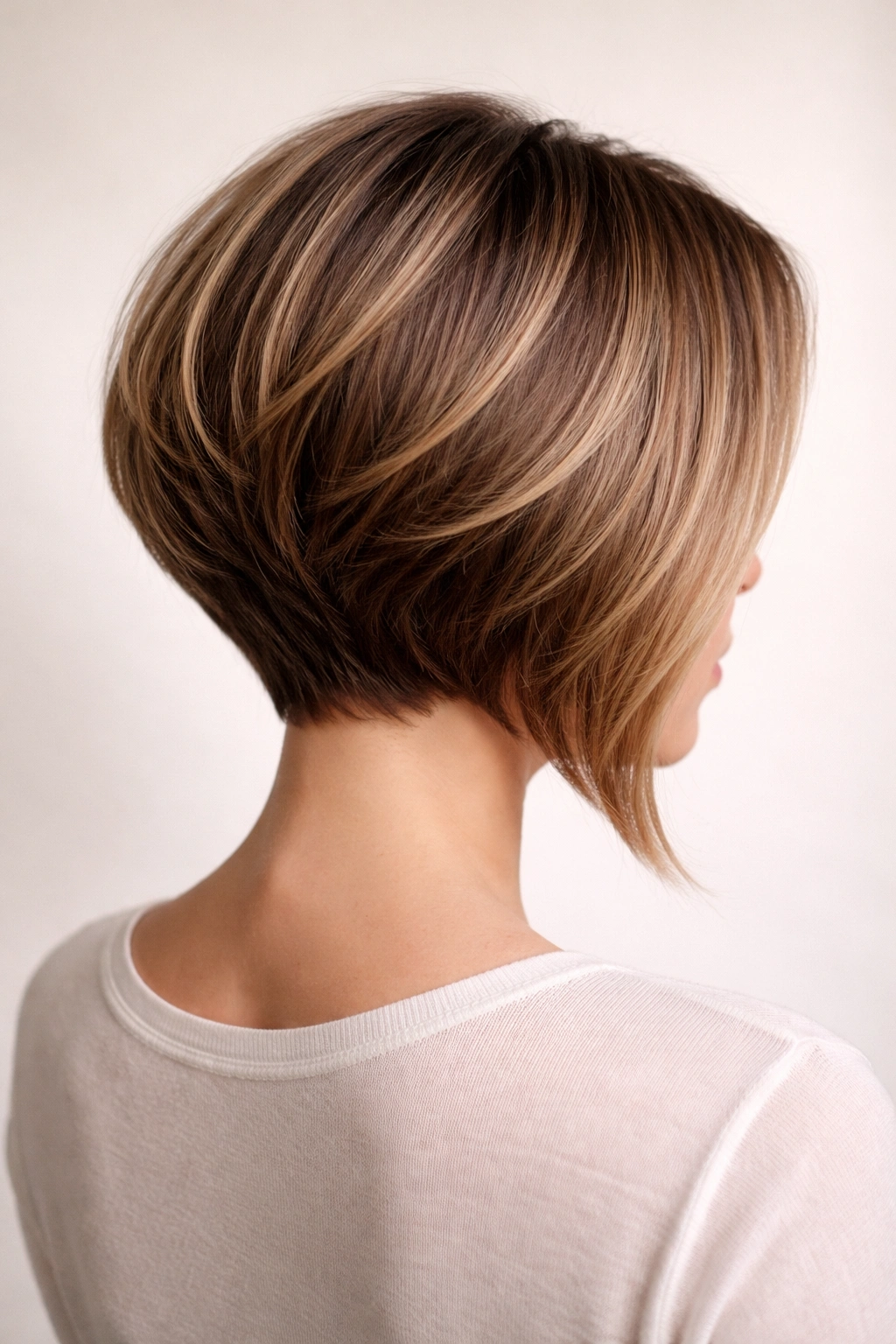
A stacked bob with a longer front is the one to choose when you want the back full but don’t want the front to feel boxed in. It keeps the neckline compact and the front longer, which creates a clean angle from the nape down toward the jaw.
That angle does a lot of heavy lifting. It pulls the eye forward, yes, but it also makes the back look fuller because the contrast in length is stronger. Short back. Longer front. The difference between the two gives the whole haircut more shape, even before styling.
Why the angle matters
The angled version is often better than a straight bob for people with heavier hair, because the front length helps balance bulk at the jaw. Instead of widening the face, it can slim the outline a bit. Not always. But often enough that stylists keep reaching for it.
It’s also a solid choice if you like to tuck one side behind the ear and leave the other side loose. The line looks intentional that way. A stacked bob can look severe when every section is the same length. This one avoids that problem.
Keep the ends clean. If the front gets too wispy, the contrast stops looking sharp and starts looking accidental. A flat iron pass through the front pieces can help, but use it sparingly. The shape should still move.
6. Curly Stacked Bob with Built-In Lift
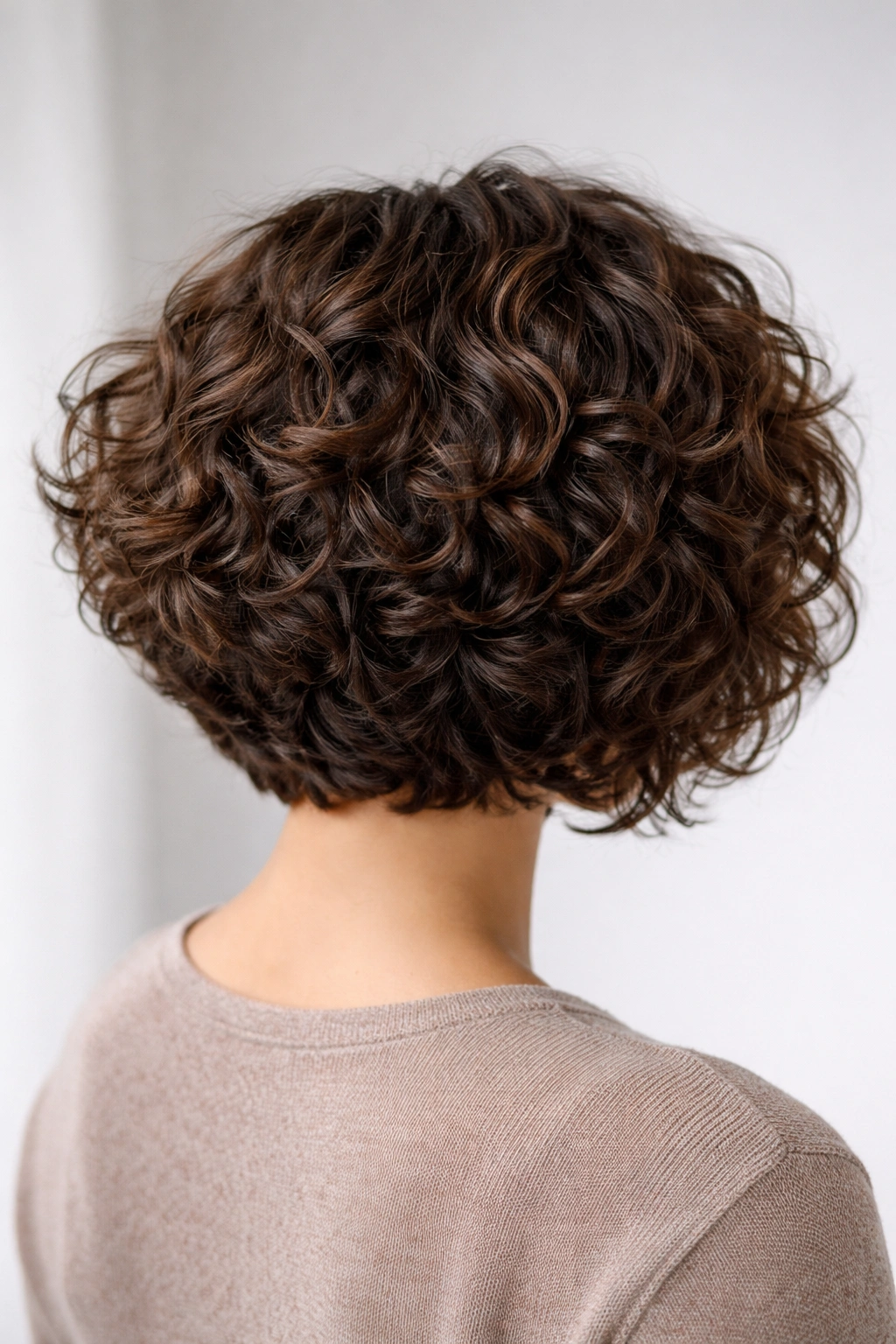
Curly hair and stacking get along better than people assume. In fact, when the cut is done well, curls can make the back look fuller than straight hair ever could. The spring in the texture does half the work for you.
The catch is that curls need room. If the layers are cut too short in the wrong spot, the back can kick out and create a triangle shape. Nobody wants that. A good curly stacked bob controls bulk at the nape while keeping enough length through the upper layers so the curls can drop and stack softly on top of one another.
What makes it hold
- The back should be cut in curl-by-curl sections if the texture is tight or uneven.
- The nape needs enough removal to stop the underlayer from puffing out.
- The crown usually needs a little more length than straight hair would.
- Diffusing works better than rough drying if you want the stack to keep its shape.
I like this cut best on loose curls to medium ringlets, where the silhouette reads clearly but still feels soft. You can air-dry it, too, though the back may settle differently from day to day. That’s not a flaw. It’s just curls being curls.
A little gel at the roots and a diffuse-dry upside down can help the back stand up while the ends stay springy. The result is less “formal bob” and more “shape with energy.”
7. Jaw-Length Stacked Bob for Thick Hair
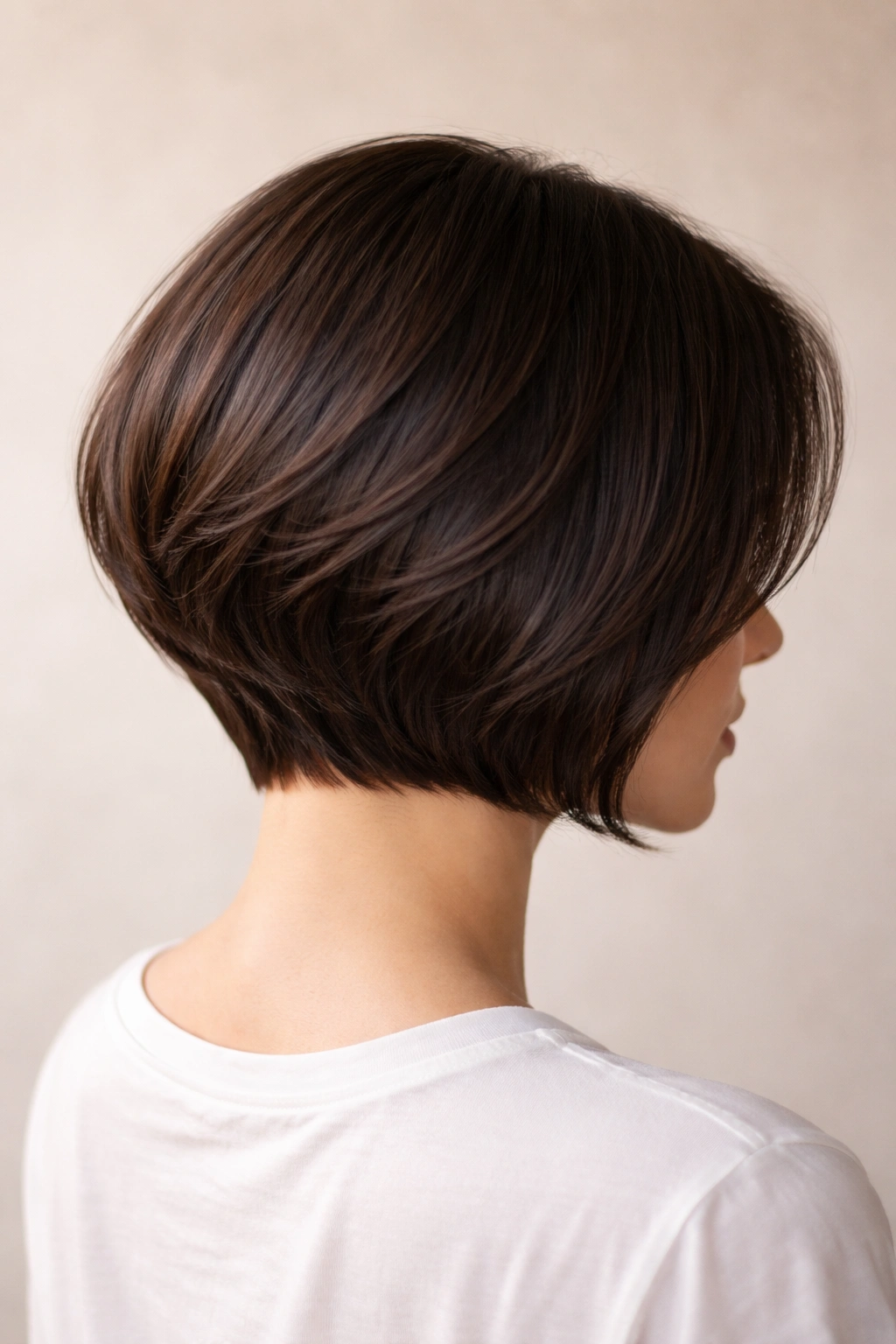
Thick hair needs a smarter version of stacking. If the cut is too blunt, the back becomes a brick. If the layers are too thin, the shape frays and the ends look hollow. Jaw length sits in the sweet spot for a lot of thick-haired people because it removes weight without making the cut feel flimsy.
The jaw-length version keeps the bottom edge high enough to stay lifted, but it leaves enough length for the hair to settle with polish. The back can still be stacked tightly, yet the overall line feels grounded. That matters on denser textures, which tend to expand at the sides if they’re cut too short.
A stylist who knows thick hair will usually take out bulk under the outer layer, not just chop the surface shorter. That hidden removal is where the shape comes from. You feel it more than you see it at first. Then you notice the back sits closer to the head and the whole cut behaves better in the morning.
A few salon notes help:
- Ask for internal weight removal near the crown.
- Keep the perimeter clean so the ends do not frizz outward.
- Avoid over-thinning the bottom; it can look puffy later.
- If your hair is very dense, plan for regular reshaping.
This is one of those cuts that looks simple until you try to grow it out. Then the structure shows itself.
8. Feathered Stacked Bob with Airy Ends
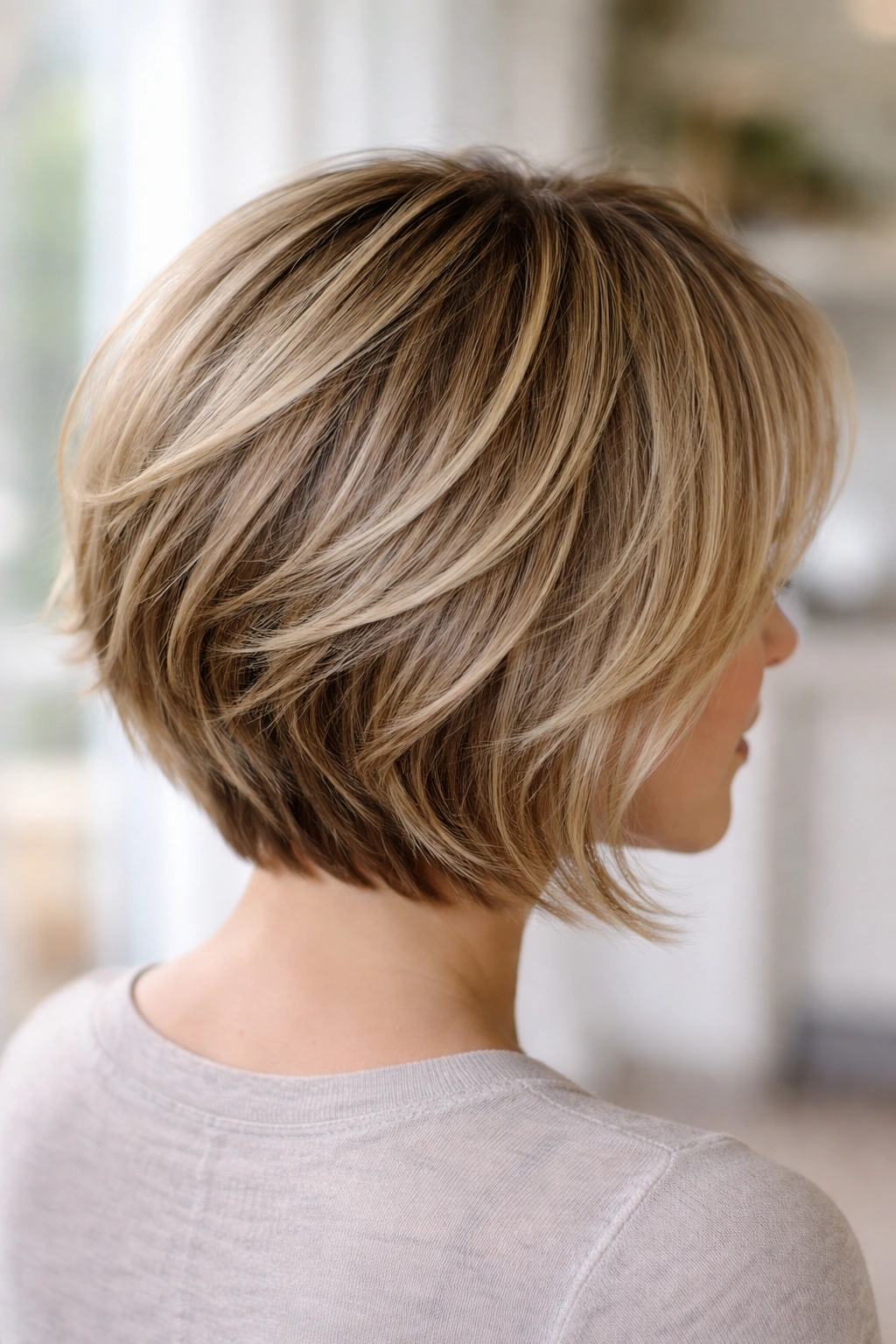
What if the back needs volume but the ends need to stay soft? That’s where feathering earns its keep. A feathered stacked bob takes the backbone of the classic shape and softens the edges so the cut doesn’t feel too hard around the perimeter.
Feathering works best when the stylist uses a razor or soft point-cutting on hair that can handle it. Fine to medium hair usually takes the treatment well. Very coarse or frizzy hair can get fuzzy fast if the ends are too aggressively carved, so this is not the one I’d pick blindly for every head of hair.
The main benefit is movement. The stacked back still lifts, but the feathered ends break up the line enough to keep the cut from feeling helmet-like. That’s especially useful if you wear the style with a little bend through the mid-lengths. Straighten it bone-flat and you lose some of the softness. Keep a touch of texture, and the shape comes alive.
A lightweight cream or a pea-sized bit of styling balm is enough. Too much product makes feathered ends collapse. They want to breathe. That’s the whole point.
9. Inverted Stacked Bob with a Hidden Undercut
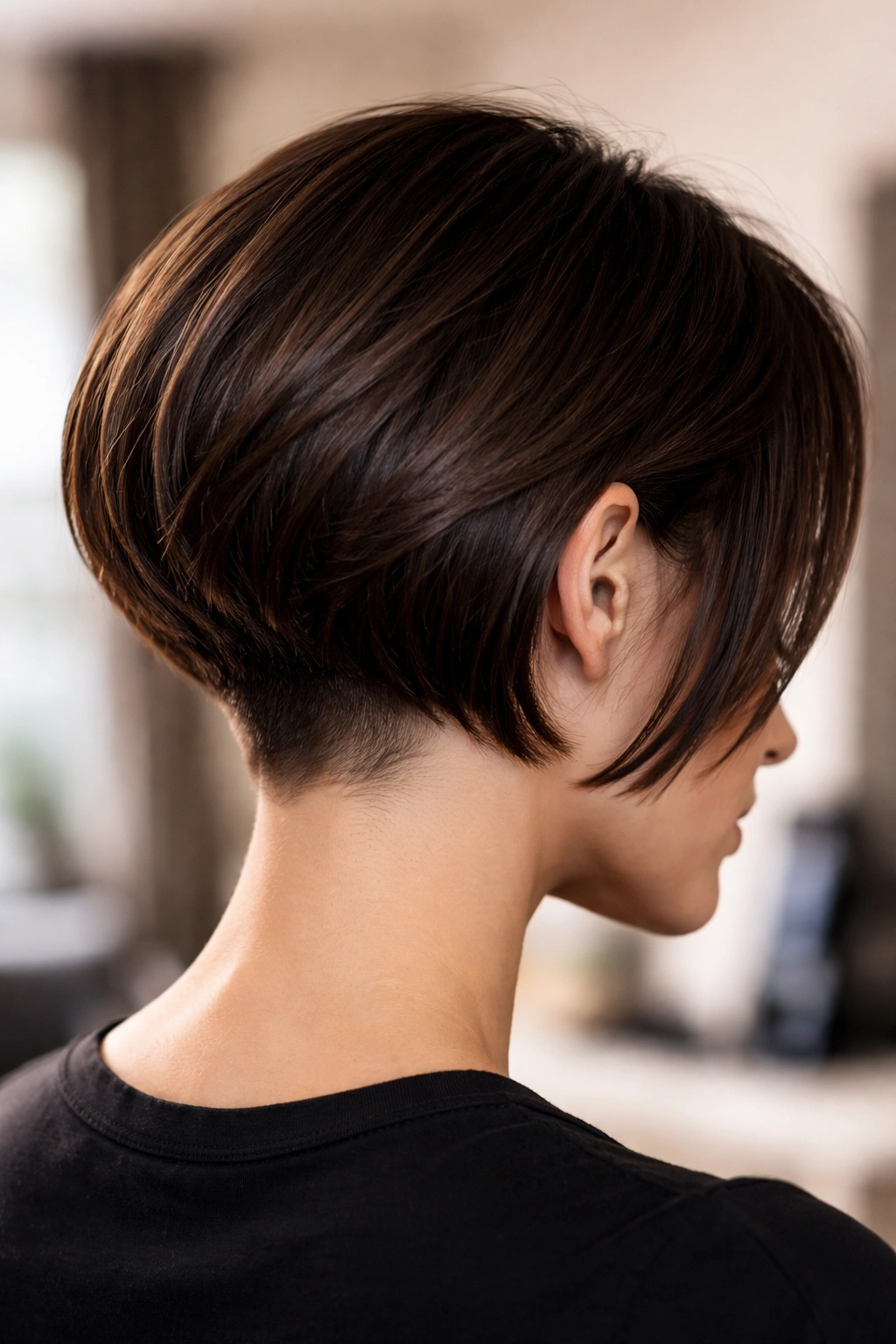
A hidden undercut is not just for edgy haircuts. On a stacked bob, it can be the quiet fix that helps the back sit higher without adding bulk. That’s especially helpful if the nape area gets too thick and pushes the cut outward.
The inverted shape means the front stays longer than the back, which already gives the silhouette a clean angle. Add a hidden undercut low at the nape, and you remove weight where it usually causes trouble. The cut can still look soft from the outside. The undercut hides underneath, doing the boring work no one sees.
This is a smart move for dense hair, coarse hair, or anyone who likes a sharp outline but hates how long it takes to dry. Less bulk means less drying time. Less drying time means the back is less likely to flatten before you’re done.
Be careful with placement. A hidden undercut should sit low enough to stay invisible when the hair falls, but not so low that it does nothing. That’s a narrow window. I’d call for a stylist who’s comfortable cutting in sections and checking the shape from the side, not just the back.
It’s a practical haircut, not a flashy one. Which is exactly why it works.
10. Textured Stacked Bob with Piecey Layers
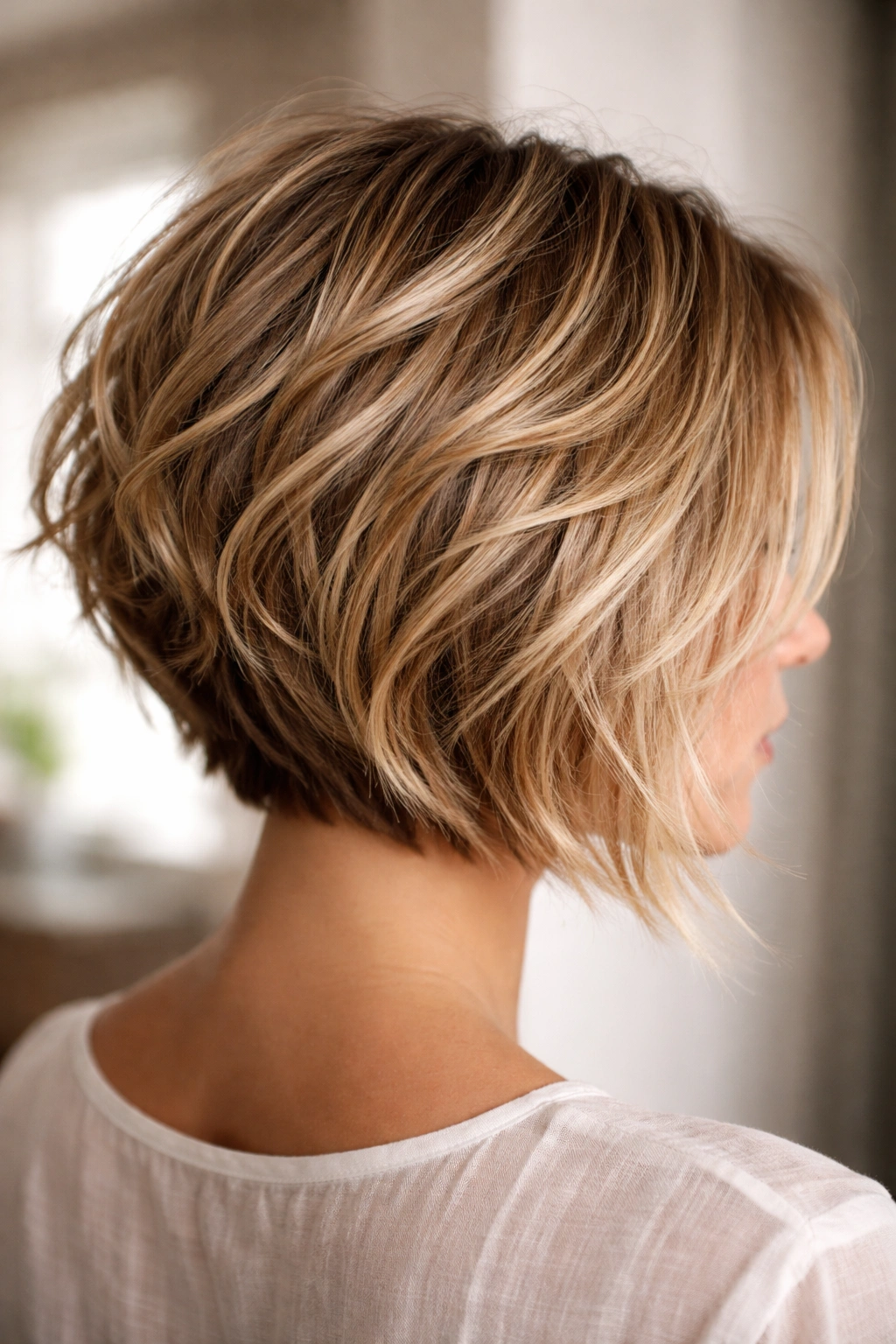
A textured stacked bob is for people who want the back to look full but a little undone around the edges. The piecey layers create separation, so the shape doesn’t read as one solid block. That can be a blessing on hair that gets flat easily, because texture keeps the light moving through the cut.
I’ve always liked this version on hair that has a bit of natural wave. The texture adds shape where the stack gives lift. Put those two together and the back gets a nice, lived-in look that doesn’t need a perfect blowout to make sense.
Styling tools that help
- A sea-salt spray gives grip without weight.
- A small flat brush can smooth the crown before the texture sets.
- A dab of matte paste on the ends helps separate the pieces.
- Dry shampoo at the roots can keep the back from collapsing on day two.
The trick is not to overdo the texture. Too much product and the cut starts looking dusty. Too little and the layers disappear. I like a middle path: rough-dry to about 80 percent, then use your fingers to pinch and separate a few sections in the back. That keeps the stack visible.
This one wears a little better when it’s imperfect. Clean, but not stiff.
11. Stacked Bob for Gray or Silver Hair
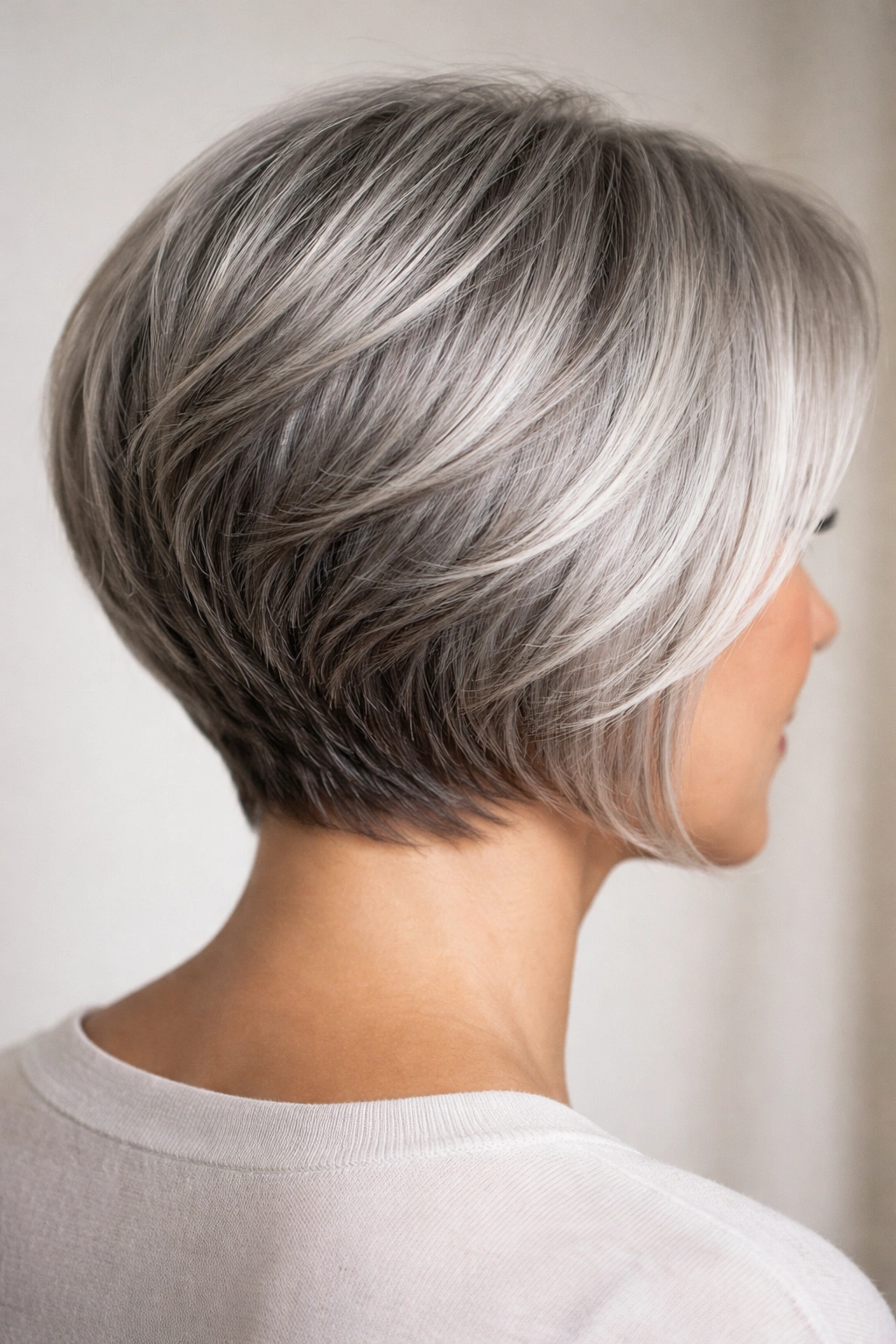
Gray and silver hair show shape beautifully, which is why a stacked bob can look so crisp on them. The shine tends to catch the graduation in a clean way, so the back doesn’t just look shorter; it looks structured. That matters when you want the cut to do the work instead of the color.
Silver strands can also be a little coarse or wiry, depending on the hair. A stacked bob helps because the shorter back removes some of that stubborn weight before it has a chance to kick outward. The result is a shape that feels polished without needing a lot of heat styling. That’s a real advantage when you’d rather not wrestle with the same section every morning.
What I like here is the contrast. A precise stack in the back, then a soft sheen on top. The haircut gives the color a frame, and the color gives the haircut a little shine. It’s a good pairing, but not a fussy one.
Use a smoothing serum sparingly, especially at the ends. Too much will flatten the stack. You want the hair to move when you turn your head. You don’t want it glued there.
12. Rounded Stacked Bob with Micro Fringe
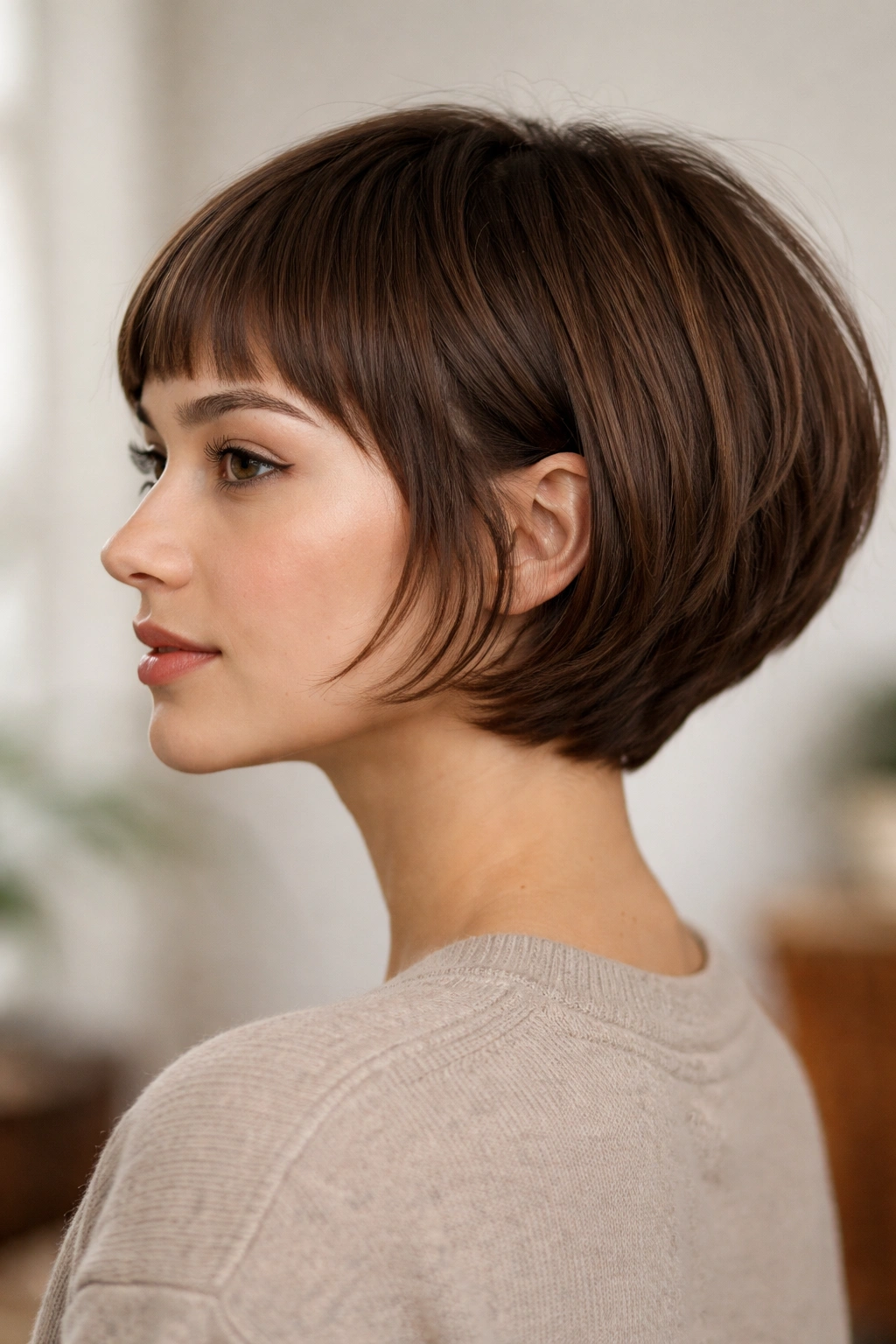
Can a tiny fringe work with a full back stack? Absolutely, if the shape is balanced. A rounded stacked bob with a micro fringe has a little more personality than the classic version, but it still keeps the back as the main event.
The rounded silhouette softens the transition from the crown to the nape, while the micro fringe keeps the front short and light. That leaves the back free to build volume without the front pulling the eye away. It’s a neat trick. Not everyone wants it, and that’s fair, but on the right face shape it looks sharp in a way that feels deliberate.
When micro fringe works
It tends to suit straighter hair best, because the fringe lies where it’s cut. Wavy fringe can be charming, but it also grows unpredictable fast. If you don’t want to trim bangs often, this might not be your cut.
The back should remain rounded, not squared off. A square back with a tiny fringe can feel choppy. Rounded stacking softens the whole thing and makes the fringe feel like part of the haircut instead of an afterthought.
If you’re nervous, ask for a fringe that starts a bit longer than you think. You can always go shorter. Growing it out is another story.
13. Disconnected Stacked Bob with a Loose Nape
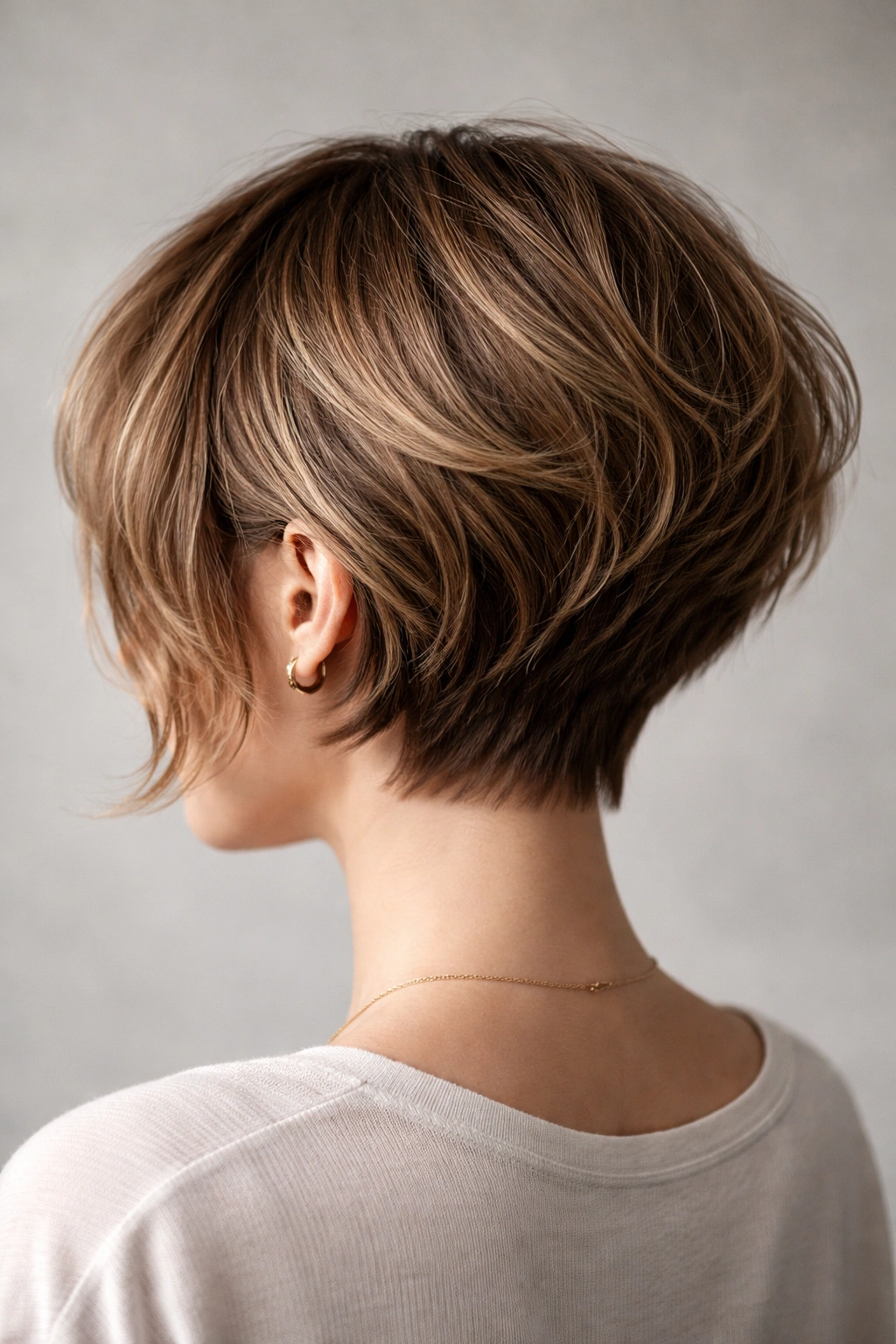
Not every stacked bob should look polished to the last strand. A disconnected version leaves a little separation in the shape, which gives the back movement and keeps the cut from feeling too controlled. That looseness can be a relief if you like volume but hate anything stiff.
The disconnected effect usually comes from leaving some sections a touch longer or more varied, especially through the back and around the crown. The nape still lifts, but the layers don’t blend into one smooth curve. You get a bit of edge, a bit of air, and less of that salon-fresh stiffness that some people find too neat.
This is a good pick for wavy hair and for anyone who likes a bob that changes shape through the day. It looks a little more casual after a few hours, which sounds like a flaw until you realize that’s what gives it life.
A texturizing spray helps, but don’t confuse texture with mess. The cut still needs structure. If the back is too disconnected, it turns into a shaggy blur. Keep the nape clean and let the upper layers carry the movement.
There’s a reason stylists keep coming back to this balance. It’s easier to wear than it sounds.
14. Blunt Stacked Bob with Clean Edges
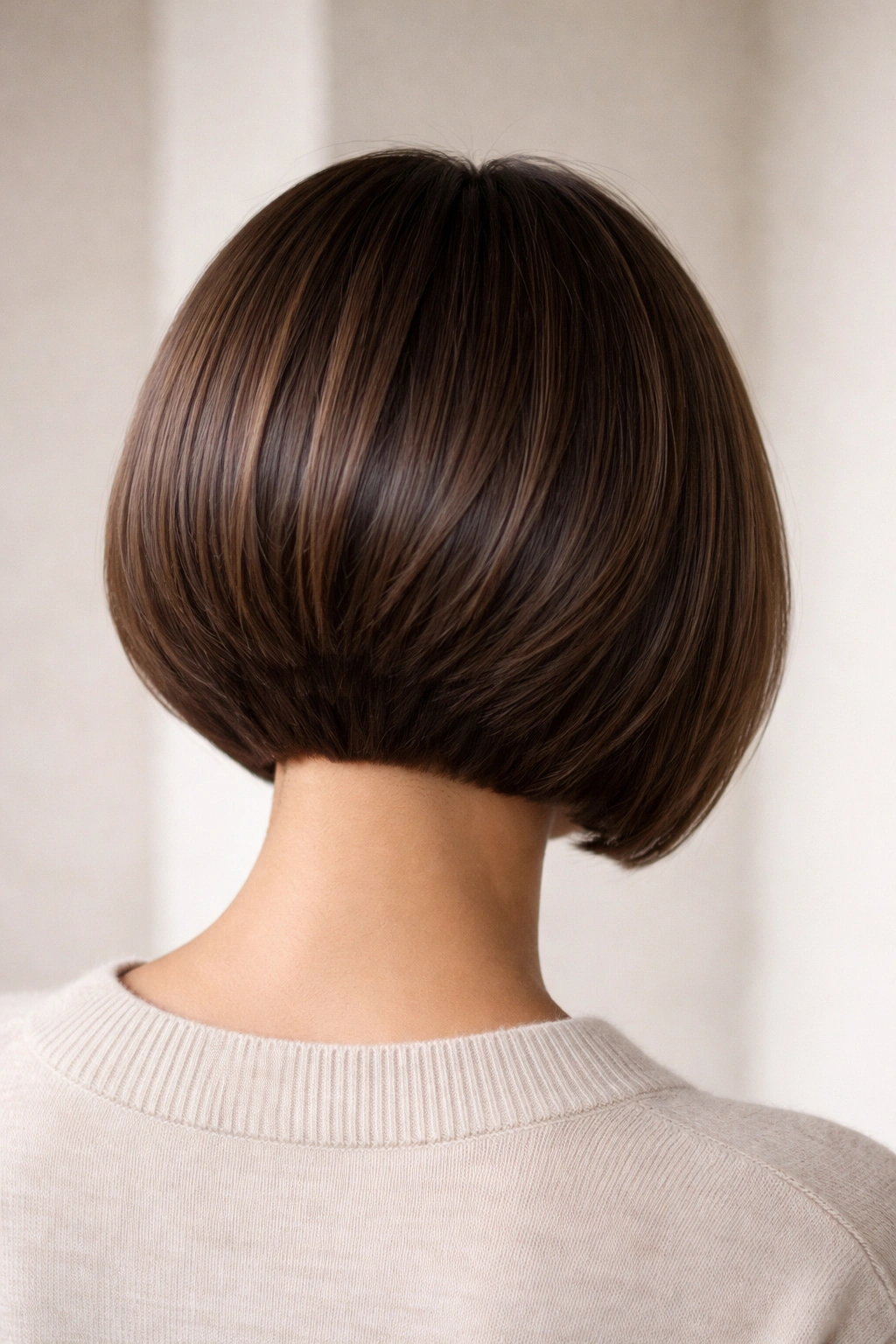
Can a blunt bob still have back volume? Yes. It can, and when it’s cut well, it looks sharper than a softer version because the clean edge makes the stack behind it stand out.
The key is what happens underneath the perimeter. The top line stays blunt, but the interior carries the graduation that lifts the back. That gives you the structure of a stacked cut with the punch of a crisp outline. It’s a strong look. Clean. Direct. No extra fluff.
This version is especially good if you’re tired of wispy ends that fray by the second week. Blunt edges keep the shape looking dense and deliberate. They also make the back look fuller because the eye reads the strong line first, then notices the lift under it.
Salon words worth using
- Blunt perimeter for the clean bottom line.
- Graduated back for the stacked shape.
- Minimal texturizing if you want the ends to stay strong.
- Weight removal near the crown if the top falls flat.
I’d avoid over-layering here. That’s the fastest way to wreck the look. The whole point is that the outline stays solid while the back does the volume work.
15. Soft Stacked Bob with Face-Framing Slices
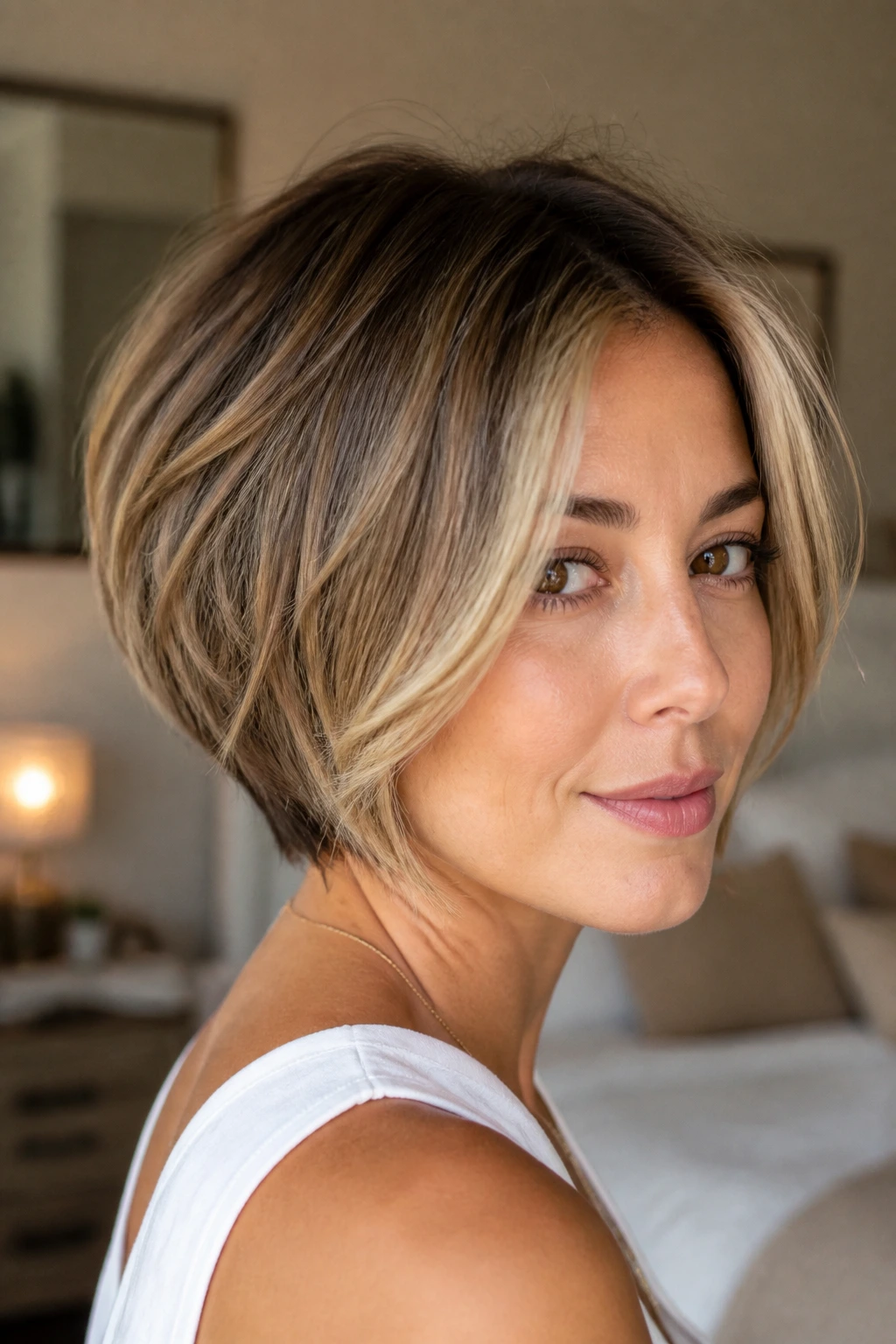
If you want one stacked bob that feels easy to wear every day, this is the one I’d hand over first. The back carries the volume, but the front is softened with a few face-framing slices so the whole cut feels less severe.
Those front pieces matter more than people think. They keep the eye moving and stop the haircut from looking like it was built only from the back view. A soft stacked bob still has lift at the nape, but the perimeter around the face is gentler, which makes the shape easier to live with if you wear glasses, switch parts often, or hate a hard line near the jaw.
The best versions use subtle graduation, not dramatic contrast. The back should still be visibly stacked, but the front pieces should blend enough that you can tuck them, wave them, or leave them straight without the haircut fighting you. That flexibility is useful. Most people need a haircut that works on the second-day texture, not just the morning after a salon blowout.
A little root spray, a round brush at the crown, and a quick bend through the face-framing pieces is usually enough. No big production. Just shape, lift, and a back that doesn’t collapse the moment you step outside.
