



The best bob cuts for relaxed hair do not fight the texture; they work with the way relaxed strands fall.
A relaxed bob lives or dies by the line at the bottom. If the cut is too choppy, the ends can look thin in a hurry; if the shape keeps a little weight, the hair looks fuller, cleaner, and easier to wrap at night.
That is why blunt edges, gentle angles, and controlled layering matter so much. Relaxed hair already lies flatter than natural texture, so a bob needs structure more than fluff.
Pick the wrong shape and the whole cut can look tired two weeks after the salon. Pick the right one, and you get a style that still looks neat when the roots have a little lift and the ends have been through a few silk presses.
1. Blunt Chin-Length Bob for Relaxed Hair
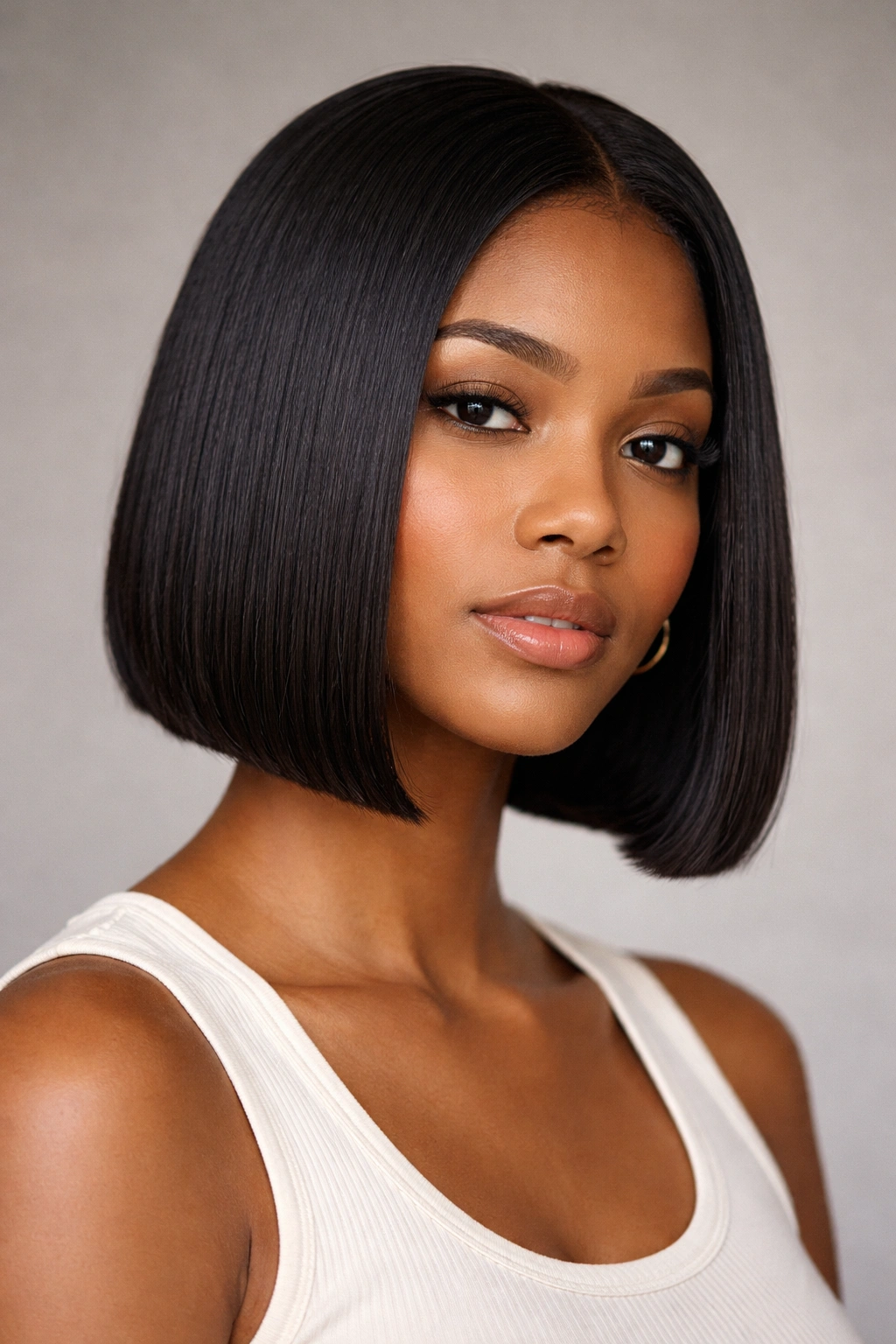
If you want the safest, sharpest place to start, this is it. A blunt chin-length bob gives relaxed hair a solid edge, and that matters more than people think. Chemically straightened strands can look wispy fast once the ends get over-thinned, so a clean perimeter fixes the problem before it starts.
Why the blunt line works
A chin-length cut sits where the face still has shape, but not so low that the hair drags the whole look down. It creates a frame without stealing attention from your features. And because the ends are one length, the hair reads fuller from every angle.
That fullness is the whole point. Weight at the bottom keeps relaxed hair from looking stringy, especially if your strands are fine or your density has dropped a little over time.
- Keeps the perimeter thick and tidy
- Works with side parts or middle parts
- Wraps flat at night with less fuss
- Looks neat even after a little root lift
Ask for the final line to stay blunt, not razored. That tiny detail changes everything.
2. A-Line Bob
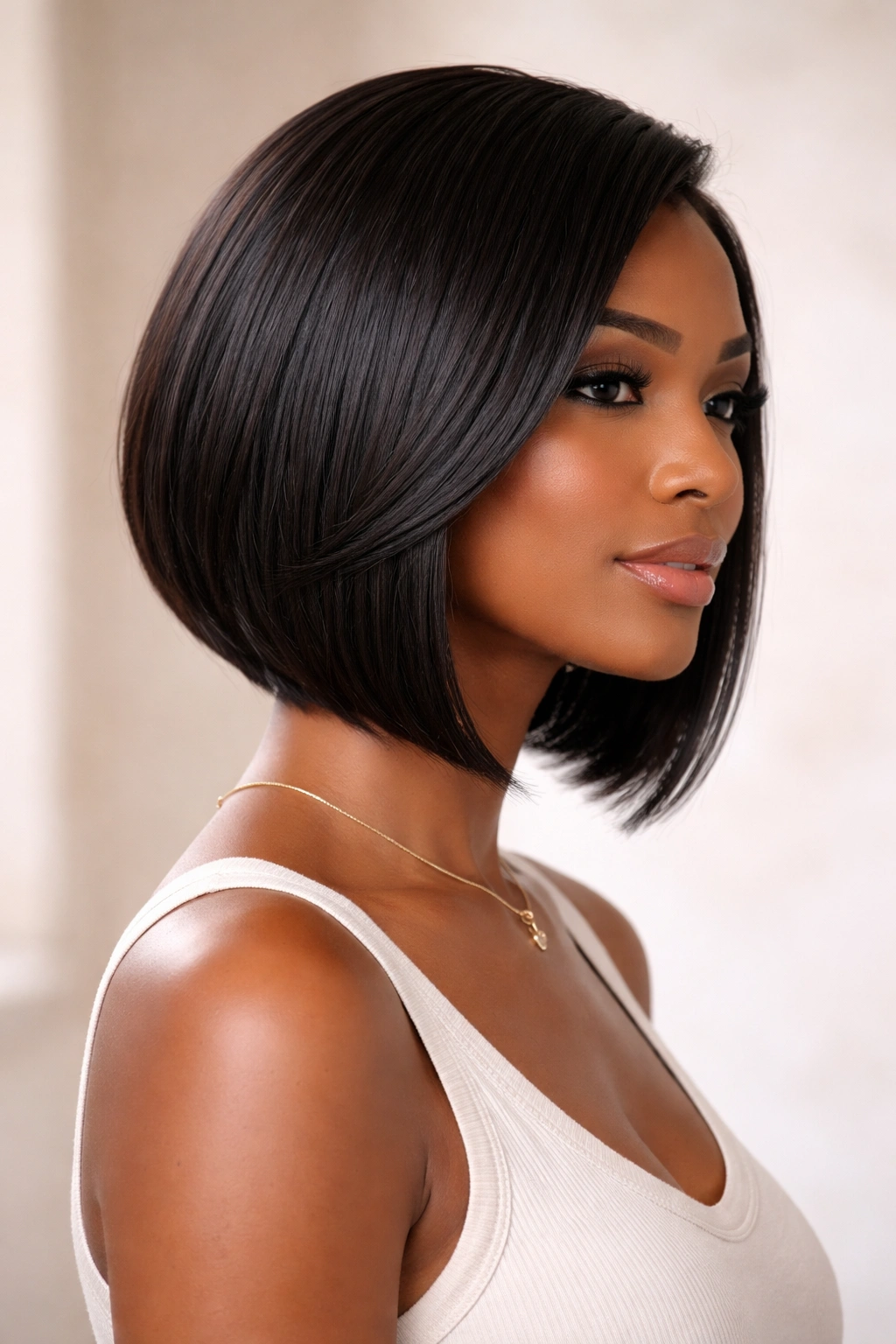
Why does a small angle make such a difference on relaxed hair? Because an A-line bob gives movement without sacrificing the bottom edge. Shorter in the back, a little longer in the front — that shape makes the neck look cleaner and the jaw look softer at the same time.
The angle should be subtle. Too steep, and the cut starts to feel dated fast. Too flat, and you lose the whole reason for choosing an A-line in the first place. The sweet spot is usually a front section that drops about 1 to 2 inches longer than the nape, with the side panels grazing the jaw or just below it.
Where the angle helps most
The shape that saves the ends
Relaxed hair does not need a dramatic slope to look polished. A gentle A-line keeps the front from clinging to the face while the back stays neat and close to the neck.
What to ask the stylist for
- A soft angle, not a sharp wedge
- A clean nape that hugs the neck
- Front pieces that stop at the jaw or just past it
- Weight left at the perimeter so the ends do not look sparse
A-line bobs are especially kind to people who want a little movement but do not want the hair to swing into the shoulders all day. That gets annoying. Fast.
3. Side-Part Bob
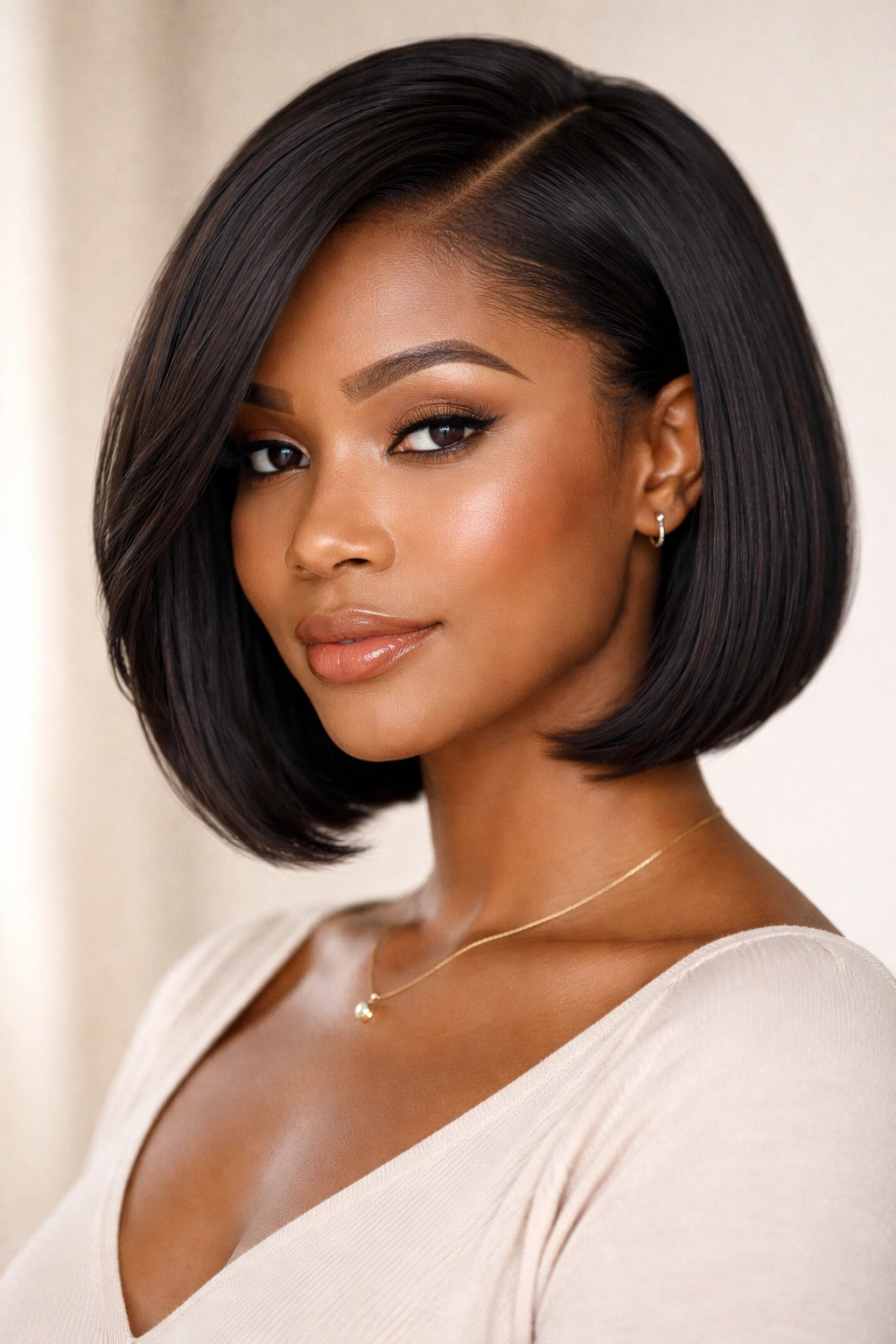
Some bobs do not need a new cut. They need a better part.
A deep side part can wake up a relaxed bob that feels flat or too symmetrical. It shifts the eye, gives the front a little lift, and makes even a simple chin-length cut look more deliberate. On relaxed hair, that matters because the hair already lies smooth; you need shape somewhere, and the part is often the easiest place to get it.
The trick is not to bury one side under too much hair. Aim for a part that lands about 1.5 to 2 inches off center, then blow-dry the hair in the direction it will sit. The roots will remember that direction better than if you fight them with a flat brush and a prayer.
A side-part bob also helps if one temple looks thinner than the other or if a cowlick keeps wrecking the front. That little shift can make the whole style behave.
- Use a rat-tail comb for a crisp part
- Clip the heavy side while it cools
- Smooth the roots with a light mousse or setting foam
- Tuck the lighter side behind one ear for extra lift
The part does more work than most people realize.
4. Stacked Bob
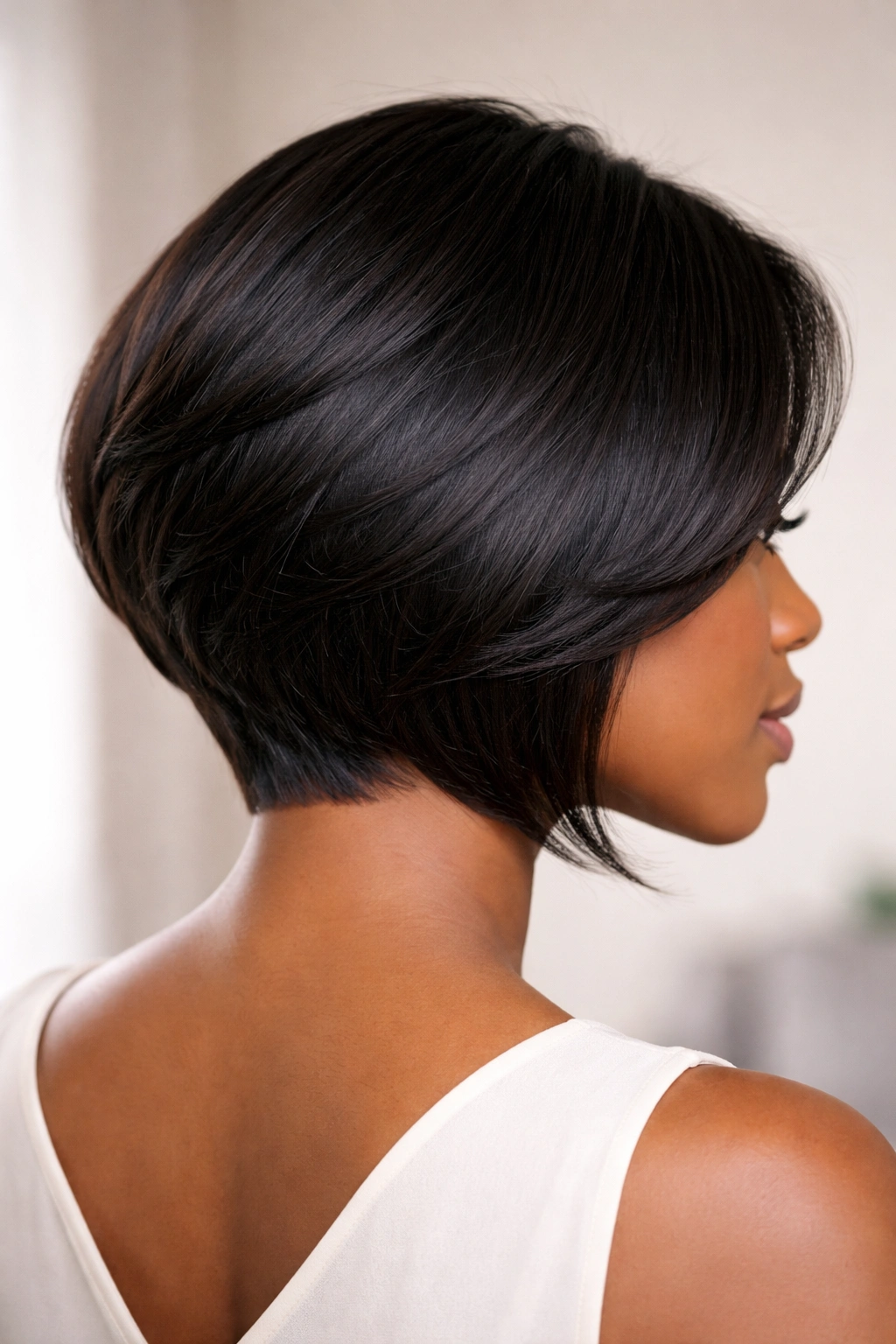
If the back of your bob looks flat, stack it — gently. A stacked bob builds a little roundness at the nape so relaxed hair has shape from behind without needing a lot of obvious layering. That is the main appeal. You get lift where the silhouette needs it, while the front still keeps enough length to look polished.
The mistake people make is asking for too much stack. Then the back starts to look like a shelf, and relaxed hair can expose that shape in a bad way because the strands lie so neatly. You want a soft graduation, not a staircase.
Where the volume should sit
The lift belongs low at the nape, not high at the crown. A good stacked bob looks balanced when the short layers support the lower back section and the top stays smooth.
What to ask for
- A shallow graduation at the nape
- Enough weight through the sides to keep the bob full
- A front line that stays longer than the back
- Soft blending, not choppy steps
This cut shines on medium-density hair that needs a little help holding shape. If your ends are fragile or see-through, tell the stylist to keep the stack low and the perimeter heavy.
5. Collarbone Lob
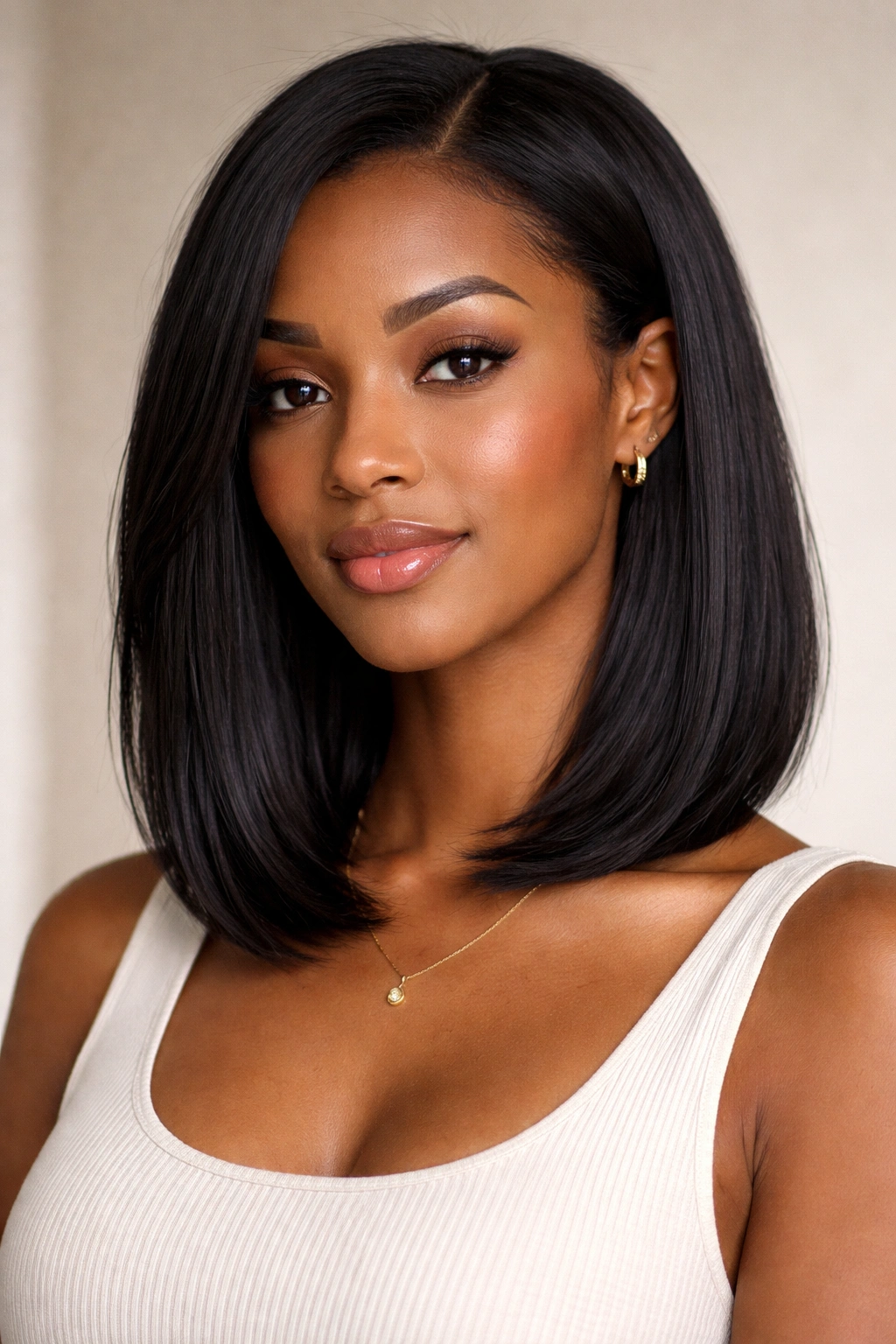
If you are not ready for a tight short bob, the collarbone lob gives you room to breathe.
This length works because it keeps relaxed hair long enough to tuck, bend, or pin, while still reading as a bob family cut. It sits right where the collarbone can support the ends instead of letting them flop around at the shoulders all day. That one detail makes a bigger difference than people expect.
A lob is also the easiest bob shape to live with if you wear your hair in more than one style. You can part it in the middle, sweep it to one side, curl the ends under, or let it swing straight. It can look crisp without feeling severe.
I like this cut for people who want a polished shape but still need some styling flexibility. It is also a good landing spot if you are growing out a shorter bob or trimming away old damage without losing all the length.
The key is to keep the outline blunt. Add only a soft bevel at the ends if you want movement. Too many layers and the lob loses its clean edge fast.
6. Asymmetrical Bob for Relaxed Hair
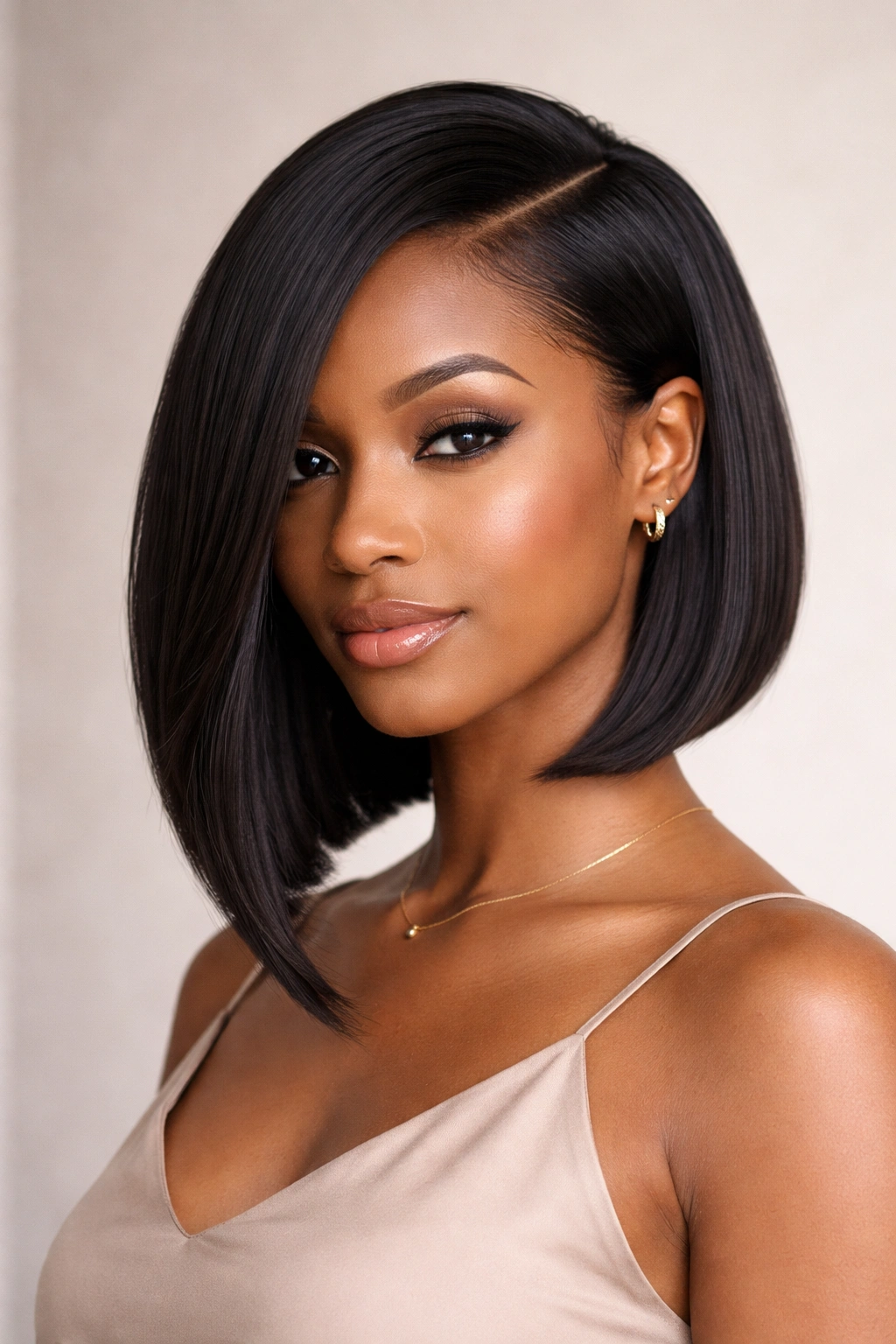
An asymmetrical bob brings edge without asking relaxed hair to do too much.
One side sits a little longer than the other — usually by 1 to 2 inches, not by a mile — and that slight imbalance gives the cut instant character. The style works best when the difference is visible but controlled. If the longer side disappears into the rest of the hair, the whole point gets lost.
Relaxed hair is a good match for this shape because the straightness shows the line clearly. You can see the geometry. That is half the fun. A soft curl under the longer side can make the cut feel more fluid, but straight and glossy is the version that really shows the design.
This bob suits anyone who wants the shape to feel a little sharper than a classic one-length cut. It also flatters a long neck and strong cheekbones, since the longer side draws the eye down and across the face.
Keep the styling clean. A little serum at the ends, a precise part, and a smooth blow-dry are usually enough. If the finish gets puffy, the asymmetry starts looking accidental instead of intentional.
7. Feathered Bob
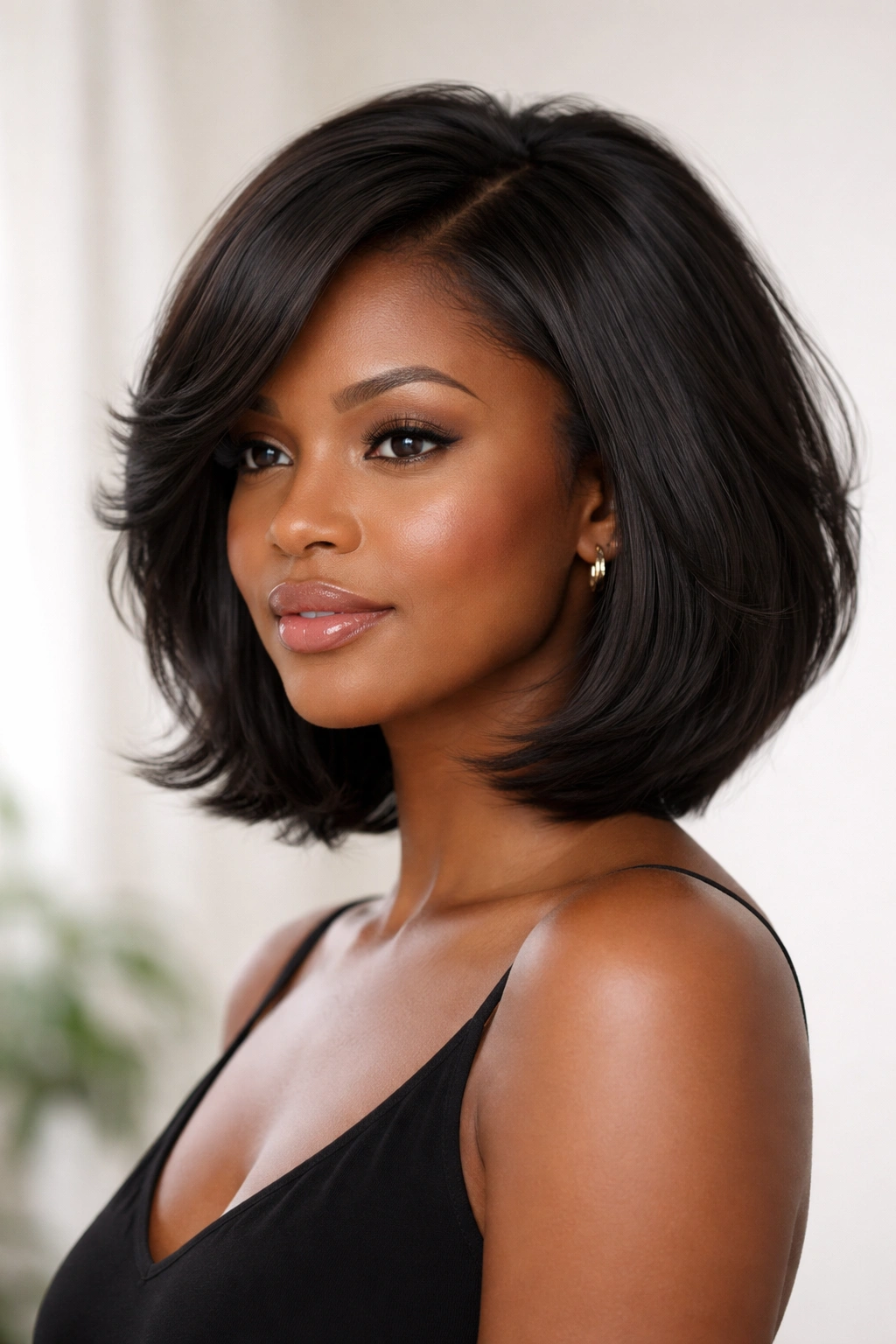
Blunt ends can feel heavy. Feathering softens that weight without throwing away the shape.
On relaxed hair, feathering works best when it stays near the surface layers and away from the perimeter. That is the part people miss. If the stylist shreds the ends with too much razor work, the bob can start looking frayed instead of airy. Soft point-cutting is safer, especially if your hair has been relaxed for a long time or your ends are a little delicate.
Where feathering helps
A feathered bob is good when you want movement around the face, a lighter feel at the crown, and less of that helmet effect that some straight bobs get. The cut can also help thick relaxed hair settle down at the sides.
What to watch for
- Keep the perimeter full
- Ask for feathering near the top layers, not the bottom edge
- Avoid heavy razoring on fragile ends
- Finish with a light serum instead of a greasy cream
This style is not the best choice if your ends are already thin. In that case, keep the bob blunt and let the styling do the softening.
8. Rounded Bob
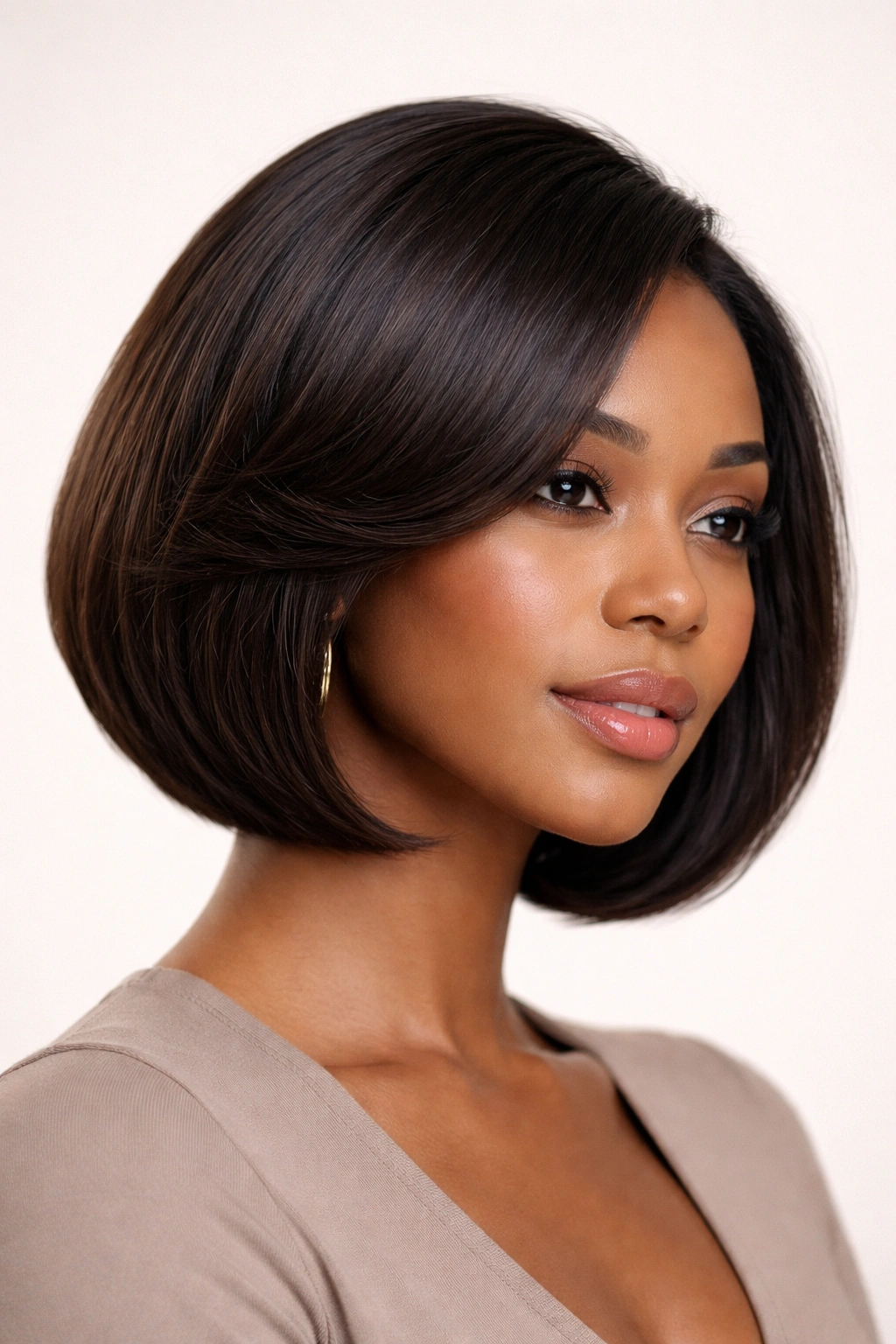
Why do some bobs look so neat even when the cut itself is simple? Because the silhouette hugs the head.
A rounded bob curves gently around the jaw and back toward the nape, which makes relaxed hair look tidy and deliberate. The smooth texture of relaxed strands helps here. You do not have to force the shape; you only need to guide it.
This cut is a good match if you like a polished finish and do not want the sides to stick out. The rounded shape can make the face look softer, and it often works well on hair that naturally sits flatter on one side than the other.
The curve should be soft, not helmet-like
A good rounded bob bends under with movement. It should not look like a bowl. That is the line I would keep in mind.
- Use a medium round brush, not a tiny one
- Blow-dry the hair downward and then under
- Keep the ends just long enough to tuck slightly
- Leave a little fullness at the crown so the shape breathes
A rounded bob is especially useful if you wear your hair straight most of the time and want the cut itself to do most of the talking.
9. Hidden-Layer Bob
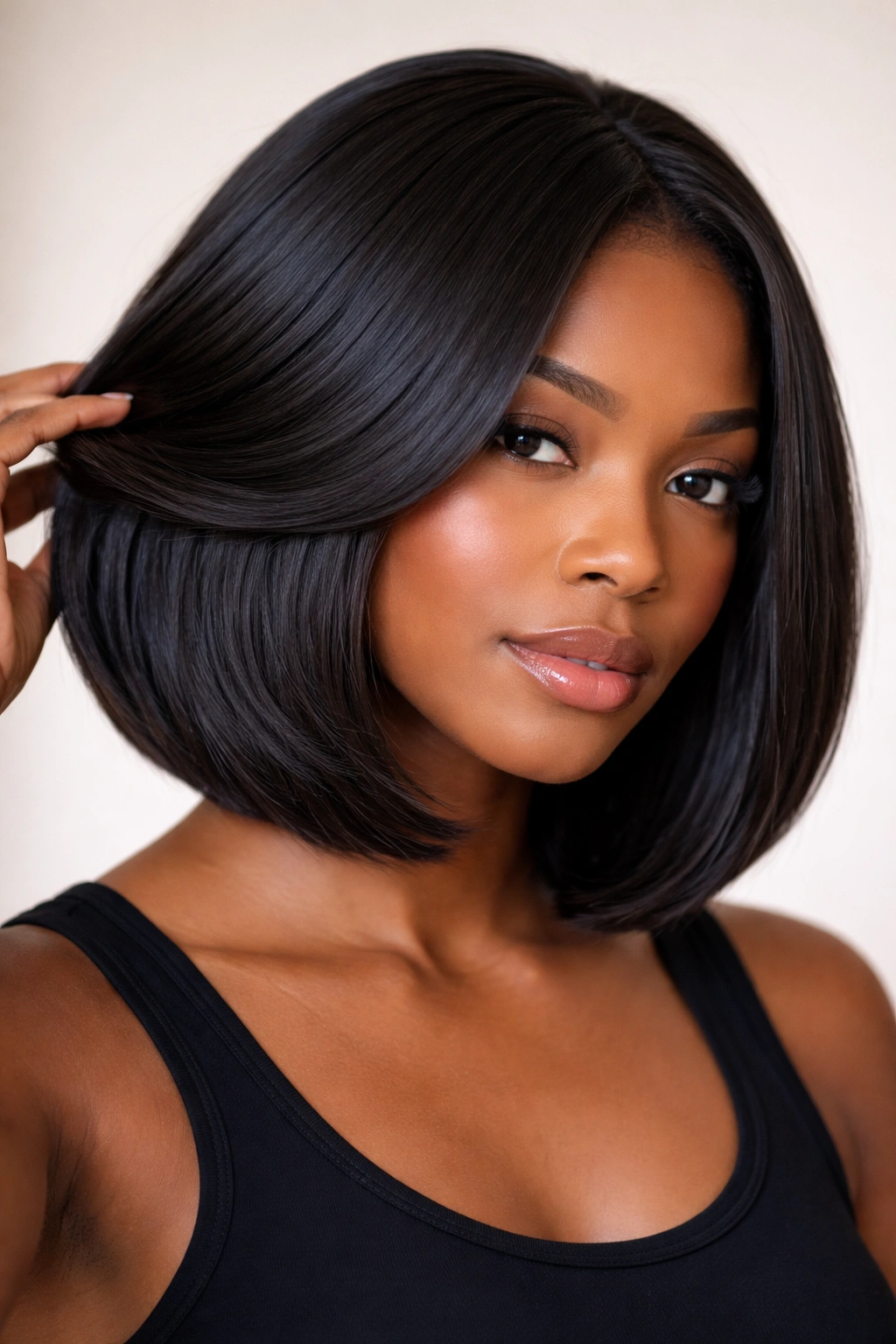
This is the smartest cut for thick relaxed hair. Hidden layers remove bulk without making the outside of the bob look broken up, and that is exactly what thick, straightened hair often needs. You keep the clean perimeter, but the inside of the haircut stops ballooning out at the sides or at the back.
The best part is that the layers do their work quietly. You do not see them first. You feel the difference when the hair falls closer to the head and dries faster because there is less mass in the middle. That matters if your hair takes forever to smooth after a wash day.
Where the layers belong
Internal layers should sit under the top sheet of hair, mostly around the crown, nape, and back interior. The stylist can remove weight where the bob is too bulky, but the outer line stays full and blunt.
Where they do not belong
- The perimeter
- The very ends
- Any area where your hair already looks thin
- A heavy-handed razor pass
This cut is not for weak ends or hair that has been overprocessed. If the hair is fragile, ask for a lighter version with only a small amount of internal shaping.
10. Bob with Bangs
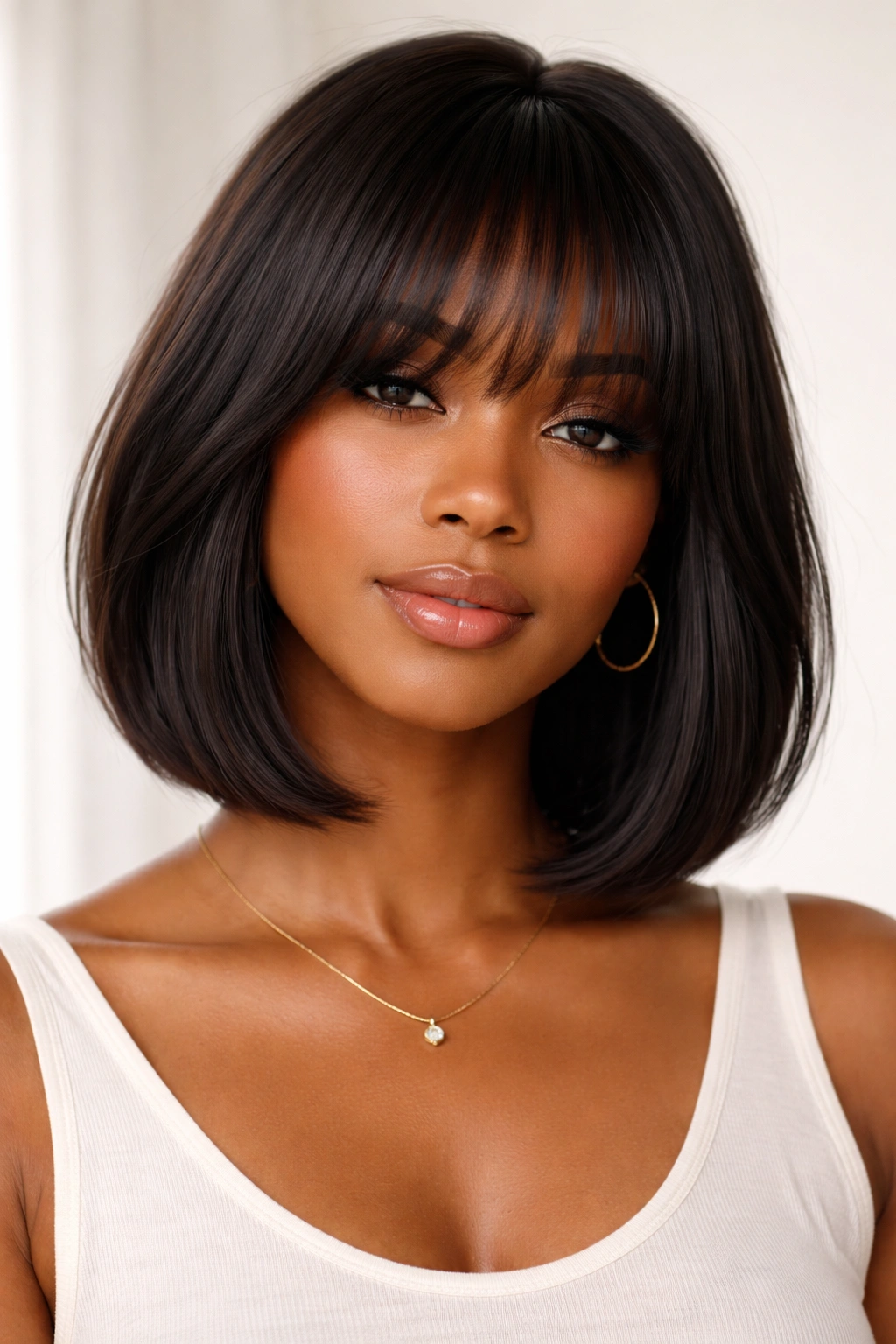
Bangs can work on relaxed hair, but they need restraint.
A full fringe, side-swept bang, or curtain bang can change the mood of a bob fast. The important part is length. Keep the fringe a touch longer than you think you need, because relaxed hair sits flatter and can look shorter once it settles. A bang that skims the brow when dry is usually safer than one that cuts straight across too high.
This style is excellent if you want to shorten a long forehead, soften a high hairline, or make a short bob feel less plain. It also gives you a place to add shape if the rest of the cut stays sleek.
What kind of fringe works best
- Side-swept bangs if you want easy upkeep
- Curtain bangs if you like softness around the cheekbones
- Long, full bangs if you are willing to trim them often
I would skip short micro bangs on most relaxed bobs. They can look harsh, and they need constant maintenance. Keep the fringe airy, and the whole cut stays more wearable.
11. Sleek Middle-Part Bob for Relaxed Hair
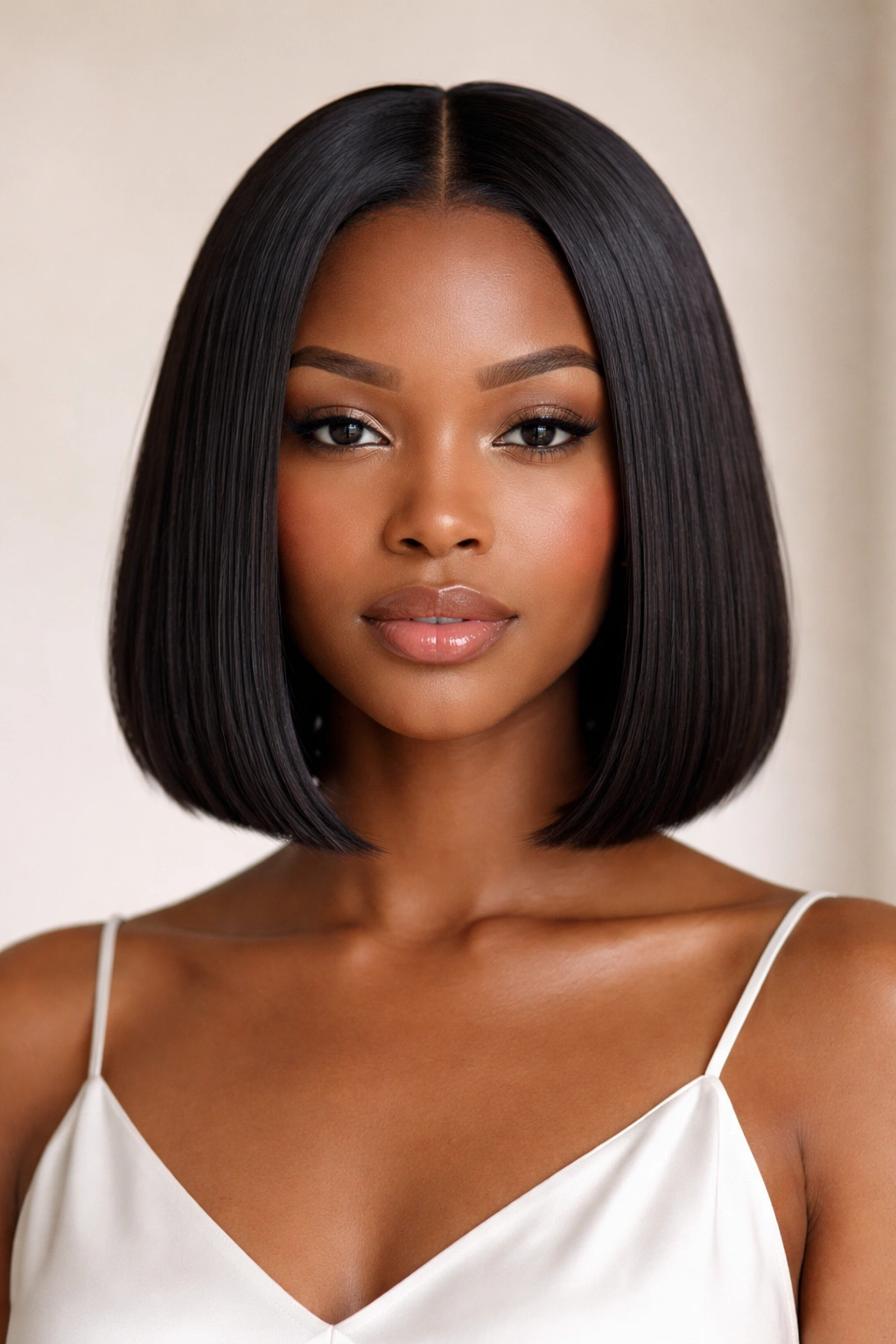
A center part makes relaxed hair look crisp in a way a side part never quite does.
The style depends on symmetry, so the cut has to be even from root to tip. That is not negotiable. If one side sits a quarter-inch longer or the front corners do not match, the middle part will expose it immediately. On the upside, when the line is clean, the result looks calm and sharp without trying too hard.
This bob works best when the perimeter is blunt and the finish is glossy. A little light oil on the ends helps, but too much product can make the hair collapse and show every little bend. Use a heat protectant, smooth the roots, and keep the part straight from forehead to crown with a fine-tooth comb.
There is something almost strict about a middle-part bob. I mean that in a good way. It gives the cut a quiet confidence, especially on relaxed hair that already has a smooth, even texture.
It flatters oval and heart-shaped faces especially well, though strong jawlines can wear it too. The trick is to keep the front pieces polished enough that they do not flick out by lunchtime.
12. Tapered Nape Bob
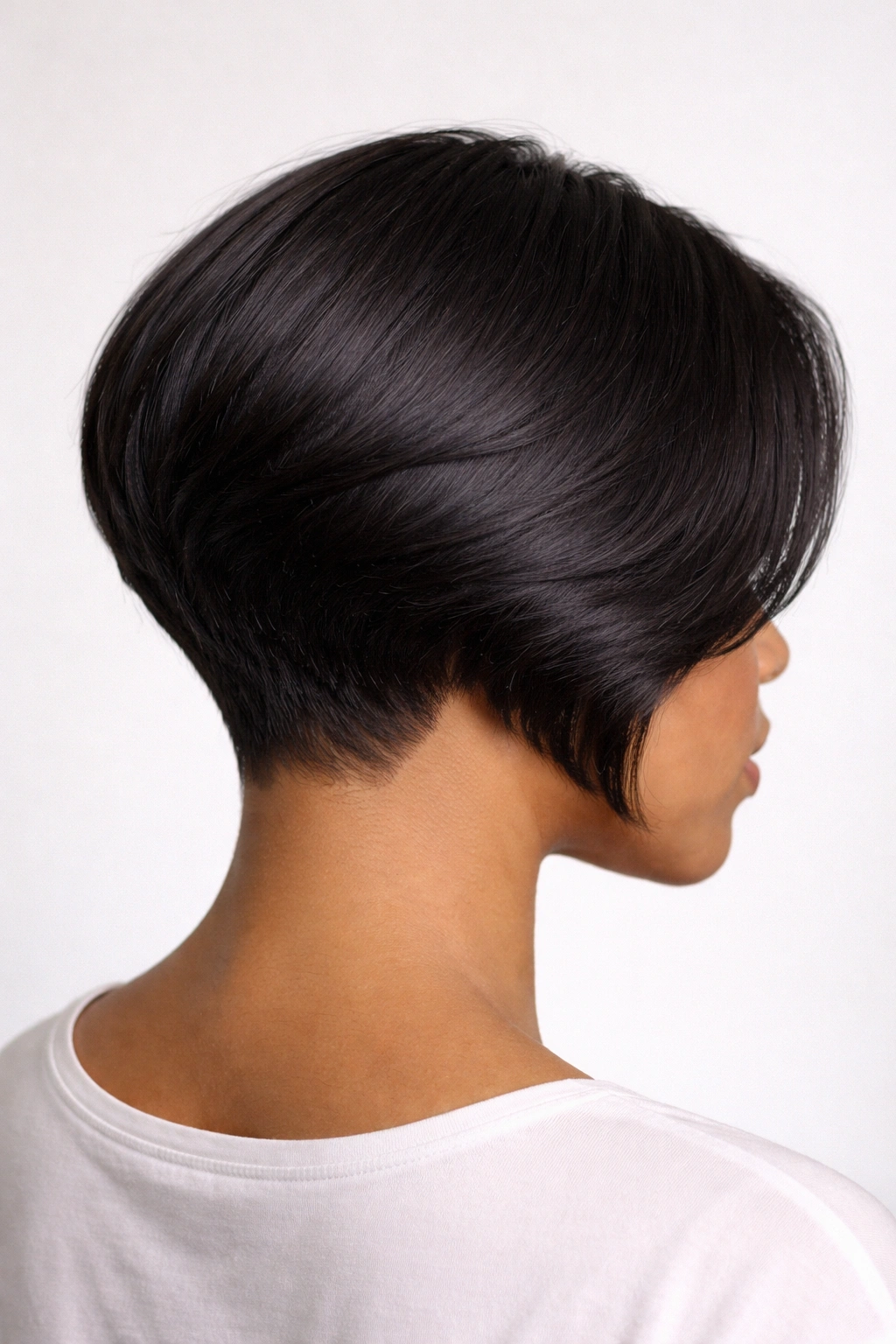
I like a tapered nape bob when someone wants the back to sit close without the whole cut feeling severe.
The taper shortens the hair slightly at the neckline and then lets it get longer as it moves toward the front. On relaxed hair, that can be a real help because the hair already lays flat, and the nape is often where bulk or puffiness becomes obvious first. A clean taper solves that neatly.
Why the nape matters
A good nape line makes the bob look finished from behind. It also keeps the style from kicking out at the neck, which can happen when relaxed hair brushes against collars and scarves all day.
What to ask for
- A smooth taper, not a hard shelf
- Enough length through the sides to keep softness
- A neck-hugging back that stays neat
- Light blending, not a harsh fade
This shape is especially good if your hair grows thick at the back or if you want the neck to look a little longer. The downside? It needs regular cleanup at the neckline, because fuzzy regrowth shows faster on a shorter back.
13. Curved-In C-Bob for Relaxed Hair
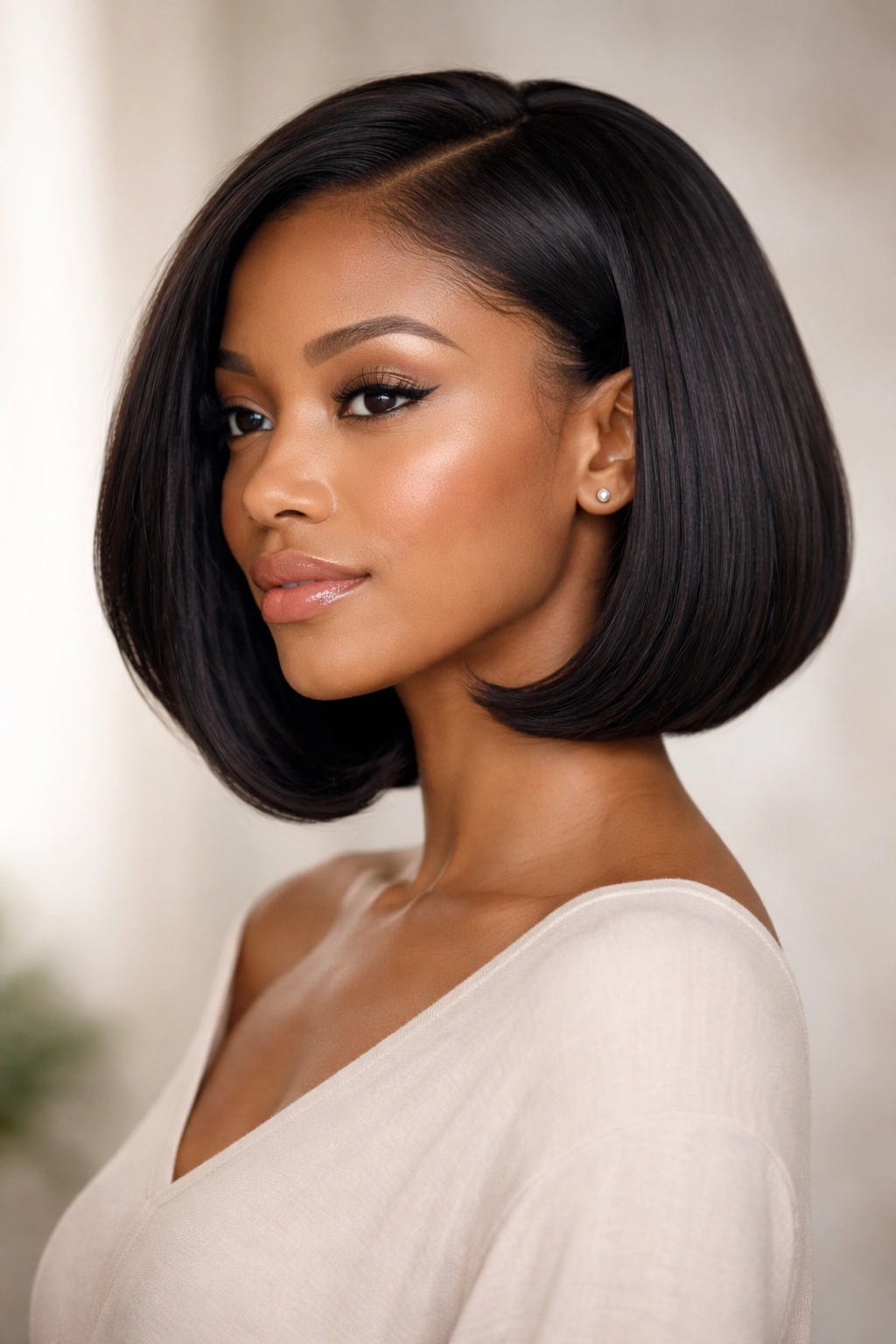
If you want the ends to sit without fuss, ask for a C-shaped bob. The silhouette curves inward toward the chin and neck, which helps relaxed hair look smooth and settled from the first day after the cut. It is one of those shapes that seems simple until you notice how neat it looks in motion.
The curve should be soft. Not stiff. Not flipped out. A good C-bob feels like the ends are bending under on their own, even though the cut is doing half the work. That is why this style is so useful for relaxed hair: the texture already wants to lie flat, so a gentle bevel at the perimeter gets you most of the way there.
How to get the curve to hold
A 1.5- to 2-inch round brush, used with a downward blow-dry, usually helps the shape settle. Some stylists will finish the ends with a slight underbend using a flat iron, but the cut itself should still carry the curve.
The part most people miss
- Keep the perimeter blunt enough to show the line
- Do not over-layer the front
- Ask for a subtle bevel, not a dramatic flip
- Use light hold, not stiff setting foam
This is a good cut if you like your bob to look polished even on low-effort days.
14. Jaw-Length Bob
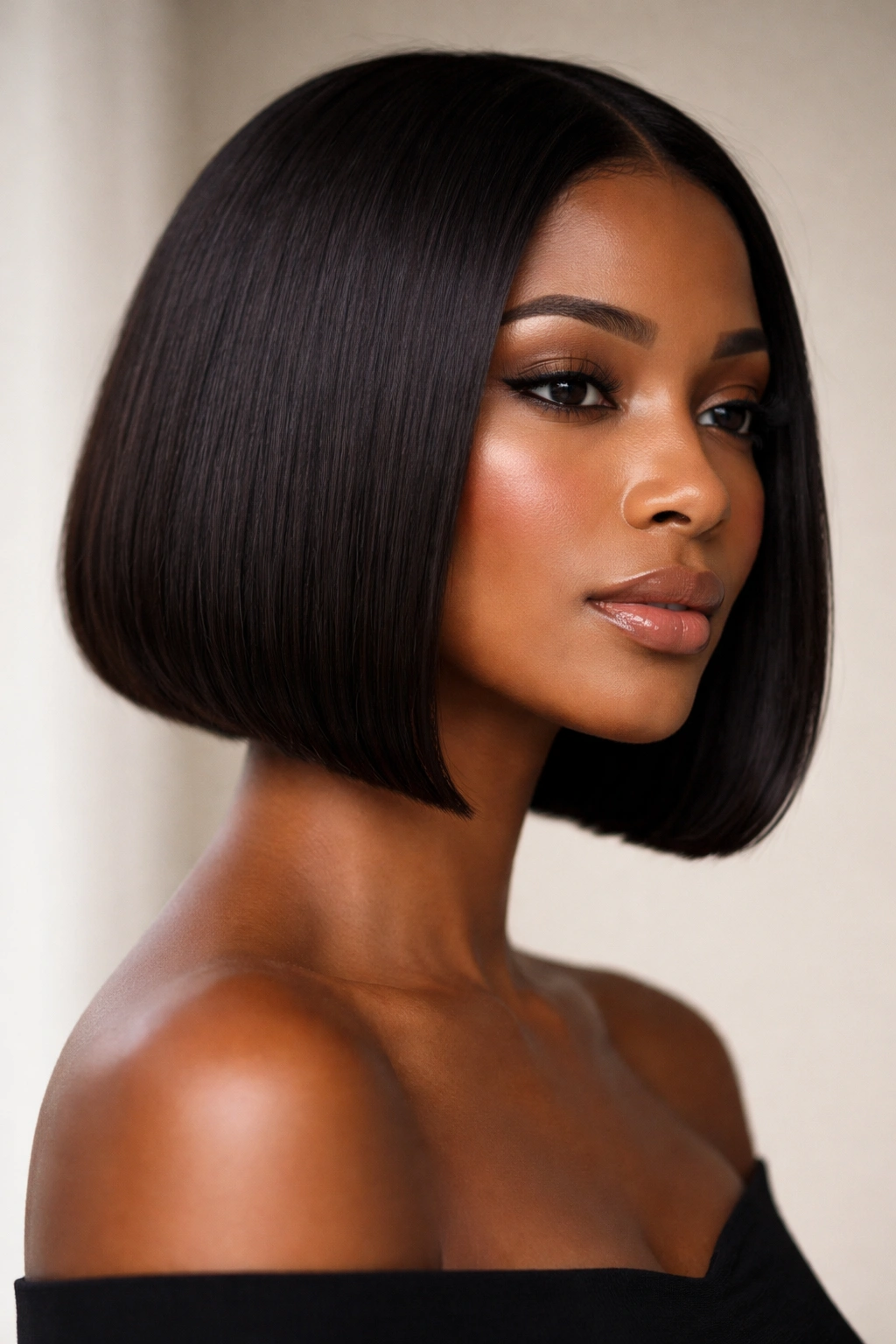
What if you want short hair without going all the way to the chin? The jaw-length bob is the answer.
This cut lands right around the jawline, which makes the face look stronger and the haircut feel more graphic. On relaxed hair, that line reads especially well because the hair sits smooth and the outline stays visible. There is nowhere for the shape to hide. That is the charm of it.
Who it flatters
A jaw-length bob looks sharp on people with defined cheekbones, narrow jaws, or a neck they want to show off. It can also make fine relaxed hair look thicker, since the cut stops before the ends start looking tired.
Who should think twice
- Anyone who wants the face softened a bit
- Anyone with a very square jaw who does not want more emphasis there
- Anyone whose ends are thin and need extra length for fullness
The key is to keep the baseline clean. If the line gets choppy, the style loses the sleek edge that makes it work. I would ask for a dry check before the final trim, because a jaw-length cut leaves little room for error.
15. Wrap-Set Bob with Soft Ends for Relaxed Hair
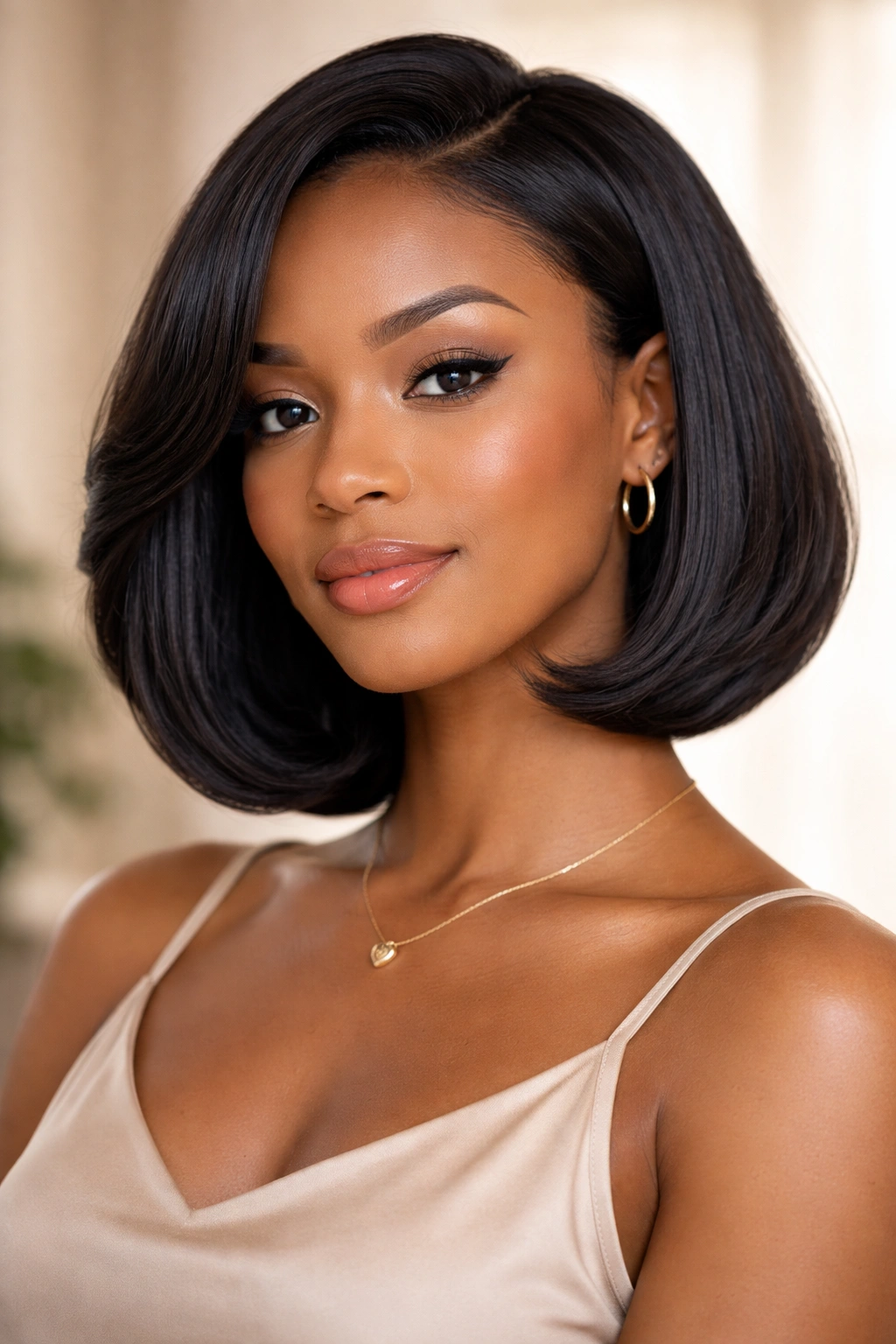
A wrap-set bob is the one I reach for when relaxed hair needs polish more than drama.
Unlike a pin-straight bob that sits rigidly in place, this version leaves the ends with a tiny bend — enough to soften the line, not enough to blur it. That makes the cut feel lived-in without slipping into frizzy territory. The style also plays nicely with a silk press, a large-roller set, or a nightly wrap routine.
Why the shape holds up
Relaxed hair responds well to a smooth base and a blunt perimeter. Add a gentle curve at the ends and the whole cut looks finished even when the roots have a little movement. It is a practical choice if you want the hair to look neat after sleeping in a satin scarf and brushing it back into place in the morning.
How to keep it clean
- Ask for a blunt line with only a soft bevel at the tips
- Use a lightweight wrap lotion or setting foam
- Dry the hair flat before smoothing the ends under
- Sleep with a satin scarf or bonnet to protect the line
This is a good cut for people who wear their bob straight most of the time but still want a little softness around the face and neck. It is polished without feeling stiff.
Final Thoughts
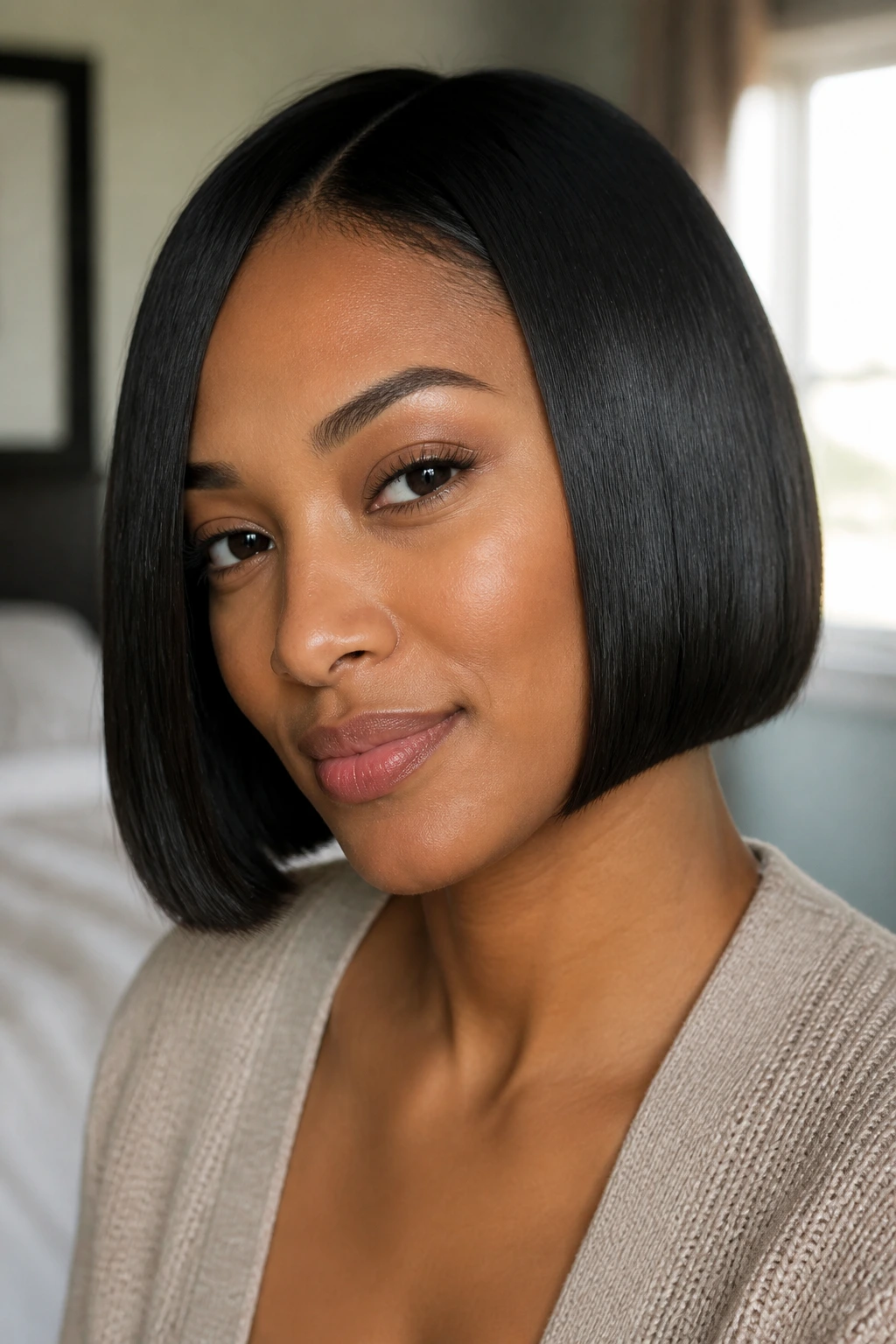
If you are torn between shapes, start with the blunt bob or the collarbone lob. Those two are the easiest to live with on relaxed hair, and they keep the ends looking full instead of see-through. Everything else can lean sharper, softer, or more styled from there.
The smartest thing you can do at the salon is bring two photos: one of the front and one of the back. Relaxed hair changes the way a bob sits, so a clear picture of the perimeter matters more than a vague idea in your head.
Also tell the stylist how you wear the hair most often. Middle part, side part, wrap set, flat iron, roller wrap — the cut should fit the way you actually move through the week.
A bob looks best when the shape still makes sense three days later.
