



Scruffy bob cuts work because they don’t ask your hair to behave. They leave a little room for movement, a little mess, and a little personality, which is exactly why they can look more expensive than a haircut that’s been ironed flat and polished within an inch of its life.
The undone look is not the same thing as a sloppy cut. That’s the part people get wrong. A good bob still needs shape at the back, some kind of weight line around the jaw, and enough softness at the ends so it doesn’t read as helmet hair. The magic is in the tension: neat enough to look deliberate, rough enough to feel lived-in.
I’ve always liked bobs that look better after they’ve been slept on a little. A clean blowout can be fine, sure, but a scruffy bob with a broken wave, a side part that refuses to sit perfectly, or a fringe that falls a touch unevenly has a lot more charm. It feels less staged. More human.
1. The Choppy Chin-Length Bob
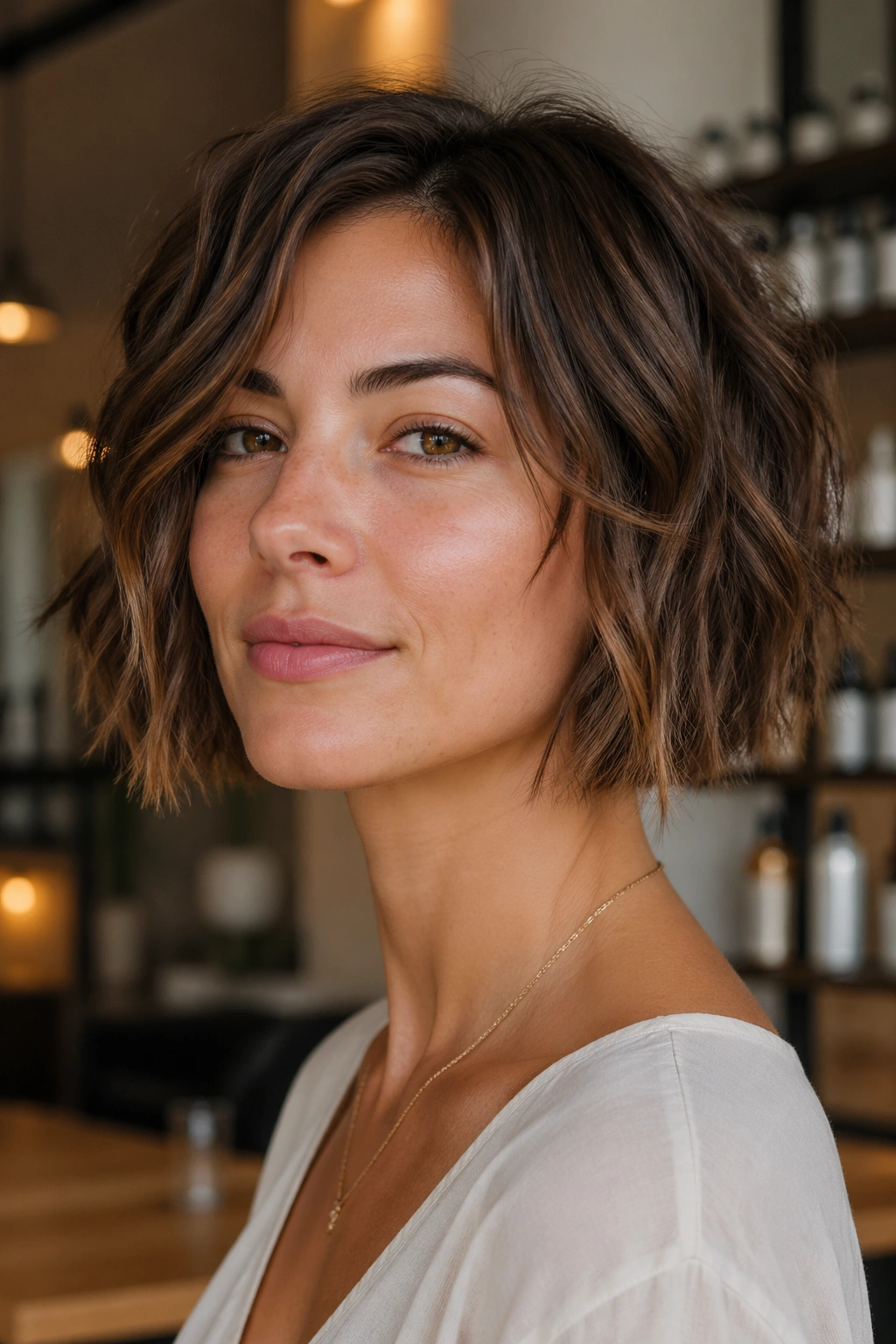
This is the one I recommend to people who want the easiest entry point into scruffy bob cuts. The length hits right around the chin, which gives the face a frame without swallowing it, and the chopped ends stop the whole thing from feeling too neat. If a classic bob is crisp and polished, this version has a little grit in the best way.
Why it works
The chin length keeps the shape obvious, even when the styling is loose. That matters. You want the cut to hold its own after air-drying, not collapse into a shapeless triangle by lunchtime.
The choppy ends also help fine hair look fuller. Instead of one hard edge, you get little breaks in the line, which makes the hair catch slightly different pieces of light and movement. It’s a small thing, but on a bob, small things matter a lot.
Ask for internal texture through the mid-lengths and soft point-cut ends, not razor-thin wisps all over the place. Too much slicing and you’ll lose the weight that keeps the bob looking like a bob.
Best for: straight to lightly wavy hair, oval faces, finer textures that need lift.
Styling note: a dab of mousse at the roots and a quick rough-dry with your fingers is often enough. Don’t overthink it.
2. The Jaw-Grazing Bob With Broken Ends
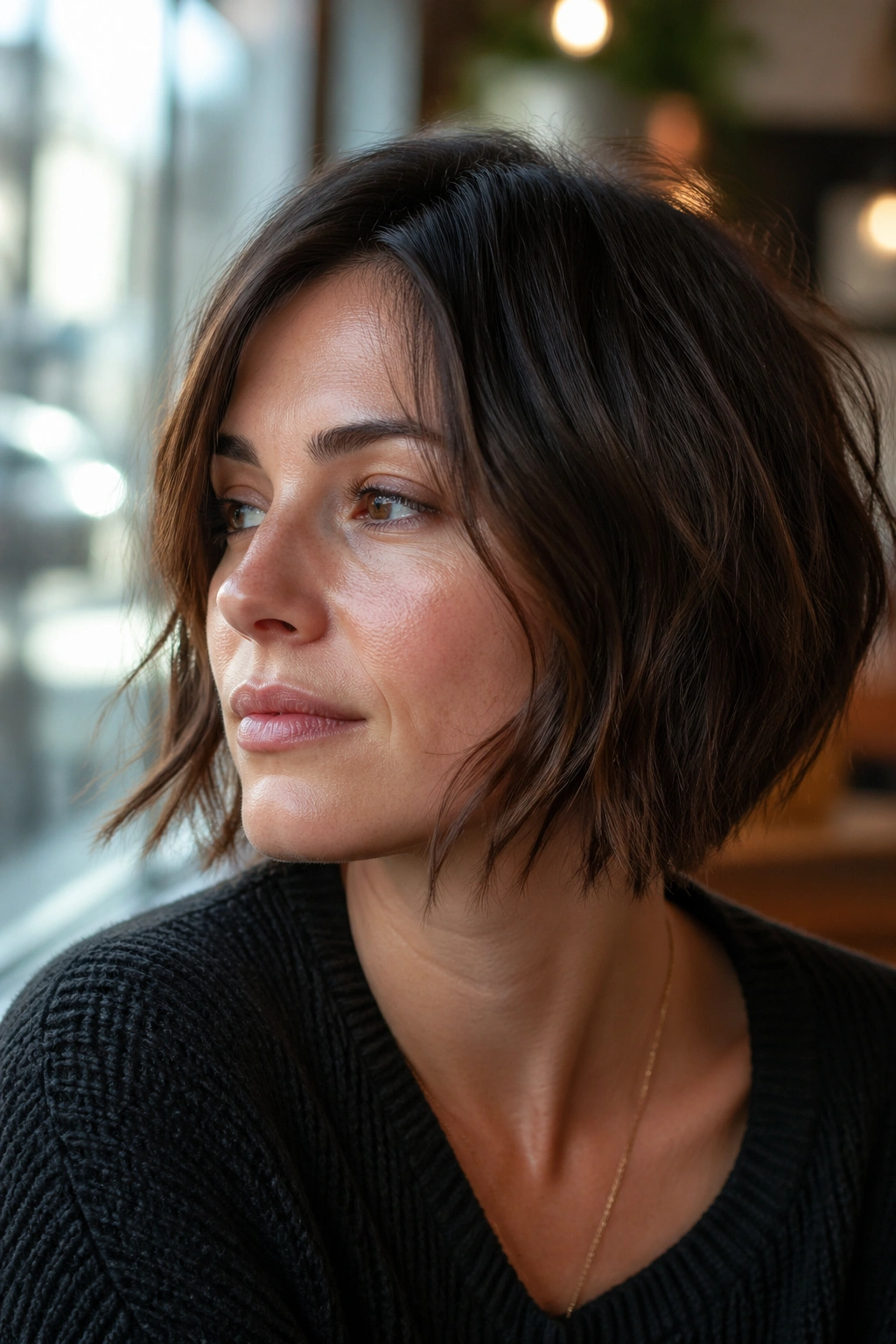
Why do some bobs look cool before they even get styled? This one. A jaw-grazing bob sits right at that sweet spot where the cut can sharpen the face or soften it, depending on how the ends are handled. Keep the outline a little uneven, and the whole style feels relaxed instead of rigid.
The trick is the bottom line. You want it to almost look blunt from a distance, then reveal the unevenness once the hair moves. That’s what gives it that undone quality. Too many layered bobs try to fake texture from the inside, but this version gets its personality from the edge itself.
It’s especially good if your hair tends to puff out at the sides. The jaw length lets the silhouette sit close to the face, while the broken ends stop the cut from turning boxy. I like this one with a slight off-center part because a dead-center part can make it look a little too formal.
What to ask your stylist for
- A length that sits right at the jawline or just below it
- Soft, irregular ends rather than a sharp, blunt line
- Light texturizing only at the perimeter
- Enough weight left through the sides to avoid frizzing out
Best for: medium-density hair, round or heart-shaped faces, anyone who wants definition without a hard edge.
One small warning: if your hair grows out bulky, this cut needs regular dusting. Not dramatic upkeep. Just enough to keep the ends from thickening into a block.
3. The French Bob With a Soft Fringe

A French bob with a soft fringe has a built-in attitude problem, which is exactly why it works so well for an undone look. It usually sits shorter than the average bob, often around cheekbone or lip level, and the fringe adds that slightly disheveled, not-quite-perfect energy that makes the whole cut feel lived-in.
The fringe is the whole story here. Not a heavy curtain, not a super blunt slice. Soft. Piecey. A little broken at the edges. You want it to fall like it’s been pushed aside by hand, not lacquered into place. That tiny bit of mess changes the whole mood.
This cut is especially good if you like a face-framing style that doesn’t need much heat styling. When the fringe is cut with a bit of irregularity, it can dry with natural bends and sit in a way that feels casual, not fussy. And because the bob itself stays short, the style has a nice swing to it when you turn your head.
How to style it
- Work a pea-sized amount of light cream through the ends
- Scrunch the fringe lightly while it dries
- Let a few pieces fall where they want
- If needed, tap the fringe with a small round brush for 10 seconds, not 10 minutes
Best for: straight to wavy hair, smaller foreheads, people who like a bit of character around the eyes.
This is one of those cuts that looks best when it isn’t trying too hard. Which, honestly, is half the appeal.
4. The Razor-Cut Bob That Air-Dries Well
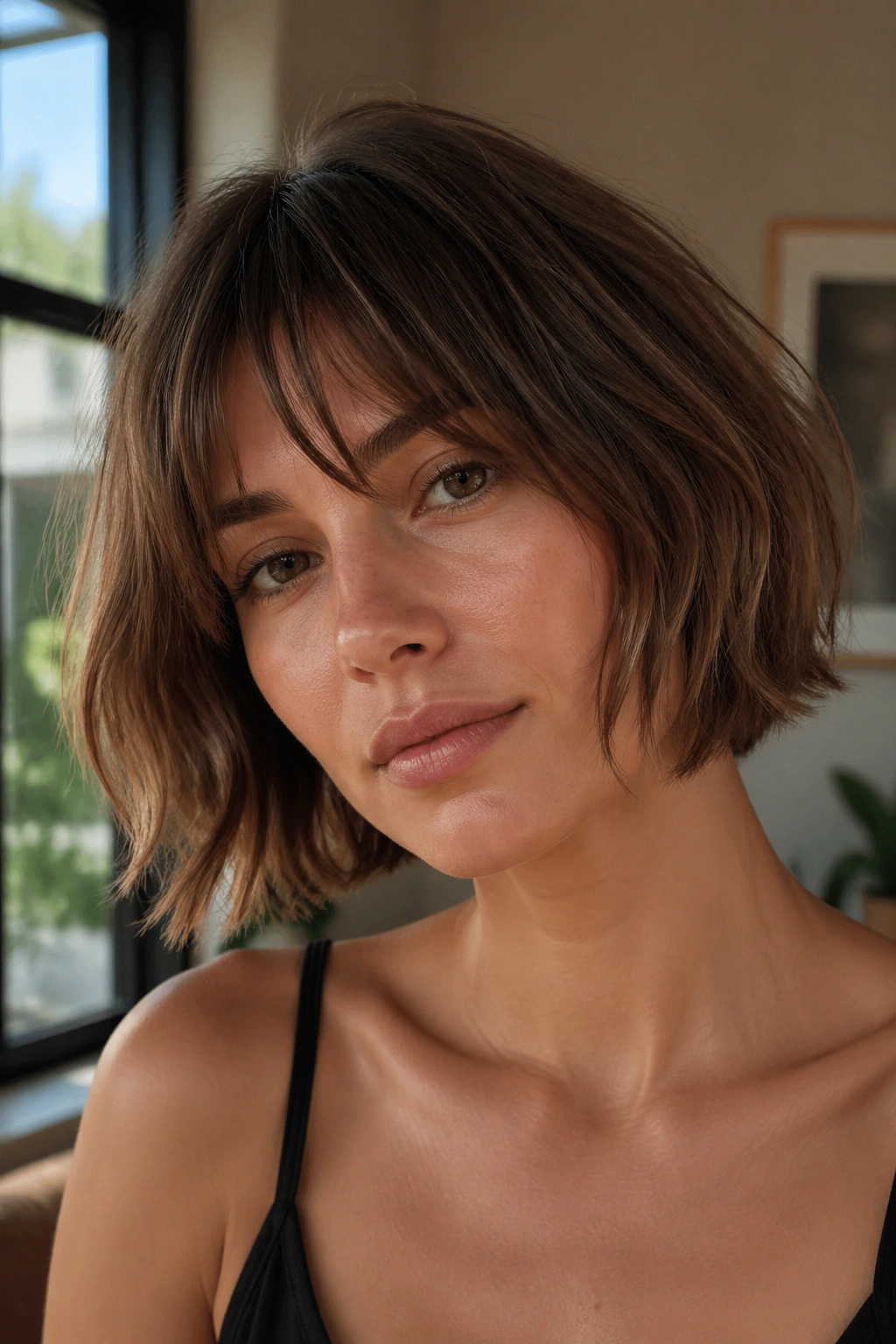
A razor-cut bob can go wrong fast if the hair is too thin or the finish is too wispy. But when it’s done with restraint, it gives you exactly the sort of rough, airy texture that makes scruffy bob cuts feel modern without looking overstyled.
Unlike a blunt bob, this one gets its shape from movement. The razor creates softer ends and a lighter edge, which helps the hair bend and separate as it dries. That separation is the whole point. You do not want every strand glued together. You want a little lift, a little fall, a little unevenness around the jaw and neck.
The best versions still keep weight around the base so the haircut doesn’t float away into nothing. That balance is what makes this cut look expensive instead of shredded. Too much razor work, and it can start to feel fragile. Too little, and you lose the casual texture.
What makes it different
A razor-cut bob behaves differently from scissors-only shapes. It tends to air-dry with a softer edge and less of that hard, shelf-like line at the bottom. That’s useful if your hair is straight and tends to sit flat, or if you want the kind of bob that can be tucked behind one ear and still look intentional.
Best for: medium to thick hair, straight or slightly wavy textures, people who hate heavy styling routines.
My take: this is a better choice for undone texture than a heavily layered bob, because it keeps the outline relaxed without stripping out the body.
5. The Wavy Collarbone Bob
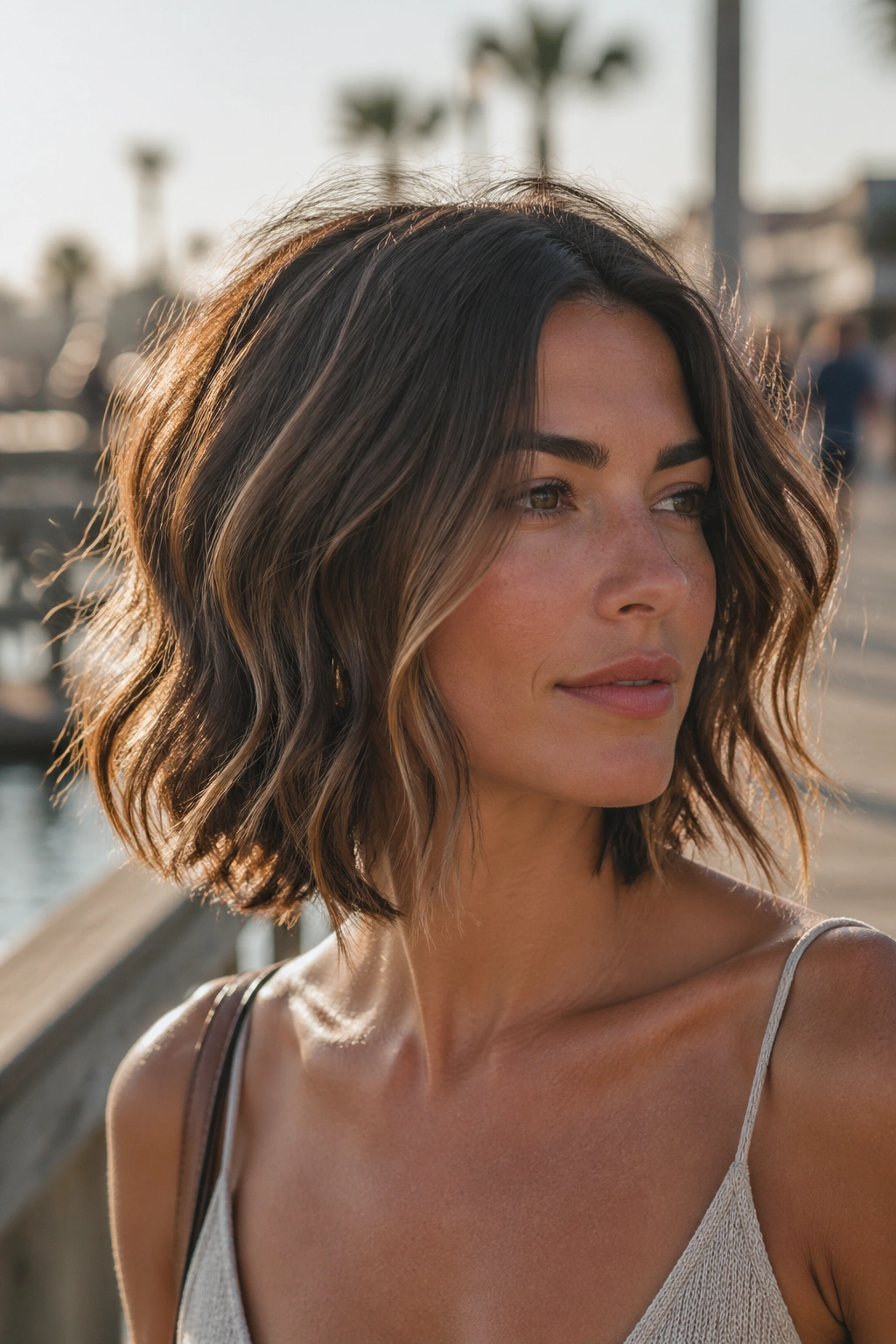
This is the longest cut in the bunch, and that length is exactly why it earns a place here. A collarbone bob with soft waves has a slightly grown-out feel built in, which makes it one of the easiest scruffy bob cuts to wear if you don’t want to visit the salon every few weeks.
The collarbone length gives you some swing and a little weight. That means the ends can bend instead of sticking out, which is where a lot of “messy” bobs go wrong. They try to be carefree and end up looking poofy. This one avoids that because the length has enough mass to settle.
I like this version with loose, broken waves rather than polished curls. Think bend, not ringlet. A few sections can be more defined than others. That unevenness is part of the appeal. It looks like hair that has some history to it, in the nicest possible way.
You can also push this shape into more than one mood. Tucked behind the ears, it feels cool and easy. Left loose with a side part, it reads softer and a little artsy. And because it lands below the jaw, it’s a forgiving choice if you’re unsure about going shorter.
A tiny bit of salt spray on damp hair is enough for most people here. Don’t drown it. The cut already does a lot of the work.
6. The Curly Bob With a Rounded Shape
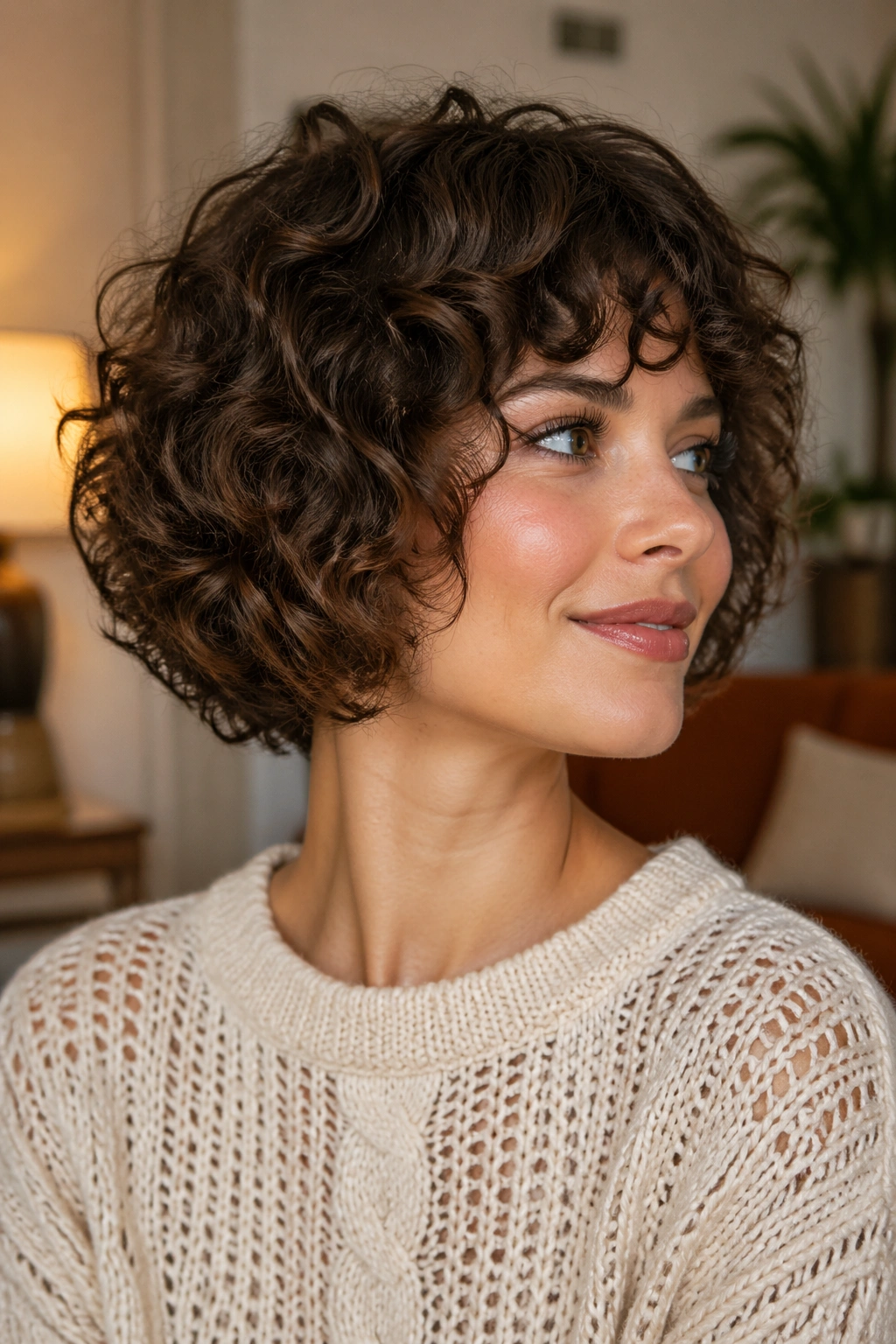
Curly hair and a scruffy bob are a better match than people think. The right curly bob doesn’t need to be “controlled” into submission. It needs a shape that lets the curls spring while still keeping the outline believable. Rounded at the edges, a little lighter around the crown, and slightly uneven around the perimeter — that’s the sweet spot.
Why the shape matters
If the haircut is too square, curly hair can balloon. If it’s too thin, the curls can collapse and look stringy. The rounded bob avoids both problems by keeping fullness where the curls need it and removing bulk where they don’t.
A dry cut is often the smarter move here, or at least a cut shaped with the curls’ natural shrinkage in mind. A curl that looks chin-length when wet can bounce up a good deal once it dries. That’s not a flaw. It’s a fact of life.
How to get the most from it
- Ask for curl-by-curl shaping if your texture is dense or varied
- Leave enough length to stop the haircut from popping up too high
- Use a cream or gel mix on soaking-wet hair
- Scrunch once, then leave it alone
Best for: loose curls through tight curls, especially hair that tends to frizz at the edges.
This cut gives you an undone look without pretending the texture isn’t there. That’s the point. It works with the curl pattern instead of flattening it into something safer.
7. The Asymmetrical Bob With a Deep Side Part
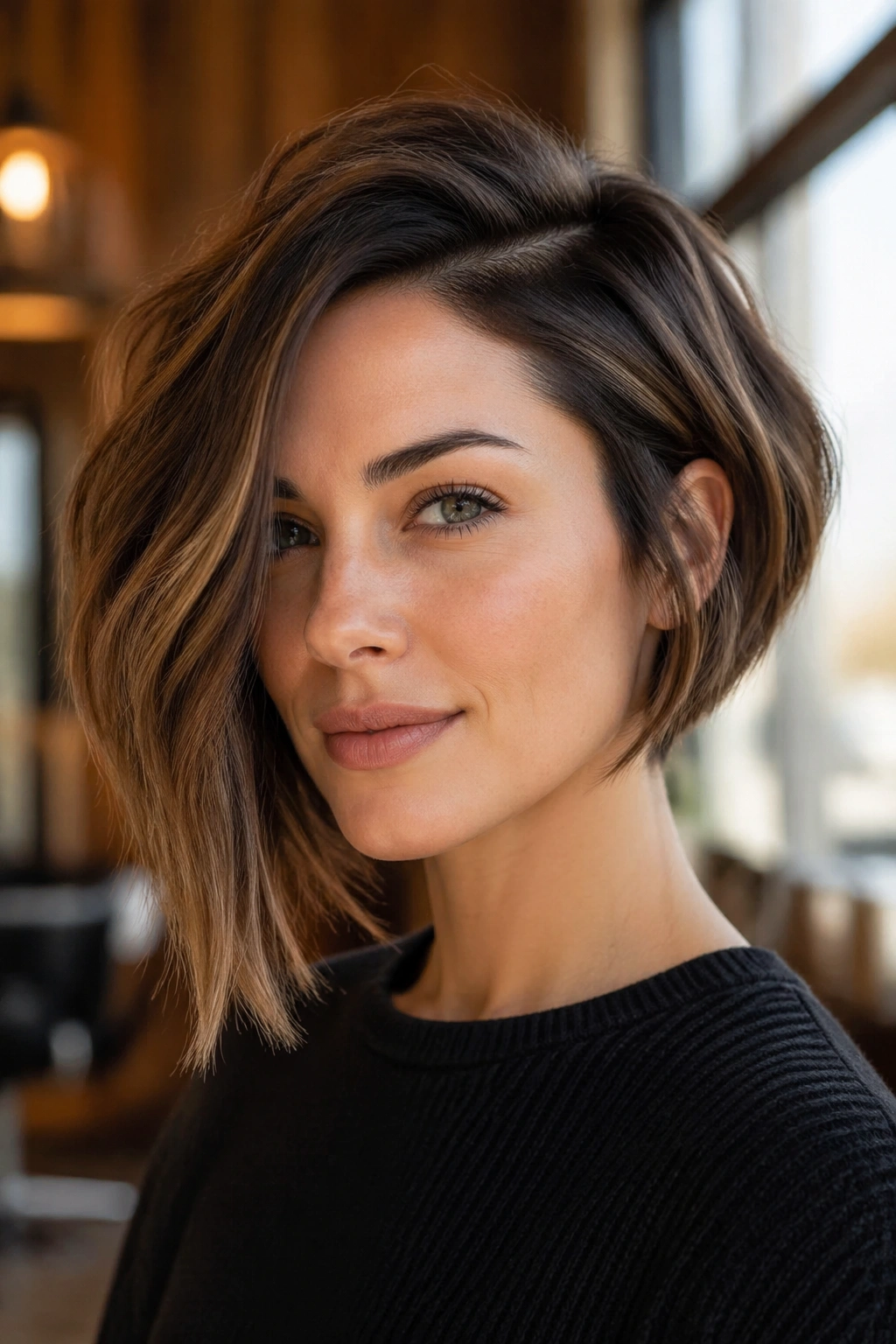
Some people want their scruffy bob to look soft. Others want it to look a little stubborn. The asymmetrical bob is for the second group. With one side falling longer than the other, and a deep side part helping the whole shape tip slightly off balance, the haircut already has movement before you touch a styling tool.
It can be dramatic, but it doesn’t have to be sleek or severe. In a scruffy version, the longer side should feel loose and slightly bent, while the shorter side sits with a bit more lift near the cheek. That difference creates a kind of easy tension. Not polished. Not precious.
What I like most here is that it gives fine or straight hair a bit of a trick. The off-balance shape creates interest even if the texture is minimal. And if you add a rough blow-dry at the roots, the part itself can become part of the look rather than just a way to move hair out of your face.
One thing to watch: asymmetry can look accidental if the lengths are too close together. Make the difference obvious enough that it reads on purpose. Half an inch won’t do much. A more noticeable drop from one side to the other will.
Best for: angular faces, straight hair, anyone who likes a little edge without losing softness.
8. The Layered Bob With Curtain Bangs
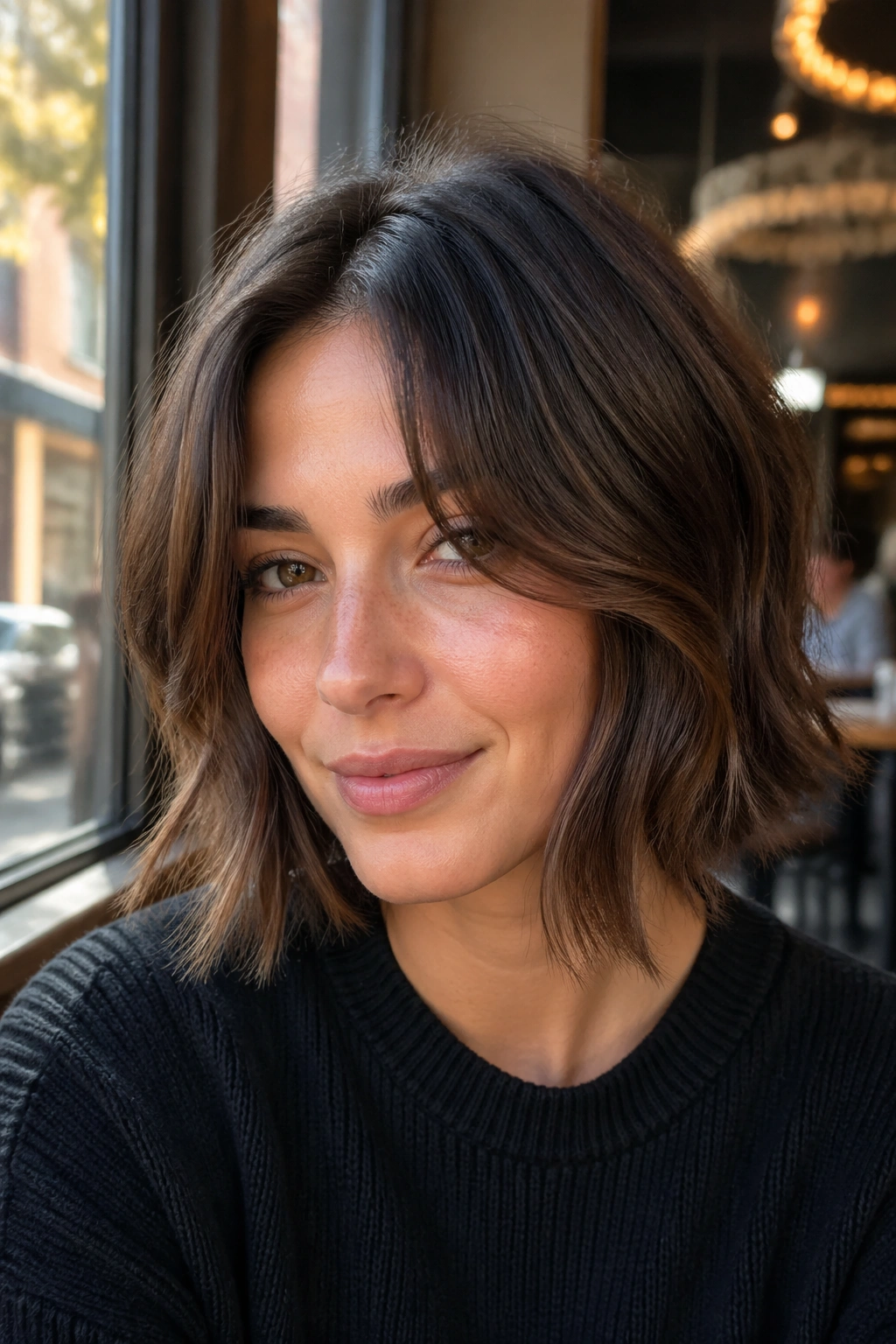
Curtain bangs and a bob are a dangerous pair if the cut is too controlled. But when the layers are loose and the fringe is feathered just enough to split at the center, the result is one of the easiest ways to get that undone, slightly sleepy look people keep asking for.
The curtain fringe frames the face without boxing it in. That’s the main reason it works. It softens the front of the bob and gives the haircut a bit of motion near the eyes and cheekbones, which is where most people want softness anyway. The layers should start low enough to avoid turning the whole thing into a shag. A bob can borrow shag energy. It should not become one.
How to ask for it
- Keep the bob length around chin to lip level
- Add gentle layers through the lower half, not all over
- Cut the curtain fringe so it parts naturally in the middle
- Leave the front pieces slightly longer than the rest
The styling is easy enough. A round brush at the fringe, a little bend at the sides, and that’s usually enough. If your hair air-dries well, even better. The fringe will break open on its own and give you that imperfect spread that looks nice without begging for attention.
Best for: oval and square faces, medium hair, people who want face-framing movement more than sharp lines.
A lot of bobs become too uniform. This one refuses that. Good.
9. The Blunt Bob Made Scruffy on Purpose
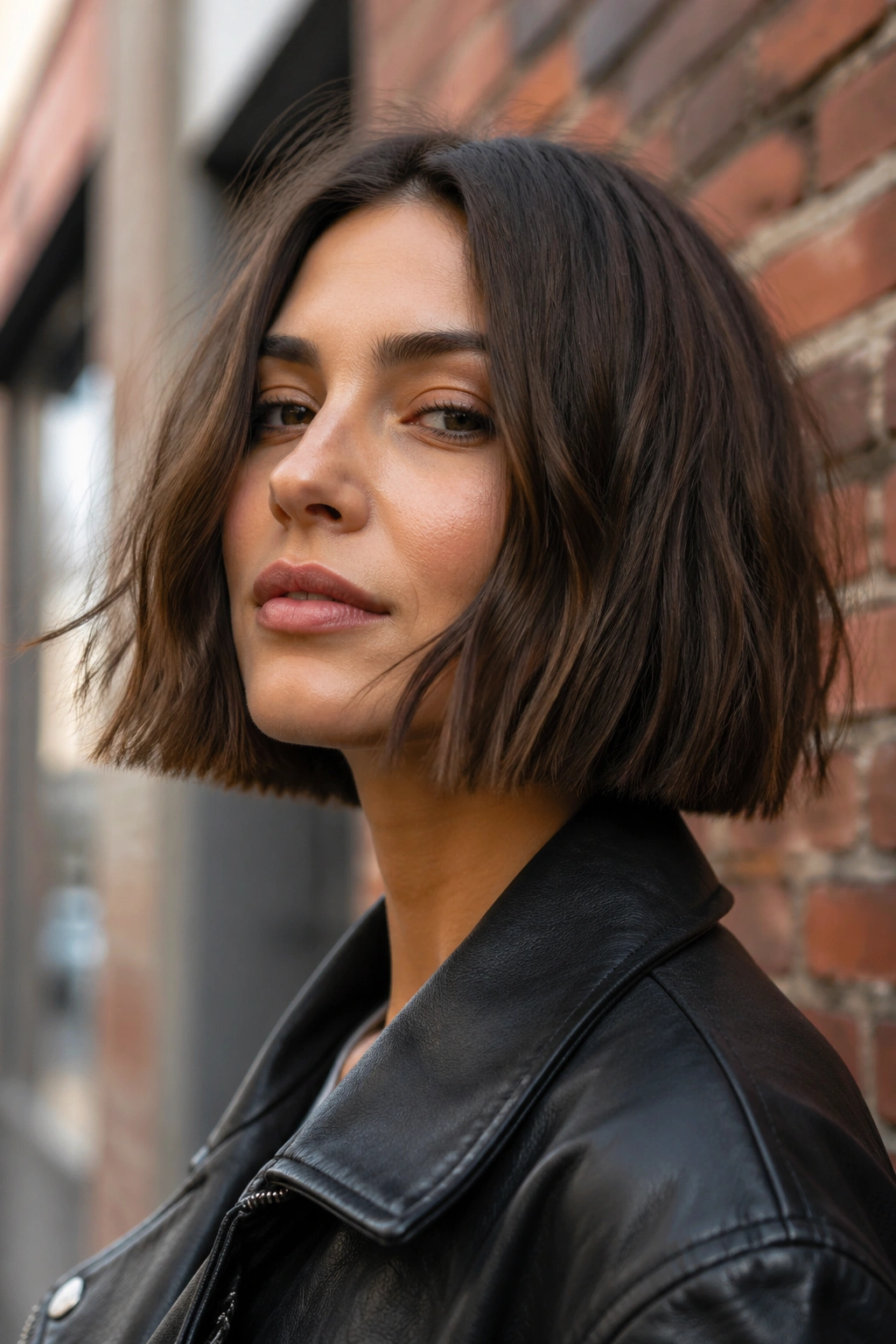
A blunt bob sounds like the opposite of an undone look, and that’s what makes it interesting. The trick is to keep the cut clean at the line, then rough up the finish with texture, movement, or a slightly imperfect part. You get the strength of a blunt shape and the ease of a lived-in one. That contrast is the whole appeal.
This is the haircut for people who like structure but don’t want it to feel stiff. The edges stay straight enough to give the bob presence, but the styling keeps it from looking overworked. A little separation at the ends. A slightly bent wave near the front. Maybe one side tucked and the other left loose. Tiny choices, big difference.
I’ve seen this look fall flat when people add too many layers in an attempt to make it “messy.” Don’t do that. The blunt line is the backbone. If you remove too much of it, you’re just left with a bob-shaped cloud. Not the same thing.
Useful details to keep in mind
- Works especially well on thick hair that needs a stable outline
- Looks best with a center or near-center part
- Needs light texturizing cream, not heavy paste
- Can be worn straight, but should never look frozen
Best for: thick or coarse hair, sharper jawlines, anyone who wants polish with a bit of roughness around the edges.
The roughness should feel like a choice, not an accident. That’s the difference between cool and careless.
10. The Grown-Out Bob That Sits at the Neck
There’s something charming about a bob that looks like it has already lived a little. This grown-out version sits at the nape or just above the neck, with softened ends and enough length to flip, tuck, or bend depending on the day. It’s less about precision and more about shape that still has a pulse.
This is probably the most forgiving option in the group. If you don’t want a cut that screams for maintenance, this one makes sense. The slightly longer length gives it a relaxed feel, and the ends can be left broken rather than sharpened into a hard line. That means the haircut can move through different moods: tidy in the morning, loose by lunch, a little sleepier by evening.
What keeps it from reading as plain grown-out hair is the intention in the perimeter. The outline still needs to be visible. Just softer. A touch of weight at the base helps it sit properly, while a few uneven pieces around the face make the style feel less school-uniform and more actual person.
It’s one of the easiest scruffy bob cuts to live with if you air-dry your hair a lot or like to rough it up with your hands and go. A small amount of mousse or light styling cream is usually enough. Nothing fancy. Nothing fussy.
If you want a bob that looks better a little imperfect than it does freshly finished, this is the one I’d keep coming back to.
A good scruffy bob is not about hiding the haircut. It’s about letting the haircut have some looseness, some bend, and a little attitude. The best versions still look deliberate from across the room, then reveal their softer edges when you get closer, which is the whole charm of the undone look.
