



Some bob cuts look like they were chosen because the calendar said it was time for a change. The Italian bob does not have that problem. It lands with a kind of quiet confidence: the line is clean, the shape is full, and the whole cut makes hair look like it has a better wardrobe than the rest of us.
That’s why the Italian bob keeps showing up whenever people want a haircut that feels polished without looking stiff. The magic is in the details. A good one sits somewhere between the chin and the collarbone, keeps enough weight at the perimeter to look rich, and uses movement in the right places instead of spraying texture everywhere like confetti.
The cut also does something sneaky. It makes the neck look longer, the jaw look cleaner, and the hair look thicker at the ends, which is where a lot of short cuts start to look thin if they’re handled badly. No dramatic layering. No ragged finish. Just shape, shine, and a bit of swing.
And that’s exactly why the most expensive-looking versions are not the loudest ones. They’re the ones that look deliberate from every angle, even when the styling is barely there. Some are sharp. Some are soft. Some live on a side part, some love a tuck, and some only work when the ends curve under by half an inch. The good ones all share the same attitude.
1. The Chin-Length Classic Italian Bob
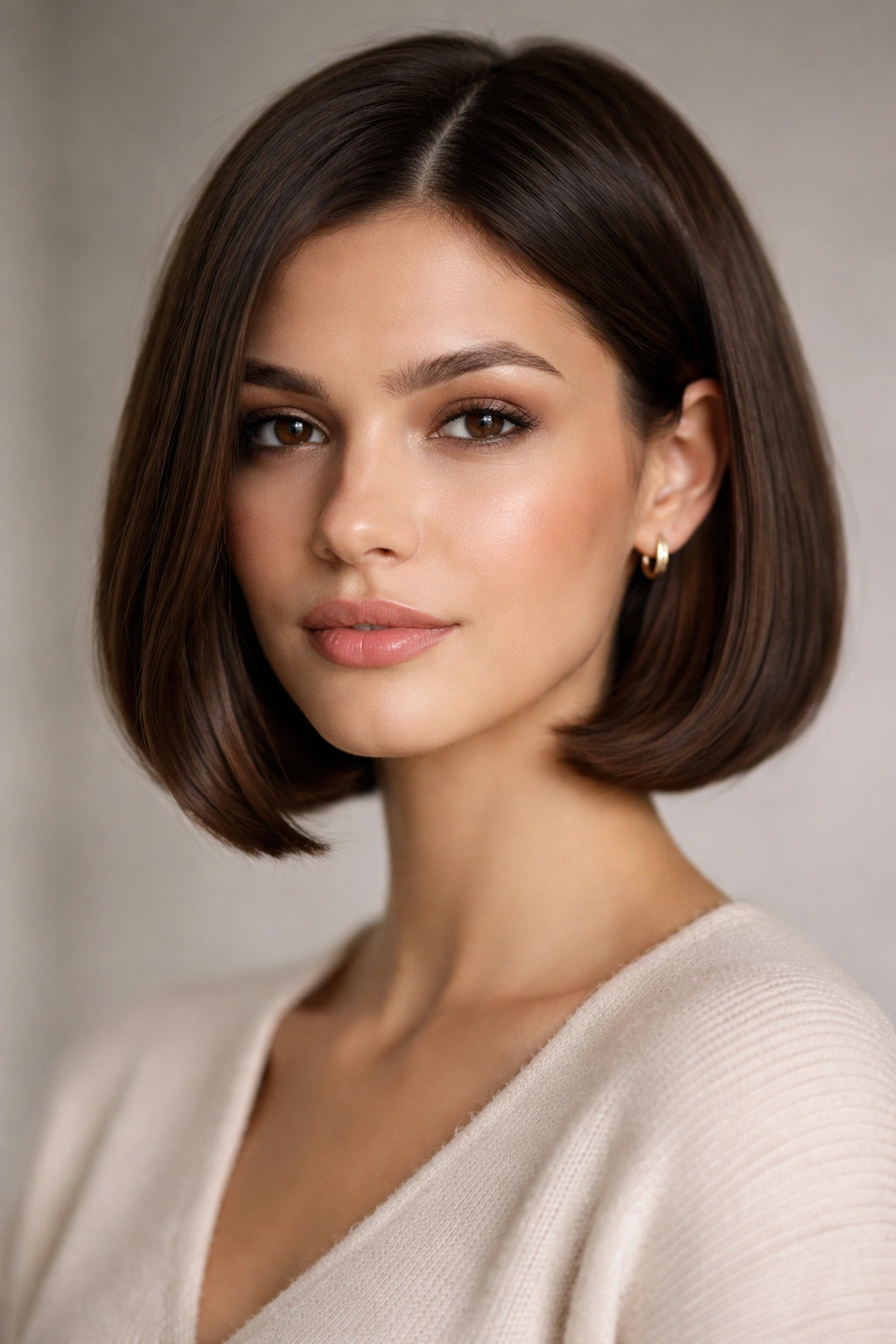
The chin-length classic is the version that made people fall for the Italian bob in the first place. It hits right at the jawline, which gives the face a neat frame and makes the hair look denser at the ends. That density matters. Thin-looking ends are the fastest way to make a bob feel cheap.
Ask for a blunt perimeter with only a slight bevel at the bottom. Not a flip, not a curl, just enough bend to keep the line from looking severe. On straight hair, that bend can be built with a round brush or a quick pass of a flat brush while blow-drying. On wavy hair, the shape often does half the work on its own.
What makes it expensive-looking
- The length stops where the jaw does the most flattering work.
- The edge stays full, so the cut looks thick instead of wispy.
- The shape is neat enough to look tailored, but not so tight that it feels frozen.
- A center part keeps it modern; a soft off-center part makes it feel a little richer.
Best for: hair that needs structure, especially if the ends tend to fray.
If your hair is fine, this cut is one of the safest bets in the whole bunch. It gives the illusion of more hair because the weight stays on the bottom line. That is the whole trick, really. Keep the bottom solid, keep the styling smooth, and don’t over-texturize it into submission.
2. The Sharp Blunt Italian Bob
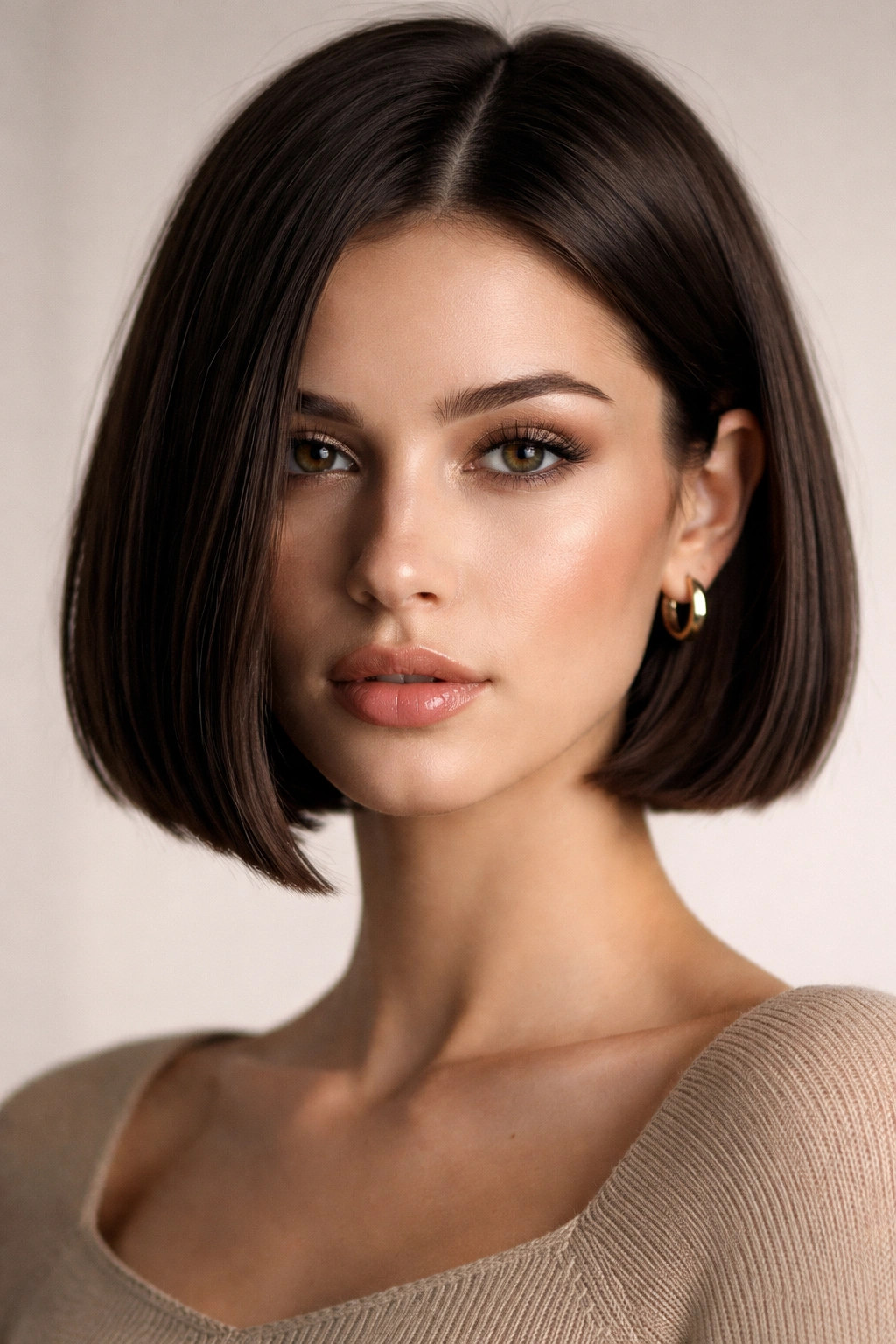
If your hair falls flat when it’s cut too softly, the blunt Italian bob is the fix. This is the crisp version. The one that looks like it came from a very expensive salon chair and a very calm stylist with excellent scissors.
The blunt line should sit just below the ears or right at the chin, depending on your face shape. What makes it work is the absence of fuss. No chunky layers. No broken ends. No random razoring that makes the outline look fuzzy by noon. The whole point is a single, confident edge.
Why it reads so clean
A blunt bob reflects light better because the ends sit in one visual line. That makes the hair look healthier and thicker, even if the actual texture is fine. It also helps if your hair color has dimension — a dark brunette, a glossy black, or a rich blonde with lowlights all look more expensive when the cut holds a strong edge.
The styling matters too. Keep it smooth, but not pin-straight in a flat, helmet-like way. A tiny bit of curve at the ends is enough. If you tuck in too much volume at the roots, the whole thing turns into a pageant bob. No thanks.
Ask for:
- a blunt perimeter with minimal internal layering
- a soft bevel at the ends, not a hard curl
- a clean center part or a shallow side part
- a polished finish with shine spray or lightweight serum
This is the cut I’d pick for someone who wants the least amount of chaos. It’s direct. A little severe. And that’s the charm.
3. The Soft Curved Italian Bob
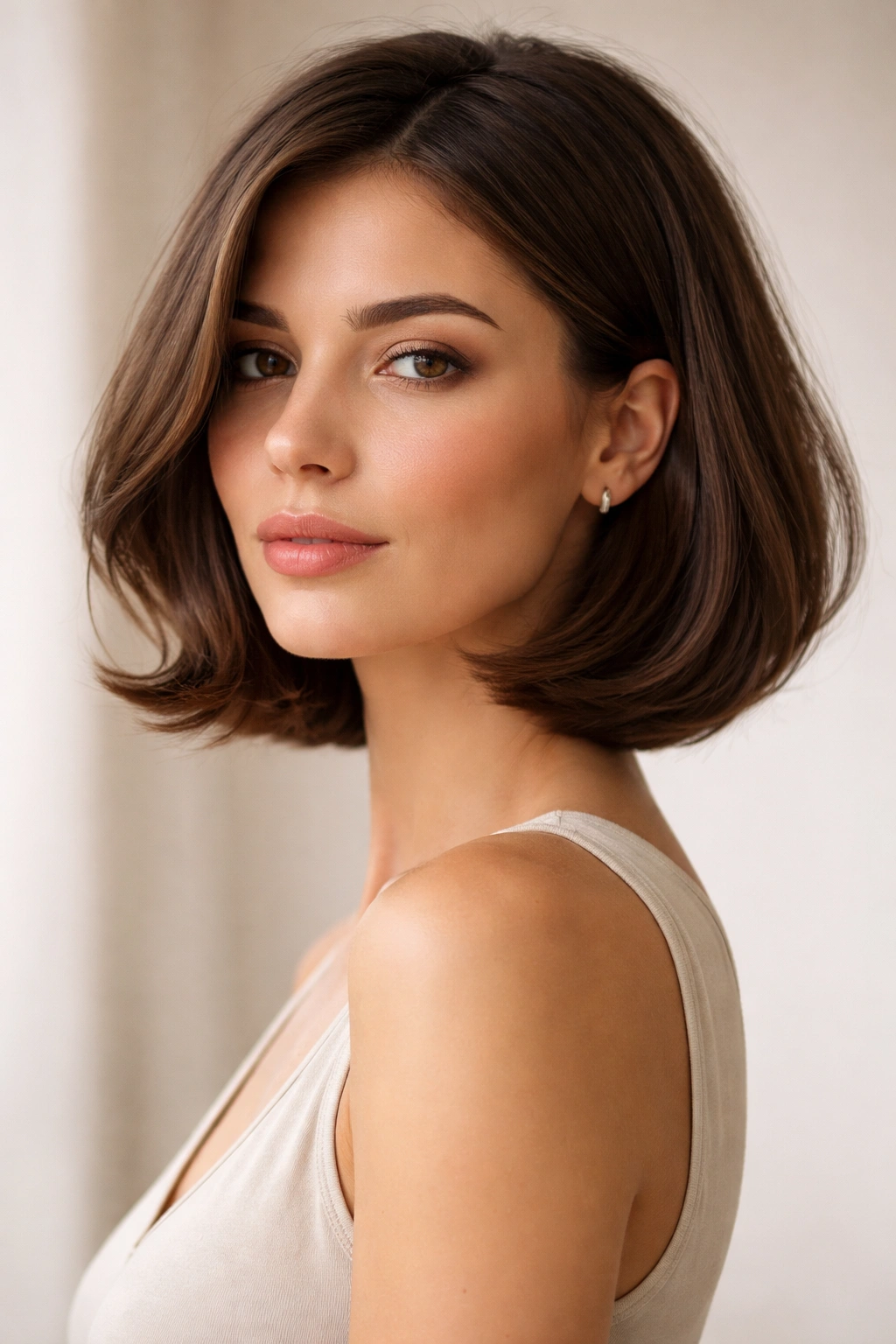
Why does a curved hemline make such a difference? Because it turns a basic bob into something that looks shaped by hand, not copied from a template. The soft curved Italian bob has a gentle scoop at the ends, usually with the front pieces a touch longer than the back.
That extra softness is what saves it from looking boxy. The back still has weight, but the front moves around the cheekbones and jaw in a way that feels expensive rather than blunt. It’s a subtle shape, which is exactly why it works. Loud haircuts age fast. Soft ones don’t.
How to get it right
Tell the stylist you want the ends to follow the line of the jaw without turning into a rounded mushroom. The curve should be slight. If the front pieces are too long, you lose the bob. If the curve is too dramatic, you lose the Italian part and end up with something old-fashioned.
This version is especially good for people with strong features. It softens the corners without hiding them. And if your hair has a little natural bend, even better. The cut will fall into place faster and need less heat.
How to style it
- Blow-dry with a medium round brush.
- Angle the brush inward at the ends for a soft undercurve.
- Use a pea-sized amount of cream or serum only on the mid-lengths and tips.
- Let the roots stay a little airy so the cut doesn’t look overworked.
There’s a fine line here. Too polished and it feels stiff. Too rough and it loses the expensive finish. The sweet spot is easy movement with a tidy outline.
4. The Collarbone-Grazing Italian Bob
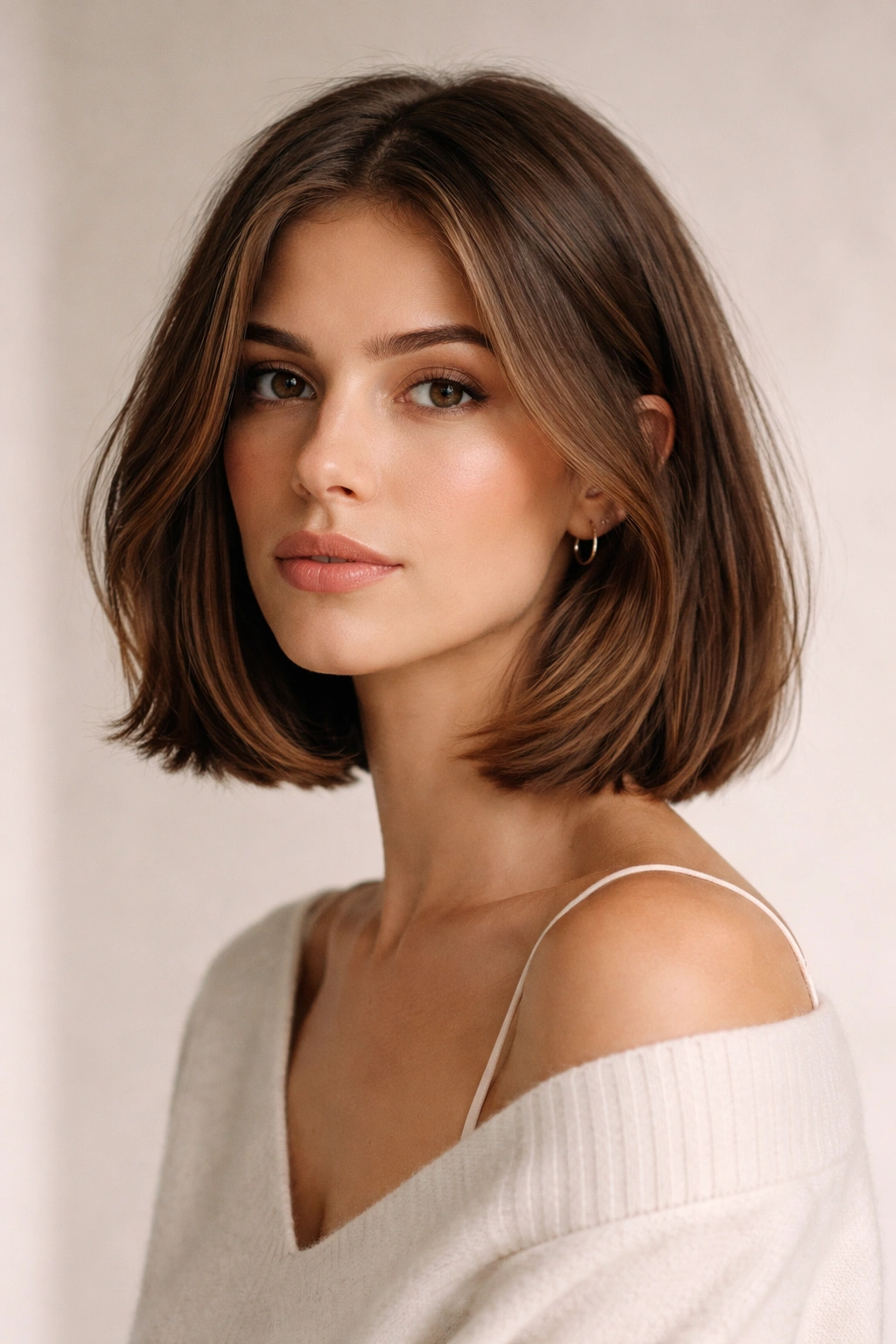
If you want bob energy without giving up the ability to tie your hair back, this is the one. The collarbone-grazing Italian bob sits a little longer than the classic chin-length version, and that extra length gives it a more luxurious drape. Hair that brushes the collarbone moves differently. It has room to swing.
The cut works because it gives you shape at the bottom while leaving a little breathing room around the face. That breathing room matters. It keeps the style from looking too severe, especially if your hair is thick or your face is narrow. The line should still feel intentional, though. A wandering, shapeless lob is not the same thing at all.
What to request at the salon
- Keep the base blunt enough to show weight.
- Leave the front 1 to 2 inches longer than the nape if you want a subtle angle.
- Skip heavy interior layers unless your hair is dense and puff-prone.
- Ask for dry detailing around the face so the cut lands where your cheekbones and jawline actually are.
This version looks especially good with a tucked side or a low, loose bend. The length gives it a slightly richer feel than a shorter bob because it catches motion in a slower, smoother way. It also grows out gracefully, which is underrated. A haircut that still looks polished after a few weeks always feels more expensive to me.
5. The Deep Side-Part Italian Bob
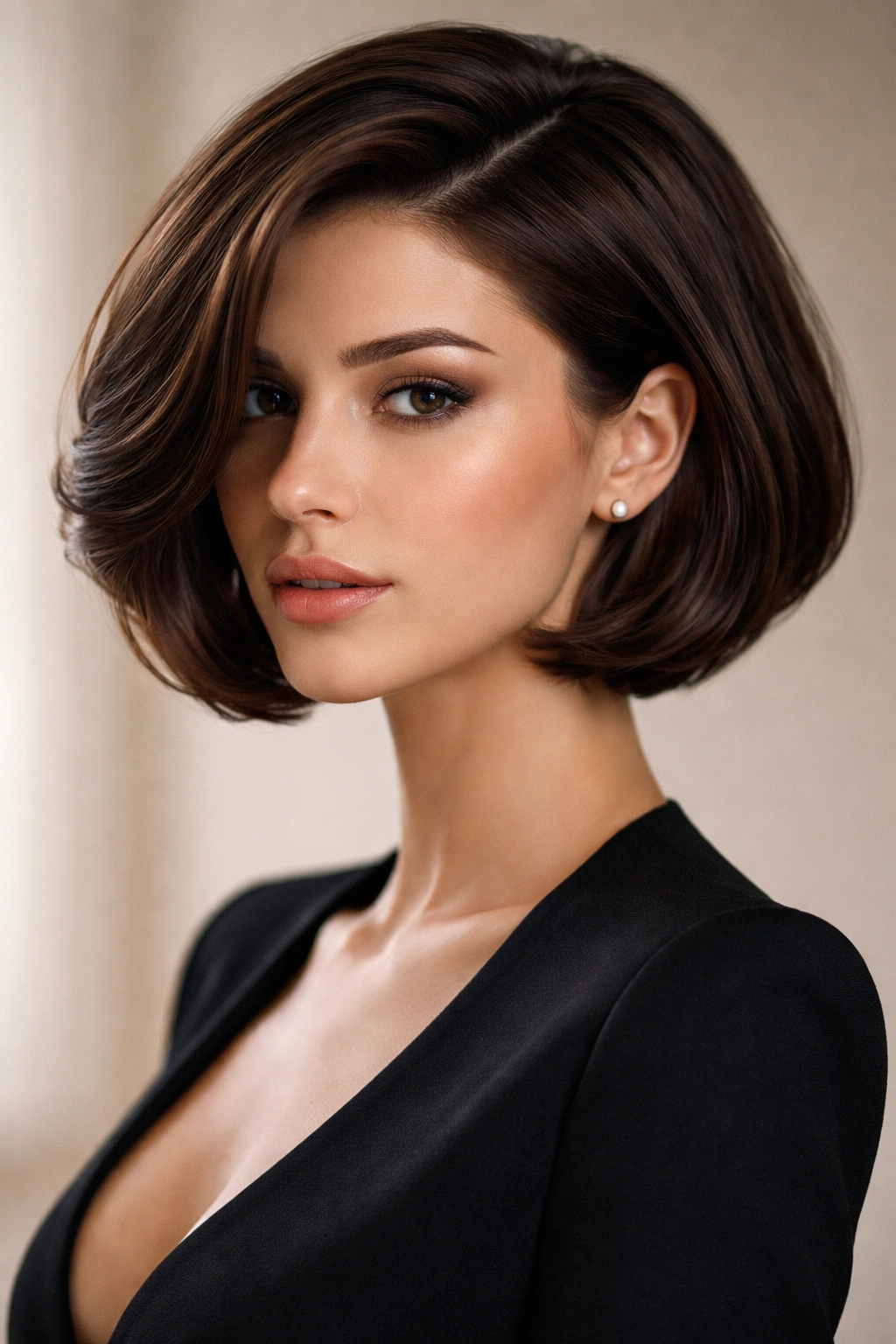
A deep side part can save a bob that feels too safe. It shifts the volume, breaks the symmetry, and gives the whole cut a little drama without turning it into a high-maintenance style. The Italian bob loves that kind of imbalance.
This version is especially flattering when the hair is cut with a strong bottom line and then styled so one side lifts at the root. The deep part creates a sweep across the forehead, cheekbone, and temple, which makes the face look more sculpted. It also adds fullness on top without needing teasing. Good. Because teasing often looks crunchy by lunchtime.
The trick is not to force the part so far over that the hair starts fighting you. Somewhere between the outer arch of one eyebrow and the temple usually works. From there, blow-dry the roots in the direction you want them to live, then use a brush to keep the ends soft.
Some stylists underestimate this part of the haircut. They shouldn’t. A deep side part can make a simple bob feel dressed up even when the rest of the styling is low effort. That’s the appeal. It’s not flashy. It’s controlled.
One more thing: if your hair has a cowlick, this cut can either help or annoy you, depending on where the natural growth wants to go. Let the pattern lead a little. Fighting it is where the frizz starts.
6. The Tucked-Behind-the-Ear Italian Bob
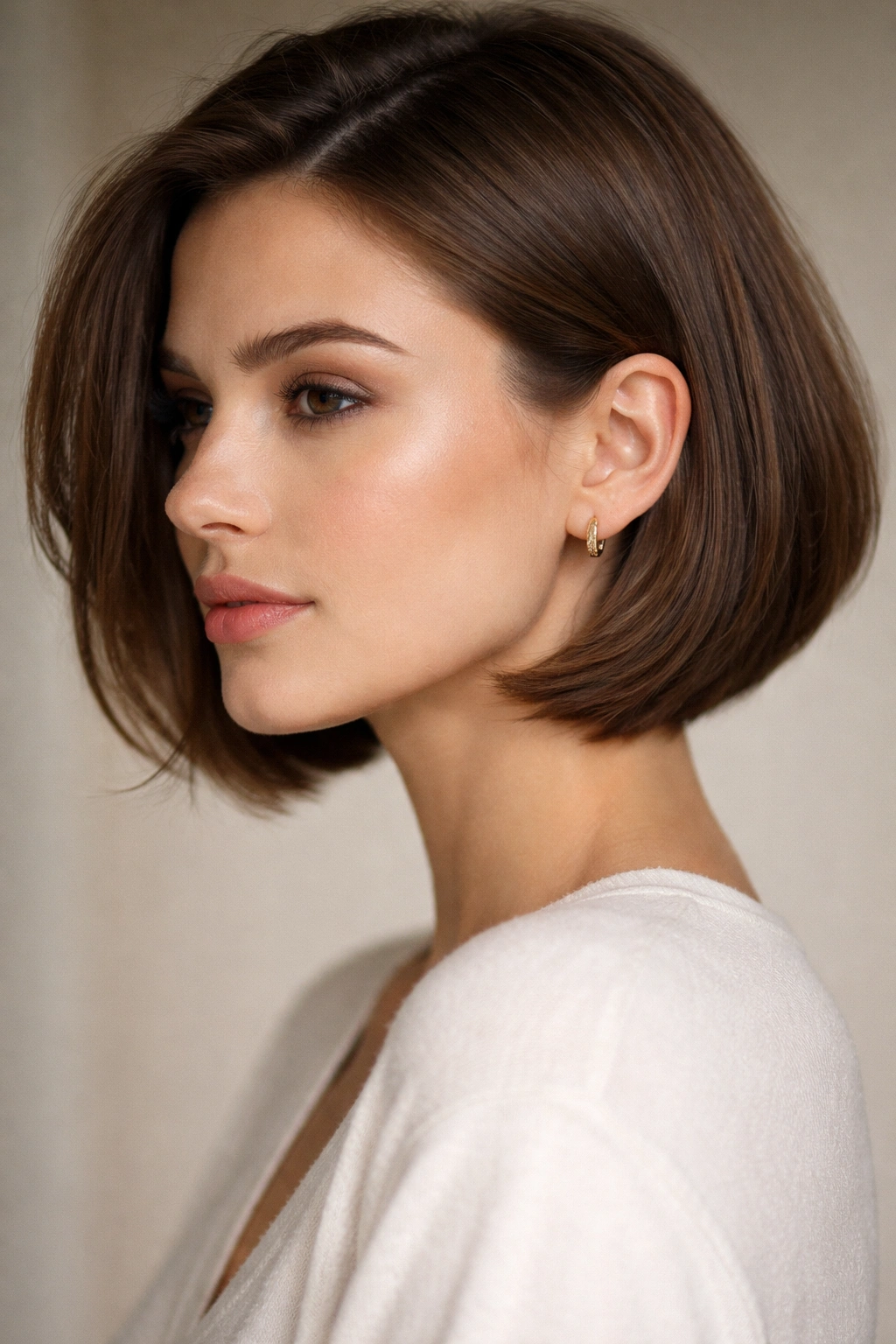
Unlike a perfectly symmetrical bob, this one has a little tension built in. One side stays open, the other gets tucked behind the ear, and that tiny shift makes the haircut feel more styled immediately. It’s one of the easiest ways to make an Italian bob look intentional.
The cut itself can be simple — chin length, collarbone length, blunt, curved, whatever you prefer — but the styling changes the whole mood. Tucking one side shows off the jaw and ear, which means earrings, cheekbones, and neck all get a moment. Hair that looks expensive usually knows when to leave a little space around the face.
Best details to ask for
- Keep the front long enough to tuck without popping out.
- Leave enough weight at the cheekbone so the tuck doesn’t collapse the whole shape.
- Avoid over-thinning near the ear; that’s how the style starts looking flimsy.
- Use a light cream or spray that keeps the front piece smooth, not slippery.
This version suits straight hair and soft waves equally well. Straight hair gives it polish. Slight wave gives it life. If your hair is very thick, a stylist may need to remove a little bulk behind the ear so the tuck sits flat. Too much bulk there makes the whole side balloon out, and that’s not the look.
It’s a strong choice for dinner, work, and any moment when you want the haircut to look a little more deliberate than usual. Which is most of them, really.
7. The Airy Layered Italian Bob
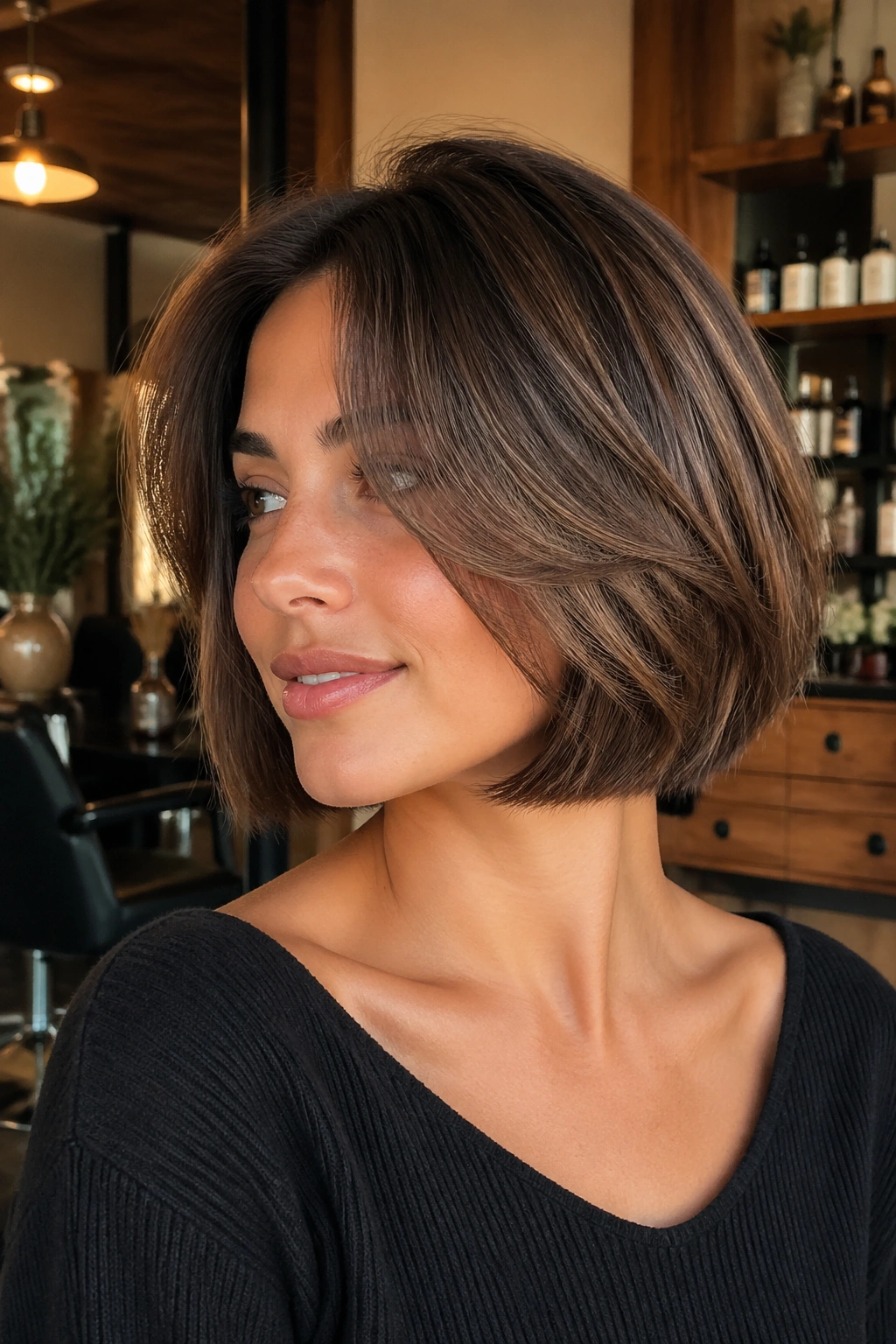
A little layering can be enough. That’s the rule here. The airy layered Italian bob is not about choppy ends or disconnected pieces. It uses small, hidden layers to let the hair move while keeping the outer shape thick and neat.
This is the version I like for dense hair that tends to sit heavy at the bottom. A straight one-length bob can sometimes look like a shelf on thick hair. A few light internal layers break that up, but only if they’re placed with care. The perimeter still has to look full. If the layers are too short or too many, you lose the Italian softness and end up with a style that feels dated.
What separates airy from choppy
Airy layers disappear into the cut. You feel them more than you see them. They make the ends lift a little, give the crown some movement, and stop the whole bob from hanging like a block. Choppy layers, on the other hand, announce themselves. Loudly. That is a different haircut.
Use this version if you want:
- a bob that dries faster
- less bulk around the jaw
- movement that looks natural, not curled into place
- a cut that still looks tidy on day two
The styling can be almost lazy. A bit of mousse at the roots, rough-dry to about 80 percent, then finish with a brush or your fingers. The whole thing should feel soft and touchable, not blown into submission. There’s a reason this cut looks expensive when it’s done well: it has motion, but no mess.
8. The Wavy Riviera Italian Bob
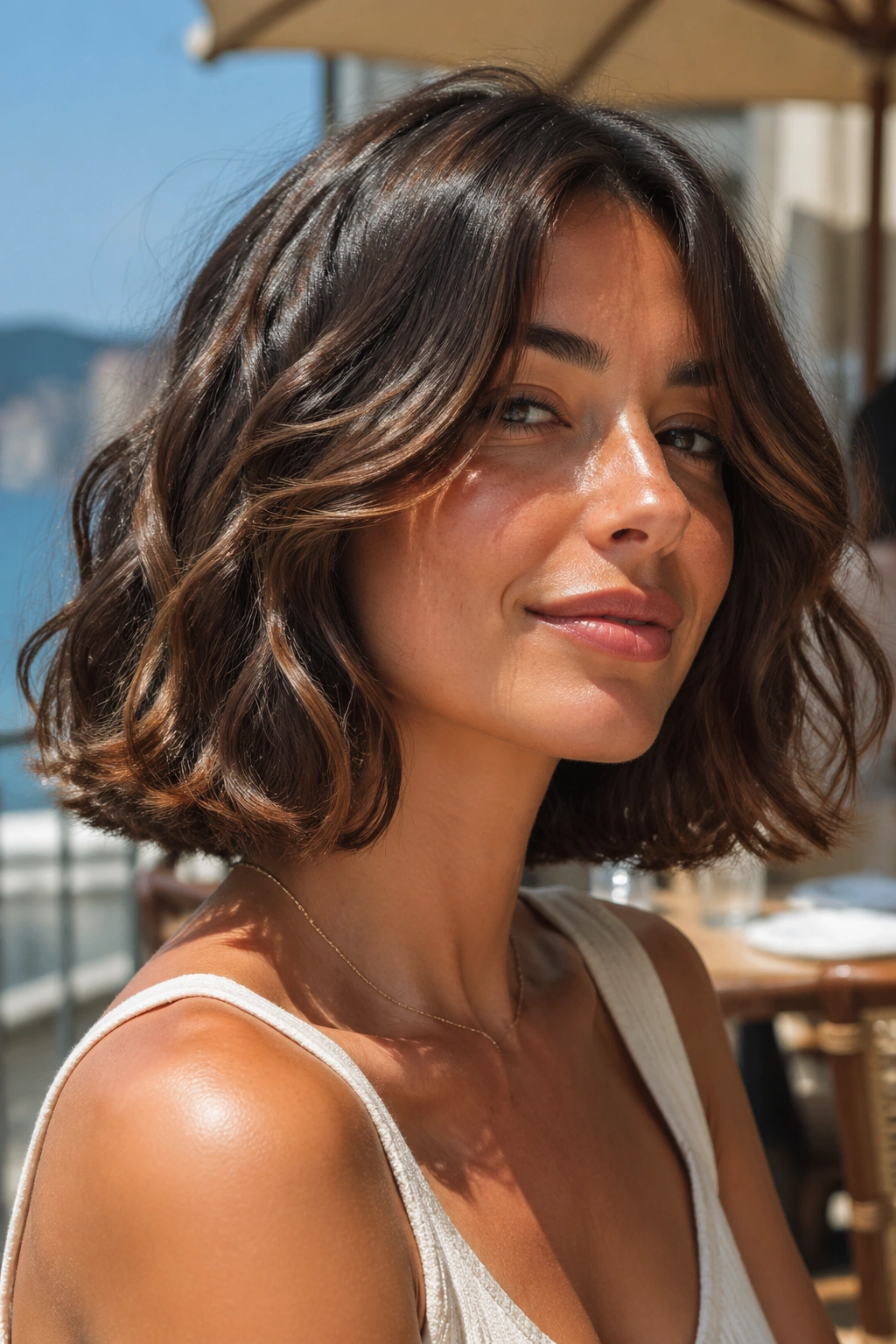
Salt-air hair, but make it tailored. That’s the mood here. The wavy Riviera Italian bob takes the classic shape and loosens it just enough to feel sunlit and relaxed, while still keeping the outline strong. It works best when the waves are soft bends, not big spirals.
The ends should still look deliberate. That’s the part people miss. If the wave pattern gets too messy at the bottom, the bob stops looking refined and starts looking like it gave up halfway through the day. The most flattering versions keep a clean edge while the mid-lengths bend around the face.
Styling that actually helps
- Use a 1-inch iron or a wide wand for a soft wave.
- Leave the last inch of the ends straight or slightly tucked under.
- Brush the waves out once they cool so they don’t look too set.
- Finish with a light mist of texture spray, not a heavy dry shampoo cloud.
This style is excellent for hair with some natural wave already. You can coax it, rather than forcing it. If your hair is pin-straight, it still works, but you’ll need a bit more help from heat and product. Go light. Heavy wave cream makes the cut limp.
I like this version because it feels expensive in motion. When the head turns, the bend at the ends catches the eye without screaming for attention. That’s hard to fake, and even harder to overstyle without ruining it. So don’t overstyle it.
9. The Italian Bob with Curtain Bangs
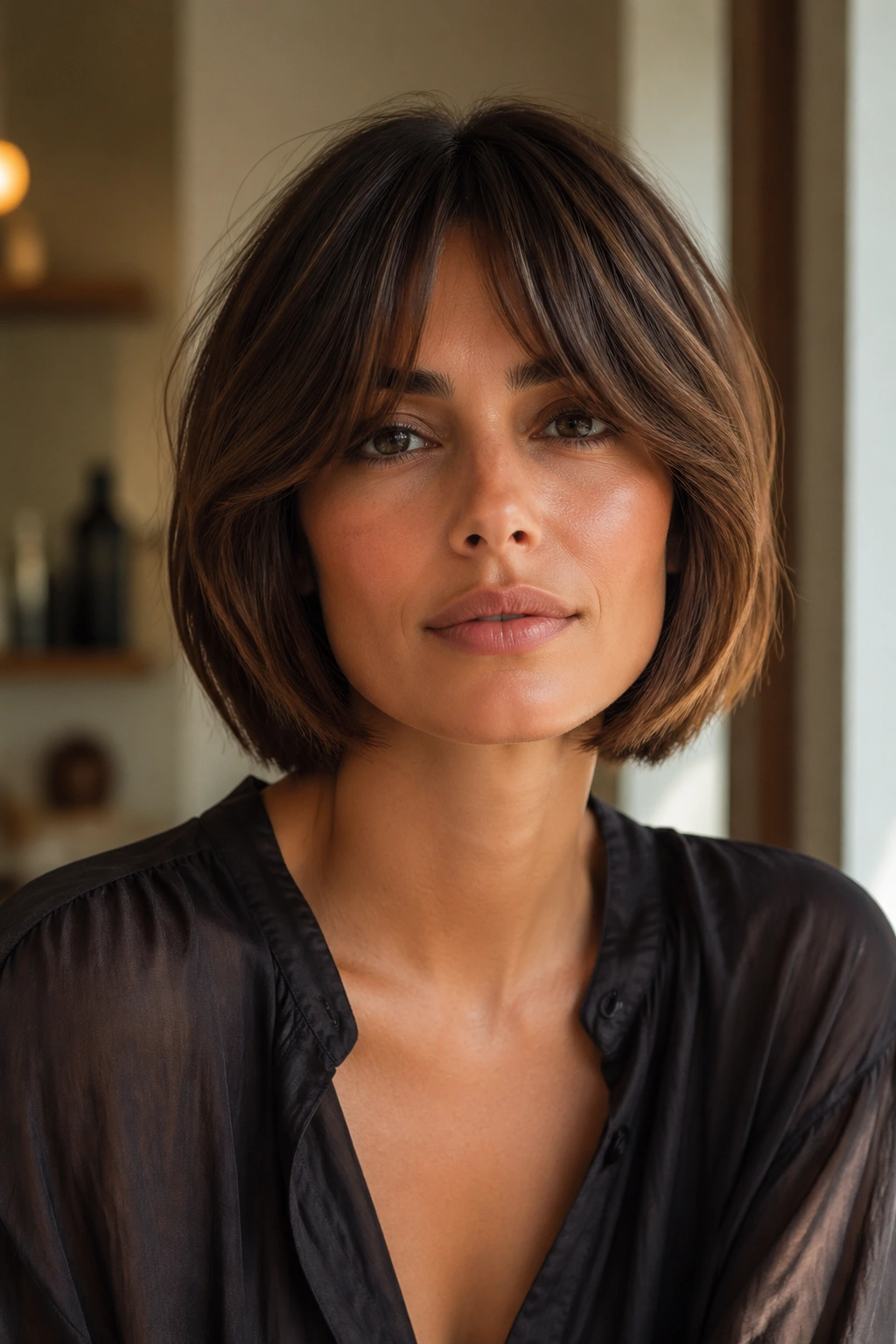
Can bangs make a bob look pricier? Yes, if the bangs are cut with restraint. Curtain bangs soften the forehead and give the Italian bob a more framed, almost sculpted shape. The face gets a center opening, the cheekbones get a little spotlight, and the whole haircut looks more considered.
The key is length. These bangs should not stop high on the forehead unless you want a harder, more fashion-forward look. For the most expensive feel, they should graze the brow or fall just below it, then blend into the sides around the cheekbone. That transition matters more than people think.
How to wear the fringe
Blow-dry the bangs away from the face first, then let them fall back into place. That little lift at the root keeps them from sticking too flat to the forehead. If the hair is thick, a round brush around 1 to 1.25 inches helps shape the bend. If it’s fine, even a finger-twist with a nozzle dryer can be enough.
The rest of the bob should stay fairly clean. If the haircut gets too shaggy everywhere, the bangs stop feeling intentional. You want contrast, not clutter.
A curtain fringe also grows out gracefully, which is useful if you get tired of bangs easily. They can drift into face-framing pieces without forcing an awkward grow-out stage. That’s a small thing, but it matters when you want a haircut that keeps looking expensive after the excitement wears off.
10. The Italian Bob with Micro Fringe

A micro fringe is a bold choice, and it can look incredibly chic when the rest of the bob stays controlled. The short fringe gives the cut a sharp little bite, while the bob below it keeps the shape grounded. It’s a neat contrast. Clean below, daring above.
This is not the version I’d suggest to someone who wants an easy morning. The fringe needs trimming often, usually every three to four weeks if you want to keep the length precise. But if you like crisp lines and a slightly editorial feel, the payoff is worth it. The haircut looks deliberate from across the room.
What to know before asking for it
- Keep the fringe soft at the edges unless your hair is very straight.
- Make sure the bob underneath has enough weight to balance the short top.
- Use a flat brush or fingers to keep the fringe from bending in odd directions.
- Avoid heavy creams near the fringe, or it will separate and sit in strings.
This cut works best on people who are comfortable with a little attention. It has a strong personality. The face is fully exposed, which means the jawline, brows, and eyes do a lot of the work. That can be beautiful. It can also be unforgiving if the rest of the style is messy.
Still, when it’s right, it looks expensive in that sharp, deliberate way that never feels accidental. It’s the bob version of a fitted blazer.
11. The Face-Framing Italian Bob

Can an Italian bob soften a strong jaw without turning mushy? Absolutely. The answer is in the front pieces. A face-framing version keeps the back full and the overall shape bob-like, but lets the front drop slightly longer so it hugs the cheekbones and jaw in a nicer way.
This style is especially good if you want movement around the face without sacrificing the dense, polished outline that makes the cut look expensive. The shortest pieces usually land around the cheekbone or lip line, then flow into the main length. That little graduation keeps the haircut from feeling boxy.
Where the shape does its best work
The face-framing pieces should not be so short that they become random layers. They need a job. Their job is to guide the eye downward and inward, not to create fluff. I prefer this on hair that already has some natural softness, because the pieces blend more cleanly and don’t need much heat.
A few good signs you’re asking for the right version:
- the front softens the face without hiding it
- the back still feels full and compact
- the line around the nape stays clean
- the haircut looks good tucked, loose, or lightly bent
This is one of those cuts that makes the whole head shape look thought through. Not dramatic. Just careful. And careful hair usually looks more expensive than hair that’s trying too hard to be trendy.
12. The Polished Flip-Under Italian Bob
Some people want edge. I keep coming back to the version that looks rich in daylight. The polished flip-under Italian bob does exactly that. The ends curve gently under, the surface stays smooth, and the whole cut looks like it was styled with a light hand and a decent blow-dryer, not a complicated routine.
This is the most classic-feeling version on the list, which is partly why it works so well. The undercurve gives the bob a soft finish, and the smooth top makes the hair look glossy. It’s the kind of cut that can wear a blazer, a white shirt, or a plain knit and still look finished. No extra effort needed. Good hair does that sometimes.
The trick is restraint. Keep the flip tiny — maybe a half-inch of bend, not a cartoon curl. Use a brush that smooths the surface while directing the ends inward. If the hair is naturally straight, a quick pass with a dryer and round brush is enough. If it’s wavy, a low-heat pass can calm the surface without stripping the movement.
I like this one for people who want a bob that ages well. It doesn’t shout. It doesn’t depend on one styling trick. And it still looks like it belongs in a very good coat check line, which is about the highest compliment I can give a haircut.
