



Green bob cuts do not whisper, and that is exactly why they work so well. A bob already has shape; add green, and the haircut stops behaving like a background detail and starts doing real visual work. The color can read polished, punky, earthy, glossy, or almost jewel-box rich, depending on the shade and the cut underneath.
That range matters. Emerald looks expensive. Lime looks sharp and impatient. Olive feels grounded and a little smoky. Teal sits in that cool middle space that makes hair look deeper and thicker than it really is. On a bob, all of those choices land close to the face, the jaw, and the neck, which is why the whole thing feels bolder than the same shade on long hair.
A bad green bob usually fails for one of two reasons: the cut is too flat, or the color is too one-note. Fix either one, and the whole look changes. Add a blunt edge, a root shadow, a soft undercut, or some bend through the ends, and suddenly the color has room to breathe.
The smartest versions look chosen, not accidental. That’s the difference.
1. Emerald French Bob
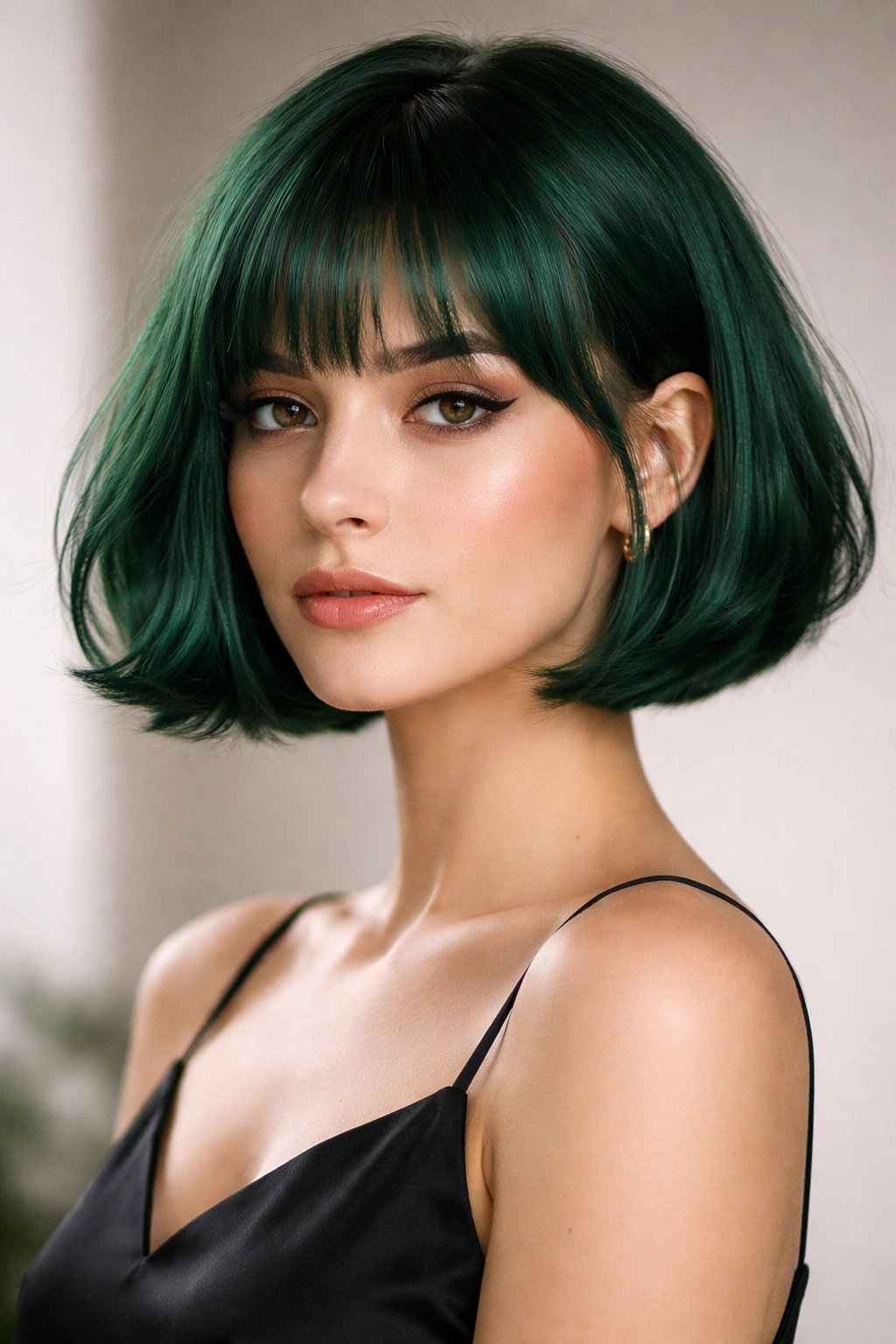
Emerald is the shade I reach for when someone wants green hair that still feels sharp and grown-up. On a French bob, which usually sits around the jaw with a slight bend and a bit of softness around the fringe, that deep jewel tone has real presence without looking loud for the sake of being loud.
Why It Works
The French bob gives emerald a clean frame. Short hair shows every line, so the blunt edge keeps the shade from turning muddy, while a soft wave at the ends keeps it from feeling severe. That contrast is the whole point: crisp haircut, rich color, no confusion.
Emerald also behaves well under different light. Indoors, it looks deep and plush. Outside, it catches enough brightness to show that it’s green rather than just a dark brunette with attitude. If you’ve ever looked at a color and thought, something feels off, that’s usually because the tone and cut are fighting. This pairing does the opposite.
- Best on straight to softly wavy hair
- Looks strong with a center part or cheekbone-grazing fringe
- Usually needs a gloss refresh every 4 to 6 weeks
- Reads especially clean on jaw-length bobs and chin-length bobs
Sharp lines help. If the ends are too wispy, emerald can lose its edge fast.
A tiny bit of sheen spray goes a long way here. I like this version most when the hair looks touched with polish, not coated in product. Too much shine and the color starts to slide into costume territory. Keep it neat, keep it deliberate, and let the haircut do half the talking.
2. Neon Lime Micro Bob
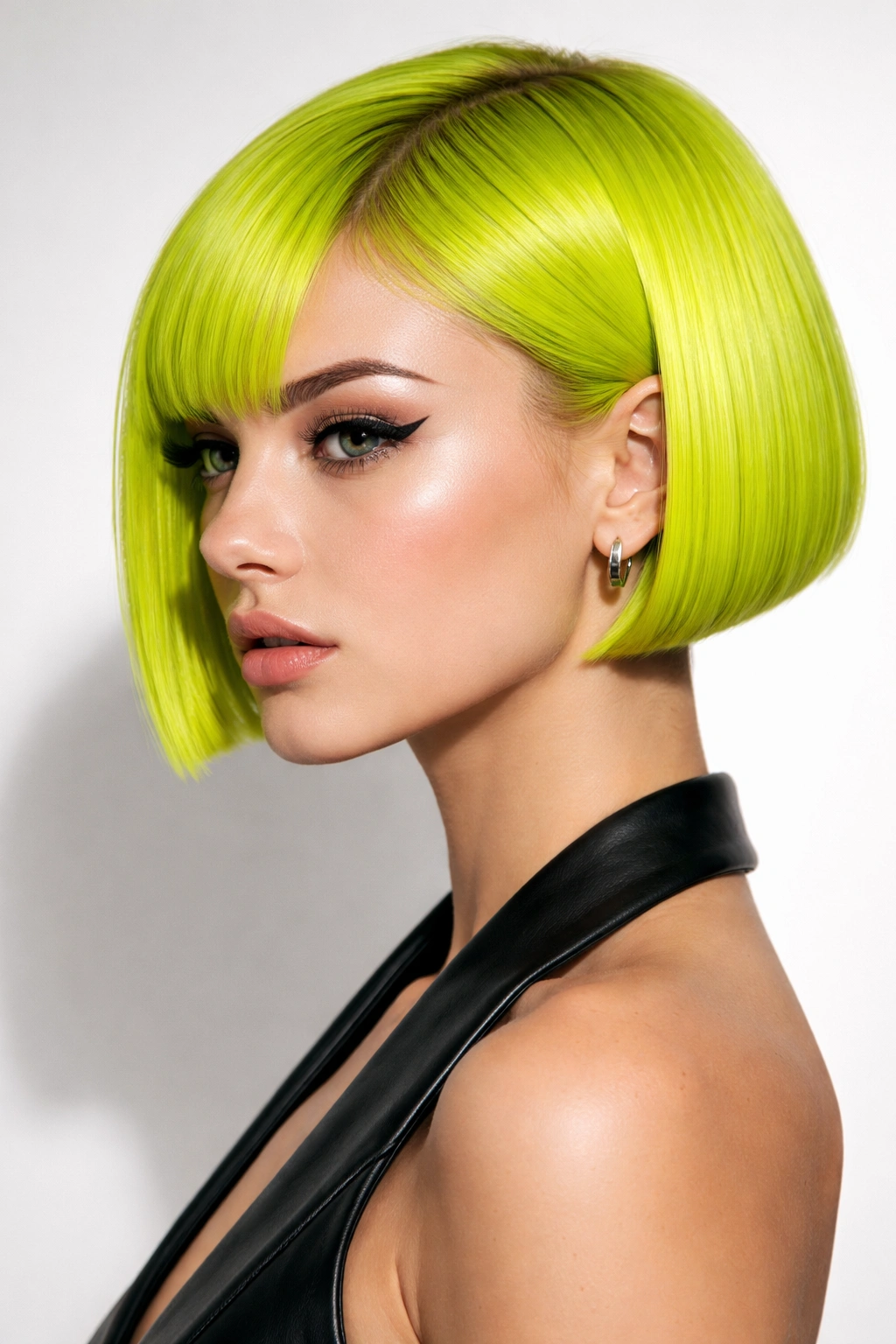
This is not the shade for someone hoping to blend into a crowd. A neon lime micro bob is pure attitude, plain and simple, and that blunt little length makes the color hit harder because there’s less hair between the eye and the shade. You do not need extra drama with this one. The color already brought it.
A micro bob usually sits above the jawline, sometimes even just below the ears, which gives neon lime a graphic edge that feels almost editorial. The cut matters more than people think. If the line is messy, the brightness turns chaotic. If the line is clean, the whole style looks intentional, even a little expensive in a weird, punk way.
The best version is sleek. Straight styling, a polished blow-dry, or a careful flat iron pass keeps the lime from looking fuzzy. Bright green dyes show every dry patch, so this is the shade that punishes overprocessing fast. Healthy shine matters more than most people expect, and yes, it can be a bit high-maintenance if your hair starts out dark.
If you want this look to feel wearable rather than cartoonish, ask for a micro bob with slightly beveled ends and a solid perimeter. The blunt edge anchors the color. That’s what keeps it from floating away.
3. Moss-Green Layered Bob
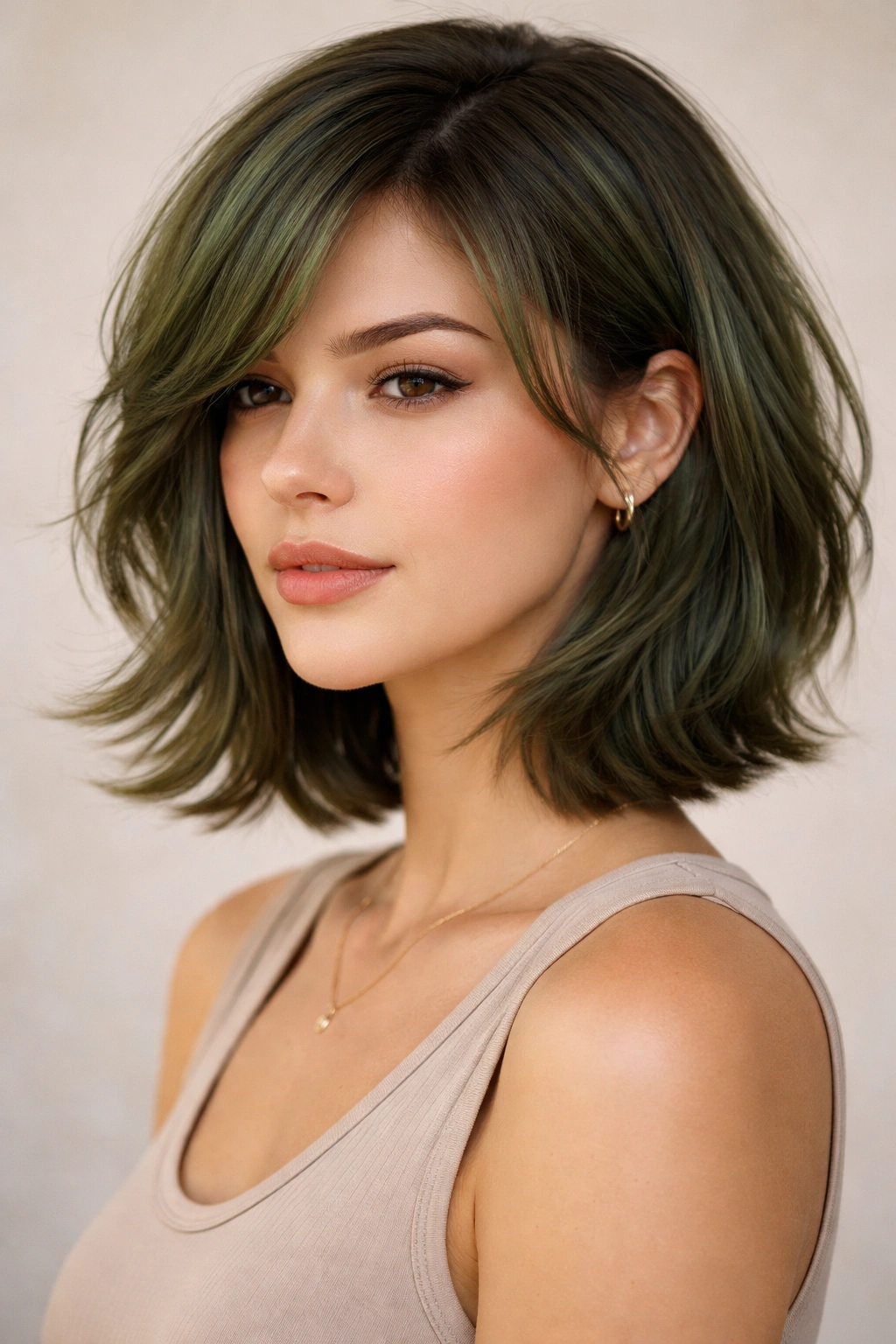
Why does moss green feel easier to wear than neon or emerald? Because it steals its confidence from texture instead of brightness. A layered bob breaks up the shape just enough that the color can sit in shadows and highlights, which gives the whole cut a softer, richer look.
Moss green is one of those shades that looks almost quiet from a distance and then becomes interesting the second someone gets close. On layered hair, the tone shifts as the pieces move. Shorter face-framing layers can go a touch brighter, while the underside stays deeper and earthier. That little bit of movement keeps the style from looking flat.
The cut itself matters here more than the exact dye recipe. Too many layers and the bob starts to fray. Too few, and moss green can look heavy. The sweet spot is usually a medium-layer bob with enough shape through the crown to lift the hair, but not so much that the bottom loses weight. Thick hair handles this best, though finer hair can get away with it if the layers are kept longer.
How to Wear It
A soft side part gives moss green a lived-in finish. A loose bend with a 1-inch iron works too, especially if you leave the ends a little straighter than the mid-lengths. That contrast makes the layers visible without screaming about it.
If you want one green bob that can handle casual clothes, sharp tailoring, and a bit of texture paste on the second day, this is the one I’d put near the top.
4. Deep Forest Asymmetrical Bob
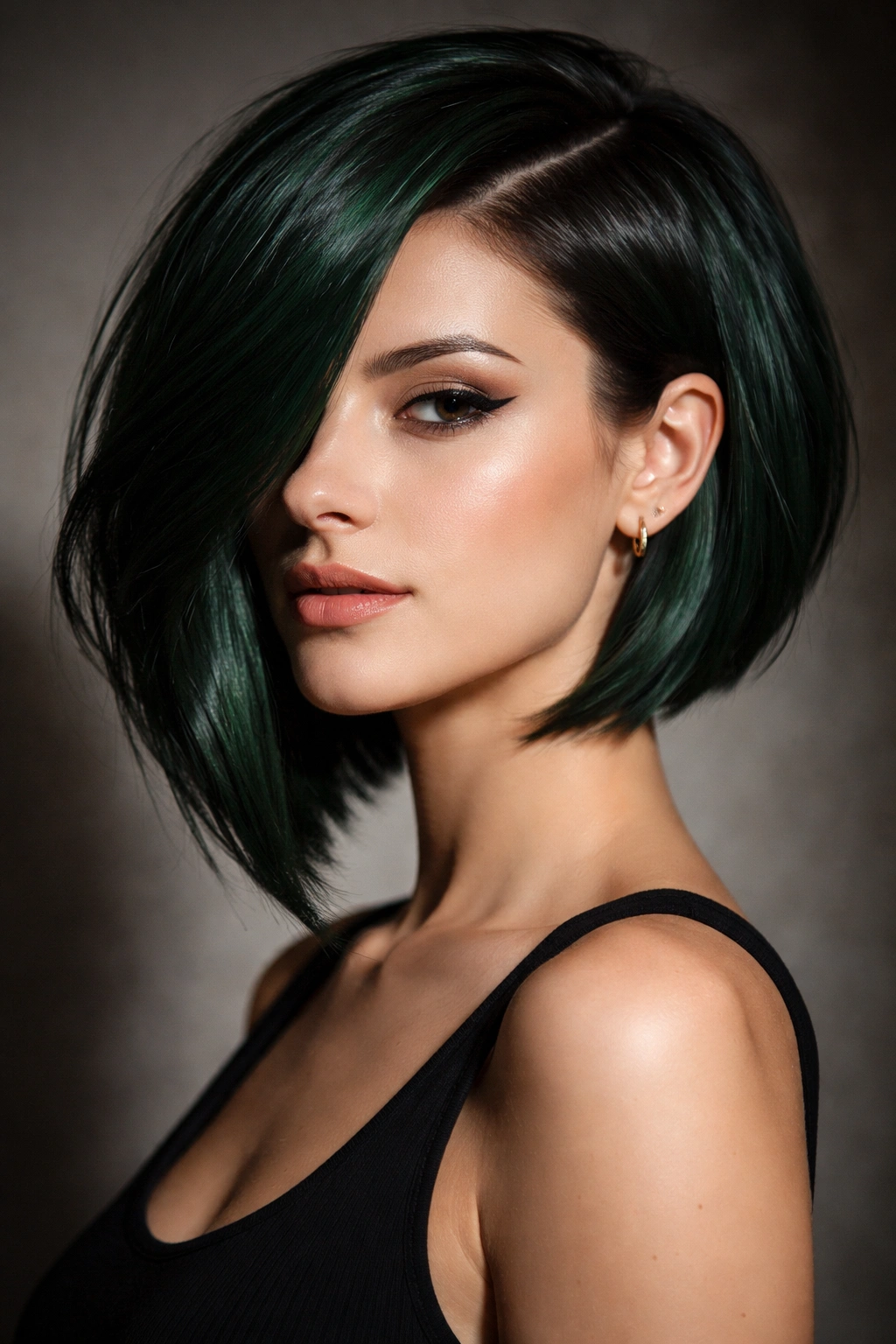
Picture a bob where one side just brushes the jaw and the other side falls a little longer, near the collarbone. Now imagine that shape in deep forest green, with the darker pieces falling where the angle is strongest. The whole haircut suddenly looks deliberate in a way that a straight-across bob rarely does.
An asymmetrical bob gives green color movement before the styling even starts. The longer side creates a visual line, and the darker shade reinforces it. That is why this version works so well on people who want a bold color statement but don’t want their hair to shout at full volume every single day. It has drama. It has structure. It also behaves better than you might think.
- Strongest on straight hair or softly waved hair
- Great for round, square, and heart-shaped faces
- Needs regular edge trims so the angle stays sharp
- Looks best with a deep side part or tucked-behind-one-ear styling
The other thing I like here is how the cut handles grow-out. Even when the asymmetry softens a little, the shape still reads. That matters if you do not want to be at the salon constantly.
The darker the green, the more the angle shows. That is useful if you want the haircut itself to do some of the visual work. Forest green gives the style weight, especially around the nape, where a clean line can make the neck look longer and the whole cut look more expensive. It’s a strong choice. Not subtle, but not messy either.
5. Olive Bob With Shadow Root
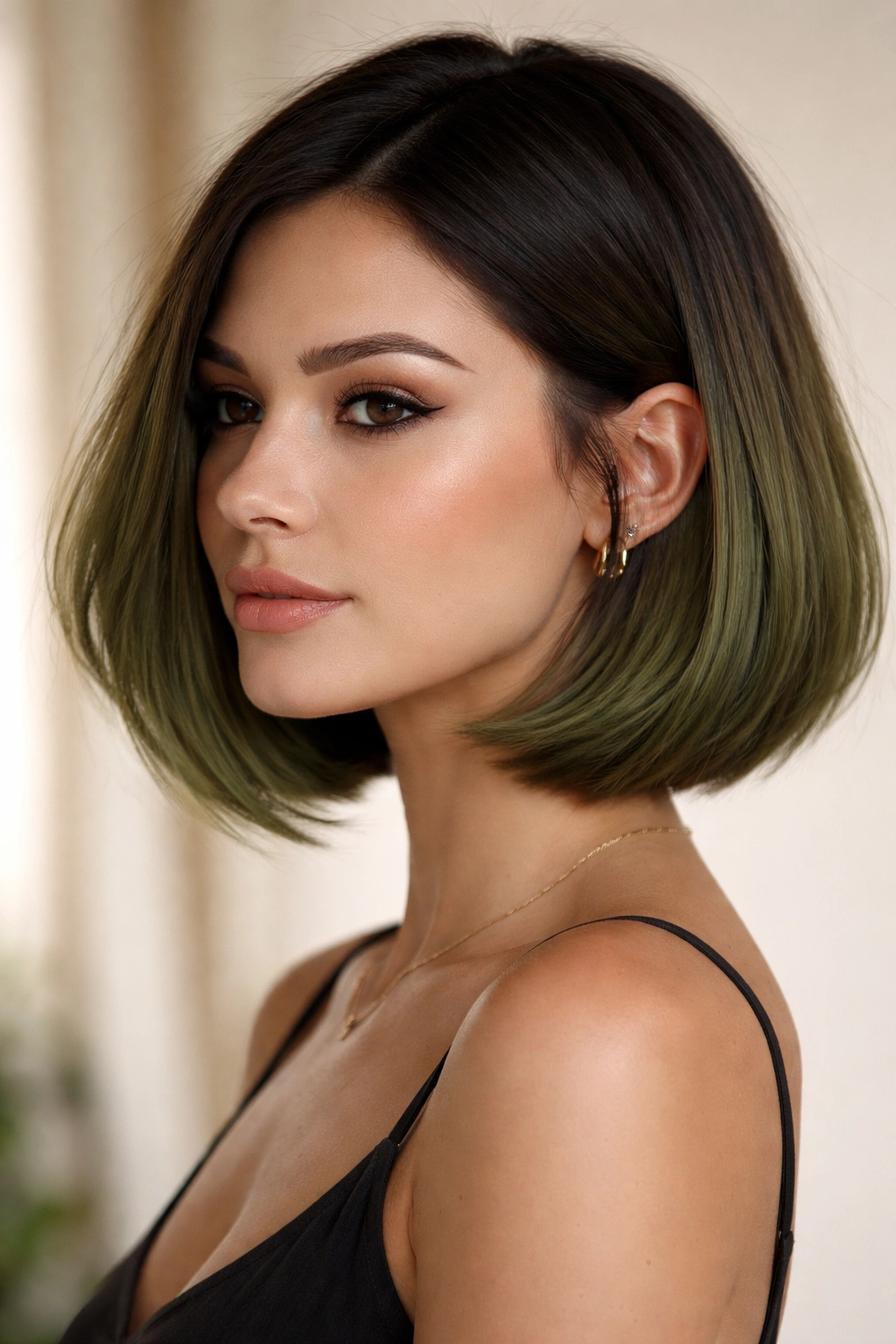
Not every green bob needs to shout. Some of the best ones look a little smoked out, a little grown in, and a lot cooler because of it. An olive bob with a shadow root sits in that lane perfectly. The root stays deeper, sometimes close to a soft brown or charcoal, and the olive shifts lighter through the mids and ends.
That darker root does more than make the grow-out easier. It gives the color depth. Without it, olive can flatten out, especially on shorter hair where the light has nowhere to play. With it, the bob gets a kind of built-in dimension that makes the shade feel richer and more believable.
This version suits people who want green hair without living in constant touch-up mode. It is especially kind to warm or neutral skin tones, since olive has enough yellow and gold in it to avoid looking icy. On a chin-length bob, the effect can be understated in the best way, which I know sounds boring until you see how good it looks with a strong brow, a white shirt, or chunky earrings.
There is also something nice about how this shade ages. As the color softens, it tends to look intentional rather than washed out. That is not something every bright shade can claim.
A slight wave helps, but straight styling works too. The shadow root keeps the shape grounded either way, and that is the real trick here: the cut can stay clean while the color stays easy.
6. Jade Chin-Length Blunt Bob
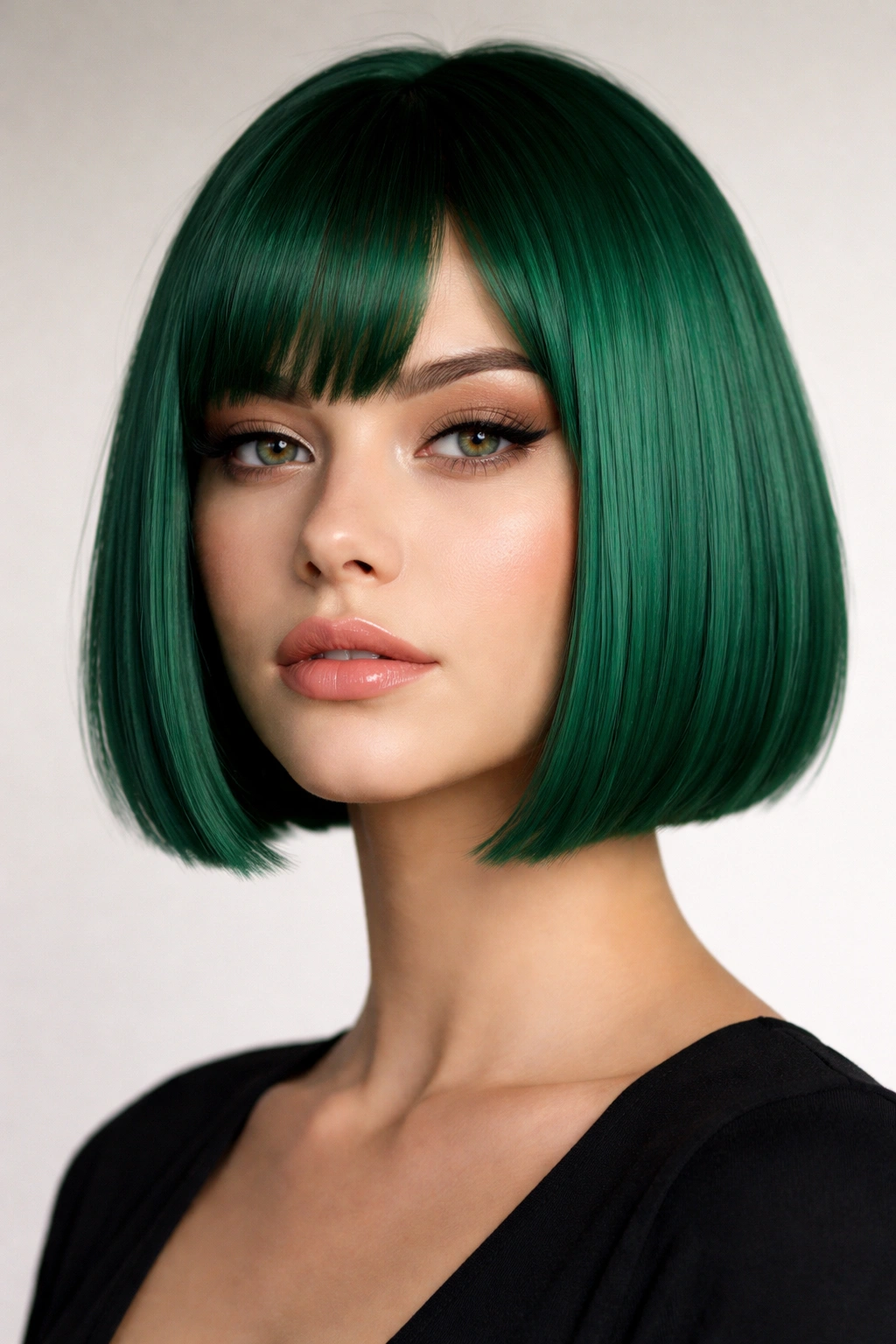
Unlike pastel mint, jade does not vanish under ordinary indoor light. It stays defined. It keeps its face. That is why a jade chin-length blunt bob has so much more presence than people expect. The shade sits in that clean middle ground between blue-green and true green, which gives it a crisp look without drifting into neon territory.
The blunt cut is the star here. A chin-length line creates a hard edge, and jade loves that. When the ends are cut evenly, the color looks richer because your eye reads the silhouette first and the tone second. If the cut is too soft, jade can start to feel diffuse. If the line is strong, it looks almost lacquered.
This is a smart choice for thick hair, since the weight supports the geometry. It also plays nicely with oval and square face shapes because the clean perimeter frames the jaw without making the face look wider. On finer hair, you can still make it work, but the finish needs to be smooth and the color placement should stay saturated through the ends.
What I like most here is the honesty of it. There is nothing fussy about a blunt bob, and jade does not need fuss. A single pass with a flat iron, a middle part, and a glossing spray can be enough.
If you want a green bob that feels modern without leaning messy, this is one of the best bets. It looks especially sharp with minimal makeup and a strong lip.
7. Seaweed Textured Wavy Bob
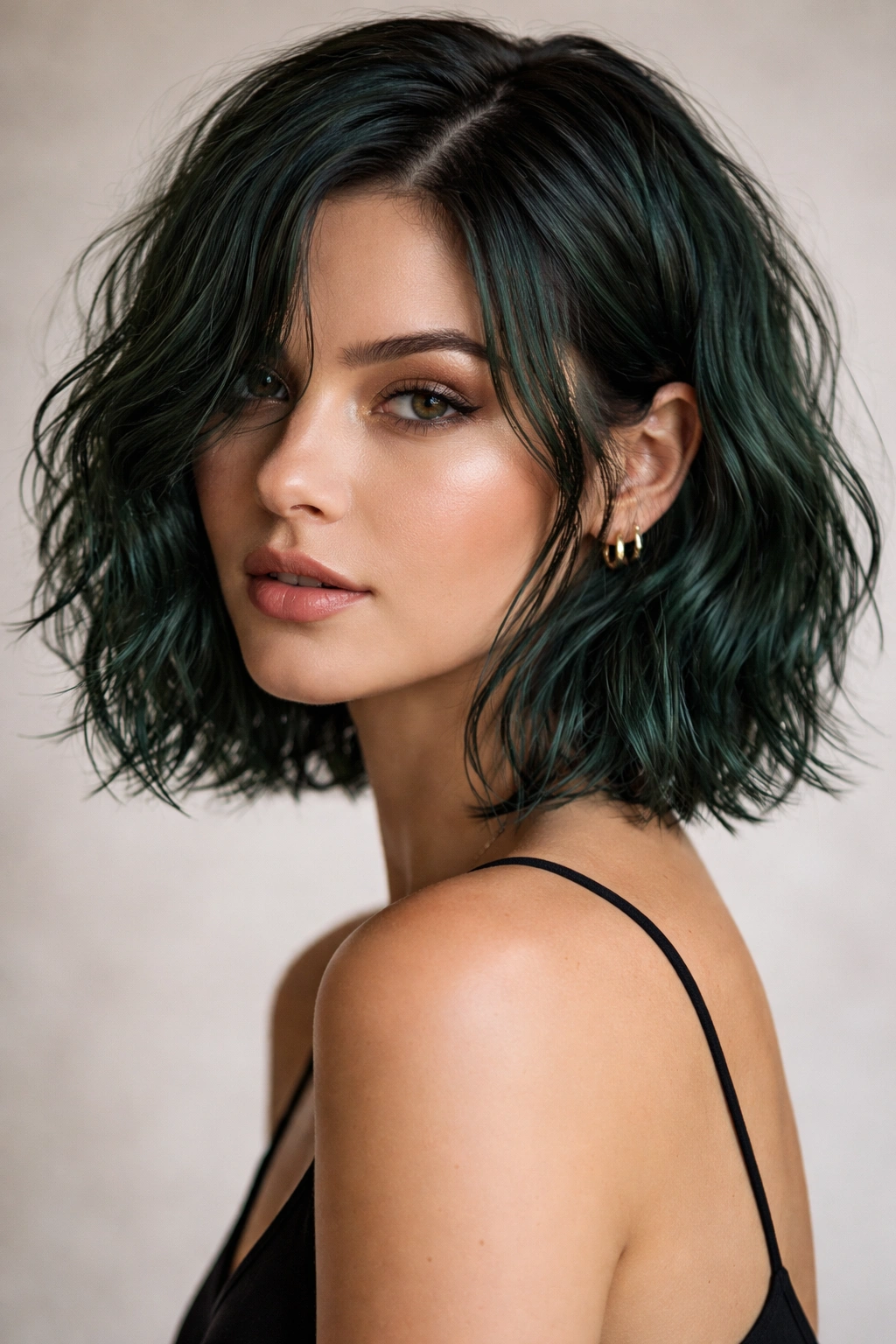
A seaweed bob should look a little damp, but never sloppy. That’s the line. The color is usually a darker green with blue-gray or smoky undertones, and the cut wants movement so it does not sink into one heavy block of color. Texture is what keeps it alive.
Why Texture Matters
When dark green hair gets too smooth, it can lose its shape under indoor lighting. A few soft bends break up the surface and make the shade read as layered instead of flat. You do not need beach waves here. In fact, too much wave can push the style into a summer cliché, which is not the mood.
The best version uses controlled texture. Think loose bends from the mid-length down, with the roots kept fairly close to the head. A sea salt spray, a light mousse, or a cream that adds grip can help, depending on how fine or thick your hair is. If you use a curling wand, leave the last inch straight so the bob still has a clear line.
- Works well on shoulder-skimming or chin-length bobs
- Looks richer on medium to thick hair
- Benefits from a diffuser if your hair is naturally wavy
- Needs a light hand with product, or it can turn stringy
Keep the ends piecey, not crunchy. That one detail makes the difference between chic and overdone.
I like seaweed green because it has a moody, almost aquatic feel without becoming gimmicky. It pairs well with black clothes, silver jewelry, and blunt bangs, but it can also soften a plain T-shirt in a way that feels oddly specific and cool.
8. Mint Curly Bob
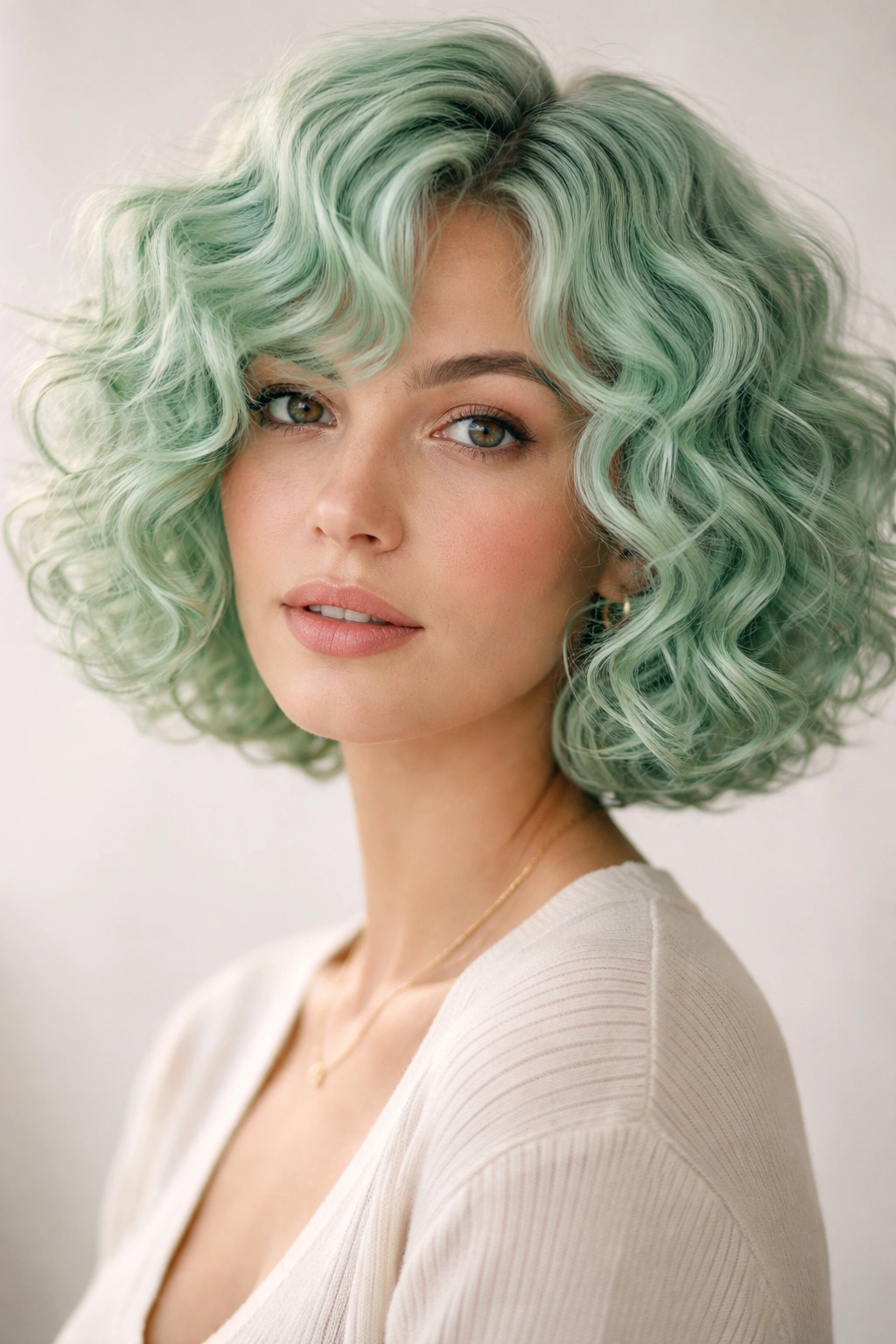
Can green work on curls without looking costume-y? Absolutely, and mint is one of the easiest shades to pull off when the hair has natural texture. Curly bobs already do half the work because each curl catches light a little differently, which gives the color built-in dimension.
Mint can be playful, but on curls it becomes more layered than sweet. The bends and coils stop the shade from feeling flat, and the bob shape keeps everything close enough to the face that the color makes an impression fast. If the curls are loose and springy, the result feels airy. If they’re tighter, the style takes on a sharper contrast, which can be gorgeous.
The haircut matters a lot here. Too much layering can make curly bobs puff out, and mint is not forgiving if the shape gets too wide. Keep the perimeter strong, then shape the interior with care so the curls stack instead of scattering. A chin-length cut or just-below-chin bob is usually the sweet spot.
How to Wear It
Use curl cream on damp hair, scrunch lightly, and diffuse on low heat until the curls are dry but still soft. If you let the hair air-dry and then keep touching it, the curl pattern can frizz, and mint shows frizz more than darker shades do. A side part or off-center part often looks better than a strict middle part, since it gives the curls some asymmetry.
This is one of the green bob cuts that feels happiest when it moves. Stillness is not its strength. Shape is.
9. Metallic Green Undercut Bob
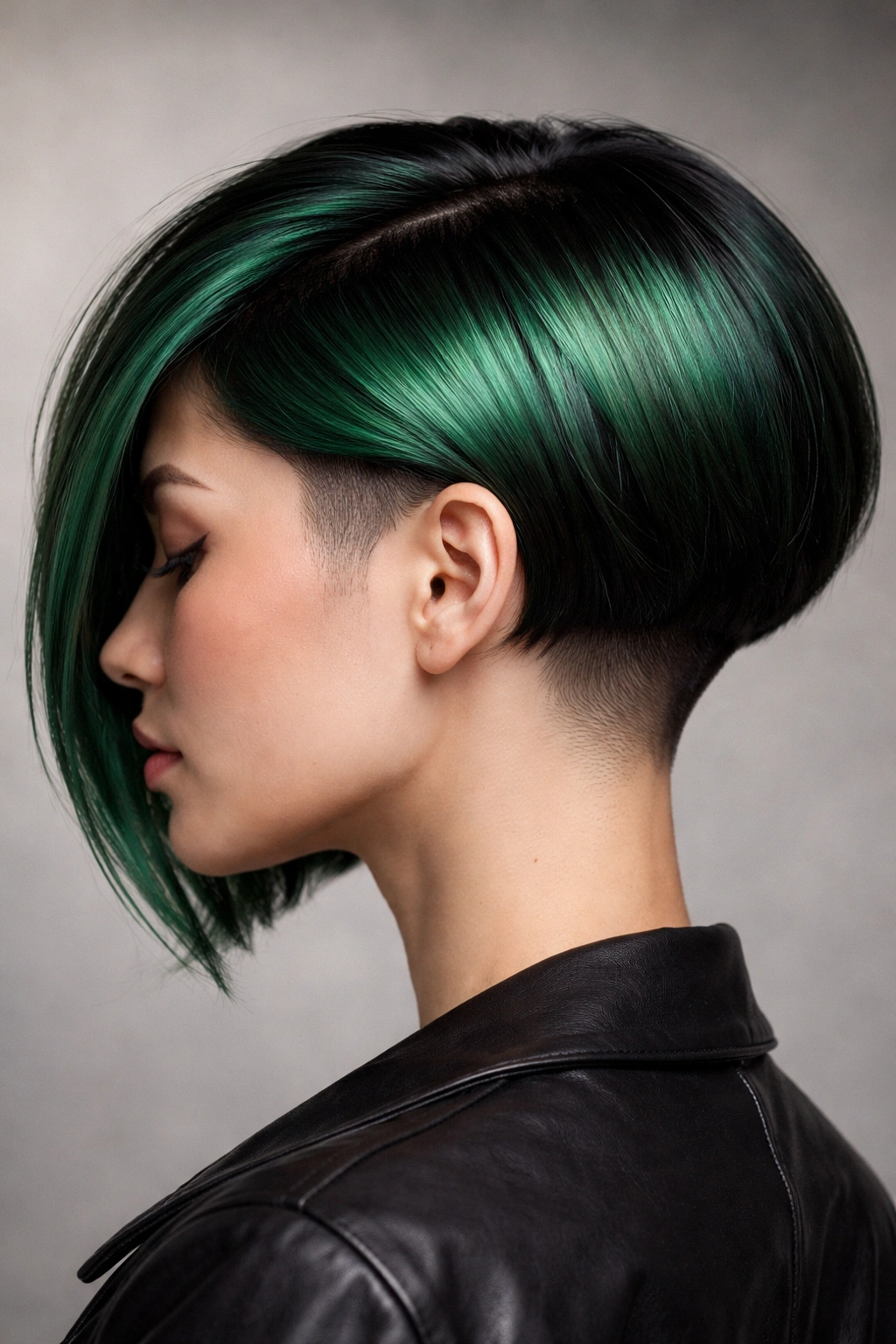
This one is for people who want the haircut to announce itself before they do. A metallic green bob with an undercut has edge built into the structure, not just the color. That shaved or closely clipped section beneath the top layers reduces bulk, while the metallic sheen on top throws light around in a way that feels sharp and a little futuristic.
The undercut is more useful than people give it credit for. On thick hair, it removes weight so the bob sits closer to the head and the color shows more evenly. On finer hair, a hidden undercut can still help the top layer fall into a cleaner shape. Either way, the result is a bob that looks deliberate from every angle, especially when the hair moves and the shorter section disappears and reappears.
Metallic green works best when the finish is glossy but not greasy. Think smooth, reflective, and controlled. A harsh matte finish can make the shade look flat, while too much oil can blur the metallic effect. That balance is a little picky, yes. It’s worth it.
A side part can soften the look if you want the undercut to stay partly hidden. A tucked-behind-the-ear style does the opposite and shows off the contrast. The undercut gives the color room to flash. That’s the real appeal.
If you like sharp jackets, heavy boots, or statement earrings, this bob fits the same energy. It is not trying to be sweet.
10. Teal-to-Green Color Melt Bob
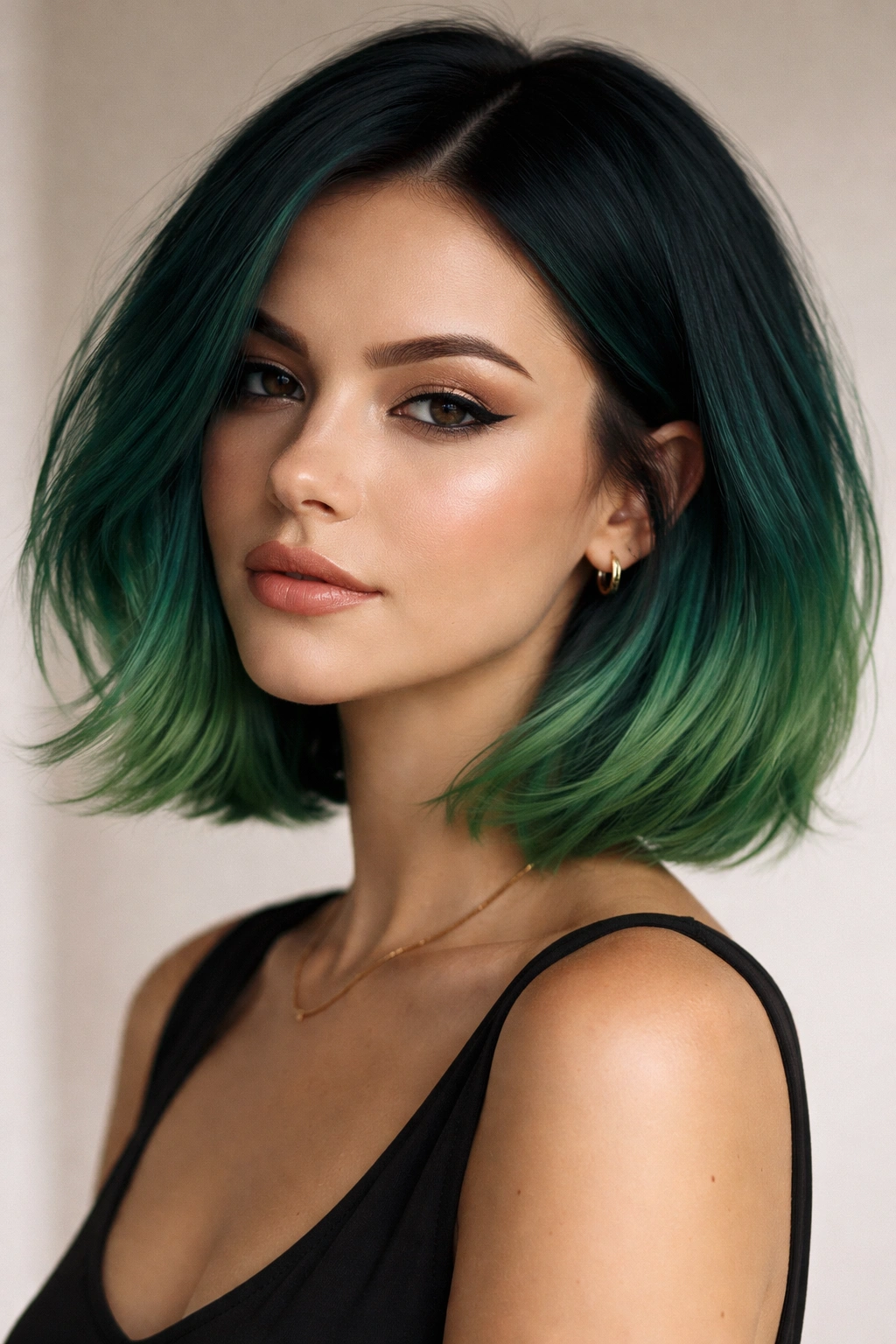
Unlike a single-tone bob, a teal-to-green melt keeps the eye moving. The roots can sit darker, the mid-lengths can lean teal, and the ends can land in a brighter green, which creates a shift that feels rich instead of loud. That gradual change is especially flattering on a bob because the shorter length makes the color story easy to read at a glance.
A color melt like this works best when the cut has a little softness, usually in the form of subtle layers or a gentle bend through the ends. If the bob is too blunt, the transition can look chopped up rather than blended. If the shape has a bit of movement, the color flow feels natural. That is true whether the hair is pinned sleek or worn with loose waves.
This is a good choice for people who want depth more than shock value. Teal cools the look down; green keeps it alive. Put them together and you get something that looks more complicated than it actually is. That kind of contrast is why the style photographs well without depending on bright lighting or a perfect angle.
I’d choose this on a shoulder-grazing bob with a soft off-center part and a gloss finish. It gives enough length for the color gradient to show, but not so much that the whole thing starts to feel like a long-colour project. If you want one green bob that feels polished, dimensional, and a little artistic without drifting into chaos, this is the one.
Final Thoughts
The best green bob is the one that respects the haircut first and the shade second. That order matters more than people think. A strong line, a sensible amount of texture, and a tone that suits the hair’s natural density will carry the look further than any dramatic dye job by itself.
If you want the biggest visual hit, go bright: neon lime, metallic green, or a clean jade. If you want something wearable that still reads as bold, olive, moss, or forest green will do more work for you over time. One is not better than the other. They just speak different languages.
Green hair has a reputation for being hard to wear. It isn’t, really. It only asks for a cut with intent and a color choice that knows what it wants to be.
