



Thick hair can make a bob look rich and glossy. It can also make it look like a triangle you didn’t ask for.
That’s the whole trick with bob cuts for thick hair: the cut has to move. Not just sit there, not just hold shape for two days after a salon blowout, but actually swing, bend, and fall in a way that makes the hair feel lighter without looking choppy. The wrong bob on thick hair turns into a shelf. The right one looks expensive in motion.
What a lot of people miss is that “thick” doesn’t mean the same thing as “heavy” in every place. You can have a dense crown, a bulky line around the jaw, and soft ends all on the same head. A good cut reads that map before the scissors start. It’s why one bob needs hidden internal layers, another needs a blunt edge, and another needs a bevel so the ends curve instead of puffing out.
These 15 shapes are for people who want a bob that still has life in it. Some are sleek. Some are airier. Some lean polished, some feel a little undone, and a few are the haircut equivalent of rolling up your sleeves. All of them are built to keep thick hair from sitting too square.
1. Chin-Length Blunt Bob With Hidden Weight Removal
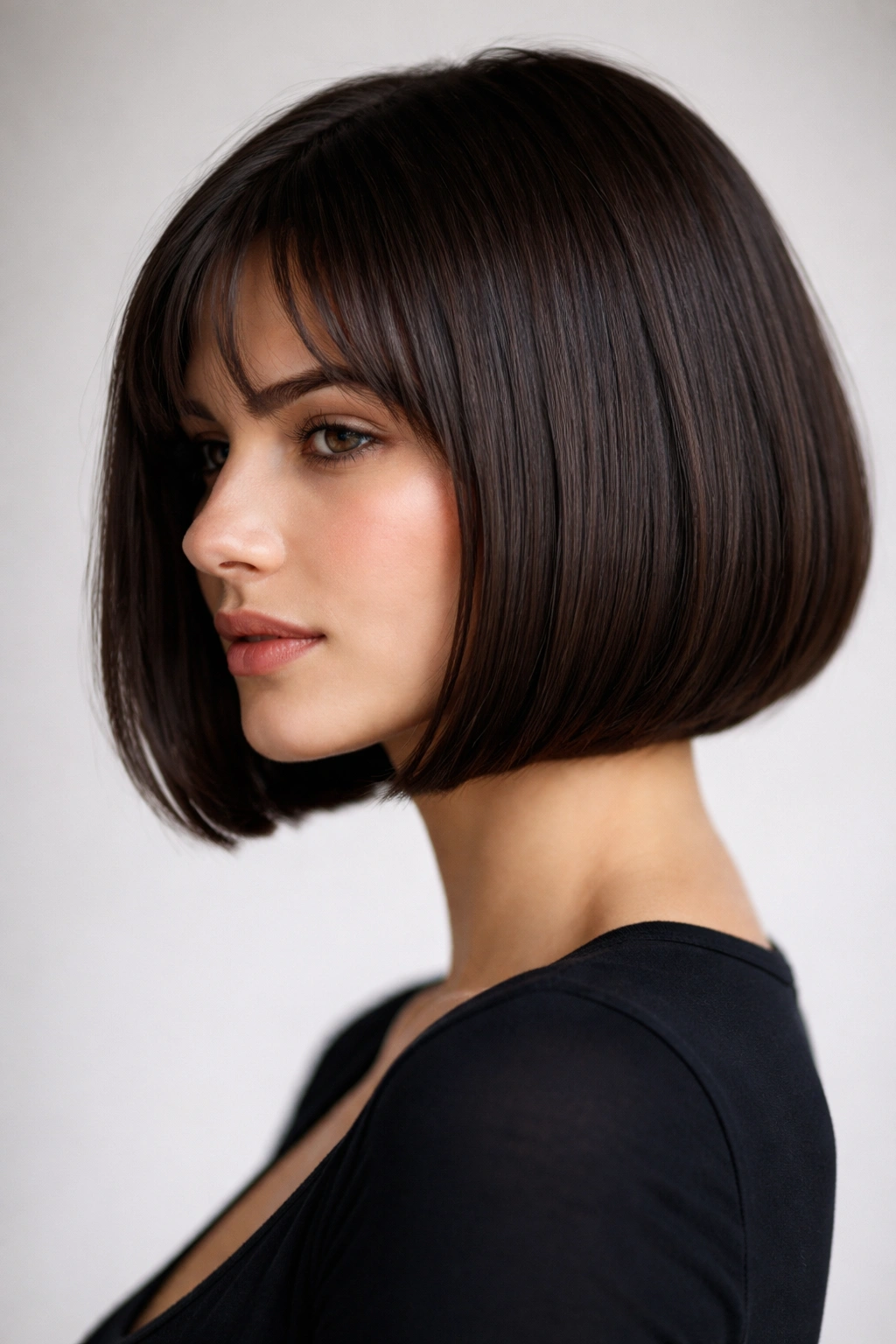
A blunt bob sounds like the least forgiving choice for thick hair, and that’s exactly why it works so well when it’s cut correctly. The edge stays clean, the shape looks strong, and the hair keeps its full body without turning into a helmet.
What gives it movement
The secret is internal weight removal, not top-layer shredding. A stylist can take a small amount of bulk out from the inside of the haircut while leaving the perimeter sharp. That gives the ends room to move while the outline still looks dense and deliberate.
Ask for a chin-length cut with a slight bevel under the jaw. That tiny curve matters more than people think. Straight across at the wrong angle can make thick hair kick outward. A soft bevel keeps it hugging the face a little better.
- Best for hair that feels puffy at the bottom
- Works nicely with straight, wavy, or blow-dried textures
- Needs a clean trim every 6 to 8 weeks to keep the line crisp
- Looks especially good when the ends are tucked under with a round brush
My honest advice: skip aggressive thinning shears. They can leave thick hair frizzy and weirdly airy at the surface while the underside stays bulky.
2. Collarbone Lob With Soft Interior Layers
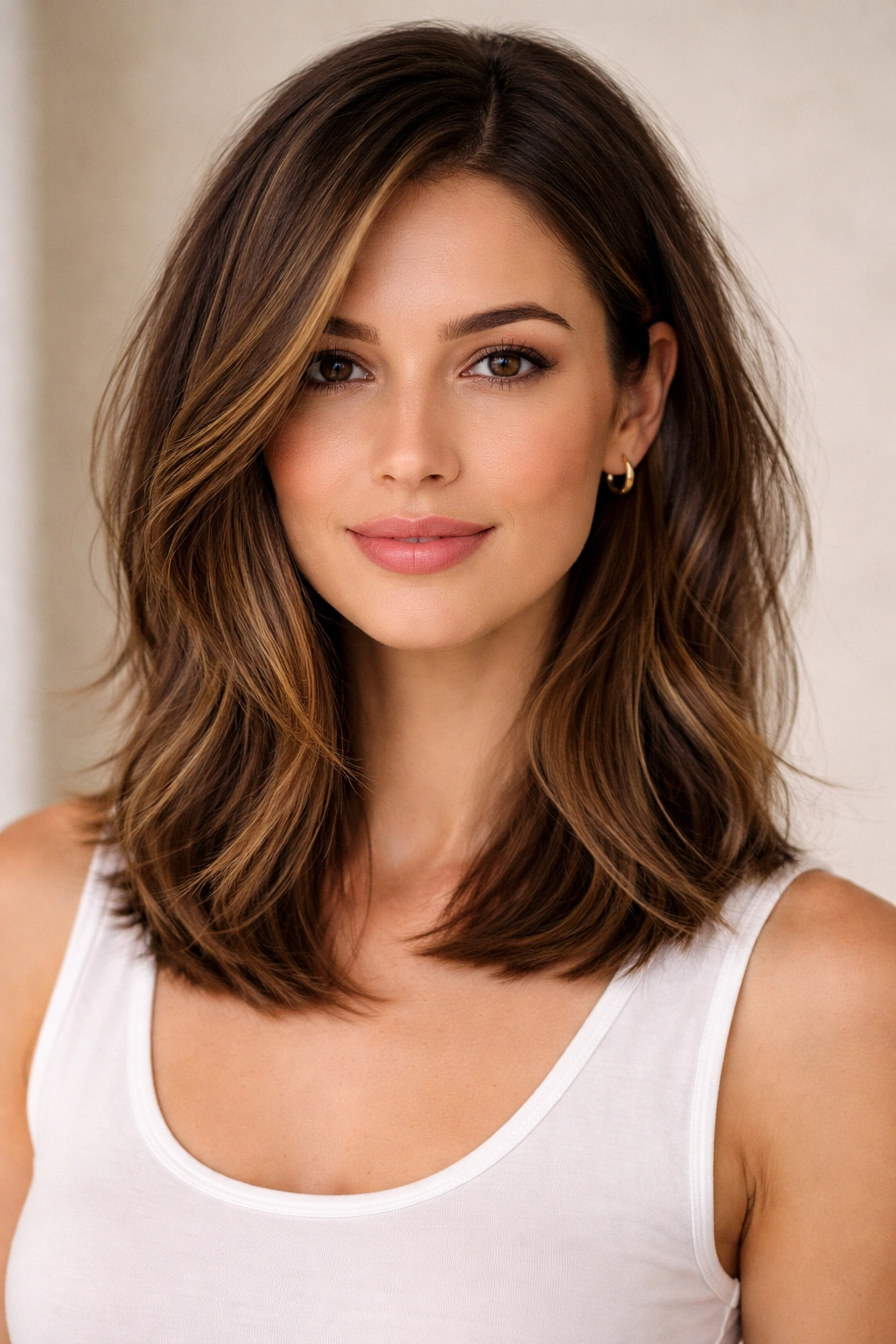
Do you want movement without losing length? A collarbone lob is the safe bet that isn’t boring.
It gives thick hair somewhere to fall, which matters. When hair is dense and cut too short, it can spring out instead of down. A lob that skims the collarbone gives the weight room to settle, and soft interior layers keep the shape from feeling blocky.
This cut is especially good if your hair expands in humidity. The longer length helps it hang a little better, and the internal layers stop the whole shape from looking like one solid mass. I like this one for people who want a bob but don’t want to feel exposed around the jawline.
A side part makes it even better. So does a loose bend with a 1¼-inch curling iron, brushed out while the hair is still warm. The result should look like the hair moves on its own, not like you spent 40 minutes arguing with it.
If you ask your stylist for this shape, say collarbone length, soft internal layers, and no bulky ends. That last part matters. Thick hair can hold a straight line beautifully, but only if the underside isn’t packed with weight.
3. French Bob With a Light Fringe
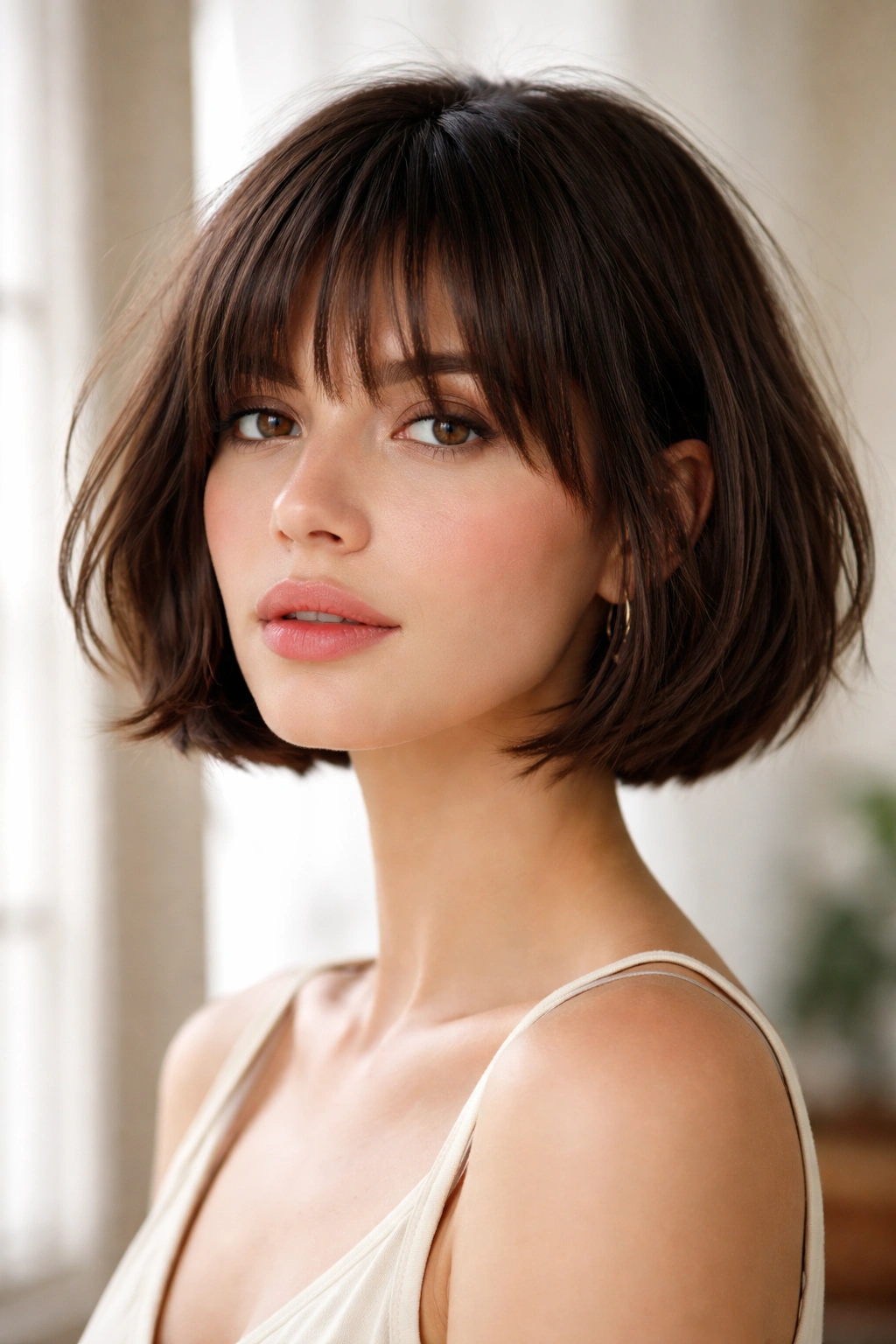
Why does the French bob work on thick hair when so many short cuts don’t? Because it embraces shape instead of fighting it.
A French bob sits around the lip to chin area and usually comes with a light fringe. On thick hair, that fringe keeps the cut from feeling too boxy up top. The overall effect is compact, chic, and a little cheeky. Not precious. Good.
How to make it breathe
The best version is cut with a tiny bit of softness at the ends, not razor-heavy slicing that makes the line fray. Thick hair already has presence. You do not need to over-texture it.
The fringe should be light enough to separate with your fingers. If it lands too heavy, the whole cut feels top-heavy. If it’s too wispy, it can look disconnected from the rest of the bob. There’s a narrow middle ground, and that’s the sweet spot.
A French bob suits people who like to air-dry their hair to a bendy, imperfect finish. It’s not a fussy haircut. It gets better when it isn’t overstyled. A small amount of mousse at the roots and a touch of cream through the mid-lengths is usually enough.
And yes, it grows out nicely. That’s half the appeal.
4. A-Line Bob With a Clean Forward Angle
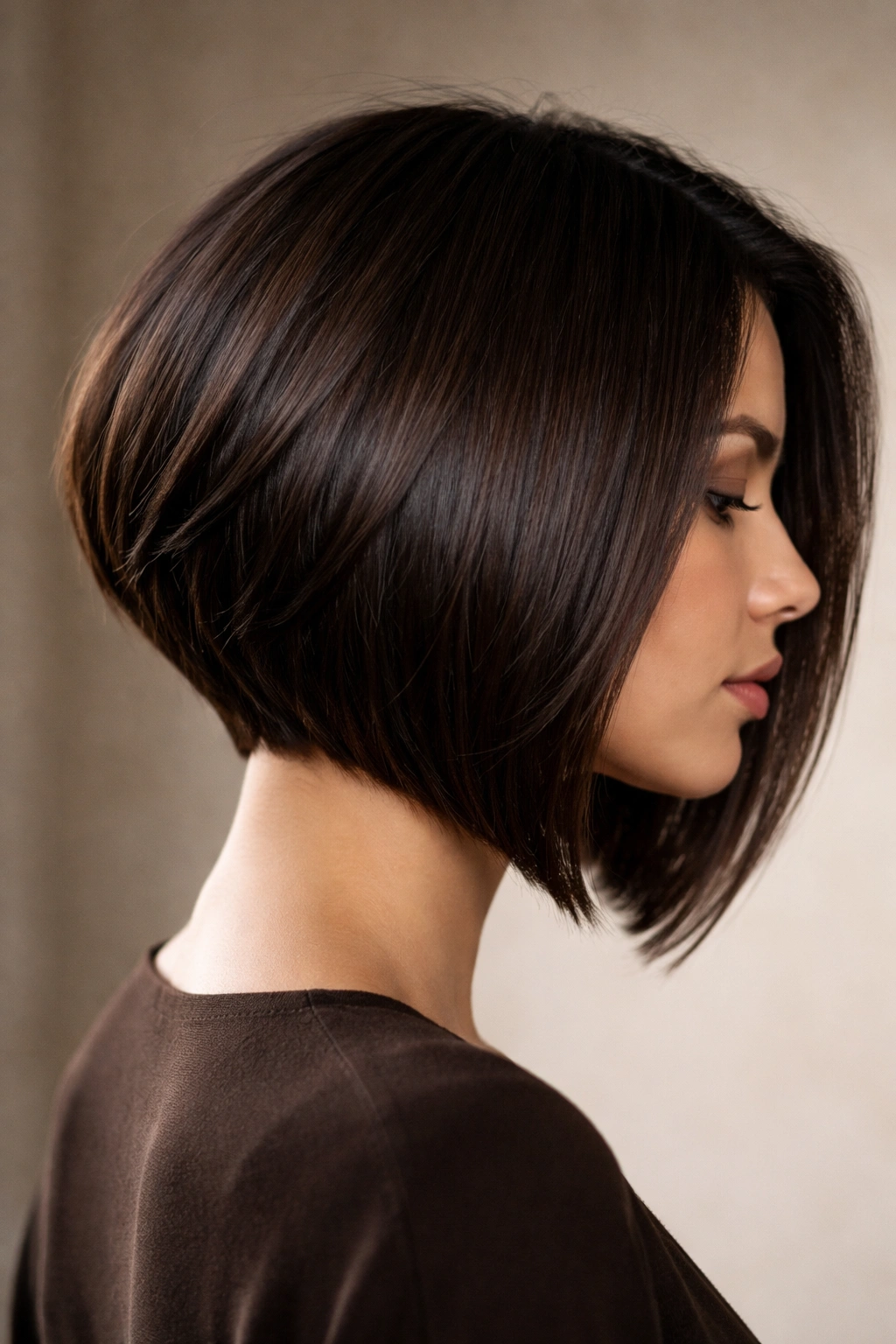
Picture a bob that’s slightly shorter in the back and a touch longer in front. That forward angle gives thick hair a sense of motion before you even touch a styling tool.
The A-line shape works because it changes where the weight sits. Instead of letting the hair bulk up equally all around the head, it pulls the eye forward and lets the front pieces swing. On thick hair, that can make the whole style feel more intentional and less square.
Where the angle should stop
Too steep, and you end up with a dramatic wedge. Too subtle, and you lose the whole point. A gentle A-line usually looks best on thick hair because it keeps the neck area cleaner without turning the front into two disconnected points.
This is one of those cuts that looks especially good when it’s smooth but not flat. You want a little bend under the chin, not a poker-straight sheet. A paddle brush and a blow-dryer nozzle can do most of the work if the cut is balanced well.
If your hair has a stubborn cowlick at the nape, the A-line can help hide it. That’s a nice bonus. The shorter back removes some of the bulk where cowlicks tend to kick up, and the longer front keeps the style from feeling too severe.
5. Layered Bob With Long Face-Framing Pieces
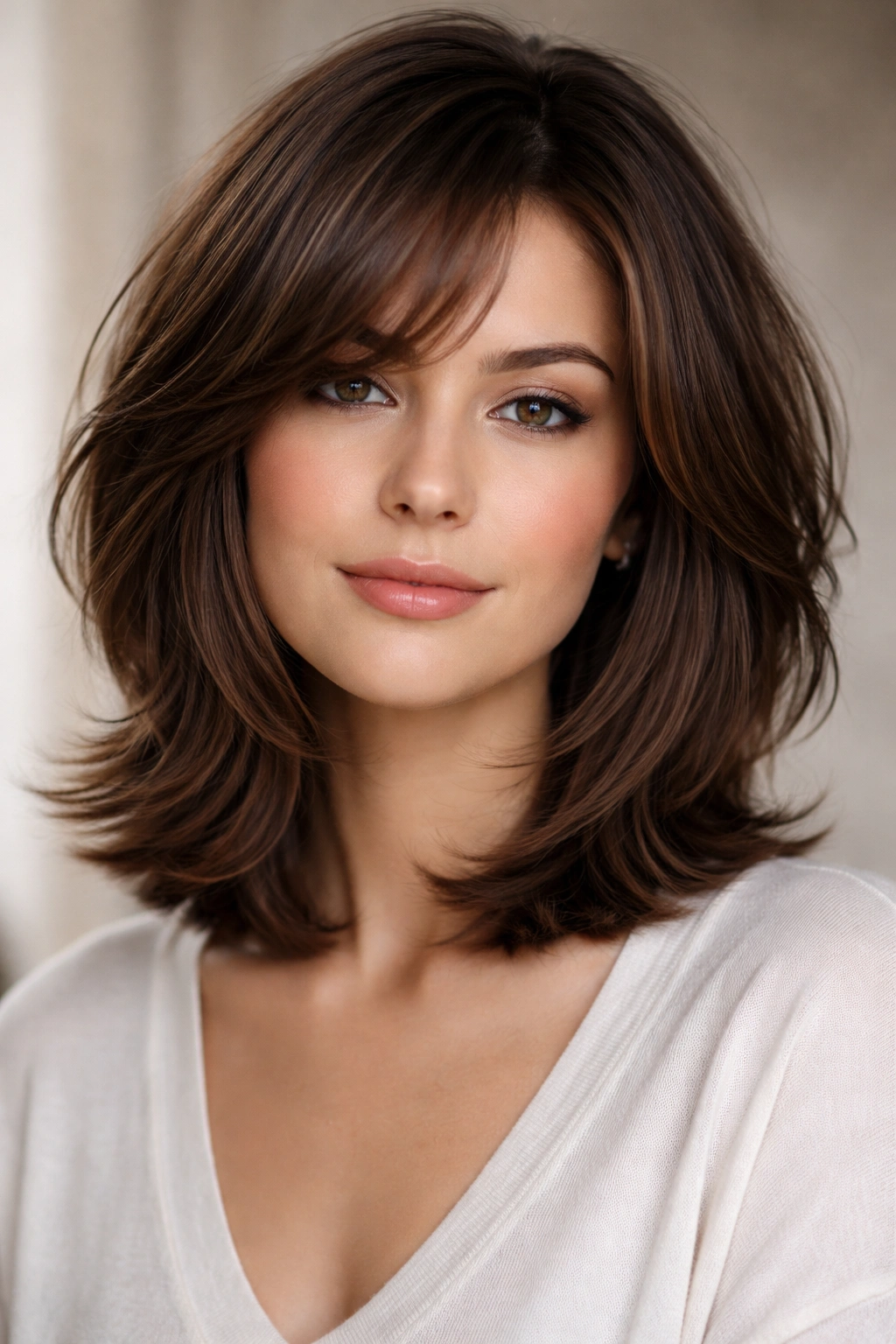
I like this one because it solves a real problem: thick hair often needs weight removed, but too much layering can make it frizz out. Long face-framing pieces give you movement without turning the whole haircut into shredded spaghetti.
The idea is simple. Keep the bob itself fairly full, then carve in longer pieces around the cheekbones and jaw. Those pieces break up the outline and let the hair move around the face, which is where a lot of people notice stiffness first.
This shape works especially well if your hair is straight at the roots and puffier through the ends. The front pieces take some of the visual mass away from the jaw, so the bob doesn’t sit there like one big block. That’s the part people usually want from a layered bob, even if they don’t say it out loud.
Ask for long layers only in the front half if you want to keep the back strong. And be careful with over-layering near the crown. Thick hair can get fluffy there fast, and then you spend your mornings flattening something that was cut up to stand tall.
A medium round brush and a light bend away from the face are enough. You do not need a full salon blowout every day.
6. Curly Bob Cut Dry to Shape
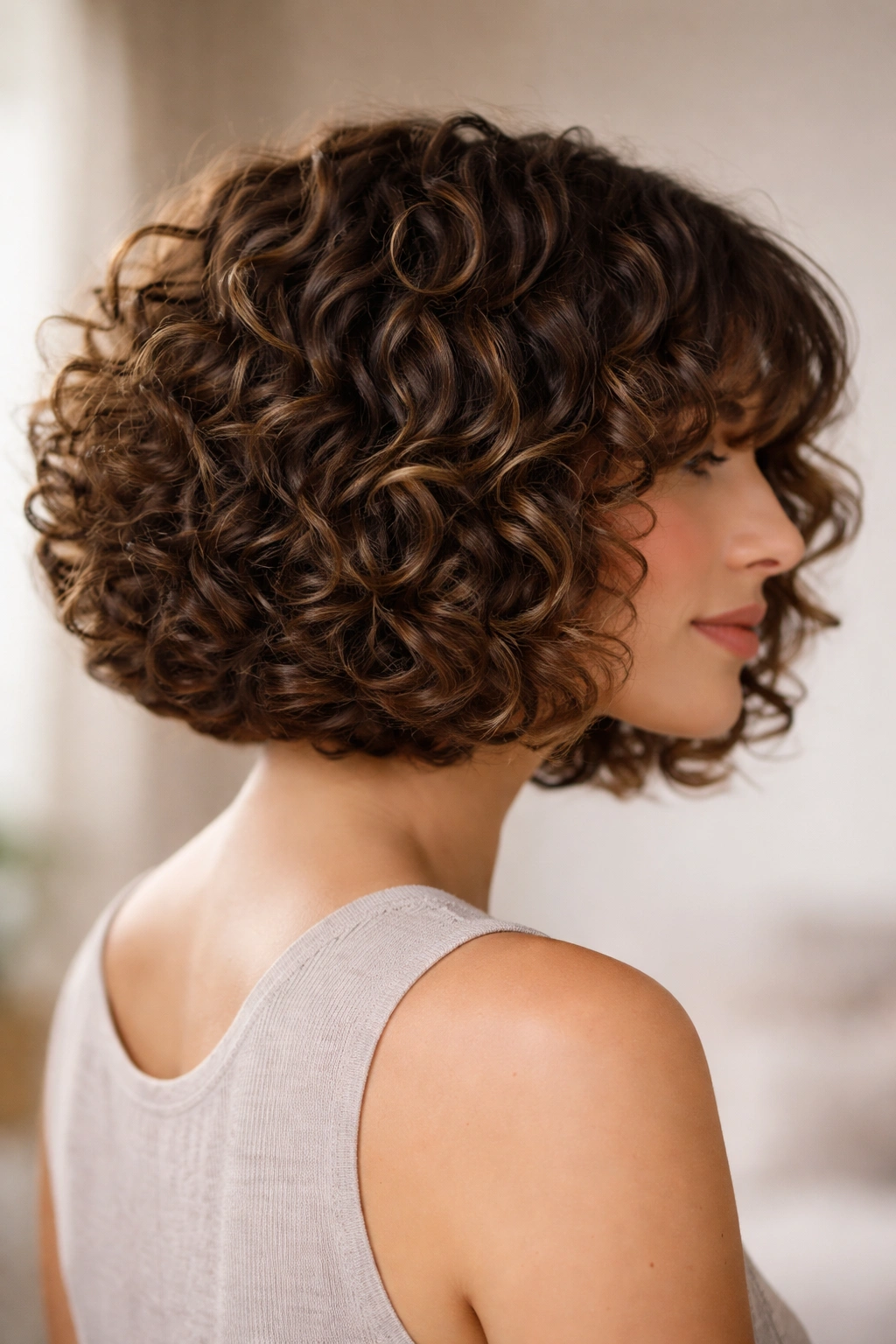
Curly hair changes the whole conversation. Cutting a curly bob for thick hair while it’s wet is a gamble unless the stylist knows exactly how that curl pattern behaves when it shrinks.
A dry cut, or at least a cut that’s shaped with the curls in their natural state, helps the bob move instead of clumping into a triangle. Thick curly hair has a lot of personality already. The job is to guide it, not flatten it into obedience.
What to ask for
- Shape the bob where the curls naturally land
- Remove bulk from the interior, not the outer ring
- Leave enough length for the curls to spring without bouncing too high
- Avoid heavy layering at the top unless the curl pattern is loose
The best curly bob usually lands a little longer than you expect once it dries. That’s normal. Curls rise. Thick curls rise even more. If the stylist cuts it too short while it’s wet, you can lose two inches of length by the time it’s fully dry.
A curl cream and a diffuser are useful, but the real win is the shape. If the cut is right, you won’t need to refresh it five times a day. It should lift around the face and keep its outline without collapsing into a pyramid.
7. Shaggy Bob With Shattered Ends
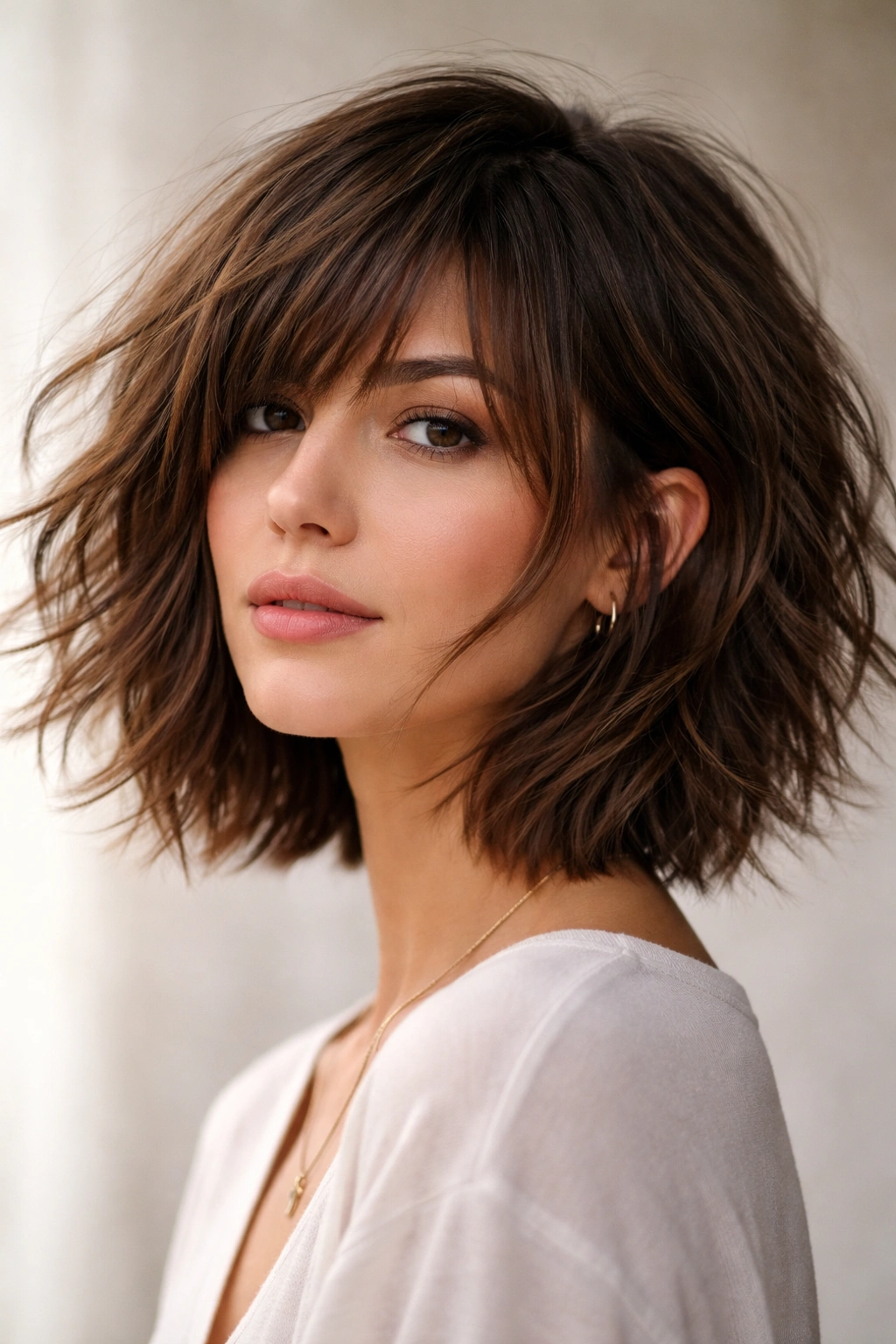
Can a shaggy bob still look polished on thick hair? Absolutely. It just needs restraint.
The shaggy bob gives thick hair a looser, cooler feel because the ends are broken up a little. That roughened edge helps the haircut move when you walk or turn your head, which is exactly what a lot of dense hair needs. Straight lines are not always the enemy. Sometimes the issue is that the line is too perfect.
The trick is to keep the shag controlled. You want shattered ends, not a random chop. Those ends should look deliberately irregular, with enough softness that they don’t form one heavy shelf around the bottom.
A shaggy bob works well if your hair naturally has a bit of bend or wave. It also grows out in a flattering way, which is useful if you don’t want the haircut to fall apart between trims. Add a little texturizing spray, scrunch, and let the hair air-dry if you like a lived-in finish.
No need to overcomplicate it. This cut is supposed to look a little loose.
8. Rounded Bob With Crown Control
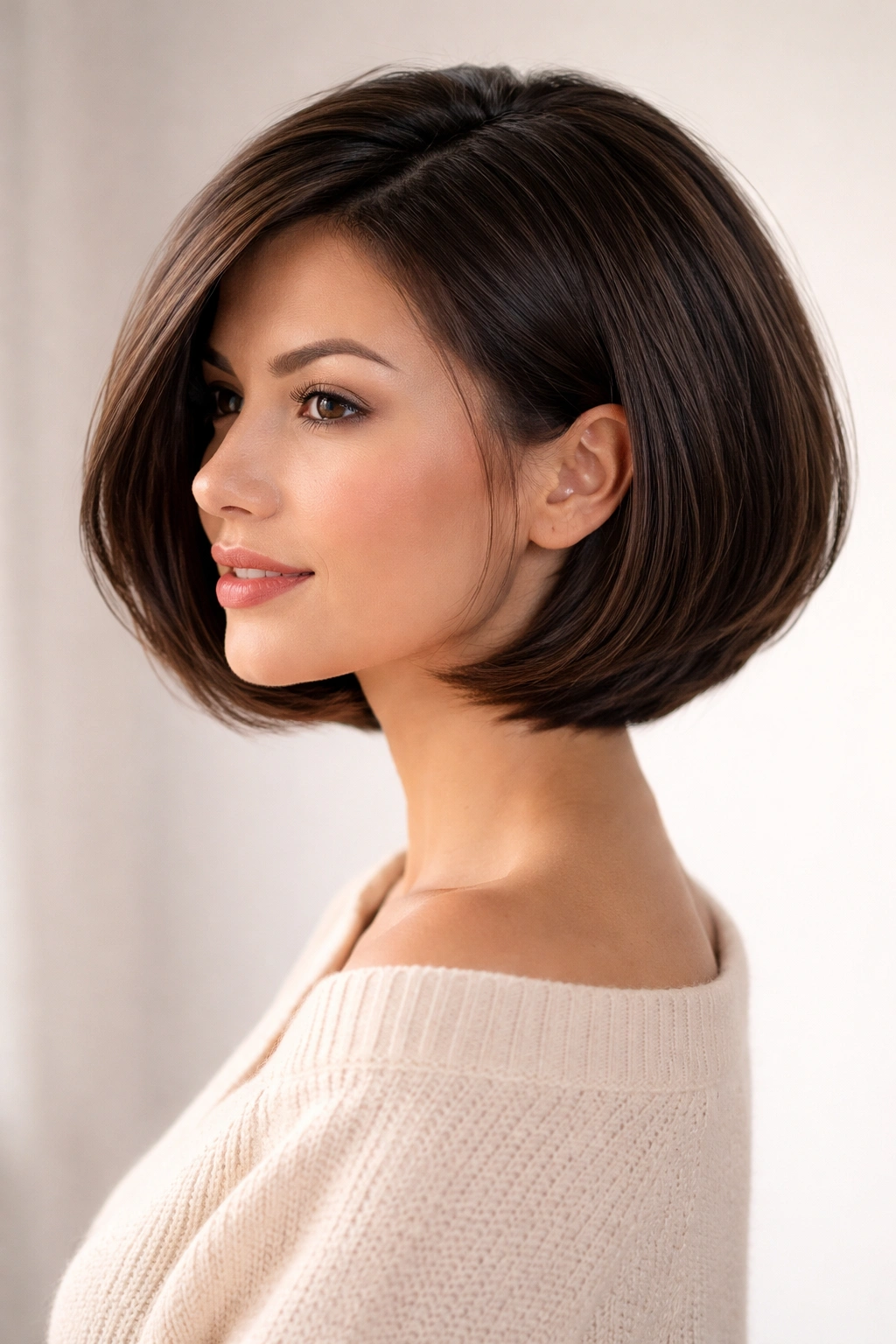
A rounded bob is one of the smartest choices for thick hair that puffs out at the sides. Instead of fighting the fullness, it shapes it into a curve that follows the head more cleanly.
What makes this cut different is the contour. The top is usually kept a little softer, the sides are balanced, and the bottom doesn’t spread outward. When it’s done well, the haircut almost nestles around the face. It’s a good option for people who want movement but don’t want the edges to kick out.
The part most people miss
The crown needs control. If the top is too short or too heavily layered, thick hair can balloon there and ruin the rounded shape. The better approach is subtle interior shaping and a careful perimeter.
I’ve seen this cut look especially strong on hair that has a natural wave and a broad density pattern. It doesn’t need a lot of styling. A smooth blow-dry with a medium round brush can give it a soft curve, and a light finishing serum keeps the ends from feeling rough.
This is the haircut for someone who wants neatness with some softness. Clean, but not stiff.
9. Asymmetrical Bob With One Longer Side
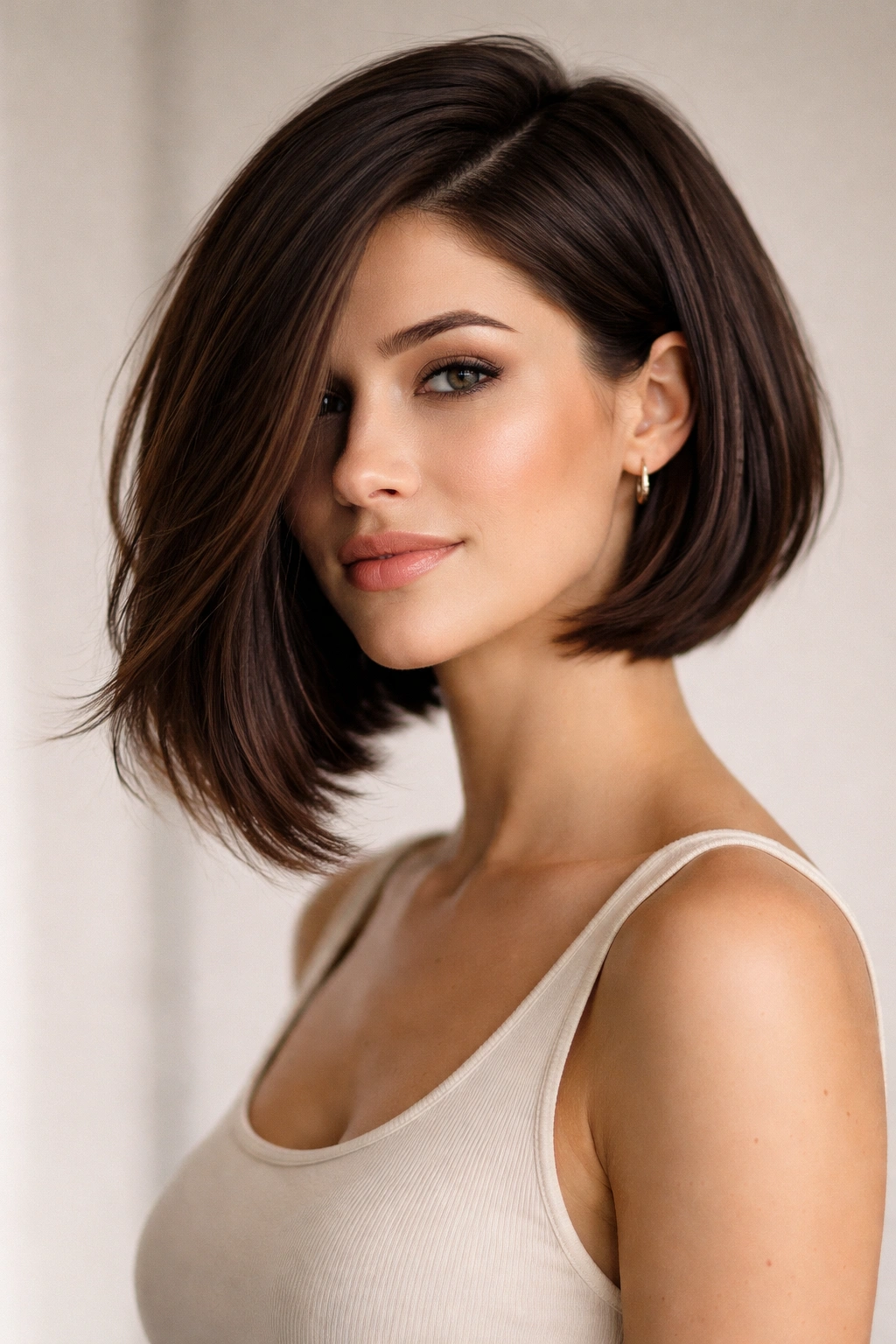
A small asymmetry can do a lot for thick hair. One side a touch longer than the other shifts the eye and keeps the whole cut from feeling static.
That slight imbalance is more subtle than people expect. You do not need a dramatic angle to get the effect. Sometimes an inch is enough. Enough to make the haircut feel alive. Enough to break up a heavy, symmetrical outline that would otherwise sit like a block.
This shape works especially well if one side of your hair tends to behave differently from the other. Most heads are not perfectly even. One cowlick, one flatter side, one section that dries faster than the rest — the asymmetrical bob can make those differences feel intentional rather than annoying.
It also looks good with a deep side part. That extra weight on one side gives the longer panel more swing, and the shorter side stays closer to the neck, which helps reduce bulk around the jaw.
Ask for a soft asymmetry, not a fashion-week statement. You want a bob that tilts enough to move, not one that looks like it’s mid-spin.
10. Graduated Stack Bob With a Softer Nape
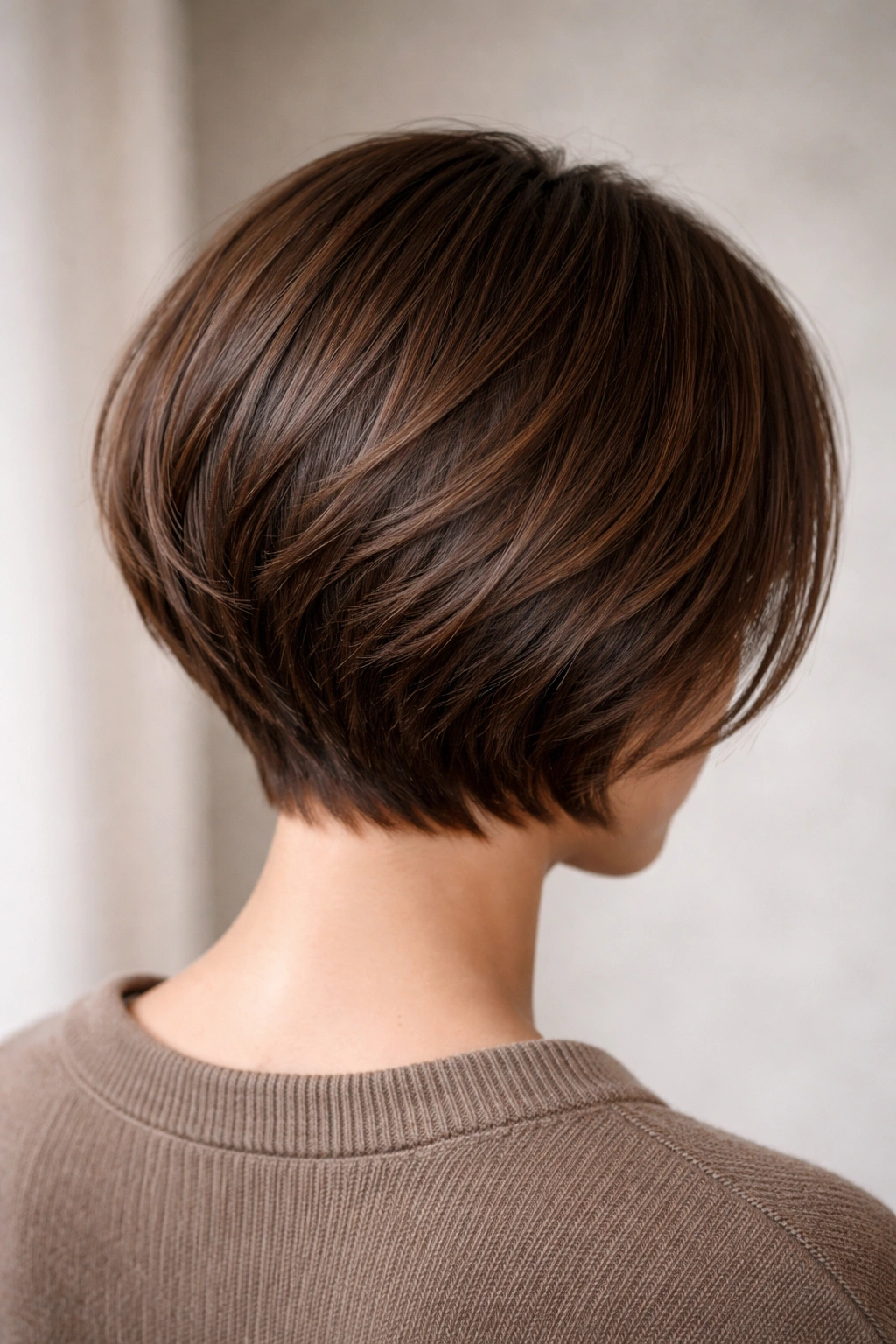
The stacked bob gets a bad reputation because people picture a sharp, old-school wedge. Thick hair doesn’t need that level of drama. What it needs is lift in the back and softness everywhere else.
A graduated stack builds weight higher in the back while the neckline stays cleaner. On thick hair, that can make the style feel lighter through the ends and less bulky at the nape. The softer version is better than the severe one because it keeps the haircut from looking too geometric.
What to tell your stylist
Ask for graduation, not a hard stack. That distinction matters. Graduation gives shape; a hard stack can lock the haircut into one stiff silhouette.
- Works well if your hair grows out flat at the crown
- Helps the neck area stay neat
- Looks best with a side or off-center part
- Needs careful trimming so the back doesn’t become too puffy
The style is especially useful if you like short hair but don’t want the bottom to flare out. A softer stack keeps the profile tidy while still giving the crown a little lift. It’s one of those cuts that reads much better in motion than it does in a flat photo.
11. Jaw-Length Textured Bob With Point-Cut Ends
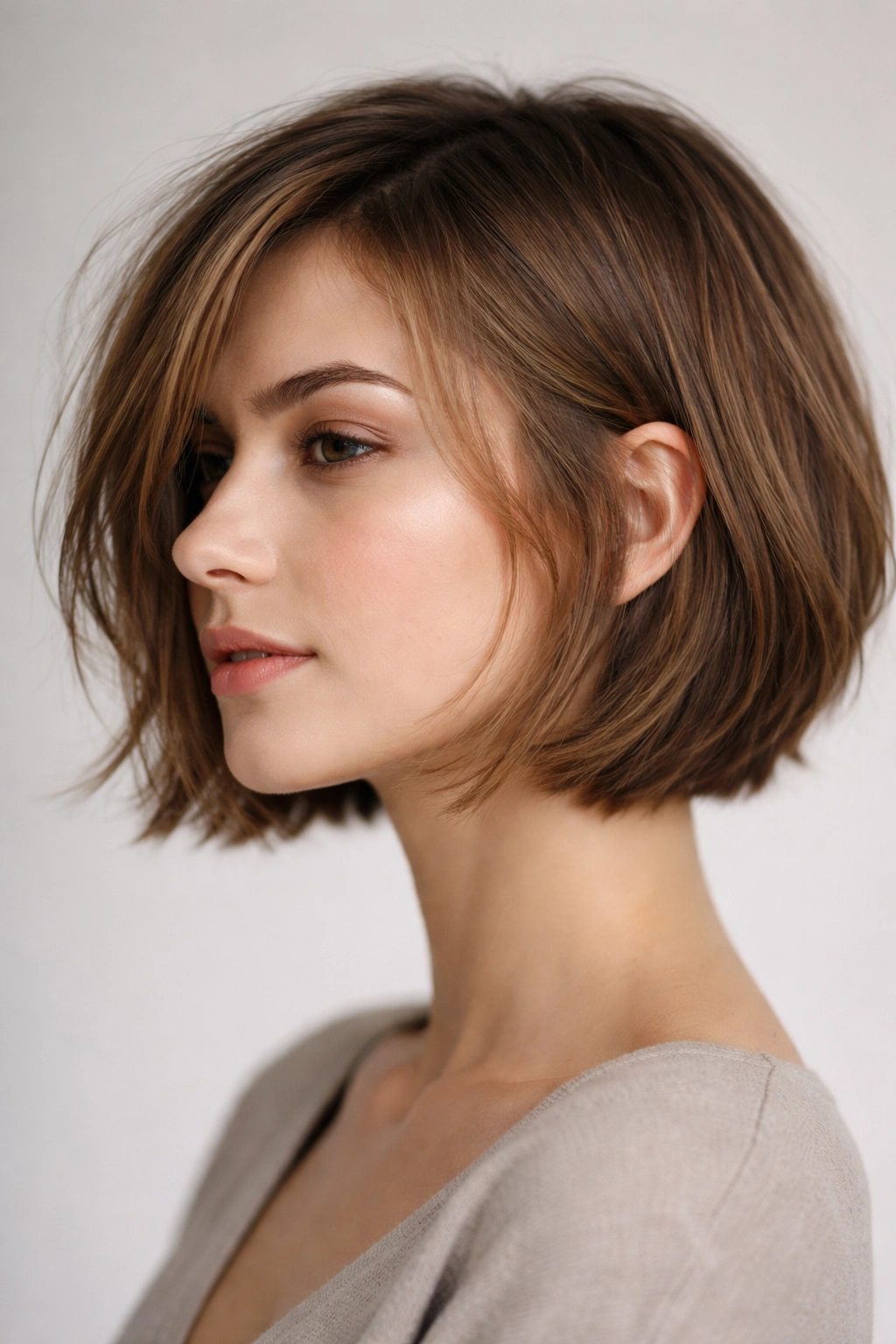
Short bobs on thick hair can be tricky. Go too blunt and the whole shape feels dense; go too soft and it loses structure. A jaw-length textured bob sits in the middle and usually gets there by point cutting the ends.
Point cutting means the stylist snips into the ends at an angle instead of cutting straight across. That takes off a little heaviness and lets the edges move more freely. On thick hair, the difference is noticeable. The cut feels lighter without looking thinned out.
This one is good for people who want something sharp but not severe. The jaw length shows off the neck and cheekbones. The textured ends stop it from turning into a square. Clean line, loose finish. Nice combination.
It does need styling. A quick pass with a flat iron can bend the ends in slightly, or you can use a blow-dryer and round brush to create a soft undercurve. Skip the urge to make every hair smooth. A little texture keeps the shape from getting too stiff.
The shorter the cut, the more every detail matters. That’s the honest truth here.
12. Deep Side-Part Bob With Root Lift
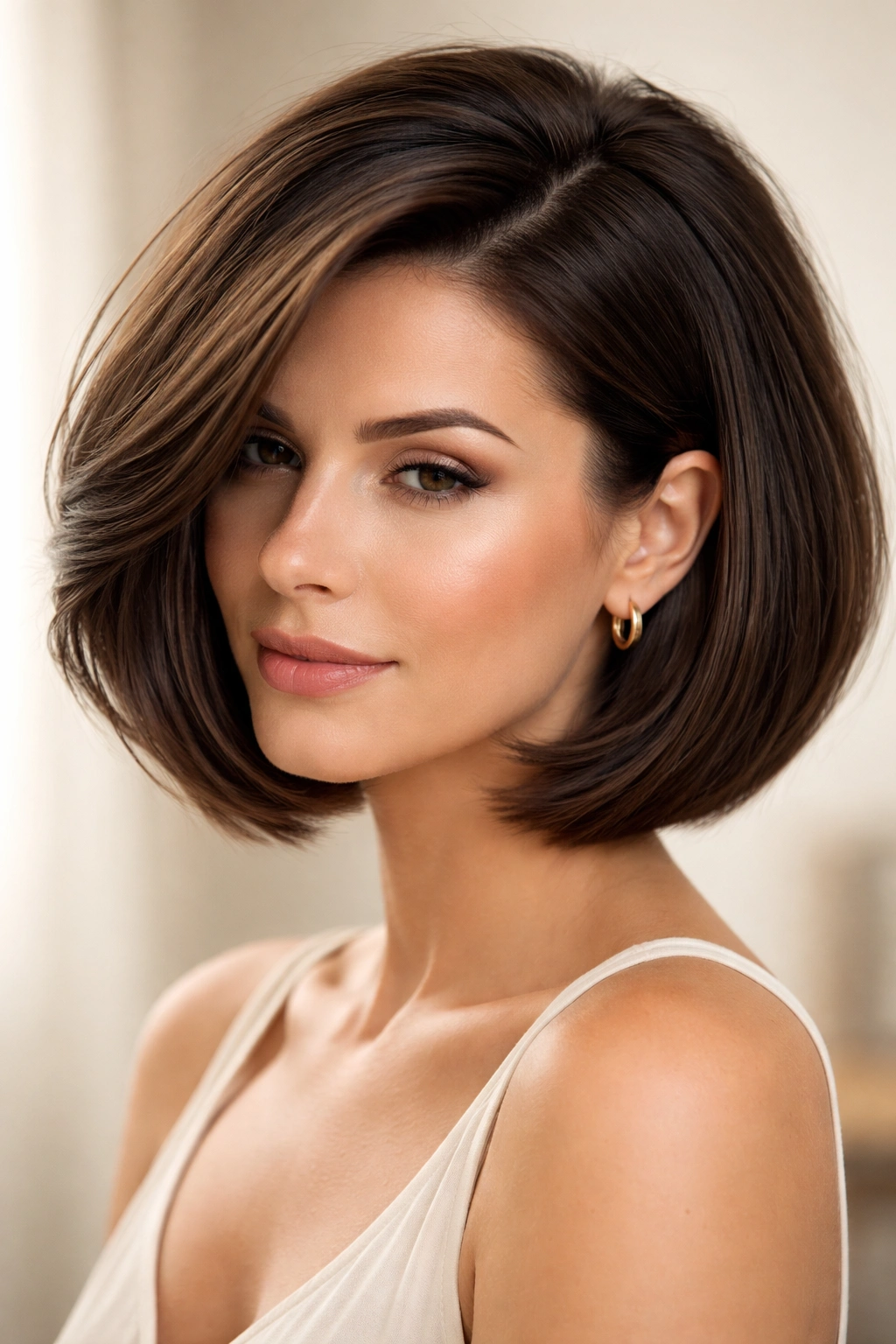
Why does a side part change so much? Because thick hair carries weight where it lands. Move the part, and the whole bob falls differently.
A deep side-part bob gives the roots some height on one side and creates a sweep across the forehead or cheekbone area. That sweep breaks up density fast. It also gives the haircut a little drama without needing extra length or layers.
This is a great choice if your thick hair tends to flatten at the crown. A side part naturally creates lift when paired with a blow-dry that pushes the roots away from the part line. A little mousse at the roots helps, though you don’t need much. Too much product on dense hair can make the scalp area greasy and the ends dry.
How to wear it
- Blow-dry the roots first, lifting at the part
- Direct the front sections away from the face
- Use a wide-tooth comb for a softer finish
- Keep the perimeter clean so the style doesn’t collapse into bulk
The nice thing about this bob is that it works on ordinary days. You don’t need a perfect bend or glossy finish. The side part does most of the work for you.
13. Bob With Curtain Bangs and Cheekbone Layers
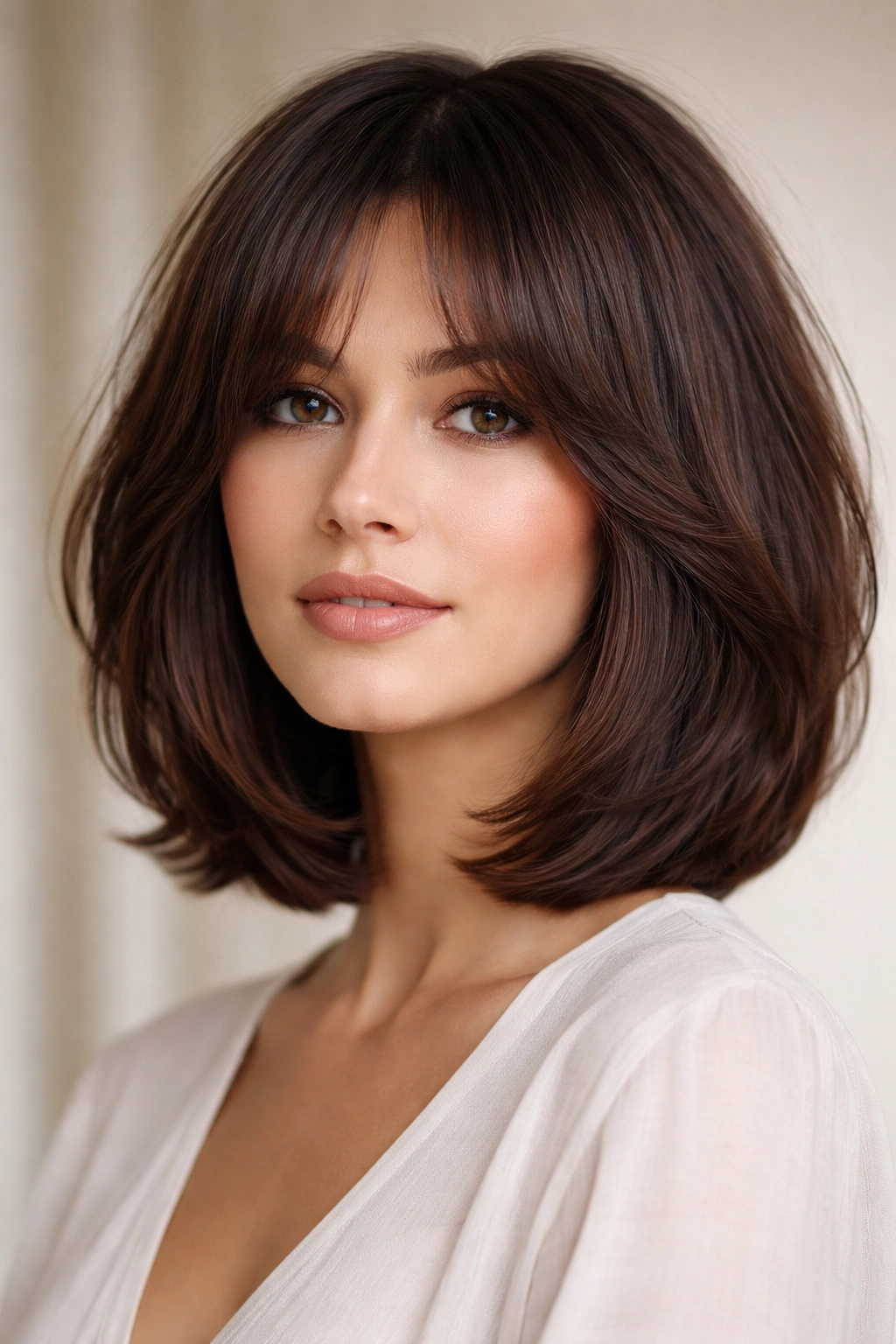
Curtain bangs can be a gift for thick hair, provided they’re cut with enough softness. Pair them with a bob and you get movement right where the face needs it most.
The bangs open at the center and fall toward the cheekbones, which means they break up a dense forehead area without hiding everything. On thick hair, that matters because a solid fringe can feel heavy fast. Curtain bangs stay more airy when they’re blended into cheekbone-length layers.
This cut works especially well if you like hair that can be worn a few different ways. Push the bangs apart, tuck them behind the ears, or let them fall loose. The bob underneath still does the heavy lifting.
The only catch is maintenance. Bangs need more frequent trimming than the rest of the haircut. If you’re not willing to touch them up every few weeks, they can grow awkwardly and start sitting in your eyes. Annoying. But manageable.
Pair this with a round brush only at the front. You don’t need to blow out the whole head. Just the fringe area and the first inch of the cheek layers. That keeps the cut soft without making the rest of the bob too polished.
14. Wavy Bob With Invisible Layers
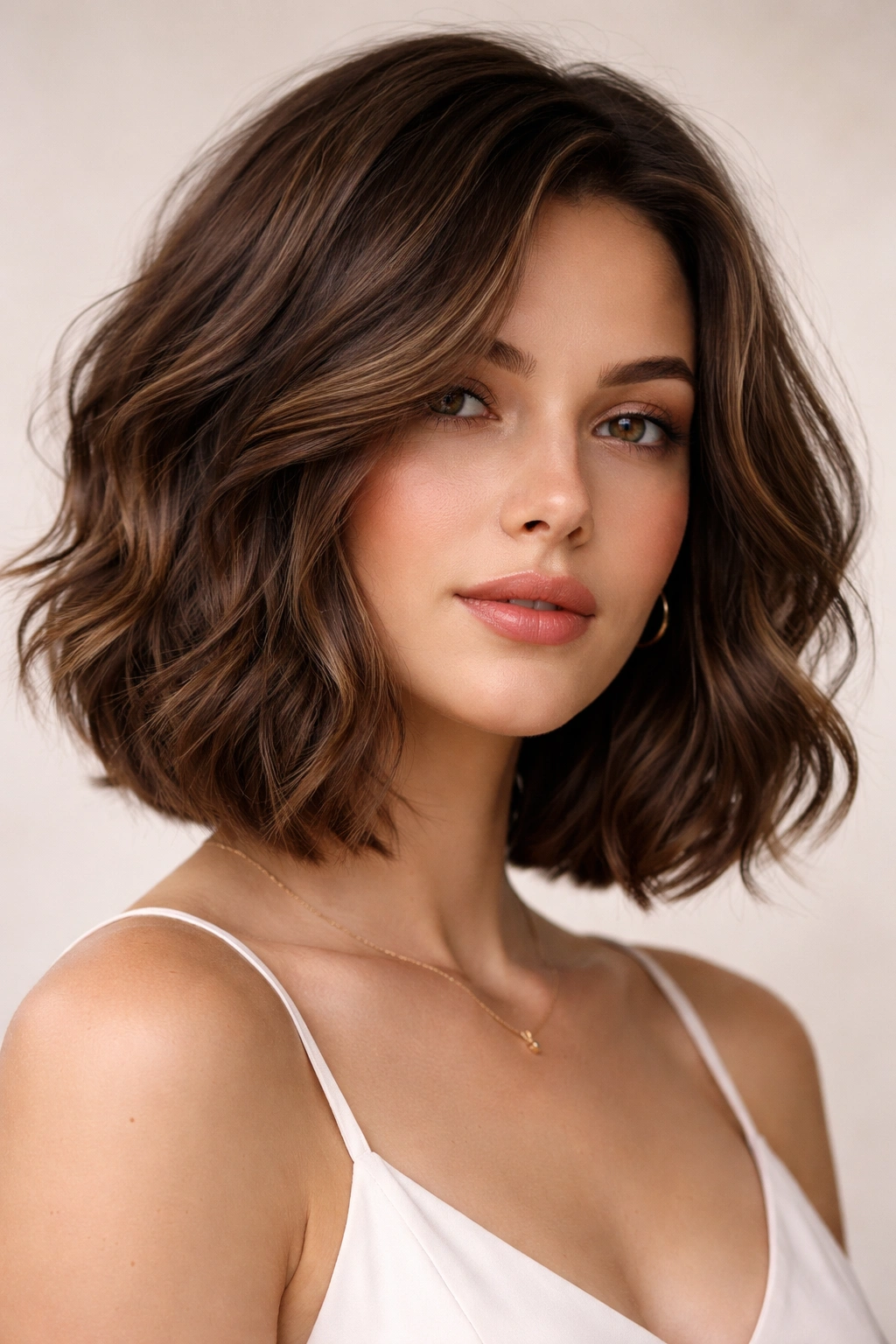
A wavy bob with invisible layers is one of my favorite answers for thick hair that wants movement but hates looking chopped up.
Invisible layers sit under the surface. They take bulk out from the inside, but the outer shape still looks full and smooth. That’s the point. You get a bob that bends with the wave pattern instead of fighting it, and you avoid the patchy look that can happen when thick hair is over-layered on the outside.
This cut is ideal if your hair has a medium wave that shows up once it dries. The hair usually looks best when it’s not over-brushed. Scrunch in a light mousse, air-dry or diffuse, and let the layers do their quiet work.
Unlike a shag, this one doesn’t need to look messy. That’s the nice difference. It can read polished in the morning and looser by afternoon, which is often what thick hair does anyway. The haircut just makes that shift look intentional.
If your hair likes to swell at the bottom, this bob keeps the volume in the right places. Not too high. Not too wide. Just enough shape to keep things moving.
15. Airy Long Bob With a Swingy Finish

If you want the safest bet in the whole lineup, start here. A long bob with an airy finish gives thick hair length to behave, but not so much that it starts feeling heavy and hidden.
The reason this shape works is balance. It keeps enough weight to stop thick hair from exploding outward, yet the ends are light enough to swing when you move. That movement matters. You can see it when someone turns their head and the hair follows instead of sticking in one place.
Who it suits best
This cut is strong on people who want a low-fuss shape that can be worn straight, bent, or brushed out. It’s also a nice middle ground if you’re nervous about going too short. The collarbone area gives the bob a little grace.
A stylist can keep it airy with subtle internal shaping and a soft edge at the bottom. Nothing drastic. Nothing choppy. Just enough removal of bulk to make the hair feel less trapped inside its own density.
If you only try one style from this list, try this one. It’s the most forgiving of the group, which is not the same thing as boring. There’s a reason people come back to it. Thick hair likes room, and this cut gives it room without losing the shape that makes a bob feel like a bob.
