



Bob cuts have a way of making hair look sharper the second they hit the jawline. Clean line, clear shape, no extra fuss. That’s the charm.
The catch is that a bob haircut is not one haircut. A blunt chin-length bob on fine hair behaves nothing like a shaggy bob on thick waves, and a curly bob has its own rules entirely. Cut the same shape into every head of hair and you’ll get three different results, maybe four if the hair has a mind of its own.
That’s why the best bob cuts for any hair type are the ones that respect texture instead of fighting it. A good bob can make straight hair look fuller, make thick hair feel lighter, and give curls a shape that sits instead of sprawling. The wrong bob can do the opposite fast. Heavy, puffy, flat, triangular — I’ve seen all of it.
So the real question isn’t whether bob cuts work. They do. The question is which shape works with your hair, your routine, and how much time you want to spend with a brush in your hand.
1. The Blunt Chin-Length Bob
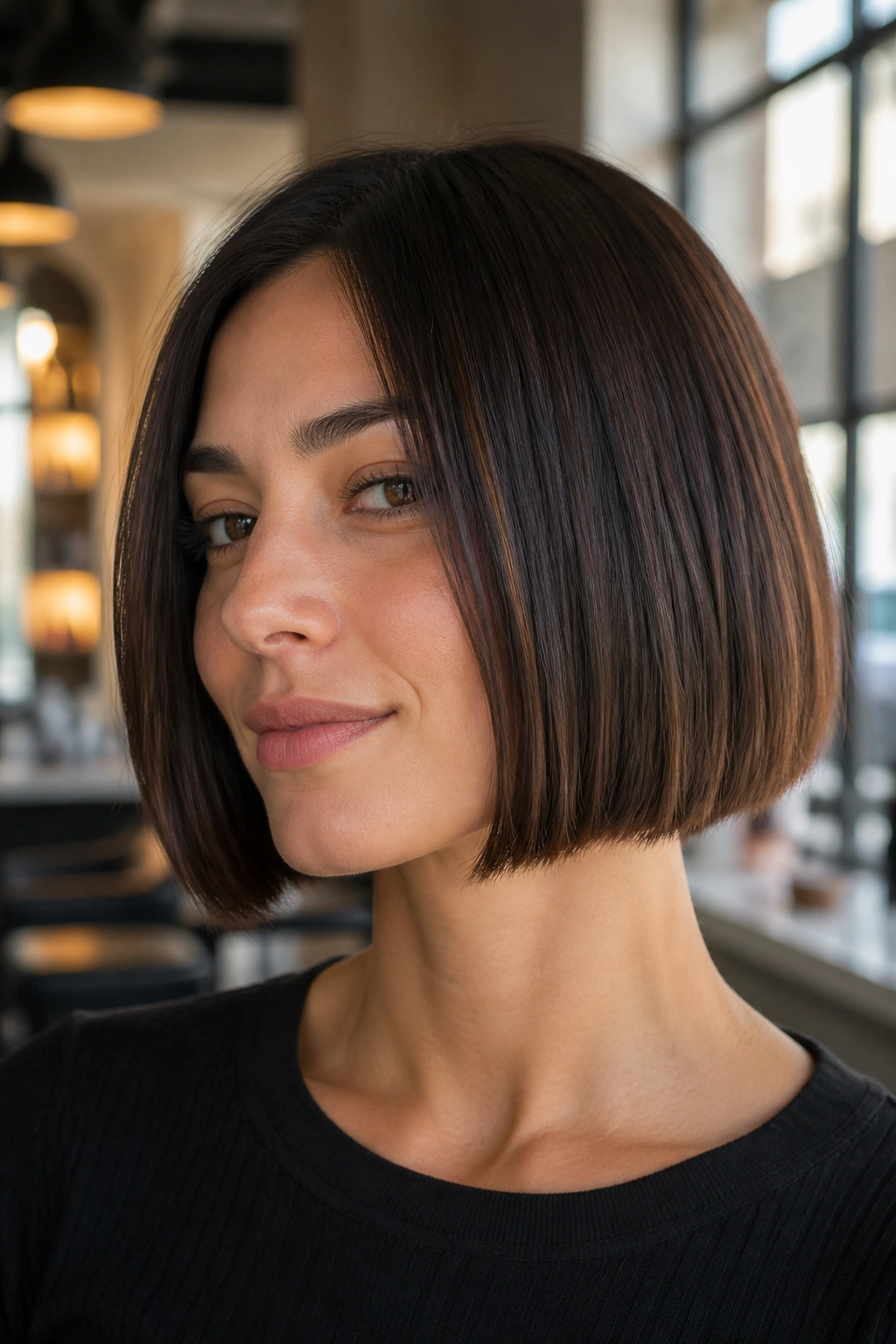
A blunt chin-length bob is the haircut that makes fine hair look like it borrowed density from somewhere else. The edges land right around the jaw, and that hard line gives the illusion of fullness even when the strands themselves are soft or slippery.
Why It Flatters So Many Faces
The clean perimeter is the whole trick. Without a lot of layers breaking up the ends, the hair looks denser and the shape reads as deliberate instead of fluffy. On straight hair, it looks polished. On wavy hair, it gets a little bend at the bottom that feels easy rather than fussy.
It also does something useful for the neck and jawline. A chin-length cut opens up the face, but it does not push everything too short. That middle ground is why this bob stays popular with people who want short hair without the commitment of a crop.
- Best for fine, straight, or softly wavy hair
- Looks sharper when the ends are cut with a clean line
- Needs a trim every 6 to 8 weeks if you want to keep the edge crisp
- Works well with a middle part or a soft side part
Best tip: ask for the ends to be left blunt, not thinned out. Too much texturizing at the bottom makes the whole cut look wispy.
2. The Textured French Bob

If you want a bob cut that looks cool without looking like it tried too hard, the textured French bob is the one that keeps getting people’s attention. It usually sits a little shorter, often around the cheekbone or just below the jaw, and it loves a bit of movement.
The reason it works is simple: it does not depend on perfect styling. A slight bend in the hair, a soft fringe, and some airy texture at the ends are enough. Straight hair gets a little swing. Wavy hair gets to do what it already wants to do. Even thicker hair can wear this shape well if the bulk is handled correctly.
What I like about this cut is the attitude. It does not beg for symmetry. It looks better when a few pieces fall loose around the face and the fringe is a little soft instead of helmet-straight. That relaxed finish is the whole point.
A small dab of mousse at the roots and a quick rough-dry with fingers often beats a full blowout here. If your hair is naturally flat, flip your head forward while drying and stop before the roots are bone-dry. Leave a little bend in them. That’s where the charm lives.
3. The Soft Curly Bob
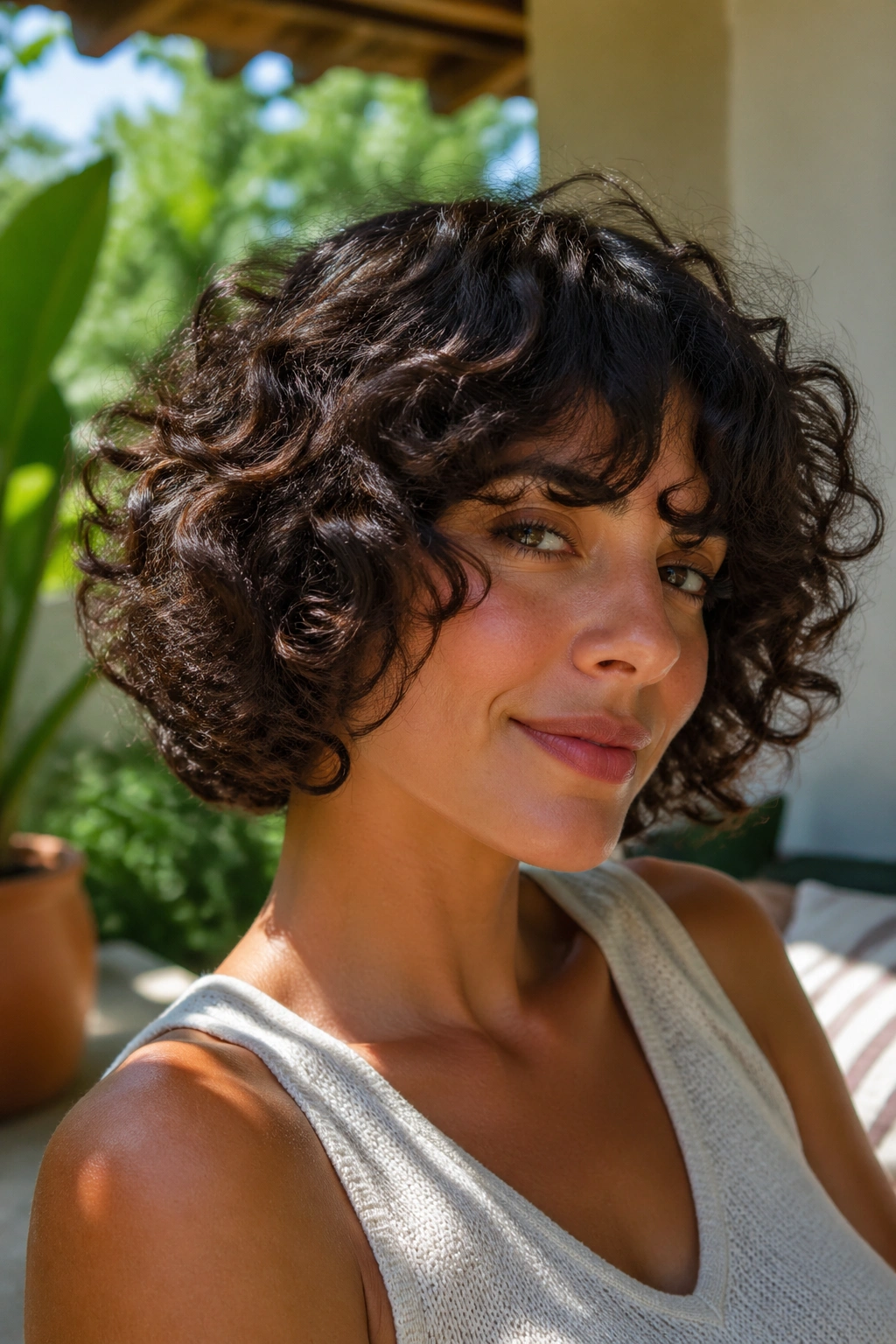
Why do curly bobs look so good when they’re cut a little shorter than you expected? Because curls bounce up when they dry, and a smart bob plans for that instead of treating shrinkage like a surprise.
The sweet spot is a shape that follows the curl pattern rather than forcing every coil to line up like soldiers. A good curly bob usually has enough length to let the curls stack, but not so much that the shape turns bottom-heavy. If the cut is done dry, even better. Dry cutting lets the stylist see where each curl actually lives.
How to Style It
- Use a curl cream or light gel on soaking-wet hair
- Scrunch upward with a microfiber towel or cotton T-shirt
- Diffuse on low heat, low speed, or let it air-dry if you have time
- Avoid heavy brushing once the hair is dry, because it breaks the curl pattern and makes the ends puff
One thing worth saying bluntly: do not over-thin curly hair at the crown. That’s how you get a triangle shape nobody asked for. If the hair is very tight or coily, leave enough length for the curls to hang before they spring up. A bob can be short and still have room to breathe.
4. The Graduated A-Line Bob
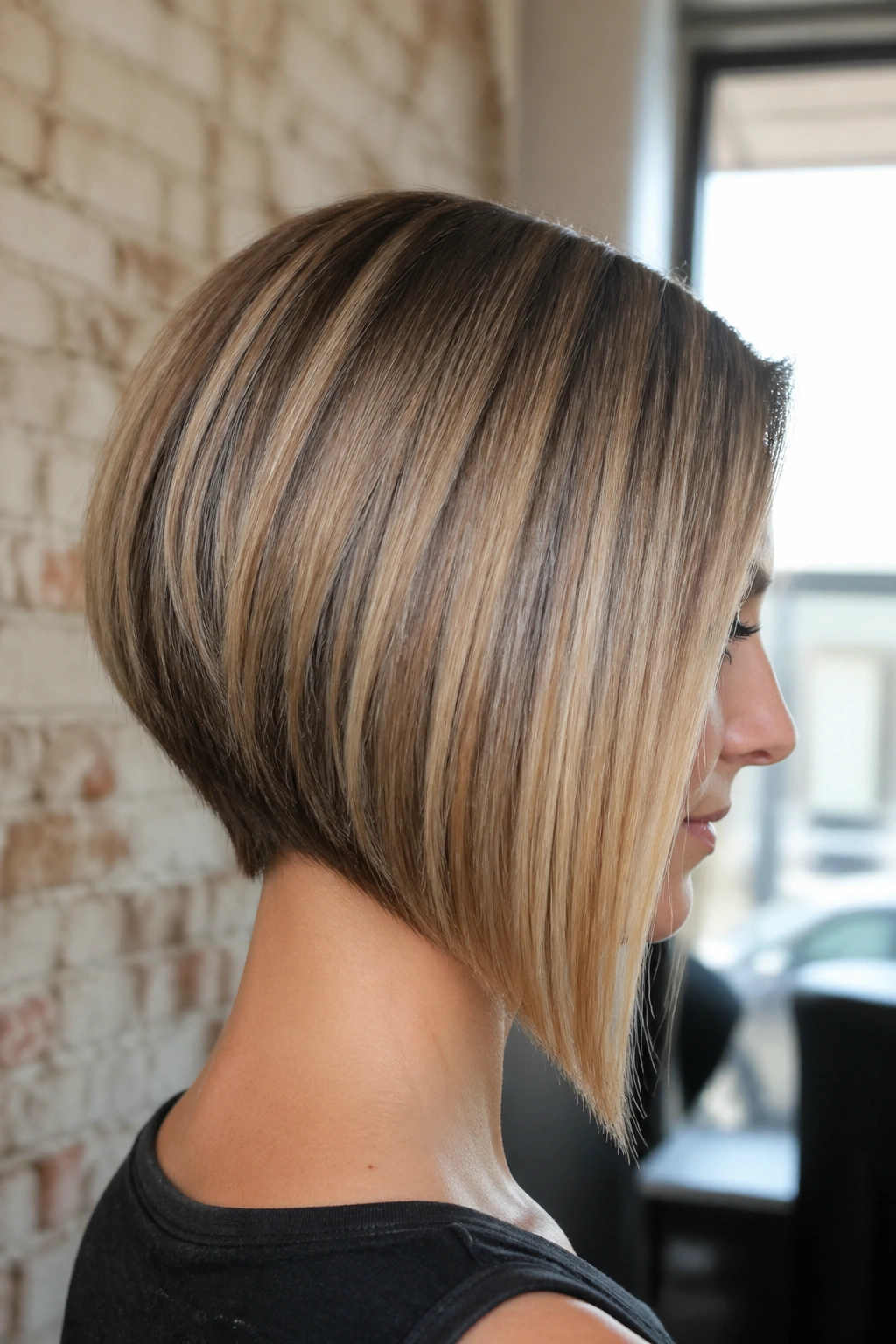
Picture a bob that is shorter in back, longer in front, and neat enough to look intentional even when it grows out a little. That’s the graduated A-line bob, and it’s one of the easiest ways to get shape without going overly dramatic.
The back is stacked just enough to build lift at the nape, while the front pieces sweep forward and give the face a soft frame. On thick hair, that angled line takes weight out of the back. On straight hair, it creates a sleek shape that feels crisp from every angle. On wavy hair, it gives the natural bend a structure to live inside.
What Makes It Work
- Shorter layers at the nape create lift
- Longer front pieces keep the cut from looking boxy
- A side part can make the angle look softer
- The shape grows out in a decent way, which matters if you do not want a haircut that falls apart after two weeks
The cut needs clean sectioning. If the angle is too steep, it can look dated fast. If it is too soft, the whole point gets lost. A good A-line bob sits in that middle zone where you can still tuck one side behind the ear and let the front do the work.
5. The Jaw-Grazing Layered Bob
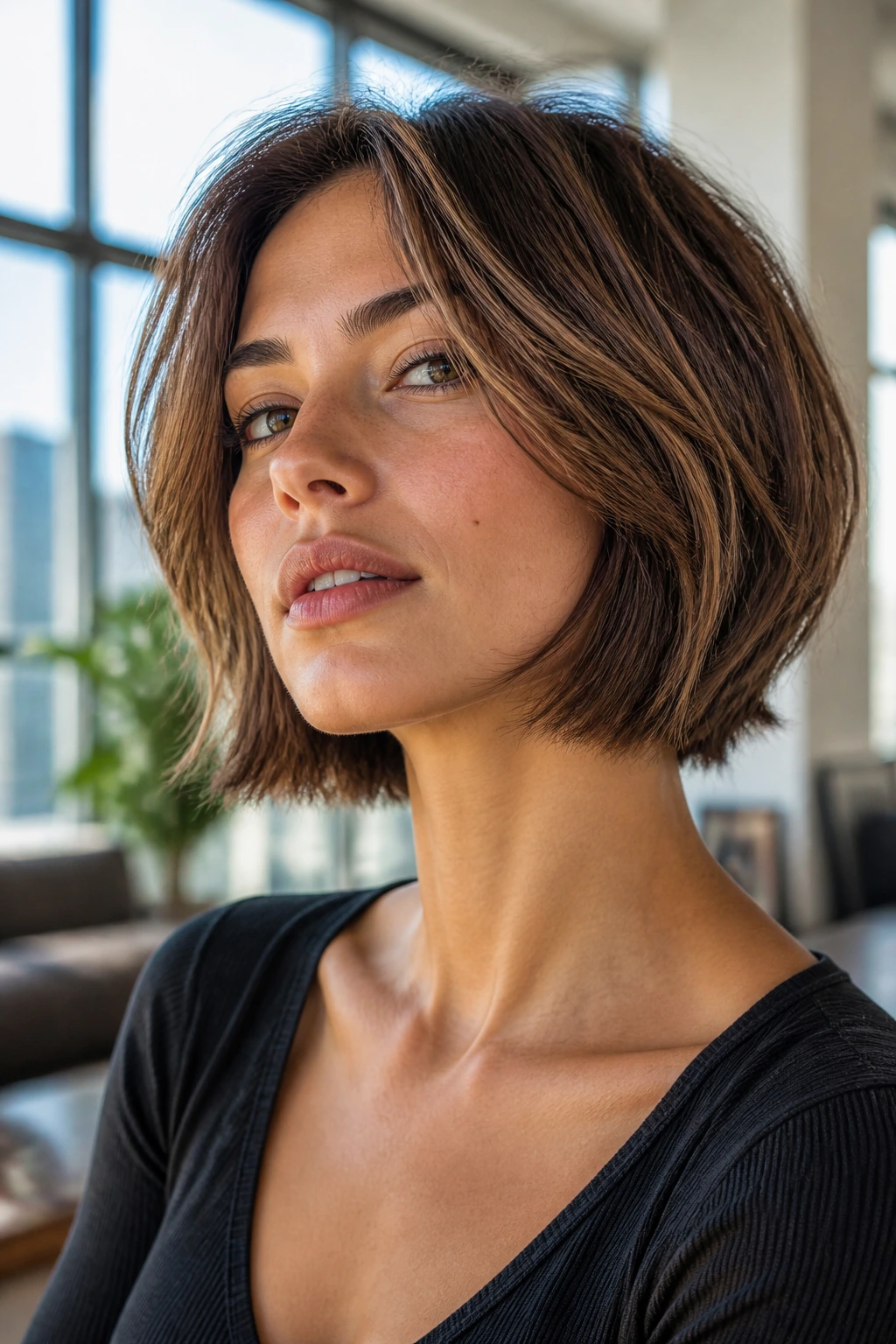
A jaw-grazing layered bob is the haircut I reach for when someone says they want movement but refuses to give up shape. It is short enough to feel fresh, yet long enough to avoid that severe, helmet-like finish that a blunt bob can sometimes give thick hair.
The magic is in the layers, but not the choppy kind. These are soft, controlled layers that remove bulk from the inside while leaving the outside line intact. That means the haircut still has a clear edge, but the ends are not sitting there like one solid block. Hair can swing. It can bend. It can move when you turn your head.
This is a good choice for medium to thick hair, especially if the hair tends to puff out at the sides. A little internal shaping takes the triangle out of the silhouette without making it see-through. I like this cut on people who wear glasses, too, because the jawline length leaves space around the frame instead of crowding it.
The main mistake is over-layering the top. Too much texture near the crown can make the cut lose weight and stick out at odd angles. Ask for movement around the mid-lengths and a clean perimeter below. That’s the part that keeps it cute.
6. The Sleek Side-Part Bob
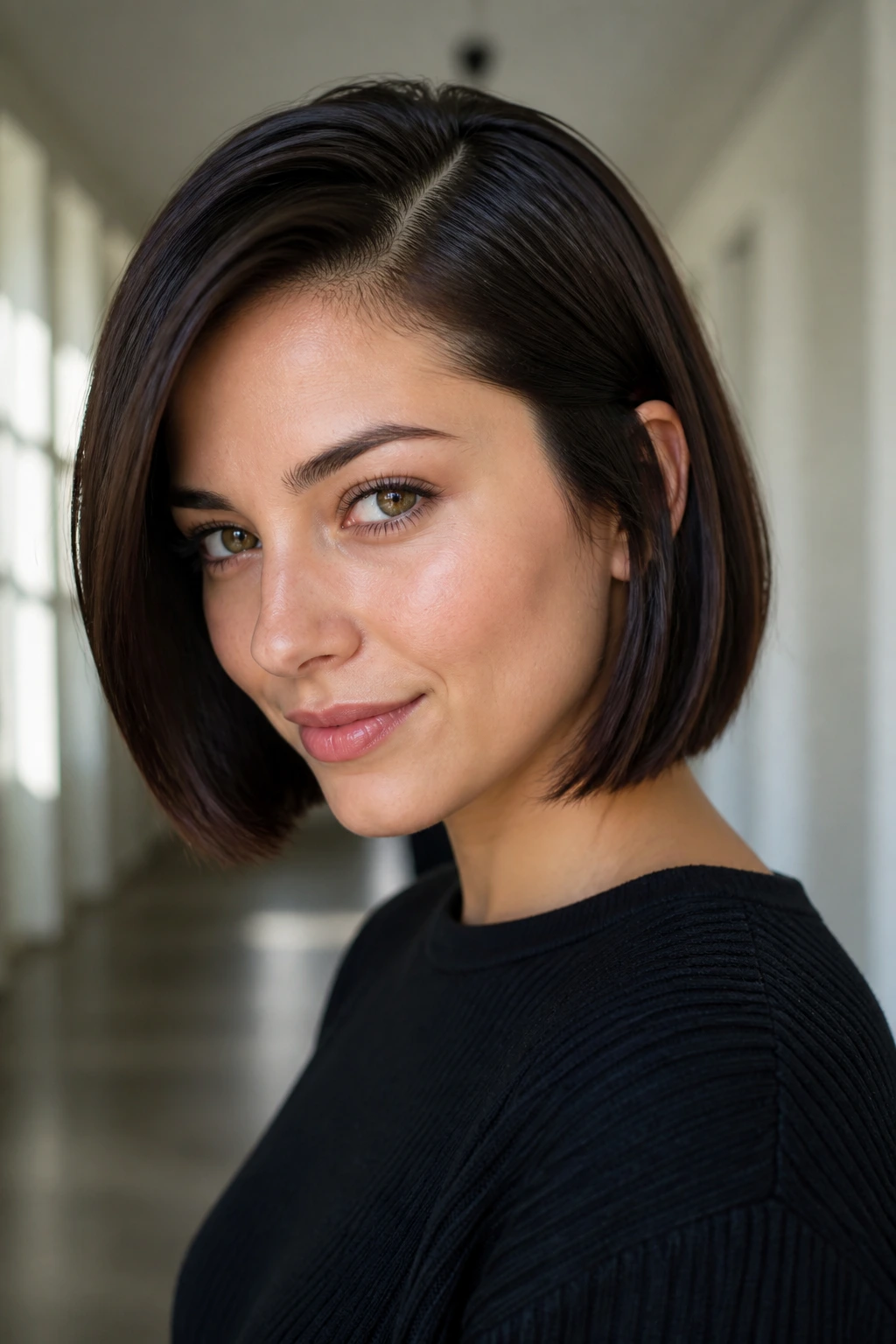
A side part changes a bob more than most people expect. Shift the hair a few inches, and the whole cut suddenly looks softer, fuller at the roots, and a little less severe. That is why the sleek side-part bob works so well on straight or lightly wavy hair.
Compared with a center part, the side part gives the front a built-in sweep. It adds lift where hair often lies flat and can make a blunt cut feel less stark around the cheeks. If your face is round or heart-shaped, that small diagonal line can be doing more work than a whole set of face-framing layers.
The styling is not complicated. Blow-dry the hair in the opposite direction of your final part first, then flip it back and smooth the top with a round brush or paddle brush. That little trick gives the roots a bend instead of a collapse. A tiny amount of shine serum through the ends keeps the finish clean.
I’d reach for this bob when the goal is polish. Not stiff. Not fussy. Just neat, shiny, and easy to tuck behind one ear when you want a little asymmetry without a full asymmetrical cut.
7. The Wavy Collarbone Bob
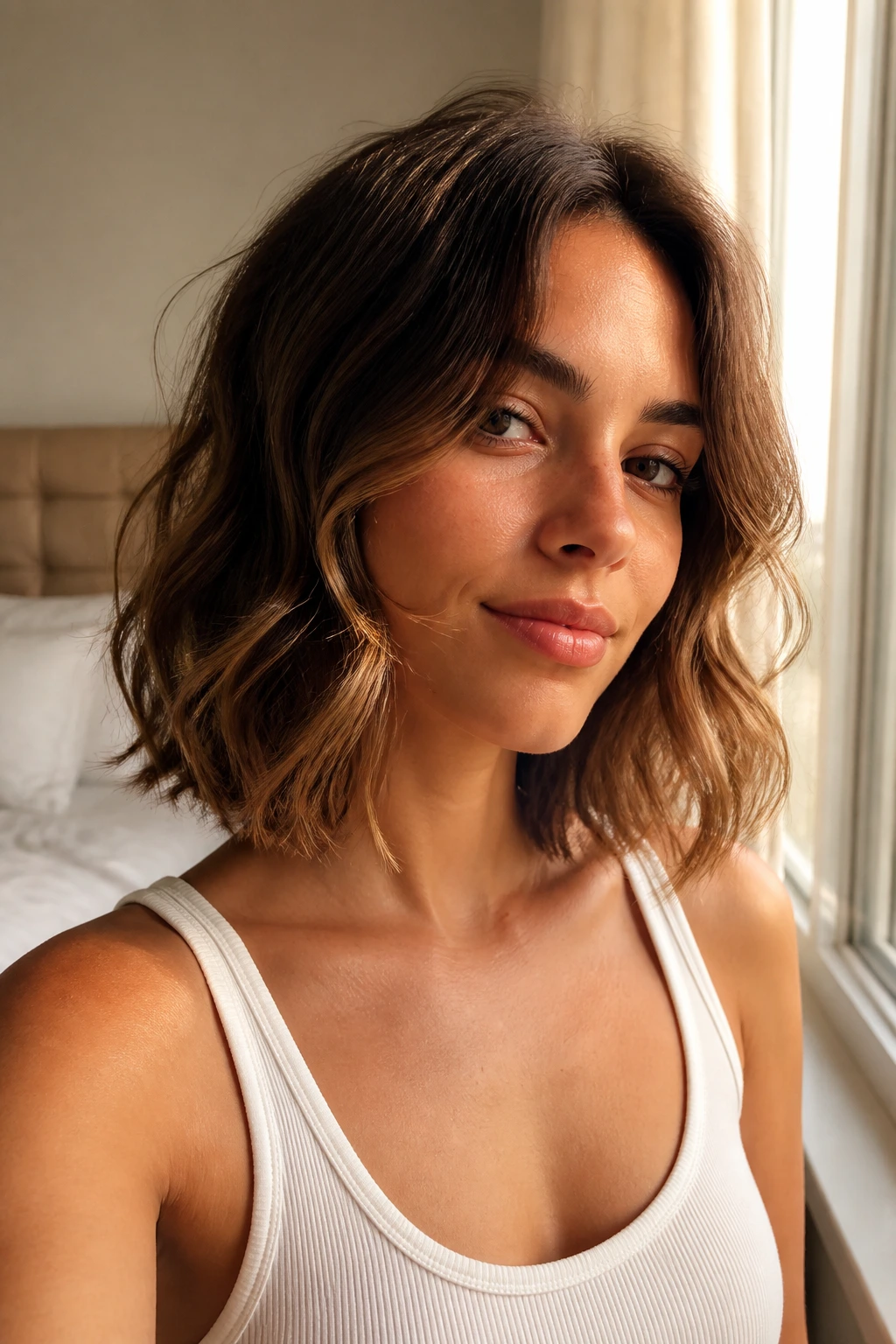
Can a bob sit closer to the collarbone and still feel like a bob? Absolutely. The wavy collarbone bob is the forgiving cousin in the family, and that is part of why so many people end up loving it more than the shorter versions.
This length gives waves room to settle without flipping out at the ends. It also works beautifully for people growing out a shorter cut, because the shape still has enough structure to look styled even when it hits a little below the chin. On thicker hair, the extra length keeps the volume from looking too round. On finer waves, it gives a bit more swing.
How to Keep It Looking Intentional
A one-and-a-quarter-inch curling iron is usually enough if you want to add shape to the front pieces. Wrap only the mid-lengths, leave the ends out, and shake the curls apart with your fingers once they cool. That gives a loose wave instead of a barrel curl.
The other thing that helps is a soft face frame. Nothing severe. Just enough to make the cut sit around the cheekbones and mouth instead of dropping as one flat sheet. If your hair is naturally wavy, air-drying with a small amount of cream often beats heat styling anyway. The cut should do half the job for you.
8. The Shaggy Bob with Curtain Bangs

This is the bob for people who want movement first and neatness second. The shaggy bob with curtain bangs has that slightly undone look that keeps hair from feeling too precious, and the bangs soften the whole shape around the eyes and cheekbones.
The best version uses layers that start below the crown, not right at the top of the head. That keeps the cut from exploding outward. Curtain bangs, when they’re cut long enough to split around the face, add shape without the full commitment of a straight fringe. They also grow out in a way that is far less annoying than blunt bangs.
What to Ask For
- Soft layers through the mid-lengths
- Curtain bangs that graze the cheekbones
- A perimeter that still has some weight
- Point-cut ends, not razor-thin wisps
This cut plays nicely with thick hair, wavy hair, and even curly textures that need a little rebalancing around the face. The key is restraint. Too many short layers and you end up with fuzz instead of texture. Too few layers and the shag disappears. The sweet spot is somewhere in the middle, where the hair has movement but still lands as a bob when it settles.
9. The Rounded Bob for Fine Hair
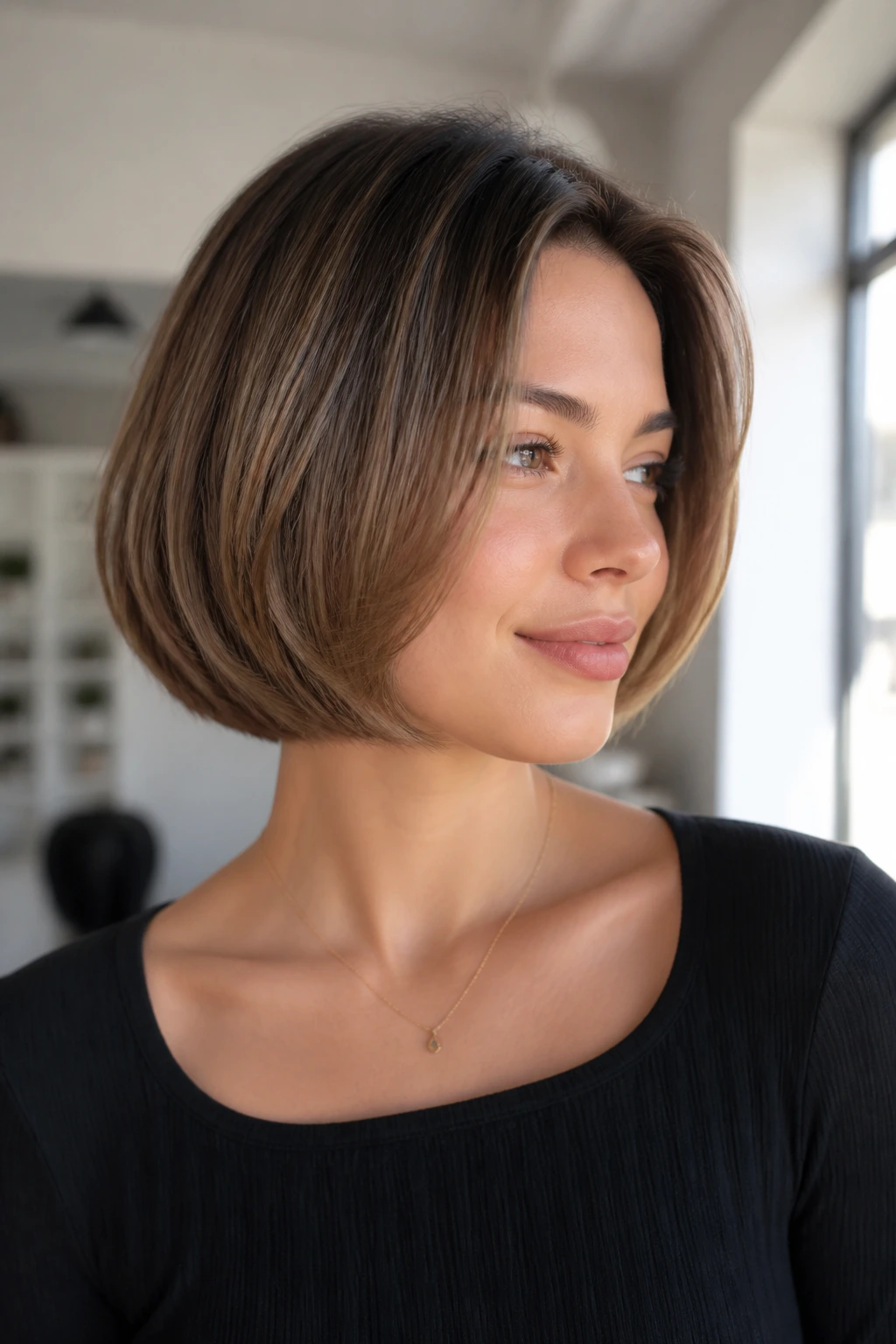
Fine hair needs shape more than it needs drama. The rounded bob understands that better than most cuts. Instead of building a hard square edge, it curves gently around the head and creates a fuller-looking silhouette without asking the hair to do much.
That curve matters. Straight lines can look sparse on fine strands if the ends are too narrow. A rounded perimeter keeps the body of the cut intact, especially when the hair is blown under with a round brush. It gives the impression of density through shape alone, which is one of those rare tricks that actually deserves the praise it gets.
A little root lift spray at the crown helps, but the real win is in the cut itself. Ask for soft graduation through the back and a rounded outline around the jaw. If the layers are too aggressive, the ends can start to look thin fast. Fine hair usually wants less cutting than people think.
The styling part is easy enough: blow-dry in sections, roll the ends under for a smooth curve, and keep the product light. Heavy creams flatten this cut. A mist of volumizing spray near the roots and a pea-sized drop of serum on the ends is usually enough.
10. The Piecey Bob for Thick Hair
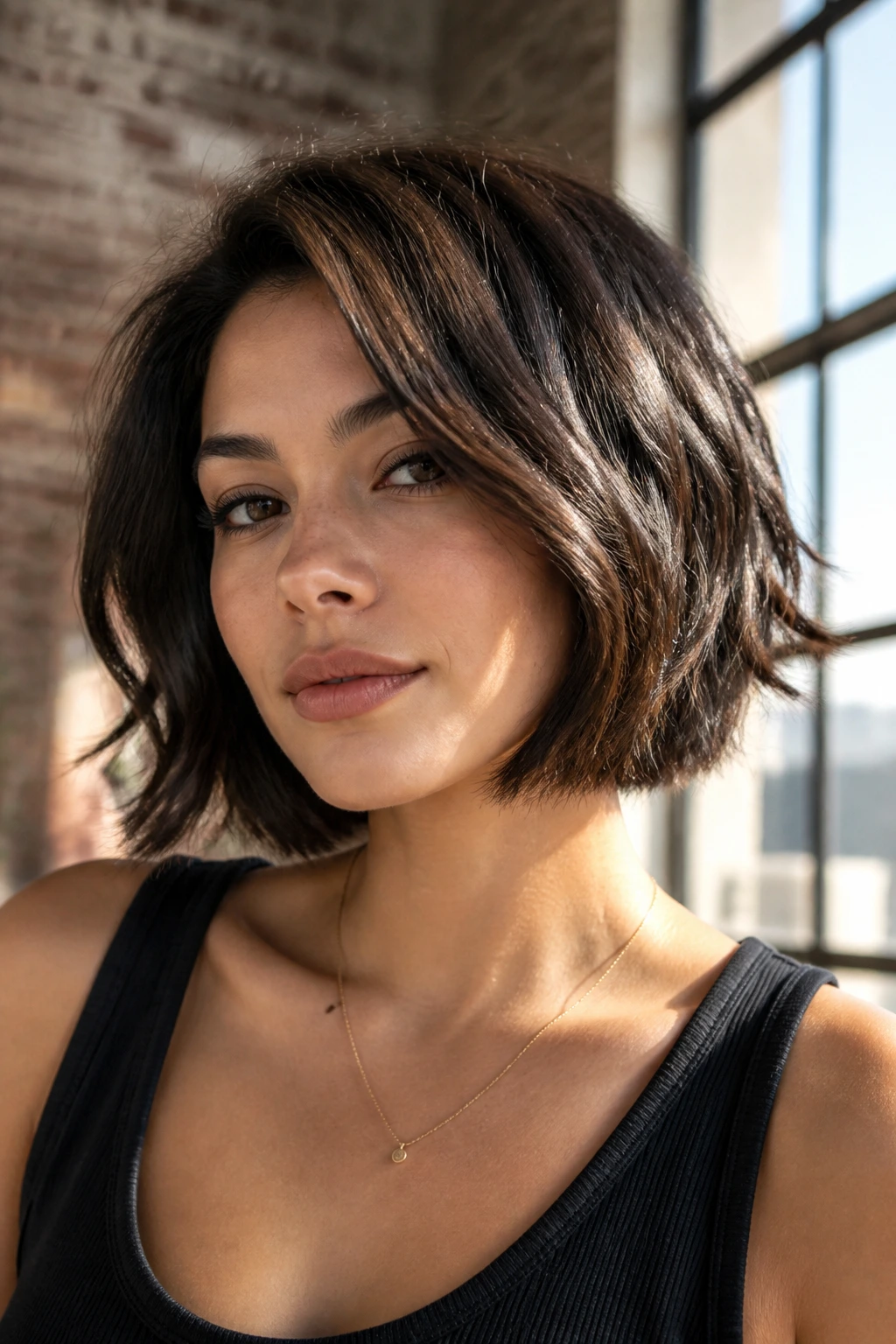
Thick hair can wear a bob better than people give it credit for, but only if the cut removes bulk in the right places. The piecey bob does that by breaking up the mass into smaller sections of texture while keeping the overall shape clean.
What you do not want is a blunt triangle. That is the danger zone. Thick hair will happily sit out at the sides if the interior is not shaped with care. A good piecey bob uses point-cutting, subtle internal layering, and a perimeter that still feels heavy enough to anchor the style. The result is lighter, but not stringy.
I like this cut when someone wants a bob that moves. You can scrunch a little wave into it, wear it straight, or tuck the front sections behind the ears and let the texture do the rest. It is one of the more flexible bob cuts because it gives you enough structure to look deliberate and enough texture to avoid that blocky, overbuilt feeling.
The styling product matters here. A matte texturizing cream or light paste can separate the ends after drying. Too much oil or too much smoothing cream, and all that piecey definition disappears under one shiny surface. Thick hair usually needs a little grit to look its best in a bob.
11. The Air-Dry Bob for Natural Waves

A good air-dry bob is less about forcing the hair into shape and more about choosing a cut that already agrees with the way your waves move. That is the part too many people miss. If the haircut fights the natural pattern, you end up spending your life with a diffuser and a bad mood.
What makes this bob different is the softness of the outline. The layers are usually kept long enough to let the wave pattern fall in a natural stack, and the ends are shaped so they do not flip wildly as they dry. It is a smart option for people who want a routine that does not involve a round brush every morning.
A center part can make this shape look modern and relaxed, while a side part gives it a little more lift around the front. Either way, the cut should look good when it is only 80 percent styled. That is the real test. If it needs perfect heat styling every time, it is not much of an air-dry cut at all.
For wavy and lightly curly hair, a leave-in conditioner plus a curl cream or wave lotion is usually enough. Scrunch, leave it alone, and resist the urge to touch it while it dries. That’s harder than it sounds.
12. The Inverted Bob with Nape Lift
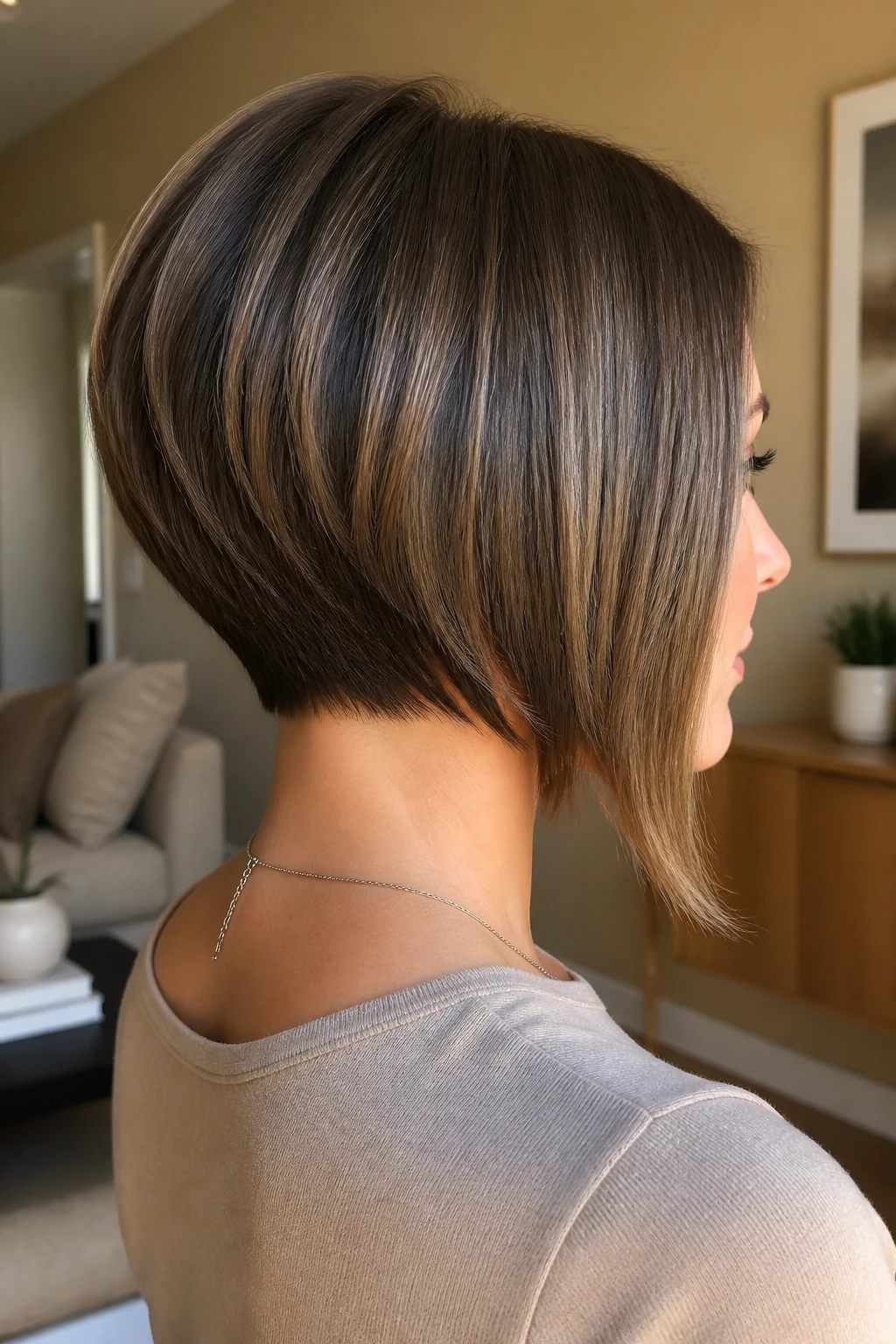
If the back of your hair keeps collapsing, the inverted bob with nape lift can fix the problem fast. The shape is shorter and more stacked at the back, which builds lift where the head naturally curves, then it lengthens toward the front so the cut does not feel too sharp.
That rise at the nape is the whole point. It creates a clean profile from the side and keeps thicker hair from hanging too heavy. Straight hair looks especially crisp in this shape, but lightly wavy hair can wear it well too if the graduation is not too steep.
What to Ask Your Stylist
- Shorter, stacked layers at the nape
- Front lengths that skim the jaw or just below it
- A smooth blend so the transition does not look choppy
- Enough weight left at the bottom to keep the cut from flipping out
One thing to watch: if the angle gets too dramatic, the haircut starts to feel less cute and more architectural. That can be fun, but it is a look. If you want something softer, ask for a gentle inversion instead of a sharp one. The difference is only a couple of inches, but it changes the whole mood.
13. The Micro Bob
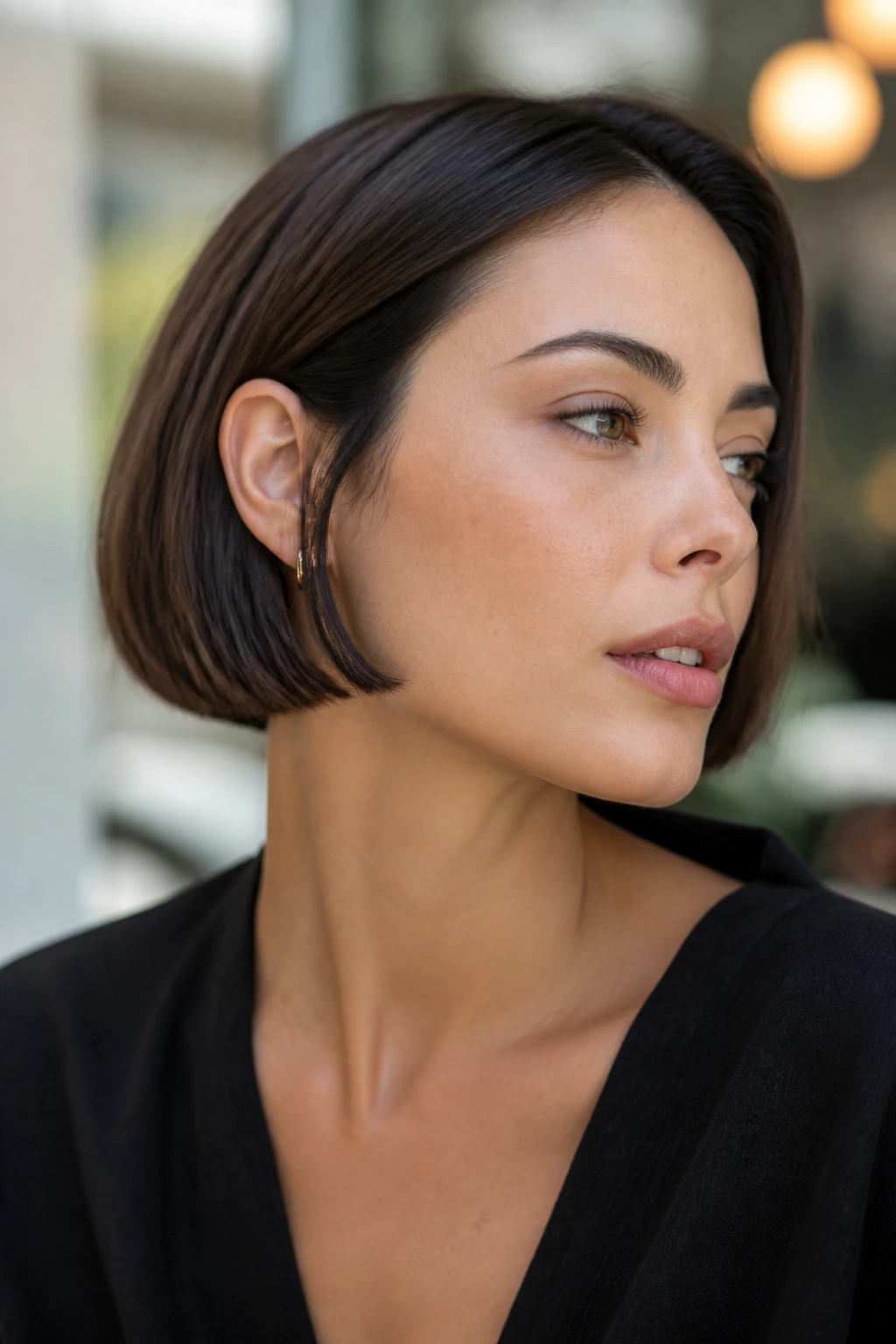
The micro bob is not shy, and that is exactly why people either love it or stay far away from it. It usually sits somewhere between the cheekbone and the ear, with a crisp edge that puts the face, neck, and earrings front and center.
This cut works best when the hair has some natural smoothness, because very short lengths show everything — the growth pattern, the cowlicks, the bends at the temple, all of it. Fine hair can look striking here because the shorter length creates the appearance of density. Straight hair tends to make the shape read cleanest. Curly and coily hair can wear a micro bob too, but the shape needs enough room to respect shrinkage and spring.
The biggest mistake is making it too tight around the head. A micro bob still needs a little softness at the edges or it starts to feel severe. Ask for sharpness at the perimeter and a touch of movement near the face. That keeps the cut from looking like a helmet, which is the last thing anyone wants.
If you like bold earrings, strong brows, or a clean neckline, this cut does a lot of the framing work for you. It is short, yes. It is also surprisingly elegant when the line is right.
14. The Asymmetrical Bob
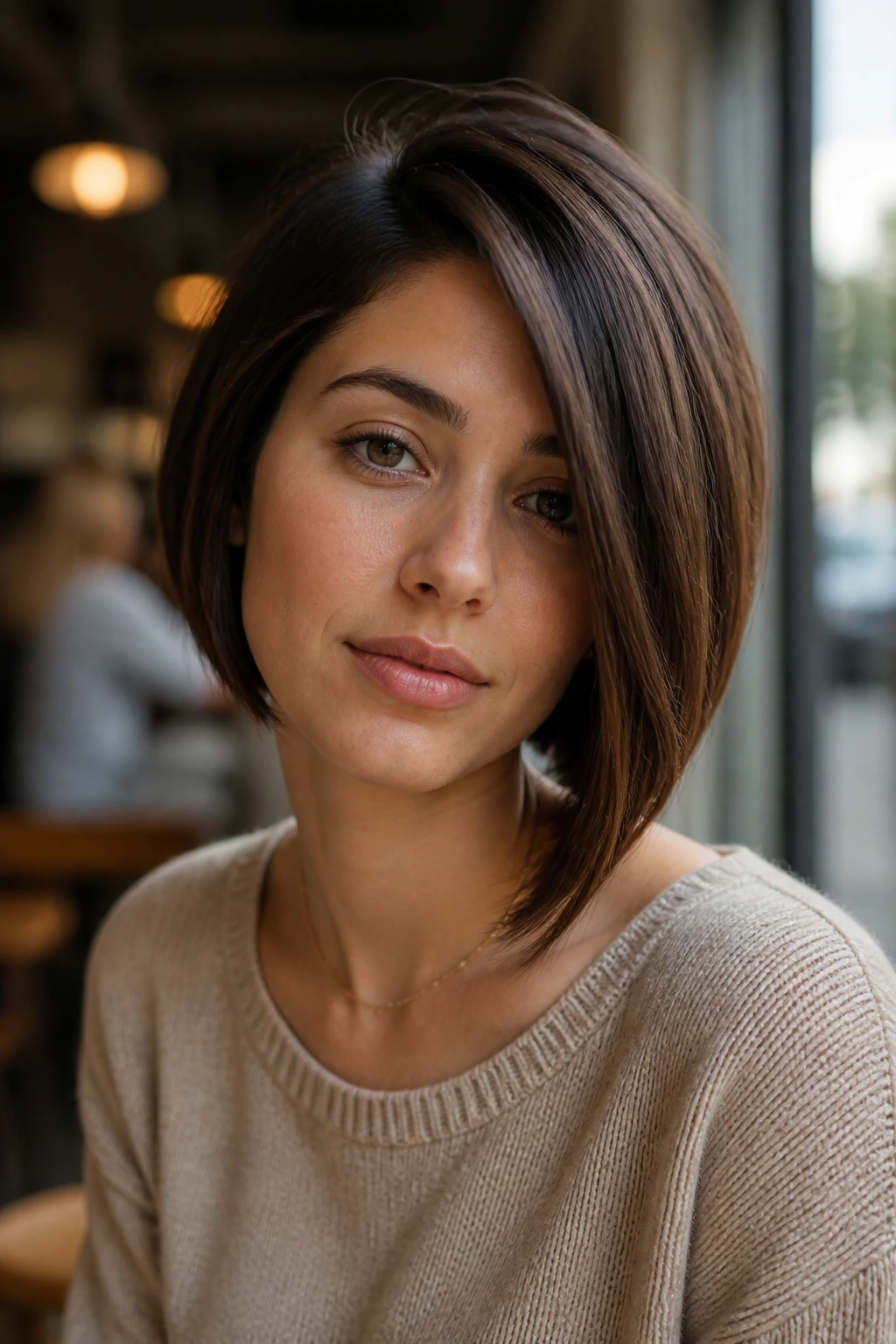
One side longer than the other sounds dramatic on paper, but a good asymmetrical bob is often more subtle than people expect. The difference can be a single inch, or it can stretch to three. The trick is keeping the longer side intentional, not accidental.
Compared with a standard bob, this shape gives the face a diagonal line that can sharpen soft features and take some weight off a rounder face. It also works well when hair naturally parts more easily on one side than the other. Instead of fighting that habit, the cut uses it.
What Makes It Different
- One side is slightly longer, not wildly different
- The shorter side can sit closer to the jaw or ear
- Works well on straight or softly wavy hair
- Needs clean lines to avoid looking uneven by mistake
I would not push this shape too far on very curly hair unless the curl pattern is being cut carefully in its natural state. With straight hair, though, it can look sleek and a little edgy without turning into a costume. Keep the difference small if you want it to stay wearable day to day. Big asymmetry is a statement. Small asymmetry is often the smarter choice.
15. The Soft Shoulder-Grazing Bob
The shoulder-grazing bob is the one I’d hand to anyone who likes the idea of a bob but is not eager to go all the way short. It sits in that easy zone where the hair still brushes the shoulders, but the shape has enough structure to feel like a real cut.
That length is useful for almost every hair type because it leaves room to customize. Fine hair can keep a blunt edge for fullness. Thick hair can lose bulk through soft internal layers. Waves can bend naturally, and curls have enough length to keep their shape without springing too high. Even coily hair can wear this length beautifully when the curl pattern is respected and the outline is left a little longer than a straight-haired version would be.
A shoulder-grazing bob also grows out in a forgiving way. That matters more than people admit. A haircut that still looks decent after a few weeks is worth more than a perfect shape that collapses after one wash. You can wear this one sleek, tucked, waved, or air-dried, which is a nice change from styles that only behave under one exact set of conditions.
If you want the safest bet in the bunch, start here. Then adjust the bluntness, the layers, and the parting until it feels like your hair, not a haircut borrowed from a photo.
Bob cuts work because they draw a clear line, but the best ones also leave room for the hair to act like itself. That is the whole game. A sharp chin-length blunt bob, a curly bob with room to spring, a shaggy bob with bangs, a sleek side-part shape — each one solves a different problem.
If you are deciding between two, look at your density first, then your texture, then how much time you actually want to spend styling. That order matters. The prettiest bob in the chair is not always the one you’ll enjoy on a damp Tuesday morning.
And if the cut still looks good when you have barely touched it? That’s the one worth keeping.
