



A good bob can look modern in a hurry, but the right vintage bob cuts do something better: they give hair shape, attitude, and a little bite. That is why bob lovers keep circling back to older silhouettes. A clean line at the jaw. A tucked nape. A fringe that lands in exactly the wrong-right place. The cut does half the talking before you touch a brush.
Hair density changes everything here. A blunt edge can make fine hair look fuller in one snip. A curved perimeter can take the puff out of thick hair without making it feel chopped up. And a side part—especially a deep one—can push a bob from plain to period-piece fast. The details are small. The effect is not.
What separates a good retro bob from a costume-y one is restraint. A little shine. A neat outline. Maybe one wave, not eight. Maybe a fringe that skims the brows instead of swallowing them. The haircut should feel lived-in, not theatrical. That balance matters more than people think.
So the real question is not whether a bob can look vintage. It can. The question is which version fits your face, your hair texture, and how much styling you’re willing to do before breakfast. Some of these cuts ask for a round brush and patience. Others need almost nothing at all. That’s the fun part.
1. The Flapper Bob With Finger Waves
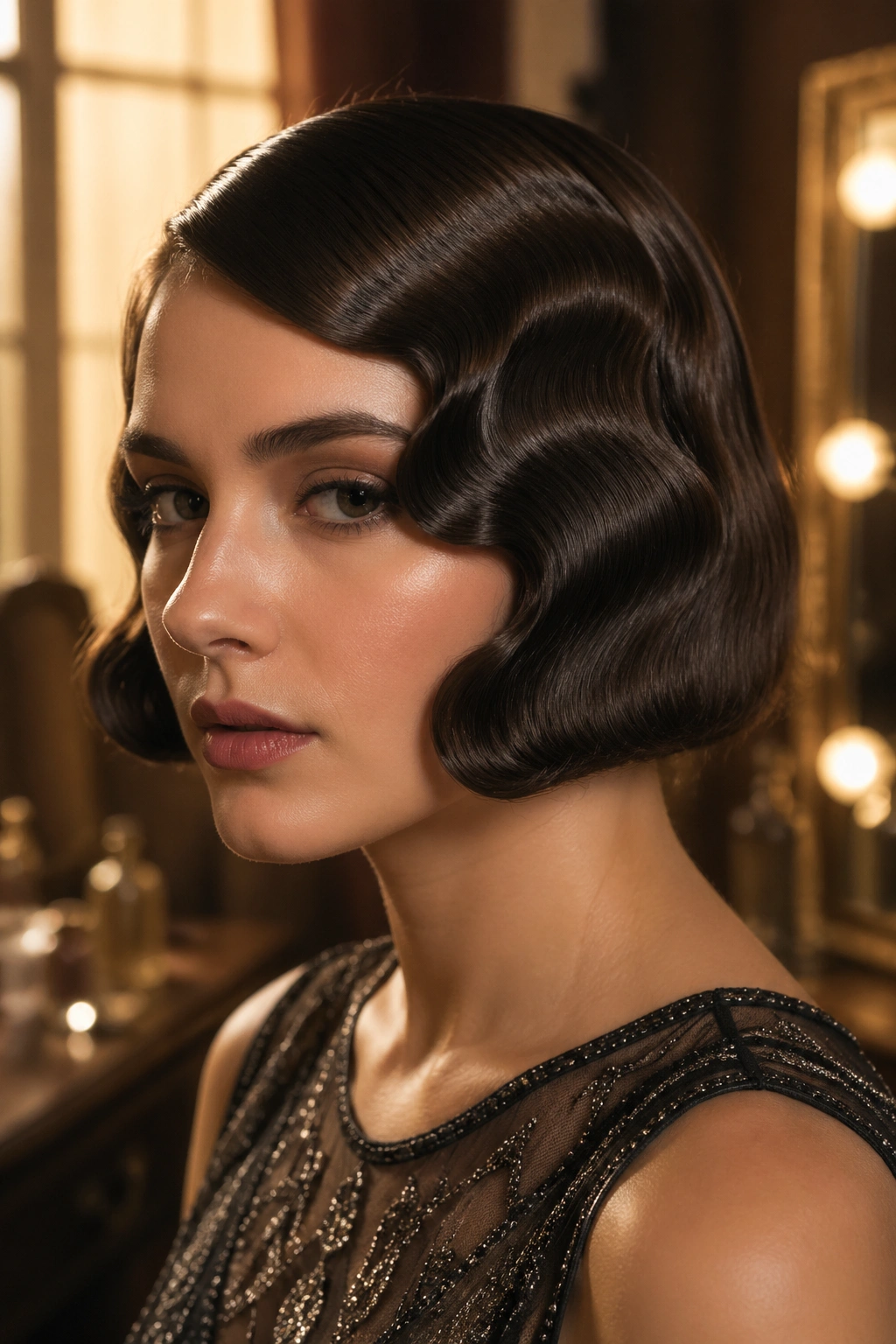
If you want the bob that reads as unmistakably vintage at first glance, start here. The flapper bob sits around the chin, hugs the jaw, and looks even better with a deep side part and a few sculpted finger waves at the temple. It has that crisp, slightly glossy shape that makes pearl earrings and red lipstick feel like they came with the haircut.
The magic is in the line. Keep the outline blunt, not choppy, and don’t let too many layers creep in near the ends. A flapper bob works best when the silhouette stays clean. The waves are the ornament, not the cut itself.
What to ask for
- Chin-length perimeter with a blunt edge
- A deep side part
- Very light internal layering, if any
- Optional soft taper at the nape so the neck sits neatly
Strong hold gel and a fine-tooth comb matter more than fancy tools here. Set the waves while the hair is damp, clip them in place, and let them dry completely before you touch them. If you rush that part, the whole look loses its nerve.
One sentence does the job: this cut is all about shine and control. It loves straight hair, but slightly wavy hair can hold the shape too if you guide it instead of fighting it. On a humid day, though, it may need more product than you expect.
2. The French Bob With a Heavy Fringe
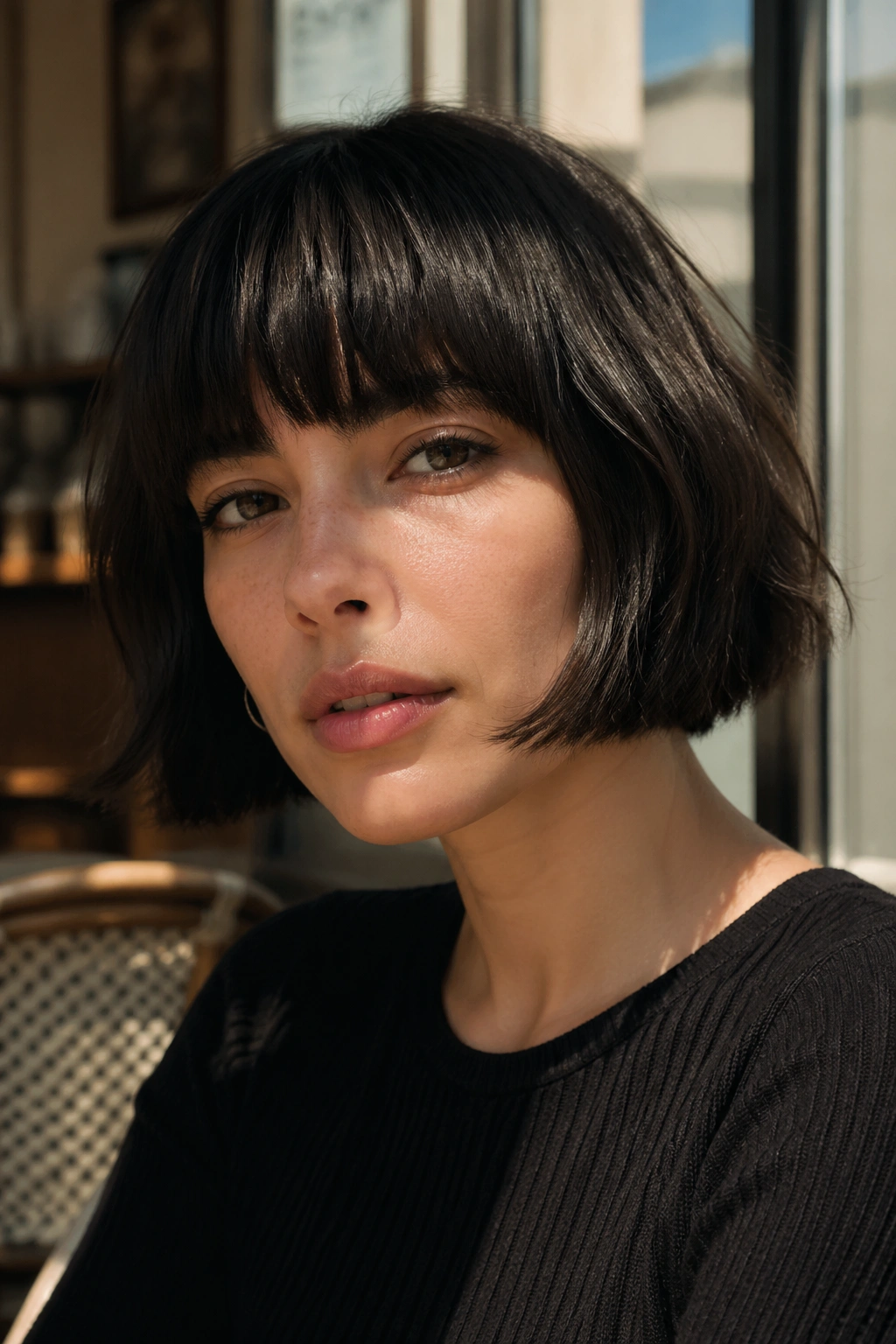
Why do some short bobs look sharp and others look flat? Usually because the fringe is off. The French bob solves that by pairing a jaw-skimming length with a heavier bang that lands at or just above the brows. It has a little attitude, but not much fuss.
This is one of the easiest vintage bob cuts to wear if you like softness around the face. The fringe draws the eye up, and the shorter length keeps the whole shape light. I like this cut on hair that has a little bend to it, because a bit of movement keeps it from feeling stiff. On very straight hair, the bob can look sleek and graphic. On loose waves, it feels more relaxed.
Who it flatters
A French bob is kind to shorter foreheads and strong cheekbones, because the fringe balances the face instead of stretching it. If your hairline is cowlick-heavy, ask for a fringe with a touch of extra weight at the center. That makes mornings easier.
How to style it
A flat brush, a dryer with a concentrator nozzle, and a pea-sized amount of cream are enough for most days. You want bend, not helmet hair. Let the ends flick in a little or curve under just a bit; too much polishing can kill the charm.
The fringe changes everything. It makes the cut feel deliberate even when the rest of your hair is barely styled.
3. The Pageboy Bob With a Curved Underline
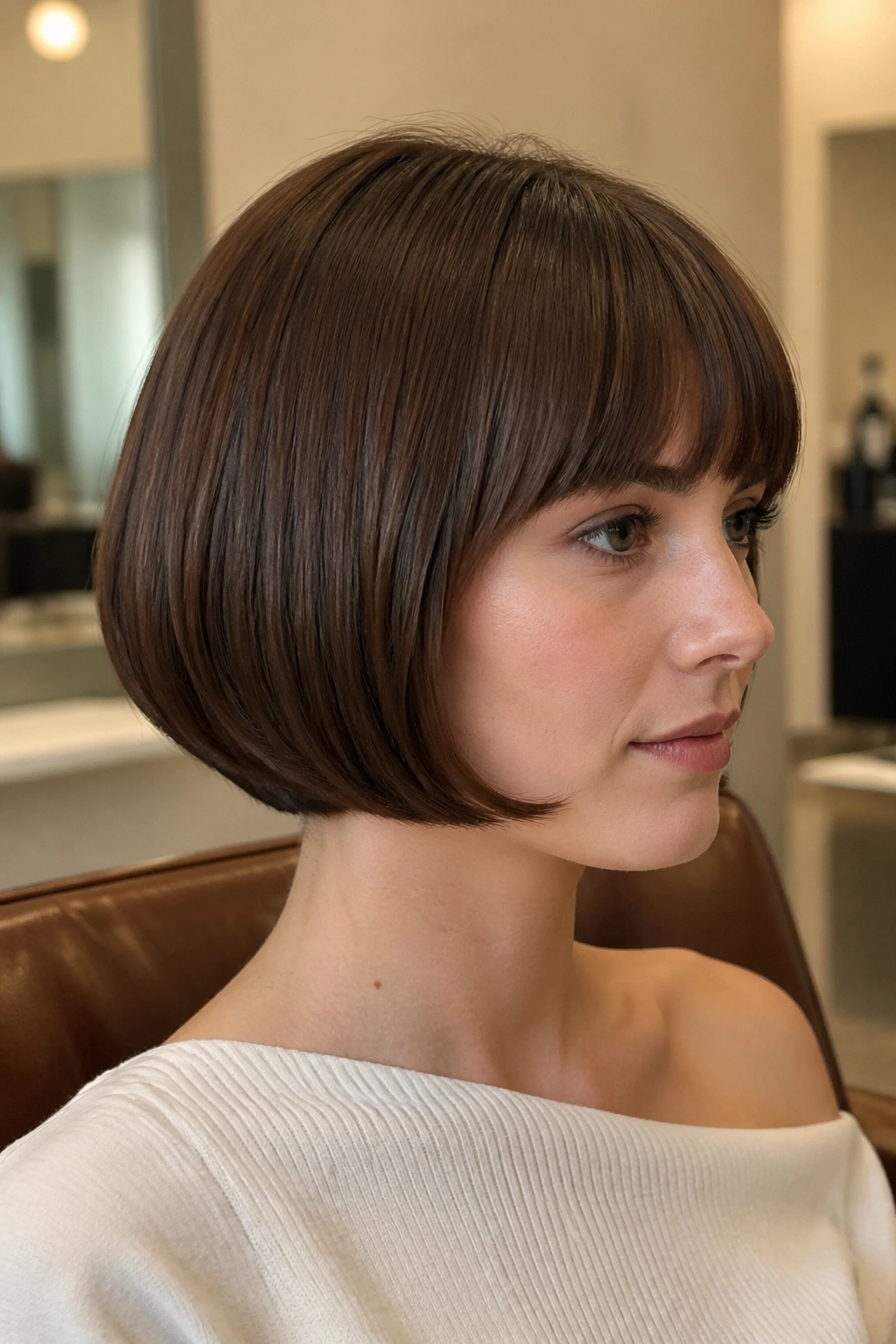
Think of the pageboy as the neat friend who always shows up with pressed sleeves. The ends sweep under instead of flipping out, and the line tends to stay rounded through the bottom. It’s one of those vintage bob cuts that looks simple until you try to fake it, then you realize the shape is doing a lot of work.
Why it works
The curved underline gives the haircut weight. That’s useful if your hair is fine and tends to fly apart, but it also helps thicker hair sit in place instead of exploding at the bottom. The shape feels polished, almost architectural, yet it still has softness if the cut is done well.
What to keep in mind
- Ask for weight left through the perimeter
- Keep the top smooth and the ends tucked
- A small inward bevel at the jaw makes the line look cleaner
- Bangs can be blunt, side-swept, or skipped entirely
A round brush is your best friend here. Blow-dry the hair forward first, then wrap the ends under as you work the brush through the last inch. Don’t yank. Just guide. The shape appears once the ends decide to cooperate.
My blunt opinion: if you hate regular trims, skip this one. A pageboy gets sloppy fast when the neckline grows out, and the whole point is the clean curve.
4. The Italian Bob With Soft Volume
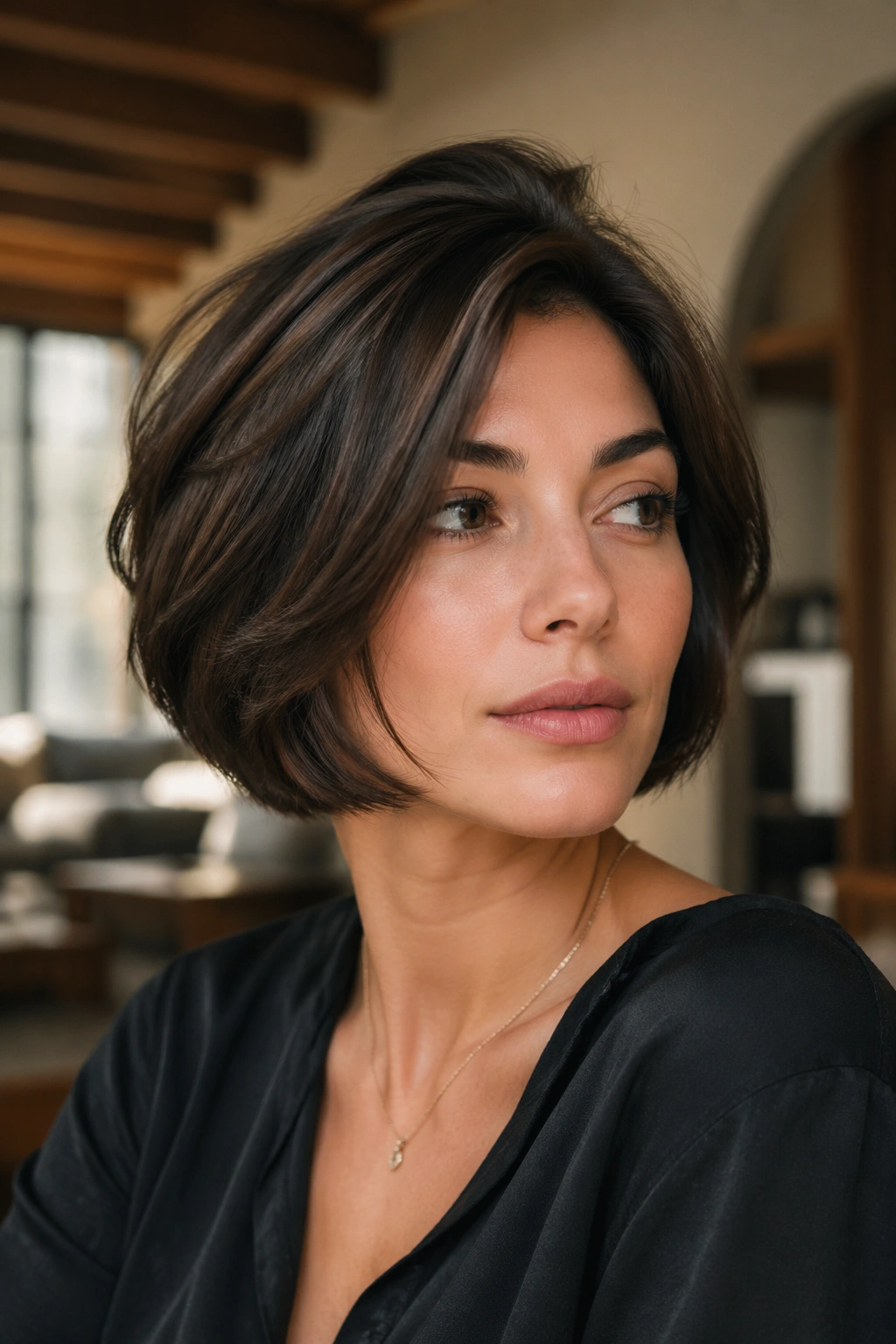
The Italian bob is the one I recommend when someone wants polish but not stiffness. It usually sits between the jaw and the top of the neck, with a little lift at the roots and movement through the body of the hair. Not too flat. Not too puffed up. Just enough presence to feel intentional.
What I like most about this shape is that it reads expensive without trying hard. The volume stays soft, not teased. The ends can curve under slightly, or they can sit nearly straight with just a bend at the corners. Either way, the cut depends on good body and a clean outline.
A medium round brush makes a huge difference. Use a root-lifting mousse near the crown, then dry the hair in sections, pulling the top up and away from the head for a second before you smooth it down. That tiny bit of lift is what keeps the style from collapsing by lunchtime.
It suits medium to thick hair especially well, but fine hair can wear it too if you build the shape with a mousse and a careful blow-dry. The crown should feel airy, not puffy. That’s the line to hold onto.
I keep coming back to this one because it’s forgiving. A little movement looks good. A little bend looks good. Even a slightly imperfect parting looks good.
5. The Shingle Bob With a Tapered Nape
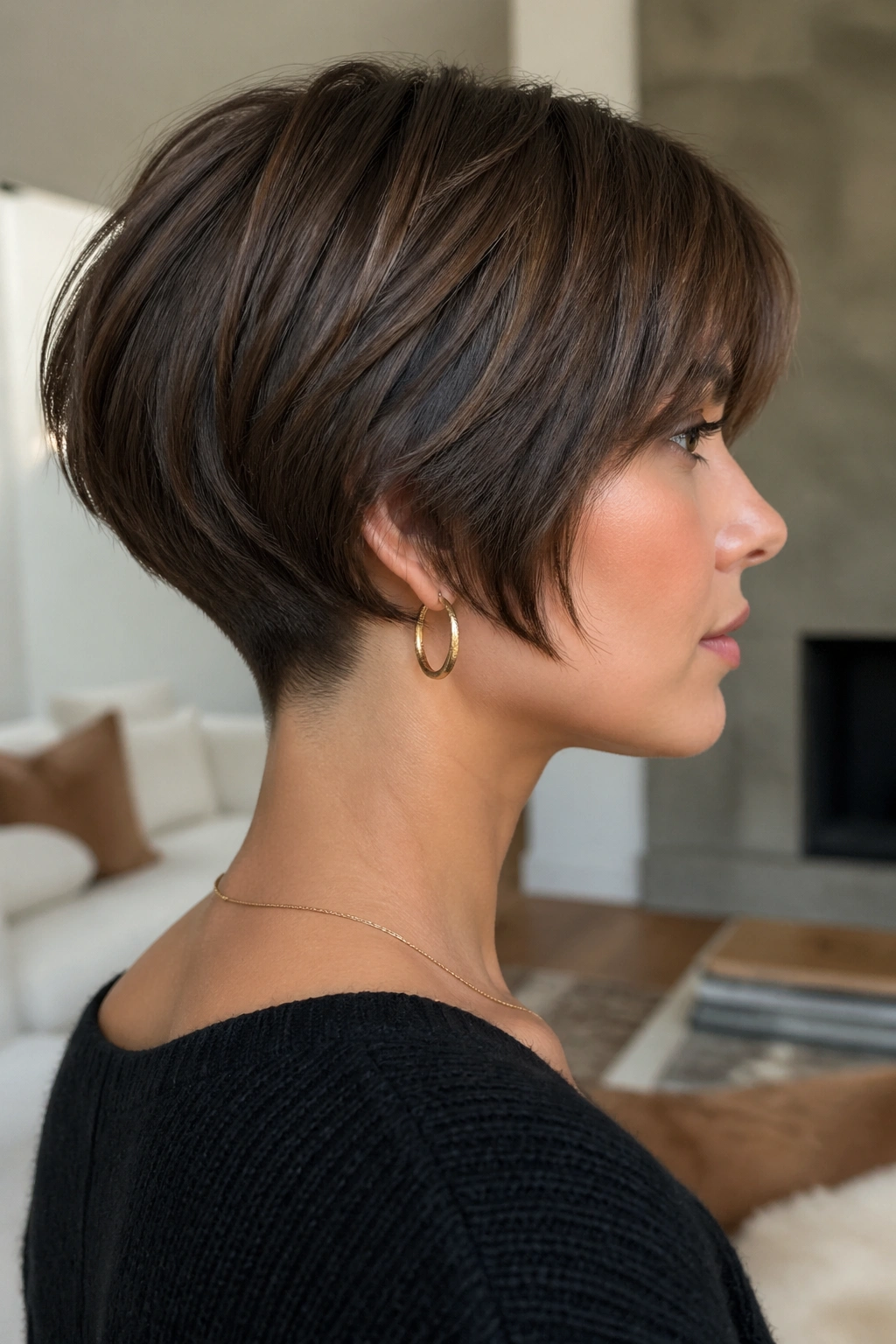
The shingle bob is for someone who likes the back of the haircut as much as the front. The nape is cut close and tapered, while the top stays a touch longer, so the head gets this neat, sculpted shape that looks especially strong in profile. It has a sharp vintage edge without needing much styling drama.
There’s a reason this cut still holds up. It shows the neck. It opens up the ears. It makes earrings do more work than they usually do. And because the back is so precise, the whole style feels cleaner than a bob with random layers floating around.
What to ask your stylist for
- A tapered nape that hugs the neckline
- Slightly longer lengths through the crown
- Soft graduation rather than obvious stacking
- Enough length around the ears to tuck or sweep
The shingle bob loves a neat finish. A smoothing cream, a small flat brush, and a dryer on medium heat are enough for most styling sessions. If your hair grows fast at the nape, though, plan on more frequent trims. This is not a haircut that hides outgrown edges well.
It suits oval and heart-shaped faces especially well, but I’ve seen it look excellent on square faces too because the close back adds shape without adding bulk. If you like a haircut that looks deliberate from every angle, this one has real presence.
6. The A-Line Bob With a Strong Angle
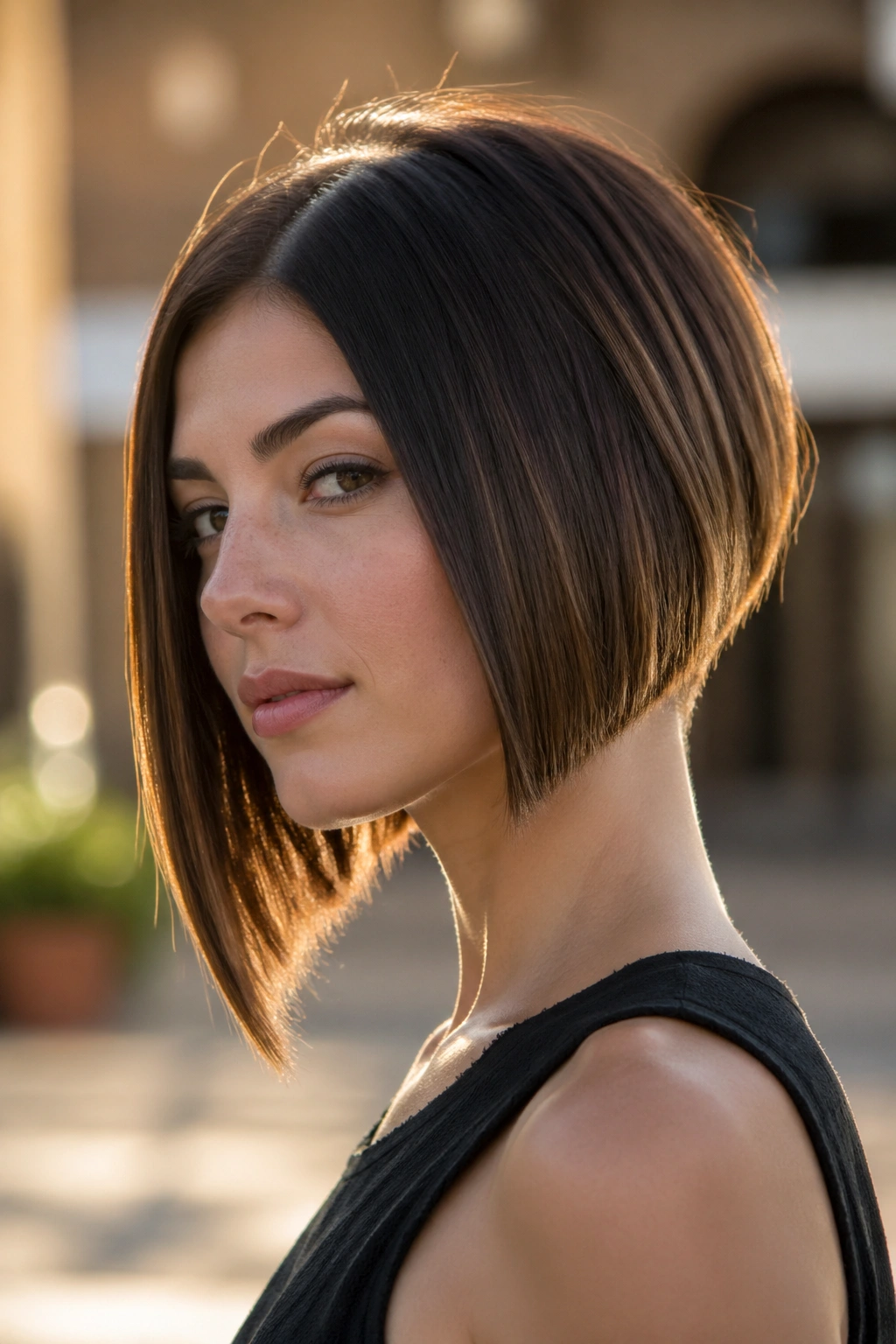
If the pageboy is soft and the French bob is playful, the A-line bob sits right in the middle with a sharper spine. The back is shorter, the front is longer, and the line runs diagonally down toward the face. That angle does a lot of quiet work. It lengthens the neck. It sharpens the jaw. It gives the whole haircut a bit of motion even before you style it.
This is one of those vintage bob cuts that never feels dated because the geometry is so clear. You can wear it sleek, and it looks mod. You can bend the ends slightly, and it feels softer. Either way, the shape is the point, so don’t bury it under too many layers.
A good A-line bob starts with the right front length. If the front lands too low, the cut can drag. Too high, and you lose the swing that makes it interesting. The sweet spot is usually somewhere between the jaw and the top of the collarbone, depending on how dense the hair is.
It’s especially kind to round faces because the front sections visually stretch the profile. Thick hair can carry the angle well too, since the weight in back helps the shape hold. The line should look clean even when the hair is tucked behind one ear. If it doesn’t, the cut needs refining.
I think of this as the bob for people who want structure but don’t want a hard shell. It gives you the message without shouting.
7. The Curved Bob With a Rounded Silhouette
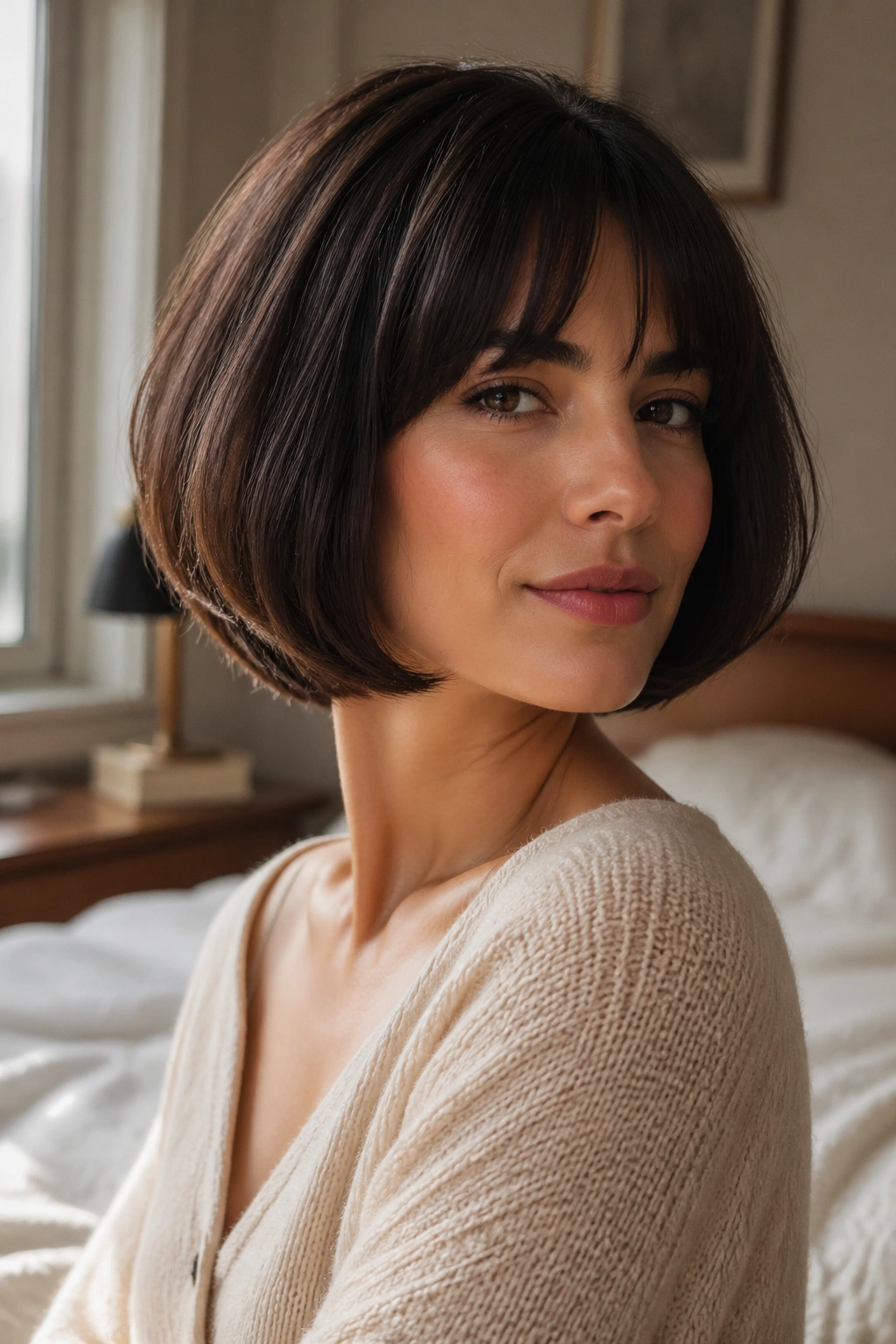
A curved bob is what happens when softness is the goal, not stiffness. The silhouette rounds gently around the head and hugs the jaw instead of tracing a strict geometric line. It feels a little like a pageboy’s less formal cousin, and that’s exactly why it works so well in a retro look.
What makes this shape special is the way the ends are handled. They’re usually blown under with a round brush, but the curve is broader and easier than a pageboy’s tight tuck. The result is smooth, polished hair that still has body. On thick hair, the curved shape can take the bulk down a notch. On fine hair, it gives the illusion of fullness without looking puffed.
How it differs from a pageboy
- The curve is softer and less exact
- The crown usually has a touch more lift
- The outline feels rounded, not boxed in
- It can be worn with or without fringe
For styling, think low drama. Use a medium round brush and direct the hair around the curve of the jaw. Don’t force the ends into a sharp curl. Just nudge them under and let the shape settle. A small amount of shine serum on the mid-lengths helps, but too much product makes the hair look flat.
This is a good choice if you want retro polish without the severe edge that some shorter cuts carry. It’s friendly. That’s the word.
8. The Sassoon Geometric Bob With a Clean Edge
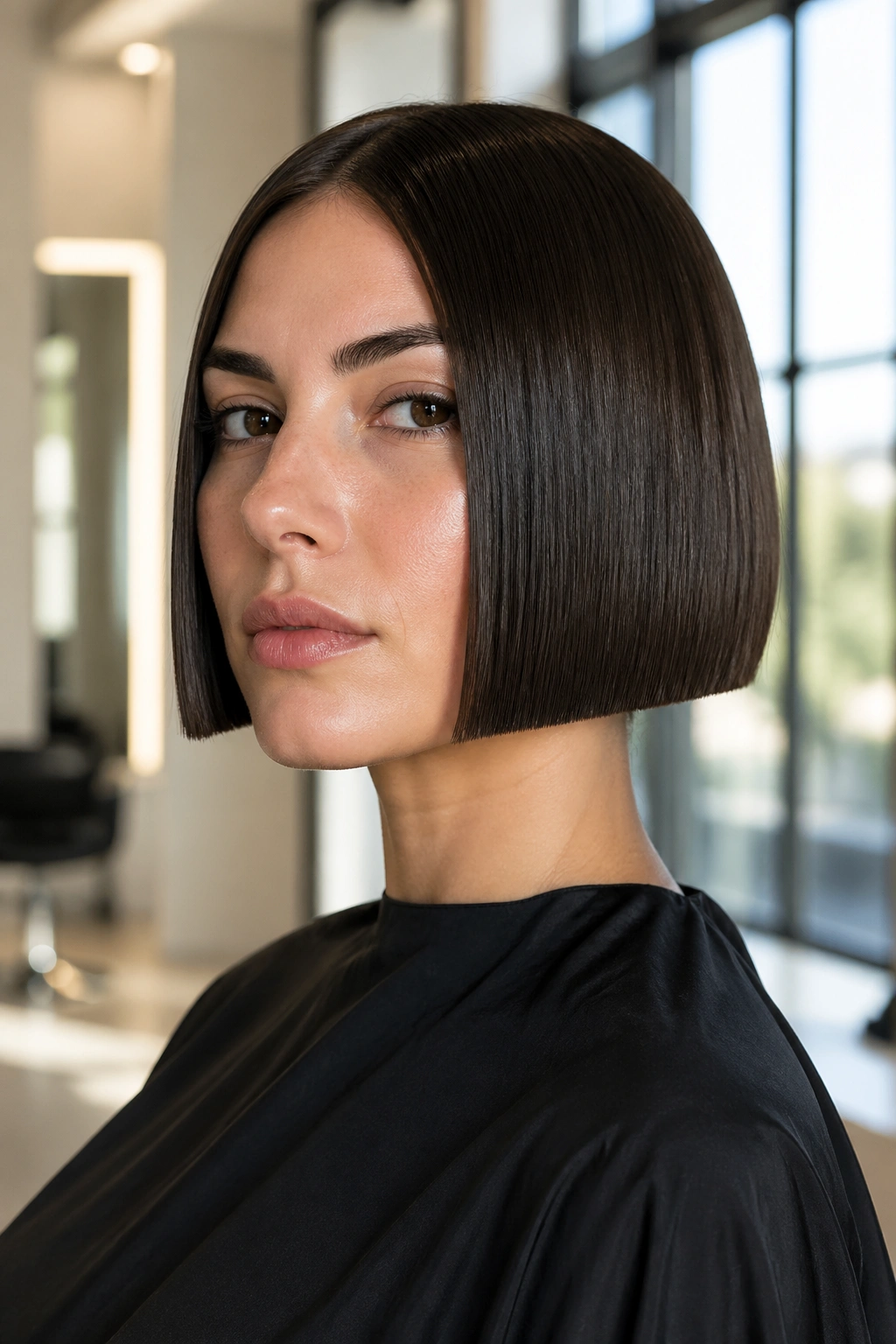
What happens when a bob is cut with the ruler out? You get the geometric bob: crisp, deliberate, and almost startling in its neatness. This is the sharp-edged cousin in the family of vintage bob cuts, and it leans hard into precision. No fluff. No wasted layers. Just a clear shape that does not apologize for itself.
The beauty of this cut is the line itself. A one-length or near one-length perimeter creates a solid silhouette, and the hair falls in a way that feels almost architectural. It works best on straight hair or hair that can be smoothed easily, because the finish depends on seeing the shape clearly. If your hair bends in ten different directions, this one will fight you unless you’re willing to blow-dry carefully.
Best hair for this cut
- Straight to softly wavy hair
- Medium density or fine hair
- Hair with minimal cowlicks at the hairline
- People who like a crisp, polished finish
The styling routine is plain but strict. Dry the hair in sections, keep the nozzle pointed downward, and finish with a flat iron only if the hair needs a touch more smoothness. Use a light serum, not a heavy cream. The goal is shine, not slip.
This cut suits anyone who likes retro style without frills. It’s especially strong if you wear bold glasses, a clean collar, or simple earrings. The haircut does the talking, which is the point.
9. The Flip-End Bob With a Deep Side Part
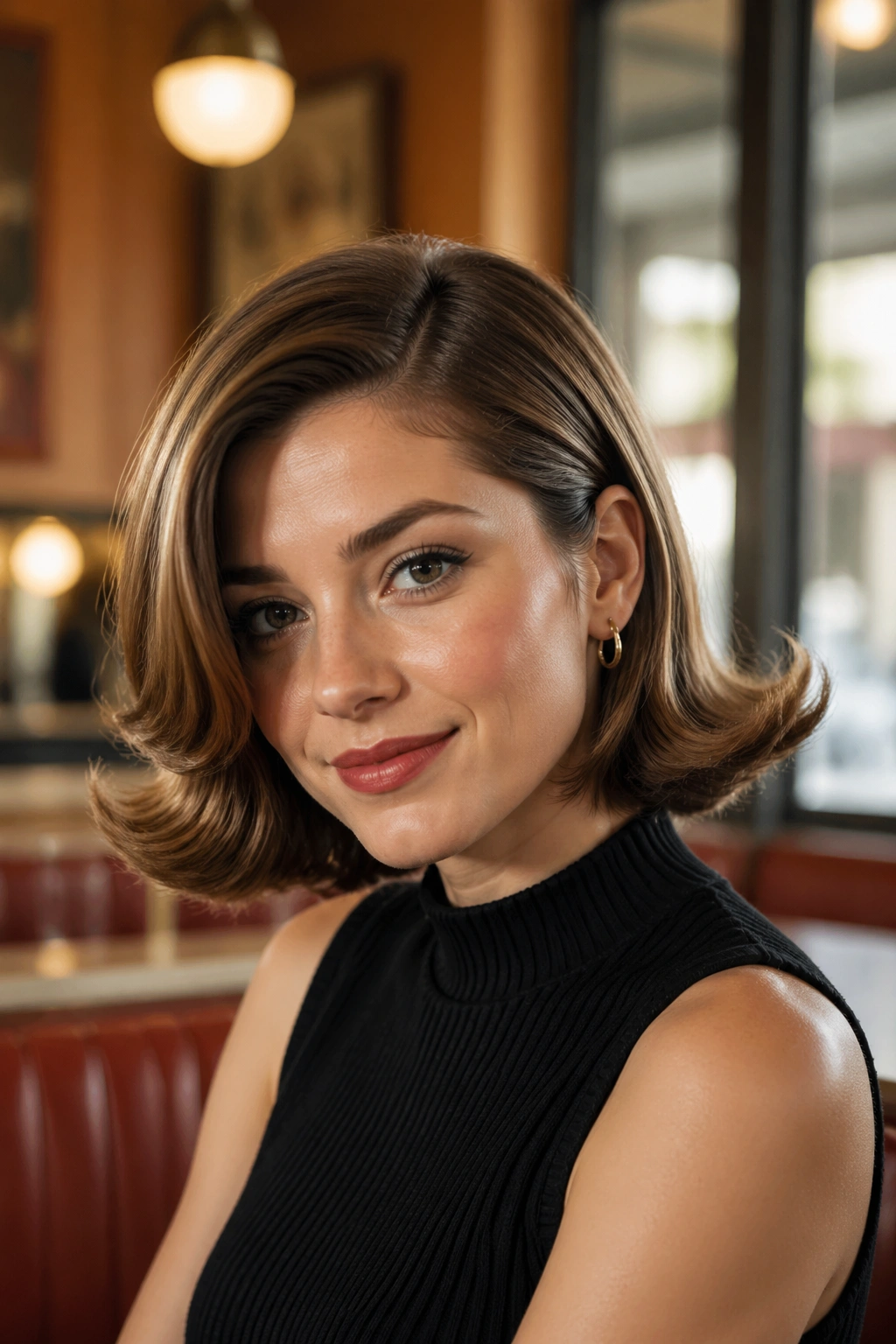
The flip-end bob has that cheerful, midcentury swing that makes it look like you’ve got somewhere interesting to go. The part usually sits deep to one side, and the ends turn out or under depending on the mood. It’s less severe than a blunt bob, less polished than a pageboy, and easier to wear than either when you want a softer retro look.
The side part matters more than people realize. It creates asymmetry at the crown, which gives the cut lift and a little drama near the face. Then the flipped ends carry the movement downward. Together, they make the bob feel lively instead of static.
Where the flip works best
A flip that lands just at the jaw gives the most recognizable vintage shape. If the hair is a bit shorter, the movement reads playful. If it’s a touch longer, the flip turns more elegant. Either way, keep the bend loose. Tight curls can push the cut into costume territory.
You can set the ends with a round brush, a 1-inch curling iron, or even large rollers if you like a more structured finish. I prefer a brush for daytime and rollers if the hair needs more staying power. The key is to direct the ends away from the neck, then let them soften as they cool.
One clean side part changes the whole haircut. That’s the trick worth stealing here.
10. The Marcel Wave Bob for Glossy Nights
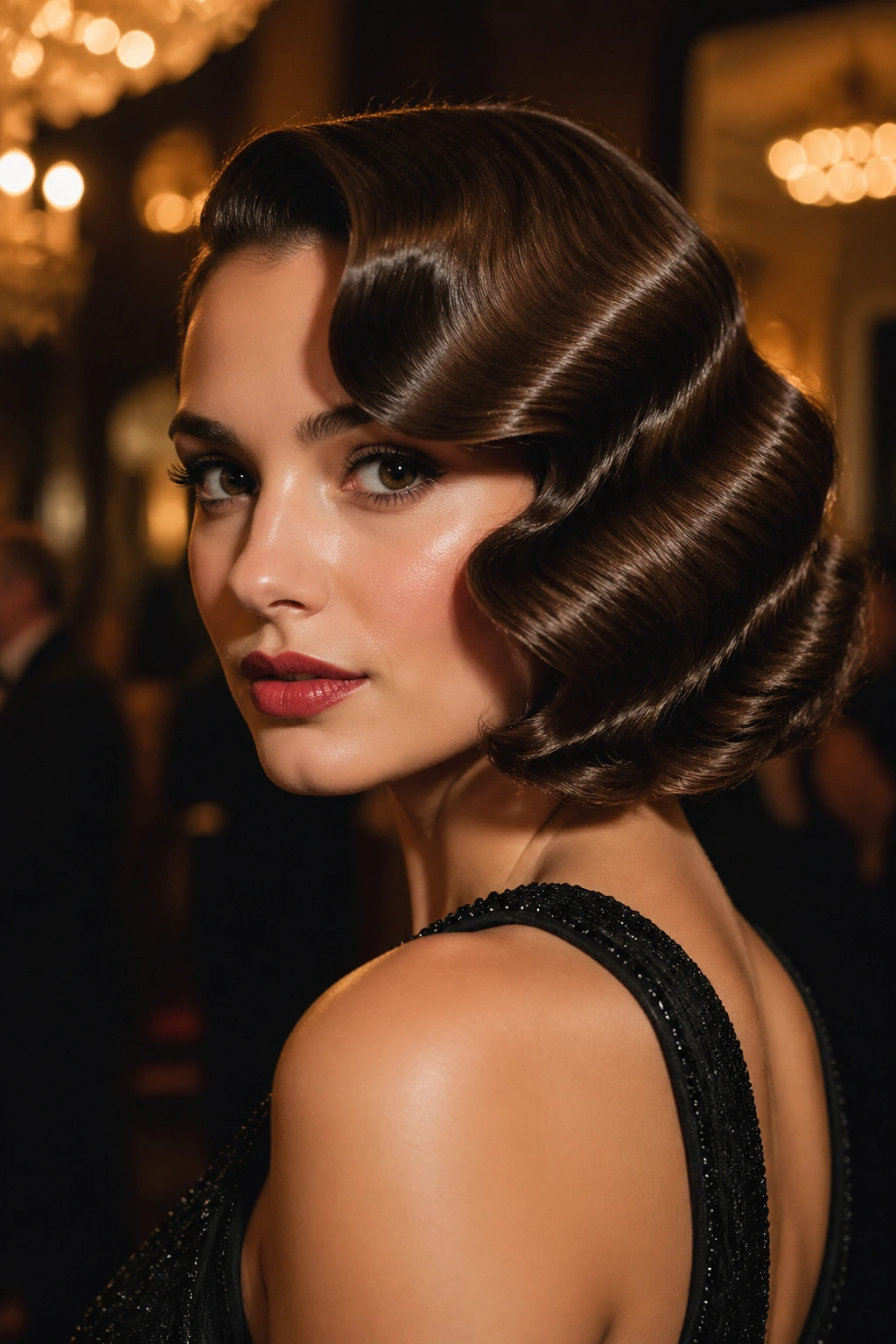
A Marcel wave bob is not a rushed haircut. It’s a mood. The waves sit in that carved S-shape, and the shine does half the work before the style even moves. If the flapper bob is sharp and the French bob is breezy, this one is pure evening glamour with a little old-school theater in the best sense.
The process matters. You start with damp hair, add setting lotion, and shape the waves with clips or fingers. After that, the hair has to dry fully before you brush anything through. If you break the pattern too soon, the wave collapses into mush. Patience is part of the look, which is inconvenient and also why it feels special.
This cut works best on medium to short lengths where the wave can read clearly. On very thick hair, the waves can get bulky if they’re too tight. On finer hair, they can look almost jewel-like because the curve stays visible. A deep side part helps, and a tucked ear on one side makes the silhouette feel even more period-specific.
It is not the bob I’d reach for on a chaotic morning. But for an evening dinner, a dance floor, or any setting where polished hair matters, it has real charm. The finish should look glossy and deliberate, not crunchy. If it looks crunchy, the product was too heavy or the hair wasn’t brushed gently enough after setting.
11. The Stacked Bob With Crown Lift
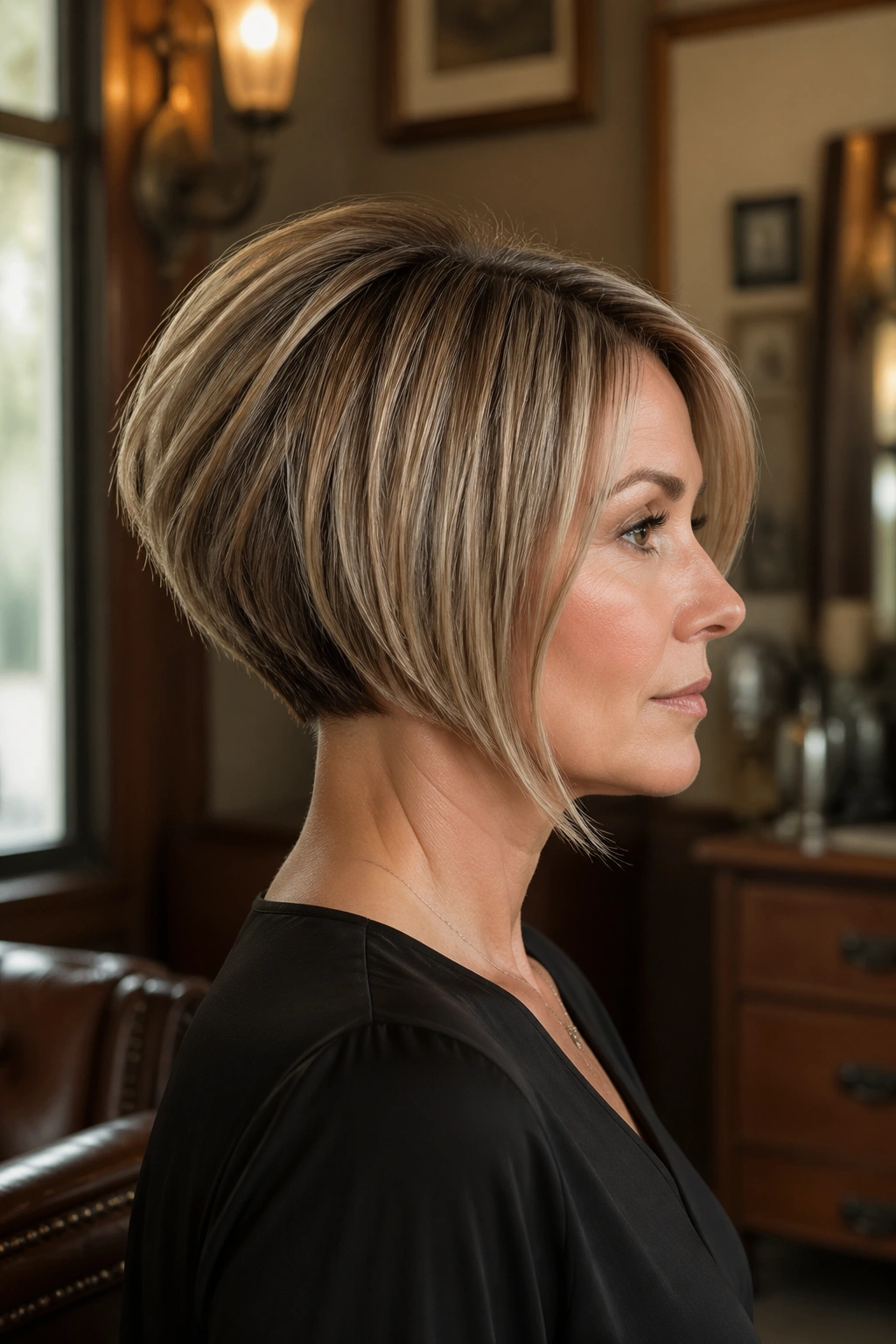
I keep thinking about the stacked bob as the fix for hair that falls flat at the back of the head. The graduation starts near the nape, builds upward, and creates lift right where the crown needs it most. That’s why this cut has lasted. It gives shape to fine hair and order to thicker hair, and it does both without asking for a lot of fuss once the cut is right.
The back is the star here. Shorter layers stack into one another, so the silhouette rises slightly behind the ear and falls longer toward the front. That contrast makes the head look more sculpted. It can feel very retro when the ends are smoothed and curled under, but it also works with a bit of swing if you want something less formal.
What to watch for
- Too much stacking can look bulky on dense hair
- Too little graduation leaves the back limp
- The crown needs enough height to show the shape
- The front should blend, not hang awkwardly off the sides
Blow-drying matters more on this cut than on some of the others. Dry the back first, lifting the roots with a round brush, then smooth the top section into place. A little mousse at the crown helps the shape hold through the day. If the back lies down flat, the whole haircut loses its point.
This is a smart choice if you want a retro bob with a bit of built-in lift and a profile that looks tailored.
12. The Blunt Micro Bob With a Soft Fringe
The micro bob is the shortest of the bunch, and it earns its place by being clean, sharp, and slightly cheeky. It usually sits at the jaw or a little above it, with a blunt edge that keeps the shape strong. Add a soft fringe—one that brushes the brows or falls in a light arc—and the whole thing suddenly feels less severe and more wearable.
Unlike the longer French bob, the micro bob leaves almost no room for extra fluff. That is the appeal. You see the face. You see the jawline. You see the cut itself. It works especially well if you like statement glasses, bold earrings, or collars that sit high on the neck. Everything around the haircut gets a little louder because the hair steps back.
This cut is happiest on straight or slightly wavy hair, and it looks best when the ends are kept blunt and smooth. If your hair texture is very thick, ask for subtle internal removal so the shape doesn’t turn boxy. If it’s fine, keep the perimeter dense so the line reads clearly. The fringe should feel soft, not wispy. That detail keeps the cut from looking unfinished.
There’s something satisfying about a bob this exact. No hiding. No fuss. Just a clean shape with a retro edge that still feels current enough to wear every day. And that, honestly, is the best thing about vintage bob cuts: when the proportions are right, they don’t look like a throwback. They look like good taste.
