



A bob can look expensive fast. Or it can look like you got bored halfway through the trim.
That’s why the nineties bob cuts keep coming back. They don’t ask for a lot of fuss, but they do ask for shape. A clean line, a sharp part, a little bend at the ends — that’s often enough to make hair look thicker, neater, and more intentional than a longer cut with no plan.
The best part is how different these bobs can feel from one another. A blunt chin-length bob says polished. A flipped bob says playful. A shaggy one feels loose and lived-in. Same family, wildly different attitude. And if you’ve ever sat in a salon chair trying to explain “I want something 90s, but not dated,” you already know the difference matters.
The trick is not choosing a bob. It’s choosing the right bob for your texture, your face, and the amount of styling you’re actually willing to do before coffee. Once you know what each shape does, the whole haircut gets a lot less mysterious.
1. The Chin-Length Blunt Bob
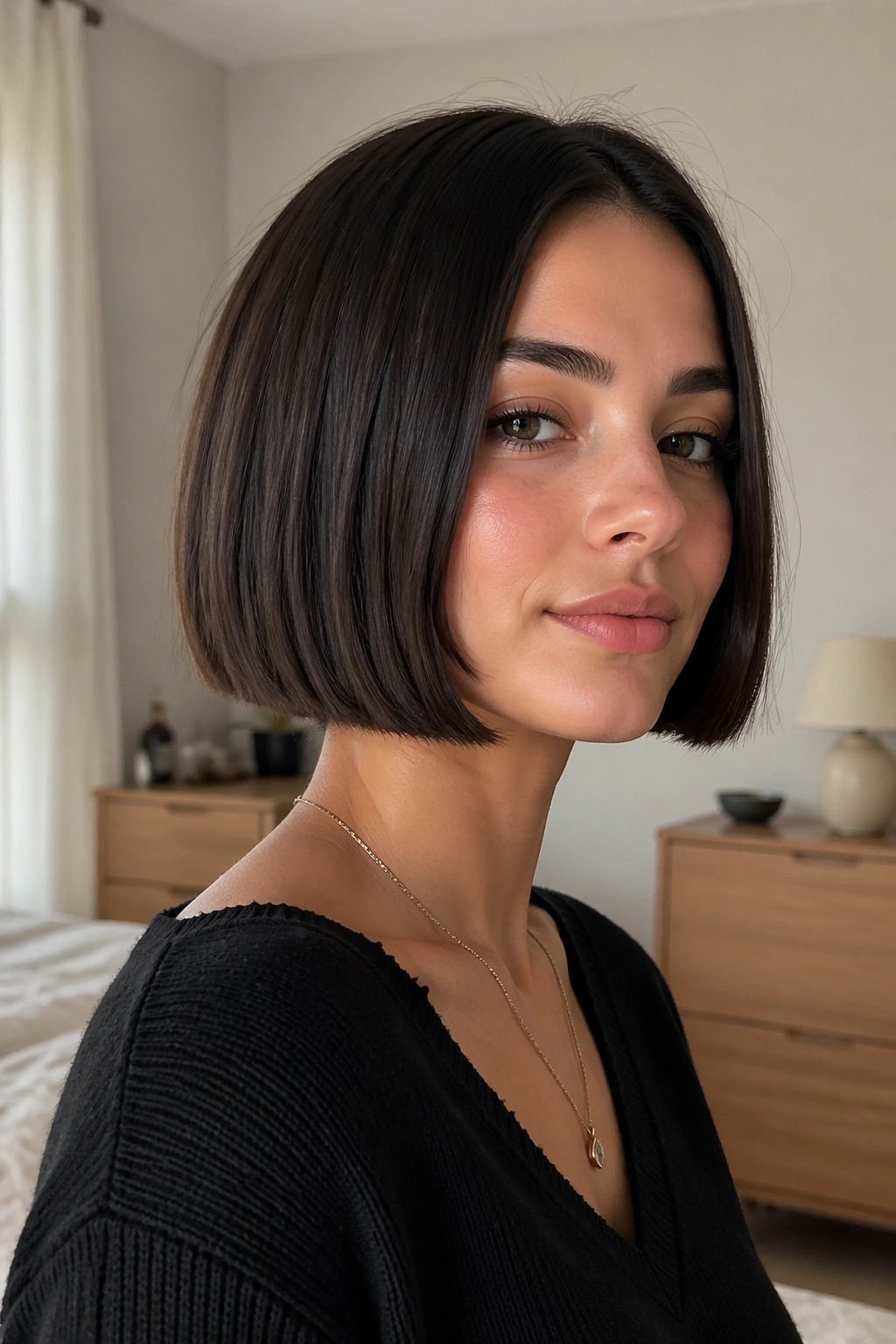
This is the bob that still looks sharp even when you barely touch it. The line sits around the chin, the ends are cut clean, and the whole shape has that solid, almost boxy feel that makes fine hair look fuller than it really is.
Why the line matters
A blunt edge gives the eye nowhere to hide. That sounds harsh, but it’s exactly why it works. When the perimeter is one length, the hair looks denser at the bottom, and that fullness reads as healthy and deliberate.
It’s a strong choice for straight hair, soft waves, and fine textures that tend to collapse when layers get too eager. If your hair is thick, the cut still works — it just needs a stylist who knows how to remove bulk without turning the shape fuzzy.
A small detail makes a big difference here. Ask for the ends to be crisp, not jagged, and keep the layers minimal. Too much texturizing turns this into a halfway bob, and that’s the least interesting version of the whole idea.
- Best for fine to medium hair
- Flatters oval, heart, and long faces
- Usually needs a trim every 6 to 8 weeks
- Looks best with a middle part or a soft side part
Pro tip: If your jaw is already strong, let the front sit a little below it. That tiny drop softens the line without losing the clean shape.
2. The Flipped-End Bob
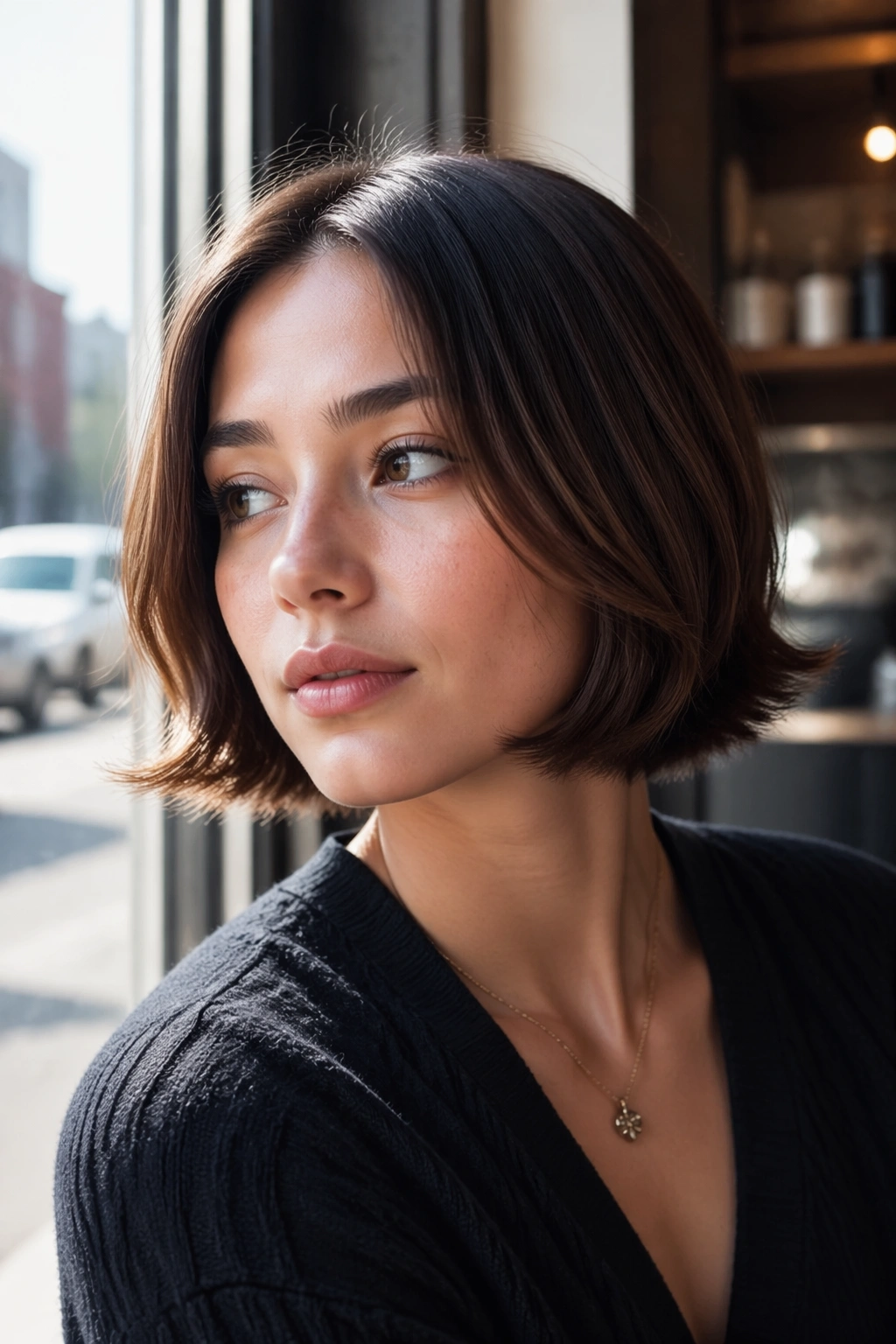
This one has attitude in the ends. The cut itself may be simple, but the outward turn at the bottom gives it that unmistakable nineties bounce, like the hair is halfway between neat and a little mischievous.
The flipped-end bob works because it gives straight or lightly wavy hair a shape that feels active. A round brush, a flat iron, or a big Velcro roller can create the outward bend, but the cut has to support it. If the ends are too heavy, they’ll fall flat. If they’re too thinned out, the flip looks wispy instead of deliberate.
I like this bob on hair that naturally wants to move. It’s a good one for people who want something playful without giving up polish. The whole point is that the edge should feel lifted, not curled into a hard little corkscrew.
Use a light heat protectant, then turn the ends away from the face in one smooth pass. Not three passes. Not a battle. A soft flick is enough. It should look like the hair decided to have fun on its own.
3. The Layered Rachel Bob
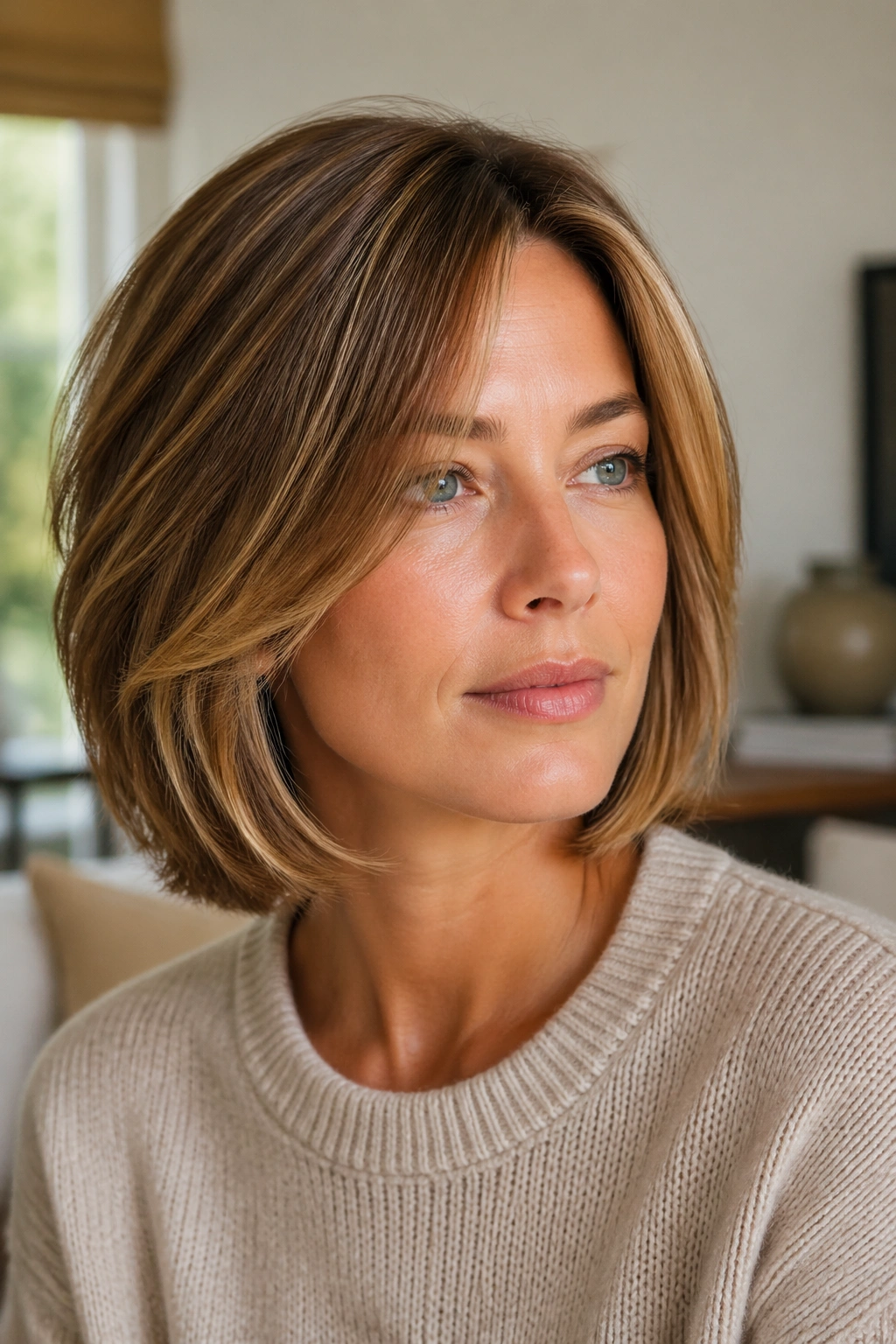
Why does a layered bob still feel fresh when so many heavily layered cuts turn tired fast? Because the good ones leave the shape intact. The nineties version borrows that face-framing softness people loved in the decade, but keeps enough weight at the bottom so the haircut doesn’t vanish by day three.
How to keep the layers soft
The safest version starts the shortest face-framing pieces around the cheekbone or just below it. That gives movement near the face without turning the whole cut into a feathered cloud. If the layers begin too high, the bob loses its line and starts acting like a grown-out shag.
This cut is especially useful for medium-thick hair that needs some air. It takes pressure off the ends and makes blow-drying easier, which is a blessing if your hair tends to puff up or hang in one solid curtain.
A lot of people ask for “layers” when what they really want is shape. Not the same thing. The best layered bob still has a perimeter you can see from across the room.
- Ask for soft face-framing layers, not choppy ones
- Keep the lower edge blunt or slightly curved
- Works well with a round brush and medium heat
- Tame flyaways with a pea-sized amount of serum, not a palmful
4. The A-Line Bob
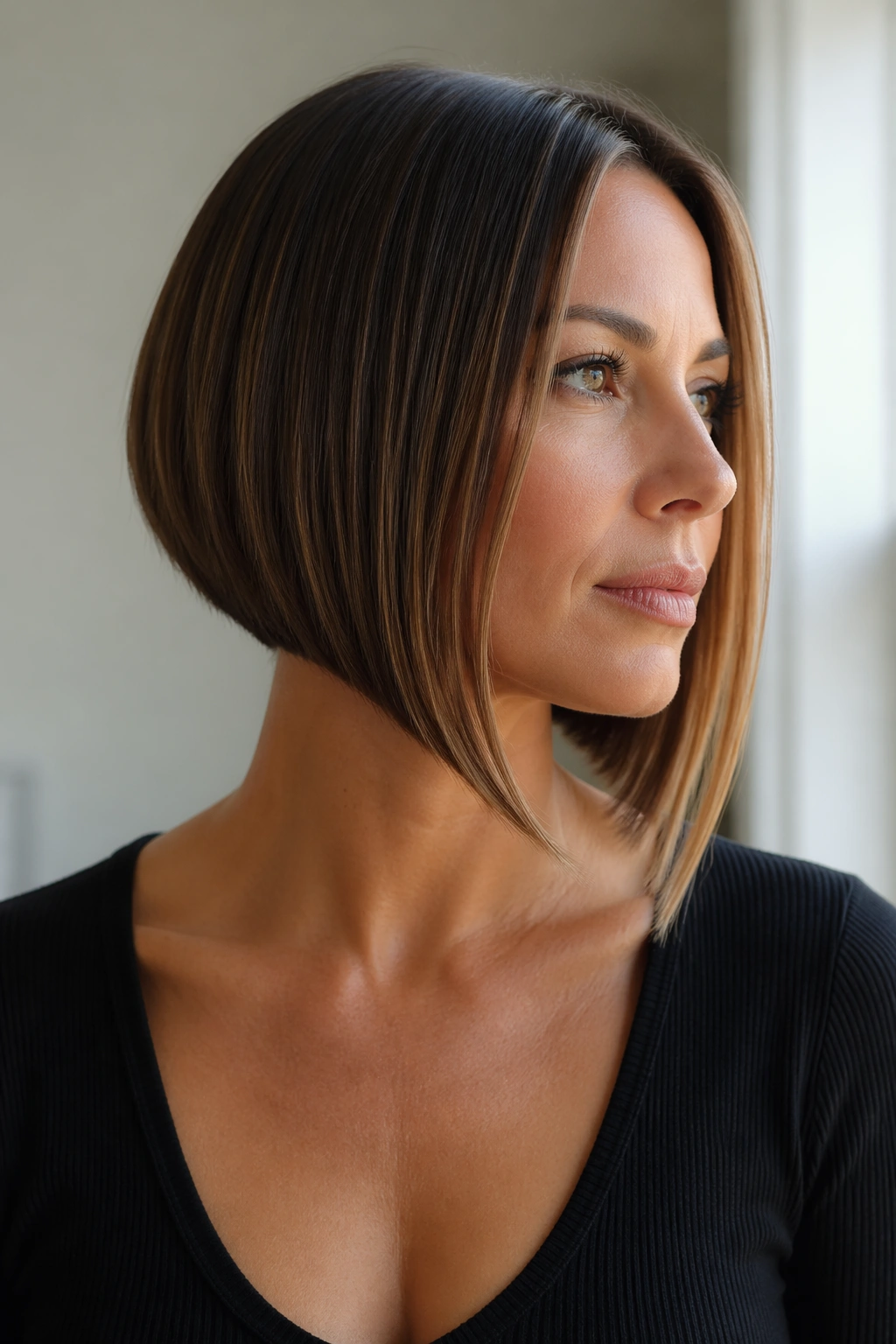
The A-line bob is the one that makes the neck look longer without trying too hard. Shorter in the back, longer in the front, it creates a quiet diagonal that feels clean and a little architectural.
I’ve always thought of this as the bob for people who want structure but don’t want the haircut to sit there like a helmet. The angle gives the style motion even when the hair is still. It also plays nicely with straight hair, because the difference between the back and front shows up clearly.
A soft A-line is easier to wear than a severe one. If the front drops only an inch or two longer than the back, you get the effect without the drama. Go too steep, and the cut starts looking like it belongs in a different decade for the wrong reasons.
- Strong choice for round or square faces
- Makes the jaw appear slightly slimmer
- Needs regular shaping so the angle stays clean
- Blows out best with the front wrapped around a brush and the back directed under
One small warning: if your hair is very curly, the angle can disappear when it dries unless your stylist cuts with shrinkage in mind.
5. The Deep Side-Part Bob

A deep side part can change a bob more than another inch of length ever will. It gives the cut lift at the crown, a little sweep across the forehead, and that slightly dramatic nineties mood that never quite goes out of style.
The reason it works is simple. Hair naturally wants to settle in one direction, and a deep side part uses that movement instead of fighting it. When the roots are lifted at the heavier side, the whole style looks fuller and more awake. That matters if your hair tends to lie close to the scalp.
It also softens a bob that might otherwise feel too severe. A blunt line with a middle part can look crisp; the same cut with a side part suddenly feels more relaxed and a bit flirtier. Different mood, same haircut.
It’s a cheat, but a good one.
If you want to wear this bob well, start the part above the arch of your eyebrow, then blow-dry the roots in the opposite direction for a few seconds before laying everything back. That little flip makes the lift last longer and keeps the crown from going flat by lunch.
6. The French Bob
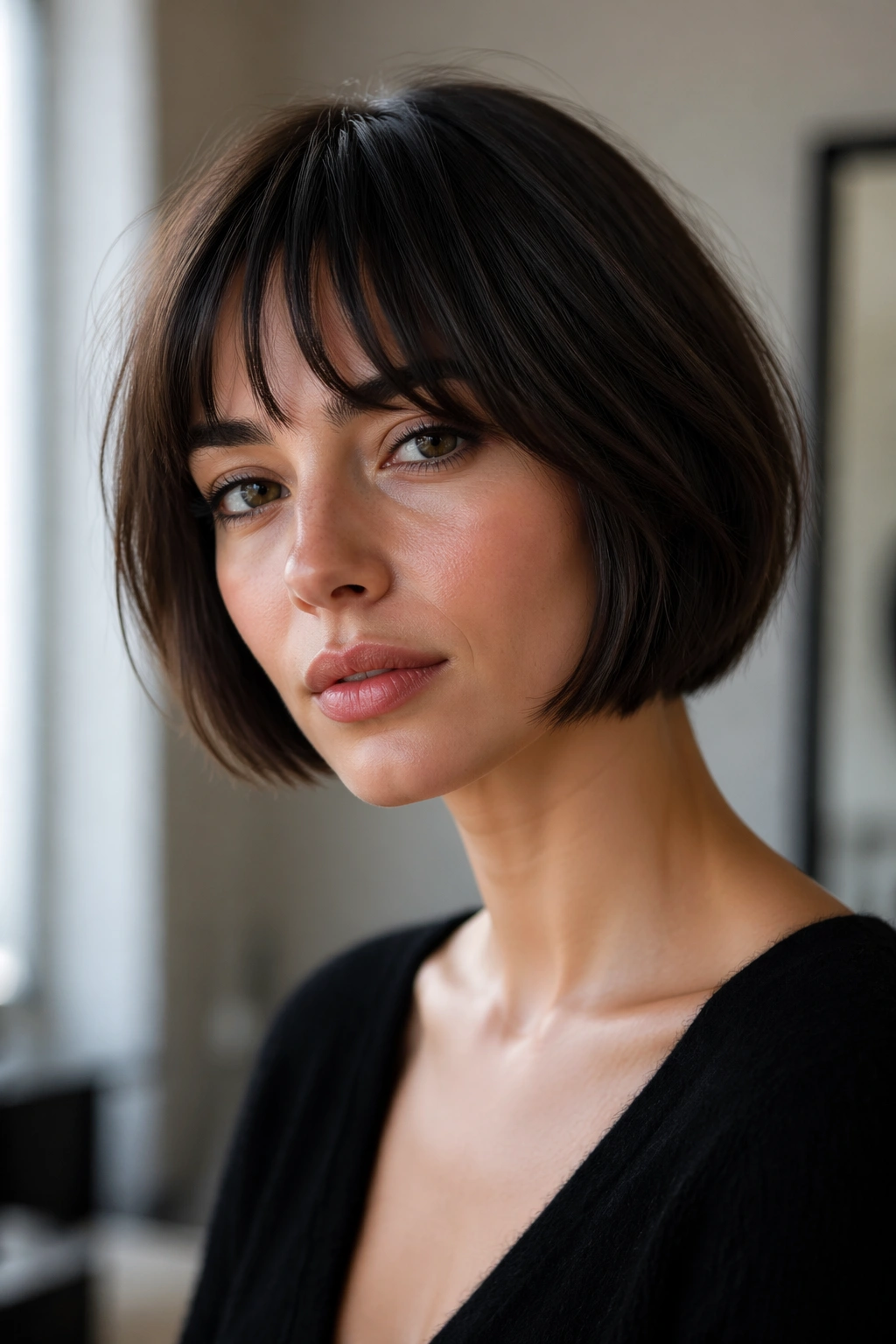
The French bob has a way of looking like it was cut by someone who trusts scissors more than styling tools. It usually sits at the jaw or a touch above it, often with a fringe, and the edges are soft enough to feel effortless without getting sloppy.
What I like about it is the restraint. There’s no desperate layering, no overworked texture, no need for five rounds of hot tools. The shape is the point. That makes it a good fit for people whose hair has a natural bend or a little body already.
If your hair is pin-straight, this cut can still work, but it benefits from a bit of movement at the ends. A small bend with a flat iron, or a quick twist with a round brush, keeps it from looking severe. The whole style lives or dies on that tiny bit of softness.
What to ask for at the salon
Ask for a short bob that lands around the jaw, with a fringe that can be worn blunt or slightly broken up. Keep the sides balanced, and don’t let the layers creep too high unless you want the cut to feel much lighter.
This is the bob I’d hand to anyone who wants personality without a lot of daily fuss. It has edge, but not a lot of drama.
7. The Stacked Bob
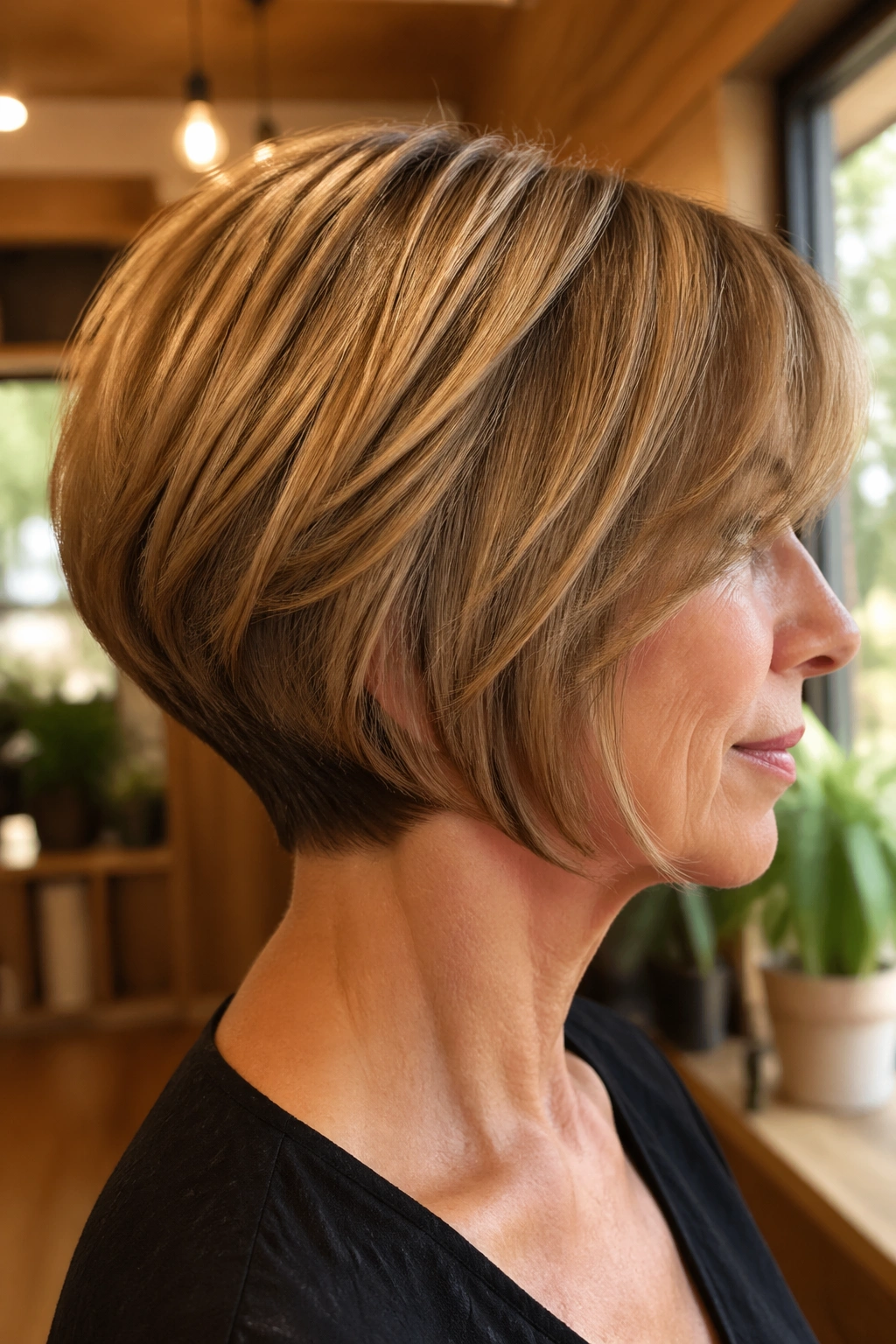
The stacked bob is all about the back. Shorter layers build gently at the nape, and the shape rises from there, giving the cut a rounded lift that can make the head look fuller from behind — which sounds odd until you see how good it can look in motion.
Who should try it? People with thick hair, medium-density hair, or hair that falls flat at the crown and needs a little structure back there. The stack removes weight where you don’t want it and leaves enough length in front to keep the whole thing soft.
The mistake people make is asking for too much stack. Then the back balloons and the sides start feeling detached. A good stacked bob is controlled. You should see the lift, not a little shelf.
The shape
The strongest version keeps the neckline neat and the crown slightly rounded. It’s especially useful if you want a bob that feels a bit more styled even when you air-dry it. The cut does some of the work for you.
The catch
It needs maintenance. Once the nape grows out, the silhouette loses that crisp curve fast. If you hate frequent trims, this one may irritate you.
8. The Shaggy Bob

A shaggy bob is the least precious member of the group, and that’s a compliment. It has broken-up ends, light layers, and enough movement to look good when it’s a little messy. That looseness is part of the charm.
This cut works because it doesn’t insist on perfection. The hair can bend, separate, and fall a little differently from one side to the other, and the cut still holds together. For wavy hair, that’s gold. For straight hair, it gives a bit of grit and edge that a cleaner bob can’t always manage.
You do need to resist the urge to drown it in product. A touch of mousse at the roots and a few sprays of texturizing spray at the ends are usually enough. Too much, and the whole thing starts looking dusty. Nobody wants that.
A little mess helps.
This is the bob for people who like hair that looks touched, not tortured. It’s casual without being careless, which is harder to pull off than it sounds.
9. The Curly Bob
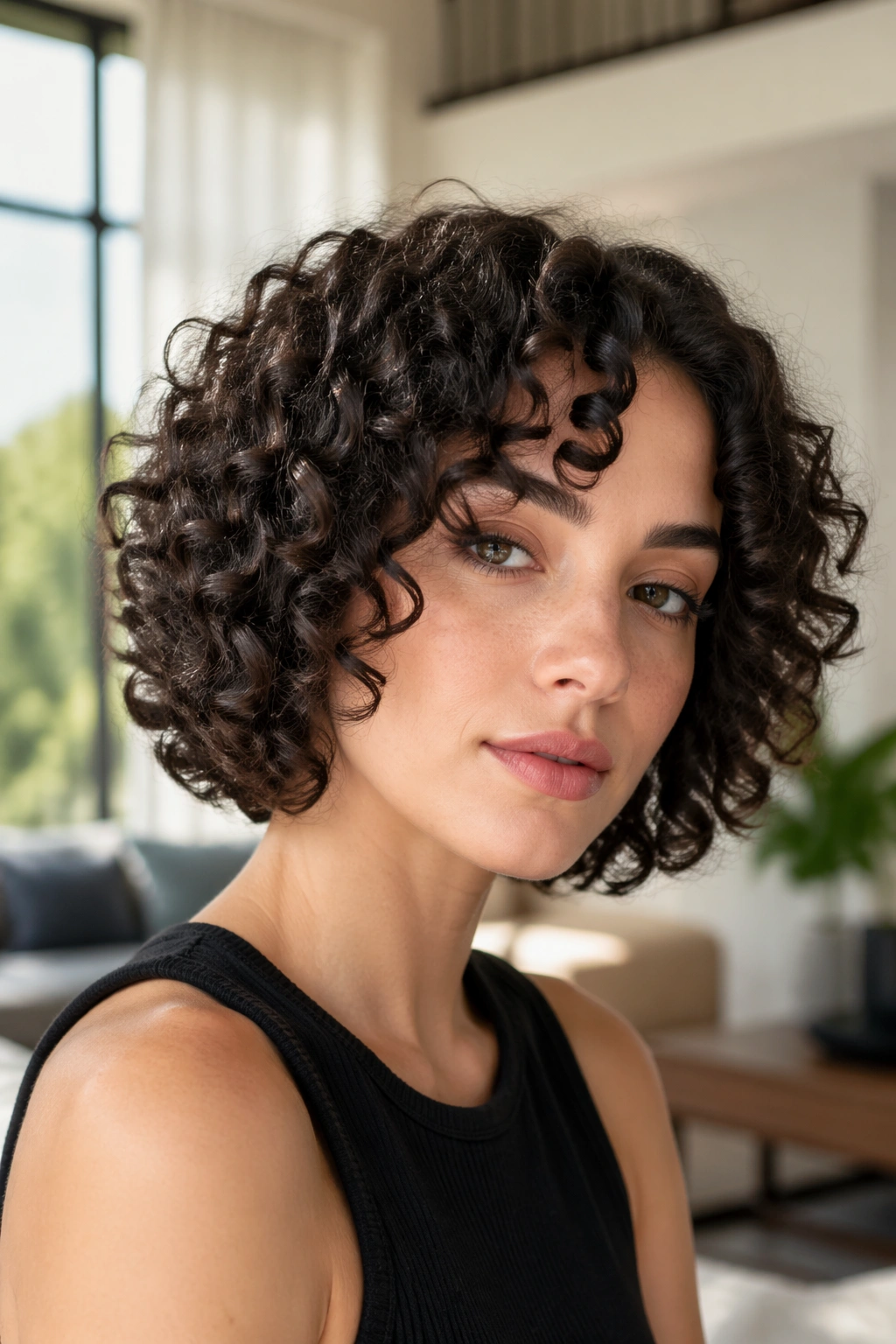
A curly bob is one of those cuts that can look like a small miracle when it’s shaped properly. The curls get room to spring, the face gets framing, and the whole style gains bounce instead of bulk.
The biggest mistake with curly bobs is cutting them too wet and too short, then hoping they’ll “settle.” They usually don’t settle. They shrink. Sometimes a lot. A good curly bob respects the pattern of the curl and leaves enough length for the shape to sit where it should once dry.
The styling trick
Drying matters more than people think. Diffuse on low heat, or air-dry with a curl cream that keeps the curl clumps together. If you separate the curls too much while they’re wet, the bob turns fluffy before it turns defined.
For tighter curls, ask your stylist to shape the cut curl by curl or at least section by section, so one side doesn’t end up heavier than the other. For looser waves, a slightly longer bob can keep the ends from bouncing up too high.
- Leave extra length for shrinkage
- Avoid heavy creams that make curls sag
- Trim when the ends start to split, not when the shape collapses
- Keep a wide-tooth comb out of the bathroom drama and use it only on wet hair
10. The Micro Bob
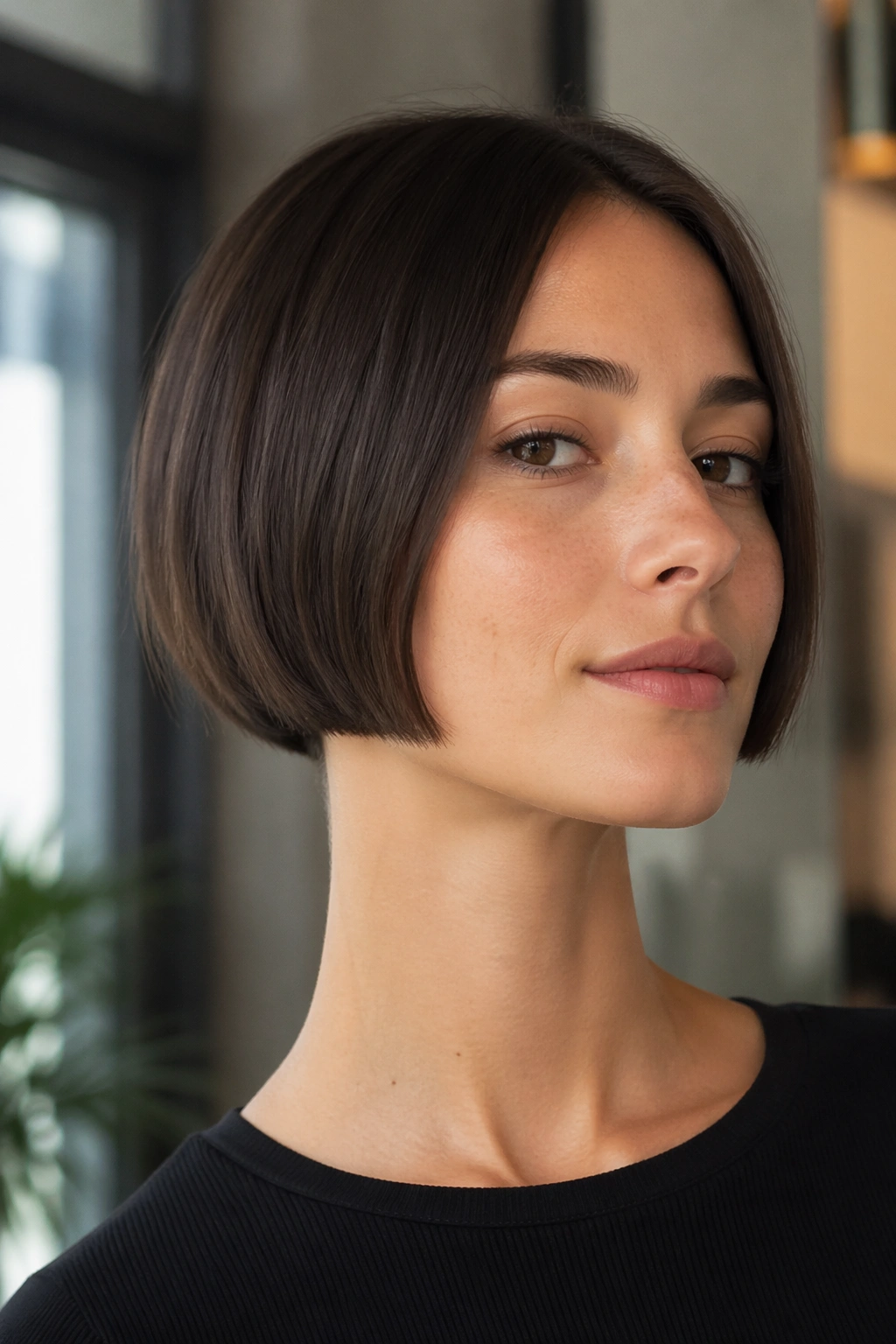
The micro bob sits right at the edge of daring. It’s cropped close to the jaw or even above it, and because there’s so little length, every millimeter matters. The whole cut feels sharp, clean, and a little fearless.
What makes it work is the honesty of it. There’s nowhere to hide. If the line is good, the haircut looks intentional in a way that longer styles sometimes miss. If the line is off, you see that too. Fast.
This is not the bob I’d suggest to someone who wants to forget about their hair for six weeks. It wants attention. Regular trims matter, and the shape looks best when the neck area is kept clean and the ends are precise.
The upside is huge: the micro bob makes earrings pop, shows off a jawline, and gives straight hair a crisp frame that doesn’t need a lot of coaxing. It’s also one of the few short cuts that can look both severe and playful, depending on whether you tuck one side behind the ear.
A small cut, yes. A timid one? Not even close.
11. The Beveled Bob
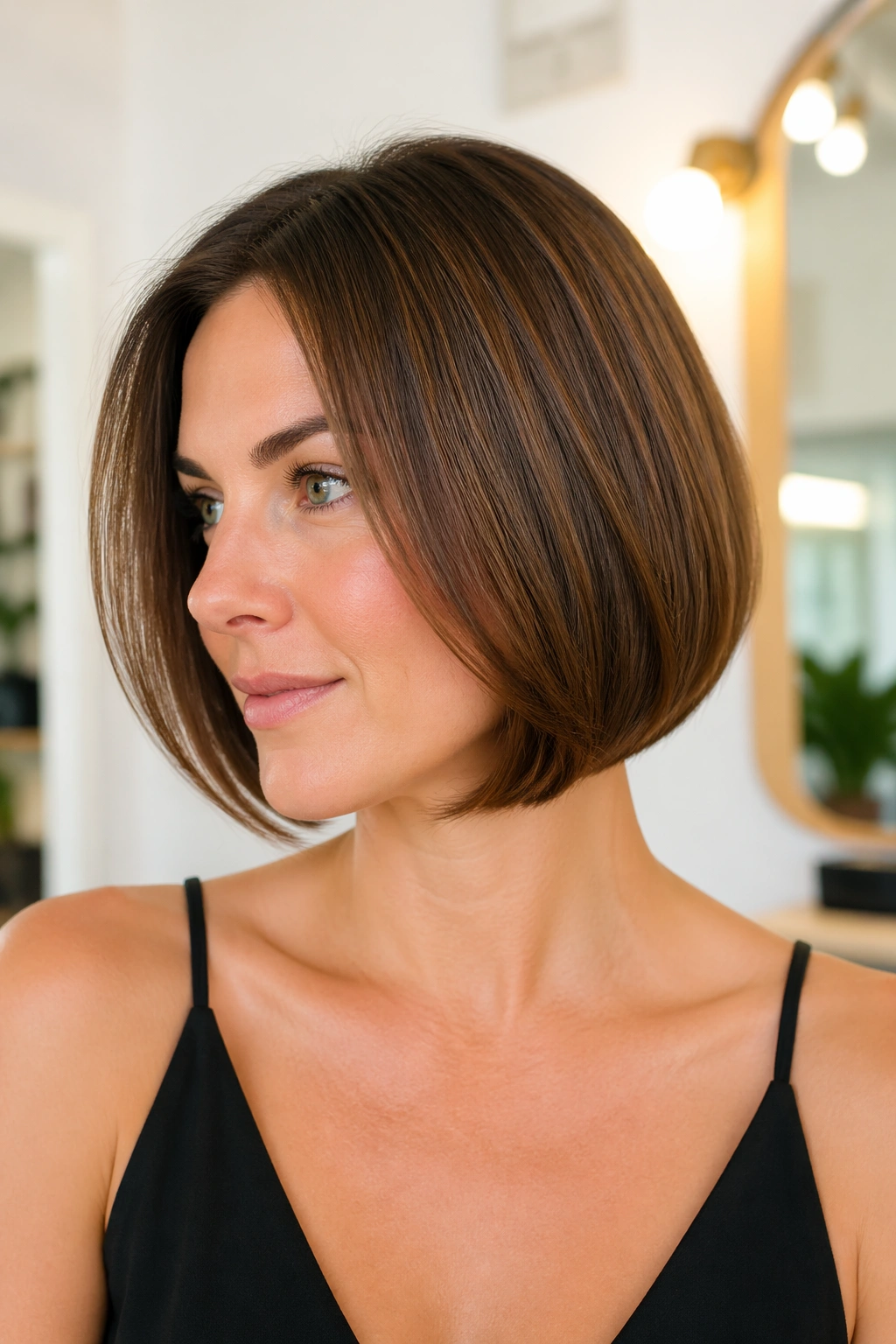
The beveled bob is what happens when the ends curve under in a soft, controlled way instead of hanging flat. It’s neat, polished, and a little bit airy, the kind of bob that looks like it was finished with a round brush even when it wasn’t.
What makes the bevel work
The shape sits somewhere between blunt and layered. You still get a visible edge, but the bottom line bends inward just enough to keep the cut from looking square. That curve helps the bob skim the jaw without clinging to it.
It’s a smart choice for fine hair that needs body but not choppiness. The bevel gives the illusion of fullness because the ends have movement and direction. Thick hair can wear it too, but then the stylist has to control the bulk or the curve gets puffy.
Who gets the most out of it
People who want a polished everyday bob without a lot of styling time usually love this one. It reads neat in a braid-free, no-fuss way. It also photographs cleanly, which is why it shows up so often on hairboards and salon mood photos.
The salon language to use
Ask for a bob with a softly beveled edge, minimal layering through the body, and enough weight at the bottom to keep the curve. That wording matters more than asking for “volume,” which can mean five different things to five different stylists.
12. The Feathered Bob
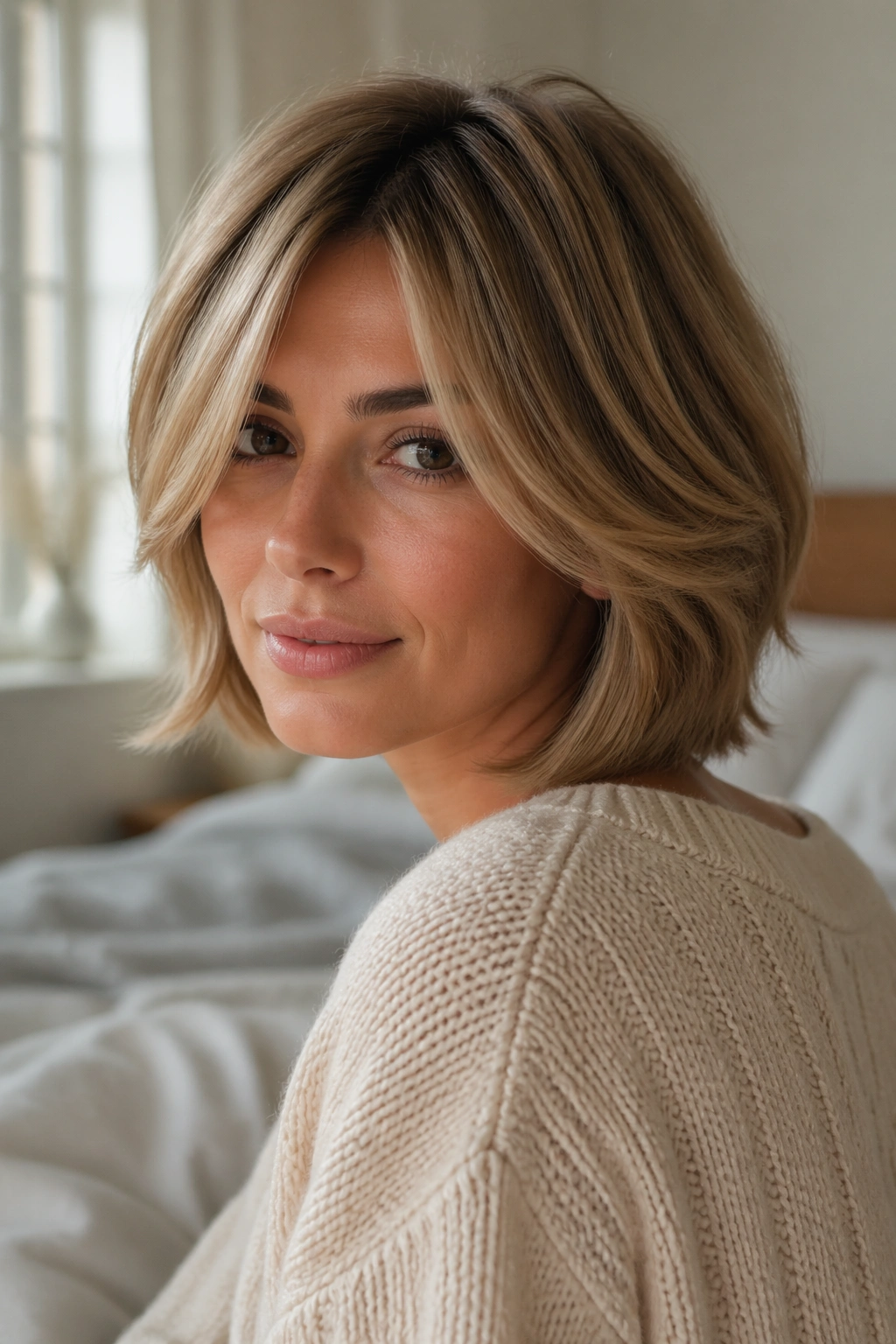
The feathered bob is softer around the edges than the blunt versions, and that softness is the whole point. Light layers move away from the face, the ends taper a little, and the cut feels airy without turning thin.
This one has a lot in common with the feathered blowouts people loved in the nineties. The difference is that here the feathering is contained. You still want a bob shape. You do not want to drift into floppy, over-layered territory.
It’s a strong match for thick or coarse hair, because the feathering removes weight in a way that still lets the style move. It can also help hair that tends to puff at the sides. A careful feathering near the cheekbones can stop the whole cut from widening too much.
The styling is straightforward: a vent brush, a medium round brush, or even a big blow-dry brush can coax the ends into place. Finish with a little smoothing cream on the mids and ends. Not the roots. That part gets greasy fast.
If a blunt bob is all edge, the feathered bob is all flow.
13. The Razored Bob
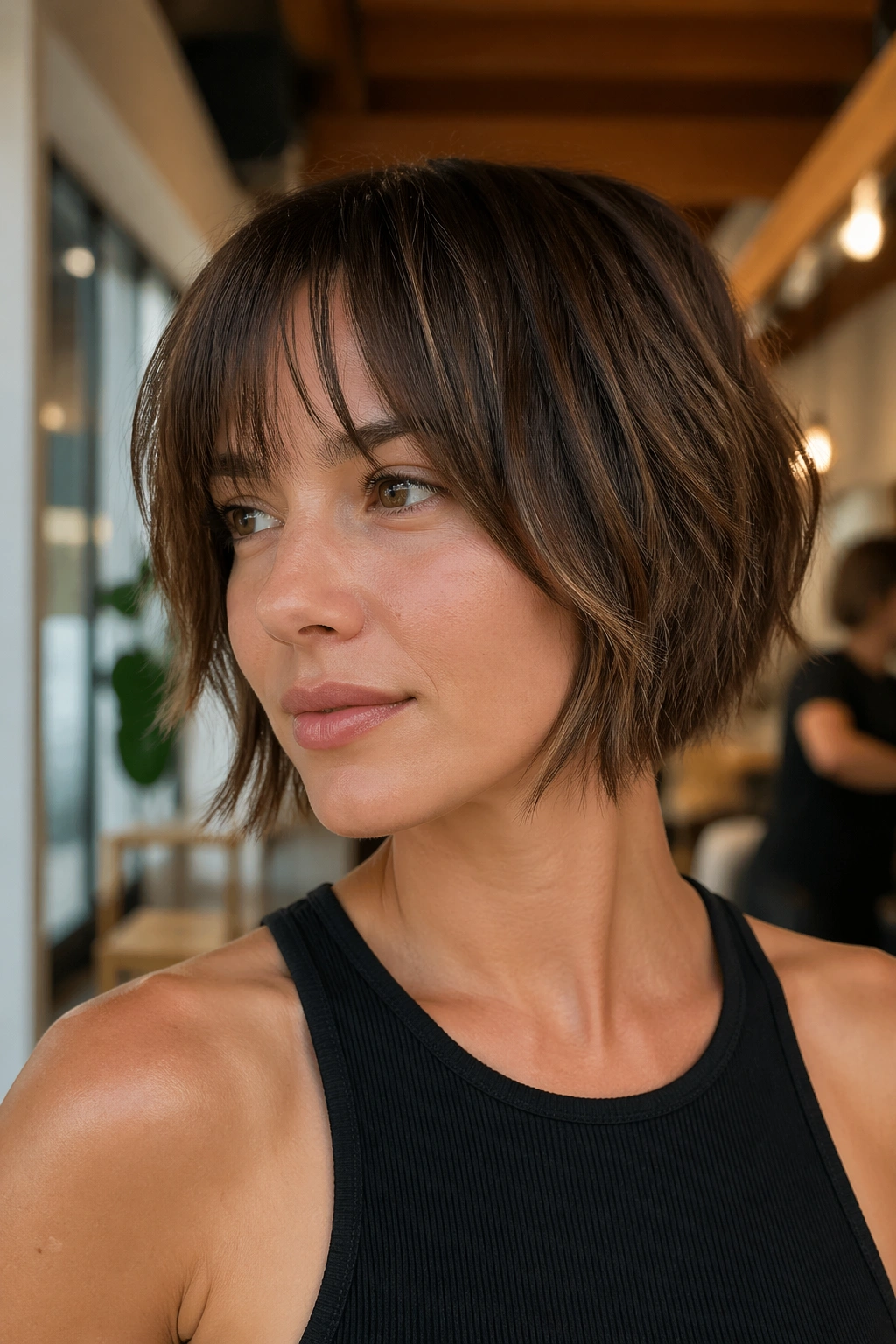
Why does a razor-cut bob look different from a scissor-cut one the moment you run your fingers through it? Because the edge comes out softer and a touch broken, which gives the haircut a lighter, more piecey finish.
That softness can be useful, but it needs judgment. On healthy hair with some natural texture, a razor can create movement that scissors sometimes flatten out. On very fine or damaged hair, though, it can make the ends look wispy fast. That’s the trade-off, and it’s a real one.
How to keep the edge clean
Ask for razor work only where you want softness — usually the face-framing pieces and the lower edge — while keeping the main perimeter controlled. That keeps the bob from getting fuzzy. If your stylist reaches for the razor everywhere, speak up.
This cut suits medium-density hair, wavy textures, and anyone who wants a little edge without going full shag. It pairs well with a lived-in finish, a slight bend, or a center part that lets the pieces fall where they want.
- Best on hair that’s healthy and not too porous
- Gives movement without heavy layering
- Needs a light styling cream more than a strong hold product
- Can look too thin if over-cut
14. The Collarbone Bob
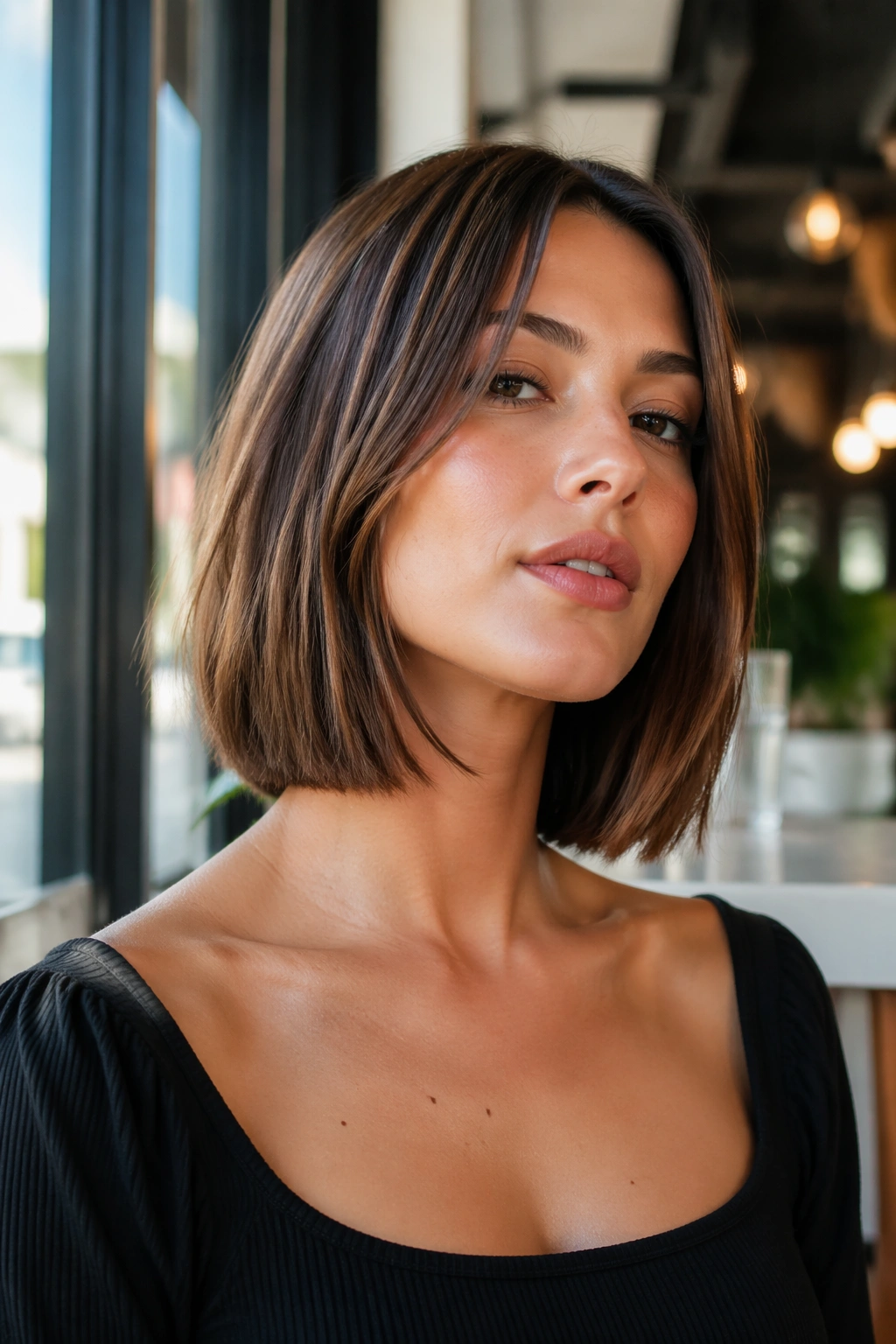
The collarbone bob is the easy one. It sits longer than the classic chin-length version, usually grazing the collarbone or landing just above it, and that extra length makes it easier to tuck, clip, or grow out without panic.
People reach for this cut when they want the feeling of shorter hair without fully committing to a shorter life. Fair enough. It still has the clean bob shape, but it leaves enough room for ponytails, half-ups, and those lazy days when you do not want to touch a blow-dryer.
It also works across a wide range of textures. Straight hair gets a sleek line. Wavy hair gets movement. Even thicker textures can wear it if the ends are cleaned up and the internal bulk is handled properly. That’s probably why it keeps surfacing in salons again and again.
The best version has a slight face frame and a controlled edge, not a random chopped-off finish. If you want a bob that behaves well when air-dried and still looks finished when blown out, this is the one to keep in the back pocket.
It’s not flashy. That’s the charm.
15. The Bob with Curtain Bangs
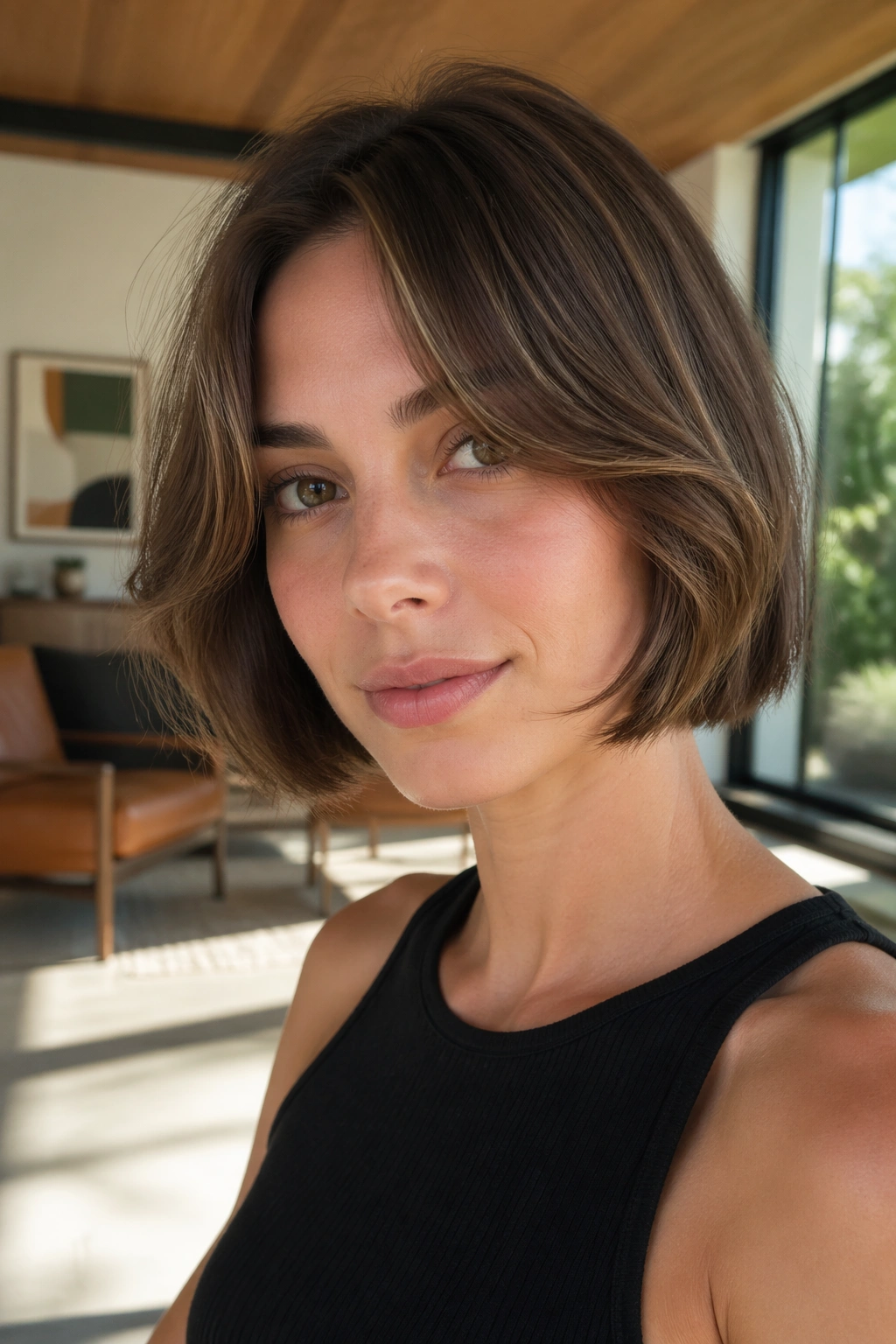
Curtain bangs change the whole mood of a bob. Split in the middle and swept away from the face, they soften the front of the haircut and give it that nineties shape that feels easy, flattering, and a little bit flirty.
Why curtain bangs help
They break up the hardness of a blunt edge, which matters if your face is round, square, or very long. The fringe creates movement near the eyes and cheekbones, so the bob doesn’t feel like one solid block. That makes the haircut easier to wear on days when the rest of your styling is minimal.
Curtain bangs also help bobs grow out better. Instead of a hard fringe line that needs constant cleaning up, you get pieces that blend into the sides and can be tucked, curled, or air-dried with less drama.
Ask for the shortest piece to hit somewhere between the brow and the top of the cheekbone, then let the sides taper longer. Keep them soft enough to part naturally, or they’ll fight you every morning.
- Best with chin-length to collarbone bobs
- Good for people who want face framing without a full fringe
- Needs a quick round-brush bend or a twist while drying
- Works especially well when the rest of the bob has a little movement
Final Thoughts
The reason nineties bob cuts keep hanging around is pretty simple: they solve real hair problems. They make fine hair look fuller, thick hair look cleaner, and lazy styling look intentional enough to pass for a plan.
The smartest choice is the one that matches how your hair behaves when nobody is watching. If it wants to fall flat, a blunt or beveled bob will probably serve you better. If it wants to move, go for feathered, shaggy, or curtain-bang territory.
Bring photos, sure. But bring a sense of how much work you actually want to do in the morning. That part matters more than the picture.
