



A good bob cut for kids should survive breakfast, recess, and a nap without looking like it lost a fight. That sounds picky, but it is the whole point. If the hair lands in the right place and the line is clean, you can usually get out the door with a brush and a spritz of water.
The nice thing about bob cuts for kids is that they can be shaped to match the hair instead of arguing with it. Straight hair can sit crisp and neat. Wavy hair can fall into soft bends. Curly hair can be cut so it doesn’t puff out at the sides like a triangle nobody asked for.
The wrong bob is the one that looks adorable in the chair and turns into a morning project at home. Blunt lines, soft layers, side-swept fringe, and the right length at the jaw can make a huge difference. A trim every six to eight weeks helps, but the daily work should stay light.
Some kids want the shortest possible cut. Others want enough length for a clip, a headband, or a half-up twist. Both are fine. The useful part is knowing which shape fits the child in front of you, not the photo on a wall.
1. Chin-Length Blunt Bob

A chin-length blunt bob is the haircut I reach for when the goal is simple: brush it, tuck it, move on. The ends sit in one clean line, which keeps the shape tidy even when the rest of the day gets messy. No layers. No fuss. Just a sharp outline that behaves.
Why it works
One edge means less guessing in the morning. Hair falls where it falls, and the cut does most of the work for you. That matters with kids, because nobody wants to spend ten minutes fixing a side part that keeps disappearing.
It also helps straight and slightly wavy hair lie flatter. The weight sits at the bottom, so the hair is less likely to spring out at odd angles. If your child hates hair brushing the neck, this length feels neat without being too short.
- Ask for the bob to hit right at the chin or just below it.
- Keep the line blunt, but not razor sharp.
- If the child has a strong cowlick at the nape, leave the back a touch longer.
- A quick trim every 6 to 8 weeks keeps the shape from turning into a mushroom.
One small thing: this cut looks best when the ends stay healthy. Dry, frayed hair can make the line look rough, even on a short bob. A pea-size amount of leave-in conditioner on damp hair usually solves that.
2. Soft Layered Bob for Thick Hair
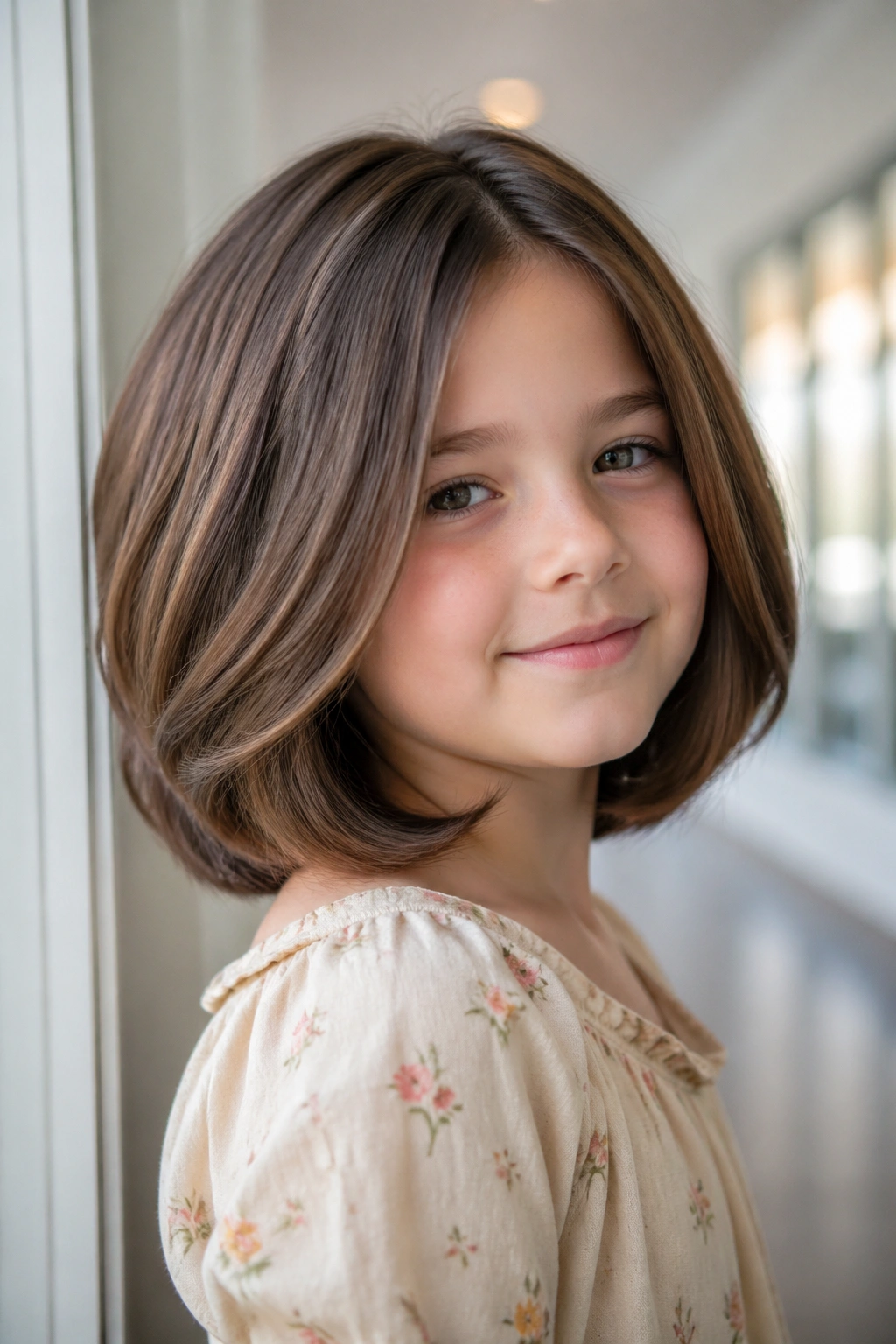
Thick hair can turn a bob into a triangle by lunchtime. So what fixes that? Soft layers, but not the choppy kind that leave little spikes around the head. The trick is removing bulk from the inside while keeping the outside line solid.
How to ask for it
Tell the stylist you want long internal layers or soft shaping through the middle, not a heavily thinned-out cut. That keeps the bob from bulking up at the sides while still giving it enough weight to stay calm. Too many layers in thick hair can make the whole thing puff and flip.
A layered bob also dries faster than one heavy block of hair. That sounds minor until you’re standing in a hallway with one shoe on and a lunchbox in hand. Fewer dense spots mean fewer damp patches, and that usually means less morning drama.
- Keep the front pieces around jaw length.
- Let the layers begin below the ear, not right at it.
- Avoid aggressive texturizing on coarse hair.
- Use a wide-tooth comb while the hair is damp, then stop fussing with it.
This cut is a good fit for kids with hair that feels full even after a wash. It makes the bob lighter without taking away the shape, and that balance is what keeps it manageable.
3. Side-Swept Bang Bob
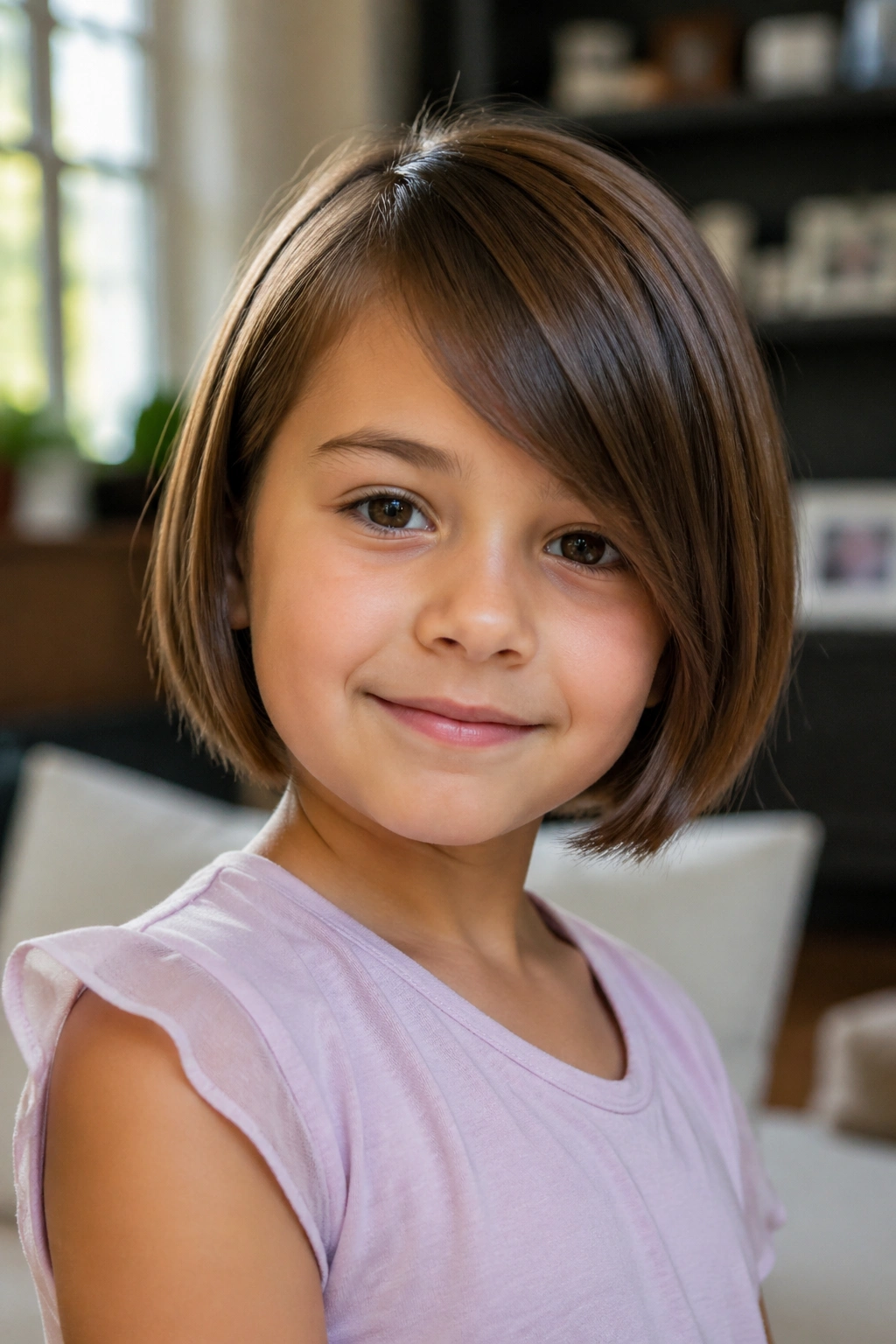
If a child hates hair in the eyes but won’t sit still for daily styling, side-swept bangs solve more than they create. They soften a bob without turning the front into a maintenance job. And they grow out politely, which is more than blunt bangs can say.
A side-swept fringe works because it follows the way kids naturally push their hair away from the face. There’s no hard line across the forehead. No strict center part. The shape looks casual even when the rest of the haircut is neat, and that makes it easy to wear on rushed school mornings.
The only real rule is this: keep the bangs long enough to sweep, not so short that they stick straight out. A fringe that lands around the eyebrow or slightly below it usually behaves best. Shorter than that, and you’re back to constant trims and extra blow-drying. Nobody needs that.
I also like this cut for children who wear hats a lot. The fringe can be pushed to one side after the hat comes off, and it does not need a perfect finish. A little water on the fingers, a quick comb, done. That’s the kind of haircut parents remember fondly.
4. French Bob with a Soft Fringe
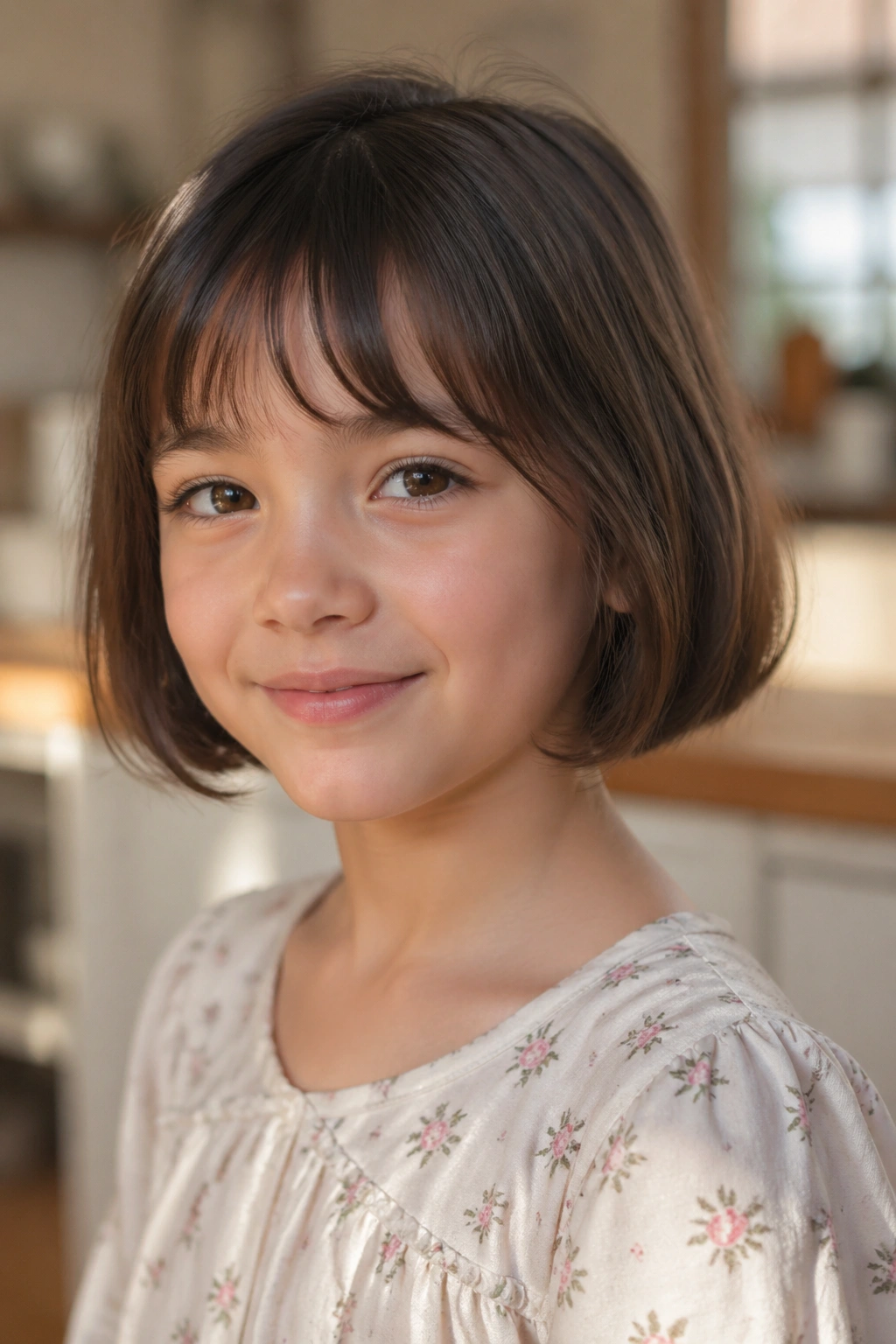
The French bob looks polished, but the kid version can be one of the easiest cuts to live with. The secret is keeping it soft. Not severe. Not tiny. The line sits around the cheekbone or jaw, and the fringe should be light enough to brush across the forehead without needing a styling session.
A lot of people picture the French bob as high-maintenance because of the bangs. That depends on the bang shape. A soft fringe is forgiving; micro bangs are not. For kids, the softer version is the smart one. It frames the face, keeps hair off the eyes, and still grows out in a way that does not look awkward after three weeks.
This cut works especially well on straight or gently wavy hair. It has enough shape to look intentional, but not so much detail that you’re chasing it every morning. If the child likes hair that feels tidy but not severe, this one hits the mark.
One honest note: the French bob is neatest when the ends stay clean. If the hair is dry or splitting, the whole cut loses its charm fast. A small trim and a light conditioner do more here than any styling trick ever will.
5. Angled Bob with a Gentle Drop
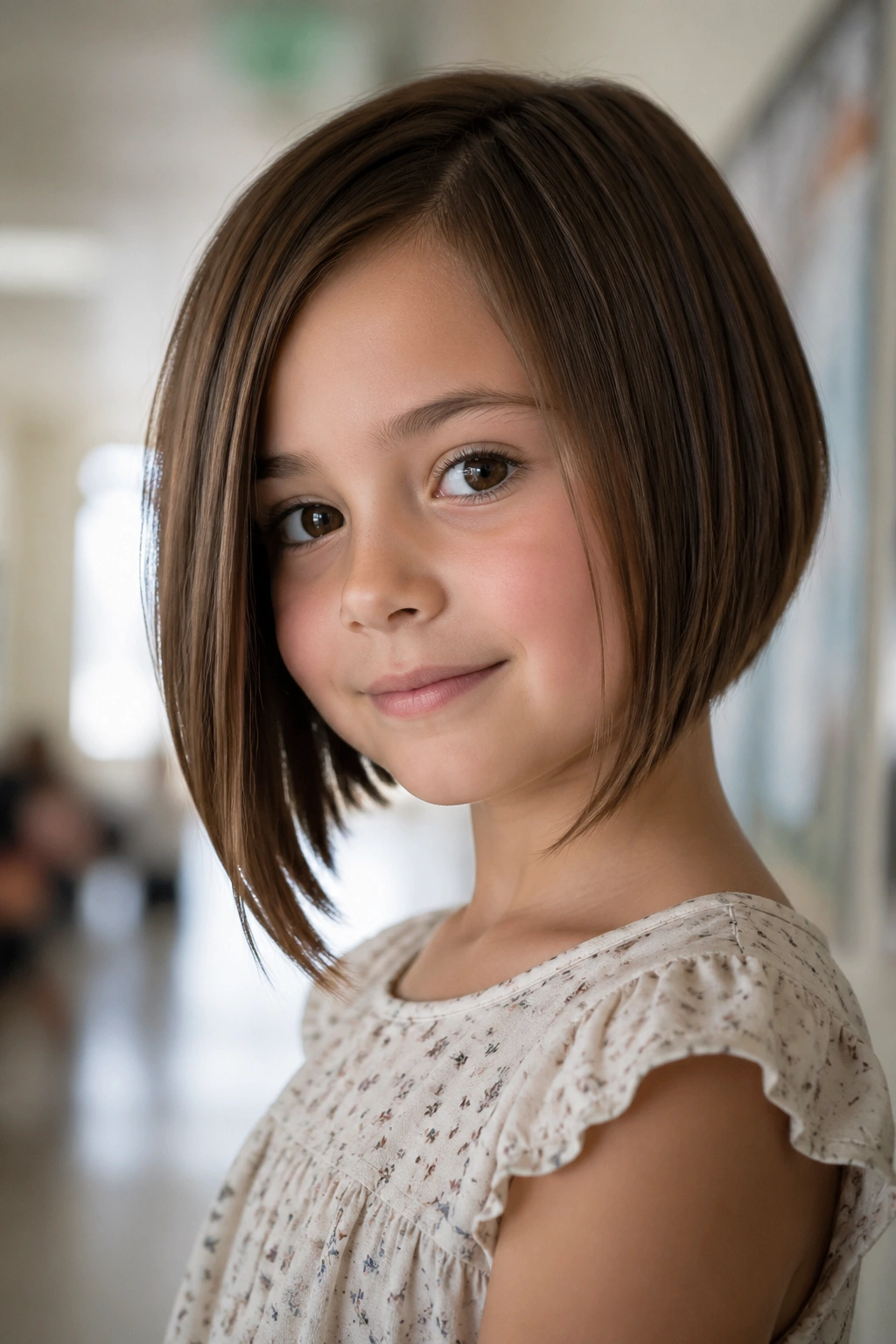
Unlike a straight-across bob, an angled cut is longer in front and shorter at the back, which means it grows out with less obvious awkwardness. That makes it useful for kids who do not sit still for frequent salon visits. The shape stays readable even as it gets a little longer.
The angle should be gentle. A dramatic wedge can look fussy on a child, and it usually takes more styling than parents want. A soft drop from back to front is enough. It gives the haircut movement, keeps the neck area lighter, and lets the front pieces tuck behind the ears when needed.
What to ask the stylist for
- Keep the back just above the nape.
- Let the front fall 1 to 2 inches longer than the back.
- Avoid razor-heavy thinning at the ends.
- Leave enough length near the face for tucking and ear-tucking.
This is a good cut for kids who are growing out a shorter style. The front length gives some flexibility, but the shape still reads as a bob. It also helps when hair flips out at the back, because the shorter nape lies flatter than a one-length cut sometimes does.
6. Curly Bob Cut to the Curl Pattern
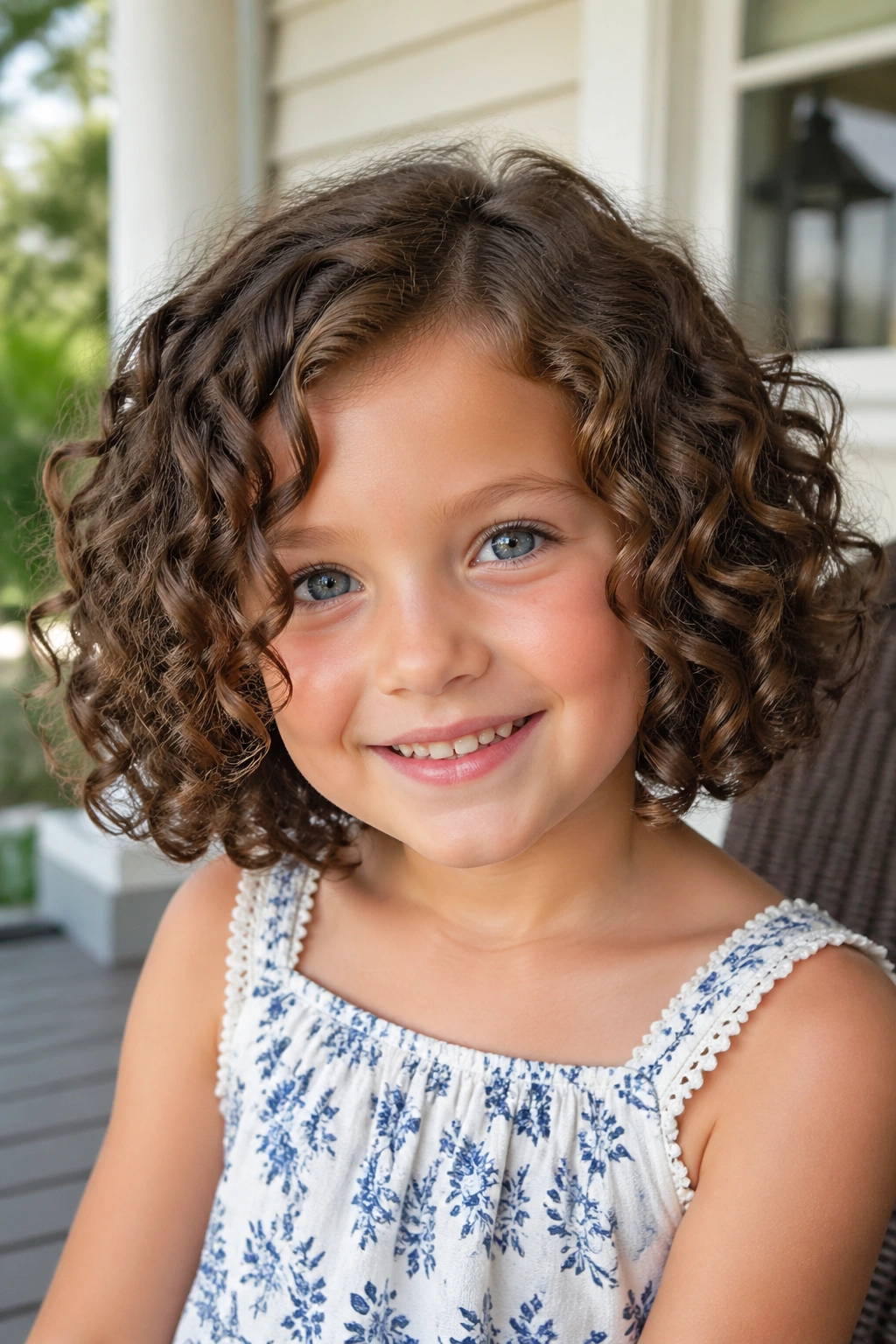
Do you cut curls wet and hope for the best? Please don’t. Curly hair shrinks, bends, and moves in ways straight hair never will, so a bob for curls needs to follow the curl pattern, not fight it. That’s the only way it stays manageable.
A good curly bob is usually cut with the child’s curls in their natural state, or at least shaped when the hair is mostly dry. That lets the stylist see how each curl sits. The result is a bob that avoids the triangle look and keeps the volume where it belongs.
How to style it
- Detangle with a wide-tooth comb while the hair is damp.
- Work in a small amount of leave-in conditioner or light curl cream.
- Scrunch from the ends upward, then stop touching it.
- Let it air-dry when you can; diffusing is fine, but keep the heat low.
The best part is how little work this cut needs once it’s shaped correctly. Curls already have personality. A smart bob just gives them a border. If the child has tight curls, ask the stylist to leave enough length for shrinkage, because a bob that looks shoulder-length when wet can sit much shorter when dry.
7. Wavy Air-Dry Bob
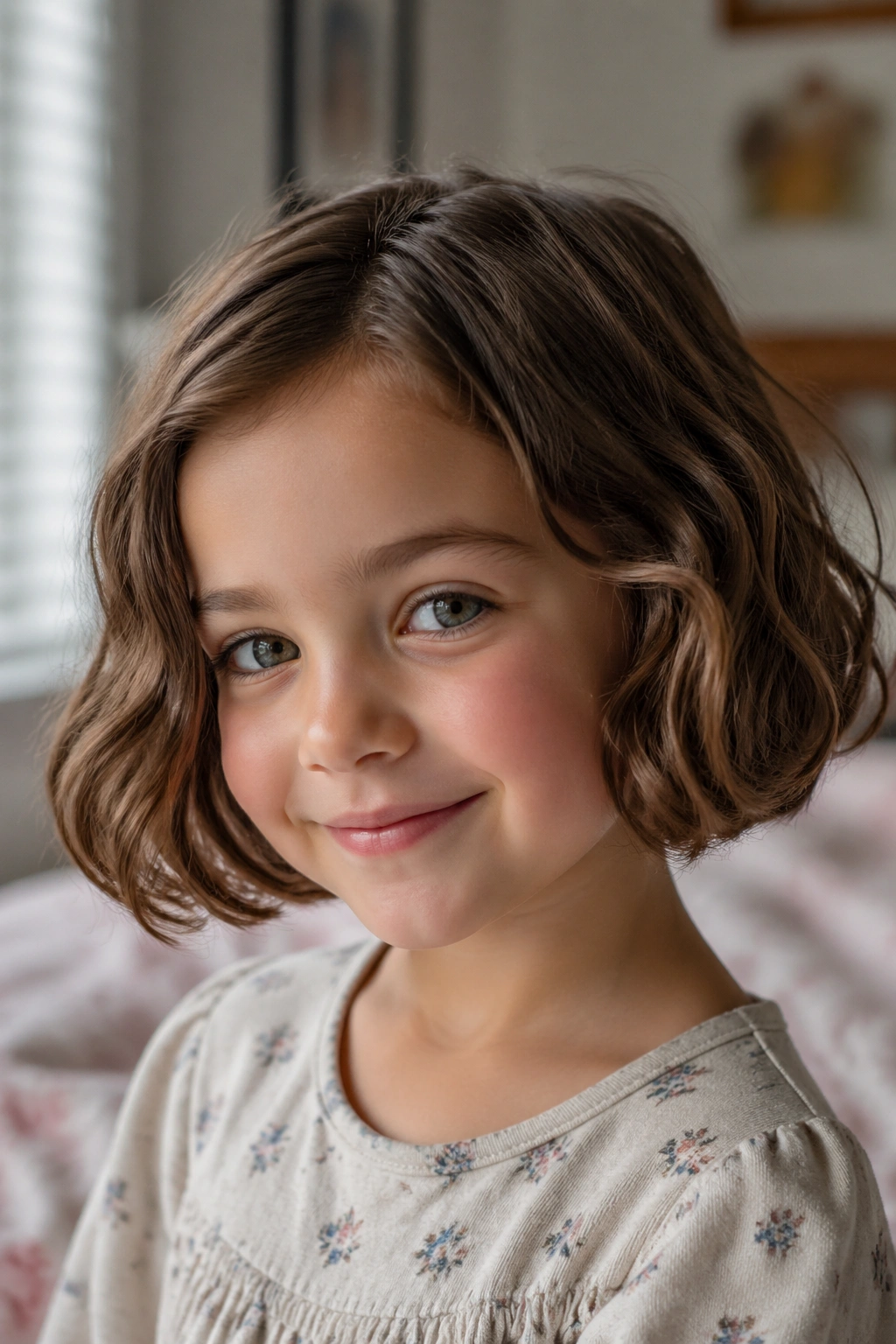
A good wavy bob should dry into soft bends, not helmet hair. When the cut is right, the waves do the styling for you. That is the whole appeal. The hair moves, bends, and settles on its own, which is a gift on mornings when there’s no time for a blow-dryer.
This works best when the ends are trimmed with just enough texture to keep the shape from looking blocky. Too blunt, and the waves may flip oddly at the corners. Too layered, and the bob can lose its tidy outline. The sweet spot is somewhere in the middle.
- Mist the hair lightly with water or a gentle leave-in spray.
- Smooth a pea-size amount of curl cream through the mid-lengths and ends.
- Scrunch once, then let the hair air-dry without brushing it again.
That routine is short on purpose. Wavy hair often looks worse the more you poke at it. A kids bob haircut like this should get better as the day goes on, not worse. If the hair puffs in humidity, a tiny bit of cream goes further than a big glob of product ever will.
8. Collarbone Lob for Grow-Out Ease
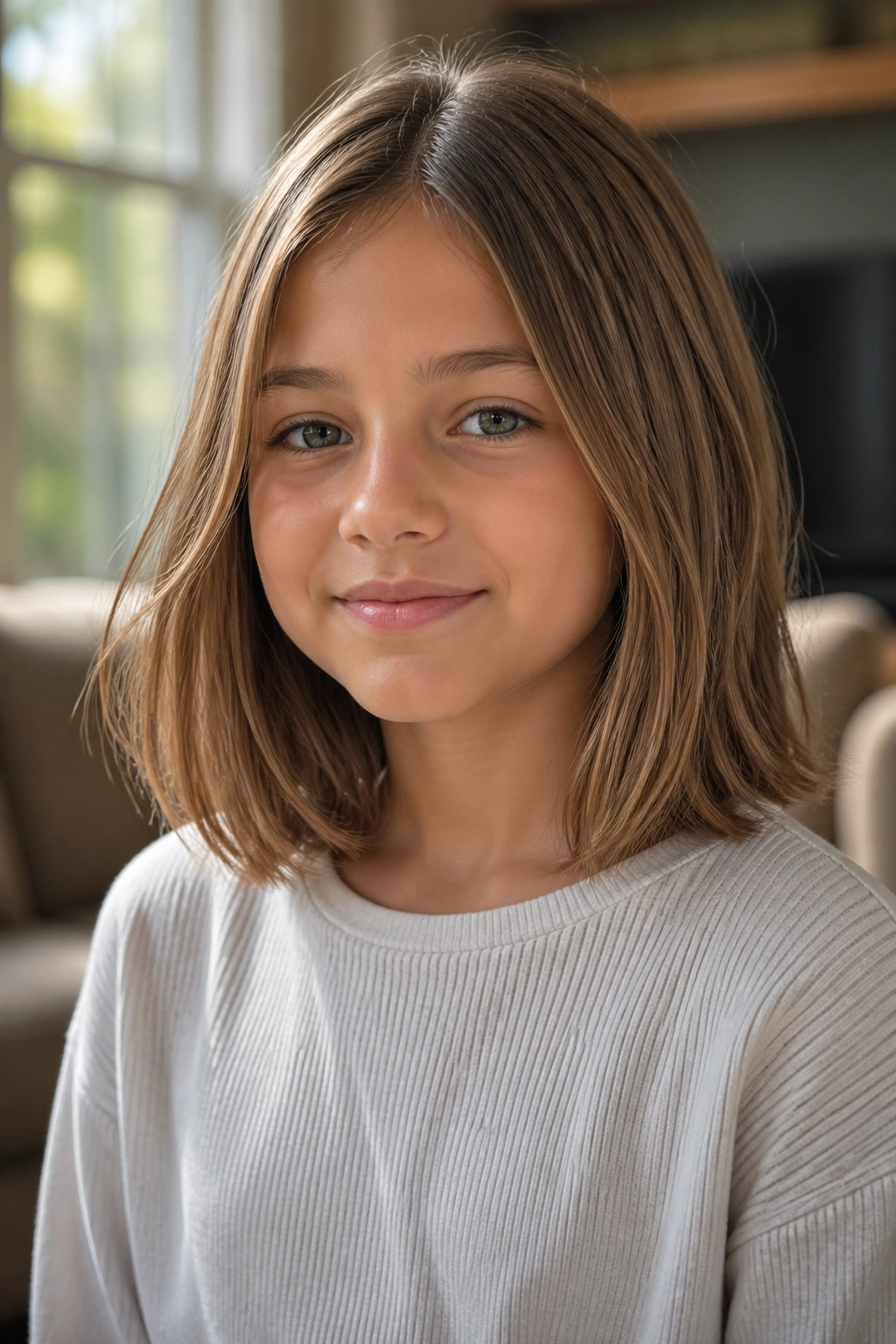
Not every kid wants hair that stops at the jaw. Some want a little more length, and some parents want the option of a tiny ponytail or clip. A collarbone lob gives both. It still counts as a bob family cut, but it stretches the rules just enough to make daily life easier.
The extra length helps when kids sleep on their hair, wear hats, or get caught in wind. Shorter bobs can kick out at the ends. A lob has enough weight to settle back down. It also makes transition phases less annoying, because a grow-out from a lob does not hit that awkward in-between stage as fast as a chin-length cut.
This is a good pick for children who are active and dislike hair constantly brushing the face. It can be tucked, clipped, braided at the front, or left loose. That flexibility matters more than people think. A haircut that works for soccer practice and picture day earns its keep.
The only downside is obvious: it is not the shortest option on this list. If the goal is maximum speed in the morning, go shorter. If the goal is easy handling with a little wiggle room, the lob does a lot of quiet work.
9. Stacked Bob for Dense Hair
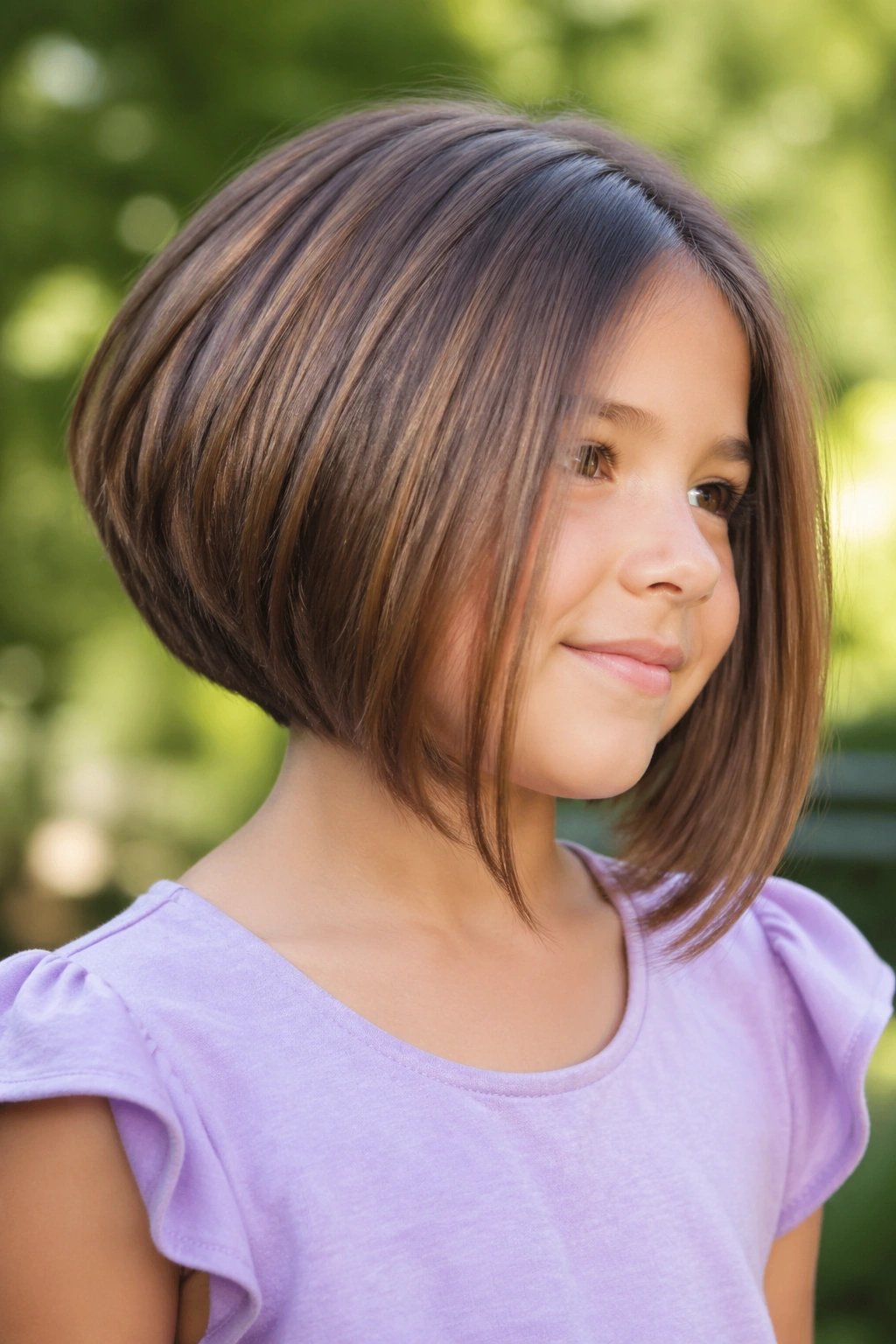
A stacked bob is the answer when hair is thick enough to feel like a wool hat. The back is cut shorter and slightly layered so it lifts away from the neck, while the front stays longer and softer. That shape removes bulk where kids feel it most.
Who should choose it
This cut suits straight or slightly wavy hair that grows heavy fast. It also helps when the hair has a round, puffy shape after air-drying. Stacking the back gives the bob a cleaner curve, and that makes it easier to brush into place without fighting a wall of hair.
A stacked bob does ask for regular upkeep. The back line shows growth sooner than a longer cut does. If the hair goes six to eight weeks without a trim, the lift at the back can collapse a little. Still, the tradeoff is worth it for a child whose hair is thick, warm, or hard to keep tidy.
- Keep the stacking subtle, not extreme.
- Ask for a smooth transition from the back to the sides.
- Skip heavy texturizing if the hair is already coarse.
- Use a paddle brush for quick drying and smoothing.
I like this cut because it solves a real problem instead of just looking sharp in a photo. That matters more than trends.
10. Textured Bob with Choppy Ends

Why do some bob cuts seem to fall into place with almost no effort? Because the ends are broken up on purpose. A textured bob with choppy ends has enough movement to avoid stiffness, and that movement is useful for kids who do not love being fussed over.
The word textured can mean a lot of different things, which is where people get in trouble. For a child’s haircut, it should usually mean a little piece removal at the ends, not a full shag or a thinned-out mess. You want softness, not frizz. You want motion, not chaos.
The parts that matter
- Keep the bob shape readable from the front.
- Ask for soft point cutting at the ends.
- Avoid over-thinning the middle of the haircut.
- Use a light detangler, not a pile of heavy styling cream.
This style is especially kind to hair that looks flat when it’s one length. The choppy finish gives the bob some lift and keeps it from looking too perfect. That can be a good thing. Kids move fast, sleep hard, and rarely sit still long enough for a polished blowout.
If you want a bob that looks cute even after a rough day, this is one of the better choices.
11. Curtain Bang Bob
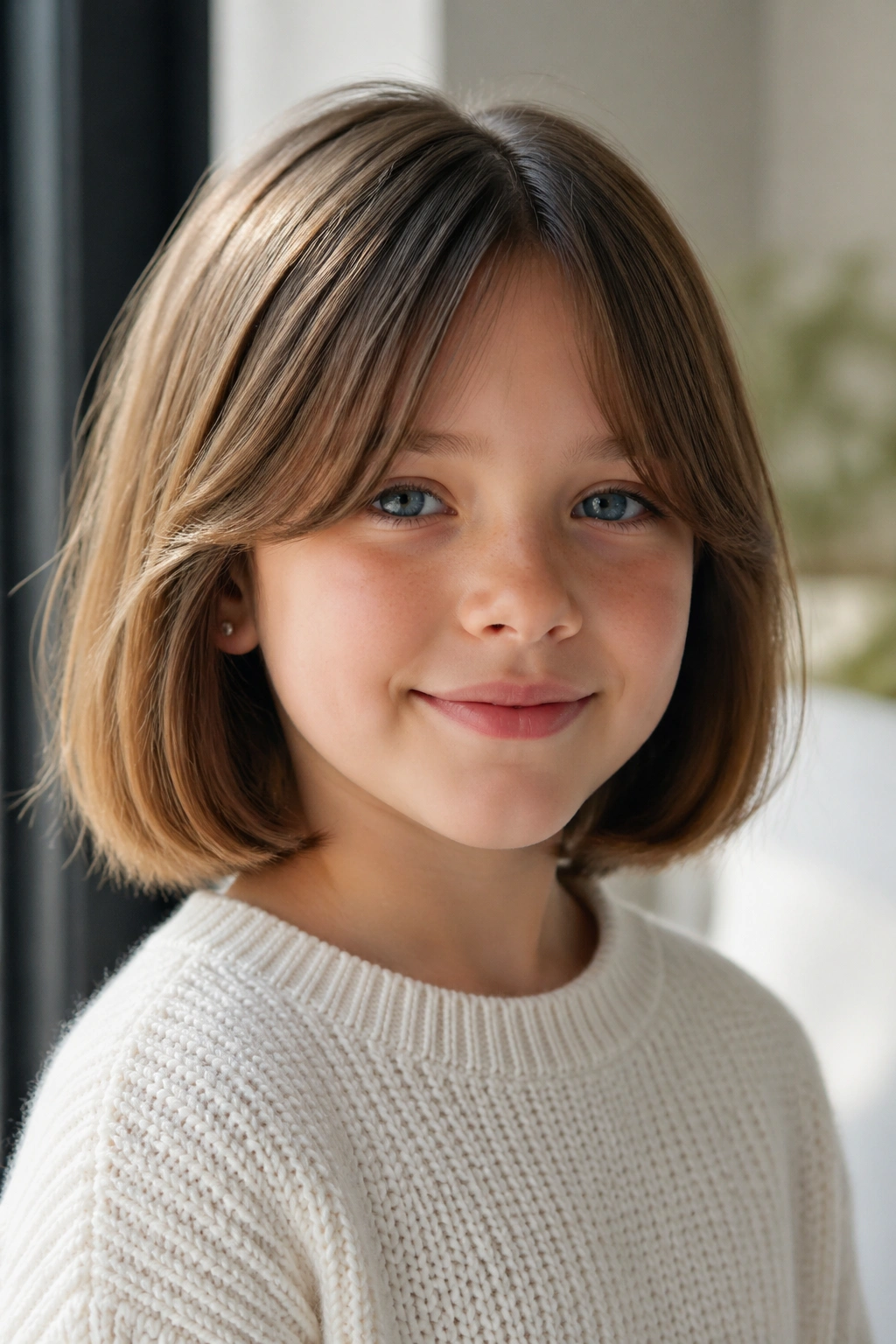
Curtain bangs can calm a bob that feels too plain. They split down the middle, fall softly on both sides of the face, and grow out with less drama than blunt bangs. That alone makes them easier to live with for a child who changes moods faster than hair grows.
The nice part is how they blend into the rest of the cut. Curtain bangs do not sit like a hard shelf across the forehead. They move. They can be pushed aside, tucked behind a clip, or left to fall naturally. If a child refuses to cooperate with combing, that flexibility helps.
A curtain bang bob works best when the fringe starts long enough to part easily. Too short, and the bangs puff up. Too heavy, and they lose the light, face-framing effect. The cut should feel soft, almost casual, even though the shape is doing quite a bit of work.
I would pick this for a kid who wants something a little stylish but still practical. It does ask for a quick finger-comb in the morning, yet it is nowhere near as fussy as straight-across bangs. That little difference matters.
12. Rounded Bob for Fine Hair
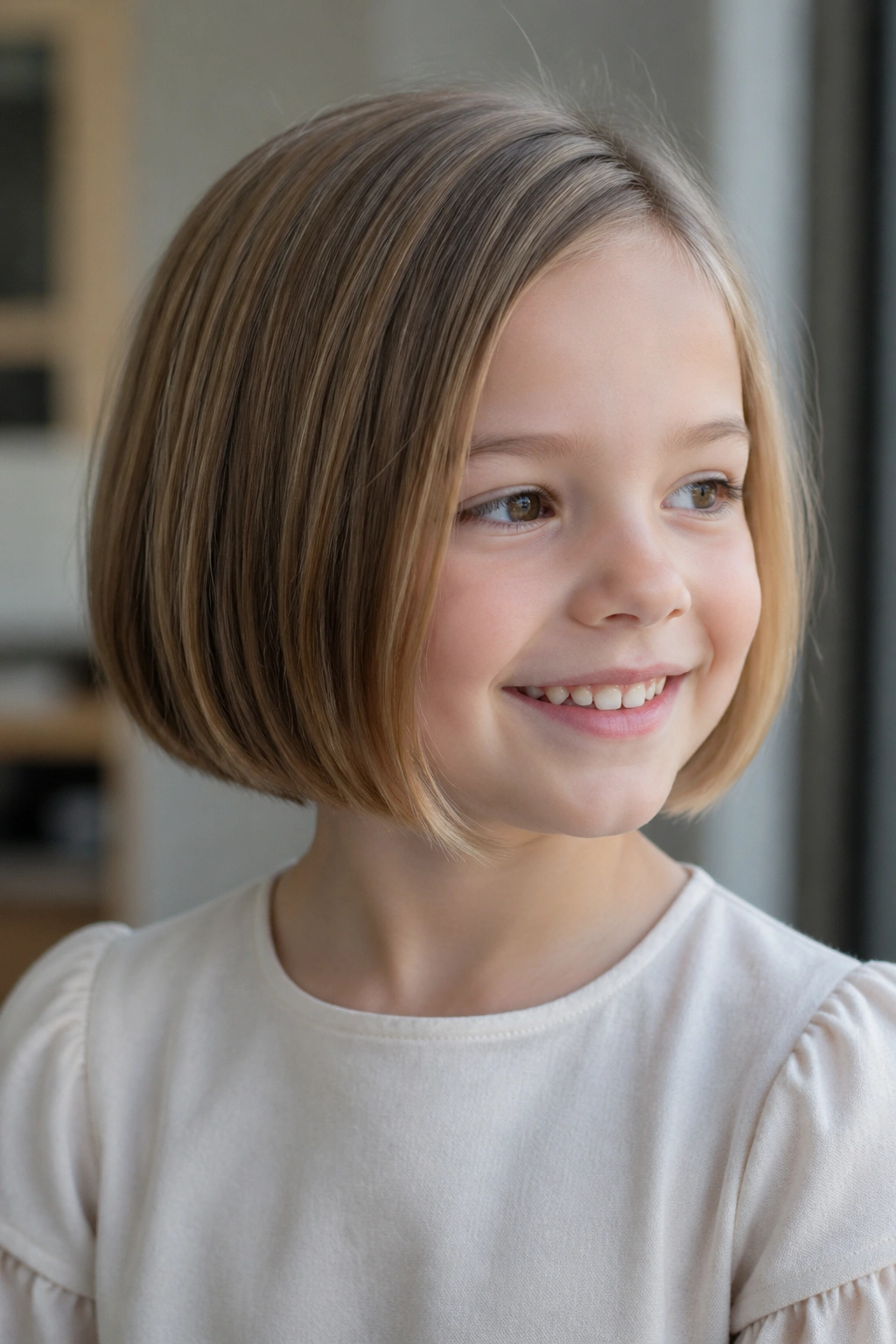
Fine hair often looks best when it is cut a touch fuller than you think. A rounded bob does that by keeping the perimeter soft and slightly curved instead of letting the ends hang thin and wispy. The result is a haircut that feels fuller without needing a lot of product.
Keep the perimeter full
The biggest mistake with fine hair is over-layering it. That can make the ends look stringy and light in the wrong way. A rounded bob keeps the weight at the bottom, where it helps the hair sit neatly and appear thicker. That is useful for children whose hair goes flat by noon.
A rounded bob also grows out gracefully. The curve softens over time instead of turning into a jagged shape. You still need trims, of course, but the cut does not fall apart the second it gets a little long.
For styling, keep it boring in the best sense. A small amount of detangler, a gentle brush, and a quick tuck behind the ears are usually enough. Fine hair rarely wants heavy cream or strong hold. Those products can make it limp fast.
This is one of my favorite low-effort cuts for kids because it solves two things at once: it gives the hair presence, and it keeps the morning routine short.
13. Soft Asymmetrical Bob

One side longer sounds dramatic, but a gentle asymmetrical bob is mostly a practical trick. The difference between the sides should be subtle enough that the haircut still feels easy, not edgy. A slight unevenness can help the hair fall in a way that looks intentional even when it grows out.
The longer side can tuck behind the ear or fall forward when the child is sitting still. The shorter side keeps the neck area lighter. That small difference helps the bob move instead of sitting like a helmet. It also means the haircut does not look ruined after a few weeks of growth.
This cut works well for kids who like their hair off one side of the face. It gives them that option without needing a clip every single day. You do need a stylist who can keep the line clean, because a sloppy asymmetrical cut looks accidental fast. Subtle is the better move here.
The shape is a little playful, but it is still practical. That combination is rare enough to be useful.
14. Box Bob with Clean Edges
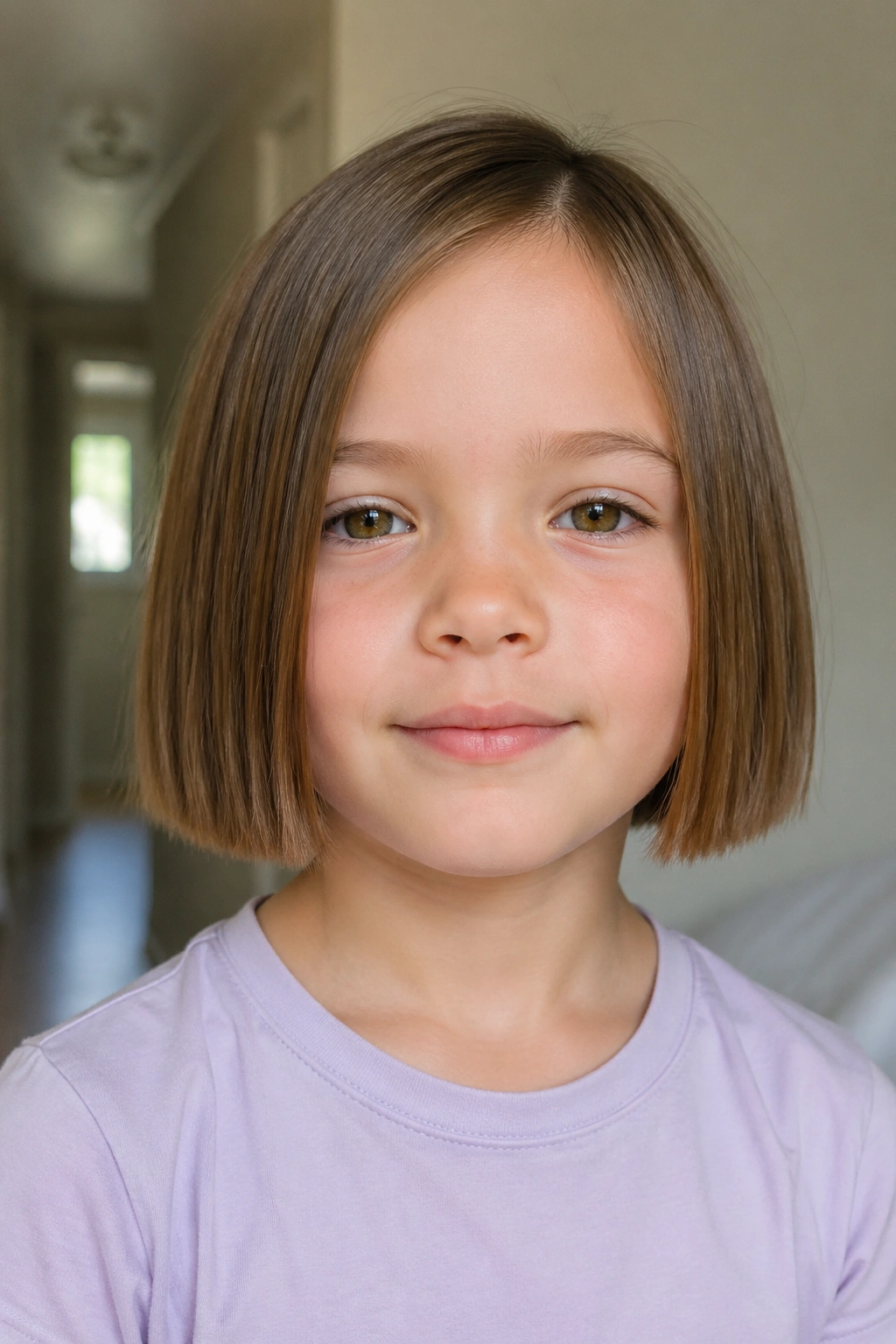
A box bob has a straight edge that reads clean the second the hair dries. It is a square, tidy shape with little softness at the corners, and that makes it a strong choice for straight hair that wants to stay neat without much help. The cut looks deliberate even when it’s worn bare-faced and unstyled.
What to tell the stylist
- Keep the line straight and even from side to side.
- Leave enough length to avoid the hair kicking out at the jaw.
- Soften only the tiniest bit at the corners if the hair is thick.
- Skip heavy layering unless the hair is too dense to lie flat.
The box bob is a good match for children who like hair that feels orderly. It brushes fast. It does not need curling. It does not ask for much besides the occasional trim. The only catch is that it shows grow-out plainly, so this one looks best when the line is maintained.
I’d avoid it if the child has wild cowlicks or a very bendy hairline, because a strict square shape can fight those patterns. On cooperative hair, though, it is one of the cleanest low-maintenance looks around.
15. Mini Bob for the Busiest Mornings
If your kid lives on the move, the mini bob can be blissfully boring in the best way. It sits shorter than a classic chin-length cut, usually between the ear and jaw, and it dries fast because there is simply less hair to deal with. Less tangling, less brushing, less standing around in a towel.
The mini bob is a smart fit for children who hate hair touching their face or neck. It stays out of the way during sports, climbing, art class, and every other activity that pulls hair loose. The shape is especially helpful for fine hair that knots easily at the nape, because there is less length to knot in the first place.
One thing to watch: a mini bob needs a clean cut, or it can look fuzzy fast. If the edges are uneven, the short length shows it right away. Keep the line neat and the shape simple. Fancy styling is not the point here.
This is the haircut I’d pick for a child who wants speed over options. No drama. No extra work. Just a short bob that gets on with the day.
A few of these cuts ask for a little more trimming than others, but none of them should turn into a chore. That is the real test. If the bob can be brushed in under two minutes, tucked behind an ear, or left to air-dry without a fight, it has earned its place.
Hair texture should make the final decision more than a photo ever will. Straight hair usually likes blunt or boxy shapes. Wavy hair often does well with soft layers or a lob. Curly hair needs room to spring. Pick the version that fits the child’s routine, not the version that looks best on a mannequin head.
