



A good haircut for a kid has to survive backpacks, naps, static, playground wind, and a bathroom brush that never seems to cooperate. Medium bob cuts for kids sit in that sweet spot between neat and forgiving, which is why they work so well when mornings are already busy enough. They’re long enough to tuck behind ears and short enough to dry without a wrestling match.
The sweet spot matters more than people admit. A blunt edge can make fine hair look fuller in a second; soft layers can keep thick hair from puffing out into a triangle by lunchtime. And when a child moves constantly — running, twisting, leaning on car seats, pulling on hoodies — the haircut has to keep its shape without looking overworked.
There’s also the grow-out issue, which matters a lot more than salon photos do. Kids’ hair changes fast. A bob that looks polished on day one can look choppy three weeks later if the shape is too rigid or the fringe is too heavy. That’s why the most useful versions are the ones with a little breathing room.
The cuts below are all medium-length, kid-friendly, and practical in different ways. Some keep hair out of the face. Some add movement to thick hair. Some are made for curls that spring up the moment they dry. A few are the kind you can throw into clips, braids, or a headband and still look like you made an effort. Little victory. Huge difference.
1. Classic Blunt Medium Bob for Kids
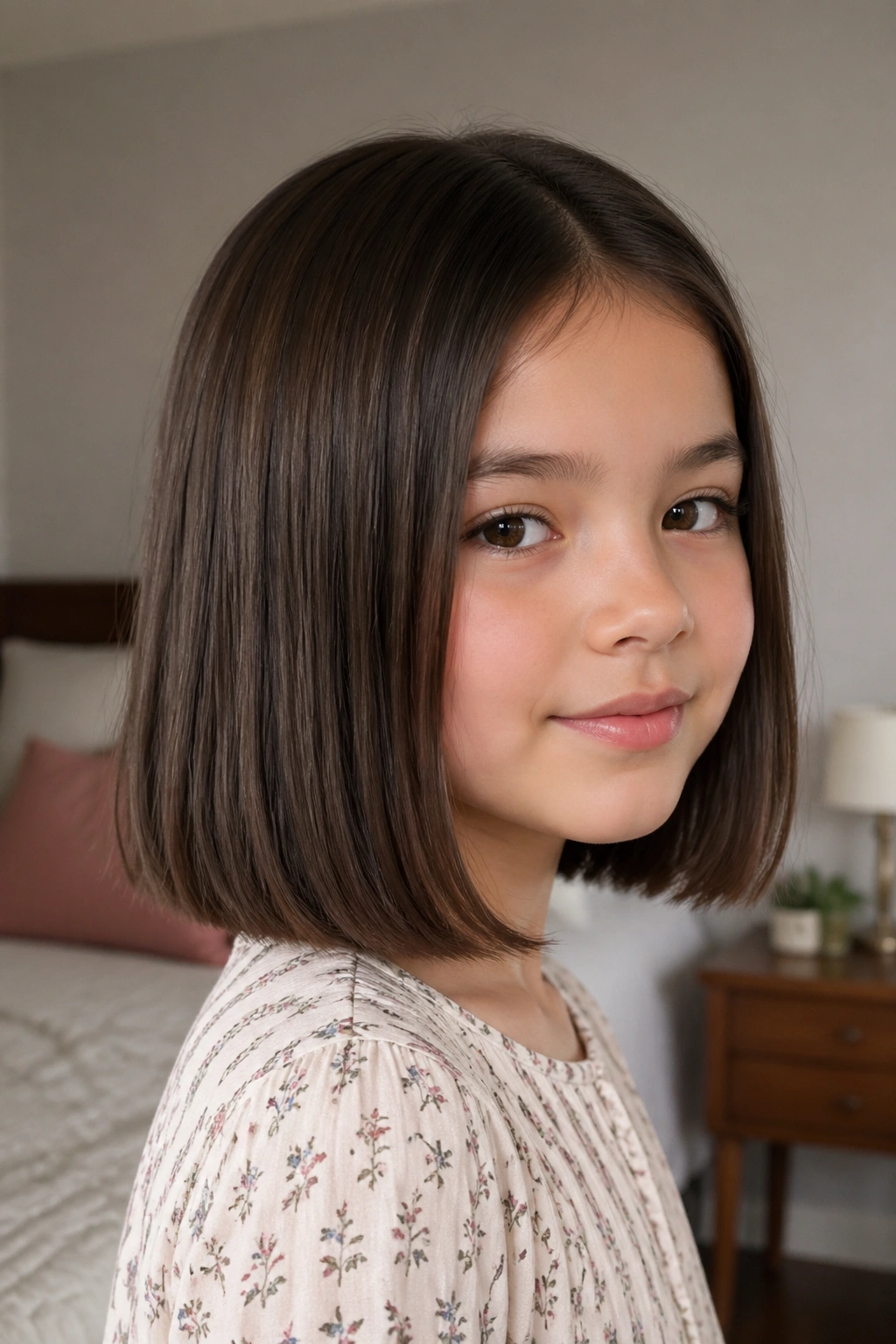
A blunt bob is the haircut that never tries too hard. The line is clean, the ends sit evenly, and the whole shape reads tidy even when the child has been moving nonstop for hours. On a kid, that simplicity is a gift. There’s less fuss, less daily styling, and fewer layers to tangle around collars and jacket zippers.
Why this shape works so well
A blunt edge makes fine or straight hair look denser because every strand ends at nearly the same point. That gives the cut a fuller look without adding product or heat. It also keeps the haircut from turning fluffy at the bottom, which is a common problem when hair is left too wispy.
Ask for the length to land somewhere between the chin and the top of the shoulders. That range is easy to wear, and it gives enough room for clips, side tucks, and ponytail sections on lazy mornings. If the child has a strong cowlick at the crown, keep the top slightly longer so the shape doesn’t kick out at the back.
- Ask for minimal layering so the edge stays heavy and neat.
- Keep the perimeter even all the way around unless the stylist is softening it for a curl pattern.
- If the hair flips outward at the ends, request a tiny bevel rather than a dramatic angle.
- A trim every 6 to 8 weeks keeps the line looking intentional.
Tiny tip: this cut looks especially good when the ends are dried flat with a paddle brush, not rough-dried upside down.
2. Soft Layered Bob with a Side Part
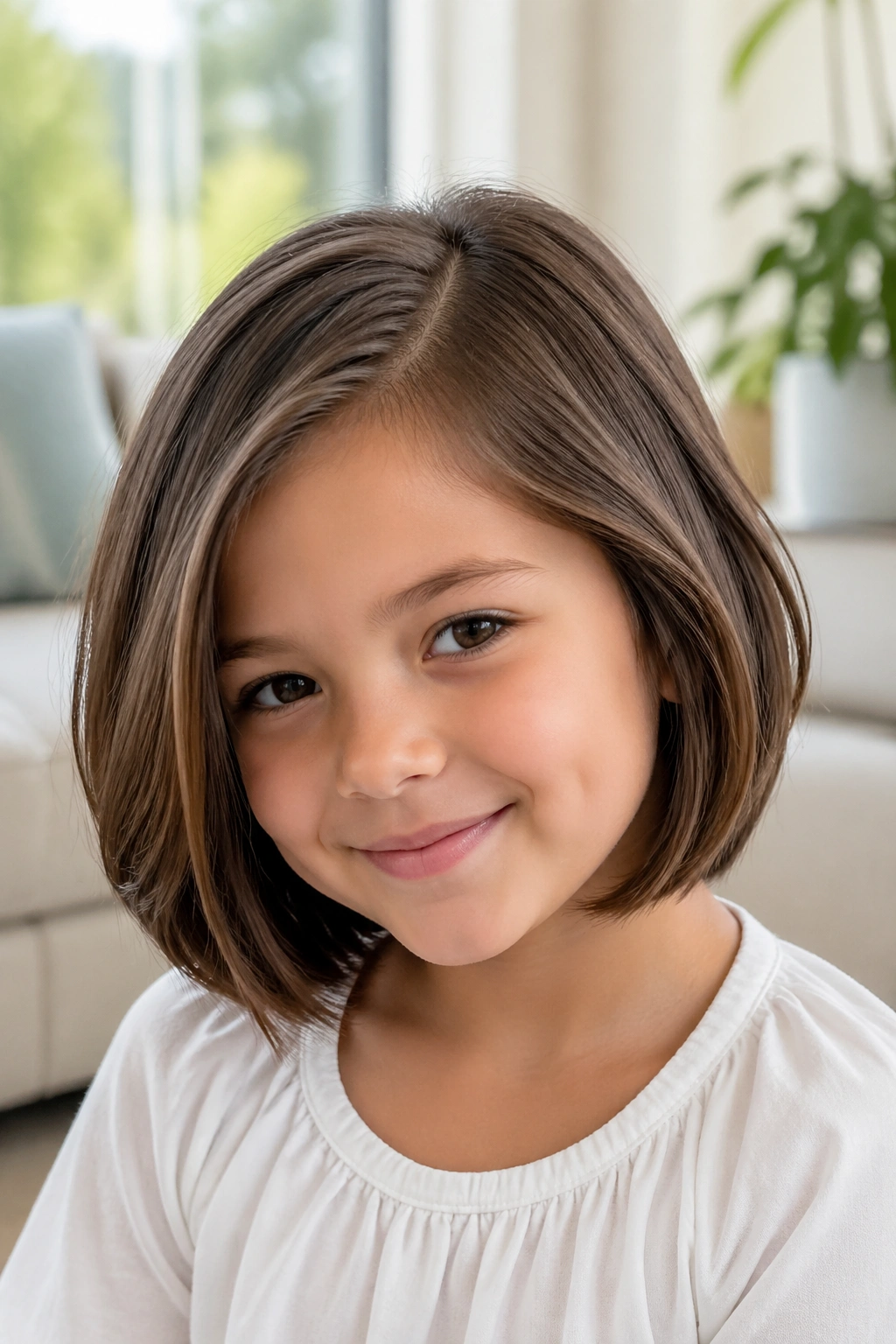
When thick hair starts puffing out at the sides, a soft layered bob is the cleaner answer. It removes some bulk without taking away the shape, which matters because kids do not want a haircut that feels heavy around the neck. The side part helps even more. It breaks up the top line, eases cowlicks, and gives the cut a more relaxed look on days when no one has time for perfect styling.
The trick is restraint. Too many layers and the bob loses its body. Too few, and thick hair can stand out from the head like a helmet. The sweet spot is soft interior layering, mostly around the jawline and under the outer surface. That keeps the ends from looking blunt in a bad way — the kind that sits there like a block.
This cut suits kids whose hair dries big, especially if it’s straight with a little bend or slightly wavy. It also plays well with clips and headbands because the side part gives the hair a natural direction. A child who hates hair falling into the eyes will usually tolerate a side-parted bob more than a center part. That alone is worth something.
A quick detangle and a small amount of leave-in conditioner is often enough. No drama. No elaborate brush routine. Just shape, movement, and a haircut that still looks decent after recess.
3. Wavy Medium Bob with Air-Dried Texture
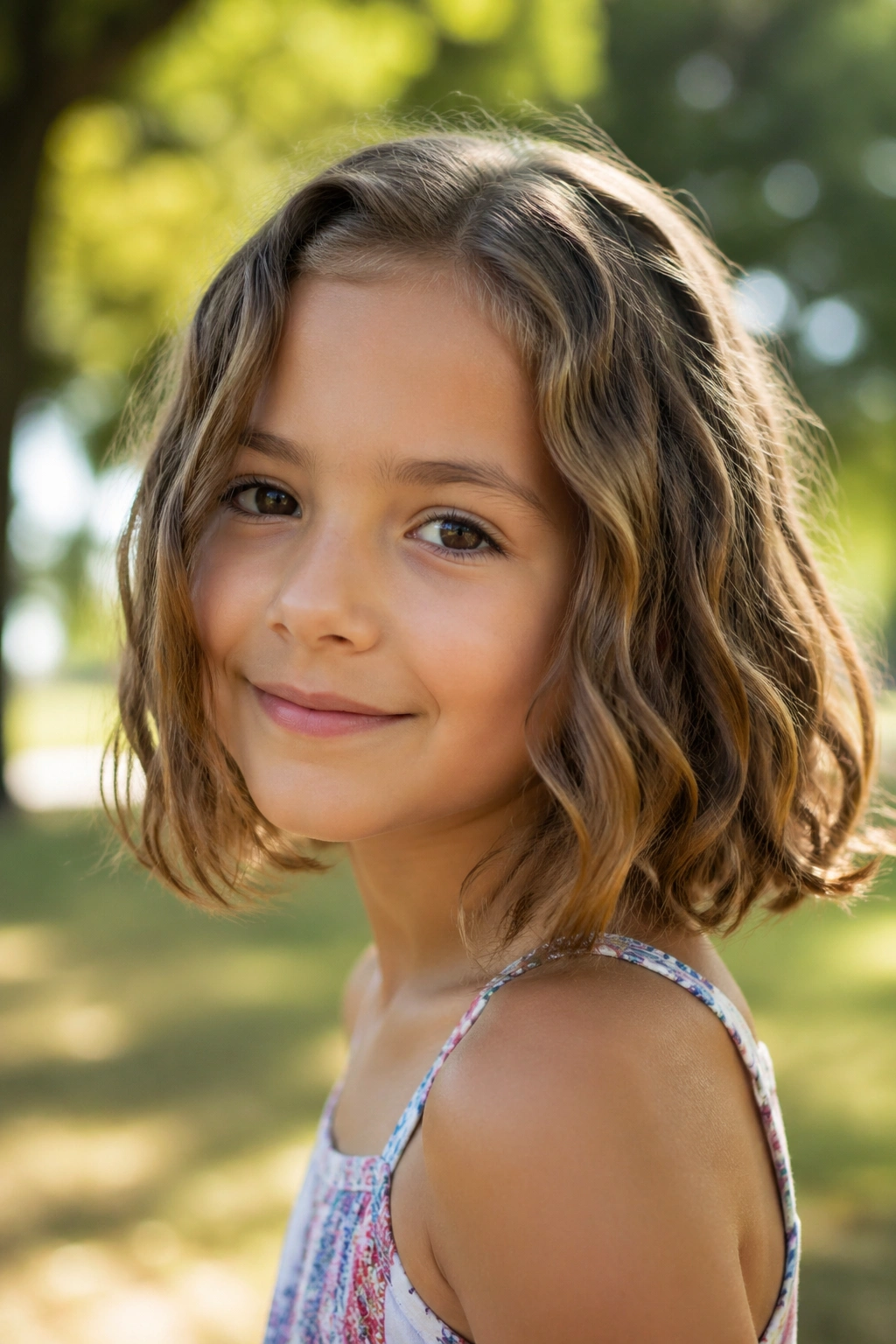
What if the child’s hair bends and flips the moment it dries? Then the best move is to stop fighting it. A wavy medium bob works with the hair’s own shape instead of flattening it into something it doesn’t want to be. That makes mornings easier, and the result usually looks softer and more natural than a cut that’s been forced into a straight line.
The cleanest version keeps the ends tidy while leaving enough length for the wave to form. If the hair is cut too short, the wave can spring up awkwardly and land somewhere the child didn’t ask for. If it’s too heavy, the wave gets buried and the hair loses that easy bend that makes the style feel alive.
How to style it without making it fussy
Use a small amount of leave-in conditioner on damp hair, then scrunch with hands or a microfiber towel. Let it air-dry if you can. If a blow-dryer is necessary, use low heat and a diffuser attachment so the wave keeps its pattern instead of frizzing out. Skip heavy creams if the hair is fine; they can make the bob collapse by midday.
A good wave cut looks better a little imperfect. That’s the point. It should move when the child turns their head, not sit there like a helmet with curves.
4. Angled A-Line Bob That Follows the Jaw
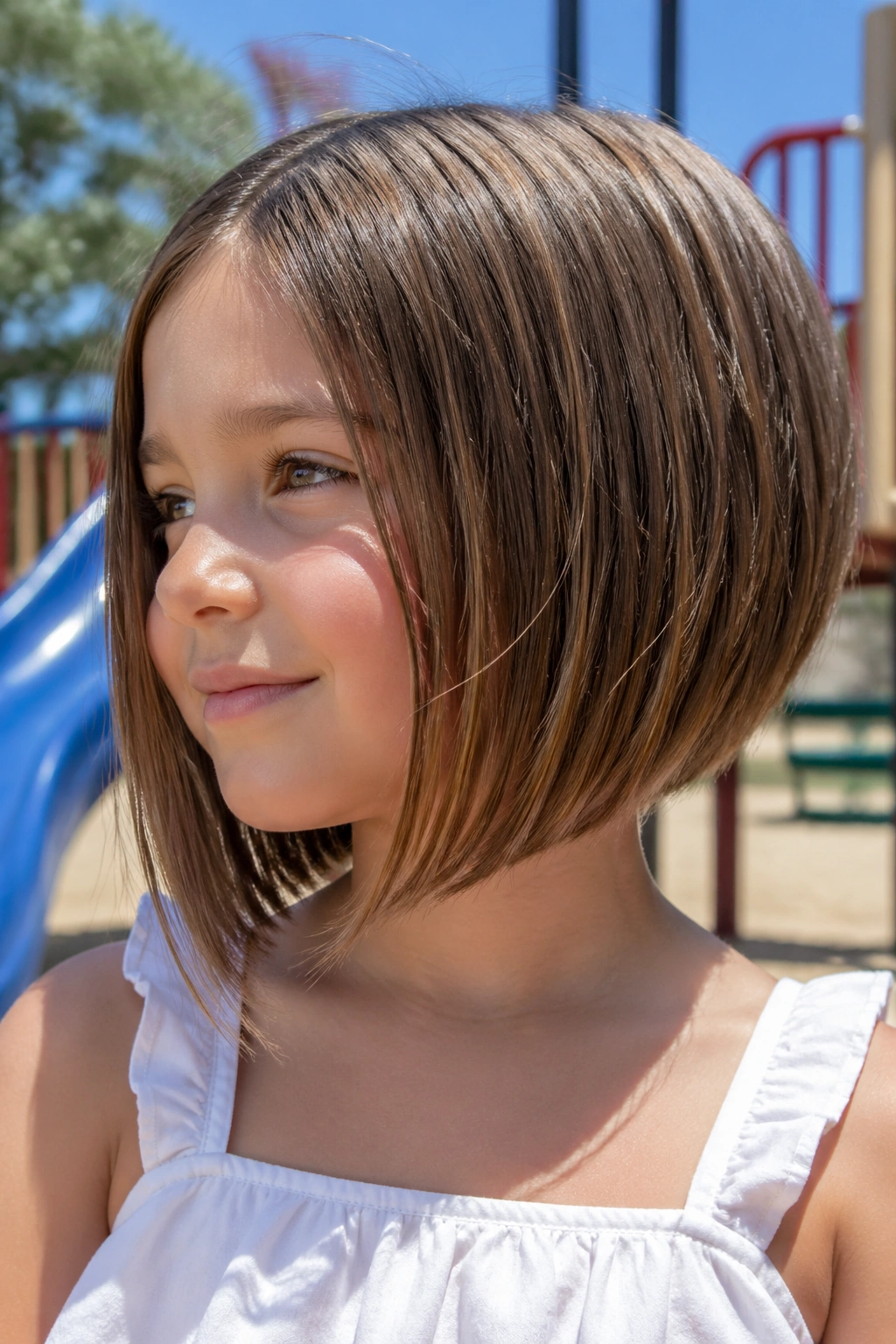
An angled bob has a neat little trick up its sleeve. The back sits a touch shorter, while the front stretches forward toward the jaw. That shape gives the haircut movement without making it feel layered in a messy way, and it keeps hair off the neck where kids often get annoyed fastest.
The angle does a nice job of framing the face, too. It gives a soft line near the cheeks and chin, which can be helpful on rounder faces or on kids who like to tuck hair behind one ear. The cut feels active. It doesn’t sit flat.
This one works especially well on straight or slightly wavy hair because the line shows up clearly. On thicker hair, the angle should stay gentle; if it gets too sharp, the back can rise too much and the style starts to look stiff. That’s not the mood here.
- Ask for the front to be only 1 to 2 inches longer than the back, not dramatically longer.
- Keep the graduation soft so the bob still looks kid-friendly.
- Let the stylist check the line with the child’s head upright, not only while it’s tilted forward.
- This cut grows out neatly if the angle is subtle.
The best part is how easy it is to tuck the longer front pieces behind the ears and still keep the haircut’s shape. Handy. And less nagging about stray strands in the face.
5. Curly Bob with a Rounded Shape
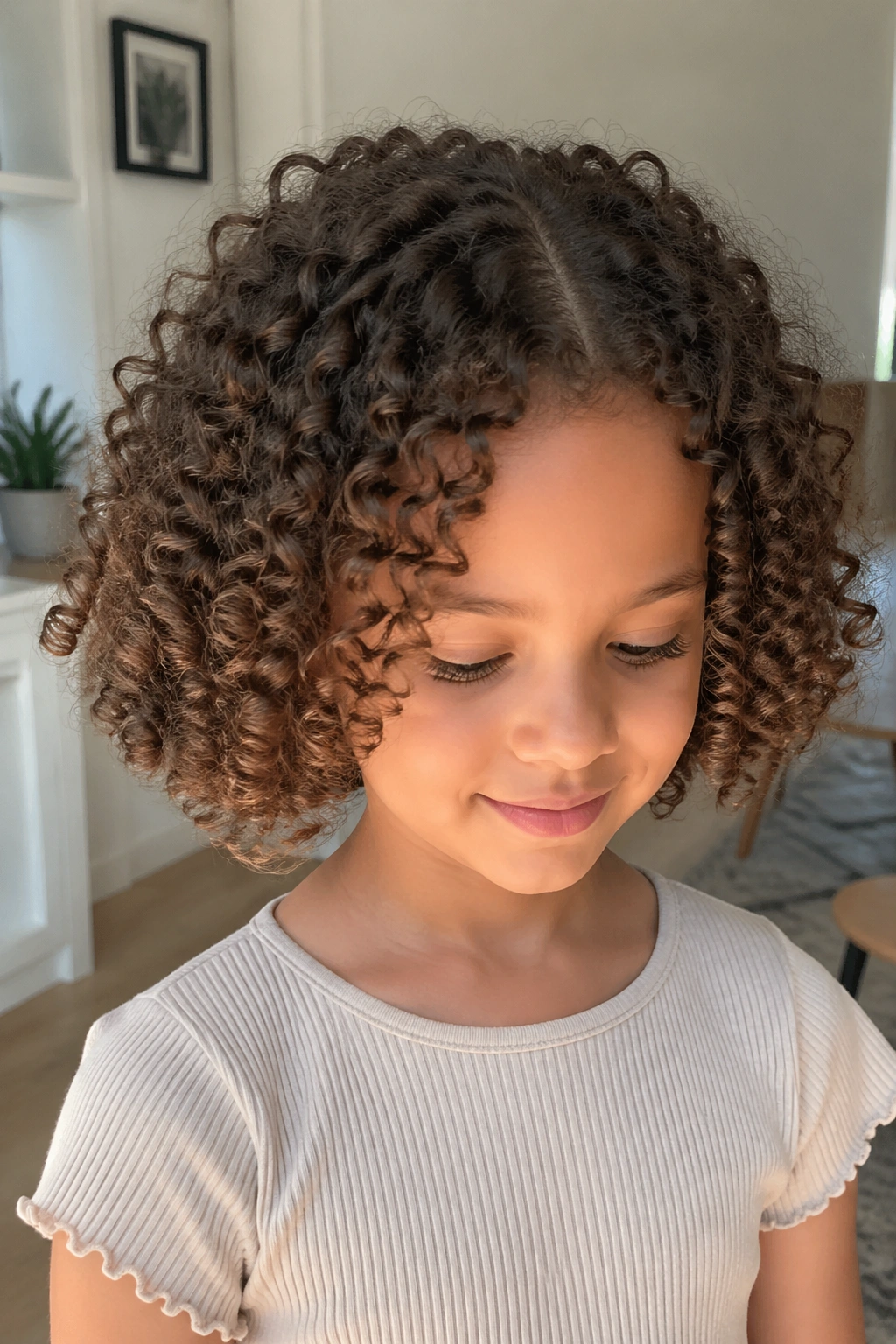
Curly hair has its own rules, and a bob that ignores those rules usually ends up puffier than intended. A rounded curly bob respects the curl pattern instead of trying to force it into a straight shape. That matters because curls need room to spring, and the silhouette has to be planned with shrinkage in mind.
A dry cut is often the smartest route here, or at least a careful cut where the stylist checks the curls as they settle. Curls can shrink a lot once they dry, and what looks like a safe chin length can suddenly sit much higher. That’s how you end up with a bob that feels too short for comfort. Nobody wants that surprise.
Keep the shape soft around the cheeks and jaw. Too much layering near the crown can create a triangle effect, which is the opposite of what most parents want. A rounded edge lets the curls stack in a way that feels full but controlled. It also keeps the haircut from getting boxy in photos.
Use water, not a brush, to refresh curls on busy mornings. A wide-tooth comb or fingers work better when the hair is damp. The less you disturb the curl pattern, the better the bob holds its shape. That one rule saves a lot of frustration.
6. Medium Bob Cuts for Kids with Wispy Bangs
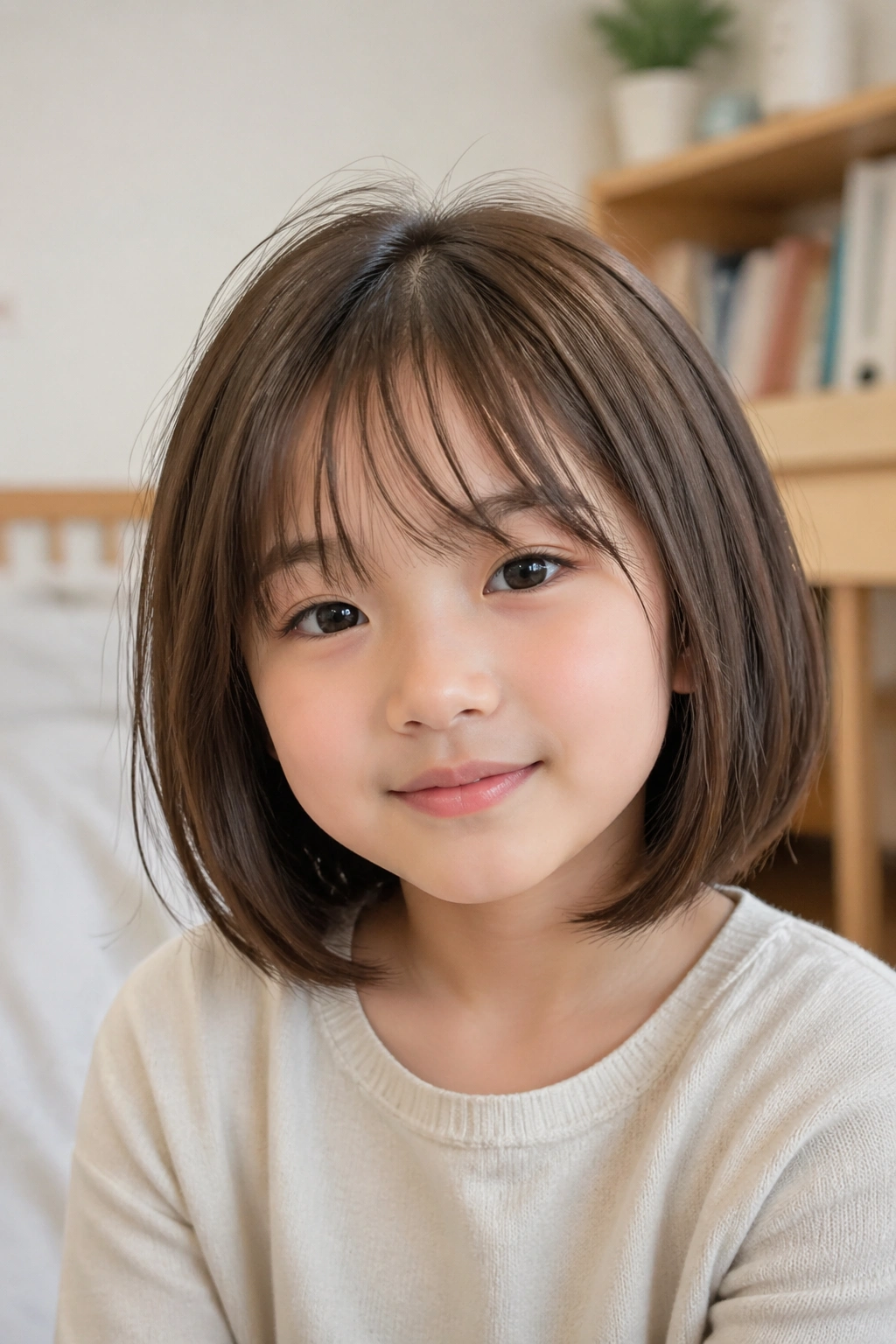
Blunt bangs can be a commitment, and kids grow faster than bangs do. That’s why wispy bangs make so much sense on medium bob cuts for kids. They soften the forehead, mix into the side pieces more easily, and grow out without turning into a sudden wall of hair in the eyes.
The light fringe also helps when a child wears glasses. Heavy bangs can bunch at the frame and need constant fixing. Wispy bangs sit lighter, which means less pushing, less touching, and less irritation. They’re also kinder to cowlicks. A strong front cowlick can bully blunt fringe all day long; a softer fringe usually bends with less fight.
The face framing matters too. Wispy bangs don’t hide the whole forehead, so the haircut still feels open and airy. That’s a good thing on kids who don’t like hair feeling heavy around their face. A side-swept version can even be tucked behind one ear when needed.
Ask the stylist to point-cut the fringe so the ends are soft, not chopped into a hard line. If the bangs get too dense, they lose the whole point. A little lightness goes a long way here. This is the fringe that forgives a trim delay.
7. Choppy Textured Bob with Piecey Ends
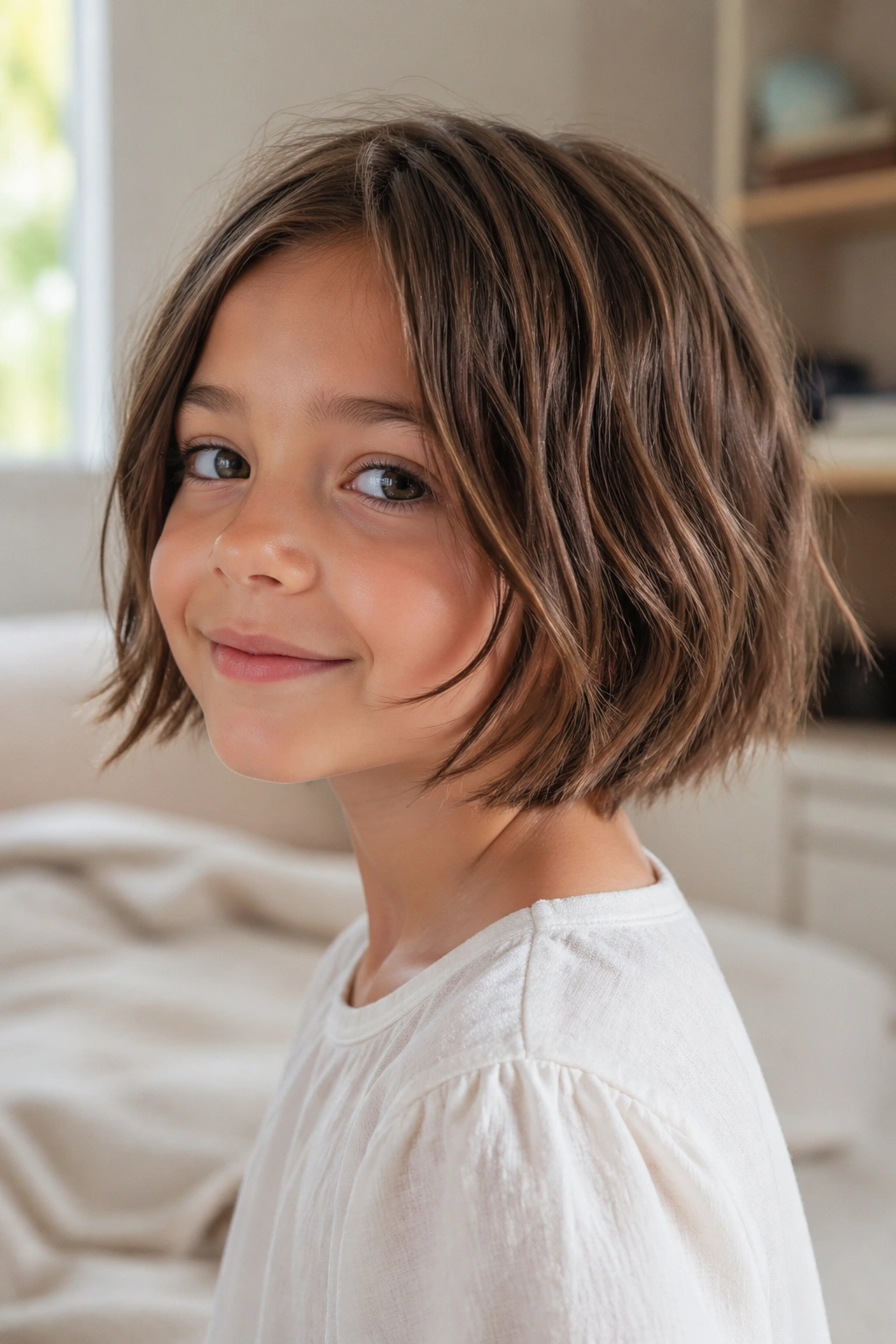
A choppy bob has more attitude than a blunt one, but it can still stay totally kid-appropriate if the texture is kept soft. The point is movement. Not mess. The ends look separated and lively, which can be a nice fix for hair that lies too flat or falls into a uniform block.
This cut usually works best when the stylist uses point cutting to break up the ends instead of slicing deep layers everywhere. That gives the bob little pieces of movement without stripping away too much weight. On thick hair, it keeps the shape from ballooning. On finer hair, it creates the illusion of more action without needing a lot of product.
What to tell the stylist
- Ask for soft point-cut ends instead of a heavy razor finish.
- Keep the shortest pieces around the jaw so the shape doesn’t feel jagged.
- Leave enough length in back to tuck behind the collar.
- Avoid over-layering if the child’s hair is already fine.
This is the bob for kids who like a haircut that looks a little undone in a good way. It can be clipped, tucked, or left alone, and it still reads as styled. That makes mornings easier. It also hides a little bedhead, which is never a bad feature.
8. Center-Part Bob That Tucks Behind the Ears
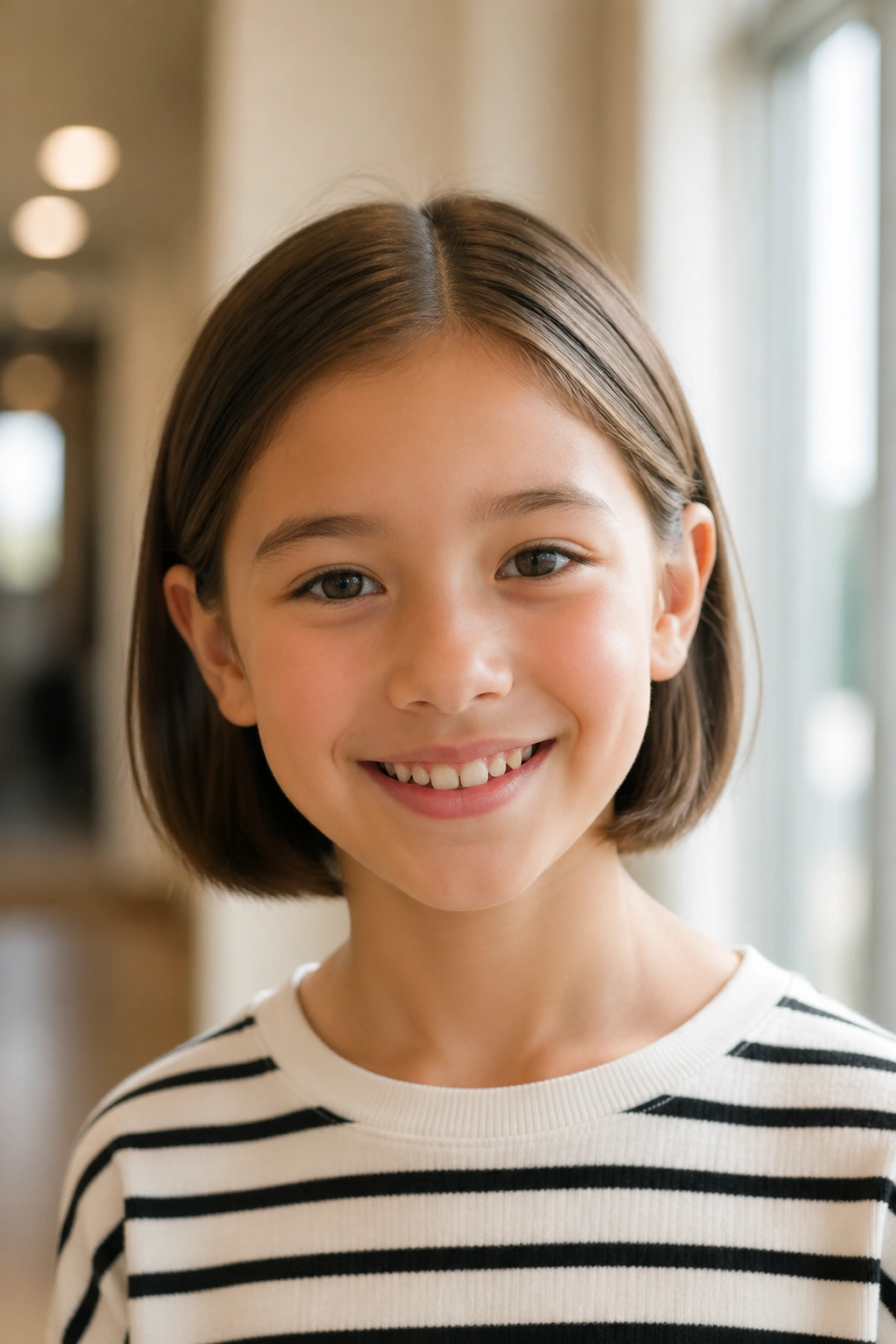
A center-part bob sounds plain until you see how clean it looks on a child. The balance is the whole point. Hair falls evenly on both sides, the face stays open, and the ends can tuck neatly behind the ears without collapsing the shape. For kids who dislike hair in their eyes, it’s one of the simplest solutions around.
The cut itself should hit around the jaw or just below it, with enough length to tuck but not so much that it becomes stringy. Straight hair shows this shape most clearly, though gentle waves can wear it too. The center part works especially well when the hairline is fairly even and the child likes symmetry. Some kids do. A lot, actually.
Because the line is simple, the details matter. Keep the perimeter clean, and don’t load the cut with so many layers that the tuck falls apart. A little softness at the ends is fine. A wispy outline around the face can help it feel less severe.
One practical bonus: this bob plays nicely with hats and helmets. The hair slides back into place instead of creating a lump at one side. That matters if sports, bike rides, or daily car-seat headrests are part of the routine.
9. Graduated Bob with a Soft Stacked Back
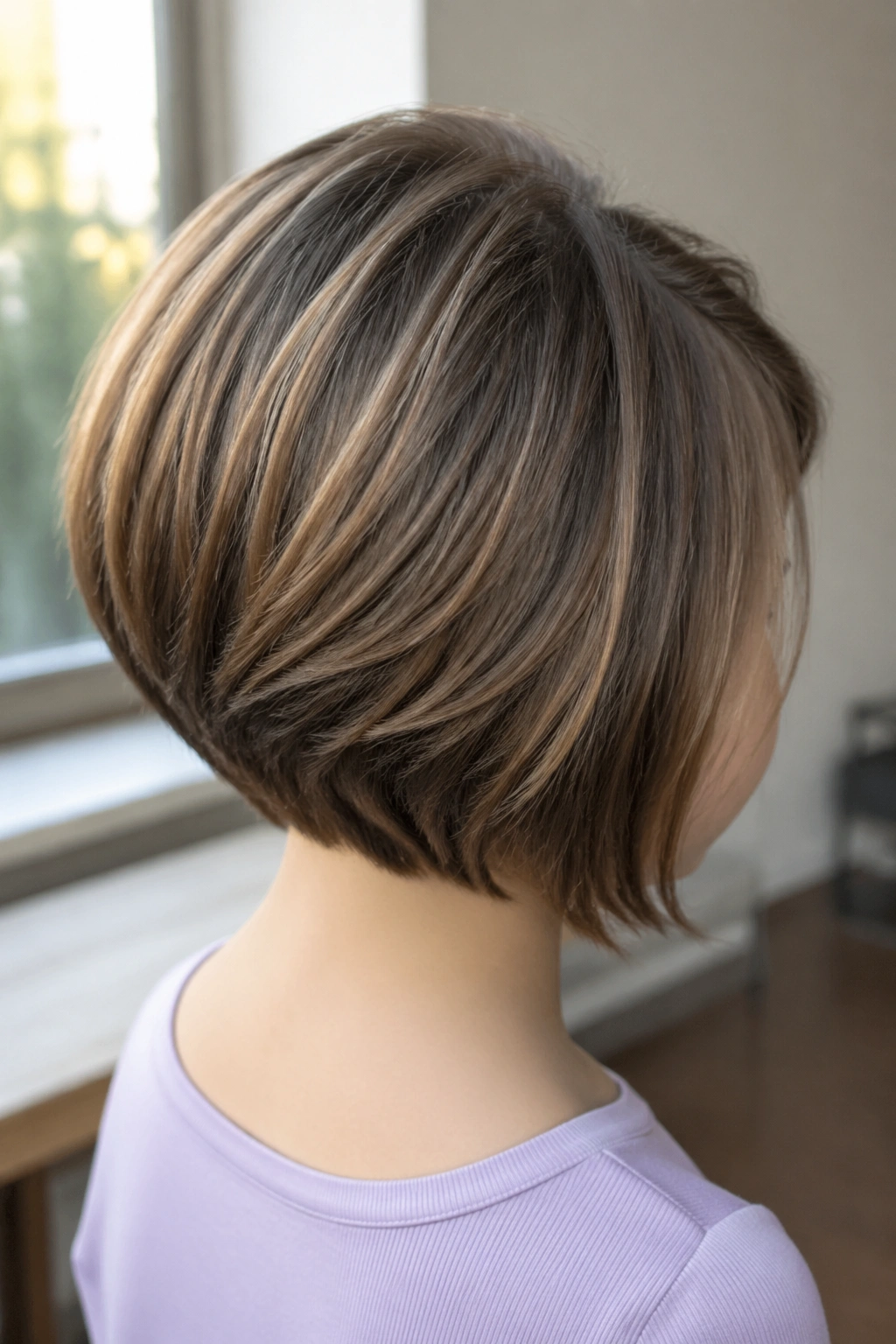
Why do some bobs sit so neatly at the back of the neck? The answer is the graduation. A softly stacked bob uses shorter layers in the back to build shape and a slight lift, which keeps the silhouette from drooping. On thick, straight, or slightly wavy hair, that can be a real relief.
The key word there is soft. A hard, sharply stacked bob can look too grown-up on a child, and it can make the back feel bulky if the graduation is too steep. A gentle version gives shape without shouting about it. The nape sits cleaner. The top falls better. The whole cut feels controlled.
How to keep it kid-friendly
Ask for a rounded back rather than a severe stack. The front pieces should still connect smoothly so the bob doesn’t split into two different ideas. If the child has a low hairline at the neck, a soft taper can help the cut lie flat instead of puffing out.
This style is handy for children whose hair rubs on collars a lot. The shorter back keeps that area neater, and the longer front still gives enough length for ear tucks or clips. It’s also a good choice if the hair tends to grow heavy at the back faster than anywhere else. Some heads just do that. Hair is rude.
10. Shaggy Bob with Curtain Fringe
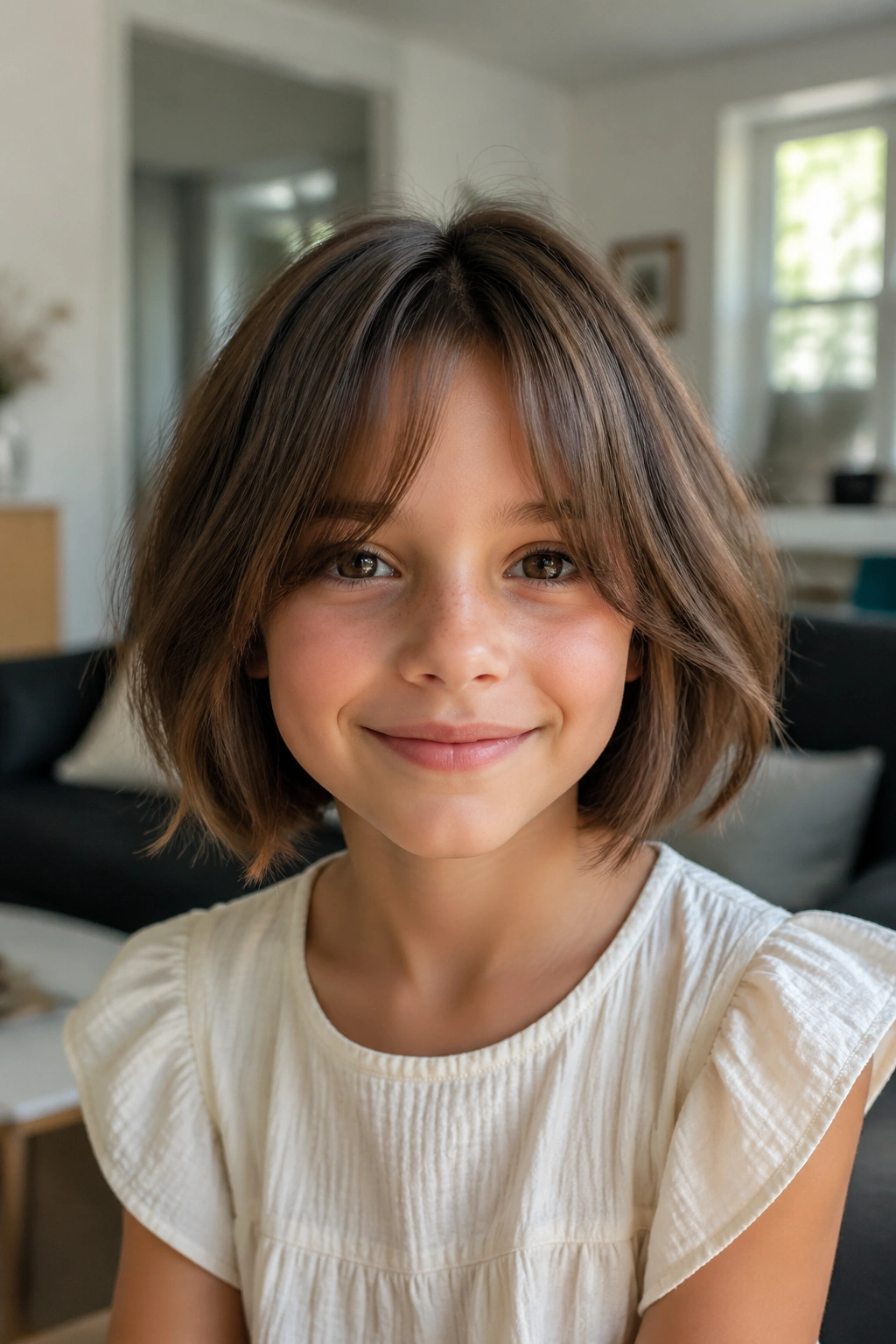
A shaggy bob is the one I reach for when a child wants movement and the parent wants less styling. That combination happens more often than people admit. The cut has soft layers around the crown, a bit of lift near the cheeks, and a curtain fringe that splits naturally in the middle or slightly off-center. It feels relaxed without looking sloppy.
The benefit is speed. If the hair air-dries well, this bob can look finished with almost no effort. A little leave-in conditioner, a quick finger-comb, and it’s done. The fringe softens the face, and the layers keep the haircut from sitting like a solid block. For wavy hair, it can be a dream. For straight hair, the result is a little more laid-back, but still nice.
A small caution: if the child’s hair is very fine, too many short layers can make the style look wispy in a way that feels unfinished. In thicker hair, though, the texture can be a lifesaver. It removes some bulk while keeping enough body to bounce around.
- Keep the fringe longer than eyebrow level if you want easier grow-out.
- Ask for layers that start around the cheekbone, not the crown.
- Use light cream only on the ends if frizz is a problem.
- This one looks best when it moves a little.
11. Bob with Face-Framing Mini Braids
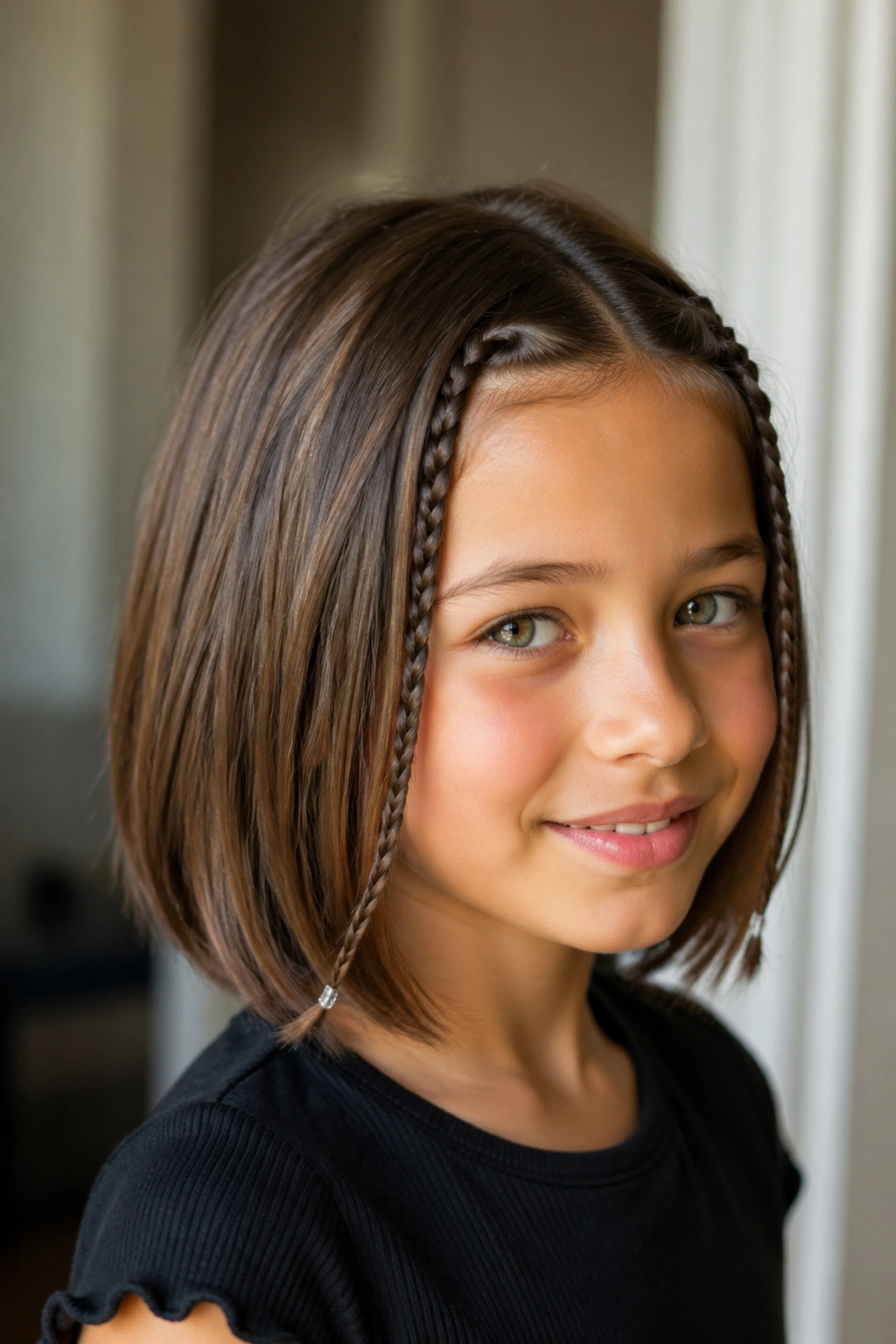
A medium bob does not have to stay plain all the time. If the cut leaves enough length around the front corners, tiny braids or twists can turn a simple shape into something fun for school events, birthdays, or warm days when hair needs to be off the face. The cut itself still matters here because the front length has to be long enough to catch without pulling.
The sweet spot is a bob that sits around the chin to upper shoulders, with a little extra room in the front. That lets you do two slim braids at the temples, a small twist on each side, or a half-up section that stays put for a few hours. Kids who like hair accessories tend to love this, and kids who hate a full style usually tolerate it because the braids are tiny and quick.
This is also one of those cuts that looks good when it is a little asymmetric. A braid on one side and a clip on the other. Two small twists and a ribbon. It does not need to be matched perfectly to work.
The real advantage is flexibility. The bob still reads as a bob when the braids come out, which means the cut keeps its shape on ordinary days. That makes this a smart middle ground for families who want one haircut to handle playtime, dress-up, and everything in between.
12. Shoulder-Skimming Medium Bob for Kids
A shoulder-skimming bob is the safest landing place when a child wants a bob but isn’t thrilled about short hair. The length sits right at the collarbone or just above the shoulders, so it still feels like a bob, yet it grows out with a little more grace than a shorter version. That matters. A lot.
This cut works well for kids who are still deciding what they like. It can be worn tucked, clipped, braided, or left loose. It also handles school mornings better than most people expect because the extra length gives you options on rushed days. Hair that hits the shoulders can be pulled back into a tiny half-up section, which is handy when a kid wants it out of their face but not fully tied up.
It’s also a good choice for children who are tender about haircuts. The shape is forgiving, and trims can be spaced a bit farther apart — usually around 8 to 10 weeks if the goal is to keep the line looking neat. That gives the family some breathing room.
If I had to pick one cut for a child who wants low drama and long wear, this would be near the top. It’s not flashy. It just works. And sometimes that is the whole job.
