



A bob on wavy hair can look sharp, but it can also turn puffy at the ends or collapse at the crown if the cut ignores the wave pattern. That is why bob cuts for wavy hair need a little more thought than a straight-across chop.
Waves do not sit still the way straight hair does. They spring up, bend inward, and change shape as they dry, which means a cut that looks neat in the chair can land very differently an hour later.
The sweet spot is usually some mix of weight control, length control, and perimeter shape. A blunt edge gives body. Soft layers let the wave move. Too much thinning can leave the ends wispy and odd. Too little can make the whole thing feel boxy.
So the real question is not “Can you wear a bob?” It is which bob works with your waves, your density, and how much morning effort you’re willing to put in. Some people need a chin-grazing line. Others need a longer lob, a stacked back, or a fringe that breaks up the width at the cheekbone. The shapes below cover the range.
1. Chin-Length Blunt Bob for Wavy Hair
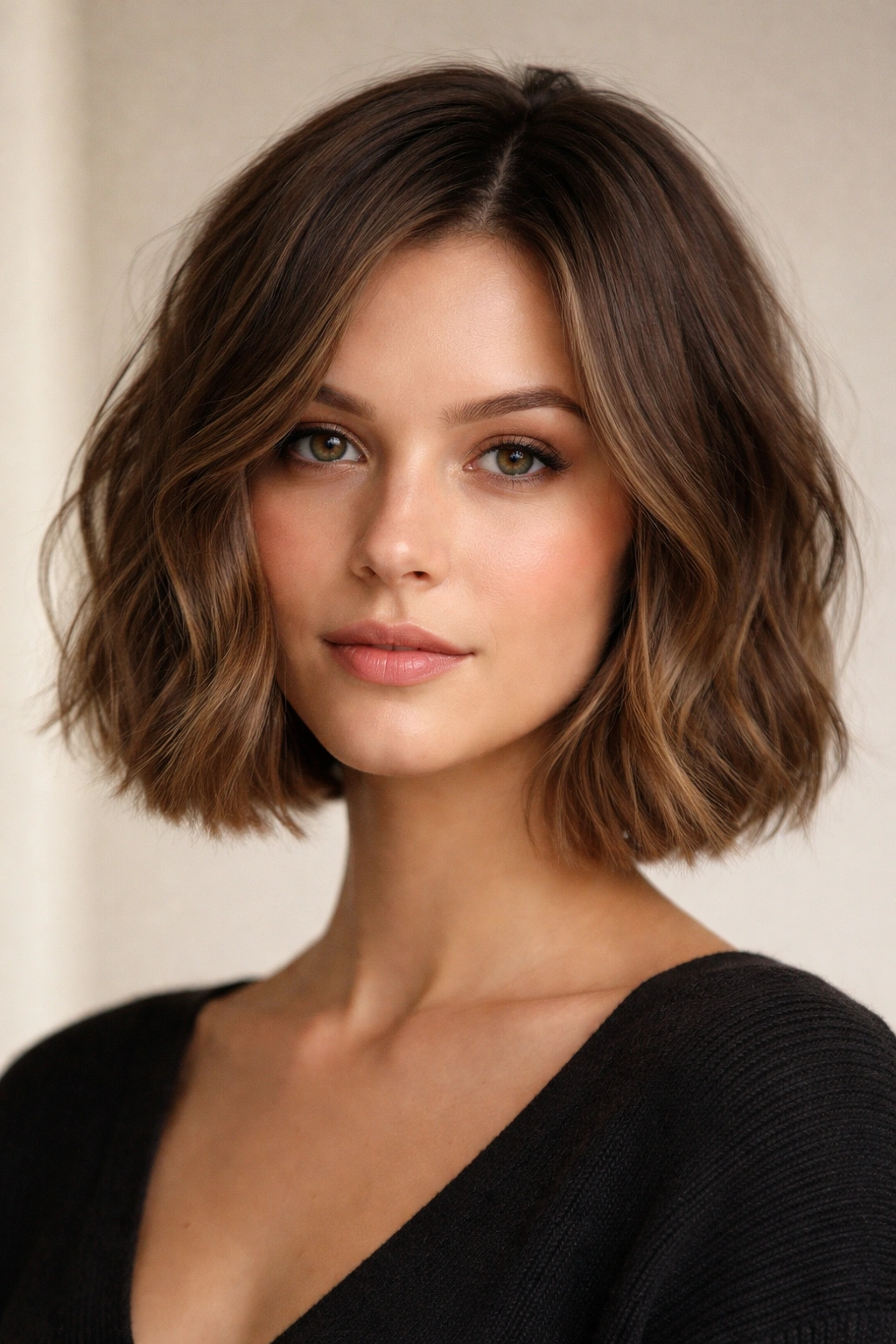
A chin-length blunt bob is one of the cleanest ways to let soft waves do the work. The edge gives the hair a firm place to land, so the movement looks intentional instead of loose and fuzzy.
Why It Works
Wavy hair likes a clear boundary. When the line is blunt, the wave pattern has somewhere solid to bounce against, and that adds body without needing a lot of layers. It also keeps the silhouette from getting too wide at the bottom, which is a common problem with shoulder-skimming shapes.
Ask for a cut that hits just under the jawline if your waves shrink up when dry. That tiny bit of extra length matters. I would also keep the interior fairly clean and let the texture come from the way the hair bends, not from heavy thinning.
- Best for medium-density waves that need shape.
- Good if you want a tidy outline with easy air-drying.
- Less useful if your hair frizzes hard at the ends.
My favorite detail: leave the ends blunt, then add movement with styling, not the other way around.
2. Layered Bob Cuts for Wavy Hair with Hidden Lift
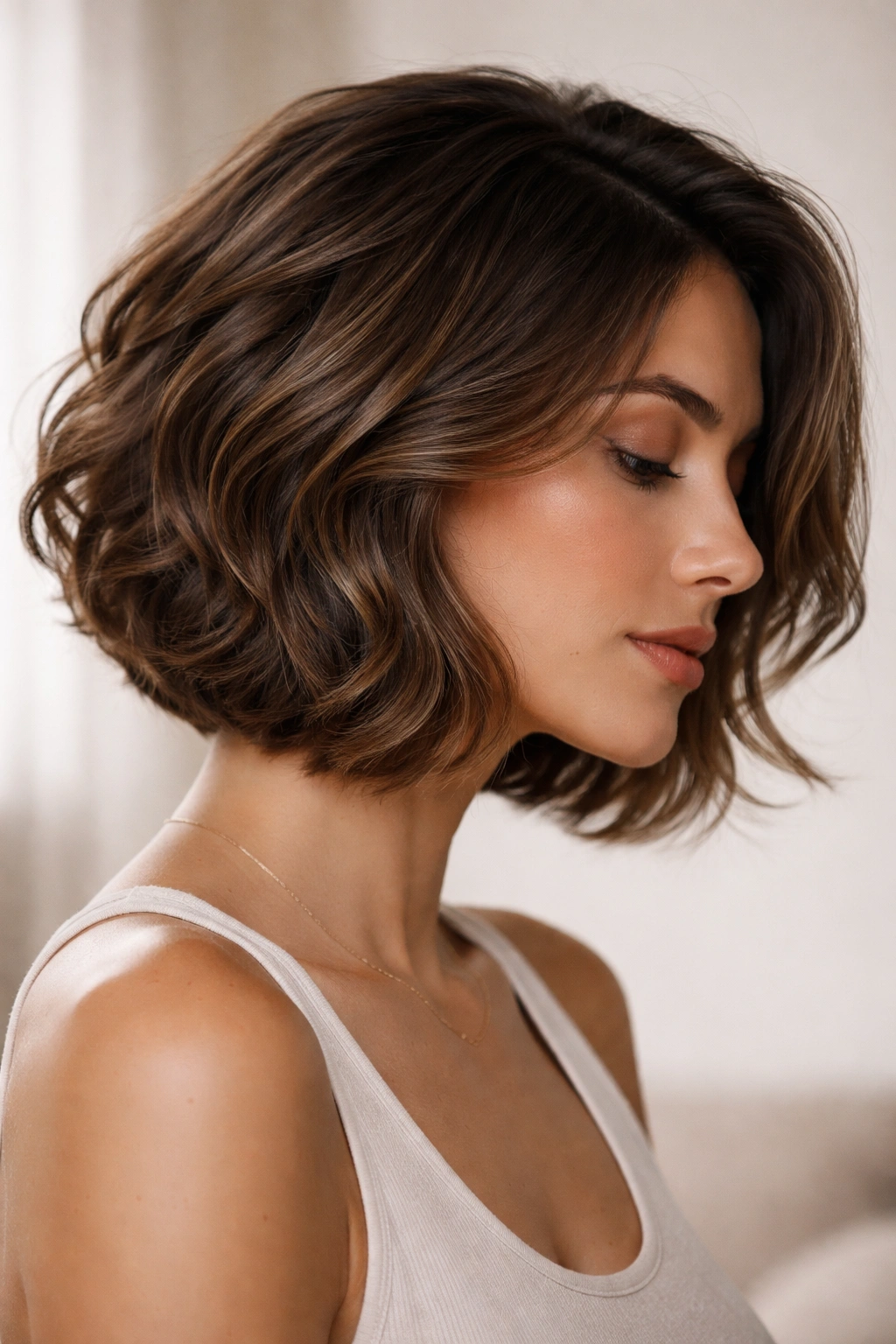
Can a bob have layers without looking chopped up? Yes — if the layers stay inside the shape instead of marching all the way to the perimeter.
This version is for waves that sit flat at the crown or puff out through the middle. The stylist removes weight under the top layer, so the hair can bend and lift without building a bulky triangle. The outside line still reads as a bob. You just get better movement when the hair sways.
I like this cut because it solves a common wavy-hair problem without screaming “layered haircut.” Too many layers can break the shape apart and leave the ends frayed. Hidden texture does the quieter, better job.
Work a small amount of mousse into damp roots, scrunch once or twice, and let the rest dry with a loose bend. If you rough it up too much, the shape loses the neat edge that makes this bob look polished.
3. French Bob with a Soft Fringe
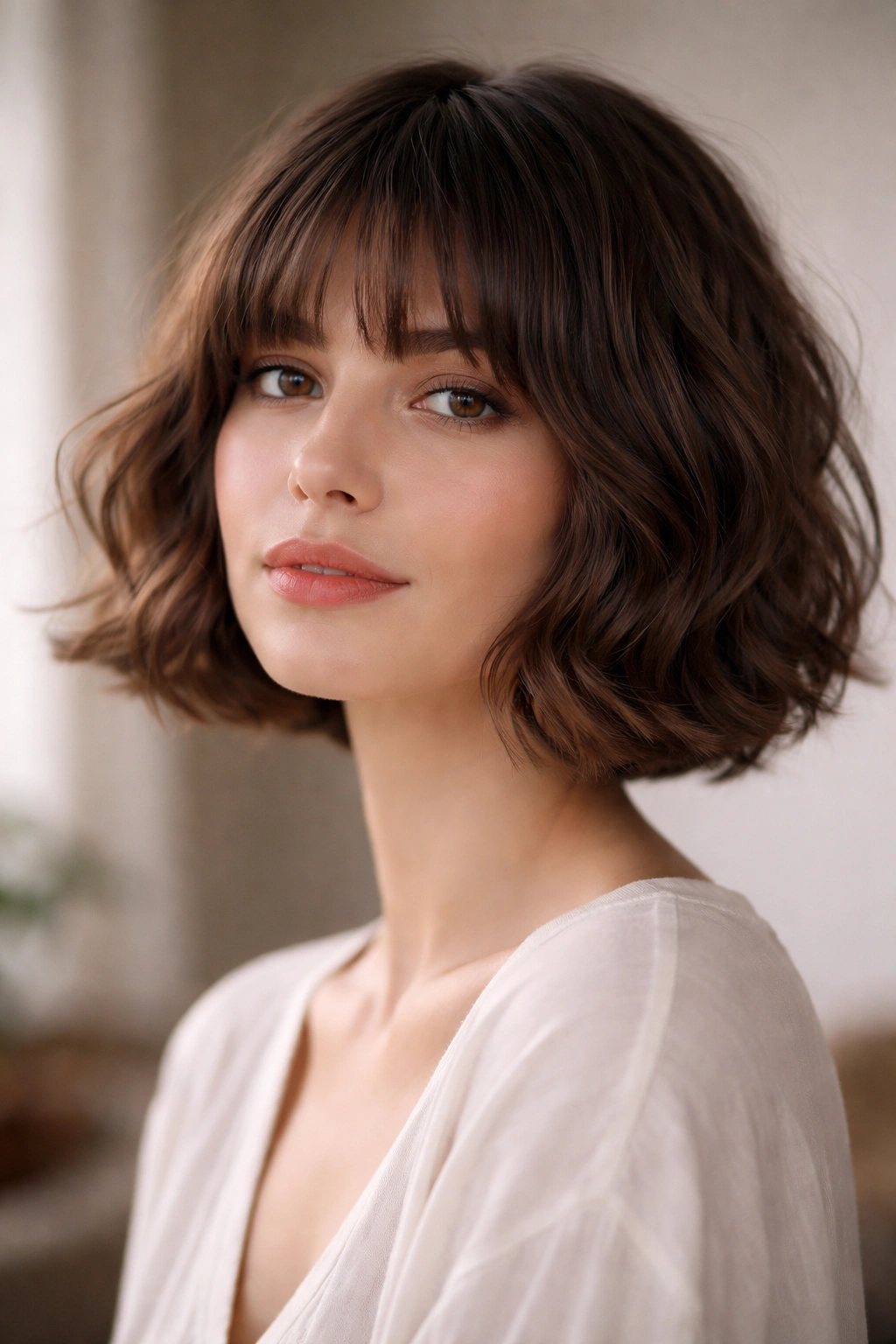
Picture a bob that sits around the mouth or just below it, with a fringe that bends a little in the center and brushes the brows at the sides. That’s the charm of a French bob on waves.
What Makes It Different
The French bob is short enough to feel deliberate, but soft enough that it doesn’t look severe. Wavy hair gives it life. The fringe matters just as much as the length, because a straight, heavy bang can fight the natural bend and separate in a messy way.
I prefer this cut when the wave pattern is loose and the face can handle a little width around the cheekbone. If the fringe is cut with a slight arc instead of a hard line, it grows out better and feels less precious. That matters. No one wants a fringe that becomes a daily negotiation.
- Ask for a soft, eyebrow-skimming fringe.
- Keep the bob a touch longer at the sides if your waves spring up fast.
- Use a tiny dab of cream on the fringe, not a thick blob.
A French bob works when it looks casual on purpose, not when it looks styled into submission.
4. A-Line Bob with a Longer Front
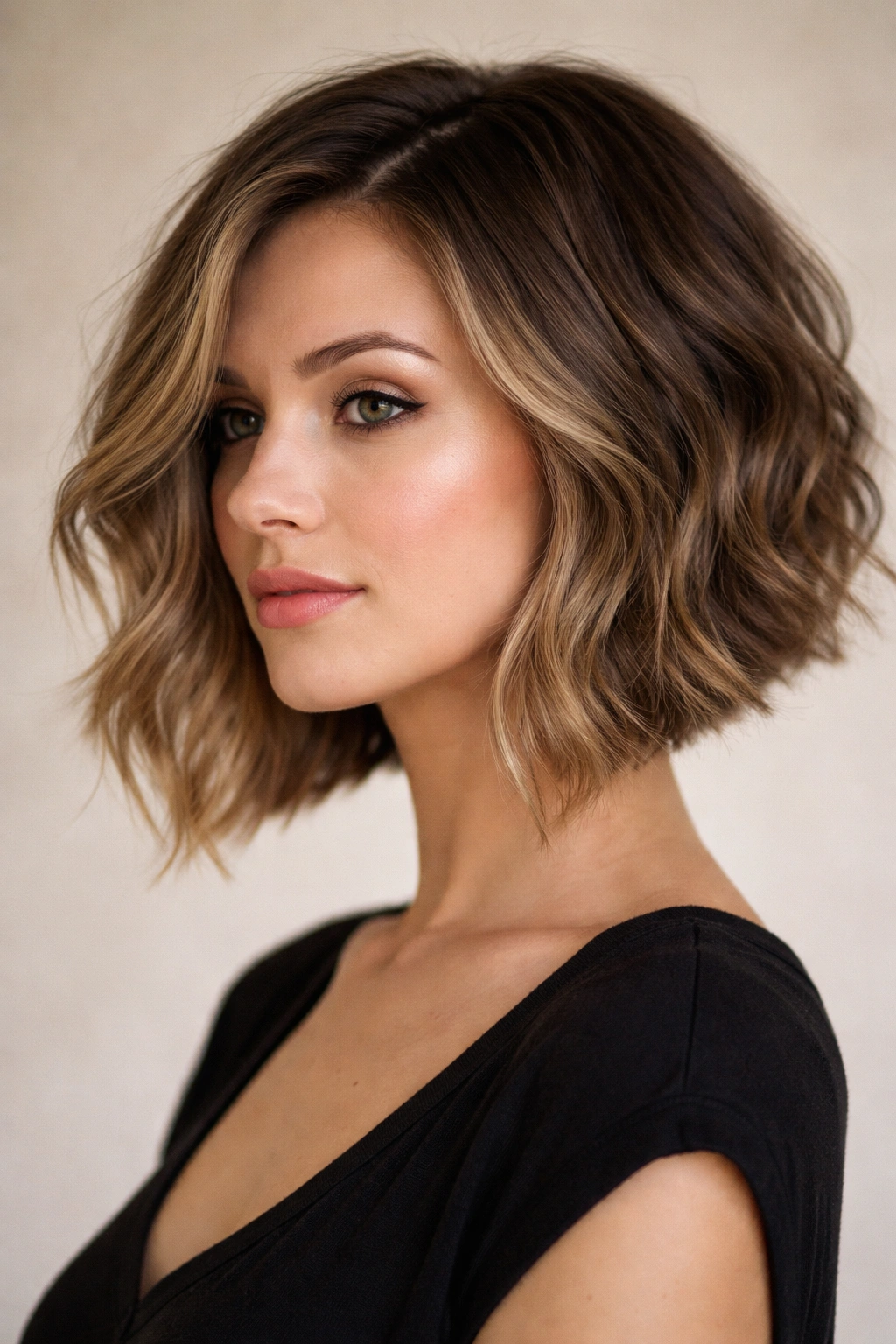
Unlike a square bob, an A-line shape keeps the front a little longer and lets the eye move forward. On wavy hair, that forward sweep can make the whole cut feel lighter and more elegant without losing structure.
This is a smart choice if you want your waves to stay visible but you also want your jawline and neck to look longer. The back stays shorter, the front grazes lower, and the angle gives the hair a bit of motion even when it’s tucked behind one ear. That little tuck is often the whole trick.
I like an A-line bob on thicker waves because it stops the haircut from building too much width at the sides. It also handles grow-out well. The shape softens instead of looking sloppy, which is a nice thing to have when you’re not racing back to the salon every few weeks.
If you wear glasses, this cut can be especially flattering. The front pieces sit near the frames and frame the face without competing with them.
5. Shaggy Bob with Broken Ends
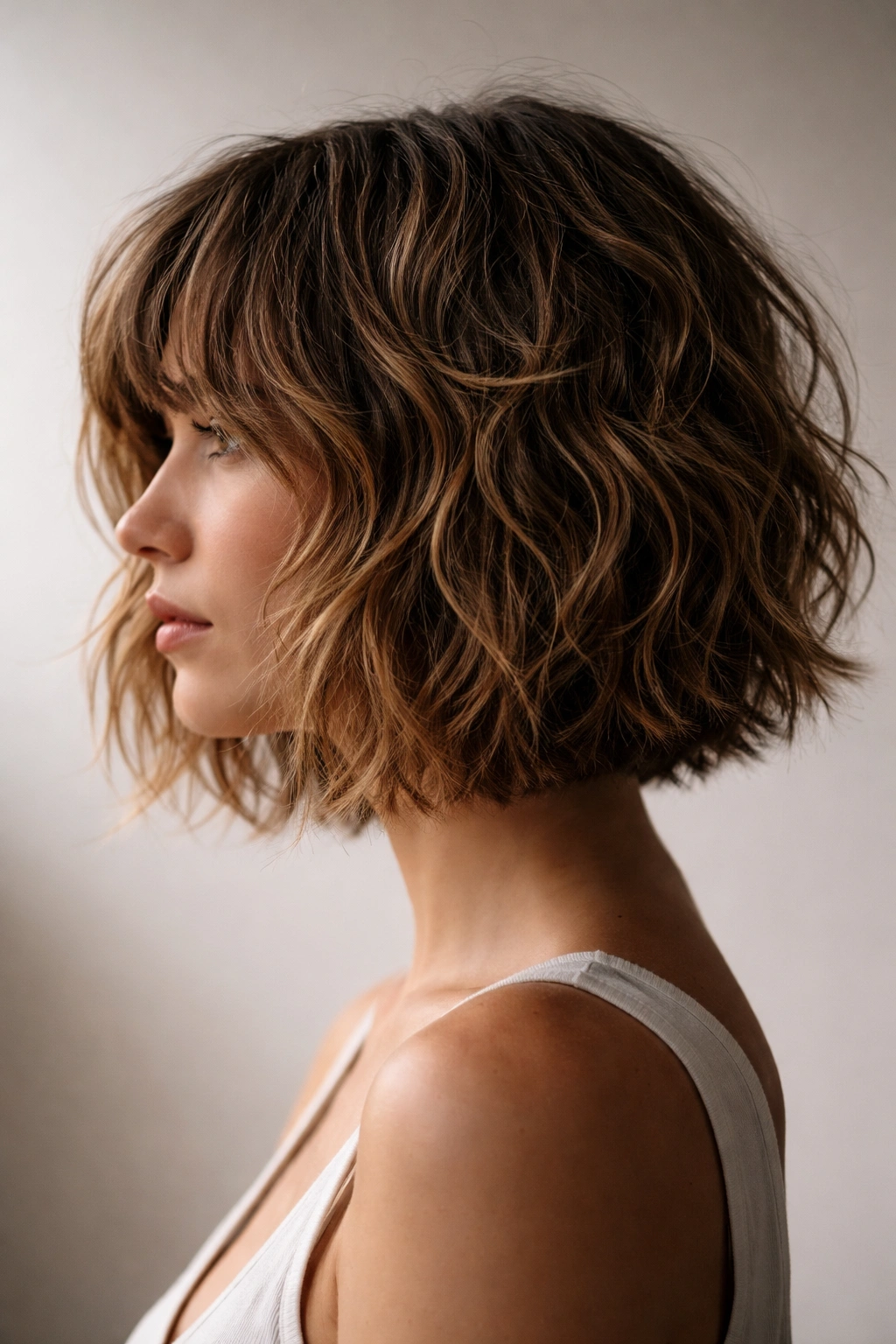
If your wave pattern gets bulky in humidity, a shaggy bob can be a relief instead of a risk. The whole point is to let the ends look a little broken up so the shape moves instead of sitting like one solid block.
Where It Helps Most
This cut shines on hair that has some natural frizz and doesn’t need a pristine outline to look good. The texture works with the wave, not against it. I would not push this too far on fine hair, though. Too much texturizing can leave fine strands hanging with no real shape left.
A shaggy bob usually needs a stylist who knows when to stop. That part matters. You want enough internal removal to lighten the middle, but not so much that the ends look chewed up.
- Great for dense, wavy hair that swells in damp air.
- Good if you like a lived-in look and fast styling.
- Less friendly to very fine hair that already lacks body.
A touch of styling cream through the mid-lengths keeps the ends from flying apart. Nothing heavy. Just enough to hold the bend.
6. Italian Bob with Full, Airy Body
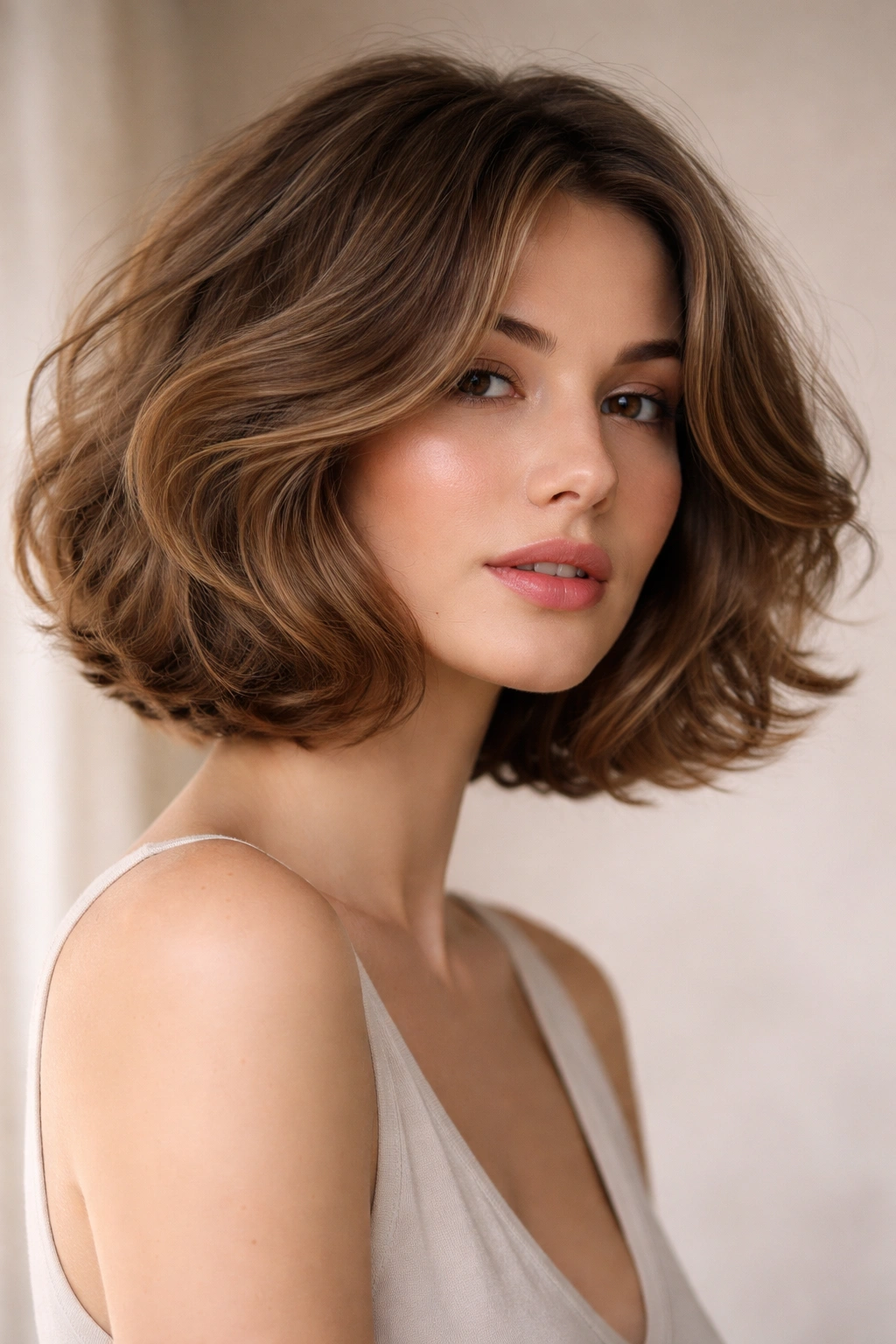
The Italian bob sits heavy enough to swing, light enough to move. That’s why it has such a nice feel on waves. It usually lands between the chin and collarbone, with a rounded outline that makes the hair look full without looking puffed.
I think this is one of the prettiest bob cuts for wavy hair because it has presence. The shape feels plush, almost upholstered, but the wave pattern stops it from reading too stiff. If the cut is done well, the hair lifts at the roots, curves through the middle, and softens right at the ends.
The length is doing a lot of the work here. Too short, and the wave can spring up too far. Too long, and the shape starts to lose that clean, full look. Somewhere in the middle is where this cut lives.
It also pairs well with a round brush blow-dry if you want a smoother finish, but it doesn’t need a perfect blowout. A little bend at the ends is enough. Honestly, that’s where it looks nicest.
7. Collarbone-Length Lob for Wavy Hair
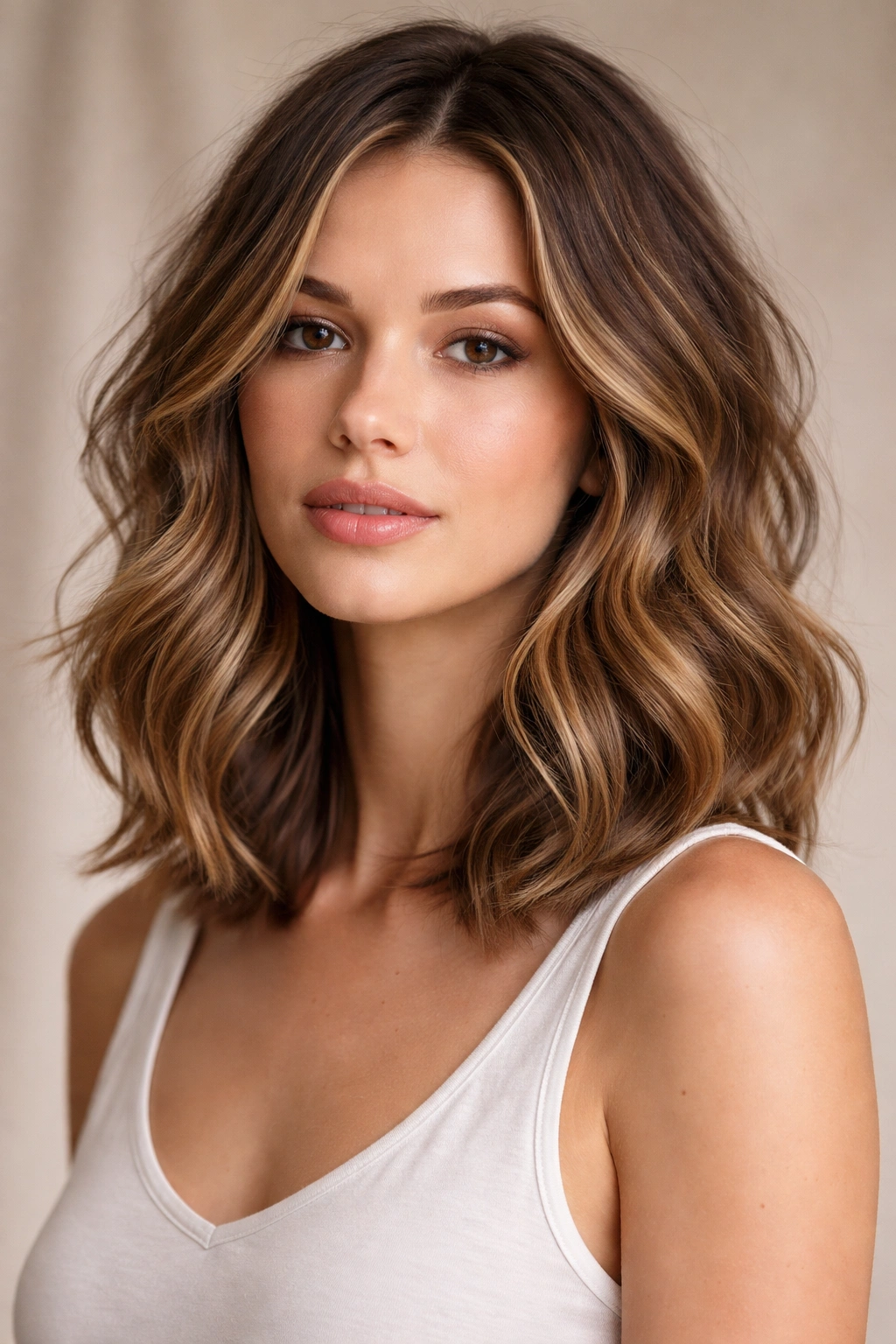
When someone says they want a bob but doesn’t want to regret it, a collarbone-length lob is usually the safest landing spot. It still reads as a bob family haircut, but the extra length gives waves room to settle.
Why It Works on Wavy Hair
The collarbone is a useful stopping point because the hair can brush against it and get a little movement without flipping out in an awkward way. That means the shape looks softer, and the grow-out phase is less annoying. There’s room to tuck it, clip it, or leave it loose.
This cut is also kind to people who wear their hair up part of the time. A chin-length bob can be fussy. A lob gives you a ponytail when you need one and still looks intentional down.
- Easier to pin back than a shorter bob.
- More forgiving if your wave pattern changes in humidity.
- Better if you’re not ready for a dramatic chop.
I reach for this length when a client wants movement more than drama. It is practical, and that is not a bad thing.
8. Round Bob with Face-Framing Pieces
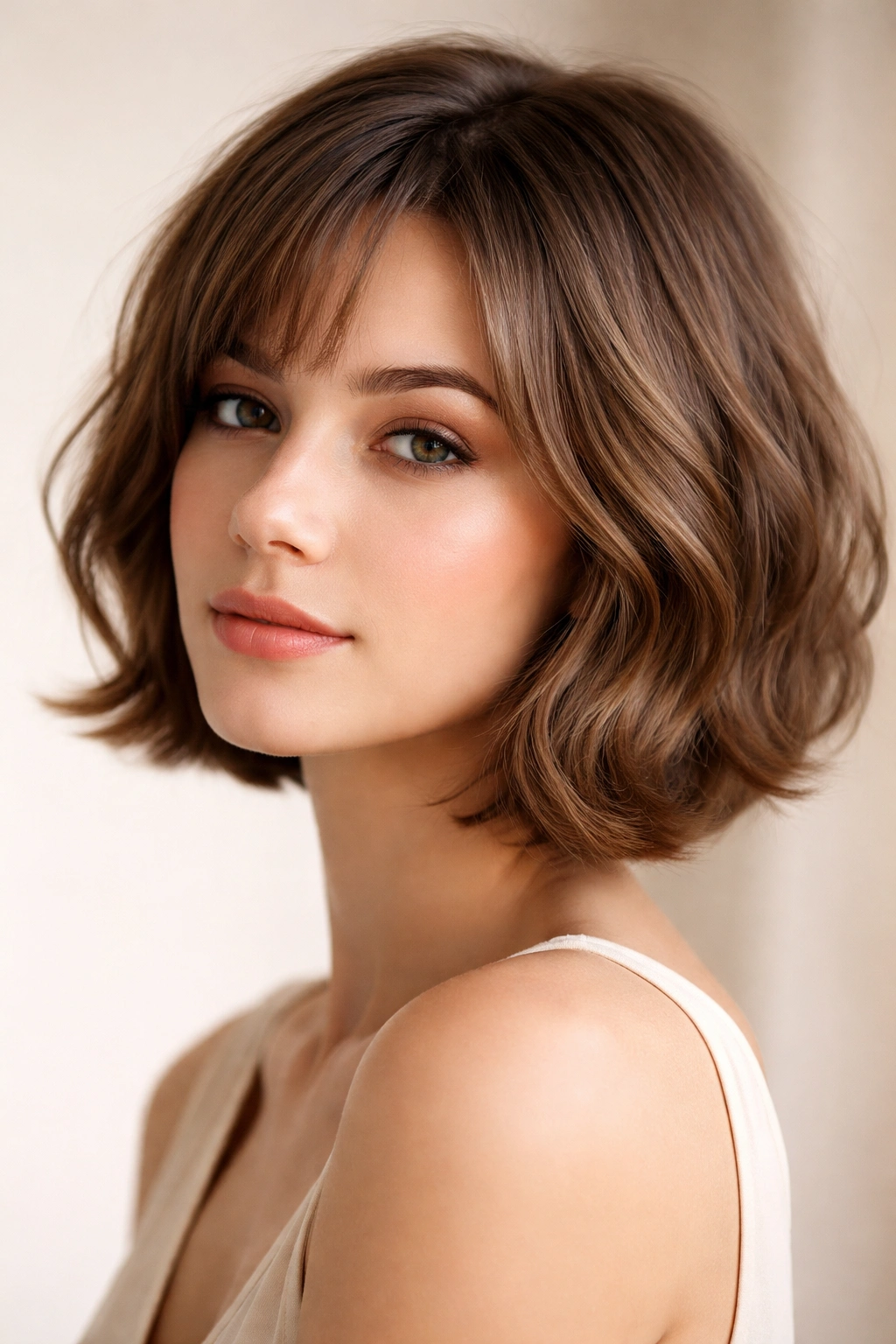
Want your waves to look softer around the cheeks without losing shape? A round bob with face-framing pieces does that job quietly.
The silhouette curves slightly inward at the ends, which keeps the haircut from getting flat or boxy. Then the front pieces land around the cheekbone or jaw, depending on how much opening you want around the face. That little softness matters on wavy hair because the natural bend can look harsh if the perimeter is too blunt.
How To Wear It
This cut works best when the front pieces are cut to follow the wave pattern, not fight it. If your hair bends away from the face, let the stylist use that bend. If it flips inward, keep the front a touch longer so it does not bunch.
A round bob can be styled with a diffuser and a bit of curl cream, or it can air-dry with a light scrunch. I’d avoid overloading the front pieces with product. They need movement, not weight.
This is one of those cuts that looks calm from the front and lively from the side. That mix is hard to beat.
9. Asymmetrical Bob with a Deep Side Part
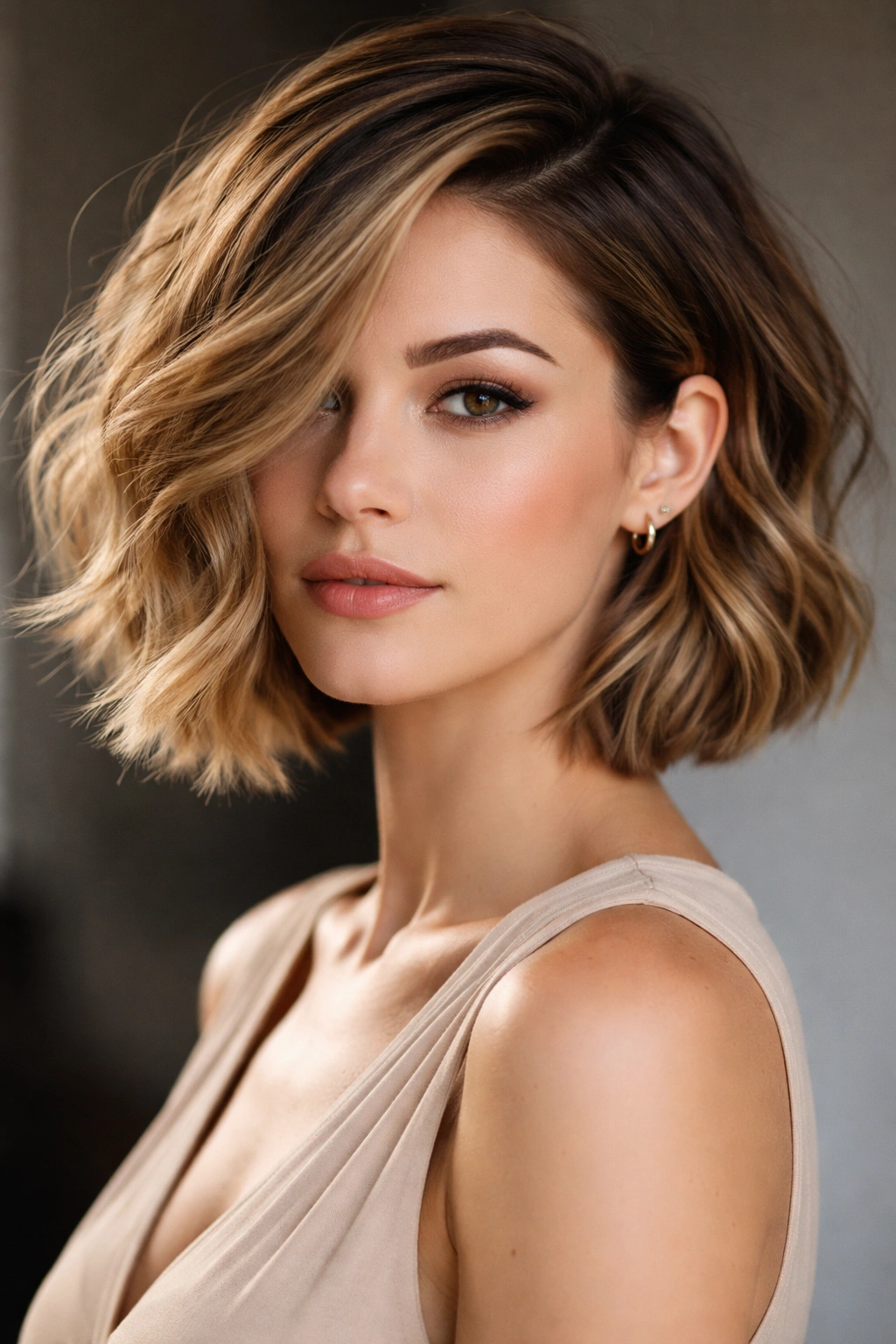
Walk into a room with one side grazing the chin and the other sitting a little shorter, and people notice the shape before they notice the length. That is the appeal of an asymmetrical bob.
The deep side part lifts the root on one side and lets the waves fall with a little more drama. On wavy hair, that imbalance can be a good thing. It breaks up the heaviness that sometimes shows up when the hair dries into one round lump.
You do need some confidence for this one. Not because it’s wild — it isn’t — but because it looks strongest when the part is committed and the cut is clean. Half-hearted asymmetry tends to look accidental. Nobody wants that.
- Good for straight-to-wavy texture that needs body.
- Nice on round or square faces because the line pulls the eye diagonally.
- Works well if you like tucking one side behind the ear.
A side part also gives you an easy styling shortcut. More lift at the root. Less flatness. That’s the whole point.
10. Wavy Bob with Curtain Bangs
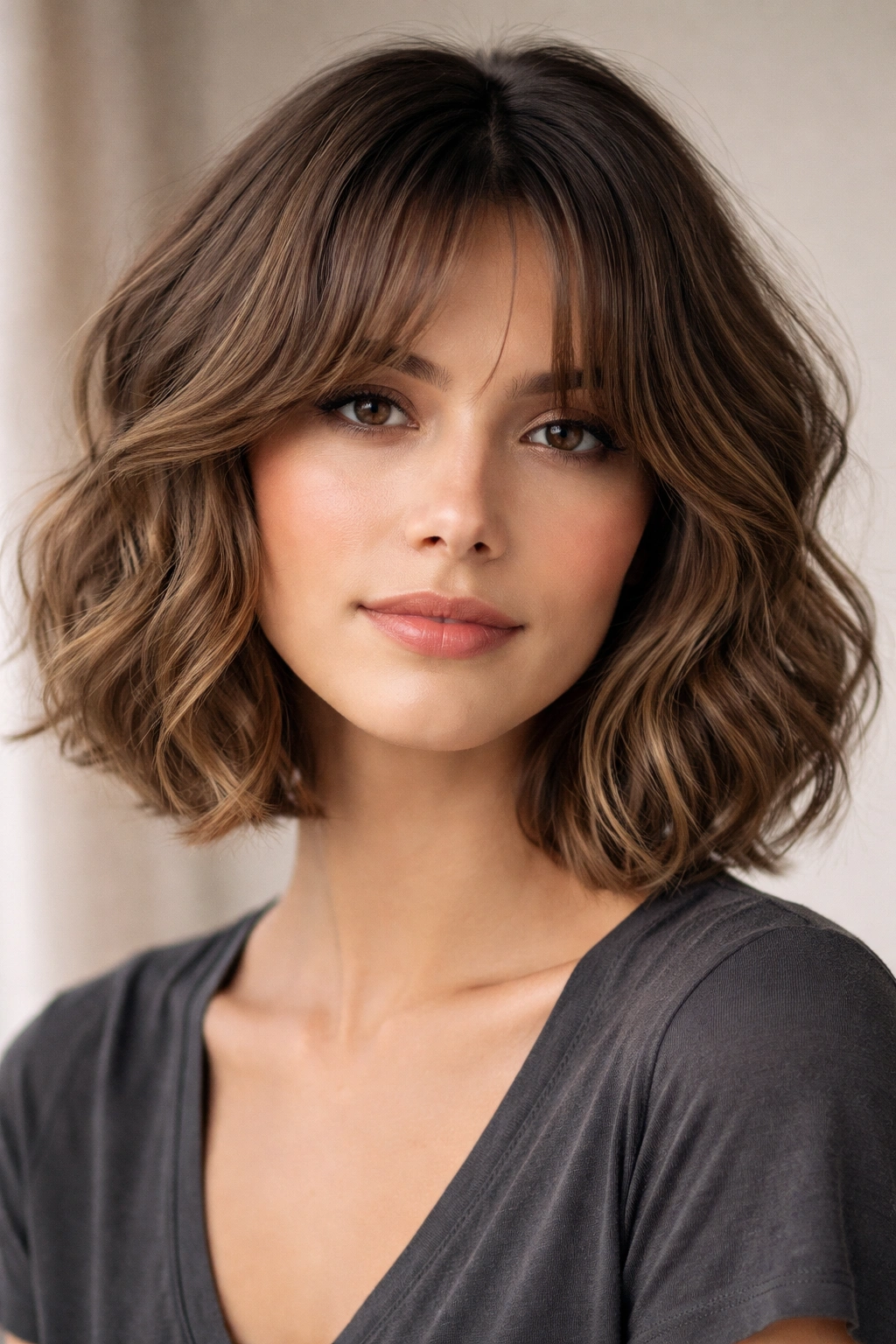
Curtain bangs are friendlier to waves than a blunt fringe, and I say that after seeing too many blunt bangs split in awkward places. A curtain fringe opens in the middle, sweeps away from the face, and lets the wave pattern show without a fight.
This cut is especially useful if you want your bob to feel softer around the forehead and cheekbones. The bangs create motion up top, while the bob keeps the length contained below. That balance keeps the haircut from feeling too dense around the mouth and jaw.
The nice thing is how forgiving it is. If the fringe lands a little off after air-drying, it still looks like the style. If the waves are looser one day and tighter the next, the shape can handle both.
I’d keep the curtain pieces longer than you think at first. They shrink a bit once they dry, and a longer bang is easier to sweep open with your fingers. Shorter versions can get jumpy fast.
11. Undercut Bob for Thick Wavy Hair
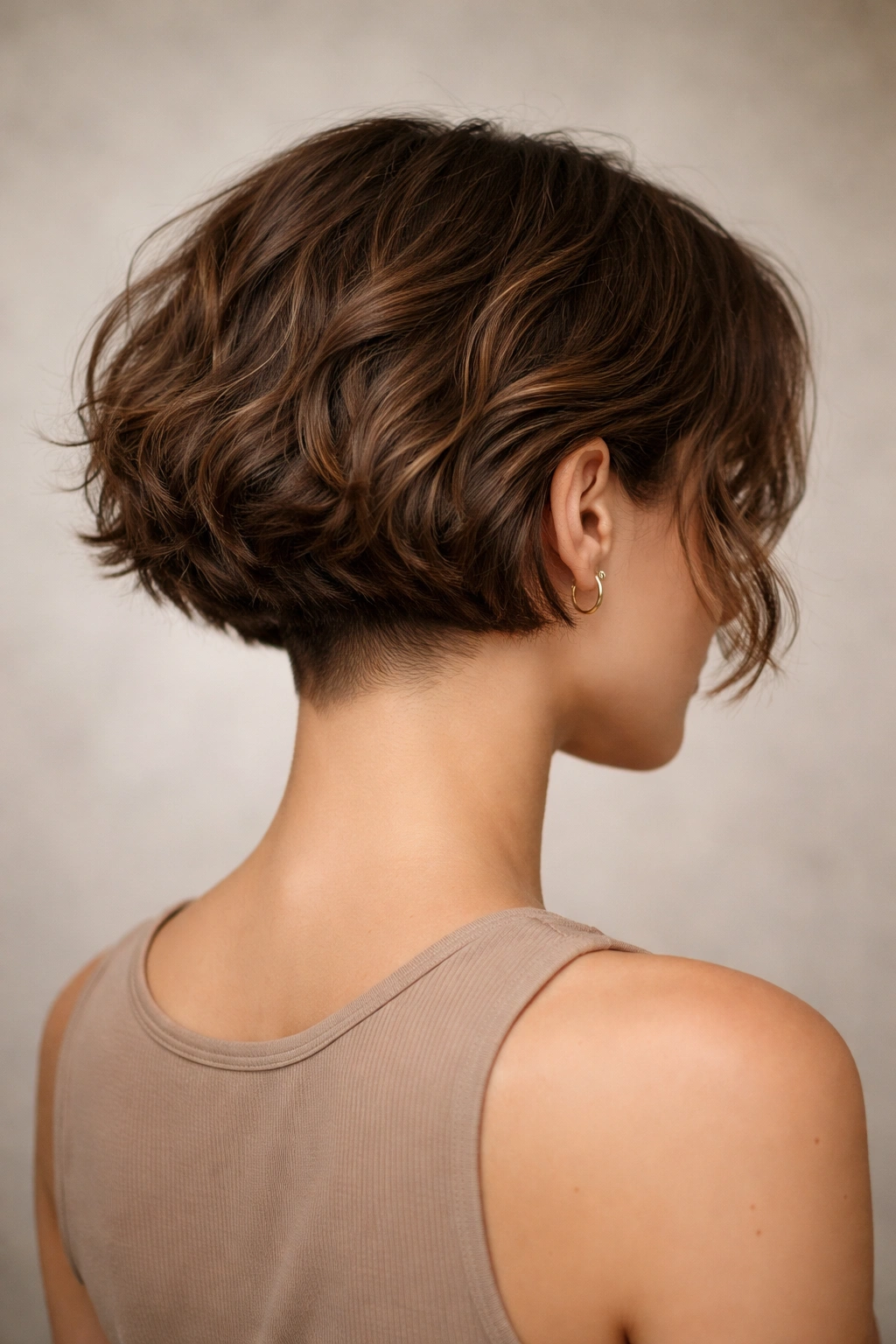
If your thick waves keep building a triangle at the nape, the answer may be inside the cut, not the styling cream. An undercut bob removes bulk where nobody sees it and leaves the top layer to fall better.
What To Ask For
This is not about shaving half your head. Not unless you want that. A small undercut at the nape or lower back can take out enough weight to stop the shape from kicking out and sitting on itself. The haircut still looks like a bob from the outside, which is the whole magic trick.
The key is restraint. Remove too much and the bob loses its body. Remove too little and you barely feel the difference. The sweet spot is usually a hidden section that lightens the underside without changing the visible outline too much.
- Best for dense, coarse, or very bulky waves.
- Helpful if the back dries slower than the front.
- Good if you hate the “poof” at the neckline.
This cut can feel almost unfair in a good way. You get less bulk, more movement, and a cleaner line at the back.
12. Razor-Cut Bob with Soft Tapered Ends
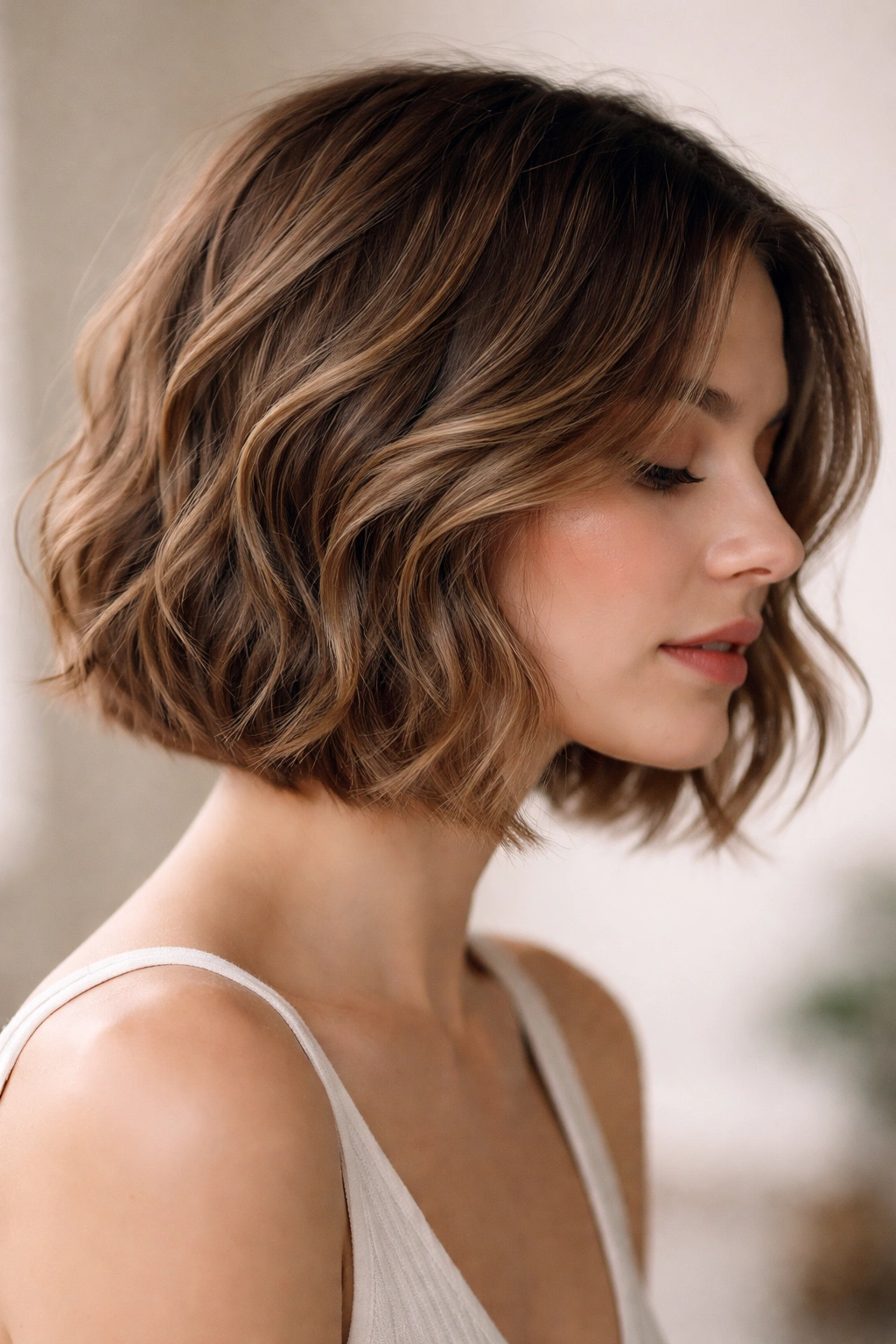
Should a razor-cut bob be your move if the ends need more softness than weight? Sometimes, yes — but only if the hair can take the texture without turning fuzzy.
A razor creates tapered ends that blend into the wave pattern instead of sitting like a hard shelf. On the right hair, that looks airy and light. The movement feels almost hand-done, which is a nice match for wavy hair that already wants to bend.
The Catch
This is not the cut I’d hand to someone whose hair frizzes the second it meets air. Razor work can expose that. If your waves already lean rough at the ends, the cut needs to be very controlled and probably paired with a cleaner perimeter.
It does work well on hair that is thick, soft, and naturally bendy. The razor lifts some of the heaviness out of the lower lengths and lets the pieces move separately. That can be gorgeous. It can also be too much if the stylist gets enthusiastic.
A light smoothing cream or a tiny bit of leave-in conditioner helps keep the ends from looking shredded. That is the line you’re trying to hold here: soft, not ragged.
13. Inverted Bob for Bounce at the Crown
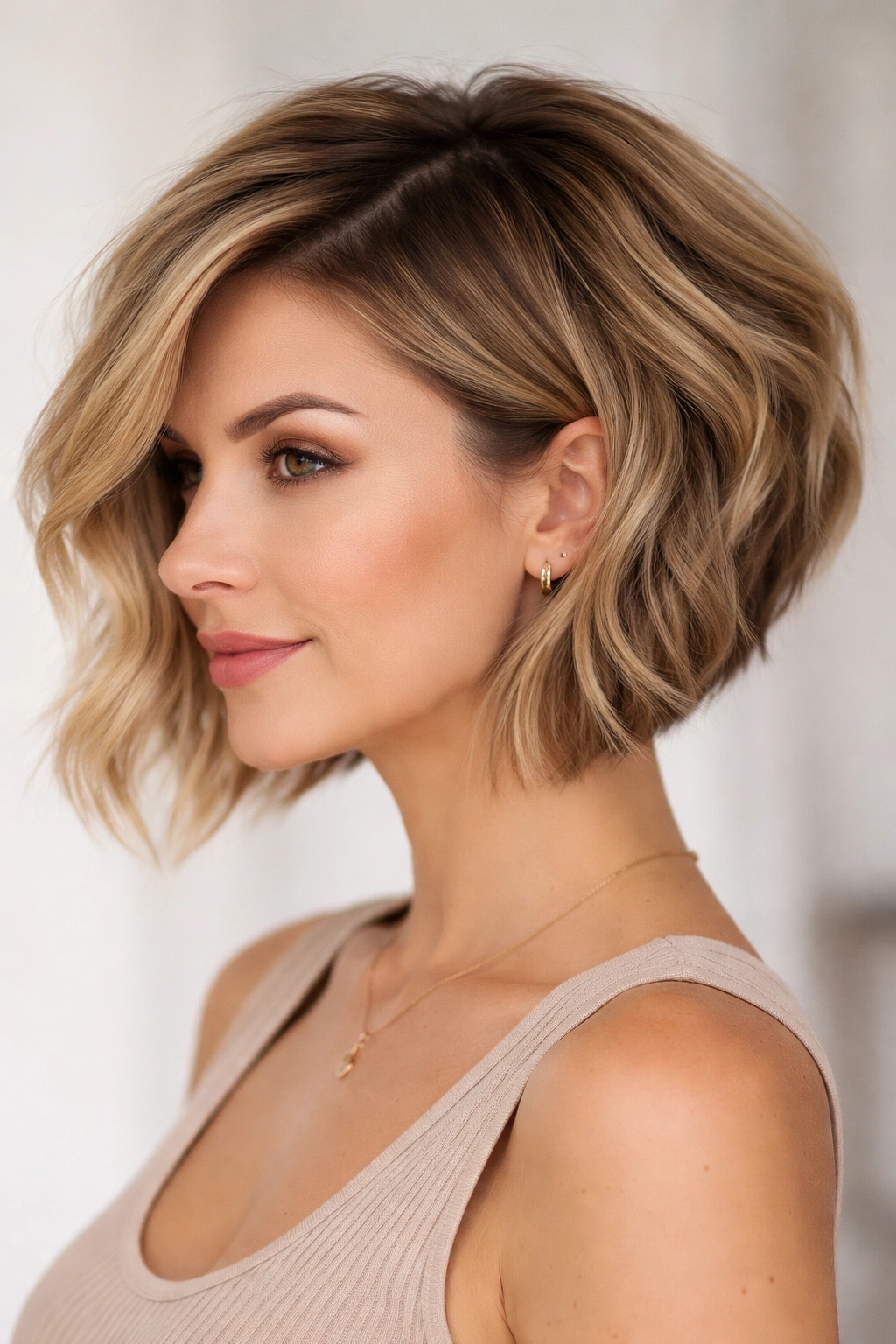
An inverted bob gives wavy hair lift where it usually goes flat. The back is shorter and stacked a little, while the front drapes longer and frames the face.
That shape is useful when the crown needs help. Wavy hair often bends at the ends first and forgets to stand up at the roots. The stacked back fixes that by building height underneath. It gives the haircut a little architecture. People notice the bounce right away.
I like this shape most on medium-density hair that needs a tidy neckline. It can also make the profile look cleaner if the back tends to puff. Just be careful with over-stacking. Too much and the cut starts looking dated fast. A soft stack is usually enough.
You’ll want to keep the blow-dry light, with a brush lifting the roots just enough to set the curve. The point is not to make the hair stiff. It’s to give the crown some air.
14. Side-Swept Bob That Grows Out Gracefully
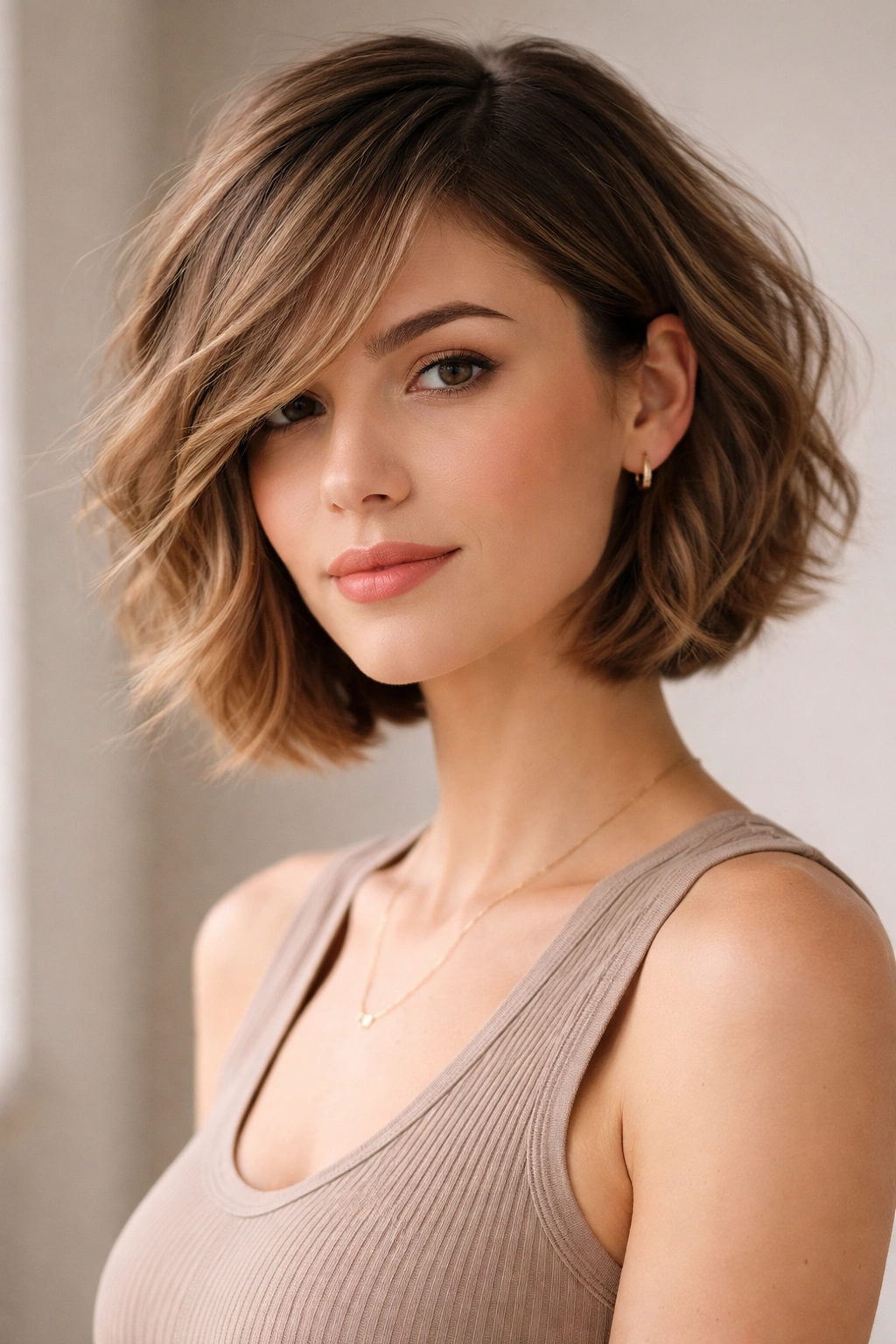
A side-swept bob is the cut I hand to people who want shape first and drama second. It has enough personality to feel styled, but it does not trap you if you miss a trim.
The side-swept piece drops diagonally across the forehead or cheek, which softens the front of the haircut and keeps wavy hair from puffing out around the temples. It also helps if one side of your wave pattern is stronger than the other. A strong side part can balance that out better than a center part ever will.
This shape grows out with less drama than a blunt fringe or a very short crop. That’s part of the appeal. You can let the front lengthen a little and still keep the haircut looking deliberate. It buys you time, which is useful when the rest of life gets loud.
If you want something polished enough for work but casual enough for a weekend, this is one of the easiest bets in the whole bob family.
15. Tousled Cropped Bob with Piecey Finish
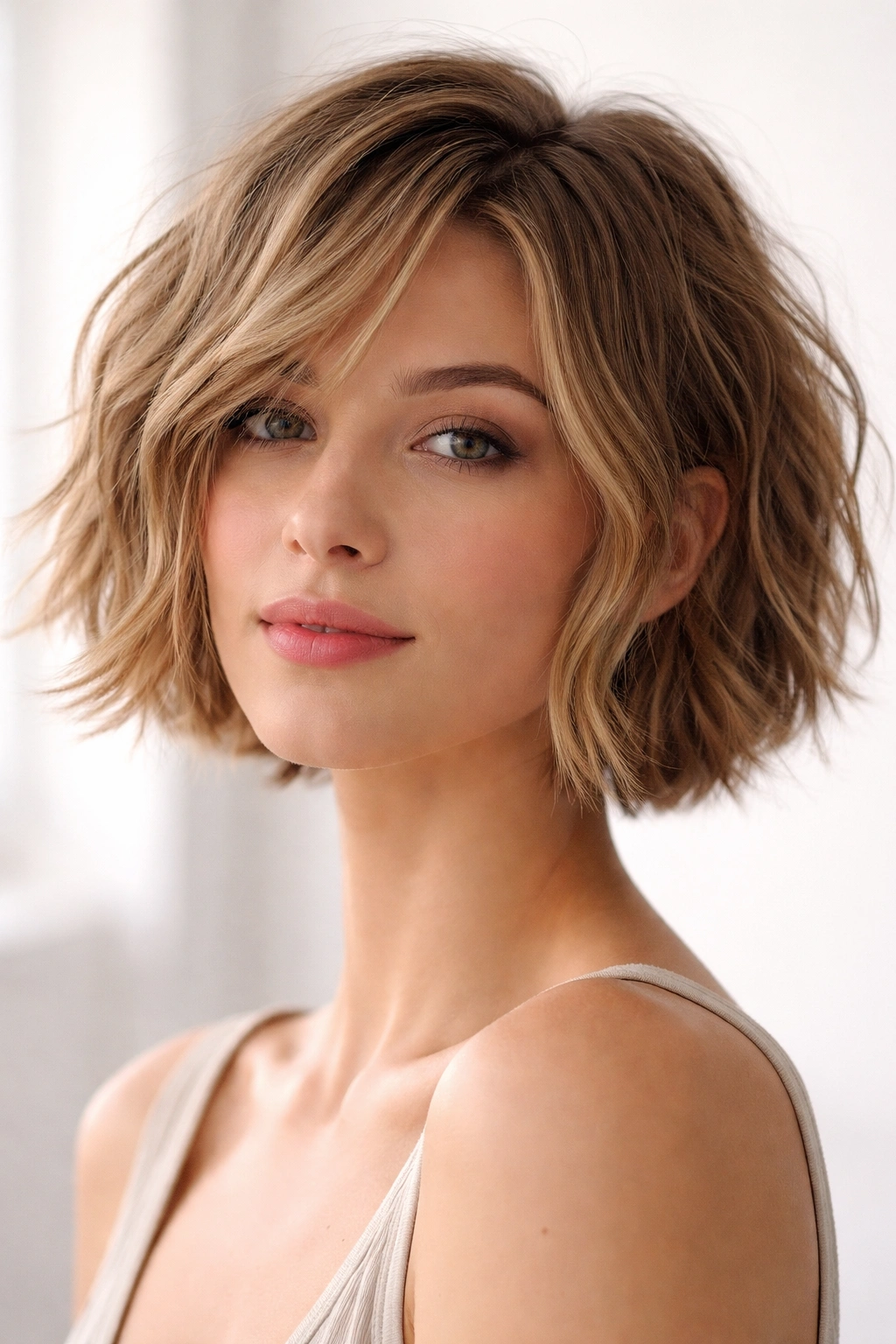
What happens when you want the shortest bob that still looks airy? You go piecey, not puffy.
A tousled cropped bob keeps the length tight around the jaw or slightly above it, then breaks up the ends so the waves separate into visible pieces. The finish matters as much as the cut. Without texture, the shape can look dense and boxy. With texture, it moves.
How To Style It Without Making It Crunchy
Use a small amount of styling cream or lightweight gel through damp hair, then twist a few sections with your fingers while it dries. You’re trying to encourage definition, not create a hard shell. Once the hair is dry, break up the pieces with dry hands. That last step matters more than people think.
- Best if you want a fresh, short shape with movement.
- Good for waves that love definition at the ends.
- Less ideal if you want a sleek bob with no texture at all.
This is the most casual cut in the list, but it still needs a clean shape underneath. Messy only works when the base is solid.
Final Thoughts
The best bob for wavy hair is the one that respects your wave pattern instead of flattening it or fighting it. Some heads of hair want blunt lines. Others need internal layers, a longer front, or a fringe that bends and opens the face.
If you’re taking photos to a stylist, bring ones that show the hair in its natural state. Air-dried is even better than styled. A picture of a flat-ironed bob can send the whole conversation in the wrong direction, and wave pattern changes everything.
My simplest rule: choose the shape that looks good when it moves. A bob should swing, bend, and land with a little life in it. If it sits there like a helmet, keep looking.
