



A sharp bob doesn’t need curls, volume, or decorative tricks to look expensive. Straight bob cuts earn their keep because the line does the work: clean edges, tidy weight, and a shape that still looks intentional when you’ve only got ten minutes and a flat iron.
No curl required.
What makes a sleek bob look polished isn’t mystery. It’s the perimeter. A cut that lands exactly where it should — chin, jaw, collarbone, or just below — gives the eye a clear line to follow. If that line is uneven or too fluffy at the ends, the whole style loses its nerve.
I’ve always liked bob haircuts that look simple from a distance and precise up close. The best ones have a little bite to them. Not harsh. Just enough structure that your face looks framed, not hidden.
Length, angle, parting, and fringe all change the mood. Some straight bob cuts sharpen the jaw. Some soften a square face. Some make fine hair look thicker than it is, which is one of the few beauty tricks I never get tired of. The first cut on this list is the most obvious one, and still one of the strongest.
1. Blunt Chin-Length Bob
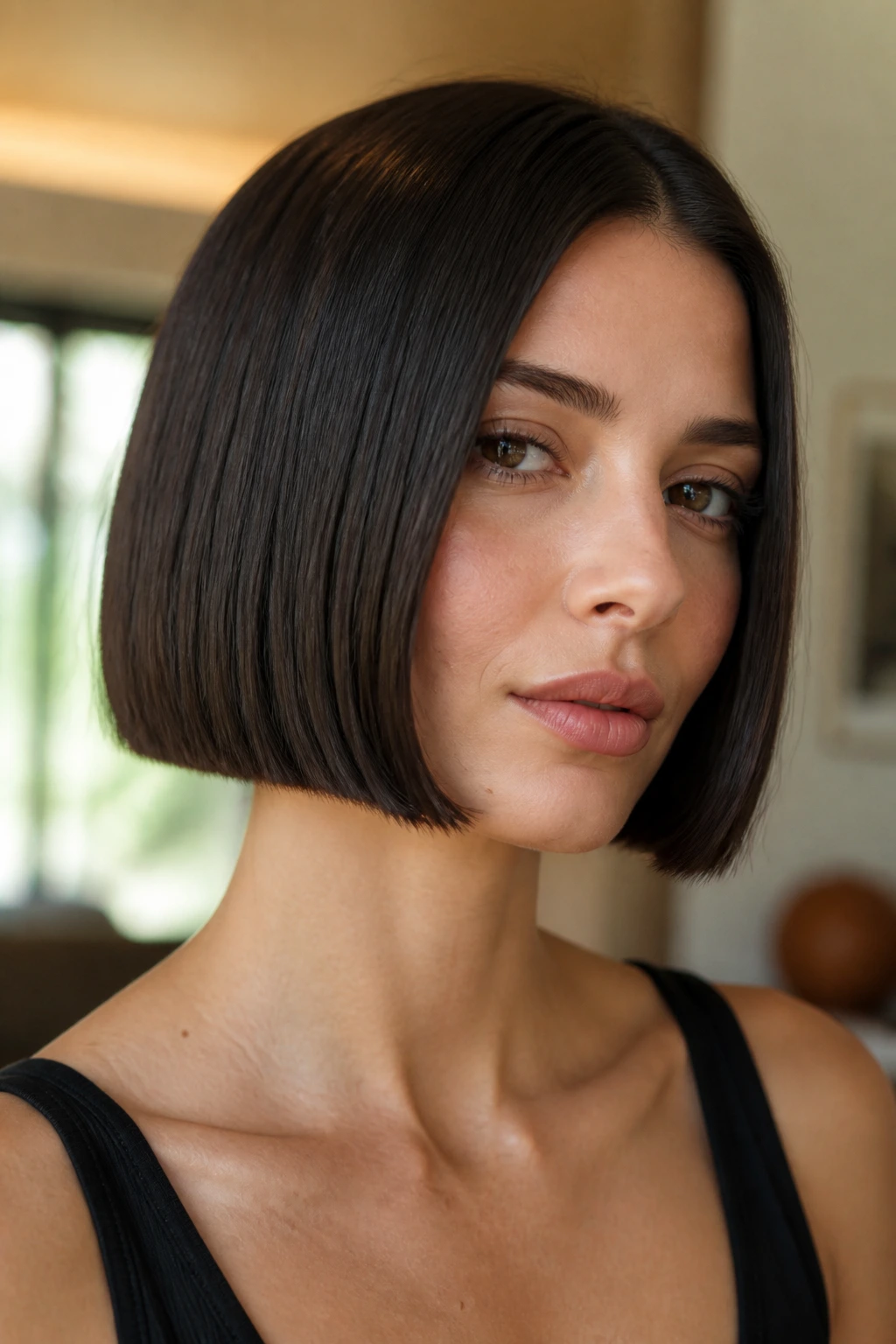
A blunt chin-length bob is the cleanest straight bob you can wear. The cut stops right around the chin, the ends sit in a single line, and the whole shape reads crisp without trying too hard. If you want a sleek look that looks expensive even on a plain white T-shirt day, this is the one that does it.
Why It Works
The blunt perimeter creates the illusion of density. That matters a lot if your hair is fine or medium in texture, because a hard edge makes the ends look fuller instead of wispy. It also brings attention to the jaw and lips, which is why this length often feels sharp in photos and in real life.
Keep the finish smooth, but don’t flatten it to death. A small bend under the ends — just a whisper, not a curl — keeps it from looking stiff. A center part makes it lean more modern. A side part gives it a little softness if your face shape needs that.
- Ask for the length to hit right at the chin or just below it.
- Keep the ends one length, with no visible layering through the perimeter.
- Works especially well on fine to medium straight hair.
- Trim every 6 to 8 weeks if you want the edge to stay sharp.
Pro tip: Blow-dry with a paddle brush and aim the nozzle downward. That tiny habit keeps the cut smooth instead of puffy.
2. Jaw-Grazing Micro Bob
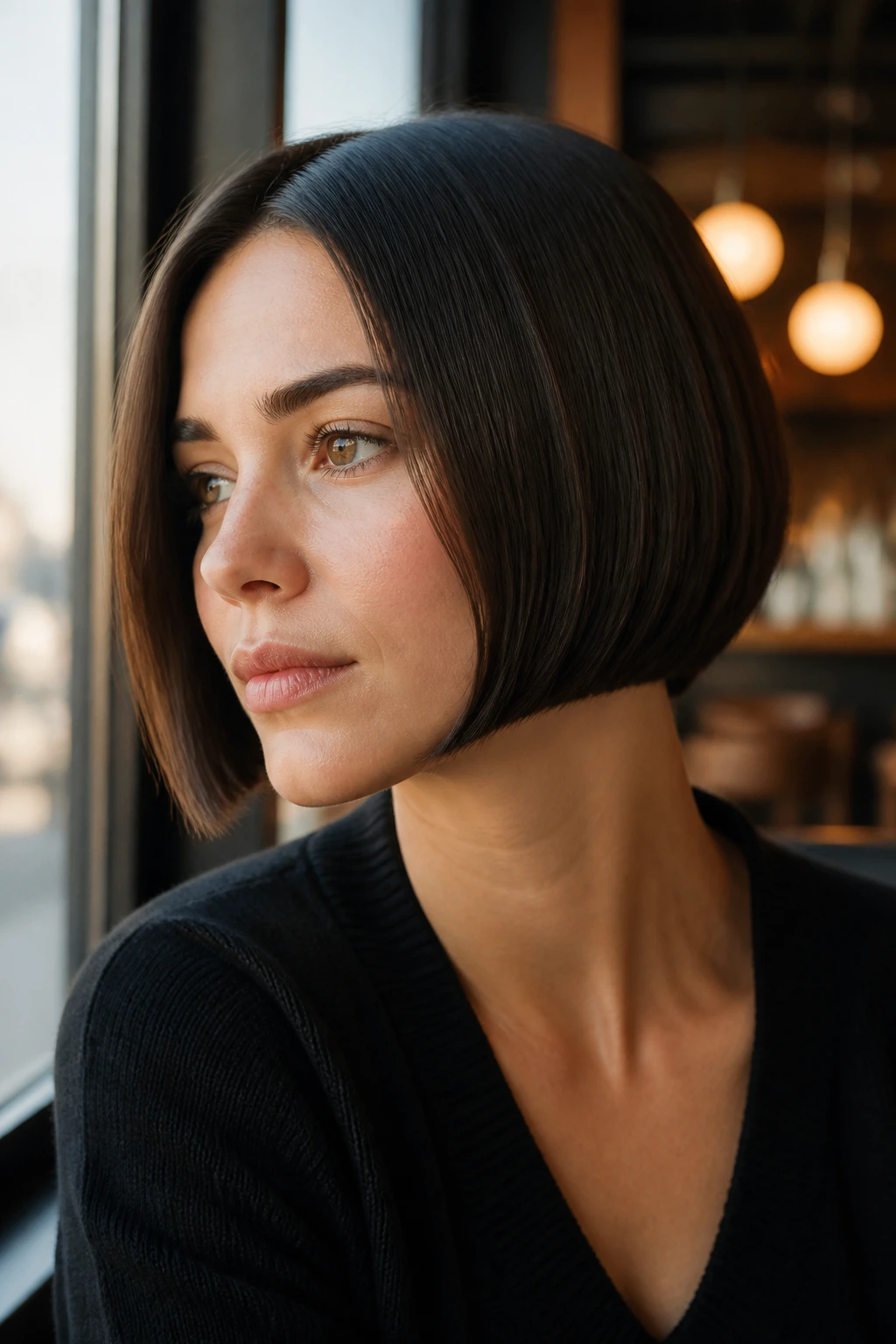
The micro bob sits higher than most people expect, and that’s exactly why it looks so clean. It usually lands between the cheekbone and the jawline, sometimes skimming the jaw with almost no extra length. On straight hair, it has a very tidy, almost editorial look. On the wrong texture, it can turn into a round helmet, so the shape matters.
What saves this cut is control. The back should be neat, the sides should hug the face, and the ends need a slight bevel so they don’t poke outward. You do not want a blunt shelf of hair sitting away from the neck. That’s the whole difference between chic and awkward.
This is one of those cuts that loves confidence. It shows your neck. It shows your earrings. It also shows your haircut, which means a sloppy trim gets exposed fast. If you like pieces that look deliberate and a little bold, though, it’s hard to beat.
It suits oval, heart, and petite face shapes especially well. Very round faces can wear it too, but the front should stay slightly longer to avoid making the face look wider. The line should feel clean, not severe. That distinction matters more than people admit.
3. Collarbone-Length Bob

Why does a longer bob still look sleek? Because it moves with the body instead of fighting it. A collarbone-length bob, often called a lob, gives you that straight, polished line without the commitment of a shorter cut. It skims the shoulders, which keeps the shape soft, but it still reads neat when you wear it straight.
How to Keep It Flat and Smooth
The trick is not to over-layer it. Too many layers and the ends start flipping in strange directions, especially if your hair has any natural wave. Keep the perimeter strong, then remove only enough weight to stop the cut from feeling bulky. That’s the sweet spot.
A lob is also the easiest of these styles to wear on busy days. Let it air-dry about 70 percent of the way, then finish the last bit with a flat brush or a one-inch iron. A tiny inward bend at the ends is enough. You do not need perfect pin-straight hair for it to look sleek.
- Best for people who want movement without losing the bob shape.
- Lands nicely on most face shapes because it doesn’t sit too high or too low.
- Works well if your hair grows fast and you hate constant trims.
- Try a center part for a sharper feel or a soft side part for more lift.
The collarbone bob is the safest place to start if you’re nervous about going short. It still looks pulled together. It just has a little breathing room.
4. A-Line Bob
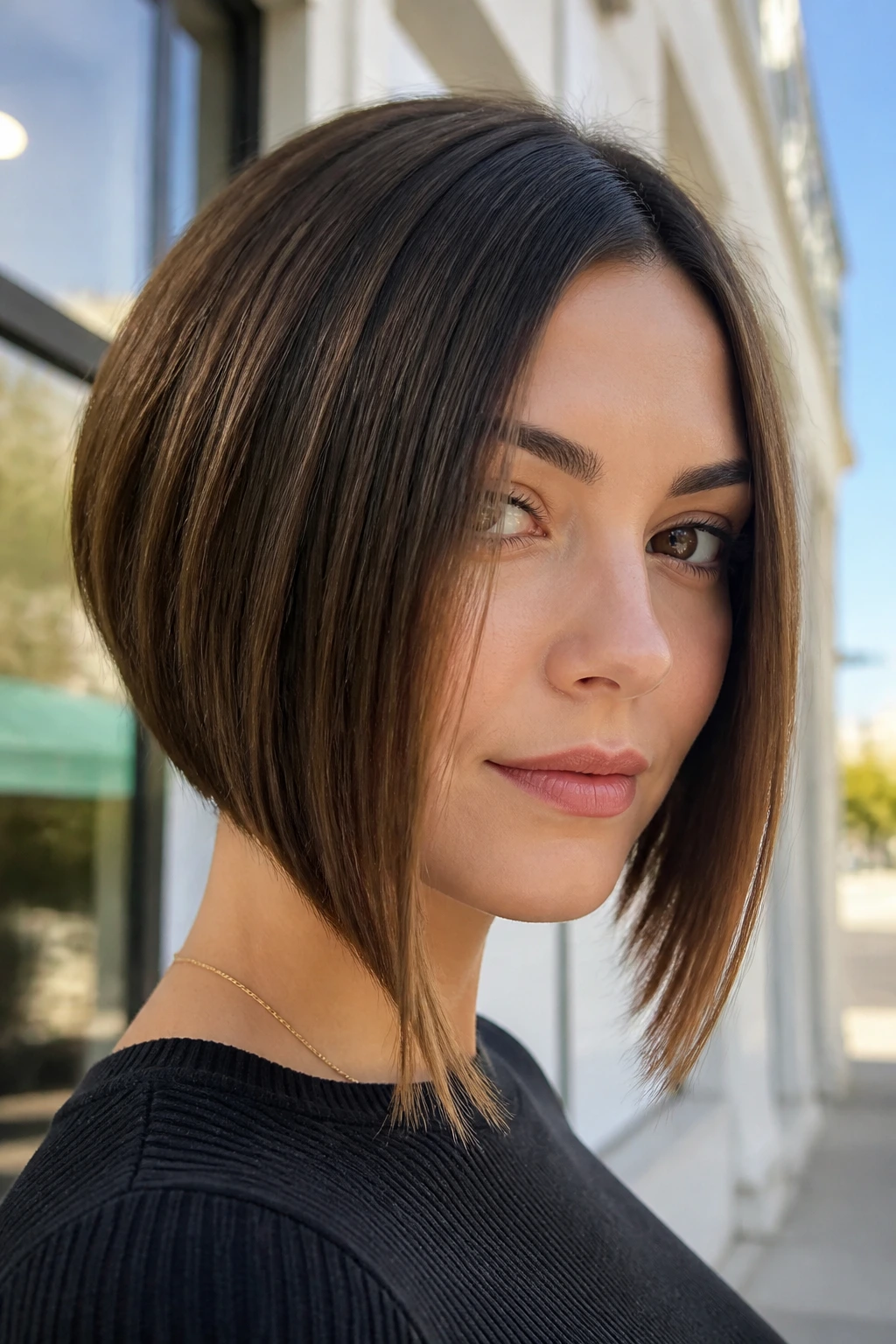
An A-line bob has a quiet little drama to it. The back sits shorter, the front gets slightly longer, and the whole cut angles forward in a way that makes the face look framed and slim. On straight hair, that angle reads very clean. There’s no need for waves or texture spray to explain what the haircut is doing.
The best version keeps the angle subtle. If the front is too long, the cut starts to feel like a lob that forgot where it wanted to go. If the difference is too dramatic, it can look dated fast. A gentle slope — usually an inch or two from back to front — is plenty.
This shape is useful if you want the elegance of a bob without the boxy feel some one-length cuts can create. It gives a bit of motion without breaking the line. That’s the whole appeal. You get structure at the back and softness near the jaw, which is a nice balance on square or round faces.
What to Tell Your Stylist
- Keep the back short and neat at the nape.
- Let the front graze the jaw or just below it.
- Ask for the angle to stay subtle, not sharp.
- Blow-dry the front pieces forward first so the line falls correctly.
A good A-line bob looks planned from every angle. From the side, it has shape. From the front, it stays sleek. That’s a rare combination.
5. French Bob

A French bob has a particular kind of charm. It usually sits around the jaw, sometimes a touch shorter, and often pairs with a fringe that looks blunt, airy, or slightly textured. The sleek version keeps the body of the cut tidy while letting the front feel a little softer than a strict blunt bob. Done right, it has that easy, Paris-street feel people like to imitate and usually overdo.
The reason this cut works so well on straight hair is that it doesn’t need volume to read well. The shape itself does the talking. A clean jaw-length line with a small bend under the ends can look elegant without being fussy. If the fringe sits just above the brows or brushes them lightly, it gives the cut a little attitude without making the whole thing look heavy.
This is not the haircut for someone who wants to hide behind their hair. It opens the face. It shows the neck. It also asks for regular trims, because the magic disappears once the line grows out and starts sitting on the shoulders.
A French bob suits someone who likes a polished look but does not want a severe one. The best versions feel easy, not overworked. A touch of shine serum, a center or soft off-center part, and a careful blow-dry are usually enough. The rest is in the cut.
6. Box Bob
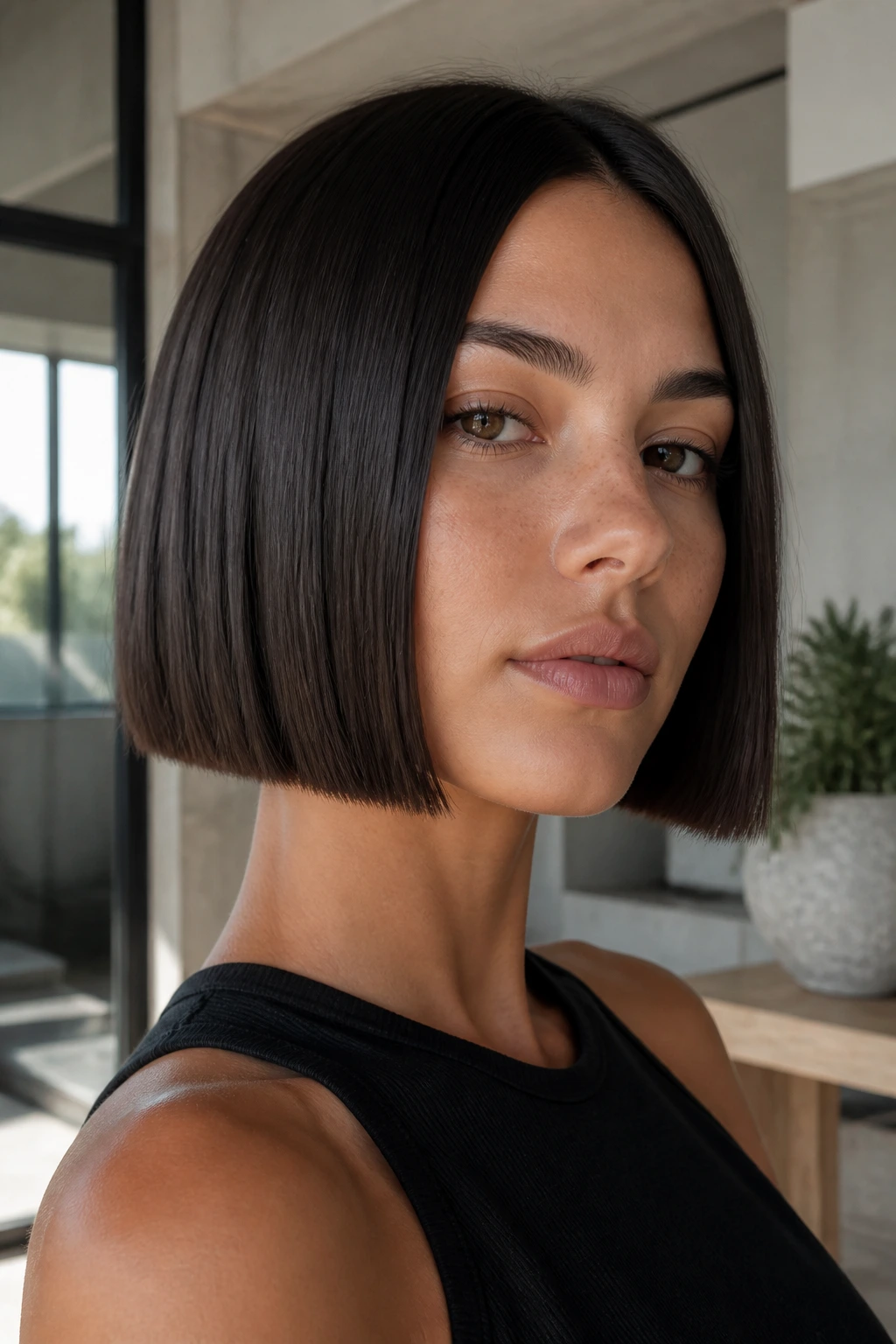
The box bob is all about shape. Compared with softer bob cuts, it keeps the corners fuller and the outline more square, which gives straight hair a strong, graphic look. If your hair is thick, this is one of the few bob shapes that can make all that density feel stylish instead of heavy. If your hair is fine, the same shape can still work, but it needs cleaner tailoring.
Unlike a feathered bob, the box bob doesn’t rely on movement to look interesting. It relies on structure. The sides stay fairly even, the ends stay solid, and the line reads almost architectural when the hair is blown straight. That makes it a good choice if you like a sharper style and you’re not interested in soft, wispy edges.
This cut is especially useful when the hair keeps expanding outward at the sides. A box bob puts the weight where it belongs. It can make thick hair fall more neatly, and it tends to photograph in a very crisp way because the shape is so obvious.
Ask for internal debulking only if needed. Too much layering destroys the boxy shape. And that shape is the whole point. If you want your bob to look precise and a little bold, this is one of the strongest options on the list.
7. Glass Bob
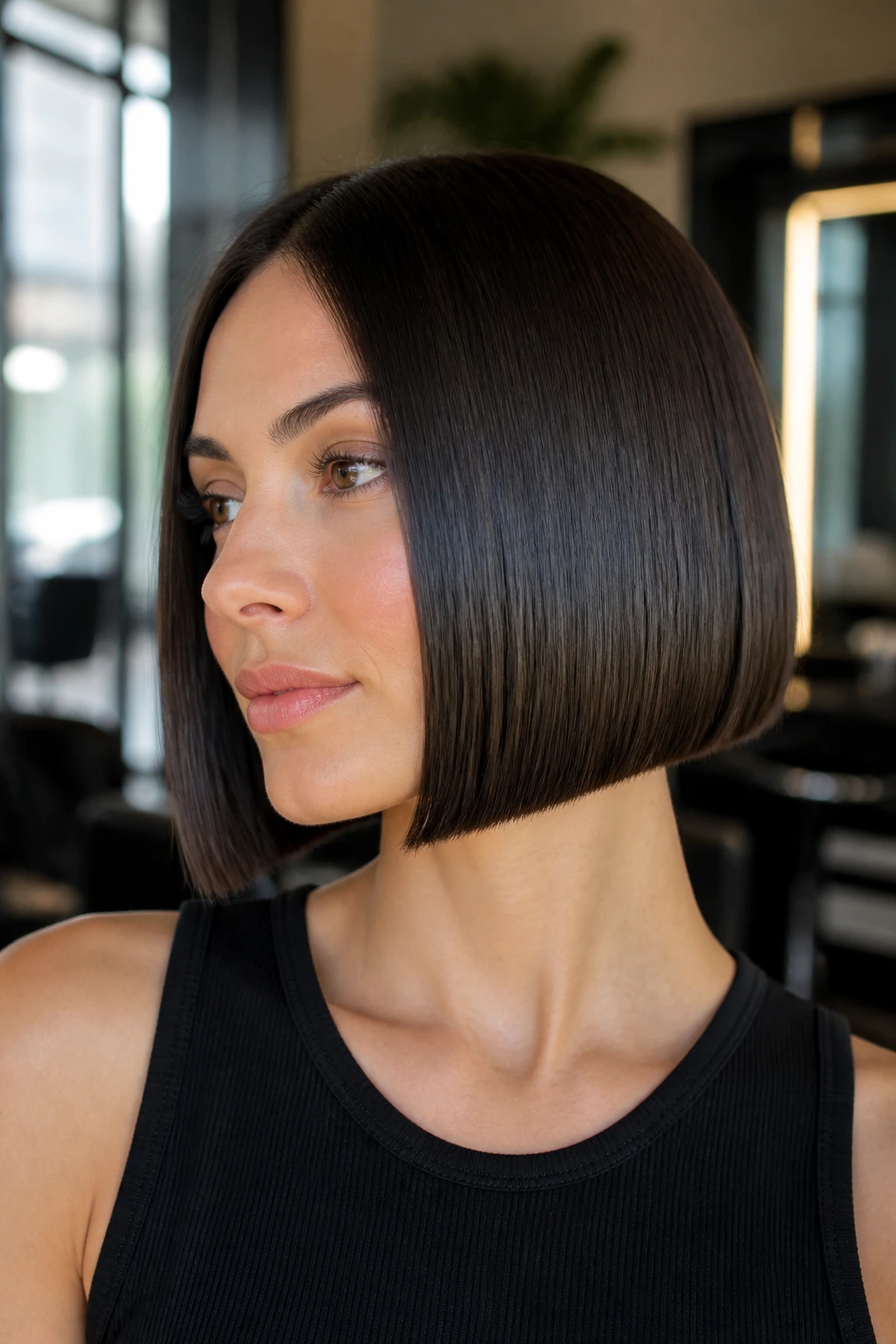
If shine is the point, the glass bob is the move. The cut itself is usually one length, or close to it, and the finish is polished enough that the hair looks almost reflective. People talk about sleek hair all the time. This is what they mean when they actually get it right.
The cut needs to be precise because every wobble shows. Split ends, dry ends, and uneven layers are harder to hide here than on softer styles. That’s why a glass bob works best when the hair is in good shape and the perimeter is freshly trimmed. The edge has to look deliberate. No half-measures.
A one-inch flat iron, a light heat protectant, and a very small amount of serum are usually enough. Too much product ruins the effect and makes the hair look greasy instead of glossy. Smooth the sections in clean passes, then let them cool before touching them again. That cooling moment matters more than people think.
The Shine Rules
- Keep the hair clean but not squeaky dry.
- Use a heat protectant with a light finish, not a heavy cream.
- Flat iron in small sections, about 1 inch wide.
- Finish with one drop of serum rubbed between the palms.
The glass bob is not forgiving, and that’s part of its appeal. It looks expensive because it shows precision. If you like clean lines and a mirror-like finish, this is the sharpest version of a sleek bob haircut.
8. Asymmetrical Bob
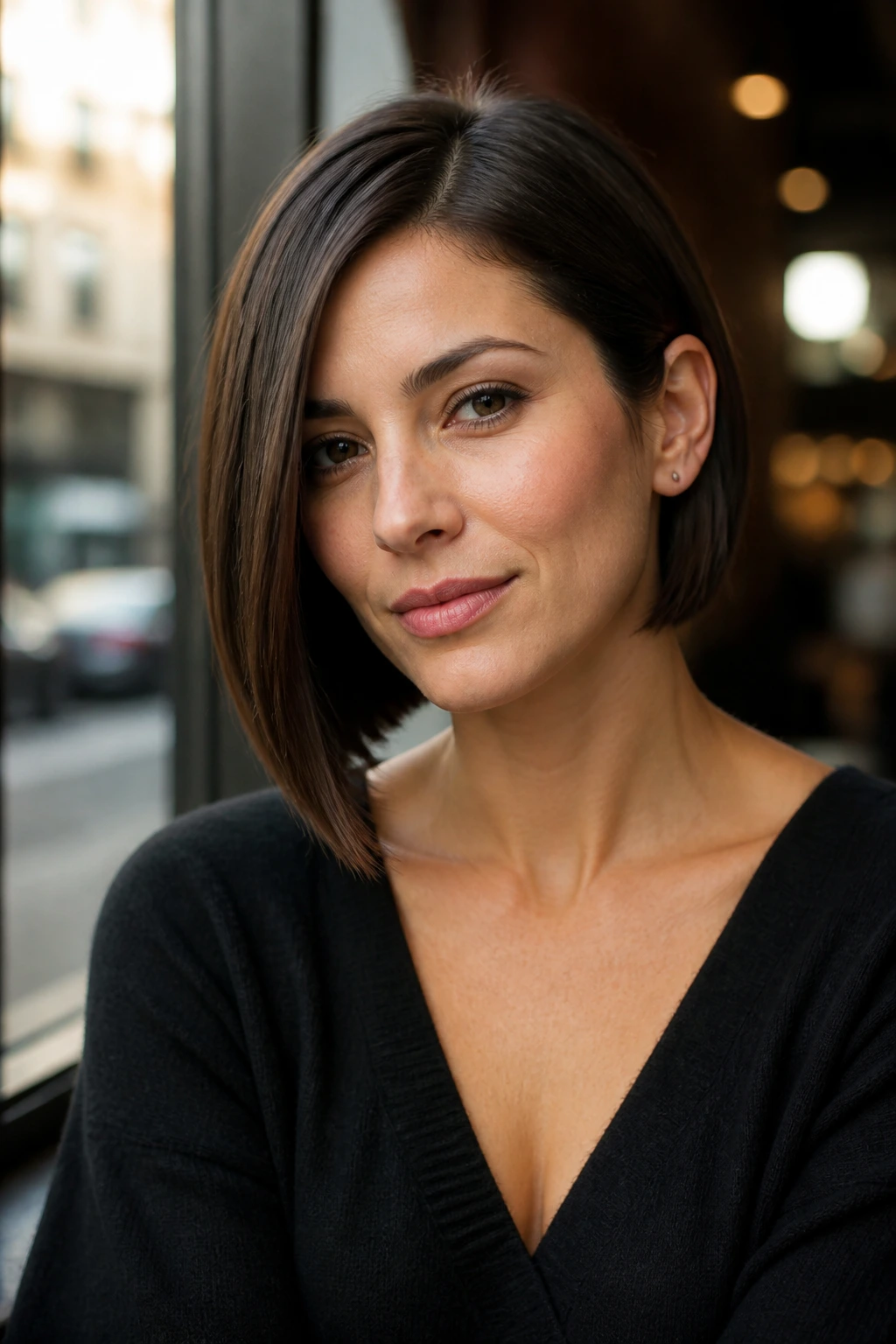
Can a sleek bob still have attitude? Absolutely. An asymmetrical bob keeps one side a little longer than the other, and that tiny imbalance changes the whole feel of the haircut. The trick is restraint. You want enough difference to notice, not so much that it starts looking like a stunt.
A subtle asymmetry — maybe half an inch to an inch — is usually enough. The longer side pulls the eye forward and slightly down, which can make the face look leaner. It also gives straight hair a little movement without asking for layers or waves. The shape stays neat, but it doesn’t feel rigid.
This works especially well if you wear a sleek outfit and want the haircut to do some visual work for you. A strong side part can make the asymmetry more obvious, while a center part softens it a little. Either way, the line still feels deliberate.
What to Ask For
- One side should be slightly longer, not drastically uneven.
- Keep the back clean and close to the neck.
- Ask for the longer side to fall past the jaw, if you want more contrast.
- Style with a flat brush so both sides lie smooth.
There’s a small risk here: if the asymmetry is too subtle, people may not notice it. If it’s too obvious, the cut can lose its polish. The sweet spot is somewhere in the middle, and a good stylist will know where that is.
9. Center-Part Bob
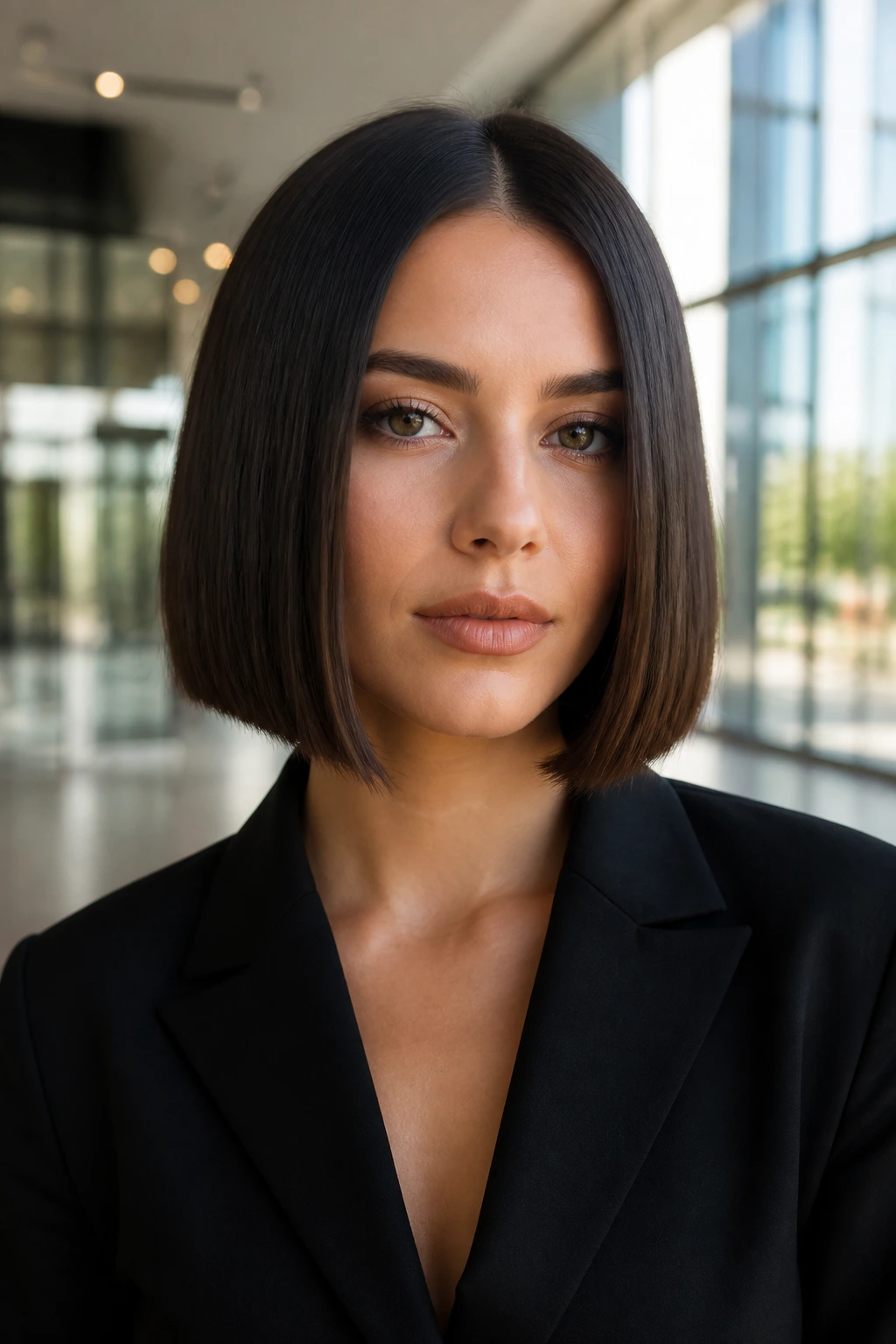
A center-part bob has a calm, exact kind of symmetry. The middle part divides the hair evenly, which gives straight bob cuts a sharper edge and a longer line through the face. It’s one of the easiest ways to make a bob look modern without changing the cut itself.
The shape works because the part pulls everything into balance. The eye goes straight down the middle, then follows the perimeter of the haircut. On straight hair, that creates a clean, almost smooth-column effect. If your hair is a little too fluffy at the roots, the center part also forces you to smooth the top, which helps the whole style look more controlled.
This is a very good choice for oval and longer faces because it keeps the sides neat and the length clean. It can also work on rounder faces if the bob falls a little below the chin, since the extra length gives the face more vertical room.
- Comb the part while the hair is damp, not after it dries.
- Blow-dry the roots flat with the nozzle pointing down.
- Tuck both sides behind the ears for a sharper finish.
- Keep the ends blunt so the symmetry feels intentional.
There’s something almost stubborn about a center part. It doesn’t try to flatter in a soft way. It just stands there, clean and orderly, which is probably why it looks so good when the rest of the haircut is tight.
10. Deep Side-Part Bob
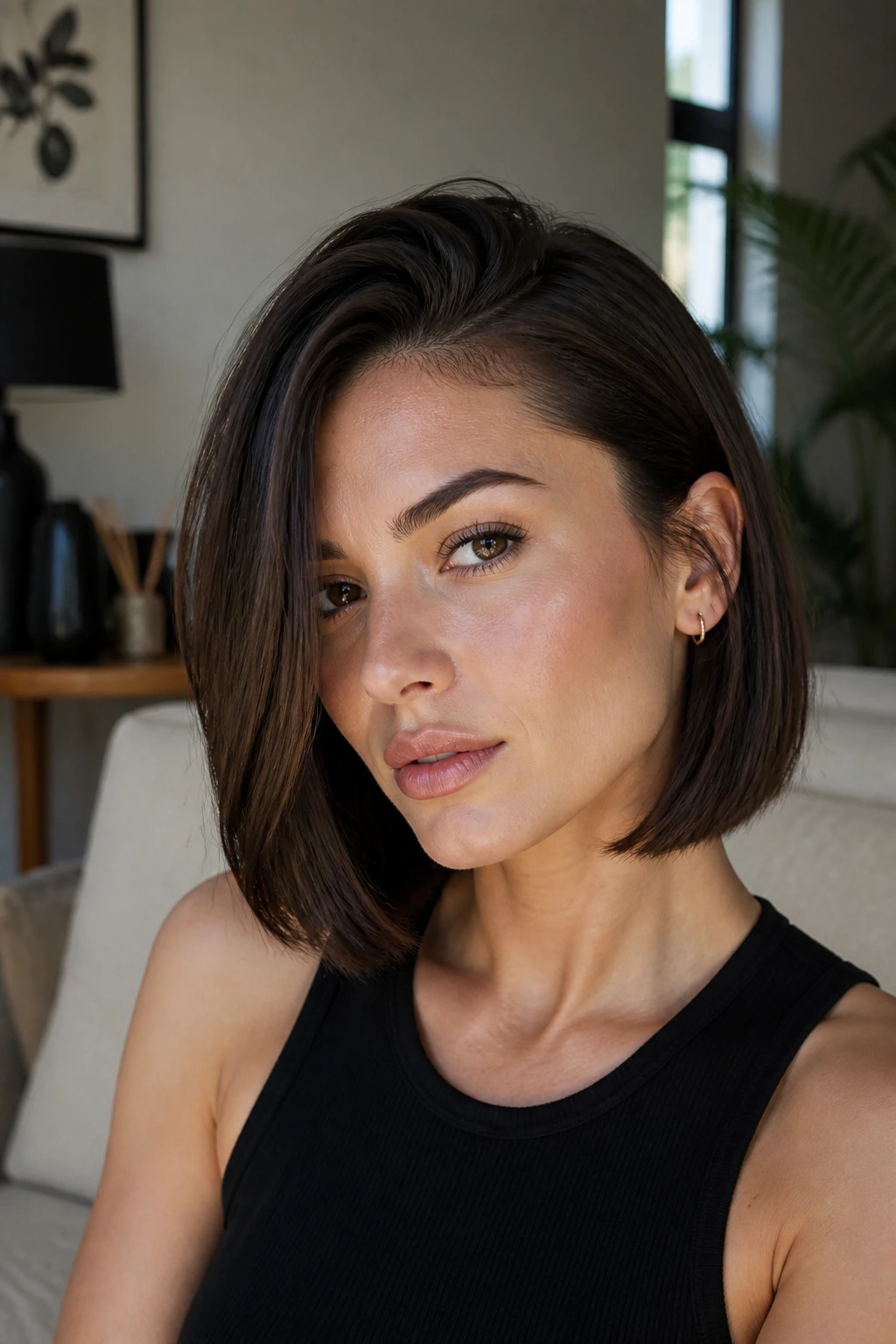
A deep side part changes a bob faster than almost anything else. Shift the hair off-center and suddenly you have lift at the crown, a little sweep across the forehead, and a shape that feels more relaxed without losing its clean line. On straight hair, it can look polished in a softer, slightly more glamorous way than the center-part version.
This is the bob I like when the roots are a little flat or the hair needs a break from being too severe. The deep part gives you volume where you want it and keeps the ends smooth. It also helps long or narrow faces, because the extra sweep adds width across the forehead and breaks up the vertical line.
There’s a practical benefit too. If one side of your hair naturally wants to fall flatter, the deep side part works with that instead of fighting it. You still need a clean blow-dry, though. A side part on messy roots looks accidental. A side part on smooth roots looks styled.
A light root spray can help, but keep it modest. Too much product near the scalp makes the style collapse faster. You want lift, not stiffness. And if your bob sits just below the jaw, the side part can make the whole cut feel fuller through the front without adding bulk everywhere else. That’s a nice trade.
11. Invisible-Layer Bob
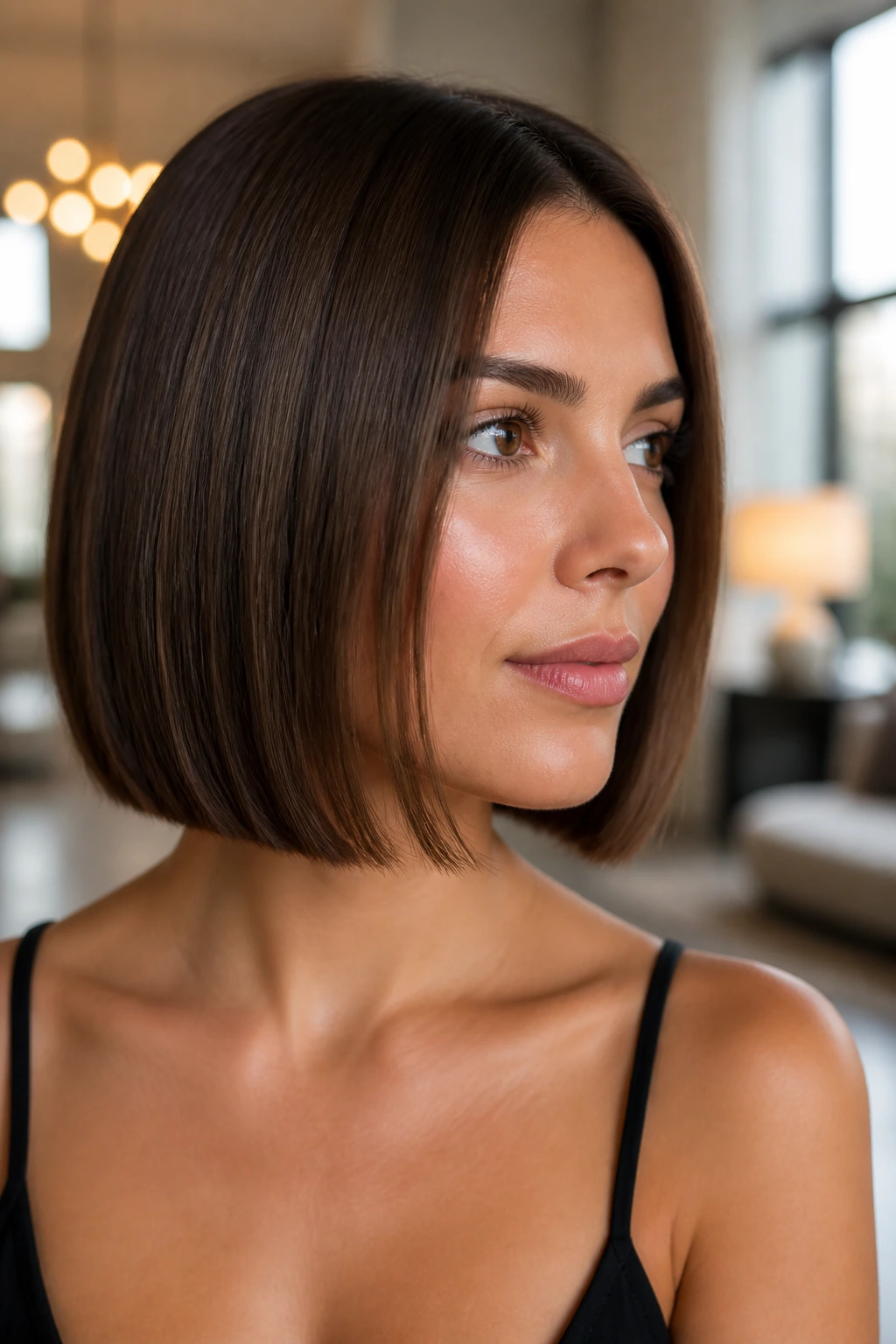
A blunt bob looks simple because the edge is clean. An invisible-layer bob looks simple for a different reason: the cut removes bulk from the inside while leaving the outside line intact. That’s the smart version of a sleek bob, especially if your hair is thick and tends to balloon outward the second it dries.
The word “invisible” matters. You should not see choppy pieces hanging around the perimeter. The surface still needs to read smooth. The layers sit under the top sections, where they lighten the weight and let the hair fall closer to the head. Done well, the haircut keeps its straight shape but feels lighter to wear and easier to blow-dry.
This is the kind of cut that helps if your hair dries wide instead of down. It can also make a bob sit better around the neck, which is a small detail until you live with it every day. Then it becomes the difference between a style you fight and a style that settles naturally.
Who It Helps Most
- Thick hair that expands at the sides
- Straight hair with hidden bulk in the nape
- Hair that bends inward on its own but needs weight removed
- Anyone who wants a sleek shape without a hard, boxy outline
Ask for internal shaping, not obvious steps. That’s the whole game here. If the layers show, the cut loses its clean line, and the point of the style gets muddy fast.
12. Angled Long Bob
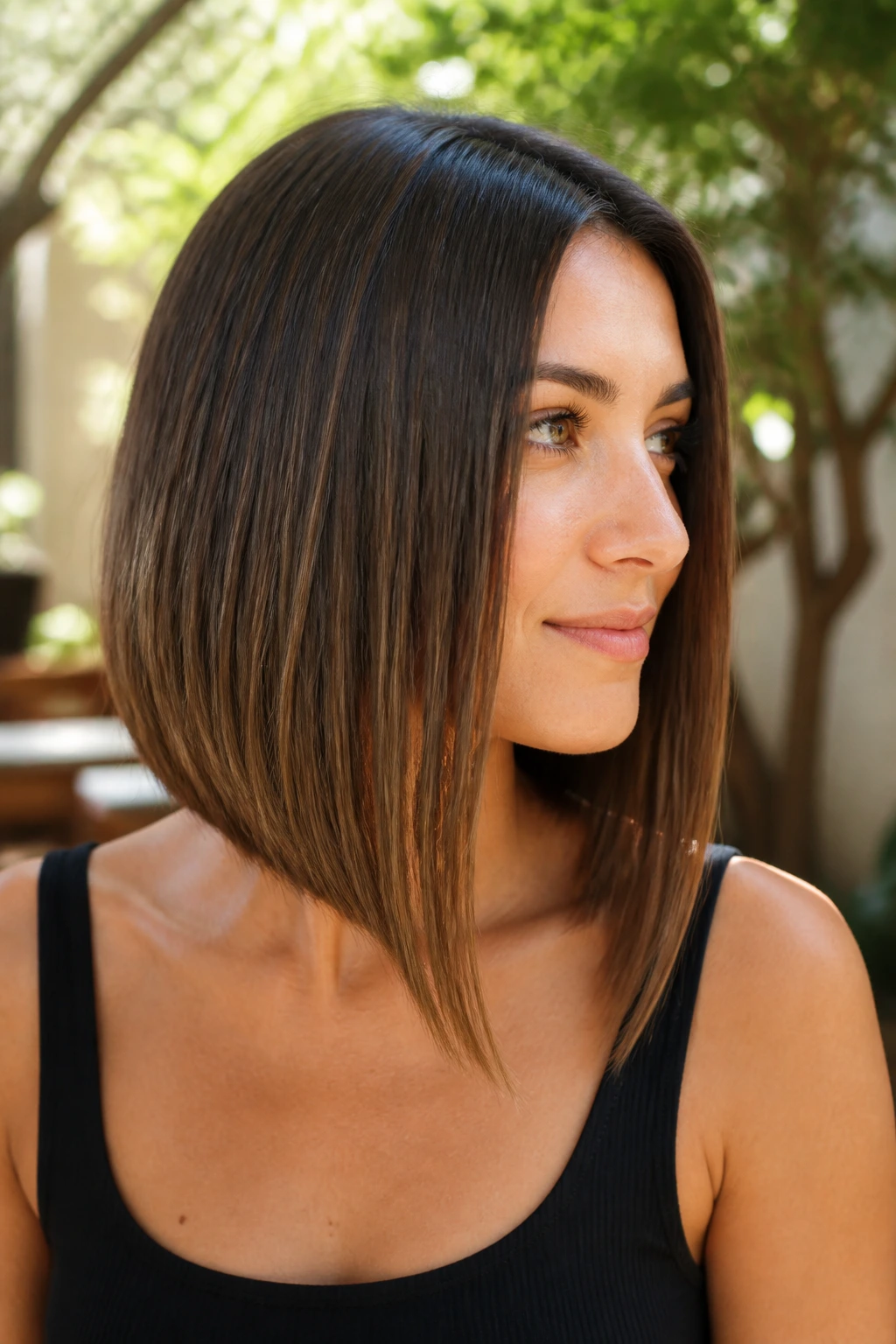
A long angled bob gives you sleekness with a little more breathing room. The front falls longer than the back, but the slope is gentler than a sharp A-line. That makes the cut look polished rather than dramatic. It’s the kind of bob that works when you want movement and order in the same haircut.
The angle draws the eye forward, which can make the face look longer and the neck look cleaner. It also keeps the style from turning boxy when the hair is flat. On straight hair, the angled front pieces have a nice, smooth swing when you walk. Not a big swing. Just enough.
I think this cut suits people who like the idea of a bob but don’t want the front to feel too short. It also works well if you tuck one side behind the ear and let the other side fall free. That tiny shift can make the shape feel softer without changing the cut.
Where the Angle Should Land
- Back at the nape or just above it
- Front pieces around the collarbone or upper jaw
- Keep the slope gradual, not steep
- Use a flat iron to smooth the front pieces inward
If the angle is too obvious, the haircut starts shouting. If it’s too mild, the shape disappears. A quiet slope is usually the most flattering choice, and it keeps the look sleek without making it feel severe.
13. Bob with Blunt Bangs
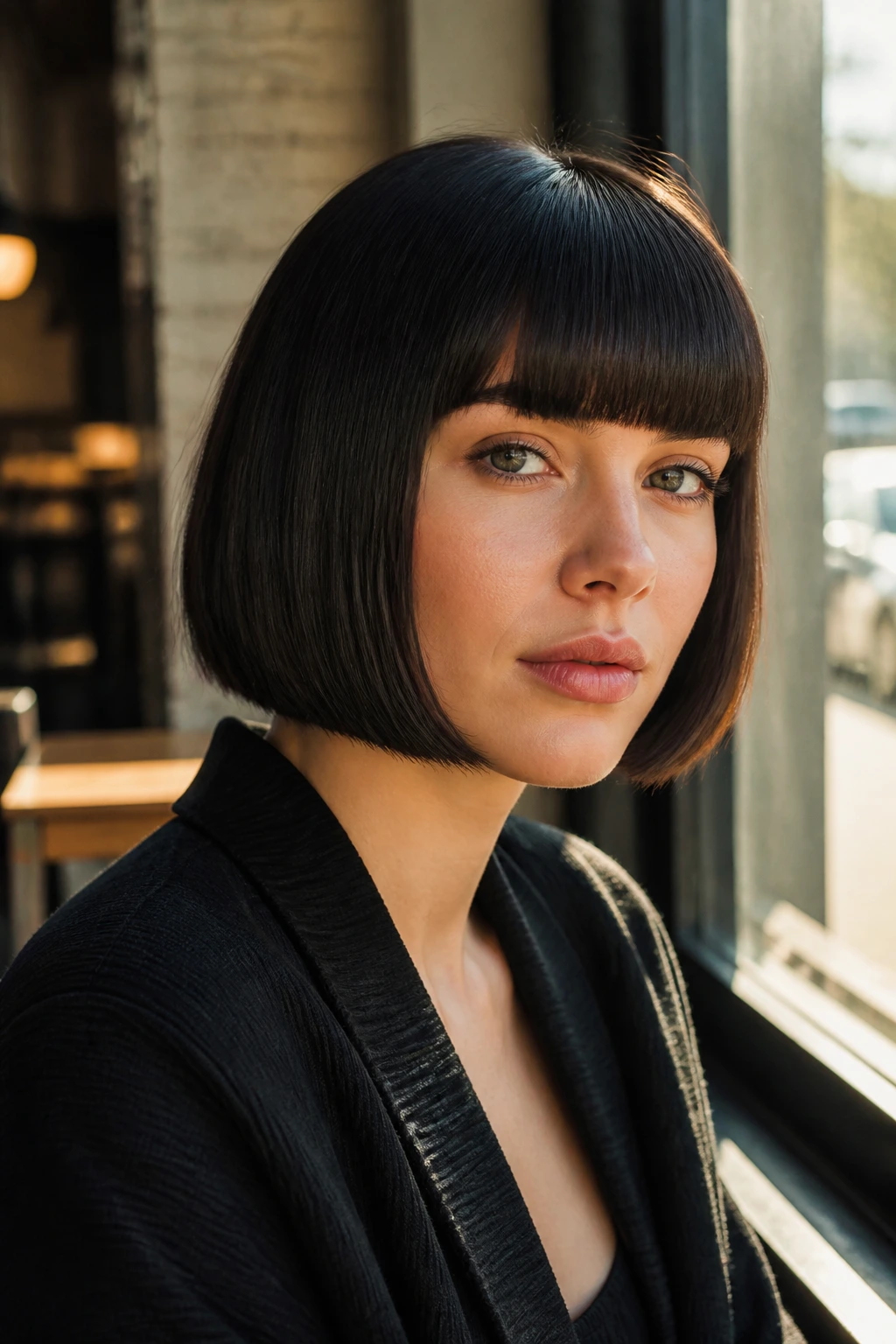
Do blunt bangs make a bob look sharper? Yes — if you keep the rest of it clean. A straight bob with a blunt fringe has a strong, unmistakable shape. The bangs give the cut a frame at the top, and the bob finishes that frame at the bottom. The result can look chic, bold, and just a little bit graphic.
This version works best when the fringe sits straight and does not split in the middle. A soft, wispy bang changes the whole mood. That can be lovely, but it is not the same look. If you want sleek, the bangs need density and a clean edge. They should skim the brows or sit just above them, depending on your face and how much upkeep you want.
The downside is maintenance. Bangs grow fast in the mirror, even when they grow slowly in real life. They also show oil faster than the rest of the hair, so you may need a quick refresh at the roots more often. Still, if you like a haircut with a strong point of view, this one has a lot of personality.
A blunt-bang bob suits straight hair especially well because the whole style can sit flat and controlled. If your hair has a stubborn wave at the fringe, you’ll be reaching for a round brush or flat iron more often. That’s the trade. Worth it for some people, annoying for others. Honest answer.
14. Tucked-Under Bob
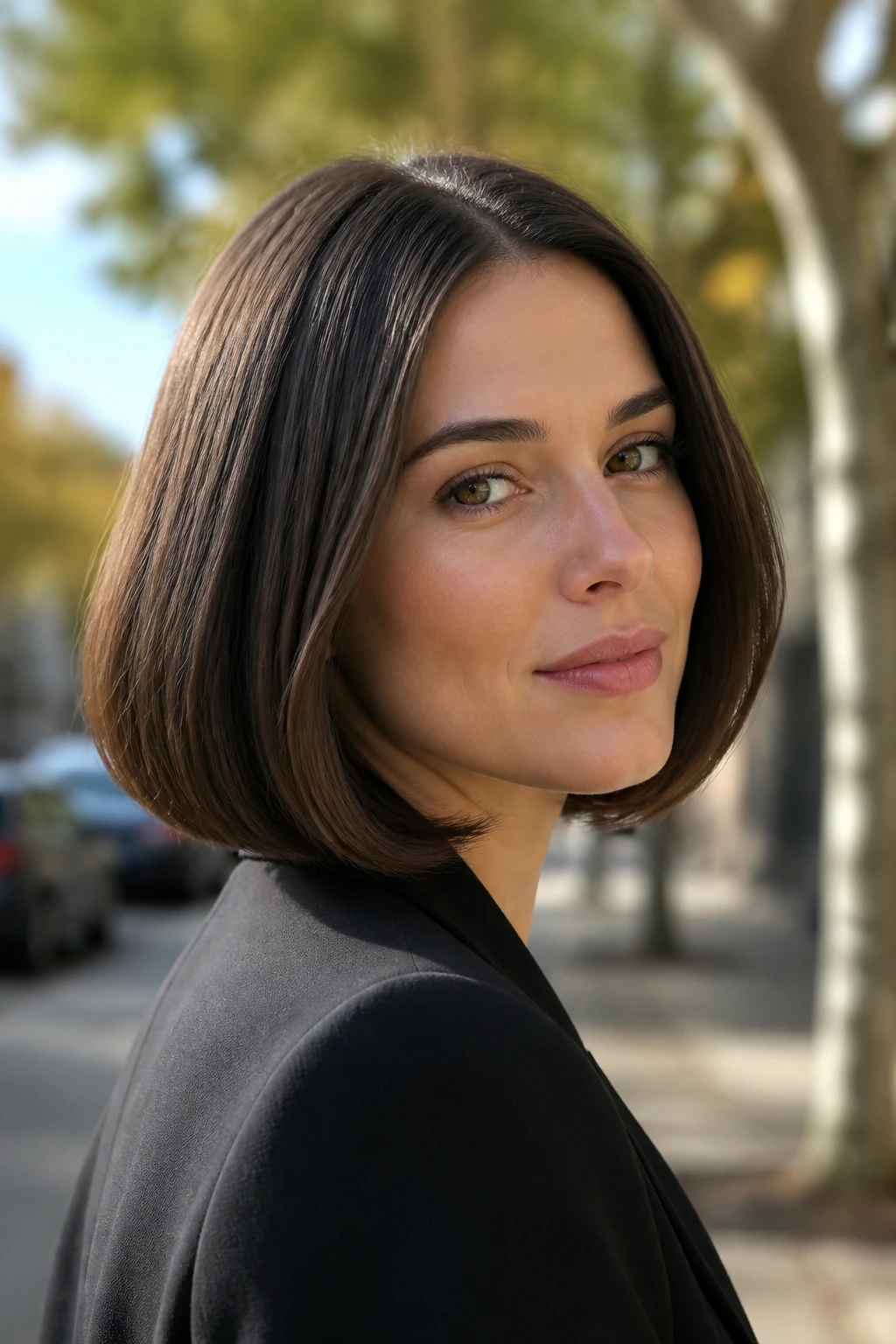
A tucked-under bob gives you a sleeker silhouette without needing a hard, severe edge. The ends curve gently toward the neck, which softens the shape while keeping it neat. It’s one of those cuts that looks especially good in motion — when you turn your head, the ends move as one clean piece.
This style is useful if you want straight hair to look controlled but not stiff. The slight tuck at the bottom keeps the haircut from sticking out at odd angles, which is a common problem on hair with a little natural bend. It also helps the bob settle against the jaw instead of floating away from it.
A round brush or a flat brush with a small inward finish usually does the job. You don’t need to create a curl. You just need the last inch or so of the hair to fold under. That’s enough to make the line look softer. If you go too hard with the bend, the style starts to feel old-fashioned in a hurry.
- Works well on medium to thick straight hair.
- Good for square jaws if you want a softer edge.
- Can be worn with a center or side part.
- Needs a light finish product to keep the ends smooth.
The tucked-under bob is a nice middle ground. It isn’t the sharpest bob here, but it is one of the easiest to live with.
15. Soft Layered Straight Bob
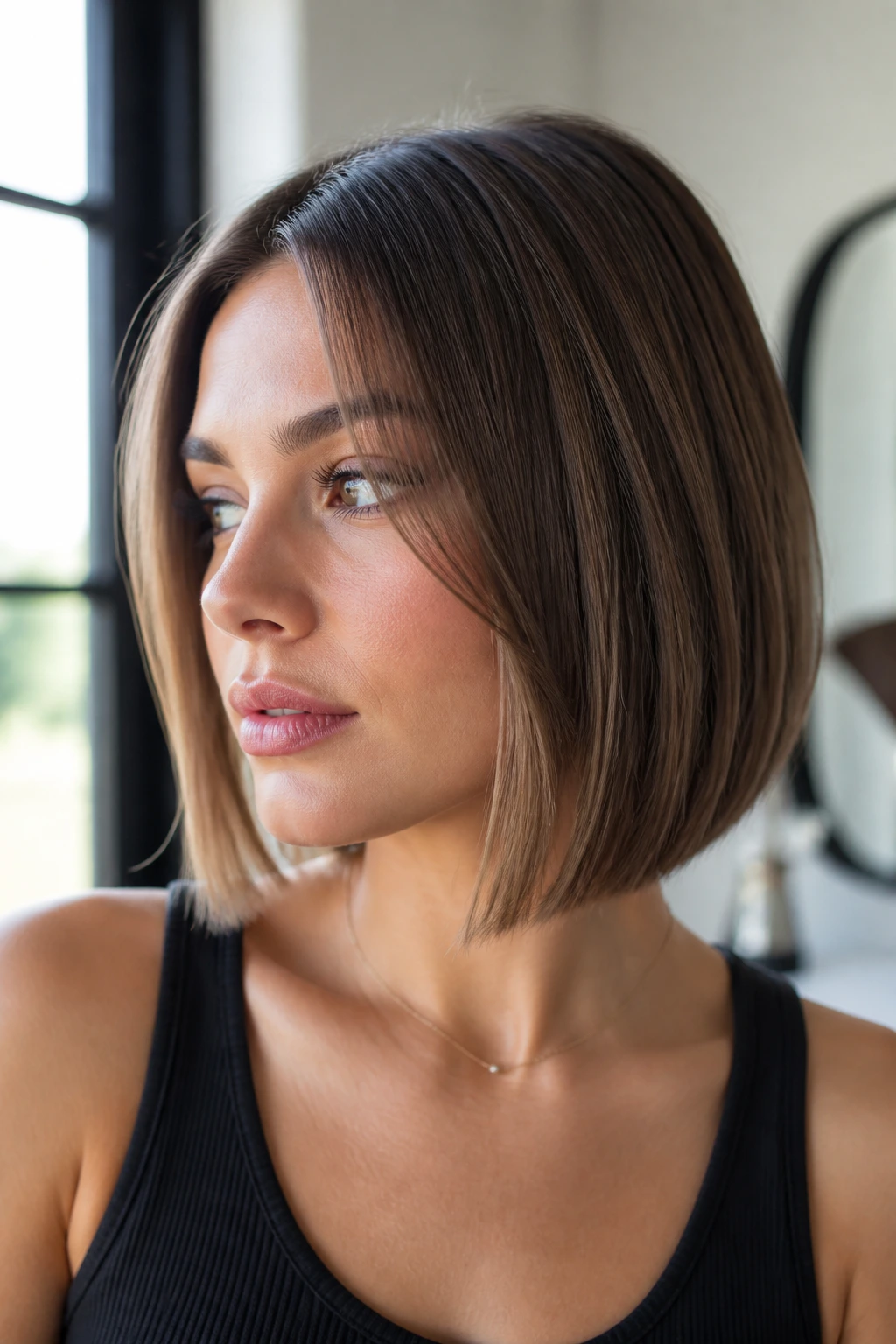
Not every sleek bob has to be razor blunt. A soft layered straight bob keeps the perimeter clean while sneaking in a little movement through the interior, which is a smart choice if your hair tends to puff up, bend in strange places, or feel heavy at the ends. You still get the bob shape. You just get a kinder version of it.
This cut is especially good when you want the hair to fall in a flatter, more natural way. A few well-placed layers around the mid-lengths can remove bulk without breaking the outline. That helps the style lie closer to the head and makes daily styling faster, because you’re not trying to force every strand into obedience.
It’s also the most forgiving version on this list. If your hair texture shifts during the day, the shape can handle it. If you air-dry partway and finish with a flat iron, the result still looks intentional. And if you want to wear it tucked, loose, or pinned behind one ear, the cut can keep up.
The version I’d point most people toward is a collarbone or jaw-length bob with hidden layers and a blunt-looking edge. That combination gives you the polish of a straight bob cut without the boxy feel some one-length styles create. If you want sleek but not severe, this is the one I’d start with first.
