



A dirty blonde bob works best when the cut does half the talking and the color stays a little bit in the background. If the blonde gets too bright, the whole thing starts shouting. If the cut loses shape, it just looks like grown-out hair with a trust issue. The sweet spot sits somewhere between beige, mushroom, and a soft gold that never turns brassy.
That middle ground is why dirty blonde bob cuts keep showing up on people who want polish without the polished feeling. The shade hides grow-out better than a bright blonde, and the bob shape can be sharpened or softened depending on texture. Fine hair gets more body from a blunt edge. Thick hair gets more ease from internal layers. Wavy hair gets to look like it woke up that way, which, frankly, is the dream.
The best versions also tend to look a little unfinished on purpose. A darker root, a soft gloss, a few lighter pieces around the face, and a cut that doesn’t fight your natural bend. That’s the whole game. The ten cuts below stay on the calm side of blonde, with enough shape and movement to keep things interesting, but never so much drama that you feel overdressed for a grocery run.
1. Dirty Blonde Chin-Length Bob With a Soft Root Melt
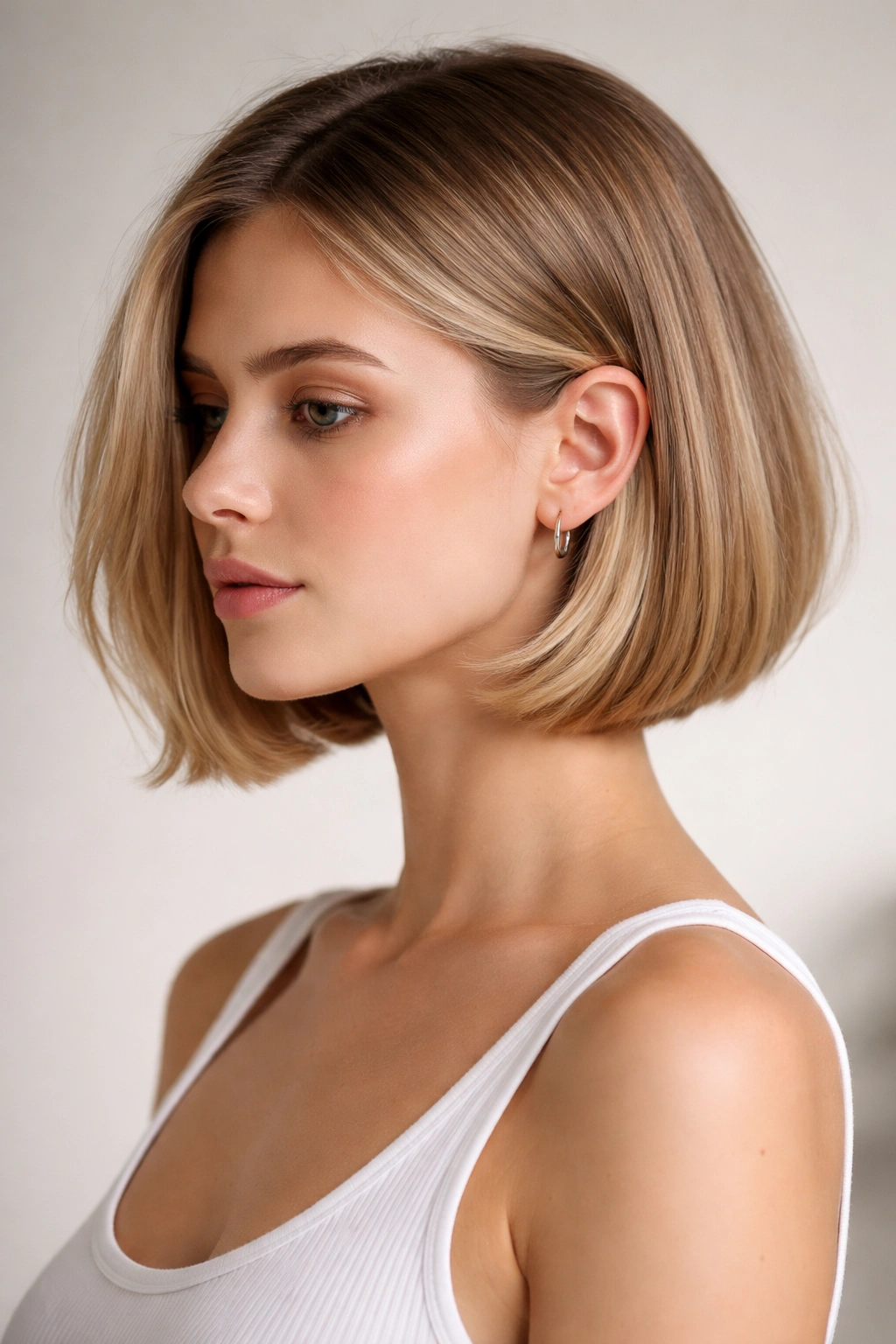
The blunt edge does half the styling for you. A chin-length bob with a soft root melt keeps the neck open, sharpens the jawline, and gives dirty blonde hair a cleaner finish without making it look stiff. I like this one for hair that bends a little but doesn’t need a lot of encouragement. The darker root softens the line and buys you some breathing room between appointments.
Why It Works
A chin-length bob sits in a sweet spot: short enough to look intentional, long enough to tuck behind the ear when you want it out of the way. If the color starts a shade or two deeper at the root and fades into beige blonde through the mids, the eye reads softness first and blonde second. That matters. You want the cut to be the headline, not the color correction.
Ask for a perimeter that lands right at the chin, with just a faint bevel under the ends. Not much. A heavy bend at the bottom can make the shape flip out in a weird way. A soft bevel keeps it clean.
- Best for: fine to medium hair, straight or slightly wavy.
- Ask for: a root melt that stays low-contrast, not chunky highlights.
- Style with: a round brush or a quick bend from a flat iron, leaving the ends slightly loose.
- Maintenance: a gloss every 6 to 8 weeks helps the blonde stay calm instead of yellow.
Best tip: keep the front a touch longer than the back if your jawline is sharp; it makes the cut feel softer without losing the bob shape.
2. French Bob With Piecey Fringe
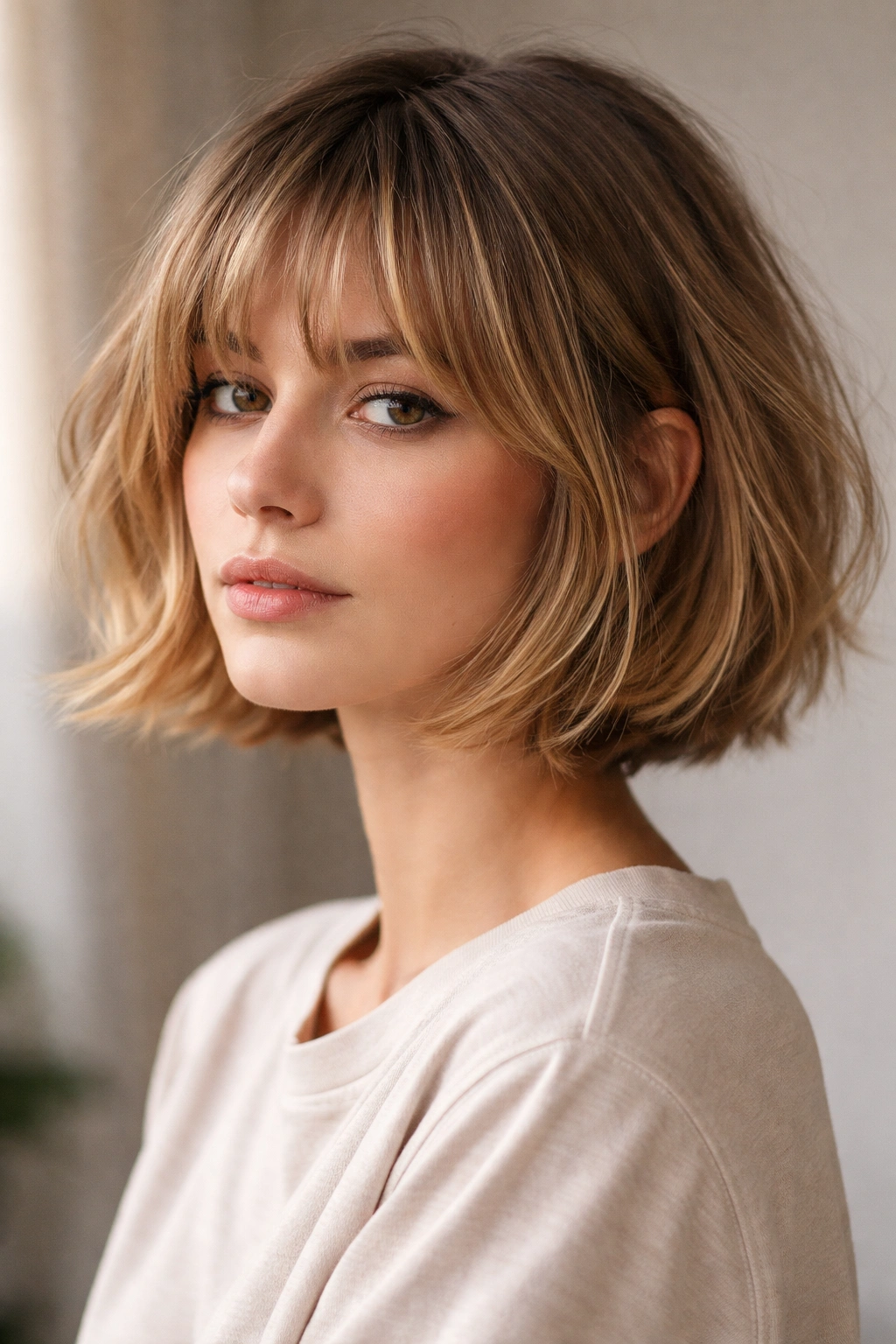
Why does a French bob make dirty blonde hair look so relaxed? Because the fringe takes the edge off the whole haircut. A jaw-skimming line plus a short, piecey bang gives you shape without forcing the style into one neat category. It can look a little artsy, a little old-world, and still completely wearable.
This version works especially well when the blonde is subtle. You do not want bright ribbons screaming through a French bob. You want beige-toned lightness, a few warmer pieces near the fringe, and a little shadow at the root so the cut doesn’t feel overprocessed. When the bang is cut to skim the brows and broken up with point-cutting, the look gets softer fast.
I like this bob on fine hair because it creates the illusion of density at the ends. I also like it on smaller faces, where a shorter perimeter can make the features feel more open. The trick is keeping the fringe light enough that it moves. Heavy bangs make the whole thing feel fussy.
How to Wear the Fringe
Blow-dry the fringe side to side with a small brush, then pinch the ends with a pea-sized dab of cream or pomade. That little step keeps the pieces separated instead of clumping together. If you let them dry flat and untouched, they can fall into one sad strip. Nobody needs that.
The rest of the bob can air-dry with a touch of mousse through the mids. Loose, not crunchy. The point is to look like you spent ten minutes, not forty-five.
3. Collarbone Lob With Invisible Layers
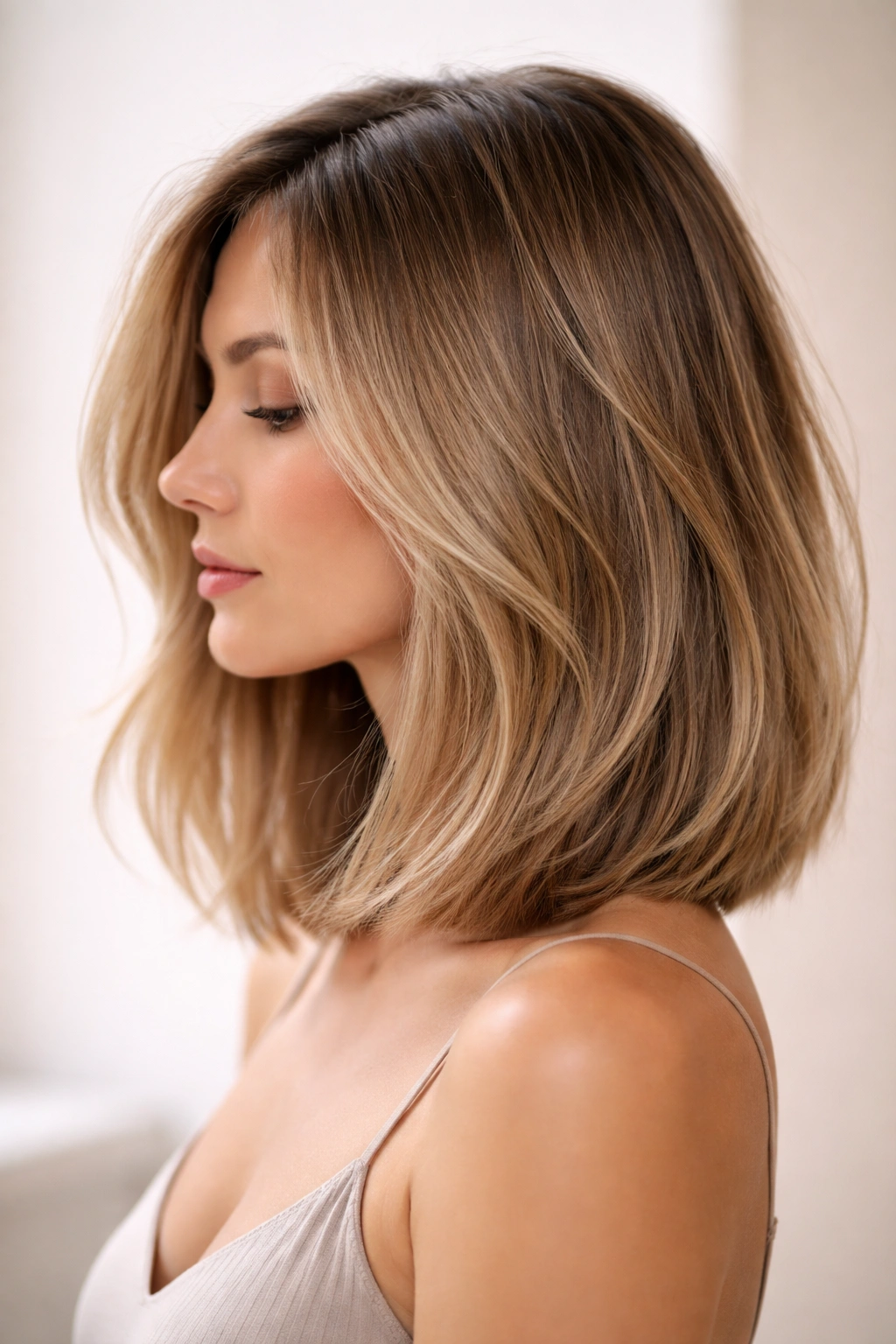
A collarbone lob is the move when someone wants a bob shape but isn’t ready to give up all that length. It reads low key because the ends still move, and the longer shape doesn’t demand a perfect blowout every time. Dirty blonde color helps even more here, since a soft root and muted highlights keep the cut from feeling hard-edged.
What Makes It Different
Invisible layers are the secret. They sit inside the haircut instead of showing up as obvious steps, so the surface still looks smooth. That matters on thicker hair, which can turn into a triangle if it’s all one heavy block. A few hidden layers remove weight without making the perimeter look choppy.
You want the longest pieces to land around the collarbone, with the front maybe half an inch longer. That tiny bit changes how the hair falls around the face. It keeps the line fluid, not boxy. If your hair has a natural wave, even better. The cut will do some of the work for you.
How to Style It
- Mist a heat protectant through damp hair.
- Work in a lightweight mousse from mid-length to ends.
- Rough-dry until the hair is about 80 percent dry.
- Finish with a round brush only at the front, where you want the bend to sit.
That’s enough. Seriously.
If you want it even softer, tuck one side behind the ear and let the other side fall forward. It breaks up the outline in a way that feels easy, not styled to death.
4. Soft A-Line Bob With Face-Framing Pieces
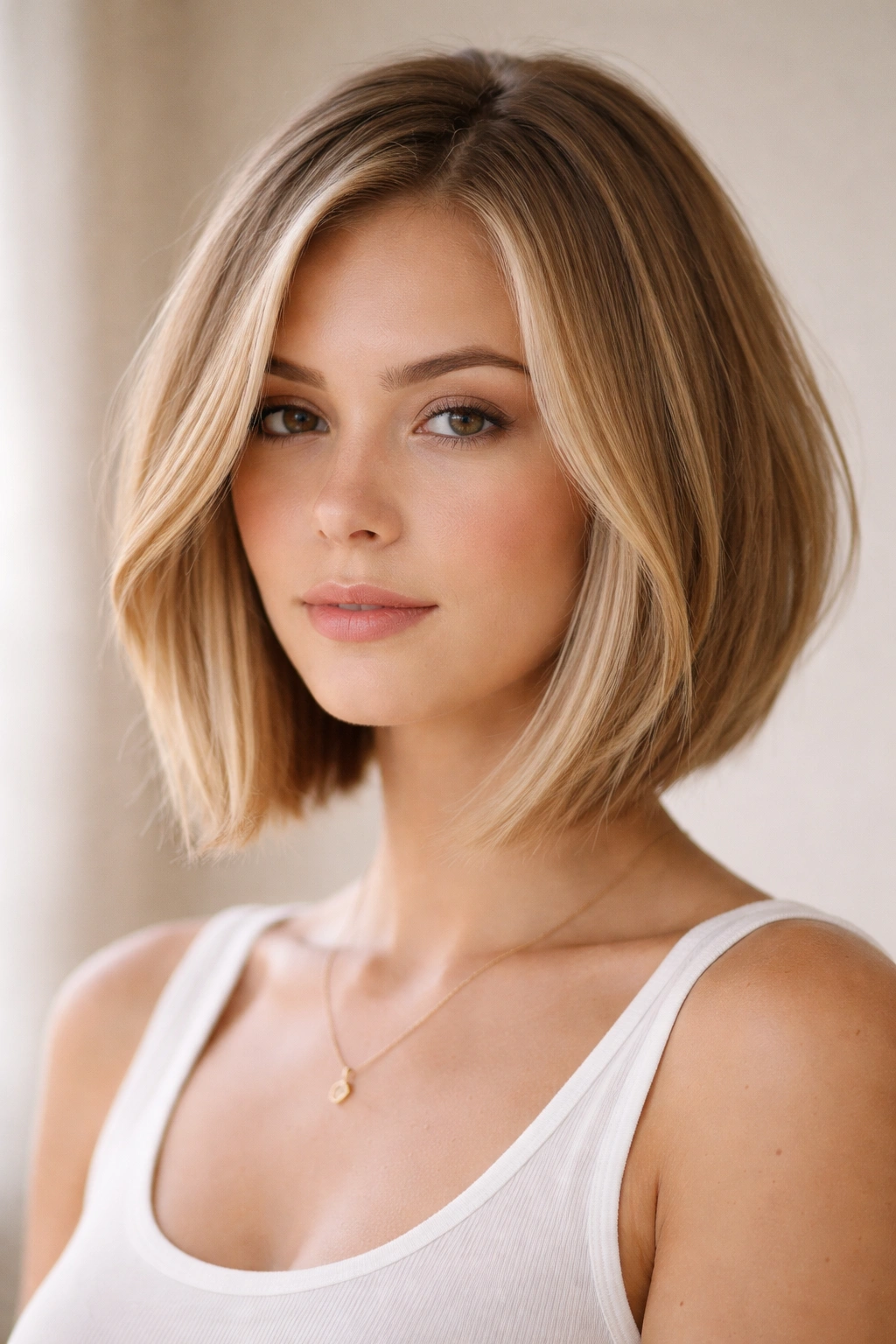
An A-line bob does not have to look severe. If the angle is gentle, the back can sit a little shorter while the front drapes forward by an inch or two, and the whole thing stays calm. On dirty blonde hair, that sloping shape gets softened by the color itself, especially if the front pieces are a touch lighter than the nape.
The shape is useful when you want structure but don’t want a blunt, same-length finish. It works nicely for rounder faces because the front pieces create a vertical line without making the cut feel harsh. It also helps if your hair flips at the ends, since the angle gives it a direction instead of letting it wander wherever it wants.
Face-framing pieces matter here, but they should be subtle. I’d ask for cheekbone-skimming strands, not dramatic front layers. Too much framing turns the bob into something busier than it needs to be. A quiet A-line is better.
Quick details to ask for:
- A back length that sits just above the nape.
- Front pieces that hit somewhere between the chin and jaw.
- Soft point-cutting at the ends so the line doesn’t feel sharp.
- Beige blonde ribbons near the face, kept fine and narrow.
The finish should feel like a small angle, not a statement. That’s the difference.
5. Textured Shag Bob With Air-Dried Ends
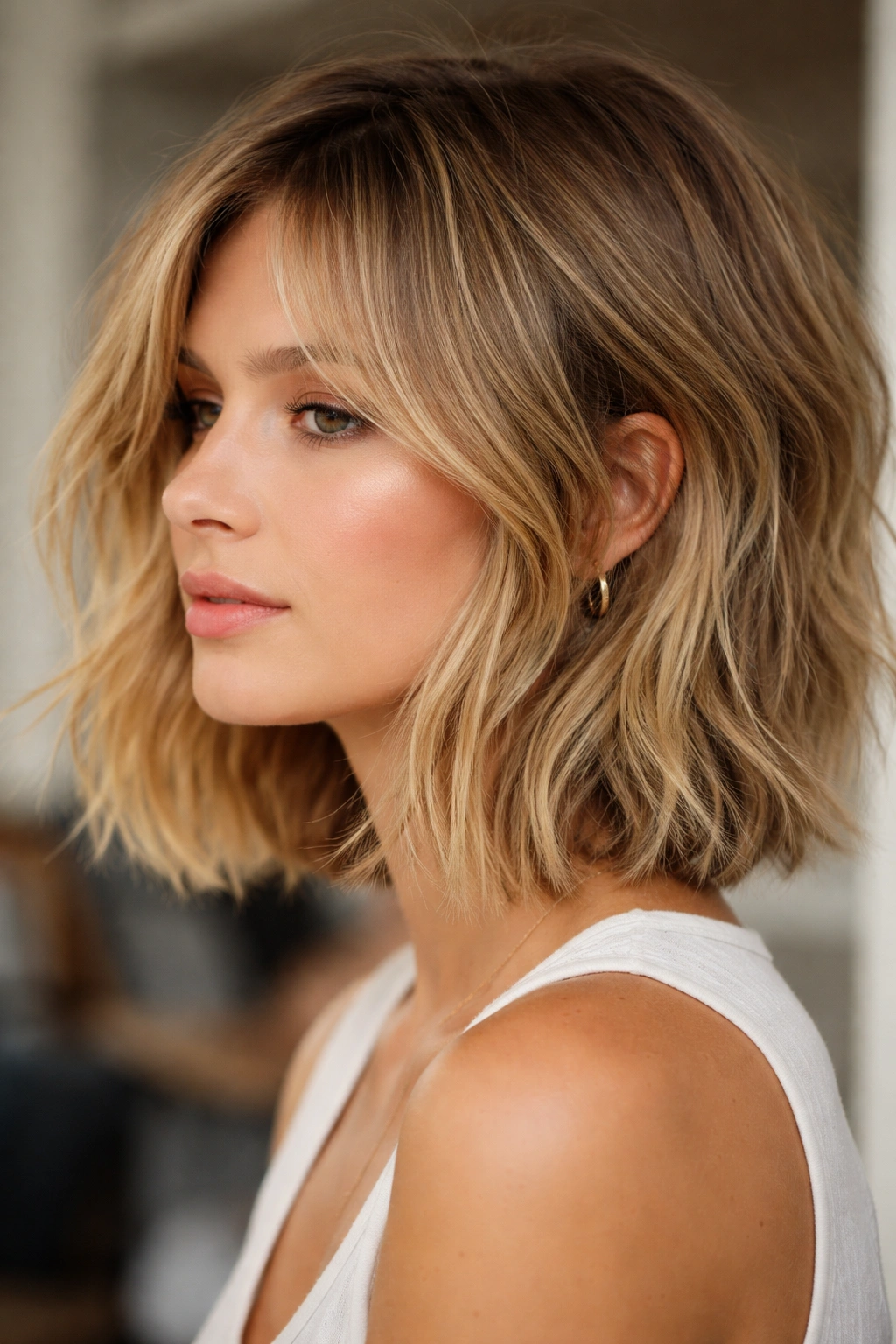
Run your fingers through a textured shag bob and you can feel the ends separate before you even see them. That little piecey movement is what keeps the style from turning heavy. On dirty blonde hair, the texture shows up more clearly because the color changes just enough between root, mid-length, and end to make the cut look lived in.
I’ve always liked this one for people who don’t want to fuss with a round brush every morning. The shag bob leans into what the hair already wants to do. Slight wave? Good. A bit of frizz? Fine, if you keep the cut soft and the styling cream light. The key is not to over-layer it. Too many choppy sections and it starts feeling dated fast.
A light mousse through damp hair gives it support without stiffness. After that, scrunch in a small amount of wave cream, then let it air-dry or diffuse on low heat. Once it’s dry, separate the ends with a drop of serum. That final step matters because shaggy texture can look dusty if the ends are dry and rough.
No helmet hair. No crisp shell. Just movement.
This is the cut I’d choose for someone who likes a little mess in their finish and does not want to fight a brush every day. The low-key part comes from the shape looking casual even when it’s cut carefully. That’s a good trick.
6. Side-Part Bob With Lift at the Crown
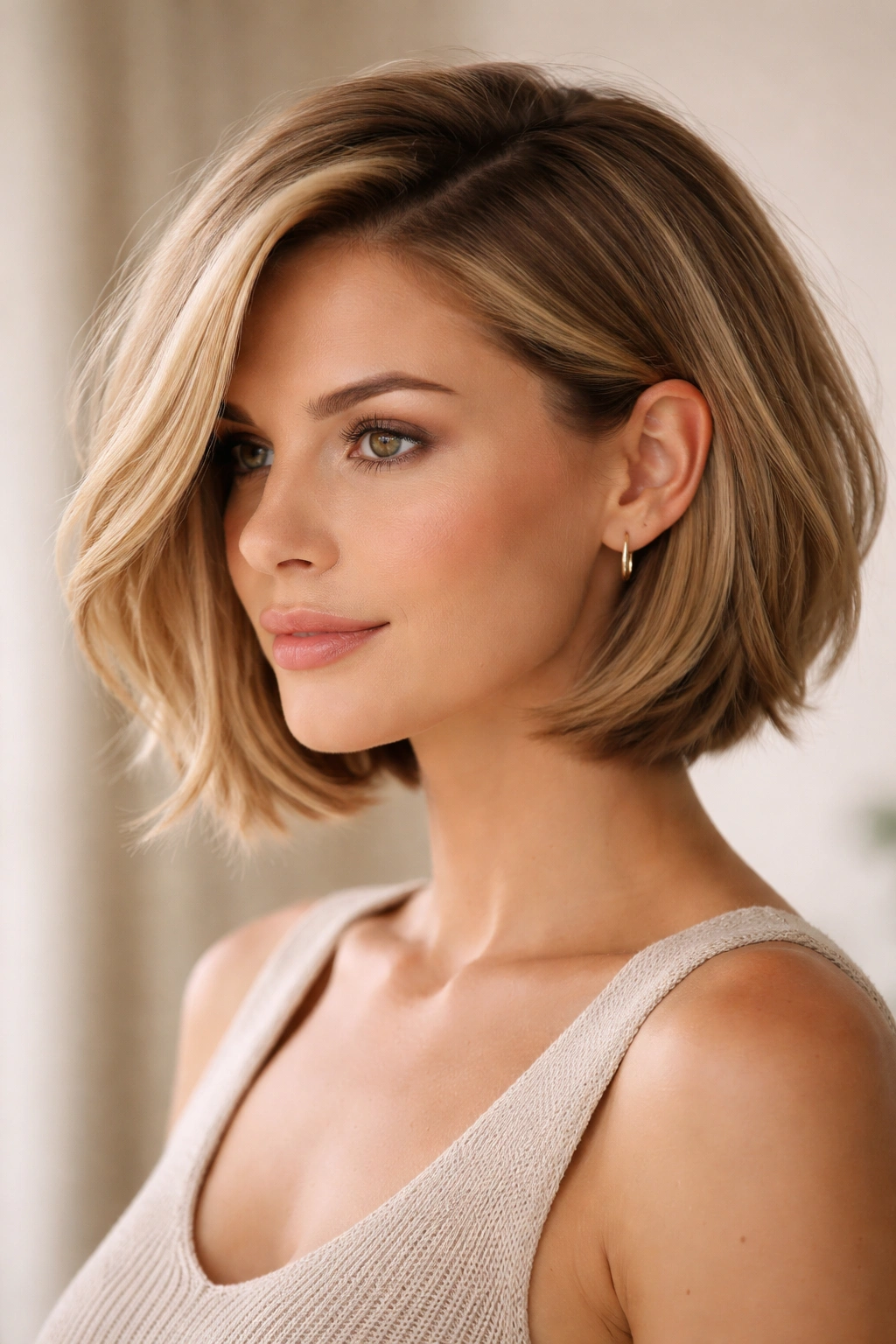
A side part changes the whole mood of a bob. It gives dirty blonde hair a bit of shadow at the root and a softer line through the face, which keeps the cut from feeling too neat. Compared with a center part, it looks less formal right away. Sometimes that tiny shift is enough.
This style is especially good if your hair falls flat on top. Moving the part one inch off center creates a natural lift at the crown, and that lift makes the blonde pieces around the face stand out without screaming for attention. It’s also useful if you want the bob to feel a little grown-up instead of severe. A clean middle part can be gorgeous, but it does not suit everyone’s face or hairline. Simple truth.
What to Ask For
- A bob that hits between the jaw and the top of the neck.
- A soft side part, not a deep flip-over part.
- Light interior texturing near the crown for lift.
- Narrow face-framing highlights, kept a shade or two lighter than the base.
If your hair is pin-straight, set the crown with a velcro roller while it cools or clip it up for a few minutes after blow-drying. That tiny bit of memory helps the part hold. If you tuck one side behind the ear, the shape looks even calmer.
Best of all, this cut forgives the days when your styling is lazy. It still lands.
7. Curly Bob With Diffused Layers
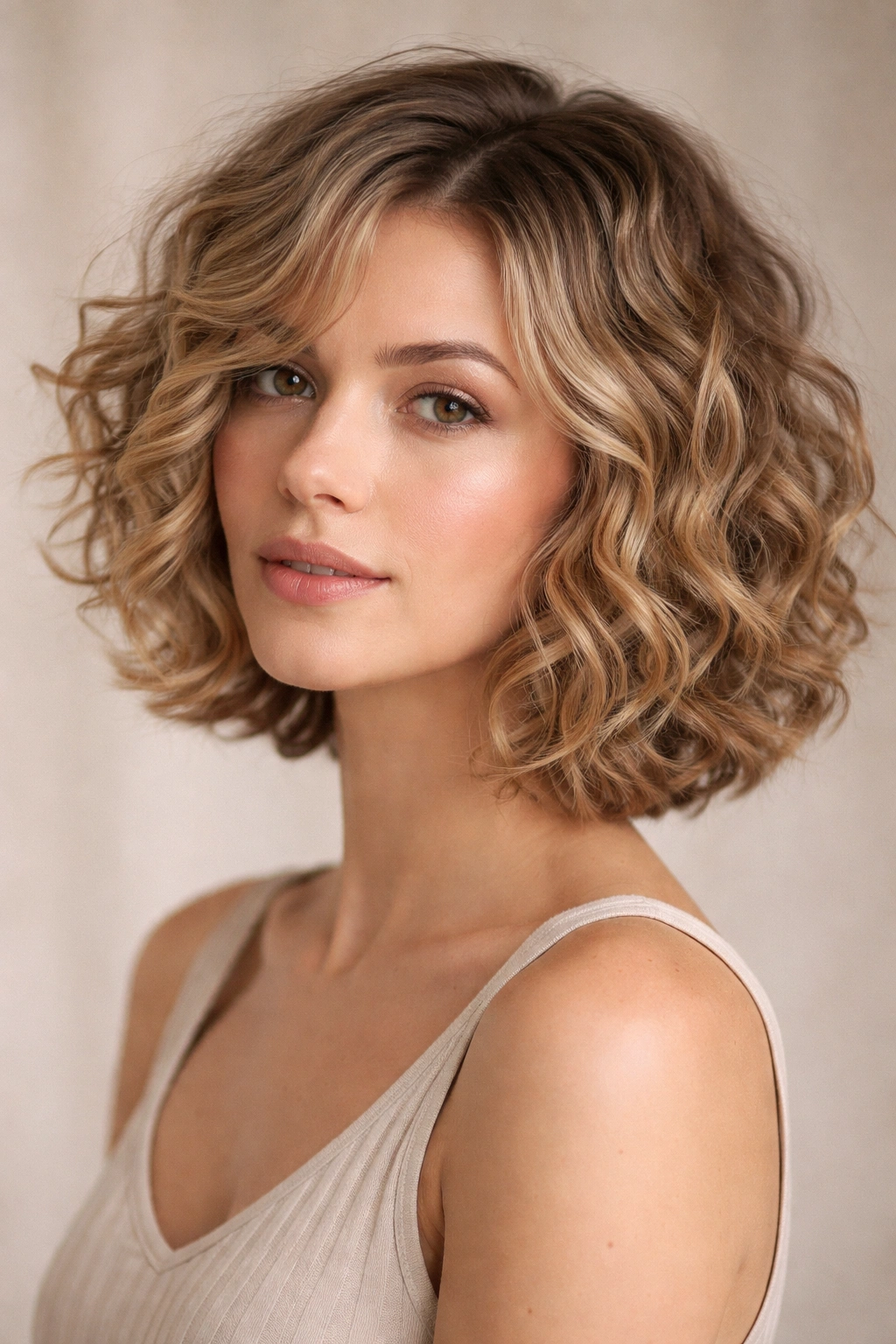
What happens when curls meet dirty blonde color in a bob? The shape gets interesting fast, but only if the layers are handled with restraint. Curly hair needs room to bounce. If the cut is too short at the crown, you get a triangle. If it’s too long and heavy, you lose the curl pattern. The sweet spot sits in the middle, and it’s worth being picky about.
I’d ask for layers that start below the cheekbone so the curl stack doesn’t puff out around the temples. That leaves the top smoother and keeps the width lower on the head, which is more flattering on most faces. Dirty blonde helps here because the color breaks up the curl clumps just enough to show shape without making every spiral look stiff.
The best styling combo is a curl cream plus a light gel, applied to soaking-wet hair. Scrunch with a microfiber towel, then diffuse on low heat until the hair is about 90 percent dry. Don’t keep touching it. That’s how you lose the curl definition and invite frizz to the party.
A few lowlights can make the whole cut look calmer, too. Not dark stripes. Just enough depth to keep the blonde from flattening out.
The Curl-Specific Part
If your curls shrink a lot, ask your stylist to cut the bob dry or nearly dry. Wet curls lie to you. They always do. Dry cutting gives a better read on where the line will actually sit once the hair springs back.
8. Stacked Nape Bob With Soft Graduation
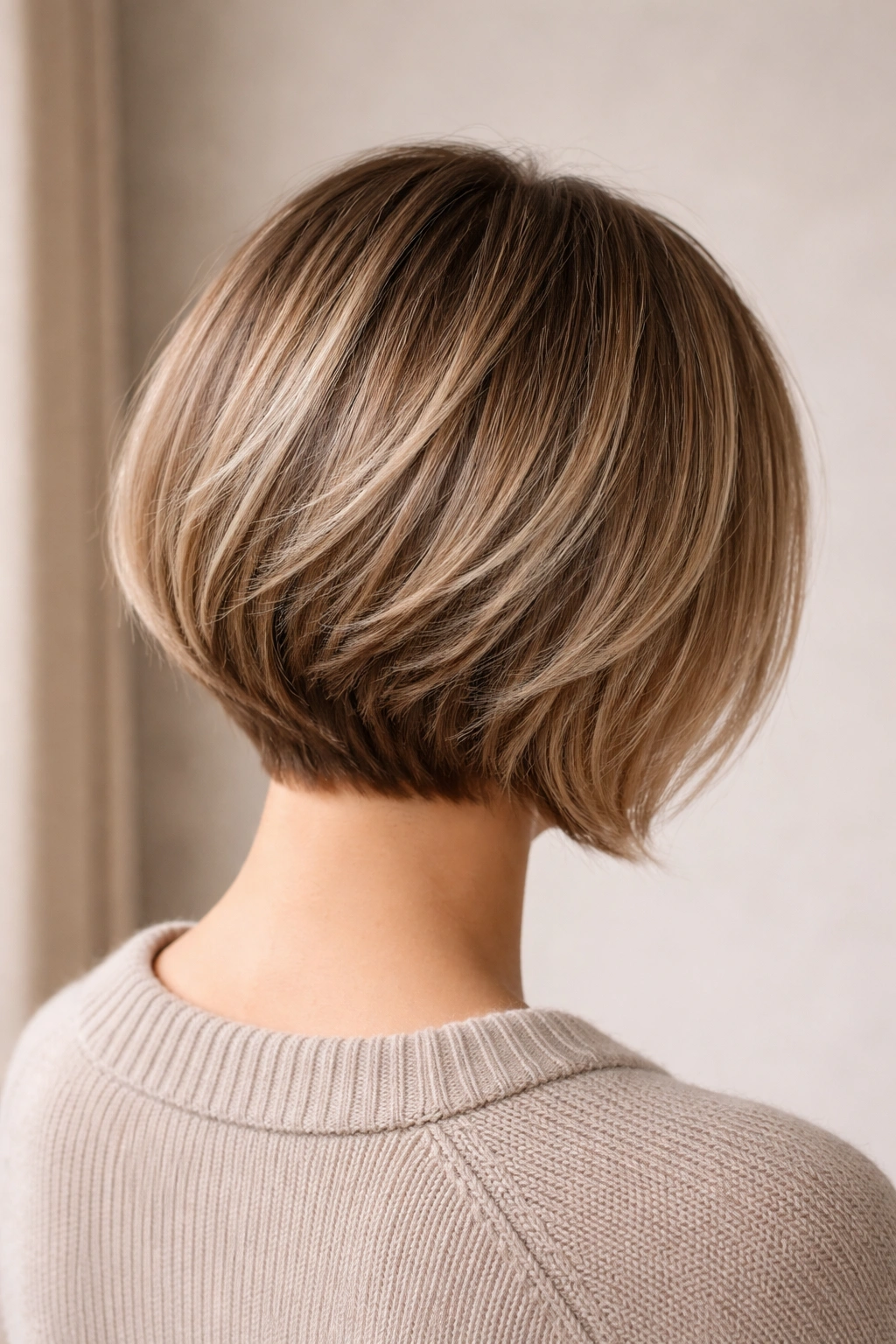
A stacked bob can look low key if the graduation is subtle. People hear “stacked” and picture the old, overbuilt shape with a sharp shelf at the back. That is not what this needs. A softer version keeps the nape neat, removes bulk where thick hair tends to balloon, and leaves the top with enough length to fall naturally.
Dirty blonde color helps tame the geometry. A softer root and a few narrow highlights around the crown break up the line of the cut, so the stack feels smooth instead of architectural. This is a smart choice for thick hair that keeps flipping out at the back of the neck. A little internal lift there can be a relief.
Good Signs to Ask For
- A nape that is clean but not shaved short.
- Graduation measured in small steps, not dramatic jumps.
- Longer crown layers that let the top blend into the back.
- Soft beige highlights that stay narrow and fine.
One of the mistakes people make with this shape is asking for too much height in the back. Then it starts looking like a helmet. Keep the stack gentle. You want the hair to curve, not perch.
This cut also plays well with a smooth blowout. A round brush at the nape and crown gives the back some polish, while the front can stay a little loose. That contrast is what keeps the whole thing from feeling stiff. Small detail, big difference.
9. Blunt Wavy Bob With Barely-There Highlights
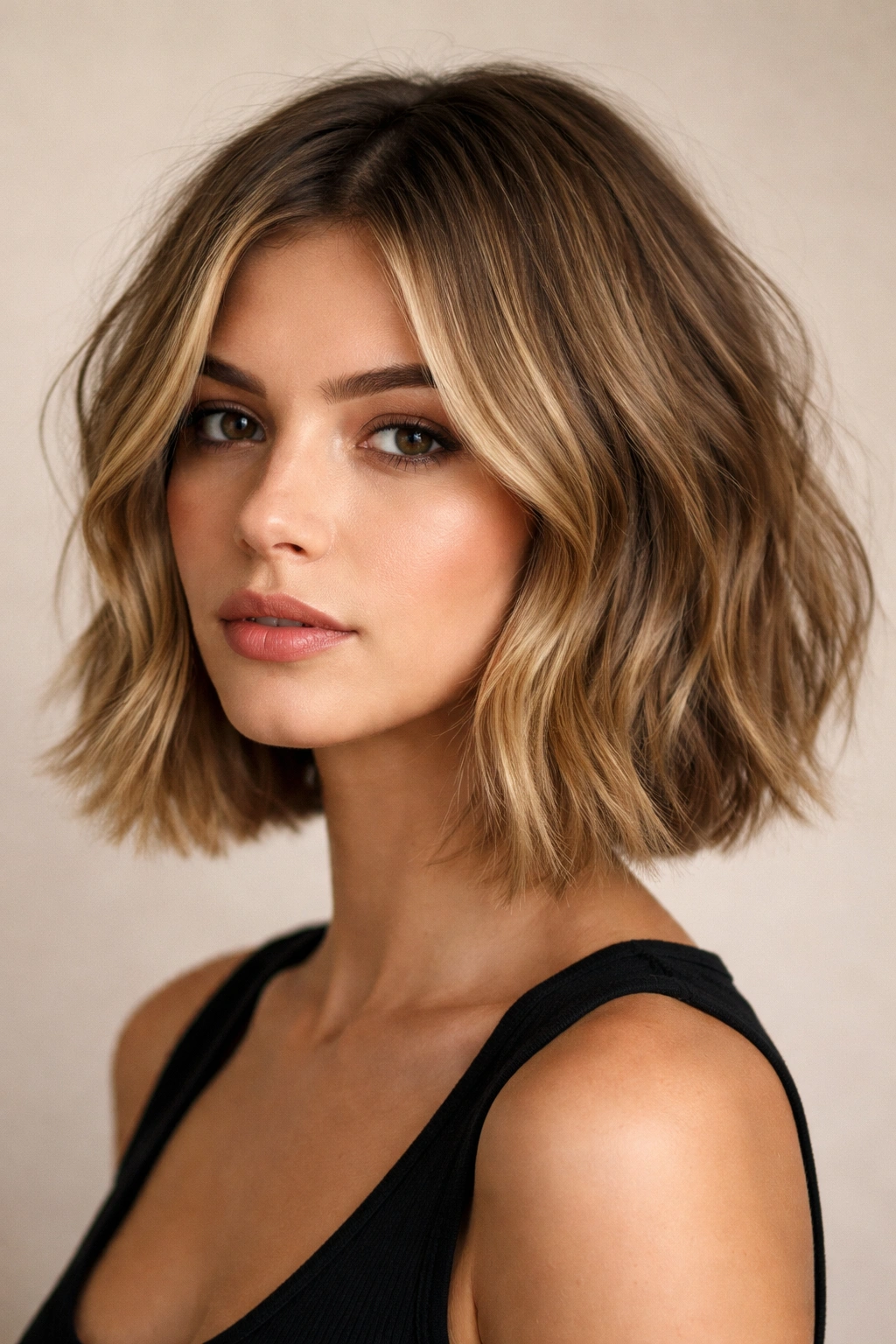
Picture a blunt bob that bends at the ends and still moves when you do. That’s the charm here. The perimeter stays solid, which gives the haircut weight, but soft waves and tiny highlights keep it from feeling like a block. On dirty blonde hair, that mix can look very easy, almost casual in the best way.
The highlights should be shy. I mean it. Thin ribbons around the temples, a few pieces through the ends, maybe one or two lighter strokes near the part. Nothing chunky. The point is to make the bob look sun-kissed in a muted way, not like you were chasing contrast. If the blonde goes too bright, the blunt line loses its quiet feel.
This style works well on medium hair because the blunt ends keep the shape visible even when the waves are loose. If your hair is fine, don’t over-texturize it. You need the edge to stay full. A wave spray and a light bend from a flat iron are enough. If the waves look too polished, run your fingers through them once they cool.
It’s a good everyday cut for people who want some movement without layers everywhere. The whole thing feels steady. Clean, but not strict.
And yes, it can grow out nicely. That matters more than people admit.
10. Dirty Blonde Bob With Curtain Bangs and Beige Ribbons
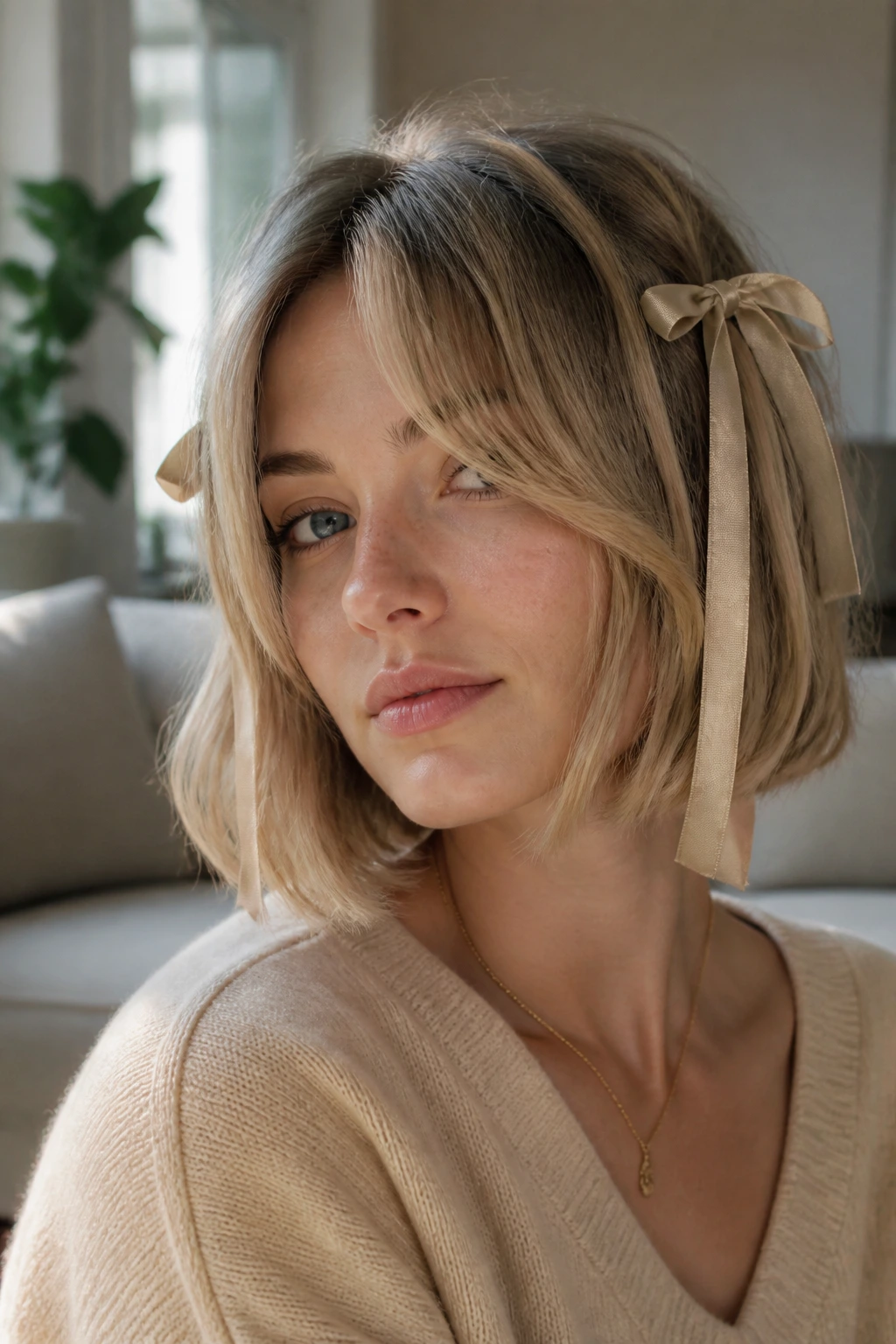
If you want the calmest version of the whole idea, start here. Curtain bangs soften the forehead, the bob keeps the shape grounded, and beige ribbons around the face give the color interest without making it loud. This is the cut I’d point someone toward if they want dirty blonde to read soft instead of bright.
The bangs should be longer than you think. Let them hit around the cheekbone so they can split in the middle and fall away from the face. If they’re too short, the whole style starts feeling playful in a way that may not match the rest of your look. Longer curtain bangs blend better into a bob and give you more ways to wear the hair tucked, parted, or pulled half back.
The color should stay low contrast. A soft root, cool-beige mids, and a few brighter threads only near the front are enough. You do not need a lot of blonde to make this work. In fact, too much light breaks the quiet feel that makes the style good in the first place.
For styling, I’d use a round brush only on the bangs and front corners, then let the rest air-dry with a touch of smoothing cream. That keeps the shape airy without making it precious. If your hair has a bend already, even better. Leave some of it alone.
The quietest bob usually wins. Not the brightest one.
