



A hush cut bob never tries too hard, and that is exactly why people keep coming back to it. The shape has that soft, air-spun feeling that makes hair look touched, not teased, with movement that falls in pieces instead of sitting in one hard block. If you like hair that looks a little undone in the best way, a hush cut bob is one of those cuts that does most of the work for you.
What sets it apart from a blunt bob is the way the layers are handled. They’re usually tucked inside the shape, point-cut at the ends, and blended so the outline still feels like a bob, not a shag that wandered off. That matters. Too much layering and the whole thing turns wispy in a bad way; too little and you lose the softness that makes this haircut worth wearing.
It also plays nicely with real life, which is the part a lot of hairstyle photos skip over. Some hair wants to puff. Some hair bends at the ends and refuses to stay sleek. Some hair looks best after a quick blow-dry with a round brush and a mist of texture spray, then being left alone. The hush cut bob works with all of that instead of fighting it.
The trick is choosing the right version for your texture, length, and face shape. A chin-length hush bob can look crisp and airy. A collarbone version feels softer and easier to grow out. A curly one needs a different hand entirely. The cut has range, and the fun part is picking the version that fits how you actually wear your hair.
1. Chin-Length Hush Cut Bob with Airy Ends
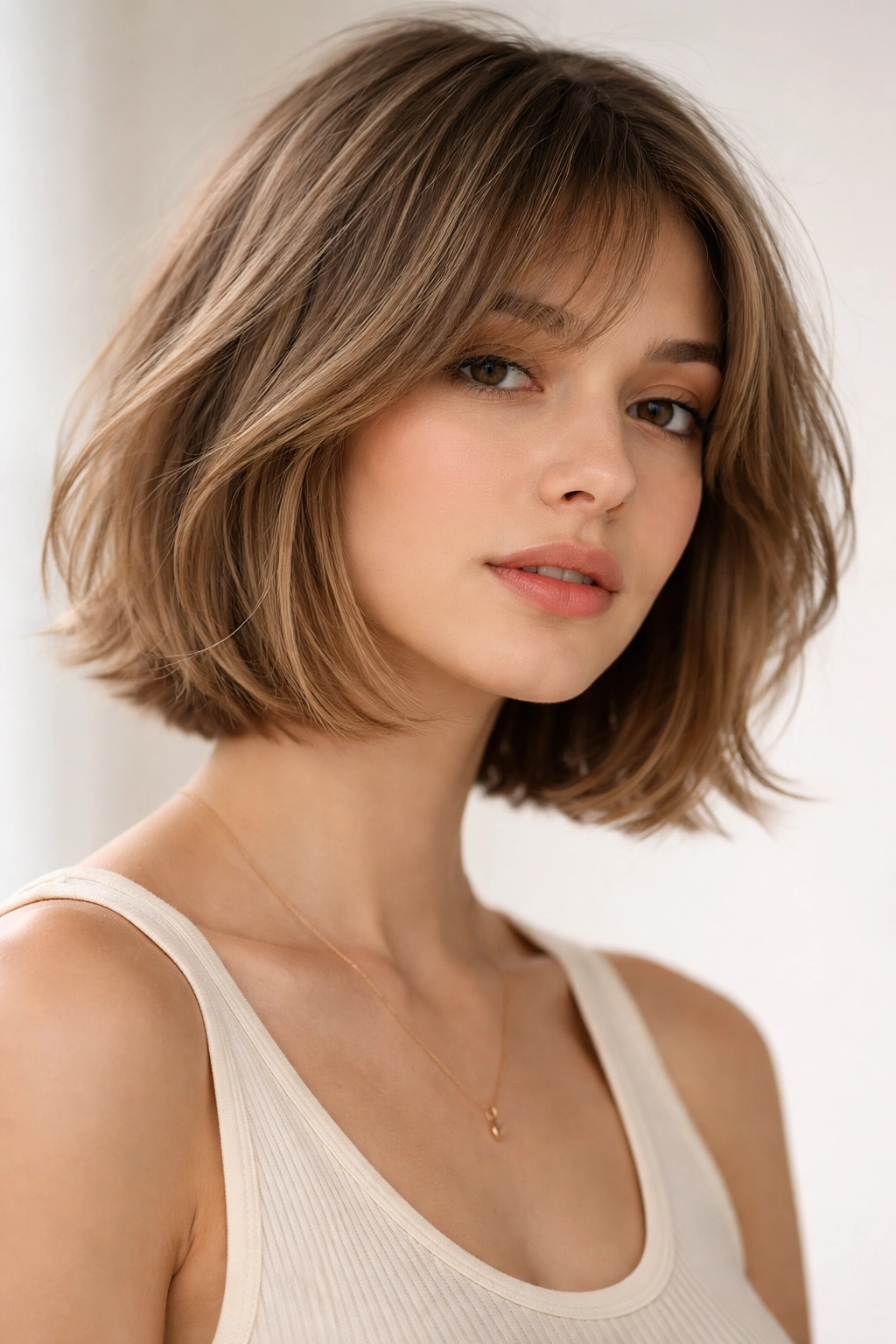
This is the cleanest place to start if you want the hush cut bob to feel fresh but not fussy. The chin-length version sits right at that sweet spot where the haircut still reads as a bob, yet the soft ends keep it from looking boxy or severe. It’s a nice move for fine hair, especially when you want a bit of movement without giving up the sense of fullness at the perimeter.
Why the shape works
At chin length, the hair hits a part of the face that naturally draws attention upward. That means the ends can do less work. A little bend at the bottom is enough. Ask for point-cut ends and a few internal layers that remove bulk without carving holes through the outline.
- Best for fine to medium hair
- Looks good with a middle part or a soft off-center part
- Needs only a small bend at the ends
- Usually works well with a 1-inch curling iron or flat iron wave
My favorite detail: keep the lower edge soft, not chopped. That’s what gives this version its easy, lived-in feel.
2. Collarbone Hush Cut Bob with Curtain Bangs
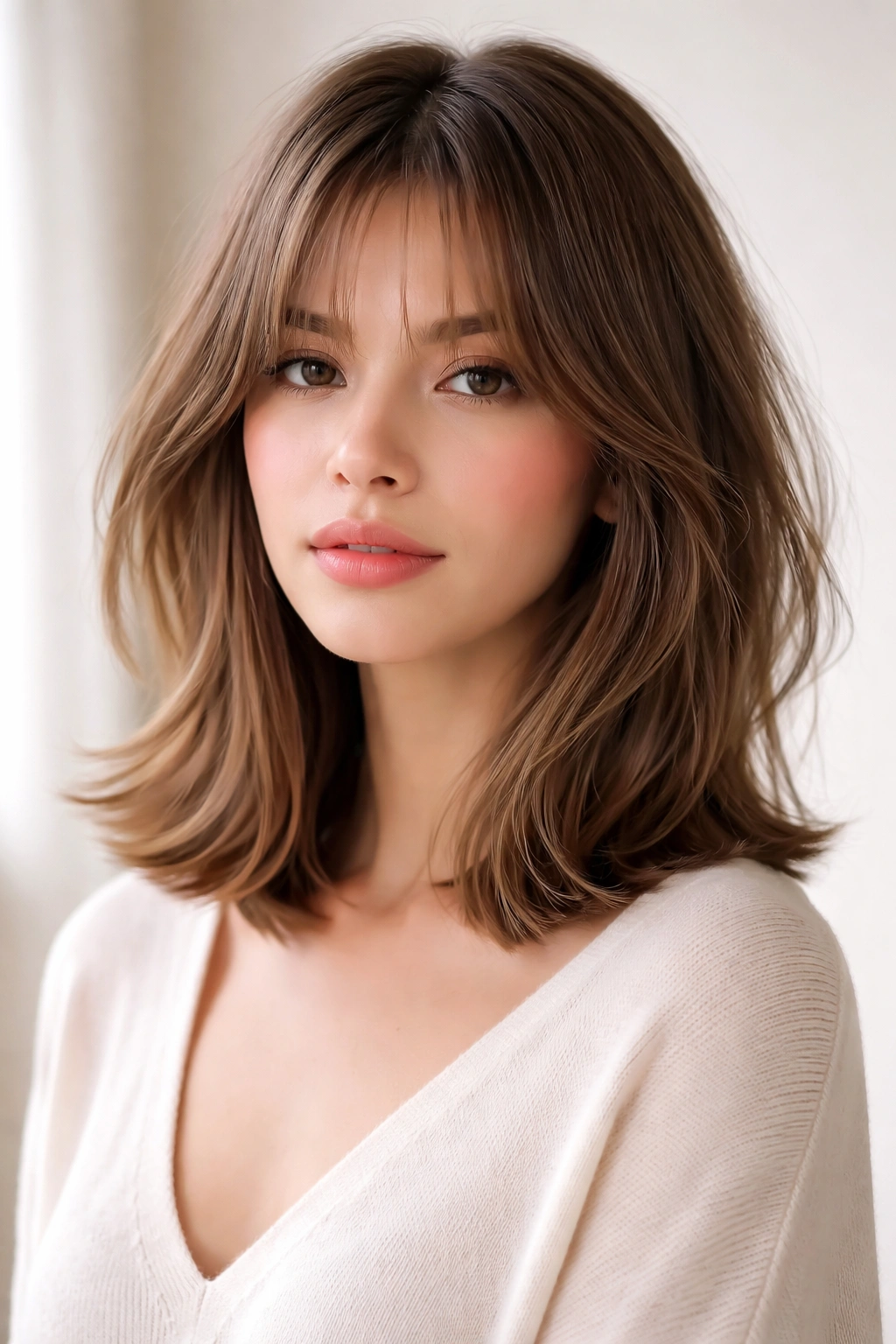
Why does this version keep showing up in good salons? Because it solves two problems at once. The length feels long enough to tuck behind the ears, but short enough to keep the shape light, and the curtain bangs pull the whole look together without making it feel heavy around the forehead.
A collarbone hush cut bob is probably the most forgiving option if you’re nervous about going short. It grows out well, it can be worn wavy or smooth, and it doesn’t punish you on the days you do almost nothing to it. That is a large point in its favor.
Where the bangs should start
The bangs should not be cut like a straight fringe. That’s the wrong energy here. Ask for curtain bangs that begin around the eyebrow arch, then open out toward the cheekbones so they blend into the front layers. If they’re too short, the whole cut starts looking jumpy. If they’re too thick, the softness disappears.
A good stylist will leave the front pieces long enough to sweep away from the face and still tuck into the rest of the cut. That blend is what makes it look expensive, even when the styling is nothing more than a rough blow-dry and a bit of smoothing cream.
3. Wavy Hush Cut Bob with Piecey Layers
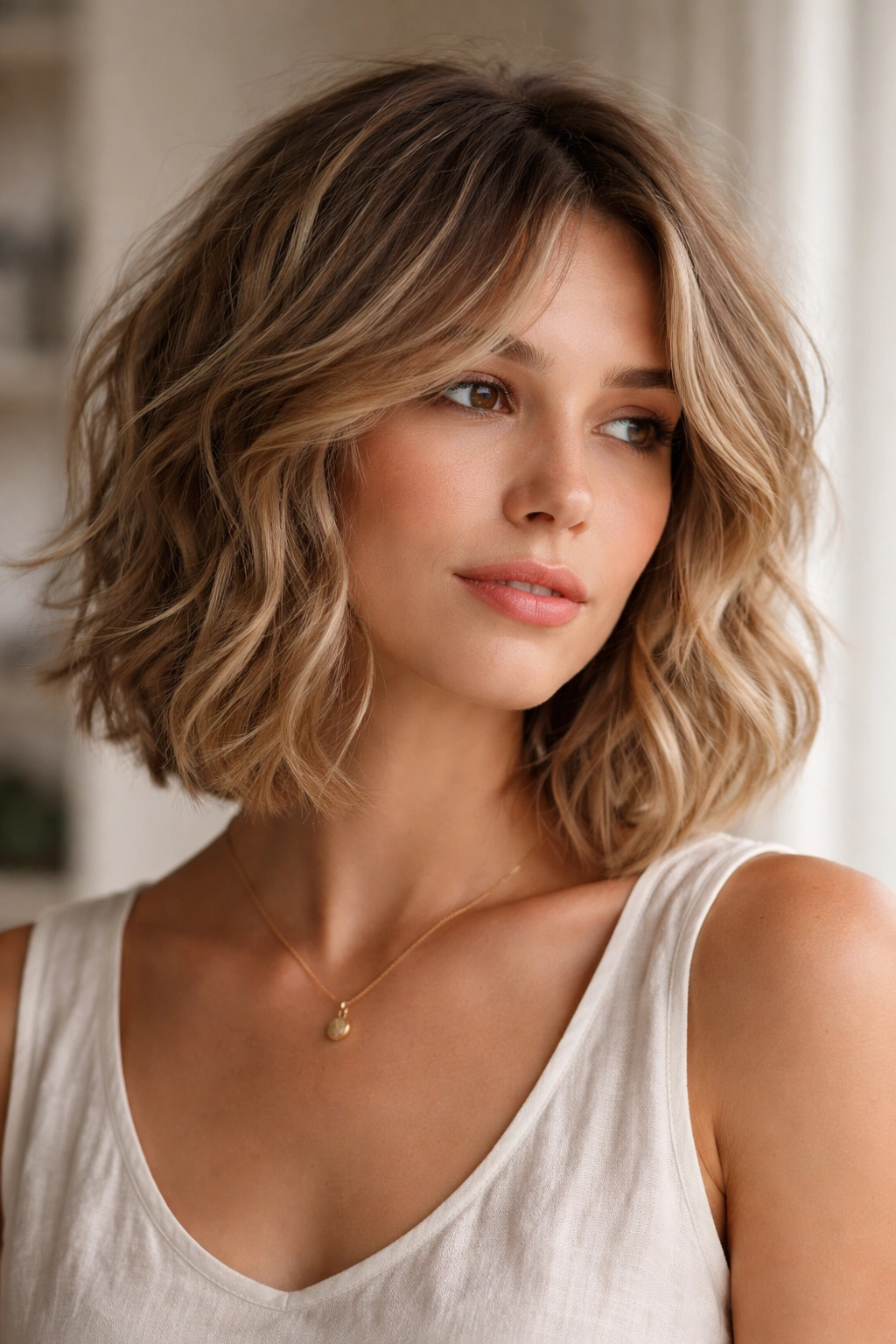
Not every bob needs to behave. Some of the prettiest hush cut bobs look better when they’re a little rough around the edges, and a wavy version is where that idea makes sense. The piecey layers help the wave pattern show up instead of getting flattened into a helmet shape.
There’s a big difference between “undone” and “messy.” This haircut lives in the first camp. The ends should separate into soft ribbons, not frizz into random fluff, and the crown should still have enough weight to keep the shape anchored.
A little sea salt spray goes a long way here. So does scrunching with a cream that has some slip. Too much product makes the hair collapse. Too little and the layers can look dry. That balance is the whole game.
How to style it without overthinking
- Mist on a light wave spray while the hair is damp
- Scrunch from the ends up toward the cheekbones
- Air-dry about 80 percent of the way
- Finish with a few bends from a curling wand, leaving the ends out
The best version of this cut never looks overbuilt. It looks like your hair decided to fall nicely on its own.
4. French-Inspired Hush Cut Bob with a Soft Fringe
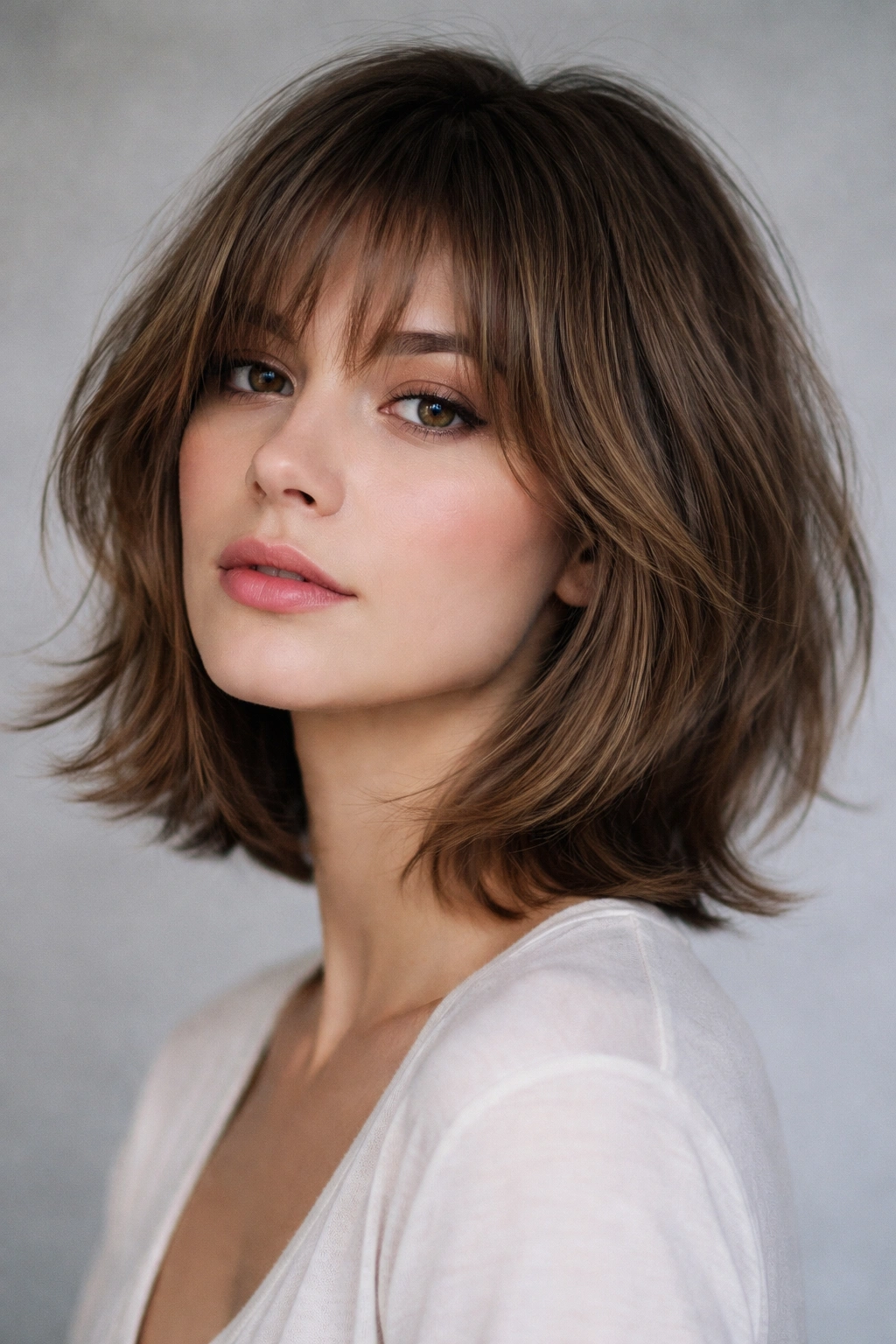
You know the look the second you see it. The hair skims the jaw, bends a little at the cheekbone, and the fringe lands softly instead of shouting for attention. That’s the French-leaning hush cut bob, and it has a charm that’s hard to fake.
This version works because the fringe is gentle, not blunt. A soft fringe brings attention to the eyes and gives the cut a little romantic edge, but it doesn’t box the face in. That matters on shorter bobs, where a heavy bang can make everything feel smaller and more rigid than you wanted.
The fringe sweet spot
The best soft fringe for this cut should feel feathery at the ends and slightly longer at the sides. If it’s too short, you lose the hush part of the haircut. If it’s too heavy, the whole thing starts acting like a helmet with a curtain attached. Not cute.
This is a good cut for people who want their bob to look styled even when they’ve barely done anything. A quick blow-dry with a small round brush, a bit of bend through the front, and you’re done. That’s the appeal. It looks deliberate without feeling stiff.
5. Angled Hush Cut Bob That Still Moves
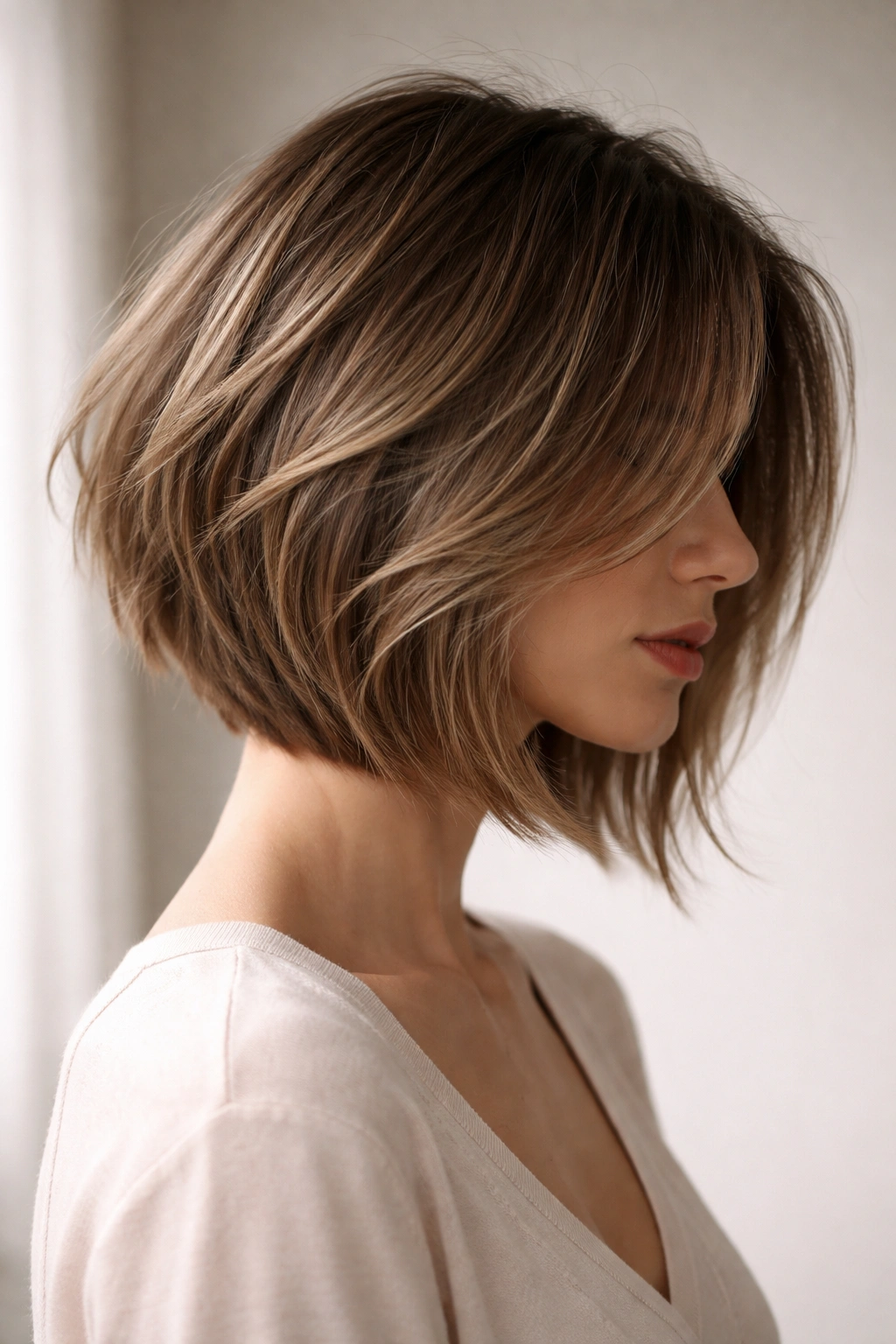
If your hair tends to flip out at the ends, an angled hush cut bob can work with that instead of against it. The back sits a little shorter, the front drifts longer, and the whole shape gets a clean line with a bit of swing. It has structure, but not the frozen kind.
This is one of the best choices for thicker hair that needs weight removed in a smart way. A straight-across bob can feel heavy fast on dense hair. An angled hush cut bob takes some of that bulk out of the picture while still keeping the silhouette sharp enough to read as a real bob.
What to ask your stylist
- Keep the front 1 to 2 inches longer than the back
- Remove bulk under the crown, not from the outer line
- Use soft layering through the mid-lengths only
- Leave enough length to tuck behind one ear
Do not let the angle get too dramatic. A steep angle starts looking dated fast. The point here is a quiet slope, not a stacked wedge from another era.
It’s a strong choice if you want your haircut to have a little attitude while still fitting in at work, at dinner, or anywhere else you’d rather not look like you spent an hour fussing with your hair.
6. Curly Hush Cut Bob with Rounded Layers
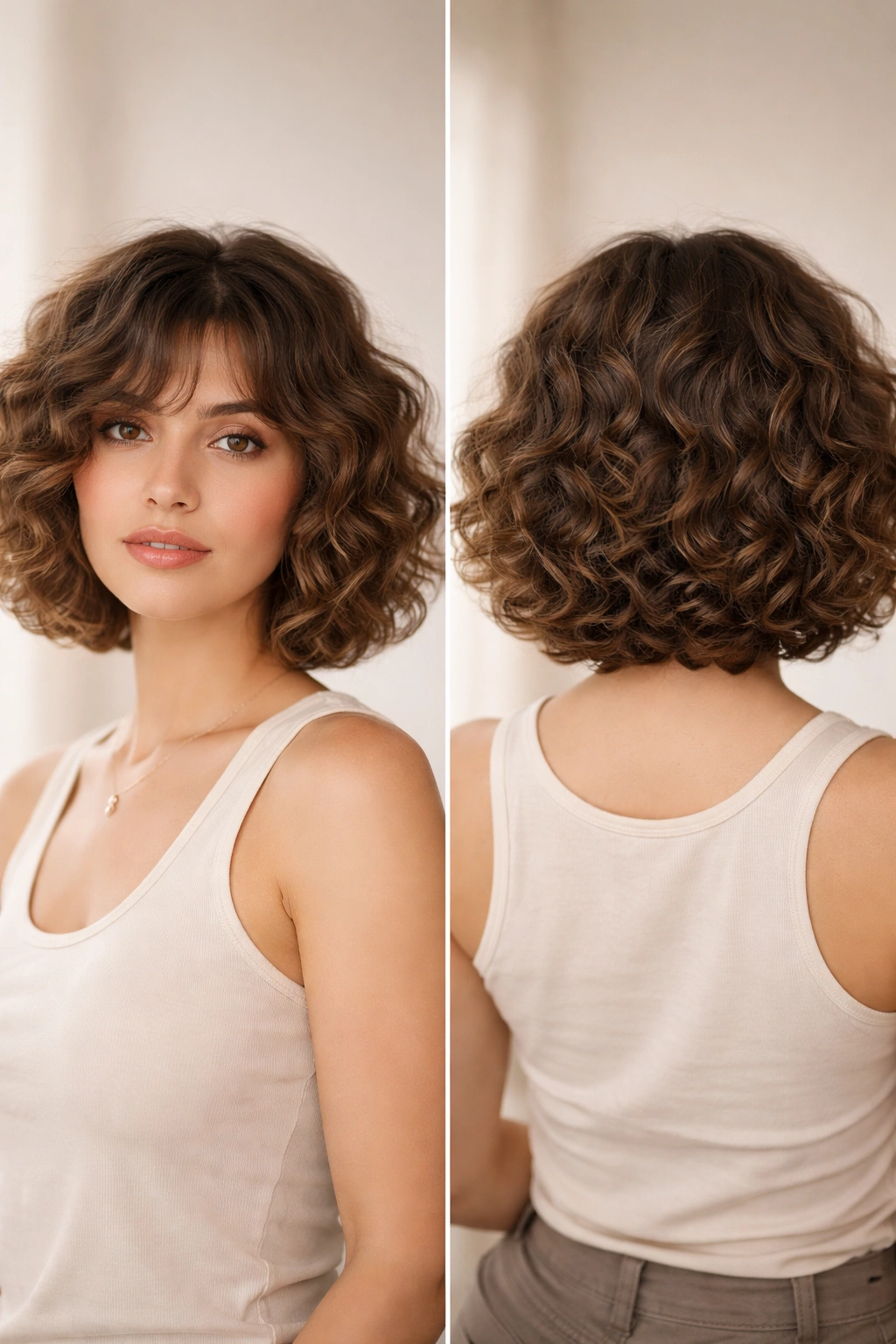
Curly hair and a hush cut bob can be a lovely match, but only if the cut respects the curl pattern. If the layers are hacked in too high, the shape balloons. If they’re too blunt, the curls bunch up at the bottom and the whole thing gets triangular. Neither is the goal.
How the layers should sit
Rounded layers are the move here. They let curls stack in a soft curve instead of forming a shelf. A good curly hush cut bob usually works best when the stylist cuts it with the curls dry or mostly dry, because curly hair changes shape so much as it dries.
That part matters more than people think.
The cut should still have a bob outline at the bottom, but the interior should be light enough for the curls to spring. Ask for face-framing pieces that start around the cheekbone or lower, depending on how much shrinkage your hair gets. If your curls are tight, go a little longer than you think you need. They will shrink. A lot.
Curl care after the cut
A diffuser on low heat helps the shape hold without puffing the cuticle. Use a gel or curl cream while the hair is soaking wet, then don’t touch it much until it forms a cast. Once it’s dry, scrunch the crunch out and let the curls separate softly.
The result should feel bouncy, not puffy. That’s the difference.
7. Blunt Hush Cut Bob with Feathered Ends
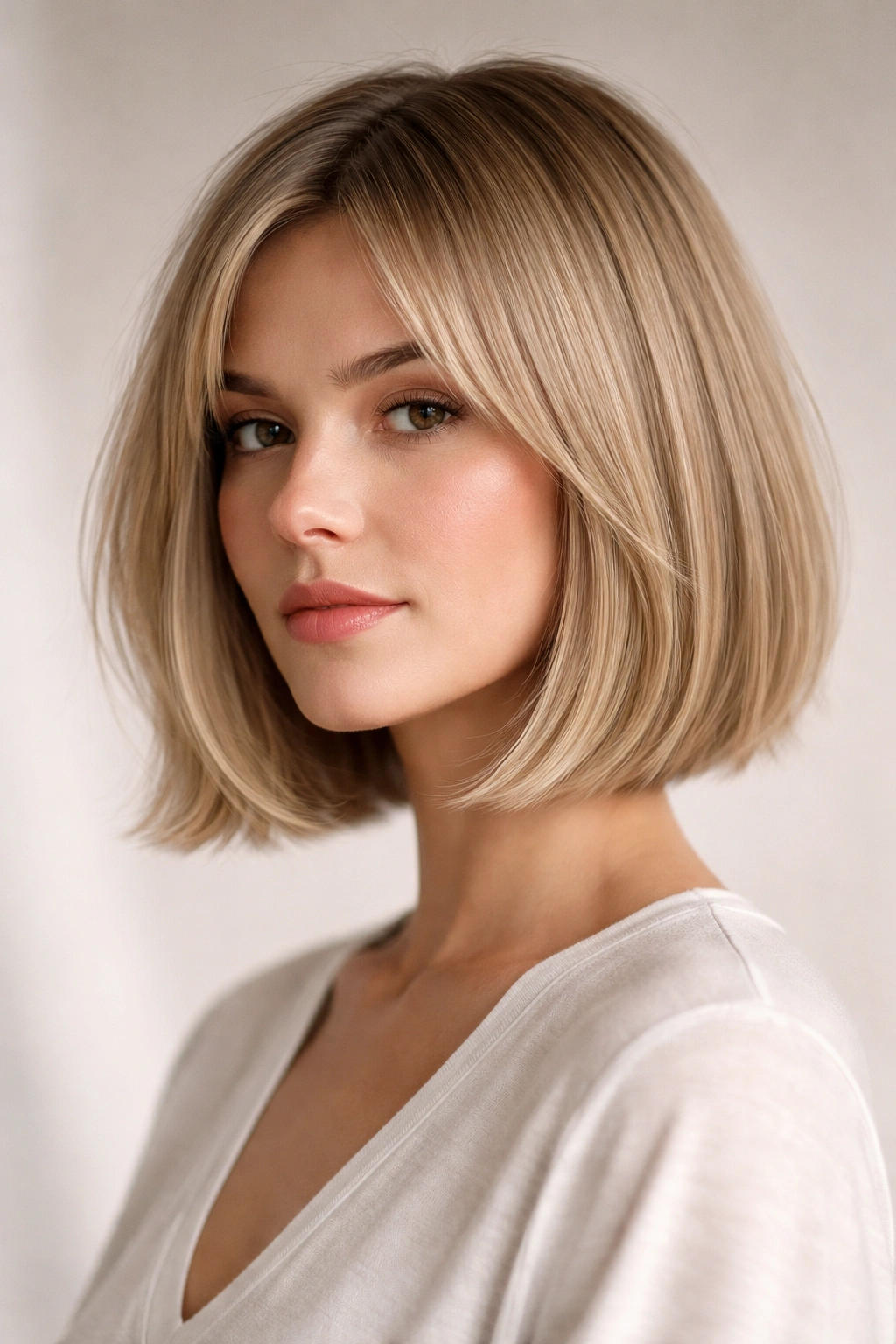
This is the version for people who like a clean edge but still want softness sneaking in under the surface. At first glance it looks blunt. Look closer, and the ends feather out just enough to keep the line from feeling hard.
That combination is harder to cut well than it sounds. If the finish is too soft, the bob loses its shape. If the edge is too blunt, the hush cut disappears. The sweet spot is a neat outer line with a little air moving through the interior.
I like this one for fine hair that needs a bit of visual thickness. A sharply blunt perimeter can make fine hair look fuller, but the feathered ends keep it from feeling severe or flat. It’s tidy. It has restraint. And it doesn’t beg for constant styling.
A light smoothing cream and a round brush are usually enough. You can also bend the ends under with a flat iron if you want a cleaner finish. Keep the movement subtle. A big flip would ruin the point.
8. Side-Part Hush Cut Bob for Extra Lift
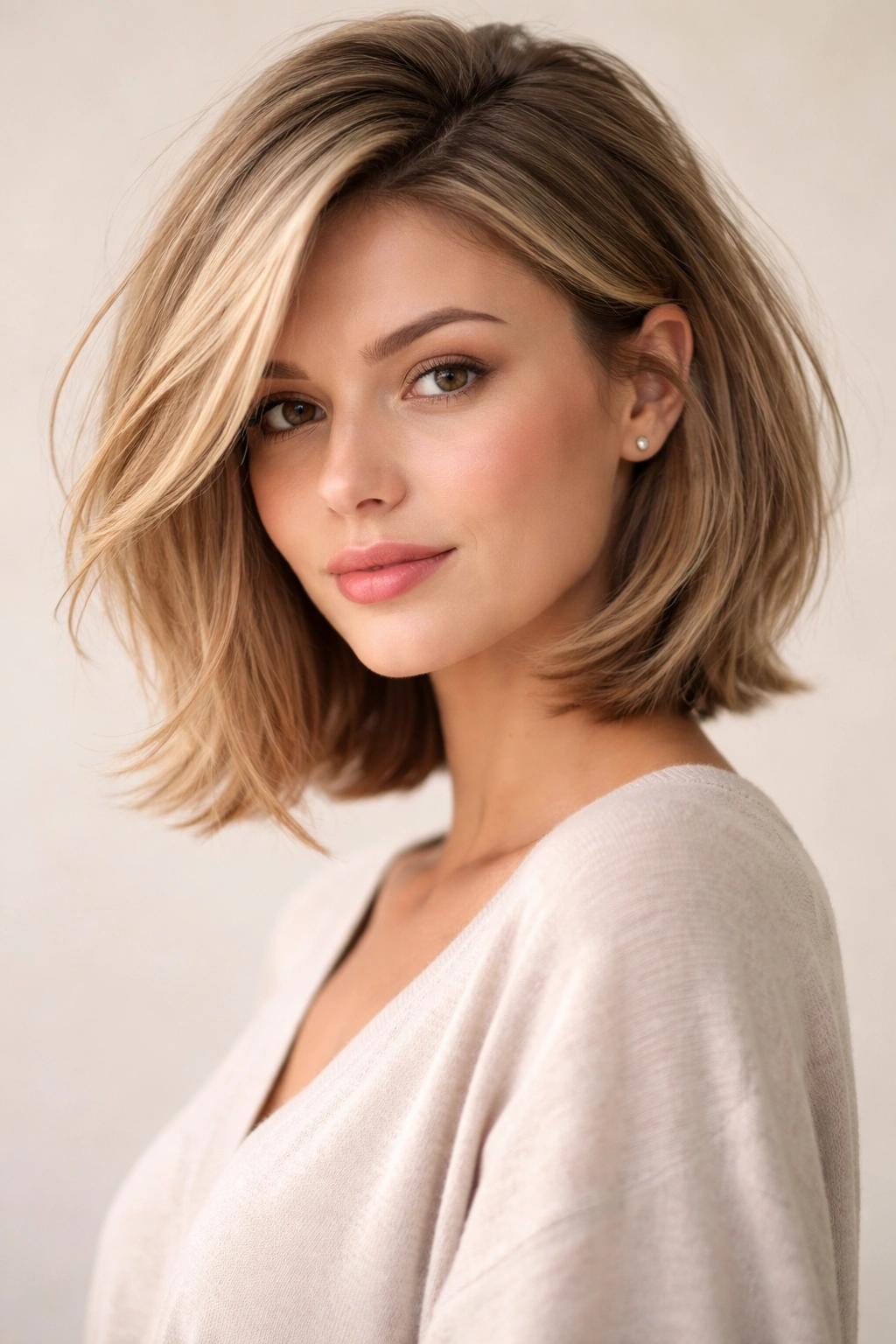
Can a side part change a bob that much? Yes. In a haircut like this, the part line shifts where the weight sits, which can give the crown more lift and make the face-frame fall in a softer, more flattering way. It’s a small adjustment with a surprisingly big payoff.
A side-part hush cut bob is especially useful if your roots go flat fast or your hair tends to settle against the head by lunchtime. The off-center part creates volume at the top without needing tons of teasing or hairspray. Good news if you hate crunchy hair.
Quick things to keep in mind
- Move the part about 1 to 2 inches off center
- Ask for the front layers to start below the cheekbone
- Blow-dry the roots in the opposite direction first
- Finish with a light mist of texturizing spray, not a stiff lacquer
The side-part version also helps soften rounder faces because the diagonal line gives the eye somewhere to travel. It’s not a miracle trick. It just works better than people expect.
And yes, it still counts as lived-in when it looks intentional but not precious.
9. Jaw-Length Hush Cut Bob with Tucked-In Volume
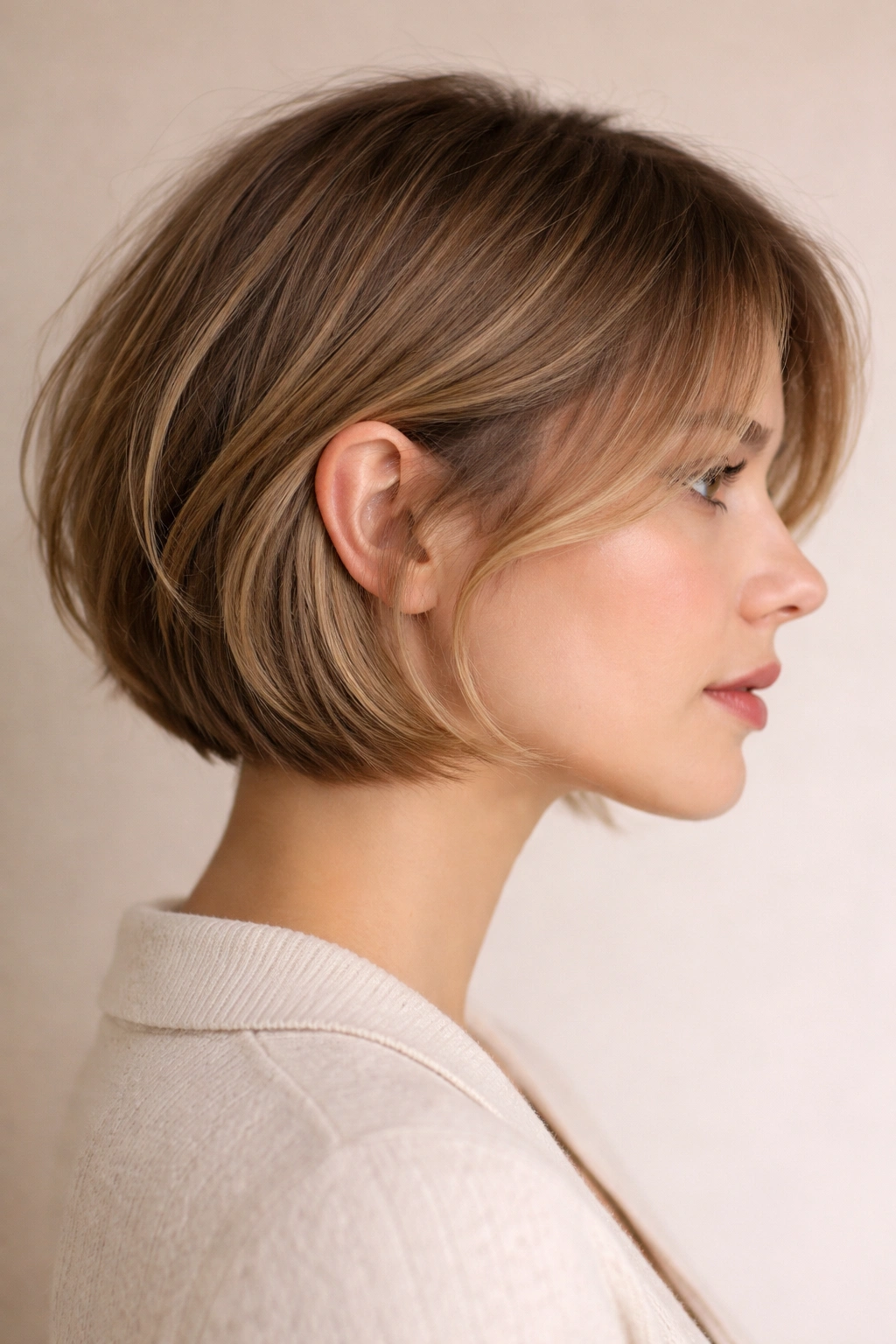
Jaw-length hair has a habit of being either adorable or awkward, and there is not much middle ground. The hush cut bob fixes that by giving the jaw area a little softness and shape instead of letting the cut sit in a hard block right at the widest part of the face.
This length is especially nice if you like tucking hair behind your ears. It shows off earrings, opens the face, and makes the haircut feel less formal. A little tucked-in volume around the sides keeps it from collapsing flat, which is the main thing that can make jaw-length hair feel harsh.
A good salon note to bring up
Ask for a rounded perimeter with soft side pieces that graze the jaw rather than stopping dead on it. That small difference matters. A straight edge at this length can feel abrupt. A softened edge moves better and looks more expensive in motion.
This version can lean feminine, sharp, or cool depending on how you style it. Air-dried and pushed aside, it feels casual. Blown smooth with the ends turned under, it feels polished. Both work.
Short hair should not feel precious. This cut gets that right.
10. Shaggy Hush Cut Bob with Wispy Bangs
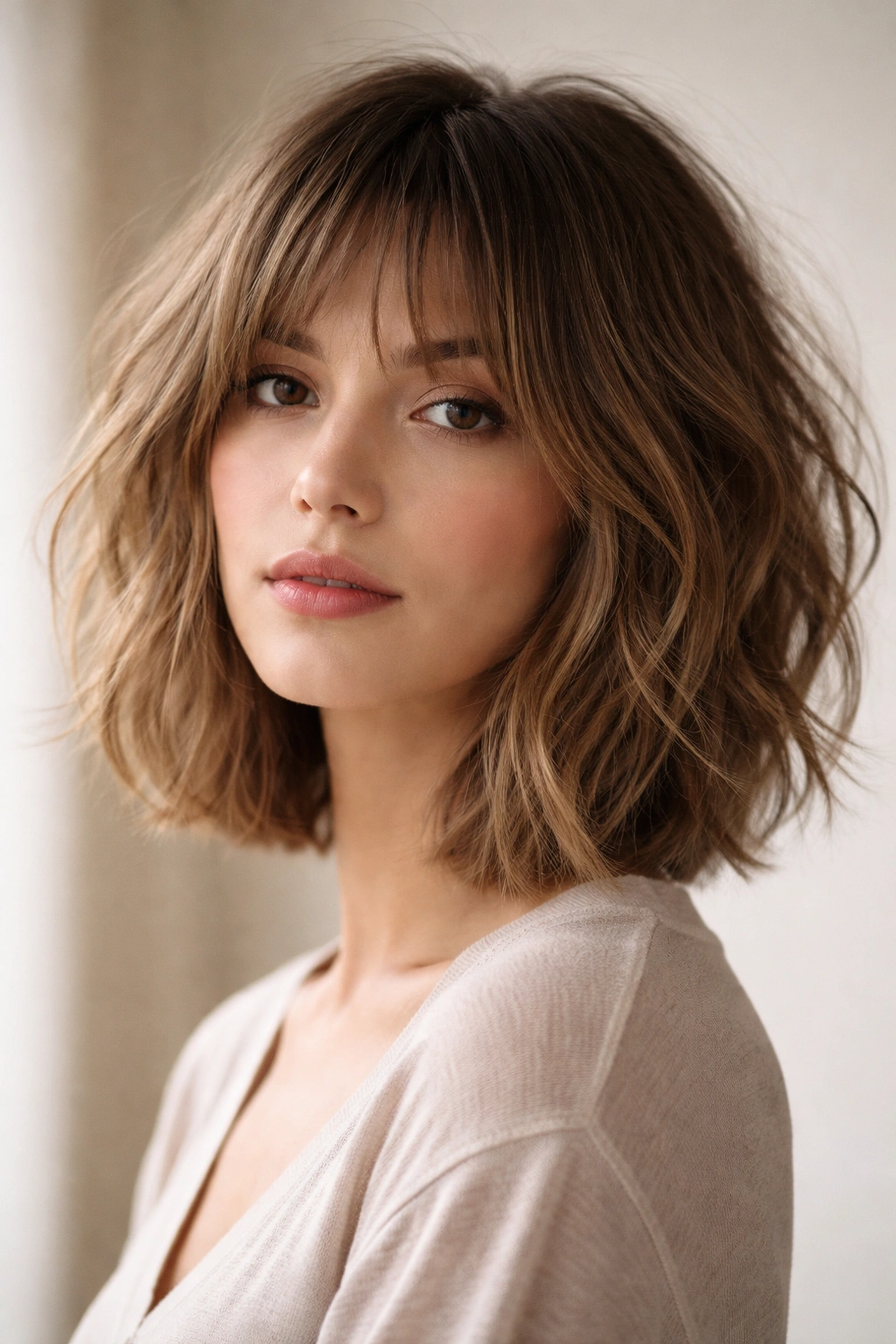
This is the loosest, most undone version in the bunch, and it is not for people who want a neat little shape that stays in line all day. It’s for hair that likes to move. A shaggy hush cut bob with wispy bangs has a little rebellion built in, but it still keeps enough of the bob outline to look intentional.
The bangs matter here. Wispy fringe keeps the forehead soft without cutting a heavy band across the face. If the bangs get too dense, the whole haircut starts leaning toward a shag in a way that can feel messy rather than cool. Keep them light. Keep them broken up.
A little grit helps this style. Texture spray at the roots, a touch of dry wax on the ends, and finger-styling usually beats brushing it into submission. That’s the whole point. Over-smoothing this cut strips away its character.
It’s the one I’d pick for someone who likes hair that looks better after a long day, not worse.
11. Long Hush Cut Bob for Easy Grow-Out
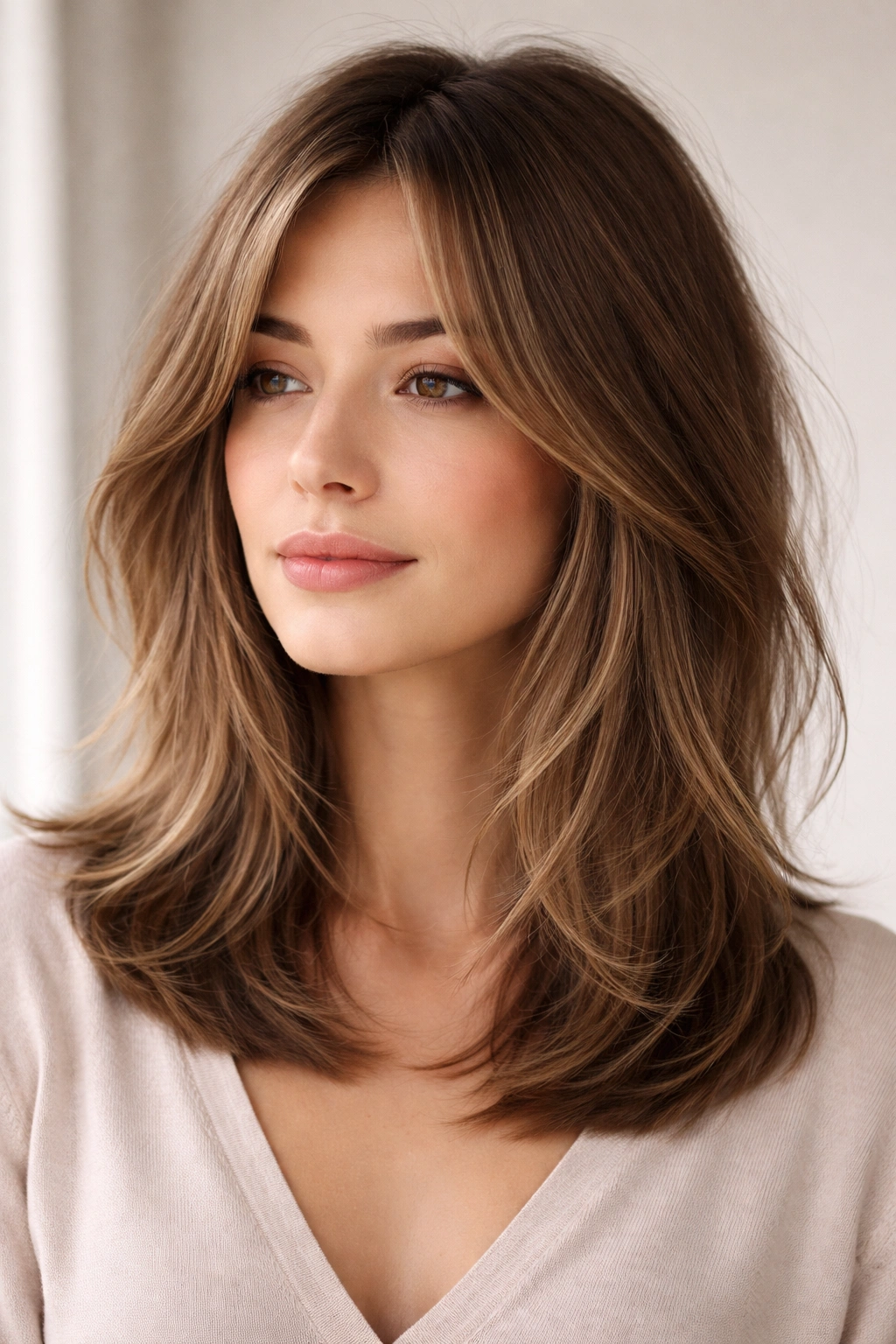
What if you like the hush cut idea but you are not ready to lose too much length? Go longer. A long hush cut bob, basically bob-meets-lob, gives you the softness of the cut without the commitment of a chin-length crop.
This version is a quiet winner for people who want movement but also want ponytail reach. The extra length lets the layers blend more slowly, which keeps the hair from puffing out at the sides. It also makes the grow-out cleaner, which is nice if you are the type to stretch appointments a bit.
What to ask for at the salon
- Keep the length just above the collarbone or right at it
- Add soft internal layers, not choppy ones
- Leave the front pieces long enough to sweep back
- Ask for a texture check after the hair is dry, not just wet
The long hush cut bob is the easiest one to live with day to day. It can be air-dried, curled loosely, or blown smooth without losing its shape. If you like options, this is the one that gives you the most room to move.
And it still feels light. That’s the part people notice first.
12. Sleek Hush Cut Bob with Soft Internal Layers
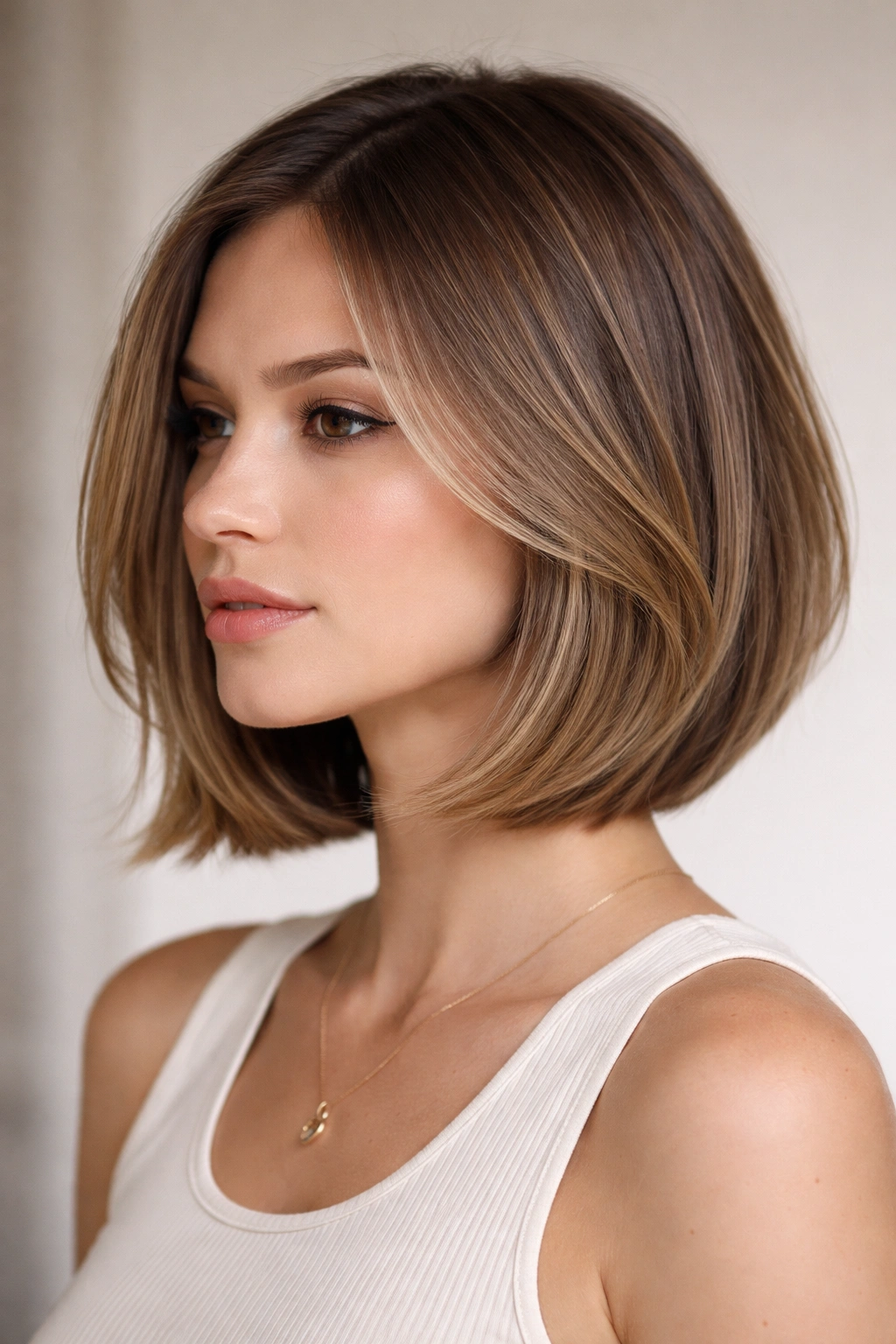
A sleek bob does not have to be stiff. That’s the myth. When the internal layers are cut well, the outside can stay smooth while the inside carries the movement, and that is where the hush cut bob becomes interesting again.
This version is made for people who like polished hair but hate the flat, helmet-like effect that some sleek bobs can get. The surface stays clean. The ends still soften. The shape feels controlled without looking frozen.
How to style it cleanly
Start with a smoothing cream on damp hair, then blow-dry with tension using a paddle brush or a medium round brush. Keep the airflow directed downward so the cuticle lies flat. Once the hair is dry, bend only the last inch or two under with a flat iron if needed. You do not want a full curl at the bottom. Just a soft turn.
The secret is the internal layering. It takes weight out of the middle so the bob can sit close to the head without feeling heavy. That makes this version especially good for thicker straight hair, though fine hair can wear it too if the layers stay very subtle.
A sleek hush bob should look smooth, not sealed in place. There’s a difference, and it’s the whole reason this cut works.
Final Thoughts
The best hush cut bob is the one that keeps some softness in the outline while still giving your hair a shape you can live with. That may sound simple, but it matters. Too much layering and you lose the bob. Too little and the cut starts acting like a blunt block that needs constant help.
Length changes the mood fast. So does the fringe, the part, and whether your hair is straight, wavy, or curly. A good stylist will talk about where your hair falls on its own, where it bends, and how much weight it needs to stay flattering as it grows. That conversation is usually more useful than showing up with one photo and hoping for the best.
Bring two references if you can: one for the length, one for the texture. That small bit of clarity saves a lot of awkward explaining in the chair, and it usually gets you closer to the soft, lived-in bob you had in mind.
