



The best bob cuts for double chins do one simple thing well: they move the eye upward before it settles on the jaw. A good bob is not about hiding your face. It’s about giving the lower half less visual weight and the top half a little more lift.
That’s why one bob can look sharp and flattering while another, cut only an inch away, feels heavy or boxy. The difference usually lives in the details: where the length stops, how the ends are shaped, whether the part is centered or shifted, and whether there’s enough movement around the cheeks. A blunt line at the exact widest point of the face can work against you. A soft angle can do the opposite.
Length matters more than drama.
Hair texture changes the whole equation too. Fine hair usually needs a bit of structure at the crown, thick hair needs the bulk taken out in the right places, and wavy hair often gets a head start because a little bend naturally softens the jaw. A bob can absolutely flatter a fuller lower face, but the shape has to be chosen with some care.
1. Chin-Length Bob With a Deep Side Part
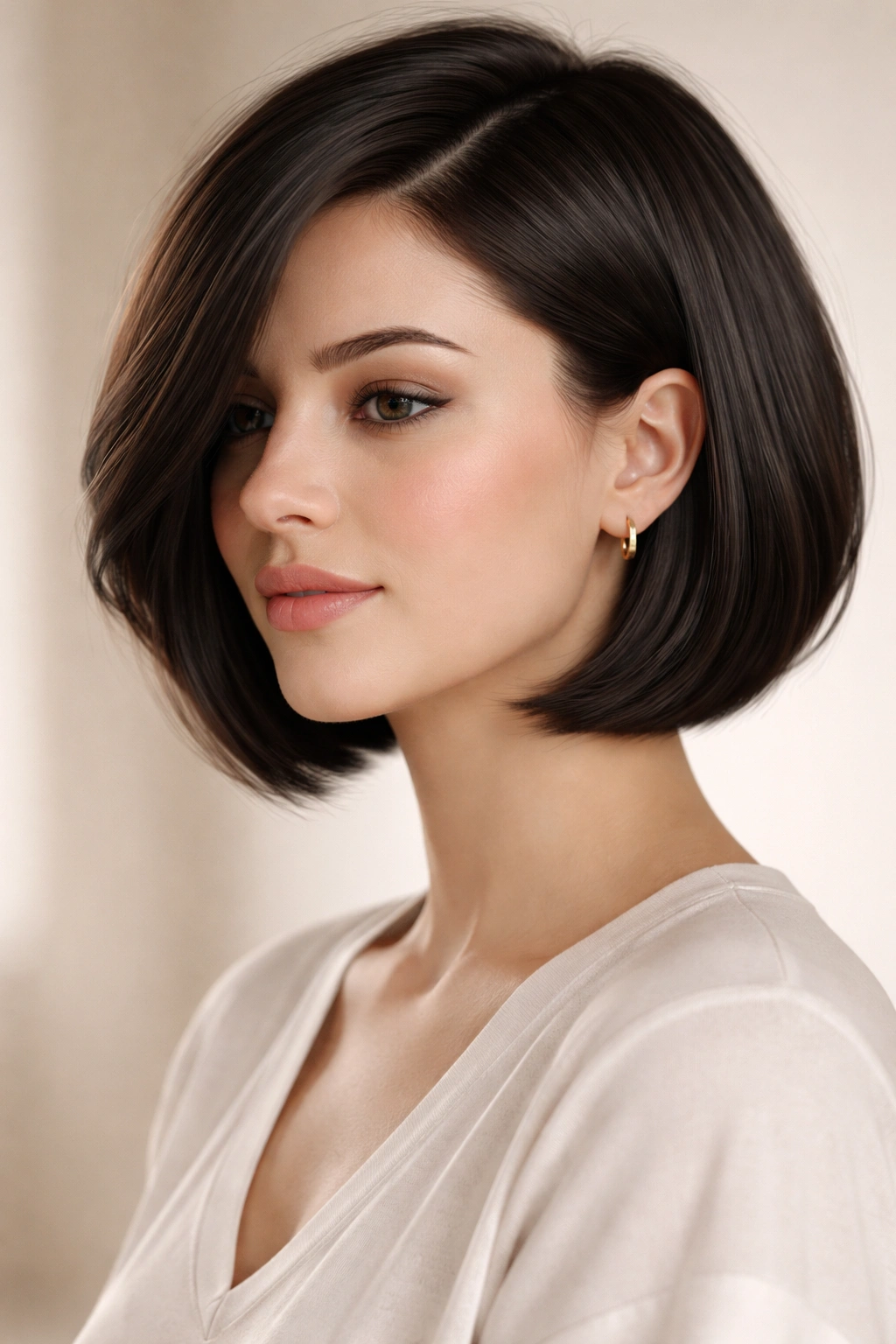
A chin-length bob with a deep side part is one of the quickest ways to make the face look a little longer. The side part breaks up symmetry, and that diagonal line pulls attention away from the lower face in a way a center part often does not. If you like a clean, polished cut that still has some softness, this is a strong place to start.
Why It Works
The trick is where the ends land. If they stop exactly at the chin, the cut can feel boxy. If they sit a touch below the chin and the ends are beveled instead of blunt, the whole shape feels lighter. That tiny bit of movement matters more than people expect.
This cut also gives you a nice option on styling days when you want the face to look a little more open. A round brush at the roots, then a quick bend at the ends, is enough. No need to overthink it.
- Best for straight or slightly wavy hair
- Ask for the length to sit just below the chin
- Keep the outline soft, not heavy
- Shift the part at least 1 to 2 inches off center
My favorite part: tuck the heavier side behind one ear and leave the other side forward. That little asymmetry does a lot of quiet work.
2. Long Bob With Soft Face-Framing Layers
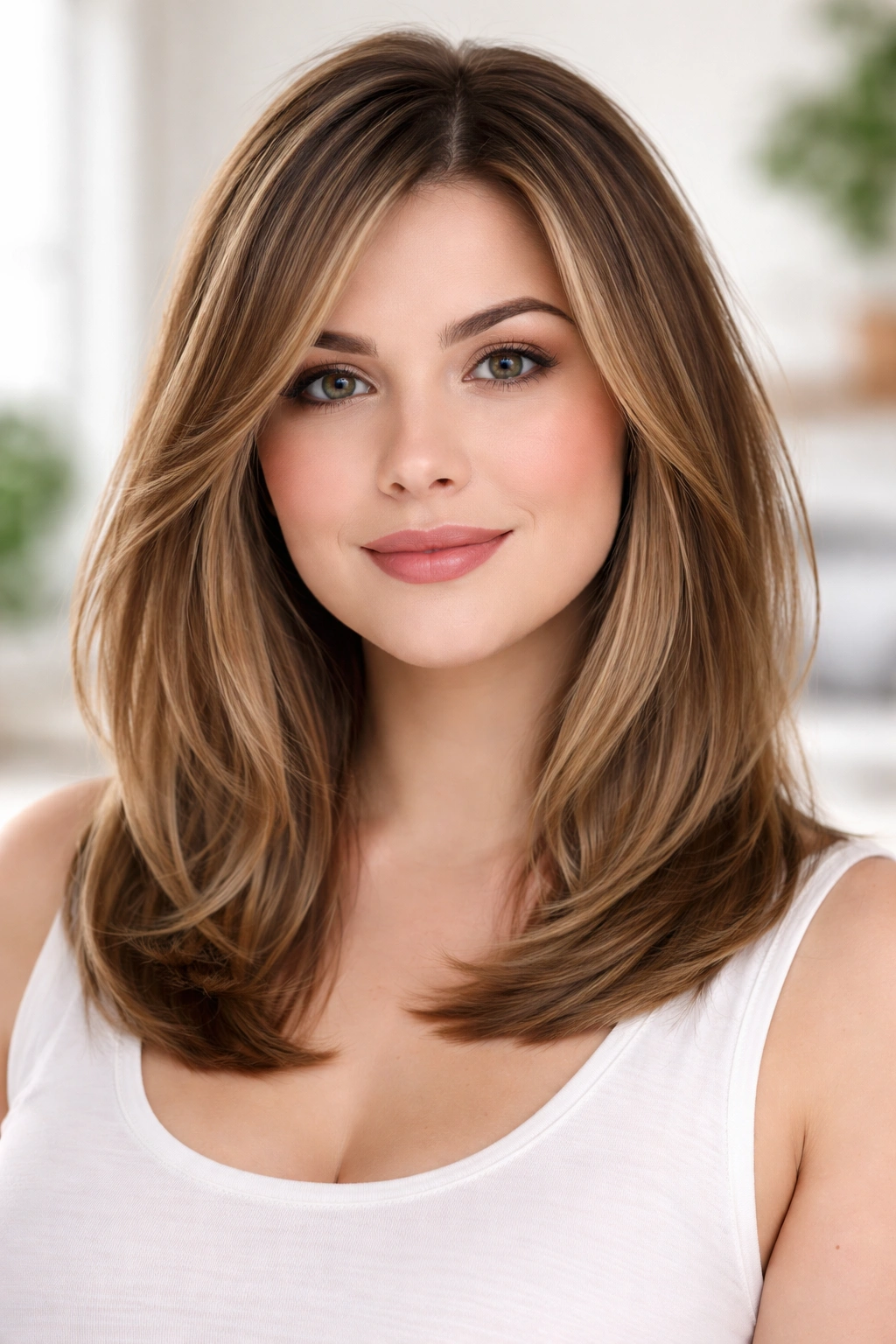
Why does a long bob flatter so many faces? Because it gives the jawline room to breathe. A lob that lands around the collarbone keeps the cut away from the widest part of the lower face, and soft face-framing layers break up the shape without making the hair look thin.
This is the bob I’d point to first if you want the safest, easiest option. It’s long enough to feel familiar, short enough to look intentional, and flexible enough for straight, wavy, or blown-out hair. The best version has a little movement around the cheeks and a length that brushes the collarbone instead of stopping right at the chin.
What to Ask For
- The longest pieces should hit the collarbone or just above it
- The shortest front layers should start near the cheekbone, not the jaw
- Keep the layers soft and blended
- Ask for a slight inward bend at the ends instead of a hard curl
That last detail saves the cut from looking flat. And flat is the enemy here.
I also like this shape for people who don’t want a haircut that needs constant babysitting. Air-dried waves can work. So can a fast blowout. If you want a cut that feels light but not fussy, this one earns its keep.
3. Stacked Bob With Longer Front Pieces
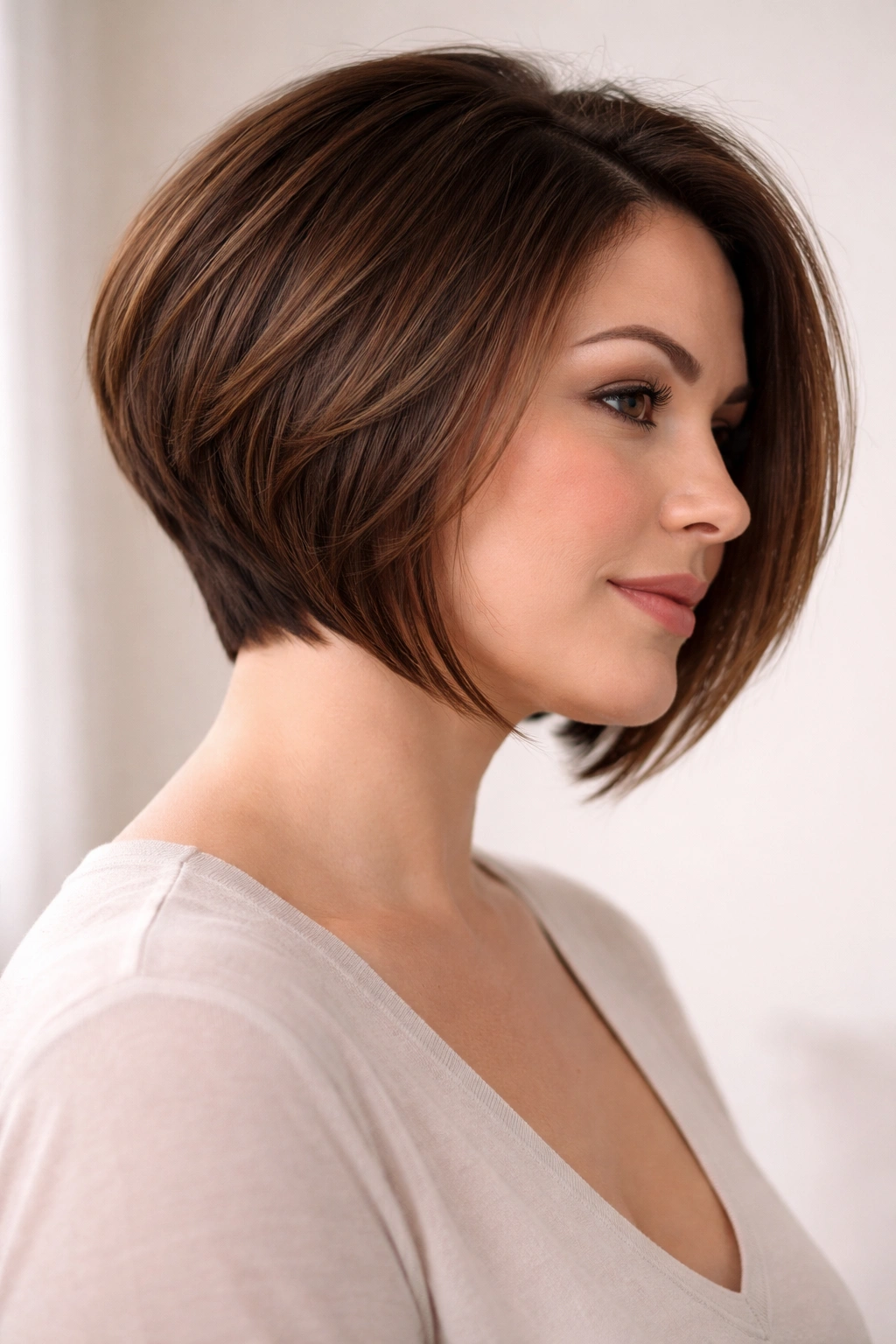
If your hair is thick and tends to sit heavy at the nape, a stacked bob can be a relief. The back is graduated shorter, which lifts the shape and removes bulk where it often piles up, while the longer front pieces keep the face from looking boxed in. It’s one of those cuts that changes the silhouette immediately.
The mistake is going too high with the stack. Then the back starts to puff out like a little shelf, and that’s not the effect you want. Keep the graduation controlled. You want lift, not volume for its own sake.
What Makes It Different
- Shorter layers in the back build height at the crown
- Longer front pieces stretch the face visually
- Internal weight removal helps thick hair lie closer to the head
- The neckline stays neat, which keeps the whole shape crisp
A good stacked bob is all about balance. The back should feel lighter, but not choppy. The front should move forward toward the jaw, but not sit so long that it loses the bob shape. If the cut is done well, it makes the neck look longer and the jaw less dominant.
This is also a strong choice if your hair grows fast and gets bulky between appointments. It holds its shape better than a flat, one-length bob, and that makes day-to-day styling easier than people think.
4. A-Line Bob That Skims the Jaw
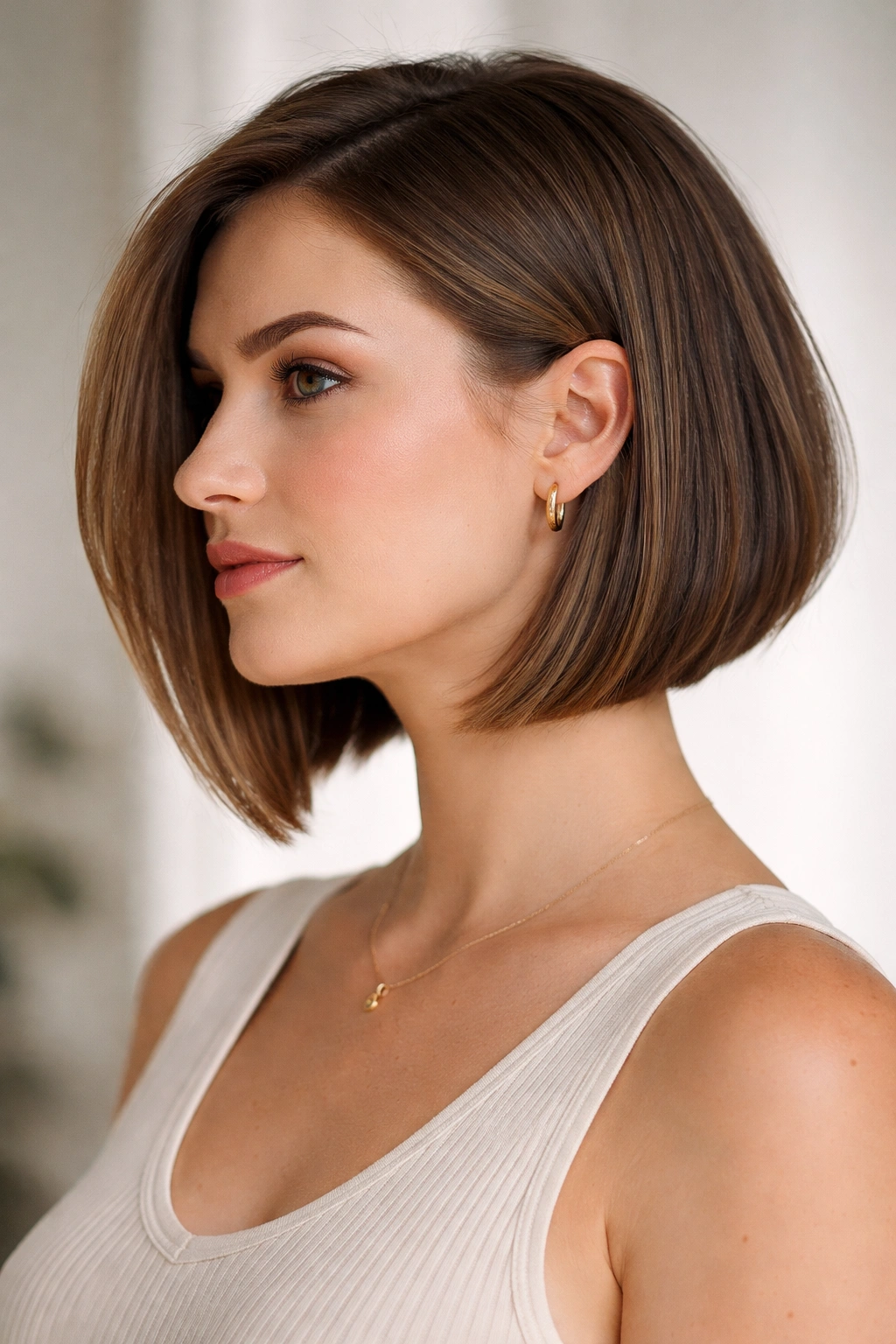
A jaw-skimming A-line bob gets a bad reputation from bad cuts, not from the shape itself. Straight across is the problem. Not the bob itself.
The forward angle matters because it sends the eye downward and out, which can make the lower face look narrower. The back stays shorter and neat at the nape, while the front pieces drift past the jaw just enough to create a longer line. That is the whole game.
I like this shape for square or round faces because it keeps the haircut from stopping at the widest point. It gives you edge without making the face feel boxed. If you wear glasses, it can look especially nice because the angled front pieces echo the frame shape instead of fighting it.
What you want to avoid is a steep triangle. A dramatic A-line can look dated fast and feel too severe around the chin. Keep the angle soft. A difference of about 1 to 2 inches from back to front is often enough.
One small styling move helps a lot: curl the front pieces slightly under with a flat iron or large round brush. That bit of bend softens the line so it doesn’t sit stiff against the neck.
5. Textured Wavy Bob With Piecey Ends
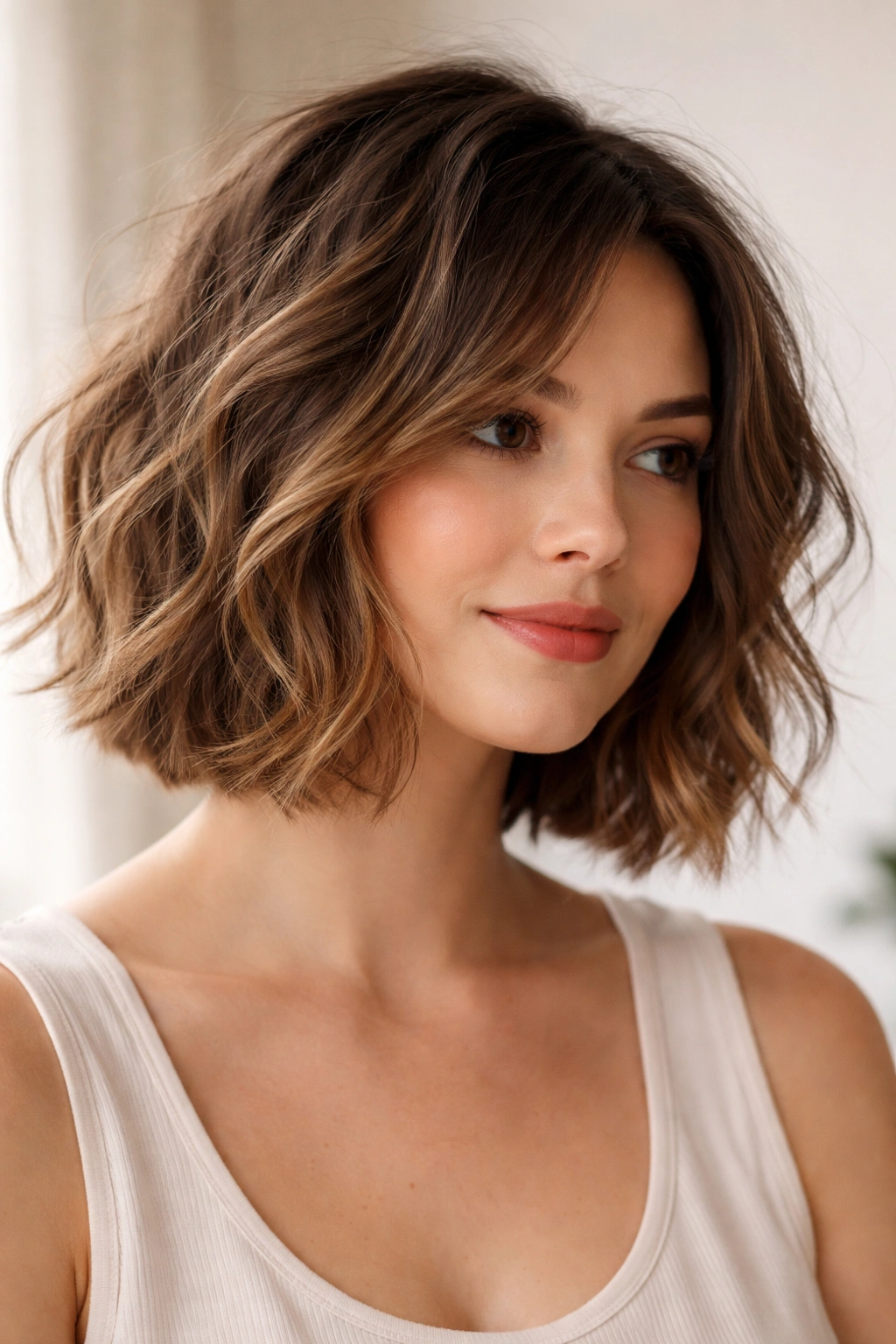
A little texture goes a long way here. Wavy ends break up the hard line that can make the lower face feel heavier, and piecey separation keeps the cut from turning into one solid block of hair. If your hair already has some bend, this may be the easiest flattering bob on the list.
How to Style the Texture
Use a light mousse or curl cream on damp hair, then scrunch from mid-lengths down. Let it air-dry if you can stand the wait, or diffuse on low heat if you can’t. Once it’s dry, break up any stiff pieces with a drop of serum on your fingertips.
A 1-inch curling iron also works, but don’t curl every strand the same way. Alternate directions and leave the last inch out. That gives the hair a softer, less uniform finish, which is exactly what keeps the cut from feeling too round at the chin.
This shape is especially useful if you want your bob to feel casual instead of polished. It doesn’t need a perfect blowout. In fact, it looks better with a little mess in it.
- Great for naturally wavy or loosely curly hair
- Good choice if you want a softer jawline
- Skip heavy finishing creams that collapse the movement
- Keep the ends light, not chunky
Best part: it grows out without looking awkward as fast as a sharper bob does.
6. Bob With Curtain Bangs and Tapered Sides
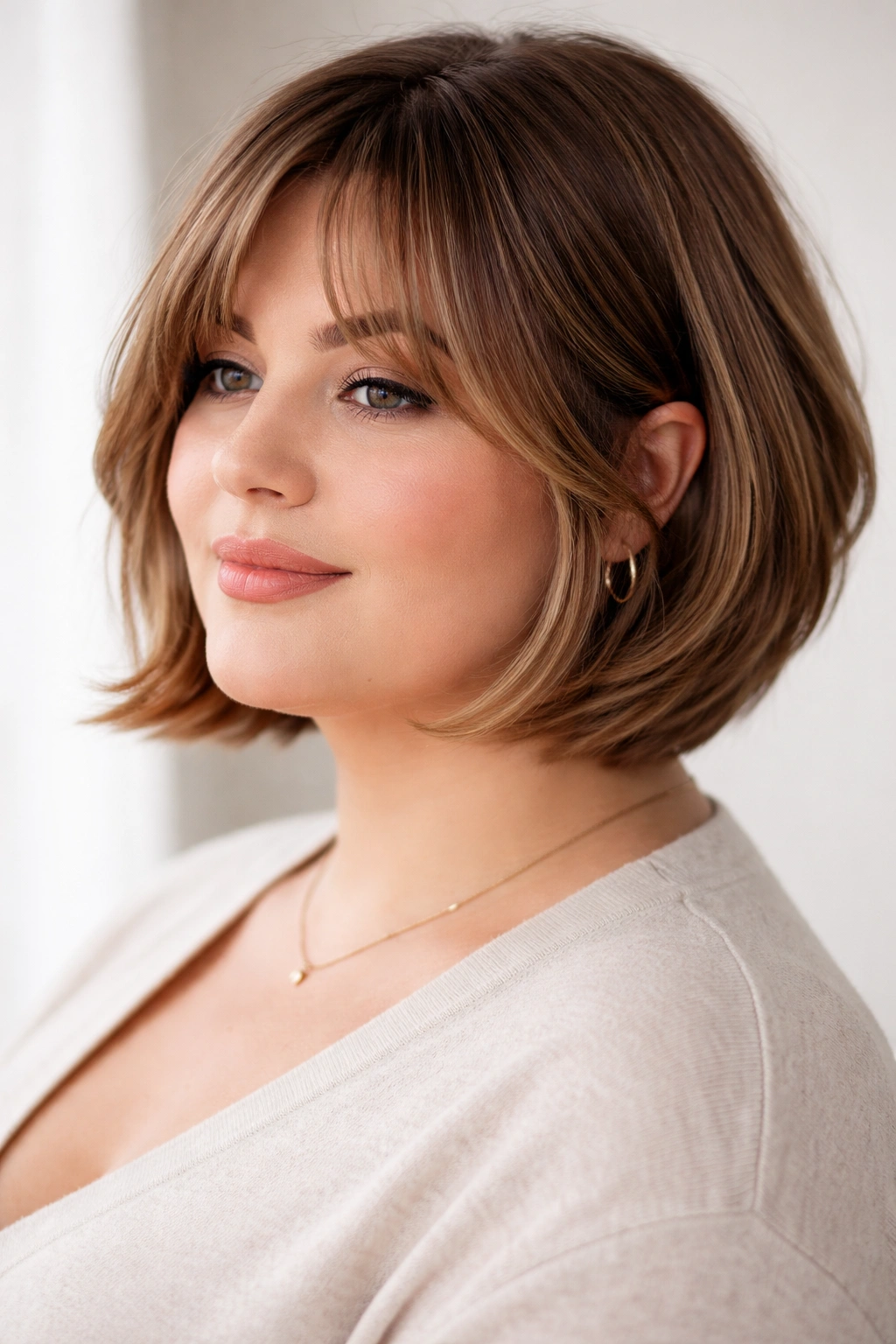
Curtain bangs are doing more work here than most people realize. They pull the eye up toward the cheeks and eyes, which is where you want attention if you’re trying to soften the lower face. Add tapered sides, and the whole haircut starts to look lighter around the jaw.
The fringe should not be blunt and heavy. That’s the trap. Keep it long enough to split in the middle and sweep toward the cheekbones, then let the side pieces taper into the rest of the bob. The result feels softer and more open.
The Part That Matters Most
If the bangs are too short, the whole cut can get cramped. If they’re too thick, they push the eye downward instead of upward. The sweet spot is a fringe that hits around the cheekbone or just below, depending on your face length and forehead height.
This cut is smart for people who like a bit of style built into the haircut itself. You do not need much else once the fringe is right. A quick round-brush pass or a bend with a flat iron is usually enough to make the shape sit correctly.
I also like it because it gives you options. Wear the bangs centered when you want softness. Sweep them slightly to one side when you want the face to look a little longer. Tiny shift, big payoff.
7. Blunt Collarbone Bob With a Soft Bend
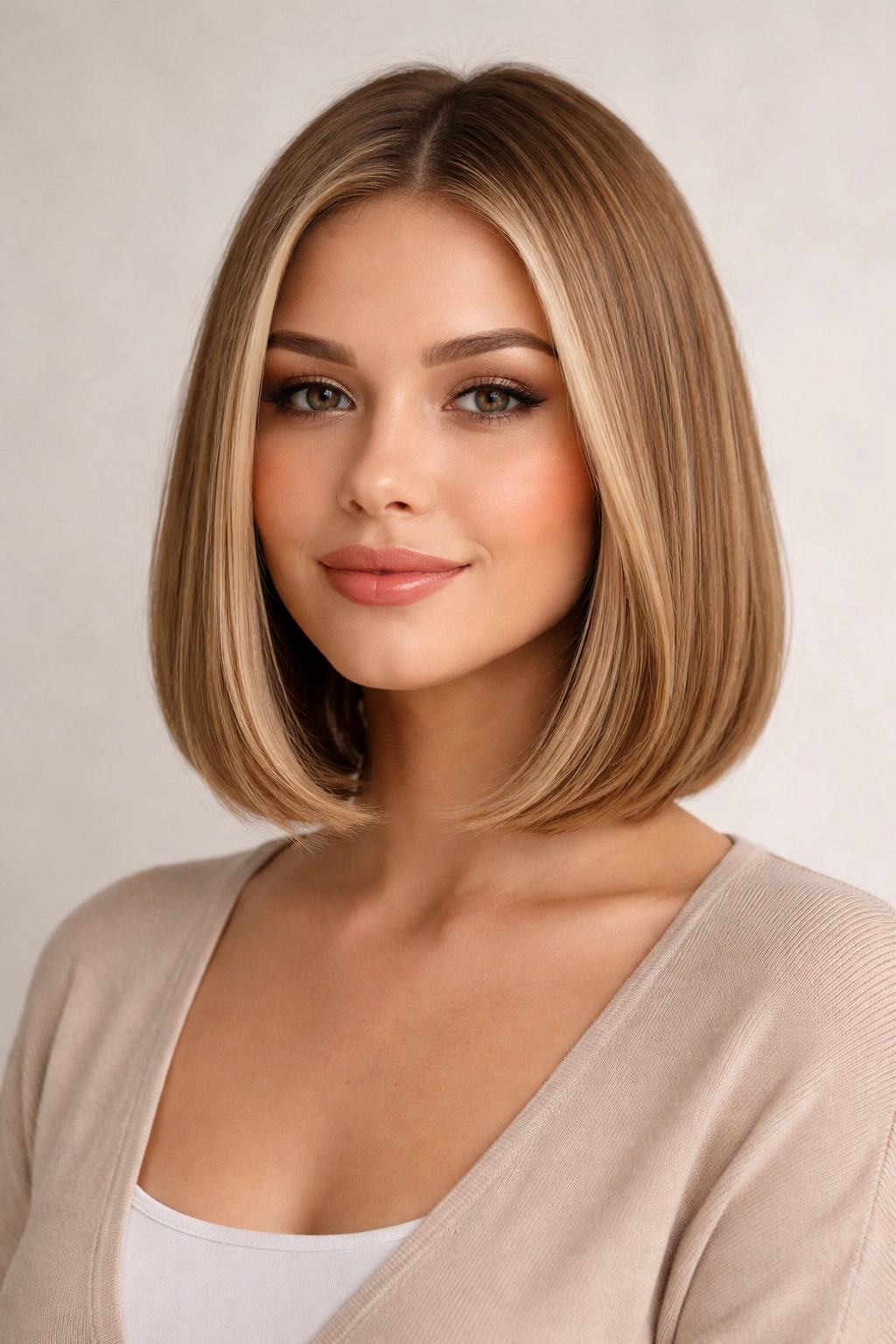
A blunt collarbone bob sounds strict, but the length saves it. Because it falls below the jaw, it avoids that hard stop at the chin that can make a lower face feel fuller. Add a soft bend at the ends, and the cut picks up movement without losing its clean line.
This is one of the easiest bobs to live with. It looks tidy when straight, and it still has enough length to tuck behind the ears, clip back, or wave with a iron if you want a looser feel. The blunt edge gives the haircut weight, which is helpful if your hair is fine and tends to look wispy in shorter cuts.
Length matters here.
The bend is what keeps it from feeling like a sheet of hair hanging from the head. A large round brush or a flat iron turned just slightly at the ends is enough. You are not aiming for curl. You are aiming for a gentle curve that keeps the line from reading flat across the shoulders.
This cut suits people who like shape but not too much layering. It’s neat, modern, and easy to maintain, which is a nice change from haircuts that ask for a full styling ritual every morning.
8. French Bob With a Light Fringe
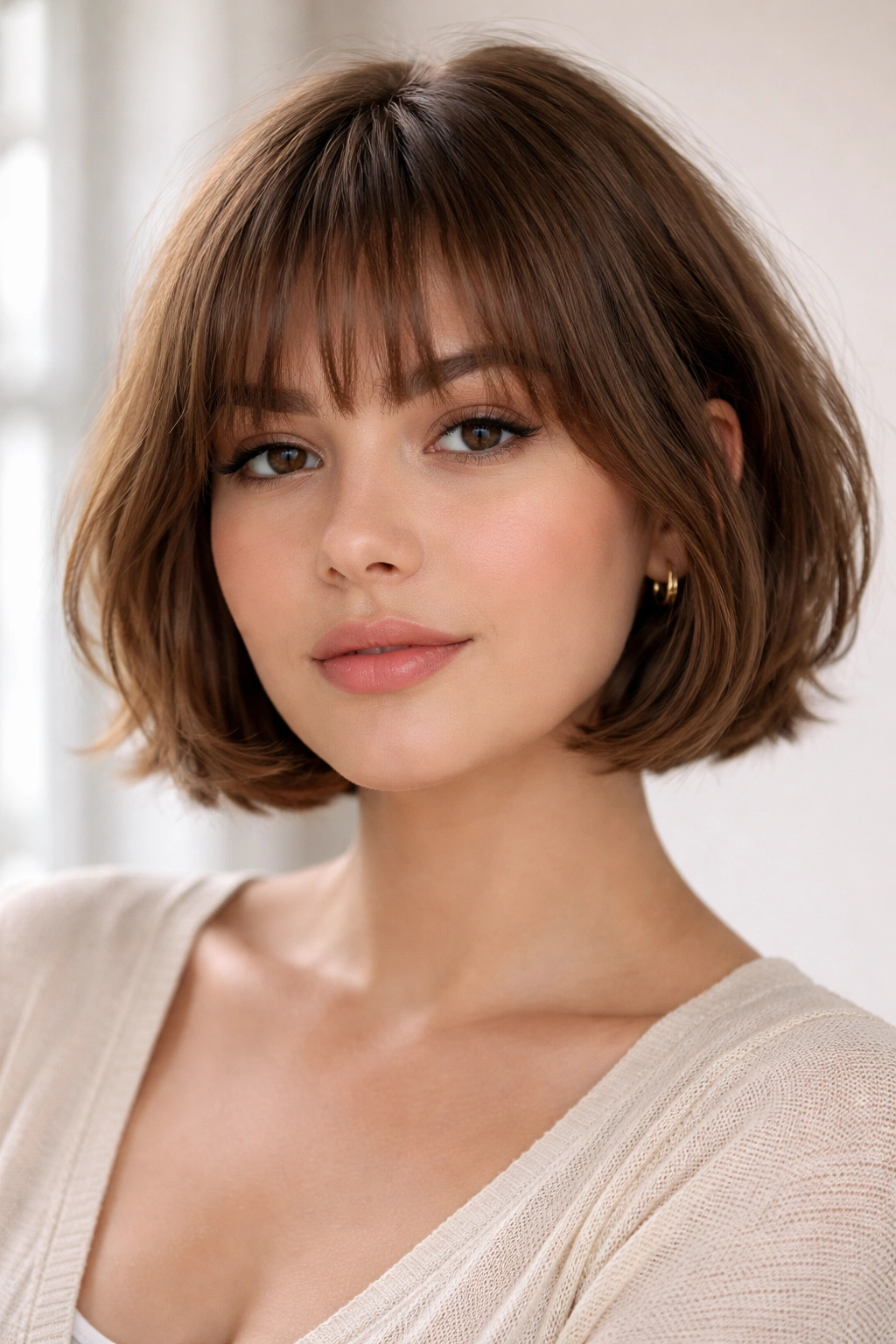
There’s a reason the French bob keeps getting attention in salons: it gives structure without feeling stiff. When it’s cut with a light fringe and soft edges, it can sit close to the face in a way that feels flattering rather than harsh. The key is keeping the fringe airy and the sides slightly feathered.
A short, compact bob can be risky around a fuller lower face if the line is too blunt. The fix is texture. A little bend through the mids and a fringe that grazes the brows keep the haircut from sitting like a block.
Who It Suits Best
- Hair that has a little natural wave
- Smaller features that can handle a short shape
- Faces that want emphasis near the eyes
- Anyone who likes a low-fuss cut with personality
I would be careful with this one if your hair is very dense and heavy. It can still work, but the interior needs enough debulking to keep the shape from swelling out at the sides. That’s where a good stylist earns their money.
A French bob is not trying to be precious. It should feel loose, touched, and a little imperfect. If it looks too neat, it usually loses the charm.
9. Layered Bob With Tucked Ends
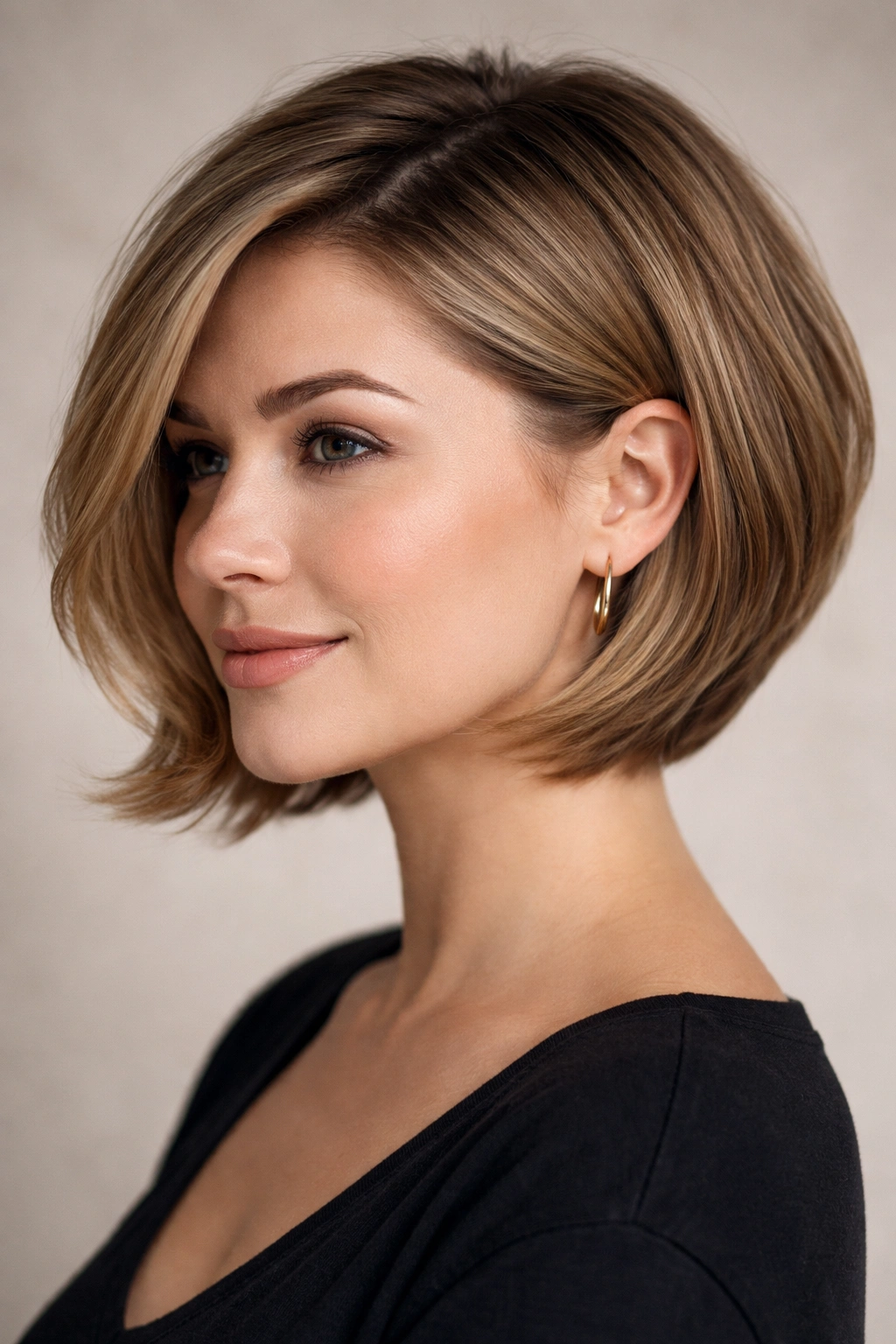
Some bobs change completely the moment you tuck one side behind the ear. That little move opens the face, shifts the balance, and makes the haircut read lighter. A layered bob with tucked ends takes advantage of that trick by building shape into the cut itself.
The layers should sit low enough to avoid frizzing out around the cheeks. Too many short layers near the jaw can add width, which is the opposite of what you want. Keep the texture under control, and let the tuck do some of the work.
A cut like this is good if you like to play with your hair instead of wearing it the same way every day. One side forward, one side tucked, a few front pieces left loose — it gives you room to adjust the mood without changing the haircut.
A small side part helps too. It stops the whole style from feeling too symmetrical, and symmetry is not always your friend when you want the lower face to look softer. If you want an easy styling habit, tuck the side with the most hair and leave the thinner side loose. It sounds minor. It isn’t.
10. Asymmetrical Bob With One Longer Side
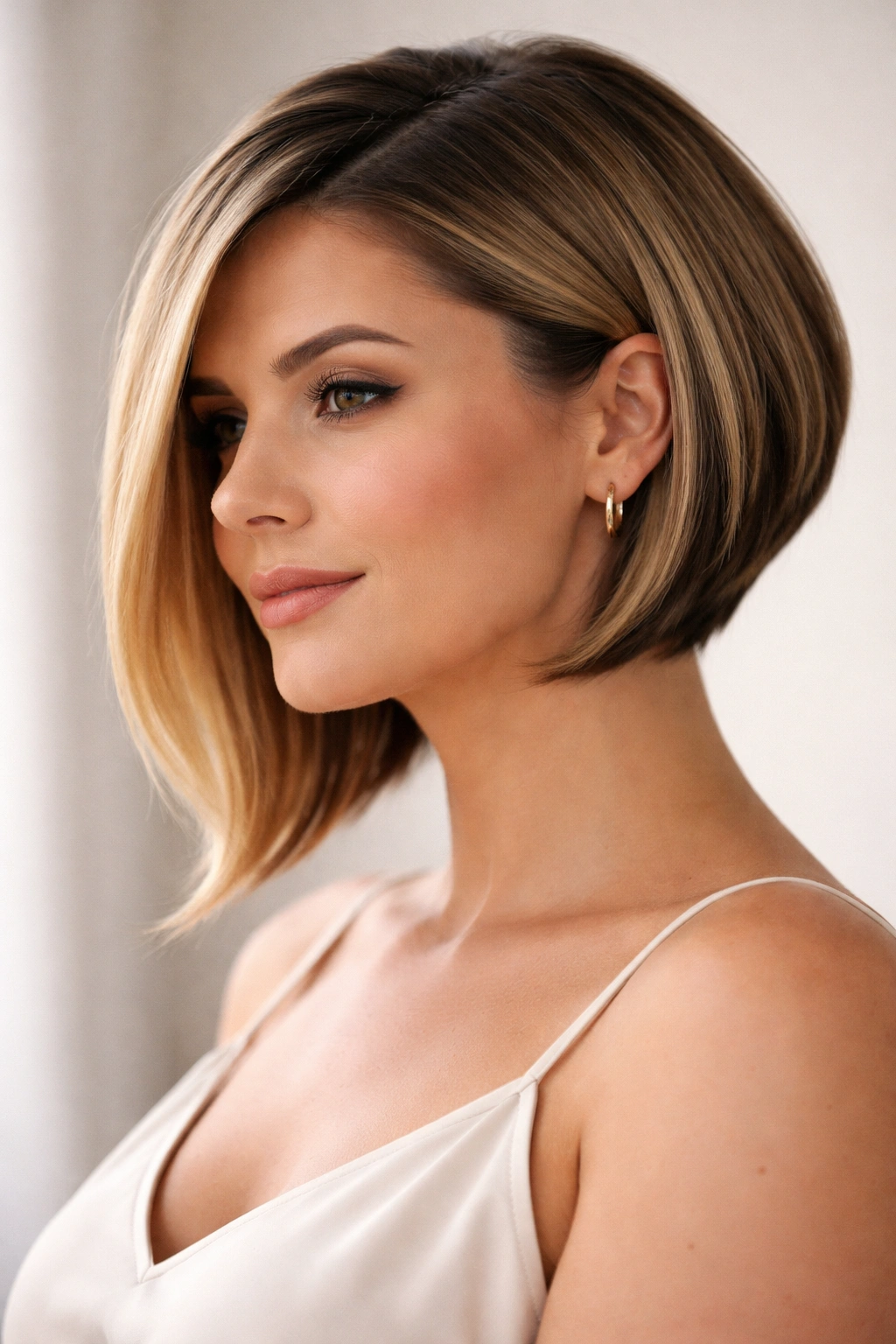
An asymmetrical bob works because the eye follows the longer side. That single line pulls the face downward a little, which can make the jaw and lower cheek area feel less prominent. It’s a smart choice if you want something with a bit of edge but not a haircut that shouts.
Keep the difference subtle. One side that’s 1 to 2 inches longer than the other is usually enough. If the gap gets too dramatic, the cut starts to look stylized in a way that can fight your natural features instead of helping them.
What to Ask For
- A soft asymmetry, not a sharp angle
- The longer side to fall just past the jaw
- The shorter side to stay neat at the nape or cheek line
- A side part that supports the longer line
This cut is especially good if your face looks widest from the front. The diagonal shape gives the face some direction, which is often more flattering than a perfectly even line. It also photographs differently from side to side, which can be useful if you have a preferred angle.
I like this one on people who want their bob to feel modern without chasing a trendy look that ages fast. It has personality, but it still behaves like a real haircut.
11. Rounded Bob With Crown Volume
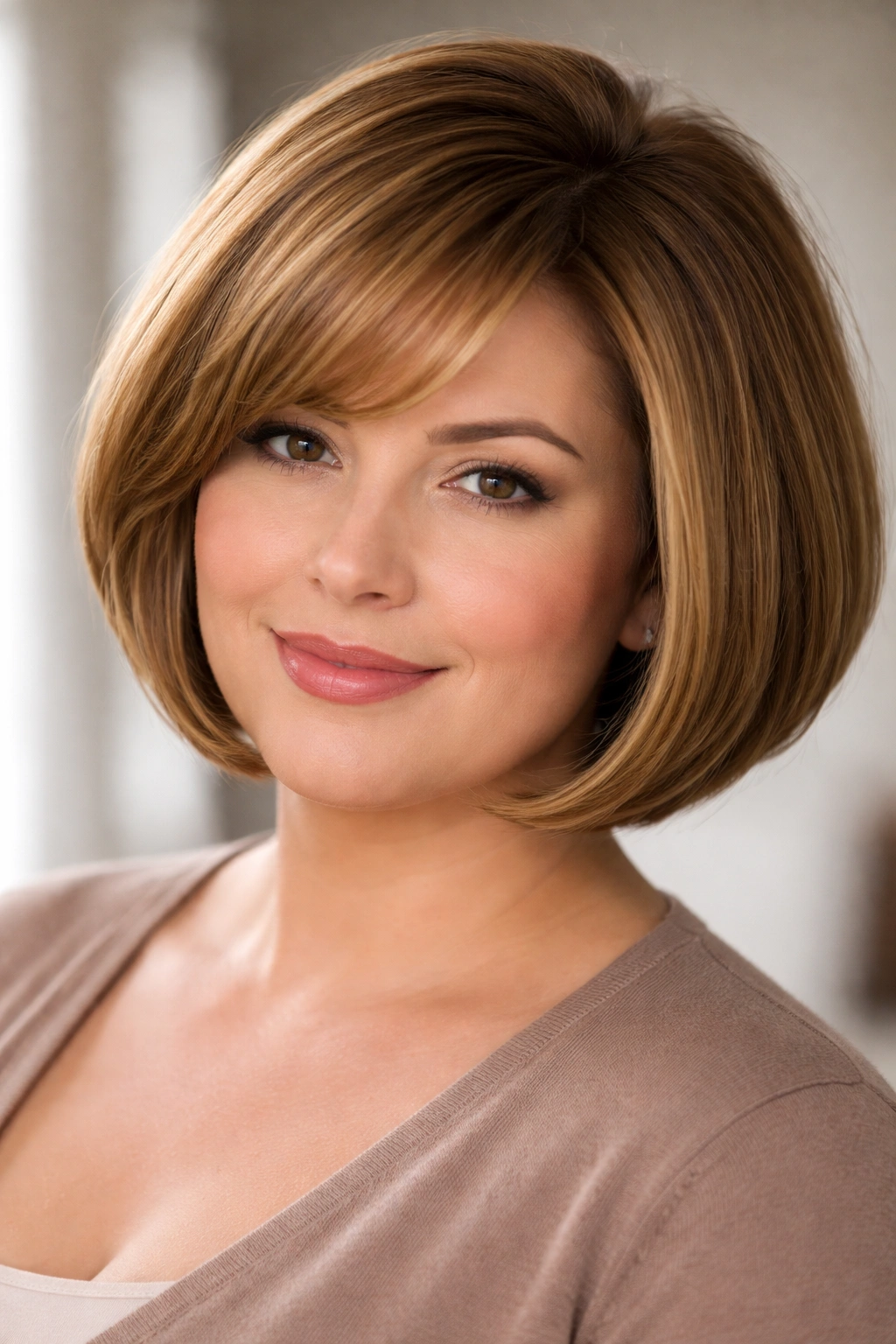
Can a rounded bob make the face look slimmer? Yes, if the volume sits where it should. The lift belongs at the crown, not around the cheeks. That’s the part that matters.
A rounded shape draws the eye up, which helps balance a fuller lower face. The curve should be soft, almost like the hair is gently hugging the head, while the top has enough height to keep the silhouette from flattening out. Fine hair often does well here because the shape adds body without needing a ton of layers.
The styling is straightforward. Use a root-lift spray at the crown, blow-dry with a round brush, and direct the hair up and back for the first few minutes of drying. Once the roots are set, smooth the sides so they stay close to the head. You want height on top, not puff around the cheeks.
This is one of those cuts that looks more expensive when it has movement, not when it’s overly polished. A little air in the shape keeps it from feeling helmet-like. If the rounds edges start to puff outward at jaw level, the haircut needs refining. That’s the line you watch for.
12. Inverted Bob With Airy, Angled Ends
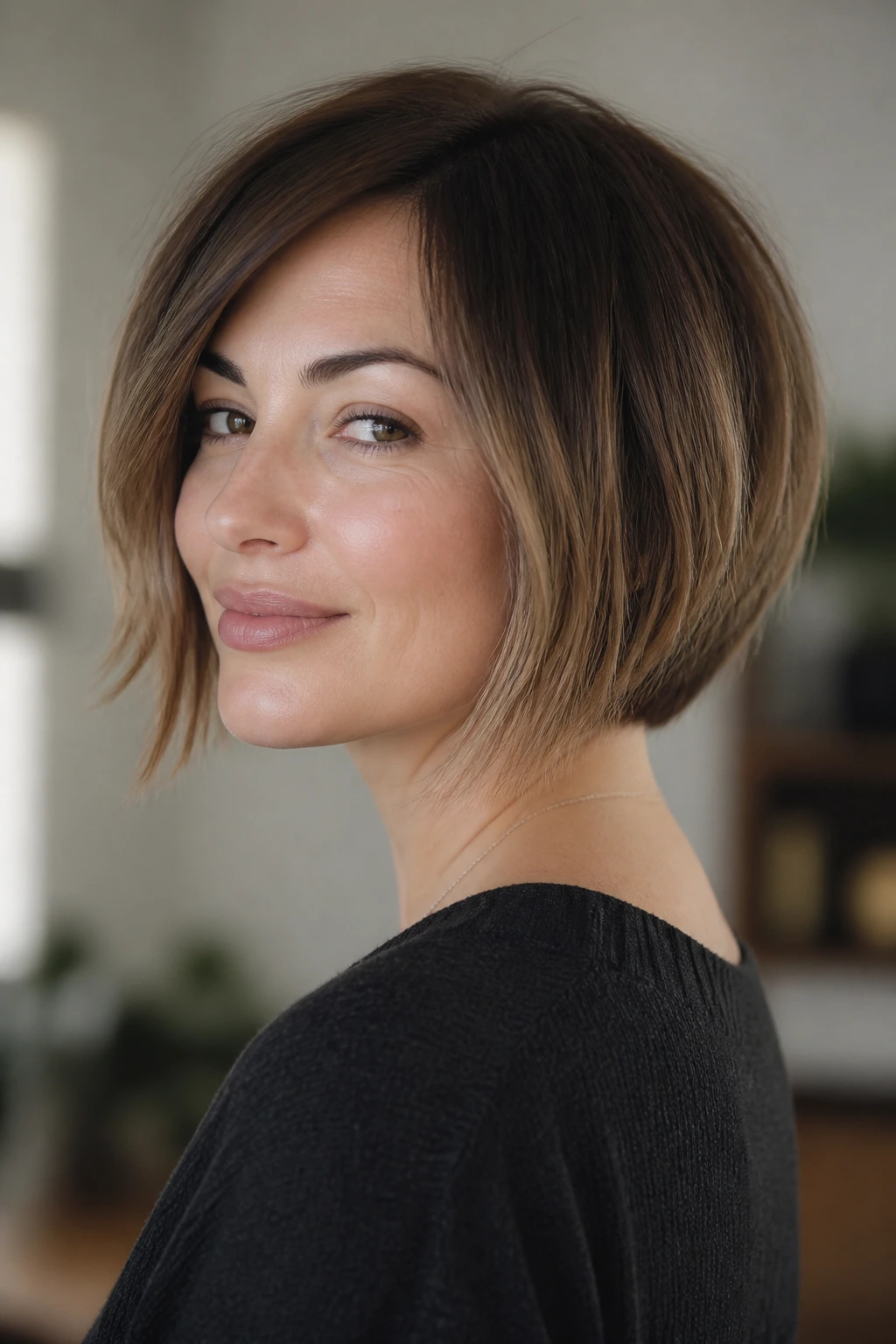
An inverted bob is the cleanest choice if you want the nape short and the front soft. The shorter back builds shape through the crown, while the longer front pieces lengthen the face and make the lower half feel less heavy. When the angle is gentle, it’s a very sharp-looking cut.
The mistake is making it too steep. A hard wedge can turn severe fast, especially if the front pieces stop right at the jaw. Let the front land below the chin, and keep the ends airy so they move instead of sitting like a sharp line. That gives the haircut structure without the harshness.
This is one of the better bob cuts for double chins if you like a strong silhouette. It gives you that clean outline people notice first, but it still leaves room for softness around the face. The cut feels deliberate. Not fussy. Not overworked. Just shaped.
If I were asking for one version at the salon, I’d say: short in the back, longer in the front, soft graduation, and no blunt edge sitting on the chin. That sentence covers most of what matters.
And that’s really the point with flattering bob cuts. The best one is not the shortest, the most layered, or the most dramatic. It’s the one that keeps the eye moving upward, gives the jaw room, and lets your hair do a little shaping work for you without looking forced.
