



A bob cut can look sharp, soft, severe, or flirty, and face framing highlights are the fastest way to decide which direction it goes. A few brighter pieces around the temples and cheekbones can soften a jawline, wake up the eyes, and keep a short haircut from feeling flat. The trick is placement. Too high, and the color looks stripy. Too low, and it disappears into the rest of the hair.
That’s why bob cuts with face framing highlights work best when the shape and the color are planned together. A chin-length bob does not want the same highlight pattern as a collarbone bob. A blunt cut needs a different kind of brightness than a shaggy one. Even the tone matters more than people think — caramel, beige, honey, and cool mushroom blonde all change the mood in a completely different way.
Placement is the whole game.
And that placement can be subtle. A narrow money piece can sharpen a short bob without making it loud, while a softer sweep of balayage can blur the edges and make the haircut feel more lived-in. The good versions look like they belong there from the start.
1. Chin-Length Bob with Soft Caramel Money Pieces
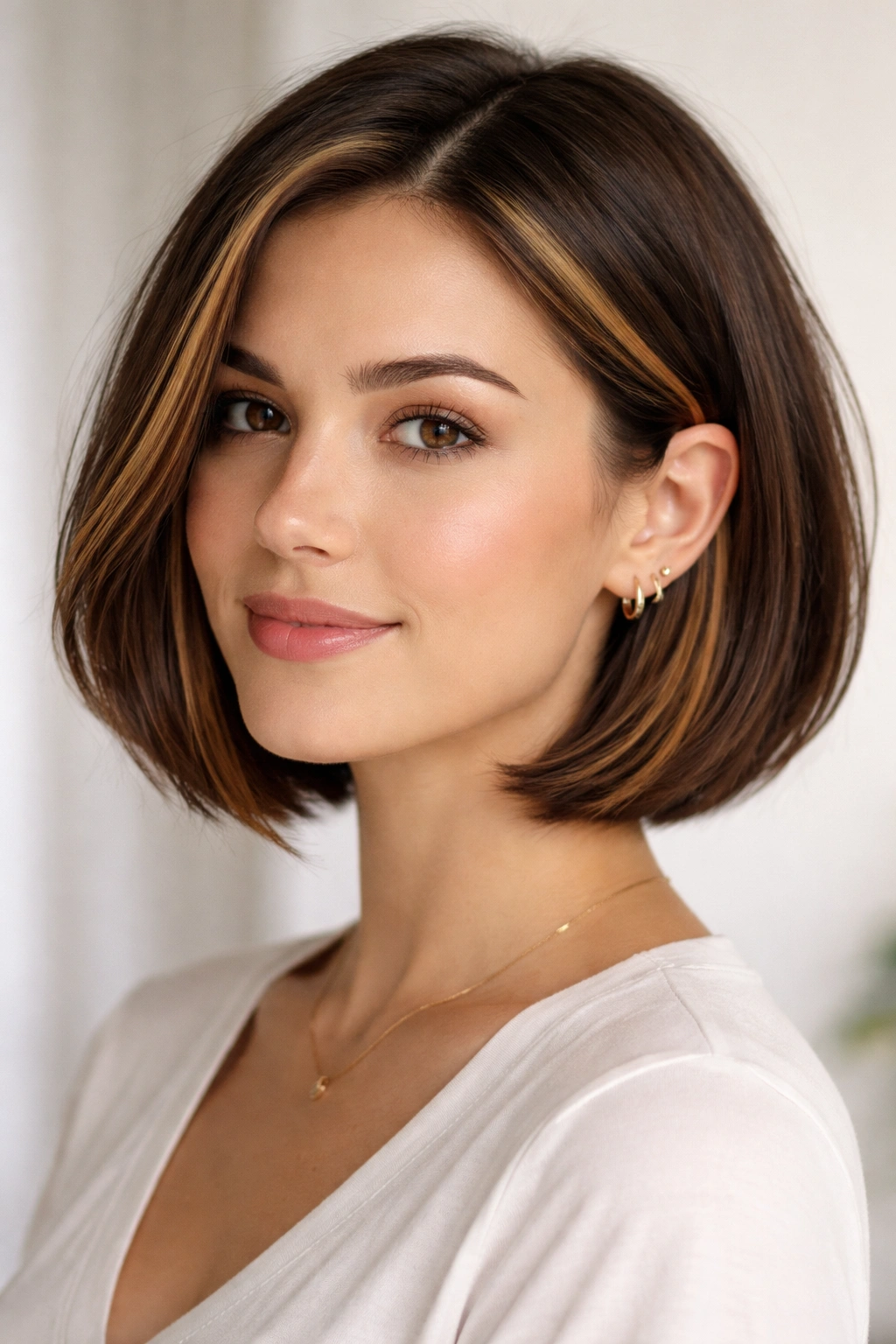
A chin-length bob is tidy, clean, and a little unforgiving if the color stays too flat. Soft caramel money pieces fix that fast. They bring warmth right where the face meets the haircut, which keeps the whole look from reading too strict.
The best version is narrow through the part line and slightly wider as it drops toward the cheekbone. That keeps the brightness on the eyes and mouth instead of turning the front of the hair into a stripe. If the base color is dark brown, a caramel tone with a hint of gold usually looks richer than a pale blonde ribbon. Pale can work too, but it needs to be very fine.
Keep the pieces narrow. That one move makes the cut look expensive instead of overdone.
If you wear your bob tucked behind one ear, this cut gets even better. The front pieces swing forward, the highlight catches the cheek, and the back stays neat. I like this on straight or slightly wavy hair because the line of the bob stays crisp while the color does the softening work.
For styling, a round brush and a light smoothing cream are enough. Blow-dry the front forward first, then bend the ends under just a little. A flat iron can also work, but only if you leave the ends a touch loose. Stiff ends kill the whole point.
2. Sleek Blunt Bob with Bright Face Framing Ribbons
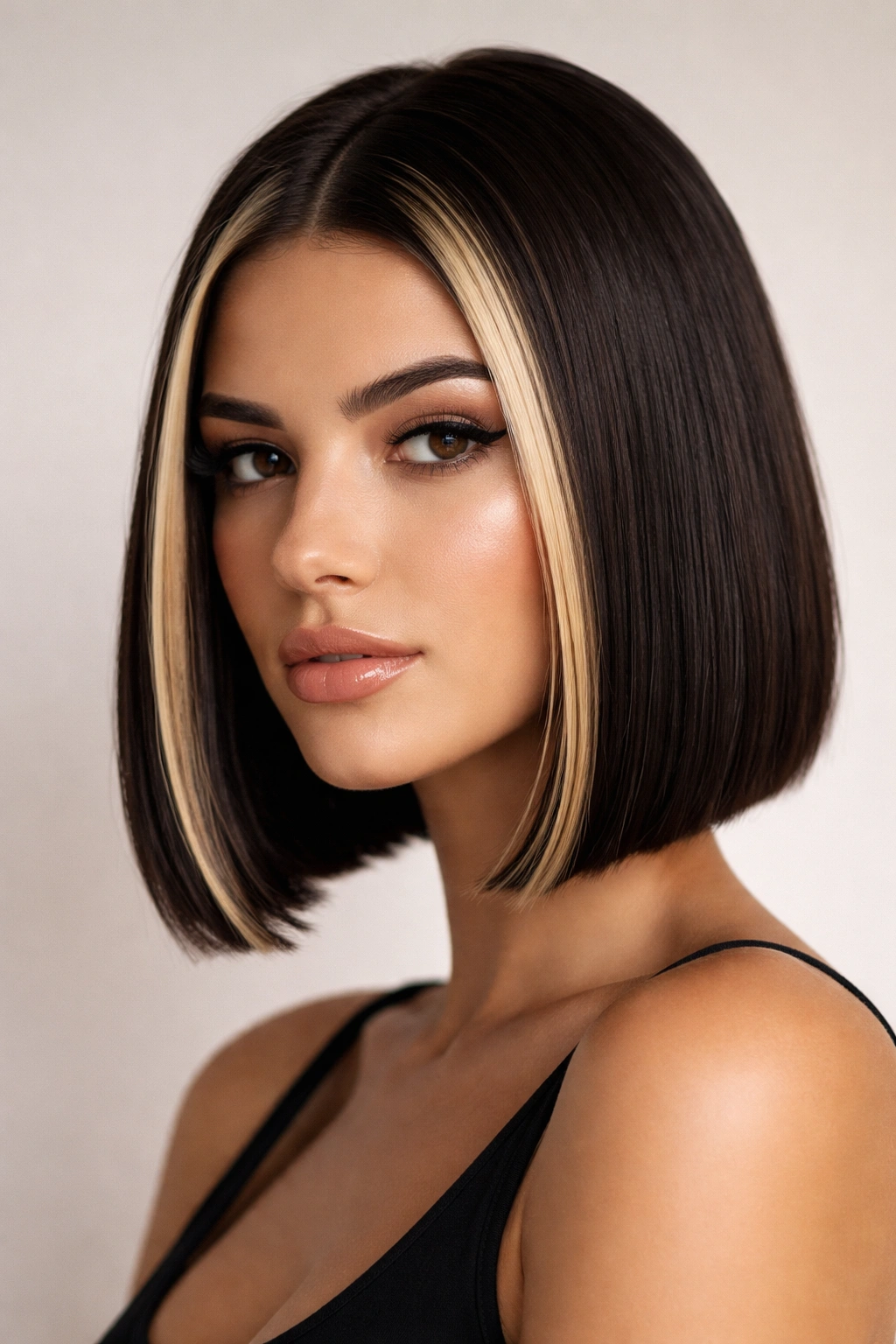
A blunt bob is where face framing highlights can get a little bolder without losing control. The straight edge of the cut gives the color a frame, so the brighter pieces can sit front and center without fighting the shape.
Why It Works
A blunt perimeter makes the eye stop at the line of the hair, which is exactly why a bright ribbon near the face feels so strong here. The trick is to keep the highlight narrow at the root and a touch brighter through the mid-lengths. You want contrast, not a block of color.
What to Ask For
- A one-length bob that lands between the jaw and the top of the neck.
- Two fine bright ribbons starting near the temple, not right at the hairline.
- A soft root shadow that stays about one shade deeper than the lightest pieces.
- A gloss or toner with a beige or champagne finish if brassiness is a problem.
How to Style It
Run a flat iron through the lengths in one smooth pass. No flicks at the ends unless you want a more polished, vintage feel. A pea-sized bit of serum on the mid-lengths is enough; too much makes a blunt bob look greasy, and that’s the last thing you want.
This cut is especially good for fine hair. The clean line makes the hair look denser, while the front ribbons keep the face from getting swallowed by one solid block of color.
3. French Bob with Mushroom Blonde Highlights
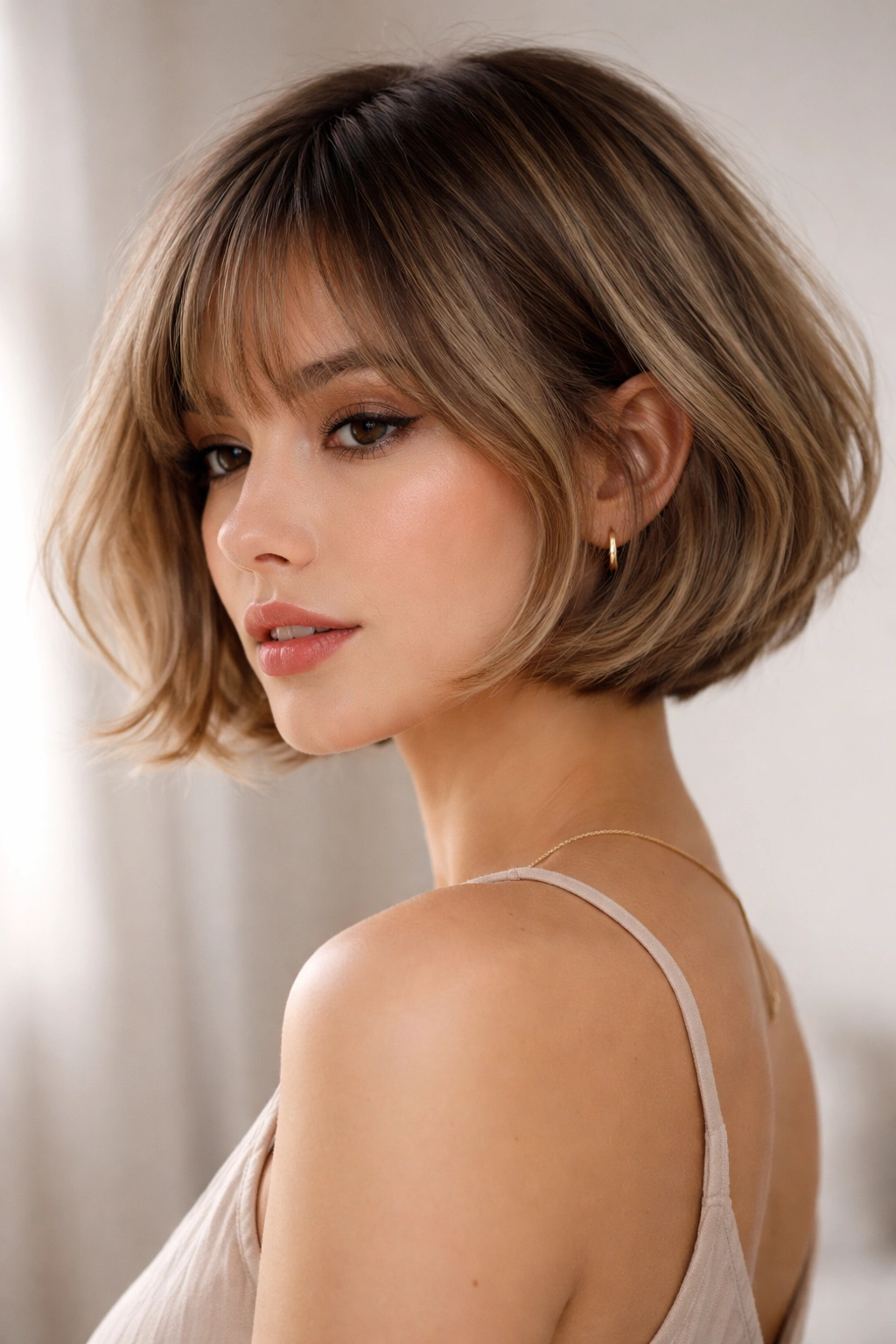
A French bob should look a little imperfect. That’s the charm. It sits shorter, usually around the mouth or just below the cheekbone, and the right face framing highlights make it feel soft instead of strict. Mushroom blonde is a smart choice here because it lives between beige, taupe, and muted ash.
That tone matters. A French bob already has attitude; if you put very bright blonde money pieces on it, the cut can start to feel costume-y. Mushroom blonde keeps the brightness hazy and expensive-looking. It’s the sort of color that shows movement when the hair shifts, not the sort that announces itself from across the room.
The best placement starts in thin slices near the fringe or the outer corner of the brow and melts down through the cheek area. If you wear bangs, keep the light around them delicate. Heavy streaks at the fringe line can make the whole cut look choppy in a bad way.
A little texture cream goes a long way with this bob. Scrunch it into damp hair, rough-dry with your hands, and leave the ends slightly undone. If you want extra shape, twist the front pieces around your fingers as they dry. That tiny bend makes the highlights look woven into the haircut instead of painted on top.
4. Angled Bob with Feathered Front Pieces
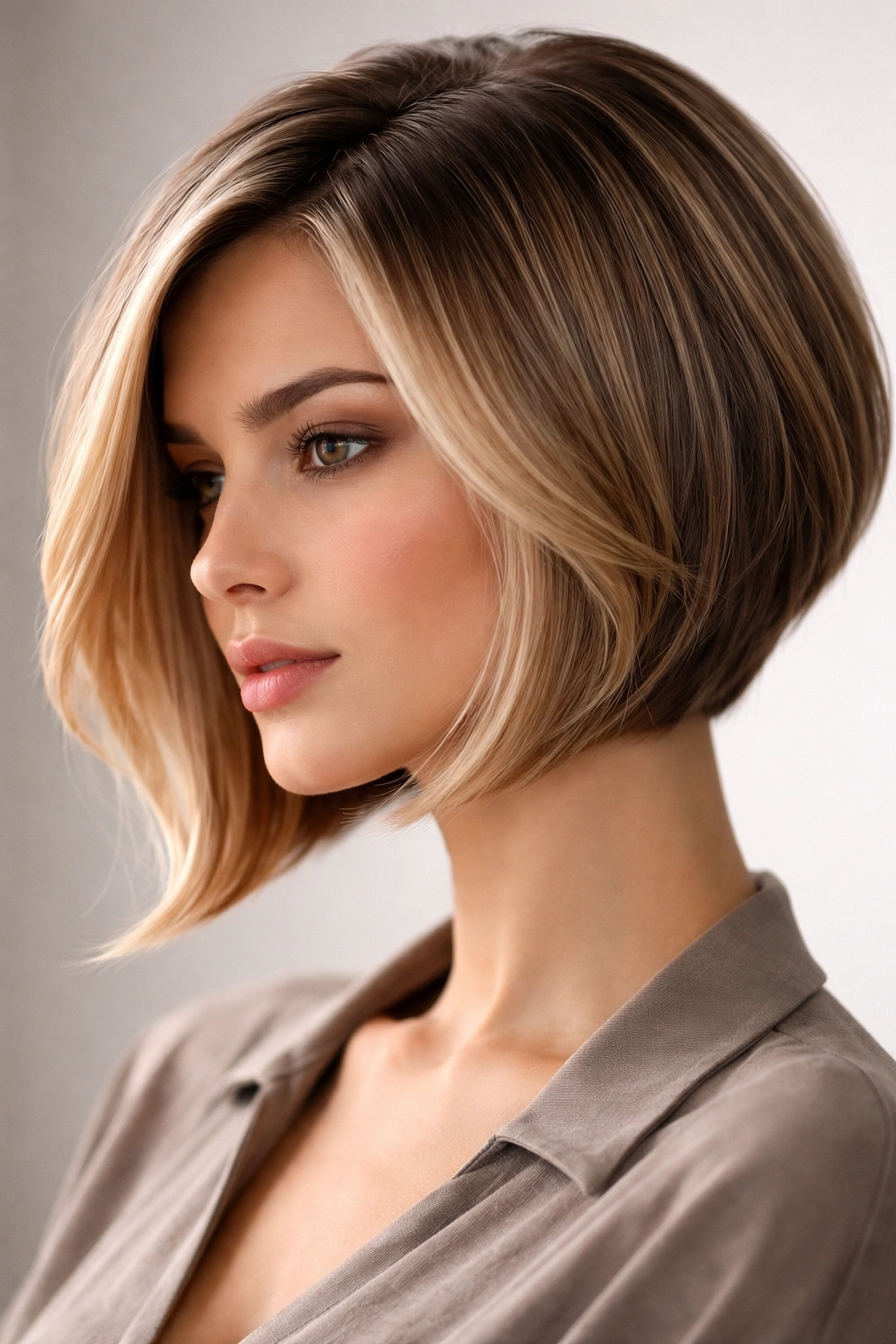
Why does an angled bob take face framing highlights so well? Because the cut already gives the front pieces a longer runway. The back sits shorter, the front drops lower toward the jaw, and the color has space to move instead of stopping abruptly.
How to Get the Angle Right
Ask for a shorter back that stacks gently, not a dramatic wedge unless you want a sharper look. The front should angle down to just past the chin, and the lightest strands should follow that line. If the highlight begins too high, the front can look heavy. If it starts too low, you lose the effect completely.
Where the Brightness Should Sit
- Near the temple for lift.
- Around the cheekbone for softness.
- A little below the jaw if you want the cut to stretch the face.
- Never in a thick block right at the part.
Styling Notes
A round brush helps the front pieces curve away from the face just enough to show the color. Keep the crown smooth and the ends a touch beveled. That little bevel matters. It keeps the cut from looking like a helmet, which is the one thing an angled bob can never recover from.
This is a good bob for thicker hair, too, because the angle removes weight while the highlights keep all that shape from looking heavy.
5. Textured Wavy Bob with Sunlit Face Frame
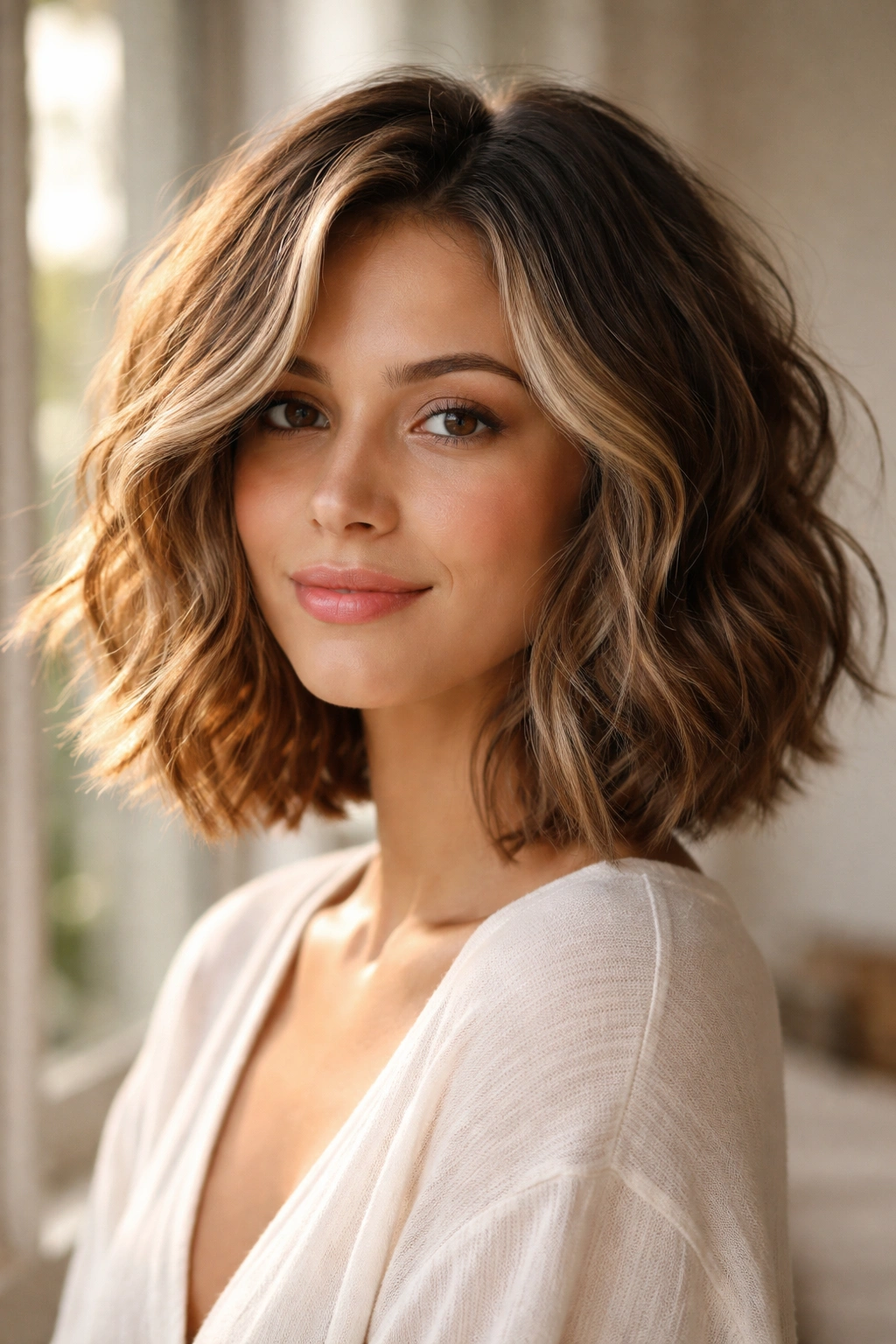
If your hair likes a bend and you’d rather not fight it, this is the cut. A textured wavy bob with a sunlit face frame looks like it spent the morning near a window, even when you only spent ten minutes with a diffuser and a scrunching cream.
The best part is that the highlights do not need to be loud. They only need to land where the wave curves around the face. Think of the temple, the outer cheekbone, and the front bend near the jaw. That’s enough. The rest can stay quieter so the movement reads naturally instead of striped.
A few lighter ribbons through the front do more than a full head of brightness ever could here. The eye follows the wave pattern first, then the color. That’s what makes this version feel easy.
- Ask for balayage through the front panels, not chunky foils.
- Keep the interior a half-step deeper so the face frame stands out.
- Use a lightweight mousse on damp hair, then diffuse until about 70 percent dry.
- Finish with a salt spray or texture mist, but skip anything sticky.
One detail people miss: wavy bobs need enough length to bend. If the cut is too short, the wave can puff out and the highlight placement gets noisy. Leave the front pieces long enough to curl around the cheek, and the whole style settles down.
6. Layered Bob with Honey Highlights Around the Cheekbones
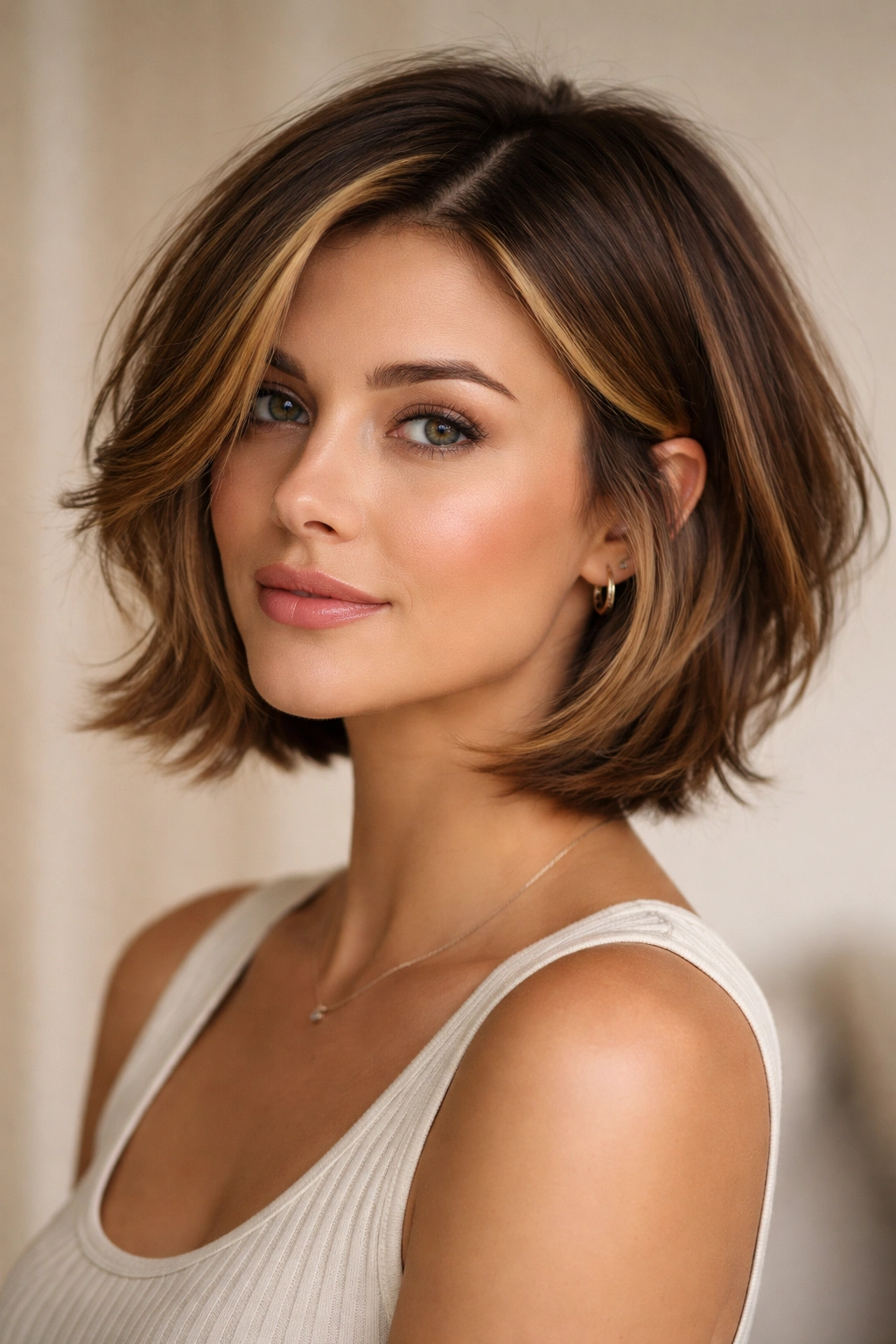
Layers can save a bob when the hair starts to feel heavy at the sides. Honey highlights around the cheekbones make that movement even better, because they catch the part of the haircut that actually changes your face shape. That is the bit people notice first.
Warm honey suits this cut because it softens the transition between skin and hair. A cool blonde can work, but honey has a rounder feel, and on layered bobs that matters. The layers already create motion; the color should echo it, not compete with it.
The best versions keep the front layers long enough to skim the jaw, then brighten just behind the thickest part of the cheek. That lifts the face without making the front look too chopped up. If the layers start too high, the bob can go airy in a way that feels dated. If they start too low, you lose the shape.
This cut also grows out well. The layers blur the line between salon visits, and the honey pieces stay soft even when the roots come in. A gloss every few weeks keeps the warmth clean, not brassy. That little bit of maintenance makes a big difference, especially if your water runs hard or your hair likes to dull fast.
I like this one on medium to thick hair most. It has enough body to hold the layers, and the highlights stop the ends from feeling bulky.
7. Collarbone Bob with Airy Curtain Fringe
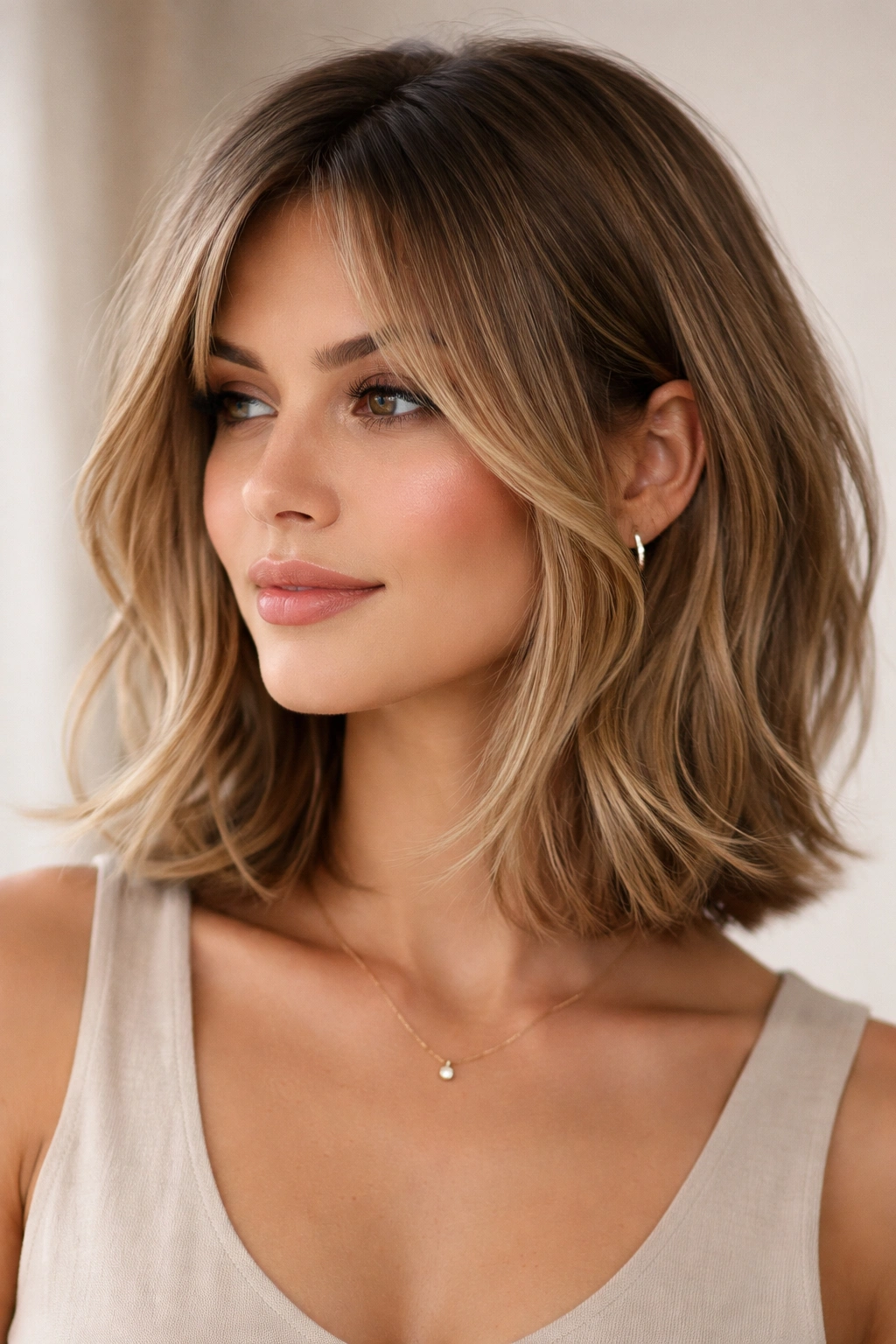
Unlike a chin-length bob, a collarbone bob gives the color room to breathe. The extra length lets face framing highlights fall more softly, which is why this cut pairs so well with an airy curtain fringe. The fringe opens the face, the longer sides taper down, and the whole shape feels less rigid.
This is one of the easiest cuts to live with if you want something polished but not fussy. You can wear it straight, tucked, curled, or air-dried with a little bend. The highlight placement can be broader here too, because there’s enough length for the color to fade naturally as it drops toward the ends.
The best salon request sounds like this: keep the fringe soft, keep the front pieces longer than the chin, and brighten only the outer edges that frame the eyes and cheekbones. You do not need a thick panel of light. Two or three lighter ribbons are enough if the cut is good.
This version works especially well when you want a bob that can survive a grow-out phase without looking awkward. The collarbone length is forgiving, and the curtain fringe blends into the face frame instead of fighting it.
Best For
- Hair that flips out slightly at the ends.
- People who want a bob they can still tie back.
- Anyone who likes a softer look around the forehead.
- Fine hair that needs a bit of visual fullness without heavy layering.
8. Inverted Bob with Cool Beige Face Framing Strips
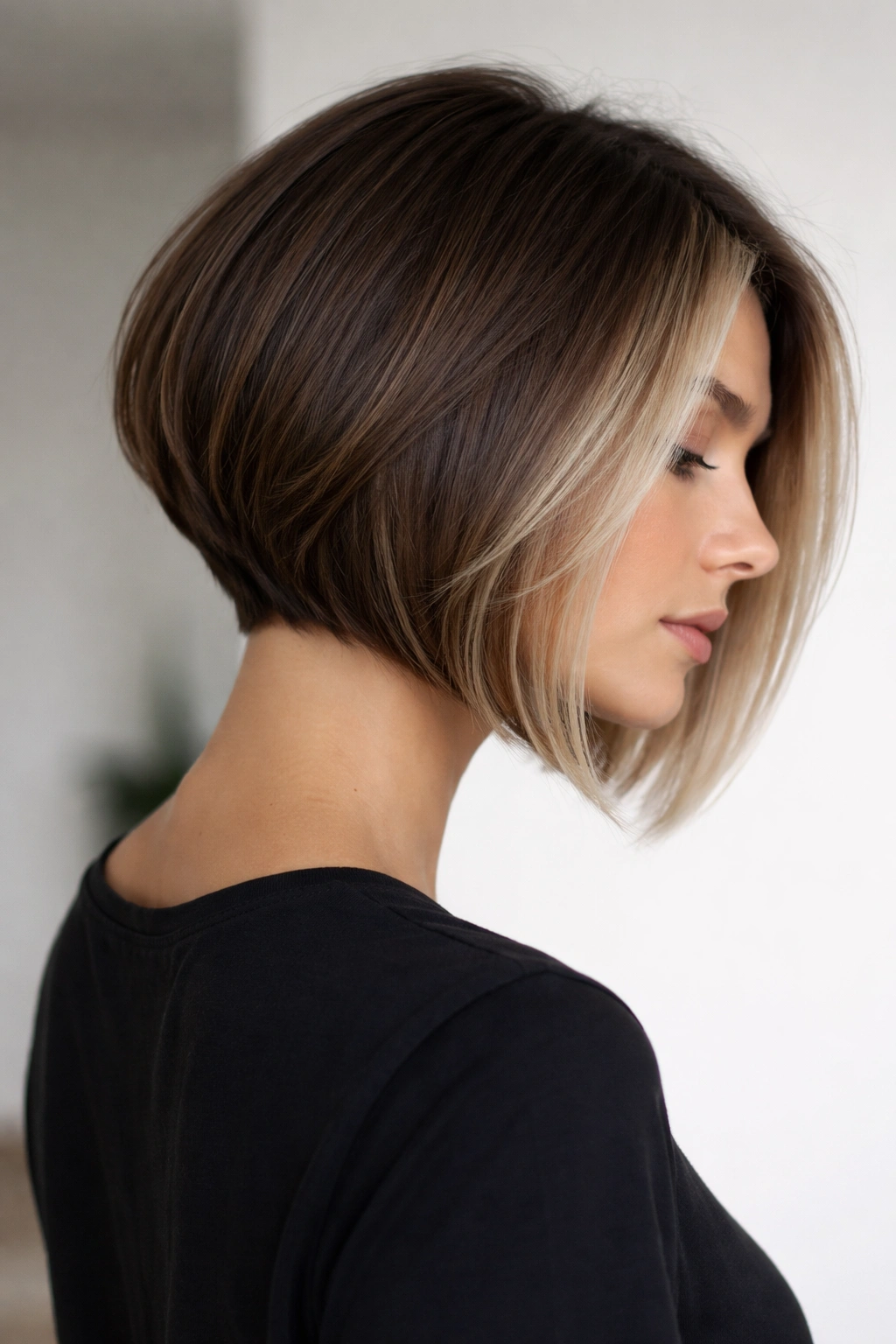
The back sits close to the head, the front swings forward, and the whole shape has a neat little edge to it. A face frame with cool beige strips keeps an inverted bob from feeling blocky. It gives the cut some air.
Why Cool Beige Works
Cool beige sits in that sweet spot between ash and soft neutral blonde. It brightens the face without turning the front of the hair icy. That matters on an inverted bob because the angle of the cut already creates tension. Too much warmth can make it look heavy. Too much silver-toned ash can make the skin look tired.
What to Ask For
- A stacked back that stays tight to the head.
- Front pieces that angle down to the jaw or just below it.
- Very fine beige strips starting near the brow and softening as they reach the cheek.
- A toner that keeps the highlight neutral, not yellow.
The color should follow the slope of the bob. That’s the part many people get wrong. If the light sits only at the top, it looks pasted on. If it’s painted along the front curve, the whole haircut feels intentional without looking stiff.
I’d choose this for straight or slightly wavy hair, especially if the hair is thick and tends to balloon out at the sides. The short back removes weight, and the brighter front pieces stop the shape from feeling severe.
9. Curly Bob with Lightened Front Curls
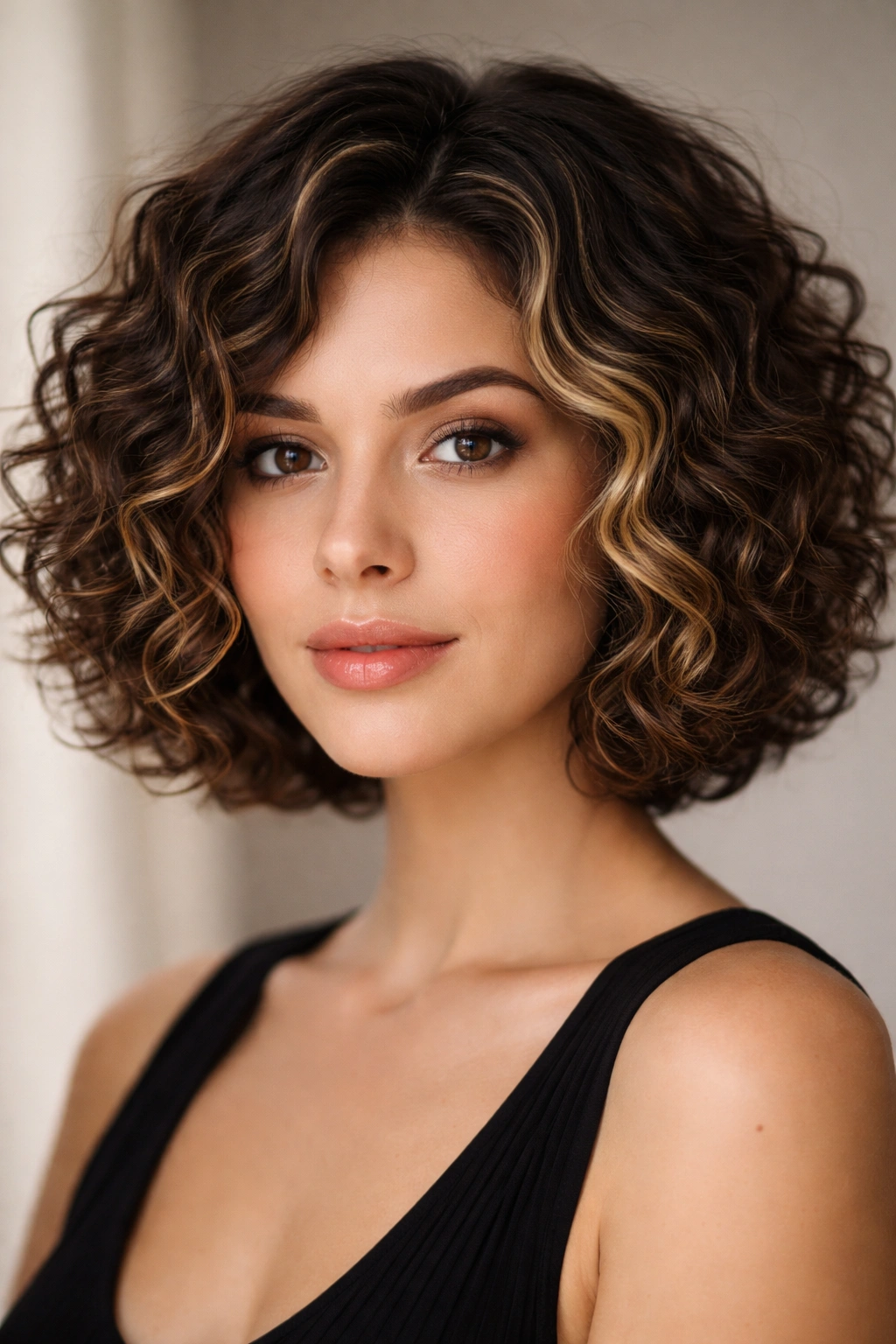
Curly hair changes the rules a little. A curly bob with lightened front curls can look beautiful, but only if the color follows the curl pattern instead of fighting it. One thick stripe across the front is the fastest way to ruin the shape. Curly hair wants scattered brightness that moves with the ringlets.
The best face framing highlights on curls sit on the outside edge of the curl, where the light would naturally hit. That means the curl can still bounce and separate, but the front of the style gets a lift. If your hair is tighter in the front, the color should be even finer there. Big pieces can look loud fast.
What to Tell Your Stylist
- Paint the outer face curls, not just the top layer.
- Keep the lift soft, usually one to two levels lighter than the base.
- Leave fragile hairline curls darker if they are already dry or breakable.
- Place the brightest curl near the cheekbone, not right at the temple.
A diffuser on low heat helps the curls keep their shape after coloring. Use a cream that gives slip, not crunch. And if you refresh in the morning, use a little water before product. Curly highlights look best when the pattern stays soft and rounded.
This is one of those cuts where less color often looks better than more. The curls do half the work for you.
10. Deep Side-Part Bob with Narrow Brightening Pieces
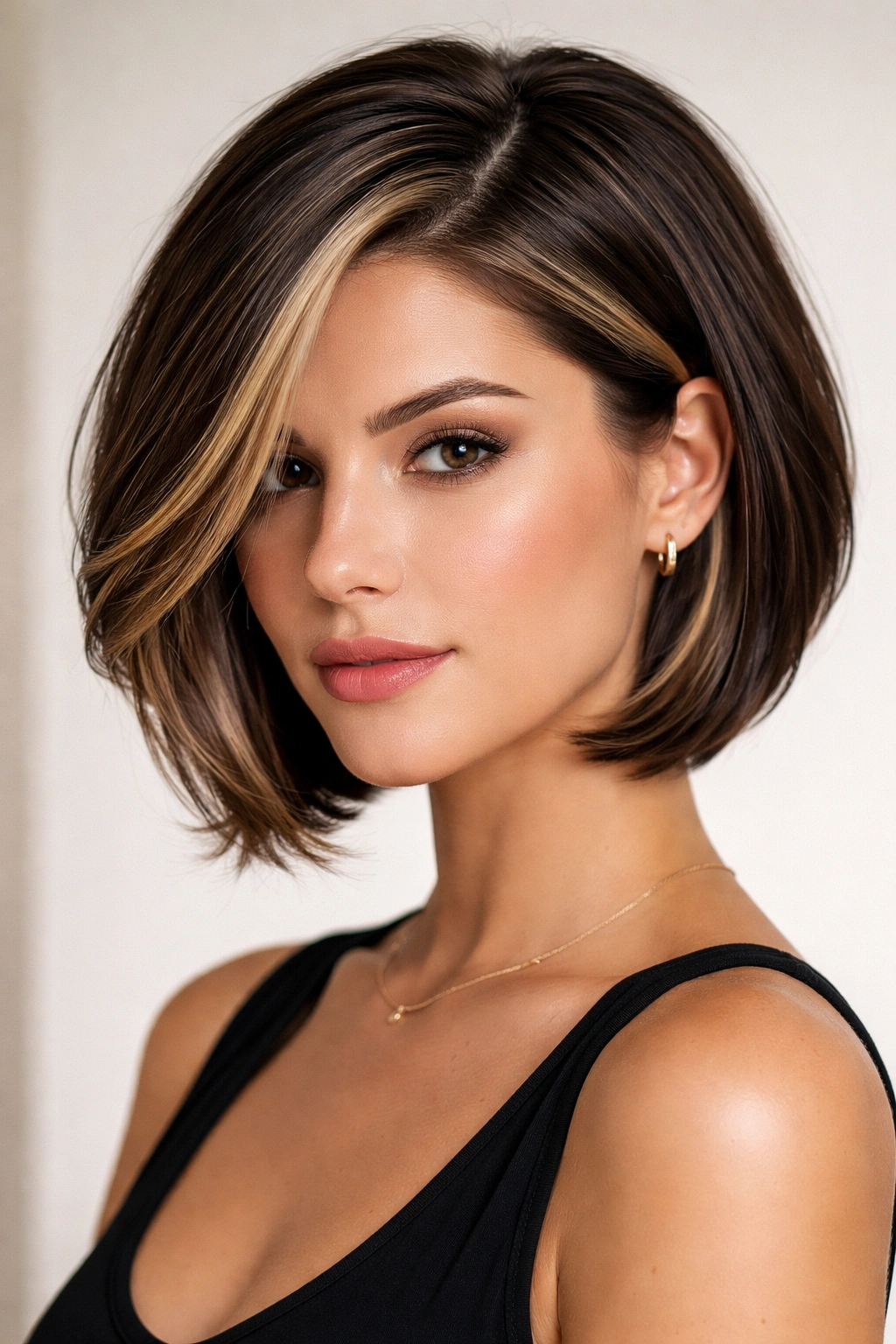
What happens when you move the part two inches over? The whole cut changes. A deep side part shifts weight, creates a sweep across the forehead, and gives one side of the bob more drama than the other. Narrow brightening pieces make that asymmetry look deliberate.
The safest version keeps the highlight narrow and precise. One ribbon can fall from the temple into the front bend, while the rest stays quieter. That way the side part has room to do its thing without making the cut look streaky. If you go too wide with the light, the focus gets messy fast.
This is a smart choice if your forehead feels long or if you like one side to do most of the work. The sweep gives lift, and the face framing color keeps the eye moving diagonally instead of straight down.
Where the Highlight Should Fall
- Start at the heavy side of the part.
- Carry the light through the front bend, not across the whole head.
- Keep the lighter piece thinner near the root.
- Let the ends fade softly so the highlight does not stop in a hard line.
A side part also means maintenance on both sides. If you switch your part around often, the brightening needs to be balanced enough to look good from more than one angle. That detail gets ignored a lot. Then people wonder why the color looks uneven.
It’s usually the part.
11. Shaggy Bob with Rooty Blonde Highlights
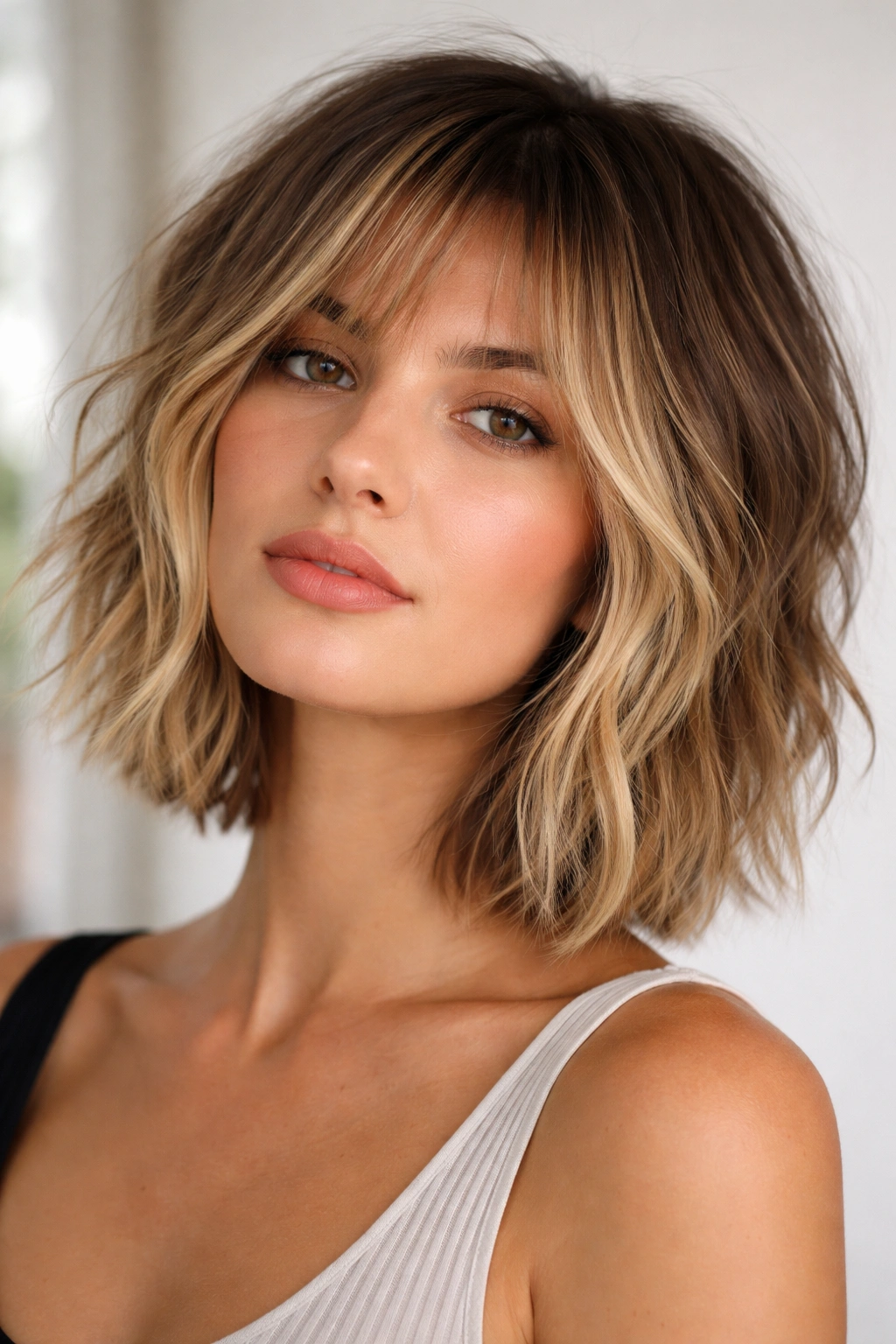
Not every bob needs a crisp money piece. A shaggy bob looks better when the roots stay soft and the blonde starts a little lower, because the cut itself already has enough movement. Pile too much brightness on the face and you lose the easy, tousled feel that makes this shape work.
Rooty blonde is the useful version here. The base stays a shade or two deeper near the scalp, then the light builds through the front layers and ends. That keeps the whole cut from looking flat while also making the grow-out less annoying. I like this a lot for people who want shape more than polish.
The layers should stay piecey, not feathered to death. That’s a real difference. Piecey means the ends separate cleanly and the hair still has little spikes of movement. Feathered can go soft and airy in a way that looks dated if the layers are too short. Keep them longer and the bob feels current without trying too hard.
This cut also makes styling easier on second-day hair. A little dry shampoo at the roots, a touch of matte paste on the ends, and you’re done. The soft root keeps the color grounded, and the face framing pieces still brighten the front enough to keep the haircut from disappearing.
12. Classic Rounded Bob with Long Face Framing Layers
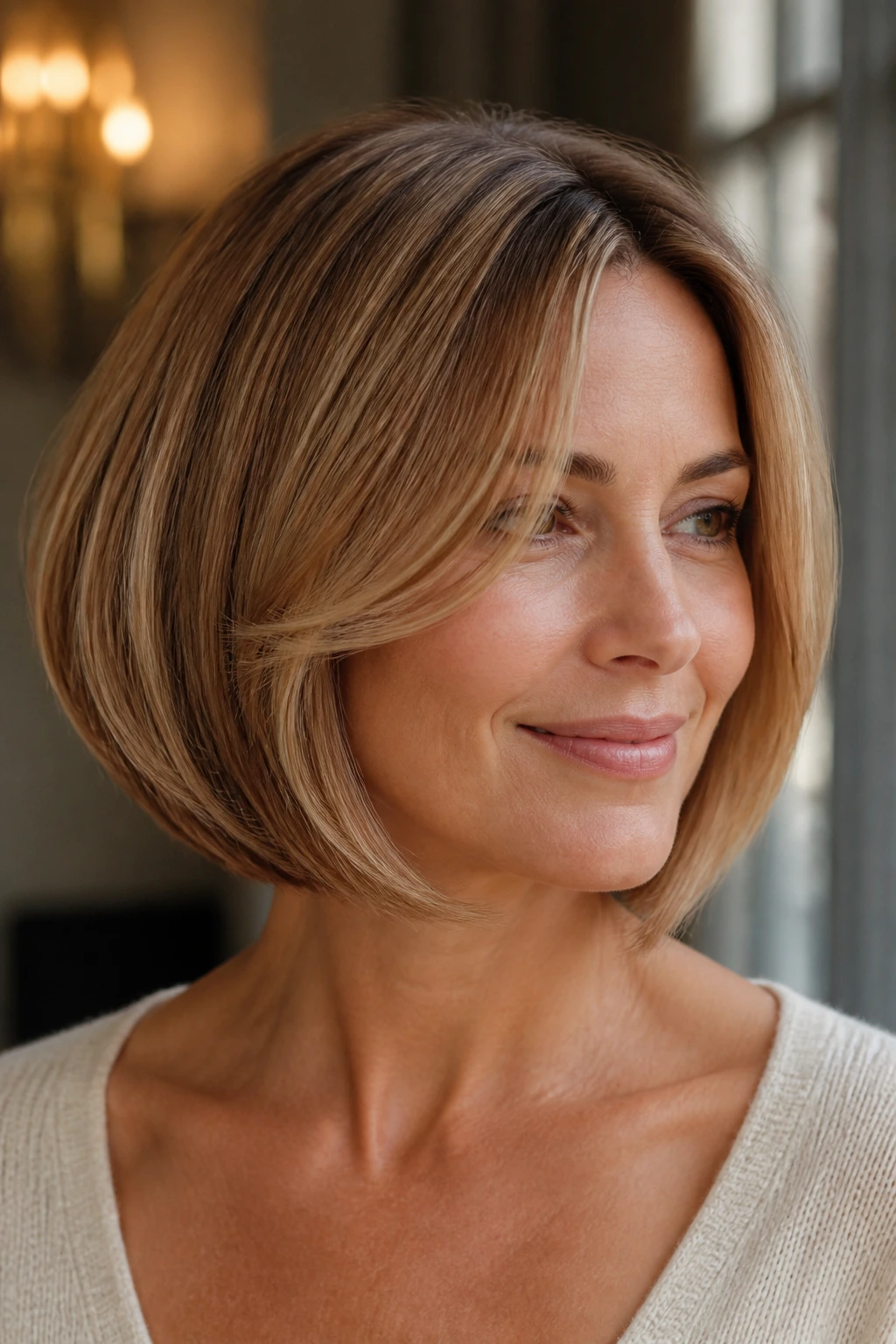
If you want one bob that plays nice with almost everything, choose the classic rounded bob with long face framing layers. The curve hugs the head, the front pieces skim the cheek, and the highlights can sit softly through the sides instead of shouting for attention.
This is the quiet winner. Not the flashiest. The most reliable. The rounded shape gives fullness at the back and sides, while the long front layers keep the face open. That combination is great if you like a bob that looks styled even when you did very little to it.
The color should stay blended here. A soft beige, honey blonde, or caramel ribbon works well because the long layers create enough movement on their own. You do not need a hard stripe near the front. In fact, that usually fights the shape. A gentle sweep from the part toward the cheekbone is cleaner, and it grows out in a nicer way.
Blow-dry this cut with a round brush, turning the front layers slightly away from the face. That makes the highlights catch the curve instead of sitting straight on top of it. If the ends are too blunt, the haircut can feel heavy; if they’re too layered, the rounded shape disappears. Keep the balance.
The best bob cuts with face framing highlights do the same thing in different ways: they brighten the face, keep the shape readable, and leave room for your own texture to show through. A good face frame should look like it belongs to the haircut, not like it was pasted on at the last second.
