



Side bangs can rescue a bob that feels too stiff, too flat, or too close to a helmet. A small shift in the front changes the whole haircut, and that is why bob cuts with side bangs stay so useful across so many hair types and face shapes.
The best versions do more than hide a forehead or soften a jawline. They shape the eye line, break up a heavy block of hair at the sides, and give the cut some motion even when the rest of the hair is blunt. If you have ever left a salon with a bob that felt a little severe, the fringe was probably the missing piece.
A good side bang does not sit there like a separate feature. It blends. It folds into the length, sweeps across the face, and makes the whole cut feel more lived-in. That can mean cheekbone-grazing movement, a longer fringe that skims the eyebrow, or a delicate sweep that disappears into textured ends.
The tricky part is choosing the right shape. Some bobs want a clean line. Others want layers, angle, or a softer bend through the front. The difference between flattering and fussy usually comes down to proportion, texture, and how much daily styling you’re willing to do.
1. Chin-Length Bob with Soft Side Bangs
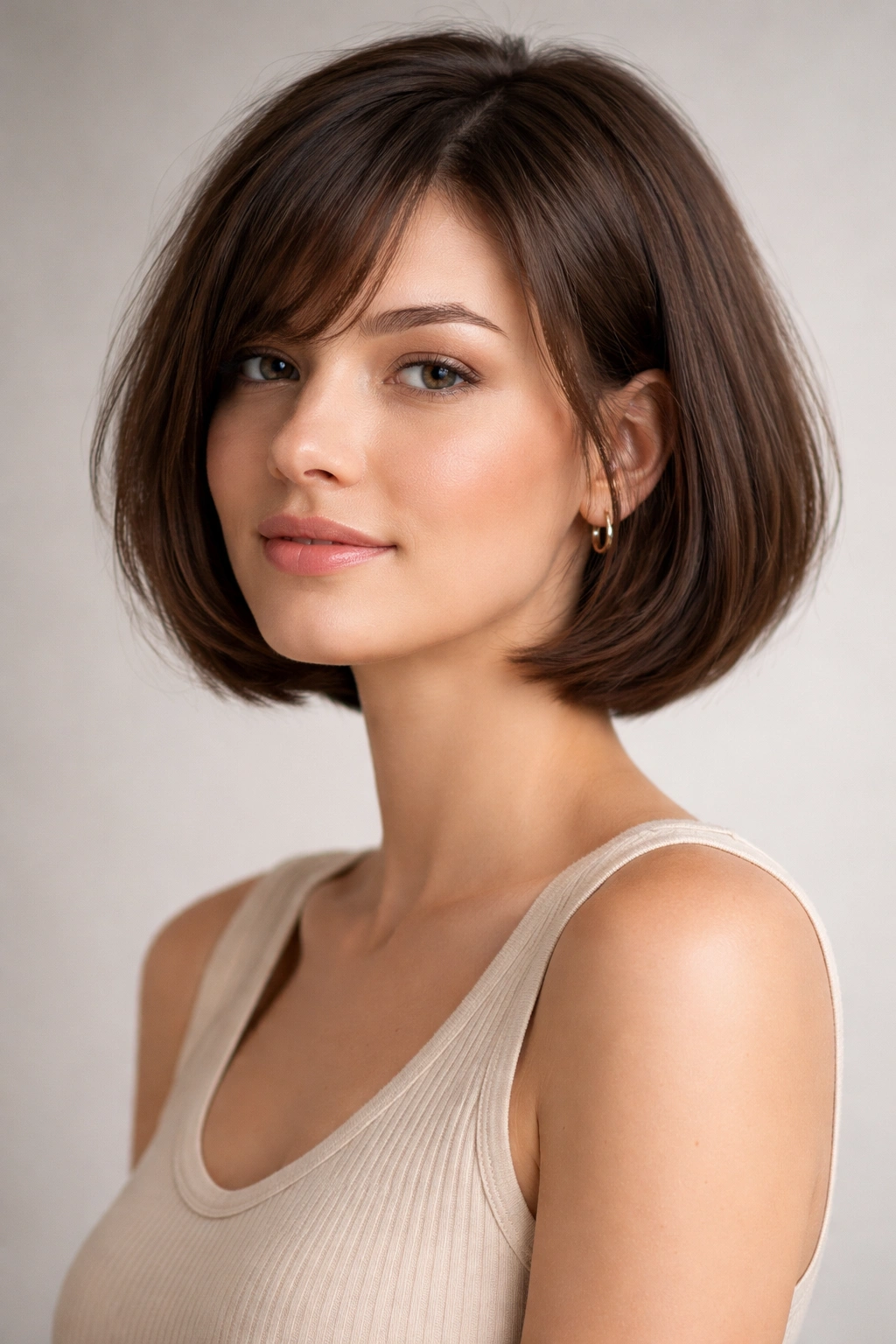
A chin-length bob gets a lot kinder the moment the front turns slightly off-center. That small move takes the edge off a blunt perimeter and keeps the cut from sitting too square around the face.
This is the bob I’d point to first if you want something neat but not harsh. The length sits right at the jaw or a hair below it, which gives the face a clean frame, while the side bang draws the eye diagonally instead of straight across. That diagonal line matters. It softens rounder faces, helps balance a strong chin, and keeps straight hair from looking like one flat sheet.
The styling is straightforward, which is part of the appeal. A round brush, a medium blow-dry nozzle, and a little root lift at the front are enough for most people. If your hair is fine, a mist of lightweight volumizing spray at the crown keeps the shape from collapsing by lunch.
One thing I like about this cut is that it behaves well in real life. It does not need perfection. A slight bend in the bang, a tucked side, a little bit of natural texture near the ends — that is enough.
It also grows out cleanly. If you trim the fringe every 4 to 6 weeks and shape the bob every 6 to 8 weeks, the line stays crisp without becoming precious. That is the sweet spot for people who want structure but do not want to babysit their hair every morning.
2. French Bob with Long Side Fringe
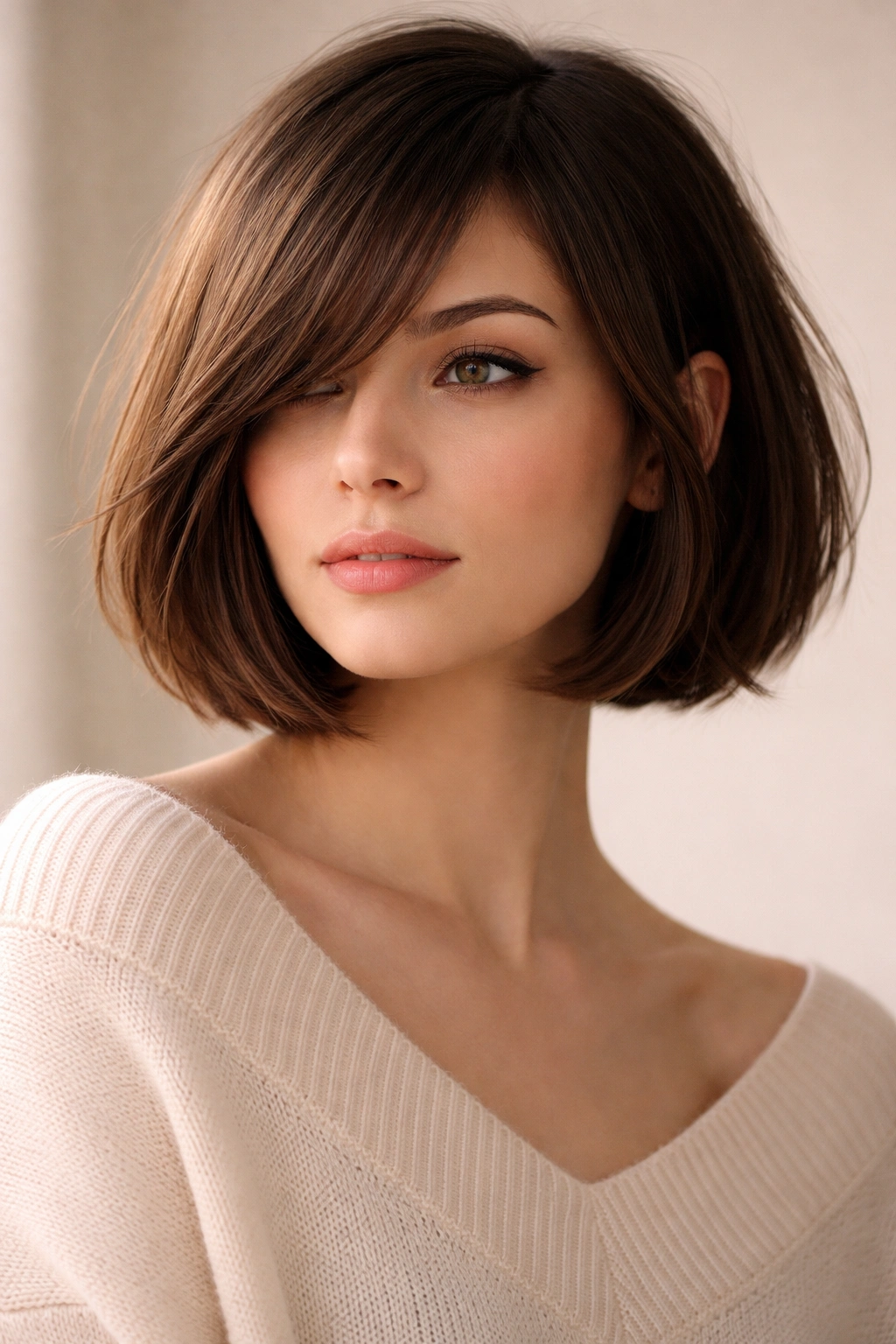
The French bob gets all the credit for looking effortless, but the long side fringe is doing half the work. Without it, the cut can land too blunt around the mouth or nose. With it, the whole shape feels lighter and a little more relaxed.
Why It Works
The fringe usually starts shorter near the part and drops toward the cheekbone or lip on the opposite side. That diagonal shape keeps the haircut moving, even when the rest of the bob is short and tidy. It is a smart choice for people who want a little Parisian mood without going full severe, because the fringe softens the line in a way a blunt mini fringe never will.
- The length usually sits around the cheekbone or upper lip.
- The bob itself often lands between the jaw and the top of the neck.
- It works well with air-dried waves or a loose bend from a flat iron.
- A center part is optional; a deep side part gives it more swing.
Best tip: ask for the fringe to be cut long enough to tuck behind the ear on days when you want it out of the way.
This version looks best when it moves. If the ends are too stiff, the whole cut loses its charm. I’d keep product light — a touch of cream or mousse, not a heavy balm that makes the fringe separate into strings.
3. Blunt Bob with a Deep Side Part
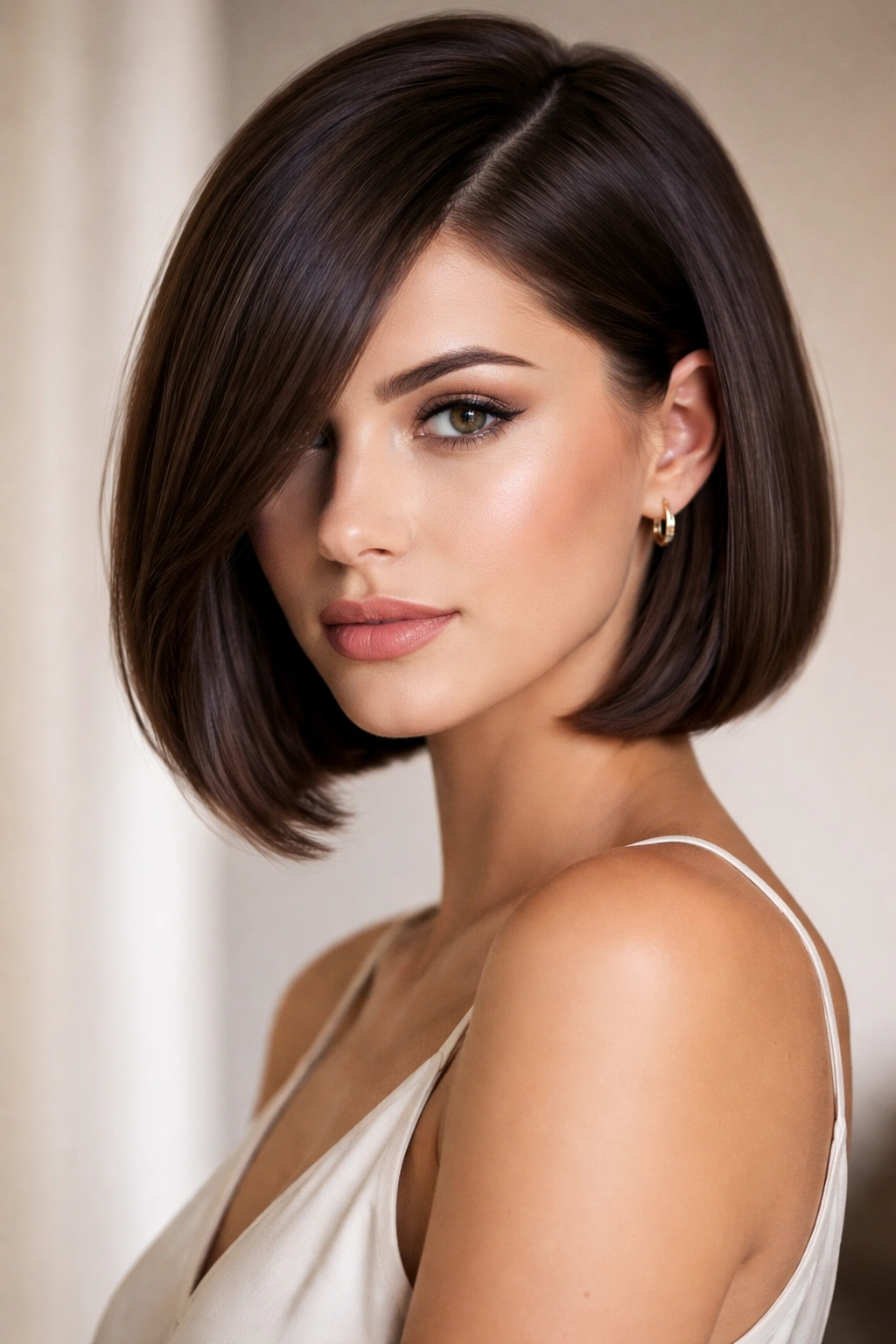
A blunt bob with side bangs is sharper than people expect. The blunt edge gives you the clean, graphic line, and the deep side part breaks up the severity before it starts to feel boxy.
That contrast is the point. Thick hair especially benefits from this shape because the blunt line removes bulk at the perimeter, while the side bang stops the haircut from reading as one heavy block. If your hair has a lot of body, this is one of the few bobs that can look polished without needing a ton of layering.
The front matters here. Keep the side bang long enough to skim the outer corner of the eye or the top of the cheekbone. Too short, and the cut can look dated fast. Too thin, and the bang disappears against all that blunt weight. You want presence, not fragility.
This style likes precise styling. A paddle brush for smoothing, a flat iron for the last half-inch of the ends, and a shine spray on the surface are usually enough. Skip heavy texturizing at the bottom. It can fray the clean line that makes the haircut worth wearing in the first place.
It suits oval, heart, and longer face shapes especially well. Round faces can wear it too, but the side part should be fairly deep so the front creates a longer line across the face rather than a wide one.
4. Layered Bob with Feathered Side Bangs
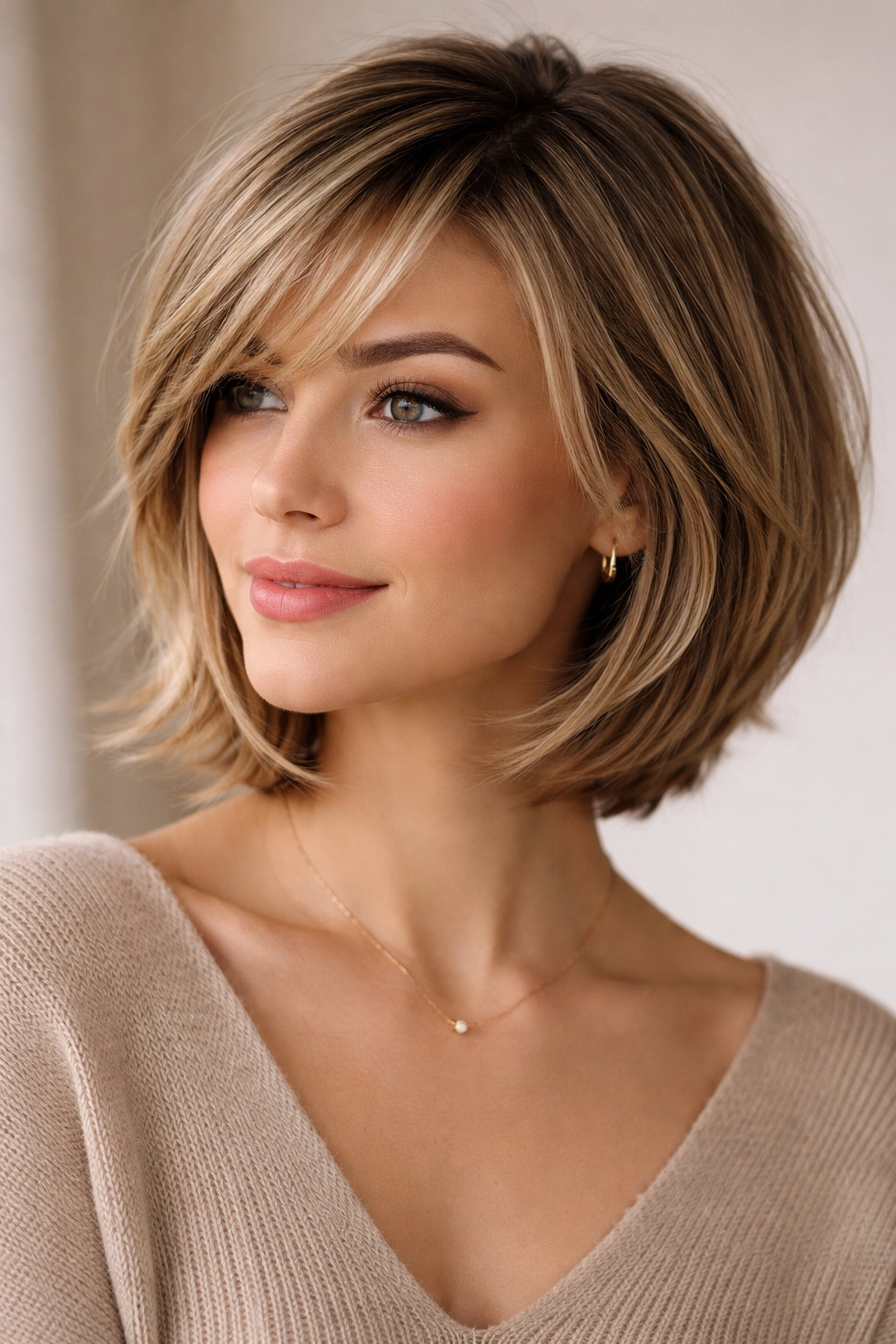
Why do some layered bobs look airy while others look messy? The answer is usually in the fringe. Feathered side bangs help the layers move with the haircut instead of fighting against it.
How to Style It
This cut works because the layers are not all trying to do the same job. The bob keeps shape through the back and sides, while the fringe gets softened with point cutting or feathering so it melts into the length. That makes it a strong choice for medium-density hair, especially if the ends tend to feel heavy after a few weeks.
- Keep the shortest face-framing pieces around the cheekbone.
- Ask for soft interior layers rather than choppy chunks.
- Blow-dry the bang forward first, then sweep it to the side while it is still warm.
- Use a light mousse at the roots if the crown falls flat.
The best thing about this cut is how forgiving it is on grow-out. A blunt bob can look awkward when it starts to lose its edge. A feathered bob usually just looks a little more relaxed, which is a nice trade.
I would not go too short with the layers if your hair is already fine. Too much feathering can leave the ends wispy in a bad way. Keep some weight at the perimeter so the bob still reads as a bob, not a shag that wandered off by mistake.
5. A-Line Bob with Side-Swept Fringe
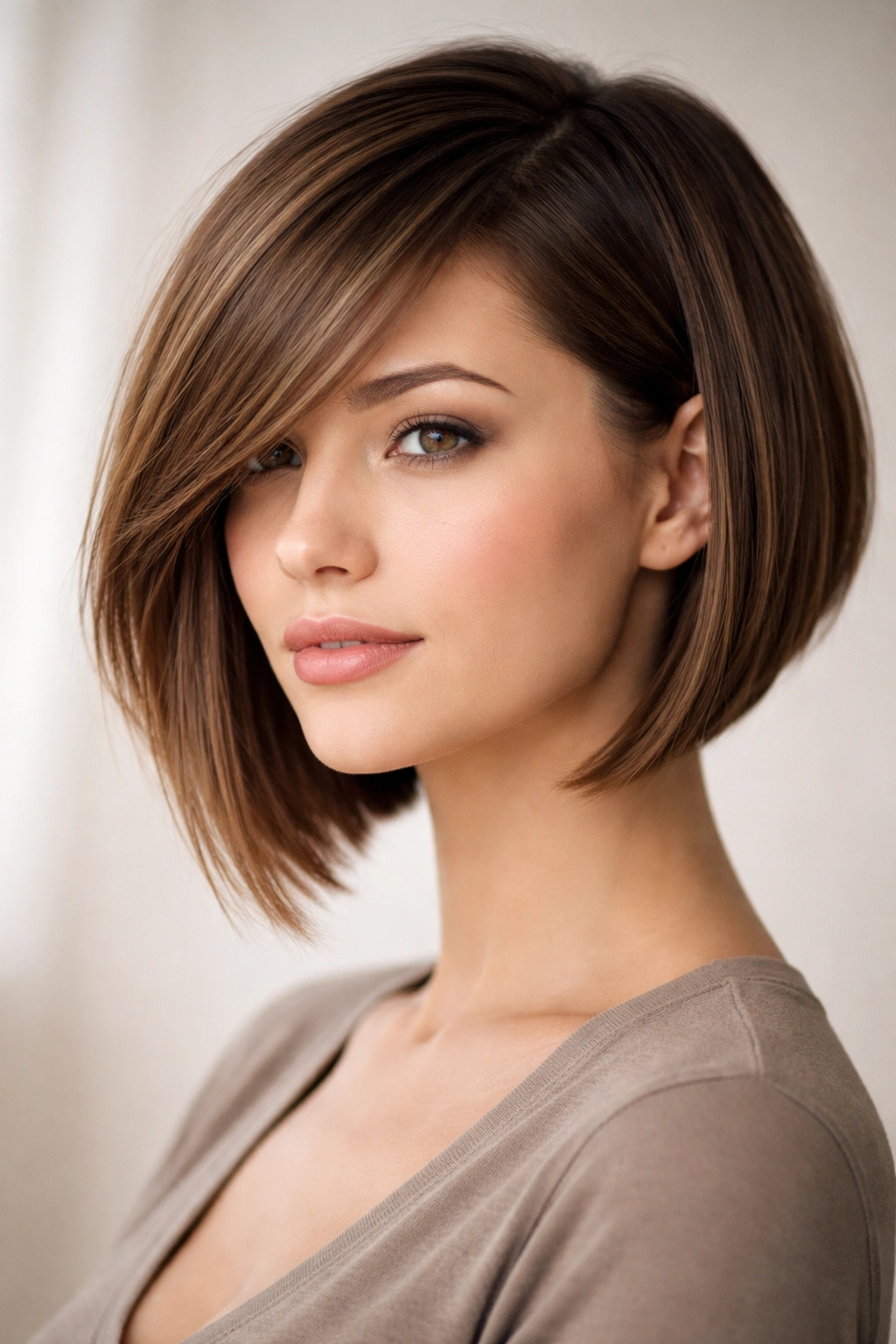
If you like a cut that falls forward in a clean diagonal, the A-line bob is the one to watch. The back sits shorter, the front drapes longer, and the side fringe echoes that angle instead of interrupting it.
That mirroring is what makes the style feel so intentional. The fringe starts near the part, sweeps across the forehead, and lands somewhere near the temple or cheekbone. Meanwhile, the front length at the jaw stretches the face a little and keeps the silhouette elegant without turning fussy.
Key Details That Matter
- The back usually sits 1 to 2 inches shorter than the front.
- The front pieces should skim the jaw or collarbone, depending on how dramatic you want the slope.
- A side fringe that is too short can fight the angle instead of joining it.
- Straight and slightly wavy hair show the shape most clearly.
This is a good haircut if you like a visible shape when you turn your head. It also photographs in a nice, clean way because the profile is doing something interesting. The catch is maintenance. If the line grows too long in back, the effect starts to blur.
Ask your stylist to decide the shortest point first, then build the front from there. That one detail saves a lot of regret later.
6. Wavy Bob with Curtain-Like Side Bangs
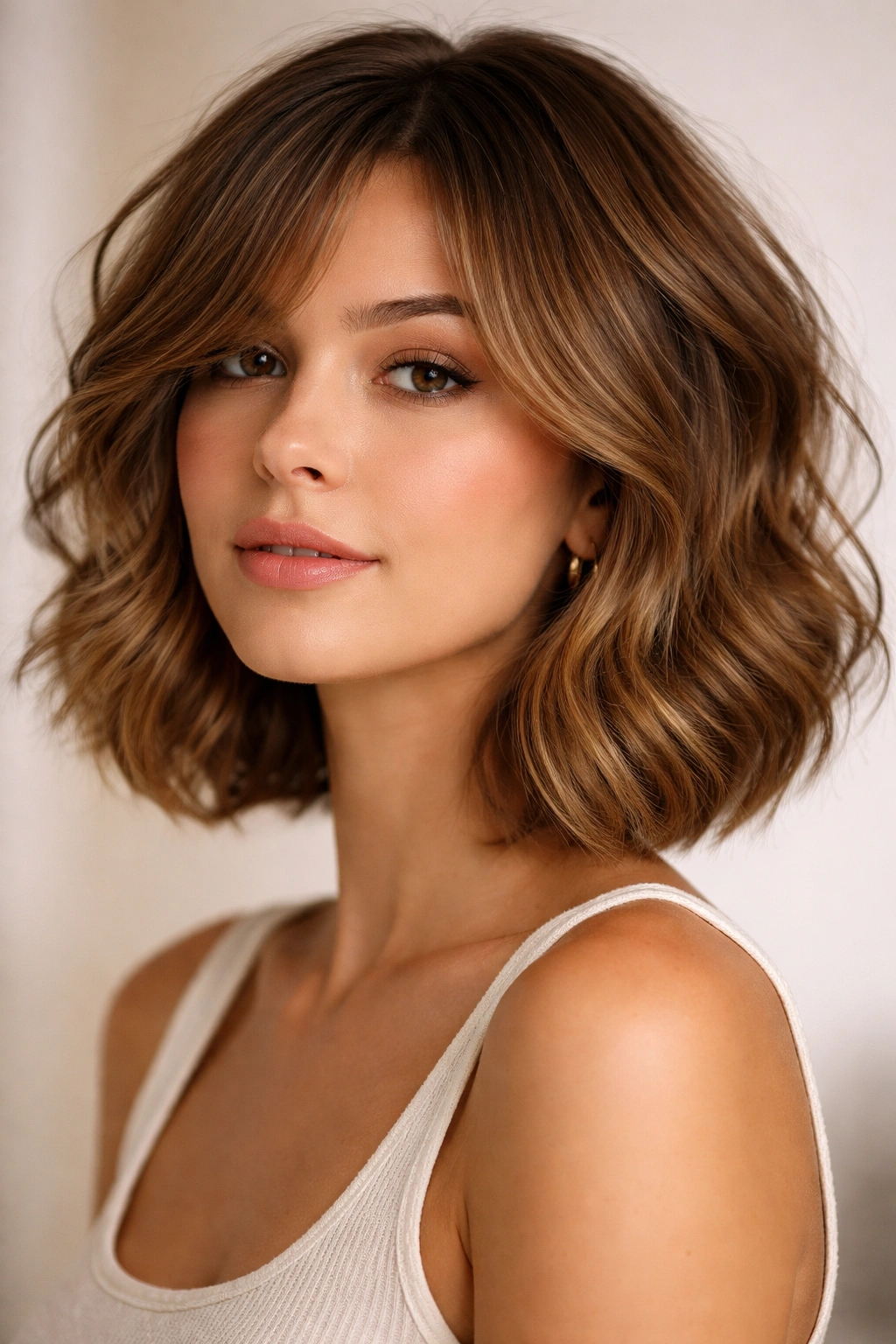
Wavy hair and side bangs have a very easy relationship when the fringe is cut with enough length. The bend in the hair keeps the bangs soft, and the bangs keep the wave from looking shapeless at the front.
This cut is good for anyone who wants movement without a lot of heat styling. A loose wave through the bob creates that soft bend around the cheekbones, and the side bangs can fall with the wave instead of sitting as a separate strip of hair. The result feels casual in a good way, not sloppy.
The fringe should usually live longer than you think. If your hair has any puff or frizz at the front, cutting the bangs too short makes them bounce up and split. A cheekbone-to-lip length is safer. It gives you room to sweep, tuck, or pin the fringe depending on how your hair settles that day.
One thing I like here is the texture on the ends. Wavy bobs do not need razor-sharp edges. A little unevenness actually helps the haircut breathe. A touch of sea-salt spray can help, but too much dries the hair out fast and makes the bangs rough.
This is one of the few styles that looks better when it is not overly controlled. If your wave pattern is soft and a little unpredictable, that works in your favor.
7. Textured Shaggy Bob with Side Bangs
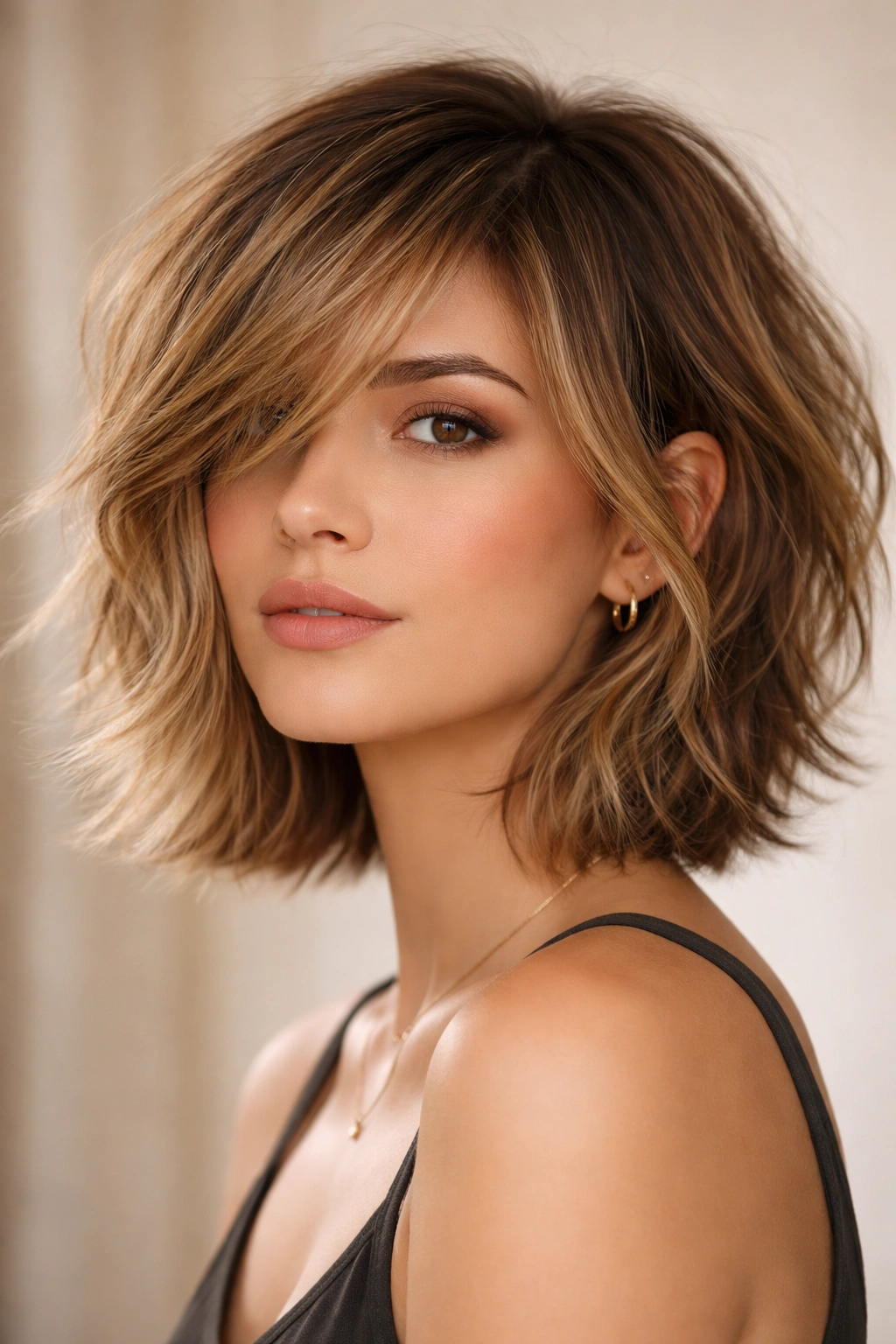
The shaggy bob is the least fussy cut in this list, but only if it is cut well. If the layers are random, the shape falls apart. If they are planned, the whole haircut gets that easy, broken-up movement people usually want from textured hair.
What to Ask for at the Salon
Tell the stylist you want texture, not thinning. Those are not the same thing. Point cutting at the ends, soft interior layers, and a fringe that blends into the front sections will give you movement without hollowing out the shape.
- Keep the bang long enough to brush past the eyebrow.
- Leave some weight at the bottom so the bob still reads as a bob.
- Ask for soft layers around the cheek rather than aggressive choppy pieces.
- If your hair is thick, keep the crown lighter than the sides.
This cut works especially well if you air-dry a lot. A little leave-in cream and a small dab of matte paste at the ends is often enough. The goal is separation, not stiffness. When the pieces move on their own, the side bangs look intentional instead of pasted on.
I would skip this if your hair is very fine and already tends to fray. Too much texture can leave fine hair looking thin at the perimeter. On thicker hair, though, it can be the easiest style in the world to live with.
8. Inverted Bob with Angled Side Bangs
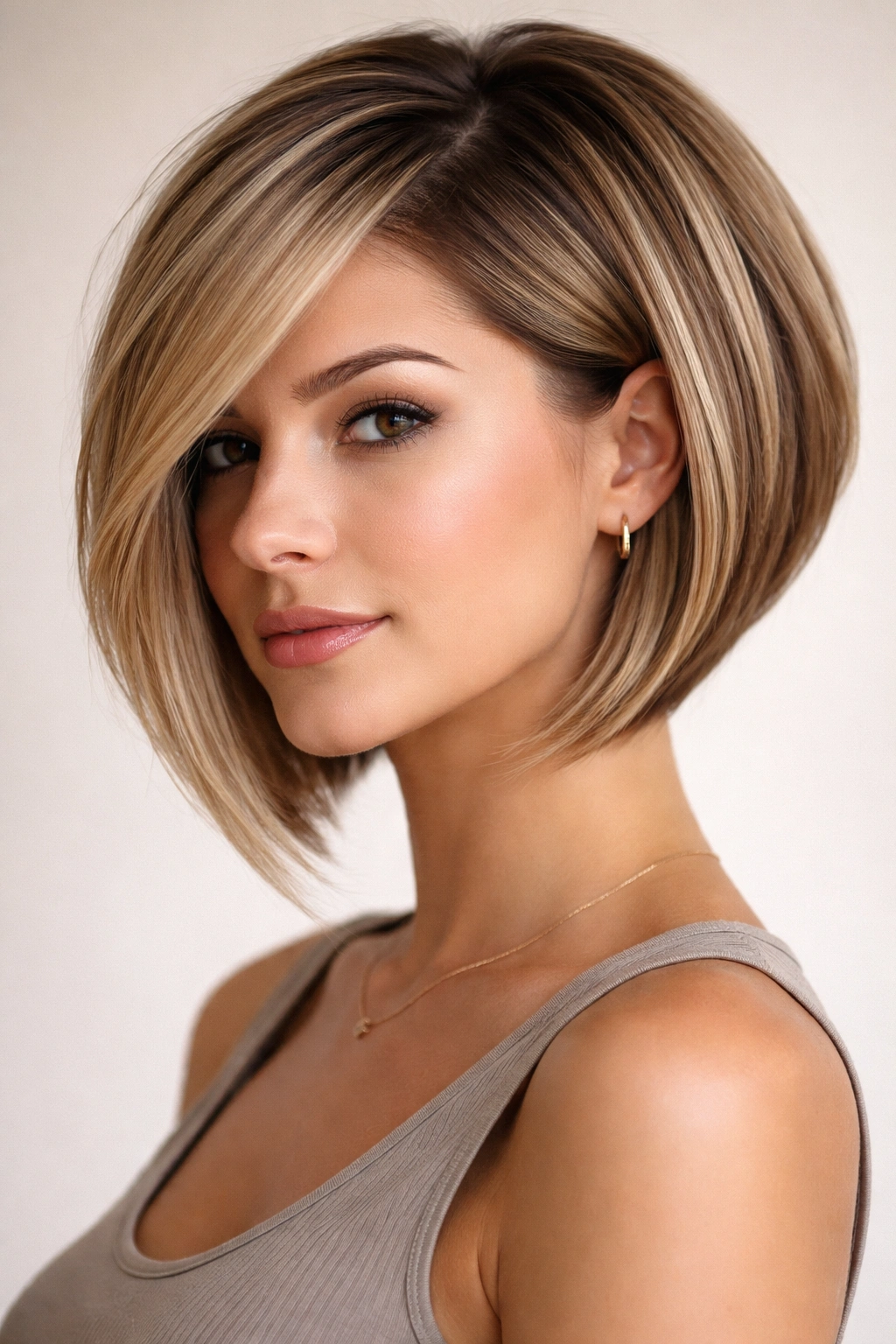
Unlike the A-line bob, the inverted bob stacks more volume in the back and keeps the front a little more forward and dramatic. That makes it a sharp choice for people who want lift at the crown without giving up the clean bob outline.
The angled side bangs help carry that energy across the face. They echo the diagonal line of the cut and keep the front from feeling disconnected from the back. If the bob has a strong angle but the fringe is soft and vague, the haircut can look confused. When the fringe follows the cut’s geometry, it looks much more finished.
This shape is especially good for fine hair that falls flat at the crown. The stacked back gives the illusion of density, and the side bang adds balance so the haircut does not become all back and no face. That said, it does ask for regular trims. The back grows out quickly and can lose its lift if you leave it alone too long.
A small round brush and a root-lifting spray are usually enough to keep the volume where it belongs. You do not need giant hair or heavy teasing. You need a little direction and a clean sectioning pattern while blow-drying.
If you dislike hair touching the nape of your neck, this one can feel especially nice. It stays off the collar and keeps the silhouette light from the side.
9. Curly Bob with Soft Side Bangs
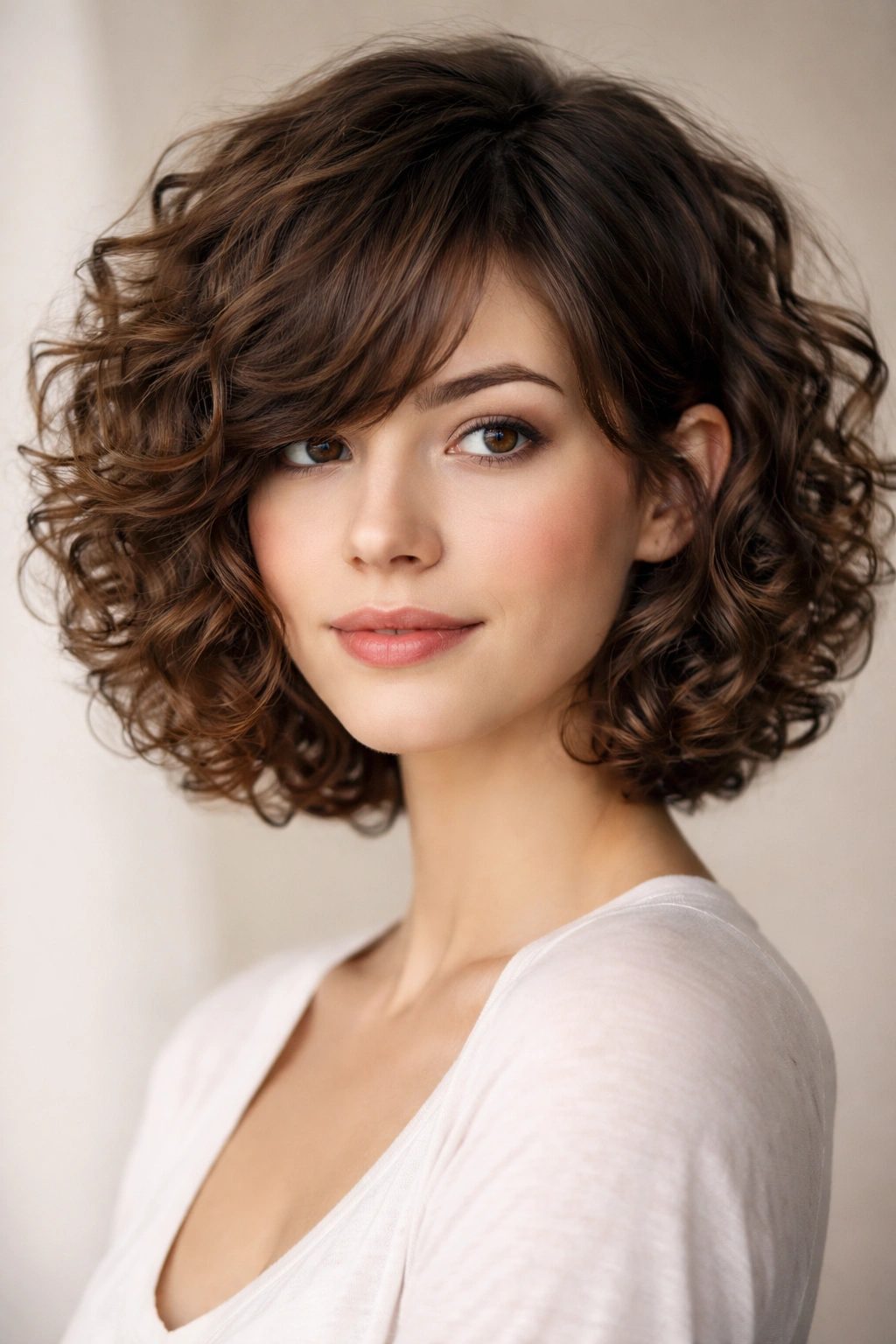
Can curls and side bangs work together? Yes, if the fringe is cut with shrinkage in mind and the front pieces are left longer than a straight-haired person would expect.
The biggest mistake with curly bangs is cutting them too short when wet. Curls spring up. Sometimes a lot. A side bang that looks perfect at the sink can bounce several inches higher once it dries, and then suddenly you have a tiny curl sitting halfway up the forehead. Not ideal. A dry cut or a careful curl-by-curl trim is safer, especially around the front.
What Makes It Work
- The fringe should land near the cheekbone or lower when dry.
- The side part should follow your natural curl direction.
- Leave-in conditioner and curl cream help the bangs clump instead of frizz out.
- A wide-tooth comb is better than brushing once the hair is dry.
This style has a nice softness around the face because the fringe doesn’t form a hard line. It bends, it lifts, it shifts. That suits curl patterns that already have bounce and body, since the bangs can feel part of the curl story instead of an extra piece attached to it.
I’d avoid heavy oils on the fringe. They weigh the front down fast and make the curls separate into stringy pieces. A little cream, a little water, and a gentle scrunch are usually enough.
10. Collarbone-Length Lob with Side Bangs
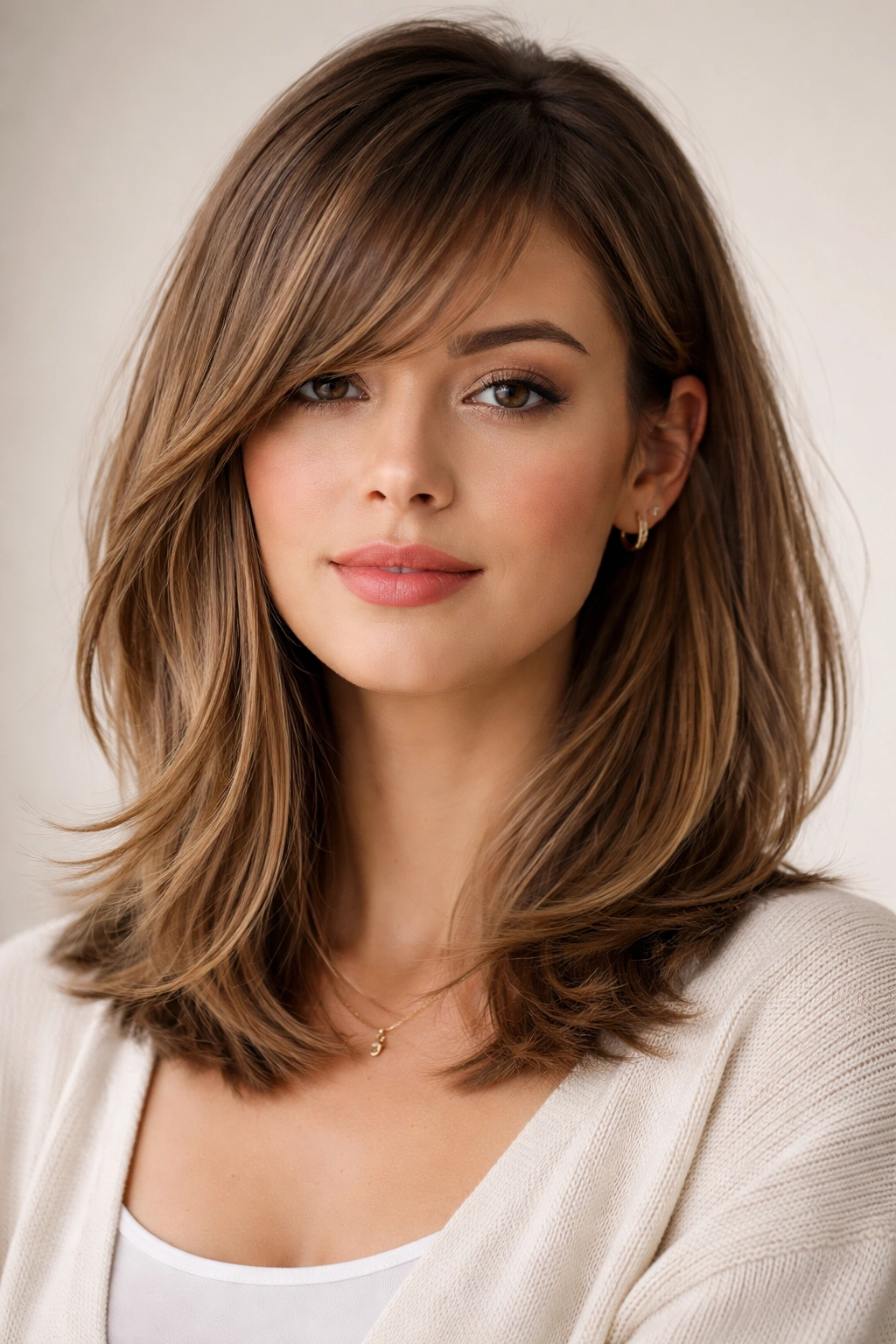
Some people want the bob shape without giving up the safety of length, and that is where the lob earns its keep. With side bangs, the collarbone-length cut gets shape at the front without losing the swing that makes longer bobs so wearable.
This is a smart haircut for someone in transition — growing out shorter hair, testing a bob without committing to a chin-length line, or just wanting something that can be pinned back on bad days. The side bangs do a lot here. They stop the lob from looking like a flat middle section with long ends and give the hair a face-framing point of focus.
The styling range is good too. You can wear it sleek, wavy, tucked, or pulled half back. A side bang gives you a front piece to work with even when the rest of the cut is lazy. That makes it a strong everyday option for people who do not want one style that only looks good after 30 minutes of effort.
A medium-barrel curling iron, around 1 to 1¼ inches, gives the ends a bend without making the whole shape too curly. If you blow-dry, keep the front section lifted at the root so the fringe does not cling to the forehead.
This is one of those cuts that almost always feels useful. Not flashy. Useful.
11. Pixie Bob with Long Side Bangs
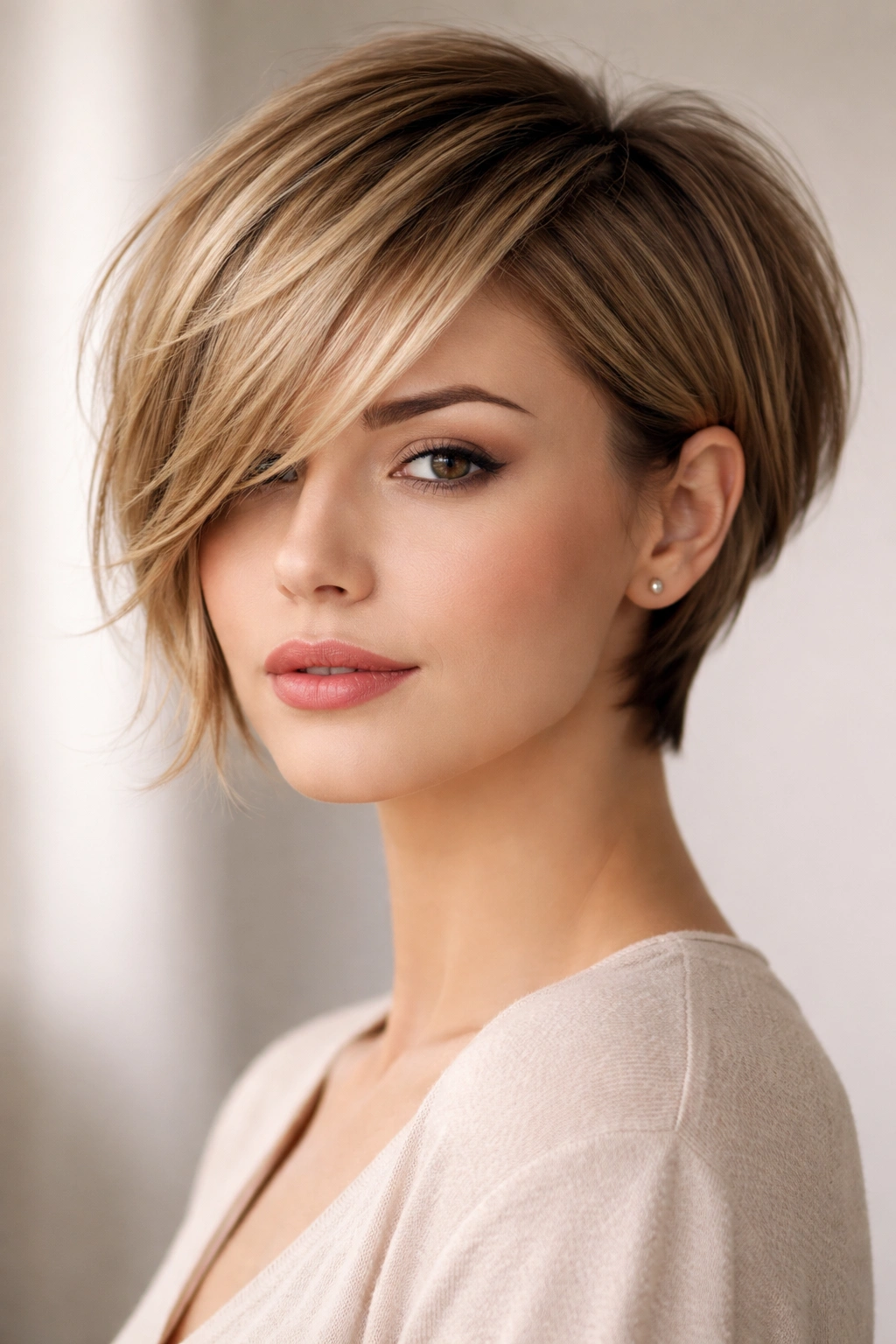
A pixie bob with long side bangs is the sharpest cut here. It sits between a cropped bob and a grown-out pixie, which means the face becomes the main event and the fringe does a lot of the softening.
It is not shy. The short back opens up the neckline, and the longer side bang gives you movement across the forehead so the cut doesn’t feel too exposed. That balance is why it works. Without the fringe, the shape can feel severe. With it, the haircut gets some swing and a little bit of mystery.
This is a strong pick if you like your features to show. Cheekbones look more pronounced, earrings matter more, and your profile gets a clean line. It also dries fast, which is one of the few practical reasons to go this short and thank yourself later.
I would not recommend this if you hate regular maintenance. The short back and sides grow out fast, and a pixie bob loses its edge once the nape starts to bulk up. Plan on trims every 4 to 6 weeks if you want it to stay crisp.
A dab of styling cream or paste through the fringe is usually enough. Push the bang to the side while it is damp, then let it set with a little natural bend. Too much product can make the front droop, and that ruins the shape fast.
12. Asymmetrical Bob with Dramatic Side Bangs
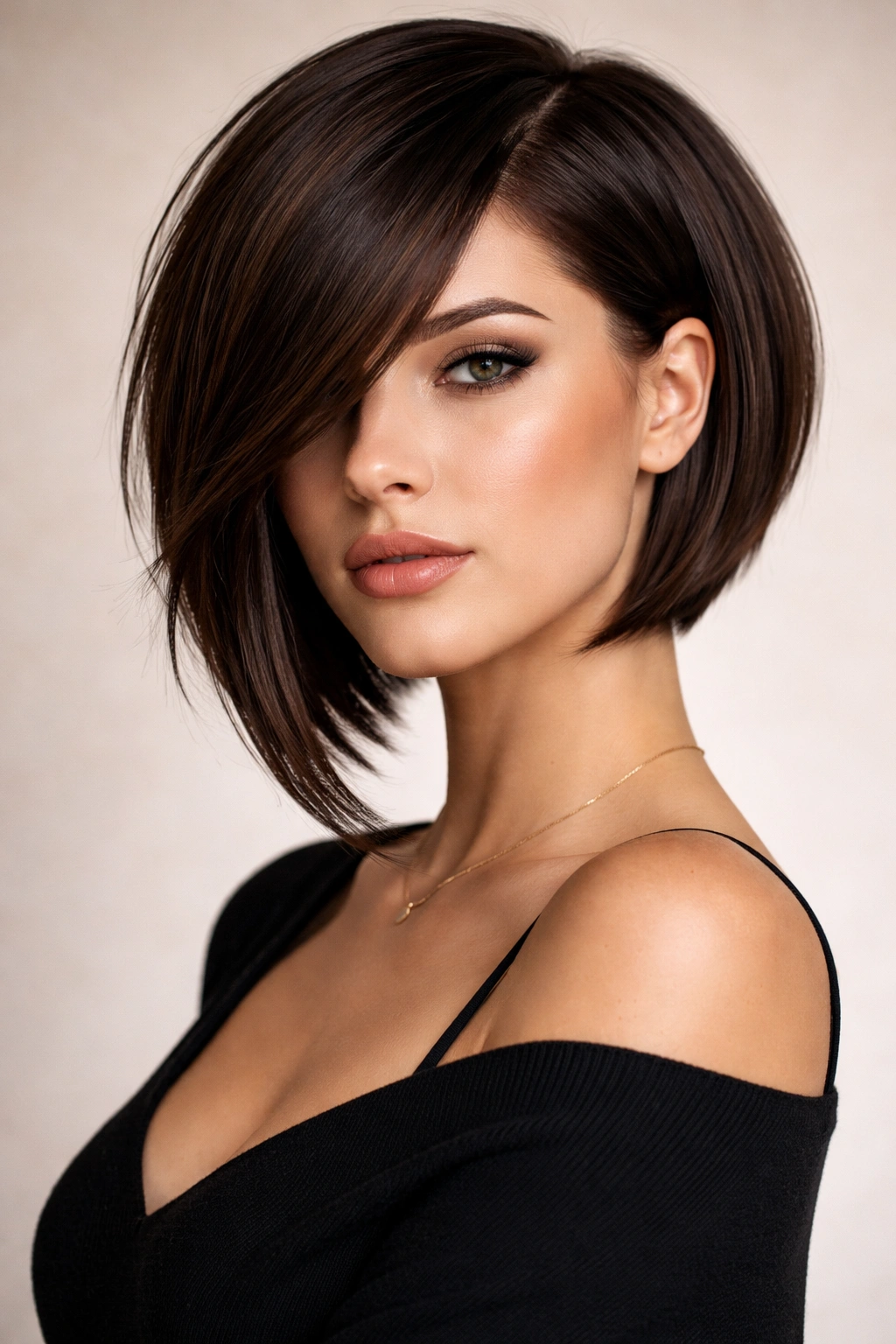
Asymmetry only works when one side is just a little longer, not when the haircut looks like it had a fight with scissors. The side bangs help sell the angle by giving the eye a second diagonal line to follow.
This is the cut for someone who likes edge but still wants something wearable. One side of the bob usually falls closer to the jaw or collarbone, while the other side sits shorter and cleaner. The fringe can echo that imbalance and make the whole style feel deliberate rather than random. When the line is too perfect, the asymmetry gets lost. When the fringe is too heavy, it takes over. The sweet spot is somewhere in the middle.
A difference of 1 to 2 inches between sides is often enough. More than that, and the haircut can start to feel costume-like unless the texture is very specific. With the right balance, though, it has a clean, modern edge that works well with minimal makeup and simple clothes. The haircut does the talking.
I like this shape on oval and heart-shaped faces because the diagonal front can lengthen and sharpen the features without hardening them. If your hair is naturally straight, it shows the asymmetry most clearly. Wavy hair can wear it too, but the cut has to be precise or the unevenness can vanish into the texture.
13. Rounded Bob with Airy Side Bangs
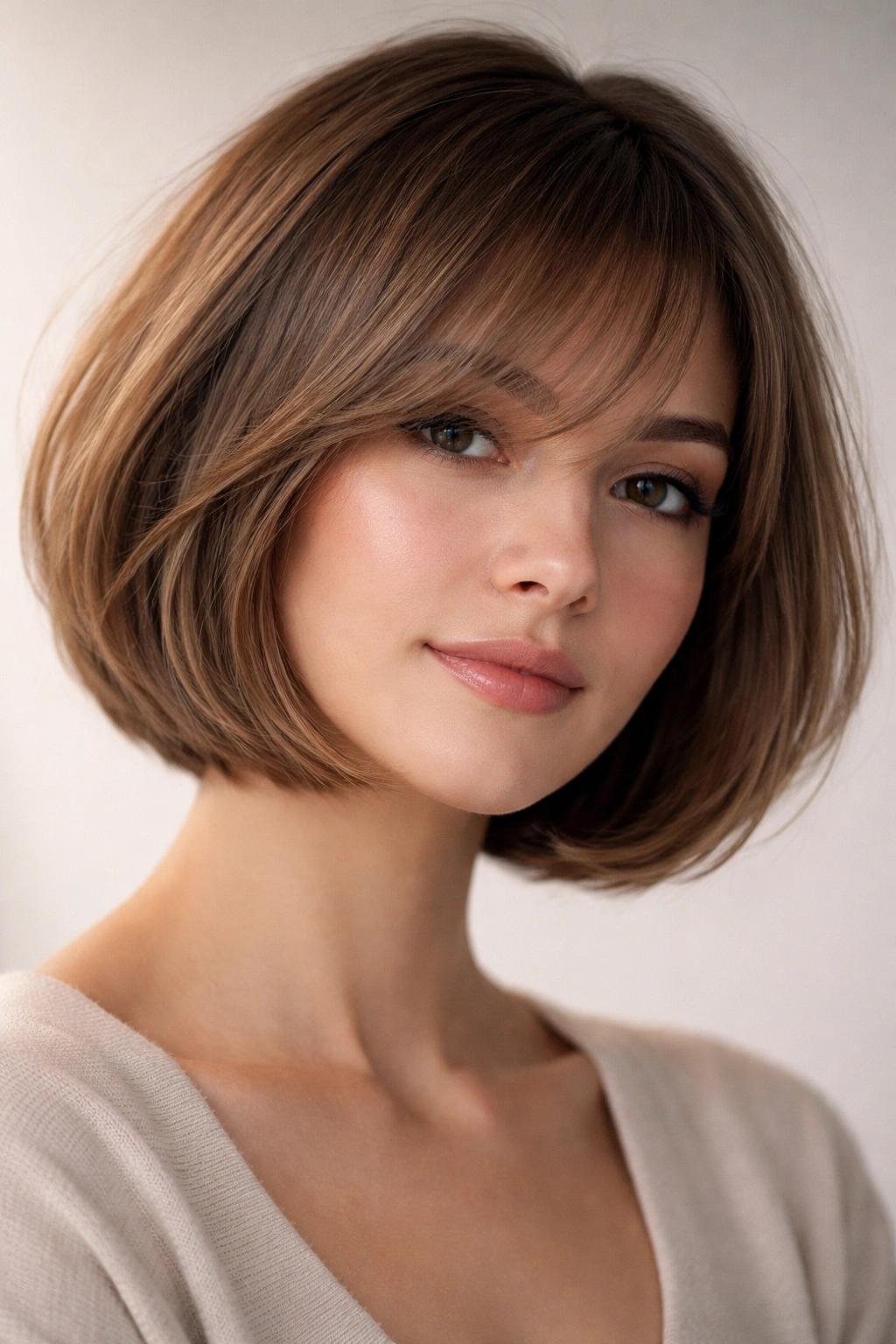
Does a rounded bob turn puffy? It can, if the fringe is too full and the perimeter is too dense. The fix is a lighter side bang and a softer curve around the jaw.
This cut gives you a curved silhouette instead of a straight block. The hair usually follows the shape of the head, then rounds gently under at the ends. That can be lovely on straight or softly wavy hair because it frames the face in a gentle arc. The airy side bang prevents the top from feeling sealed off, which is where rounded bobs can start looking helmet-like.
Where It Shines
- Fine to medium hair that needs shape, not bulk.
- Straight hair that holds a bend at the ends.
- Faces that benefit from softness around the jaw.
- Anyone who wants a neat bob without a hard line across the bottom.
The trick is restraint. Keep the fringe light and a little see-through, not heavy and blunt. A round brush and a quick bend through the ends are usually enough. If the ends curl under too sharply, the haircut can look dated. If they barely move, it loses the roundness that gives it charm.
This is a quietly pretty cut. Not loud. Not stiff. Just a nice curve with a bit of movement at the front.
14. Stacked Bob with Side Fringe
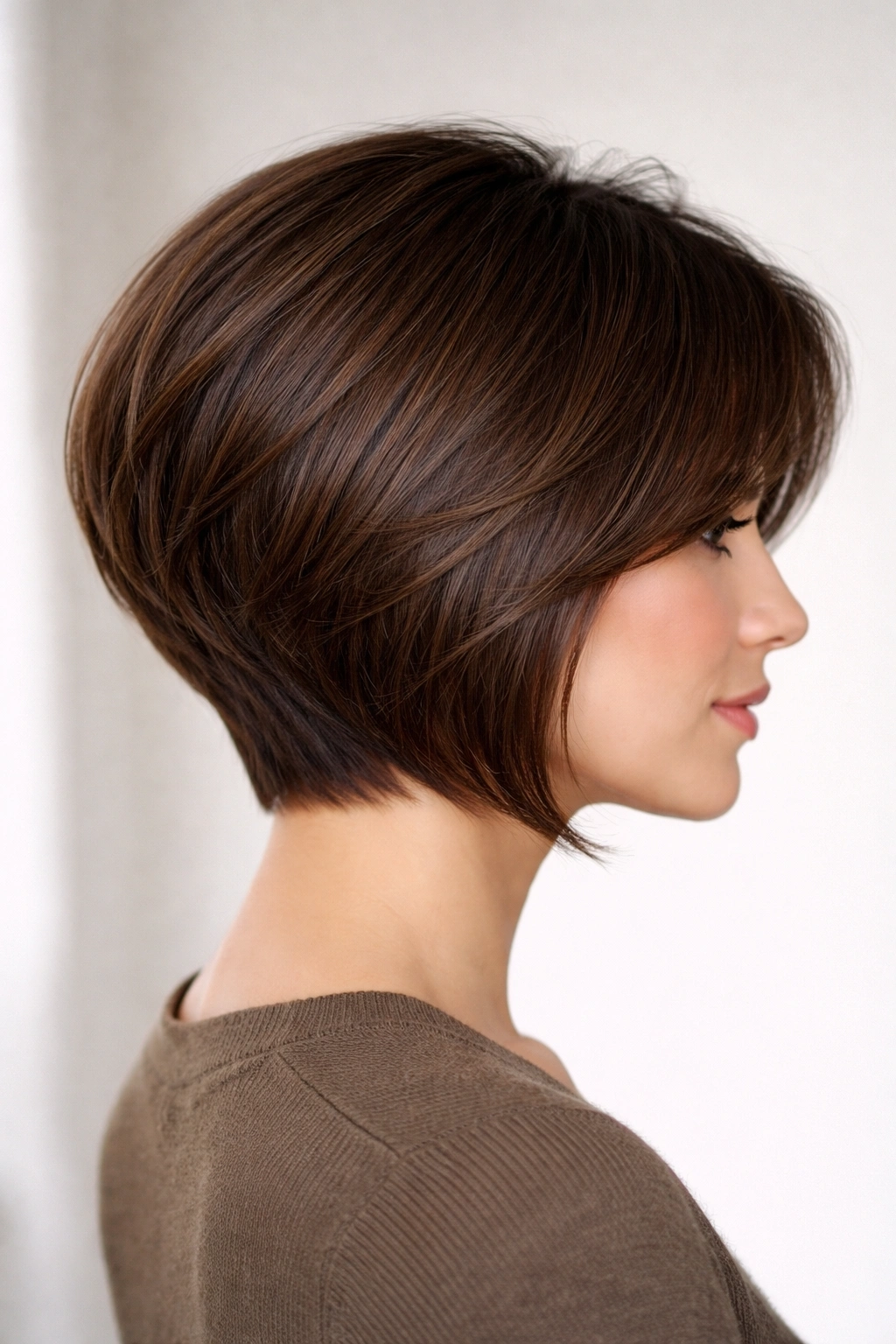
Every stylist has heard some version of this request: “I want lift in the back and I want my neck to look longer.” That is basically a stacked bob, and the side fringe keeps it from feeling all back and no face.
The stacked layers create a built-up shape at the crown and upper nape, which gives the haircut height where flat hair usually struggles. The side fringe then softens the front so the silhouette doesn’t tip into too much volume in one place. Without the fringe, the cut can look overly structured. With it, the whole thing feels more balanced.
Key Details
- The stacked area should be neat and graduated, not chopped.
- The fringe should sweep from the part toward the outer brow or cheek.
- This cut works well on straight, thick hair that needs removal of bulk in the back.
- It needs trimming more often than a lob if you want the stack to stay visible.
The best version is clean in the nape and smooth at the crown. If the layers are too short, the back can bubble out in an awkward way. If they are too long, the stack disappears and you lose the point of the cut.
I like this one for someone who wants a bob that looks styled even on a normal day. It has shape built into it, which means you are not creating the whole haircut from scratch every morning.
15. Sleek Glass Bob with Side-Swept Bangs
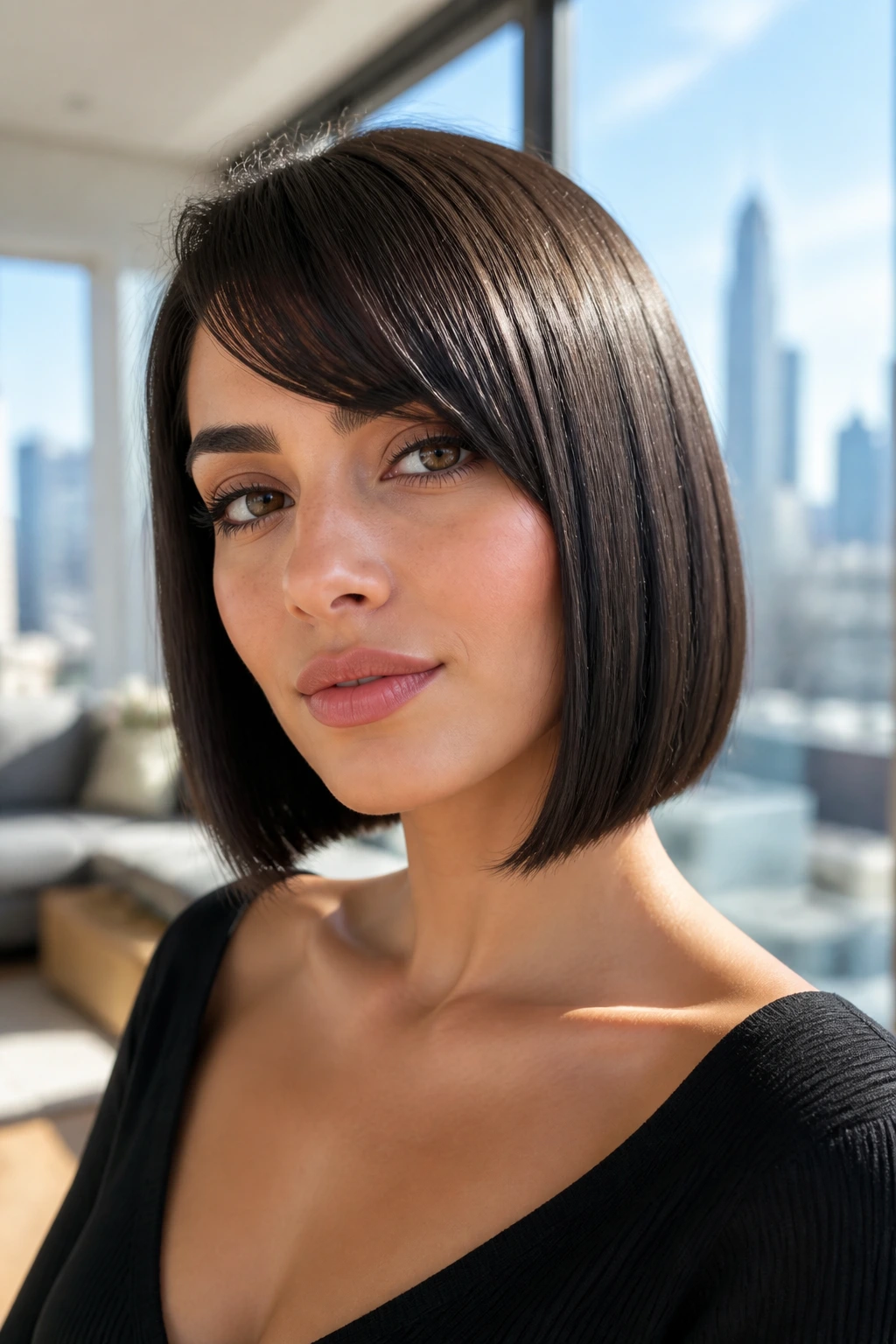
A sleek glass bob asks for the most finish, but it pays you back with a clean, polished line that looks precise from every angle. The side-swept bangs keep the shape from feeling severe, which matters because a dead-straight bob with no movement at the front can read a little too hard.
This is the style that likes shine. A heat protectant, a smoothing cream, and a flat iron set to a moderate temperature are usually enough if your hair is naturally straight or only mildly wavy. The trick is not to overwork the fringe. Pass the iron once or twice, then let the bangs fall where they want to fall. If you keep chasing them with hot tools, they lose that soft sweep and start looking flat.
It works especially well when you want the haircut to look intentional with very little visual clutter. The line is crisp. The fringe gives it motion. The whole thing feels tidy without being stiff. That is harder to get than it sounds.
If your hair is porous or frizzy, this cut can still work, but it asks for more care. You will need a good blow-dry, a touch of serum on the ends, and a light hand with product around the bangs so they do not separate. Too much oil near the front is the fastest way to make the style collapse.
Some bobs are about volume. This one is about finish. If you like hair that looks clean, sharp, and expensive in the plainest possible sense of the word, this is the one to keep on your shortlist.
The safest choice is the one that fits your actual routine, not the one that wins on a photo saved to your phone. If you want something quick and forgiving, start with a softer layered bob or a lob. If you like a sharper shape and don’t mind a brush or flat iron, the blunt, inverted, or glassy versions will give you much more polish.
