



A bob with bangs can look crisp on its own, but once layers come in, the whole haircut starts doing more work for you. The shape moves. The fringe softens. The ends stop sitting like a helmet, which is a mercy if you’ve ever had a blunt cut that behaved for exactly one day and then turned into a triangle.
The appeal of layered bob cuts with bangs is pretty simple: they can make fine hair look fuller, tame thick hair without removing all the body, and give straight or wavy hair some life without forcing you into a dramatic chop. Bangs do the framing. Layers do the shaping. Put them together and you get a haircut that can read polished, airy, edgy, or soft depending on where the weight sits.
There’s a catch, though. A layered bob with bangs lives or dies on balance. Too much thinning and the cut turns wispy in a bad way. Too little layering and the bangs can feel disconnected from the rest of the hair. The best versions have a clear plan: the fringe ties into the sides, the layers fall where they should, and the neckline is clean enough that the shape still looks intentional when you tuck one side behind your ear.
That balance is what makes these 15 cuts worth knowing. Some are better for round faces, some work beautifully on thick hair, and a few are especially good if you want something that still looks decent after you sleep on it.
1. Layered Bob With Curtain Bangs at the Collarbone
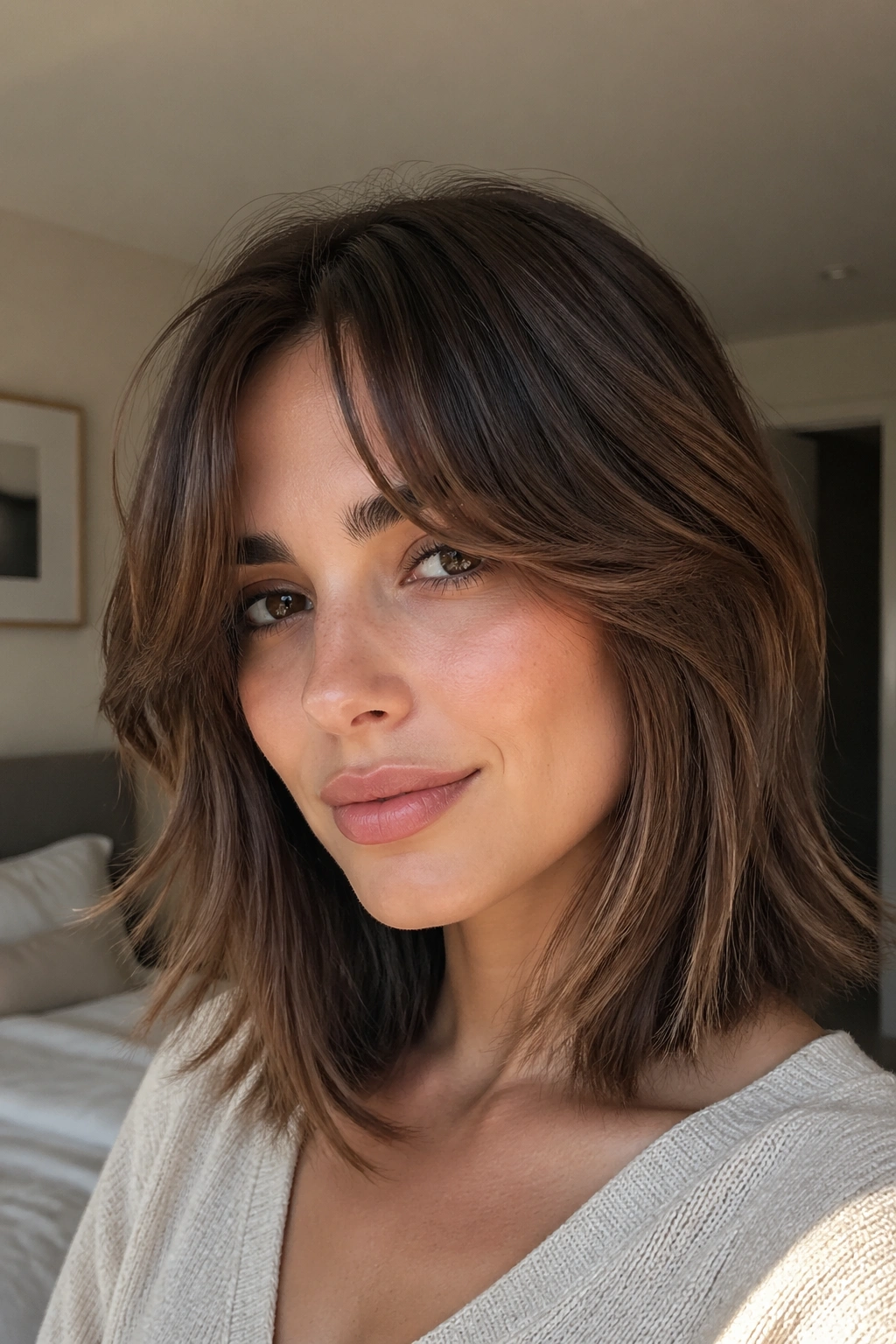
A collarbone-length layered bob with curtain bangs is the haircut I keep coming back to when someone wants movement without a harsh line. It lands right in that sweet spot between a true bob and a longer lob, which gives you enough length to tuck, wave, or air-dry without the style collapsing. The curtain fringe opens the face, but it doesn’t box you into daily bang maintenance.
Why It Flatters Without Looking Fussy
This shape works because the layers start low and move outward instead of exploding all over the head. That means the cut still has a clean perimeter, which matters if you like a little order in your hair. The bangs can be parted in the middle or just off-center, and either way they blend into the cheekbones instead of sitting on the forehead like a separate piece.
It’s especially good on fine to medium hair. You get lift at the front without losing density at the ends, and that matters more than people think. A lot of “voluminous” cuts look airy for about ten minutes, then go flat at the crown. This one usually behaves better.
What to Ask for at the Salon
- Collarbone length with soft internal layers, not choppy stairs.
- Curtain bangs that start around the cheekbone and taper into the jaw.
- A slight face frame so the front doesn’t feel blunt.
- Ends that are textured enough to move, but not razor-thinned.
Tip: Blow-dry the bangs first with a round brush and clip them out of the way while they cool. That tiny step keeps them from splitting in strange directions later.
2. Choppy French Bob With Wispy Bangs
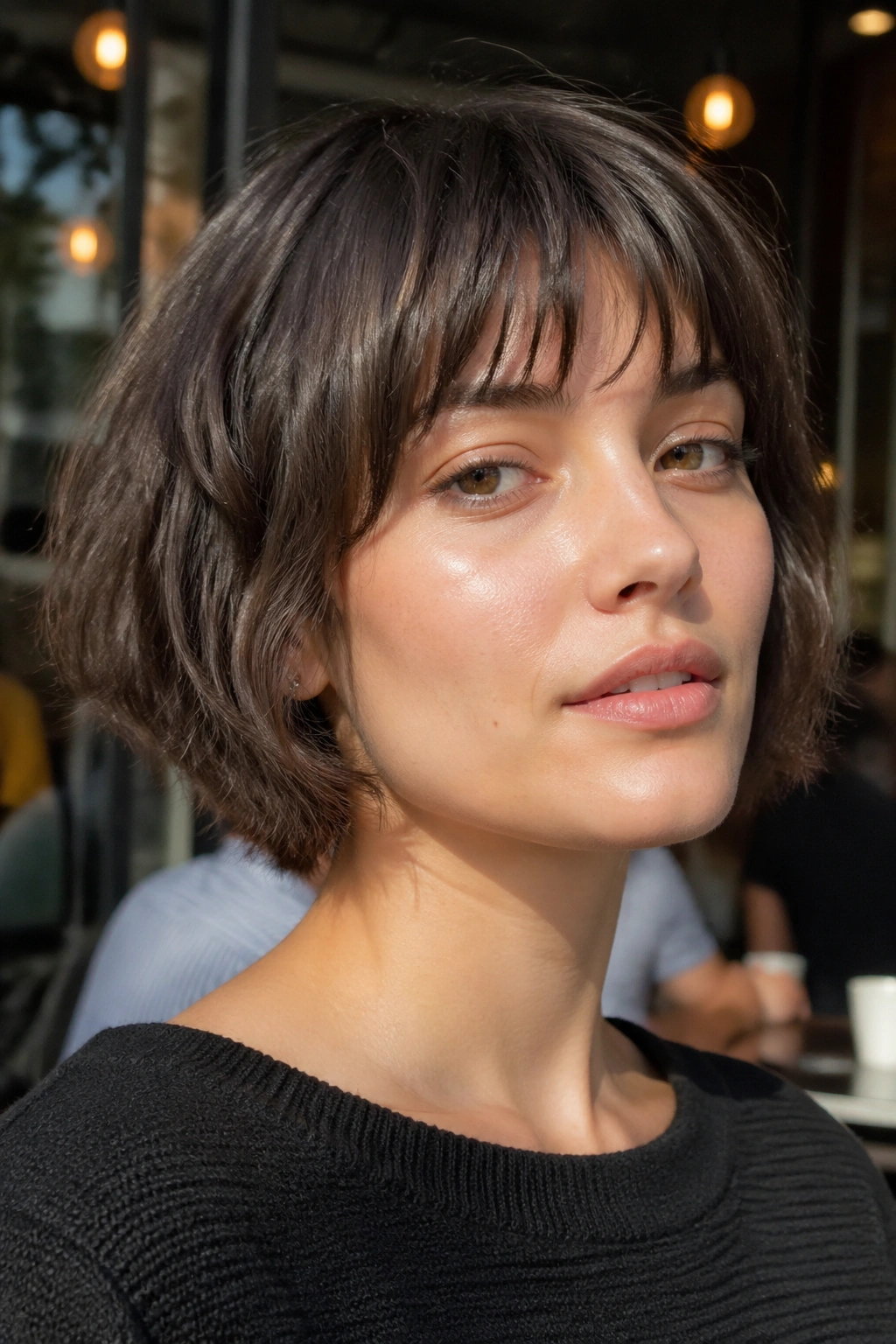
This is the cut that looks a little cool even when it’s not trying. A choppy French bob with wispy bangs sits shorter, usually around the cheekbone or just below the jaw, and it leans into texture instead of polish. If you like hair that looks like you’ve done less work than you actually did, this one has a lot going for it.
The bangs are light, not heavy. That matters. Wispy fringe keeps the cut from feeling dense at the front, especially if the bob itself is blunt through the bottom. The layers are subtle but deliberate, usually cut to break up the line just enough so the ends don’t feel boxy.
For straight hair, a little bend at the mid-lengths is usually enough. For wavy hair, this cut can be a gift, because the natural texture does half the styling for you. The one thing I would not do is overload it with product. A pea-sized amount of mousse or a light texture spray is plenty; too much and the wisps start clumping together, which kills the whole point.
If your hair is heavy and you want this shape, ask for internal removal only near the crown and sides. Too much thinning at the ends makes the bob look weak. A good French bob should feel lively, not sparse.
3. Angled Layered Bob With Side-Swept Bangs
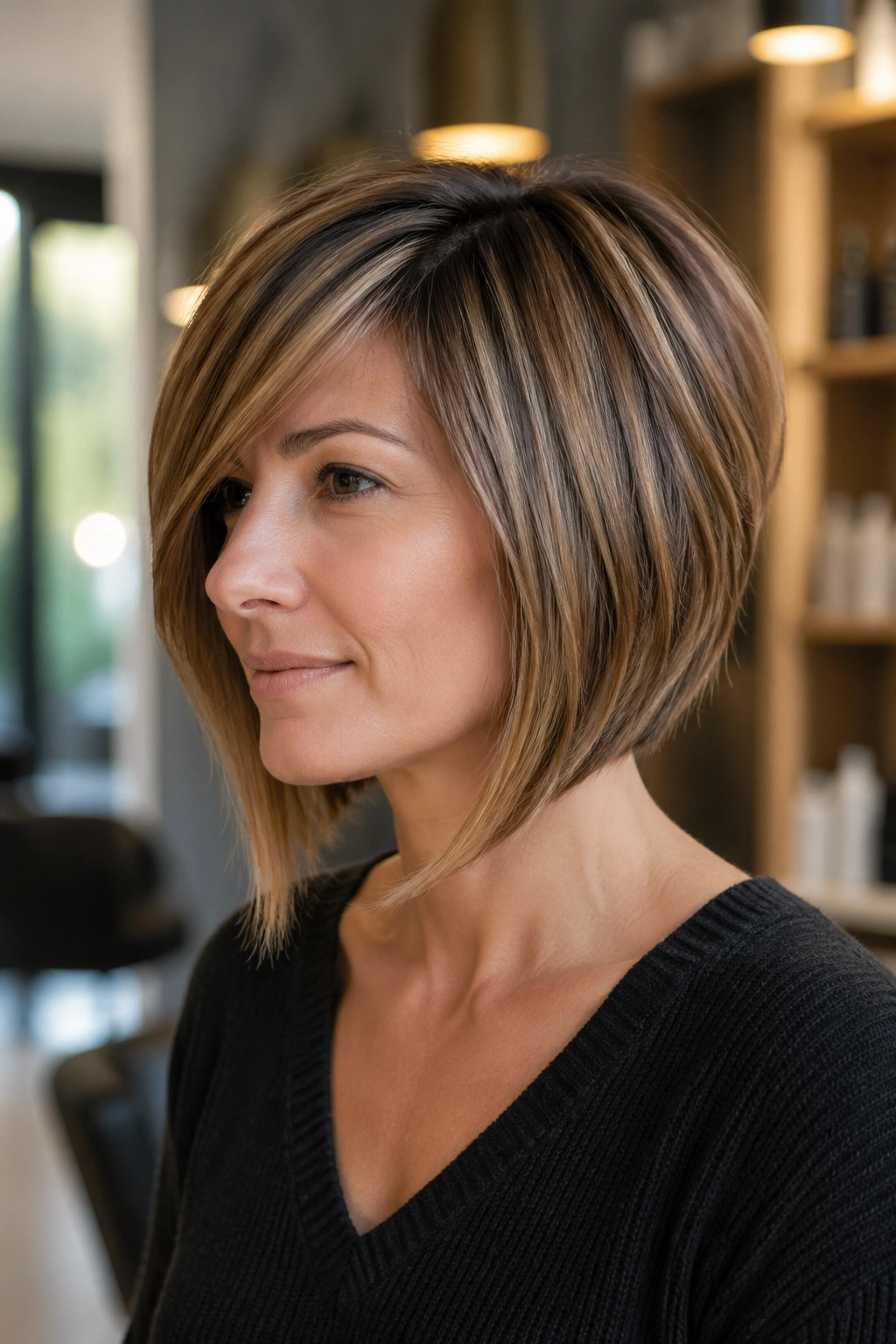
Why does an angled bob still keep showing up in salons? Because it does something very practical: it gives the face a clean line while keeping enough motion in the back to avoid that stiff “grown-out school haircut” effect. Add side-swept bangs, and the style becomes softer immediately.
The angle is the hook here. The back is shorter, the front is longer, and that diagonal shape draws the eye downward in a flattering way. Side bangs help too, especially if you don’t want a full fringe sitting across the forehead. They’re easier to grow out, easier to pin back, and easier to live with on humid days when bangs develop opinions of their own.
How to Style It
Start with damp hair and a lightweight volumizing spray at the roots. Blow-dry the bangs forward first, then sweep them to the side with a paddle brush or round brush, depending on how much bend you want. The rest of the bob benefits from a slight undercurve at the ends, nothing too curled.
If your hair is thick, ask for the front to be point-cut lightly so the angle doesn’t feel bulky. If your hair is fine, keep more weight at the perimeter so the cut holds its shape. The difference between a great angled bob and a tired one is often just that one detail.
4. Stacked Bob With Piecey Fringe
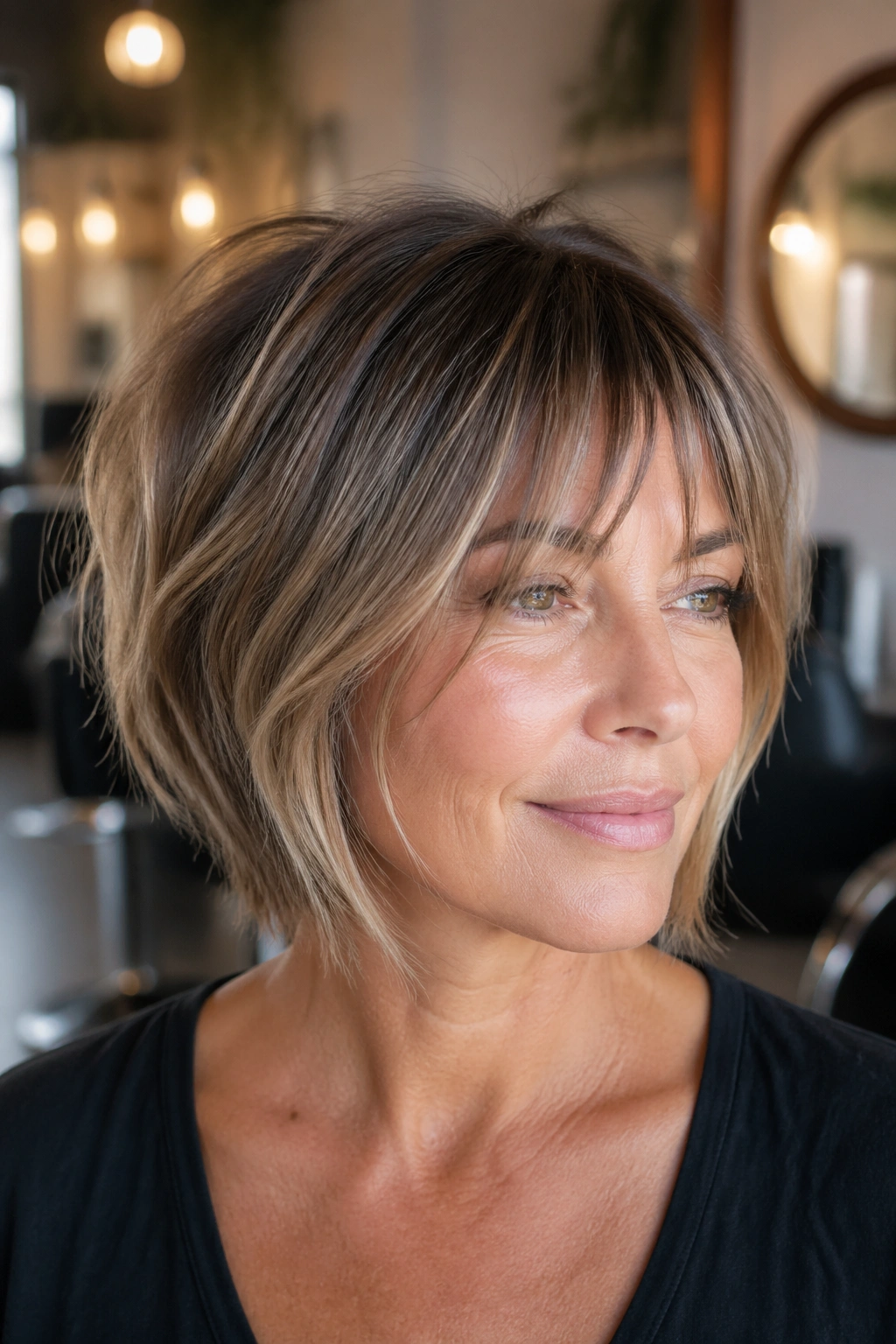
Picture a client who wants volume at the back and some softness around the eyes. A stacked bob with piecey fringe is usually where that conversation lands. The back is lifted through graduated layers, which creates that rounded, fuller shape at the nape, while the fringe stays broken up and airy rather than solid.
This is one of those cuts that loves a little grit. A styling cream alone can make it too smooth and too round. A light texturizing spray, a bit of root lift, and maybe a quick pass with a flat iron on the bangs is enough. The fringe should separate into pieces, not sit in one thick sheet.
A Few Things That Matter
- The stacking should be concentrated at the back, not shoved all the way up the crown.
- Piecey bangs work best when they start a little farther back, so they blend into the front layers.
- A blowout with a small round brush gives the nape that tucked-in curve people like.
- Too much thinning near the fringe makes it look stringy instead of deliberate.
A stacked bob is not the haircut I’d pick if you want air-dry ease first and shape second. It wants a little attention. But when it’s cut well, it has a nice lifted silhouette that makes the neck look longer and the jawline sharper.
5. Blunt Bob With Soft Internal Layers and Full Bangs
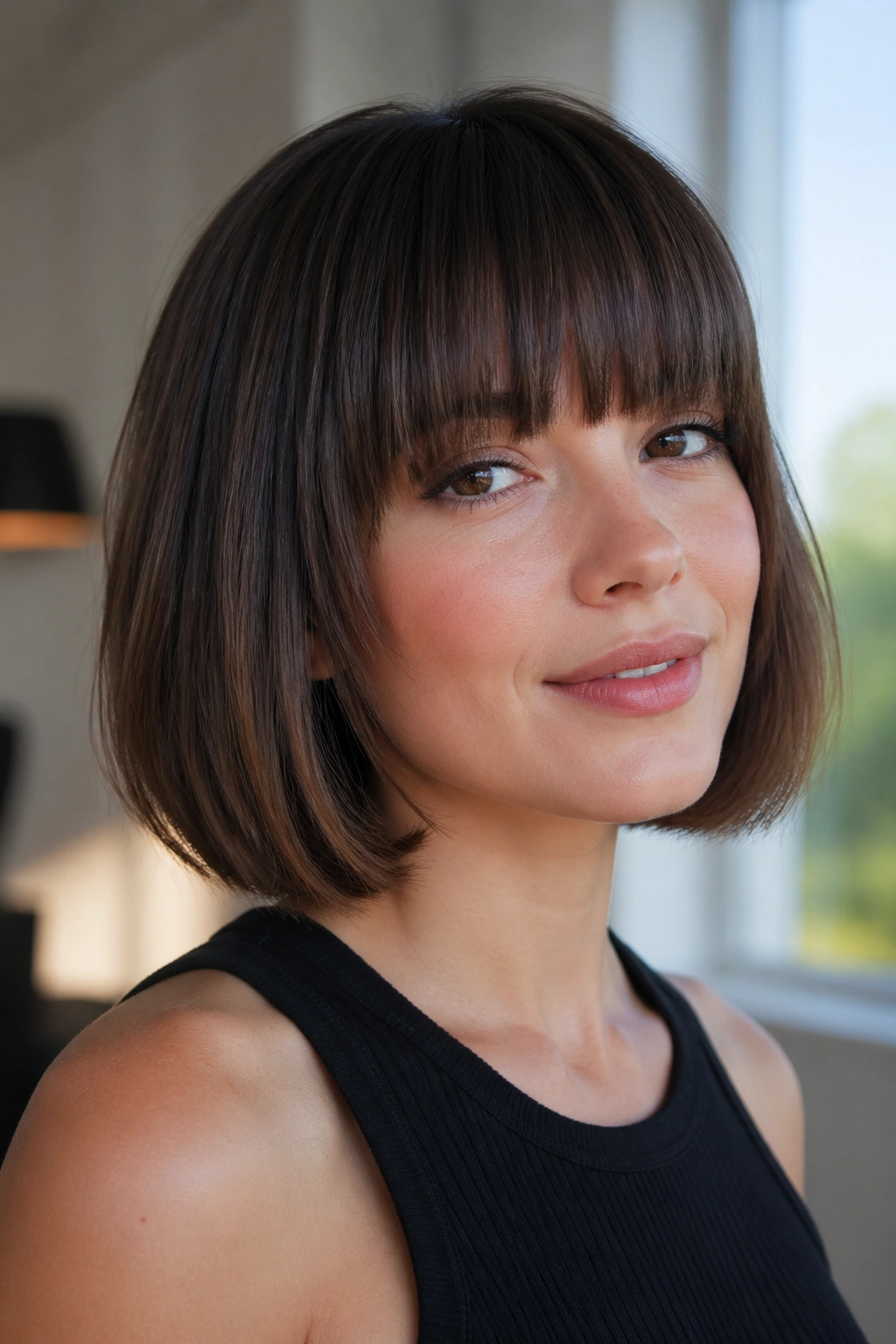
A blunt bob can sound severe on paper. In real life, though, the version with soft internal layers and full bangs can feel surprisingly wearable, even flattering, because the weight line stays strong while the inside of the haircut has room to move. That’s the trick. You keep the edge, but you stop the helmet effect.
The full bangs matter here. They anchor the look and make the bob feel complete, especially on people with strong brows or a long forehead. If the bangs are cut too thick, the style can turn boxy. If they’re too light, the whole point is lost. The sweet spot is a fringe that sits dense enough to read as intentional but soft enough at the ends to blend.
This cut suits straight hair especially well, though a loose wave can make it feel less formal. If your hair is very thick, internal layers remove bulk without changing the outer line. If your hair is fine, keep the layering restrained. Too much interior cutting and the blunt perimeter loses the shape that makes this style work.
I like this one for people who want their haircut to look tidy even on days when they haven’t done much. It has presence. It also photographs in a straightforward way, which sounds boring until you realize that some haircuts simply behave better in real life than they do in the mirror.
6. Razor-Cut Bob With See-Through Bangs
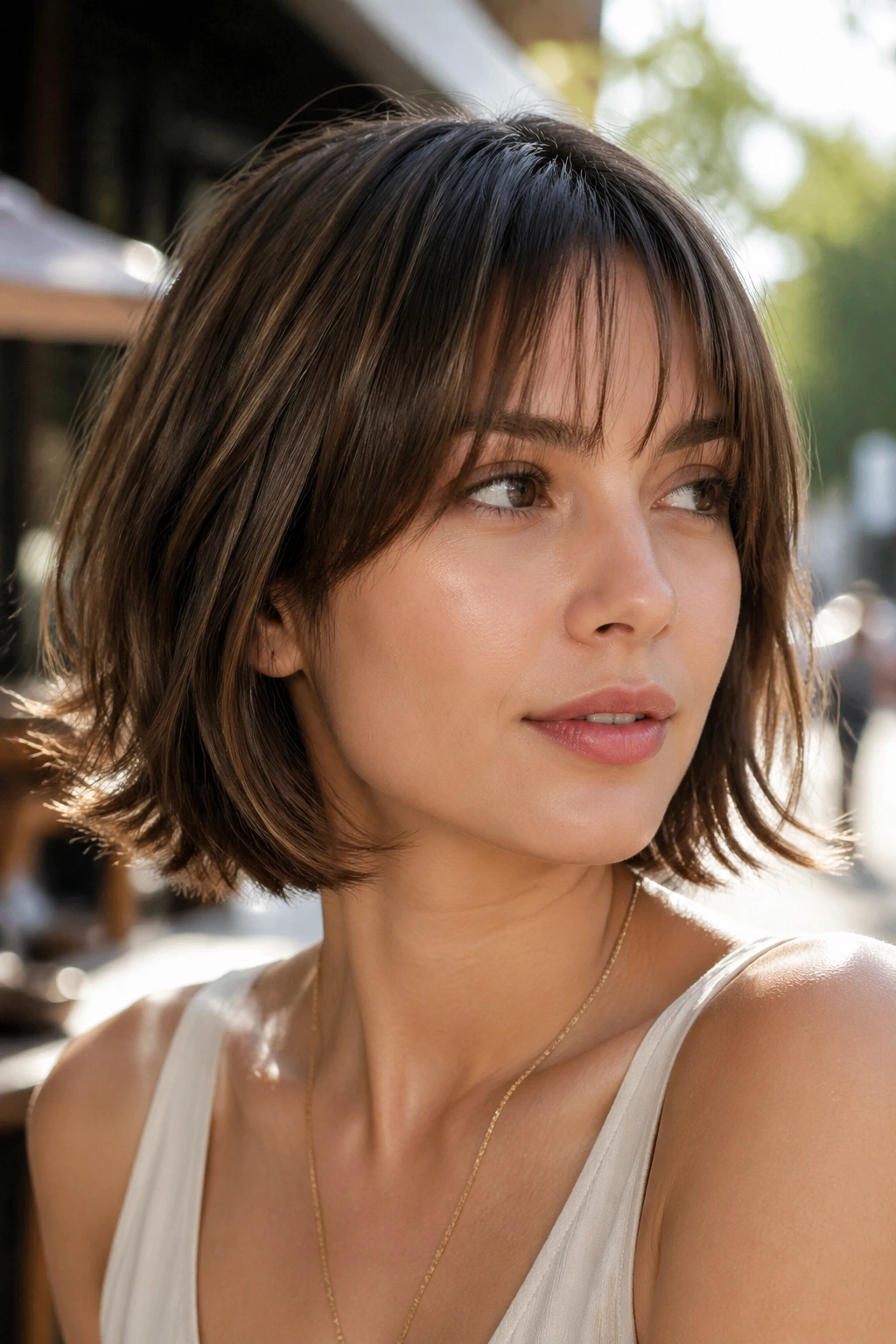
Compared with a heavy, solid bob, a razor-cut version feels lighter right away. The ends feather out a bit, the movement is softer, and the see-through bangs stop the front from feeling crowded. This is a good choice if you like that airy, slightly undone look that still has shape.
The razor technique can be lovely on hair that naturally bends or waves, because it takes some of the stiffness out of the ends. On very fragile or overly processed hair, though, I’d be careful. A razor can leave weak ends if the hair is already in rough shape. Ask for controlled slide cutting, not aggressive thinning.
What Makes It Different
The bangs are the part most people notice first. See-through fringe lets a bit of forehead show through, which makes the haircut feel lighter and less formal. It’s a smart move for anyone who wants bangs without a heavy curtain across the face.
The cut also grows out in a friendlier way than a blunt shape. That’s a small thing, but it matters if you prefer trims spaced out a little farther. The edges stay soft as they lengthen, instead of turning into a hard line that begs for an appointment.
How to Wear It
Air-dry it with a touch of leave-in conditioner, then break up the bangs with your fingers once they’re dry. A tiny bit of wax or pomade at the very ends goes a long way. Too much, and you lose the lightness that makes the haircut interesting in the first place.
7. Wavy Lob With Bottleneck Bangs
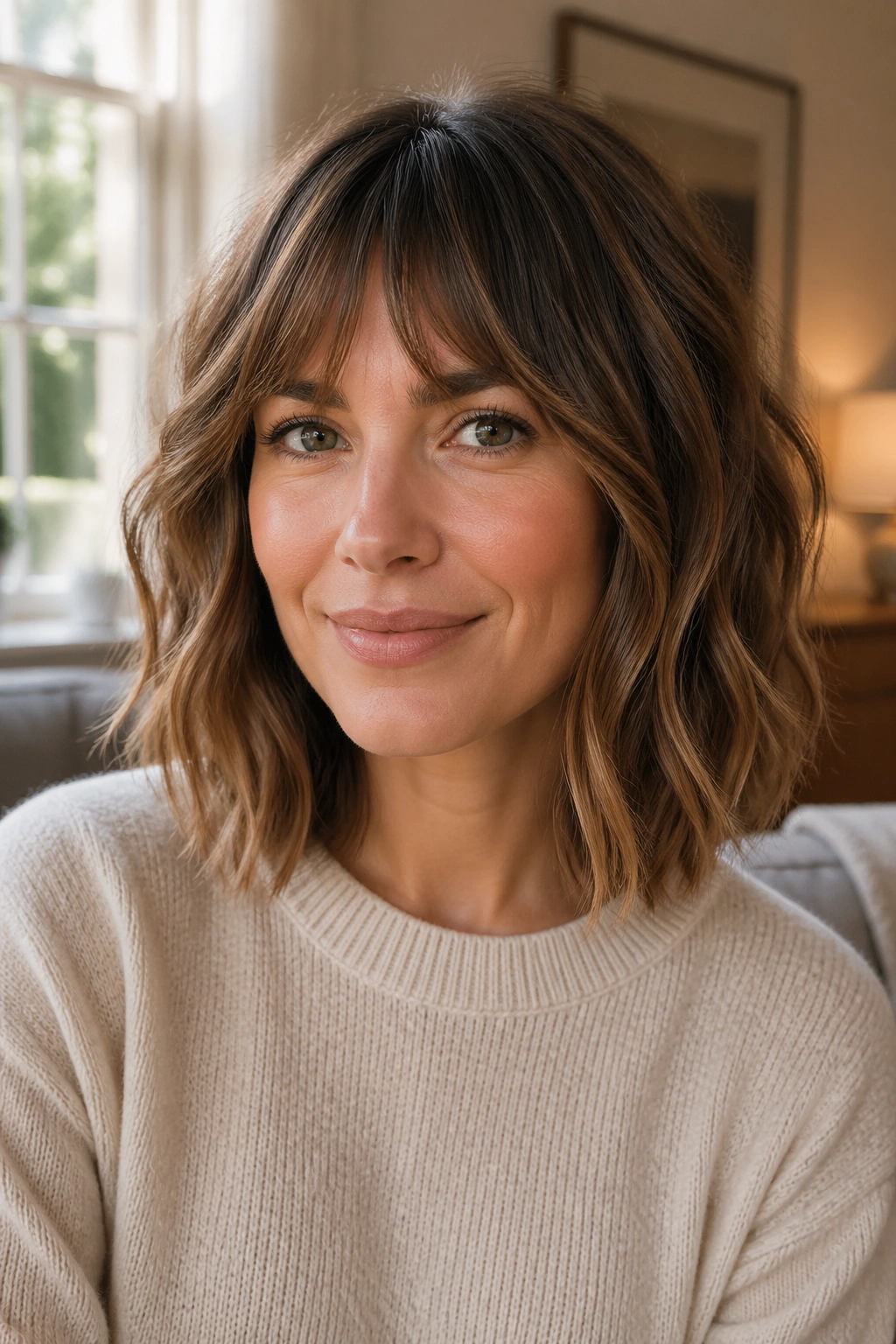
Soft waves change everything here. A wavy lob with bottleneck bangs can look relaxed and polished at the same time, which is a rare combination and one reason people keep asking for it. The bangs are shorter in the center and taper wider at the sides, so they don’t sit like a block on the forehead.
That shape is useful on medium to thick hair, especially when you want to keep weight but avoid bulk around the face. The waves break up the length, while the bottleneck fringe gives a nice frame without requiring a perfect blowout every morning. The whole style has a bit of movement built into it.
If your hair is naturally straight, a one-inch curling iron or a flat iron wave technique works well. Don’t curl every piece in the same direction. Alternate the bend and leave the ends slightly straighter, or you’ll get a look that feels too set and too uniform.
This cut also plays nicely with a center part, which is one reason it reads modern without being stiff. The fringe grows out gracefully, too. That matters more than people admit. Bangs that can survive the grow-out phase are worth far more than bangs that look great for a week and then become a daily argument.
8. Asymmetrical Bob With Long Fringe
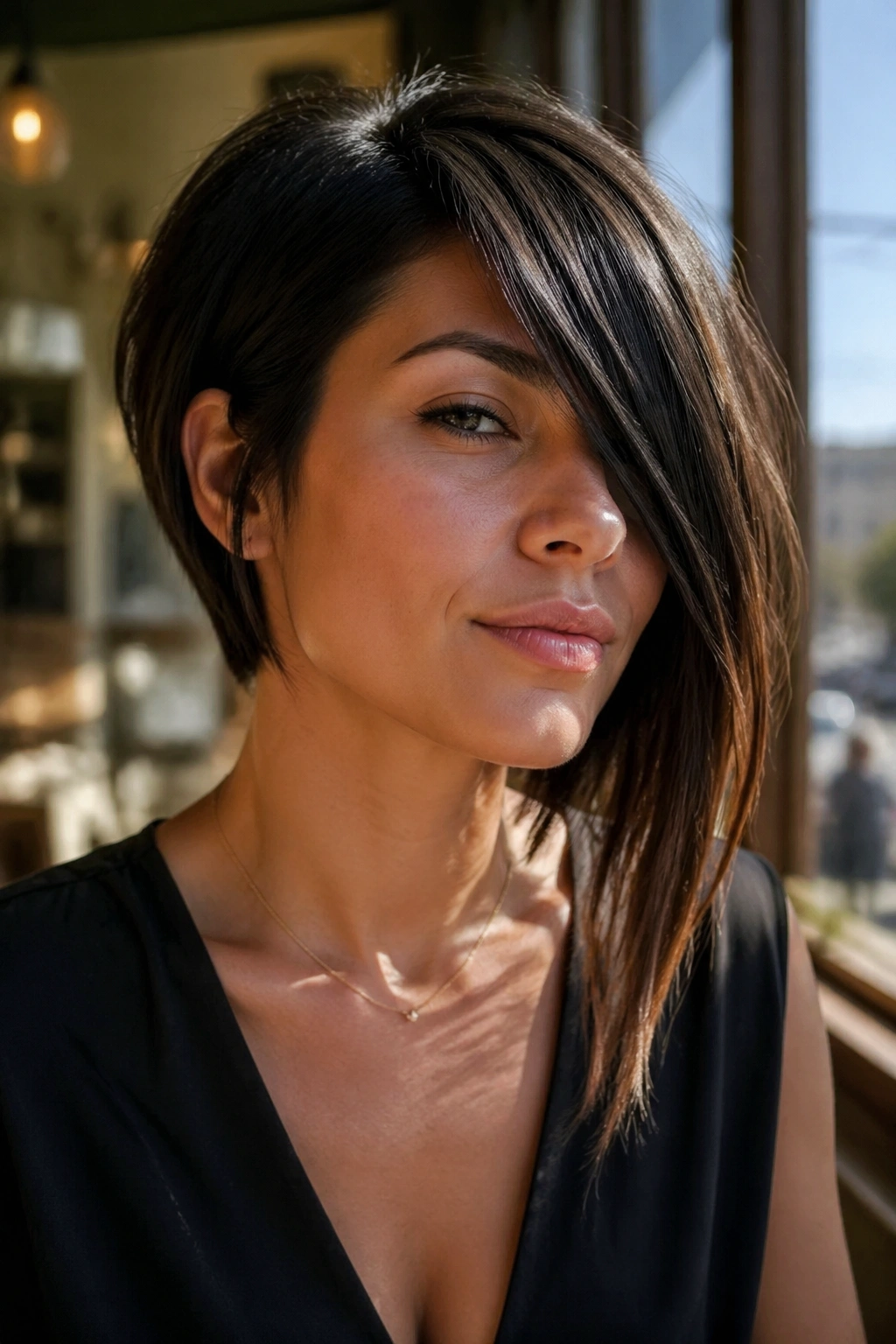
Some cuts are meant to look balanced. This one is not. An asymmetrical bob with long fringe uses uneven length on purpose, and that slight imbalance gives the style edge without needing loud color or dramatic texture. If you want a bob that feels sharper than sweet, this is a strong pick.
The longer side softens the jaw on one side, while the fringe can sweep across the face or fall in a deep side part. It’s a smart haircut for strong cheekbones, square jaws, or anyone who likes a little tension in their style. The asymmetry makes the shape more interesting, especially when the hair is tucked behind one ear.
You do need a decent cut line here. A sloppy asymmetrical bob looks accidental fast. Clean sectioning, even tension, and a carefully planned front length are what keep it from sliding into chaos. Ask your stylist to show you where the longest point lands before the scissors go near your hair.
Wear it sleek if you want the shape to read clearly. Wear it with loose bends if you want it to feel less strict. Either way, the long fringe should move away from the face instead of hanging there like an afterthought.
9. Rounded Bob With Arched Bangs
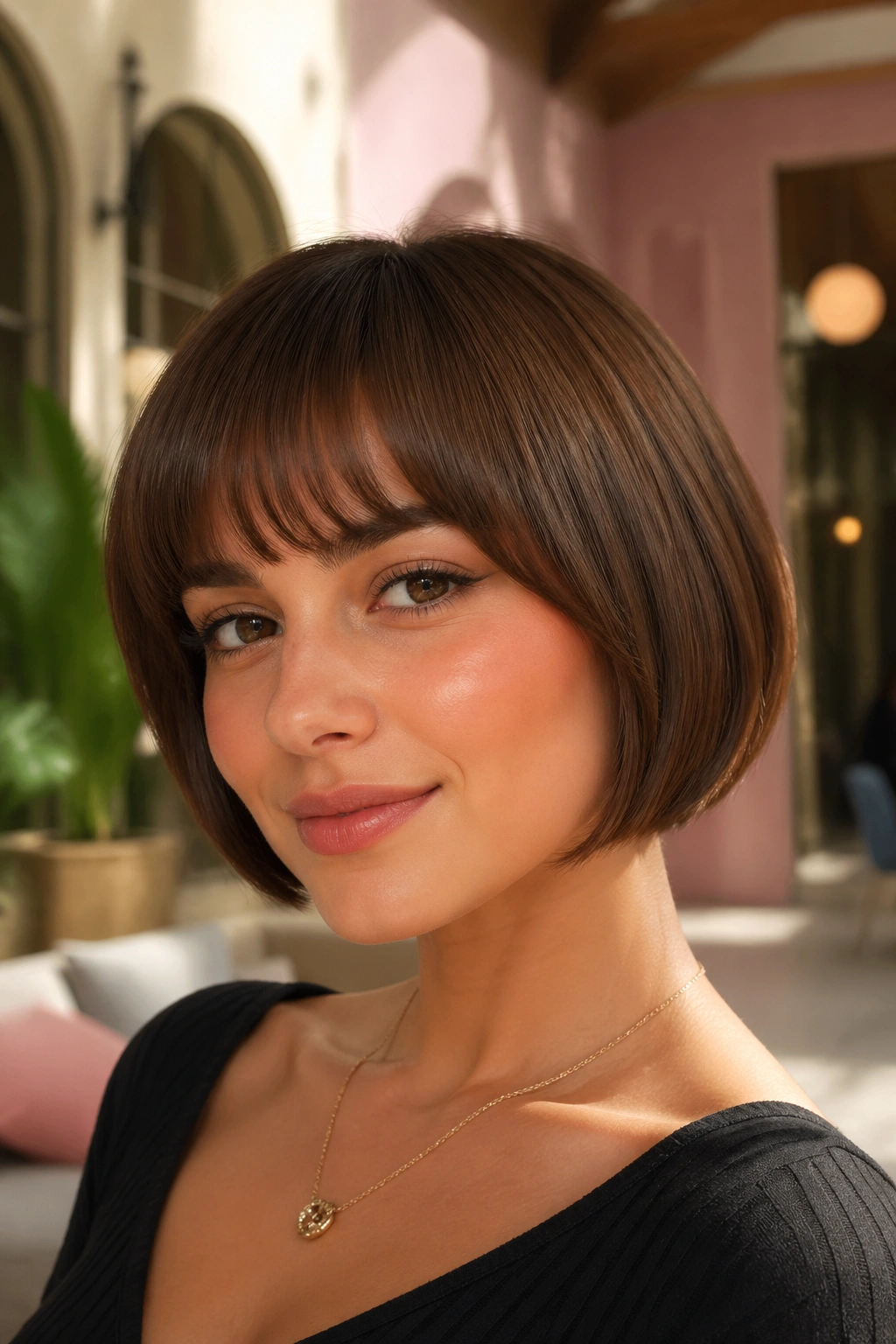
Can a rounded bob look soft and structured at the same time? Yes, if the layers are controlled. A rounded bob with arched bangs hugs the shape of the head a little more closely, which gives it a polished curve, while the bangs follow the arch of the brow and open the center of the face.
This cut is especially nice on straight hair that tends to fall flat. The round silhouette gives the illusion of fullness, and the arched fringe keeps the forehead from feeling heavy. It also works on thicker hair when the weight is removed carefully from the interior, because the shape remains smooth instead of puffing out at the sides.
How to Get the Shape Right
The blow-dry is half the haircut here. Use a medium round brush and guide the hair under at the ends, then set the bangs with a slight bend that mirrors the brow line. That arch matters. A bang that’s too flat can make the face feel boxy, while one that curves too much can feel old-fashioned.
A little shine serum on the mids and ends makes this style look intentional. Keep it light. You want control, not grease.
Some people skip rounded bobs because they worry they’ll look too neat. Fair concern. But with the right bangs, the shape can feel soft and expensive-looking without being rigid.
10. Shaggy Bob With Airy Bangs
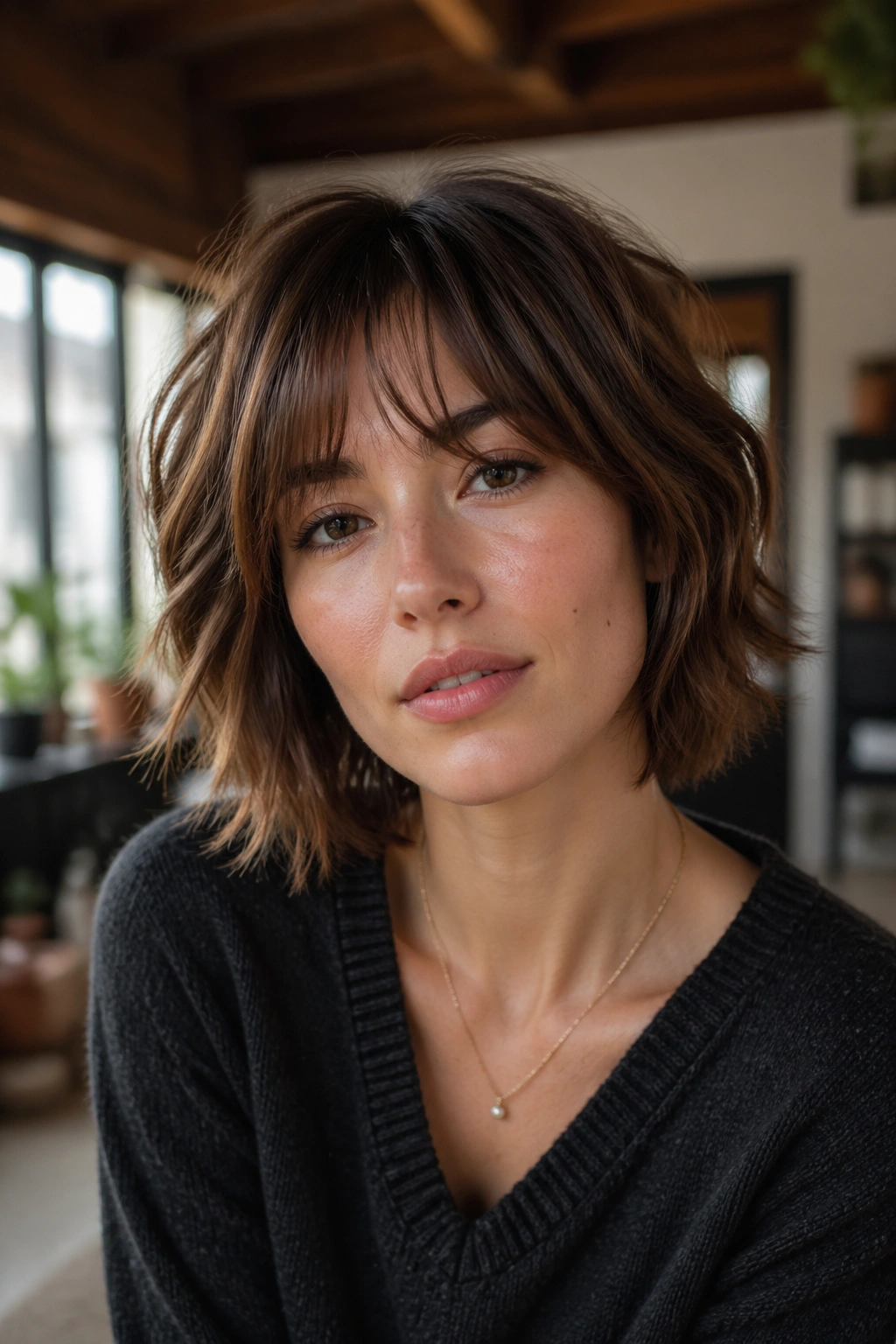
A shaggy bob with airy bangs is the haircut for someone who wants texture to do the talking. It’s looser than a stacked bob, messier than a French bob, and less predictable than a blunt cut. The layers are scattered in a way that creates movement, not symmetry, which is exactly why it works so well on wavy or curly hair.
The airy bangs keep the front from getting too heavy. They usually sit somewhere between eyebrow and lash level, with broken ends that let the forehead peek through. That makes the whole haircut feel lighter and easier to grow out than a heavy fringe. Good shaggy bobs do not feel random. They feel edited.
A little mousse at the roots and a salt-free texture spray through the mid-lengths can bring out the shape without making the hair crunchy. If your natural wave is strong, scrunch and leave it. If the wave is mild, twist a few sections around your fingers while it dries. No need to make every strand identical.
I like this cut for people who do not want to fight their hair every morning. It has enough attitude to feel styled, but it’s forgiving. That’s a rare thing in haircuts, and honestly, it’s worth paying attention to.
11. Chin-Length Bob With Short Bangs
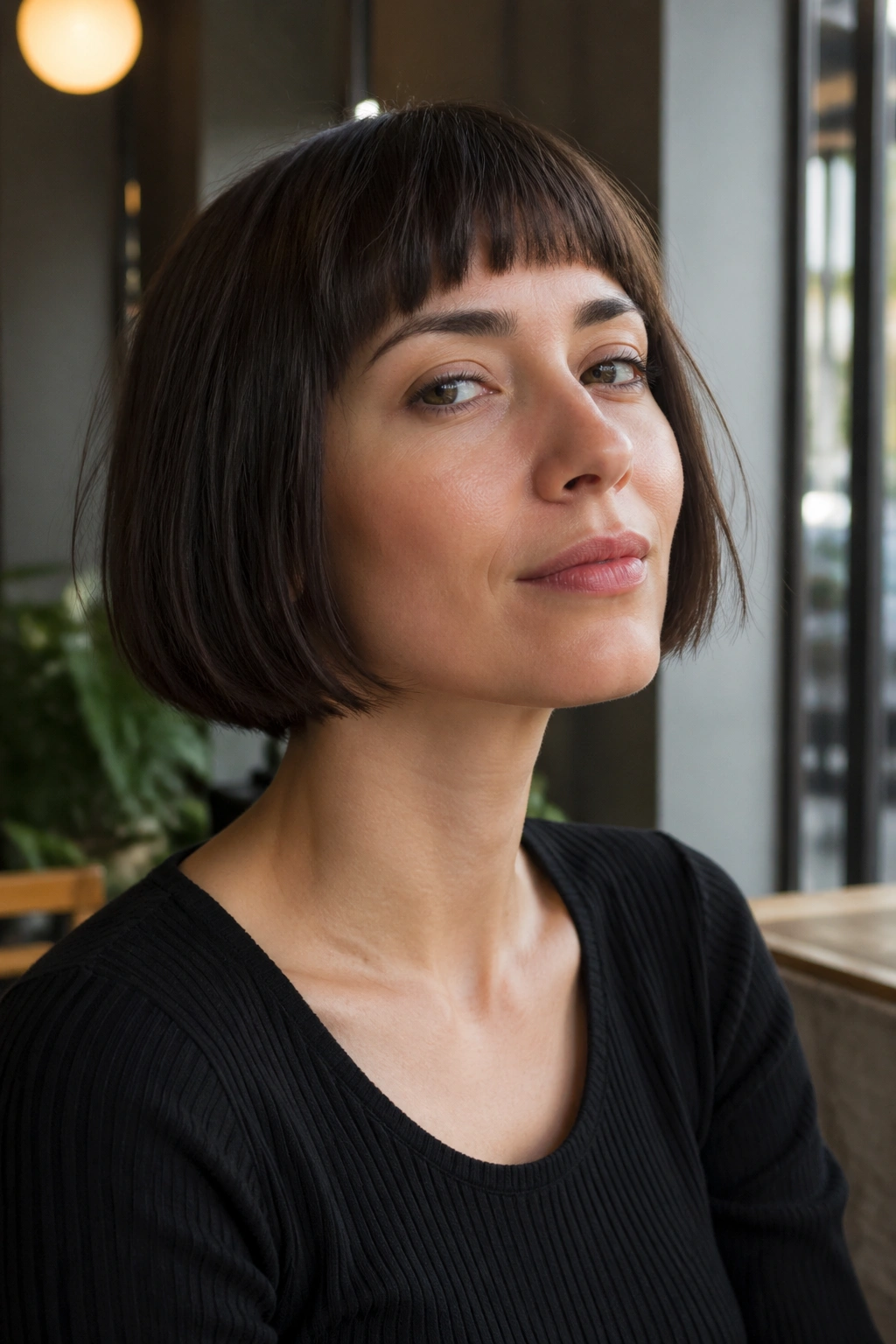
There is a reason chin-length bobs keep coming back: they put the focus right at the jaw, which can make the whole face look more defined. Add short bangs, and the shape becomes bolder fast. This is not the softest look on the list, but it’s one of the most interesting if you want structure.
The shorter fringe draws attention to the eyes and brows. The bob itself sits compactly around the face, so the whole haircut feels compact and graphic. If you have a narrow face or high cheekbones, that can be a very good thing. If your hairline is very low or your forehead is short, the bangs need careful adjustment so the cut doesn’t feel crowded.
I would not go aggressive with layering here. The point is the line. Keep the outer shape clean, then use just enough internal texturing to help it move. Too much layering at chin length can make the cut kick out in odd places, and that’s usually not what you want.
This style is a little more editorial than some of the others. It can be chic, but it can also be unforgiving if your stylist overcuts the fringe. Ask for small changes, then check the bangs dry before anything gets shorter.
12. Inverted Bob With Feathered Bangs
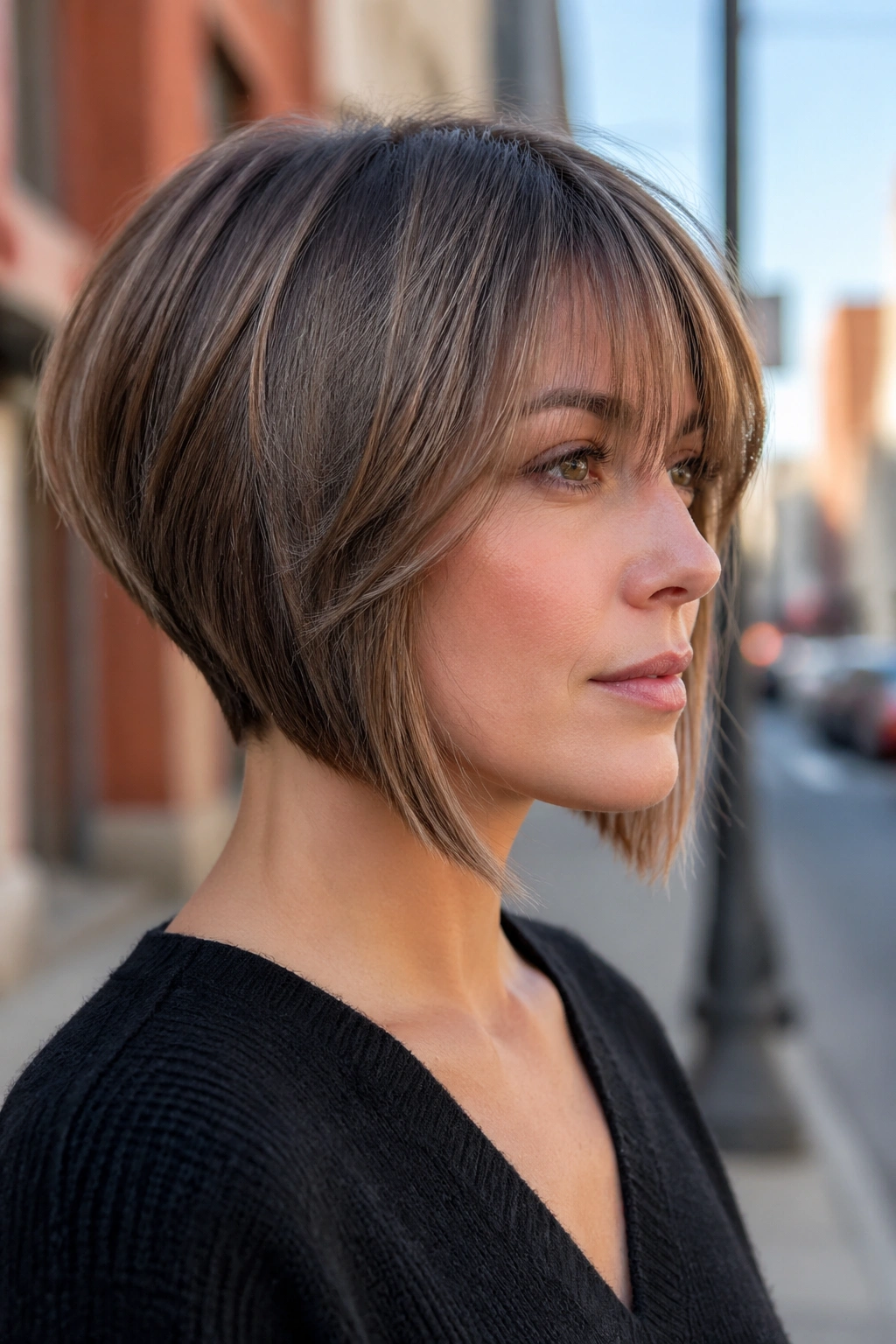
If you like a bob that leans forward and shows off the neckline, the inverted version is hard to ignore. The back is shorter and the front length drops gradually, which creates a smooth slope through the side profile. Feathered bangs keep the front from feeling rigid, and that softness helps balance the sharper angle of the cut.
Compared with a stacked bob, the inverted shape usually feels sleeker. The layers are longer and less bulky, which is useful if your hair is thick but you still want some swing. Feathered bangs help the haircut breathe. They don’t sit in one hard line, and they work especially well when they blend into the front edge of the bob.
Who It Fits Best
- People who like a clean side profile.
- Thick hair that needs movement without losing too much bulk.
- Straight or lightly wavy textures that hold shape well.
- Anyone who wants a bob that looks polished from the side and front.
Styling is straightforward. Blow-dry the front downward first, then curve the ends under just slightly. A flat iron can polish the longer front pieces if needed, but don’t overdo the bend. The line should feel smooth, not curled into itself.
A feathered bang is useful here because it softens a cut that can otherwise lean severe. That balance is the whole point.
13. Classic Layered Bob With Curtain Bangs and Face-Framing Layers
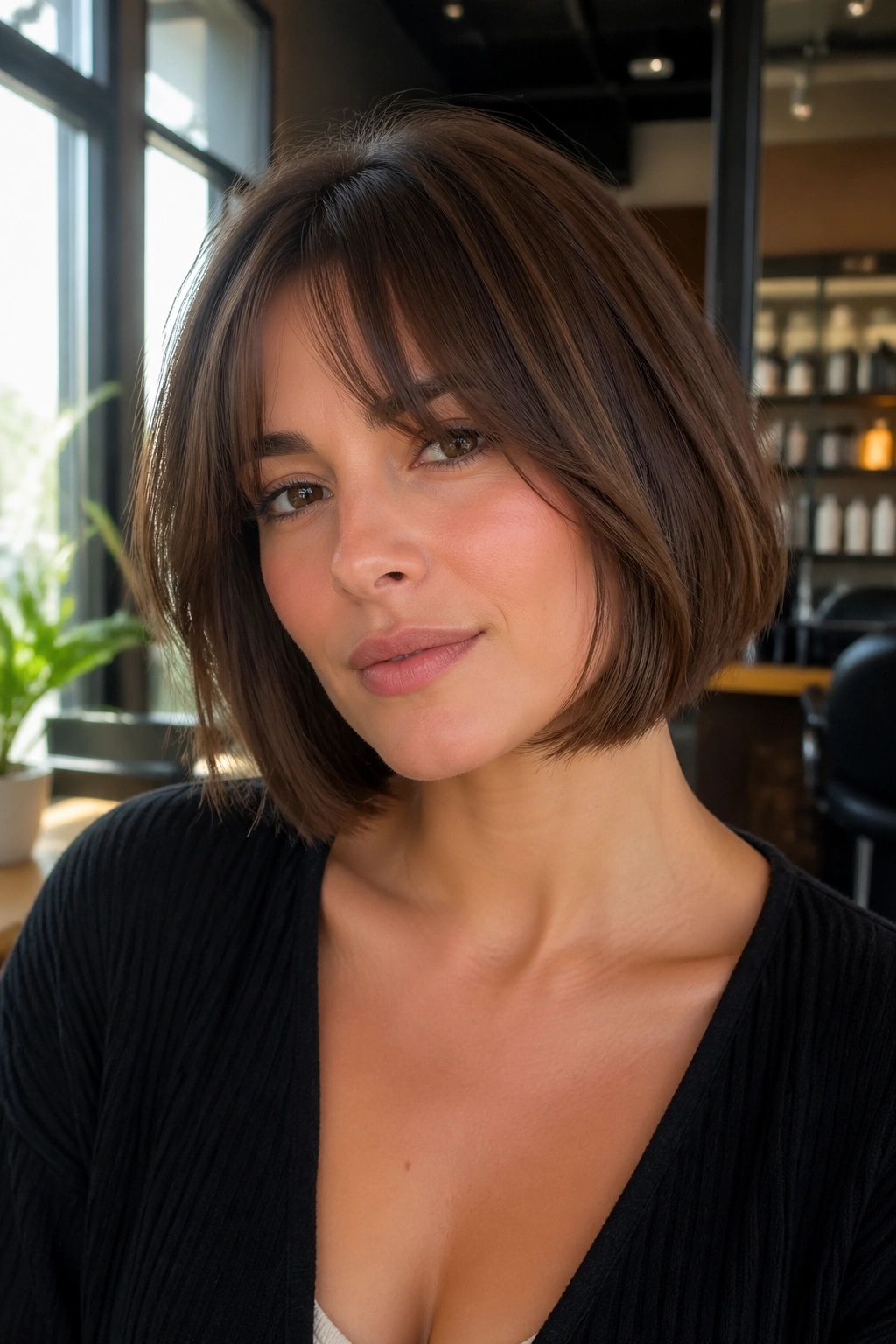
A classic bob can get boring fast if nothing moves. Face-framing layers fix that. Add curtain bangs, and you get a haircut that feels familiar but not stale, which is probably why this version works on so many people. It doesn’t try too hard, and that’s part of the appeal.
The curtain bangs are longer here than in the first style, and the layers around the face are more obvious. That makes the cut a good bridge between a short bob and a longer lob. If you like to wear your hair tucked, clipped, or blown out with a little bend, this one gives you room to play.
Why It’s Different From a Plain Bob
A plain bob can sit as one block. This one doesn’t. The layers shift the weight forward and around the face, which makes the haircut feel more alive. It also helps when the hair is dense through the sides, because the framing pieces break up the bulk.
The best version keeps the length just below the chin or slightly above the shoulders. That keeps the style versatile without letting it drift into the awkward half-grown stage too soon. Ask for the bangs to connect into the cheekbone area, not stop abruptly at the center of the forehead.
If you want a safe entry point into layered bob cuts with bangs, this is it. It’s practical, flattering, and not overly precious.
14. Italian Bob With Long Bangs and Subtle Movement
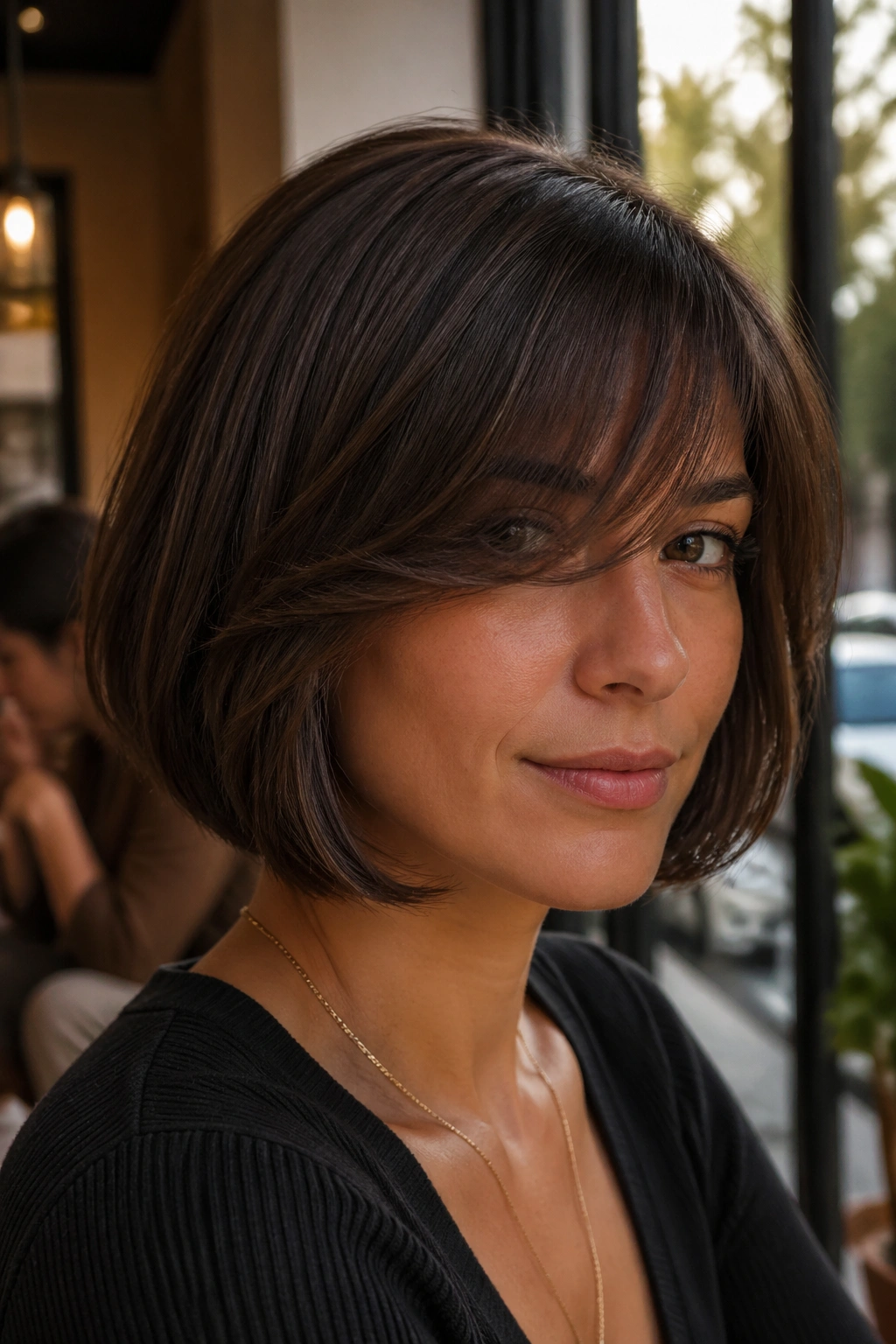
The Italian bob has a bit of presence. It usually sits fuller through the body, with soft movement rather than obvious choppiness, and the long bangs keep it from feeling heavy. Compared with a highly layered shag, this haircut is smoother and more controlled. Compared with a blunt bob, it has more swing.
That long fringe is the reason the style works. It can split in the middle, sweep to the side, or fall in a loose curtain, depending on how you blow-dry it. The rest of the bob should keep some weight, because if the layers are too aggressive, the whole look loses its shape. The charm of this cut is that it still looks like hair, not a texture experiment.
I think this shape is excellent on medium-density hair that needs a little lift but not a lot of thinning. The long bangs frame the eyes and soften the face, while the fuller ends give the haircut a rich, healthy look. It also grows out gracefully, which I like more than I care to admit.
A big round brush, a quick root lift at the crown, and a bit of smoothing cream through the ends are usually enough. You do not need to make it perfect. A slight bend is better than a stiff curl.
15. Soft Layered Bob With Blended Bangs for Thick Hair
Thick hair changes the rules. A soft layered bob with blended bangs has to remove bulk without turning the ends stringy, and that balance is harder than it sounds. When it’s done well, the haircut feels lighter all over, but the shape still holds at the bottom.
The bangs here are intentionally blended into the side layers, which keeps the front from looking cut off. That is the part many stylists get wrong on thick hair. They cut the fringe separately, leave the sides heavy, and the whole thing looks disconnected. A better version treats the bangs as part of the haircut’s architecture, not as a little accessory pasted on top.
What to Tell Your Stylist
Ask for internal layering that takes weight out of the mid-lengths first. Then ask for the fringe to connect into the cheek area with soft graduation. If your hair is very dense, point-cutting the ends can help the shape move, but the perimeter should still feel solid enough to anchor the cut.
This style can be worn sleek, brushed out, or left with a natural bend. That flexibility matters. Thick hair often looks best when the cut gives you options instead of demanding a perfect routine every day.
A final note: if you’ve been scared of bangs because your hair is heavy, this is the kind of bob worth considering. It gives you face framing without turning your morning into a battle.
If you want the safest styling path, keep the bangs a touch longer than you think you need. Thick hair springs up more than people expect, and a little extra length buys you a lot of freedom.
A good layered bob with bangs should make your hair feel easier, not more needy. That’s the real test. If a cut looks nice only after forty minutes with a round brush, it may be pretty, but it is not especially useful.
The nicest versions on this list all do the same basic thing in different ways: they control weight, shape the face, and leave enough movement that the haircut does not go flat the second you live your life. That’s the sweet spot.
