



If your curls look decent at midnight and shaggy by morning, the problem usually isn’t your shampoo. It’s the shape your hair sleeps in.
Protective styles for natural curls at night are really about damage control. They cut down on friction, keep curl clumps from rubbing apart, and stop the back of your head from getting flattened into a weird little triangle. A curly bob can be especially unforgiving here. Shorter layers lose shape fast, and one rough night on a cotton pillowcase can leave you with frizz around the hairline and knots underneath.
The good nighttime styles do two things at once. They protect the ends, and they keep the root area from getting crushed. Some stretch the hair a little so it wakes up smoother. Some tuck everything away so curls keep their definition. A few are better when your hair is dense, and a few are made for short cuts that refuse to sit still.
Sleep should not feel like a full-time styling session. If a style takes ten minutes to fix and ten more minutes to undo in the morning, I’d call that a bad trade. The smarter ones are soft, low-tension, and easy to repeat when you’re half asleep. Start with the one that matches your length, then work from there.
1. The High Pineapple for Natural Curls at Night
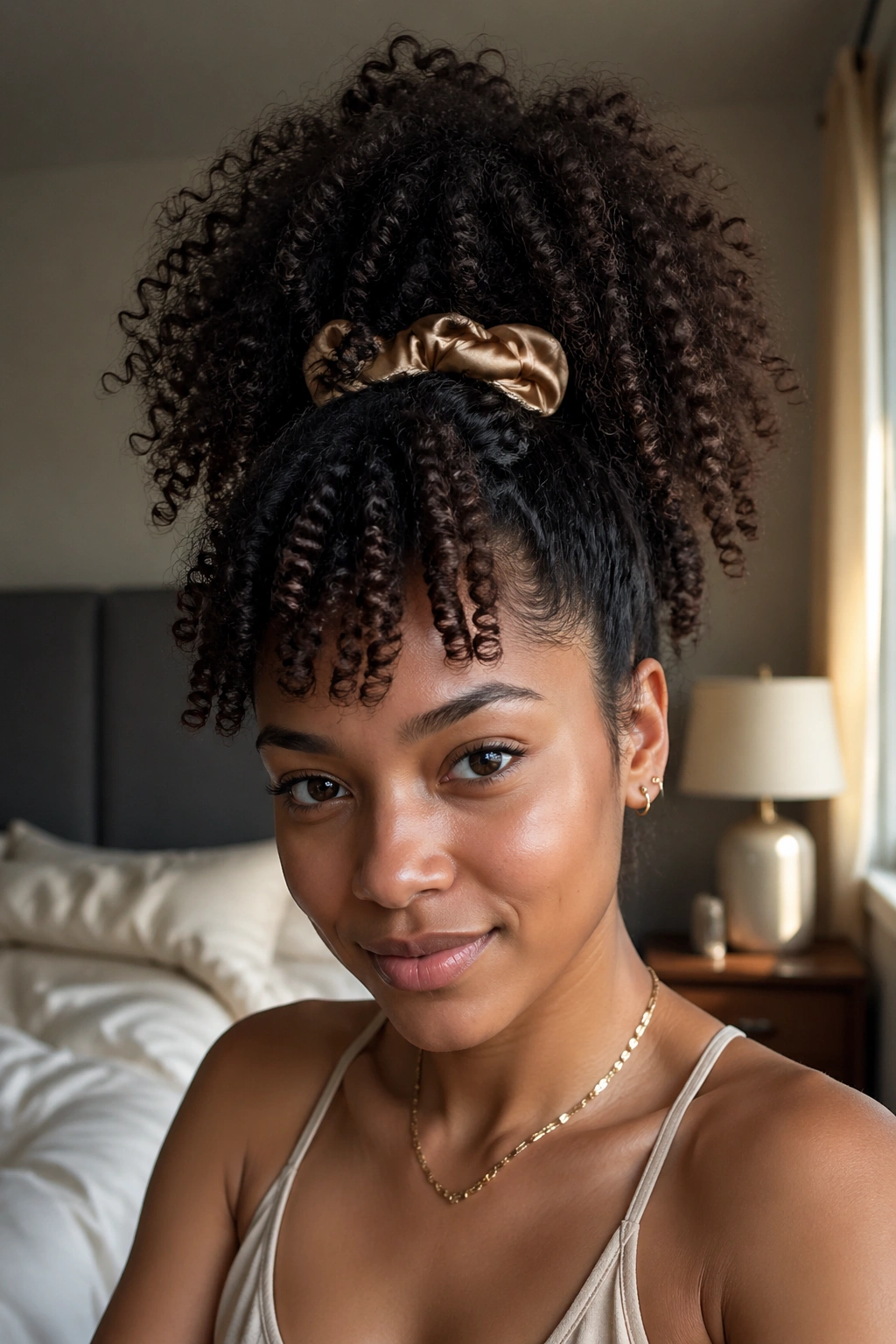
The high pineapple is still the fastest, least fussy answer for curls that need to keep their shape overnight. You gather the hair loosely at the very top of the head, let the curls fall forward, and leave the ends mostly free instead of smashing them flat. That lift keeps the back and sides from getting crushed under your head.
Why the Pineapple Works
The trick is height, not tightness. A loose pineapple keeps the curl pattern grouped together, which means less frizz and fewer tangles when you take it down. If you pull too hard, though, you get a dent across the crown and sore edges by morning. That’s the point where the style stops being protective and starts being annoying.
Use one oversized satin scrunchie or a soft coil tie. Wrap it once or twice, no more. If your hair is thick, gather it with your fingers first and smooth the outside with your palms instead of brushing it back hard. That keeps the curl clumps from separating.
- Best for shoulder-length curls and longer bob cuts
- Keeps the back of the head from flattening
- Works well with a satin bonnet or silk pillowcase
- Safer than a tight ponytail for fragile edges
Small detail, big payoff: flip your head forward before you gather the hair. That little move keeps the crown from getting smashed before the style is even set.
2. The Mini Pineapple for Short Curls and Bob Cuts
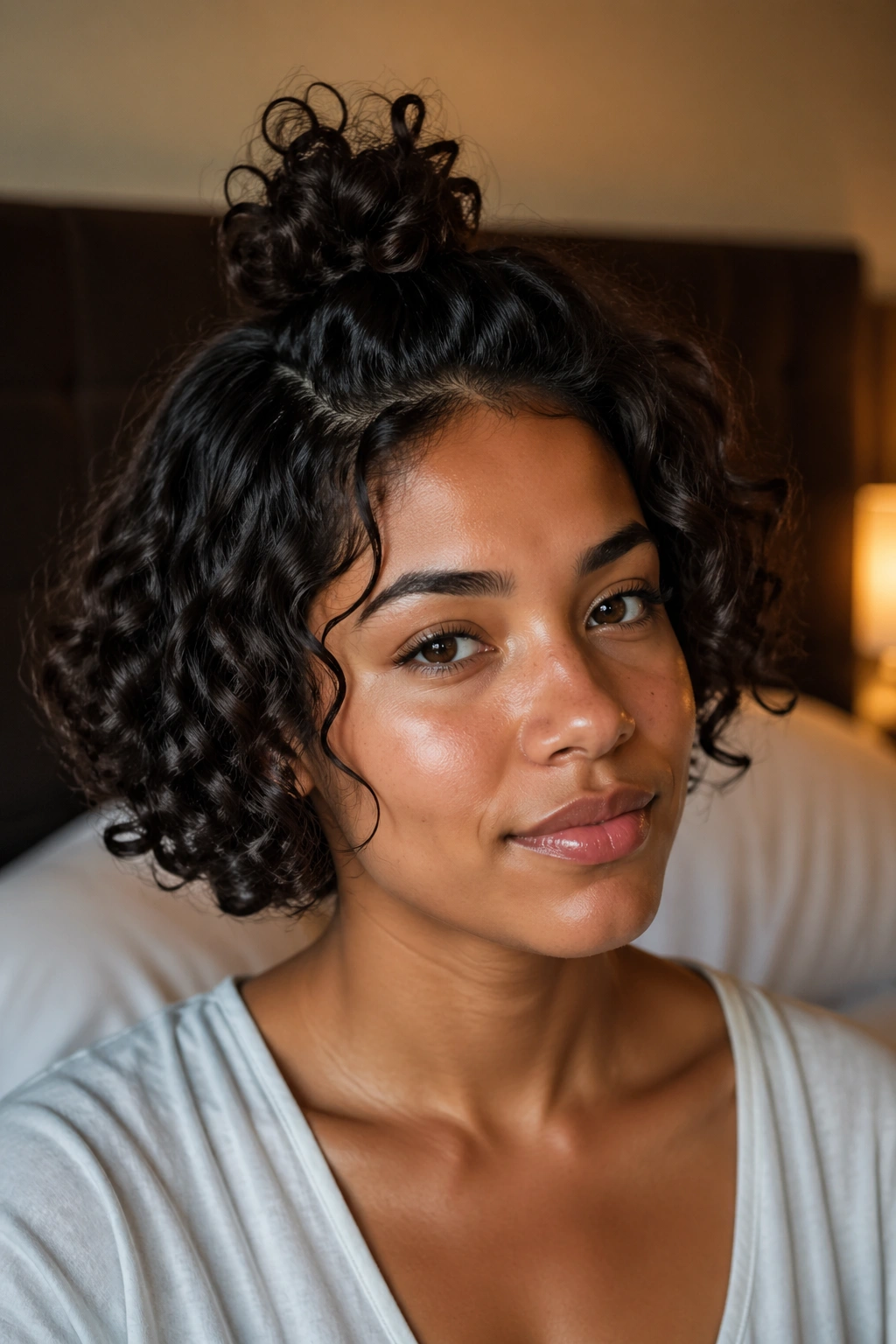
Short curls need a smaller shape, not more hair piled on top of itself.
That’s why the mini pineapple works so well on chin-length cuts, layered bobs, and cropped curls that puff up if you try to force them into one giant top knot. Instead of dragging everything straight to the crown, you make a tiny, loose puff higher on the head or split the hair into two little sections at the top. The shape stays soft. The curl pattern stays closer to where it started.
The mistake people make here is overreaching. If the hair is too short, a full pineapple just pushes the back upward and leaves the front flattened. The mini version gives you a little lift without fighting the cut. It also keeps shorter face-framing pieces from sticking out at odd angles.
I like this one for curls that hit the jawline or collarbone. It takes almost no effort, and it’s kind to layers that would otherwise splay out under pressure. Use tiny satin scrunchies or small soft clips, not anything sharp or stiff. If the crown feels pulled when you lie down, it’s too tight. Simple as that.
3. Two Loose Braids
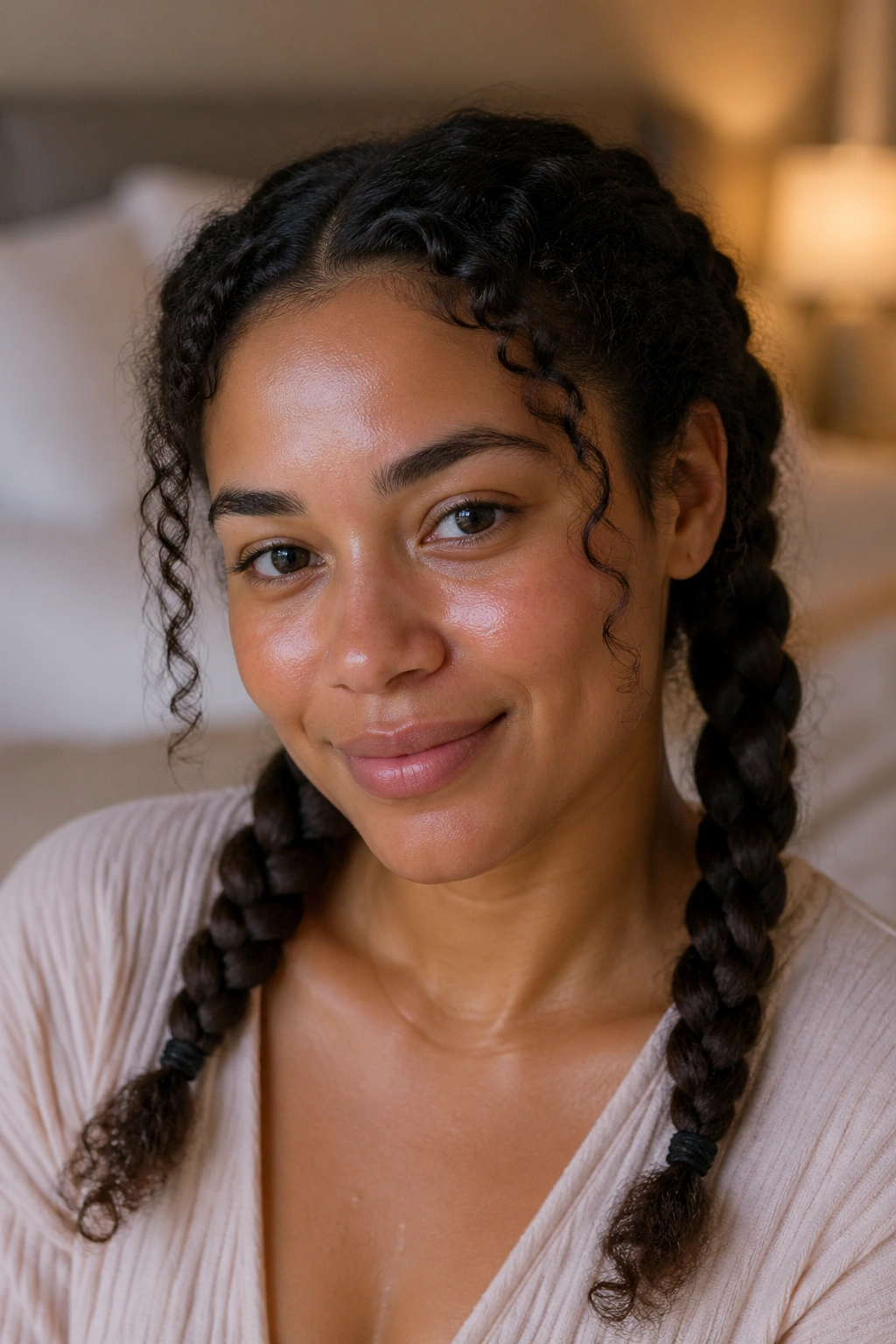
Why do two loose braids keep mornings calmer? Because they give each side of the head its own little lane.
That separation matters more than people think. When curls are left loose, the strands on one side rub into the other side all night, and the ends tangle first. Two braids keep the curl bundles from fighting each other, which cuts down on knots and makes detangling in the morning a lot less dramatic. It also gives you an easy braid-out shape if you want a softer wave instead of a springy curl.
How to Wear Them
Part the hair down the middle or slightly off-center. Braid each side loosely from around ear level down to the ends, then secure with a soft tie or satin scrunchie. Don’t braid so far up the head that the roots get pulled flat.
These are especially useful if your curls are thick enough to puff into a triangle at night. Two braids help distribute the bulk. They also work nicely under a bonnet, which is a win if you move around in your sleep and need the ends tucked away.
A tiny bit of leave-in on the ends helps, but keep it light. Heavy cream in the braid is a mess waiting to happen. Too much product turns the braids sticky, and sticky hair tangles faster.
4. One Loose Braid Down the Back
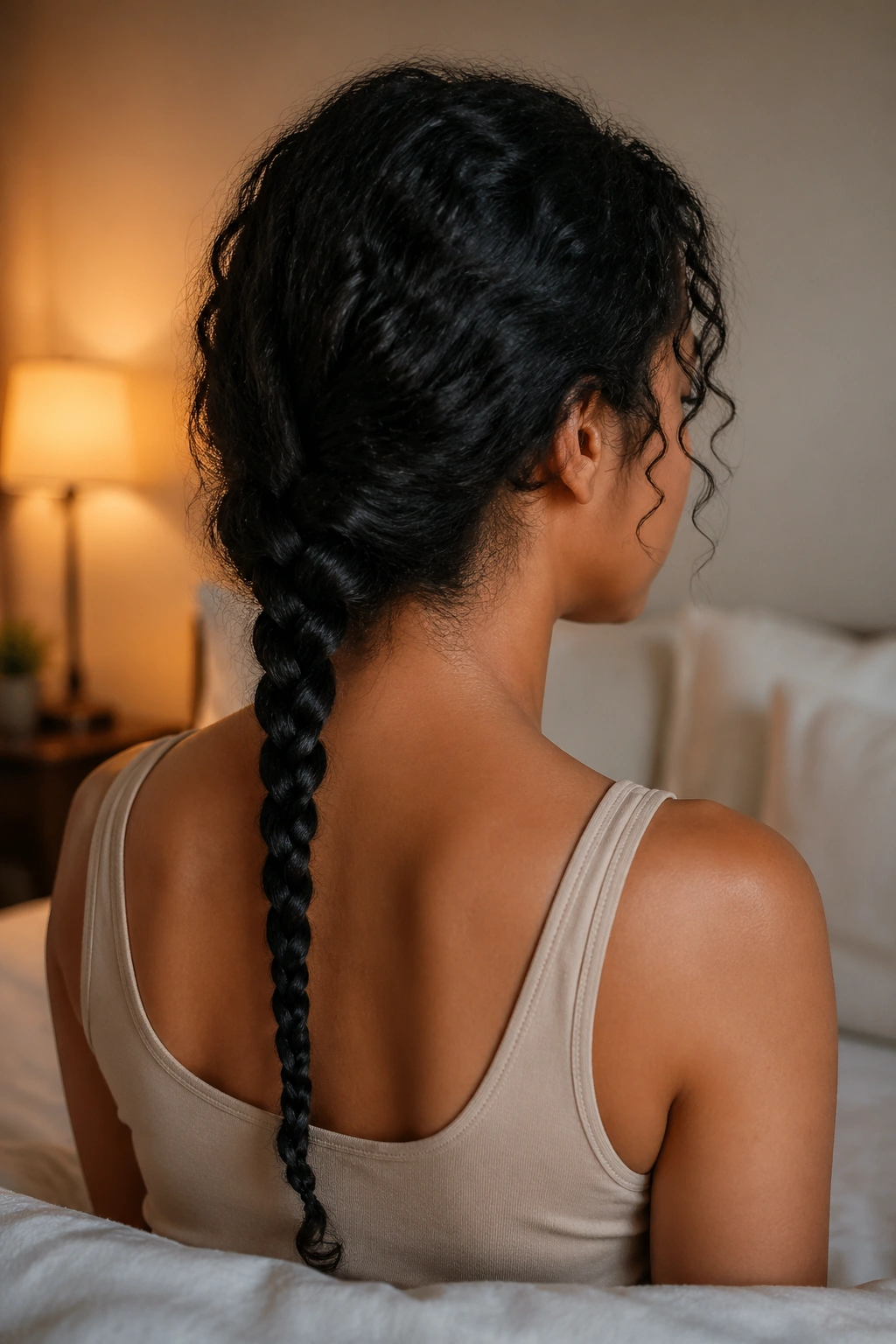
Picture waking up with one smooth line running down the center of your back and only a little wave in the morning. That’s the appeal here.
A single loose braid is a good pick when your hair is long enough to handle it and you do not want several separate ties pressing into your head. It’s also one of the better choices for restless sleepers because there’s only one section to shift around. Less hardware. Less fuss.
The braid should be loose enough that you can slide a finger under it at the nape. If it feels tight at the scalp, redo it. A low, easy braid protects the ends from rubbing on the pillow and leaves the roots less likely to puff out in weird directions by dawn.
- Good for long curls, dense hair, and tighter wave patterns
- Easier than two braids if your hair is thick
- Keeps the length compact without crushing the whole head
- Best paired with a satin pillowcase
The one drawback is obvious: a single braid can make a deeper crease if you sleep with your head in the same spot every night. Rotate the braid slightly off-center when that happens. It helps more than people expect.
5. Two-Strand Twists
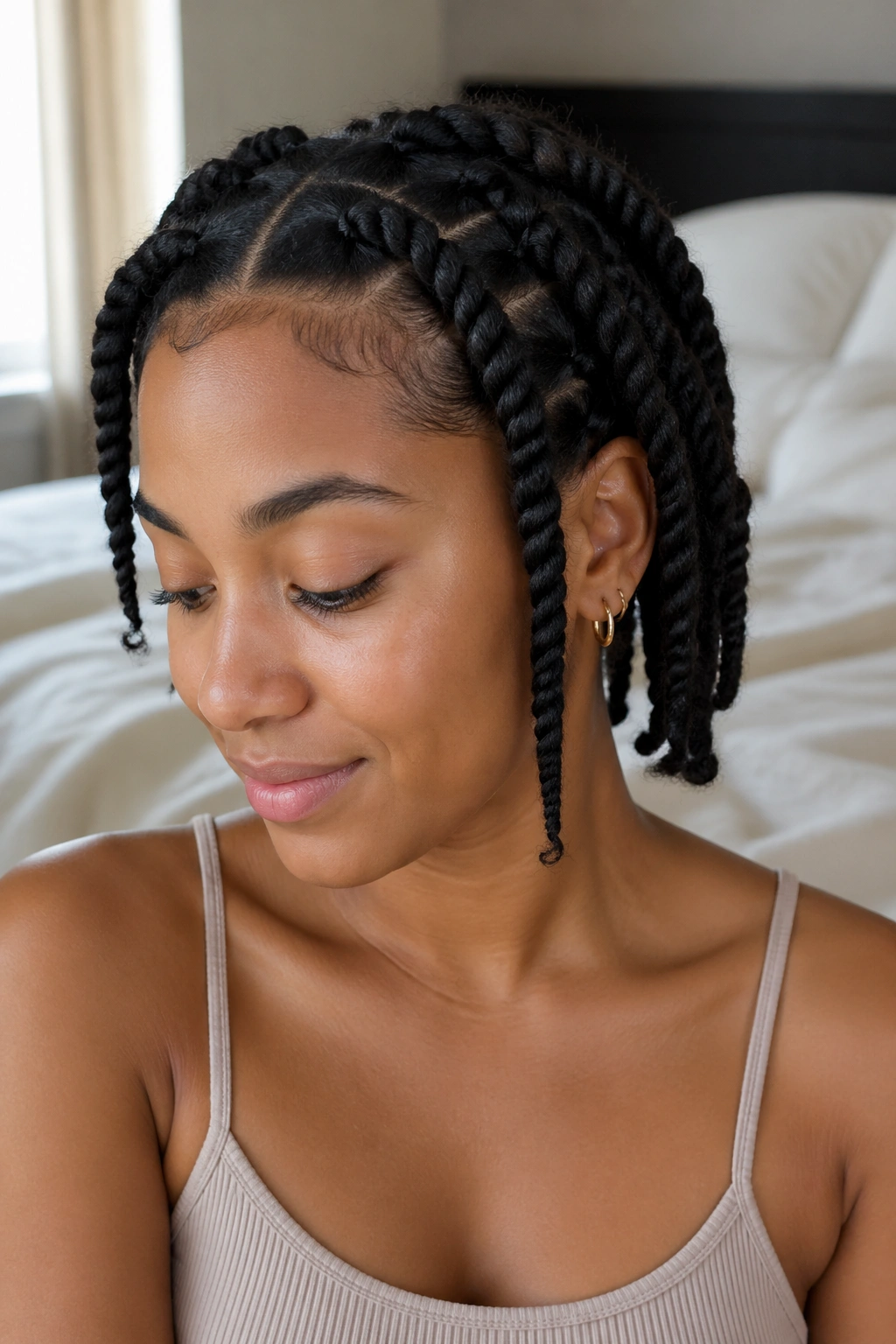
Two-strand twists are the workhorse style for natural curls at night. They hold shape, keep the ends tucked, and make tomorrow’s styling easier whether you want a twist-out or just less frizz.
They work because the hair stays grouped in smaller rope-like sections instead of floating loose against the pillow. That means fewer tangles and less halo frizz around the edges. On curls that are dry, fragile, or prone to knotting at the ends, that matters a lot. It’s one of the few styles that can protect the hair and still leave you with a decent-looking finish the next day.
Section size changes the result. Bigger twists are faster and leave a softer wave. Smaller twists keep definition better but take more time. If your hair is fine, keep the sections a little larger so the style does not create too much scalp tension. If your curls are dense, smaller sections usually hold up better.
One thing I’d avoid: twisting soaking-wet hair and then going straight to bed. Damp twists can stay wet too long, and that’s a fast way to wake up with flat roots and a sour smell. Hair should feel mostly dry before the lights go out.
6. Flat Twists Along the Hairline
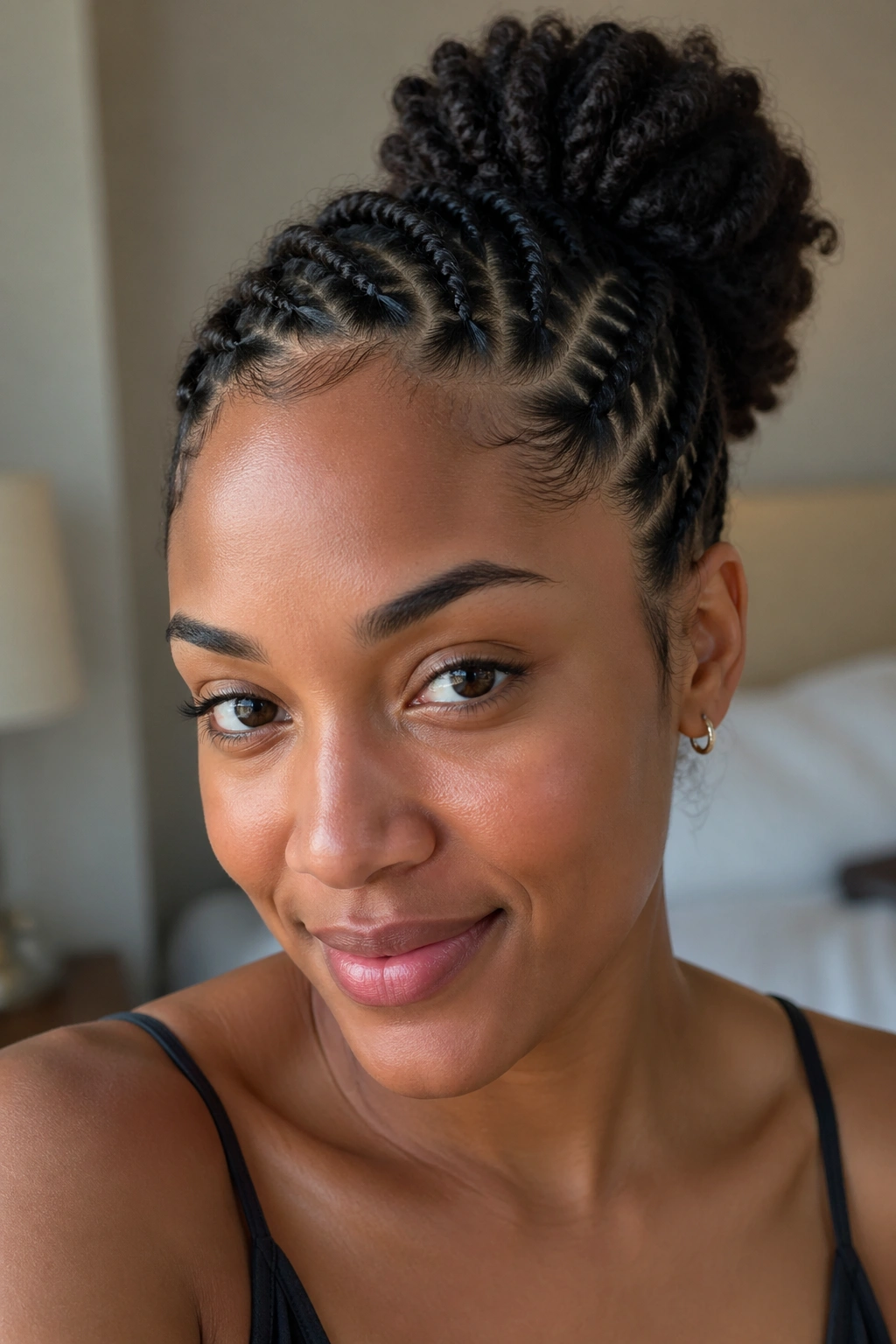
Flat twists sit lower than braids, and that is the whole reason they’re so useful at night.
They hug the scalp closely, which makes them a smart choice when you want less bulk under a bonnet or when the front of your hair always frizzes first. On a curly bob, flat twists can be cleaner than loose braids because they keep the front layers from sticking up and the temples from rubbing raw against the pillow.
Flat Twists vs. Braids
Braids usually hold more fullness. Flat twists lie flatter and feel lighter on the head. If you’ve ever tried sleeping in a chunky braid and ended up with a ridge across the crown, you already know why that matters.
Start the twist at the front hairline or just behind it, then add small pieces as you move back toward the nape. You do not need a lot of sections. Two to four twists are enough for many short to medium curls. Tuck the ends under with a soft pin if they stick out.
Flat twists also work well for people whose curls are layered. The hairline stays neat, the sides stay smoother, and you wake up with fewer flyaways around the face. That’s the part I like most. It’s practical without looking fussy.
7. Bantu Knots
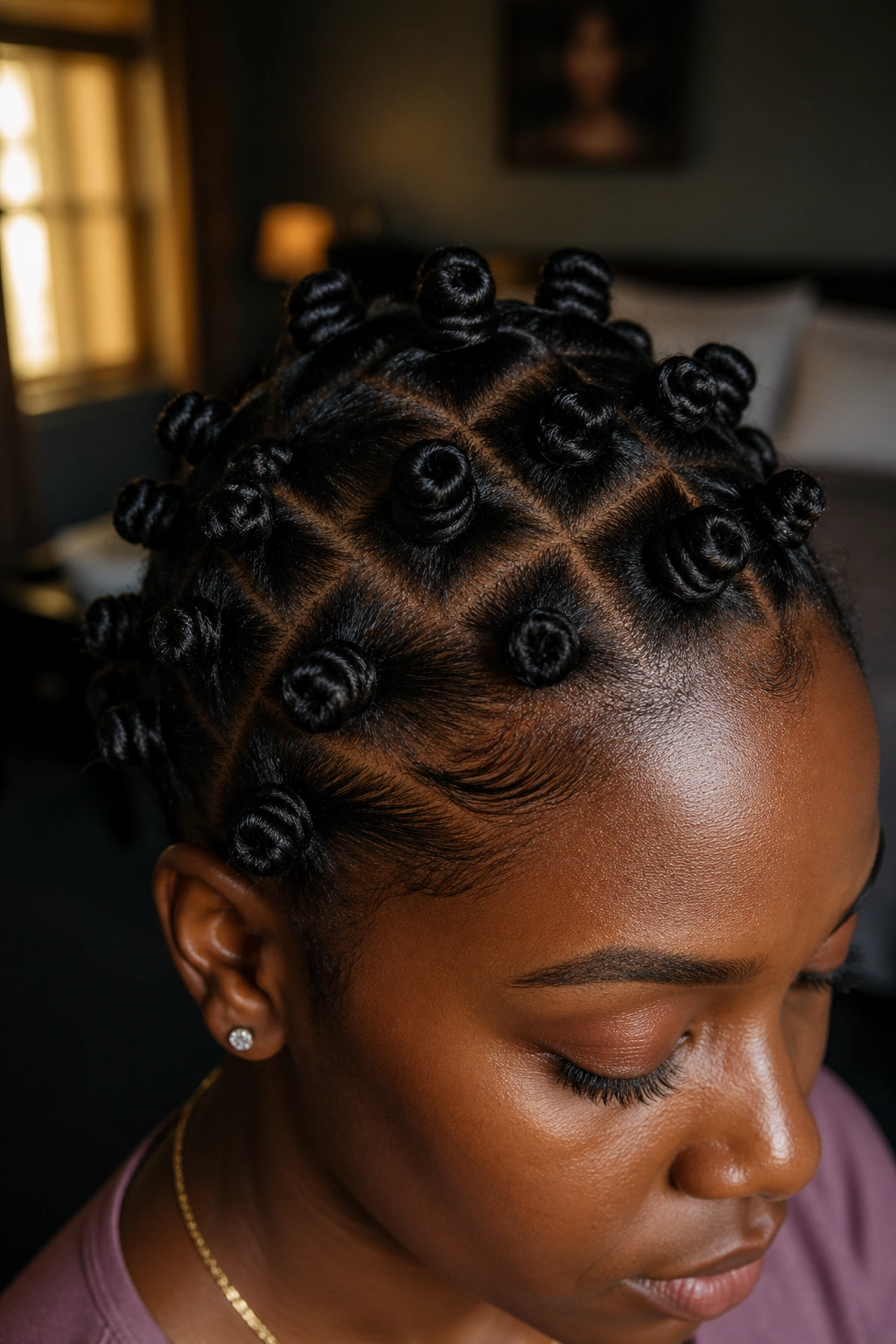
Bantu knots are the style people either ignore or swear by, which is a shame, because they do a quiet job on curls that need shape preserved overnight.
They work by coiling sections of hair into small knots that keep the curl pattern compact. That makes them a solid pick for twist-outs, defined coils, and textured hair that gets frizzy when it is left loose. If your goal is to wake up with more spring and less flattening, this style earns its keep.
The part that matters most is tension. The knots should be snug enough to stay put, but never so tight that the scalp feels pinched. Tight knots can leave sore spots and tiny dents in the curl at the root. Nobody needs that.
- Use 6 to 10 knots for medium-density hair
- Go smaller if you want more definition
- Make sure the hair is mostly dry before bed
- Wear a bonnet or scarf over the knots to reduce rubbing
Bantu knots are not the fastest option, and that’s fair. They take a little care. But if you want definition and a second-day style that doesn’t collapse on contact, they’re worth the extra minute.
8. The Low Loose Bun
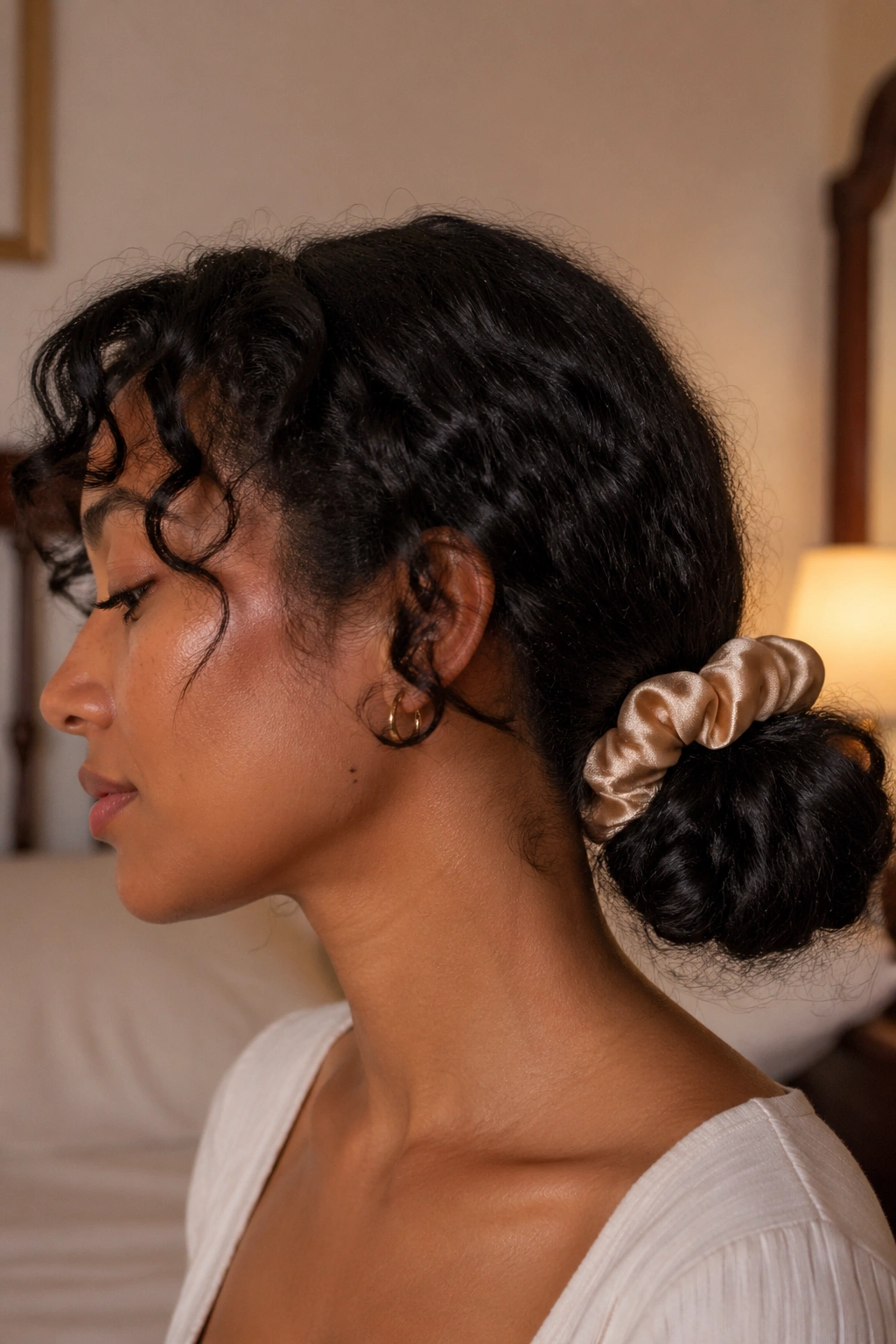
What if your hair is too long for a pineapple and too layered for a braid? A low loose bun usually fits the gap.
This style sits near the nape, where it keeps the length tucked away without dragging the crown into a hard bend. It’s a good move for stretched curls, chunky coils, and longer bob cuts that sit on the shoulders and pick up friction all night. The bun should be loose, almost floppy, not wound into a tight knot that presses into the scalp.
I like a large satin scrunchie here because it spreads the pressure out. A narrow elastic can leave a hard line and make the hair look bent in the morning. If short layers escape, pin them lightly with smooth bobby pins or let them be. A few loose pieces are better than a headache.
How to Keep the Bun Soft
Keep the bun low, and keep the wrap loose. If the bun feels like it’s pulling the hairline backward, it’s too tight. You want the hair gathered, not yanked.
This style is also decent when you need to keep your curls away from a face cream, night mask, or anything greasy. The nape stays protected, the front stays cleaner, and the shape is easy to refresh with a quick mist in the morning.
9. Space Buns
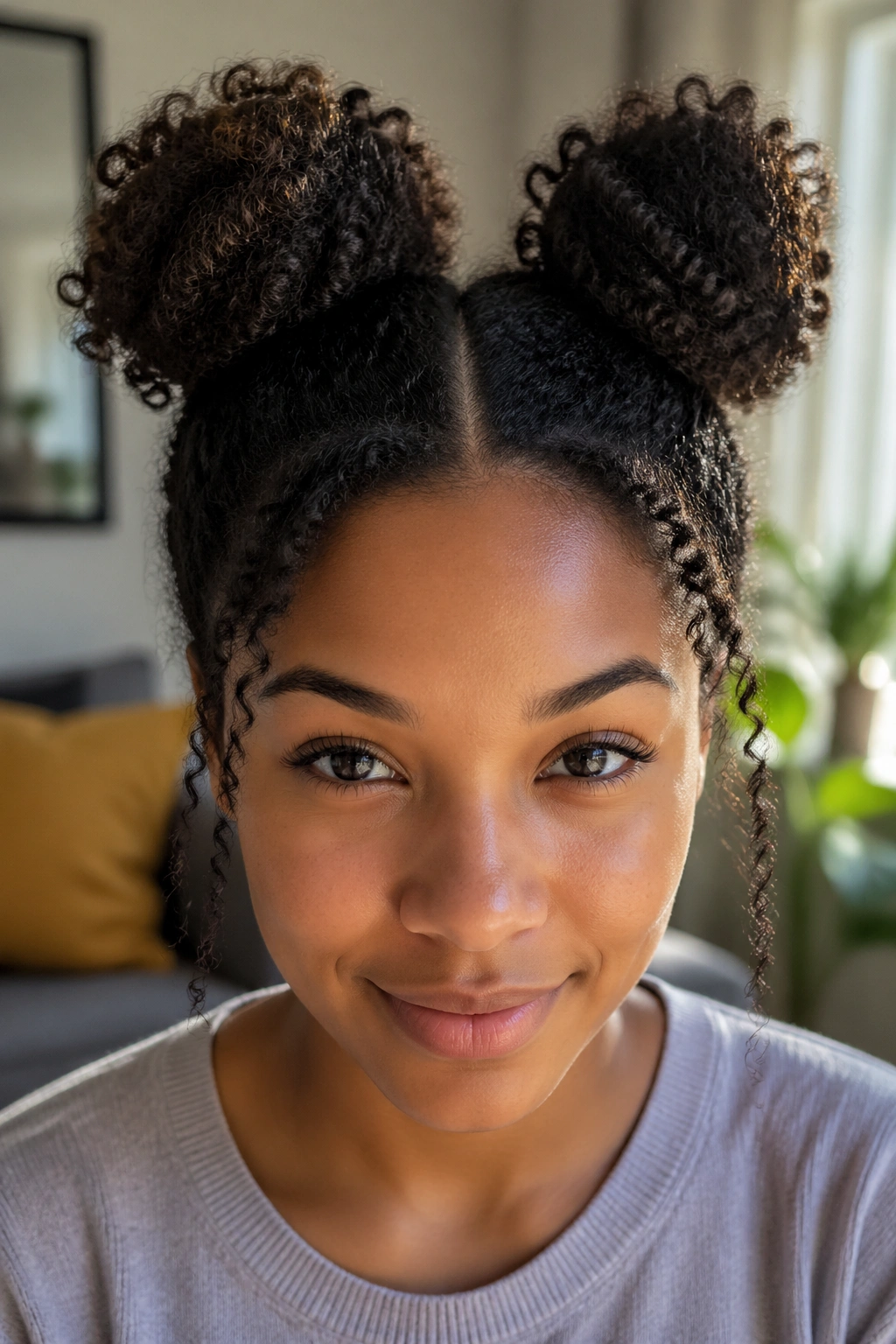
Space buns are not just a cute look. On curly hair, they split the weight in a way that can save the crown from one giant dent.
Instead of forcing all the hair into one bun, you divide it into two sections and set each one loosely on the head. That helps with balance, especially if your hair is medium length or has enough density to create a heavy single puff. The center part can help keep the style even, but it should not be sharp or stiff.
The real advantage is comfort. Two buns usually sit more naturally than one tight knot, and they can be easier on the nape if you sleep on your back. They also make sense for thick curls that need to stay away from the face and shoulders.
The caution here is tension around the center part and temples. If the buns are pulled too tightly, you’ll wake up with a flat line down the middle and possibly some tenderness along the scalp. Keep each bun soft and slightly high, then cover with a bonnet if your hair is prone to frizz.
A small thing, but a useful one: if your layers are short, leave a few pieces free around the hairline. That keeps the style from looking overworked the next day.
10. The Halo Twist
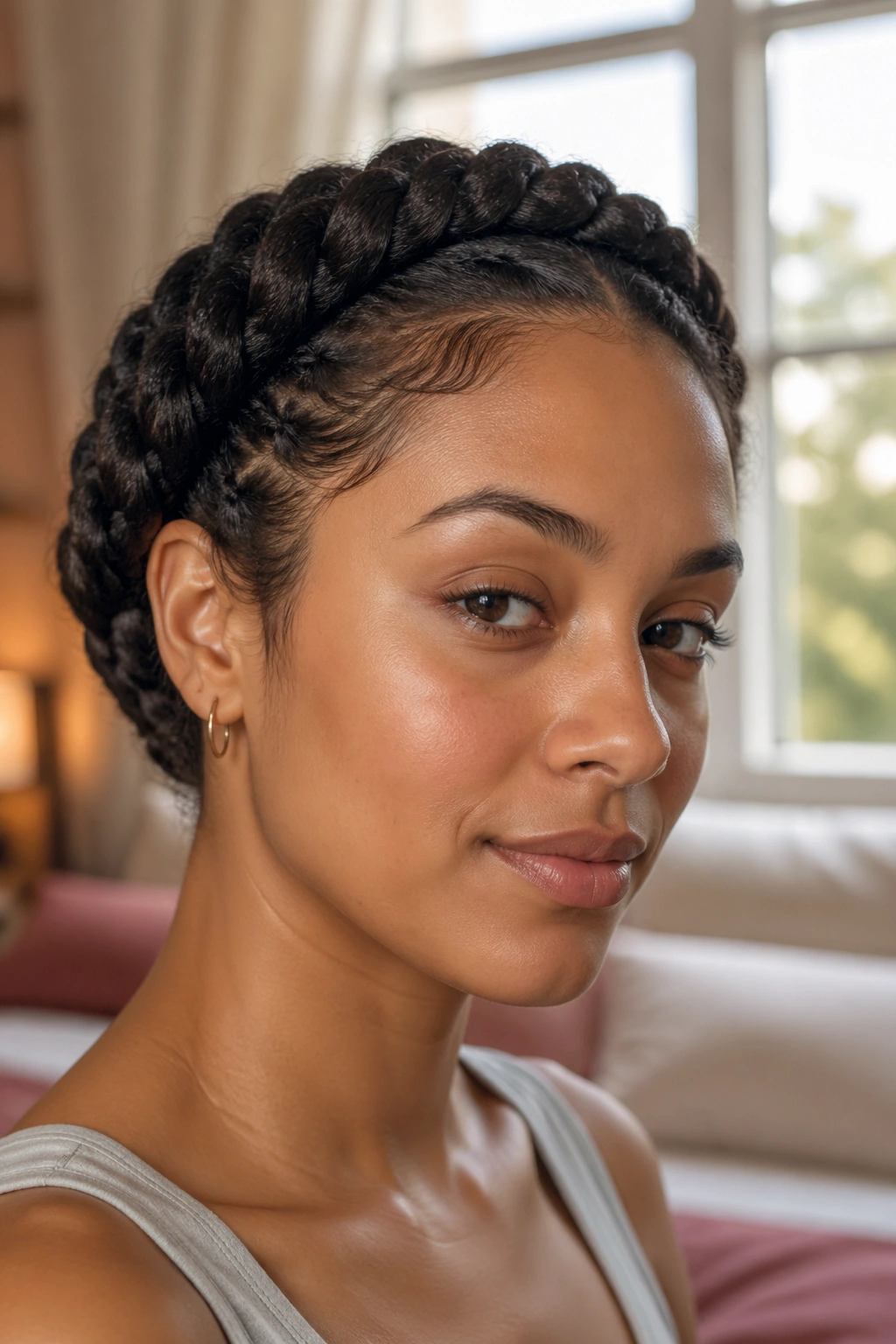
The halo twist keeps the perimeter calm, which is where most curls get fuzzy first.
It wraps the hair around the head in a circle, almost like a soft headband made of your own hair. That makes it a solid choice for bob-length curls, face-framing layers, and anyone whose temples seem to frizz the moment the pillow touches them. It also helps protect the hairline without stacking a lot of bulk on top of the head.
What Makes It Different
Unlike a braid or bun, the halo twist keeps the hair traveling around the head instead of piling upward or back. That can be kinder to short styles that lose their shape when they are pulled straight back. It also leaves the crown flatter, which matters if you hate waking up with one stubborn bump.
You can use 4 to 8 smooth pins to secure the twist, depending on hair thickness. Keep the twist loose enough that the scalp does not feel tugged, and tuck the ends under the back part of the circle.
This is one of my favorite styles for short curls because it feels polished without much effort. If a bob needs to keep its outline, the halo twist usually does the job better than a high puff. It looks neat, stays put, and does not fight the haircut.
11. Medusa Clipping
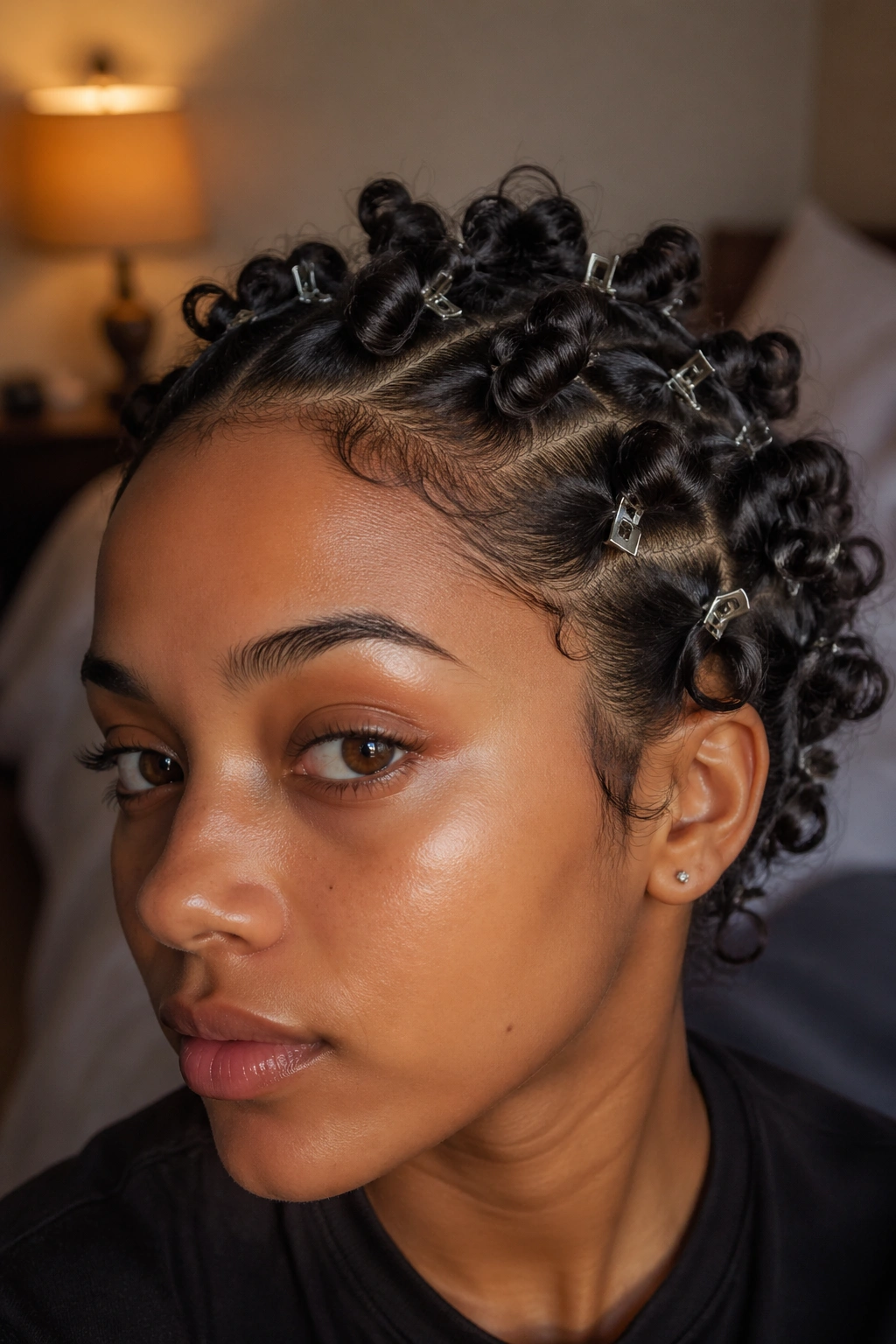
Medusa clipping looks fussy until you see what it does to a curl set overnight.
Instead of gathering the hair into one big shape, you pin individual curls or small sections up and around the head with smooth clips. The curls stay close to their own pattern, which helps a wash-and-go keep its definition. It’s especially handy when your hair is already shaped the way you like it and you do not want the whole thing flattened.
The name sounds dramatic. The method is not. You take a curl, lift it gently, and clip it against the head so the ends are not smashed under your pillow. Keep the clips smooth or coated. Sharp metal clips can snag the cuticle, and that is exactly what you are trying to avoid.
What to Clip and What to Skip
Clip the curls that stick out the most, especially around the sides and crown. Skip sections that are already lying flat and comfortable. There is no prize for pinning every single strand.
This style works best on fully dry hair. If the curls are still damp, clipping them into shape can flatten the set and leave you with a strange mix of wave and frizz by morning. Dry, defined curls are the sweet spot here.
12. Pin Curls for Set Hair
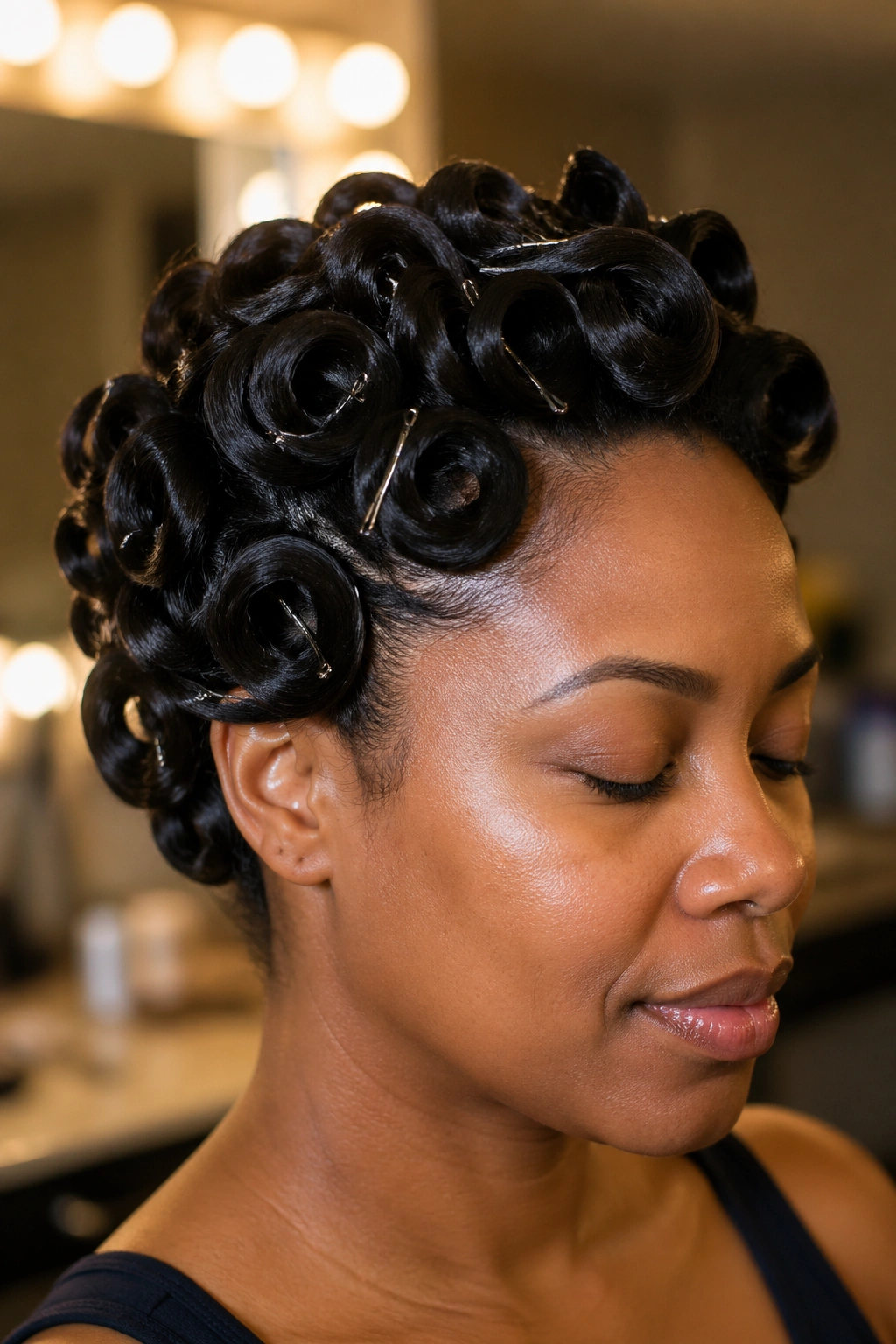
Why bother with pin curls when twists are easier? Because pin curls hold a shape that twists do not always preserve.
They are a good match for roller sets, rod sets, and any curl pattern you want to keep round instead of stretched. A pin curl is made by rolling the curl into a flat circle and securing it close to the scalp. That keeps the shape intact and protects the ends from being rubbed raw against the pillow.
I use this when the style matters more than speed. If the hair is already set and you want it to last through another night, pin curls can keep the shape cleaner than a loose braid would. They are also useful for shorter curls that need the length tucked away but not yanked into a bun.
The downside is obvious: pin curls take more time to put in, and they can feel a little fiddly if you’re tired. Use covered pins or clips with smooth edges. If the clip feels sharp when you turn your head, it’s the wrong clip.
A small mist of water on the ends is fine before setting, but don’t soak the hair. Wet pin curls take forever to dry and lose their shape faster.
13. Flexi-Rod Preservation for Curly Sets
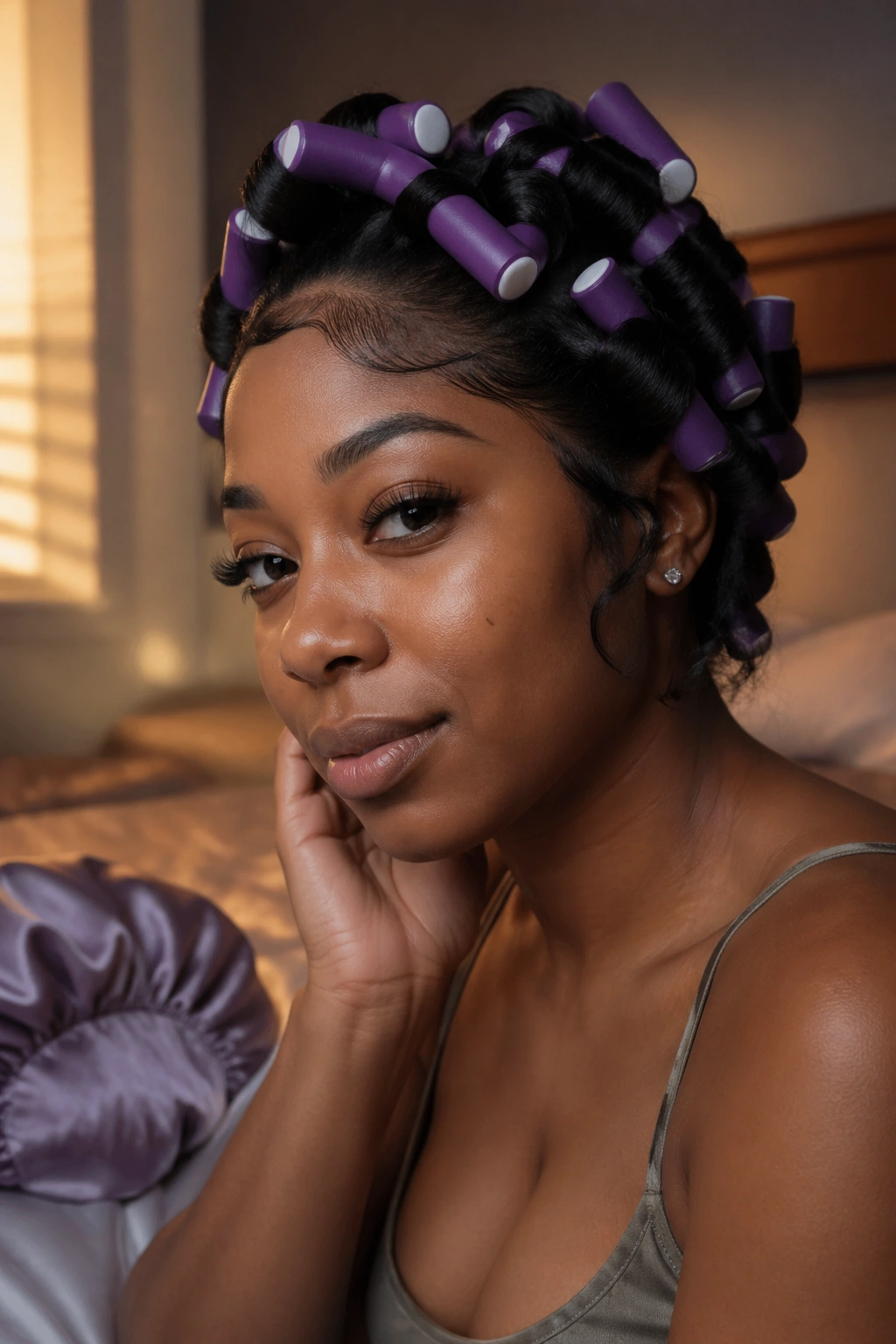
Flexi-rods are not only for styling day. They can also be a decent way to protect a set that still needs one more night to hold.
The trick is not to sleep like you have all the room in the world. Rods add bulk, so this style works best when you use softer rods, keep the sections even, and wrap the whole thing with a satin scarf or bonnet so the rods do not rub directly against the pillow. If you’re a side sleeper, though, you may need to rethink it. Side pressure can bend the rods and crush the curl shape.
How to Make It Bearable
Use the fewest rods that still give the shape you want. Front sections often need more care than the back, since the front tends to show dents first. Keep the rods away from the ears and the nape if possible.
- Best for already set curls
- Better with foam flexi-rods than hard ones
- Needs a bonnet or scarf over the rods
- Not the comfiest option for restless sleepers
This is a style for when you want the set to stretch one more day, not for when you want the easiest sleep. There’s a trade-off. But if your curls came out beautifully and you need them to survive the night, flexi-rods can keep them in shape longer than leaving the hair loose.
14. The Satin Scarf Tuck
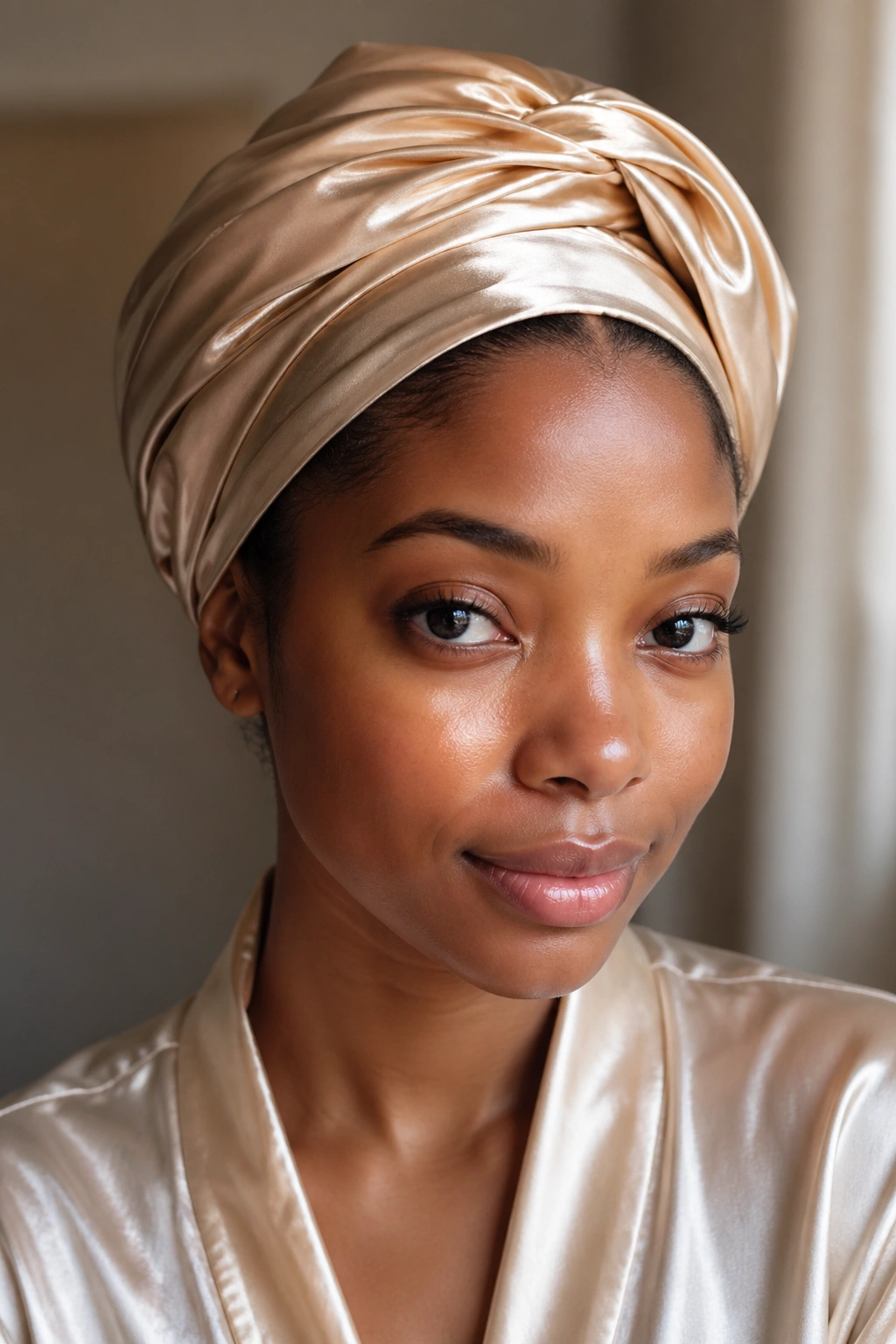
A satin scarf tuck is the fastest fix when your curls are too short for a pineapple and too stubborn for a braid.
You gather the hair gently upward, cover it with a satin scarf, and tuck the ends where they will not rub against the pillow. On a curly bob, this can be the difference between a soft morning shape and a fuzzy, flattened crown. It keeps the hair compact and reduces the amount of fabric that can rough up the cuticle.
The real magic is in the tuck. The scarf should sit snug enough to stay put, but not so tight that it smashes the hairline. If you wear it too tight, the front gets flat and the edges feel sore. That’s a bad sign. Pull it back and loosen it.
A satin scarf is also useful when you need a no-drama option after a long day. It takes less time than twists, less effort than knots, and fewer steps than clipping the whole head. Short curls especially benefit from this because they can be annoying to pile into anything else.
If you toss a lot, combine the scarf with a silk pillowcase. The two together cut down on friction in a way that plain cotton never will.
15. Four Loose Cornrows
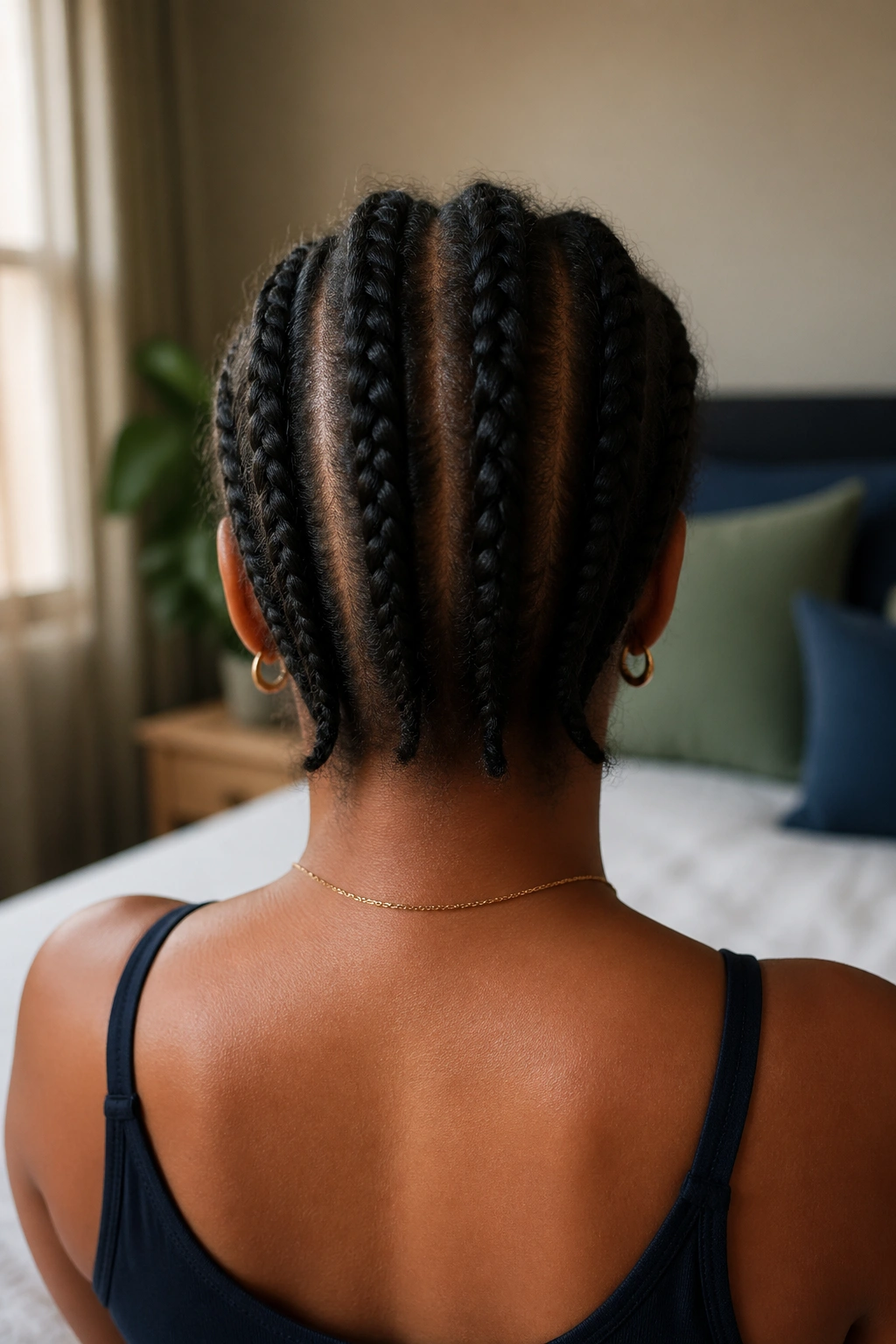
Four loose cornrows are the least glamorous option and often the smartest one.
They spread the hair into even sections, keep the length close to the scalp, and protect the curls from rubbing into each other all night. That makes them a good pick for thick, dense curls, high-porosity hair, or anyone who wants a style that can survive more than one sleep before needing a refresh. They’re also useful if your hair tends to puff up at the roots the second it touches a pillow.
The key word is loose. Tight cornrows can stress the scalp and pull on the edges, especially around the temples. That is not protective. It is just tension with a nicer name. Keep the parts clean, keep the braids roomy, and stop before the scalp starts to complain.
- Good for dense curls and longer bobs
- Keeps sections separated for less tangling
- Can last through several nights with a light refresh
- Best covered with a bonnet or scarf
For protective styles for natural curls at night, this is one of the strongest choices when you want low manipulation and fewer morning surprises. It is not flashy, but it does the job with almost no drama. Sometimes that’s the whole point.
Final Thoughts
The best nighttime style is the one that matches your hair, not the one that looks nicest on someone else’s feed. Short bob cuts usually do better with mini pineapples, halos, scarves, or flat twists. Longer curls can handle buns, braids, twists, and cornrows with less trouble.
Comfort matters more than people admit. If a style leaves a dent, a headache, or sore edges, it’s too tight. If it falls apart the second your head hits the pillow, it needs one more pin, one softer tie, or a different section size.
Rotate the styles if you need to. Twists one night, a pineapple the next, a scarf tuck when you’re exhausted. That little bit of flexibility keeps curls healthier and mornings easier, which is about as practical as hair care gets.
