



A 3C bob can look sharp in a way straight hair never does. It can also puff out at the sides, climb higher than you expected, and turn into a triangle if the cut ignores curl spring. The difference usually isn’t the curl pattern. It’s the shape.
Type 3C curls have enough bend to create real body, but they also have enough shrinkage to fool a lot of stylists who cut them wet and hope for the best. That’s how you end up with a bob that looks chin-length in the sink and lands somewhere near the cheekbones once it dries. Not ideal.
The good bob for 3C hair respects that movement. It leaves room for bounce, keeps the outline intentional, and uses weight in the right places instead of fighting the curls into submission. Some versions lean sleek. Some lean airy. A few are bold enough to feel like a decision instead of a compromise.
And that’s where these 12 bob cuts come in.
1. The Rounded Chin-Length Bob for Type 3C Curls
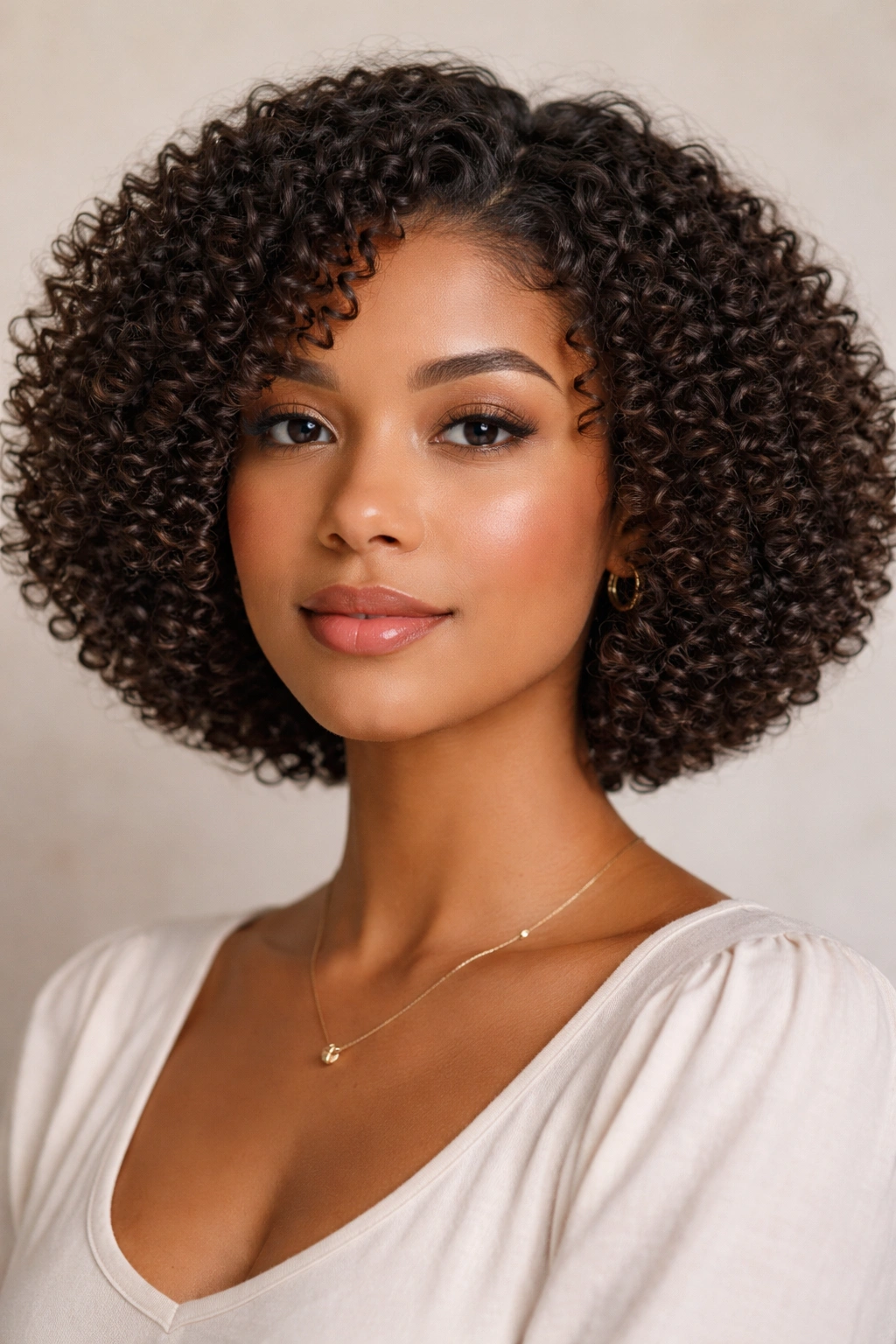
This is the shape I’d put at the top of the pile for a lot of 3C hair. It gives you that clean bob silhouette without forcing the curls into a hard edge that fights their natural spring. The rounded outline follows the curve of the jaw and keeps the sides from ballooning outward.
Why It Works So Well
A rounded chin-length bob gives 3C curls a place to land. Instead of hanging in a box, the curls stack softly over one another, which makes the whole cut look fuller and more controlled. That matters with 3C hair because density and shrinkage can make a blunt cut feel wider than you wanted.
I also like this shape because it grows out politely. A lot of shorter curly cuts can get awkward fast. This one usually just turns into a slightly softer version of itself.
Ask for these details:
- Length that hits around the chin when dry
- A rounded perimeter, not a flat line
- Soft internal layers to remove bulk without slicing away the shape
- End work done with shears, not aggressive thinning
Best for: dense curls, oval faces, and anyone who wants a bob that still feels polished on day three.
One warning. If a stylist over-thins the crown, the cut can lose its structure and puff in the wrong places. Keep the weight where the curls need it. That’s the whole trick.
2. The Jaw-Grazing Curly Bob
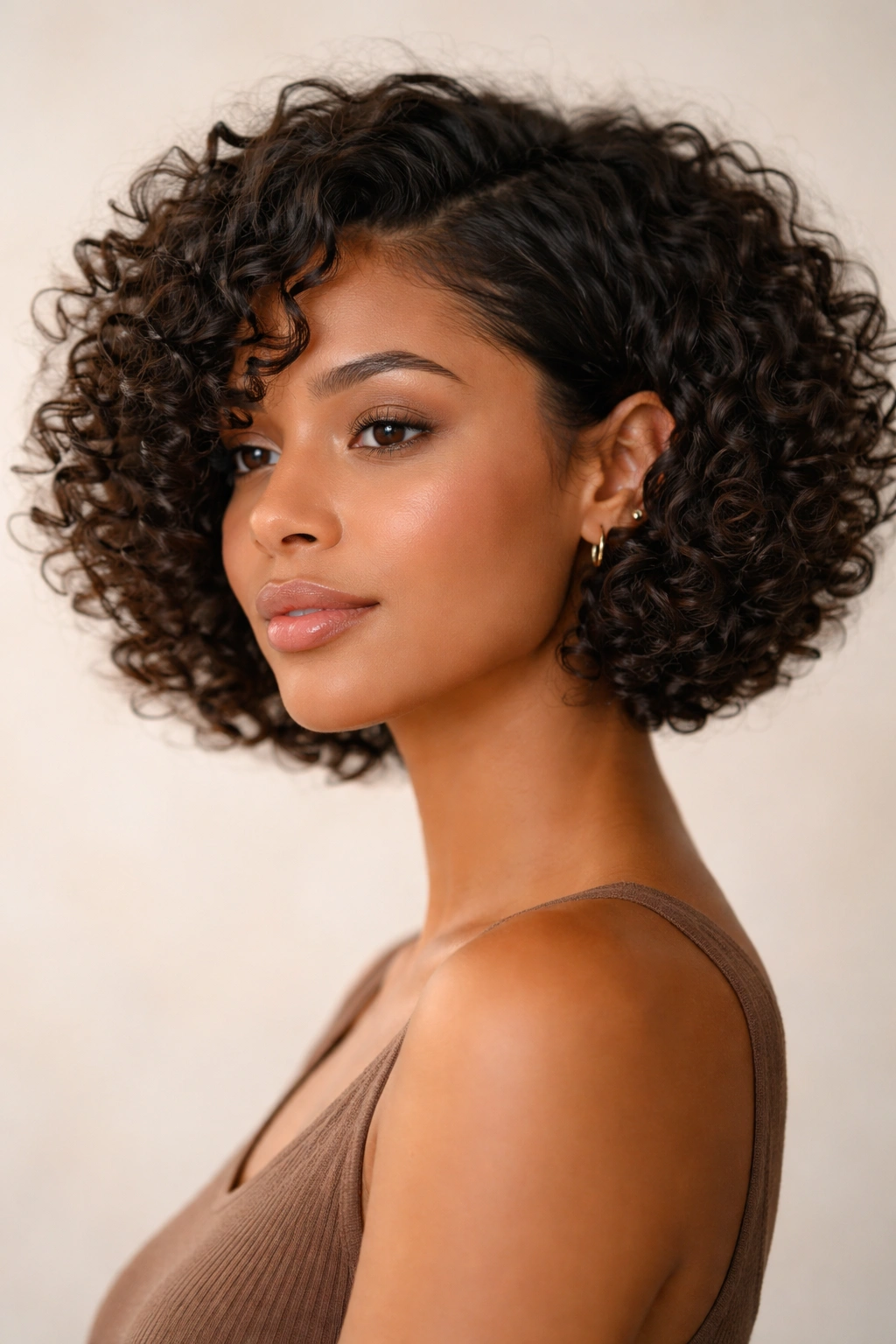
Jaw length is sneaky good. It sounds simple, and that’s why people overlook it, but on 3C curls it can do a lot of work with very little fuss.
A jaw-grazing bob draws attention to the face without sitting so short that shrinkage becomes a problem every single morning. The curls have enough length to form a proper curve, but not so much length that they hang and drag the shape down. It feels lively. Not precious.
This cut tends to flatter people who want movement more than drama. If your curls are springy and your hair has medium to high density, the jaw line gives the bob a little lift. It also keeps the neck open, which I like more than people admit out loud. That small bit of skin showing above the collar of a shirt changes the whole mood of the haircut.
I’d ask for a perimeter that kisses the jaw on the dry cut, with only light layering through the interior. Too many layers here can turn the cut ragged. Too few and the sides may widen. The sweet spot sits right between the two.
One more thing: this length loves a side part. A deep side part can push the bob into a softer, more tailored shape without any extra cutting at all.
3. The Stacked Bob With a Lifted Nape
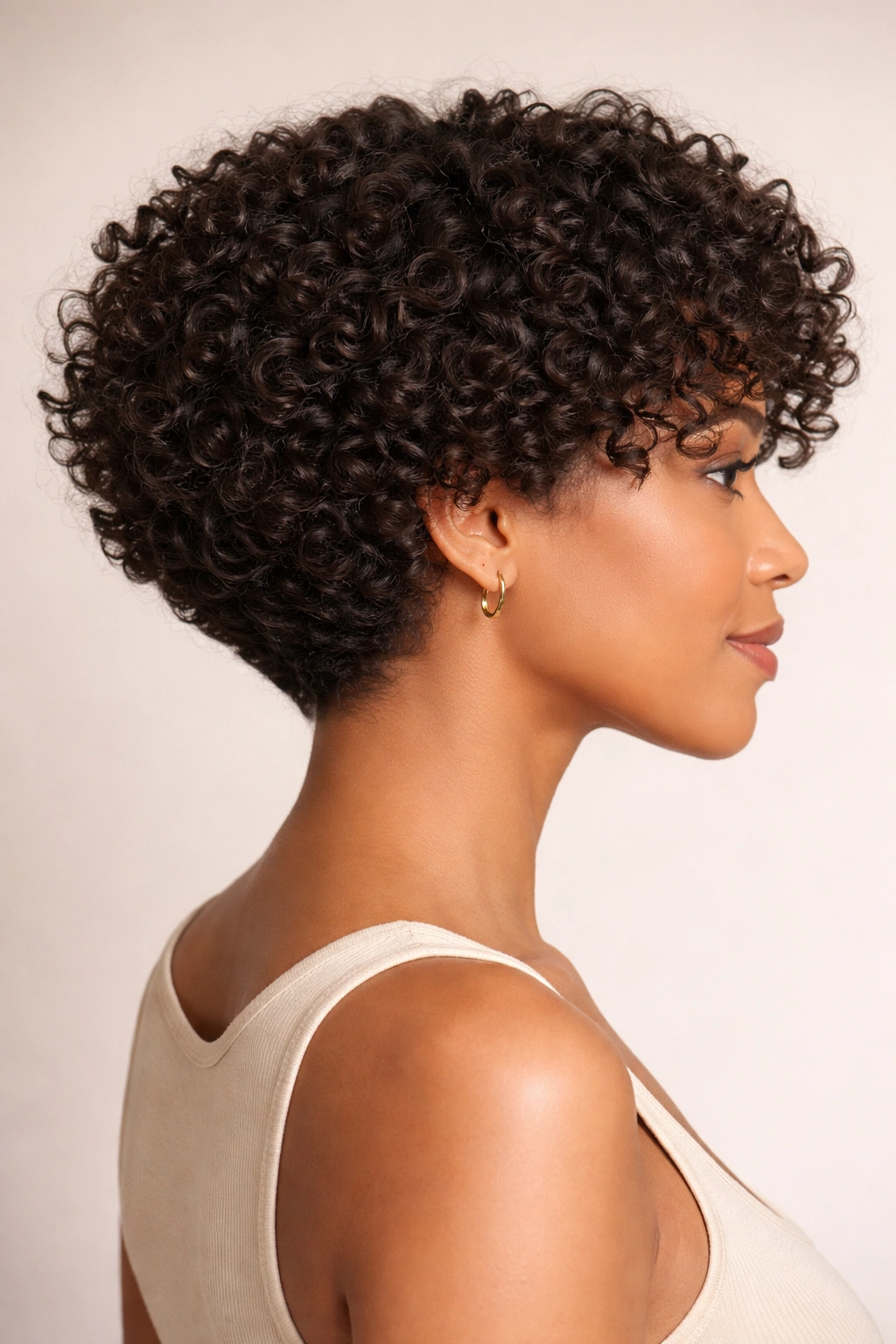
If your hair tends to sit heavy at the back, a stacked bob can fix that better than almost any other shape. The shorter layers in the nape create lift, and the longer pieces on top keep the curl pattern from collapsing into a dense lump.
It’s a smart cut for people whose 3C curls gather weight at the back of the head. You know the look. Flat at the crown, bulky at the base, then a puff that doesn’t know where to stop. A stacked bob changes the math by shifting the weight upward and giving the back a cleaner curve.
What to Watch For
The stacking should be soft, not choppy. Too much graduation and the haircut starts to look helmet-like once the curls dry. That’s the exact opposite of what you want.
A good version uses:
- Shorter nape layers to remove bulk
- Longer crown layers to keep the top from collapsing
- A rounded exterior line so the back still feels connected to the front
- Point cutting at the ends to soften the outline
This is one of those cuts that looks especially good when the curls are defined and the ends are a little piecey. It doesn’t need every strand to behave. It just needs the shape underneath to be solid.
I’d skip heavy razoring here. On 3C hair, that can fray the ends and create frizz right where you need the line to stay neat.
4. The Soft A-Line Bob
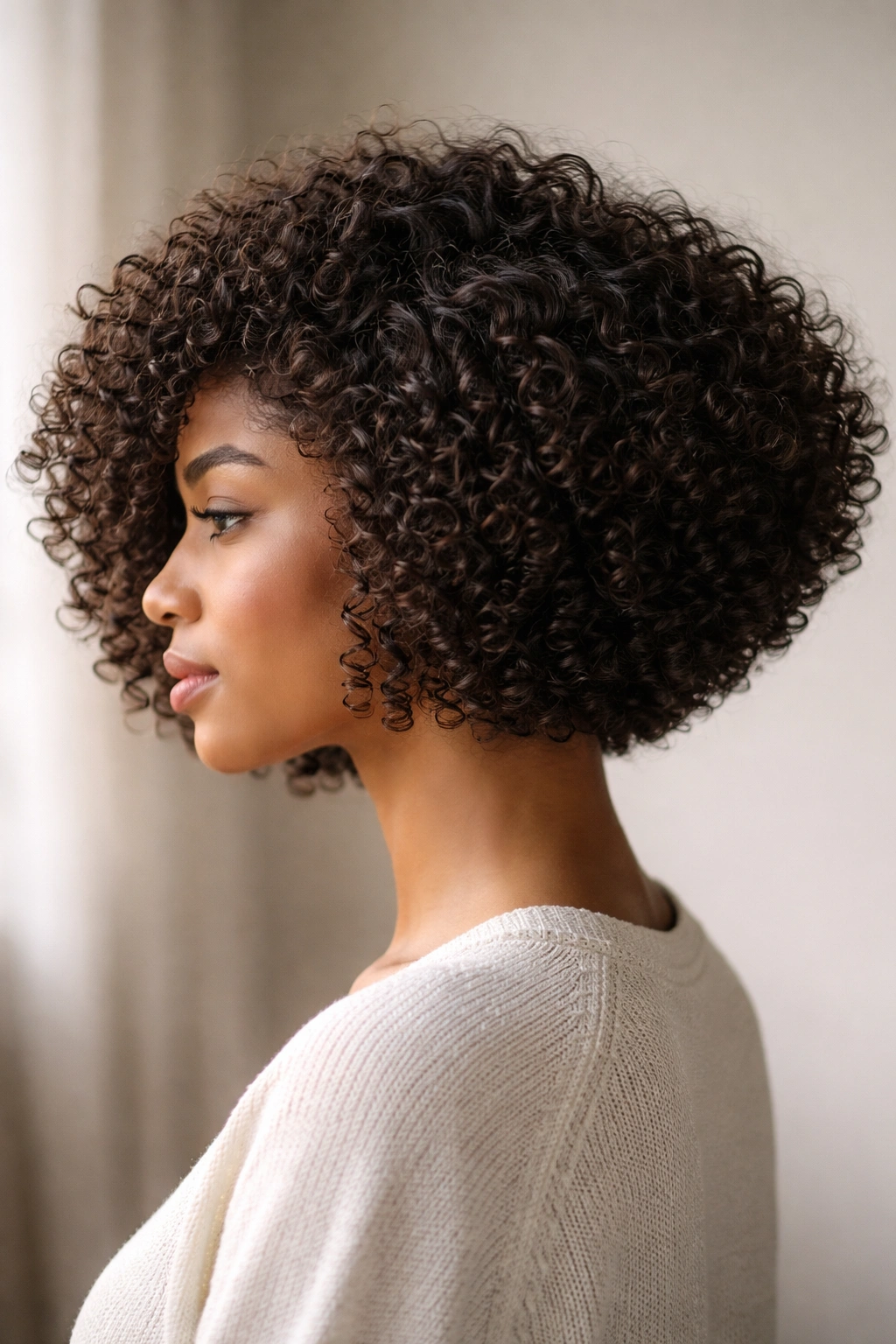
Why does an A-line bob work so well on curly hair? Because it gives the front a little extra room without making the whole cut feel long and heavy. The back sits shorter, the front drifts forward, and the eye gets pulled into that clean diagonal.
On 3C curls, that diagonal is useful. It keeps the bob from spreading too wide at the cheeks, which can happen fast when the curls have a lot of spring. The longer front pieces also help the haircut feel intentional as it grows. There’s less of that awkward in-between phase where nothing seems to line up.
I like the soft version more than the sharp one. A severe A-line can look stiff on curls unless the hair is very controlled. A softer angle lets the curls breathe and makes the whole thing easier to wear with just cream and gel.
What to ask for at the salon
- A shorter back that gradually lengthens toward the front
- A slope that is visible but not extreme
- Face-framing pieces that start near the lip or chin
- Enough interior weight to keep the curl clumps from puffing out
This shape works well if you want a bob that feels tidy from the side and forgiving from the front. It’s also a nice choice if you hate the feeling of hair touching your neck all day.
5. The French Bob With a Fringe
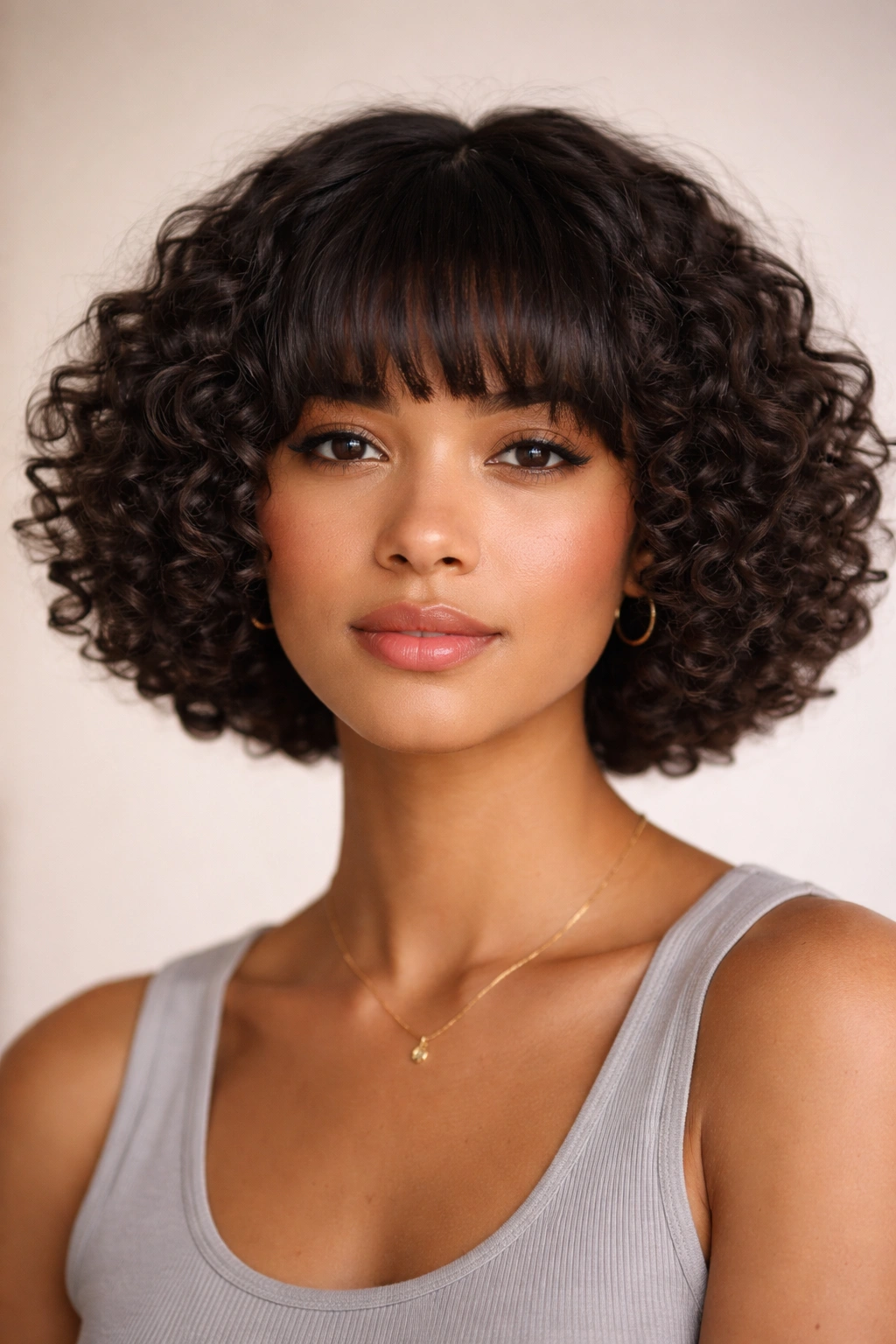
A French bob on 3C curls has attitude. Not a loud kind of attitude, either. More like a cut that knows exactly what it is and doesn’t ask permission.
The key here is the fringe. On curly hair, bangs can be gorgeous, but they need room to move. A fringe that’s cut too short will spring up and sit far above the brows. A fringe that’s cut too blunt can separate into little wisps in humid air. So the best version usually lands a touch longer than you think and gets shaped dry.
I prefer this cut when the curls around the forehead are dense enough to create a real line. If the front pieces are sparse or uneven, the fringe can look patchy rather than soft. That’s not a moral failure. It just means the cut needs a different plan.
This bob feels strongest when it sits somewhere between lip and cheekbone length, with the fringe grazing the brows or stopping just above them once dry. The whole thing should look plush, not poky.
A French bob also loves a little product discipline. Use a small amount of curl cream, then layer gel only where the fringe needs control. Too much product at the front and the bangs go flat. Too little and they split apart by noon.
6. The Layered Bob That Tames Bulk
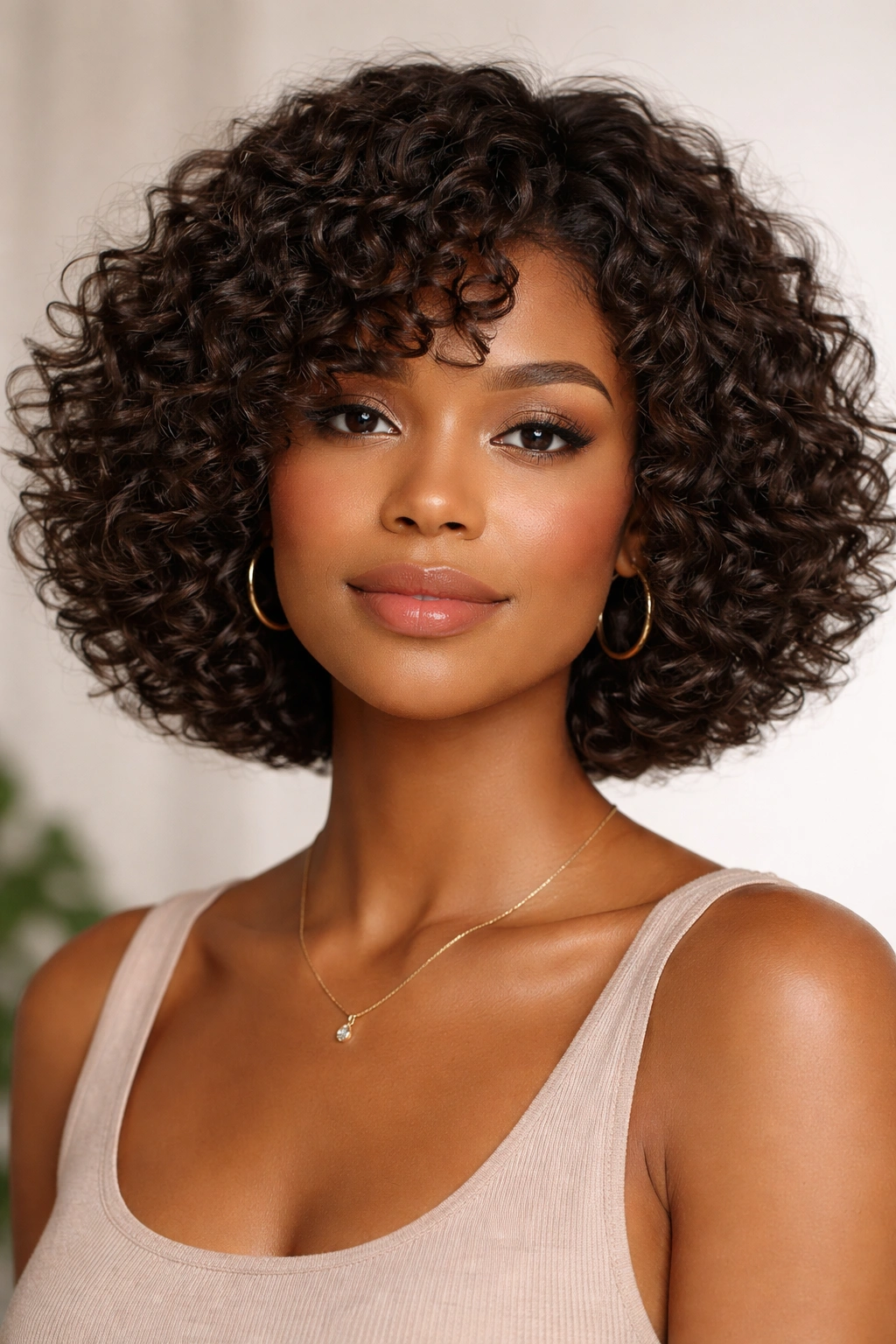
Heavy 3C hair can turn into a triangle faster than people expect. The cure is not always a shorter cut. Sometimes it’s better layering.
A layered bob keeps the perimeter solid while carving out space inside the shape. That means the ends still read as a bob, but the interior doesn’t sit there swallowing your face. I reach for this idea when the hair is dense, coarse, or stubbornly wide at the sides.
The best layers for 3C hair usually start lower than people think. Near the chin is often safer than near the ear. High layers can blow the shape open and leave the top too airy while the bottom stays heavy. Low, controlled layers remove weight where curls pile up most, especially around the back and the lower sides.
This cut is a good fit if:
- Your curls dry into a wide triangle
- Your hair takes a long time to dry
- You want movement without losing the bob outline
- You like volume, but not bulk
It’s also one of the easiest bobs to live with if you air-dry a lot. The curls have room to separate, which helps drying time and keeps the cut from looking blocky.
A flat, one-length bob on dense 3C hair can look heavy in a hurry. Layering, done with restraint, solves that without turning the hair into a frizzy cloud.
7. The Curly Lob for Extra Swing
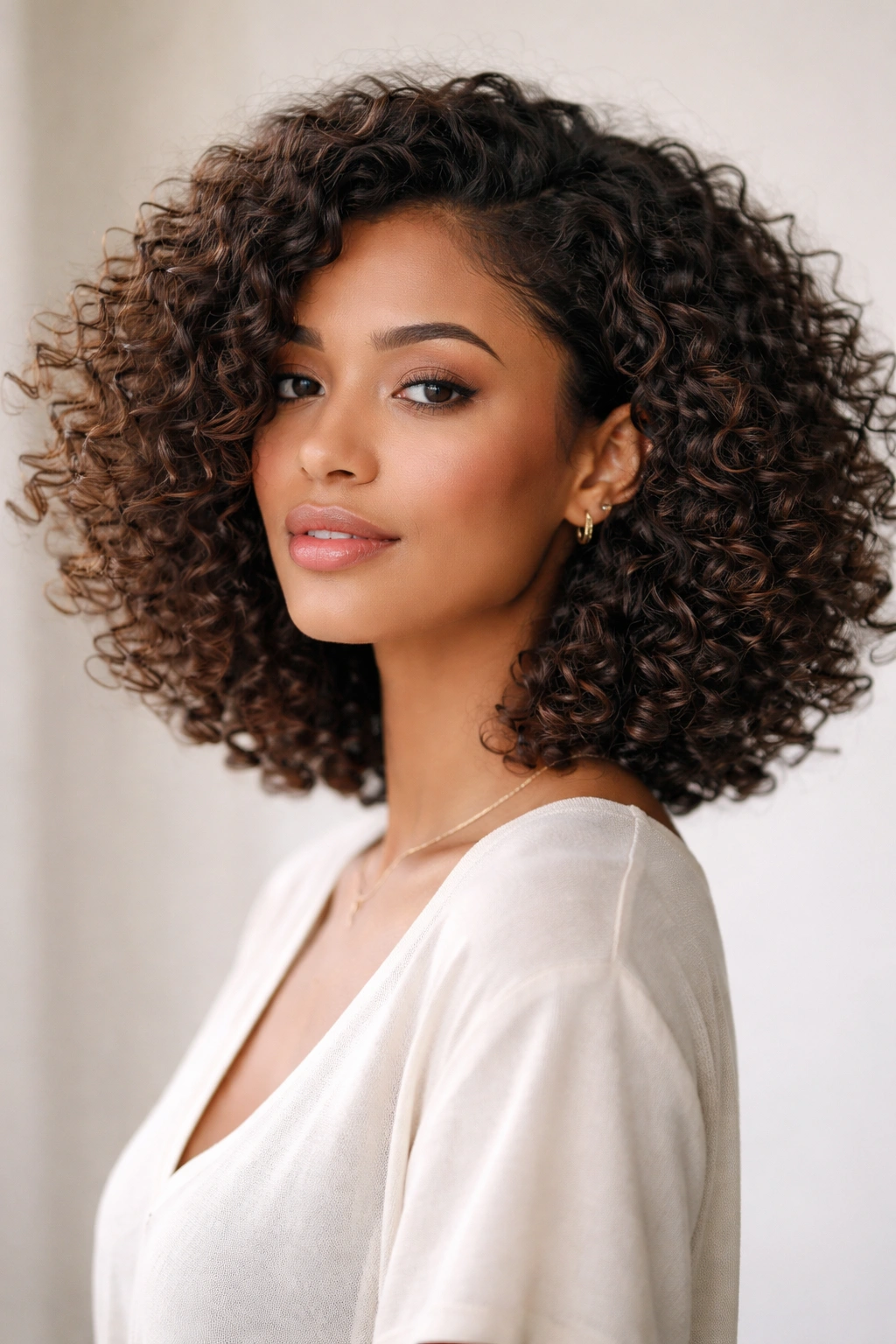
If you are nervous about going short, start here. A curly lob, which sits somewhere between the collarbone and the shoulder, gives you the feeling of a bob without cutting off all the length that your curls use to behave themselves.
This is a very good choice for people who want to test a shorter shape before committing to a true bob. Type 3C curls shrink enough that a collarbone lob often dries into a length that feels closer to a medium bob anyway. That little buffer matters. A lot.
I also like this cut for anyone whose curl pattern changes from top to bottom. Some 3C heads have tighter curls in the back and looser ones near the front. A lob gives a stylist more room to balance those differences without making the cut look like it was assembled from two separate haircuts.
The shape can be blunt, layered, or softly angled. My favorite version keeps the front slightly longer and lets the curls stack naturally at the shoulder line. It swings when you walk. That sounds small, but it changes the whole feel of the haircut.
Shorter bobs can force a lot of styling discipline. The lob is kinder. It still looks deliberate with a messy diffuser job, and it grows out without a crisis.
8. The Asymmetrical Bob
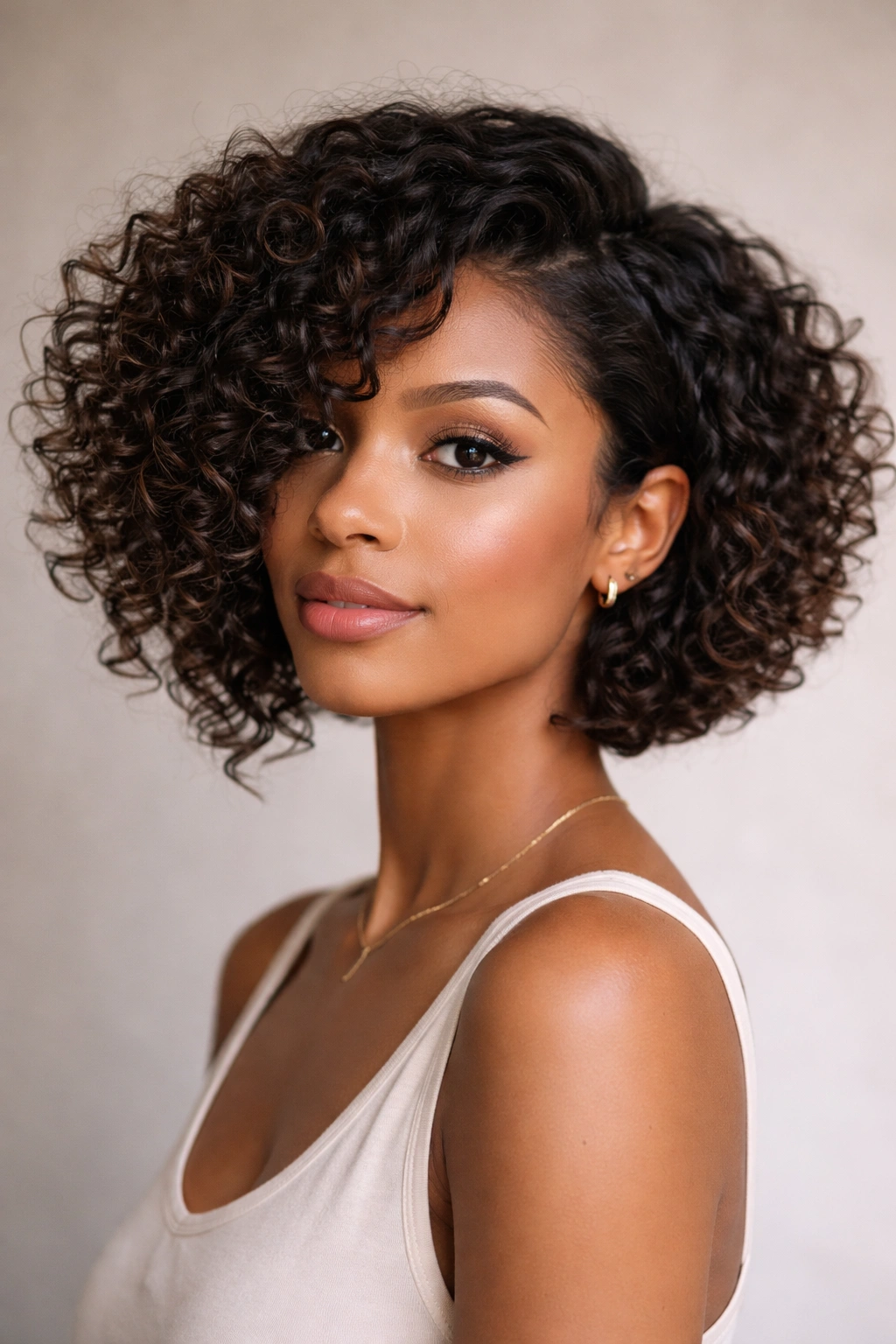
Want a bob that looks purposeful even when your curls refuse to sit the same way twice? Go asymmetrical.
This cut uses one side slightly longer than the other, and on 3C hair that small difference can do a lot. The curls soften the angle, so the haircut feels artistic without looking stiff. It also gives your stylist one more tool for balancing face shape, especially if one side of your hair naturally springs tighter or sits flatter than the other.
Why It Feels Different
The asymmetry creates motion before you even add product. One side drapes a little farther. The other side lands a bit higher. That unevenness can make curls look more lively, especially on day two when they start to clump and separate.
I would keep the difference modest. One to two inches is usually enough. If the gap gets too big, the cut starts fighting the curls instead of working with them.
This is a good pick if you like a side part, wear earrings, or tend to tuck one side behind your ear. It lets the haircut interact with those habits instead of hiding from them.
A few things help this cut behave:
- A clean, dry consultation before the first snip
- A visible length difference, not a dramatic one
- Soft shaping around the face so the longer side doesn’t drag
- Curl definition at the ends so the asymmetry reads as design, not accident
This one is for people who like their bob to have a little edge. Not a shout. Just enough.
9. The Boxy Blunt Bob
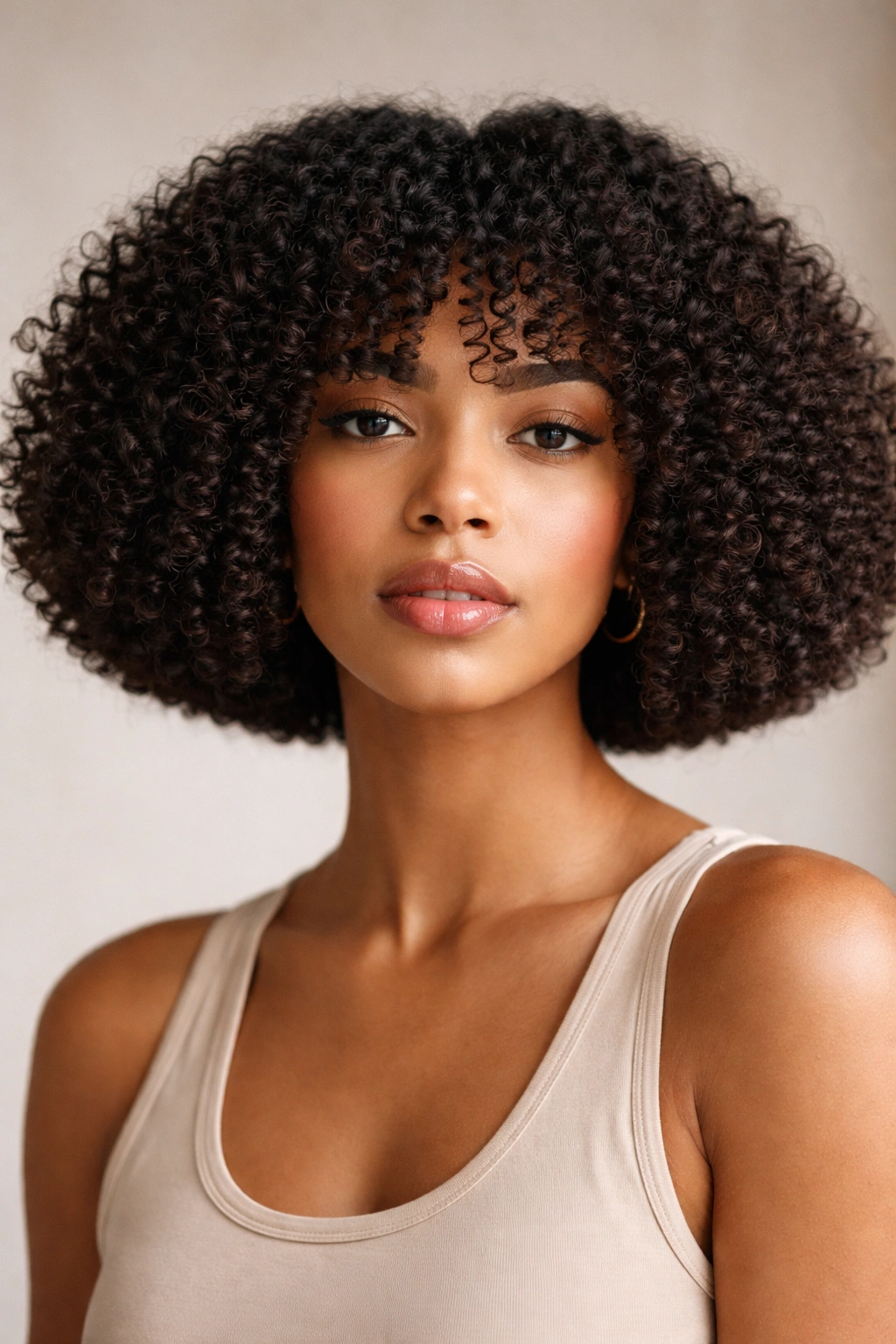
A blunt bob is not the villain people make it out to be. On the right 3C hair, it can look crisp, thick, and expensive in the plainest sense of the word: the shape looks considered, not accidental.
The catch is density. A blunt bob needs enough hair to hold the line. If your 3C curls are fine or sparse, the ends may look see-through and the shape can lose its bite. But if your hair is coarse and full, the blunt edge gives the curls something strong to rest on.
What I like here is the contrast. The curls are soft, round, and springy. The outline is straight and clean. That tension between soft texture and firm edge is what makes the cut interesting.
This is the least “fussy” of the bunch in some ways. It doesn’t rely on a lot of internal shape. It relies on one clean perimeter and curls that know how to sit on top of it.
A blunt bob also asks for discipline at the salon. No heavy thinning shears. No random carving at the ends. No guesswork. The line has to stay intact, or the whole point disappears.
If you want a bob that makes your curls look dense and sculpted, this is a strong option. If you want movement above all else, pick one of the layered shapes instead.
10. The Shaggy Bob Hybrid
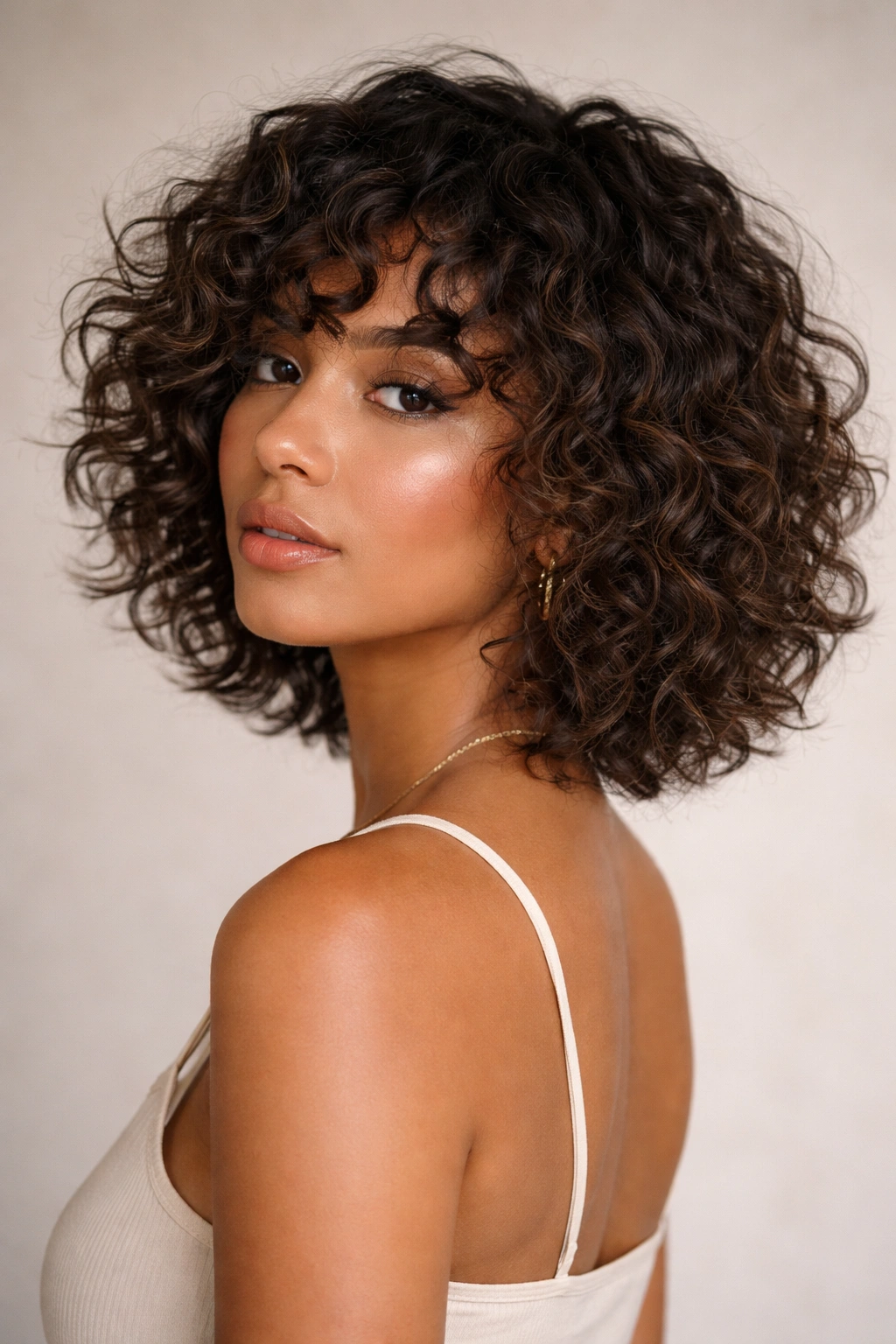
The shaggy bob is for curls that like a little rebellion. Not chaos. Just enough looseness that the haircut feels lived-in instead of polished to death.
On 3C hair, a shag-bob hybrid uses layers around the crown and face to build lift while keeping the bob length at the bottom. The result is a shape that moves in pieces. The top can have a little height, the sides can soften, and the ends can flick out instead of sitting in one block.
The trick is restraint. A shag on curls can go wrong fast if the layers are too short or too many. Then you get puff, not movement. The best versions keep the shortest pieces connected to the rest of the haircut so the shape still reads as a bob.
I like this cut for people who use mousse, curl cream, or a light gel and don’t mind some volume. It thrives on texture. It also hides frizz better than a super clean bob because the cut already expects the hair to have some lift and separation.
Style it with:
- A lightweight cream through the mid-lengths
- A flexible gel at the crown and ends
- Diffusing on low heat until the roots feel dry
- Scrunching out the cast once the hair is fully cool
This is one of the most forgiving bobs for second- and third-day curls. The shape keeps moving, which is half the fun.
11. The Side-Part Bob With Face Framing
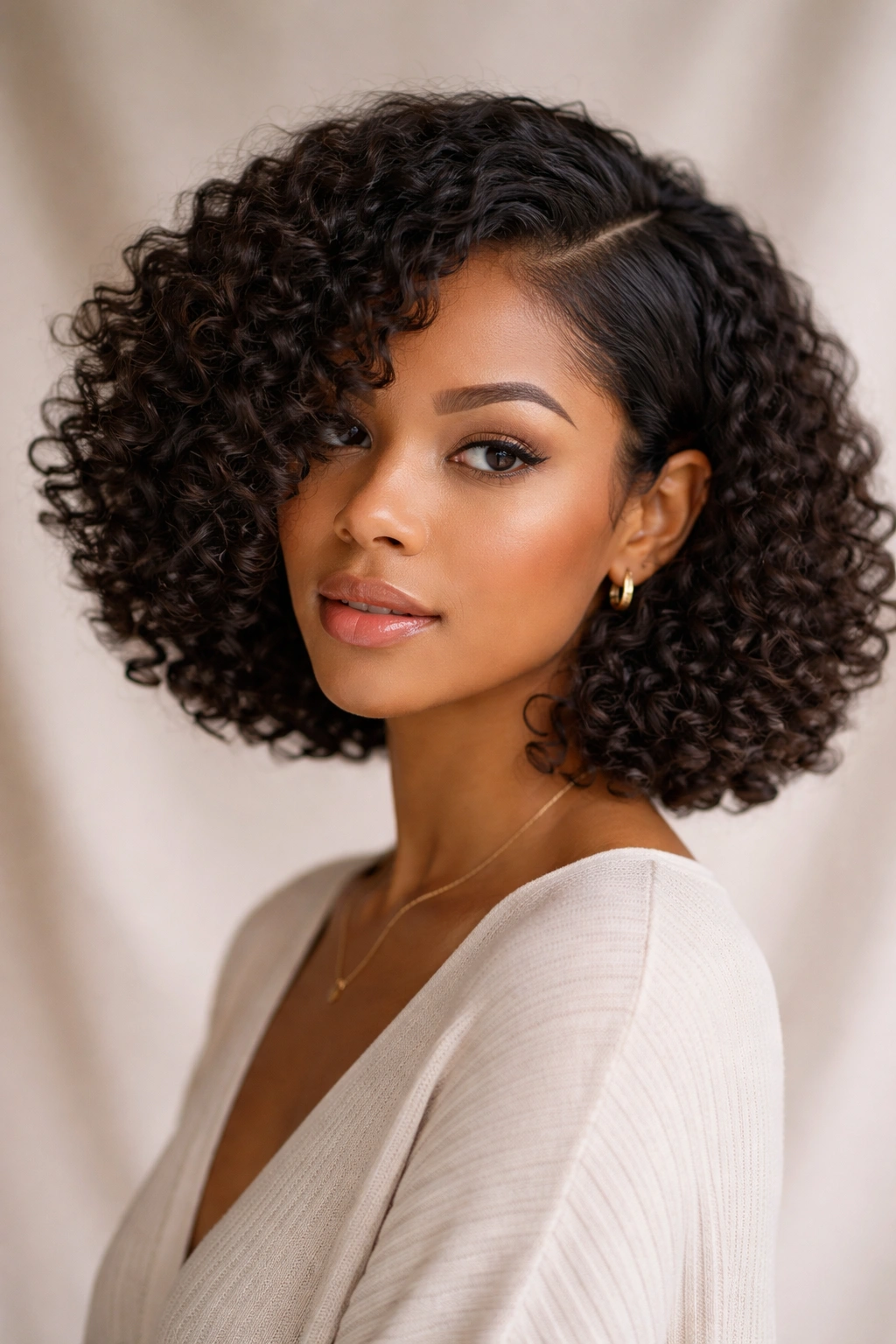
The part line matters more than people think. A side-part bob can make 3C curls look softer, leaner, and a little more tailored without changing the cut itself much at all.
A deep side part shifts weight off the middle of the face and gives the curls a natural sweep. That helps if your hair tends to puff wide at the cheeks or if your face shape benefits from a little diagonal movement. It also gives face-framing layers somewhere to live. Without the part, those pieces can disappear into the rest of the curl mass.
How to place the framing pieces
Start them where they’ll actually show. Around the cheekbone is a common sweet spot. If the front pieces begin too high, they can look wispy and disconnected. If they start too low, they miss the chance to shape the face at all.
The bob itself can be chin length, jaw length, or a little longer. The part does the softening work. That means you can keep the perimeter fairly clean and still get a gentle, flattering shape around the eyes and mouth.
This style works especially well on days when you want your hair to look a little more dressed up with almost no extra effort. A tucked side, one statement earring, and a defined part are enough.
I’d keep the face-framing layers soft. Sharp steps near the front can look dated fast on curls. Soft, blended pieces age better and play nicer with the curl pattern.
12. The Inverted Bob With a Curly Undercurve
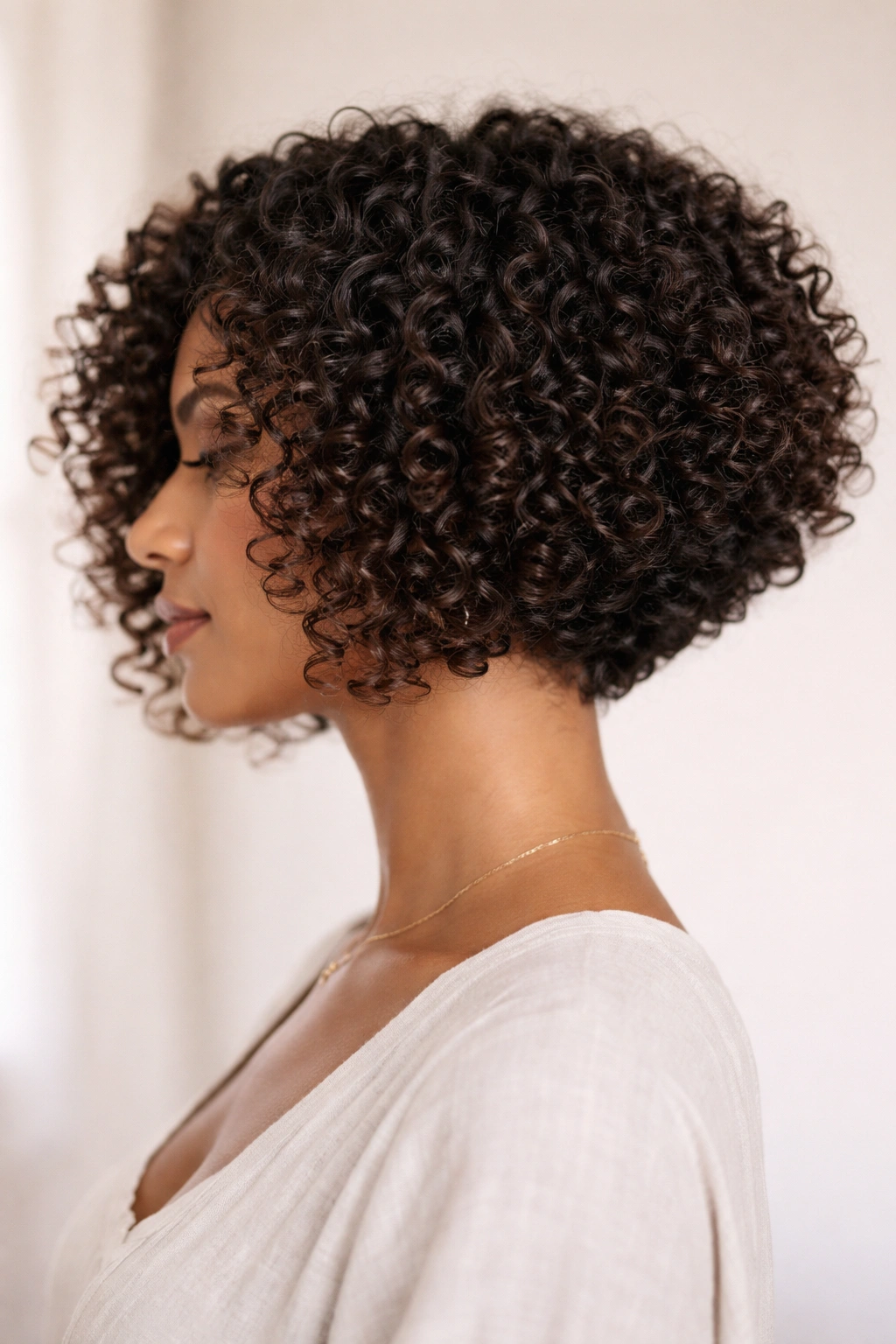
The inverted bob is the more dramatic cousin of the soft A-line. It’s shorter in the back, longer in the front, and shaped so the neckline curves inward while the curls fall forward around the chin.
On type 3C hair, this can look gorgeous when the cut is balanced carefully. The back gets enough lift to keep the shape off the neck. The front keeps enough length to show off the curl pattern and frame the face. The whole cut feels sleek from the side and playful from the front.
It is not the cut I’d hand to someone who hates maintenance. Because the angle is stronger, the haircut needs regular shape checks or it can lose its line. And if the back is cut too short, the curl spring can make it jump up higher than expected.
The version I prefer keeps the graduation soft and the front slightly longer than a traditional inverted bob. That gives the curls room to fall into the curve instead of popping outward at the jaw.
This cut can be a smart move if you want the back light, the front visible, and the overall shape a little more dramatic than a standard bob. It looks especially clean when the neckline is tidy and the curls are defined from root to end. A diffuser helps. So does a stylist who understands that curls do not behave like straight hair.
Final Thoughts
The best bob for 3C curls is the one that respects shrinkage, density, and how your curls actually sit when they dry. That sounds obvious, but too many bad curly cuts still ignore those three things and then act surprised when the shape explodes.
My honest take: rounded bobs, soft A-lines, and layered shapes usually give the most reliable payoff. Blunt and inverted cuts can be gorgeous, but they ask for more precision. If your stylist is used to cutting curls dry, you’re already ahead.
Bring a couple of photos, yes, but bring better notes than that too. Tell the stylist where your curls get widest, where they collapse, and how much length you want left after the shrinkage settles. That conversation matters more than the reference picture on the phone.
And if you’re stuck between two bob lengths, choose the one that still lets you tuck the front behind your ear without hating the line. That tiny detail saves a lot of regret later.
