
Ask for a bob on natural hair, and the wrong cut can turn into a puffed-out triangle the minute humidity hits. That’s why natural hair bob cuts for Black women need more thought than a quick salon reference photo and a hopeful nod. The shape has to work with coils, kinks, shrinkage, neckline growth, and the way you actually wear your hair on an ordinary Tuesday—not only when it has been blown out and freshly trimmed.
Shrinkage changes everything. A bob that brushes the collarbone while stretched can spring to the jaw after wash day, and the nape often shrinks tighter than the crown. I’ve seen a neat blunt line on blown-dried hair turn into a lopsided shelf once the curls came back because nobody accounted for that difference.
And that’s the part too many haircut roundups skip.
A good natural bob does not fight your texture. It uses it. When the cut is right, your coils stack where they should, the weight sits where you want it, and the style still makes sense on day one, day three, and after a light misting of water. That’s where these shapes earn their place.
How Shrinkage Changes the Shape of a Natural Bob
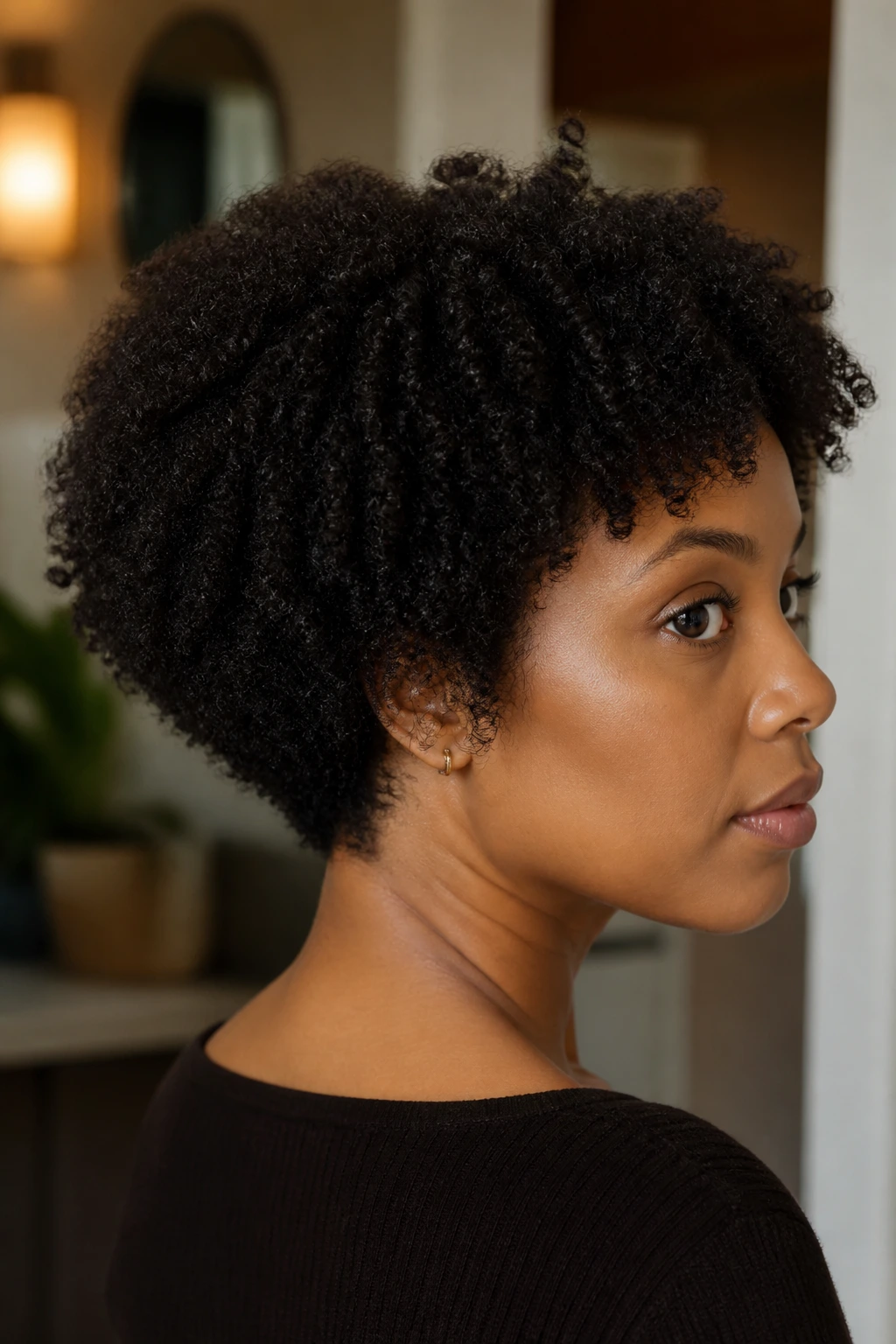
A bob on coily hair is never only about length. It’s about spring. If your curls pull up 30 percent when dry, the line of the cut needs to anticipate that. If they pull up 60 percent at the nape and 35 percent near the face, the stylist has to build the shape around those uneven return points or the finished bob will tilt, puff, or flare.
Curl-focused stylists often prefer to cut textured hair dry for that reason. They can see where each section lands in its natural state instead of guessing where it might end up after the first shampoo. Wet cutting is not wrong in every case, but on 3C to 4C hair it can hide the true perimeter—especially if one patch coils tightly and the next section hangs longer.
I keep coming back to dry length because it decides whether you love the cut or spend three weeks clipping one side behind your ear.
What changes the line fastest
- Nape shrinkage can make the back climb up faster than the front.
- Dense crown growth can push the whole shape outward if the inside weight is left too heavy.
- Looser curls at the hairline may stretch longer and make the front look stringy unless those pieces are shaped with intention.
- Part placement shifts balance more than people think. A deep side part changes how a bob falls, frames the face, and exposes density differences.
Picture two women asking for the same chin-length bob. One wears twist-outs and likes fullness. The other lives in wash-and-gos and wants a clean jawline. On paper, it sounds like one haircut. In practice, it is not the same cut at all.
What to Tell Your Stylist Before the First Snip
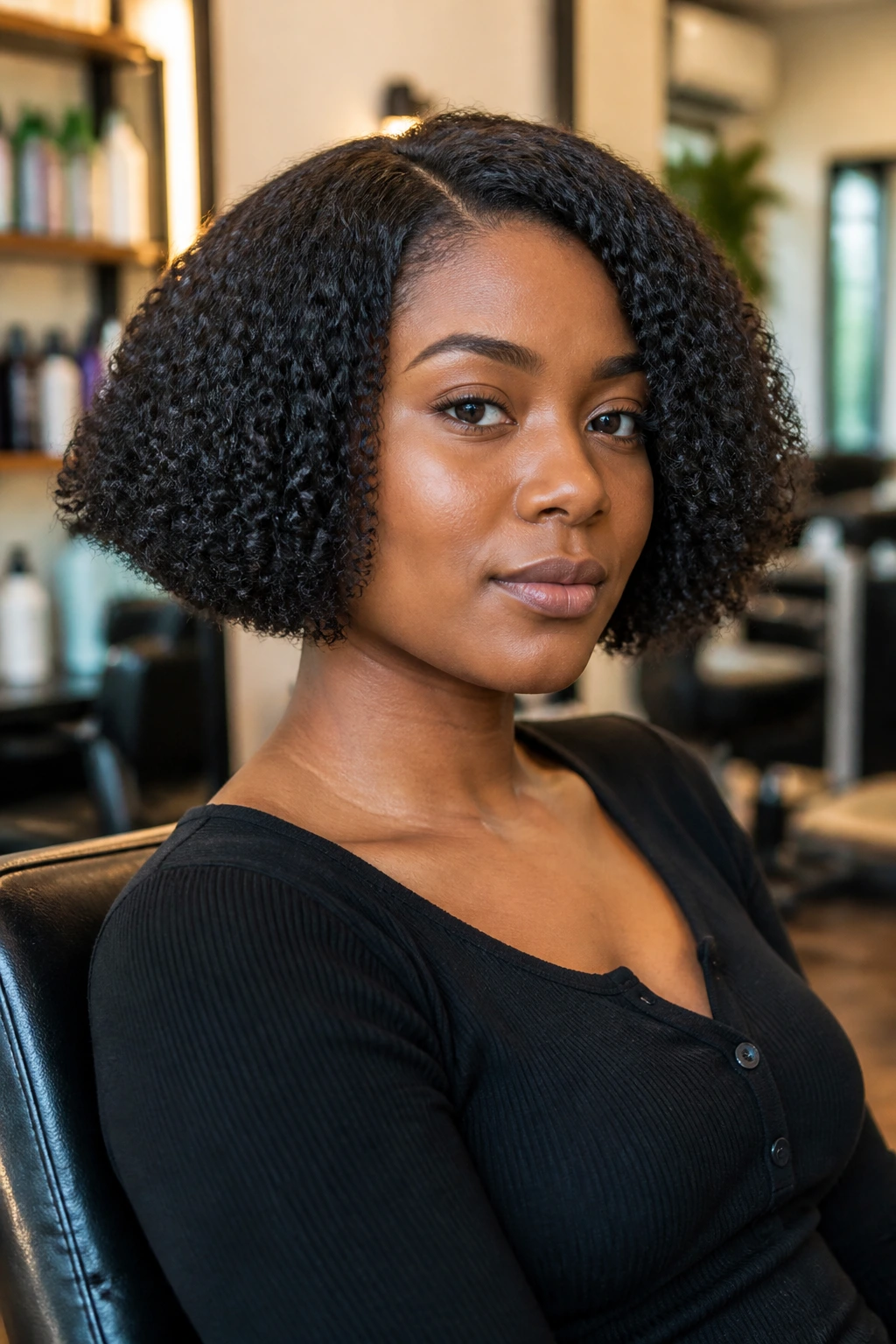
Walk into the salon with the words “I want a bob” and you have not said enough. Your stylist needs to know how you wear your hair, how much length you can stand to lose when the curls spring up, and whether you want a heat-free shape or one that shines when stretched.
Bring three kinds of photos if you can: front view, side view, and back view. One photo won’t show where the weight sits, and bobs live or die on weight placement. A bob that looks sharp from the front can look bulky from the back if the cut is carrying too much through the occipital area.
Tell the stylist these things in plain language:
- The shortest dry point you can live with — “No shorter than the bottom of my ear when curly.”
- How you style most weeks — wash-and-go, twist-out, rod set, silk press, blowout.
- Whether you tuck hair behind your ears — this changes how side pieces should be shaped.
- How often you trim — every 8 weeks is a different plan than every 4 months.
- How much heat you use — a bob built only for flat-ironed hair may disappoint you when it reverts.
And say this if it applies: “Please do not thin out my ends too much.” On natural hair, over-texturized ends can make a bob look frayed instead of clean.
1. Rounded Chin-Length Bob
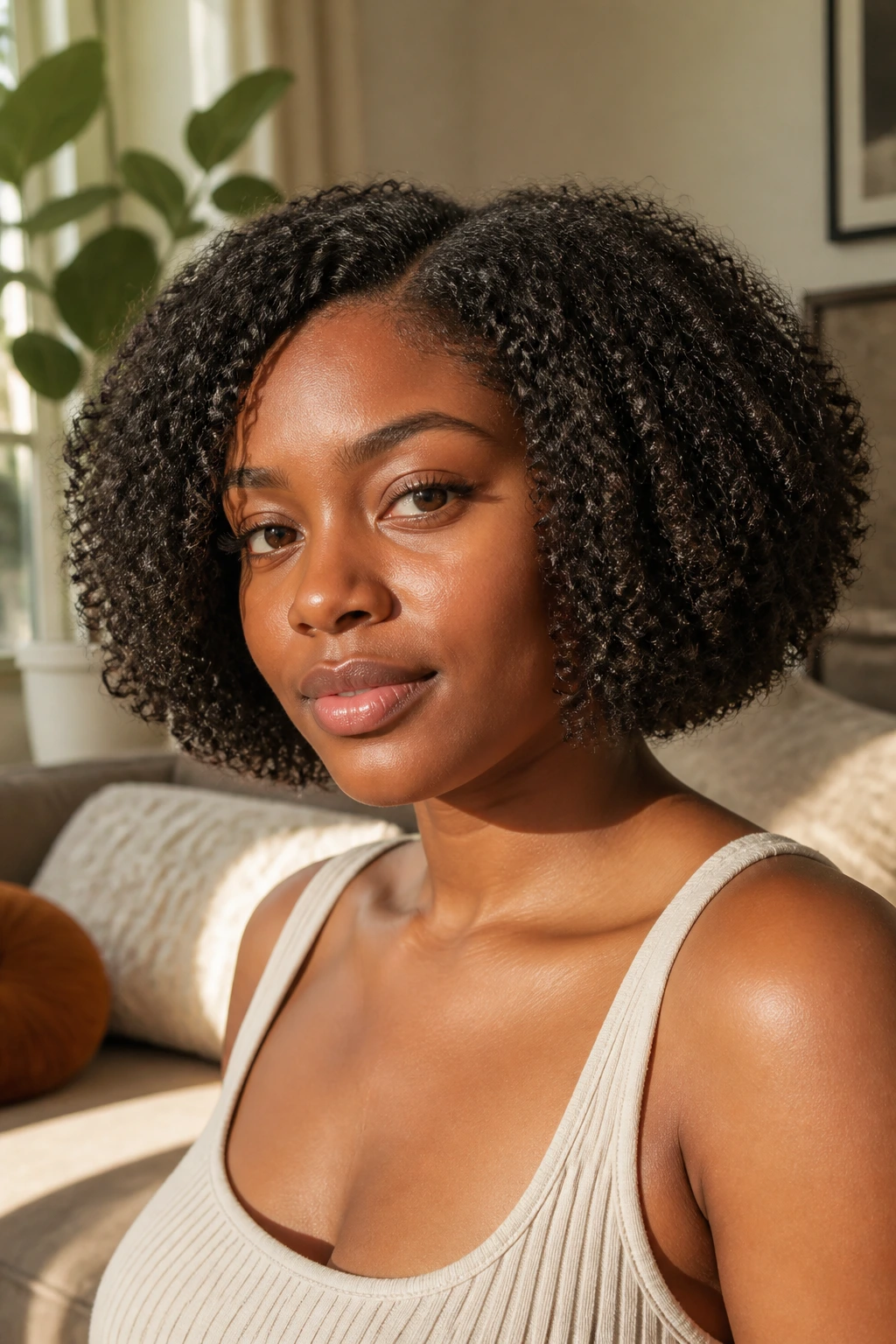
If you want the classic natural bob, start here. The rounded chin-length bob gives you that clean, familiar shape people picture when they hear “bob,” but it still respects the body and bounce of textured hair. The line curves softly around the jaw instead of sitting as one stiff bar from side to side.
This cut suits women who want fullness without turning into a full halo. It works well on 3C, 4A, and 4B hair, especially when the curls are defined enough to show the outline. The trick is keeping light internal layers so the crown can sit neatly without pushing the bottom outward.
Why this shape works
The curve matters. A dead-straight perimeter on coily hair can look heavy at the corners of the jaw, while a rounded perimeter follows the natural bend of the face and softens the whole silhouette. That softness is what makes the cut feel intentional rather than accidental.
Quick details to ask for
- Length: dry curls landing between the corner of the mouth and the chin
- Cutting method: dry shaping or curl-by-curl perimeter work
- Best styling match: wash-and-go, twist-out, small flexi-rod set
- Trim rhythm: every 8 to 10 weeks keeps the line from getting fuzzy
Best tip: ask your stylist to leave the front pieces a touch longer than the back if your nape shrinks harder. Even half an inch can save the whole shape.
2. Deep Side-Part Bob
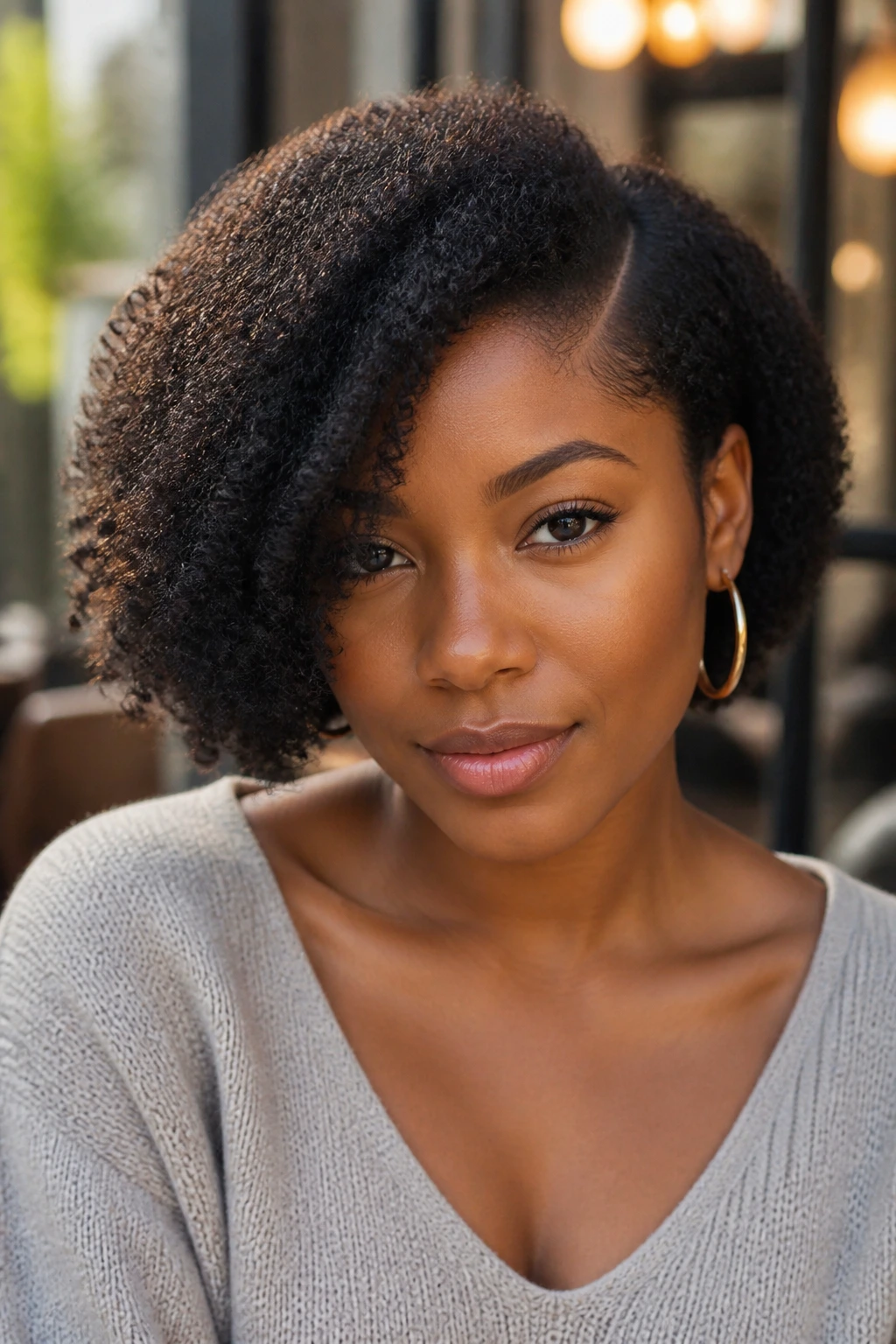
Push the part over, and the mood changes fast. A deep side-part bob brings instant lift at the roots and gives one side of the face a soft curtain of curls, which is useful if you want a bob that feels less formal and less symmetrical.
I like this shape on women with dense hair because the side part redistributes bulk instead of letting it pile up evenly on both sides. It also helps if your hairline is fuller on one side than the other. Rather than fighting that difference, the cut can use it.
The strongest version keeps the heavier side slightly longer and removes a little inside weight from the lighter side. Nothing dramatic. You do not need a cartoonish difference in length to make the side part read clearly. Even a small adjustment can change the way the bob settles around your cheekbone and jaw.
There is one catch. Sleep can flatten the heavy side first, and day-two volume can drift upward if the root is not refreshed. A quick pick at the scalp—not dragged through the ends—and a satin scarf tied flat over the part line usually fixes it. If you wear glasses, this bob often sits well around the frames without bunching.
3. Asymmetrical Curly Bob
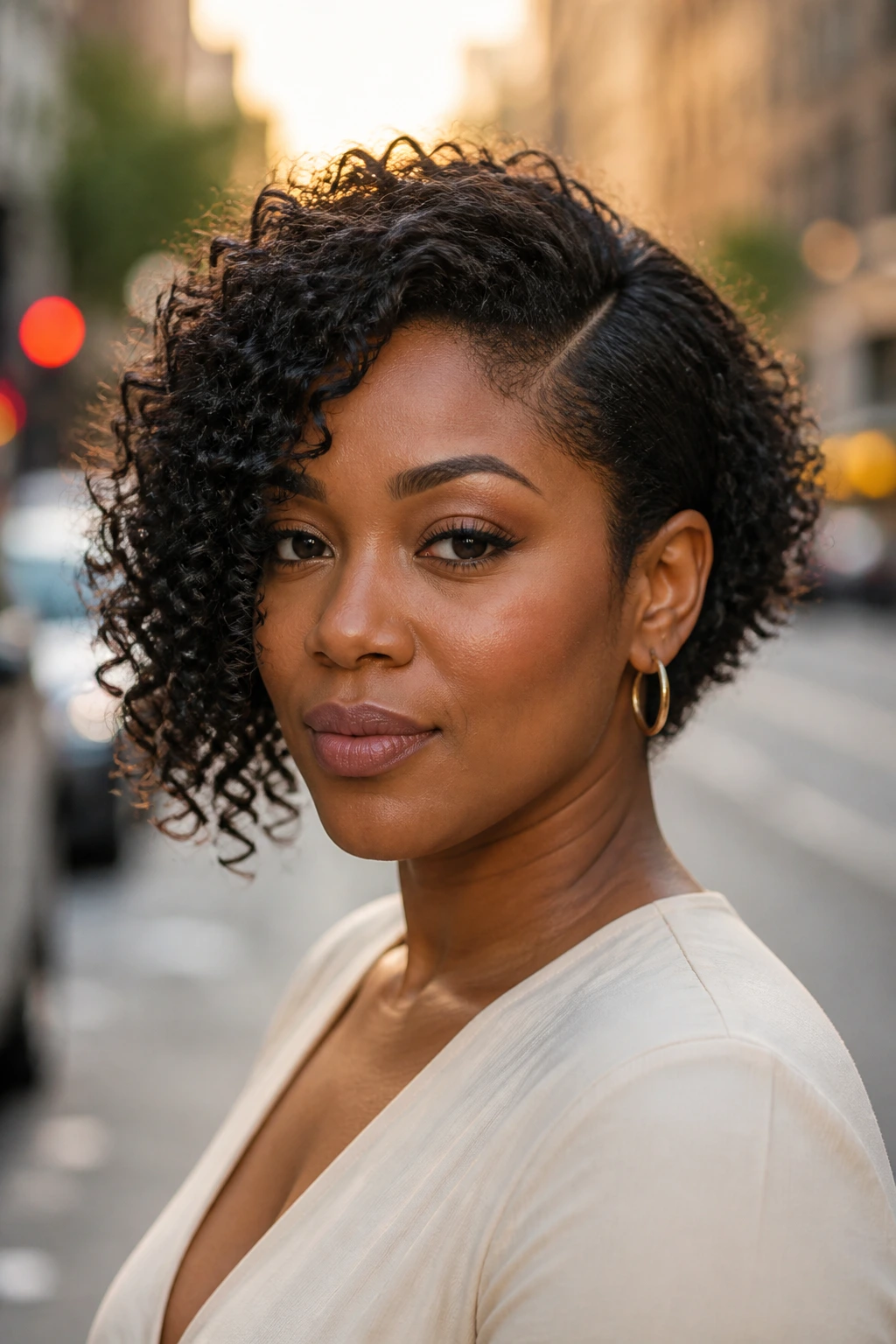
Why does an asymmetrical bob look so good on textured hair? Because curls soften the sharpness of the uneven line, so you get shape and attitude without the haircut feeling harsh. One side can skim the cheek while the other lands closer to the jaw, and the contrast still feels wearable.
I would not make the longer side wildly longer unless you enjoy upkeep. A 1-inch to 1½-inch difference is enough for most natural hair bobs. Past that point, the style can start looking like two separate haircuts depending on your curl pattern and density.
How to wear it without fuss
Keep the shorter side clean and slightly tucked. Let the longer side hold the visual weight. On wash-and-go hair, that means adding hold with a gel or foam so the longer side does not string out by day two. On a twist-out, it means setting both sides with the same tension so the length difference stays visible after fluffing.
This cut works especially well if your curls are looser near the face and tighter in the back. The longer side can frame the cheek, and the shorter side keeps the neckline from feeling crowded. It has edge, but it does not demand a daily performance from you.
4. Angled Bob With Longer Front Pieces
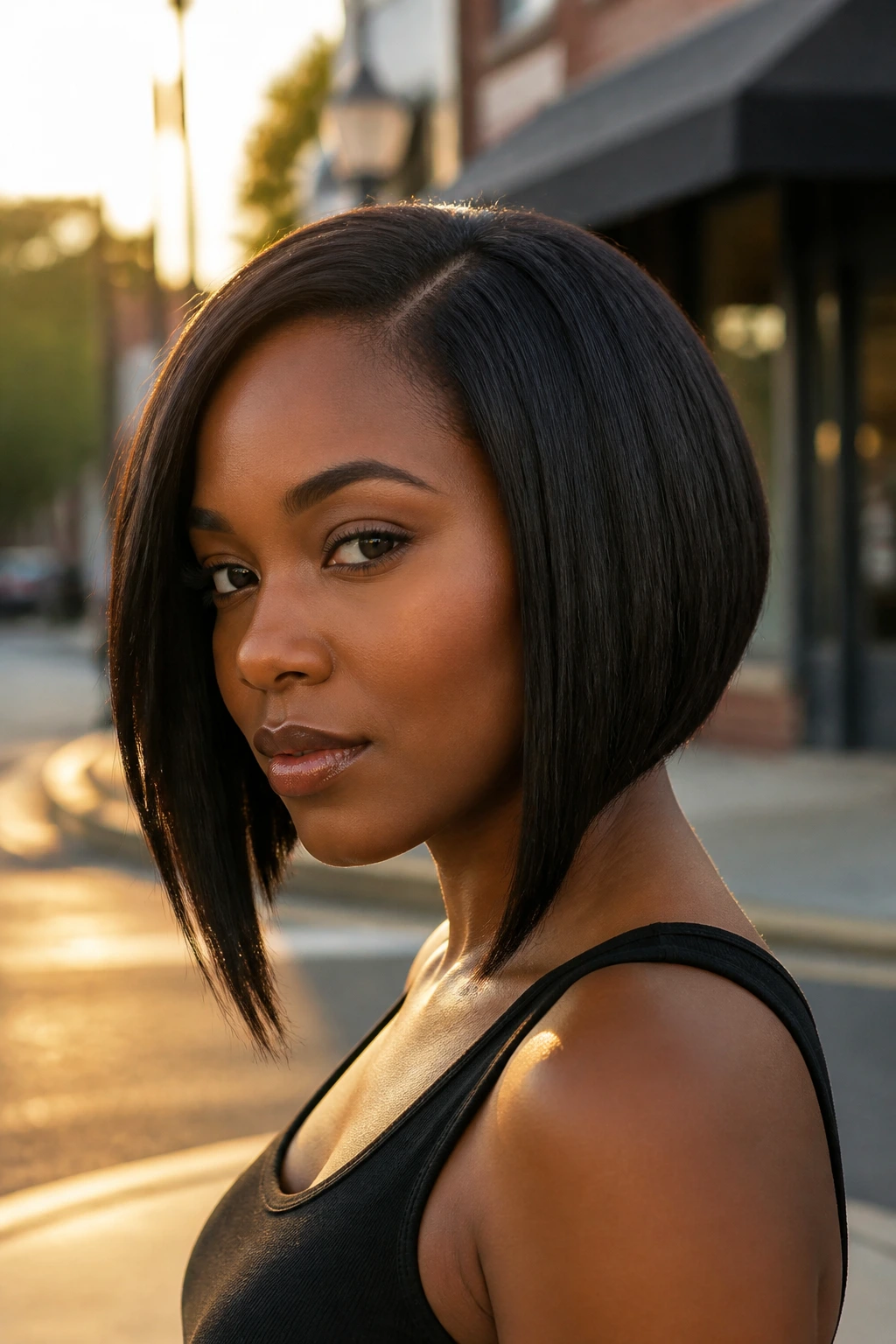
From the back, an angled bob looks neat and controlled. From the front, it has more drama. The hair sits shorter at the nape and gradually lengthens toward the chin or collarbone, depending on how bold you want the angle.
This shape helps dense natural hair because it clears out the back of the neck where coily hair can stack up fast. If you sweat at the nape or hate that bulky, hot feeling under scarves and collars, the angle earns its keep.
What makes it different
The front pieces are doing most of the talking here. They pull the eye downward and create length around the face, which can be useful if you want a bob without the visual width of a rounded cut. Women with fuller cheeks often like that effect because it frames rather than widens.
A few details matter:
- Ask for the shortest point at the nape to stay soft, not shaved, unless you want a stronger edge.
- Keep the angle modest on tight curls so shrinkage does not turn the back too short.
- Style with stretch if you want the line to show clearly—a blow-dry with tension or a roller set helps.
This is one of those cuts that can go wrong fast if the stylist forgets your shrinkage pattern. The back will reveal every miscalculation.
5. Stacked Bob With a Tapered Nape
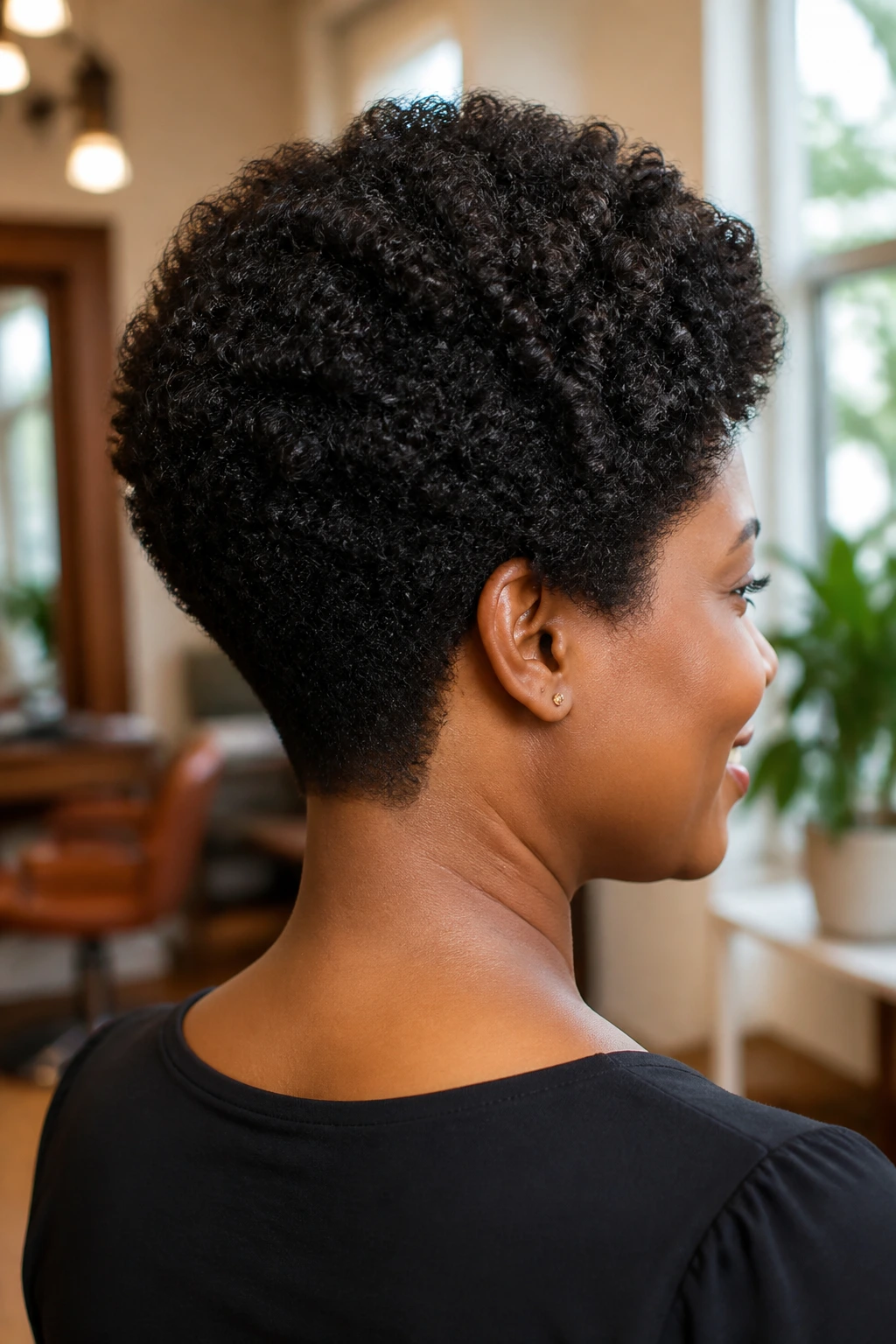
Unlike a blunt bob, the stacked bob removes weight from the back and builds shape upward. The nape is tighter, the crown holds soft lift, and the whole cut feels lighter on the neck. For thick Type 4 hair, that can be a relief.
The “stack” comes from graduated layers through the back of the head. Done well, those layers support the roundness of the bob. Done badly, they create a stiff shelf. I prefer a gentle graduation on textured hair rather than an extreme stack because coils already create their own visual fullness.
You’ll notice the difference most when you turn your head. The cut hugs the head at the bottom instead of mushrooming outward from the neck. That clean-back, full-top balance makes this a smart option for women whose hair gets bulky at the nape long before it gets bulky anywhere else.
Salon upkeep is tighter here. Plan for trims every 6 to 8 weeks if you want the back to stay crisp. The nape shows growth first, and once that area loses shape, the whole bob starts reading heavier and shorter than it should.
6. Blunt Bob on Stretched Natural Hair
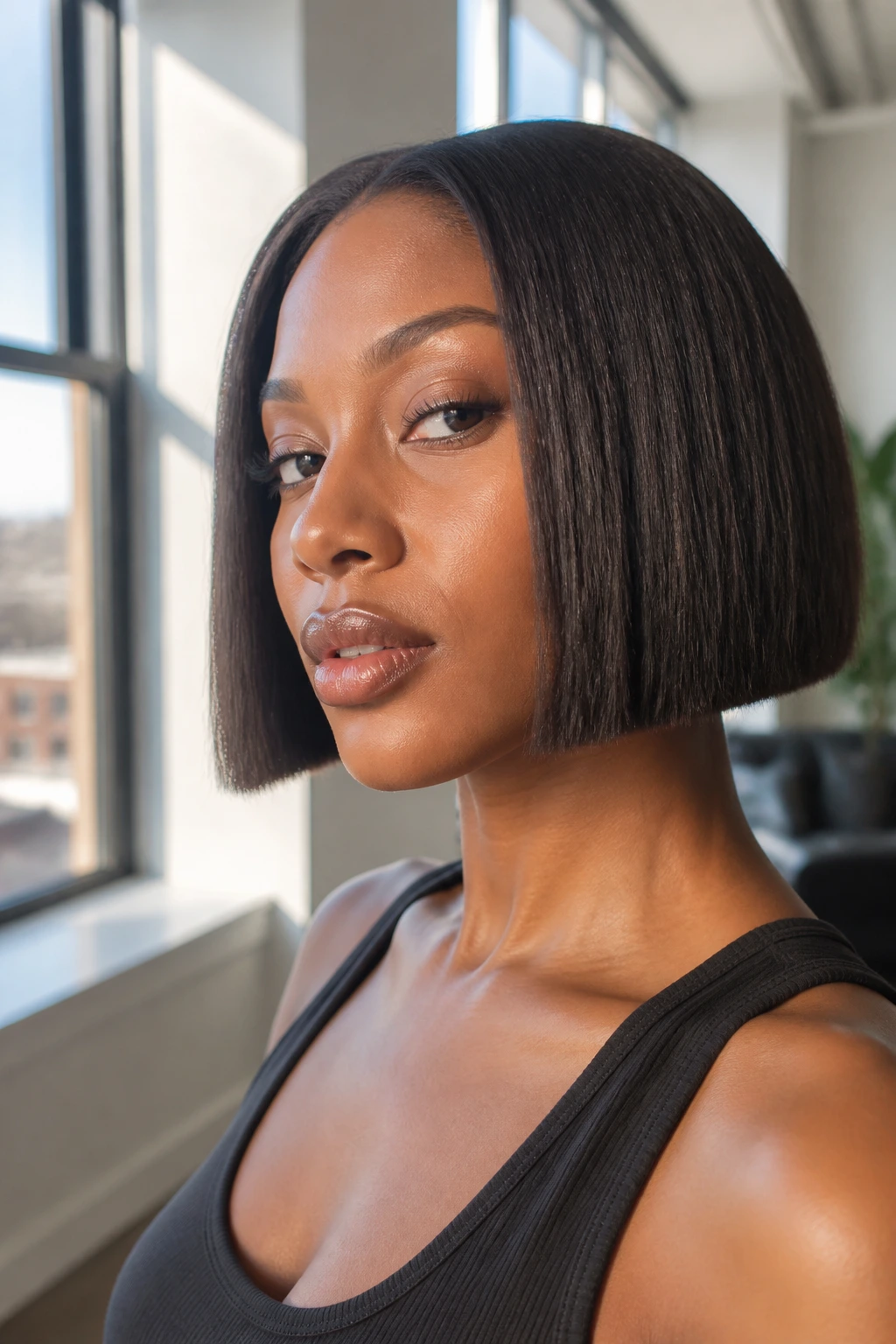
There is nothing soft-focus about a blunt bob. It is crisp, deliberate, and at its best when the perimeter looks like one clean line from side to side. On natural hair, this version usually shines when the hair is blown out, roller set, or silk pressed.
You need the right density for it. Medium-density hair often carries a blunt line well because it has enough body to hold shape without turning boxy. Hair that is dense from root to end can wear it too, though the inside may need slight bulk removal. Fine strands can look good in a blunt bob if the ends are healthy and not see-through.
This is not the bob I would choose if you spend most weeks in wash-and-go mode. The line is built for stretch. Once the curls return, the precision softens, and that’s fine if you expect it.
Heat habits matter here—more than people want to hear. Keep the iron temperature matched to your hair’s condition, use a heat protectant that leaves slip rather than grease, and aim for one slow pass or two light passes instead of chasing glassy ends all morning. Burnt ends ruin a blunt bob faster than almost anything else.
7. Layered Wash-and-Go Bob
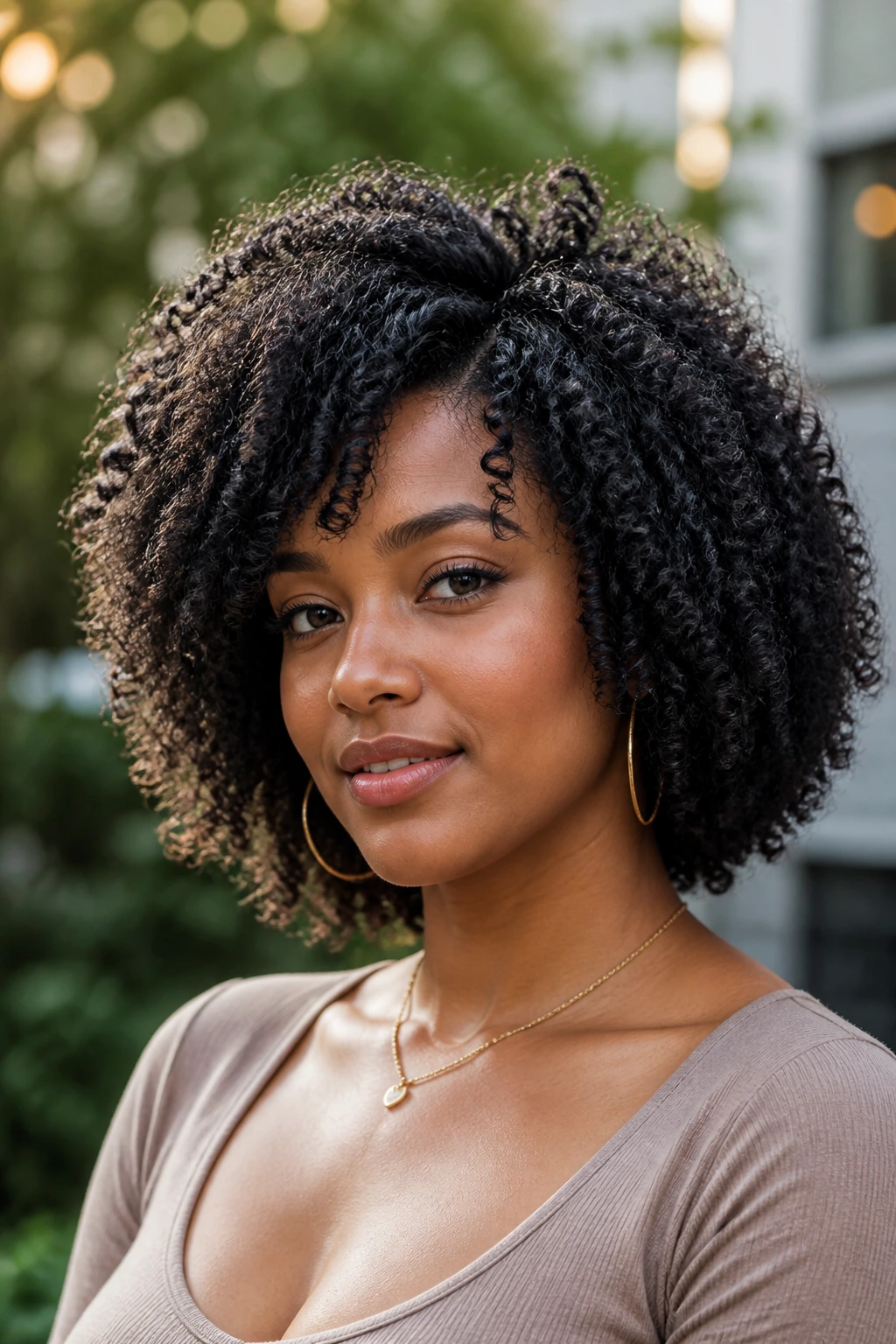
This is the bob for women who want shape without a standing date with a flat iron. A layered wash-and-go bob is built in its curly state, with layers placed to keep the crown alive and the bottom from puffing into a bell shape.
Why layers matter here
Natural hair does not always fall downward on its own. Coils grow out and up, and that means the wrong one-length cut can balloon at the sides. Layers interrupt that bulk. They let the curls stack over one another instead of competing for the same space.
What helps this cut look its best
- Apply leave-in sparingly. Too much cream can make the bob droop at the roots.
- Use a gel with hold so the perimeter stays defined after day one.
- Diffuse the roots for 10 to 15 minutes if you want more lift at the scalp.
- Do not touch the curls while they are drying. That habit creates frizz and blurs the shape.
The best layered wash-and-go bobs are not chopped into obvious shelves. The layers should feel hidden until the curls dry and settle. When that happens, the bob looks full but not blocky—a difference you can see from across the room.
8. Bob With Curly Bangs
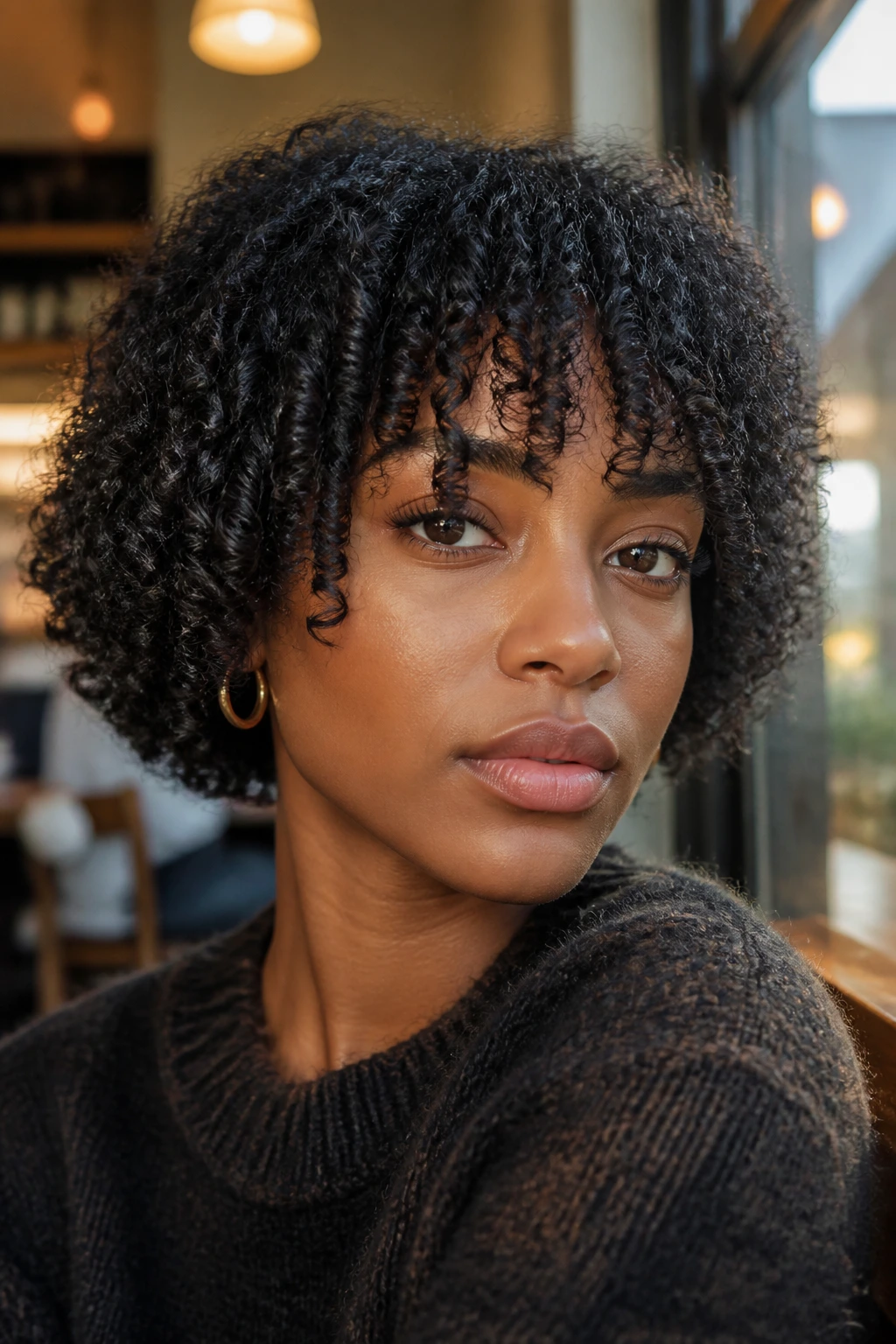
Bangs scare people. Fair enough. On coily hair, they can spring up overnight and turn one haircut into a weekly negotiation. Still, a curly bang bob can look sharp when the fringe is cut dry and left longer than your first instinct.
Start conservative. A bang that touches the brows while stretched may sit above them once the curl tightens. That bounce is the whole story. If the stylist cuts your fringe exactly where you want it while it is wet or heavily stretched, the final length can jump higher than planned.
This style works best when the fringe is light and broken up, not packed thick across the forehead. A little air between curls makes the bang move and keeps it from forming one hard wall of hair. On wash day, finger coil six to ten front curls if you want the fringe to behave without a full restyle.
Sweat hits this bob first at the front. So does shrinkage. If you work out often or live in a humid climate, expect the bangs to need a reset before the rest of the cut does. Small price, though, if you like a bob with face-framing softness and a touch of playfulness.
9. Middle-Part Jaw-Length Bob
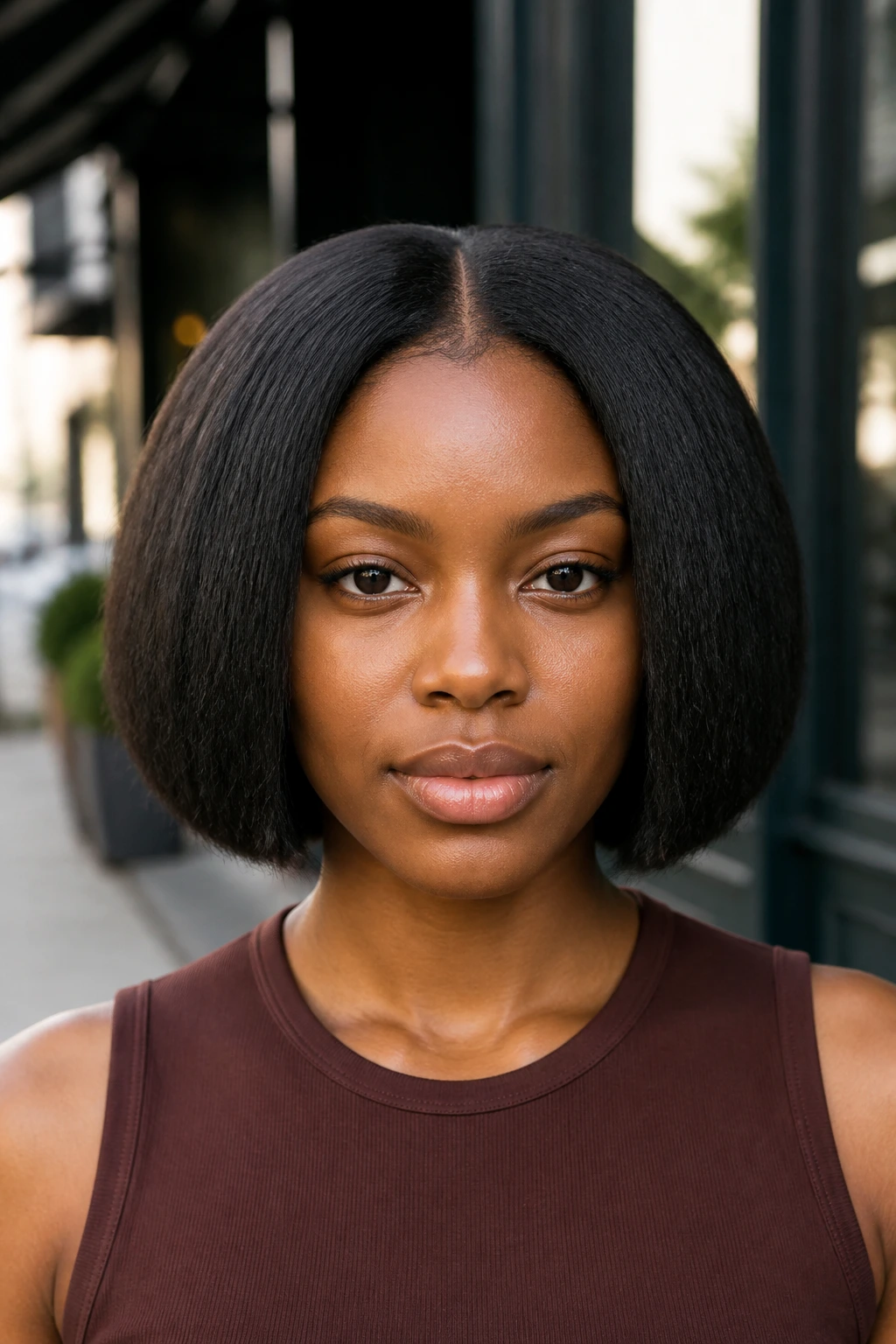
A middle part gives a bob structure fast. The symmetry draws attention straight to the face, the jawline, and the eyes, which is why this shape feels clean even when the hair itself is full and textured.
I like this cut when density is fairly even on both sides. If one temple is sparse or one side of your hairline naturally sits farther back, forcing a strict center part can make that difference louder than it needs to be. Haircuts should help you, not expose every minor asymmetry like a spotlight.
On natural hair, the middle-part bob often looks best when the front perimeter lands a touch below the jaw in its dry state. That little drop keeps the face from feeling boxed in. Add a soft bevel at the ends on stretched hair, or define the front curls neatly if you wear it natural, and the whole shape reads sharper.
This bob does not beg for tricks. It likes order. Clean part. Balanced shape. Even moisture. When those pieces line up, the style has a calm, polished feel that never tries too hard.
10. Ear-Length Coil Bob
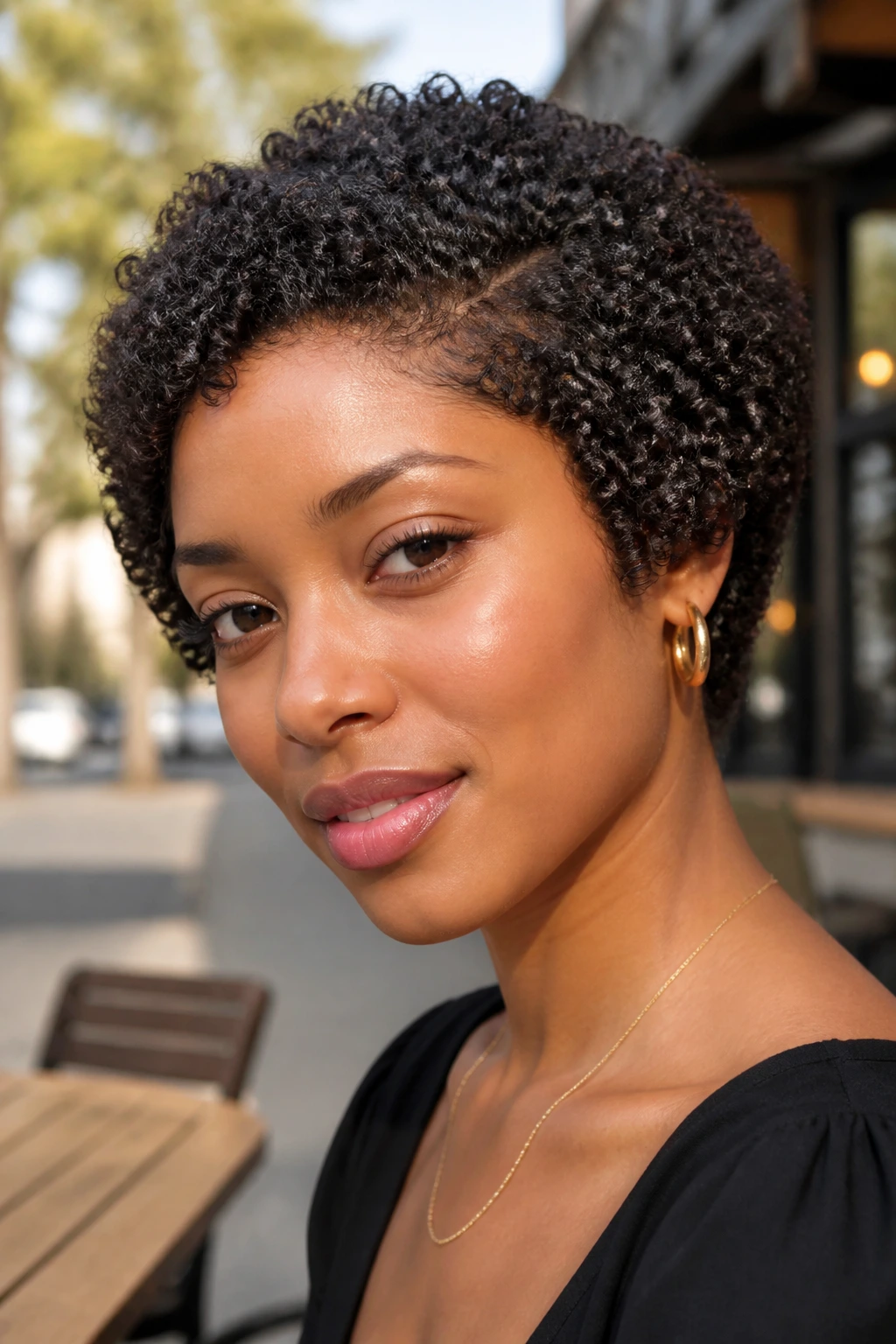
Short. Chic. No extra drama. The ear-length coil bob lands somewhere between a cropped cut and a standard bob, and it looks best when the coils are springy enough to show the shape around the cheek and ear.
Because the length is brief, the perimeter has to be precise. A quarter-inch matters here more than it does on a longer bob. One side sitting high over the ear while the other dips below it will show up fast, so this cut rewards a stylist with a steady hand and a good eye.
Useful details before you commit
- Best for: fine to medium-density hair, petite features, or women who want less hair on the neck
- Strong styling match: finger coils, comb coils, mini twist sets, short wash-and-go curls
- Maintenance: trims every 4 to 6 weeks keep the line visible
- What you give up: ponytail options disappear
Earrings matter with this bob because the haircut puts your ears on display. So do glasses. So do necklines. It’s a small cut, but it changes your whole styling rhythm in a way longer bobs do not.
11. Bob With an Undercut Nape
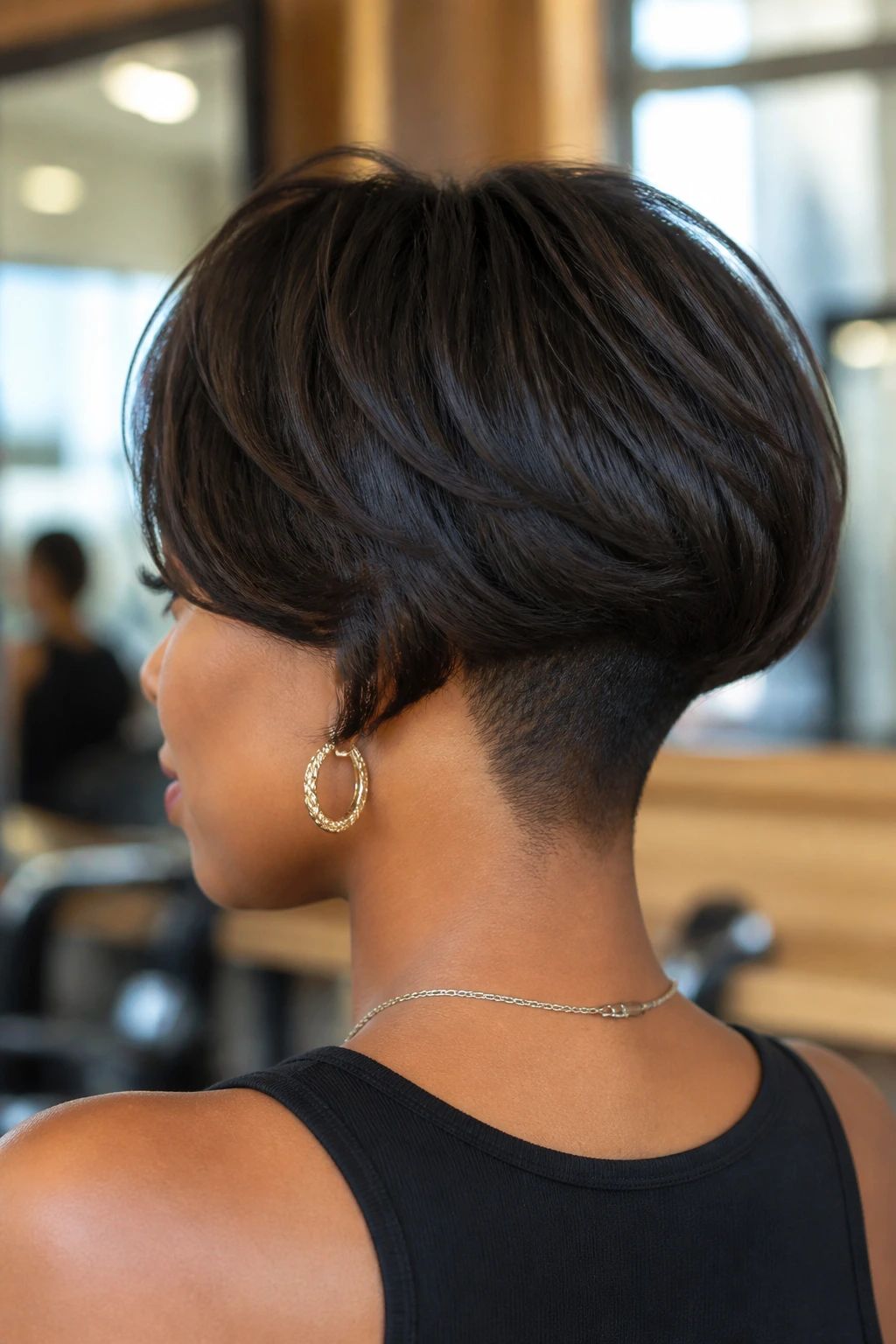
Want the look of a full bob without carrying all that bulk at the neck? Hide an undercut underneath the top layer. The surface still reads as a bob, but the underneath section is clipped or cut short enough to remove weight and heat from the nape.
For dense 4B and 4C hair, this can be a smart fix. You keep shape through the sides and crown while the back feels cooler and lighter. Headwraps sit flatter. Collars rub less. Drying time drops too, which matters when wash day already eats a chunk of your afternoon.
Before you commit
The grow-out is real. An undercut can look crisp when fresh and awkward once it starts filling in, so you need tighter maintenance—often every 3 to 5 weeks. If you love changing your part or pulling your bob half-up, remember that the shorter nape may peek out at angles you did not expect.
The American Academy of Dermatology has long warned that repeated tension can contribute to traction alopecia, and one quiet upside of this cut is that it asks less of the nape and edges than styles that depend on tight pulling. Less weight. Less strain. Less fuss in that area.
12. Collarbone Lob for Natural Hair
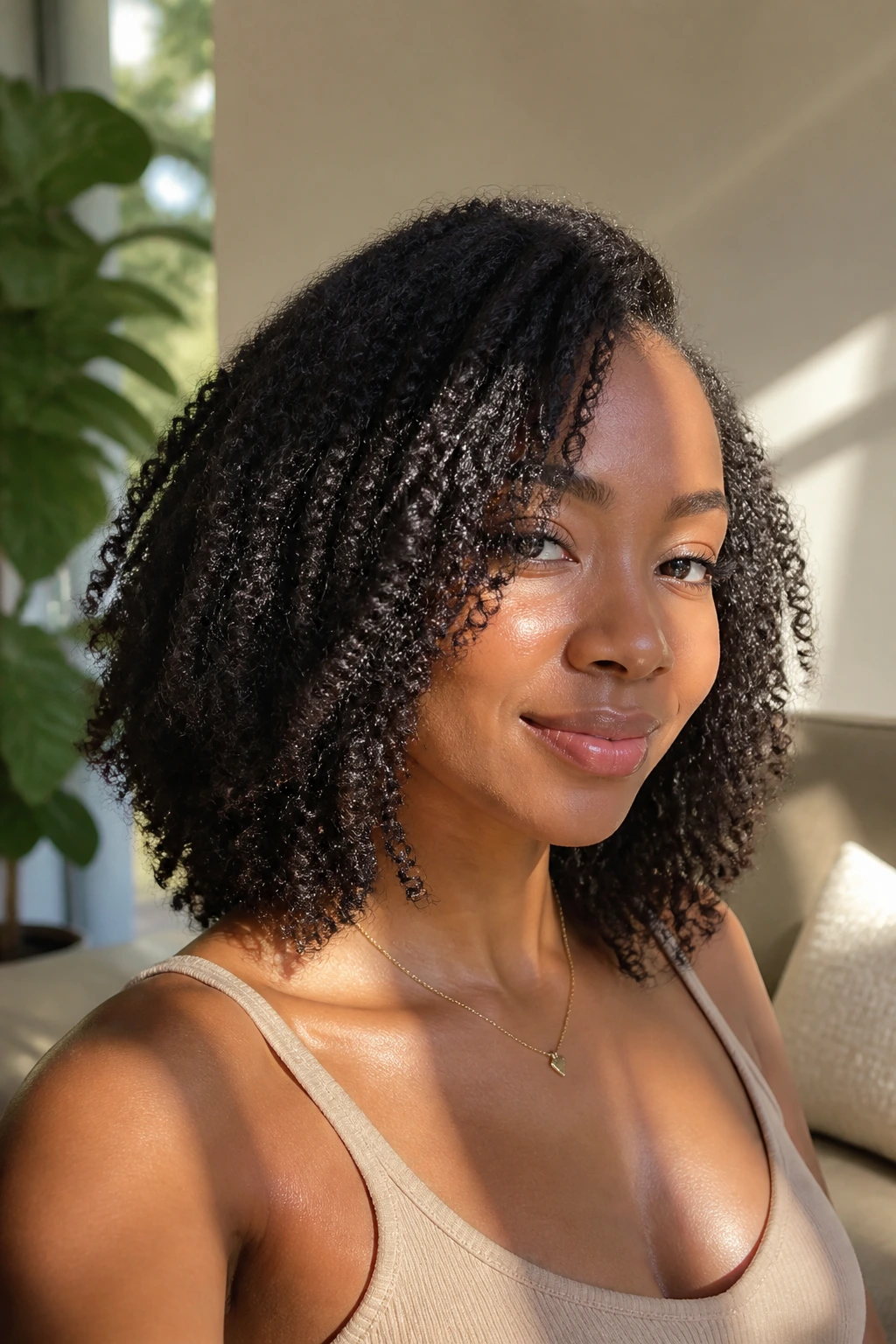
Some women want a bob, but not a short bob. That’s where the lob earns its keep. A collarbone-length lob gives you the shape and intent of a bob while keeping enough length to tuck, pin, or pull into a low puff if needed.
This is a smart first step if you’ve worn long natural hair for years and do not want the shock of a jaw-length cut. On shrink-happy hair, that extra length buys breathing room. You can lose two or three visual inches after a wash and still feel like yourself in the mirror.
The best natural lobs are not left as one heavy curtain. They need light shaping around the front and small interior layers so the ends do not turn into a thick block. Think movement, not chop.
I like the collarbone lob for mixed styling habits. Wear it blown out one week, twist it up the next, then diffuse a wash-and-go without the haircut losing all logic. It is low-pressure in a good way. You still get bob energy, but the learning curve is softer.
13. Sculpted Afro Bob
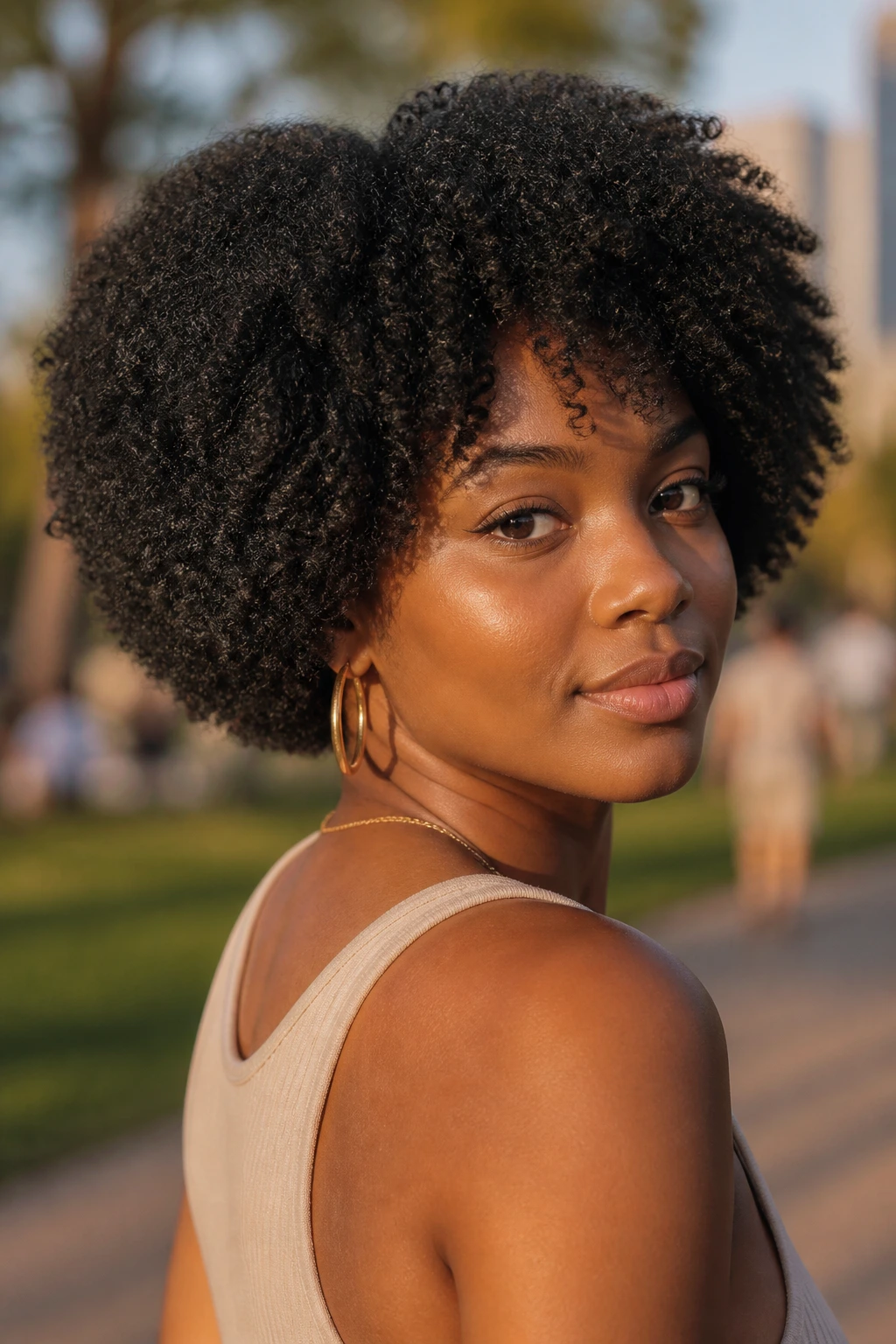
A sculpted afro bob is not a round puff with a shorter name. The outline is more deliberate: fuller through the sides and crown, tidier at the nape, and shaped so the hair frames the face instead of floating around it.
The cut has roots in classic salon shaping, and on Type 4 hair it can look striking because it uses the natural density of afro-textured hair as structure. A pick gives lift at the root, but the perimeter still needs a clean visual edge. That balance is what separates a shaped afro bob from simple all-over volume.
This bob suits women who like their texture visible and unapologetic. It does not hide the coil pattern or chase a stretched finish. It says, plainly, that shrinkage can be part of the design.
One note, though: the silhouette needs upkeep. Not daily panic, nothing like that. Still, you do need to fluff with intention, avoid dragging oils through the roots, and reshape the outline now and then so one side does not outgrow the other. It’s a statement cut, and statement cuts ask for attention.
14. Temple-Taper Bob
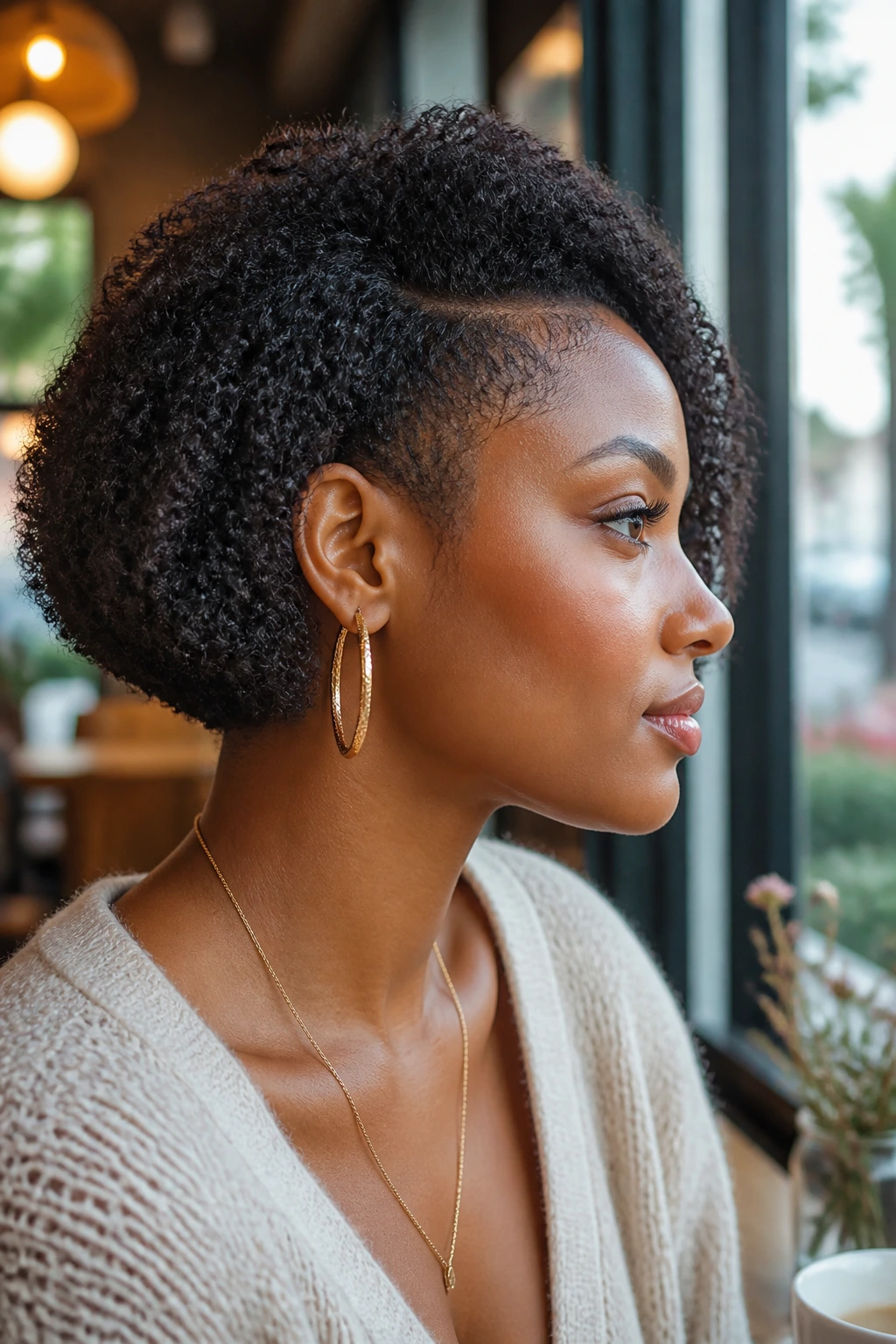
The temple-taper bob fixes a problem many women know well: the sides can puff wider than the rest of the haircut, especially near the temples, while the ends around the jaw stay neat. A slight taper near that area trims the silhouette without making the cut look severe.
Why this shape helps
Temples are often finer than the crown, but they can still bulk outward because of growth direction. A soft taper guides the hair downward and backward, which helps the bob sit closer to the face where you want control most.
Small details that make a difference
- Keep the taper soft. This is not a hard fade.
- Ask your stylist to respect fragile edges and avoid pushing the line too far back.
- Try this if you wear glasses often. Less side bulk means less crowding around the frames.
I like this bob on women who want a neat outline without losing fullness through the rest of the head. It’s subtle. Most people won’t identify the taper right away. They’ll only notice that the shape looks cleaner and more balanced.
15. Side-Swept Fringe Bob
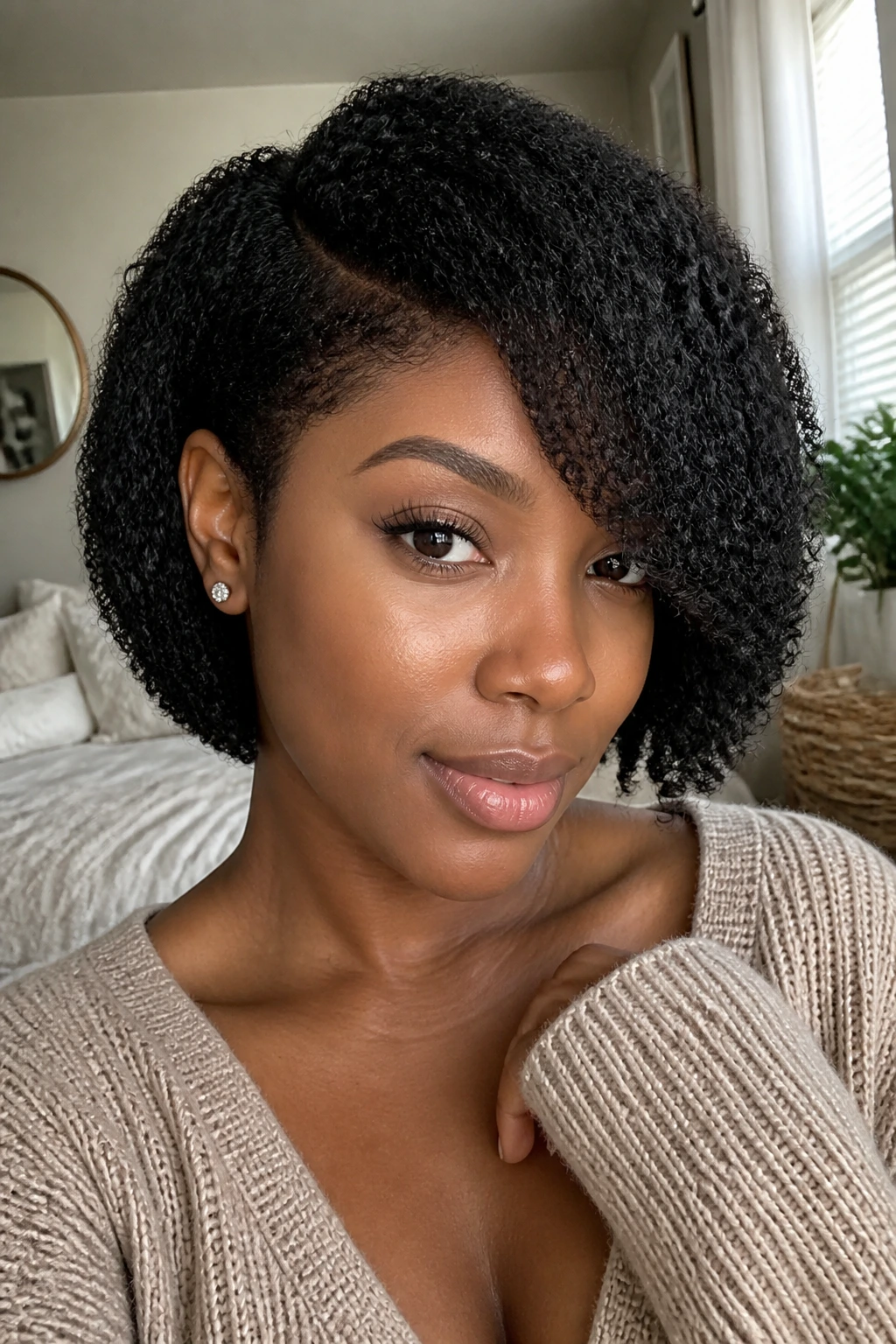
Not ready for full bangs? A side-swept fringe gives you that face-framing softness without committing to a straight-on fringe that needs constant checking in the mirror. One front section stays longer and falls diagonally across the forehead or cheek, blending into the rest of the bob.
This cut flatters broader foreheads and strong cheekbones because it breaks up the symmetry of the face in a gentle way. It can also disguise minor differences in density near the hairline, which is useful if one side is lighter than the other.
A roller set, flexi rods, or a stretched twist-out can make this bob look especially polished because the front section holds the sweep more easily. On natural curls, you can clip the fringe into place while drying so it learns the direction you want. Tiny trick. Big payoff.
Grow-out is easier than with blunt bangs, and that matters. If you change your mind, the fringe can blend into a long side layer without months of awkward half-length pieces camping out on your forehead.
16. Graduated Bob for Thick Type 4 Hair
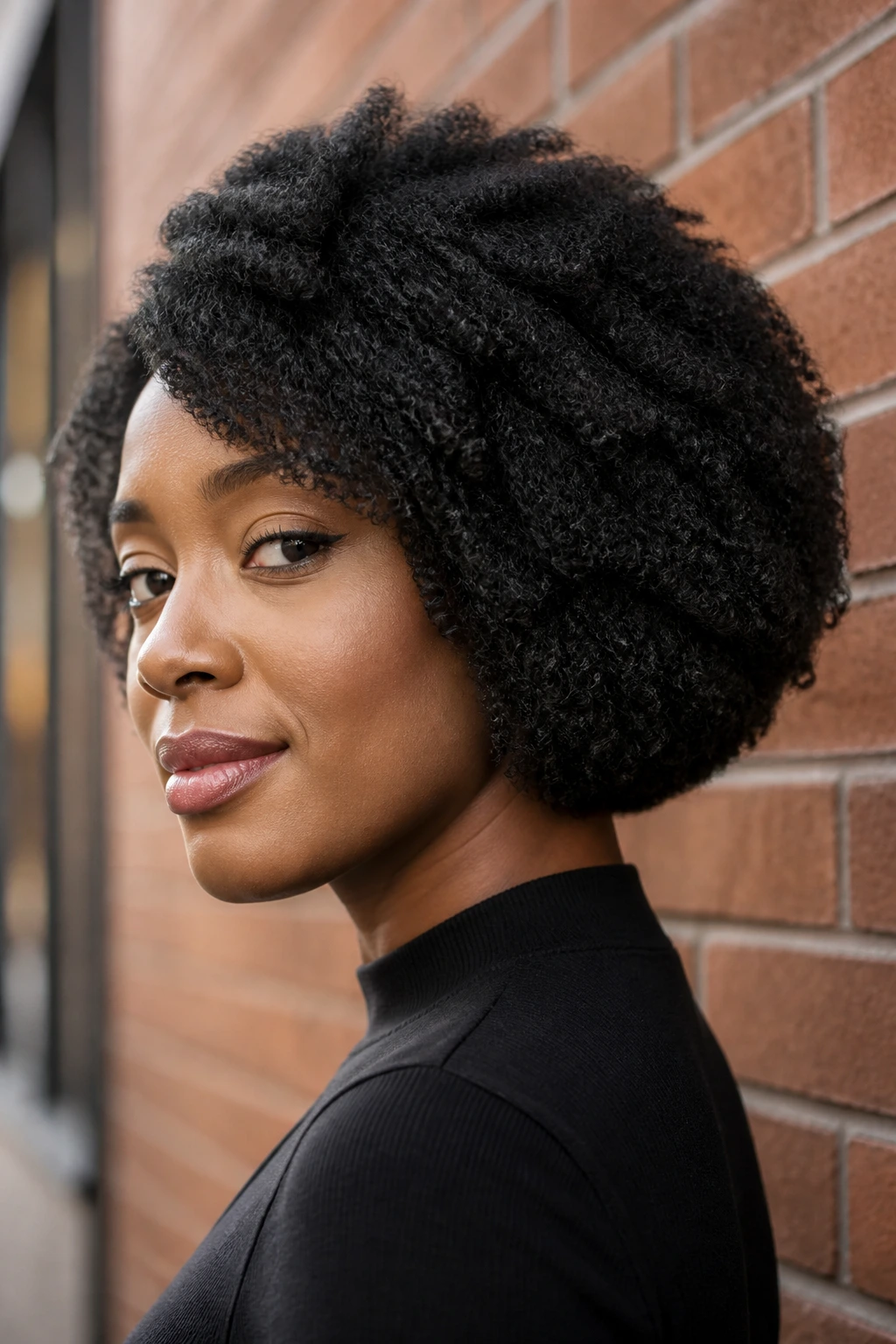
When natural hair is dense from scalp to ends, a one-length bob can turn heavy fast. The graduated bob solves that by layering the back and sides in a way that removes bulk without hollowing the shape out.
The word graduated sounds technical, but the idea is simple: shorter support underneath, longer hair over it. Those lower layers hold the upper layers up, which keeps the bob round instead of flat at the crown and swollen at the bottom.
What to ask your stylist
- Remove weight inside the haircut, not only from the perimeter.
- Keep the ends solid enough that the bob still looks like a bob.
- Avoid shredding the layers with a razor if your curls frizz easily.
- Check the profile from the side before too much length comes off.
This cut shines on thick Type 4 hair worn blown out, roller set, or stretched in chunky twists. On tighter wash-and-go curls, it can still work, though the layering needs care. Too short at the crown and the top lifts while the sides widen—a shape nobody asked for.
17. Face-Framing Layered Bob
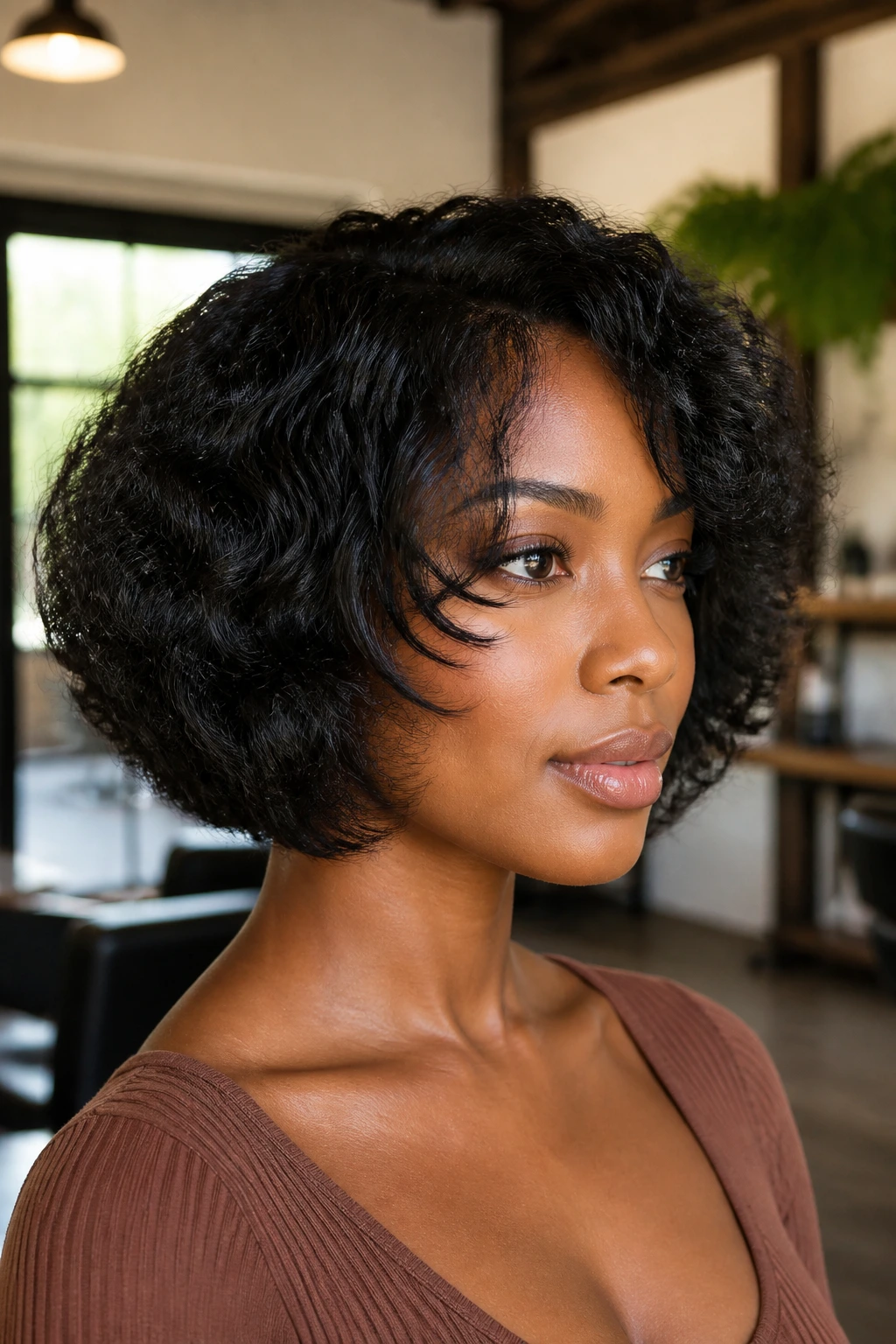
Is your hair tighter in the front than in the back? Or looser at the hairline than at the crown? A face-framing layered bob helps smooth out those differences by shaping the front on purpose instead of pretending the whole head behaves the same.
The layers here start around the cheekbone, lip, or chin depending on your curl pattern and how open you want the face to feel. They should blend into the bob, not sit apart from it like a disconnected set of front pieces.
How to ask for it
Tell your stylist where you want the shortest front layer to hit when dry, not when stretched to its maximum. That detail matters more than people think. A lip-length curl in the salon chair can turn into a cheek-length curl after one wash if nobody checks the spring factor.
This bob is helpful if you tuck one side behind your ear, wear large hoops, or like your curls to fall forward near the cheek. It gives the haircut movement without turning it into a shag. Different idea. Different outcome.
18. Silk-Pressed Precision Bob
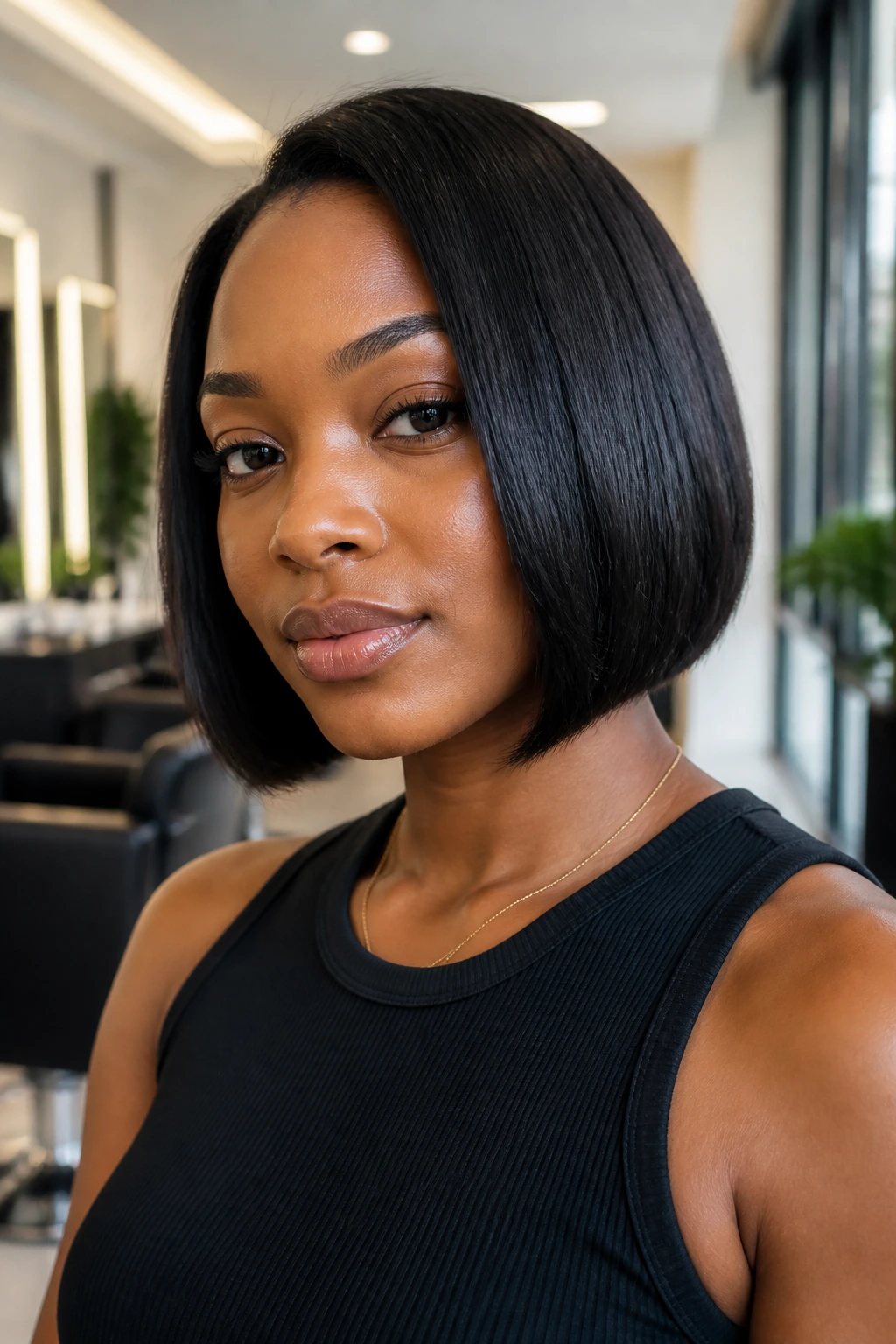
Yes, you can wear your hair natural and still choose a precision bob built for silk presses. The cut is shaped with healthy reversion in mind, but its cleanest expression shows up when the hair is smooth, beveled, and finished with shine.
This is the bob for women who love the occasional pressed look—the swing, the line, the way the ends curve under the jaw—without living in permanent heat styling. The best version keeps subtle internal softness so the hair still makes sense once it reverts to curls.
Do not ask damaged ends to fake this cut. They will not cooperate. Split, rough, or thin ends make a precision bob look ragged no matter how skilled the flat iron work is. Healthy ends matter more than extra length here, and I would choose a shorter clean bob over a longer frayed one every single time.
Use a lightweight heat protectant, keep passes low, wrap the hair at night, and do not chase pin-straight perfection if the weather is sticky. A little body often looks better anyway. Too-flat hair can make a bob lose its life.
How to Keep a Natural Bob Looking Sharp Between Trims
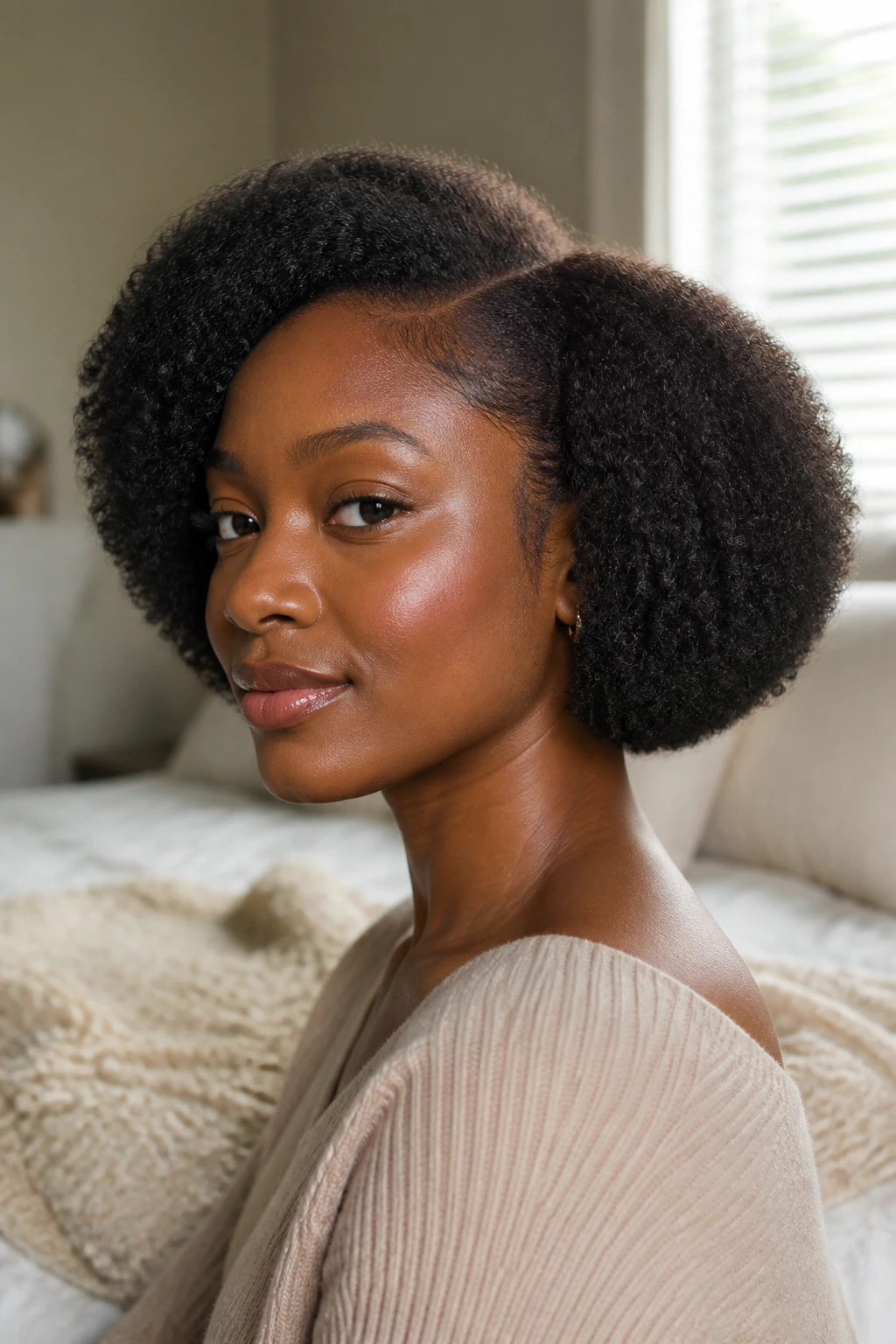
A bob shows neglect faster than long layers. That is not a flaw in the cut. It’s the trade-off for having a visible shape. Once the perimeter grows out, the line blurs, the weight shifts, and the haircut starts telling on you.
Product choice matters more than hype. If your bob needs lift, skip heavy butters at the roots. Use a leave-in that disappears into the hair, then add hold where you need control. If your curls are dry by midweek, mist lightly and smooth product over the ends instead of soaking the whole head and restarting the shrinkage cycle from scratch.
Sleep habits count too. Try one of these, depending on how you wear the cut:
- Wash-and-go bob: pineapple loosely if the length allows, or use a satin bonnet with room at the crown
- Blowout or silk-pressed bob: wrap the hair flat around the head and cover with a satin scarf
- Twist-out or rod-set bob: pin curl the front and bonnet the rest
Clarify once in a while. Buildup makes curls hang oddly and stretched styles go limp. A bob needs bounce and shape, not a waxy film.
Final Thoughts
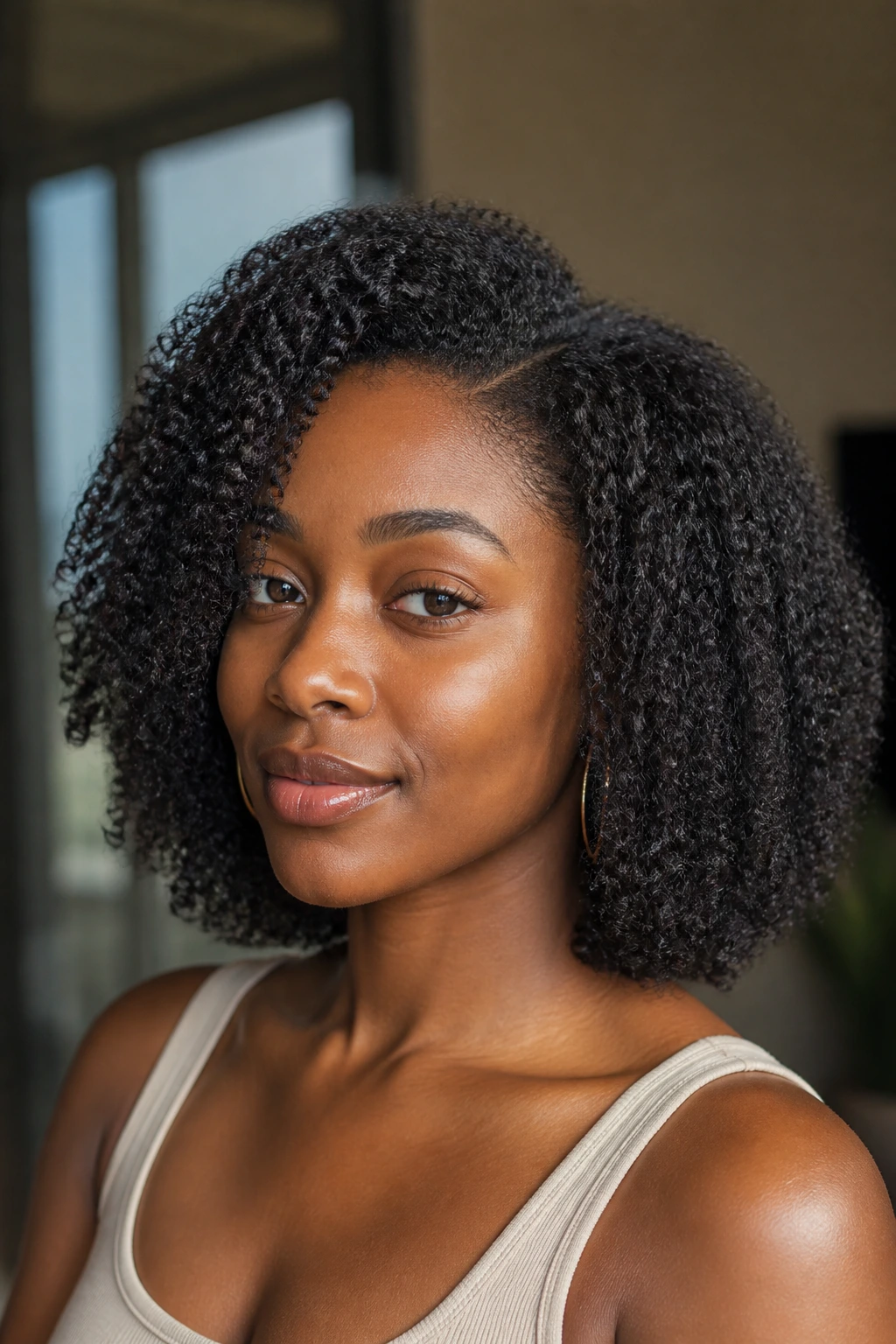
The best natural bob is not the sharpest one on a mood board or the shortest one your friend pulled off last month. It’s the cut that respects your curl pattern, your density, your shrinkage, and your actual styling habits. That sounds obvious, yet it’s the part people skip when they chase a picture instead of a plan.
If you want the safest first step, the collarbone lob and the rounded chin-length bob give you room to learn what you like. If you want shape with more edge, the asymmetrical bob, stacked bob, and curly bang bob carry more personality without asking you to give up your texture.
Pick the bob you’ll still enjoy after wash day. That’s the one worth cutting for.