



Afro cornrow styles for women have a funny little habit of looking simple from far away and demanding serious skill up close. From across the room, they read as clean lines and a neat finish. Sit in the chair, though, and the details start to matter fast: the size of each part, the direction of the braid, how tight the roots feel, whether the scalp still has a little breathing room, whether the style sits flat or starts puffing out by day three.
That’s why cornrows stay in rotation. They’re not only practical. They can look sharp, soft, dramatic, sporty, formal, or straight-up regal depending on how you shape them. A small change in parting can turn the whole mood. Straight backs feel direct. Curves feel softer. A crown braid can make a simple outfit look finished without much else happening.
If you wear Afro-textured hair, cornrows also give you something many styles don’t: structure. They can work on stretched natural hair, on added hair, on short hair that reaches the fingers just enough to grip, and on longer lengths that need a style to keep them together. The trick is knowing which version fits your face, your day, and how much patience you have for maintenance.
Some styles are fast. Some are fussy. Some are worth the extra hour because they hold their shape and make you feel pulled together the second you catch your reflection. The twelve below cover the range, from the plain-and-polished to the more sculpted styles that turn heads for all the right reasons.
1. Classic Straight-Back Afro Cornrows
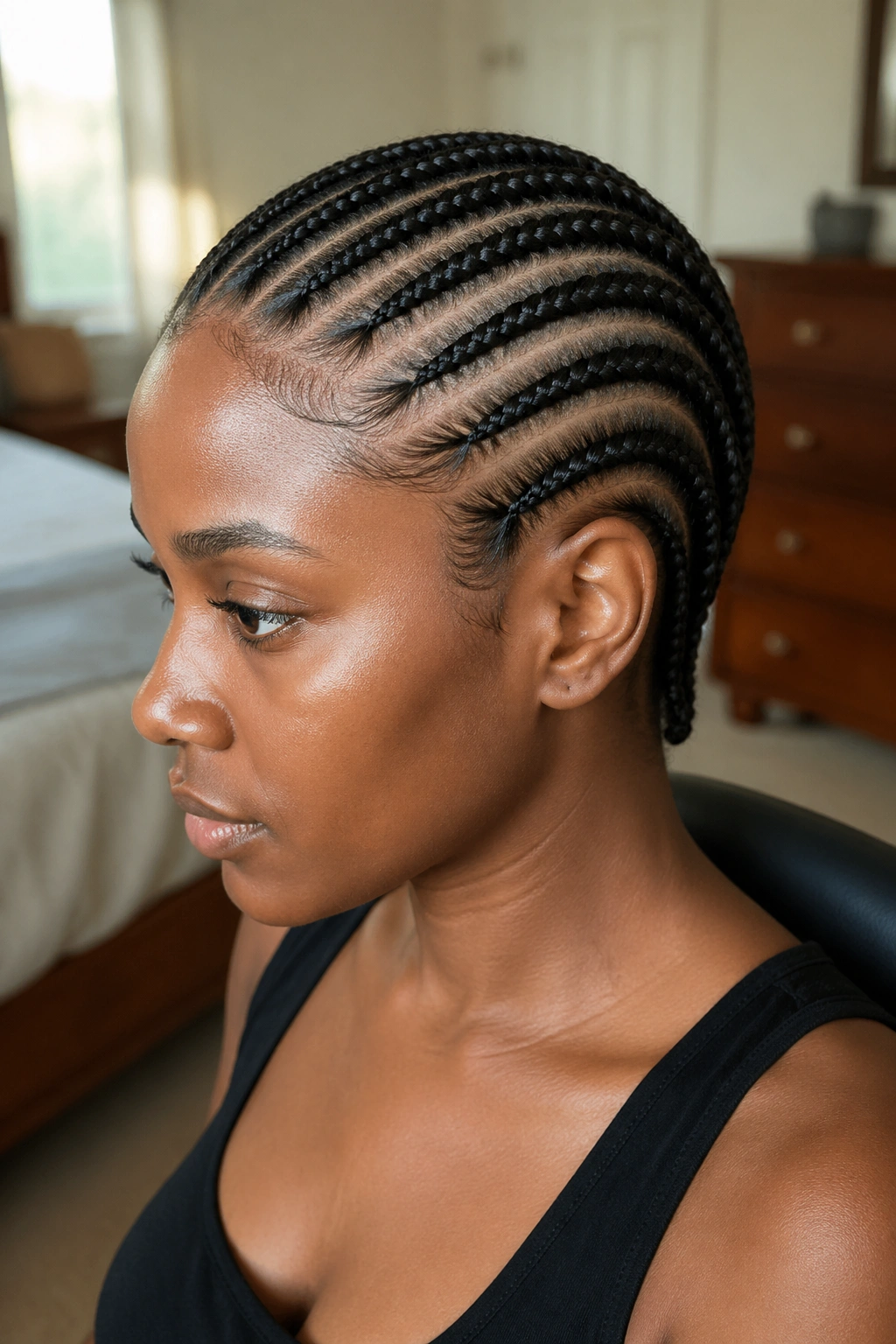
Straight-back cornrows are the style most people picture first, and that’s not an accident. They’re clean, familiar, and easy to read, which is exactly why they keep showing up on women who want something neat without a lot of visual noise.
What I like about this look is how little it tries to do. The braids run from the hairline to the nape in straight, even rows, so the shape of your head does the talking. If the parting is crisp and the braids are sized evenly, the whole style looks polished in a way that doesn’t need extra decoration.
Why It Stays on Rotation
- It works well on stretched natural hair because the sections lie flatter and the braids sit closer to the scalp.
- It’s easy to pair with hoops, glossed lips, and a strong brow if you want the hair to be part of the outfit rather than the whole outfit.
- It’s one of the easier cornrow styles to keep tidy under a scarf at night.
- It suits women who want a style that can move from errands to office wear without changing a thing.
A small detail matters here: the braid size should match the density of your hair. Too tiny, and the style can take forever. Too thick, and the rows can look bulky around the crown.
Best tip: ask for the first braid near the front hairline to feel snug, not tight. That little bit of restraint makes a big difference around the temples.
2. Feed-In Afro Cornrows With a Center Part
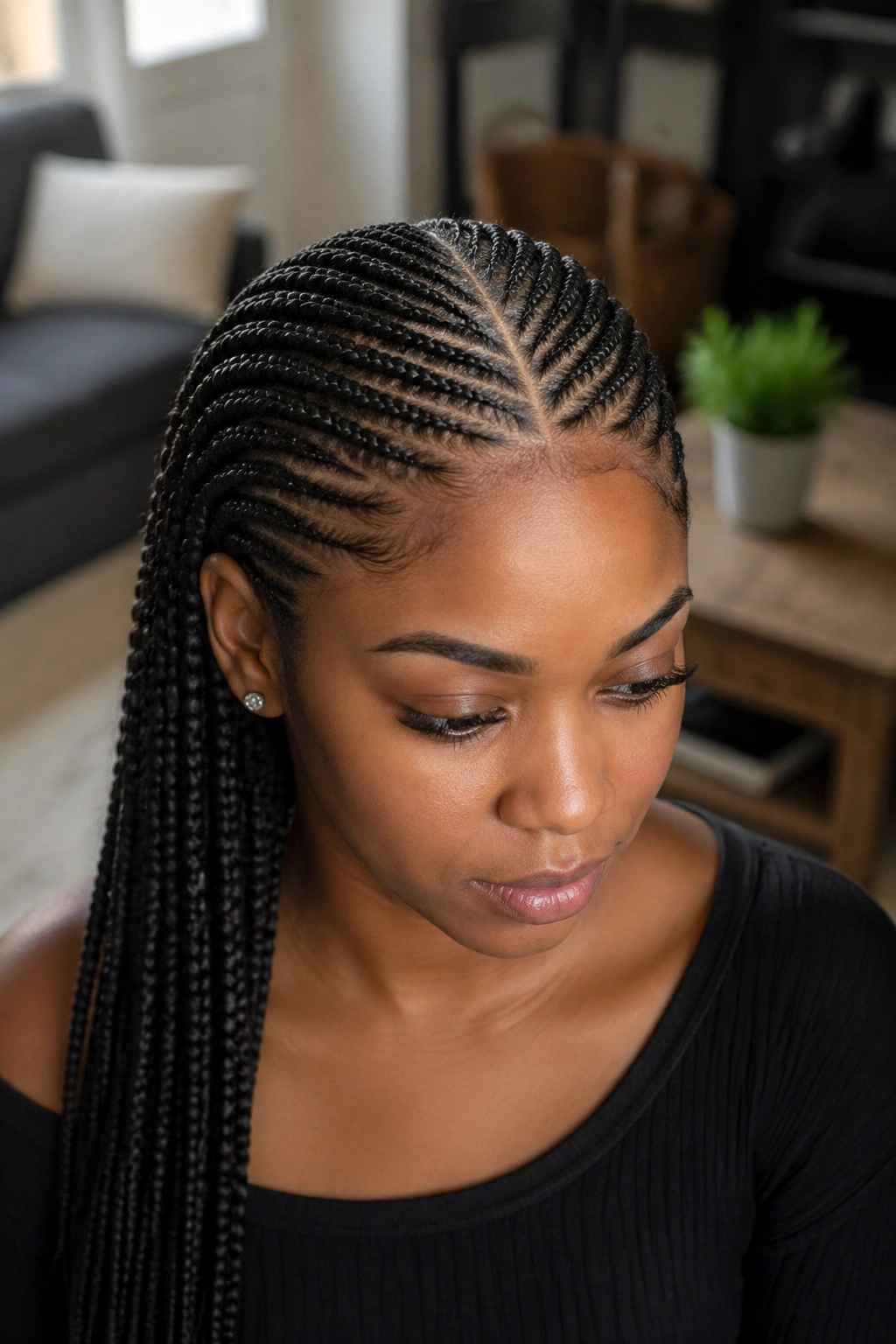
Want a softer look at the hairline? Feed-in cornrows do that beautifully. The braid starts tiny, then more hair gets added as it moves back, so the front doesn’t look heavy or blunt.
A center part gives this style its structure. One clean line down the middle makes the whole look feel balanced, and it gives the braids a kind of symmetry that works especially well with oval, round, and heart-shaped faces. If you like a style that frames the face without swallowing it, this is a strong pick.
The feed-in method also helps the braids look smoother at the root. That matters more than people admit. A braid that starts too thick right at the hairline can look chunky and press the style flat in a way that feels dated fast. With feed-ins, the eye follows the braid more naturally, and the finish looks a little lighter.
This style also gives you room to play with the back. You can leave the lengths long and simple, gather them into a low ponytail, or wrap them into a bun when you get tired of having hair on your neck.
One thing to watch: the middle part needs to be clean. If the sectioning wobbles, the whole style wobbles with it. And yes, people notice.
3. Side-Swept Cornrow Styles
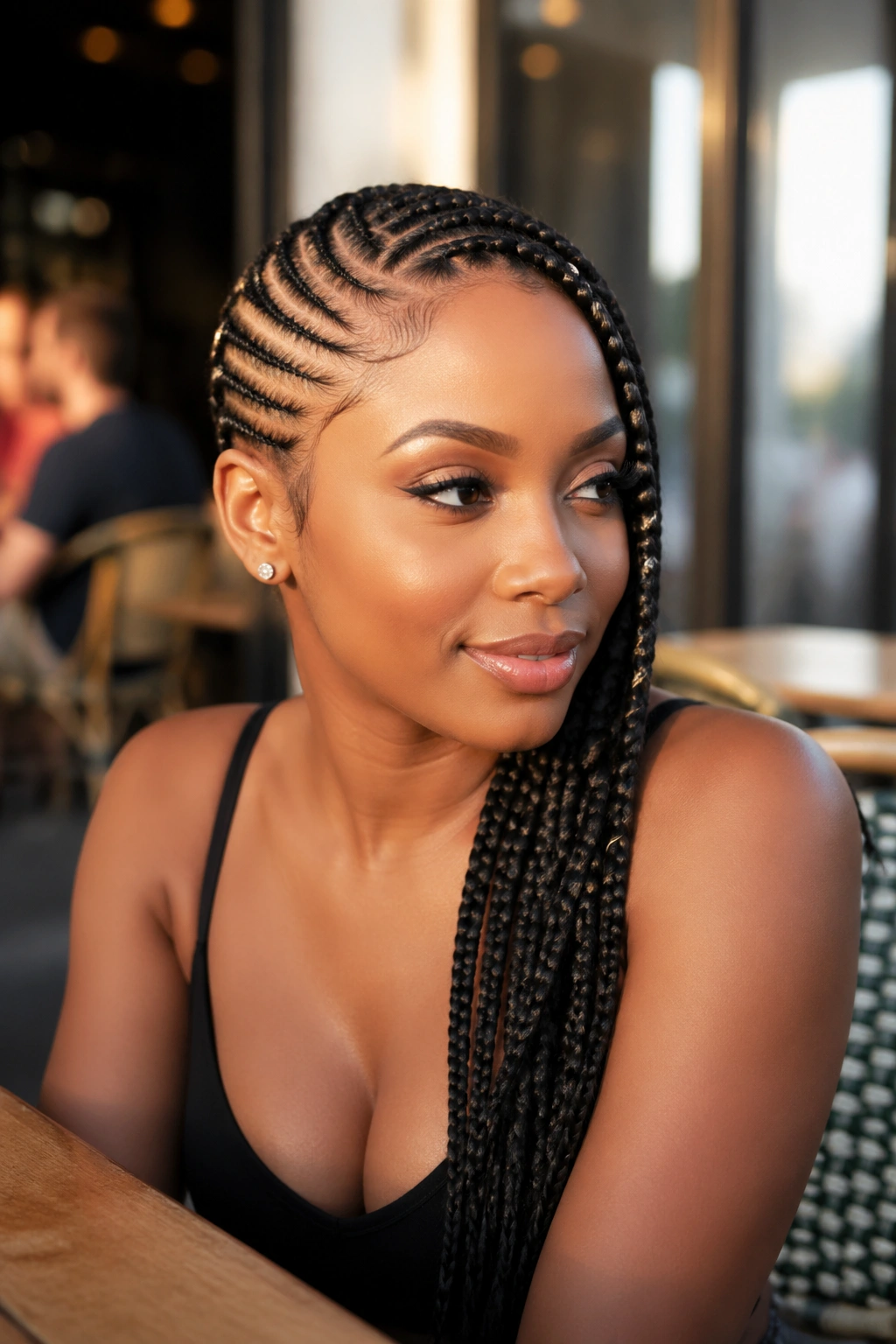
Side-swept cornrows are for the days when you want movement. They don’t sit in the same strict lane as straight-back braids, and that’s the appeal. The braids angle from one side of the head toward the other, which gives the style a softer, more fluid look.
This shape does a lot for women who like asymmetry. One side can be tighter and closer to the scalp, while the other opens up into longer braided lengths or a sweep toward the shoulder. It feels a little less formal than straight rows, but not sloppy. That line matters.
What Makes the Shape Work
- The diagonal parting gives the face a gentler frame.
- The style draws the eye across the head instead of straight back.
- It can make one side of the face look more lifted, especially if the front braids tuck near the temple.
- It looks good with side parts in clothing too, which sounds strange until you try it.
I’ve always thought this is one of the easiest cornrow styles to dress up without adding much. A single cuff, a little braid jewelry, or a deep side swoop at the front is enough. No need to overdo it. The shape already has personality.
If your hairline is delicate, ask for the front cornrows to begin a touch farther back from the edges. Side-swept styles can be gorgeous, but only if the tension stays sensible.
4. Cornrow Ponytail Styles That Stay Neat
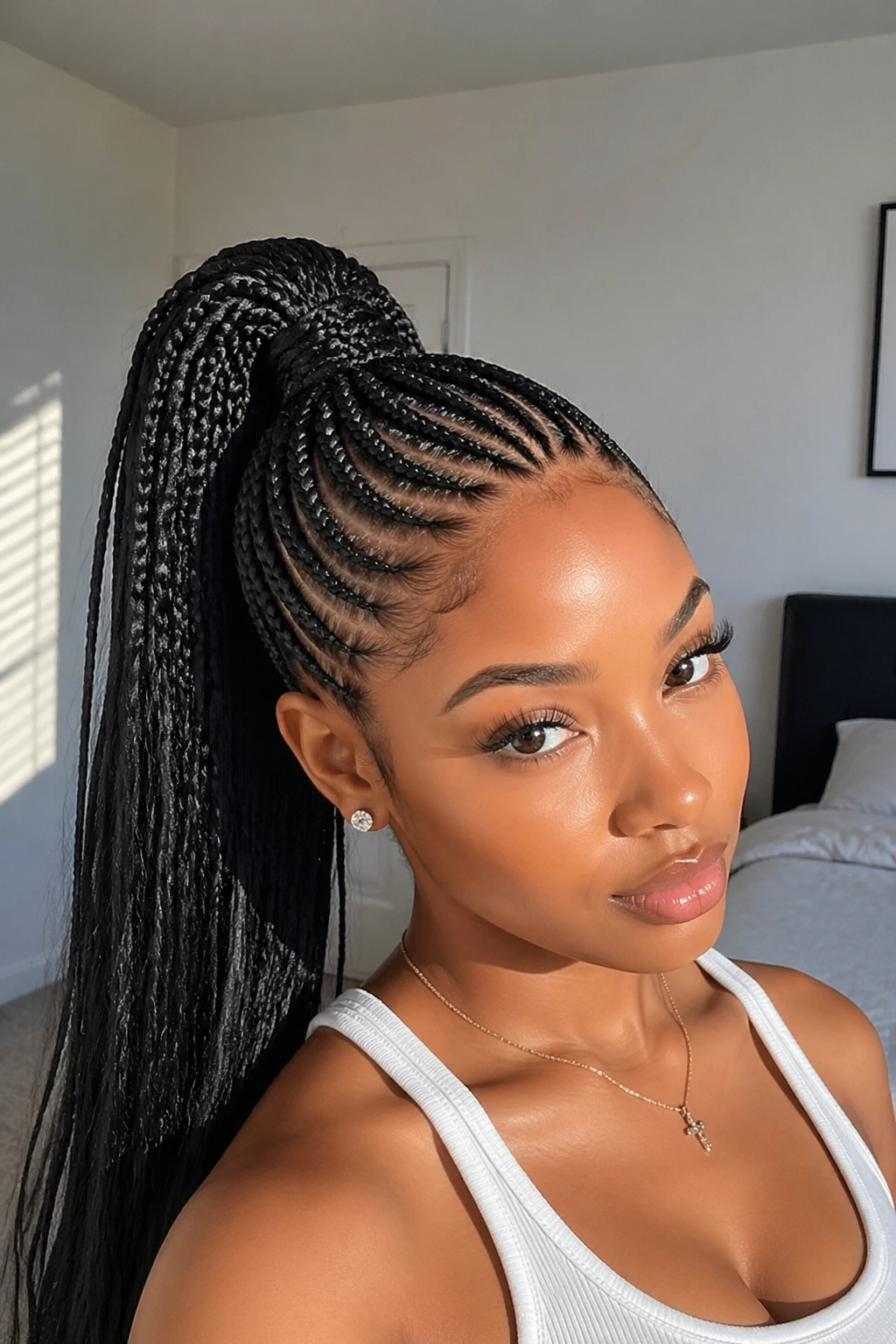
A cornrow ponytail is one of those styles that looks simple until you realize how much it solves. Hair is pulled up and secured into a ponytail after the braids are formed, so the whole style sits high, controlled, and out of the way.
The best part is the posture it gives the face. A ponytail lifts everything. It can make cheekbones look sharper and keep the neck clear, which is useful if you hate hair brushing your skin all day. There’s also a nice practical upside: the style stays clean around the collar, which is where a lot of braided styles start looking tired first.
This is where length matters less than shape. Shorter braids can still work if the ponytail sits low or mid-height. Longer braids can swing with more weight, which looks dramatic but can get heavy if the ponytail is packed too full.
A neat ponytail also depends on the anchor point. If the base is too bulky, the style loses that sleek finish and starts looking like the braids are fighting each other for space. A snug wrap or a covered elastic helps.
My opinion: this is one of the best cornrow styles for busy weeks. It’s tidy, it photographs well in real life, and it doesn’t ask for much once it’s in place.
5. Cornrow Buns and Braided Updos
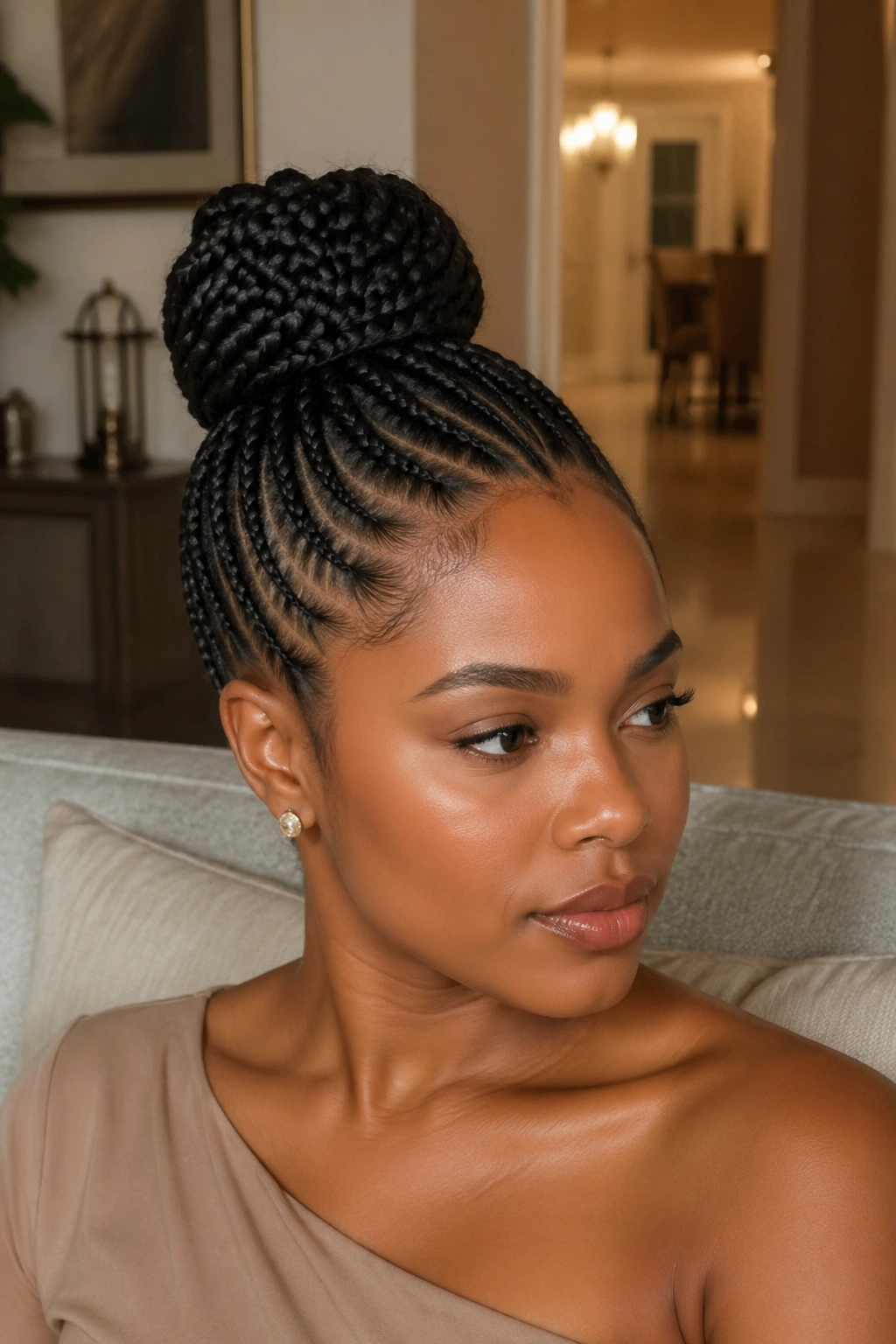
There’s a certain satisfaction in putting braided hair all the way up and getting it off your shoulders. Cornrow buns and braided updos do that with more structure than a simple ponytail, which is why they can feel a bit more polished.
The bun can sit high, low, or slightly off-center. Each version changes the mood. A high bun reads neat and strong. A low bun feels calmer. A tucked braided updo can look formal without needing pins scattered all over the place. You can keep the ends hidden for a clean finish, or leave a few plaits loose if you want movement.
The style also works well when your hair needs to stay protected for a while. Less rubbing on clothing. Less friction at the ends. Less fuss in the morning. That’s the practical side, and honestly, it’s the side that keeps this look popular.
A good bun depends on weight distribution. If all the braid length piles too high in one spot, the style can lean back or feel top-heavy. A skilled braider usually spreads the tension across the scalp so the bun sits like it belongs there.
And yes, this is one of those styles that can look dressy with a satin dress or casual with a plain tee. That range is a big reason it sticks around.
6. Stitch Cornrows With Clean Parting
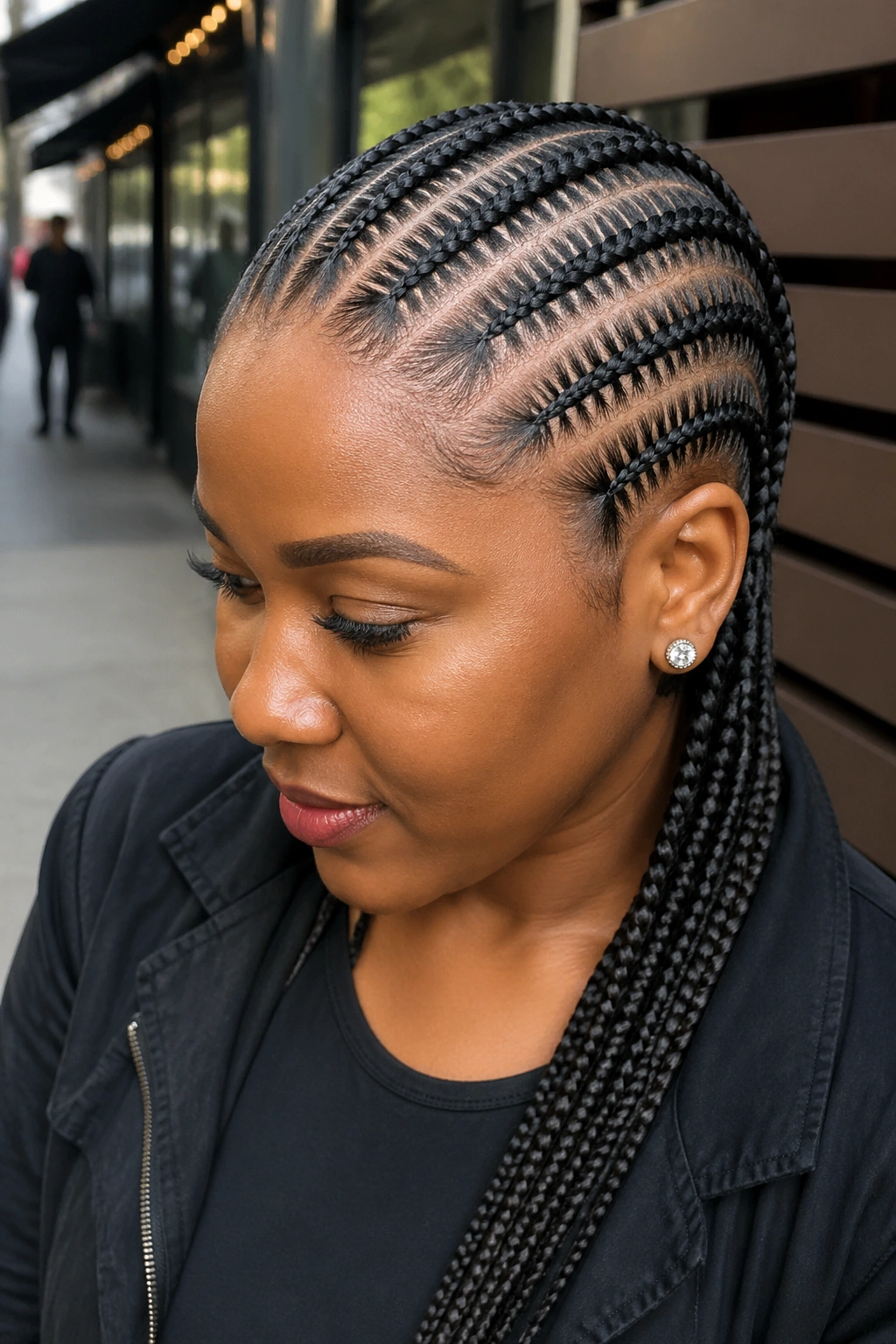
Stitch cornrows have a sharp, patterned look because the sections are built in visible steps instead of blending softly into one line. The parting creates that “stitch” effect across the scalp, almost like a row of tiny horizontal marks before the braid drops back.
The result is crisp. Really crisp. If straight-back cornrows are classic, stitch braids are the sharper cousin who likes clean lines and isn’t shy about them. They work especially well when you want the parting itself to become part of the design.
What To Look For
- Even section widths from front to back.
- Clean, parallel lines along the scalp.
- Consistent braid tension so the style doesn’t buckle in the middle.
- A finish that lies flat without gaps between the rows.
This style can handle added hair well, but it also looks good on natural hair alone if the sections are clear enough. The main thing is control. Stitch braids fall apart visually when the parting gets messy, so this is one of those styles where the setup matters almost as much as the braiding.
I like this look on women who want something with edge but not chaos. It’s patterned, not fussy. Bold, not loud. And if you keep the braids medium-sized, the style stays sharp longer because the rows don’t sag as fast.
7. Curved Cornrows With Swirls and Waves
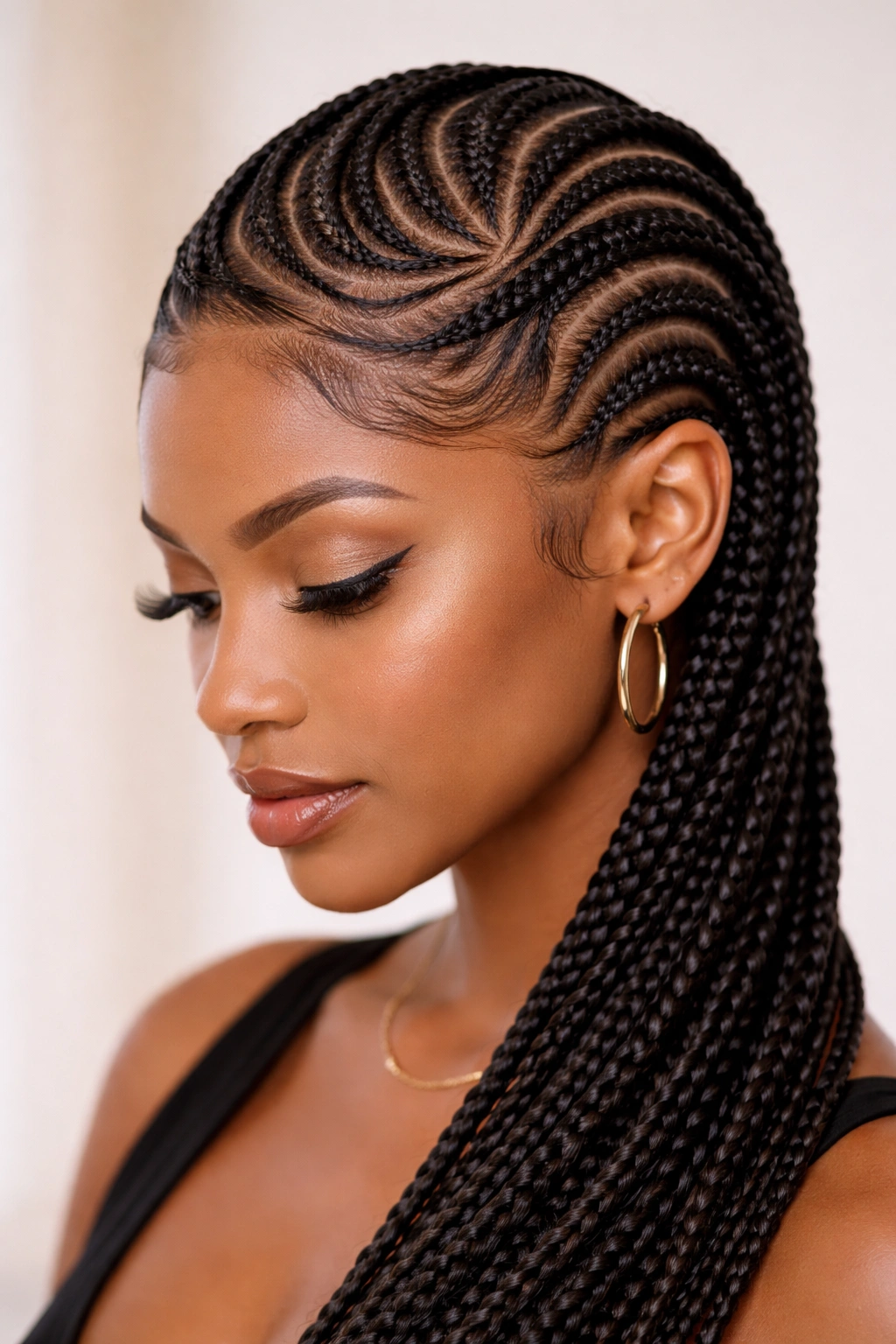
Curved cornrows feel more artistic than the straight-back versions, and the difference shows immediately. Instead of running in plain lines, the braids bend, loop, or sweep in wave-like paths across the scalp. The head becomes the canvas, which sounds dramatic but is actually the right word for it.
The best curved styles have a sense of motion. The eye moves across the braids instead of stopping at one point. That makes the whole look feel softer and more custom, especially when the curves follow the natural shape of the head instead of fighting it.
This style can be gorgeous with a clean side swoop at the front or with several curved rows that spiral inward. It’s one of the few cornrow looks where imperfect symmetry can still work in your favor, because the curves themselves create interest. Still, the lines need to be intentional. Random bends look messy. Planned curves look expensive, for lack of a better word.
There’s also a nice effect on the scalp. Curves break up the visual weight of the hair, so the style can feel lighter even when it uses a full head of braids.
If you like designs that people notice from a few feet away, this is a strong choice. It has shape. It has rhythm. And it never looks plain.
8. Half-Up, Half-Down Afro Cornrow Styles
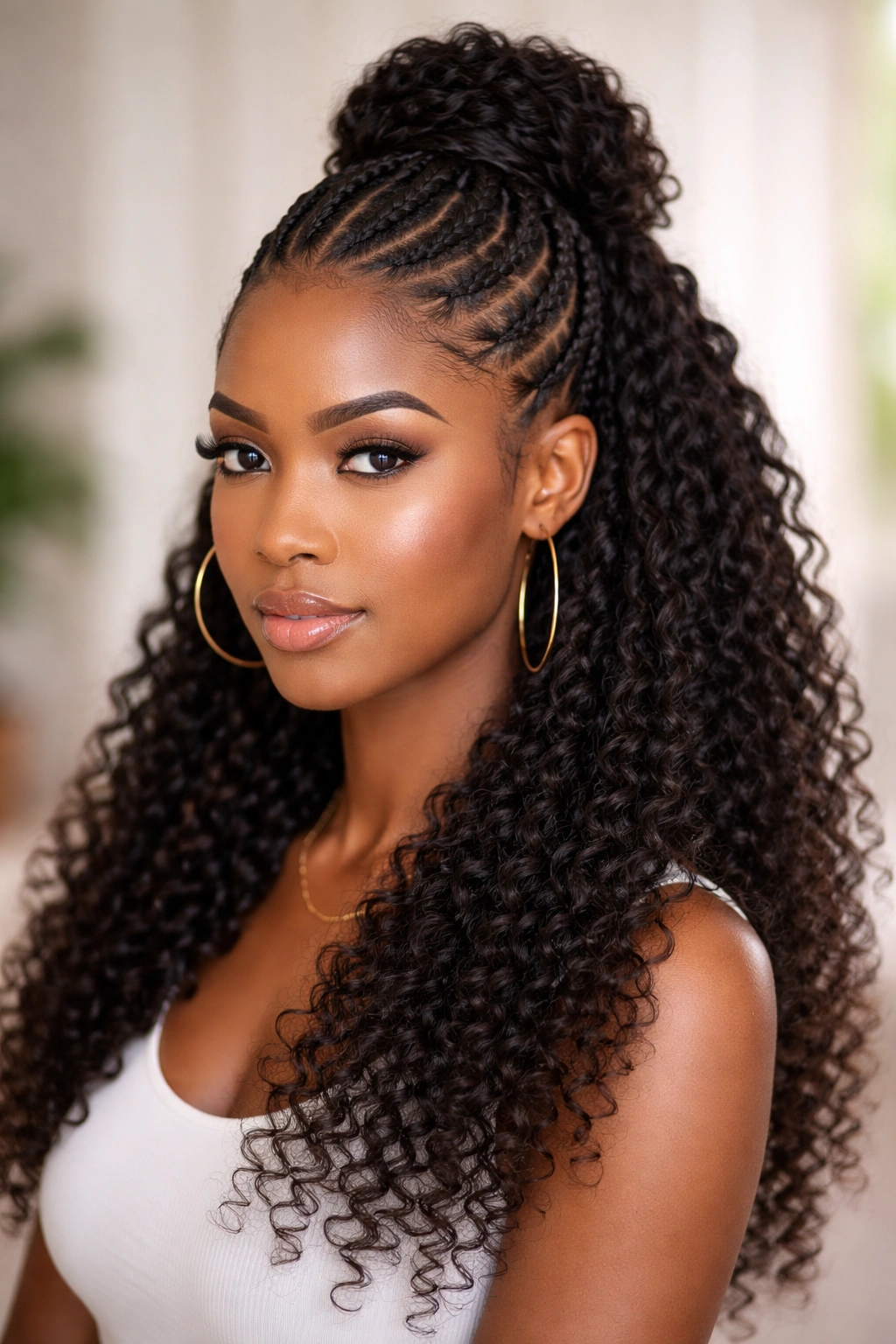
Half-up, half-down cornrows are for women who want the neatness of braids at the top and a little freedom at the bottom. That mix matters. A full updo can feel strict. A fully loose style can feel like too much maintenance. This one sits in the middle and behaves itself.
The top section is usually cornrowed back or to the side, then gathered into a bun, puff, ponytail, or braided knot. The lower section is left loose, braided, twisted, curled, or natural depending on the look you want. That contrast is the whole point. Tight above, softer below.
One reason this style works so well is that it gives the face shape at the top while still letting the hair move around the shoulders. You get structure without losing softness. That balance is especially nice if you like wearing earrings, because the open lower half leaves room for them to show.
A lot of women use this style when they want a braided look that doesn’t feel heavy all over. It’s also a smart choice if you like switching between pinned-up and down styles without taking the whole thing apart.
If you’re adding curls to the bottom half, keep the texture intentional. Loose spiral curls read differently from fluffy natural ends, and the braid-to-texture shift should feel like a choice, not an accident.
9. Cornrow Mohawks With Height
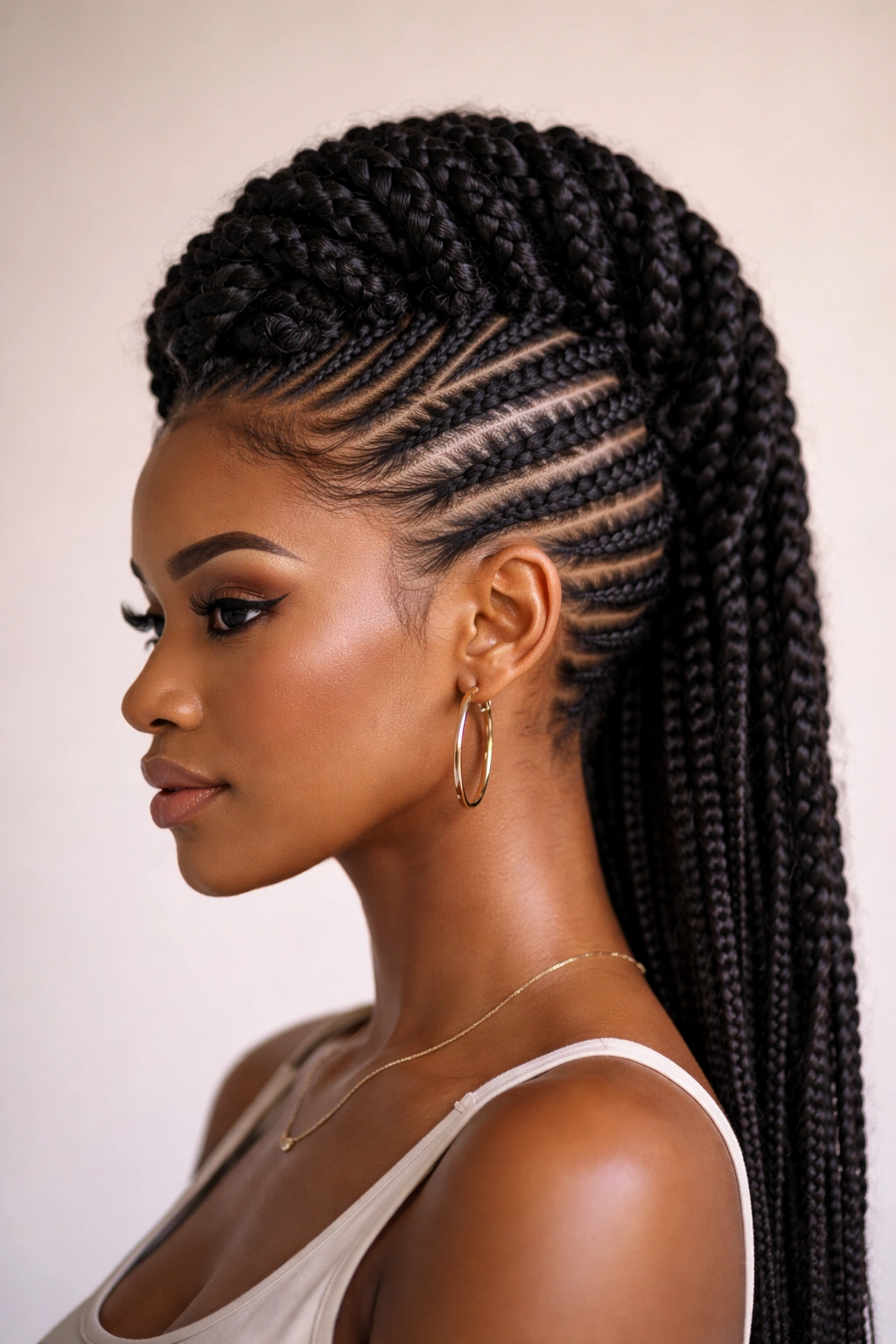
Cornrow mohawks are not shy. Good. They’re not supposed to be. The sides are braided close to the scalp, and the center section rises into a taller braid pattern, a puff, or a braided ridge that runs from front to back.
The shape gives the face instant lift. It also makes the neck and jawline feel more open, which is why this style can look so strong on women who want something with a bit of attitude. If a classic ponytail says polished, a mohawk says sharp.
I like this style because it gives you contrast. Sleek sides. Raised center. Clear shape. That contrast is what makes the style memorable. Without it, a mohawk braid can just look like a pile of braids arranged high on the head, which is not the same thing.
Good Situations for This Style
- Concerts and events where you want a bold silhouette.
- Weeks when you want your sides protected and your crown to stay visible.
- Times when you like wearing dramatic earrings or high necklines.
- Any moment when a flat, quiet hairstyle would feel boring.
The one thing this style asks for is balance. If the center is too tall and the sides are too tight, it can look strained. If the center is too flat, it loses the point. You want lift, not helmet hair.
A little height at the crown goes a long way here. More isn’t always better.
10. Cornrows With Beads and Cuffs
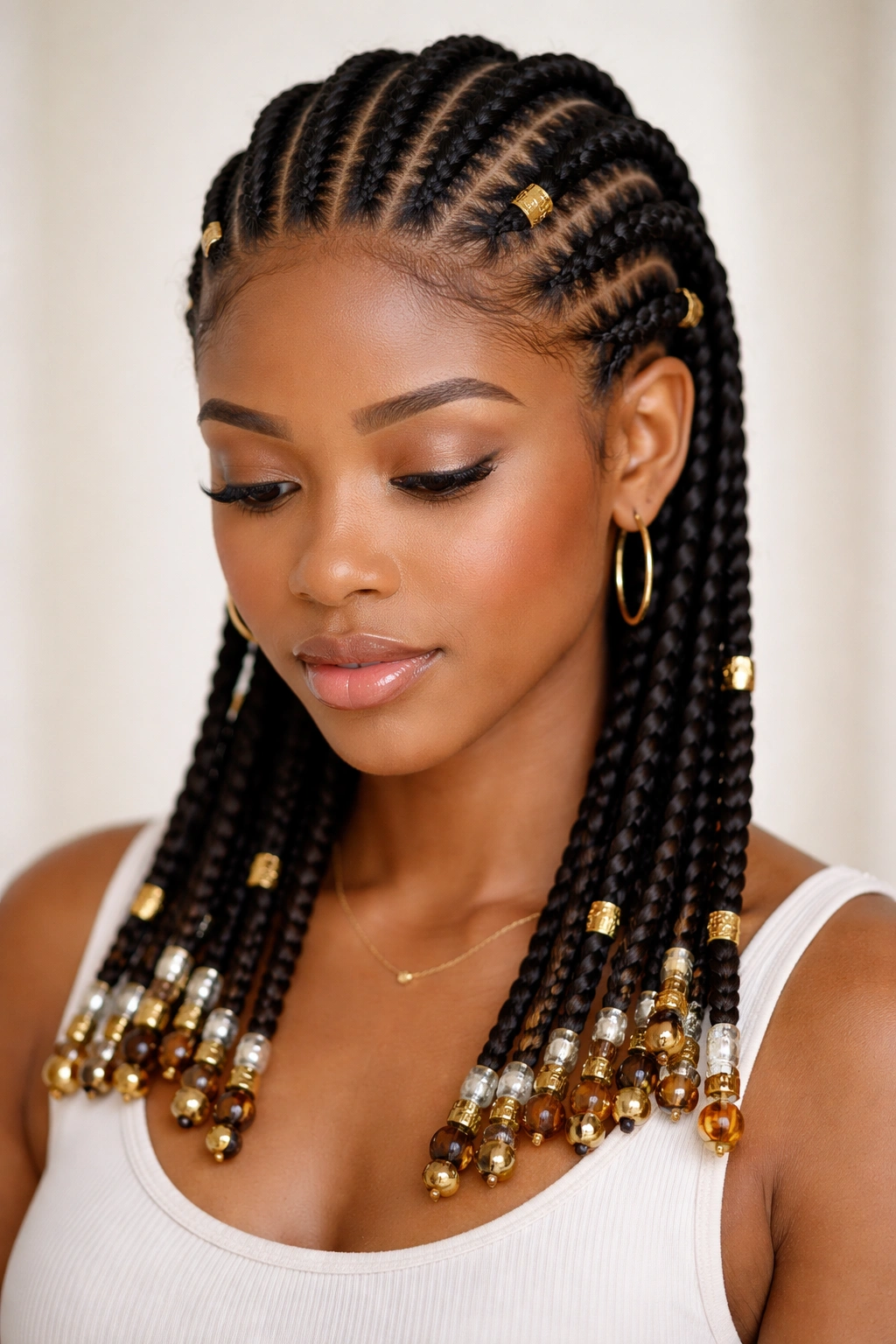
Cornrows with beads and cuffs can completely change the mood of a style with almost no extra effort. The braids themselves might be plain and simple, but once the accessories go on, the whole look starts to feel more personal.
Beads bring movement. They click softly when you walk, and that tiny sound is part of the charm. Cuffs do something different. They catch the eye with shine and shape, especially when they’re placed at the ends or spread in a pattern across a few braids. Used together, they give the style a little rhythm without taking over.
The trick is restraint. A few beads at the ends of a front braid can feel playful. Too many heavy beads can drag the braid down and make the hair feel pulled. Cuffs are lighter, but they still need placement. Scatter them without thought and the style can look cluttered.
Small Details That Matter
- Use bead sizes that match the braid thickness.
- Put cuffs on braids that won’t rub too much against collars.
- Keep the front neat if the accessories are doing the talking.
- Choose one metal tone if you want a cleaner finish.
This is one of my favorite ways to make cornrows feel less static. Hair accessories let the style lean into personality without changing the braid pattern itself. That’s efficient, and it’s fun.
11. Jumbo Ghana Cornrows
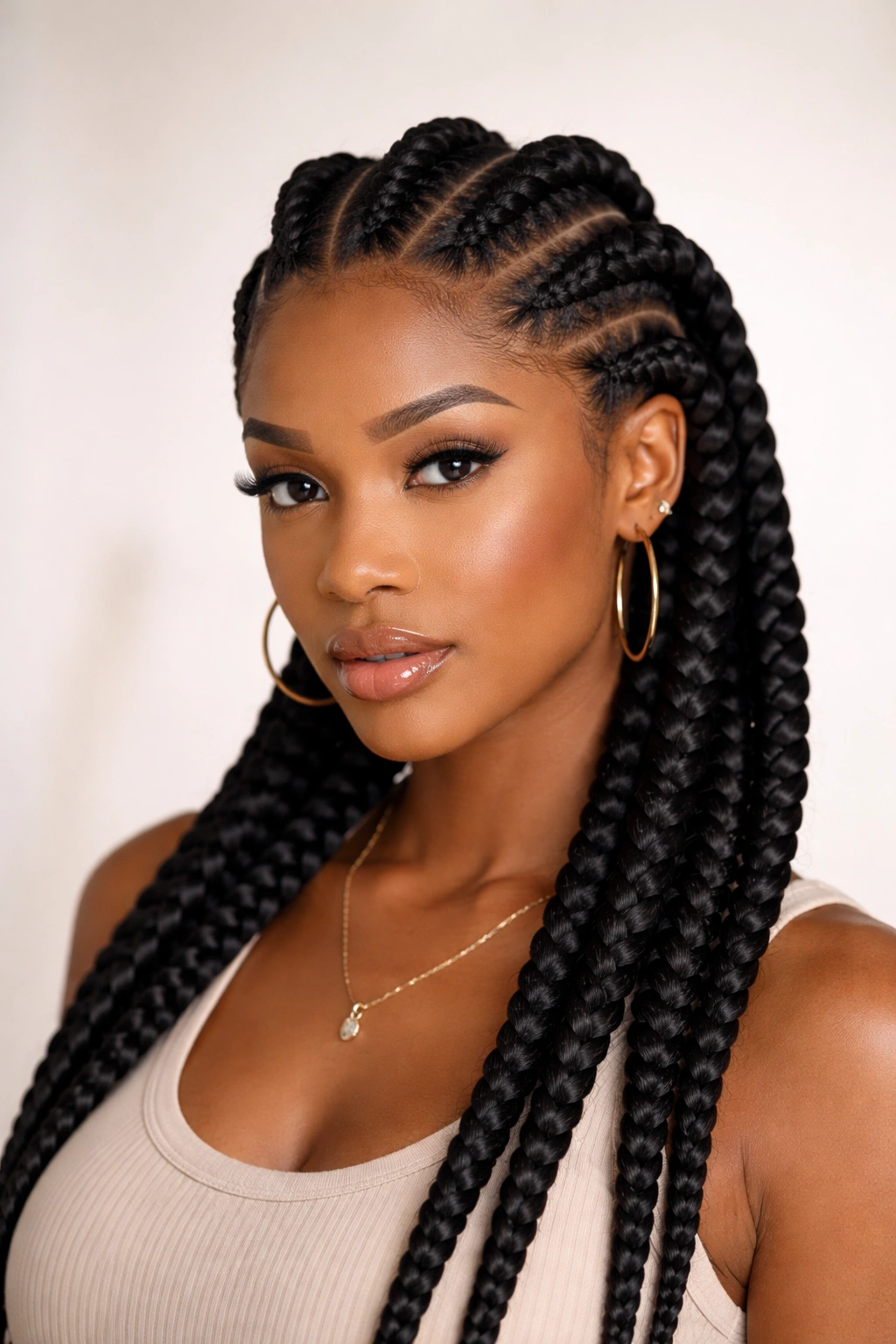
Jumbo Ghana cornrows are the bold, thick-braid version of the family. They use larger sections, which means fewer rows, faster installation, and a bigger visual impact. If tiny cornrows feel delicate, Ghana braids come in with a stronger shape.
The size is what gives them presence. Each braid sits wide on the scalp and keeps a solid line from front to back, so the pattern reads clearly from a distance. That makes the style a good pick when you want a head-turning braid pattern without a lot of micro-detail.
They also tend to work well for women who want a style that feels substantial but not fussy. Fewer braids means less parting time. Less parting time means less sitting in the chair. That part alone makes the style attractive to a lot of people, and I don’t blame them.
The downside is weight. Big braids can pull if they’re packed too tight or made too long at the roots. A good braid should feel secure, not like it’s dragging the scalp down by lunch.
If you want this style to look sharp, keep the parts clean and the sections consistent. Big braids show mess faster than small ones. There’s nowhere to hide.
12. Halo Crown Cornrows
Halo crown cornrows have a softer kind of drama. The braids wrap around the head like a crown, usually circling the perimeter and drawing attention toward the face. It’s one of those styles that can look calm at first glance and more detailed the longer you look at it.
What makes this style special is the frame. It changes how the face reads. Instead of pulling the eye down the length of the hair, the braids guide it around the head, which gives a graceful, finished look. That’s why it can feel dressy even when the braids themselves are simple.
Halo cornrows are a smart choice when you want the hair off your face but don’t want the hardness that sometimes comes with a very tight updo. The shape is gentle, but not weak. There’s a difference.
If you’ve got thick Afro hair, this style can be especially satisfying because the crown line sits well against natural texture and makes the whole silhouette feel deliberate. A few loose baby hairs at the edges can soften it a touch, though I’d keep them controlled rather than overstyled. Too much edge work can fight the clean shape.
It’s the kind of style that works when you want your hair to look composed from every angle. Not flashy. Not plain. Just finished.
A final thought, since this matters more than people admit: the best cornrow style is the one that fits both your hair and your patience. Fancy parting is lovely. So is a clean, solid braid that stays neat and doesn’t bully your scalp.
