



Natural afro styles for everyday wear do not need a fresh blowout, a salon chair, or an hour in the mirror. The best ones hold their shape through a bus ride, a desk fan, a humid kitchen, and that awkward late-afternoon slump when curls start reaching for the sky in every direction.
That is the real test.
Afro hair has range. Tighter coils can shrink into a neat halo, looser curls can bloom into a fuller cloud, and a good style keeps the shape on purpose instead of letting the hair do whatever it wants. The difference between a messy day and a good hair day is often nothing more than a clean part, enough moisture at the root, and a shape that suits the length you have right now.
People waste time chasing one perfect version of a fro. There isn’t one. A shaped TWA, a high puff, a twist-out, and a rounded wash-and-go can all count as everyday wear if they sit well, stay comfortable, and don’t take half the morning to fix. The styles below lean practical first: quick to refresh, kind to the edges, and realistic for real life, not a photo shoot.
1. Defined Wash-and-Go Afro
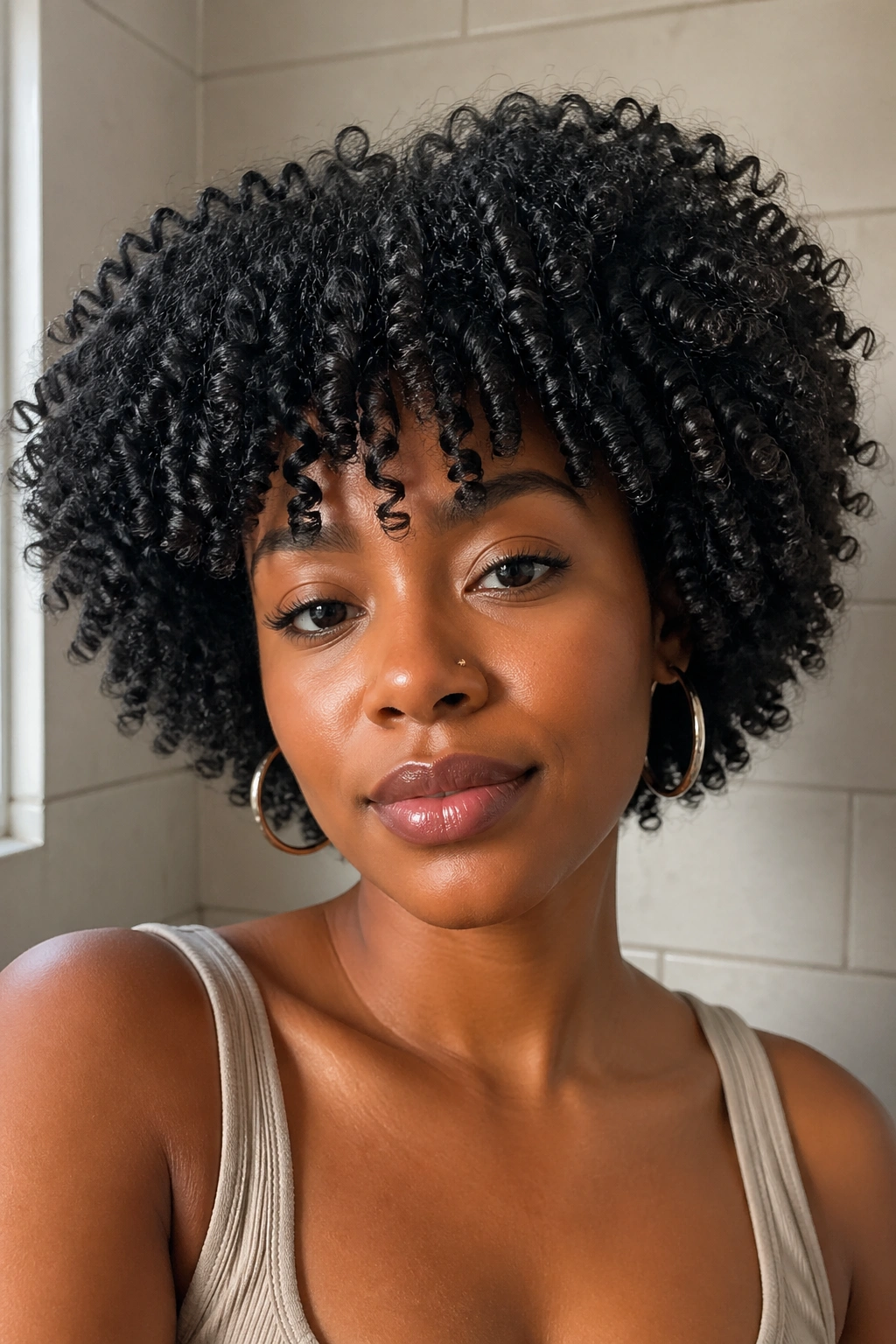
A defined wash-and-go afro is the style I reach for when I want the curls to do the talking and nothing else. Clean curl clumps, soft movement, and enough shape to look intentional before coffee. It works especially well when your hair already likes to clump on its own, because you are not fighting the texture — you are just helping it settle into place.
Why It Works
The whole style depends on moisture, light product, and restraint. Too much cream weighs the curls down; too little leaves them fuzzy by lunch. A good leave-in plus a gel with hold usually gives the curl pattern enough support to dry in a rounded shape.
- Best for 3b to 4c hair that likes definition.
- Looks polished with air-drying or a diffuser on low heat.
- Holds up better when you separate the curls after they are fully dry.
- Refreshes with a spray bottle, a little leave-in, and your hands.
Pro tip: pick the roots only, not the whole head. That keeps the afro shape full without breaking up the curl clumps you worked to build.
2. High Puff
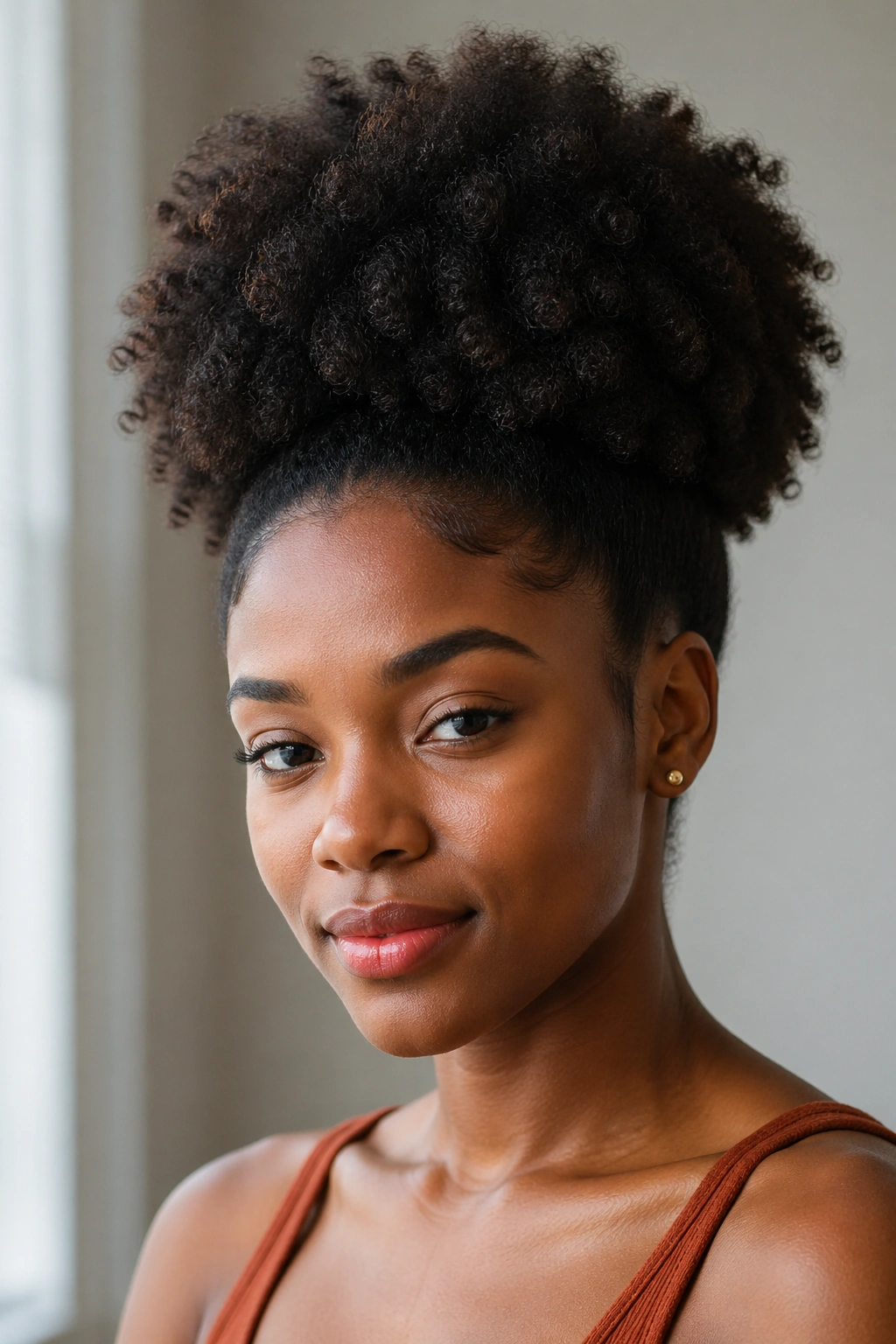
Why do high puffs keep coming back? Because they are fast, they lift the face, and they make even second- or third-day hair look like it had a plan. The puff sits where the eye naturally goes, so it gives instant height without asking you to stretch or smooth every strand into submission.
A good high puff depends on the base, not the puff itself. If the hairline feels tight, it is too tight. The American Academy of Dermatology has been blunt about this for years: styles that pull at the scalp can stress the hairline, and that matters more than whether the puff looks sharp in a mirror. Use a soft scrunchie or stretchy band, smooth the crown with your hands, and stop before the roots feel tense.
Keep the Hairline Soft
- Gather the hair at the crown, not at the front hairline.
- Use a satin or fabric-covered band instead of a thin elastic.
- Smooth the perimeter with a light gel, not a heavy layer.
- Flip your head upside down if you want more lift.
One small detail makes a big difference here. Let the puff sit loose enough to breathe, because the style should feel like a relief, not a tug-of-war.
3. Low Puff
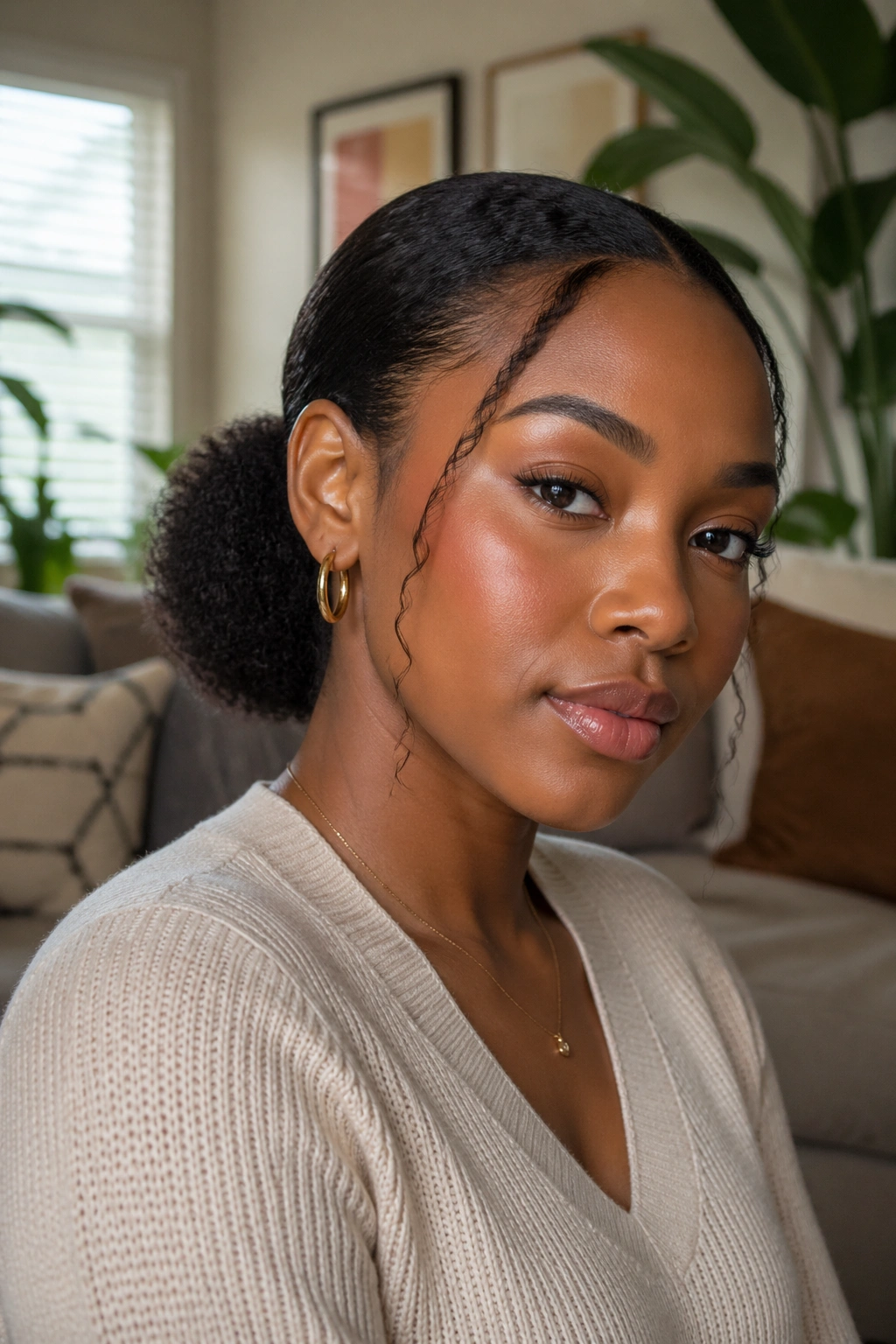
A low puff is what I suggest when you want your hair calm but not flat. It sits near the nape, which makes it easier on the scalp and a little more understated than the high version. It also plays nicely with longer natural hair, stretched styles, or twists that have started to loosen.
This one feels especially right on days when you need your hair out of the way but still want some shape at the back. School drop-offs, office hours, errands, grocery lines — the low puff survives all of them with less drama than a high ponytail. It also gives you room to keep one or two face-framing pieces out if you want the style to look softer.
What Makes It Different
- The lower placement reduces tension at the crown.
- It works well when the roots are stretched a little.
- A side part or small twist at the front keeps it from looking plain.
- It is easier to tuck under a scarf or coat hood.
The low puff is not flashy. That is the appeal. It gives you shape, comfort, and enough polish to look finished without trying to compete with your outfit.
4. Tapered Afro
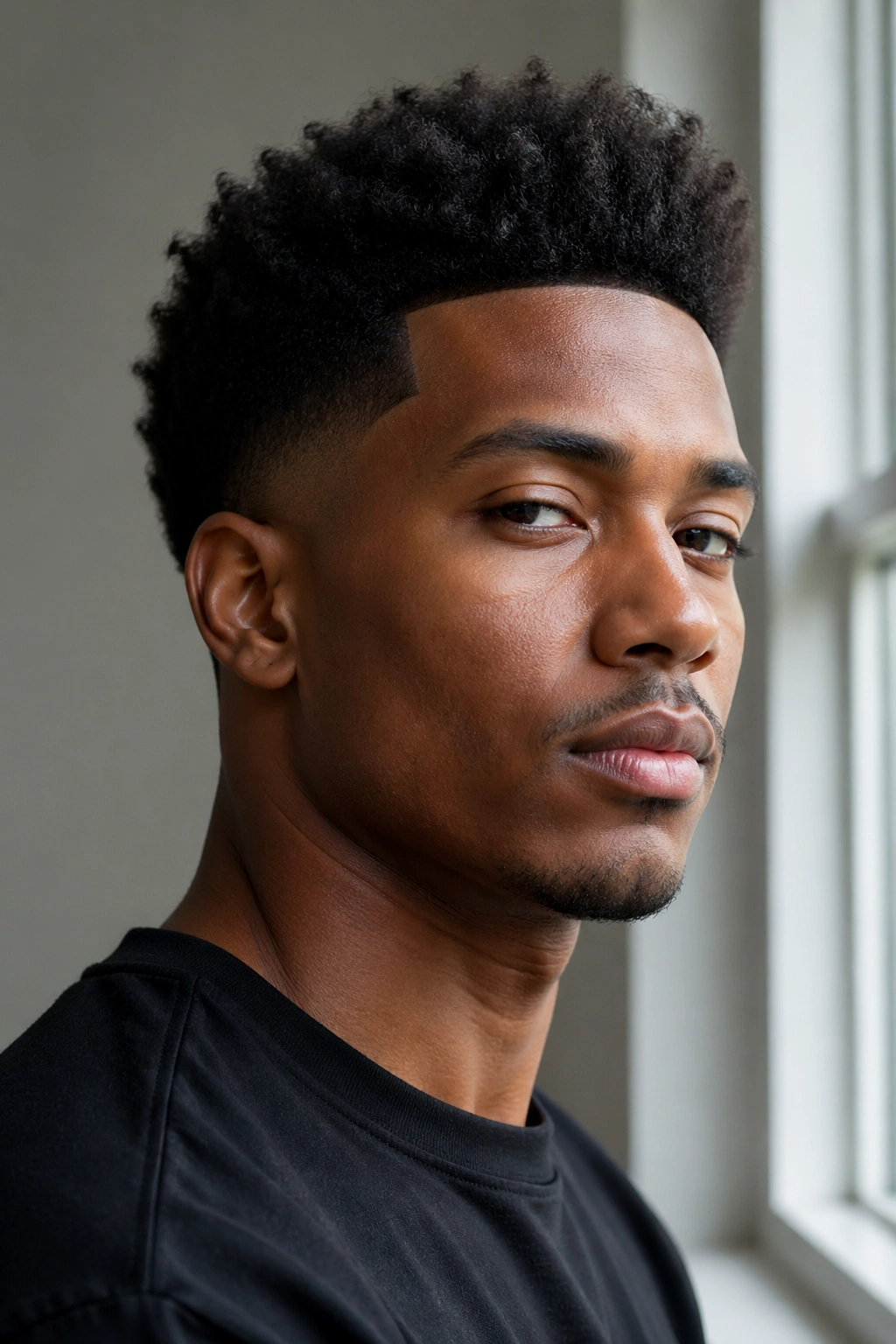
Not every afro needs the same amount of volume all around. A tapered afro proves that point pretty quickly. Shorter sides and back, more length up top, and a shape that frames the face without asking you to fluff every section all day.
The cut does half the work for you. That is why people with busy mornings tend to like it. You wake up, add moisture where the hair looks thirsty, and lift the top with your fingers or a pick. The shape already has structure, so you are not building the whole silhouette from scratch.
What the Taper Changes
- It makes the face look more open.
- It keeps the sides neat with less daily handling.
- It works for tight coils, soft curls, and everything between.
- A clean line-up or shape-up makes the whole style read sharper.
Ask for a taper that matches your texture, not one built for straight hair. Short sides with blunt lines can look stiff on coils, while a softer fade tends to move better. That small difference matters.
5. Twist-Out Afro
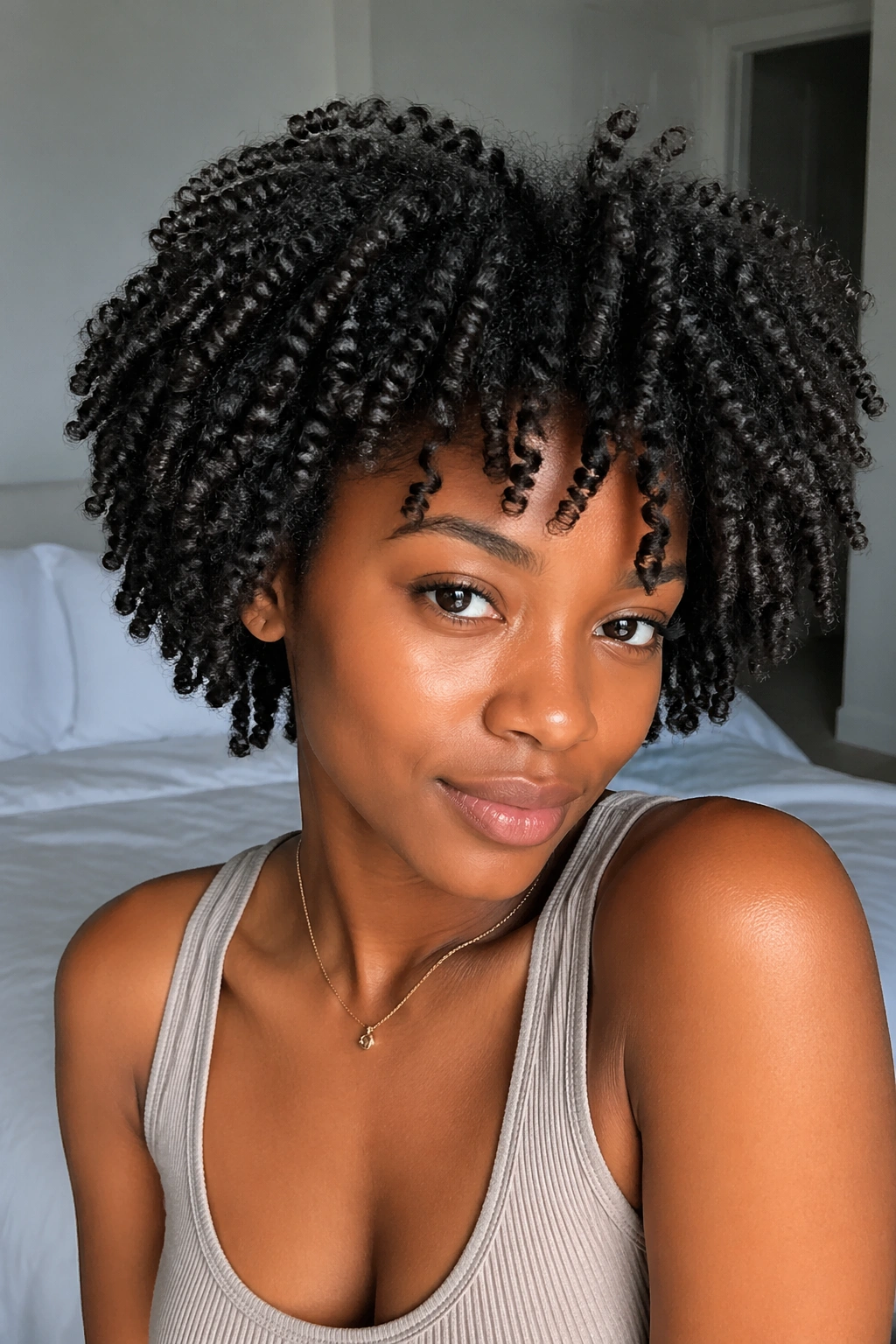
A good twist-out has that soft, springy look that makes people assume you spent longer on your hair than you did. You did not. You just gave the strands enough time to dry in a stretched pattern, and that is half the battle with natural hair. The result lands between defined and full, which is why the style wears so well in everyday life.
The trick is patience. If the twists come out even a little damp, the shape collapses fast and the frizz shows up early. I like medium-sized twists for daily wear because they give enough texture without turning the whole head into a tiny coil pattern. Smaller twists bring more definition, but they also take more time, and that is not always worth it on a weekday morning.
How to Wear It
Pull the twists apart only after they are completely dry. Use a little oil on your fingertips if the strands feel grabby, and stop separating once the shape looks full enough. Overdoing it makes the twist-out fluffy in a way that no amount of edge control can fix.
A twist-out also gives you options. Wear it rounded. Pin one side back. Fluff the crown and let the ends fall where they want. It is a forgiving style, which is one reason it stays on repeat.
6. Braid-Out Afro
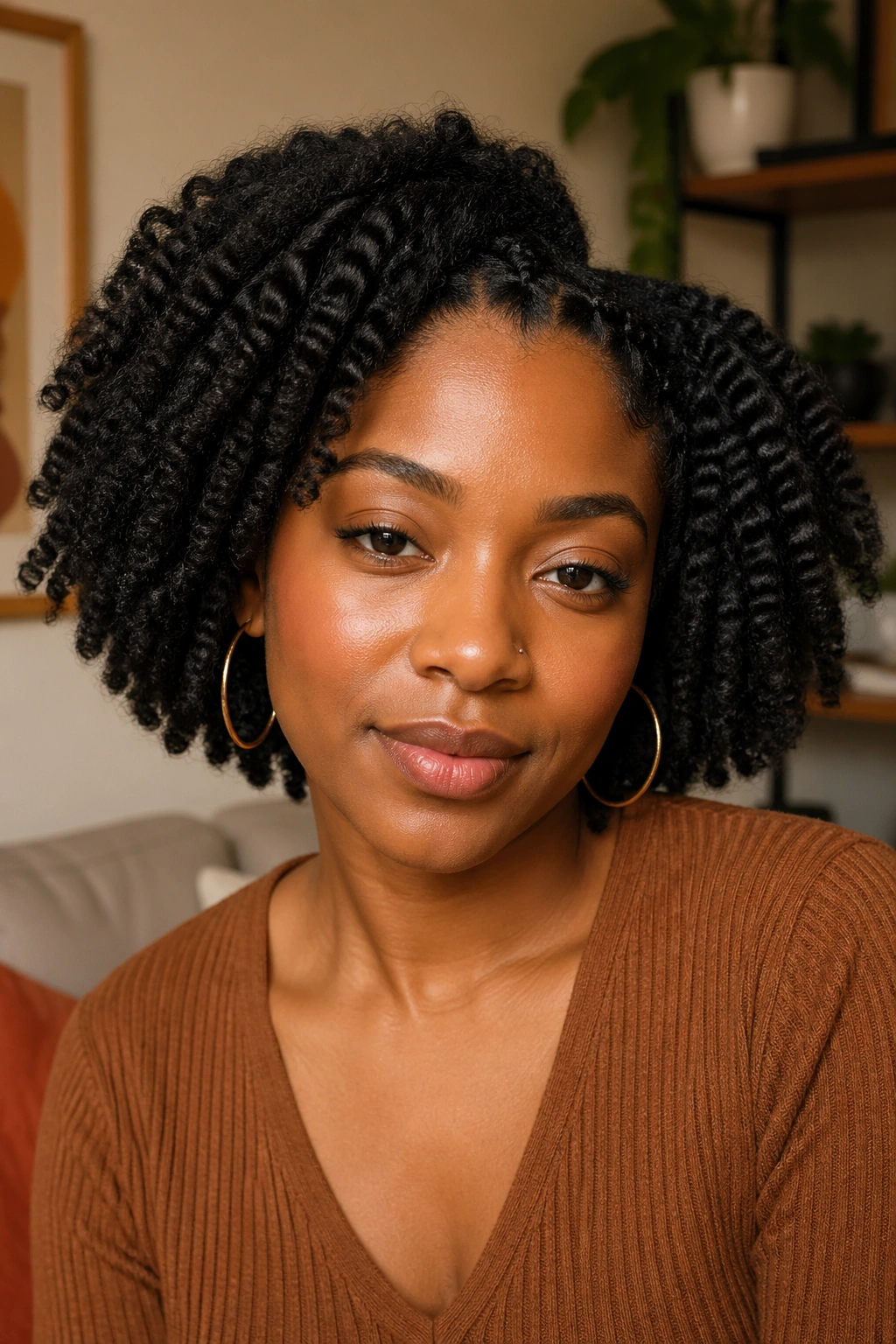
A braid-out is the cousin of the twist-out that shows up with more stretch and a slightly different texture. The braid pattern gives the hair a softer zig-zag look, and that makes it a smart pick when you want fullness without every curl clumping into the same shape. If twist-outs feel too springy for your taste, braids usually land somewhere a little calmer.
I like braid-outs on hair that needs more length at the surface. They are also useful if your hair puffs up fast after drying. The pattern holds the strands in place longer, which can help the style look neat for more than a day or two. Not forever. Nothing does that. But longer than you might expect.
Twist-Out vs. Braid-Out
- Twist-outs give rounder, curlier definition.
- Braid-outs create more stretch and a looser wave.
- Braids often work well on thicker or coarser textures.
- Medium sections dry better than tiny ones for this style.
If you want the roots to stay smoother, braid while the hair is slightly damp and keep the sections even. Uneven braids tend to dry unevenly too, and then one side of the head looks fuller than the other in a way that is hard to fix later.
7. Side-Part Afro
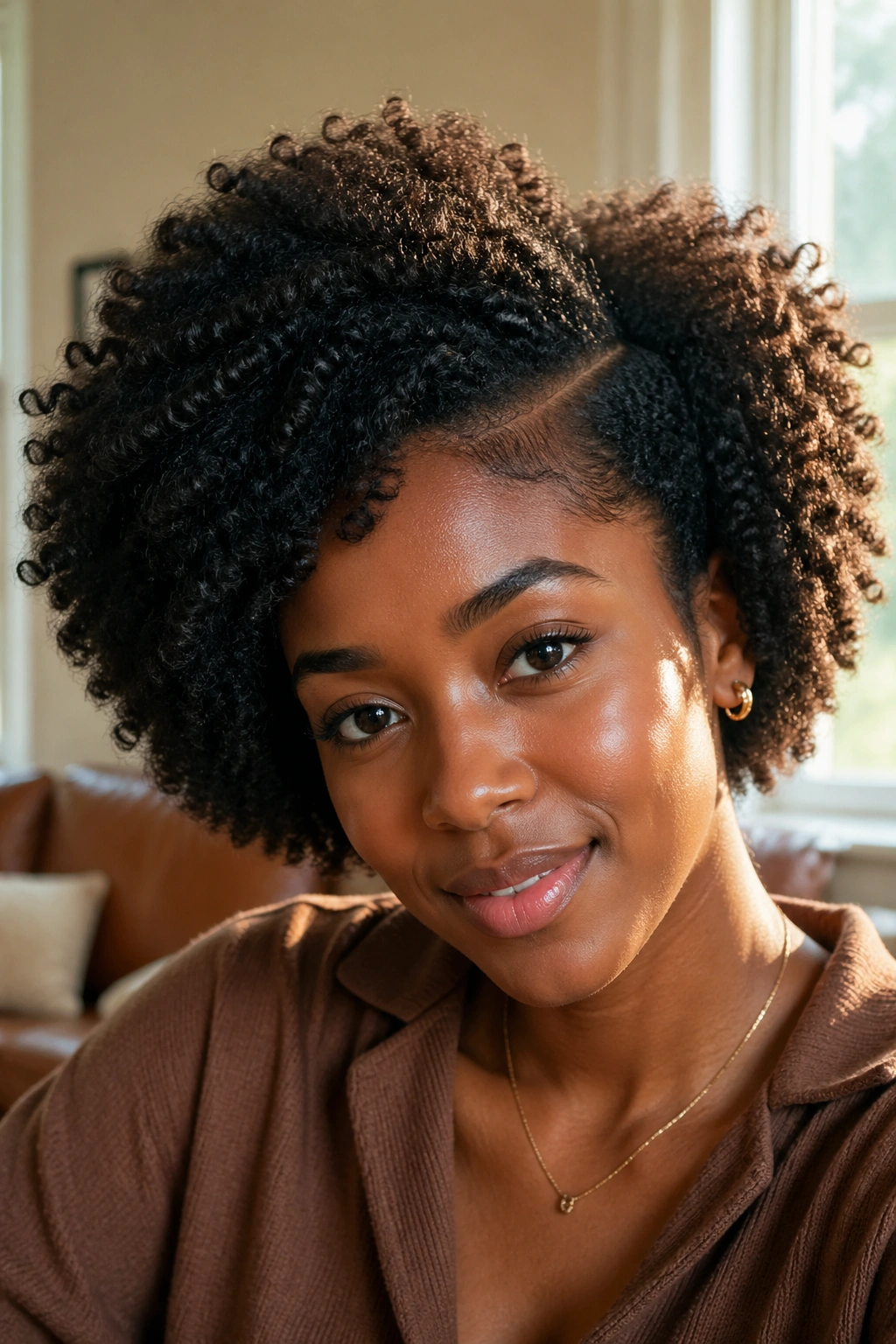
Why does a side part change so much? Because the shape of the hair suddenly has direction. A centered afro can feel soft and balanced, but a side-part afro adds a little movement right away, which is useful on days when you want the style to look styled without adding extra work.
The part does not have to be razor-straight. In fact, the most wearable versions usually follow the hair’s natural density instead of forcing a stiff line through the middle of a thick coil pattern. A gentle side part can frame one eye, soften the forehead, and make the overall shape feel a little more deliberate.
How to Keep the Part From Disappearing
Use a rat-tail comb on damp hair if you want the part to stay visible. Then set the roots with a small amount of gel or foam before the hair dries. Once it’s dry, keep your hands out of it unless you want the part to widen and blur.
A side part is one of those styles that looks minor until you wear it. Then it makes sense. The hair falls differently, the face looks framed, and the whole afro reads a touch more finished.
8. Flat-Twist Crown With Loose Ends
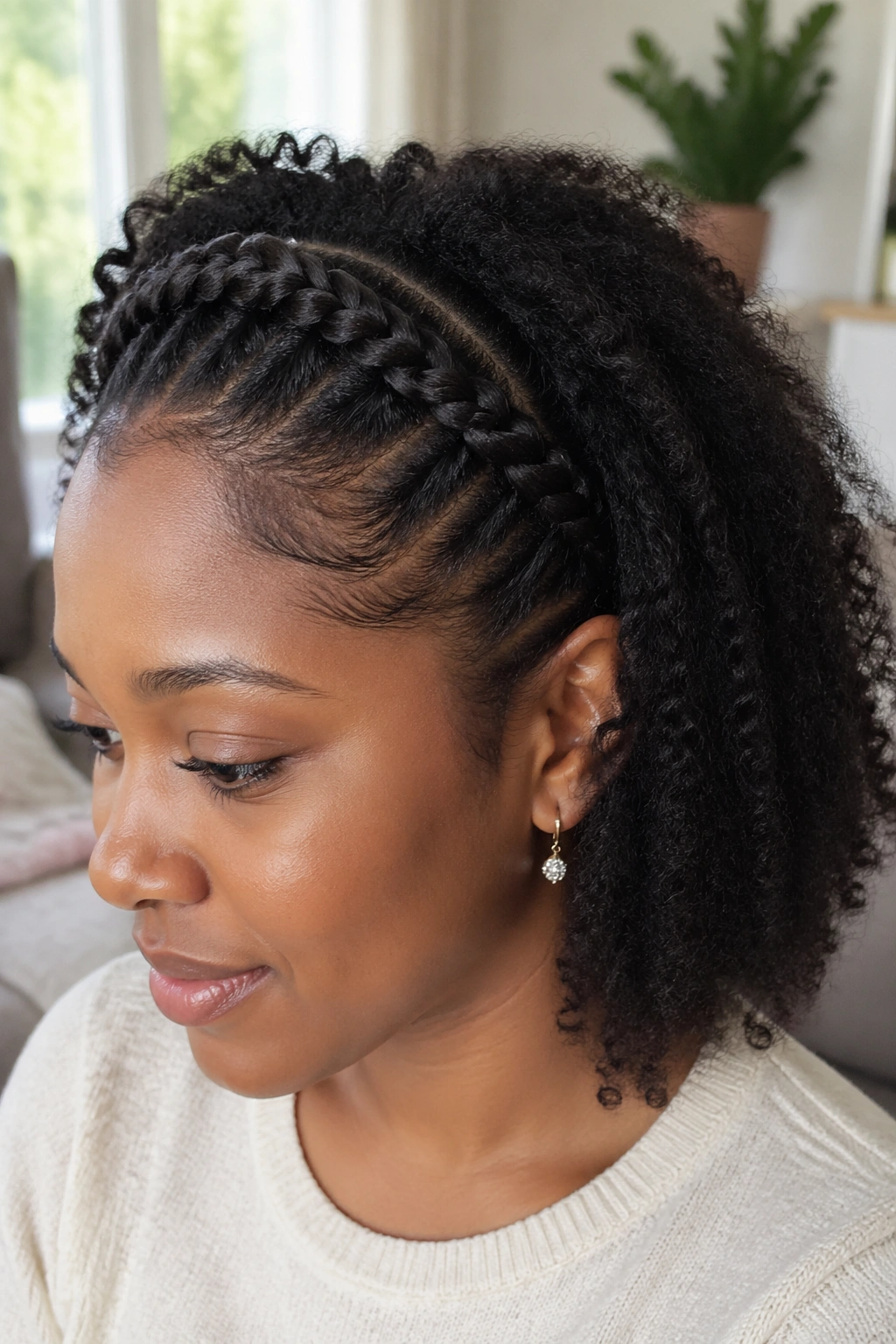
A flat-twist crown with loose ends is one of my favorite everyday looks because it solves two problems at once. The front stays neat and controlled, while the back keeps the softness people usually want from an afro. It is especially handy when you want hair off your face but do not want a full updo.
The style works best on stretched hair, old twist-outs, or even a fresh wash-and-go that has enough length to be pinned. Two or four flat twists along the hairline can guide the eye around the head, and the loose ends in back keep the style from looking too formal.
Keep the Crown Flat, Not Tight
- Braid or twist only the front section.
- Pin the twists just behind the crown.
- Leave the back loose for volume.
- Use bobby pins where the twists meet, not where the hairline starts.
That last part matters. If the front feels snug by the end of the day, the style was too tight from the start. A crown twist should sit there like a frame, not a clamp.
9. Frohawk
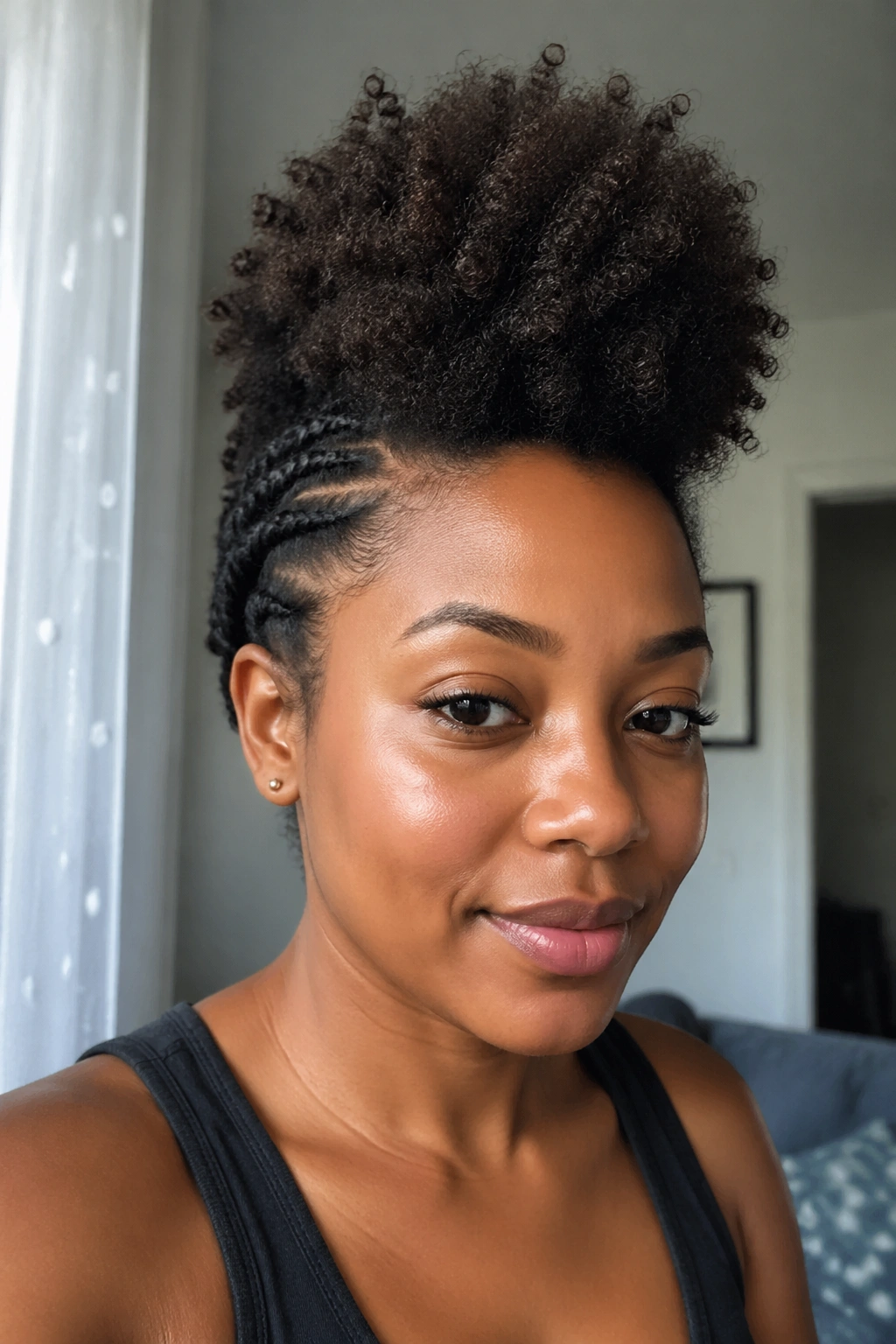
A frohawk sounds louder than it usually is. In everyday wear, it is often just a narrow center strip of volume with the sides pinned down, flat-twisted, or tucked close to the head. The shape gives attitude without needing a lot of extra styling time, which is why it works on days when you want your hair to look intentional before you leave the house.
It also has a practical side. The sides stay out of the way, so the style can work for workouts, warm rooms, or long days when hair brushing your cheeks gets irritating. Keep the center section full, but do not overbuild the sides. If they are too tight, the whole look starts feeling severe.
What Makes It Wearable Every Day
- The center strip can be thick or narrow.
- Flat twists on the sides give more hold than plain pins.
- A frohawk looks best when the middle keeps some texture.
- It works with twist-outs, braid-outs, or plain stretched hair.
The version I trust most is the one that feels flexible. Not rigid. A frohawk should move when you turn your head, which keeps it from reading like a costume.
10. Bantu Knot-Out Afro
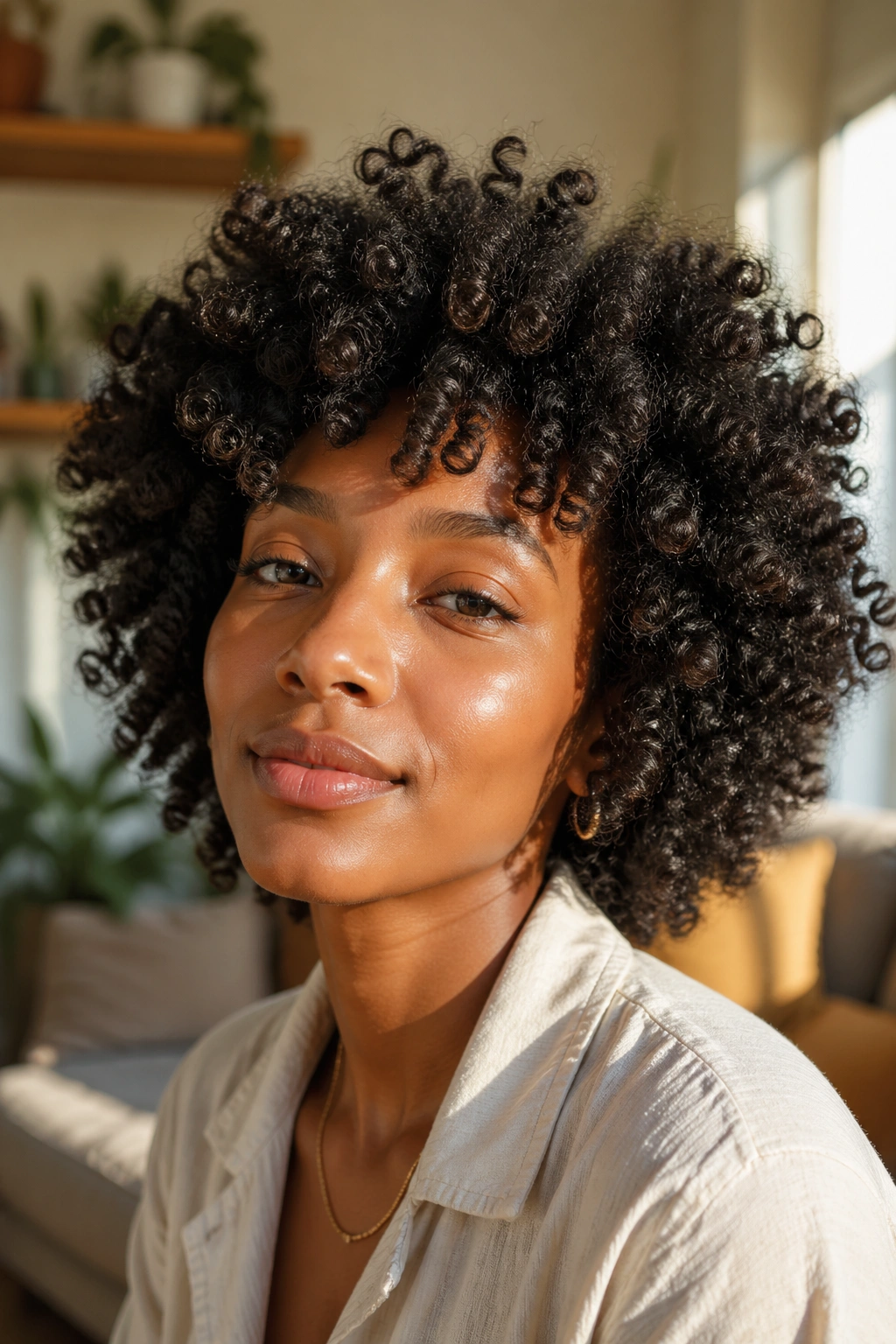
A Bantu knot-out brings a different kind of texture to the table. The hair sets into little coiled knots first, then opens into springy, rounded curls once it dries. The reveal is half the fun. You take the knots down and the whole head has this lifted, piecey shape that feels a bit more structured than a twist-out.
This style rewards patience. Small, even knots dry better than huge ones, and if you rush the drying time, the roots stay flat while the ends frizz. That mismatch is hard to hide. When it is done well, though, the shape looks rich and lively, with a pattern that holds its own without a lot of fluffing.
What to Watch For
- Use light product so the knots set cleanly.
- Let the hair dry all the way through.
- Separate gently with oiled fingers.
- Stop once the shape looks full; too much pulling wrecks the curl pattern.
A Bantu knot-out tends to feel a little more special than an average daily style, but it still works for school, work, or a normal Saturday. It is structured enough to look neat and loose enough to feel like natural hair.
11. Half-Up, Half-Down Afro
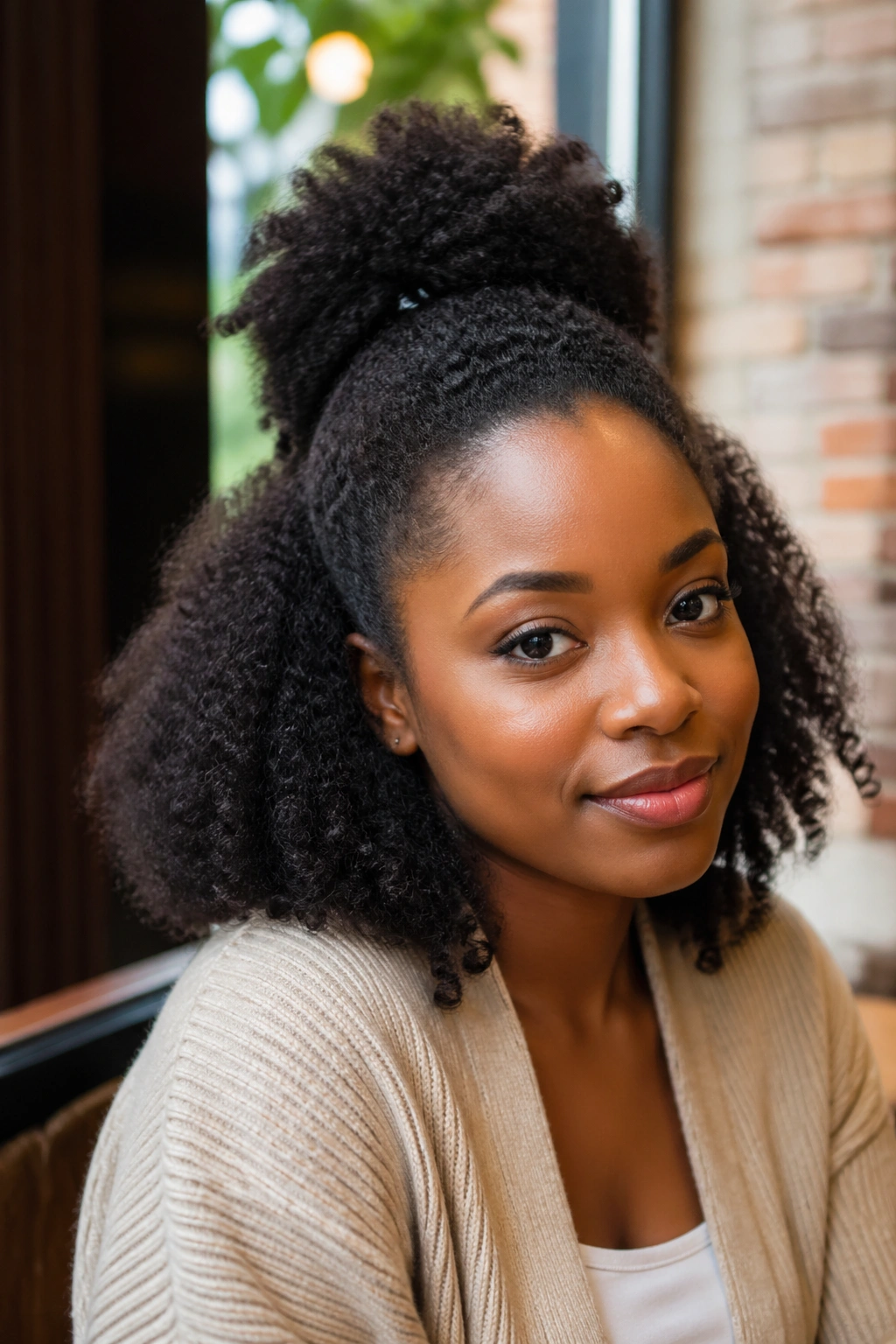
A half-up, half-down afro is the practical middle ground between wearing all your hair out and tying the whole thing away. The top section gets lifted into a puff, bun, clip, or knot, while the rest stays loose. That balance keeps hair off your face without taking away the fullness people usually want from an afro.
It is also kinder to long hair on days when you do not want the ends rubbing your collar all afternoon. The loose section still shows your texture, but the lifted top stops the whole style from feeling heavy. If your hair is shorter, the half-up section may be tiny. That is fine. The shape still works.
Keep the Weight Balanced
- Take only the top third if the hair is dense.
- Use a claw clip for a softer hold.
- Tie the top section loosely so the crown stays smooth.
- Fluff the bottom section after the top is secured.
A half-up style can look casual or polished depending on the accessories. A plain band keeps it simple. A satin scrunchie or decorated clip makes it feel a little more finished.
12. Headband Afro
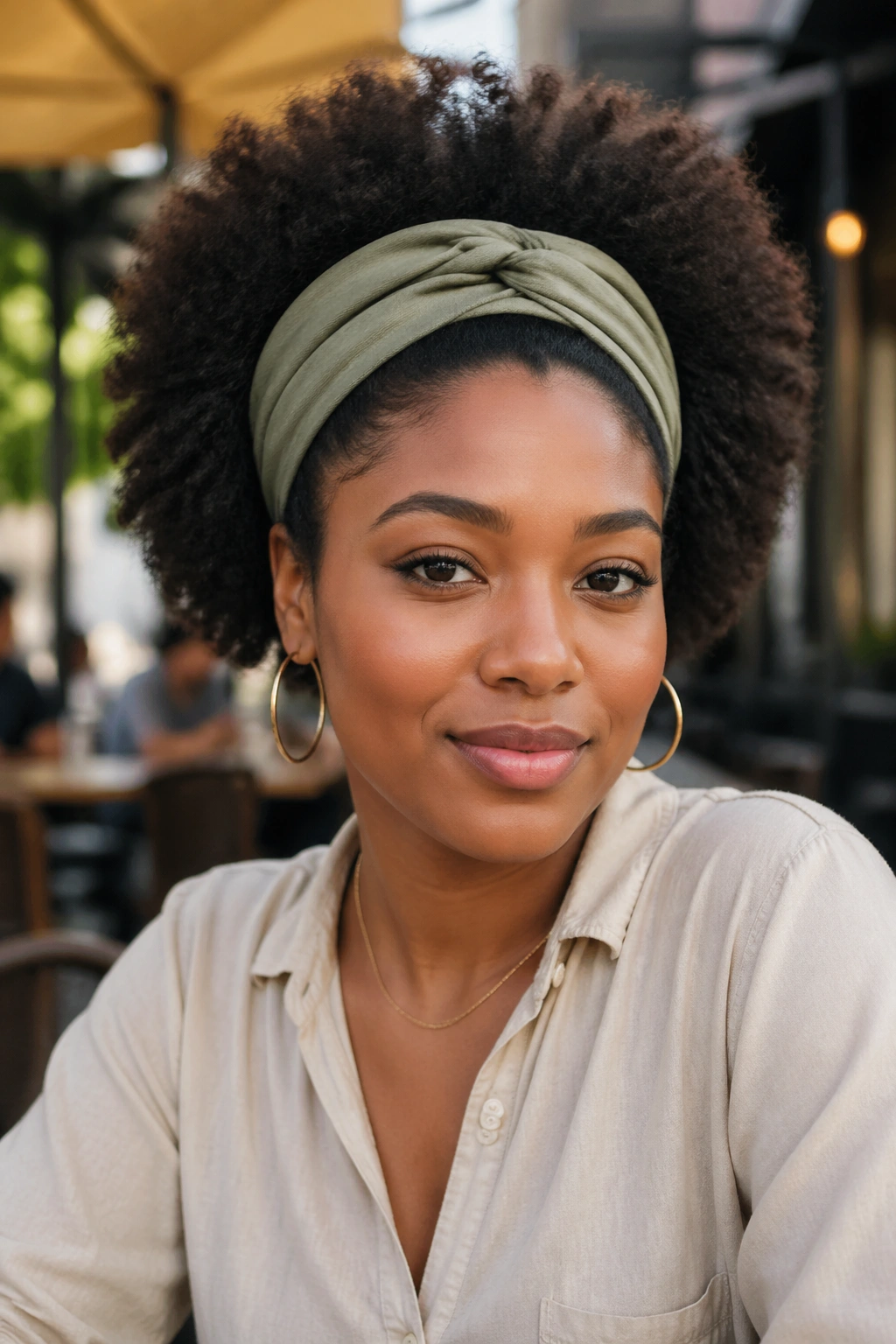
A headband afro gets underestimated a lot. People treat it like a shortcut, but that misses the point. The headband is part of the shape. It can tame frizz at the front, pull focus to the curls at the crown, and rescue hair that is not ready for a full restyle.
The best versions use a wide, soft band that sits comfortably behind the hairline. Thin bands tend to dig in or slide around. A satin or fabric-covered headband holds better and looks less harsh against coily hair. If the roots are puffy, smooth only the top strip of hair and let the rest stay full.
What to Look For in the Band
- At least 2 inches wide.
- Soft elastic or a tie-back style.
- No scratchy seam near the ears.
- A grip that does not pull at the edges.
Once the band is on, fluff the crown with your fingers and leave the shape a little imperfect. That is what makes it believable. A headband afro should look like a style, not a rescue operation.
13. Finger-Coiled Mini Fro
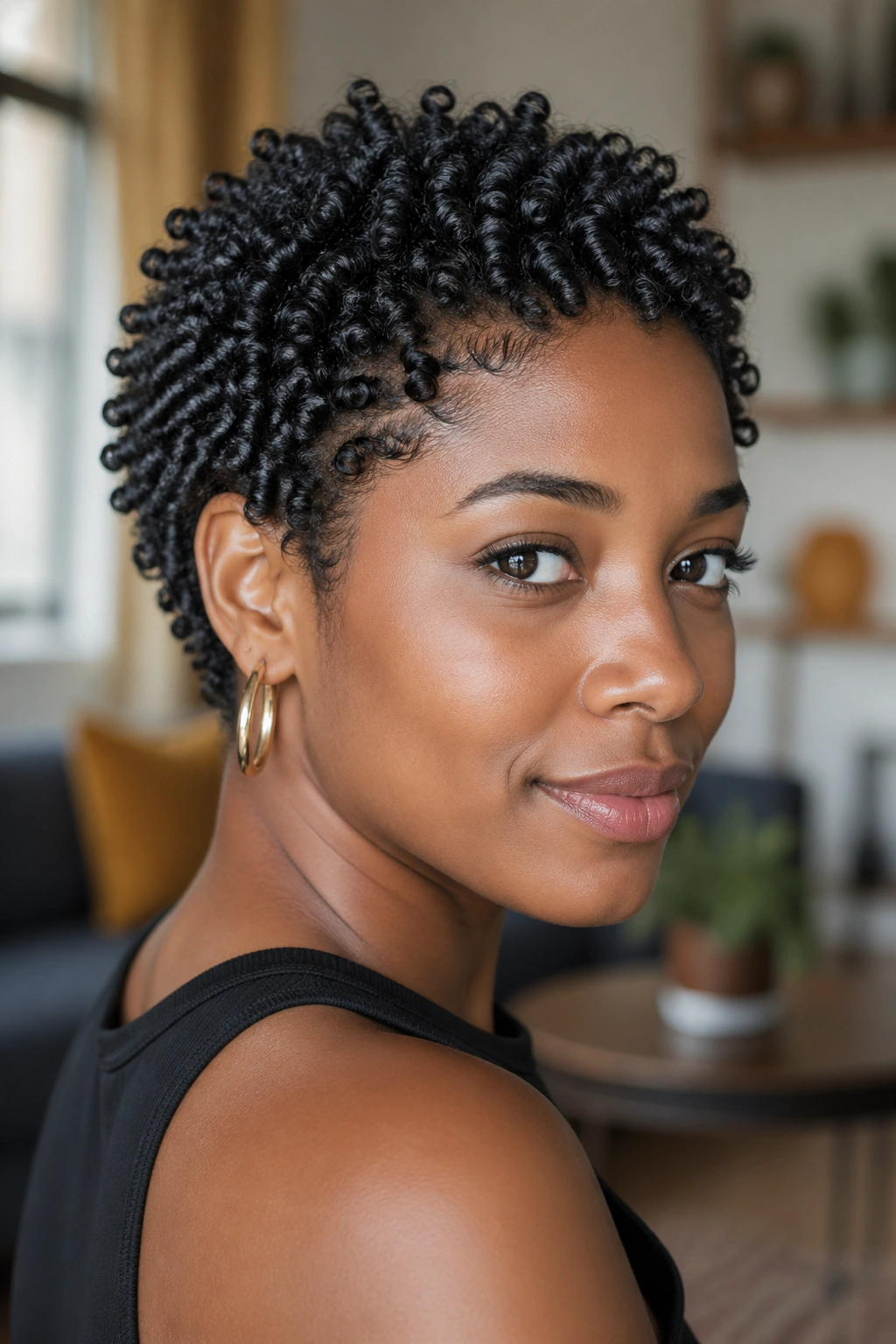
Can a short afro still have shape? Absolutely. A finger-coiled mini fro proves it. This style uses tiny coils, usually made section by section, to create a neat outline that sits well on short to medium-short natural hair. It is one of the cleanest ways to make a TWA or growing afro look deliberate instead of accidental.
Finger-coiling takes time, yes. But the payoff is a style that keeps its structure for days with less daily fussing. The coil pattern gives each curl a defined path, and the whole head ends up looking tidy even when the hair is short enough to lie close to the scalp.
How to Keep It from Looking Stiff
Start with damp hair and use a cream first, then a small touch of gel only if the strands need help holding shape. Sections around half an inch wide usually give a nice balance between definition and speed. Smaller sections make tighter coils, but they also add hours.
- Use a fine-tooth comb only for parting.
- Wrap each section around your finger in the same direction.
- Let the coils dry completely before touching them.
- Separate only if the shape looks too compact.
A finger-coiled mini fro is neat without being fussy. That is a rare thing.
14. Pineapple Puff
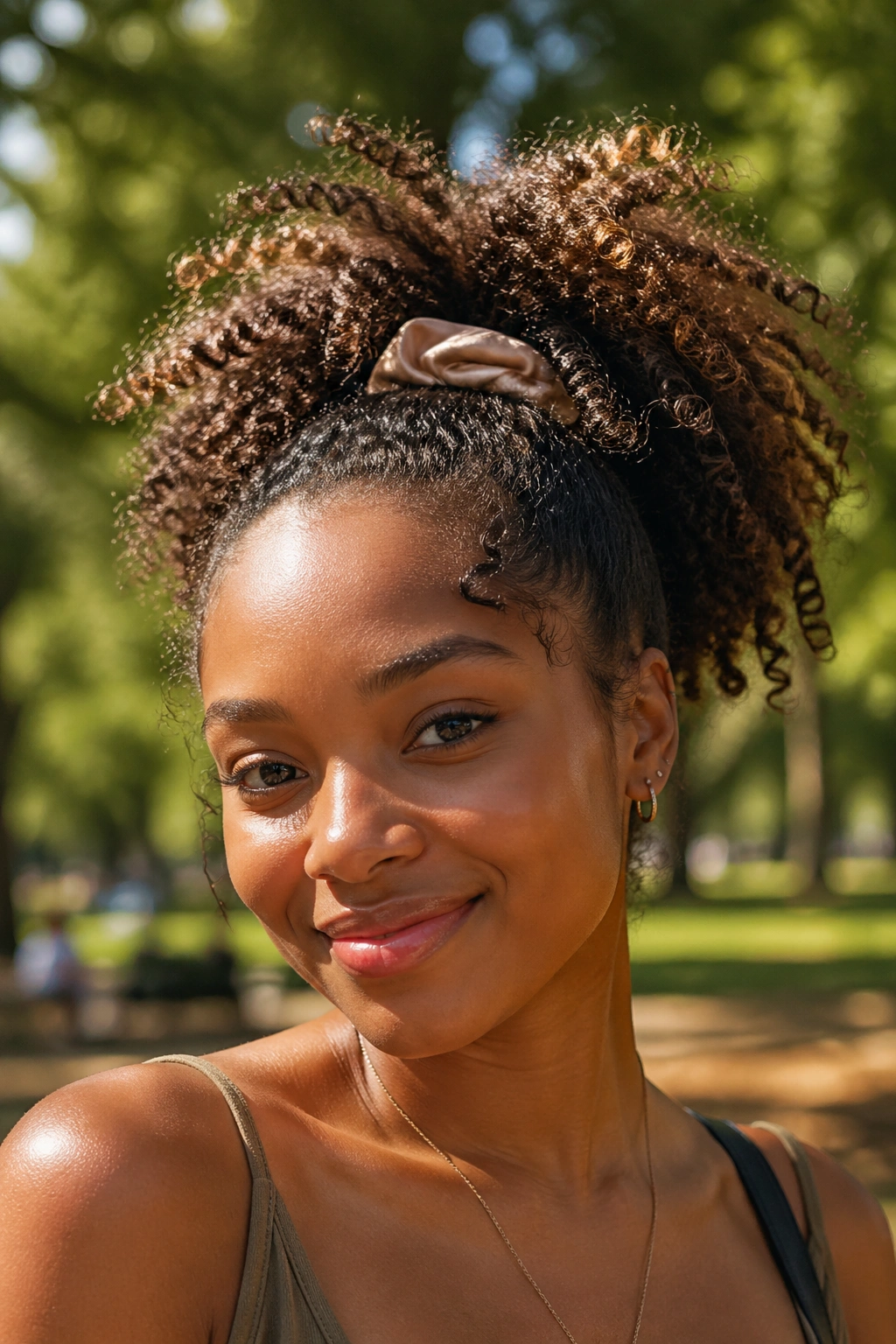
A pineapple puff is one of those styles that lives in two places at once. It is a nighttime curl-preserving trick, and it also works as a casual daytime look when you want the hair high, loose, and out of your face. The hair gathers at the top of the head, usually with a soft scrunchie, while the length falls forward and outward.
It works best on medium to long curls, though shorter hair can still use a smaller version. The important part is the tie: loose enough to protect the shape, high enough to keep the hair from flattening at the back. Tight pineapple styling defeats the point and leaves a crease right where you do not want one.
The Loose-Tie Rule
- Use a satin scrunchie or soft band.
- Gather the hair at the very top of the head.
- Leave the tie loose enough to slide a finger under it.
- Fluff the front and sides after securing it.
The pineapple puff is easy to wear, easy to refresh, and good on days when the curls are doing their own thing anyway. It looks relaxed on purpose, which is a nice trick when your hair needs a break.
15. Rounded TWA
Short hair can still have shape. Plenty of shape. A rounded TWA — teeny weeny afro, shaped into a soft halo — is one of the cleanest everyday natural styles because it asks for very little and still reads polished. You are not trying to force length that is not there. You are letting the cut and the texture work together.
The trick is in the outline. A good rounded TWA has a shape that follows the head, with enough volume at the top and sides to look intentional. A tiny amount of moisturizer, a soft brush, and maybe a little finger-coiling at the front can give the style more polish without turning it into a high-maintenance project.
How to Keep a Short Fro Looking Intentional
- Keep the shape even with regular trims.
- Moisturize the scalp lightly, not heavily.
- Brush the hair gently in the direction you want it to sit.
- Lift the roots only a touch if you want more height.
This is the style for people who want simplicity but still care about line and balance. It does not need drama. It needs shape, softness, and a cut that respects the texture.
A good everyday afro style should feel easy by lunchtime and still make sense by evening. That is the real test, and it is why the styles above keep showing up in real life, not just in photos.
