



The best short afro wigs do not look like wigs. They look like hair that belongs to a real person who woke up, shook it out, and got on with the day.
That is the whole trick, and it comes down to a few small things that matter more than most people think: density, hairline shape, root color, and the way the curls sit around the face. A short afro can look soft and believable in a way a longer style sometimes can’t, because the silhouette stays close to the head and the texture does a lot of the work.
A wig can have gorgeous curls and still look off if the top is too tall, the perimeter is too sharp, or the shine is too high. That shiny, helmet-like finish gives the game away fast. So does a dead-straight hairline or a perfect circle shape with no movement at the edges.
What tends to work best is a little irregularity. A slightly tapered nape. A hairline that isn’t pasted flat to the forehead. A curl pattern that looks touched, not sculpted. And yes, a cap that sits flat makes a bigger difference than people admit out loud.
1. Tapered TWA Wig With a Soft Hairline
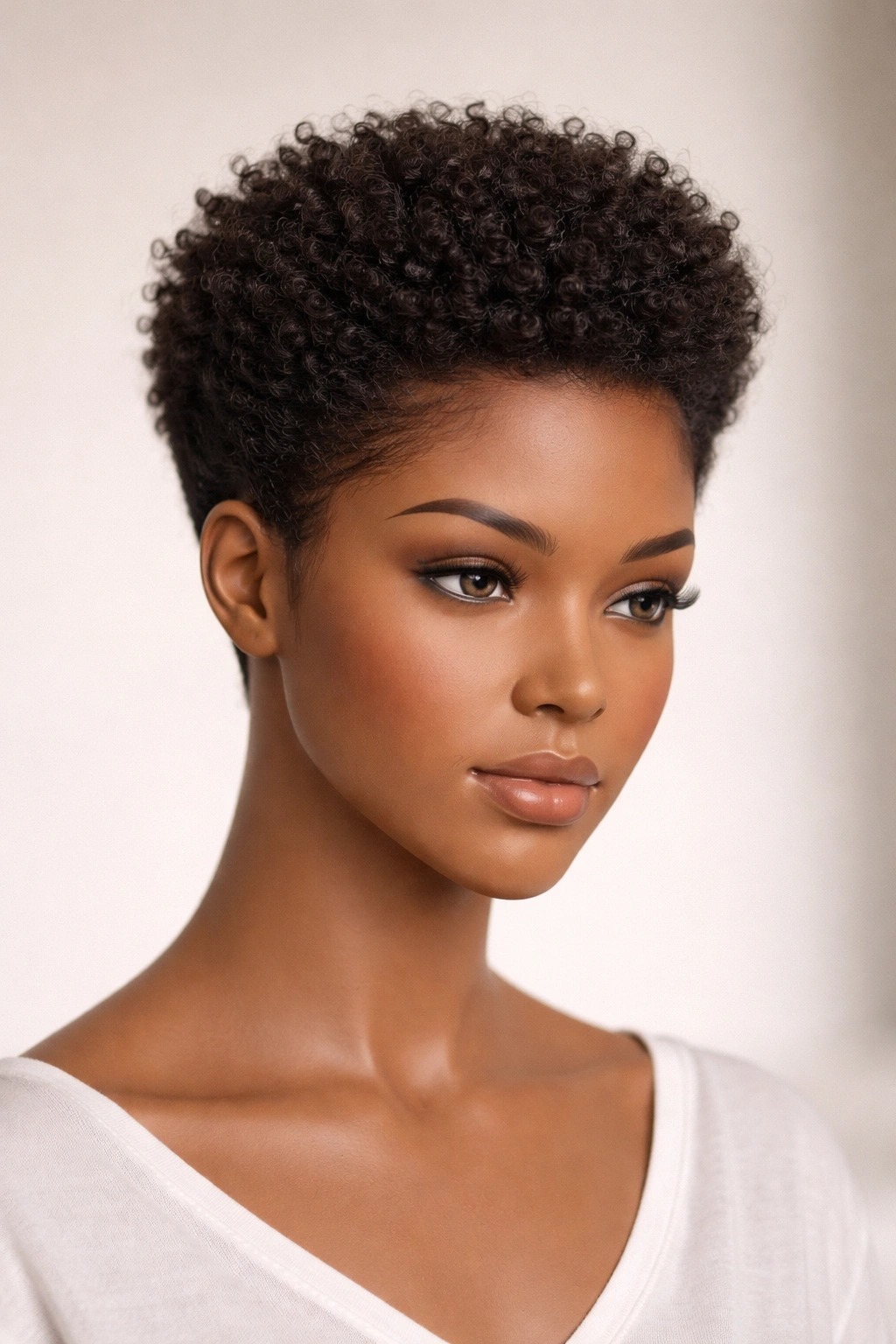
A tapered TWA wig is one of the easiest short afro wigs to wear if you want something that reads as believable at a glance. The shape hugs the head, stays close on the sides, and leaves just enough height at the crown to keep the style from looking flat or heavy.
Why It Looks Real
The taper does half the work for you. Shorter sides and a slightly fuller top mimic the way natural hair often grows out after a fresh trim or a careful twist-out, so the style does not look like a perfect sphere sitting on your head.
The other detail that matters is the front. A soft hairline with a lightly plucked edge gives the wig a more human finish than a dense, blunt front. If the part is tiny or the hair is worn forward without a harsh line, even better.
- Best density: 120% to 130%
- Best lace choice: 4×4 closure or a small 13×4 front
- Best texture: kinky-coily or soft 4C match
- Best shade: 1B, soft black, or a deep brown-black blend
My favorite trick: keep the crown loose and use your fingers, not a brush, to lift it. A brush can puff the whole wig too evenly, and that neatness is exactly what makes it look fake.
2. Rounded Mini Afro With 120% Density
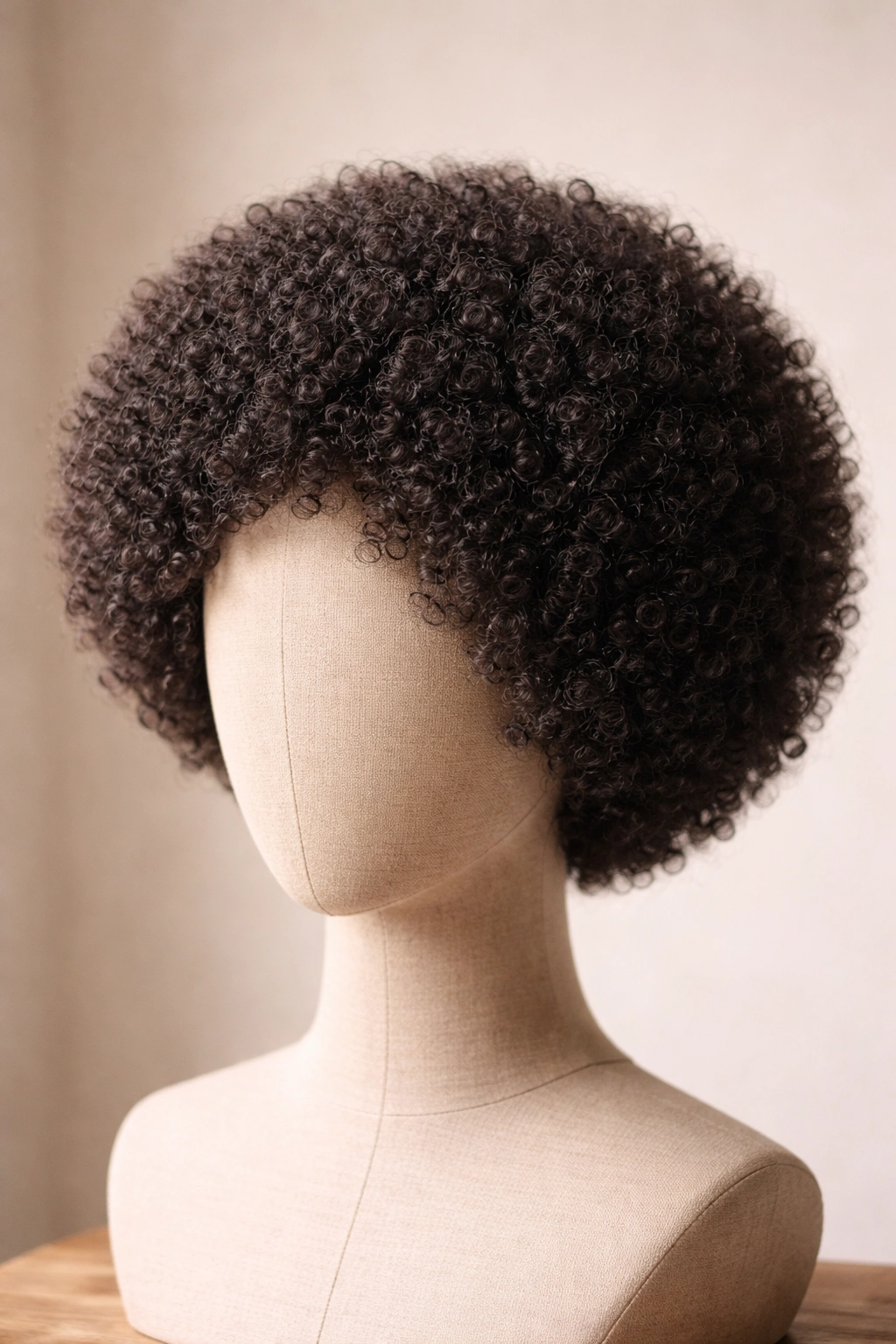
This is the short afro wig I’d hand to someone who wants softness without a lot of styling fuss. A rounded mini afro works because it keeps the shape familiar and the texture full, but not so full that it starts looking theatrical.
The believable part is the curve. Real hair rarely sits as a perfect ball, and a good mini afro has tiny differences in curl direction that stop the style from looking stamped out of one mold. A little asymmetry makes the wig look worn in, not showroom fresh.
If you want this one to look natural, stay away from dense, stiff fibers that sit high above the head. Choose curls that clump a little, especially around the temples and near the nape. That soft edge is what keeps the whole thing from looking like a costume fro.
Wear it slightly behind the hairline and let a few curls land forward. No heavy baby hair. No sharp, carved outline. The wig should frame the face, not fence it in.
One more thing: this shape looks best when it is not over-fluffed. Leave some spaces between the curls. That tiny bit of air is what gives it life.
3. Lace-Front Kinky Curly Crop
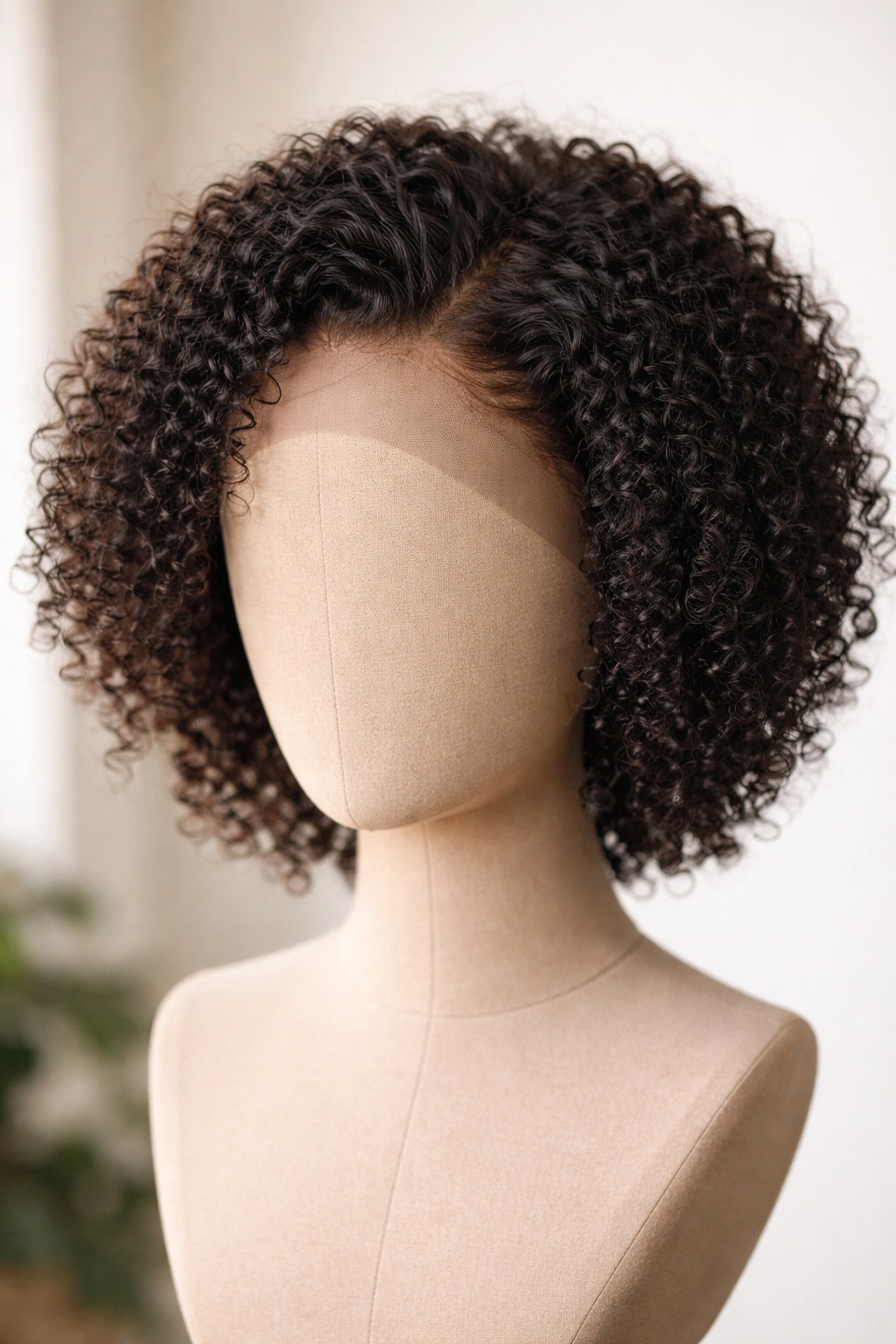
Why do lace-front short afro wigs often look more natural than closed styles? Because they give you control right where people look first: the hairline and the part.
A lace front lets you place the wig a touch lower or higher, depending on your own forehead shape, and that flexibility matters more than most shoppers expect. If the lace is thin, the knots are lightly bleached, and the front curls are not packed too tightly, the whole wig reads softer from a normal distance.
The best kinky curly crop has a front that moves. Not much. Just enough. You want the curls to fall in a slightly irregular way so the edge does not look cut with scissors. That little messiness is the point.
How to Wear It
Press the lace down with a band for 10 to 15 minutes, then let the curls fall before you touch them again. If the lace looks pale against your skin, use a small amount of lace tint spray or foundation that matches your scalp tone. Keep it light. Heavy makeup on lace can clog the mesh and turn the front chalky.
This style also benefits from a low part or a no-part finish. A crisp center part on a short afro wig can look too tidy, while a soft off-center part feels easier on the eye.
4. Coily Pixie With a Side Part
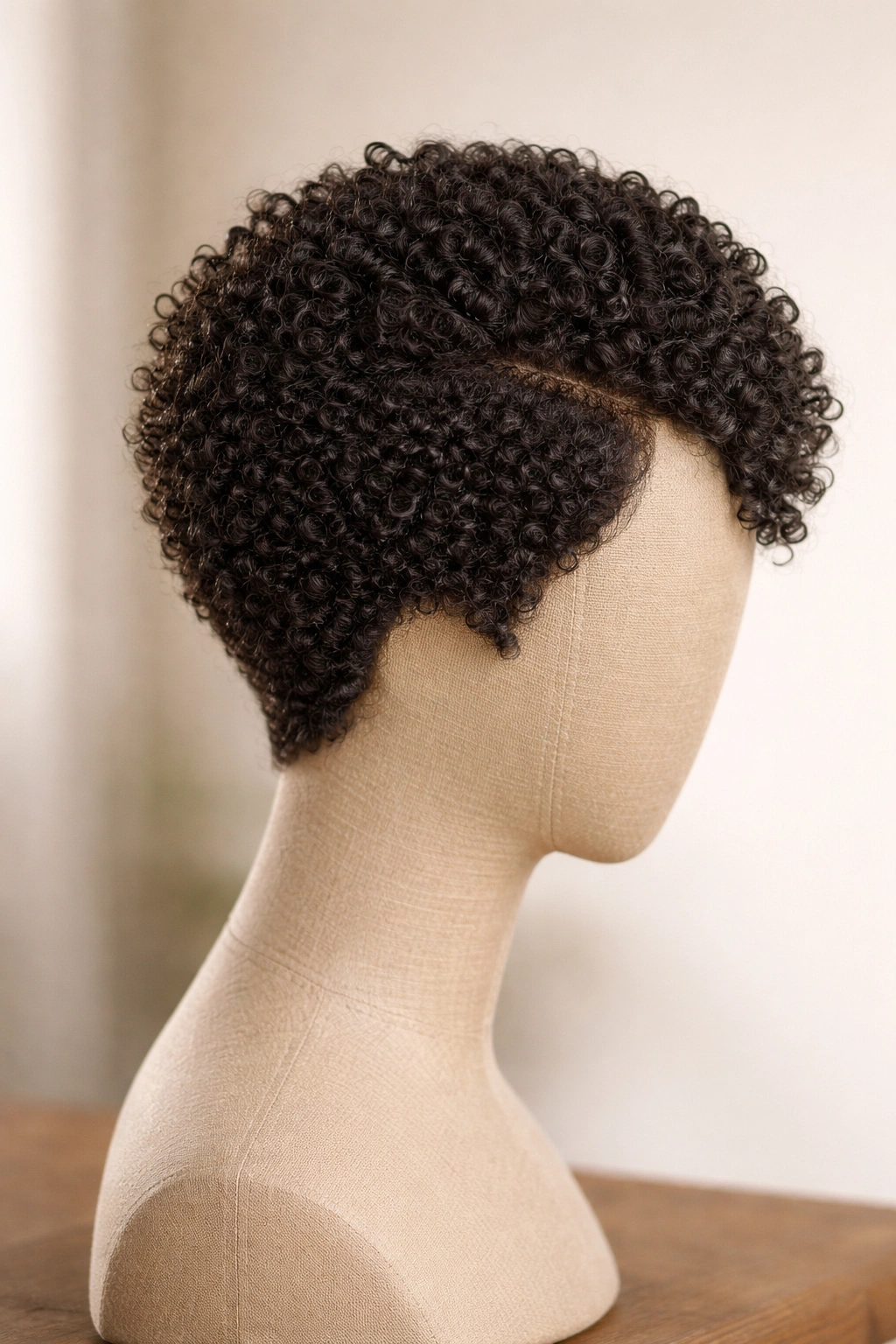
Picture a wig that looks like you meant to wear it to work, brunch, and the grocery store without changing a thing. That’s the coily pixie with a side part.
It’s short enough to stay close to the head, but the side part gives it shape and direction. Without that small shift, a pixie can drift into looking too round or too uniform. With it, the style feels more like a real haircut that was shaped by hand.
The part should not be harsh. It should sit just off center, with one side a little fuller than the other. That imbalance helps a lot. Hair is rarely symmetrical in real life, and your wig should not be either.
- Keep the nape short and clean.
- Let one side fall a little lower near the cheek.
- Pick a texture with visible coil pattern, not smooth waves.
- Avoid thick baby hair that sits like a border.
The best part about this style is how little it asks from you. A light finger fluff in the morning is enough. If you want definition, mist the front with water and use a pea-sized amount of curl foam. That’s usually plenty.
5. Fluffy 4C Textured Bob With Airy Ends
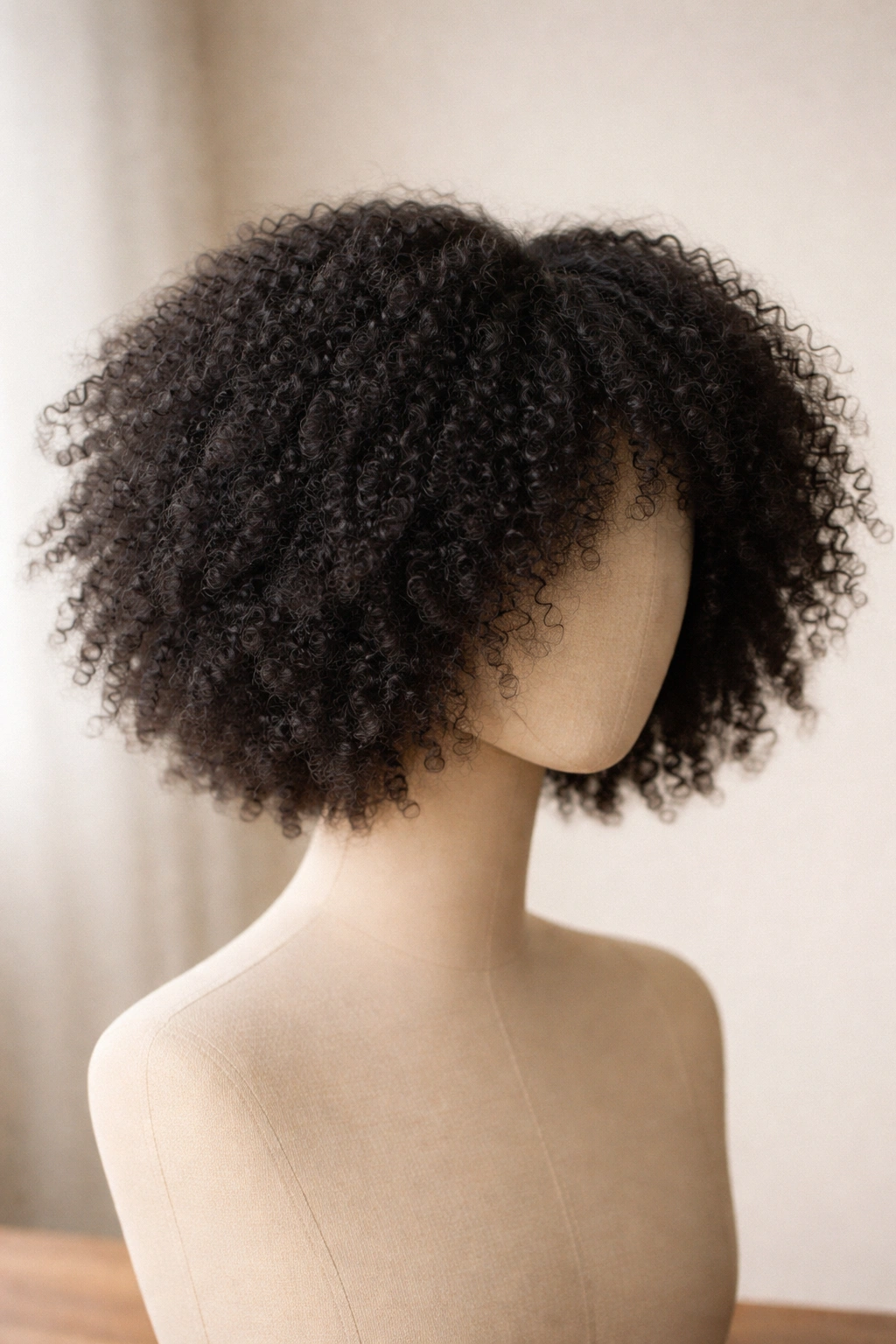
A short bob on 4C texture sounds simple, but it can look wrong fast if the bottom edge is too sharp. That crisp line is the enemy here. Real hair has some softness at the ends, especially once it has been worn, touched, and moved around.
What makes this wig believable is the balance between shape and looseness. The bob should land around the jawline or just below it, with layers that take some weight out of the sides. A blocky bob looks like a helmet. A fluffy one looks lived in.
I like this style because it gives you body without making you fight the wig all day. The texture does not need to be uniform. In fact, it looks better when the curls at the front are a touch looser than the curls under the ears.
A wide-tooth comb can work, but fingers are safer if you want to keep the shape soft. Pulling too hard through the fibers flattens the crown and turns the wig into a puffed-up box. That is a hard look to recover from.
If you want a more believable finish, ask for a little layering around the face and a slightly uneven hem. Not ragged. Just not ruler-straight. That tiny break in the line makes a bigger difference than people expect.
6. Glueless Short Afro Wig With Adjustable Bands
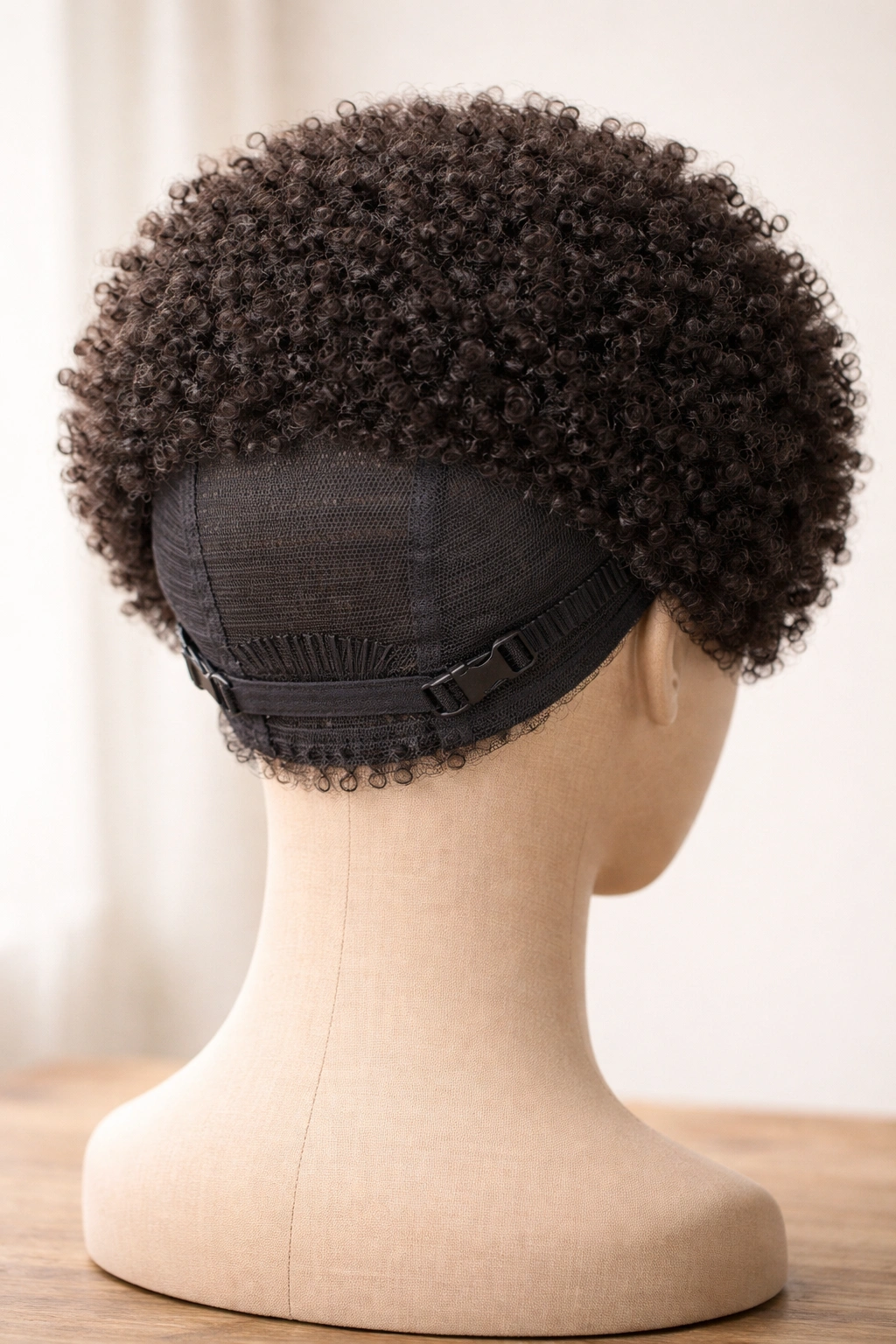
If you want something you can put on fast and still have it sit close to the scalp, a glueless short afro wig is hard to beat. The reason is simple: less fuss at the front usually means less chance of visible product, sticky edges, or that overly melted look that can go too far.
Compared with adhesive styles, a glueless cap tends to be more forgiving. It can include combs, an elastic band, and a snug closure that holds the wig in place without tape or glue. That is useful if you wear wigs often and do not want to spend ten minutes staring into the mirror every morning.
What makes it look natural is the way it settles. A good glueless wig sits flat without squeezing. If the cap is too loose, the front lifts. If it is too tight, the whole thing pulls back and makes the edges look strained. Neither one is flattering.
This style is best for people who want a clean, everyday afro shape with less setup. It is also the easiest one to take on and off without worrying about residue around the hairline. If you are new to short afro wigs, this is a sane place to start. You can always move to a lace-front later if you want more parting space.
7. Layered Afro Wig With a Soft Fringe
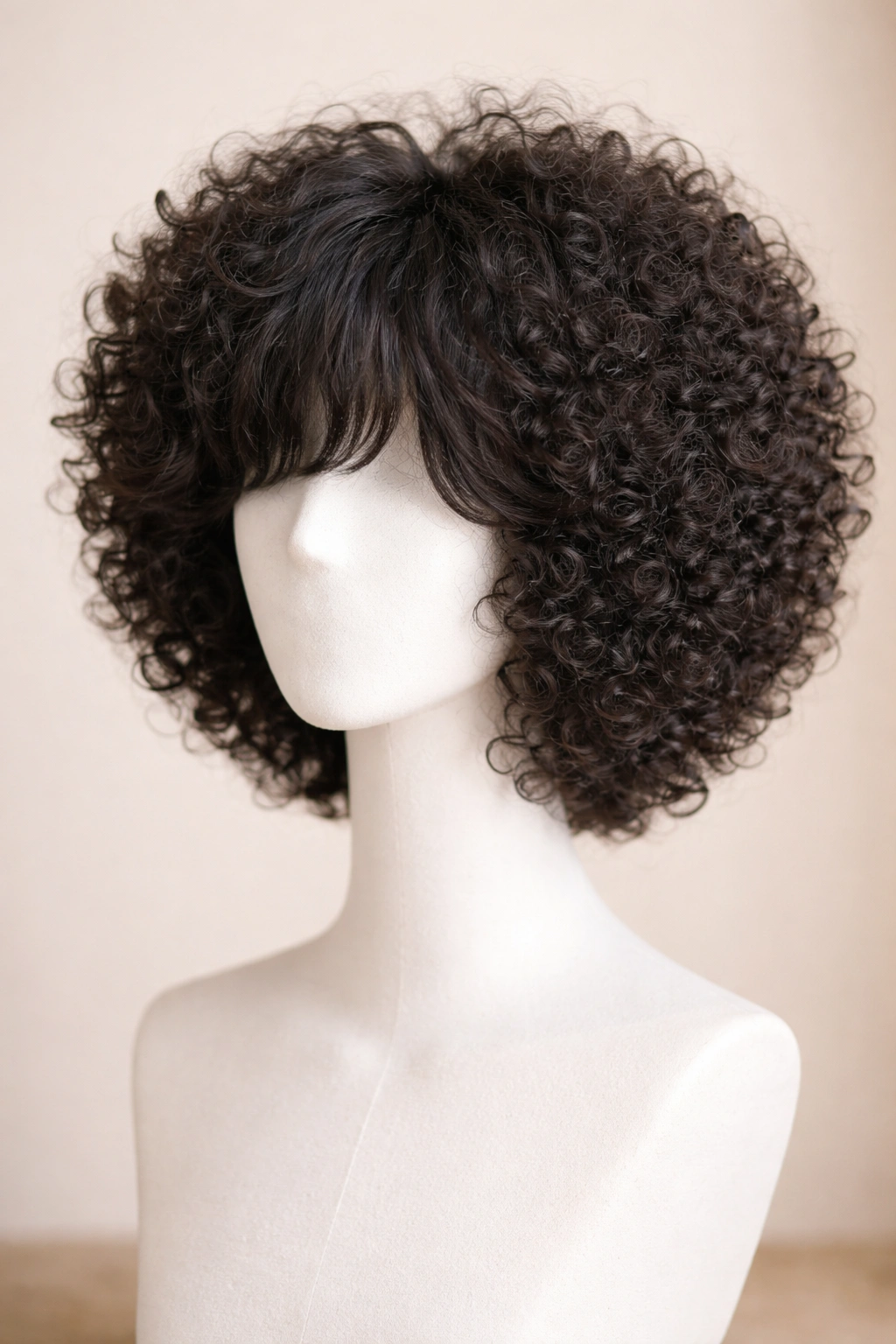
A little fringe solves more problems than people give it credit for. It can soften a high forehead, hide a lace line that is not sitting perfectly, and make a short afro wig feel less stiff around the face.
The trick is to keep the fringe soft, not blunt. Blunt bangs on curly or coily textures can look heavy fast, especially if they lie flat across the forehead. A layered fringe, on the other hand, breaks into small pieces and blends into the rest of the wig.
What to Ask For
- Layers that start around the cheekbone
- Fringe pieces that are lightly thinned, not packed together
- A front that can sweep slightly to one side
- Curls with low shine and a matte finish
- Enough length at the front to tuck or separate with fingers
The best layered fringe works when it behaves a little differently each time you wear it. That is not a flaw. That is the whole point. If every curl lands in exactly the same place, the style starts looking staged.
Do not overcombing the fringe. Use your fingers to separate it and let a few pieces fall where they want. A small curl foam or light mousse can help the front hold its shape without turning crunchy.
8. Salt-and-Pepper Short Afro Wig
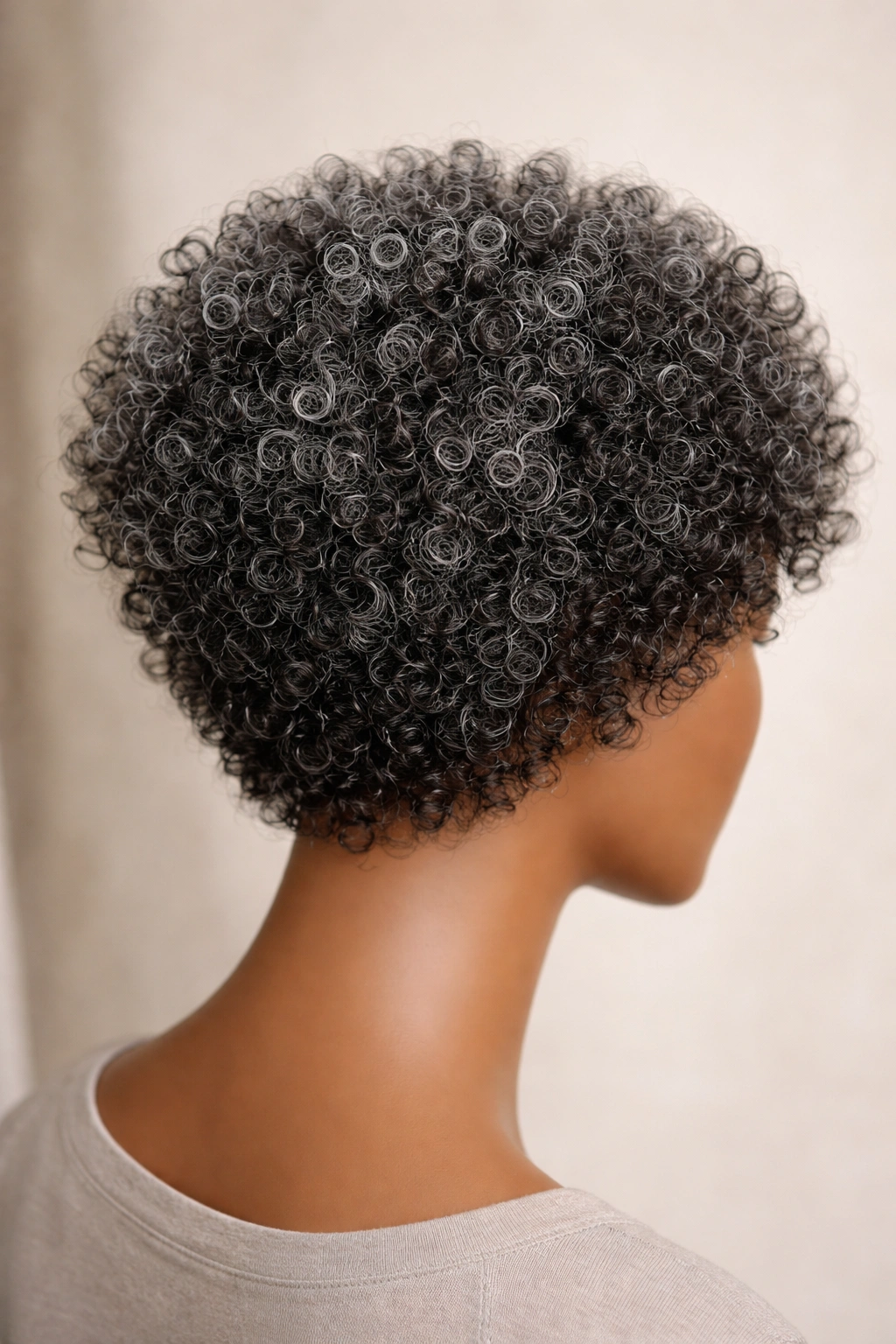
A salt-and-pepper short afro wig can look startlingly real because natural hair is rarely one flat color. There’s depth in the strands, and a mix of black, silver, and gray catches that depth in a way a single shade often cannot.
That is the quiet advantage here. Instead of fighting for perfect uniformity, the wig uses color variation to soften the whole look. The grays break up the shine and make the texture easier on the eye, especially under bright indoor light.
This style works best when the shade mix is believable, not streaky. Look for a rooted black base with silver threads through the mid-lengths and a little extra gray near the temple or crown. That placement feels more natural than random bright streaks scattered everywhere.
It also helps if the curls are tight enough to keep the color blended. Loose, big curls can separate the strands too much and make the gray pop in a way that looks artificial. Smaller coils hold the mix together and keep the wig reading as one piece.
If you wear glasses, this style is worth a close look. The color variation prevents the wig from looking flat behind frames, which is a small detail but a real one. Sometimes the styles that look the most natural are the ones that stop trying to look brand new.
9. Human-Hair Blend TWA With Soft Ends
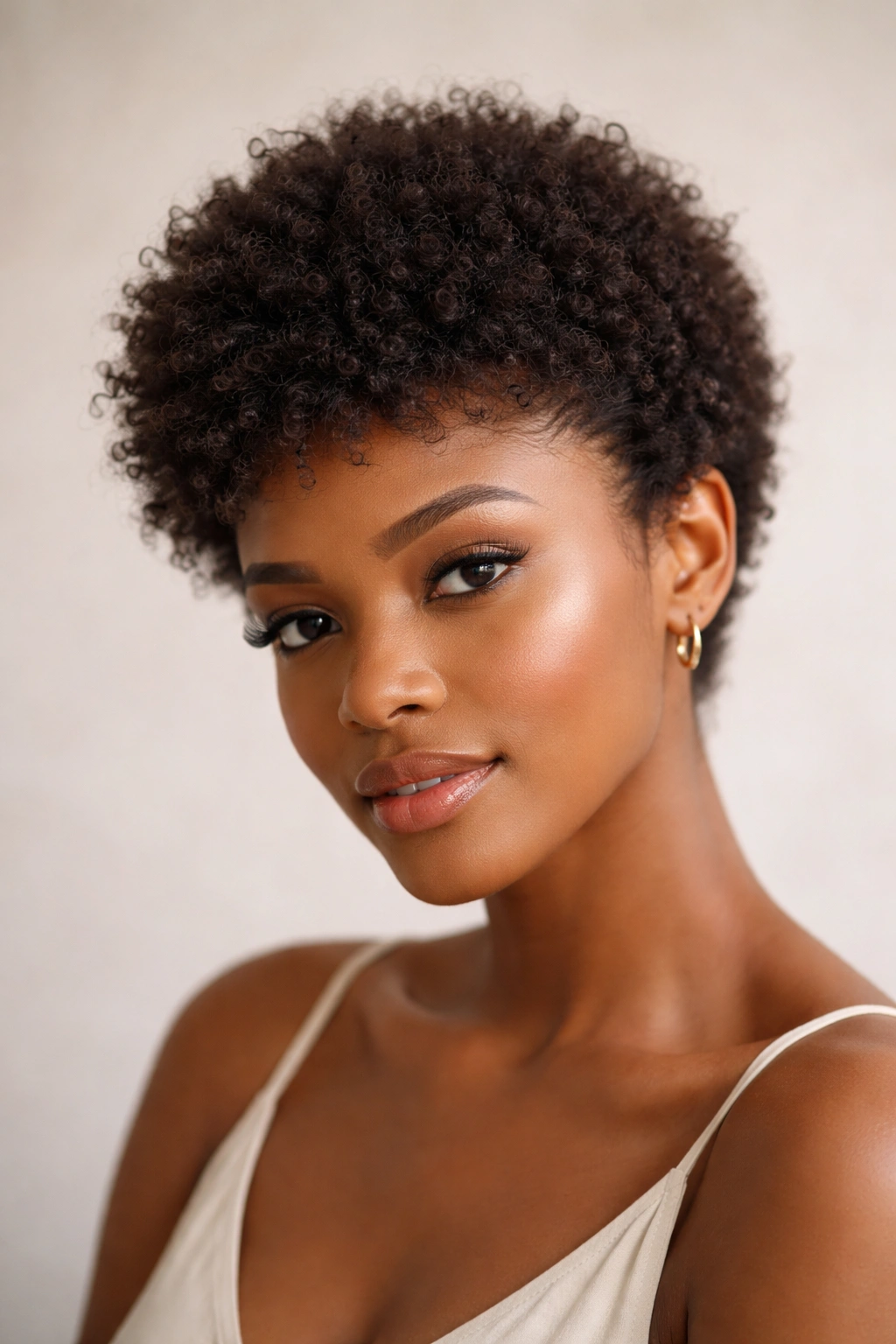
A human-hair blend TWA is for the person who wants movement more than perfection. It will not have the glassy, uniform finish of a shiny synthetic wig, and that is exactly why it works.
Human-hair blends usually sit a little softer around the edges and take misting or light styling cream better than pure synthetic fibers. That means the texture can shift during the day in a way that feels closer to real hair. It bends. It settles. It doesn’t freeze in place.
There is a catch, though. The wig asks for more care. You cannot treat it like a throw-on-and-go piece if you want it to keep its shape. A light detangling session with your fingers, a careful wash, and a small amount of product are part of the deal.
I think this style makes the most sense if you want a believable short afro wig and you do not mind a little upkeep in exchange for that softer finish. The ends should not be too tidy. A small amount of fray or looseness at the tips helps the wig move like hair instead of foam.
Use water sparingly. Then use even less product than that. A pea-sized amount of curl cream is often enough for the whole front section, maybe a little more if the fibers are dry. Heavy oils are a bad idea here. They can weigh the wig down and leave the texture looking limp by the afternoon.
10. Dense Mini Fro With Invisible Knots
If you like a fuller look but still want it to pass as natural, the dense mini fro is the one to watch. It gives you more volume than a TWA or pixie, but the best versions stay controlled enough to avoid that oversized, costume-like shape.
What keeps it believable is the lace and the knot work. Invisible knots, or lightly bleached knots, make a big difference because the front of the wig stops looking speckled or dotted. Pair that with a hairline that is not too sharp and the whole style settles down fast.
I would keep the density around 150%, maybe a touch less if the curl pattern is tight and springy. Higher than that, and the wig can start to look boxy from the side. A mini fro should have body, yes. It should not feel like a globe.
This is the style I’d point to if you want something with presence but not drama. It looks good with a simple side part, no part, or a soft push-back at the front. It also photographs well in everyday light because the texture gives the eye something to read.
The best version of this wig has a crown that rises a little, then settles back toward the temple. That shape is subtle, but it matters. A believable short afro wig always has some softness in the outline, and a mini fro with invisible knots gives you that without asking for much else.
A final thought, because it matters: the most natural-looking short afro wigs are not the loudest ones. They are the ones that respect the shape of real hair—its density, its movement, its tiny uneven edges—without trying to make it look more perfect than it ever is.
