



A good twist style can save a week of bad hair mornings. Not because it hides everything, but because it gives natural hair a shape that holds, moves, and still looks finished when you’ve run out of patience.
Some afro twist braid styles are neat and close to the scalp. Others are fluffy, chunky, and a little loose around the edges, which is exactly why people love them. The trick is matching the style to your hair density, your length, and how much time you want to spend in the chair.
I’ve always liked twists that age well. A style can look polished on day one and still feel useful on day ten, which is more than I can say for a lot of hair ideas that fall apart the moment you sleep on them. The best twist styles do more than look neat; they work with shrinkage, protect the ends, and don’t make your scalp feel like it has been in a fight.
Some of these styles use your own hair only. Others lean on extension hair for length, fullness, or a softer texture. Once you know the difference between a chunky two-strand twist, a passion twist, a Marley twist, and a pinned-up crown, choosing becomes a lot easier. Start with the style that fits your week, not the one that looks hardest to maintain. Then move into the first one.
1. Classic Two-Strand Afro Twists
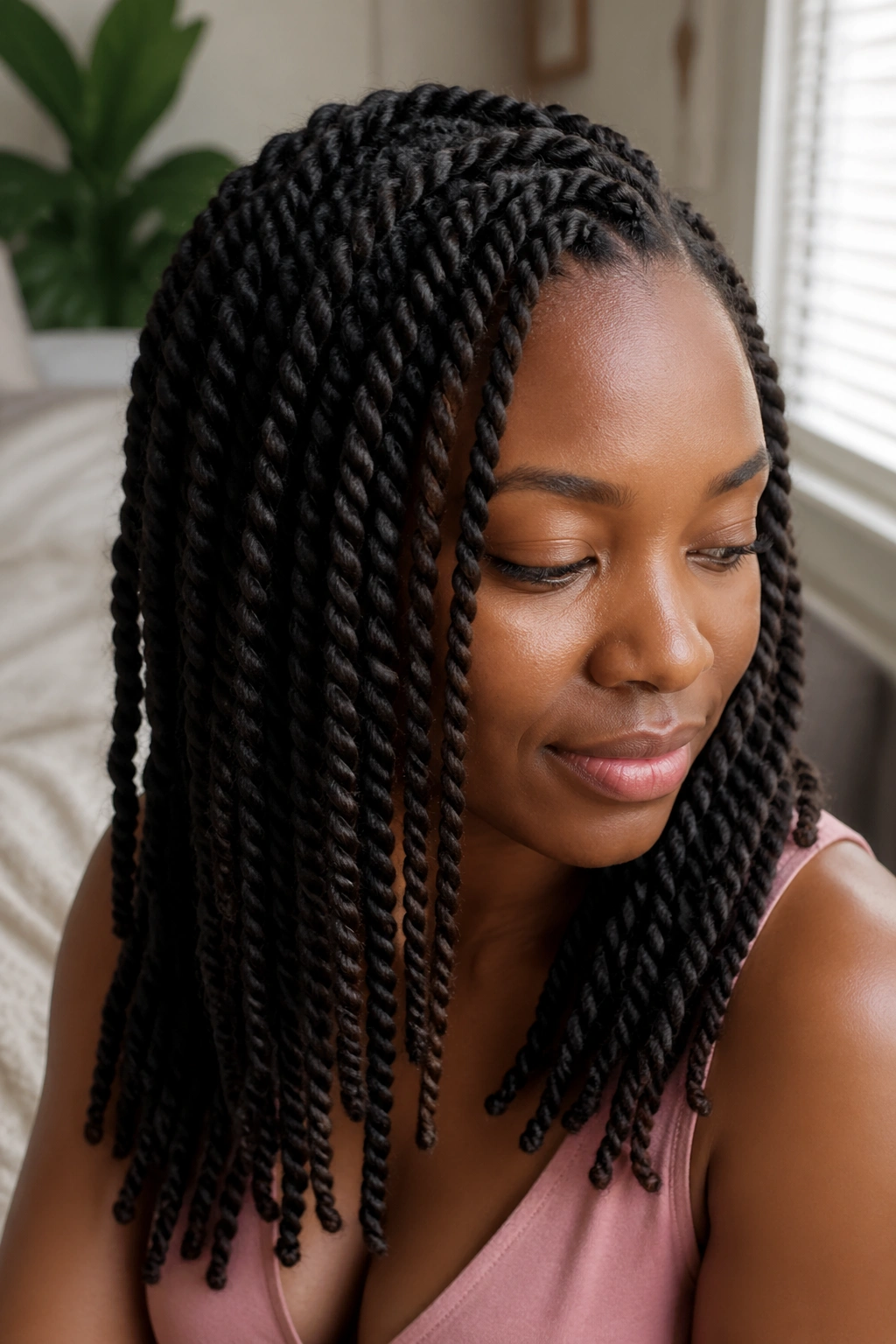
Classic two-strand twists are the style I’d hand to almost anyone who says, “I need my hair done, but I still need to live my life.”
They’re the baseline because they’re simple in the best way. You section the hair, add your product, split each section into two, and twist the strands around each other from root to end. No drama. No fancy finish. Just a clean rope pattern that sits well on short, medium, or stretched natural hair.
Why They Keep Showing Up
The reason this style stays on every short list is plain: it works on real hair without asking for a perfect head of hair first. If your coils shrink a lot, two-strand twists help you stretch the length a little. If your ends get dry fast, the twist keeps them tucked away. If you like to wear your hair out one day and pinned up the next, this style gives you both options.
- Best for: low-maintenance weeks, first-time twist wearers, and anyone who wants a soft protective style.
- Hair prep: moisturize with a light leave-in and a cream that gives slip, not grease.
- Finish: seal the ends neatly so they do not puff up too fast.
- Wear time: short to medium wear usually looks the cleanest before the twists start to fray.
A lot of people twist too wet or too heavy with product. That’s where the trouble starts. The hair feels tacky, the sections snag, and the finished twists look slick on day one but limp by the time you’ve slept on them once. Keep the hair damp, not soaked, and use just enough cream to smooth the strand.
My one hard rule: if the root feels tight while you’re twisting, stop and reset the section.
2. Jumbo Twists for a Faster Install
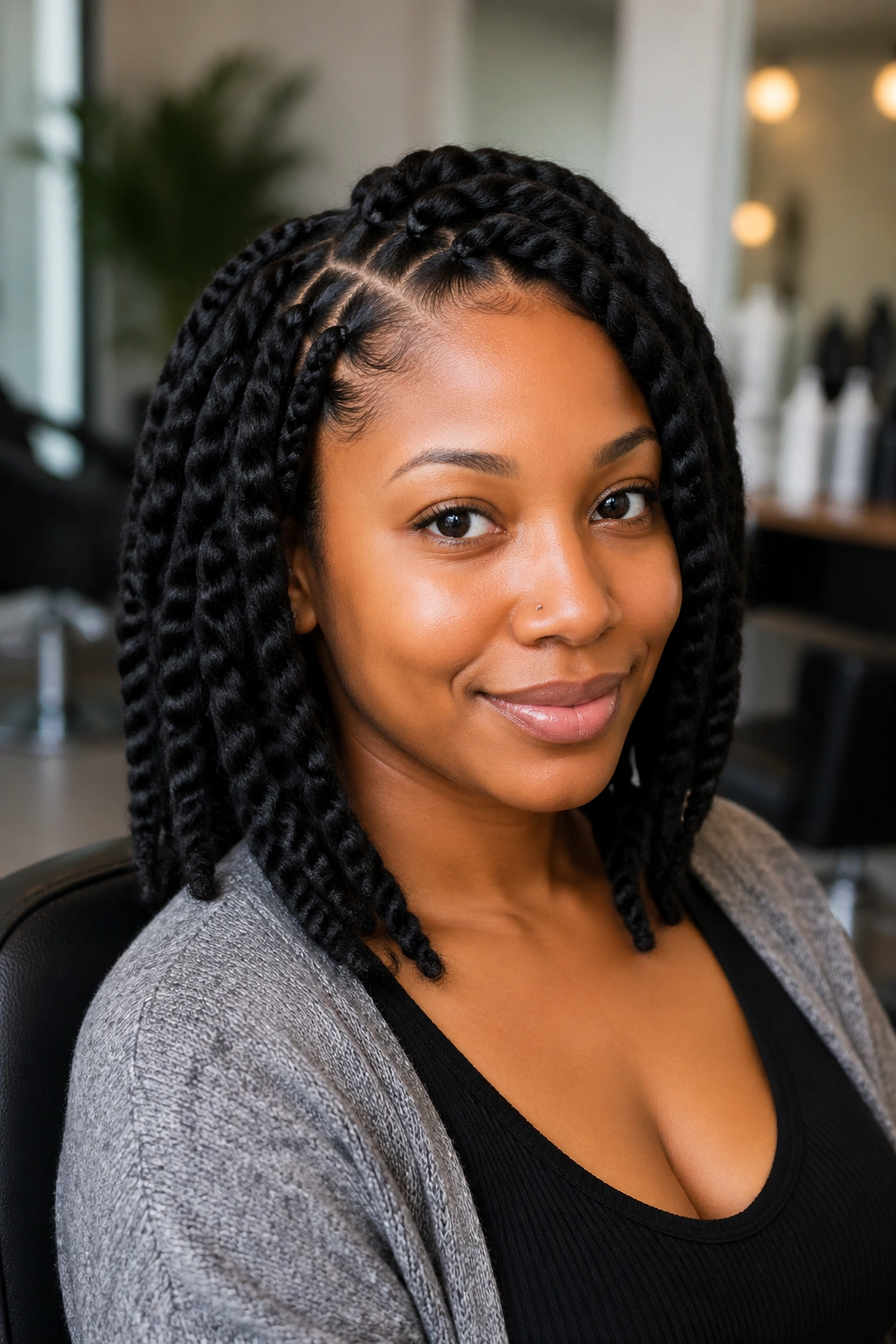
If you sat in a chair and said, “Make it quick, but make it full,” this is the style I’d point to first.
Jumbo twists give you that big, chunky rope look with fewer sections and a faster install. They’re bold in a way that feels easy, not loud. I like them because they don’t try too hard; the shape does the work for you.
The size also changes the whole mood. Smaller twists can feel tidy and precise. Jumbo twists feel softer, looser, and a little more relaxed around the face, which is nice if you don’t want a style that reads stiff.
They’re especially useful when you want length without sitting through a marathon appointment. With extension hair, jumbo twists can build body fast, and the finished look tends to photograph as full from almost any angle. The catch is weight. Too much hair in each section pulls at the roots and makes the style feel heavier than it should.
So keep the root section clean, and don’t overload it. Big twists should still move. If they feel like little rope hammers at the scalp, they’re too much.
A style like this shines when the parting is clean and the ends are sealed well. The whole point is shape. Messy sections at the root show faster in jumbo twists than people expect, because there’s less of the style to hide behind. That’s why a neat base matters more here than it does on a fuller mini-twist set.
3. Mini Twists for a Long-Wear Look
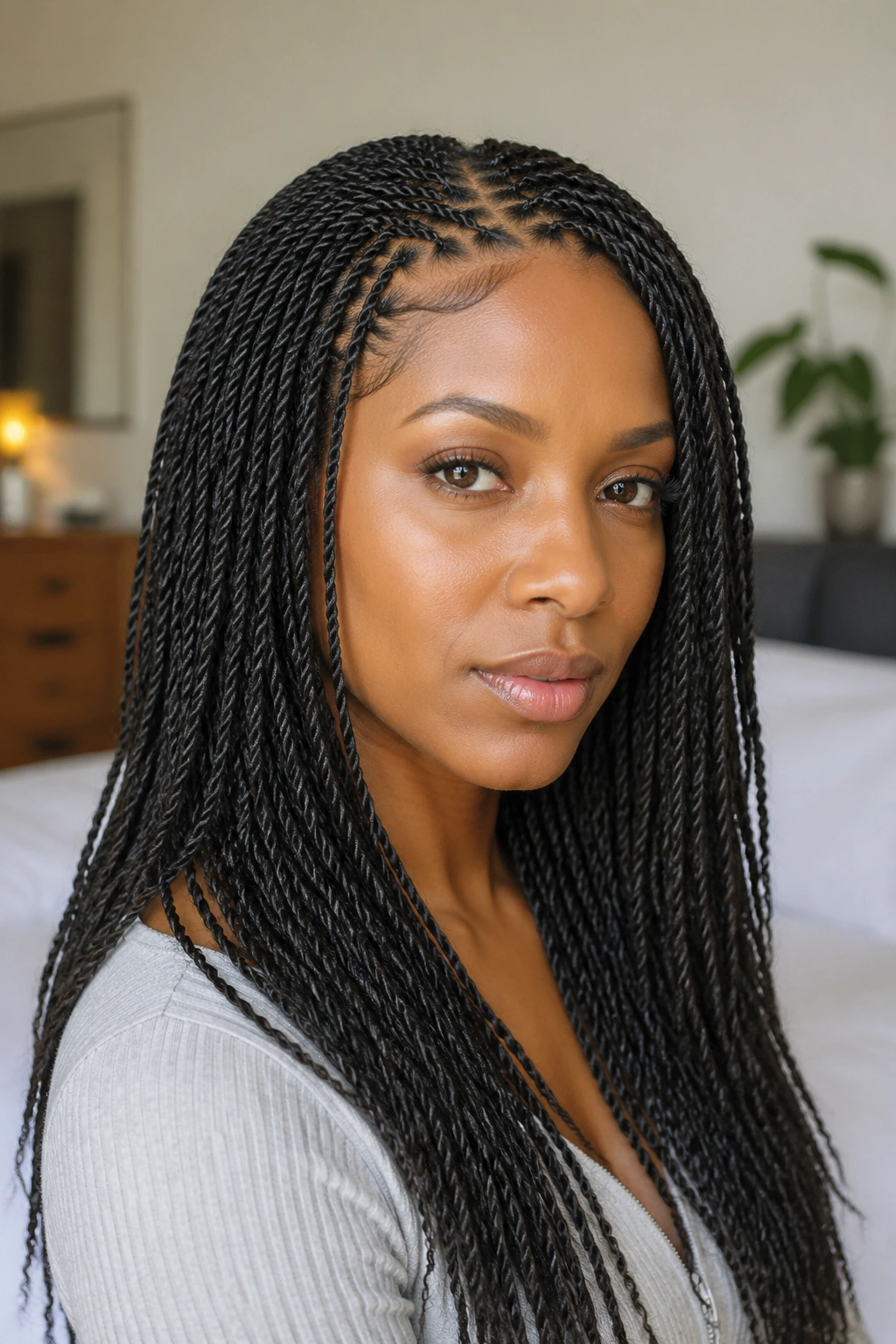
Why do mini twists take so long and still get chosen?
Because they reward patience. Tiny sections give you more movement, more density, and a cleaner look when you want your hair to sit close and stay put. They also last longer than bigger twists when they’re installed well, which is the part people usually care about after the excitement wears off.
Mini twists are one of those styles that look simple until you actually do them. The parting has to be tidy. The sections need to be close in size. And the product has to be light enough to smooth the hair without leaving a gummy layer at the root. If you go too heavy, the twists clump. If you go too light, they puff up before the week is over.
How to Keep Them from Fuzzing Up Too Soon
Mini twists need a gentle hand at bedtime.
- Sleep with a satin bonnet or scarf so the ends don’t rub against cotton.
- Keep a light mist bottle nearby if the twists start to feel dry, but don’t soak them.
- Use a small amount of styling cream on each section instead of piling product on the whole head.
- Separate the roots with your fingers only when the hair is dry and set.
The nice thing about mini twists is that they can pull double duty. Wear them as-is, or let them unravel later into a twist-out with a lot of body. That gives you two styles from one install, and I’ll always like a hairstyle that gives you a second life.
They are not the quickest option. Not even close. But if you want a set that can hang around, look neat, and still give you movement instead of helmet hair, mini twists earn their keep.
4. Passion Twists with a Softer Finish
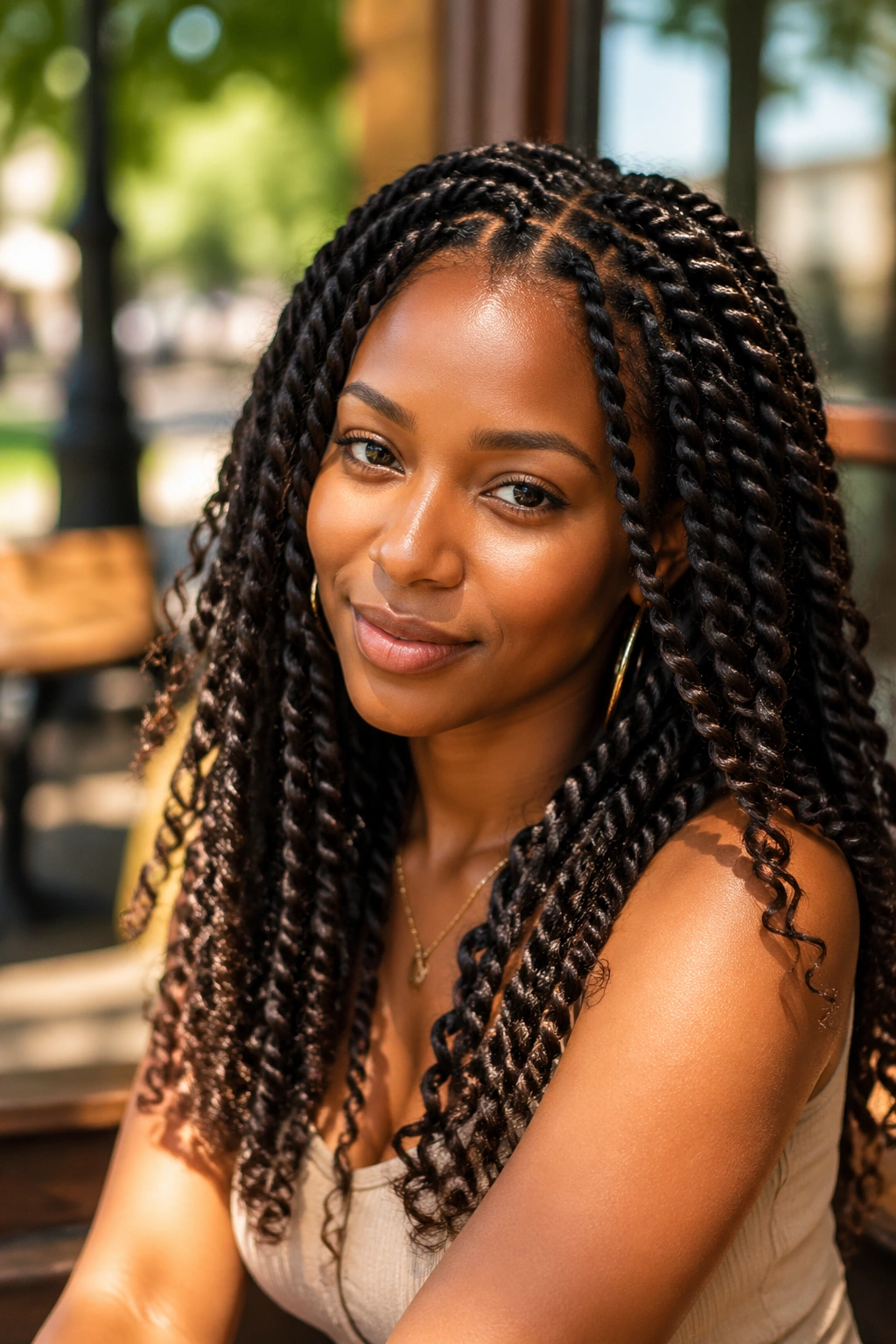
Passion twists are for people who want movement, not stiff rope lines.
The texture is the giveaway. Instead of looking dense and tightly wound, passion twists have a looser, springier finish because they’re usually installed with wavy extension hair. The ends stay soft and airy, and the whole style has a little bounce when you walk. It’s a friendlier look than a crisp two-strand twist, and that matters more than people admit.
I reach for passion twists when I want hair that feels relaxed but still put together. They work especially well if you like a bit of shine at the root and a gentler shape around the face. They also have a more casual edge than some other twists, which makes them easy to wear with simple clothes and no makeup days.
The downside is frizz. You do not get the same sharp, polished line you get from a tighter twist set, and that is part of the charm. Still, if you want a style that keeps a softer silhouette as it loosens, passion twists are hard to beat. The texture hides a little fuzz better than a smooth synthetic braid would.
A good passion twist should feel light in the hand. If the hair feels too bulky before you even start twisting, the final look can turn heavy fast. Keep the base neat, let the curl pattern do the visual work, and avoid overwrapping the extension hair at the ends. A clean end is enough. You do not need to force the shape.
5. Marley Twists with Extra Texture
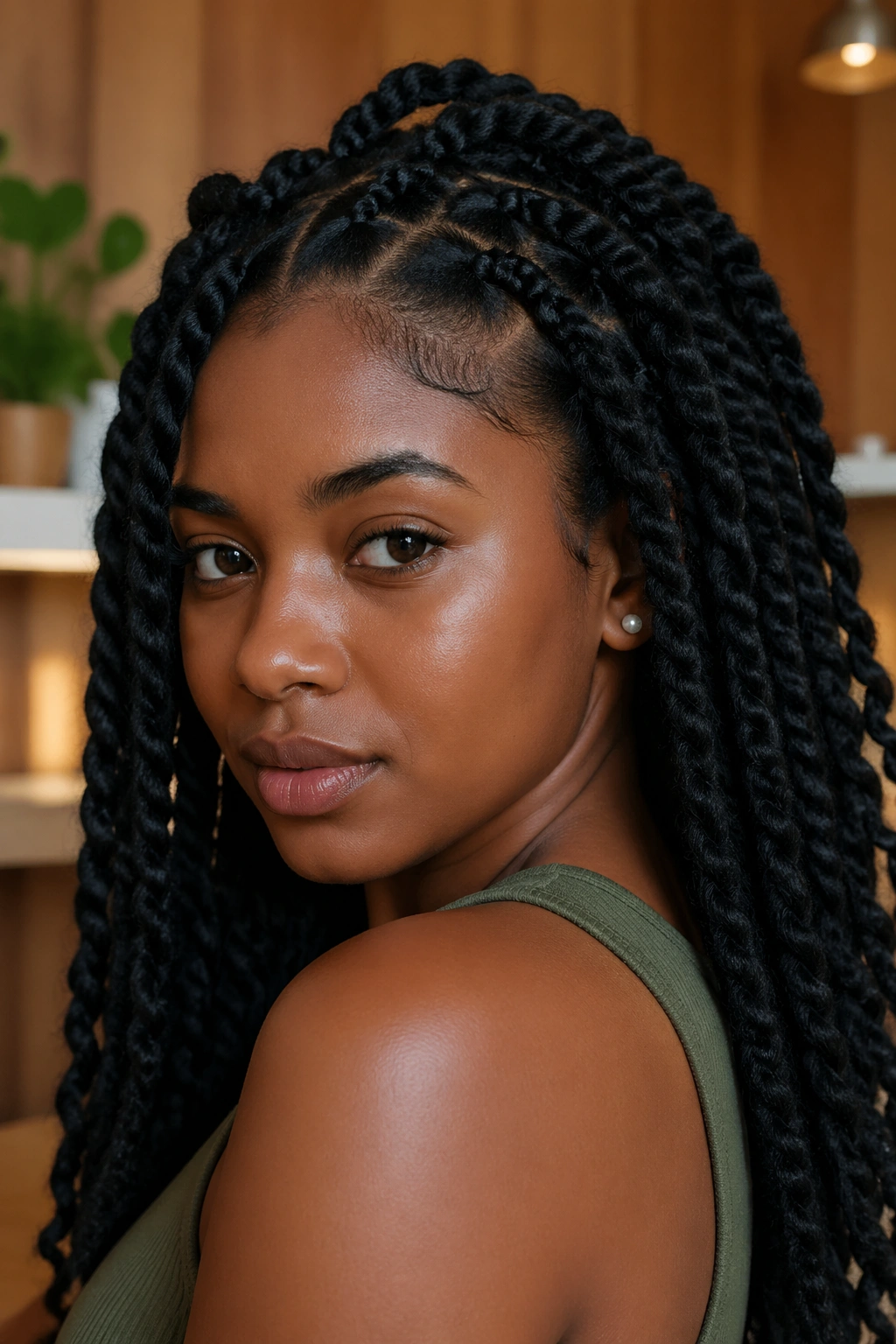
Marley hair feels dry in a good way—matte, springy, and close to the look of natural kinky hair.
That texture is what makes Marley twists stand apart. They don’t shine the way silky extensions do, and I think that’s the whole point. The finish reads fuller and more grounded, which is why people with dense coils often like them so much. They blend with coarser natural textures without looking like they’re trying to imitate something smoother.
What Marley Hair Changes
The extension hair changes both the feel and the silhouette.
- It adds bulk without needing oversized sections.
- It blends well with 4B and 4C textures.
- It holds shape with less slippery movement than softer hair.
- It can feel heavy if you make the twists too long or load too much hair into each section.
There’s a real difference between a style that looks full and a style that feels overloaded. Marley twists can cross that line if the sections are too large at the root or if the length goes past what your neck and shoulders want to carry. I’d rather see a slightly shorter set that moves well than an extra-long set that drags.
The other thing people miss is moisture underneath the extension hair. Matte hair still needs a hydrated base. Smooth your own hair first, then add the Marley hair. If your natural hair is dry before the install, the twist may look finished, but the hair underneath will be unhappy by day three.
Marley twists have a specific kind of honesty to them. They don’t pretend to be silky or sleek. They look textured, solid, and a little rugged, and that’s exactly why they age so well.
6. Flat Twist Crown Updo
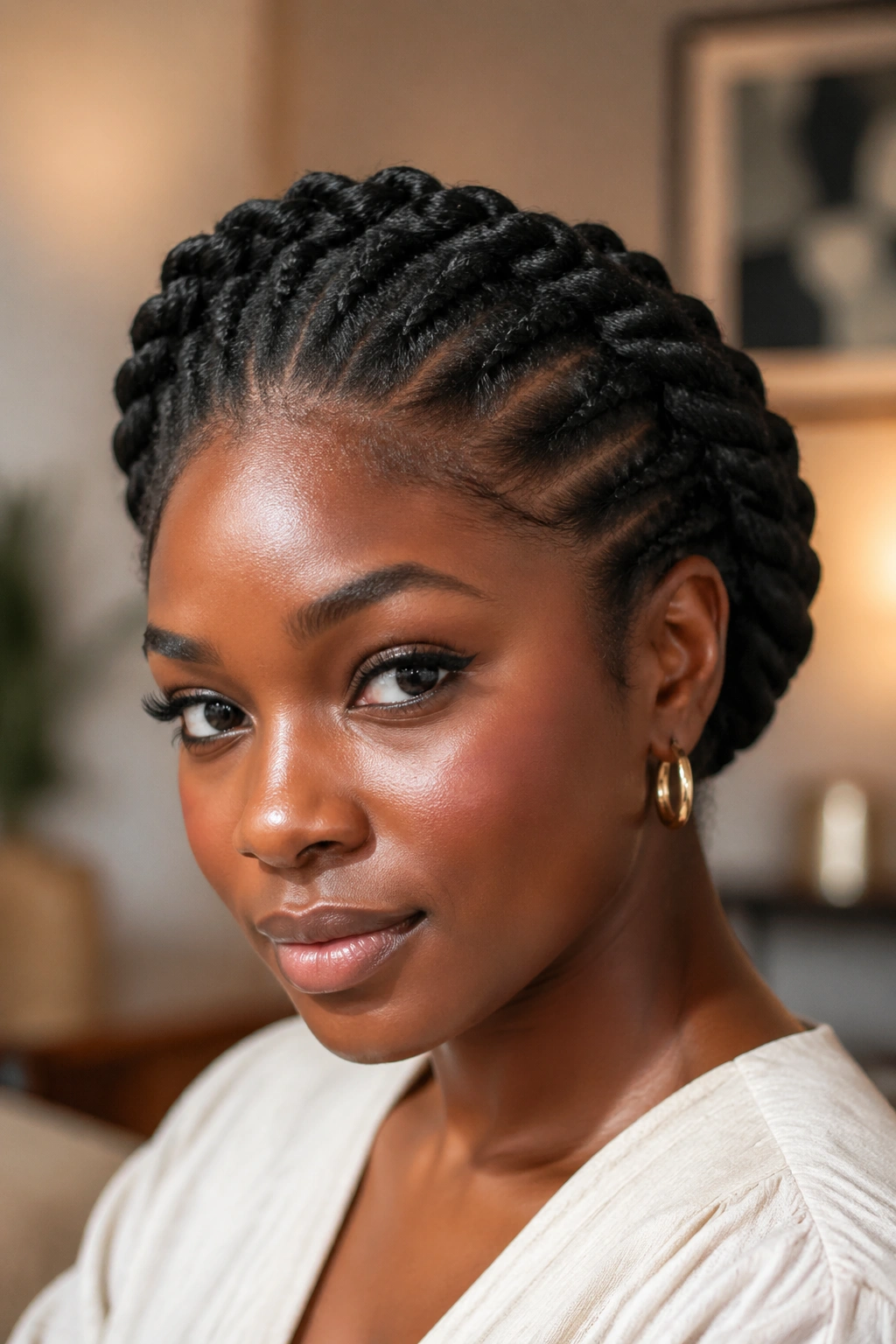
If you want one style that looks done even when the rest of your outfit is plain, this is it.
A flat twist crown wraps the twists close to the scalp and around the head in a halo shape, then tucks or pins the ends into place. The result is clean, elegant, and easy to wear without much daily fuss. It also keeps the hair off the neck, which makes a bigger difference than people think when the weather is warm or the day is long.
What makes the crown version work is the shape. The eye follows the curve around the head, so the style gives you structure without needing extra length or a pile of accessories. It’s one of the few twist styles that can feel formal with almost no extra effort, and that’s a rare thing.
A good flat twist crown depends on neat parting at the front and smooth tension at the scalp. Too much pull near the hairline ruins the whole thing. Too little control, and the crown starts slipping out of shape. You want the twist to sit like a frame, not like a tight band.
Best Uses for a Crown Twist
- Work days when you want your hair off your face.
- Low-key dressy moments when a bun feels too plain.
- Protective styling that keeps the ends tucked away.
- Shorter natural hair that still has enough length to flatten and wrap.
I like this style because it doesn’t ask for much once it’s in. A small touch-up on the front, a scarf at night, and you’re basically done. That kind of calm is worth a lot.
7. Side-Swept Afro Twists
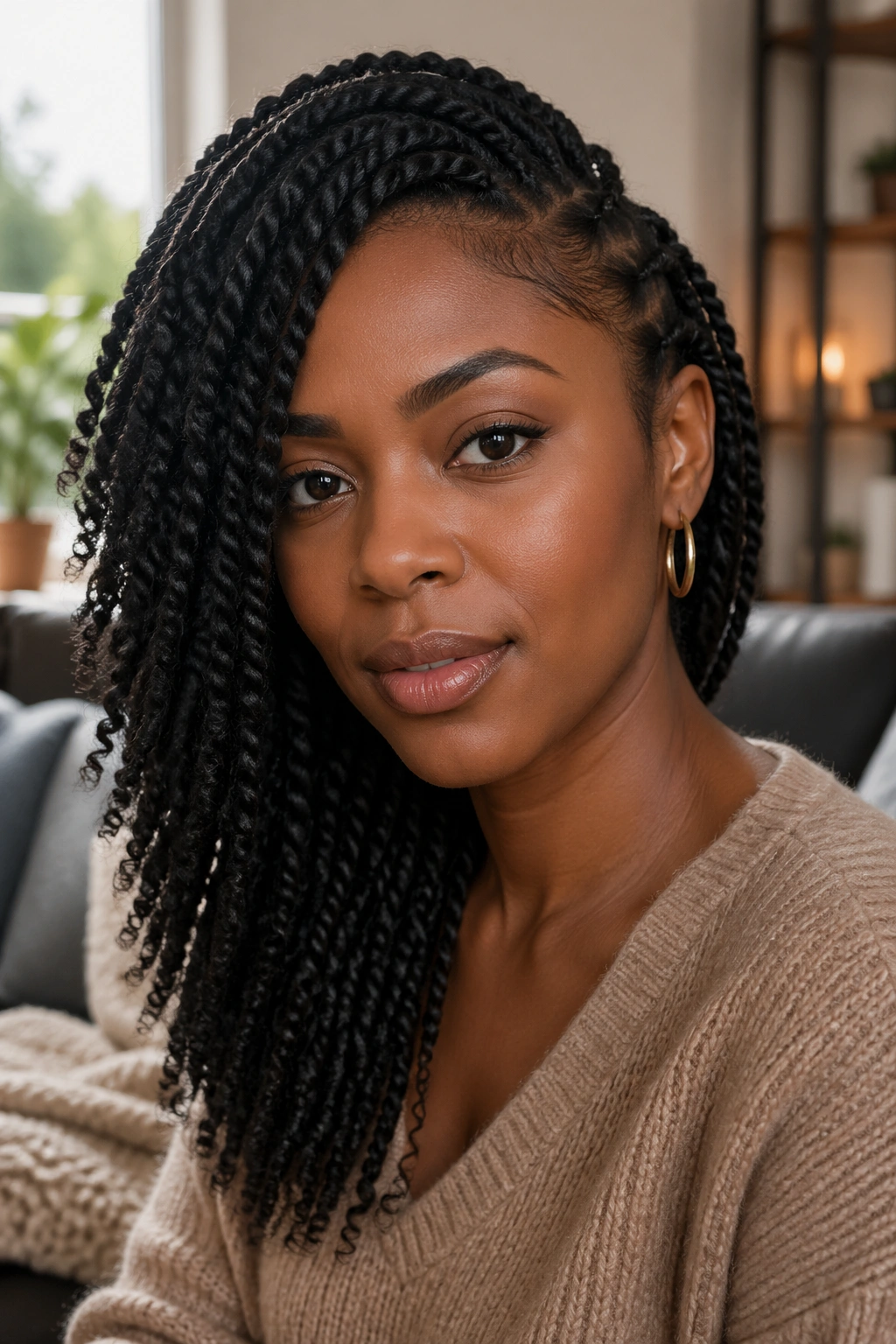
Need something softer than a middle part?
Side-swept twists fix that without changing the whole style. Instead of pulling the hair straight back or splitting it down the center, you shift the weight to one side and let the twists drape across the forehead or over one shoulder. The effect is subtle, but it changes the mood fast. The face frame becomes gentler, and the style stops feeling too symmetrical.
I like side-swept twists when I want a little movement near the front without committing to a full updo. They work on shoulder-length hair and longer sets, and they make even simple twists feel more styled. If your hair is thick, the side part helps break up the bulk. If your hair is finer, the sweep creates the look of fullness where you want it.
The best part is that you can shift the shape during the week. Wear it neatly swept for a cleaner look, then pin a few front pieces back when you want the style off your face. It’s flexible without becoming messy.
One thing to watch: the side that carries the weight should not feel heavy at the temple. If it does, the part may be too deep or the sectioning too tight. A good side-swept set should fall, not collapse. That little difference matters. I’ve seen too many styles turn awkward because the front was forced into a shape the hair did not want.
8. Half-Up, Half-Down Twists
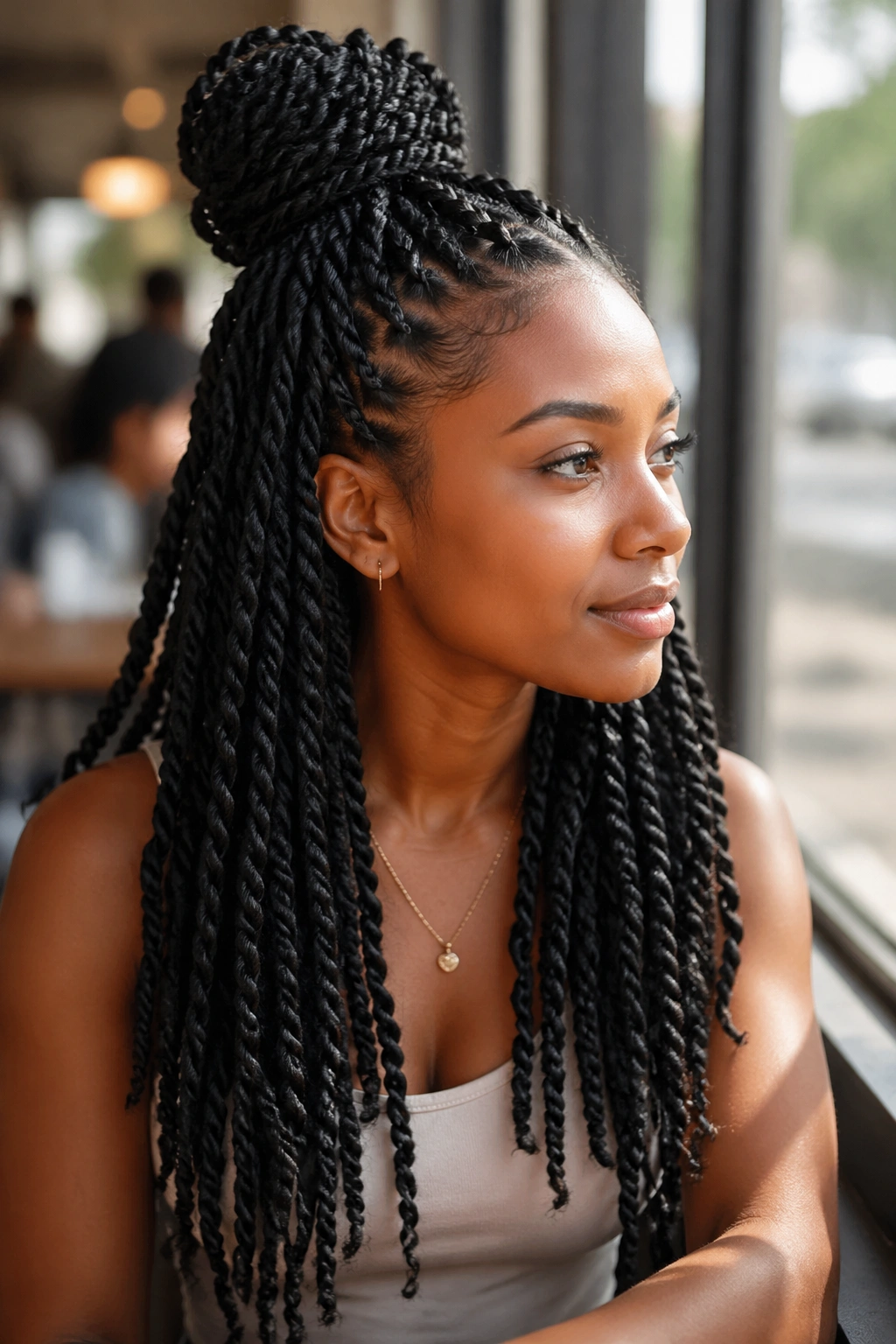
There’s a reason this style keeps coming back. It solves the oldest hair problem in the book: you want your length showing, but you also want some control.
Half-up, half-down twists split the difference. The top section gets pulled into a bun, puff, clip, or ponytail, while the rest stays loose. It gives you lift at the crown and movement through the ends, which makes the style feel fuller than a plain ponytail but easier than wearing everything down.
I think this is one of the most forgiving afro twist braid styles because it works with a lot of hair lengths. Shorter sets can still get a small top knot. Longer sets can build a bigger, more dramatic shape. Either way, the top half helps the style stay off your face while the lower section keeps the texture visible.
A good half-up style should not pull so hard on the front that your scalp starts complaining by lunch. That’s the mistake. People tighten the top to make it “clean,” and then the edges pay for it. Leave a little softness at the hairline. It reads better and feels better.
Why It Works So Well
- It gives you height at the crown without needing a full updo.
- It lets the ends stay visible, which shows off the twist pattern.
- It can be dressed up or kept casual with one clip.
- It works best when the top section is anchored with a soft scrunchie or padded band instead of a thin elastic.
This style also gives you a nice reset on days when the loose lengths start feeling too heavy. Pulling the top away from your face changes the whole feel of the install.
9. Twist Bob with Clean Ends
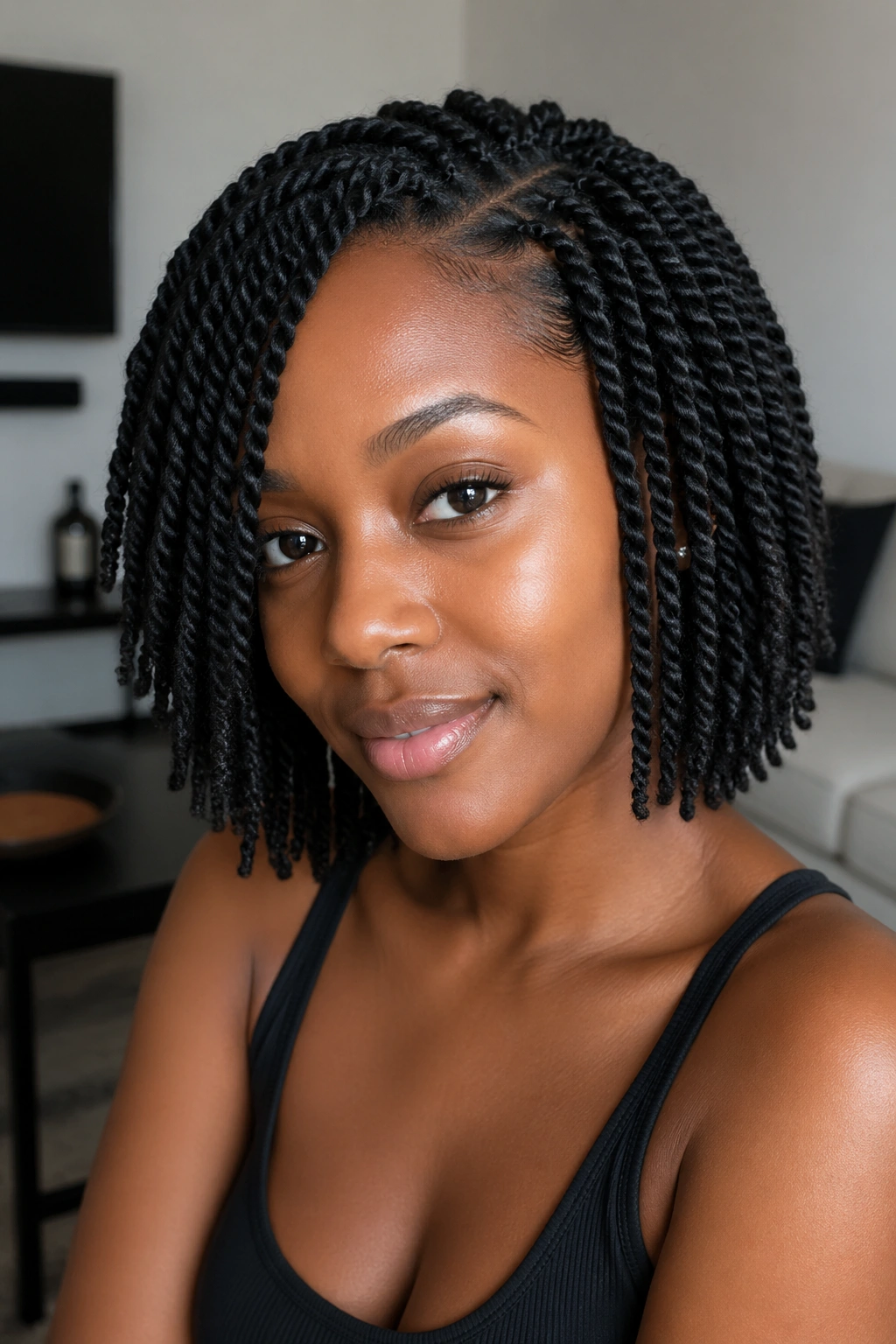
A twist bob gives you the neatness of a short cut without committing to scissors.
That is the appeal, plain and simple. The length usually lands somewhere between the chin and the shoulders, depending on how the twists are set and how much they shrink. The shape feels lighter, the neck stays freer, and sleeping becomes easier because there’s less hair to gather and squish under you.
I like twist bobs because the cut line, even when it’s fake, gives the style a point of view. Long twists can be beautiful, sure, but a bob has a crispness that makes the face pop. It also works well on people who want their hair to look styled without carrying a lot of bulk.
Shape Matters More Than Length
A blunt bob gives a cleaner finish. A slightly angled bob leans softer and feels less boxy around the jaw. If the ends are uneven in a bad way, the whole shape can look accidental, which is not what you want. The bottom line: the last inch of the twist matters more in a bob than it does in a longer style.
One practical bonus is drying time. A shorter set dries faster after washing or refreshing, and that helps if you don’t enjoy walking around with damp roots. It also makes it easier to keep the shape from turning fuzzy too soon, because there is less length rubbing on your clothes all day.
If you want a twist style that feels neat, easy, and a little sharper than the usual long set, the bob is a smart move. It has a cleaner outline, and clean outlines age well.
10. Twisted Bun Styles for Busy Days
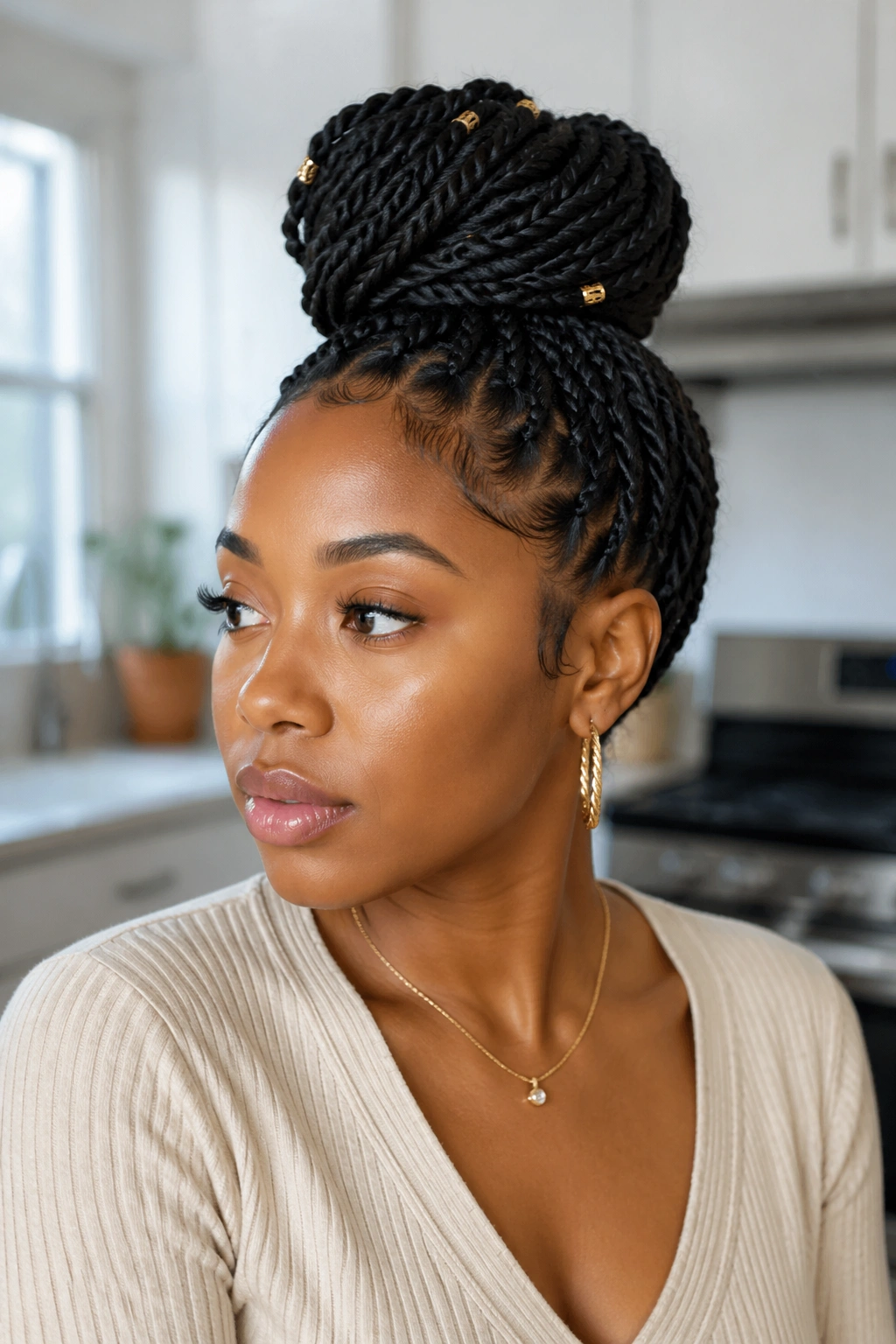
A bun is still the fastest way to make twists look intentional.
That sounds plain, but it’s true. Take your twists, gather them high, low, or right at the nape, and tuck them into a bun shape that feels stable. You get a style that keeps the ends protected, keeps the hair off your face, and works when you need to move through the day without thinking about your hair every ten minutes.
I like twisted buns because they can go from tidy to formal with almost no extra effort. A low bun feels calm and office-ready. A high bun reads sharper and a little more lifted. If the twists are chunky, the bun itself becomes a sculptural shape. If they’re smaller, the bun looks smoother and more compact.
The one thing to watch is tension. People pull too hard on the front because they want the bun to stay. It usually stays anyway if the base is pinned well. You do not need to stretch the scalp to prove the bun is secure.
- Use bobby pins instead of one tight elastic when the hair is already in twists.
- Wrap the hair in a scarf for 15 to 20 minutes if you want the bun to settle into place.
- Leave a few front twists loose if your hairline feels tender.
- Keep the bun centered so the weight doesn’t tug to one side all day.
Twisted buns are not flashy. That’s part of the appeal. They solve problems quietly, and sometimes that’s the best kind of style.
11. Feed-In Twist Braids with a Tighter Root
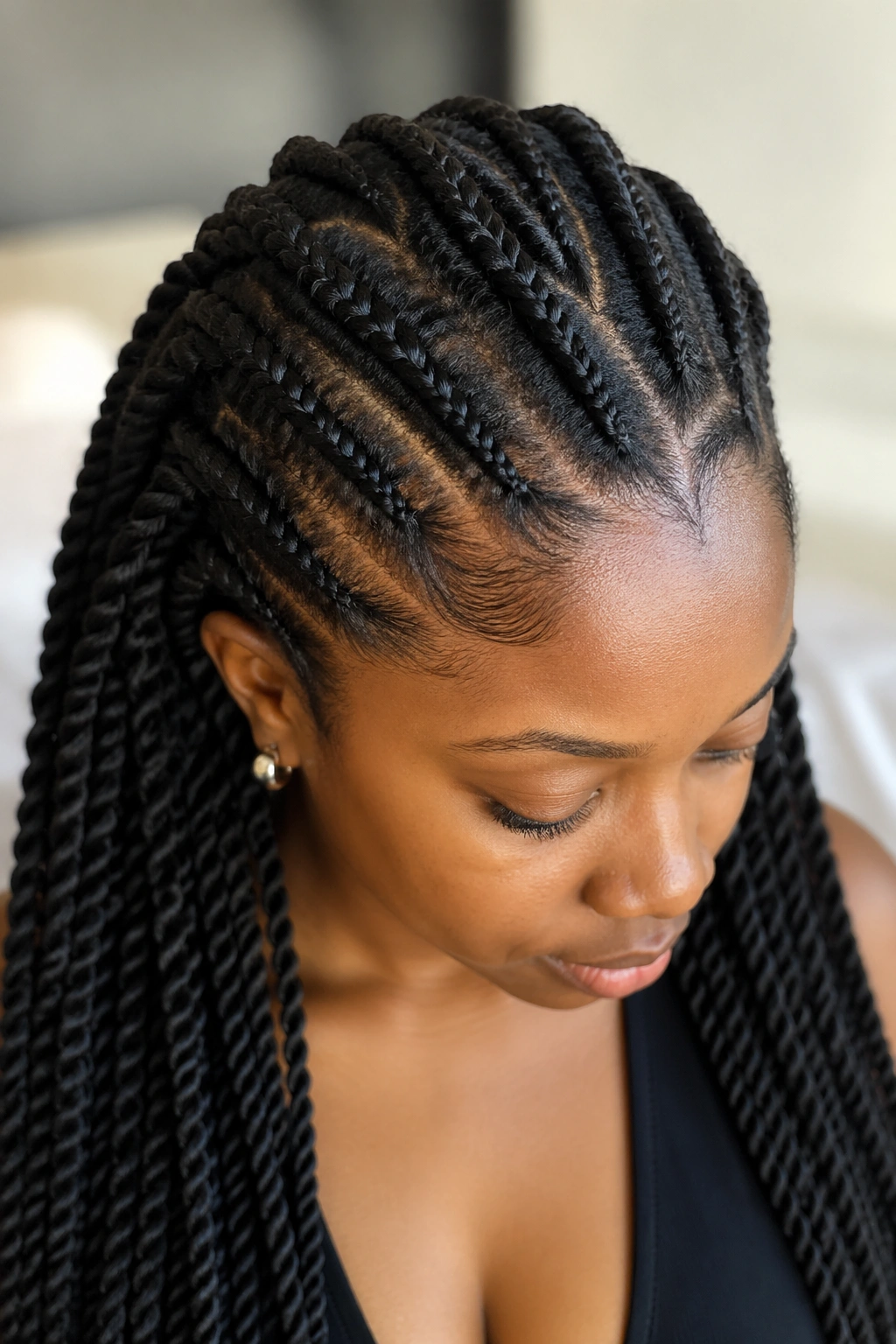
Not every twist style has to start bulky at the scalp.
Feed-in twist braids use a gradual method at the root, adding hair in small amounts so the base looks smoother and sits flatter against the head. The finish feels cleaner and more controlled than a big, heavy start, which makes the whole style easier on the scalp when it’s done well.
This is the style I think about when someone wants the look of neat twist braids with a lighter start. It’s especially useful if you like a front that lies flat, because the gradual feed makes the root look more seamless. The body of the twist can still be full. You’re just not forcing all that bulk to begin at the same spot.
It does take a steadier hand than a basic two-strand twist. The sectioning has to be tidy, and the added hair needs to blend piece by piece, not all at once. When it’s rushed, the root gets lumpy. When it’s done right, the whole line sits smoother and the style feels easier to wear for long stretches.
What to Look For
- A tapered root that doesn’t bulge at the scalp.
- Clean parting so the feed-in sections stay even.
- Enough hair added to match your own density, but not so much that the front feels packed.
- A finish that still moves. Flat does not mean stiff.
I like this option for people who care about the shape near the hairline. That small visual detail changes the whole style. It’s the difference between “done” and “pressed into place.”
12. Twist Ponytail Styles That Keep Hair Out of the Way
If you want polish without fuss, a twist ponytail is hard to beat.
Pull the twists into a high, mid, or low ponytail, and the whole style becomes cleaner in one move. The face opens up, the length hangs in one place, and the neck gets a break. That is why this style shows up so often in real life, not just on style boards. It’s practical and neat without feeling plain.
A high ponytail gives a little lift and energy. A low ponytail feels calmer and more grounded. A mid pony sits in the middle, which sounds boring until you actually wear it and realize it works with almost everything. If the twists are long enough, the ponytail gets a nice swing. If they’re shorter, the shape still looks tidy and controlled.
The root should be secure, but not yanked tight. That’s where people get into trouble. A good twist ponytail should feel like it holds itself up with help from pins, bands, or a wrapped base—not like your edges are doing all the work. If the front feels sore, loosen it and shift the ponytail a little lower.
This is a strong final style because it fits a lot of lives. Errands, office days, long drives, quick dinners, even a lazy Sunday when you still want your hair out of your face. If you only remember one thing from all these afro twist braid styles, remember this: the best one is the one you can wear without thinking about it every hour.
