



The best low-maintenance Afro twist braid styles are the ones that still look decent after a week of sleeping, sweating, working, and forgetting to touch your hair for a minute. That’s the real test. Not the fresh-install mirror check. Not the first-day selfie. Day seven tells the truth.
And here’s the part people sometimes miss: low-maintenance does not mean boring, flat, or fragile. It means the shape holds, the parts stay readable, the roots don’t demand a full redo every three days, and your scalp can breathe enough that you’re not counting the hours until takedown. If a style looks gorgeous but asks for edge brushing, curling, and constant rescue work, it’s not low-maintenance. It’s a part-time job.
Afro twist braid styles work best when the structure does some of the heavy lifting for you. Medium parts, sensible length, a little tension control at the hairline, and a finish that hides the normal fuzz of real life — those are the things that make a style easy to live with. I care about that more than a perfectly sharp part that falls apart the moment you pull on a hoodie.
So let’s talk about the styles that earn their keep.
1. Shoulder-Length Medium Senegalese Twists
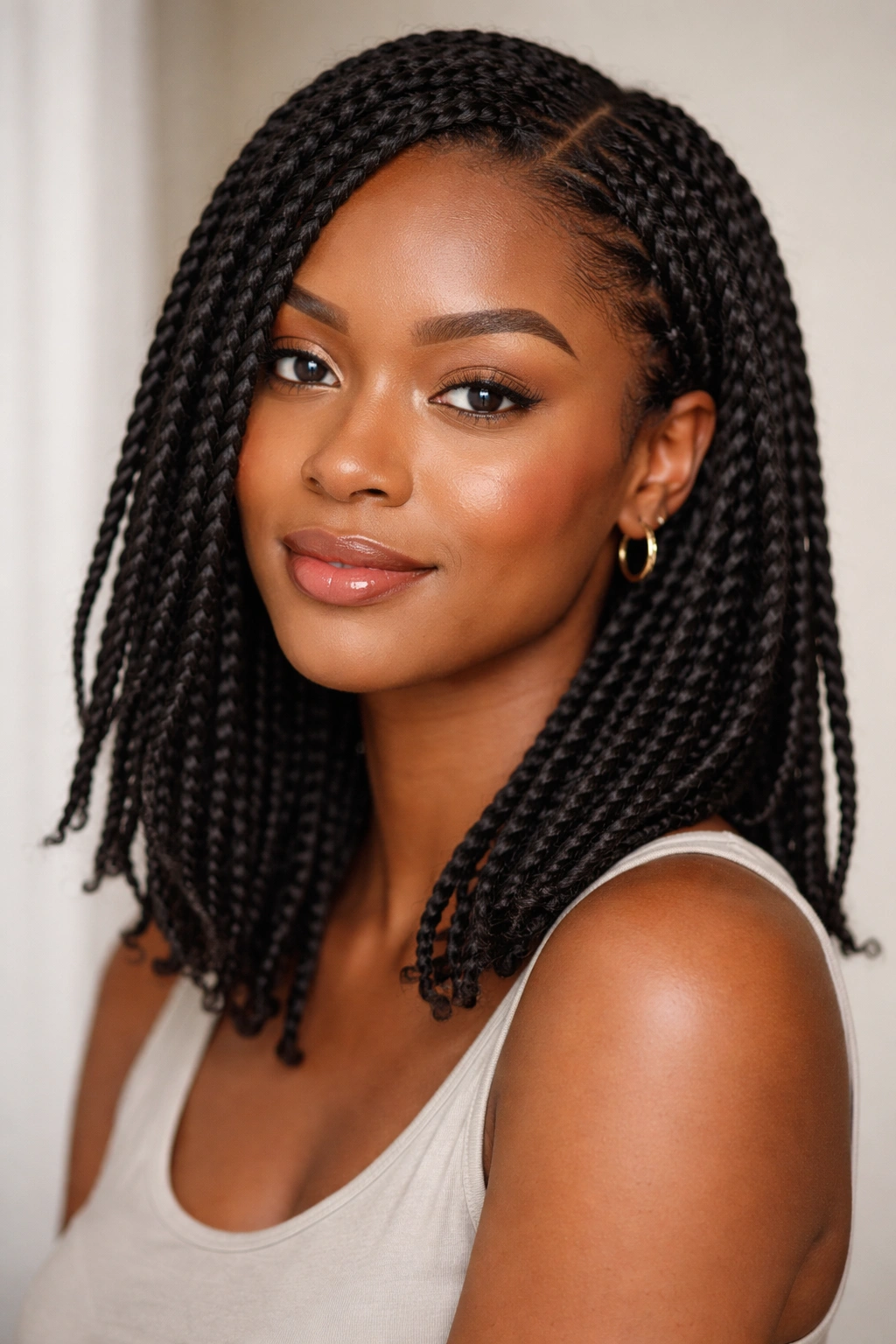
Shoulder-length Senegalese twists are one of those styles that make sense the minute you wear them. They’re long enough to feel styled, short enough to stay out of your way, and light enough that you don’t spend the whole week dealing with neck strain or a heavy pull at the roots.
The sweet spot is the middle section size. Too tiny, and you’re in the chair forever. Too jumbo, and the twists get bulky fast, especially around the crown. Medium twists sit in that useful zone where they look full but still move easily when you tuck them behind your ears or pin them up for work.
Why they stay easy
The length matters more than people think. Shoulder-length twists don’t get caught under coat collars as often, and they don’t drag moisture from your shoulders the way waist-length twists can. That alone cuts down on tangles and frizz at the ends.
They also give you room to change the look without changing the style. Half-up. Low bun. Side part. Clipped back with a few pins. All of it works.
A few things make this version even easier to live with:
- Ask for slightly larger sections at the back so the style installs faster and still looks balanced.
- Keep the front twists a touch smaller if you want the hairline to look neat longer.
- Use a light mousse once a week, not every night. Too much product makes the hair feel damp and sticky.
- Sleep with a satin scarf tied flat at the nape, not just thrown over the top of your head.
This is the style I’d hand to someone who wants protection without fuss. It behaves. That matters.
2. Jumbo Rope Twists in a Chin-Length Bob
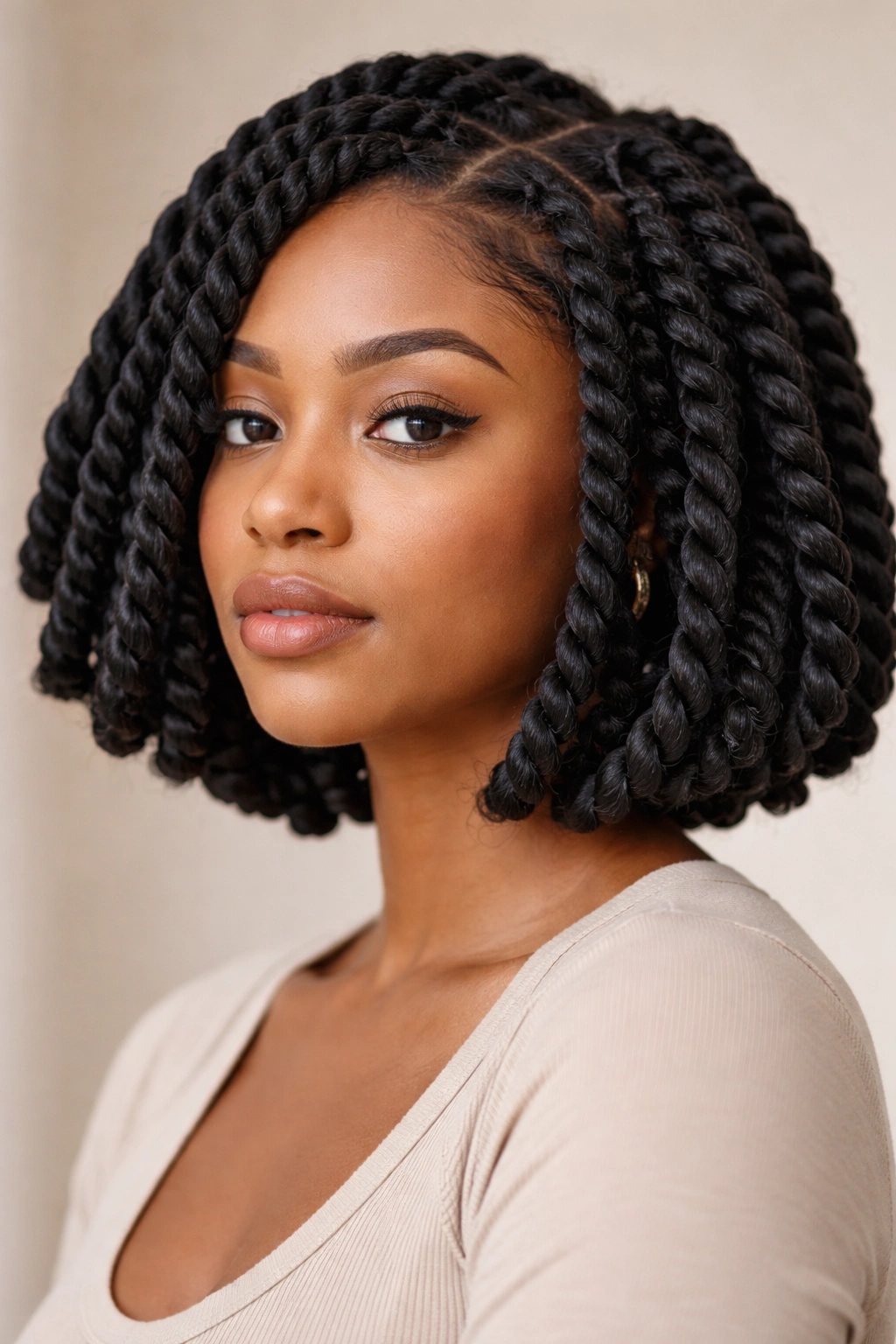
If you want the shortest route from chair to finished style, jumbo rope twists in a chin-length bob make a strong case for themselves. They install faster than small twists, dry faster after washing, and don’t collect nearly as much daily drama as longer lengths. Shorter hair wins on quiet convenience. It just does.
The bob shape also keeps the style from feeling heavy. That’s a bigger deal than it sounds. When twists get too long, people start hanging them on one shoulder all day, which stretches the front and makes one side frizz faster. A chin-length cut removes that habit before it starts.
The tradeoff? Jumbo twists show wear sooner than smaller ones. They don’t hide rough handling forever. But if you like hair that looks soft and lived-in rather than stiff and pristine, that may be exactly what you want.
This style makes sense for busy stretches when you want hair that behaves after a quick refresh. A little oil on the scalp, a satin bonnet at night, and a gentle finger separate at the ends are usually enough. No elaborate routine. No morning battle.
It’s also one of the easiest styles to pair with bold earrings or a sharp neckline. The haircut-like shape does some of the styling work for you. Clean. Simple. Done.
3. Knotless Twist Braids With Triangle Parts
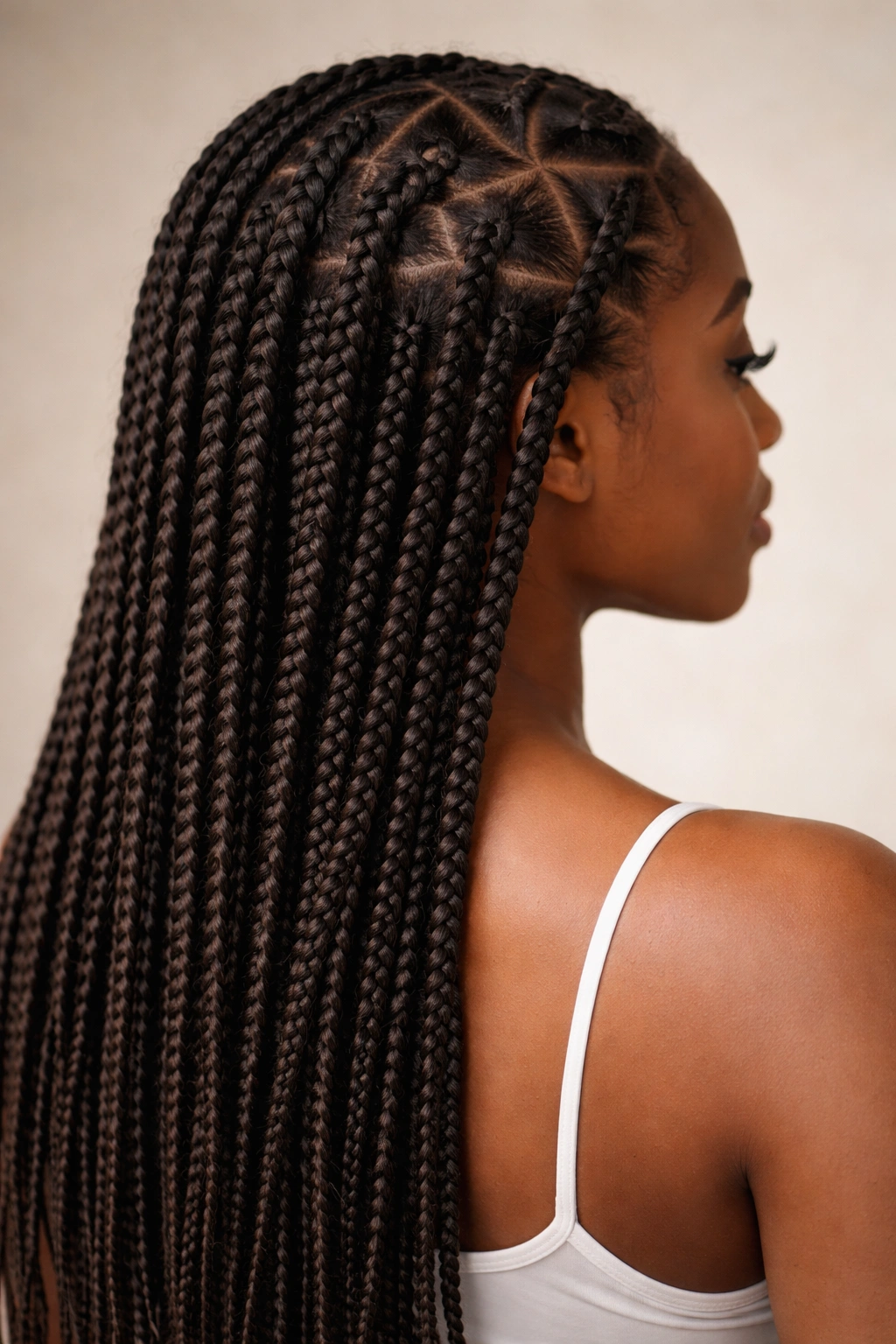
Why do knotless twist braids stay neat longer than a lot of people expect? The answer starts at the base. Knotless installation removes that obvious lump at the root, so the twist grows out more smoothly and sits flatter against the scalp. That means less pulling, less bulk at the start of each section, and a softer look when the roots begin to loosen.
Triangle parts help even more. Square parts are fine, but triangle parting gives the style a slightly less rigid look as it grows out. The pattern still reads clean, but it doesn’t scream “fresh install” in a way that makes every bit of new growth obvious by day ten.
What makes knotless parts so forgiving
The scalp feels better. That’s the first thing. The second thing is the way the parts age. Triangle sections blur a little more naturally as the hair settles, which is useful if you don’t want to keep touching up every edge line.
A good knotless twist braid install should feel snug, not yanked. If your scalp throbs at the hairline when you leave the chair, the style is too tight, period. Low-maintenance styles do not begin with pain.
Best for: people who want a polished finish but don’t want to baby the style every morning.
Ask for: medium triangle parts, a soft feed-in at the root, and a length that stops between the collarbone and upper chest if you want the easiest wear.
Avoid: tiny parts if you know you dislike long install times. They look neat, sure, but they also add hours you may not care to spend.
4. Flat Twists Into a Low Bun
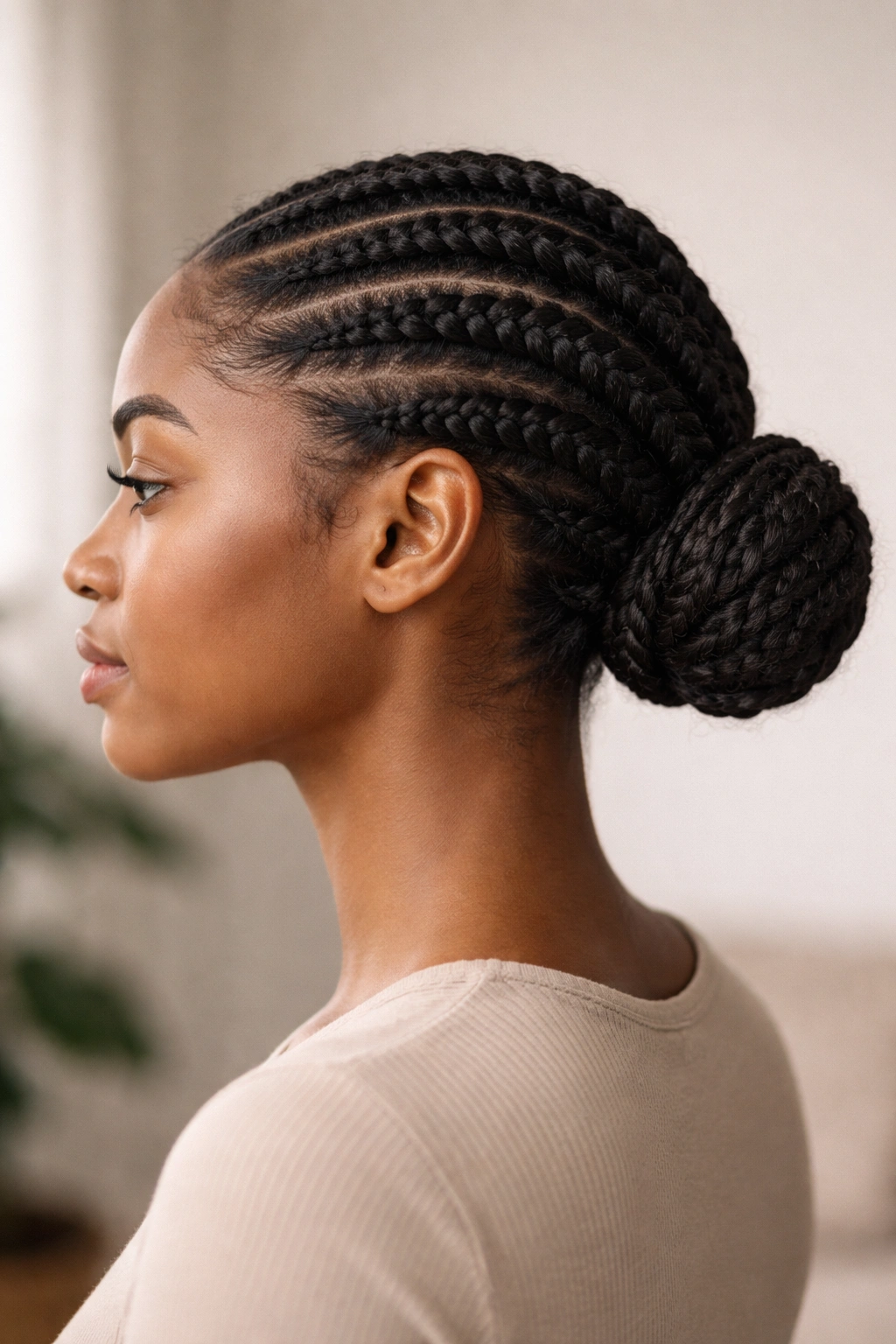
Flat twists into a low bun are the kind of style that quietly saves your week. They keep the hair close to the head, they don’t flop around, and they make washing, sleeping, and exercising easier because there’s less loose hair fighting you at every turn. If your life is full of errands, meetings, and gym bags, this is one of the cleanest solutions.
The bun itself can be smooth or slightly textured. I prefer slightly textured, honestly. A bun that looks too shellacked can feel stiff and fussy, while a little natural texture makes the style look like you actually live in your hair, not under a helmet.
Where this style shines
- It keeps the hairline protected without demanding constant retwisting.
- It works well for shorter to medium natural hair because the twists can be tucked and pinned.
- It’s easy to turn into a formal style with one decorative pin or wrapped base.
- It gives you scalp access if you need to oil or cleanse between washes.
There’s one catch. Flat twists can flatten the roots if they’re done too tightly or if you wear the same direction every single time. Switch the parting side now and then. Your edges will thank you. So will your temples.
For days when you want your hair completely out of the way, this is one of the least annoying options on the whole list. I say that with affection.
5. Side-Swept Feed-In Twist Braids
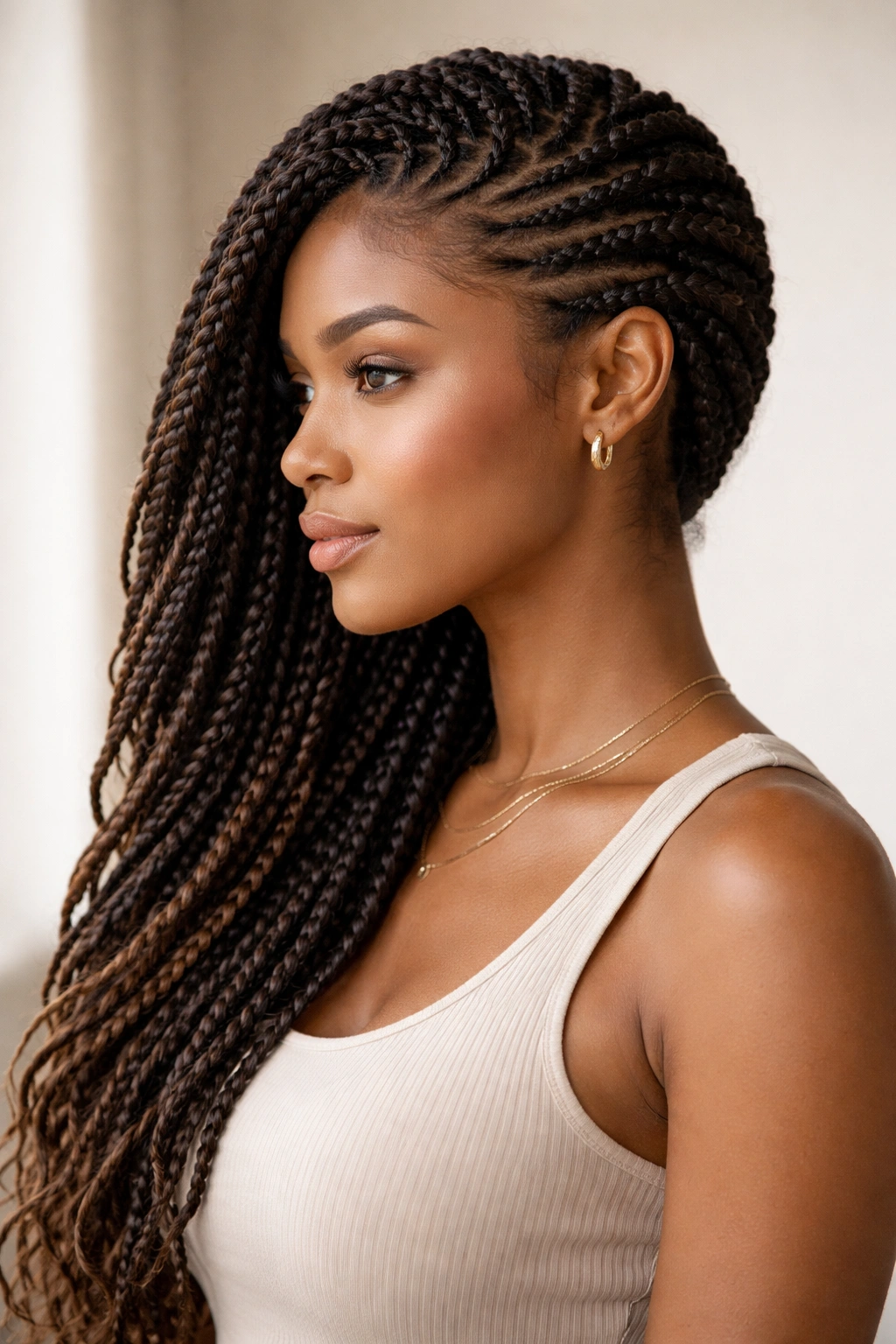
A side-swept style changes everything because it hides the grow-out in a way center parts never do. The hair falls to one side, the root line looks intentional longer, and the whole style keeps moving even after a few nights on a satin pillowcase. That asymmetry is the magic.
Feed-in twists add another layer of ease. The extension hair starts small near the scalp and gradually grows thicker, which reduces the hard, bulky look that can make some braid styles feel heavy from day one. The result is smoother at the base and easier on the hairline if the install is done properly.
You should choose this style if you like a little drama without daily maintenance. The side sweep gives shape. The twist lengths carry the style. And because one side is visually doing more work, the rest can relax a little.
What to ask for
- A deep side part that sits where your hair naturally wants to fall.
- Medium feed-in sections if you want the style to last without looking overly thick.
- A length that lands around the collarbone or upper chest for easier daily wear.
- Soft edges, not stiff gel crust. That looks better by day four, trust me.
It’s a good style for people who hate symmetry on their own heads. Some of us like a little tilt. This one gives it.
6. Half-Up, Half-Down Twist Braids
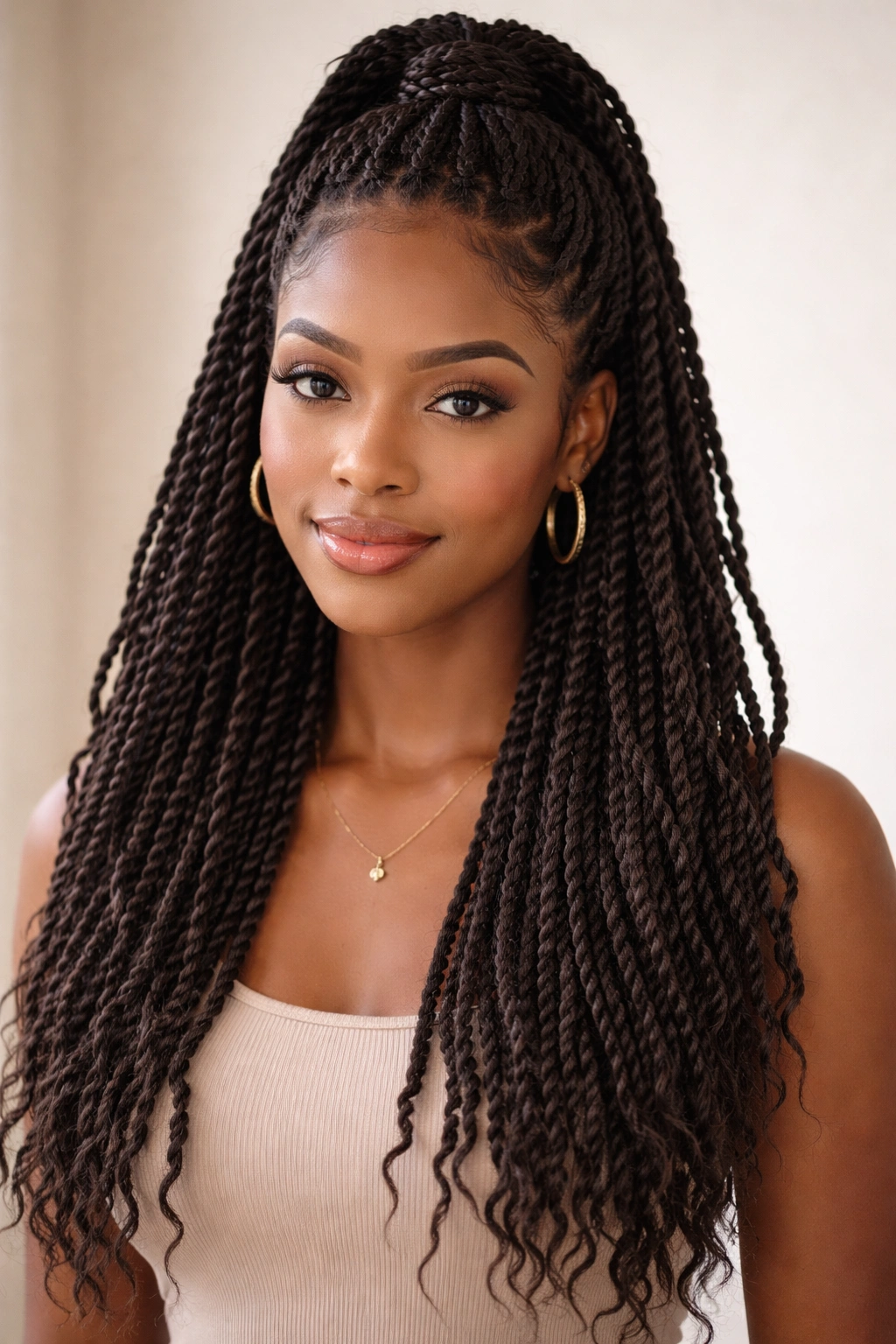
Half-up, half-down looks like a going-out style, but it earns its keep on ordinary mornings. The top section gets secured, which keeps hair out of your face, and the back section stays loose enough to give you movement without making the whole look feel fussy. That balance is the whole point.
With twist braids, the half-up shape also solves a practical problem: the front tends to get handled more than the back. You’re pushing it behind your ears, laying on it, touching it when you talk. Pulling the front section up reduces that wear and keeps the style neater where people notice it most.
Why the split matters
The top half usually stays fresher because it’s not rubbing against collars and seat backs all day. The lower half can take the mild chaos of normal life and still look fine. That’s a useful setup if you want a style that lasts but don’t want your face fully covered.
A few good habits make this one last longer:
- Use a soft satin scrunchie instead of a tight elastic band.
- Wrap the top section loosely, not in a clenched knot.
- Refresh the front edges with a pea-sized amount of mousse, not a heavy gel layer.
- If the lower twists start to separate, palm-roll just the loose ones instead of redoing the whole head.
Short version: it’s practical without looking practical. That’s a nice trick.
7. Twisted Crown With Loose Back Length
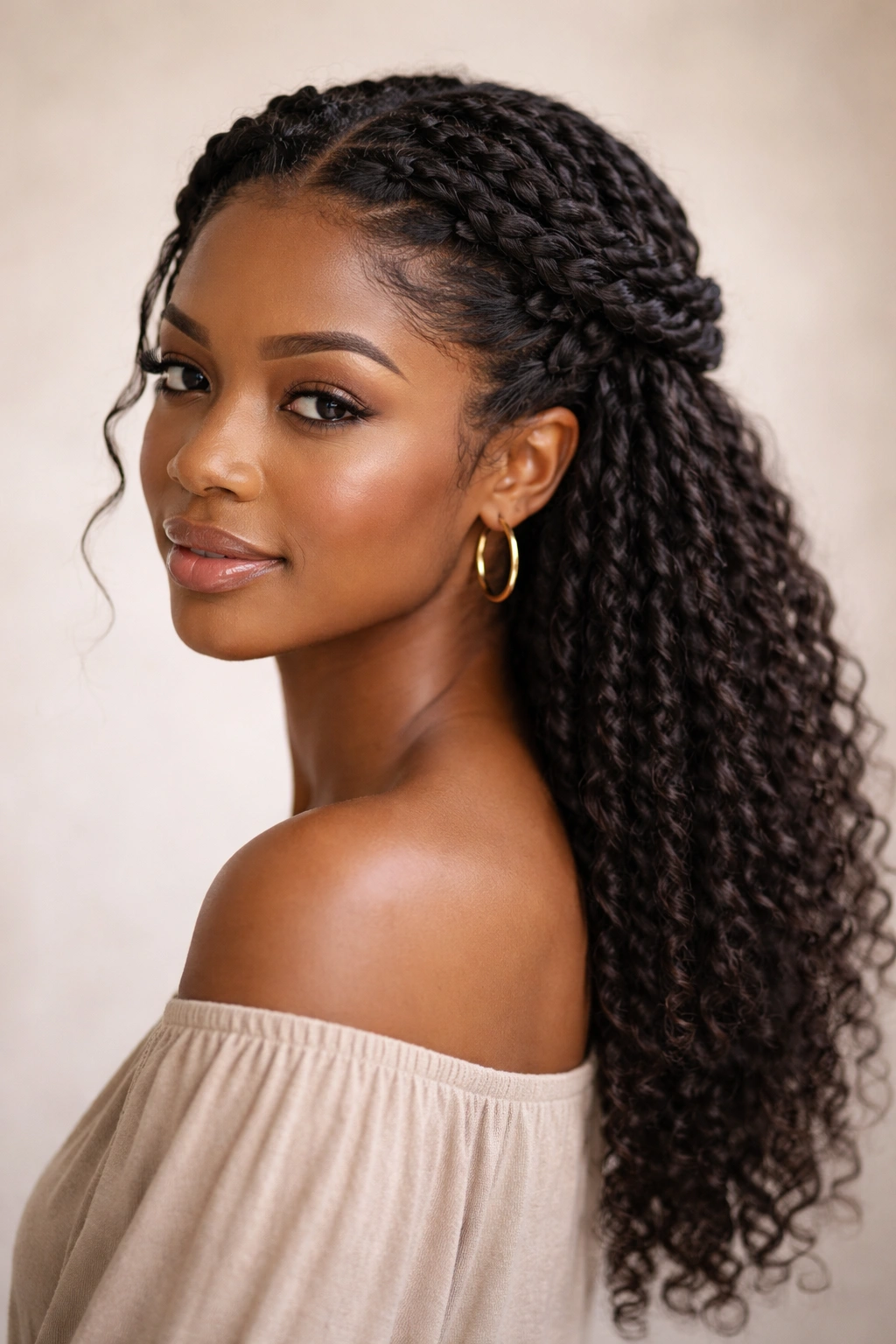
Need a style that looks dressed up without making your whole head work hard? A twisted crown does that job well. The front and sides are twisted back into a halo shape, while the back can stay loose, tucked, or gathered into a low finish. You get the feeling of a formal updo with less tension and less daily handling than a full pinned style.
The crown also solves a common frustration with Afro twist braids: the front pieces tend to fray first because they get the most friction. When those pieces are woven back into the crown, they stop swinging into your eyes and stop rubbing against your cheeks all day. That little detail makes a real difference.
This style works especially well when the hair in the back has a bit of length and the front needs to be kept under control. It’s tidy, but not severe. I like that balance.
A few things that help
If the crown starts to loosen, don’t panic and redo the whole thing. A couple of bobby pins placed flat against the scalp usually solve the problem. Use pins that match your hair or braid color if you want them to disappear.
A light mist of water on the loose back section can wake up the texture without making the roots puff up. Avoid drenching it. Wet hair at the nape stays damp forever and gets that heavy, sleepy feel.
This is one of those styles that can wear all the way from daytime errands to a dinner event without changing a thing. That’s rare. And useful.
8. Passion Twist Bob With Soft Ends
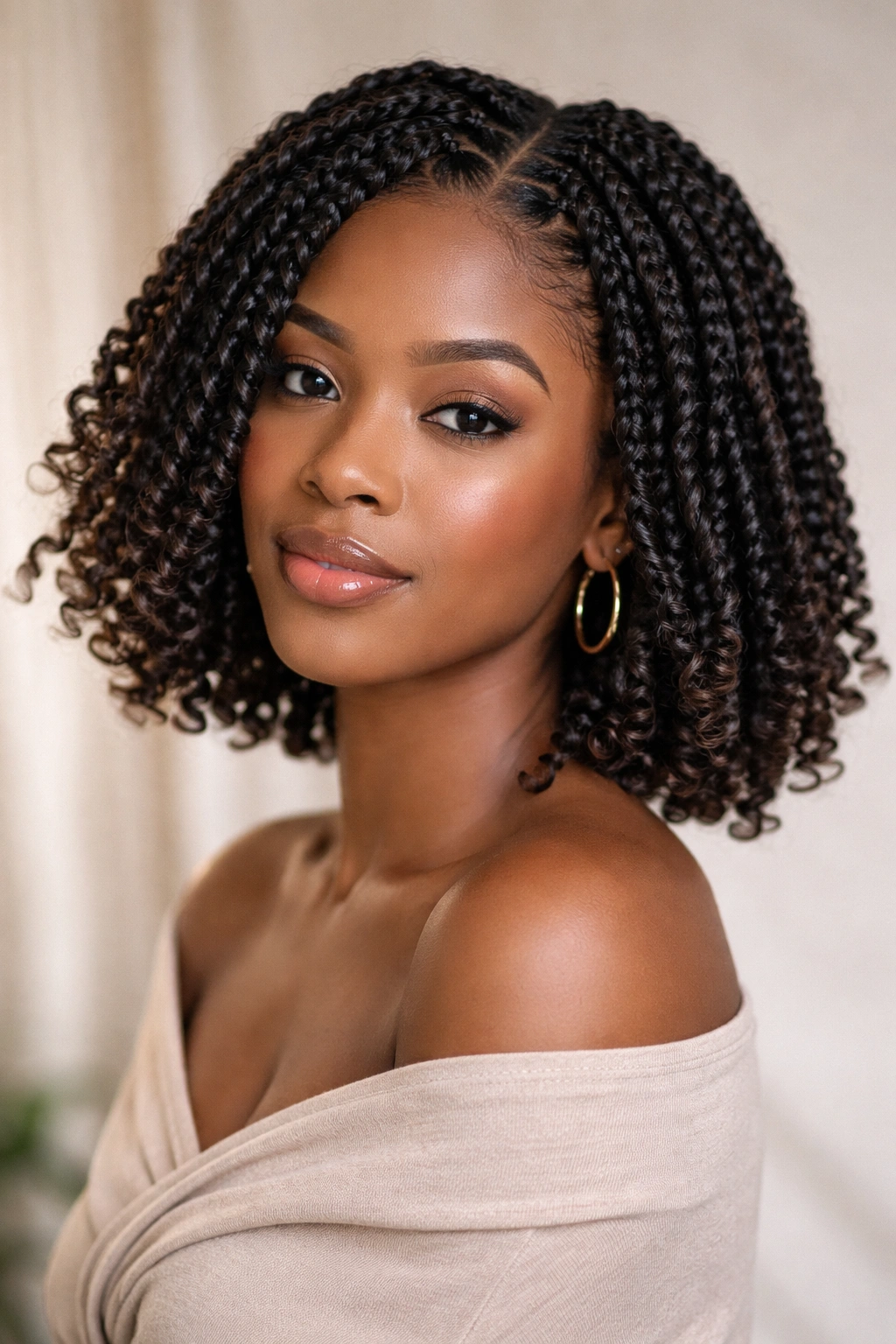
The first thing you notice about a passion twist bob is the movement. The ends don’t sit like hard sticks; they sway, bend, and fall with a little softness that makes the whole style feel less rigid. If you like hair that has some swing but don’t want the weight of longer lengths, this is a very nice place to land.
The bob length keeps the style manageable. The texture at the ends hides small signs of wear. And because passion twists usually have that airy, slightly undone finish, they don’t look ruined the moment they pick up a bit of frizz. They look more relaxed. That’s part of the charm.
I also like this style for people who dislike sharp parting patterns. The eye goes to the overall shape, not every tiny section at the root. That makes it forgiving.
What to watch for
Passion twists can tangle at the curled ends if you rough them up too much while sleeping. Use a satin bonnet or scarf that covers the ends completely. If the bonnet is too small, the hair rubs and the tips start clumping together. That’s avoidable, and worth avoiding.
A little mousse goes a long way. Too much, and the hair gets limp. Too little, and the ends start looking dry and fuzzy. I’d rather use a small amount every few days than drown the style once and hope for the best.
If you want a bob that feels softer than Senegalese twists and less formal than straight braid styles, this one does the job without asking for much back.
9. Chunky Rope Twists on a High Puff Base
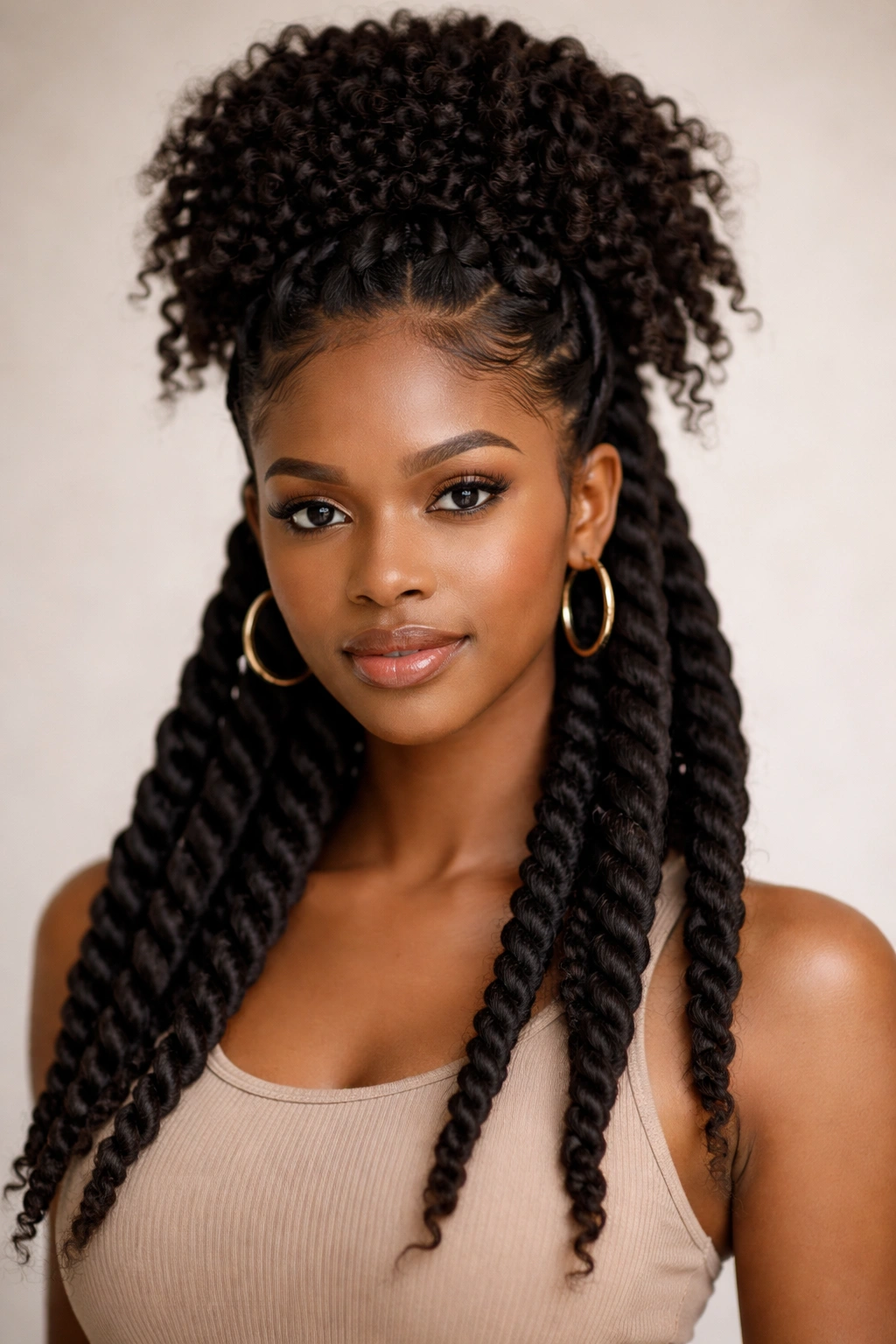
Chunky rope twists look bold, but the real reason they make life easier is the way they spread the weight around. A high puff base lifts the hair off your neck, which is a gift when the day is warm, busy, or both. The twists do the visual work. The puff keeps the style from sitting flat and boring.
This is also one of the easiest styles to refresh in parts. If the puff looks sleepy, you can reset just the top section. If the twists need a little definition, you can smooth the roots separately. You do not have to rebuild the entire head to make it presentable again.
Why it stays manageable
- The high placement keeps hair away from collars and sweat.
- Chunky twists mean fewer sections to maintain.
- The puff base gives you lift without teasing or extra product.
- It’s easy to dress up with gold cuffs, a fabric wrap, or one clean barrette.
The one thing I would not do is tie the puff down too tightly. That turns an easy style into a headache. If your hairline feels tugged, loosen it. A puff should sit, not clamp.
This style works best when you want a little height and shape without spending time refining every strand. It’s relaxed, but not lazy. There’s a difference.
10. Two-Strand Twist Braids on a Stretched Afro
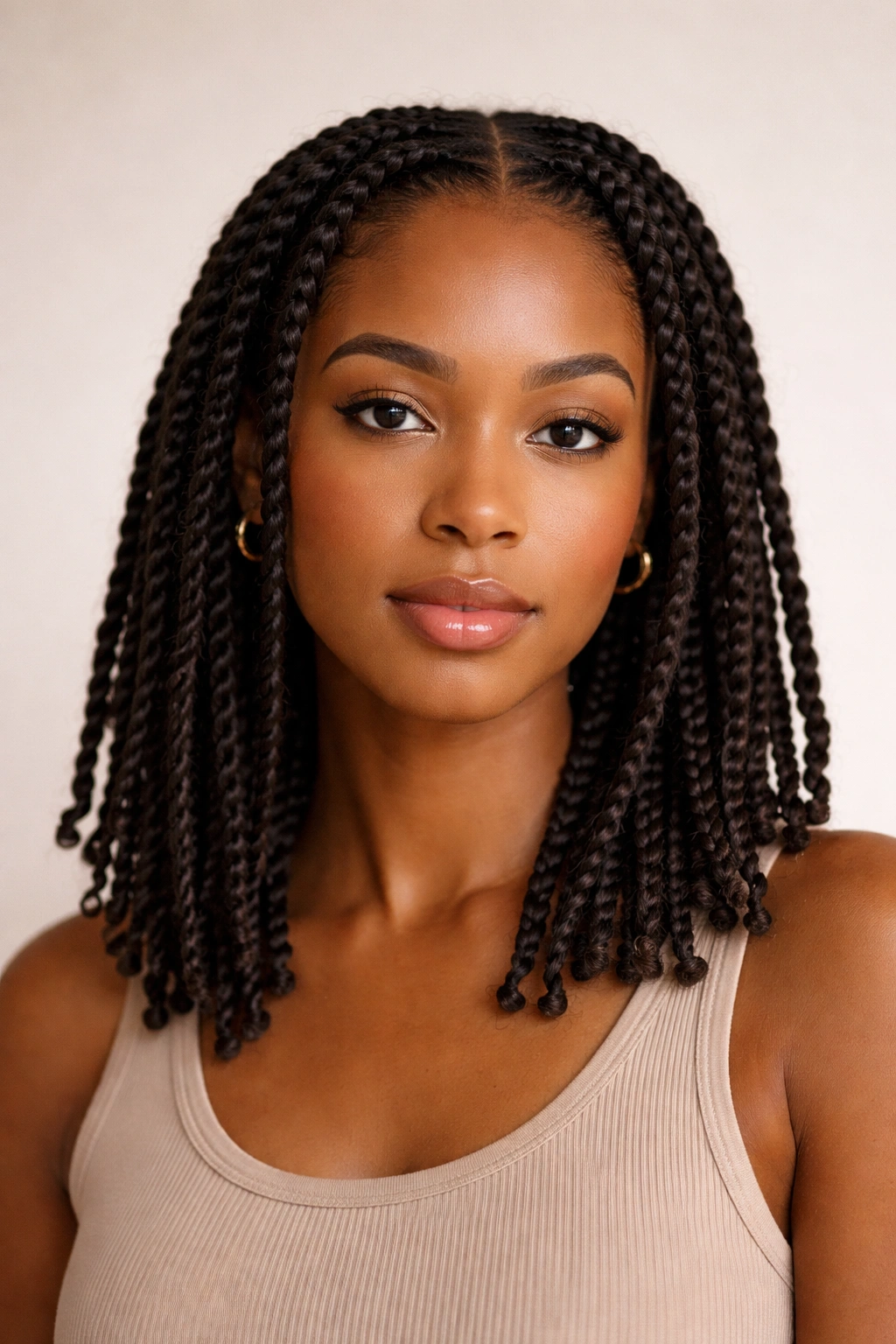
If you start from stretched natural hair, two-strand twist braids become a whole lot easier to live with. The sections part more cleanly, the twists hang more evenly, and the finished style tends to stay flatter against the head. That means less bulk, less shrinkage chaos, and less time spent wrestling your own texture into submission.
This is a good choice when you want to keep your hair mostly your own, without adding extension hair. It feels lighter than added-hair styles and can be washed more easily. The tradeoff is that it may not last as long as a heavier synthetic install. You’ll usually refresh it sooner. That’s the deal.
When to choose this over added hair
Choose it when you want:
- Less weight on your scalp.
- Easier washing between wear periods.
- A more natural silhouette that doesn’t look heavily built.
- Fast styling after a blow-dry or banding session.
Choose something else when you want a style that can sit untouched for a longer stretch. Added hair usually wins there.
What I like most here is the honesty of the style. It does not pretend to be something it isn’t. It’s clean, light, and practical. If your hair is already stretched, this can be one of the least demanding ways to keep it neat for a stretch without a lot of extra work.
11. Ghana-Style Feed-In Twist Rows
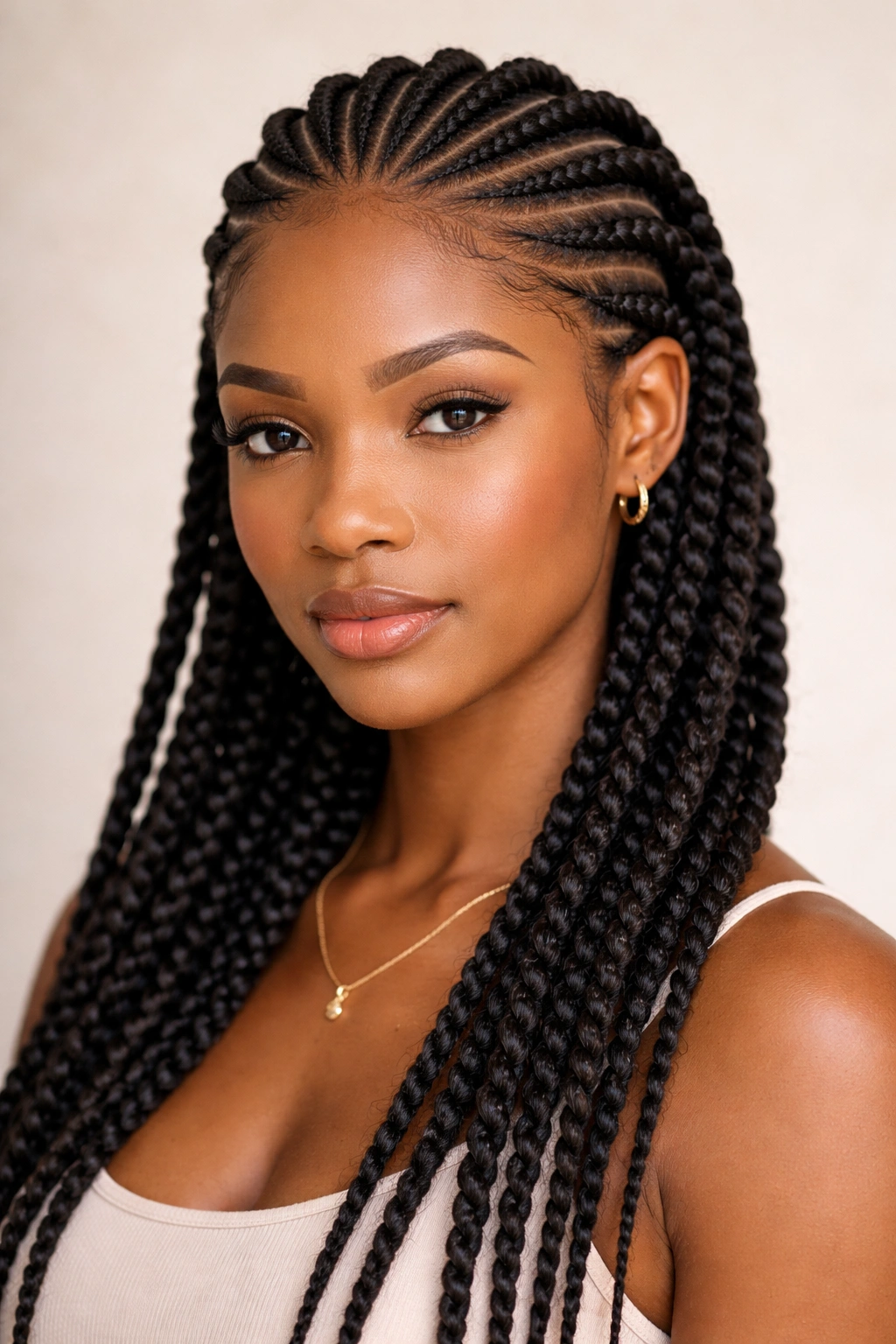
Ghana-style twist rows sit in a sweet spot between a braid-row look and a twist finish. The scalp pattern is clean, the feed-in keeps the base smooth, and the rows give the style a nice architectural feel without making it stiff. If you like your hair to look deliberate, this is a strong pick.
The reason it stays low-maintenance is simple: the rows do the organizing for you. Once the parting is done well, you’re not spending every morning figuring out what to do with loose pieces. The structure is already there. That’s half the battle.
This style can be worn straight back, angled, or curved toward the side. Straight back is easiest to maintain. Angled rows give a little more movement. Curved rows look polished, but they take more time in the chair. I’d pick the cleanest shape you’ll actually enjoy wearing for the full life of the style.
A few useful details:
- Ask for medium-width rows if you want quicker install time.
- Keep the feed-in sections even from row to row so the style doesn’t lean heavy on one side.
- Use a light oil on the scalp only, not on the twist lengths.
- Sleep with a scarf that covers the entire row pattern, or the front will frizz first.
This style looks sharp without being precious. That’s a good quality in a hairstyle. More of them should have it.
12. Mini Twist Braids That Age Gracefully
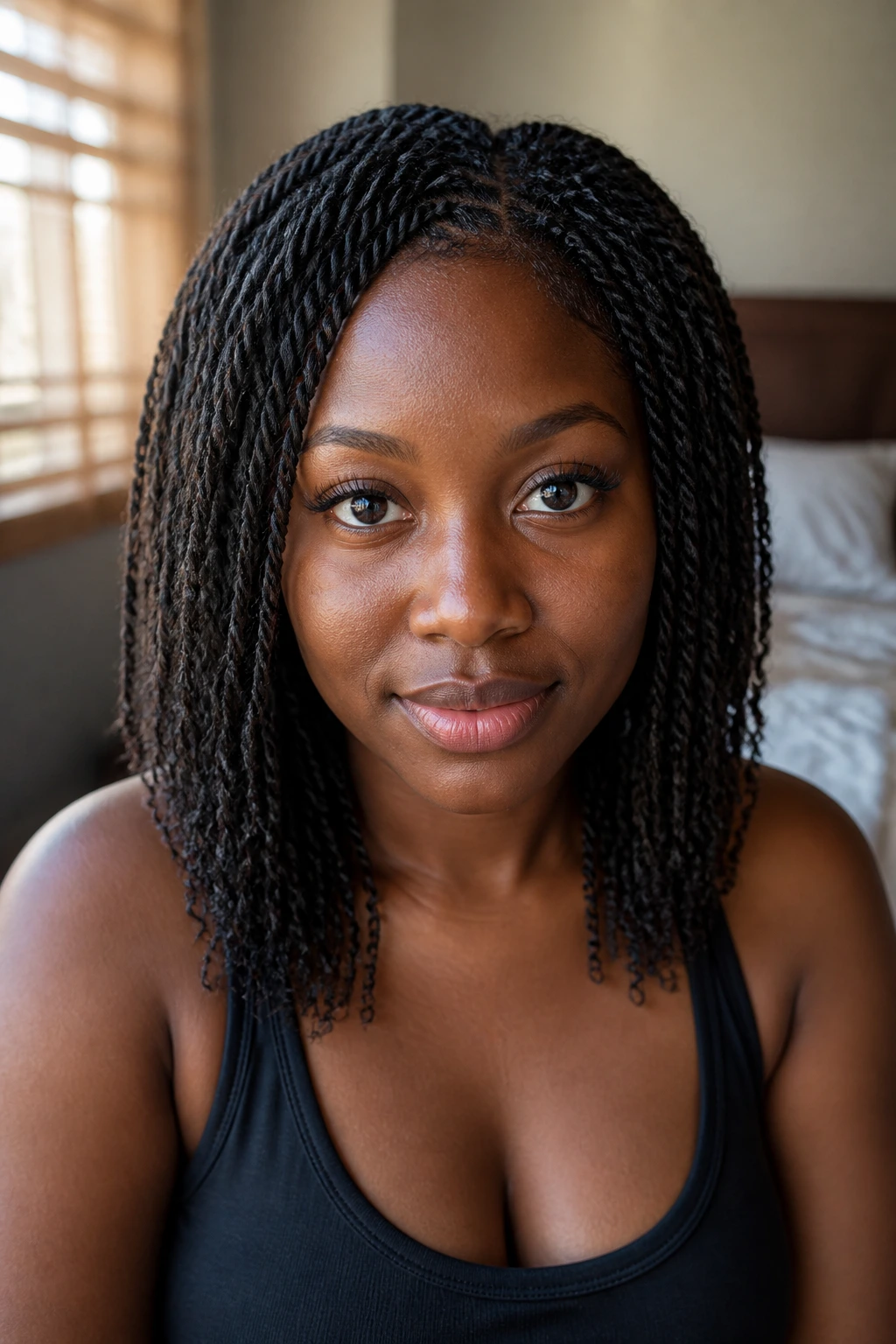
Tiny twists are not lazy hair. They are patient hair. They take longer to install, yes, and that part is not glamorous. But once they’re in, they can sit quietly for a long stretch and keep looking intentional long after bigger, bulkier styles start getting messy around the edges.
The thing people love about mini twists is not just the neatness. It’s the way they age. A little frizz doesn’t wreck them. New growth doesn’t shout through them on day five. The style just softens in a controlled way, which is useful if you do not want to babysit your hair every other morning.
They’re also flexible. You can wear them down, pile them into a bun, or split them into a half-up style without much drama. And because the twists are small, they spread out the visual load. The whole head looks full without needing big, heavy sections.
The maintenance rhythm that works
- Mist the hair lightly every few days if it starts to feel dry.
- Separate any twists that start to clump before washing, not after.
- Sleep with a satin bonnet that actually covers the ends.
- Clean the scalp gently with a narrow applicator bottle, not with a heavy pour.
Mini twists ask for patience up front. After that, they mostly stay out of your way. If your life runs on a lot of moving parts and you want your hair to stop needing an announcement every morning, this is one of the smartest choices on the list.
And honestly, that’s the charm of the whole category. The best Afro twist braid styles are not the ones that look impressive for one afternoon. They’re the ones that keep showing up for you on ordinary days, when you do not have time to redo anything and still need your hair to look like you meant it.
