



A braid can save a wash day, or it can wreck your edges.
On Afro-textured hair, the difference is not magic. It’s tension, section size, installation speed, and whether the style works with the way your curls spring back after every rinse. A braid that feels light for one person can feel like a helmet for another, and that’s before you even get into parting patterns, extension weight, or how much scalp you want to see.
If you’ve ever taken down braids and found soft roots, clean parts, and hair that still feels like yours, you already know the sweet spot. If you’ve ever had sore temples, itchy nape lines, or a braid install that looked neat but felt punishing by day two, you know the other side.
That’s why braid choice matters so much for Afro-textured hair. Some styles are low-drama and easy to live with. Some are gorgeous but ask for more maintenance. A few are worth every minute in the chair because they buy you weeks of neatness, shape, and easier mornings. The trick is matching the style to your scalp, your density, and your tolerance for weight at the roots.
1. Box Braids
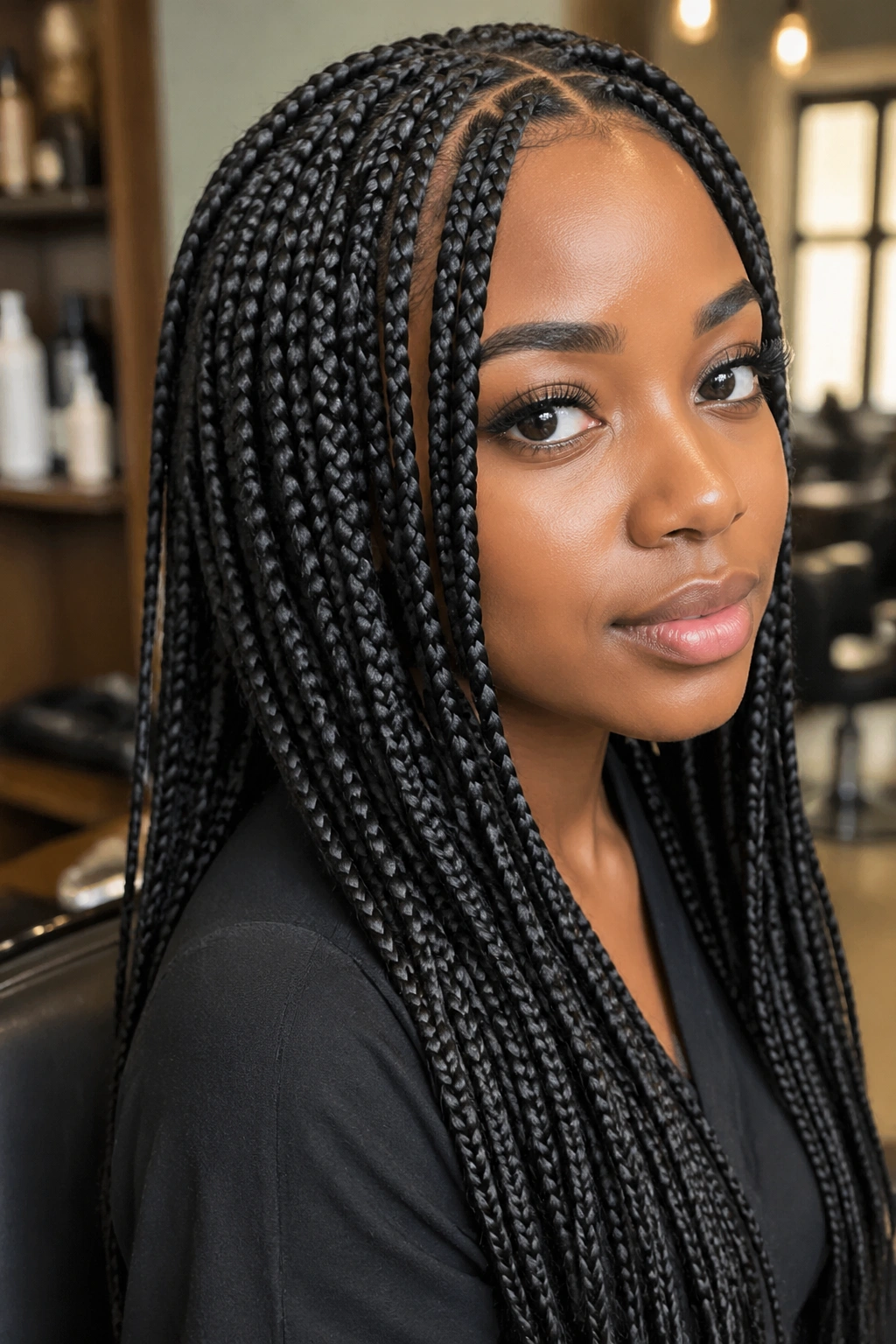
Box braids are the classic for a reason. They give Afro-textured hair a clean, structured look without forcing it into one narrow shape, and they work at a size range that can be soft and loose or bold and chunky. The standard square parting gives the style its name, but the real strength is versatility. You can wear them down, pile them into a bun, sweep them into a half-up look, or tuck them behind the ears and be done with it.
Why They Still Hold Up
What box braids do well is simple: they distribute the hair into even sections. That matters because even sectioning helps the style hang better and keeps one side from feeling heavier than the other. Medium box braids tend to strike the best balance for a lot of people — neat, visible, and not so tiny that installation turns into an all-day marathon.
A good box braid install should feel secure, not clenched. If the braid feels tight at the scalp before you’ve even left the chair, that’s a bad sign. The edges should not be under pressure just so the style looks crisp.
- Best for: medium to thick density, shoulder-length through long hair, and people who like a style that can shift from casual to polished.
- Part size: usually about 1 to 1.5 inches for medium braids; smaller parts create a longer install and a more delicate look.
- Watch for: too much synthetic hair packed into one section, which makes the braid heavy fast.
My blunt advice: ask for clean parts and sane tension; pretty braids that hurt are not a win.
2. Knotless Box Braids
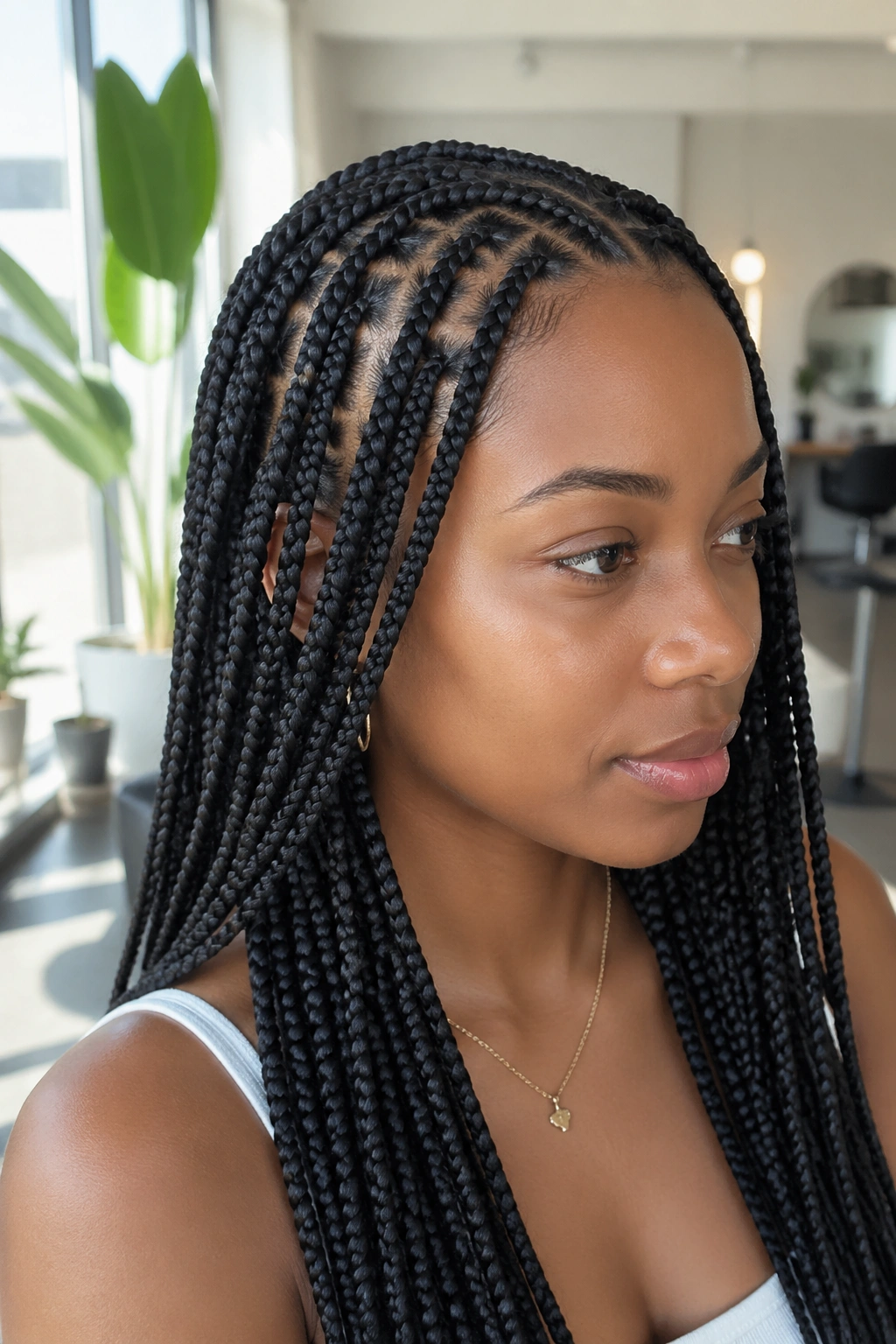
If box braids can feel a little heavy at the front, knotless box braids are the version I reach for first. The braid starts with your own hair and the extension hair is fed in gradually, which means there isn’t one big knot sitting on the scalp. That small change makes a real difference in how the style feels on day one and day ten.
Knotless braids also tend to move more freely. They have a flatter base, less bulk at the root, and a softer swing when you turn your head. That’s not just a cosmetic detail. A flatter start can reduce the heavy, tugging sensation that some people get with traditional braids, especially around the hairline and temples.
They do take longer to install. No way around that. But the payoff is a braid that looks polished without feeling stiff, and that matters if you wear braids often or if your scalp is fussy.
You can also adjust the finish more easily. Medium knotless braids give you a nice drape. Small knotless braids look intricate but can take a while to complete. If you like long braids, keep the base light and let the length come from the added hair, not from stuffing the roots.
3. Straight-Back Cornrows
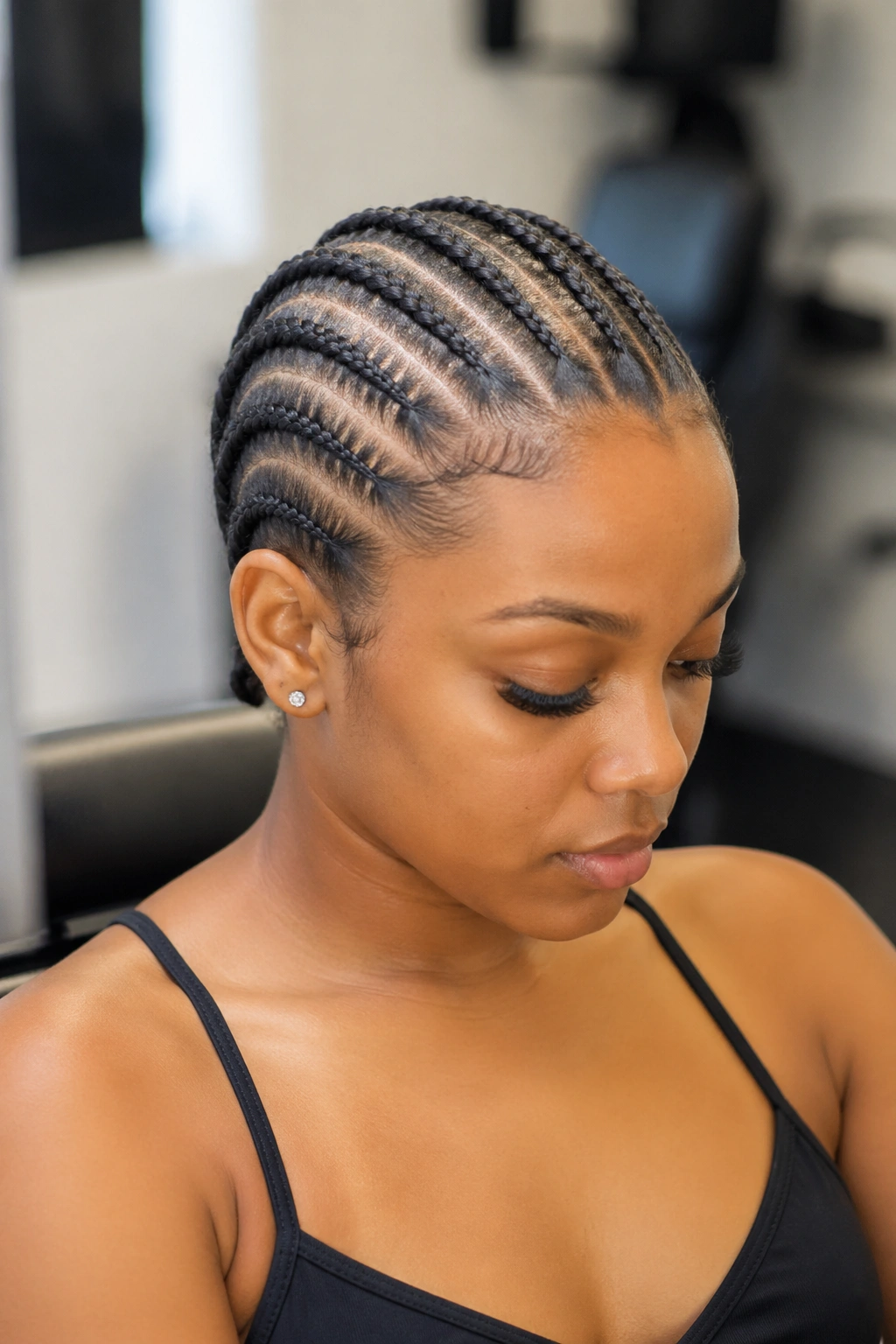
Want the braid style that makes your scalp easy to see and your routine easy to manage? Straight-back cornrows are it.
They sit close to the head, run in clean rows from front to back, and keep the ends tucked neatly away. That makes them useful for gym schedules, wig installs, low-maintenance weeks, or any stretch when you want your hair off your neck and out of the way. They also dry fast after washing, which sounds small until you’ve spent a whole afternoon waiting on thick braids to air-dry.
Why the Parting Matters
The neatness of straight-back cornrows comes down to section control. The rows should be even, and the braid should lie flat without being yanked tight. If one row is wider than the next, you’ll feel it. So will your scalp.
- Best for: low-maintenance styling, short-to-medium natural hair, and protective styling under hats or wigs.
- Keep an eye on: tight edges, especially near the temples and nape.
- Style note: a little edge control can sharpen the look, but piling on product makes the roots sticky fast.
Straight-back cornrows are plain in the best way. They don’t need extra decoration to work, and that’s part of their charm.
4. Feed-In Braids
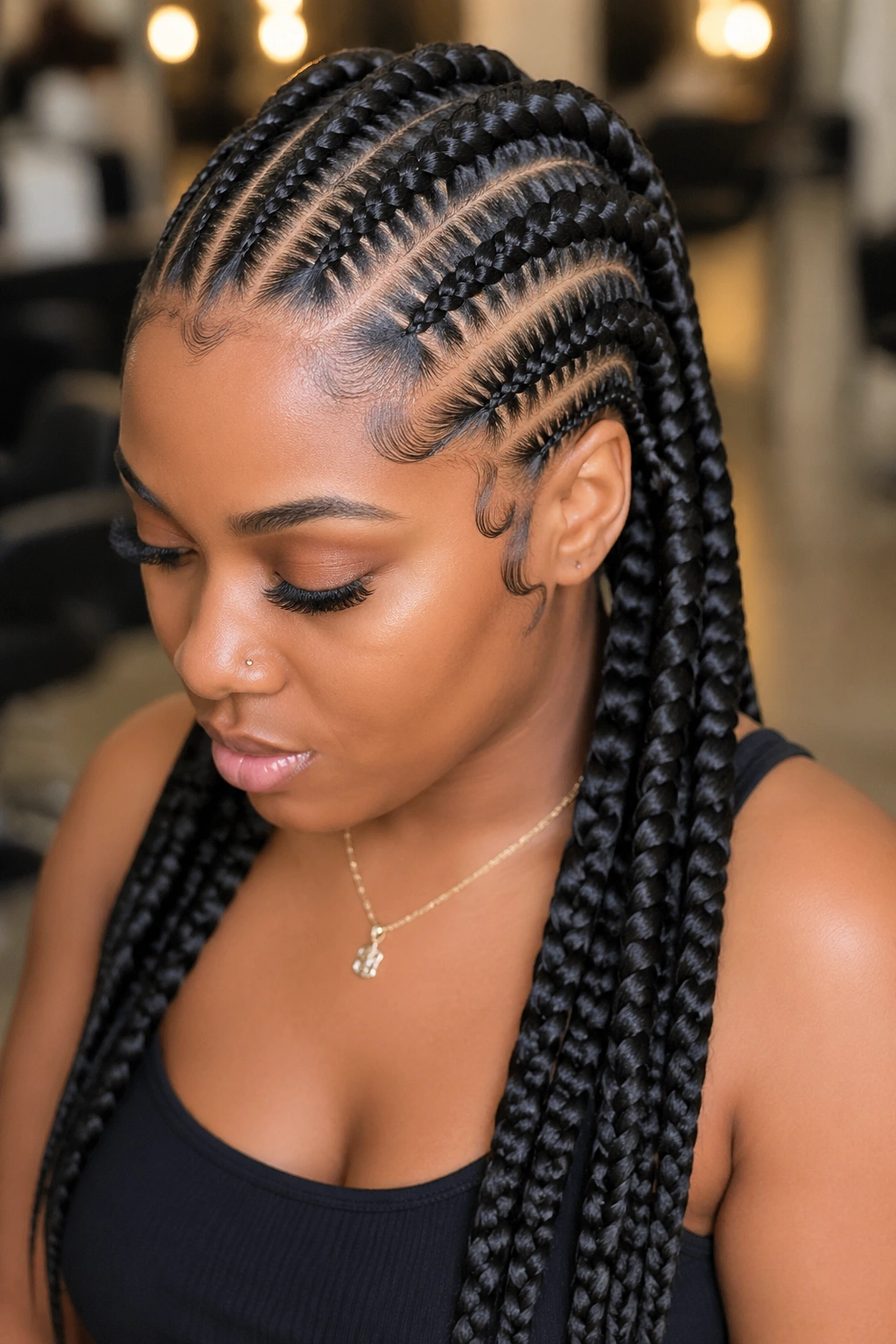
Feed-in braids start slim and build gradually, which gives them that smooth, swept line from scalp to length. The hair is added in small pieces as the braid moves down, so the root doesn’t have that abrupt, chunky start you sometimes see with heavier installs. Visually, the braid looks cleaner. Physically, it usually feels lighter.
This style is especially nice when you want a long braid look without a thick anchor sitting on the scalp. Feed-ins can be used for straight-back rows, ponytail braids, curved parts, or more sculpted designs. That flexibility is a big reason stylists like them.
The key thing is balance. Too much added hair too early makes the base bulky, and then the whole braid sits awkwardly. Too little hair, and the braid can look thin at the mid-lengths. The sweet spot is a braid that starts narrow, thickens smoothly, and keeps a consistent tension all the way down.
Feed-in braids also pair well with neat parting. Crisp parts make the whole style look intentional instead of busy. If you want a style that reads polished from a distance and detailed up close, this is a strong choice.
5. Goddess Braids
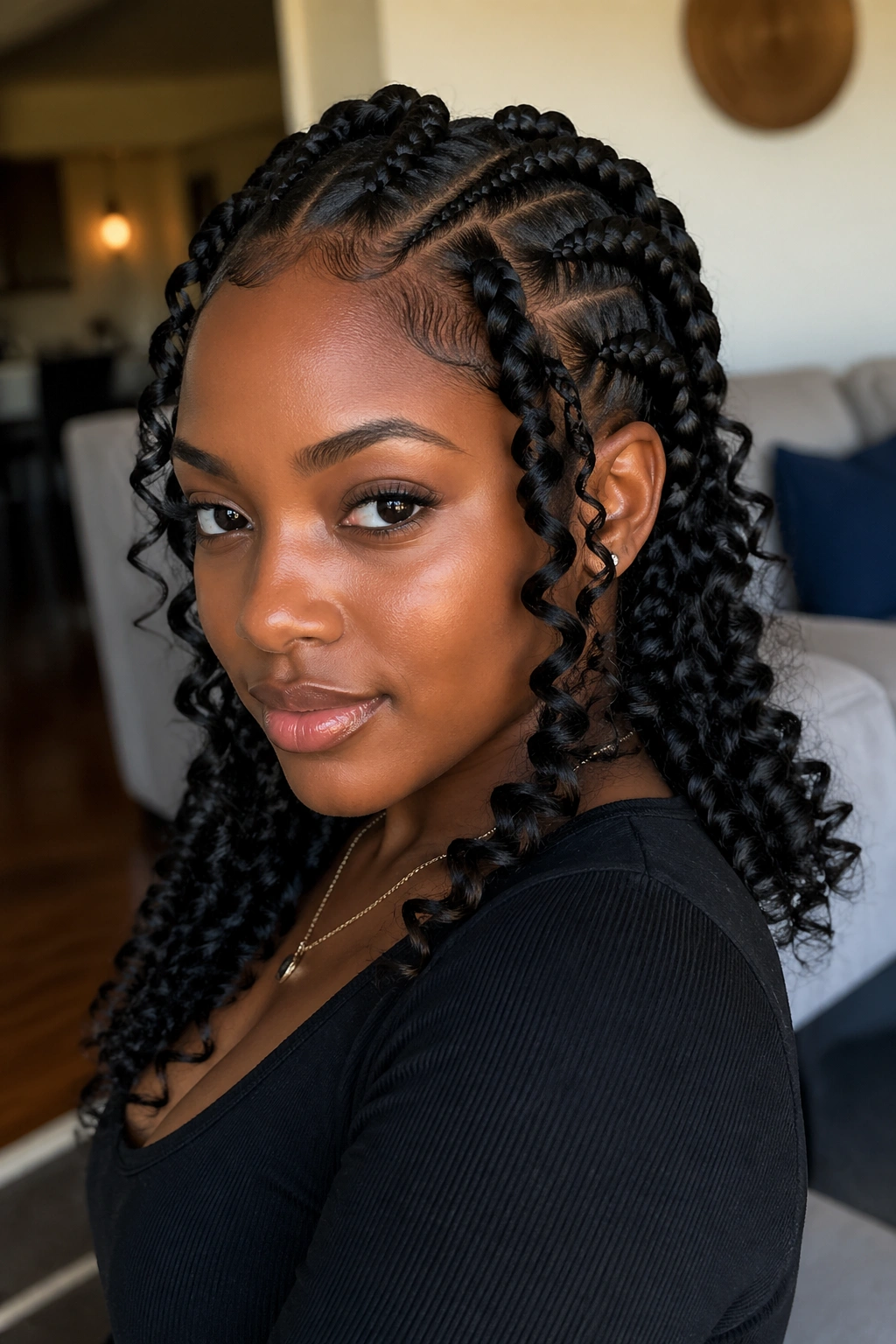
Goddess braids are thicker, softer-looking cornrows that often include loose curly pieces woven in or left hanging near the ends. They have a fuller shape than standard cornrows, and that extra volume changes the whole mood. The style feels decorative without trying too hard. That’s the appeal.
They are especially good when you want something that looks dressed up but still keeps the hair close to the head. On medium to thick Afro-textured hair, goddess braids can hold their shape beautifully because the braid itself has enough body to support the added texture. On finer hair, they can still work, but the install has to be thoughtful so the braid does not drag at the root.
Loose curly ends do need a little care. A light mist of water or a leave-in spray can help them stay defined, though you do not want to soak the style and make the base frizzy. Frizz at the curly sections is fine. Frizz at the scalp is the thing that makes the style look tired.
Goddess braids are a good pick if you like softness around the face and a braid that feels more ornamental than строг? No, scratch that — more softly dressed up than severe. They sit nicely between everyday and occasion hair.
6. Fulani Braids
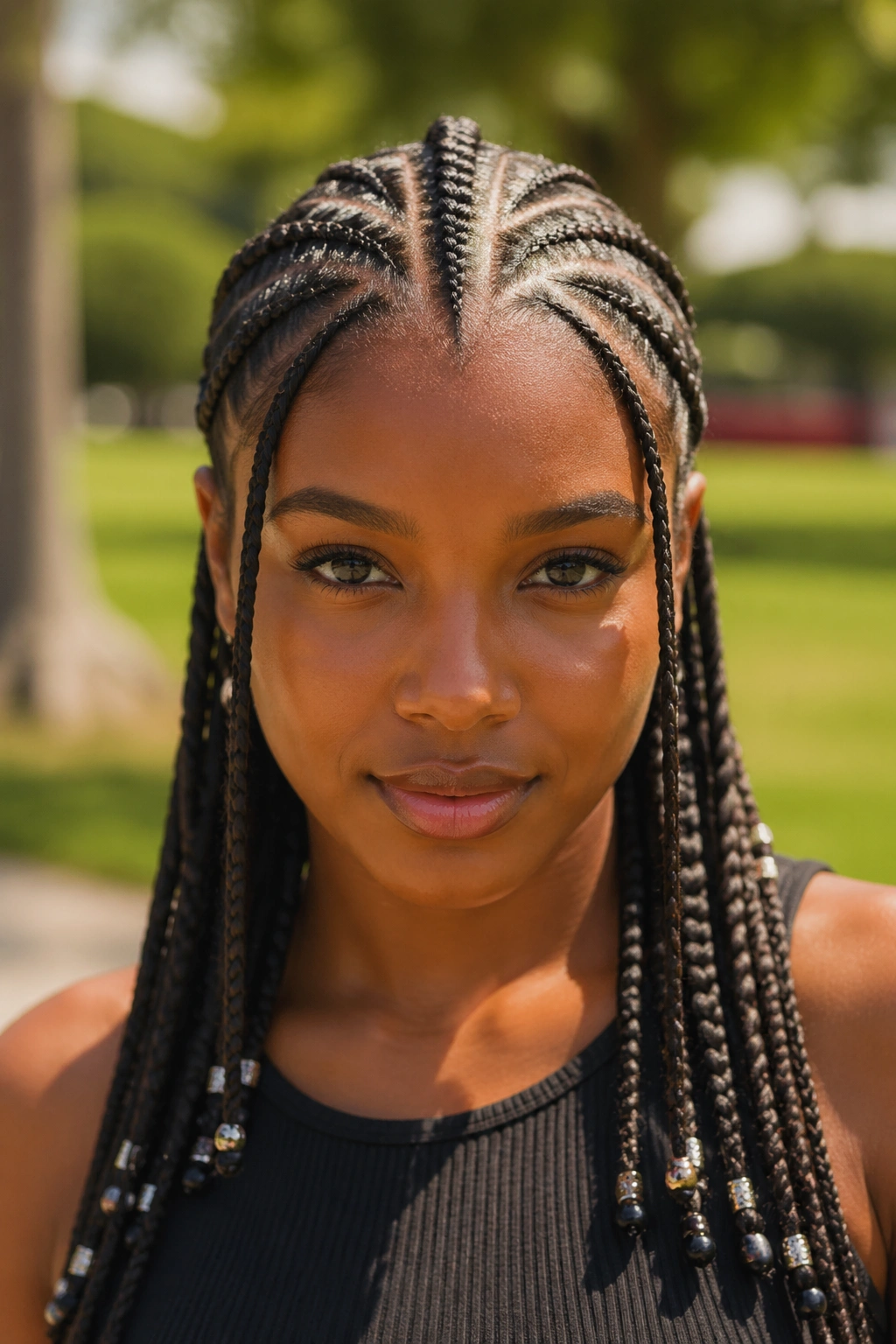
Fulani braids are the ones with a central braid or center part, side cornrows, and hanging braids that often frame the face. Beads or cuffs show up a lot here, but they are not required. What makes the style stand out is the pattern: it feels directional, balanced, and a little ceremonial in the best possible way.
Unlike straight-back cornrows, Fulani braids put the front and sides of the head on display. That creates a focal point right where the eye lands first. If you like a style that frames your face instead of pulling everything backward, this is a strong bet.
They suit people who want decorative detail without going full sculptural. A middle braid down the crown can lengthen the face, while side braids can soften the hairline. The style also leaves room for small changes — thinner side rows, a longer center braid, a few beads on the ends, or a cleaner, minimalist finish with no extras at all.
Fulani braids are best when the parting is precise. Sloppy lines ruin the whole look. If your stylist is strong with geometry, this style pays off fast.
7. Lemonade Braids
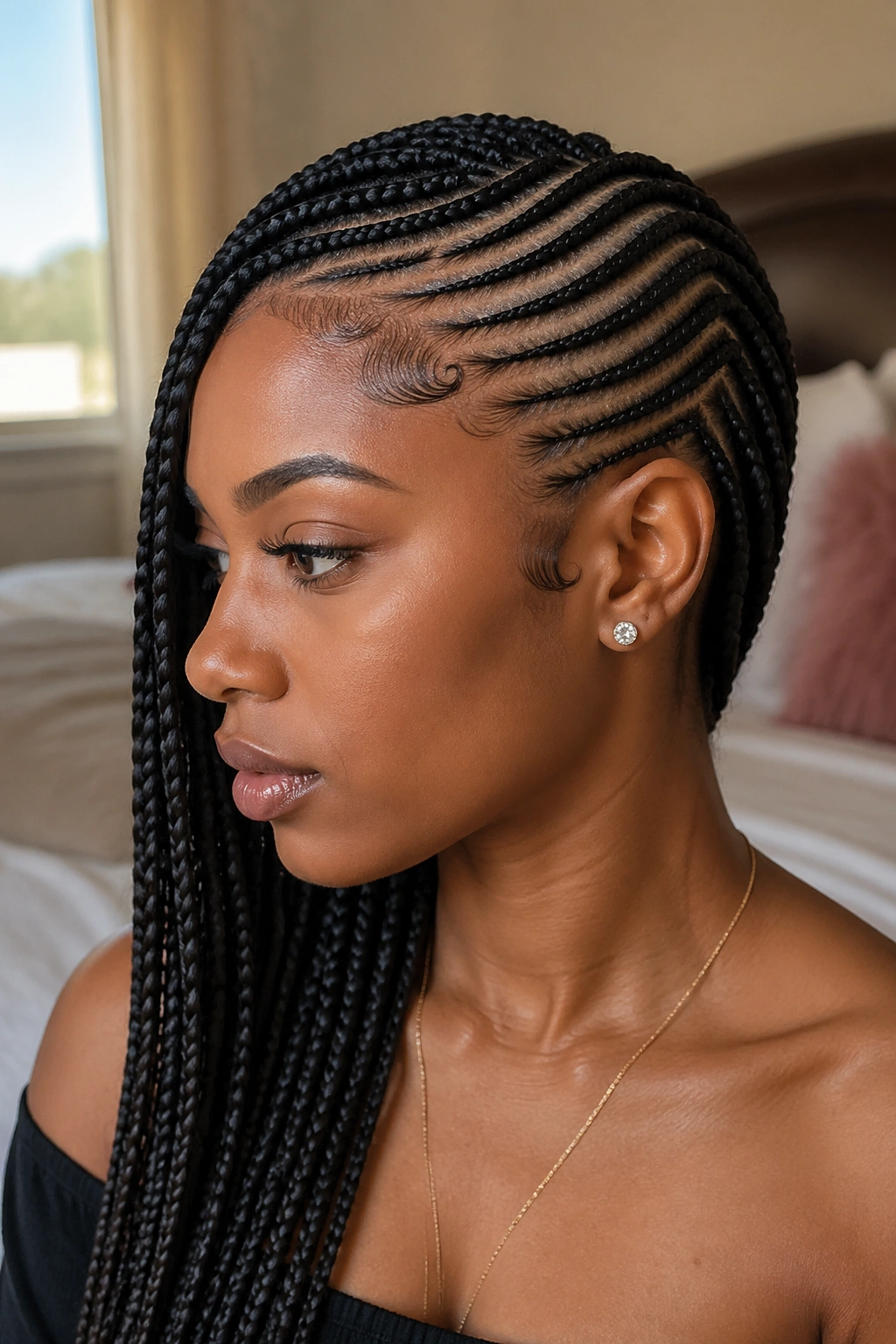
Lemonade braids are the side-swept braids that made a clean side part feel almost architectural. The braids angle across the scalp instead of running straight back, and that direction gives the style movement even when the hair is fully tucked in. It’s a sharp look. Still feminine, still sleek, but with a little attitude.
The side part matters more here than people sometimes admit. A deep side part can create drama right away, but the braid rows still need to be even so the style doesn’t tip visually to one side. If the front rows are too tight, the look loses its flow. If they’re too loose, the parting goes fuzzy fast.
Lemonade braids are a good match when you want your braids to read as a style, not just a convenience. They photograph well in real life because the lines are clear from almost any angle, and the sweep across the head gives shape to the face.
They also work nicely if you like wearing one side tucked behind the ear. Small thing. Big payoff. That little movement keeps the style from looking too formal, which is why I think it works so well on Afro-textured hair with strong curl pattern and good density at the edges.
8. Stitch Braids
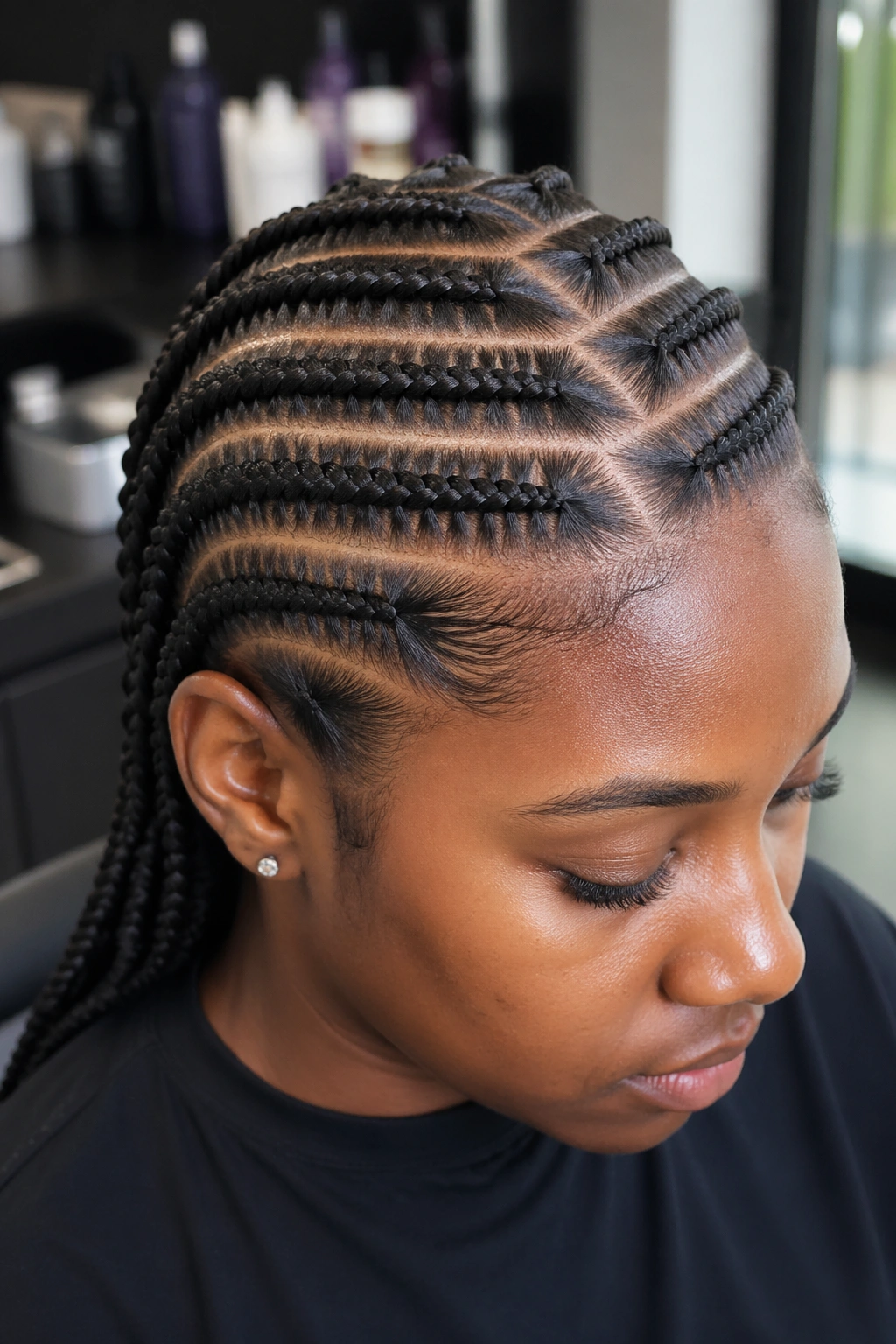
Stitch braids are all about the parting. The rows look like tiny horizontal stitches laid across the scalp, and that crisp segmented look gives the style its name. It’s one of those styles that looks simple from far away and extremely detailed when you get close.
What Makes the Parts Stand Out
The “stitch” effect comes from precise sectioning. Instead of one smooth braid line, the stylist creates clean little lanes along the scalp before feeding hair into the braid. Those lanes need to be sharp and evenly spaced or the whole style loses its structure. This is not a rushed style. It shows every shortcut.
Stitch braids are useful if you want clean definition without a lot of loose volume. They can be worn straight back, curved, or pulled into longer patterns, and they often pair well with extensions because the parting carries so much of the visual weight.
A few practical points matter here:
- Best for: people who like crisp, graphic braiding and do not mind a more detailed install.
- Tension check: the scalp should feel firm, not sore; sharp parting does not require harsh pulling.
- Styling note: a light oil on the scalp can help if your skin gets dry under close braids.
Stitch braids are one of those styles that reward a steady hand. If the parts are clean, they look expensive without needing much else.
9. Triangle-Part Braids
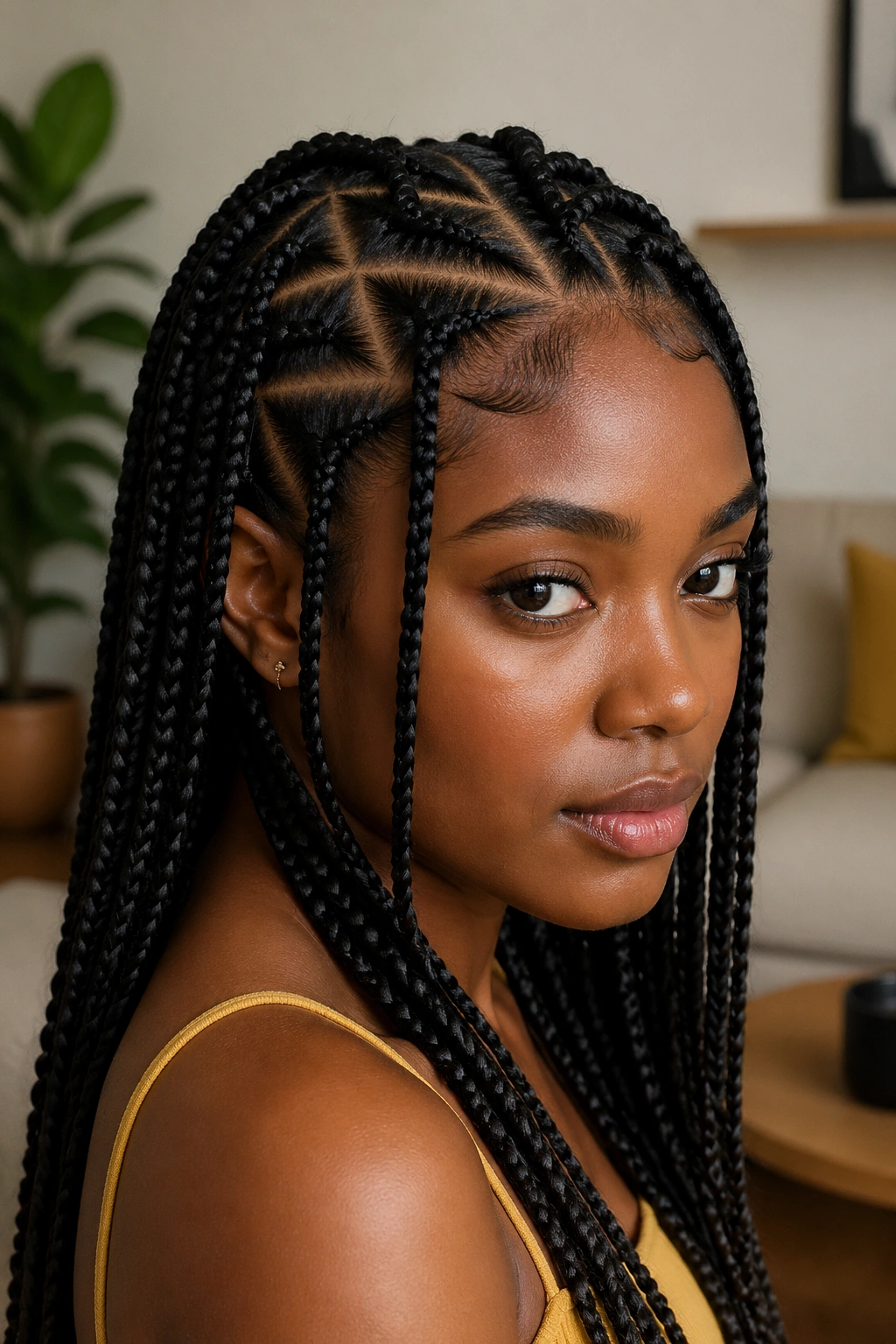
Square parts are familiar. Triangle parts feel a little sharper.
That geometric switch changes the mood of the braid without changing the basic care routine, which is why triangle-part braids are such a smart choice if you want something different but not difficult. The braid itself might be box braids, knotless braids, or even feed-ins. The part is what changes the personality of the style.
Triangle parts catch the eye because they break up the grid. Instead of rows and boxes, you get angles that shift as the hair moves. It is a small design choice, but it stops the style from looking flat.
- Good for: people who already like box braids but want a fresh layout.
- Care needs: same as your braid type, because the part shape does not reduce maintenance.
- Visual effect: sharper, more modern, less expected.
I like triangle parts when someone wants a style upgrade without changing the whole routine. You still get protective styling. You still get easy sectioning at the scalp. You just get a pattern that feels more deliberate when the hair is gathered up or pinned back.
10. Braided Bun Updo
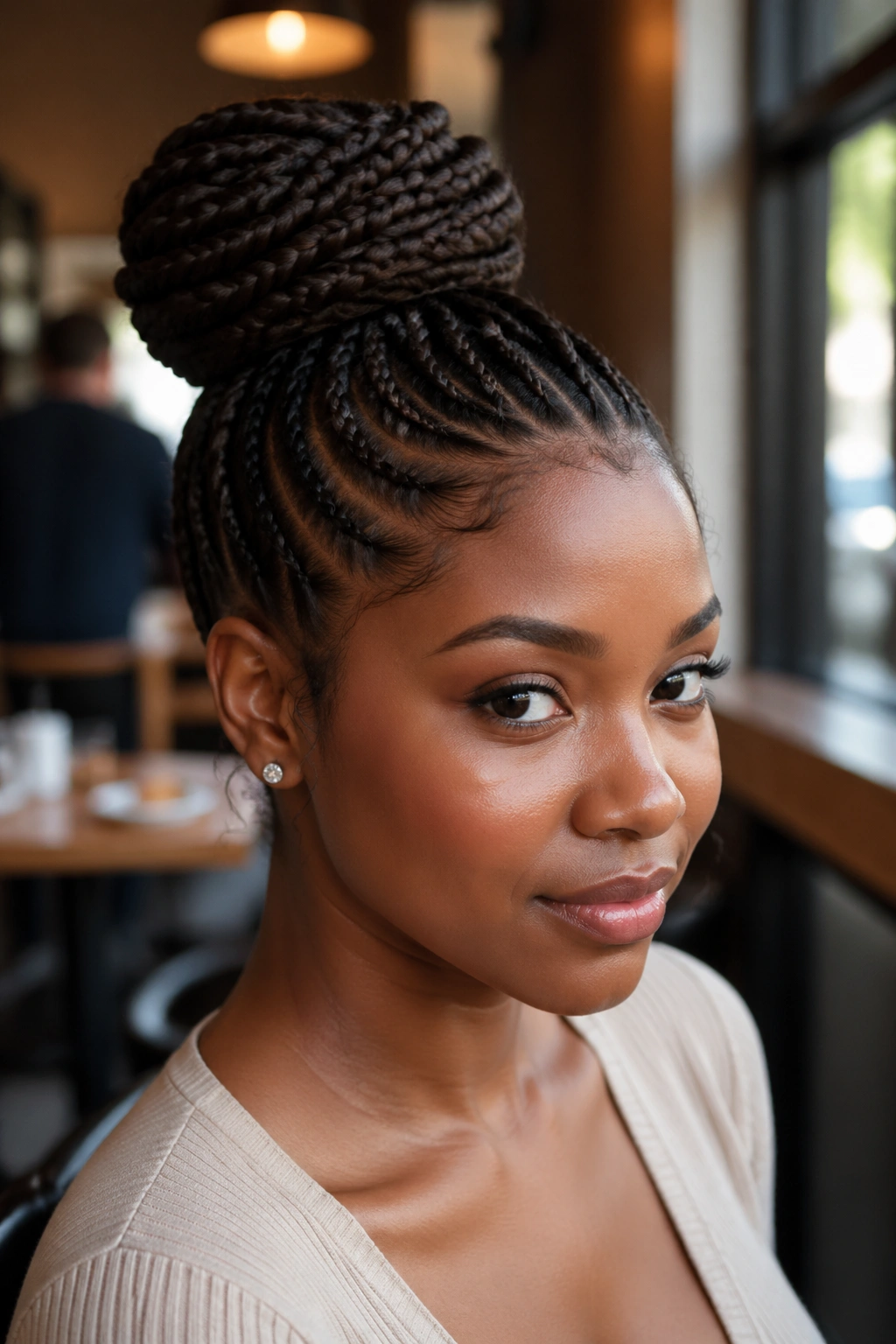
A braided bun can look formal, but it does not have to feel fussy. That’s what I like about it. You take the structure of braids — cornrows, box braids, feed-ins, whatever base you prefer — and gather them into a bun that sits high, low, or somewhere in between. The result keeps the neck clear and puts all the attention on the shape of the crown and face.
This style is practical in a way people sometimes underrate. If your hair feels heavy when it hangs down, a bun redistributes the weight. If you need your ends fully tucked away for work, weather, or just your own sanity, the bun solves it fast.
The caution is simple: the bun should not be pulled so tight that it feels like a knot at the back of your head. A firm wrap is fine. A headache is not. Leave a little softness at the hairline if needed, especially if your braids are already long or thick.
A braided bun also ages well over the course of a wear cycle. It can start neat, loosen a little, and still look intentional. That’s rare. A lot of styles lose their shape quickly. This one often gets better after the first day.
11. Halo Braid Crown
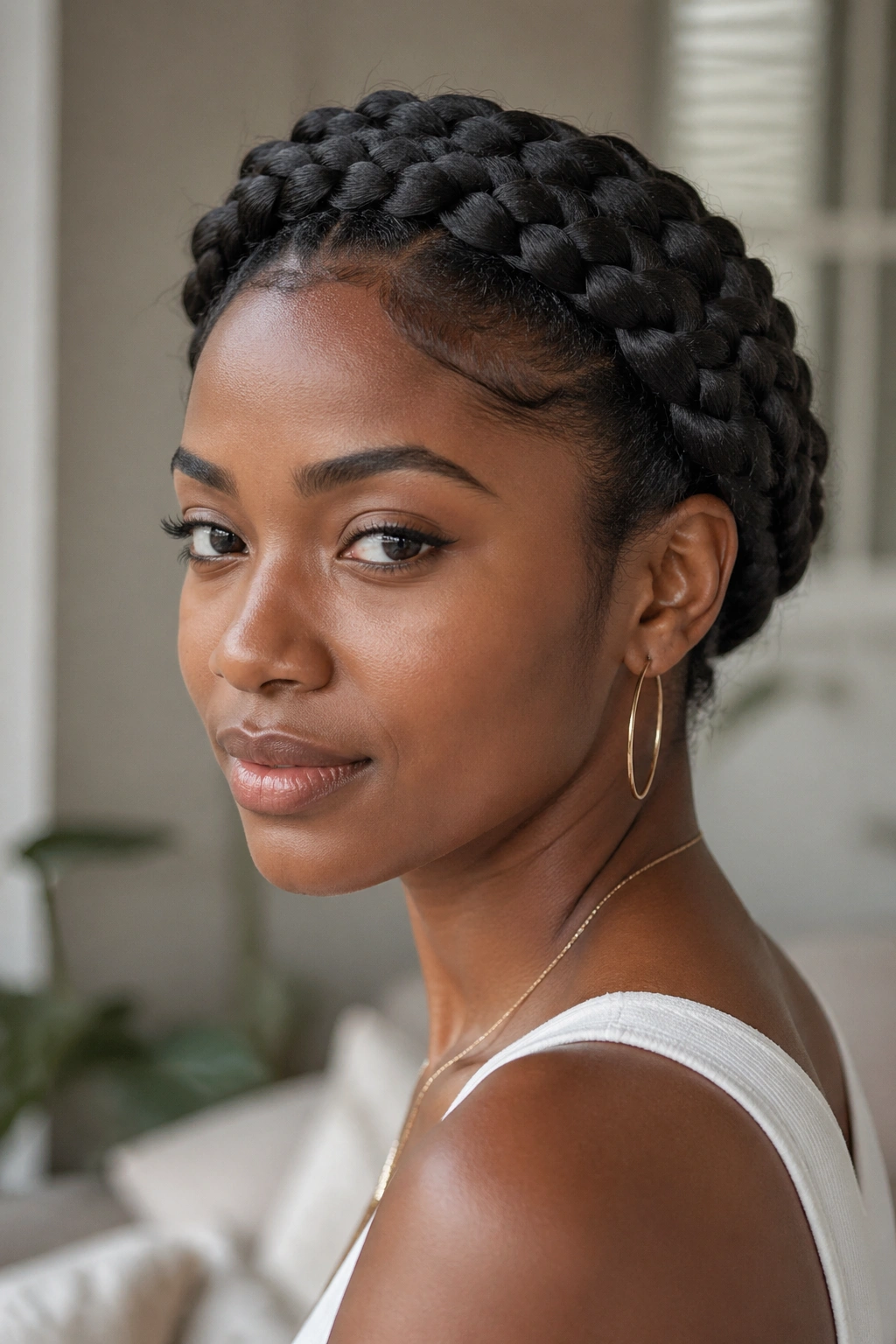
Halo braid crowns are the closest thing braid styles have to instant polish. The braid wraps around the head like a crown, usually following the perimeter of the hairline or just inside it, and the ends are tucked out of sight. The whole look keeps the hair off the shoulders and gives the face a framed, finished shape.
Compared with loose-hanging braids, the halo style is tidy in a different way. There’s less motion, less swing, and less chance of the ends snagging on clothing. That makes it a strong pick for formal events, long workdays, or days when you want your hair to stay put without constant adjusting.
It works best when the hair is stretched or already in braids that can be wrapped cleanly. Very short natural hair can still do versions of this style, but the crown has to be pinned carefully so it does not unravel at the temples. Those side points matter more than people think. The ears and nape reveal whether the crown is secure.
A halo braid crown is not the flashiest braid style on the list. It is one of the neatest, though, and sometimes that’s the point.
12. Braids with Beads
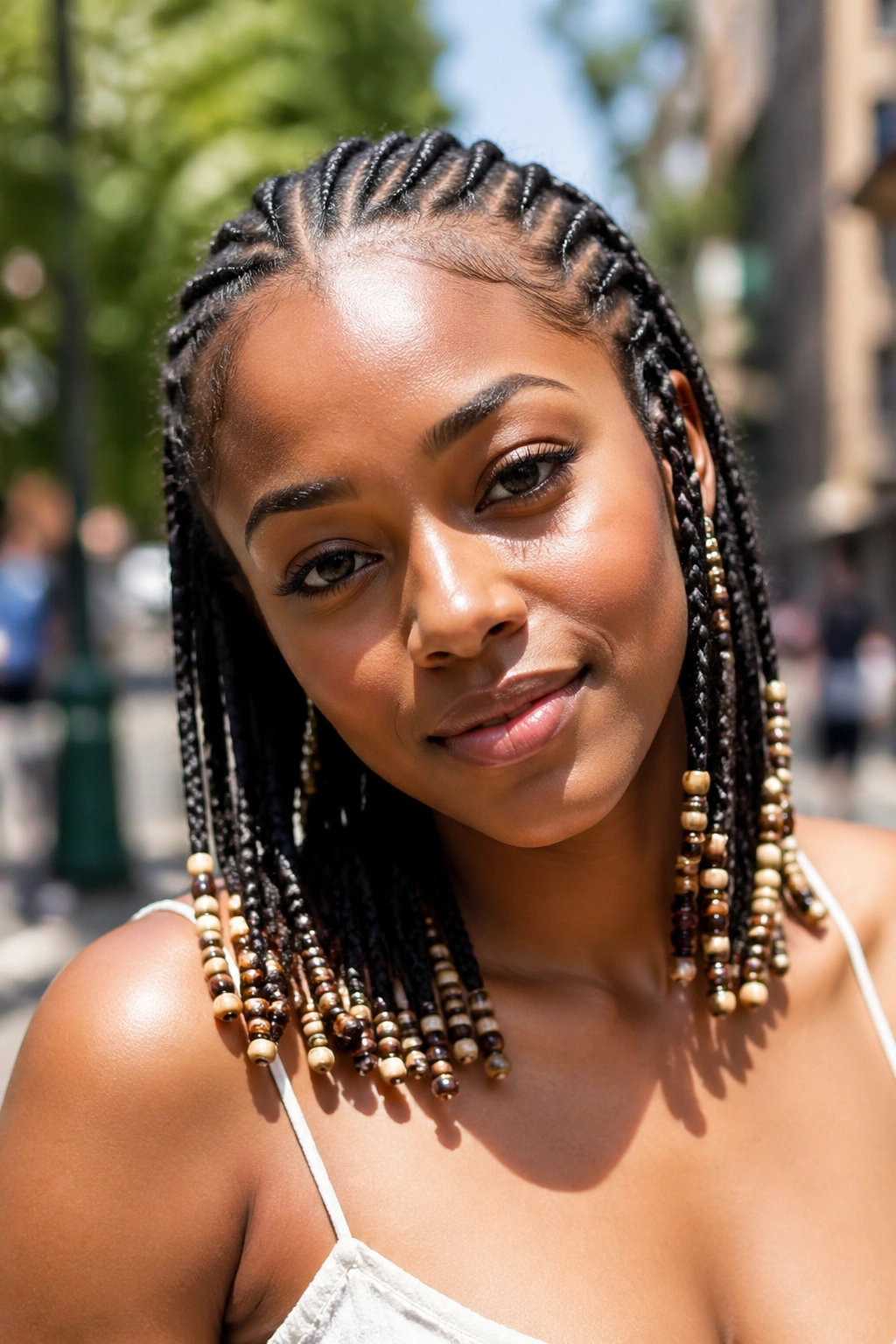
Braids with beads can look playful, polished, ceremonial, or all three at once. The beads change the sound, the swing, and the weight of the style, which is why they should never be treated like an afterthought. One or two beads can be a small accent. A full set can shift the whole braid from understated to bold.
The important thing is balance. Beads belong on the ends, but not so many that they tug downward and stress the braid. That matters even more on finer hair or around the front hairline. If the ends start feeling heavy, the style is no longer decorative. It is dragging.
Different bead materials give different results. Wooden beads feel warm and earthy. Clear plastic beads read lighter and more playful. Metal beads add shine and a little sound, which some people love and some people hate. Pick the one that matches the braids, not just the outfit.
Braids with beads also have cultural weight, and that part deserves respect. The style has deep roots, especially in African and diaspora hair traditions. When the placement is thoughtful and the beads are used with care, the result feels intentional rather than costume-like.
13. Micro Braids
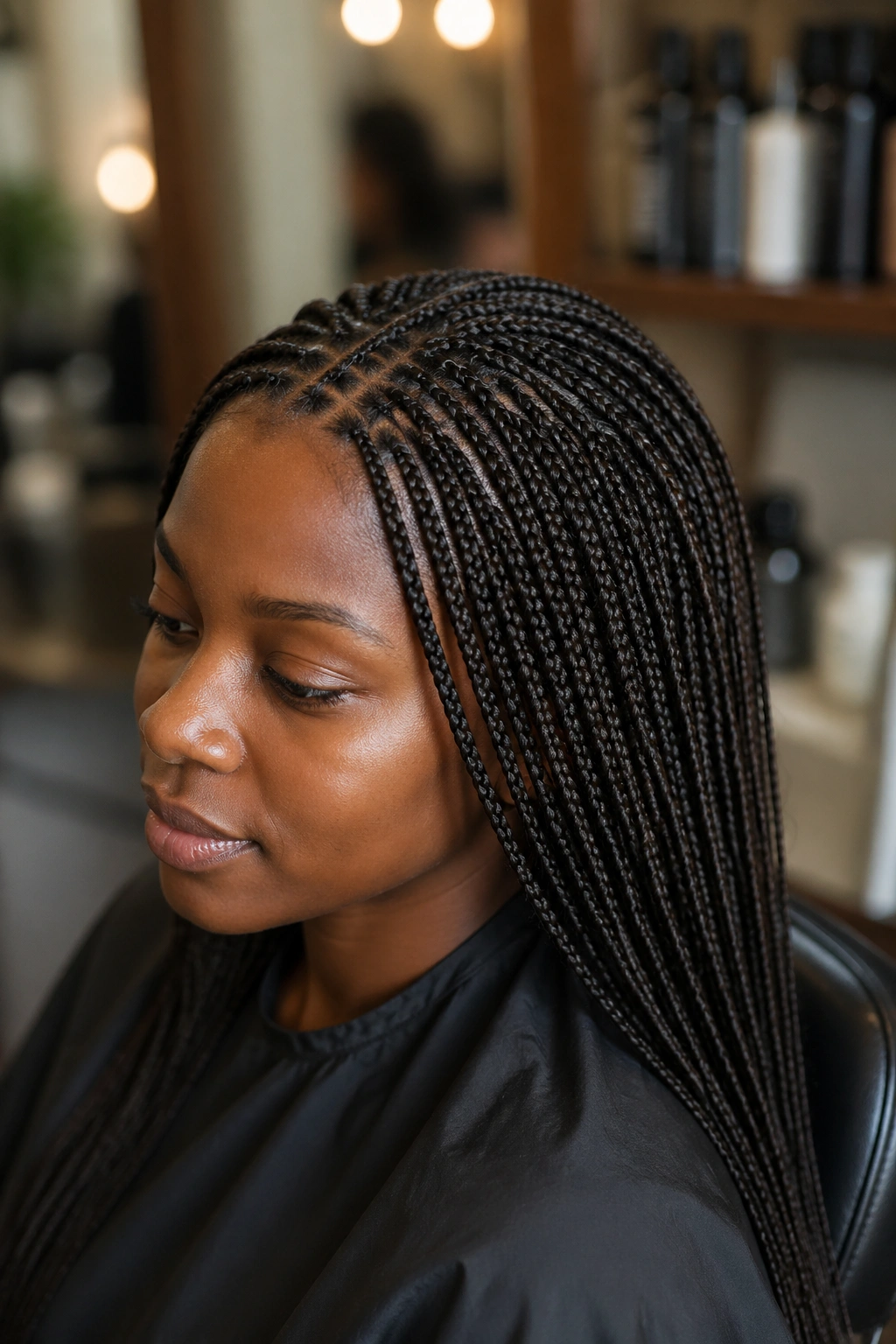
Micro braids are tiny. That sounds obvious, but it’s the whole story. They’re made from very small sections, and that gives them a loose, almost curtain-like movement that bigger braids can’t match. They can look delicate, detailed, and full of motion when they’re installed well.
Why the Size Matters
The small size means the install takes time. A lot of it. It also means the braids can blend beautifully with thick Afro-textured hair because the sectioning hides the scalp pattern in a softer way than large braids do. If you like styles that move like fabric, micro braids have that quality.
The tradeoff is upkeep. Tiny braids need careful washing, gentle detangling at removal, and good moisturizing at the scalp because the style can sit for a while. They also put more individual pieces into the hair, which means take-down day is not a casual event.
A few things to know before choosing them:
- Best for: people who want a long-wear style with fine detail.
- Not ideal if: you hate sitting in a chair for hours or you want something fast.
- Removal: work in small sections and use plenty of slip so you do not snag loose hair.
Micro braids reward patience. They are not the easy option, and they never pretend to be.
14. Tribal Braids
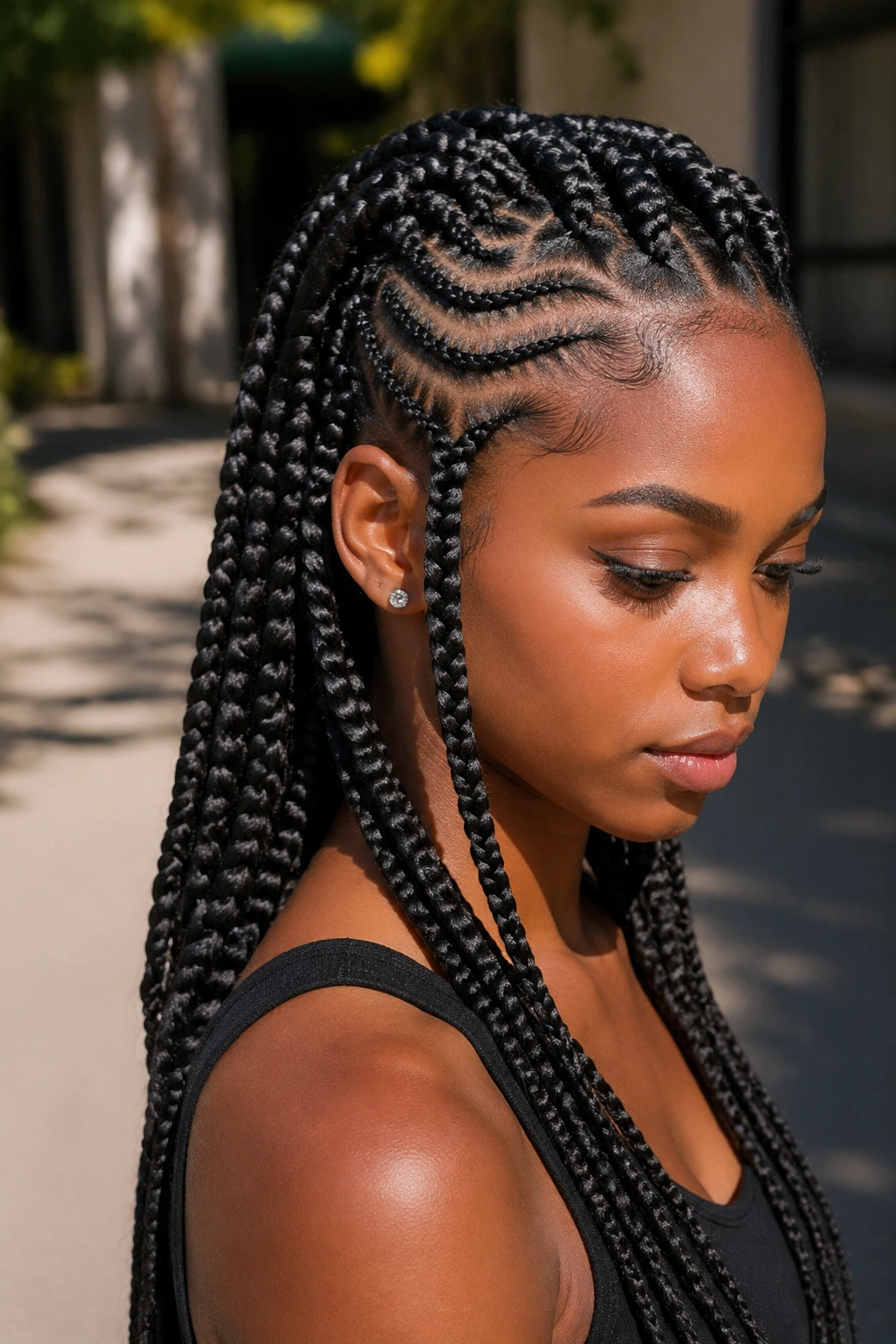
Tribal braids are built from contrast. You might see cornrows near the front, hanging braids in the back, maybe beads, maybe cuffs, maybe a middle part that acts like a spine through the design. The whole style feels layered because it is layered. That’s the point.
A good tribal braid look usually combines at least two braid ideas instead of relying on one. That can mean feed-ins up front and box braids in the back, or a center braid with curved side rows and loose lengths that fall behind the shoulders. The style works when the components speak the same visual language.
The trick is not overloading it. Too many accessories, too many part changes, too many braid sizes — the style starts fighting itself. Pick one focal point and let the rest support it. That could be a clean center part, a few decorative beads, or a set of angled braids that guide the eye.
- Best for: people who want dimension without losing the protective feel of braids.
- Style note: the front rows usually need the most precision because they set the tone.
- Maintenance: treat each braid section according to its size; mixed styles often need mixed care.
Tribal braids have presence. They don’t whisper.
15. Bob-Length Braids
Bob-length braids are the sane cousin in the family. Shorter braids sit around the chin, jaw, or collarbone, which makes them lighter, faster to manage, and easier on the neck than long waist-length installs. If you want the braid look without the constant weight of long hair brushing your shoulders, this is the one I’d point to first.
They also make sense for Afro-textured hair that is dense at the roots but does not need extra bulk at the ends. A shorter braid moves well, dries faster after washing, and tends to snag less on scarves, jackets, and seat belts. That practical side matters more than people think. You notice it every day.
The cut or finishing line changes the mood. A blunt bob looks crisp and modern. A slightly layered finish feels softer and swings better. You can wear bob braids straight down, tuck one side behind the ear, or pull half of them back with a clip and still keep the shape intact.
If you want a braid style that gives structure without the drag of extra length, bob-length braids are hard to beat. Clean, light, and easy to live with. That combination is rare enough to matter.
Braids for Afro-textured hair work best when the style respects the hair instead of fighting it. Light tension, clean sectioning, and sensible weight do more for the finished look than any accessory ever will. That part never gets old, because it’s the difference between a style you admire in the mirror and a style you can actually live in.
And honestly, that is what makes a braid worth wearing. Not just the first day. The whole stretch.
