



Afro loc hairstyles for women work best when they respect the way locs actually move, swell, and settle. A style that looks neat in a photo can fall apart in real life if it fights the weight of the hair, pulls too hard at the edges, or ignores the length you’re working with. The good ones do the opposite. They make the locs look intentional, shaped, and alive.
That’s the part a lot of people miss. Locs aren’t blank hair waiting to be tamed. They already have structure, texture, and personality, which is exactly why a good style can look rich with very little fuss. A clean retwist will give you one kind of finish; older, fuller locs give you another. Both can be beautiful. Both need different handling.
Weight changes everything.
If your locs sit heavy at the crown, a high ponytail won’t behave like it does on shorter hair. If your ends are thick and blunt, a wrapped bun may need more pins than you expected. If your locs are shoulder-length, some styles need a little cheating with tucked ends or hidden elastics. That’s normal. It’s also what makes loc styling so much better when it’s done with some thought.
The 12 looks below are the ones I keep coming back to because they’re wearable, flattering, and flexible enough to work on different loc lengths and densities. Some are polished. Some are playful. A few are the sort of styles that make a plain outfit look finished without trying too hard.
1. Afro Loc High Ponytail on the Crown
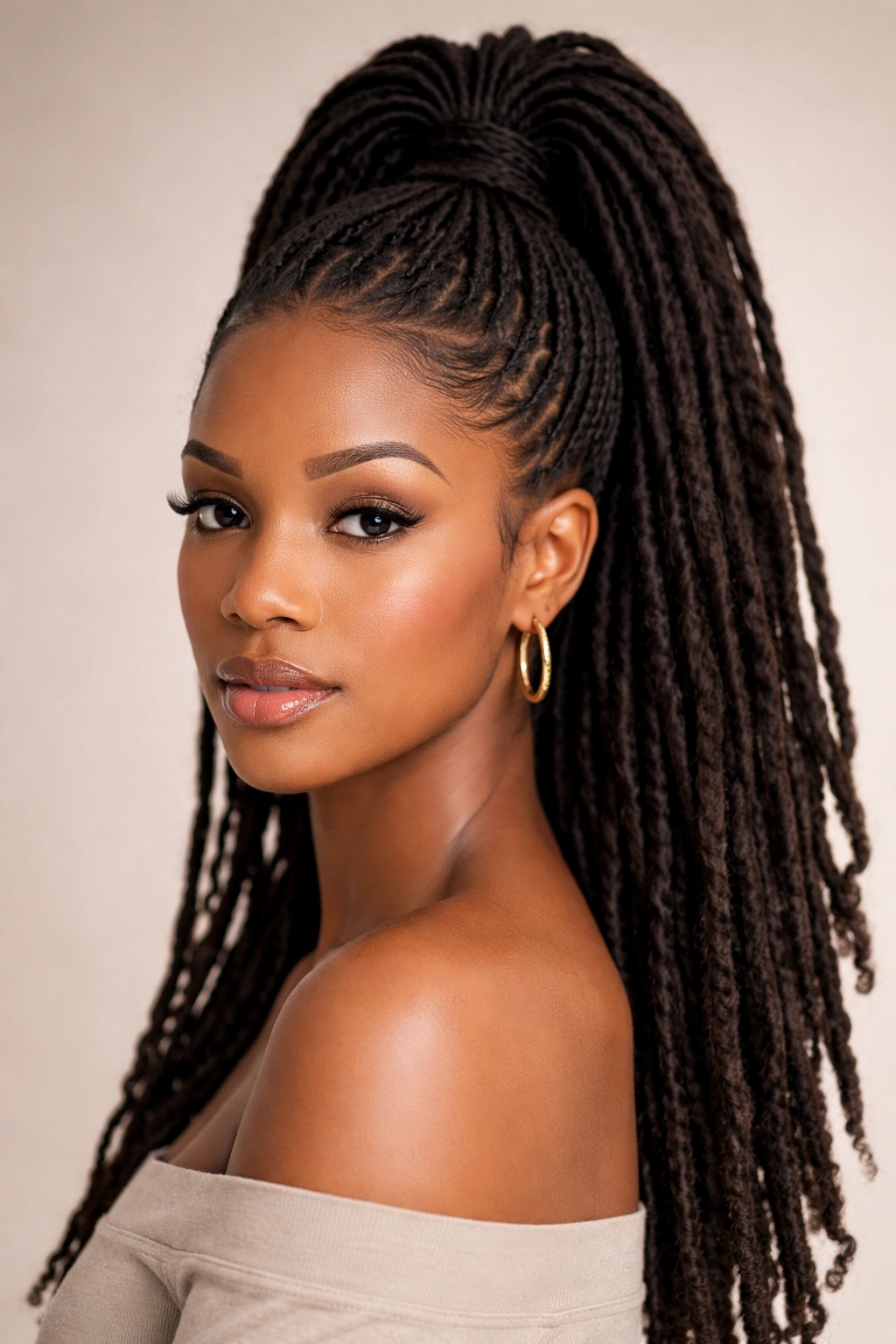
A high ponytail is one of those styles that sounds basic until you see how much shape it gives locs. Lift the base up toward the crown, and suddenly the face opens up, the neck looks longer, and the whole style feels sharper. On women with medium to long locs, it’s one of the quickest ways to make locs look fresh without overworking them.
Why It Works
The shape does a lot of the heavy lifting. Locs already have volume, so a ponytail placed high creates height without needing teasing, backcombing, or a pile of products. That matters because locs can get heavy fast, and the wrong kind of pulling at the scalp will show up by the end of the day.
Use a strong elastic that does not snag. Gather the locs with your hands first, then smooth the front with a brush or fingertips and a tiny bit of edge control if you use it. I prefer a wrapped base here — one loc or a thin strip of matching hair tucked around the band makes the whole thing look finished.
Quick Styling Notes
- Place the ponytail slightly behind the hairline, not right at the front. That keeps the style from feeling tight.
- Hold the base while you secure it so the tension spreads out instead of yanking one spot.
- If the ponytail feels too bulky, split the locs in two sections before gathering them, then join them at the elastic.
- A satin scarf for 5 to 10 minutes helps the front sit flatter.
Pro tip: if your locs are long, let a few ends curve forward over one shoulder. It softens the look and takes some of the weight off your back.
2. Side-Swept Locs with a Deep Part
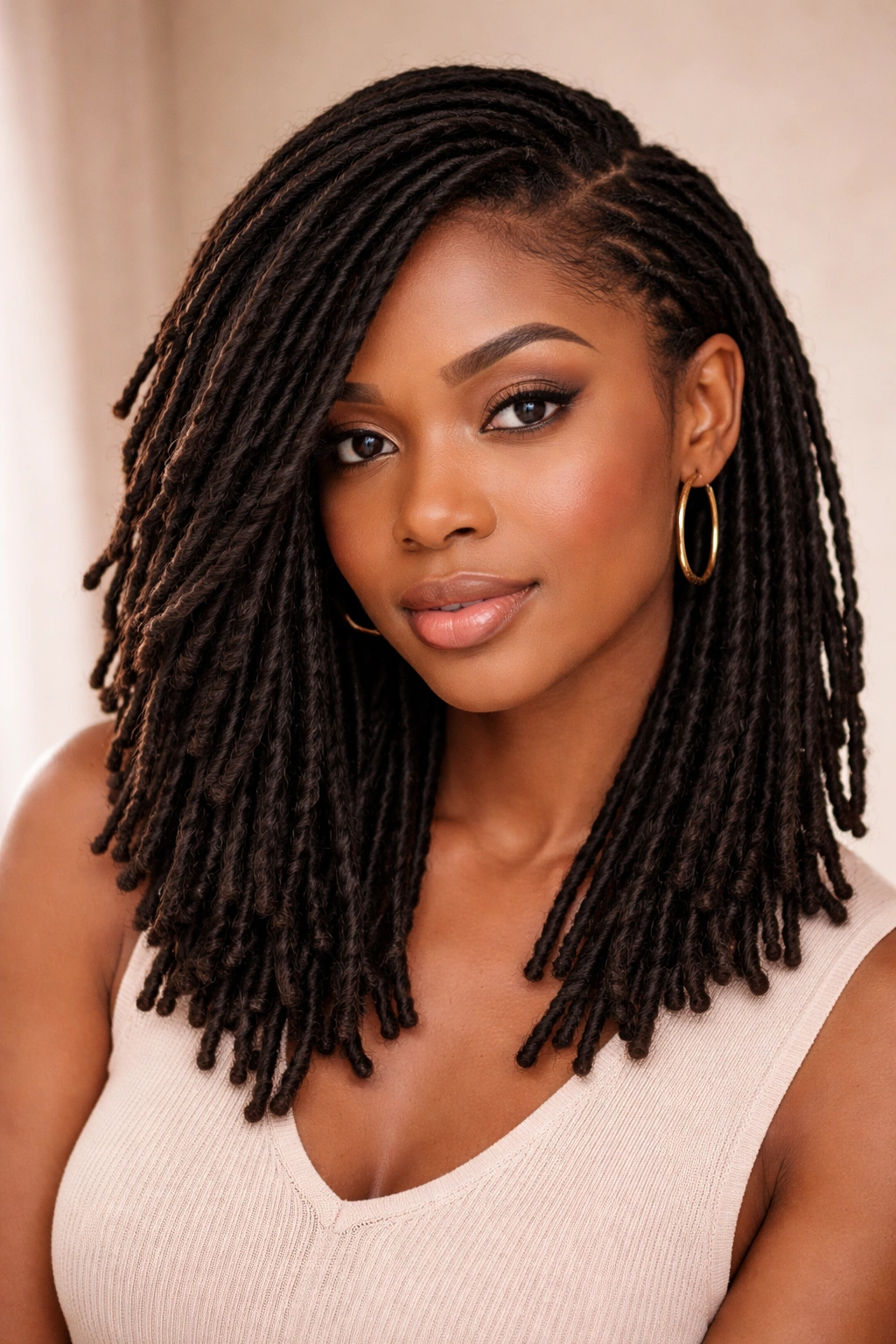
Want something softer? Sweep the locs hard to one side and let the part do the talking. A deep side part can change the mood of your whole face, especially if your locs are medium length and fall around the collarbone or chest.
The trick is not to overdo the “sleek” part. You want controlled, not shellacked. Start the part above the arch of one eyebrow and angle it back toward the crown. Then tuck the fuller side behind one ear or pin just a few locs at the temple so the sweep stays open.
This style works because it gives the eye one clear direction to follow. The face looks framed, the locs look fuller on one side, and the style feels deliberately styled even when you only spent a few minutes on it. It also plays nicely with accessories. A single cuff near the front or a small pin at the tucked side is enough.
I like this look on days when the locs are a little frizzy but still good. It doesn’t demand perfect roots. It does ask for a clean part and a little confidence. That’s really it.
3. Afro Loc Half-Up, Half-Down Styles
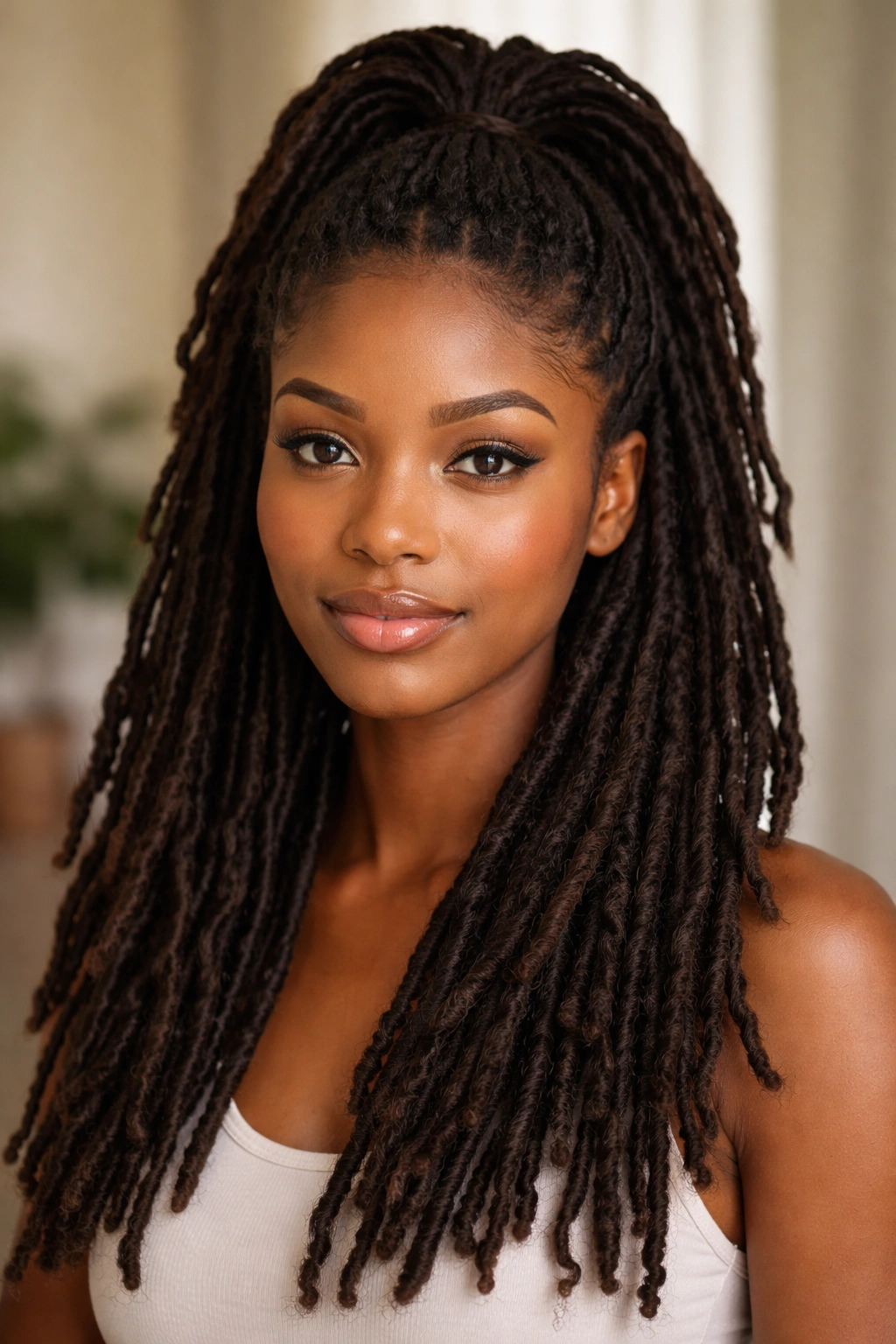
Half-up, half-down is the style you reach for when you want the face free but still want the length to show. It’s one of the most practical Afro loc hairstyles for women because it works on many lengths, from shoulder-grazing locs to long sets that would otherwise feel heavy all day.
How to Shape the Top Section
Take the top third or top half of the locs from temple to temple, then gather them at the crown or just behind it. You can make this a small ponytail, a puff-like knot, or a mini bun. The top section should feel secure, but not tight enough to flatten the scalp. If the section looks too small, it usually means you took too little hair from the sides.
A clean half-up look depends on the parting more than the knot. If the top section is uneven, the whole style looks accidental. If it’s balanced, the style looks polished without being stiff.
How to Keep the Bottom Section Light
- Let the bottom locs hang loose and separate naturally with your fingers.
- If the ends tangle fast, twist the outer layers lightly before stepping out.
- Use a clip instead of a band when the top section is short or thick.
- Leave one or two locs out at the front if the style feels too neat.
Half-up styles also work well with beads or cuffs near the loose ends. That tiny detail keeps the style from feeling flat. And yes, a half-up style can be formal. Put the top section into a compact bun, smooth the front, and it suddenly reads as event-ready instead of casual.
4. Double Buns and Space Buns
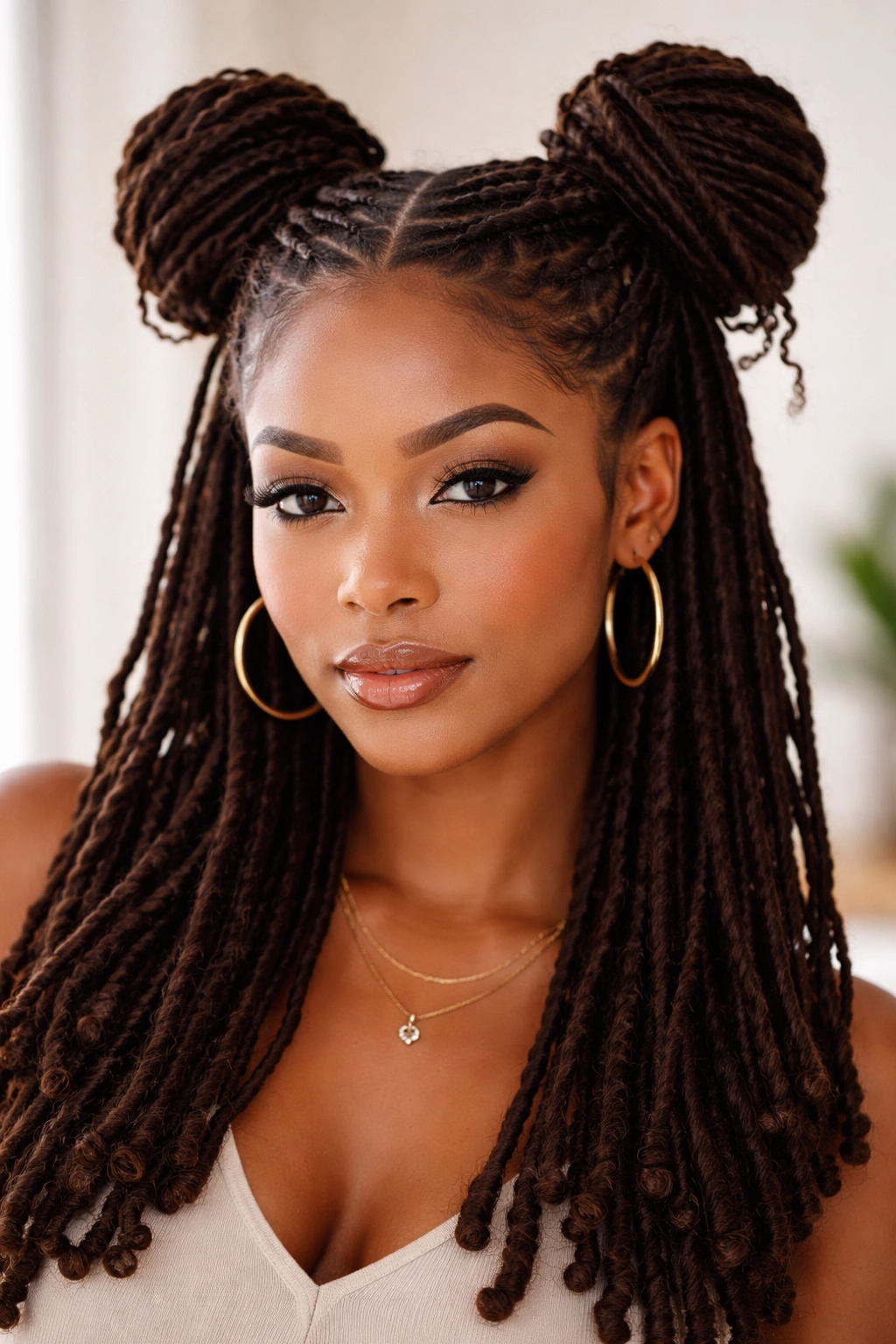
Double buns can be playful, but they’re better when they look clean rather than cartoonish. On locs, that usually means two buns placed high and balanced on either side of the crown, with the rest of the locs either tucked in or left to hang in thin tails.
Picture this: you’ve got a day that needs energy, not fuss. Double buns fix that fast. They lift the hair away from the face, keep the base neat, and still show off the texture of the locs. The style works especially well if your locs are medium length or if they’re thick enough to fill out each bun without needing a ton of wrapping.
What I would watch closely is symmetry. One bun sitting an inch higher than the other will bother you all day. Divide the hair cleanly down the middle, then gather each side at the same angle. Use small elastics first, then twist the locs into the bun shape. If the buns are too bulky, leave the ends hanging a little. That keeps the style from looking boxy.
This is also a good place for color. A matching scarf, two slim cuffs, or a few wrapped threads can give the buns a more finished feel. I wouldn’t pile on too many decorations. One or two touches is enough.
5. Low Bun with a Center Part
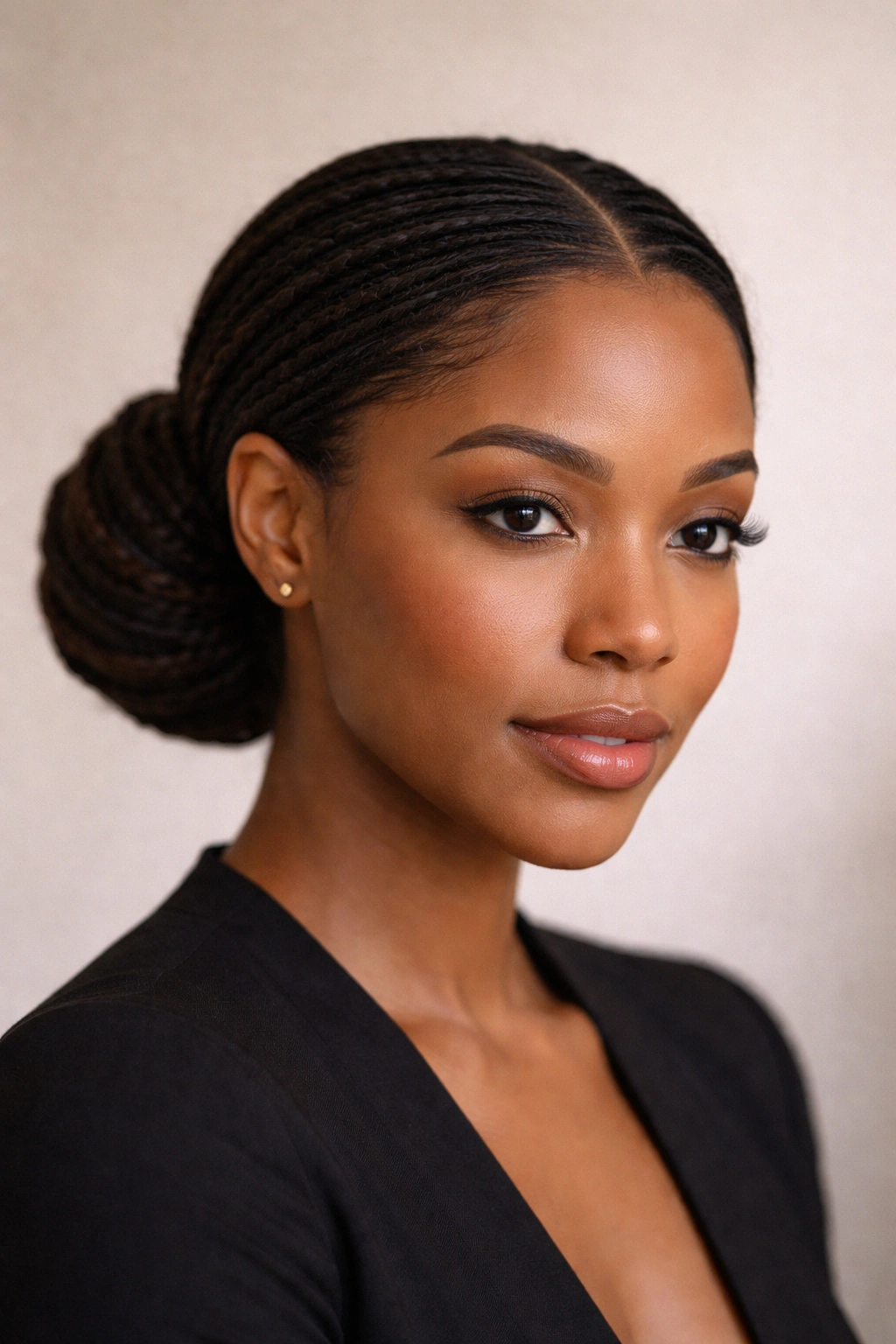
A low bun is the style I trust when I want locs to look polished without trying to make them into something else. It’s calm. It’s clean. And if the parting is neat, it can look sharper than a more complicated style.
The center part matters here. Draw it straight from the front hairline to the crown, then smooth each side back toward the nape. A small amount of gel or edge control can help, but you do not need to flood the hair with product. Too much product on locs tends to show itself later as buildup or flaking, and that ruins the whole point.
Sleek doesn’t have to mean stiff. If the bun sits low enough to rest at the nape, the style feels elegant rather than severe. That’s one reason I like it for work, interviews, formal dinners, or any day when you want to look put together fast. It also works well on older locs, because the slight fuzz around the roots makes the style look lived-in instead of overworked.
Tie the bun with enough support to hold it, then tuck the ends neatly underneath. If your locs are thick, use two pins crossed in an X shape at the base. That keeps the bun from rolling open halfway through the day.
6. Braided Crown Loc Updo
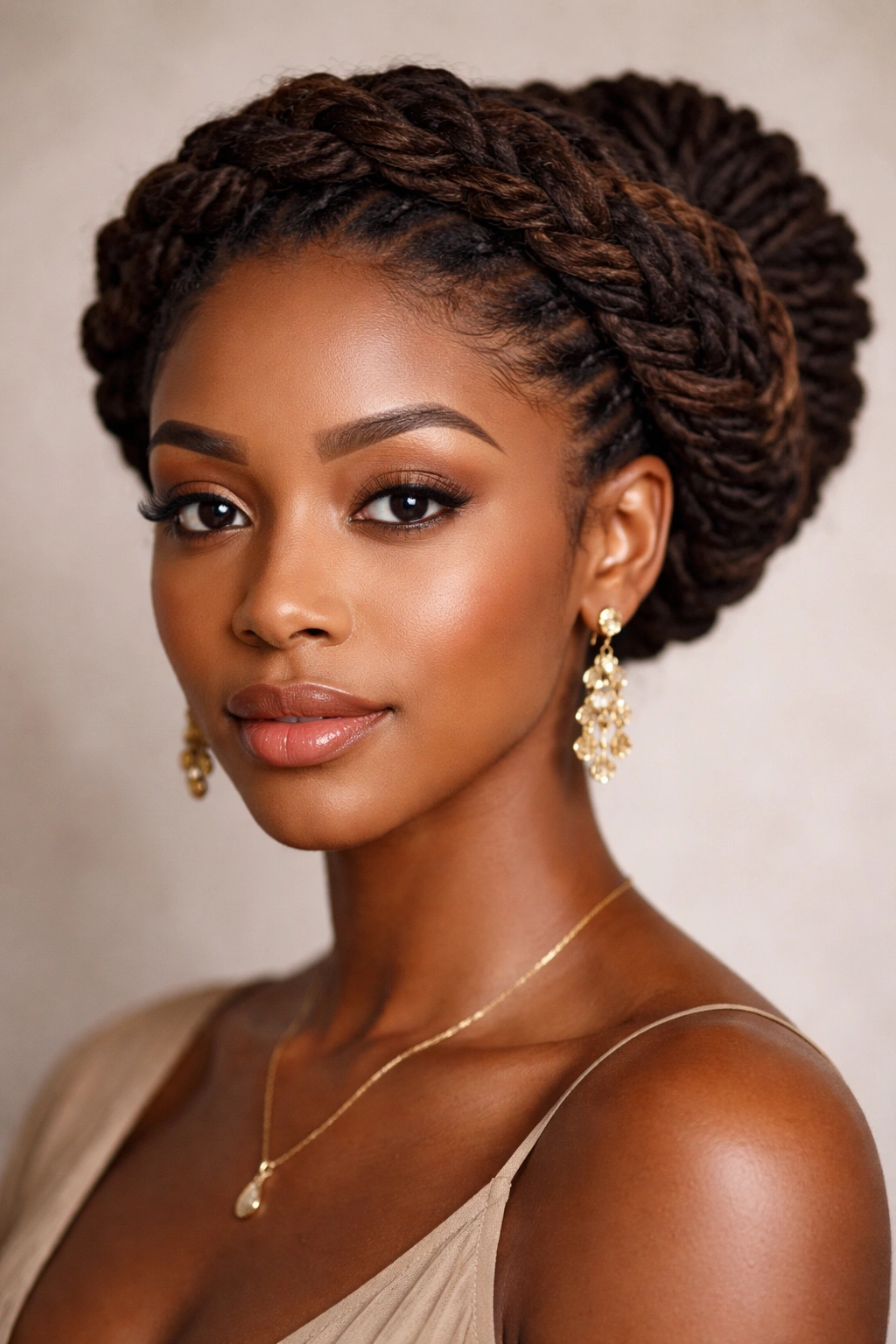
A braided crown updo gives locs a shape that feels almost regal, but I like it more for its practicality than for the drama of it. Unlike a plain bun, this style uses the outer sections of the head as the frame, which means the face stays open while the locs are secured around the perimeter.
The structure is straightforward once you break it down. Take one section from each side, braid or flat-twist it back along the hairline, then pin the sections into a crown shape across the back or upper sides of the head. The remaining locs can be tucked into a bun, folded upward, or woven into the crown itself if they’re not too long.
Best for Thicker Locs
Thicker locs hold this style nicely because they give the crown body. Thin locs can do it too, but they may need more pins and a tighter tuck. Either way, the goal is a smooth line around the head, not a rigid helmet shape. You want the braid or twist to sit close enough to the scalp to look clean, but loose enough that the style doesn’t feel strained.
What to Watch For
- Pin the crown from the inside out so the pins hide under the braid.
- Anchor the heaviest sections near the ears and nape first.
- Keep the front hairline soft if you want a less formal finish.
- Use U-pins for better grip on dense locs.
I love this one for events because it photographs well from the side and back. More important, it stays secure when done right.
7. Faux Hawk Loc Style
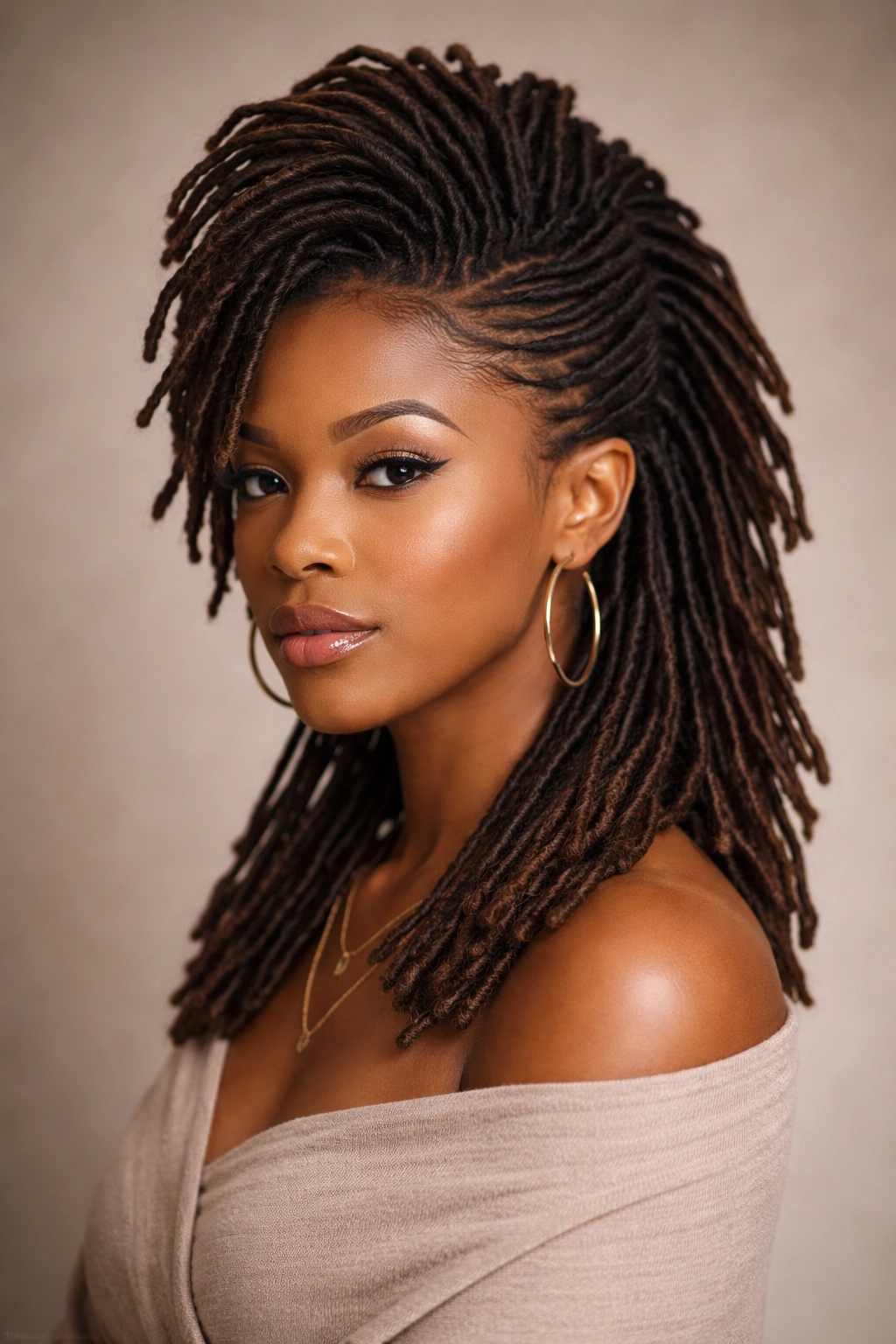
Do you want something with edge but not too much effort? A faux hawk gives you that line down the center without shaving the sides or committing to a full mohawk shape. The sides get pinned or braided back, while the middle section stays tall and full.
The shape is the whole point. On locs, a faux hawk creates a ridge of texture that looks strong from the front and even better in profile. It also works on shorter locs, which is a nice bonus. You do not need waist-length hair for this one. Shoulder-length locs can do it if the sections are secured well.
The easiest way to shape it is to separate the hair into three parts: left side, center, and right side. Pin the sides close to the scalp, then direct the center section upward or slightly forward so it forms a soft ridge. If the middle looks too flat, use a couple of hidden pins to lift from underneath.
One thing people get wrong here is making the style too tight at the temples. That ruins the clean lines and makes the look feel sharp in the wrong way. The better version has tension in the center and calm at the edges. A strong pair of earrings helps too, but that’s optional. The hair should do the talking.
8. Bob-Length Locs with Beads and Cuffs
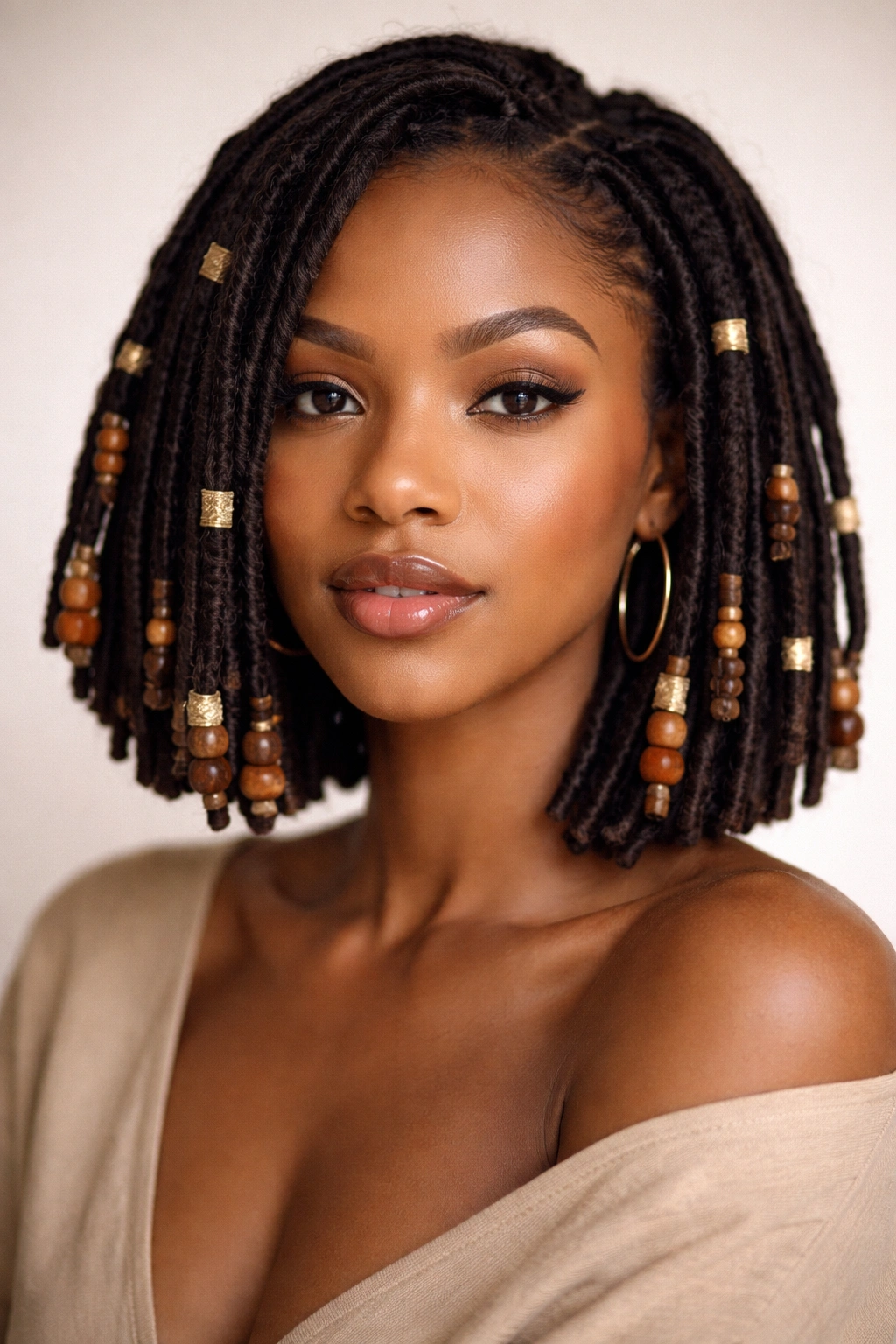
Bob-length locs have a shape I’ve always liked because they sit right where the face is busiest — around the jaw, the neck, the collarbone. That makes them feel active and easy, not heavy. Add the right beads or cuffs, and the whole style turns from everyday to intentional in a single move.
A bob cut or bob-length set doesn’t need much embellishment, which is why the details matter. Wooden beads give the ends a warm, grounded feel. Brass cuffs add shine without swallowing the style. Thread wraps bring color and movement, especially if your clothing is plain and you want the hair to carry a little of the personality.
Keep the accessories measured. Too many beads on short locs can make the ends feel crowded and noisy. A handful placed at the front or lower layers usually looks better than covering everything. I’d also watch the weight. Heavy beads can drag the ends down and make the bob sit unevenly after a few hours.
A bob with a clean edge around the face can look sharp on its own. The accessories should feel like punctuation, not decoration for the sake of decoration. That’s the difference between a style that reads as styled and one that reads as cluttered.
9. Afro Loc Side Parts with Laid Edges
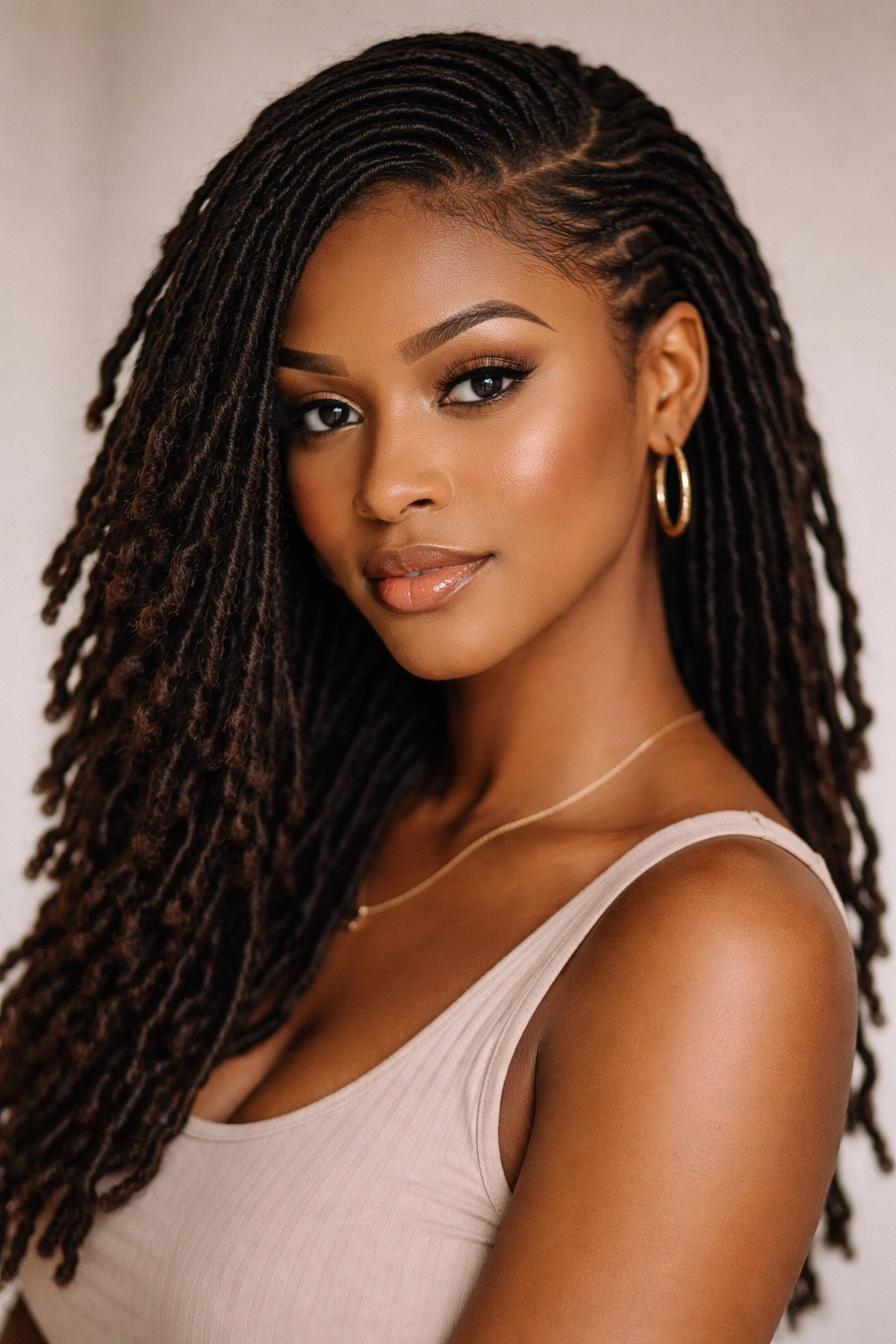
A side part with laid edges is one of those styles that looks easy but depends on tiny details. The part has to feel deliberate. The front hairline has to be handled with care. And the locs need to fall in a way that makes the asymmetry feel balanced instead of lopsided.
What Makes the Part Look Crisp
The part should follow the natural curve of your head, not fight it. If you force a straight line where your scalp wants a gentle angle, the style can look tense. Use the tip of a rattail comb to create a clear path, then pin or hold the larger section away while the rest settles.
For edges, less is usually more. A soft brush, a small amount of edge control, and a light hand are enough. If you pack product along the hairline, the edges can look wet for too long or start flaking once the hair dries. That’s not a good trade.
Where the Style Can Go Wrong
- A part that starts too far back makes the front look flat.
- Edges brushed in too many directions can look overworked.
- Leaving one side much fuller than the other throws off the balance.
- Overloading the front with oil makes the hairline look greasy.
This style shines when the locs themselves are the main event and the part is just the frame. That’s why I like it on busy days. It gives shape fast, and it doesn’t need a full updo to feel finished.
10. Wrapped Loc Bun with Scarf or Thread
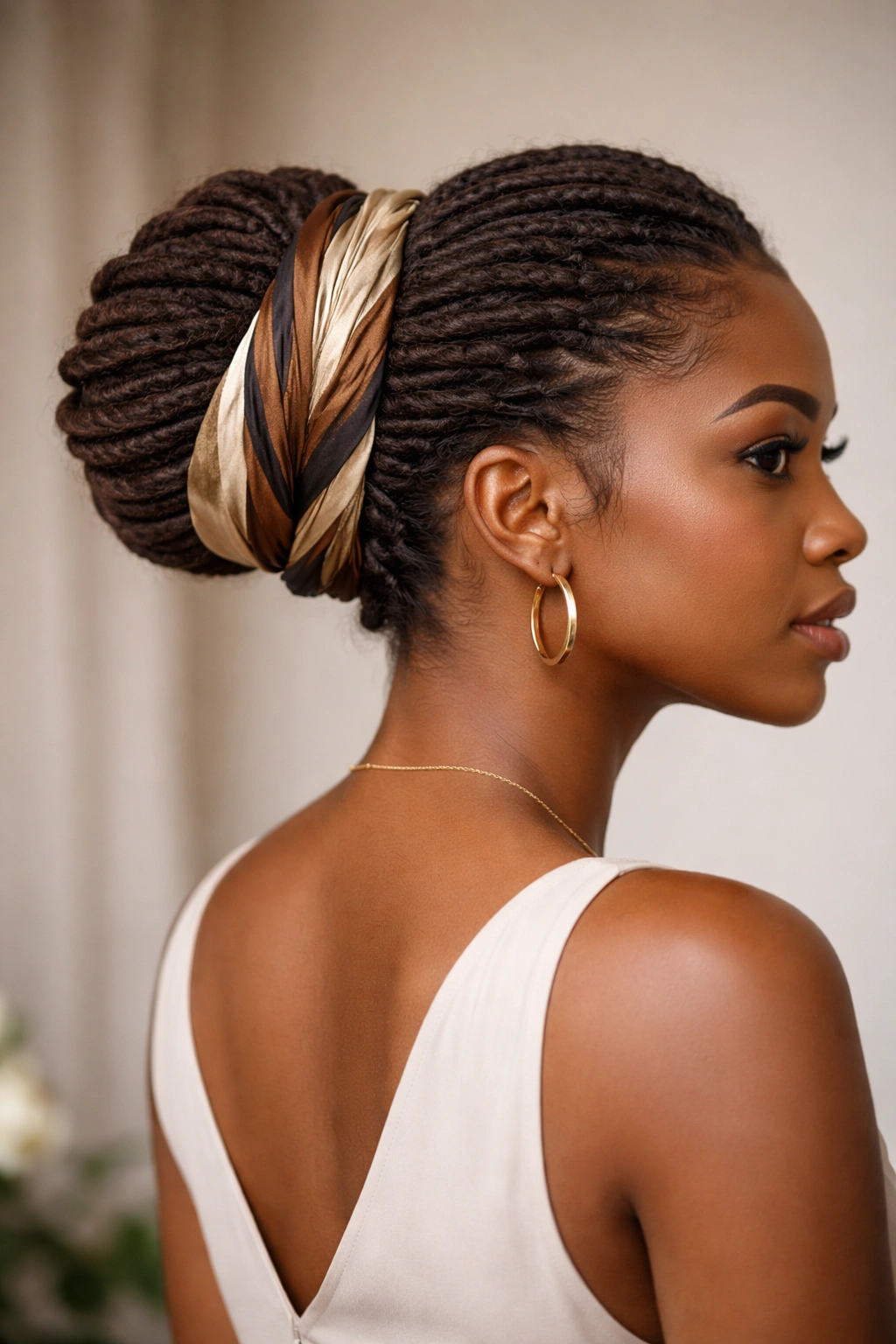
A wrapped bun does not have to be plain. That’s the mistake people make when they call it “just a bun.” Wrap the base with silk thread, a narrow scarf, or even a strip of fabric that echoes your outfit, and the entire mood changes.
The bun itself can be low or mid-height. Gather the locs, twist them into a coil, and pin the shape into place. Then wrap a scarf around the base or braid a section of thread through the outer layer. If you want a cleaner finish, tuck the loose end of the scarf underneath and pin it discreetly.
I like this style because it hides the little imperfections that every real head of locs has. Frizz near the roots? Covered. An uneven bun shape? Easier to disguise. Old retwist starting to grow out? The wrap smooths it over without pretending the hair is something it isn’t.
Good Materials to Reach For
- Satin or silk scarves, especially for smoothness
- Narrow fabric strips that won’t add bulk
- Lightweight thread wraps if you want color without weight
- Smooth pins that won’t snag the scarf
The one thing I would skip is anything rough or bulky. Thick fabric can make the bun feel bulky fast, and rough texture can snag the locs underneath. Keep the wrap neat and the bun will do the rest.
11. Loc French Roll or Tucked Vertical Updo
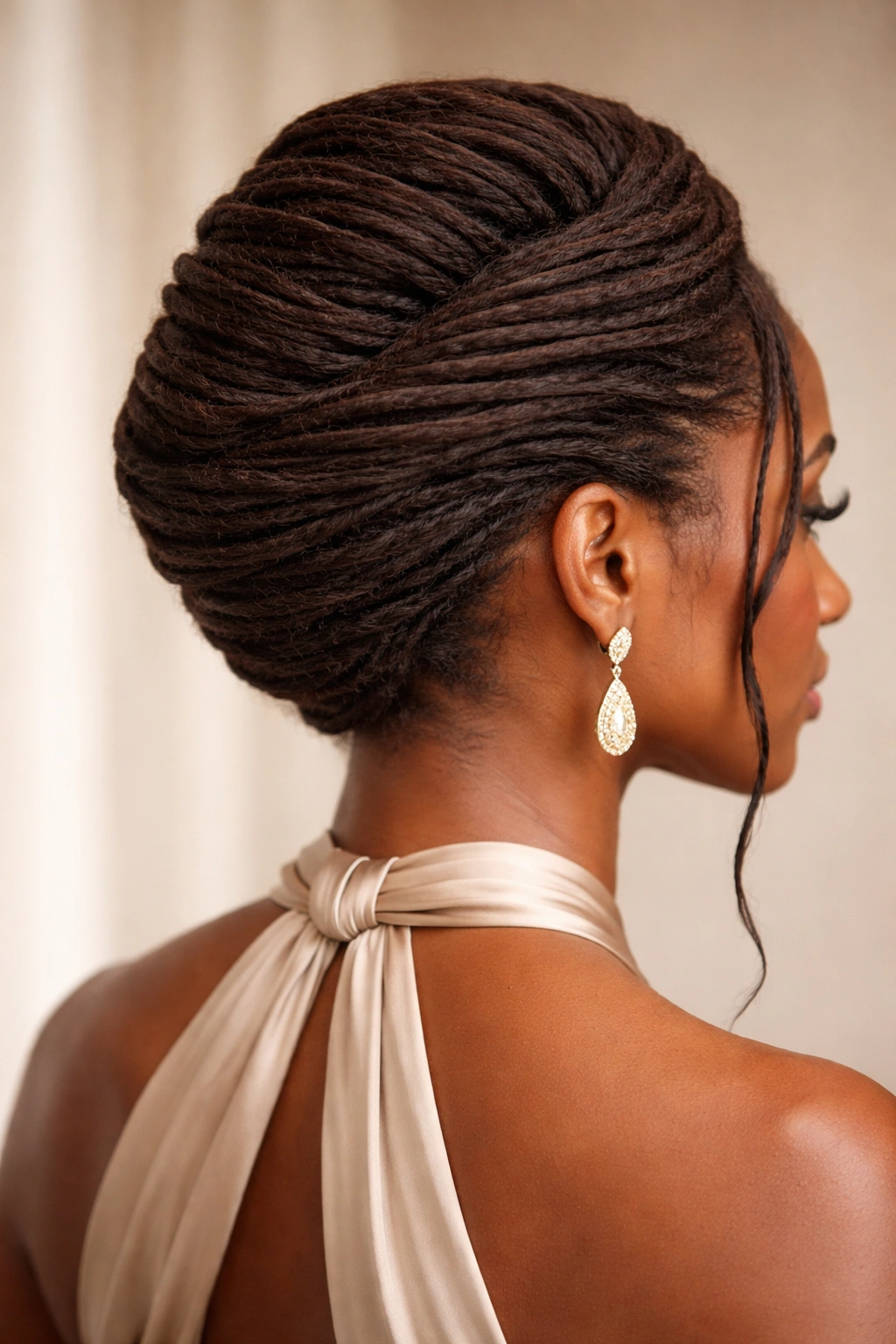
This is one of the most underrated formal styles for locs. A French roll or tucked vertical updo has that clean upward line people usually associate with classic hair styling, but locs give it a more textured, grounded finish. It feels dressy without looking stiff.
The structure is a series of controlled folds. Start at one side or the nape, roll a section upward, and pin as you go so the roll stays compact. Then tuck the remaining locs into the roll, either all at once or in sections. Mature locs tend to hold this shape better because they bend more predictably, but shorter or newer locs can still do it with a few extra pins.
How to Keep It From Slipping
Use pins that anchor into the base of the roll rather than just catching the surface. That difference matters. A surface pin gives the style a false sense of security; a deep anchor pin keeps it in place through movement, wind, and long events.
You can also prep the hair by smoothing the outer layer with a tiny amount of cream or gel. Not a lot. The goal is control, not stiffness. If the roll looks too perfect, it loses the appeal. A little texture makes it feel more like locs and less like a hair tutorial diagram.
This style is a good choice when you want the back of the head to look as finished as the front. Too many updos forget that part.
12. Loose Side Bun with Face-Framing Locs
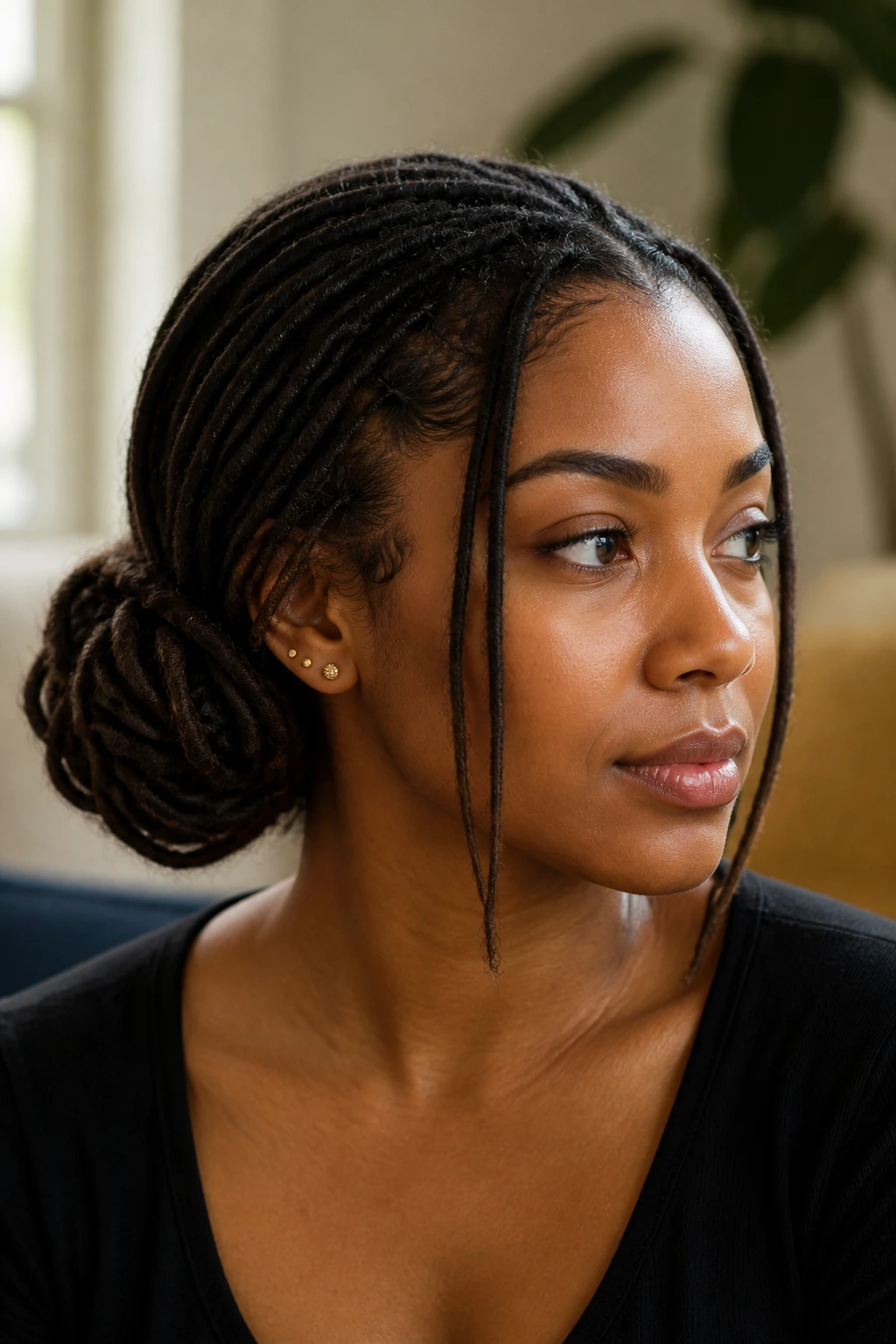
Symmetry gets too much credit. A loose side bun with a few face-framing locs feels softer, more relaxed, and honestly more flattering than a style that tries too hard to be even. It’s a strong choice when you want something graceful but not severe.
Pull the locs to one side, usually just below the ear or at the nape near one shoulder, then twist them into a bun that stays a little open. Leave two to four locs free near the temples or jawline. Those front pieces matter more than people think. They keep the face from feeling boxed in and give the style movement when you turn your head.
This one works for almost everything: errands, dinners, weddings, a day at work when you want to look put together without spending forever on your hair. It also suits different loc lengths better than some more rigid styles. If the locs are long, the bun can be fuller. If they’re shorter, the loose pieces help the style feel complete instead of sparse.
I keep coming back to this look because it solves a common problem. A lot of women want loc styles that feel polished but not severe, and this is one of the few that gives you both. If you only had one style to learn well, I’d pick this one before a lot of flashier options. It holds up, it flatters the face, and it does not ask for perfection.
You don’t need a hairstyle that shouts. You need one that knows what it’s doing.
