



A good afro does not need to be tamed. It needs shape.
That sounds like a small distinction, but Black women know it changes everything. The right afro hairstyle can make coils look fuller, sharper, softer, or more sculpted without fighting the hair’s natural shrinkage, density, or spring. The wrong one can feel like a battle with your own head, which is a waste of time and edge control.
What makes afro hairstyles for Black women so interesting is that they are not one thing. A rounded pick-out fro has a completely different mood from a tapered cut, and a twist-out afro behaves differently from a high puff the second humidity shows up. Some styles celebrate volume. Some keep the hair protected. Some give definition without looking stiff. The good ones let texture breathe.
What follows is a practical, style-first look at 15 afro hairstyles that actually make sense on real hair, with the kind of detail that helps when you are standing in front of a mirror, halfway through styling, and trying to decide whether to keep going or reach for the satin scarf instead. Start with the shape that matches your texture, then decide how much definition, lift, or protection you want.
1. Rounded Wash-and-Go Afro
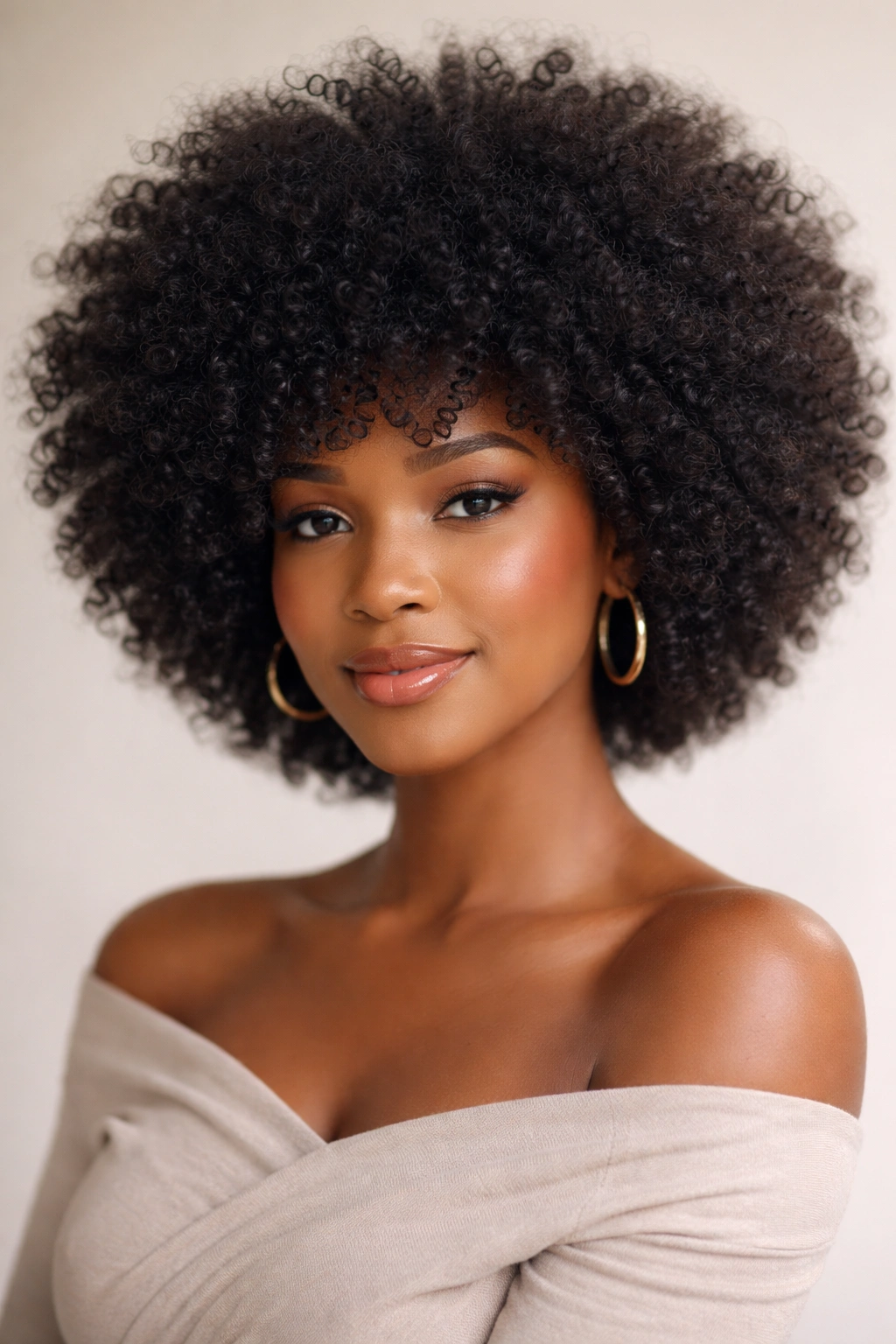
A rounded wash-and-go afro is the style people picture when they think of soft, full natural hair. It works best when the curls are defined enough to clump, but not so defined that the hair loses its cloud-like shape. The secret is in the balance: enough hold to keep the curl pattern visible, enough fluff to keep it from looking helmet-like.
Why It Works So Well
This style flatters dense hair because it uses the natural spring of the curl instead of flattening it. A good leave-in conditioner, a light gel, and careful scrunching can give you definition at the roots and that airy halo at the ends. Let the hair dry fully before you touch it. Fully. Not halfway. Half-dry hair loves frizz.
A rounded wash-and-go also gives you a clean silhouette around the face. If you want to show off cheekbones, earrings, or a bold lip, this is an easy win. The shape looks polished without needing a hard part or a lot of manipulation.
Best for: tight coils, medium-to-high density hair, and anyone who likes shape without too much structure.
Watch for: heavy creams that weigh the curls down at the crown.
2. Tapered Afro with Clean Sides
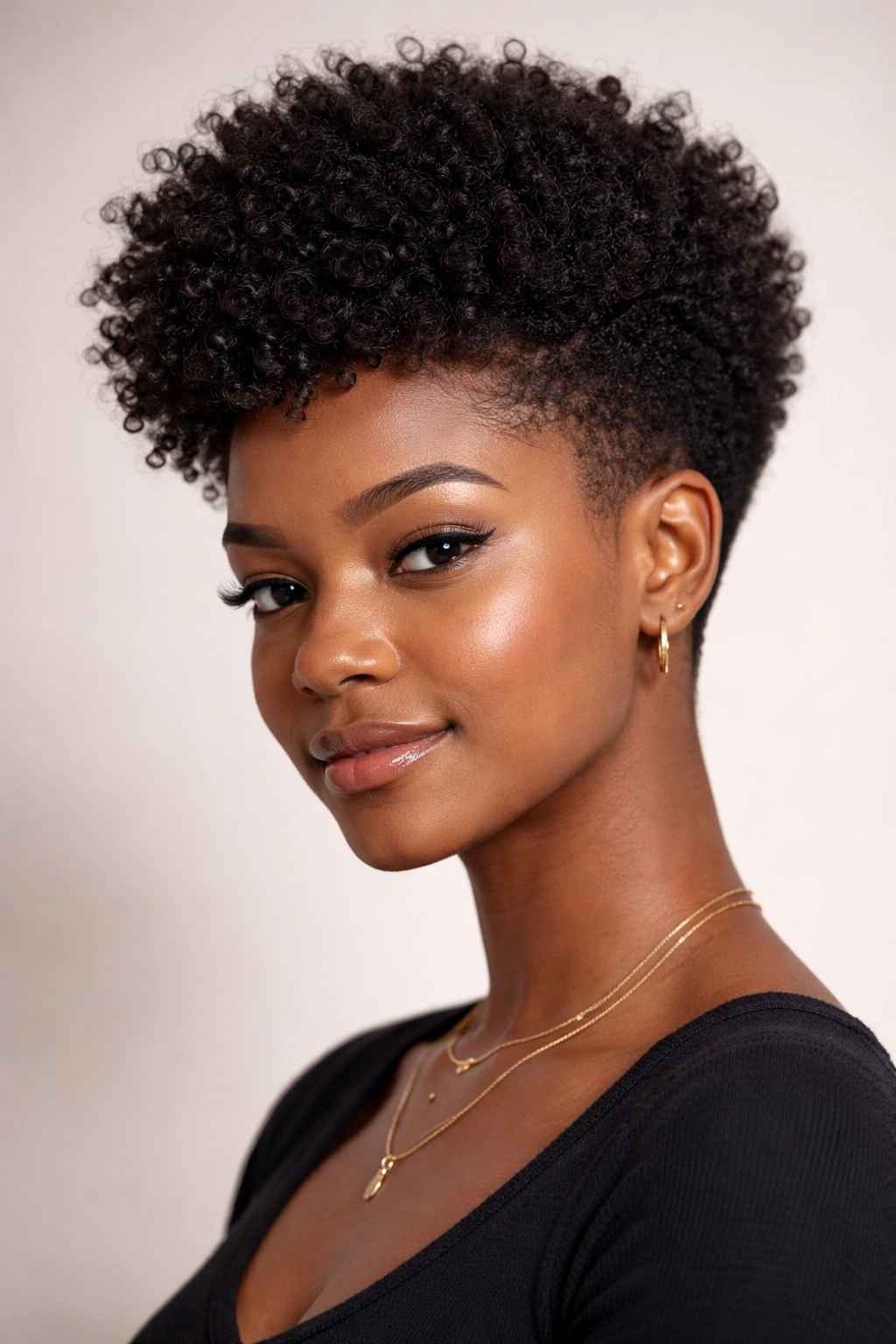
A tapered afro gives you instant shape. The sides and nape are kept shorter, while the top stays full and rounded, which creates a nice lift without making the style feel oversized. It is one of those cuts that looks intentional even on a lazy hair day. That matters.
The taper also makes styling easier. Less bulk around the ears means less time fighting with combs, clips, and product buildup. If your hair tends to puff out at the sides before the top gets any real height, this shape solves that problem fast.
What Makes It Different
Unlike a full rounded fro, the tapered shape puts the attention upward. It can make the face look longer and the neck look more open, which is especially nice with hoop earrings or a structured neckline. You do not need much product here. A moisturizing cream, a touch of edge control if you like crisp edges, and a small pick at the crown are usually enough.
I like this style because it does not ask for perfection. The cut itself does most of the work.
3. Twist-Out Afro with Soft Definition
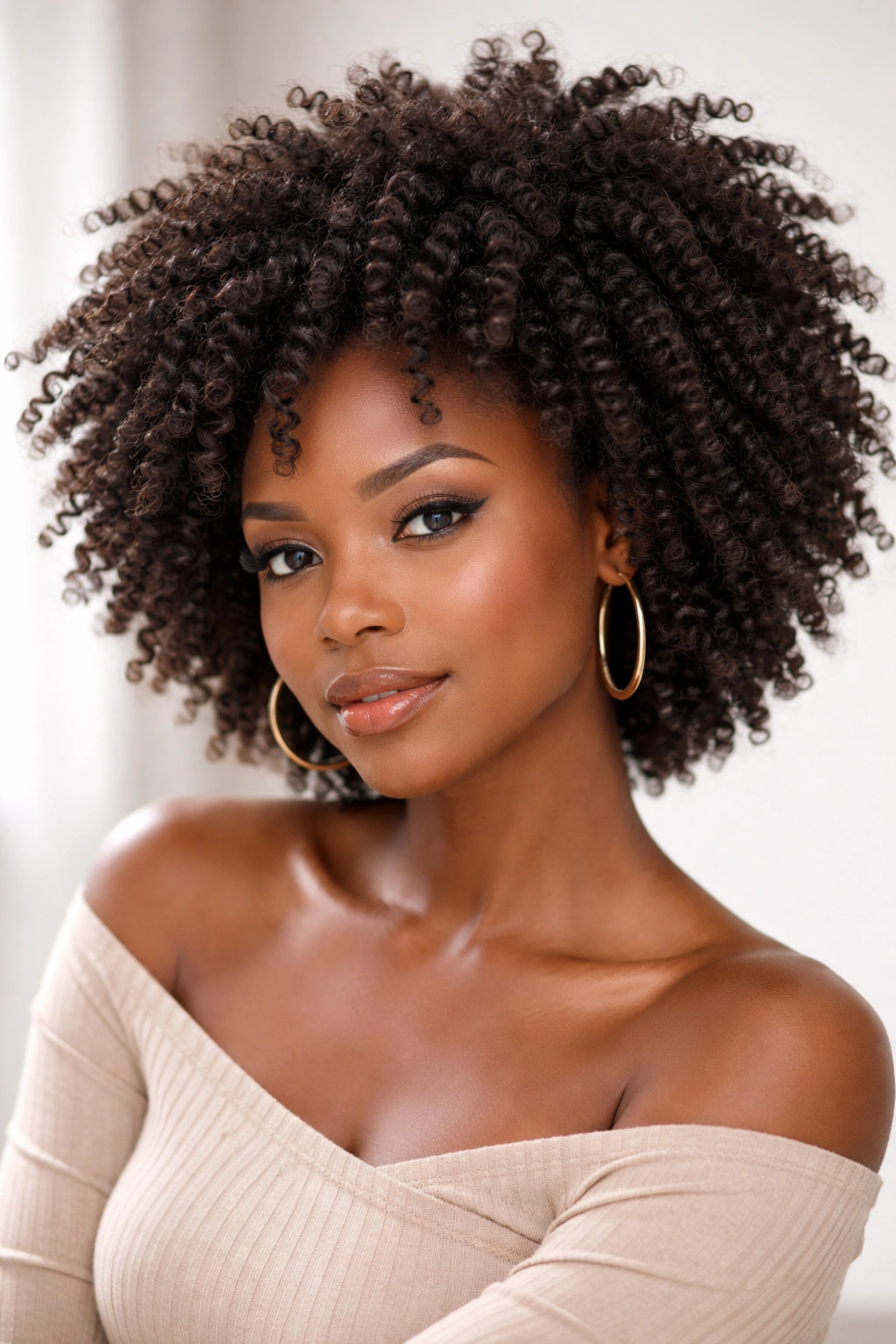
A twist-out afro sits in that sweet spot between defined and fluffy. The twists give the hair a pattern, but once they’re undone, the style opens up into a soft, stretched fro shape that has movement. It is one of the easiest ways to get volume without losing structure.
The biggest mistake people make is separating the twists too early. Resist that urge. Let the hair cool and set completely, then coat your fingers with a little oil and take your time unraveling each section. Fast hands make frizz.
How to Make It Look Full, Not Flat
Use medium-sized twists if you want a balanced afro shape. Smaller twists give more definition but less overall volume. Bigger twists give you fluff and speed, but they can leave the ends a little uneven if you rush the unraveling.
A twist-out is especially good when you want hair that feels soft to the touch. It is not stiff. It does not have to be shiny. It just needs enough definition to show the pattern and enough separation to keep the fro shape alive.
4. High Puff Afro
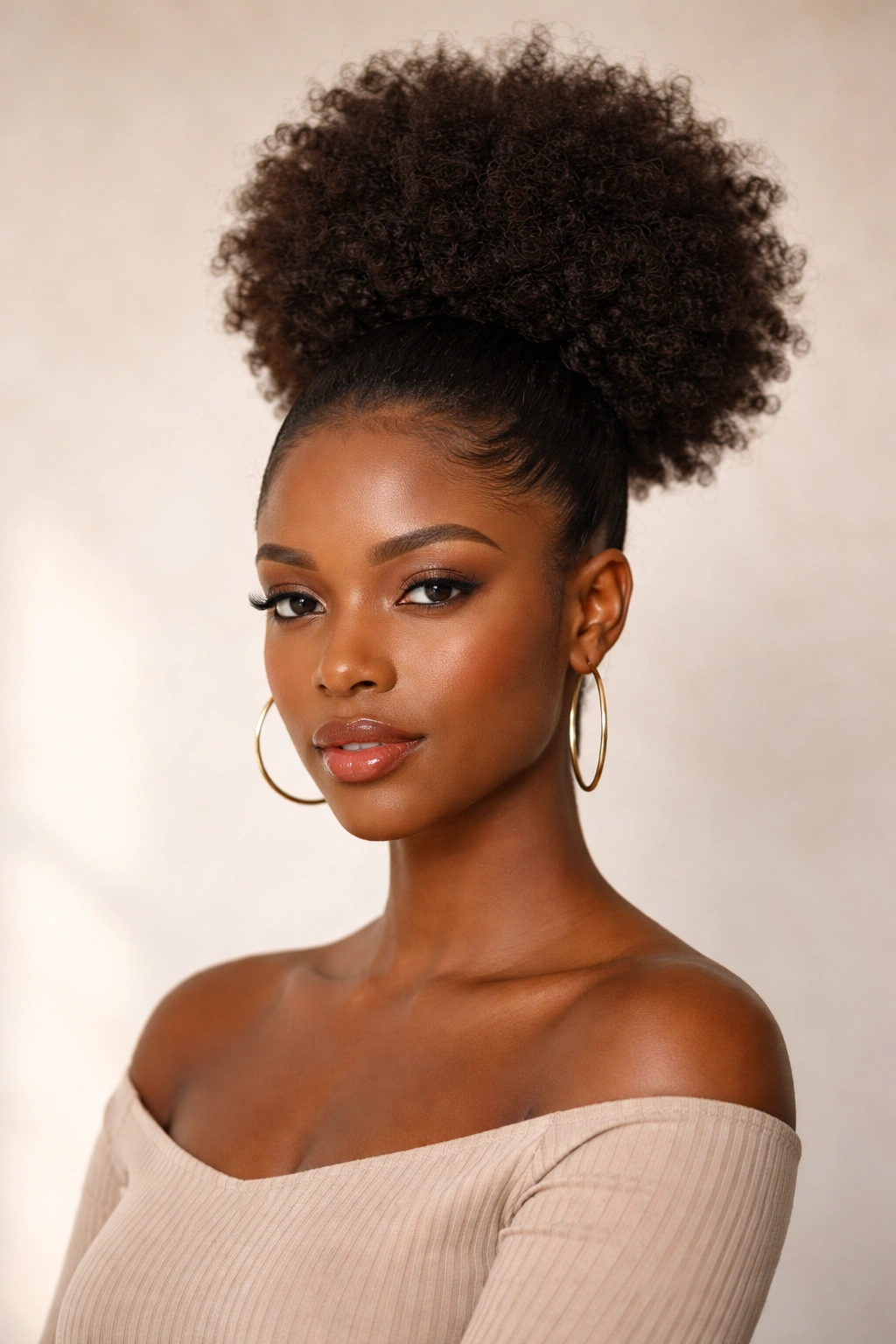
The high puff is a classic for a reason: it lifts the hair up and out of the face, and it makes the whole style feel light. On busy mornings, it is one of the fastest ways to turn coily hair into something that looks deliberate. A wide band, a spritz of water, and a little moisture can do a lot here.
What I love about the high puff is the attitude it gives. It can be casual, sporty, elegant, or slightly dramatic depending on how high you place it and how neat you make the front. Pull it tighter for a cleaner look. Leave it a little looser for more softness.
- Use a satin-edge scarf or soft headband to avoid snagging.
- Smooth the perimeter with a light gel, not a thick paste.
- Lift the puff with your hands after securing it so it does not sit too low.
- Keep a few coils loose around the hairline if you want a softer finish.
Small warning: if your hair is dry, a puff can expose every rough patch. Moisture first.
5. Short TWA Afro with Sharp Shape
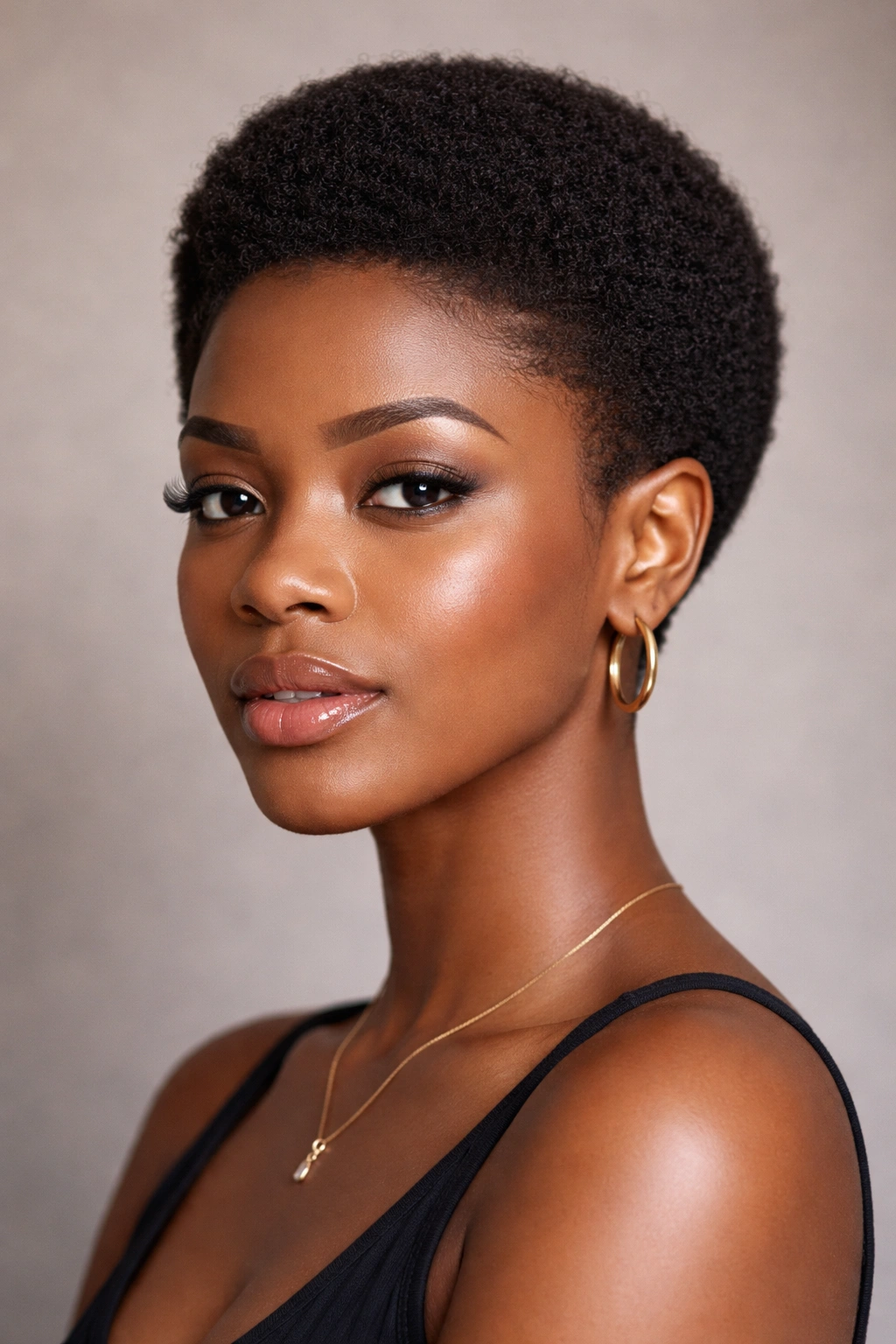
A teeny weeny afro, or TWA, is one of the most underrated natural styles. Short hair can look incredibly sculpted when the shape is clean and the texture is even. The beauty of a TWA is that it puts the curl pattern front and center without needing extra length to carry the style.
This is where a good cut matters more than products. If the sides are uneven or the back grows differently from the front, the whole shape shows it. A skilled trim can make a short fro look bold instead of unfinished. That is the difference between “I’m growing it out” and “I meant to do this.”
What to Ask for in the Chair
Ask for shape around the temples, a soft line at the nape, and enough balance at the top to keep the afro from looking boxy. If you like some edge detail, keep it light. A thin, clean line is enough. Heavy shaping can take away the soft roundness that makes a TWA feel so good.
Short hair has a confidence to it. No fluff, no pretending, no hiding.
6. Side-Part Afro with Lift at the Roots
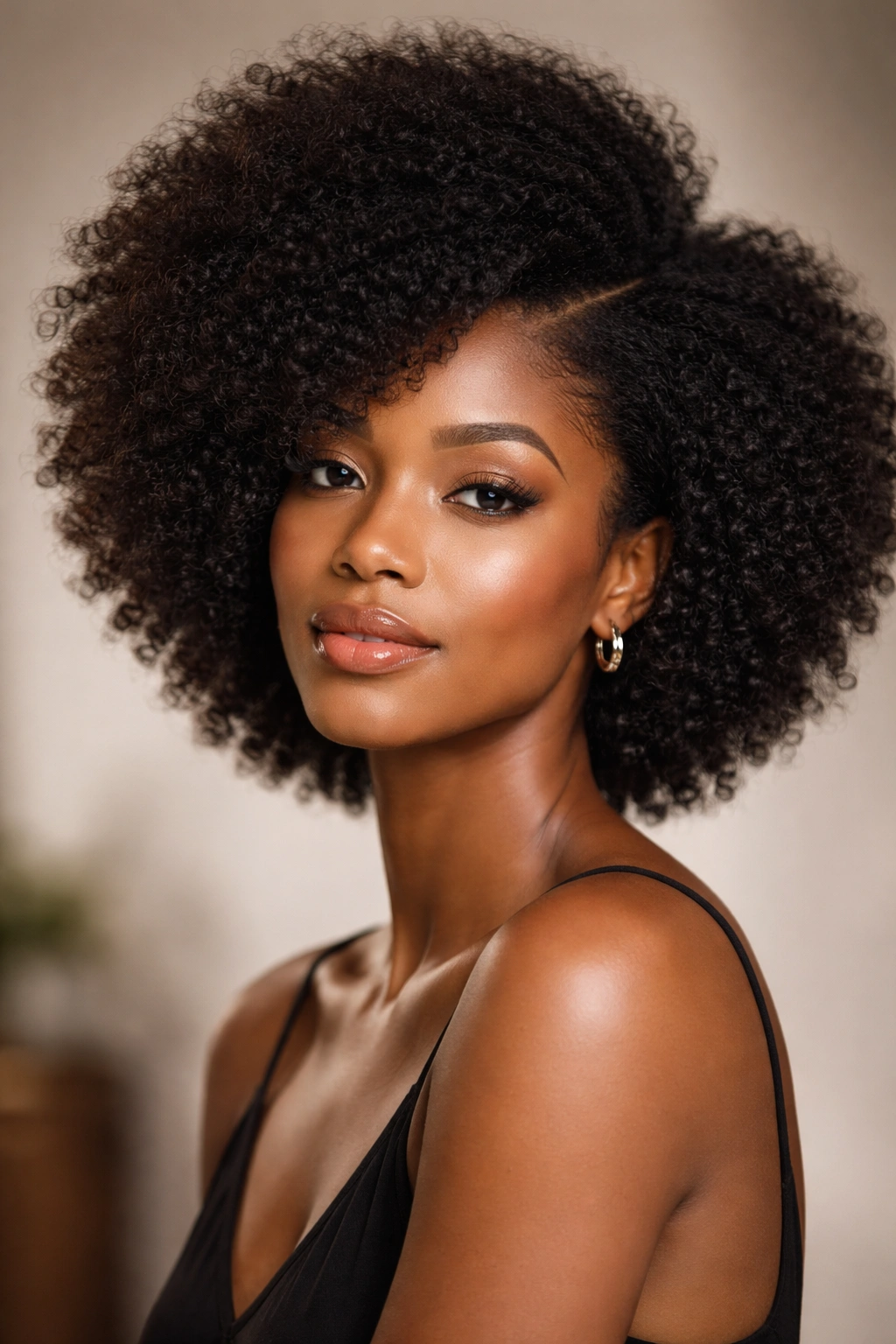
A side-part afro gives the hair movement before you even touch it. Instead of sitting evenly around the face, the part creates a little asymmetry, and that makes the style feel more playful. It can also help if one side of your hair naturally lies flatter than the other. Work with that. Do not fight it.
The lift at the roots matters more than people think. Use a pick at the root on the fuller side and keep the crown airy. If you flatten the top too much, the side part loses its shape and the whole style turns into a generic puff. Nobody wants that.
This look works especially well when the hair has some stretch from a twist-out, braid-out, or careful blow-dry on low heat. A side part on fully shrunken hair can still work, but the line is easier to see when the curls are slightly elongated.
It feels polished without trying too hard. That is the appeal.
7. Frohawk Afro
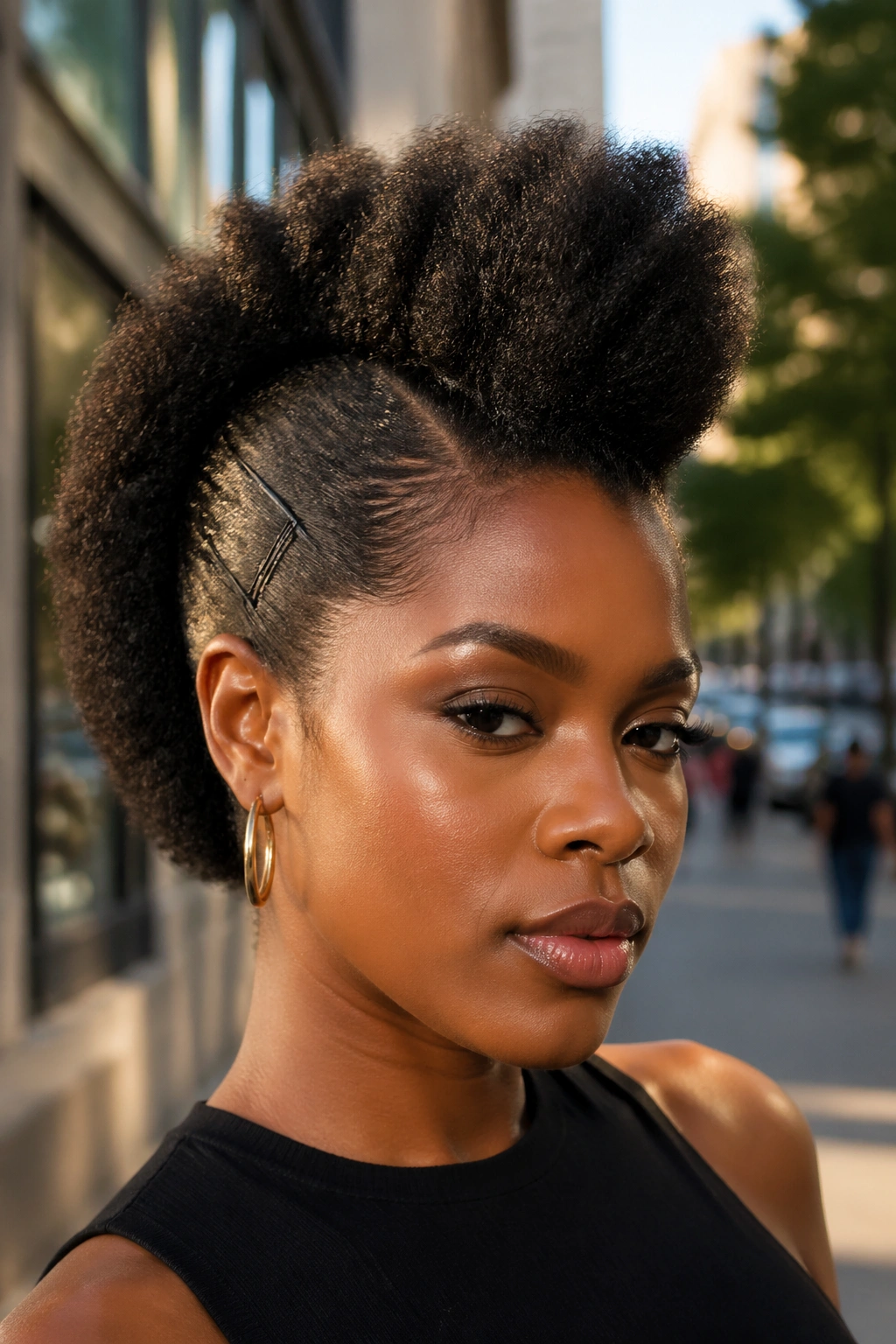
A frohawk pulls the hair upward through the center and keeps the sides tighter, either with pins, braids, or a slicked-down finish. It has a little edge to it, but not in a costume-y way. Done well, it looks confident and sharp, with a clean line through the middle that draws the eye instantly.
Why People Keep Coming Back to It
Because it solves two problems at once. You get height, and you get control. If your hair is thick and likes to spread outward, the frohawk gives it direction. If you want something that works for a night out without pulling your hair into a hard bun, this is a smart move.
A few notes make a difference:
- Keep the center section moisturized so it stays soft, not crunchy.
- Pin the sides firmly, but do not flatten them so much that the style looks tight.
- Use a toothbrush or small brush for the front if you want a cleaner hairline.
- Add gold cuffs or small clips if you want the style to feel dressed up.
The frohawk has personality. It does not whisper.
8. Bantu Knot-Out Afro
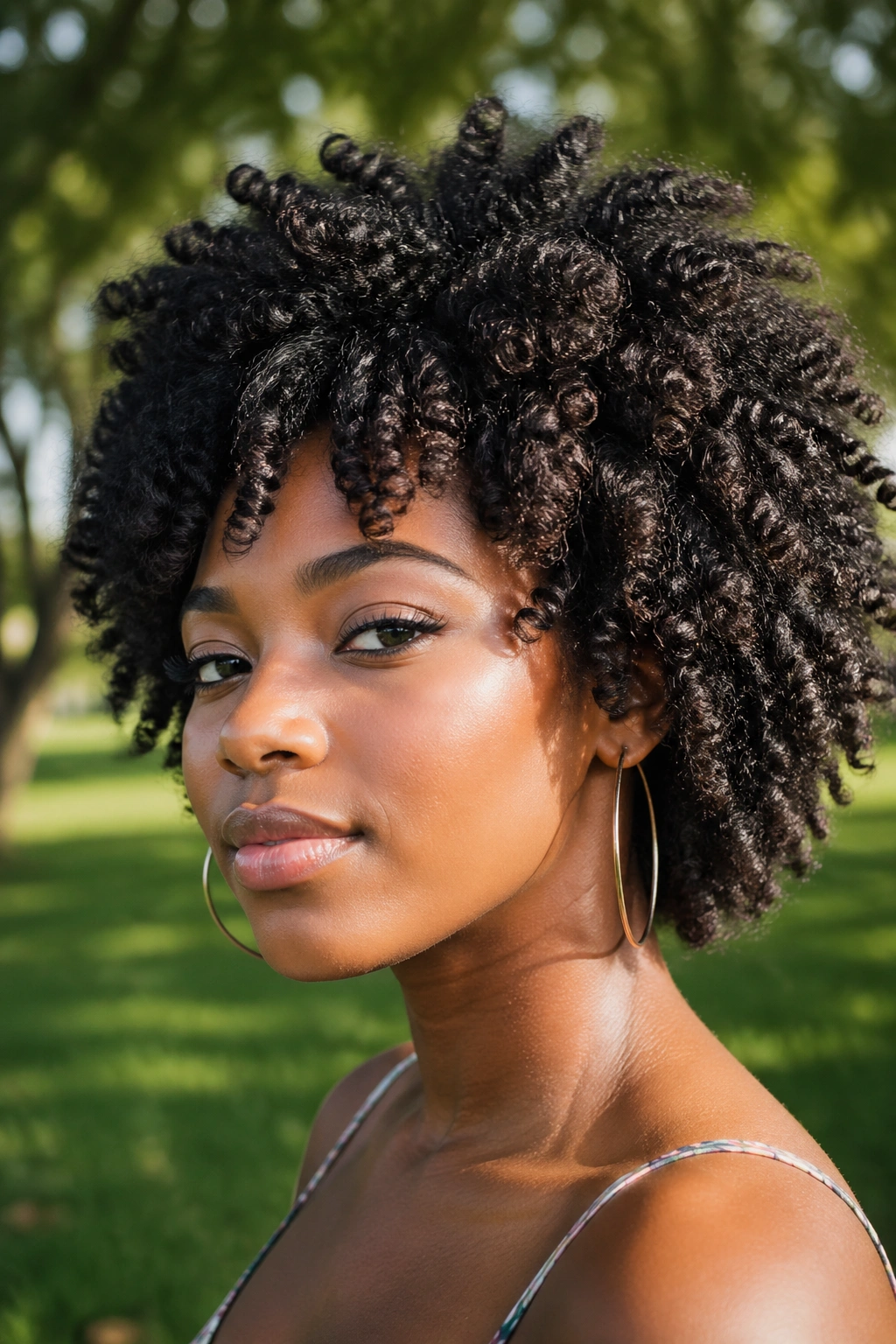
A Bantu knot-out afro gives you texture, stretch, and shape all at once. The knots themselves are useful, but the real payoff comes when you take them down and let the curls fall into a soft, springy halo. It is one of the few styles that can look both playful and polished without much extra effort.
The set matters more than the takedown. If the knots are too large, the curl pattern may not hold. If they are too small and tightly wound, the style can turn frizzy faster than you expect. Medium sections are usually the sweet spot. Let them dry all the way. Not mostly. All the way.
What Makes It Different
A knot-out gives you a more spiral-looking finish than a twist-out, and that can be useful if you want visible curl clumps with extra bounce. The shape around the face tends to look a little more lifted, too. That makes it a nice choice for people who want afro volume but do not want the hair to look puffed all over.
Be gentle when separating. Rough fingers undo the whole point.
9. Halo Braid with Loose Afro Length
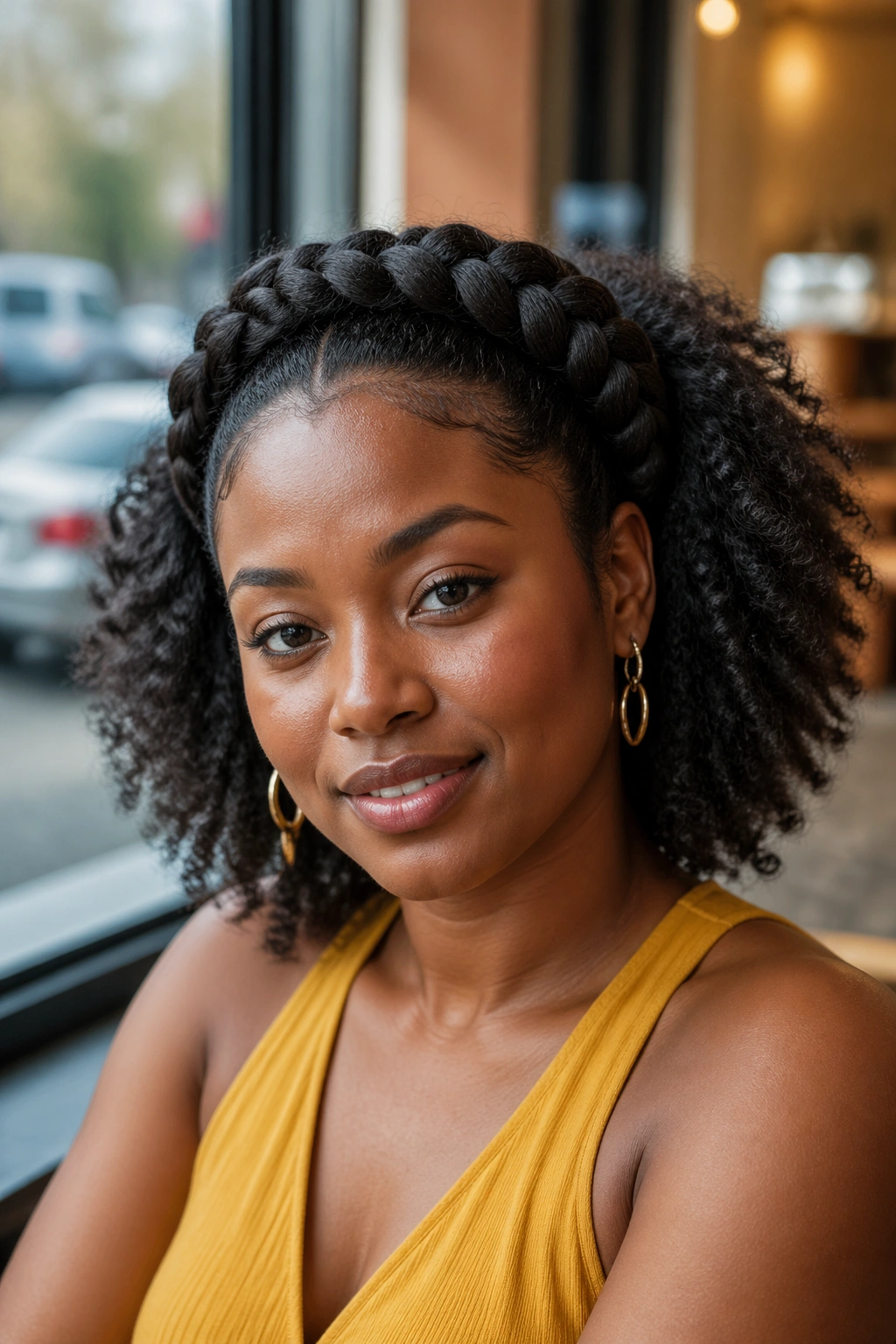
A halo braid wrapped around the head with loose afro hair in the back is one of those styles that looks more complex than it is. The braid keeps the front neat and gives the crown a framed look, while the rest of the hair stays full and natural. It is a nice answer when you want some structure without giving up volume.
This style works especially well for medium to long hair. If the hair is shorter, you can still get a version of it with flat twists or a braided front section. The point is the same: keep one area controlled and let the rest stay free.
The charm is in the contrast. Smooth braid. Soft fro. Clean edges. Full texture. That mix feels balanced and a little regal, without turning stiff or overly done.
A satin scarf at night keeps the braid from frizzing out, and a tiny bit of oil on the loose ends helps the afro portion stay soft. That’s it. No drama.
10. Double Afro Puffs
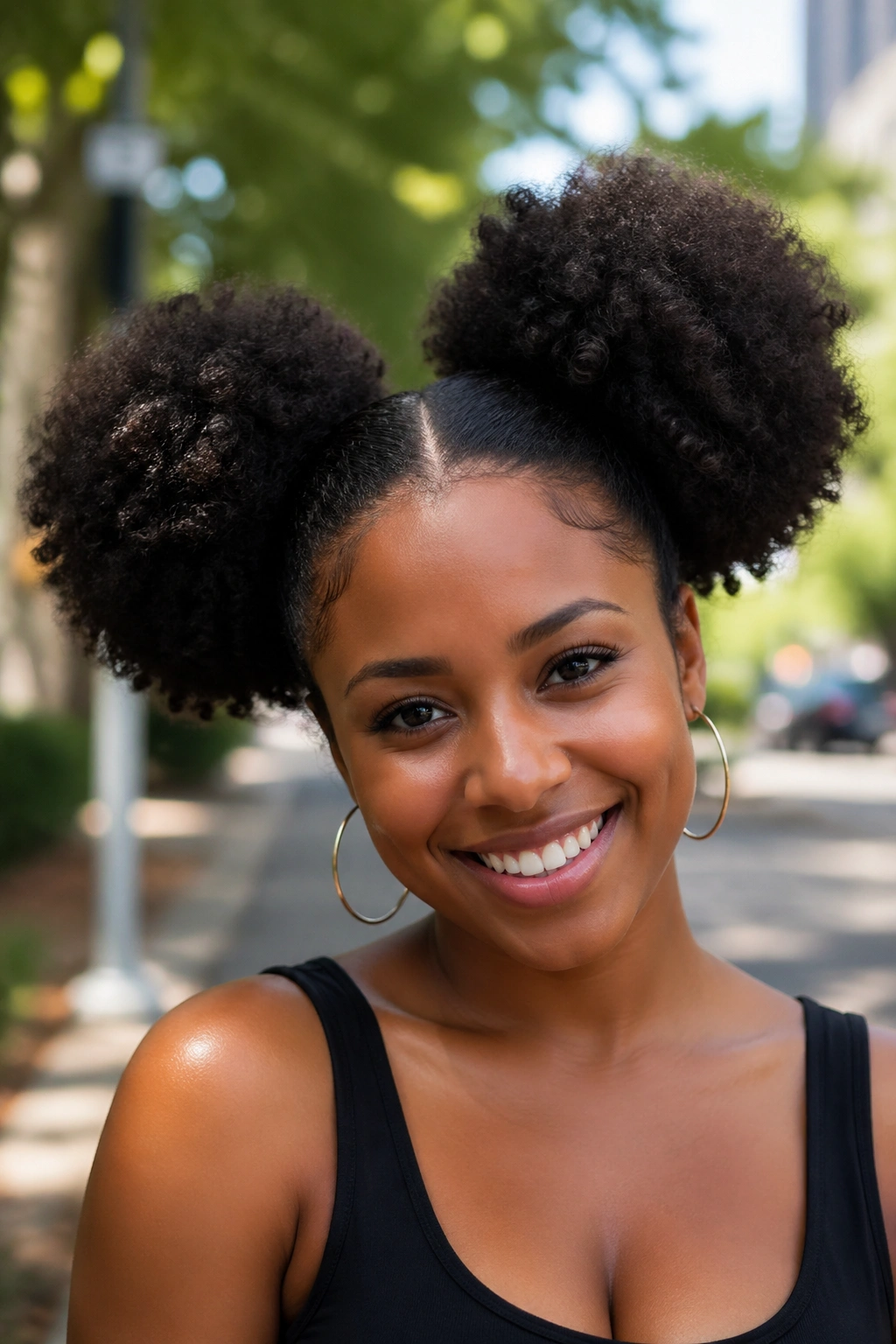
Double afro puffs are fun, practical, and still grown. They are not just for kids, despite what some people seem to think. On Black women, the style can look sweet, bold, or sporty depending on where you place the puffs and how neat the parting is.
The center part should be clean if you want the style to feel intentional. A rat-tail comb helps, and so does a little water to smooth the part before you secure each side. The puffs themselves can sit high, low, or slightly back from the temples. High gives you a bubble-like look. Lower placement feels softer.
Good Things to Know
- They work best on stretched hair or hair with some elongation.
- Gel on the part is enough; do not overdo the front.
- Two matching puff sizes look balanced, but they do not need to be identical.
- Satin scrunchies are easier on the hair than tight elastic bands.
I like this style because it gives the face a frame and keeps the hair out of the way without hiding the texture. It is cheerful without feeling childish, which is harder to pull off than people think.
11. Finger-Coil Afro
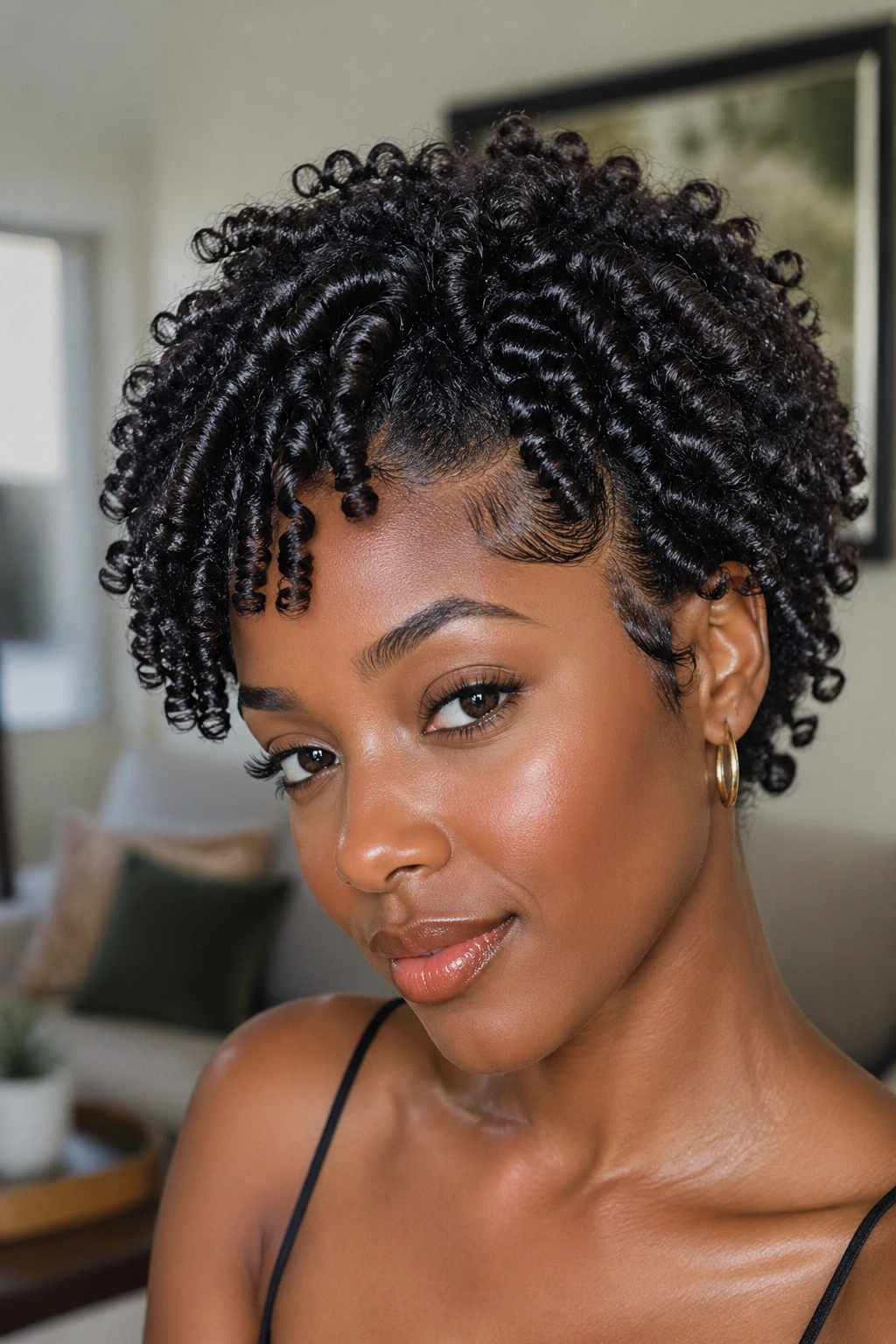
A finger-coil afro is for the days when you want definition that lasts. Each coil is formed by twirling small sections around a finger, and once dry, the style gives a dense, sculpted look that can be worn as a full afro or separated for more volume. It takes time, yes. That is the tradeoff.
The payoff is control. Finger coils can keep a shape for days, and they behave well in humid weather when many other styles start puffing up too fast. A lightweight gel or styling cream with enough hold is usually enough. Heavy butter is a bad match here. It makes the coils fuzzy at the roots and sticky at the ends.
How to Wear It
You can wear finger coils neat and defined, or you can pull them apart gently once they are dry for a fluffier afro effect. If you separate them too much, the style loses its shape. So go slow. A little oil on your fingertips helps.
This is one of those styles that rewards patience. Not a lot of it, just enough to stop rushing.
12. Flat-Twist Crown Afro
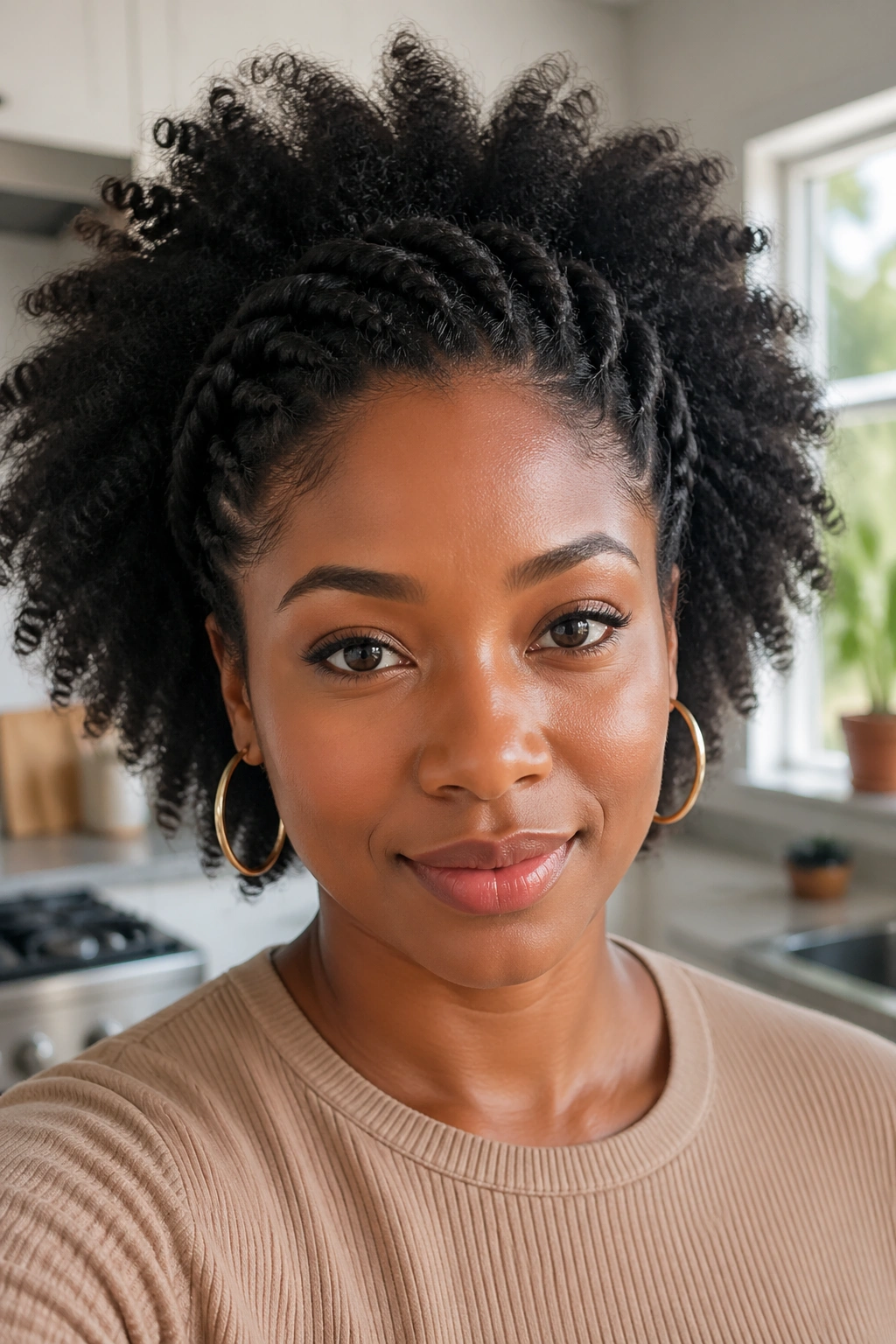
A flat-twist crown afro is one of my favorite half-up styles because it gives you texture around the lengths and structure at the crown. The flat twists pull hair back neatly from the hairline, and the remaining hair stays loose, full, and soft. It is a strong look without being fussy.
The front of the style does a lot of the visual work. Keep the twists close enough to the scalp to stay secure, but do not pull them so tight that the style feels tense after an hour. Tightness is not neatness. Those are two different things.
A good flat-twist crown can also help protect the edges from constant touching, which matters more than people admit. We all tend to mess with the front of our hair when we are thinking, talking, or sitting in traffic. This style gets that area out of the way.
Wear it with large studs, a glossy lip, or a plain tee. It plays well either way.
13. Mini Twist Afro
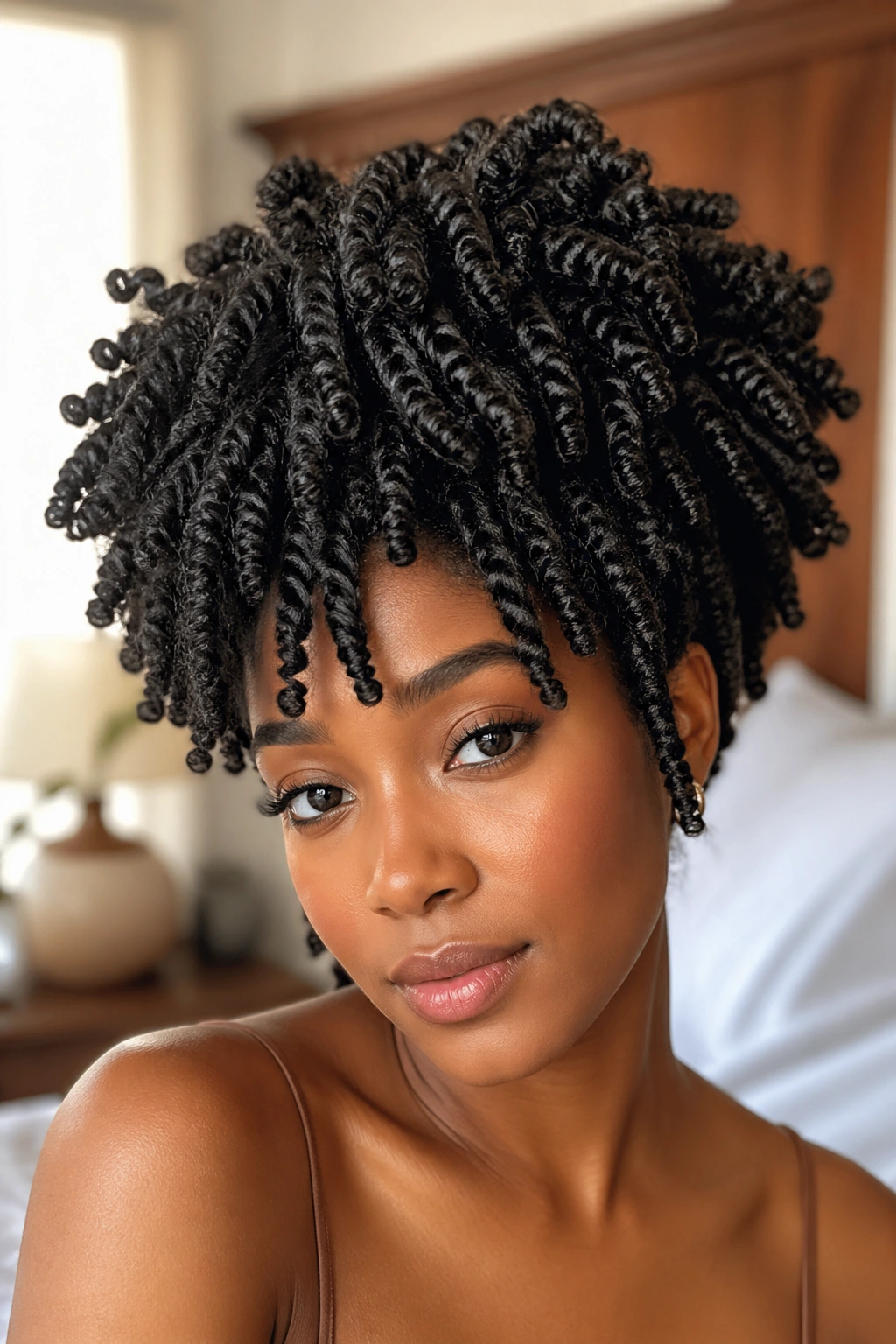
Mini twists are one of the most useful styles in the natural hair playbook. They are protective, low manipulation, and surprisingly flexible once they set. Worn loose, they create a rope-like afro texture with a lot of movement. Worn tucked or pinned, they can turn into a whole week’s worth of easy styling.
The small size is the point. Mini twists give you definition without making the hair look bulky at the roots. They also dry more evenly than chunky twists, which helps if your hair holds moisture for a long time. That matters. Damp twists are a shortcut to an unhappy scalp.
The Practical Side
- Part the hair in clean, even sections so the style falls neatly.
- Use enough product to smooth the strands, but not so much that the twists stay wet for hours.
- Sleep with a satin bonnet or pillowcase to keep the ends from unraveling.
- If you want more volume, separate the twists gently after they are fully dry.
Mini twists are not flashy, and that is exactly why they work so well. They keep the hair looking cared for without asking for daily drama.
14. Fluffy Braid-Out Afro
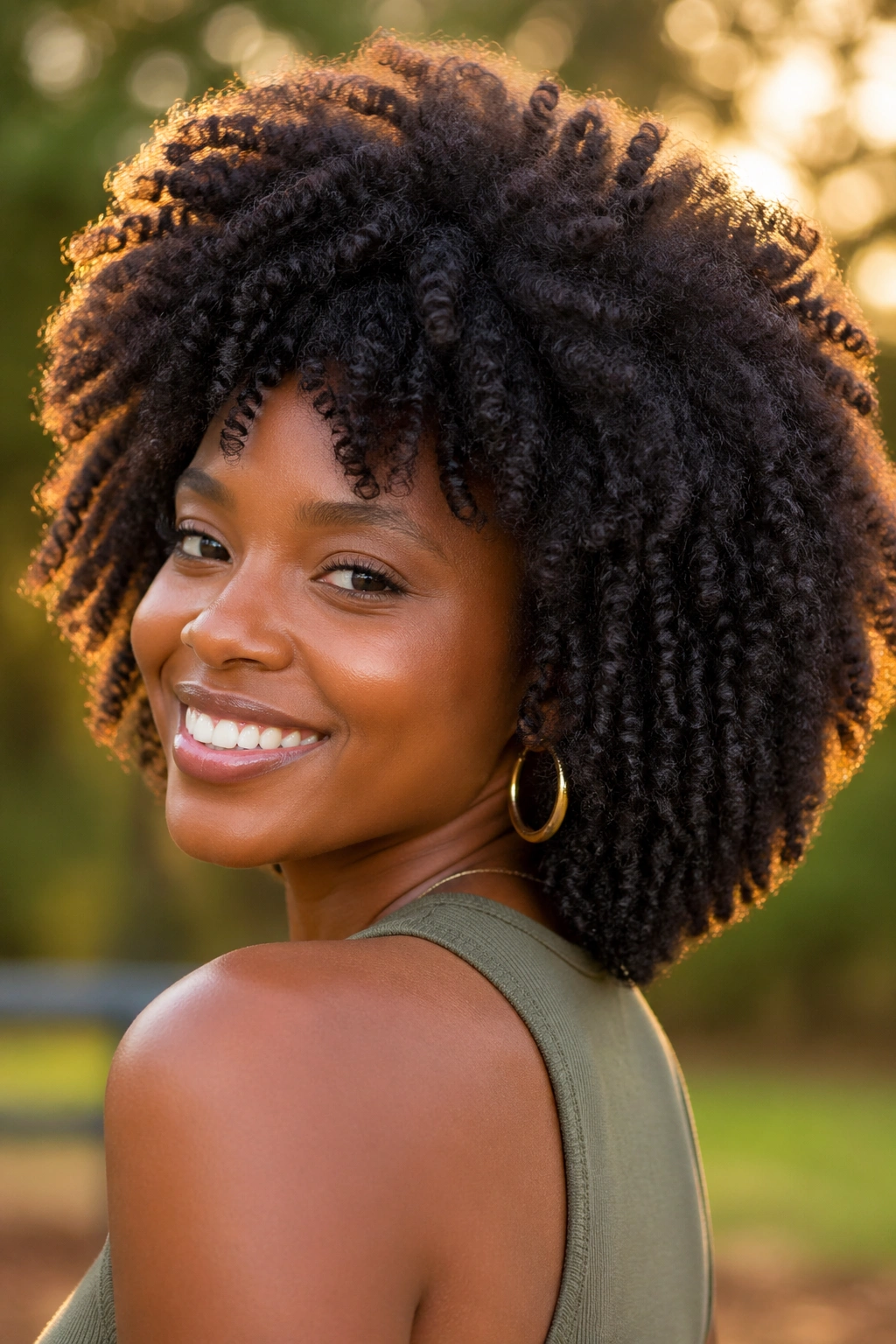
A braid-out afro gives you a stretchier texture than a twist-out, with a little more wave and a little less spiral. That makes it useful when you want fullness but not too much curl definition. It feels airy in a way that can be hard to get from other styles. Braids, once taken down and fluffed, create movement that sits somewhere between neat and loose.
The braid size changes the whole mood. Big braids give a soft wave and faster styling time. Smaller braids give more pattern and more frizz control, but they take longer. Either way, you want the hair fully dry before you undo anything. If the center is damp, the style can collapse before lunch.
The braid-out is a good pick when you want your afro to look lived-in rather than sculpted. A little frizz is part of the charm here. Too much polish can make it feel flat, and that is not the point.
It is one of those styles that gets better after a little wear. The first hour is not always the best hour.
15. Sculpted Statement Afro
A sculpted statement afro is the style for days when you want the hair to speak for itself. The shape is intentional, the volume is controlled, and the overall effect is bold without needing extra pieces, complicated parts, or too much decoration. A strong afro shape can do more than a stack of accessories ever will.
The trick is in the outline. Keep the sides balanced, the top lifted, and the edges clean enough to show the shape without making it stiff. A pick helps open the roots, but only at the base. If you comb through the ends too aggressively, you lose the body that makes the style work.
A styling cream with a little hold can help the silhouette stay in place, especially if you are working with stretched hair. If your texture is tighter, let the afro keep some shrinkage. A fully stretched fro and a softly shrunken fro do not read the same, and that is part of the fun.
This is the style I reach for when I want the texture to stay visible from every angle. No apology. No hiding. Just hair doing what it does best.
