



Crochet styles for afro-textured hair can be a lifesaver when you want something that looks styled without demanding fresh manipulation every morning. The catch is that not every crochet look behaves the same on coily, curly, or dense hair. Some sit light and airy. Some bring a lot of shape, a little weight, and a louder mood.
The styles that last best on afro-textured hair usually do two things well: they respect the hairline and they respect the texture. That means the base cornrows are neat but not pulled tight, and the fiber you choose makes sense for the finish you want. A shiny, silky curl can look fine in a photo and feel wrong by day two. A kinkier fiber often blends better at the root and gives the whole style a calmer, more natural shape.
I keep coming back to one simple point: the prettiest crochet install is useless if it makes your scalp sore or turns your neck into a complaint department. Weight matters. Part size matters. The length matters too, especially if you wear glasses, sleep on your side, or just do not want hair swinging into your collar all day.
The 12 styles below cover soft curls, twists, locs, short cuts, sculpted shapes, and a few options that work especially well when you want movement without a lot of daily upkeep. Some are quiet. Some are bold. A couple are practical in that almost boring way that turns out to be brilliant by week three.
1. Shoulder-Length Curly Crochet Braids
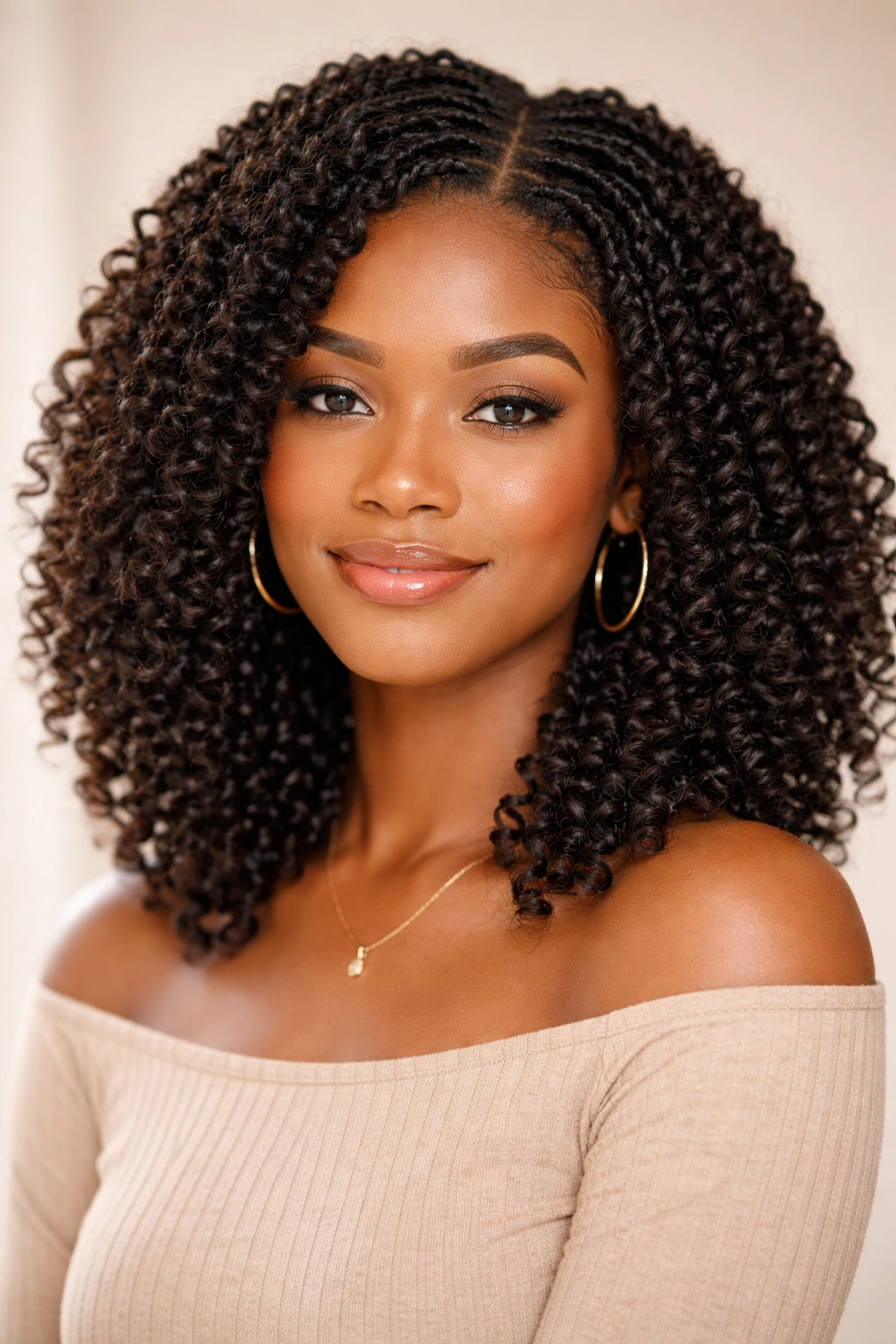
Shoulder-length curly crochet braids are one of the easiest places to start if you want something flattering without too much drama. The shape lands in that useful middle zone where the hair has enough length to feel styled, but not so much that every shake of your head starts weighing on your nape. On afro-textured hair, that matters more than people admit.
Six to eight packs of pre-curled synthetic hair is a common starting point, depending on how full you want it and how tight your cornrow base is. I like this length because it gives the curls room to move without tangling into a mop. A light layer of mousse and a satin scarf at night go a long way here.
The best version of this style uses curls that match the density of your own hairline. If the curl pattern is too shiny or too loose, it can look separate from the rest of the head. If it’s too tight and too small, the style can feel busy. The sweet spot is a curl with bounce and enough texture to look like it belongs on coily hair.
A small warning. Don’t overdo the install near the temples. That front edge is where people usually make the whole thing look heavy.
2. Knotless Crochet Box Braids
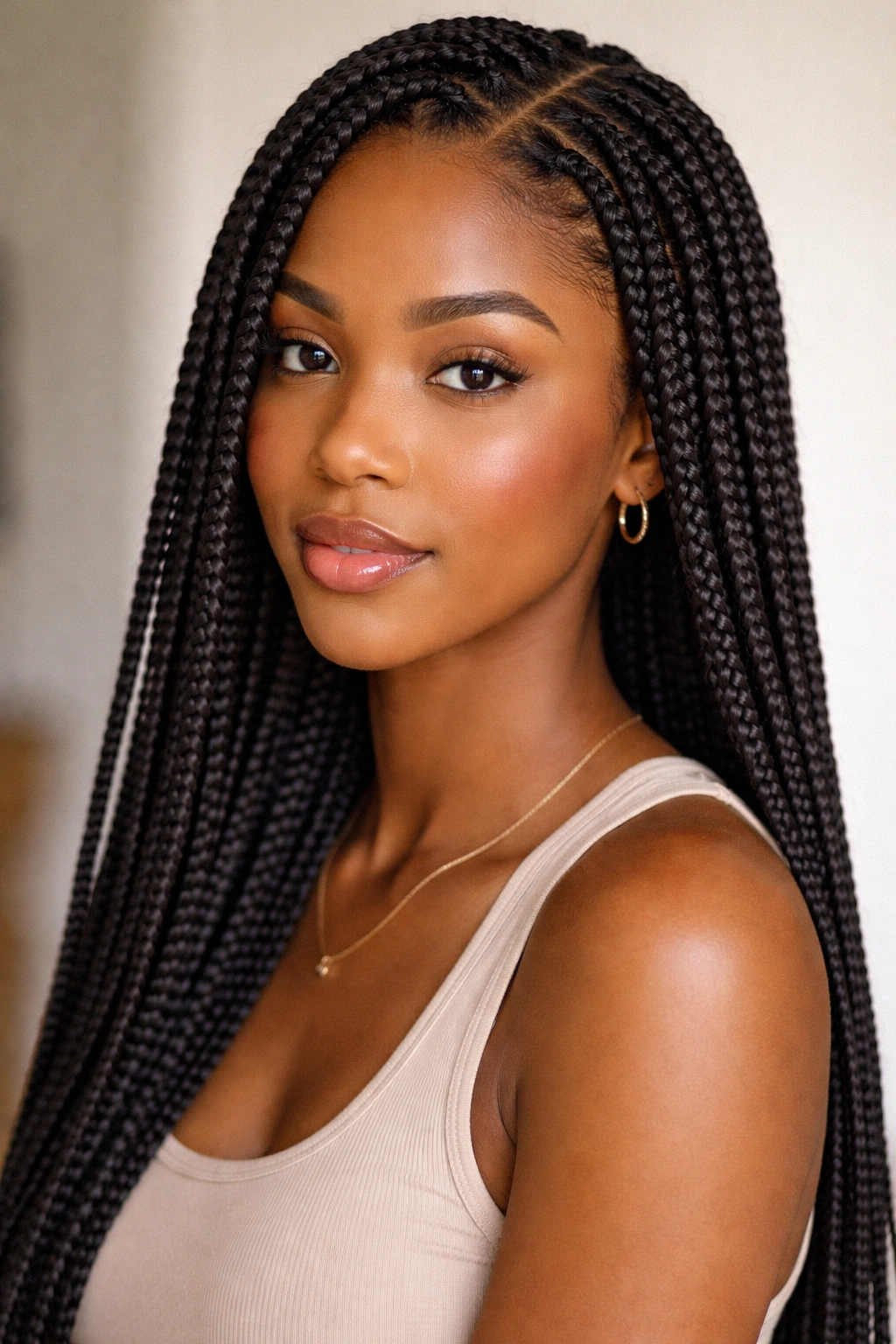
Why do knotless crochet box braids feel cleaner than older braid-and-crochet combinations? Because the braid base does more of the visual work. The crochet hair is added so the front sits flatter, which gives you that box-braid shape without a big knot sitting on the scalp.
What Makes Them Stand Out
The finish is neat, and that is the whole point. You still get the familiar braiding silhouette, but the root looks smoother and less bulky. For afro-textured hair, that can be a relief if you like the look of box braids but dislike the tug that often comes with heavier installs.
This style is a strong pick if you like to wear half-up styles, a low bun, or a high ponytail on some days. The braid base is structured enough to hold shape, but not so rigid that the style feels stiff. That balance makes it easy to dress up with cuffs or keep plain and clean.
What to Ask For
- A medium-sized braid base so the parting does not look crowded.
- Pre-stretched braiding hair for the underneath foundation.
- A front hairline that stays slightly looser than the crown.
- Crochet hair with a texture that does not fight your own ends.
The one thing I would not rush is the parting. Crisp parts help, yes, but tiny parts can turn into a headache fast. Medium parts are kinder and usually look better for longer wear.
3. Passion Twist Crochet
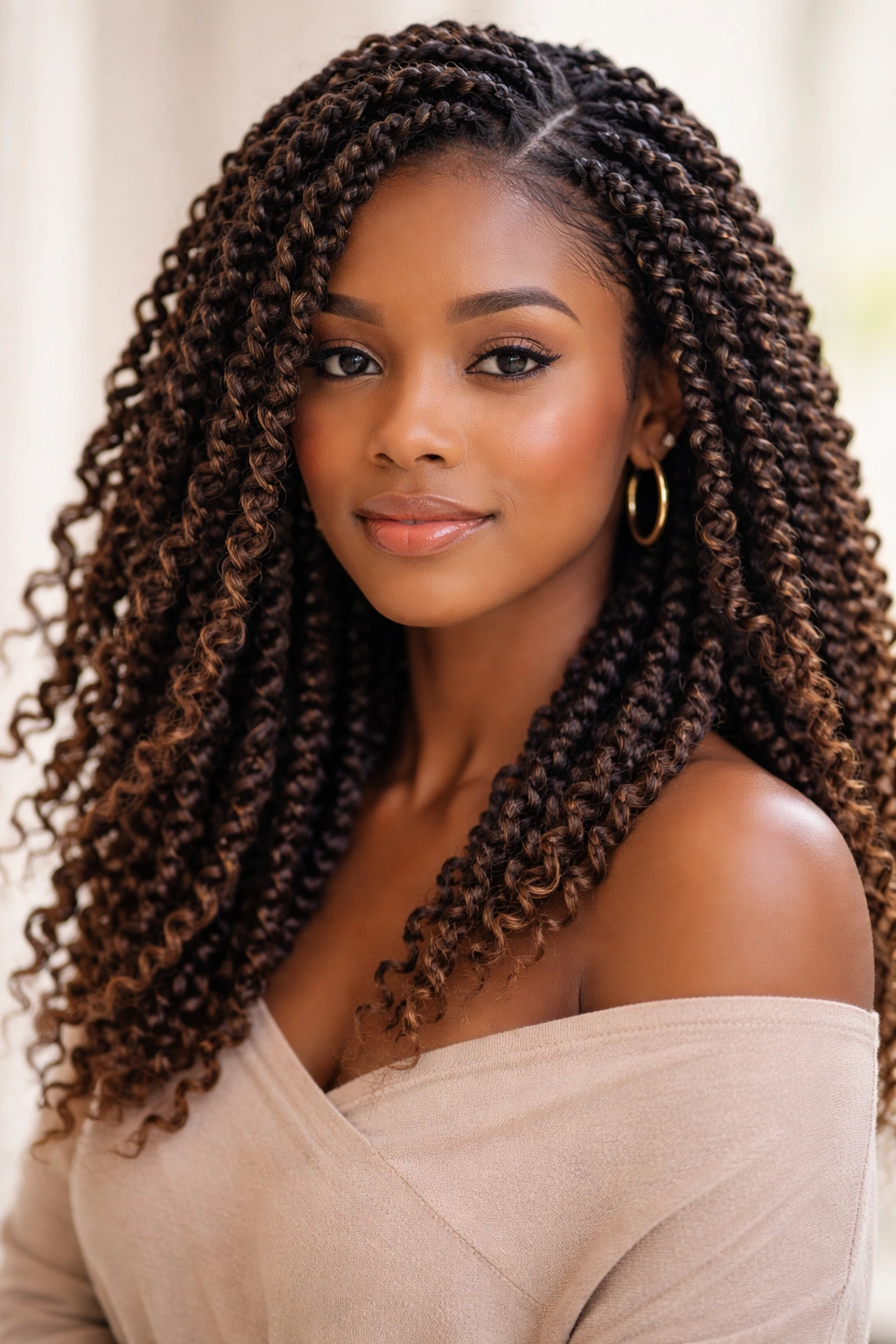
Passion twist crochet is for people who want texture that feels airy, not stiff. The twists have that rope-like, springy look that sits somewhere between soft loc energy and a loose twist-out. They move. That movement is the appeal.
This is not the style I would choose if I wanted a perfectly uniform finish from every angle. A little irregularity is part of the charm. The twists soften around the face, and the whole style reads relaxed rather than sharp. On afro-textured hair, that softness can be a nice break from styles that pull everything back into a strict shape.
It works especially well in 12- to 16-inch lengths, where the hair can swing without dragging. Longer passion twist installs can be beautiful, but they need lighter fiber and a calmer base, or they start to feel like too much hair for everyday life. If you want the style to last, keep the refresh routine simple: water-based spray, a little mousse, fingers only.
It should move.
4. Waist-Length Faux Locs
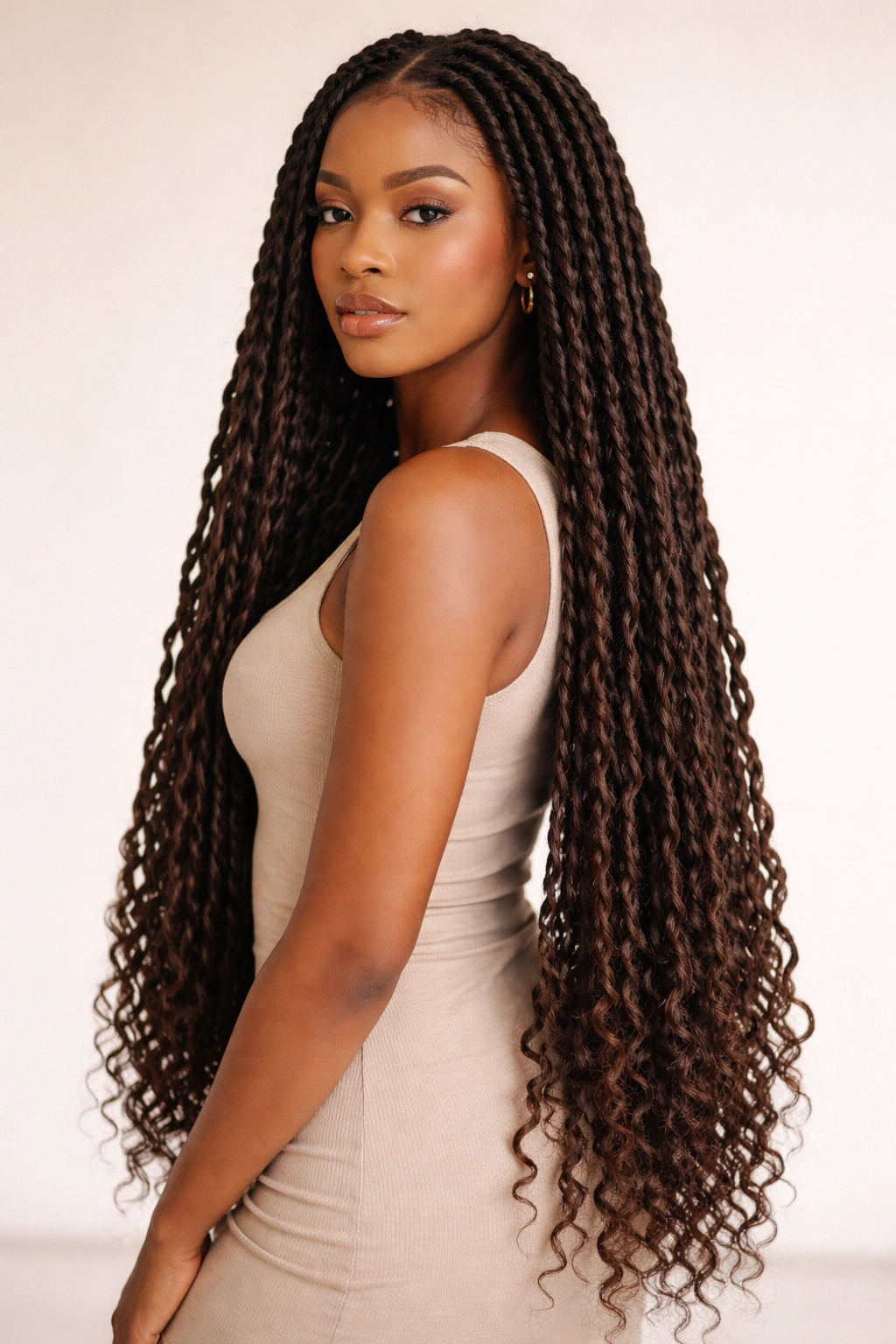
Faux locs change the whole mood of a look. They have that dry, ropey texture that feels grounded and a little tougher than curls or twists. Waist-length versions bring drama, but they also bring weight, so the install has to be planned carefully.
How to Keep Faux Locs from Feeling Heavy
- Ask for medium loc size, not tiny ones, if you want your scalp to stay comfortable.
- Put the longest pieces toward the back so the weight spreads out.
- Choose a fiber that feels soft at the bend points, not wire-stiff.
- Clean the scalp with a light nozzle bottle instead of soaking the whole head.
The best faux locs on afro-textured hair are not crammed onto the head. They sit in balanced rows. If the base cornrows are too tight, the locs pull forward, and that’s when the style starts to feel like work instead of a protective style.
There is also a visual payoff here that people sometimes miss. Waist-length locs look strongest when the ends are finished cleanly, either wrapped or lightly tapered. Rough ends can work if you want a weathered look, but they need intention. Sloppy ends are not the same thing.
5. Goddess Locs with Loose Curly Ends
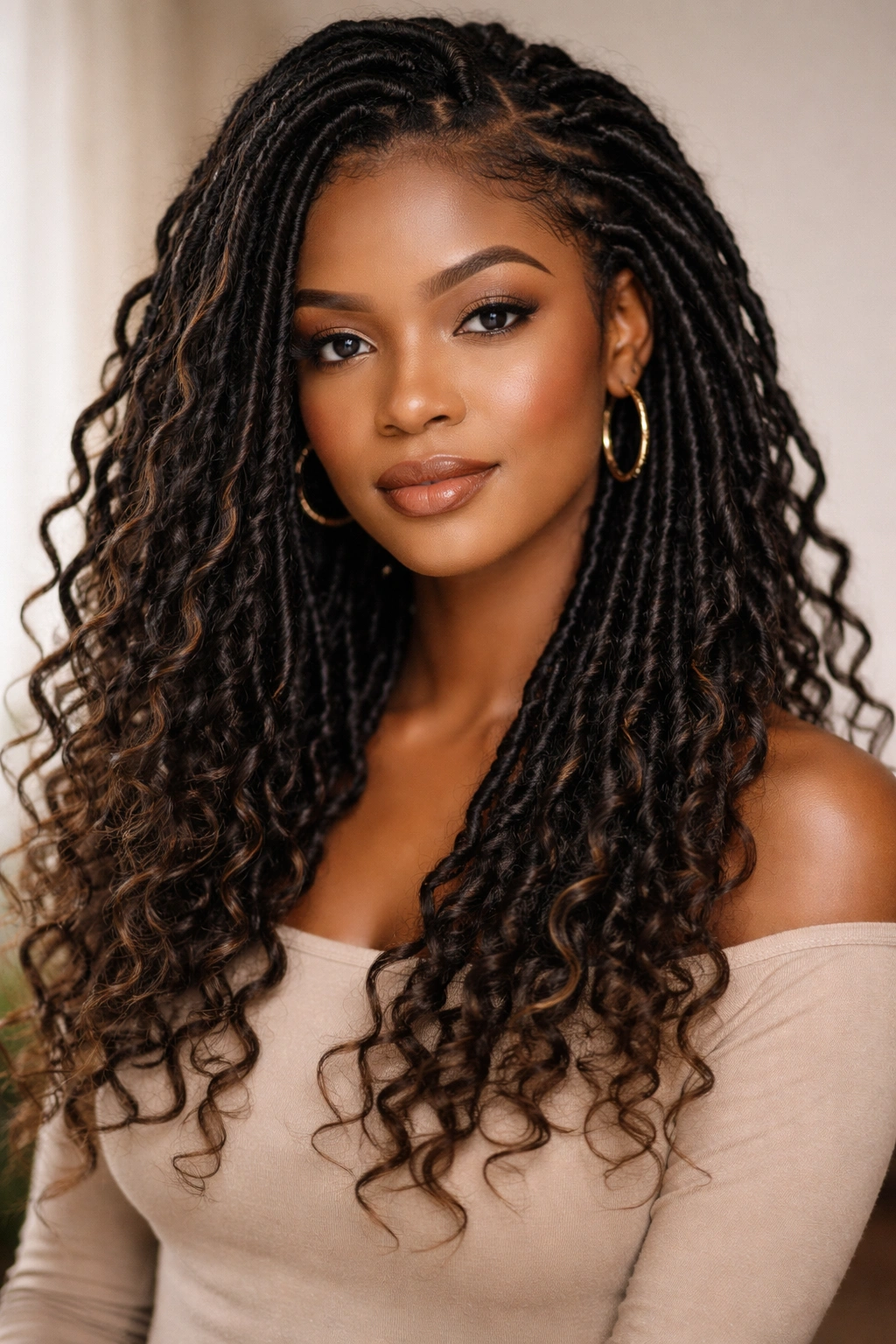
Goddess locs are the softer cousin of faux locs, and that difference matters. The loc body gives structure, while the loose curls around the ends or face add movement and break up the heaviness. If faux locs sometimes feel too severe for your taste, goddess locs are the better move.
Where the Loose Curls Matter Most
The most flattering placement is usually around the temples, near the jawline, and at the bottom third of the style. A few well-placed curls do more than a full head of random pieces. They frame the face and keep the locs from looking boxy.
The style works well at shoulder length or a little longer. Too much length can bury the curl detail, which is a shame because that soft contrast is what makes the look stand out. Keep the curls tidy with a light foam or setting mousse. Heavy oils tend to make the loose sections clump in a way that looks tired fast.
If you want a softer finish without losing the loc shape, this is one of the best crochet styles for afro-textured hair. It gives you structure first, softness second, and that order is exactly why it works.
6. Sleek Senegalese Twist Crochet
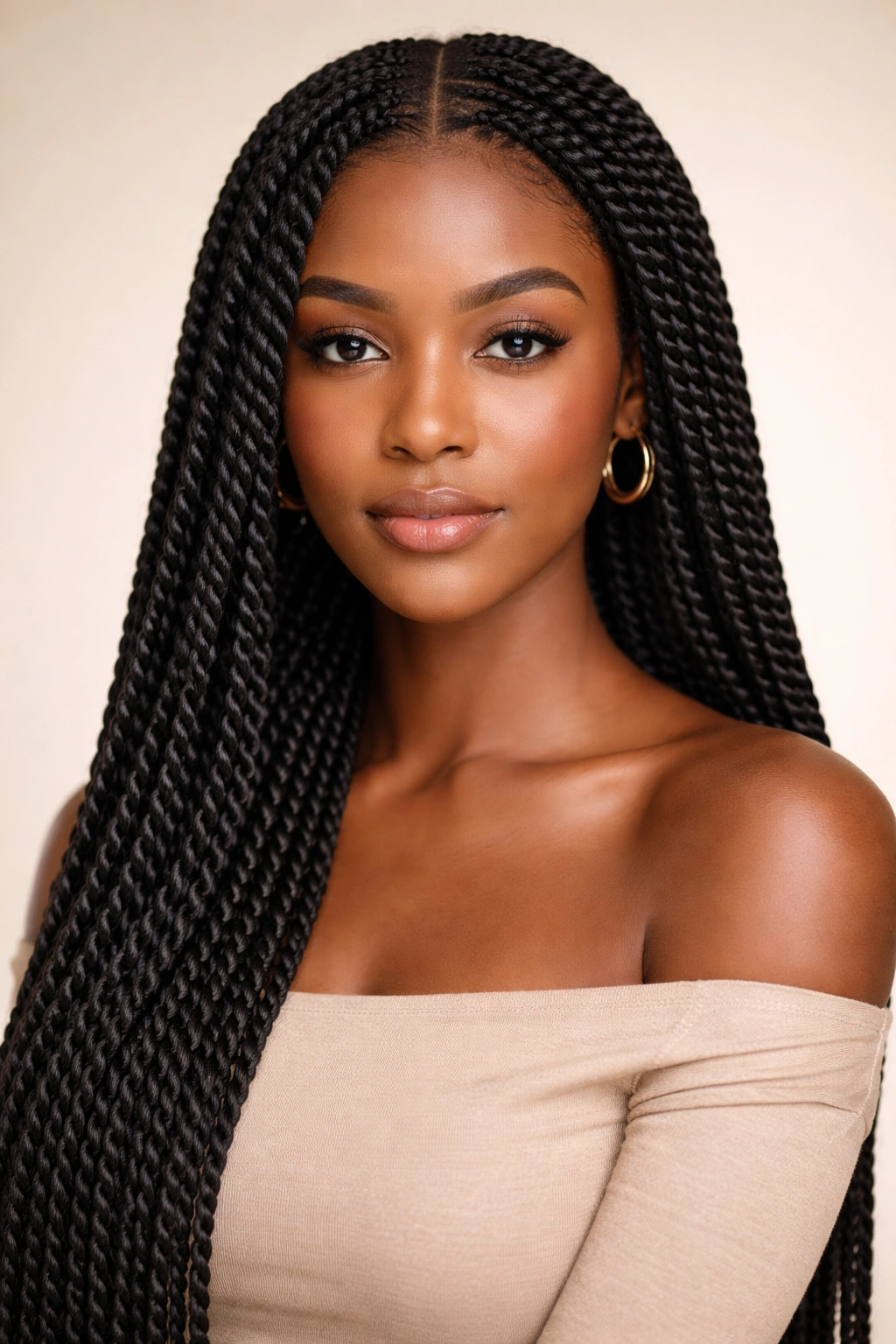
If you need a style that looks neat in a blazer and still works with hoop earrings, Senegalese twists usually win. The smooth, rope-like finish gives the whole head a cleaner line than fluffier twist styles, which is useful when you want polish without going bone-straight.
The texture here is more controlled than Marley twists, and that’s the tradeoff. You get less fluff and more shine. On afro-textured hair, that can be nice when your natural wardrobe leans simple and the hair needs to do the talking. Just keep the twist size honest. Too small and the style can feel labor-heavy. Too large and the twist loses the crisp look that makes it worth wearing.
A medium-sized twist with a clean middle part or a sharp side part tends to sit best. The style also holds up well in a bun, which is handy if you spend part of the week wanting your hair off your neck. I’d call this a strong choice for anyone who likes structure and does not want a style that frizzes into chaos after one day of humidity.
7. Full Marley Twist Crochet
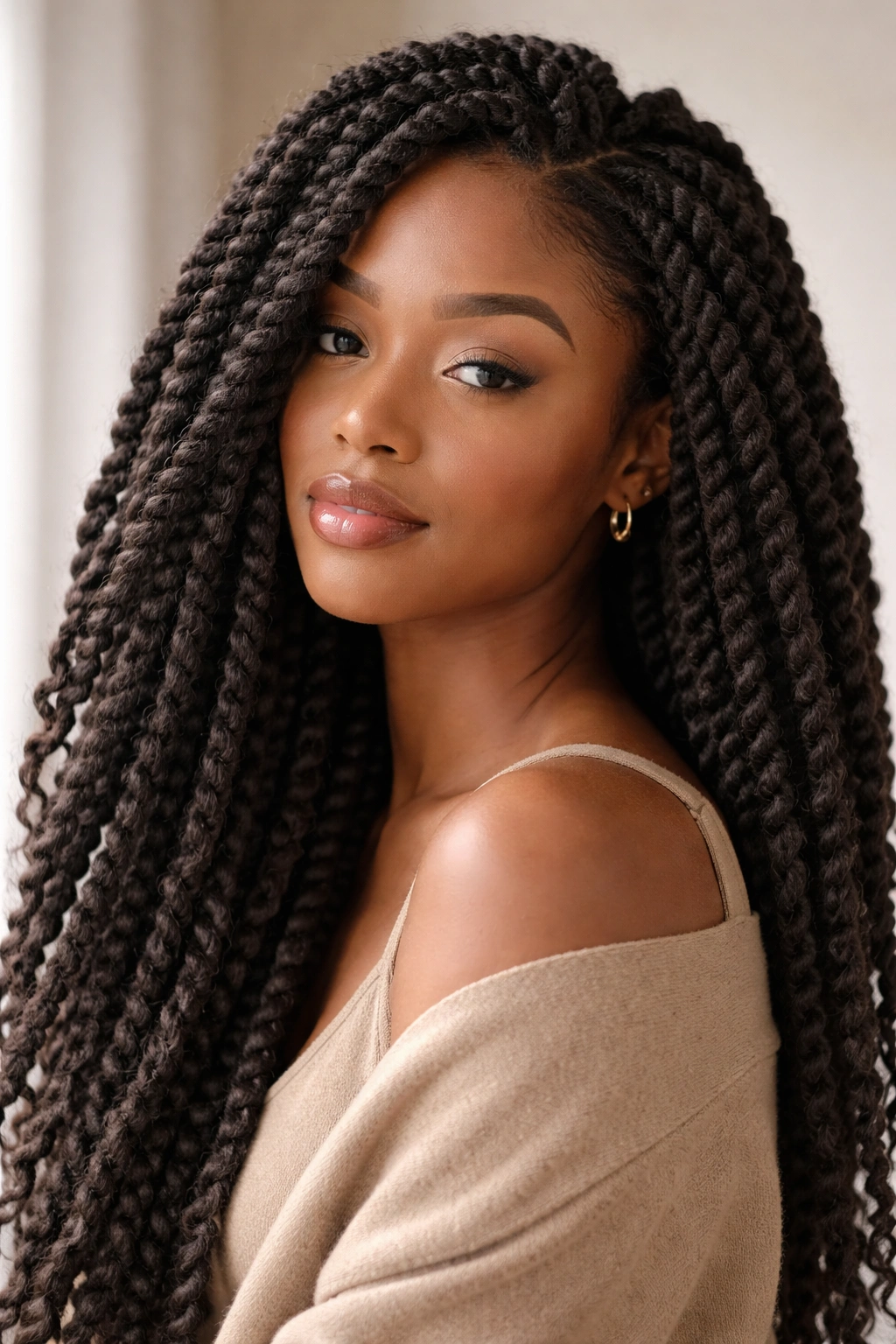
Unlike Senegalese twists, Marley twists keep the fiber textured from root to tip. That rougher finish is the point. It blends better with natural hair that has a little puff and gives the style a warmer, more organic look.
The first thing people notice is the matte surface. No shine. No plastic look. Just ropey texture that sits well on coarser hair and does not fight the rest of the head. That is why Marley twists often look less “installed” and more like they grew that way. I like them for people who want fullness without slickness.
Best for a Fuller, Softer Shape
- Medium to large twists if you want faster install time.
- Shoulder-length to mid-back length if you do not want the weight to build up.
- A side part when you want the shape to feel less square.
- A loose edge around the hairline so the front doesn’t look stiff.
The downside is obvious enough: all that texture can catch on itself if you rough it up too hard. So keep your fingers out of it unless you’re separating pieces on purpose. Once a Marley twist gets fuzzy, it usually stays fuzzy. Some people love that. Some people don’t. Know your own patience level before you commit.
8. Kinky Straight Crochet Blowout
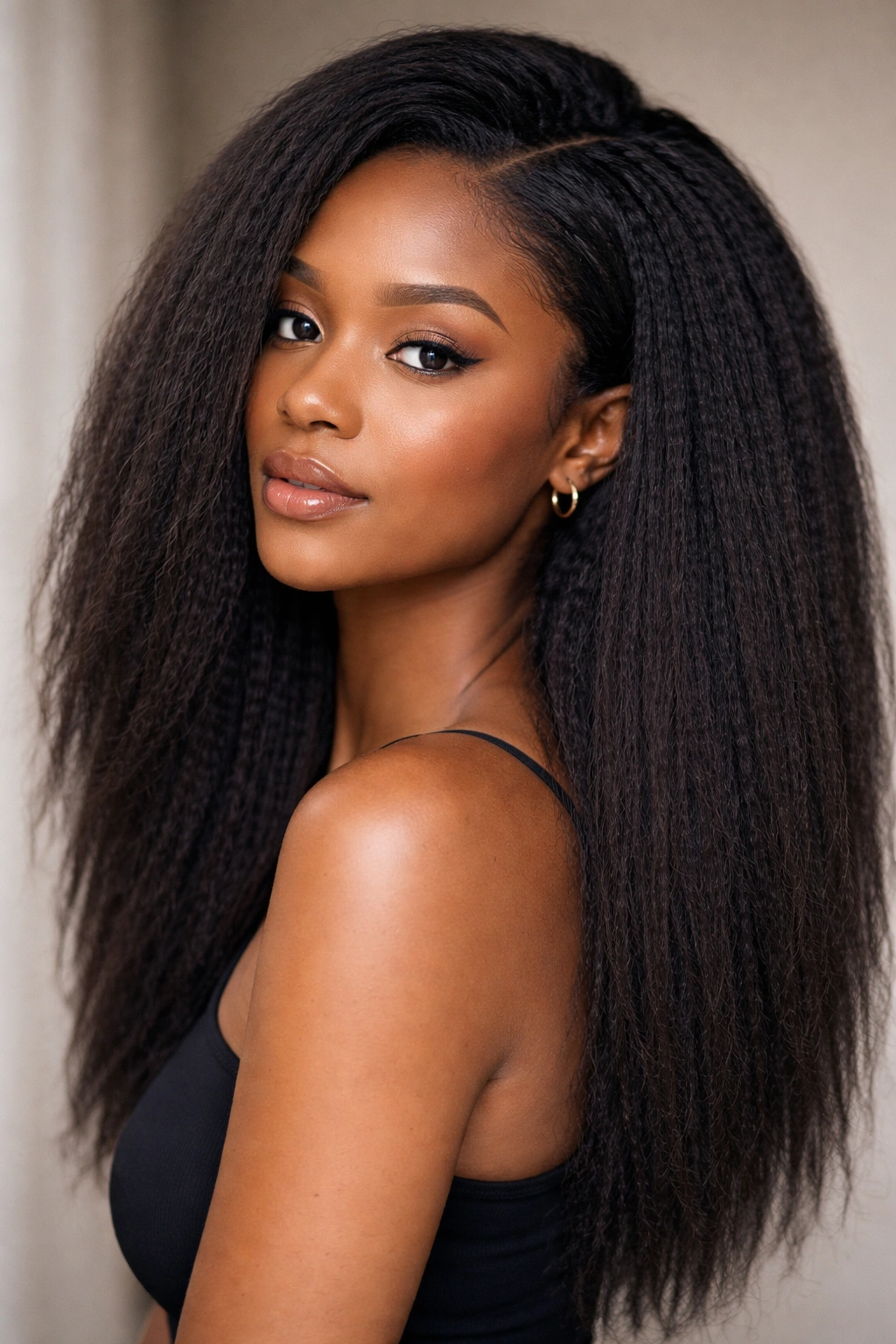
A stretched blowout look can be a lifesaver when you want length but not silky hair. Kinky straight crochet gives you the feel of blown-out natural hair without adding heat or forcing your own strands to mimic a relaxer-smooth finish. That alone makes it a smart option for afro-textured hair.
The texture should look soft and a little coarse, not shiny. If it looks like a straight wig fiber, it usually blends worse. The better versions have enough bend in the strand that they catch the light like hair, not plastic. This style also gives you more room to wear low buns, clipped-back half-up looks, and blunt ponytails.
Why It’s Easier to Live In
- It brushes out without turning into a frizz cloud.
- It fits better into everyday styles than very curly pieces.
- It often needs fewer packs than a full curly install.
- It pairs well with leave-out only if your own hair is already stretched.
That last point matters. If your natural hair is very coily at the root, a tiny bit of leave-out can help, but you don’t need much. A lot of people overcomplicate this style by trying to make it behave like a silk press. It isn’t that. It’s textured length, and that’s the whole appeal.
9. Side-Part Crochet Bob
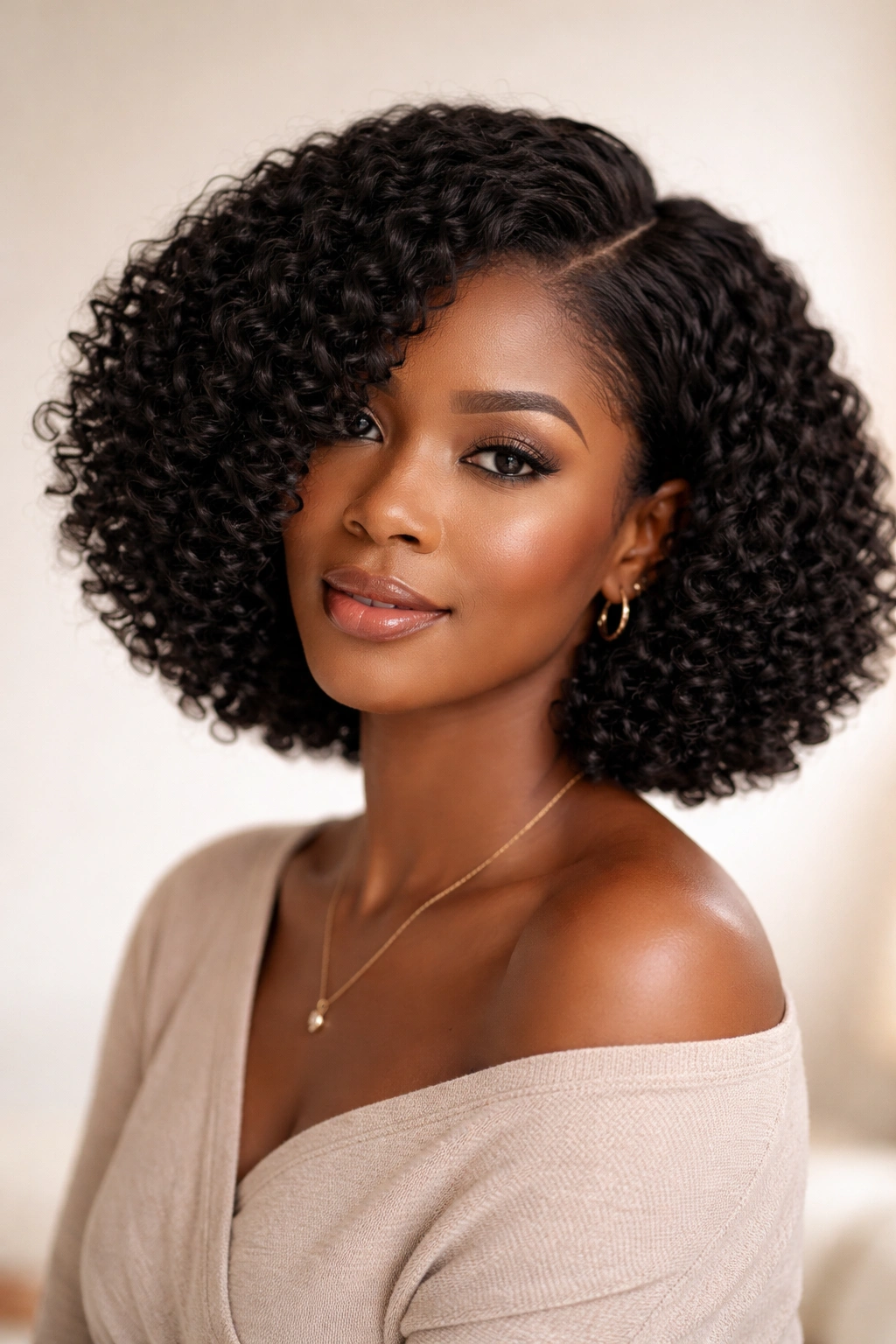
Why does a crochet bob feel lighter than a longer install, even when the fiber is the same? Because the hair has less distance to pull, less chance to snag on scarves, and less swing when you move. A bob cuts the maintenance down in a way that your shoulders notice by the second day.
A side part gives the shape more life than a dead-center part. It also makes the cut look less helmet-like, which is the danger with short crochet styles. A chin-length or collarbone-length bob usually sits best on afro-textured hair because it gives the face room. Layering helps too. A blunt edge can work, but a few face-framing pieces often make the whole thing look more natural.
The Cut That Makes It Work
- Keep the length around chin to collarbone.
- Ask for slight layering near the jawline.
- Use 3 to 4 packs if you want a lighter finish.
- Refresh with mousse only where the curl clumps together.
This is one of the smartest choices if you want crochet hair that behaves like real everyday hair. It looks put together. It dries faster after a wash. And it does not take over your whole outfit.
10. Tapered Frohawk Crochet
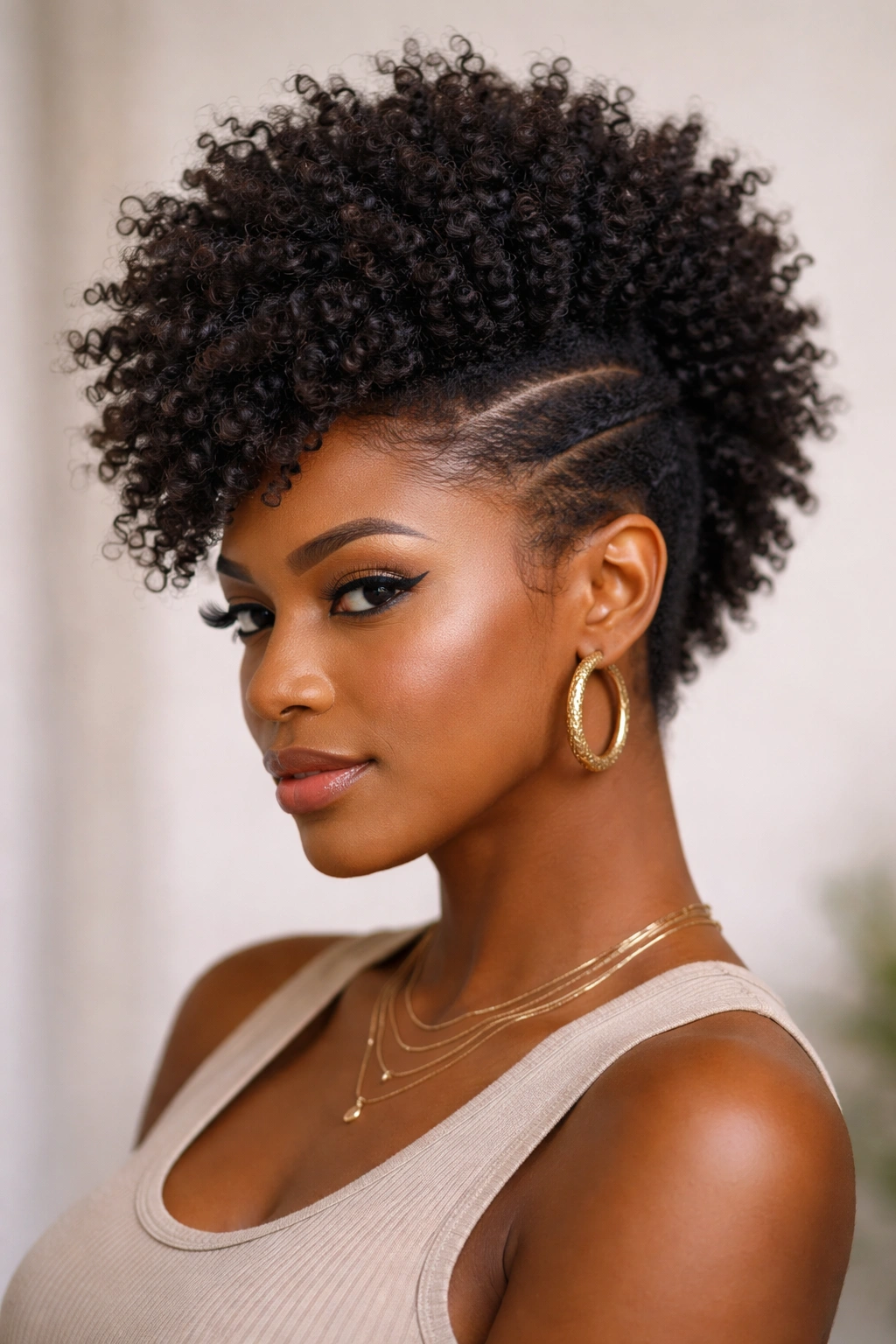
A tapered frohawk gives you shape before it gives you length. That is why it feels so bold without needing waist-length hair or a pile of extra fiber. The sides stay close to the head, while the center or top section rises into a strong ridge of texture.
This style works well with kinky curls, short coils, or even short loc pieces. The point is volume in the middle and control around the edges. On afro-textured hair, that contrast looks sharp. It also keeps weight away from the temples, which makes the style more wearable than a full-head install with the same amount of hair.
You can make it softer with curly pieces or tougher with tighter coils. Either way, the silhouette does the heavy lifting. If you like earrings, high collars, or glasses with shape, this style has a way of making all of that look intentional without trying too hard.
One small detail gets ignored all the time: the crown should be the fullest part. If the crown falls flat, the whole frohawk loses the point.
11. Half-Up Crochet Ponytail
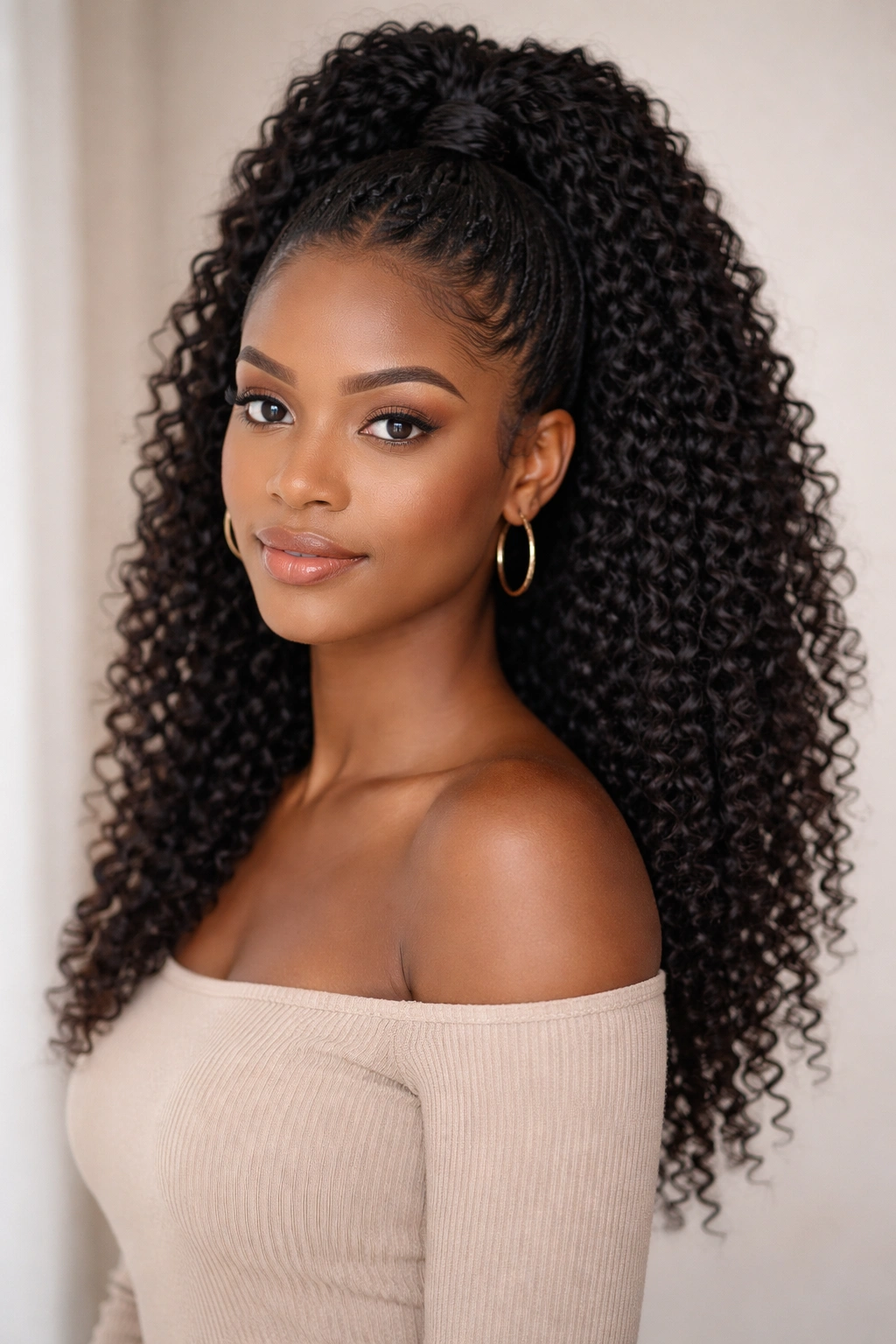
A half-up crochet ponytail solves one specific problem: you want hair off your face without giving up length. That sounds simple, but the styling payoff is huge. The top section gives lift. The bottom section keeps movement. You get both in one install.
This works with curls, twists, or locs, which makes it one of the more flexible crochet styles for afro-textured hair. It’s especially good for events or long days when full-down hair starts to bother you around the cheeks and jaw. The key is the anchor. If the base is weak, the ponytail slides and the style loses shape fast.
How to Keep the Pony from Sagging
- Put the ponytail mount on a strong, flat cornrow base.
- Keep the top section slightly lighter than the back section.
- Wrap the base with one strand of matching hair so the attachment disappears.
- Use a small pin or elastic under the wrap if the fiber feels heavy.
The look can be sleek or loose. I like it when the front is neat and the ponytail itself has enough texture to swing. That balance keeps it from reading like a school picture hairstyle. It looks grown, polished, and a little playful.
12. Textured Crochet Afro Puff
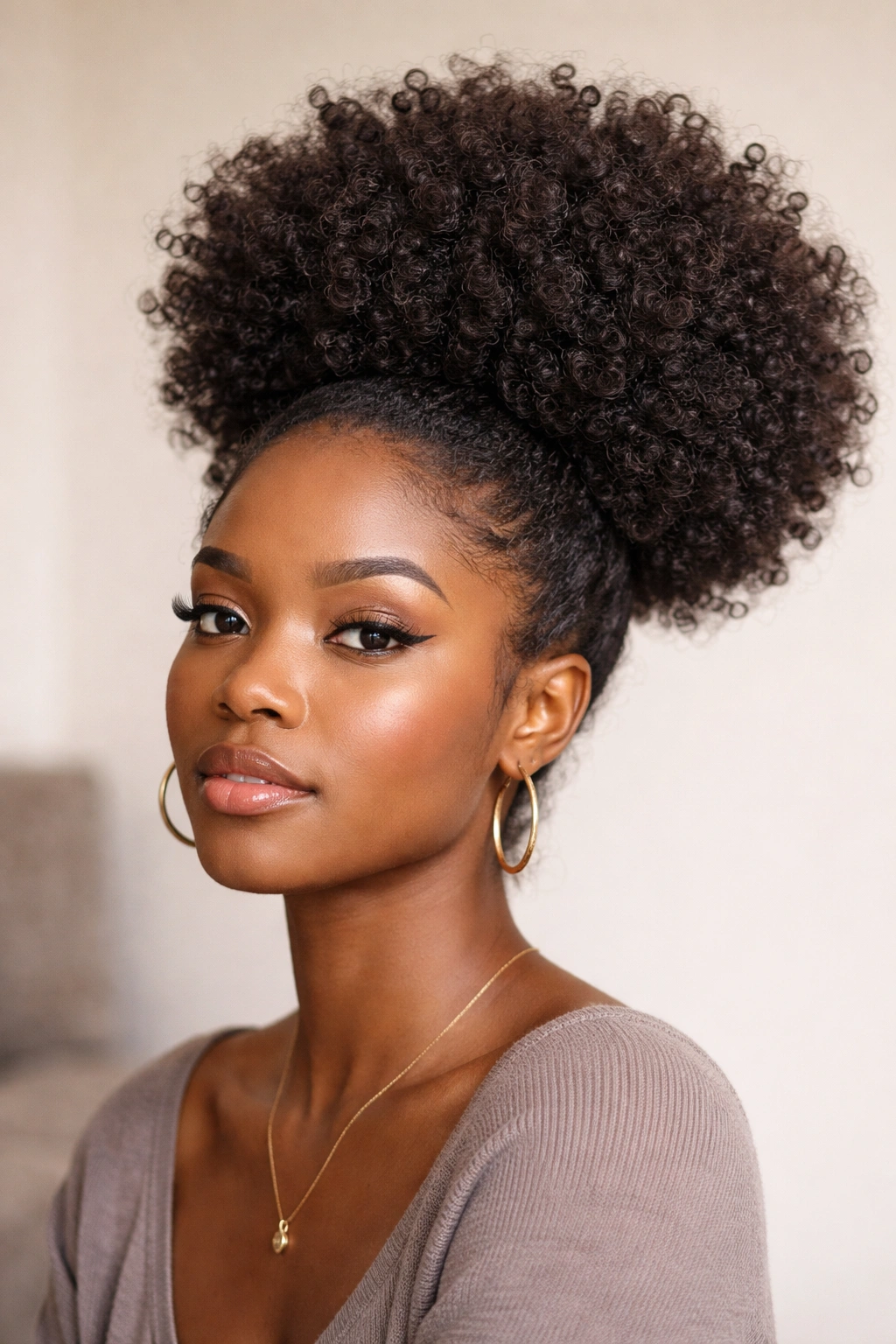
A textured crochet afro is not the same thing as a curly install that happens to be big. The shape is intentional. Rounded. Full at the crown. Soft around the edges. It gives you the feeling of a blown-out afro or a puff, but with the security of a crochet base underneath.
This is a strong choice if you love volume and do not want length dragging your face down. Short kinky-curly pieces work best because they can be shaped instead of just hanging. The whole style depends on silhouette. If the crown is too flat, the style loses its punch. If the sides are too wide, it turns boxy.
Who It’s Best For
- People who like big shape without long hair.
- Anyone who wants a style that shows off earrings, necklaces, and collars.
- Wearers who prefer less hair on the neck and shoulders.
- Natural-hair lovers who want something that feels close to a real afro shape.
A little shaping at the end makes a big difference. Use your fingers, a pick, and small snips only if a piece is hanging awkwardly. Don’t chase perfection here. The charm is in the texture and the rounded form. If you like that strong, natural silhouette, this style has a lot to say.
Final Thoughts
The best crochet style is the one that matches your life before it matches your mood board. If your scalp gets tired fast, start with a bob, shoulder-length curls, or kinky straight fiber. If you want a stronger shape and do not mind extra weight, locs and longer twists can give you that.
Texture is doing more work than people think. A fiber that blends with afro-textured hair usually looks calmer at the roots and easier to wear for longer stretches. That quiet fit matters more than flashy length.
Pick the shape that respects your edges, your schedule, and your patience. The right install should make getting dressed easier, not turn your hair into a weekly negotiation.
