



A wig can have gorgeous curls and still look off in daylight. The problem usually isn’t the curl pattern itself. It’s the shape, the shine, the density, or that stiff little hairline that sits there like it was drawn with a ruler.
Curly afro wigs look most believable when they borrow from real hair instead of trying to overpower it. A soft outline matters. So does a root that doesn’t scream “wig,” a part that isn’t too perfect, and curls that move when you turn your head. Small things. Annoyingly small, honestly. But those small things do the heavy lifting.
I keep coming back to three details: texture, silhouette, and finish. Get those right and a simple unit can look like hair you grew, cut, and lived in. Get them wrong and even expensive curls can read fake from six feet away.
The 12 styles here are the ones that tend to fool the eye because they respect how afro-textured hair actually behaves. Some are fuller. Some are softer. Some hide the lace on purpose, and some use shape to do the work instead of volume. That is usually where the good ones separate from the noisy ones.
1. Low-Density 4C Coil Afro With a Soft Hairline
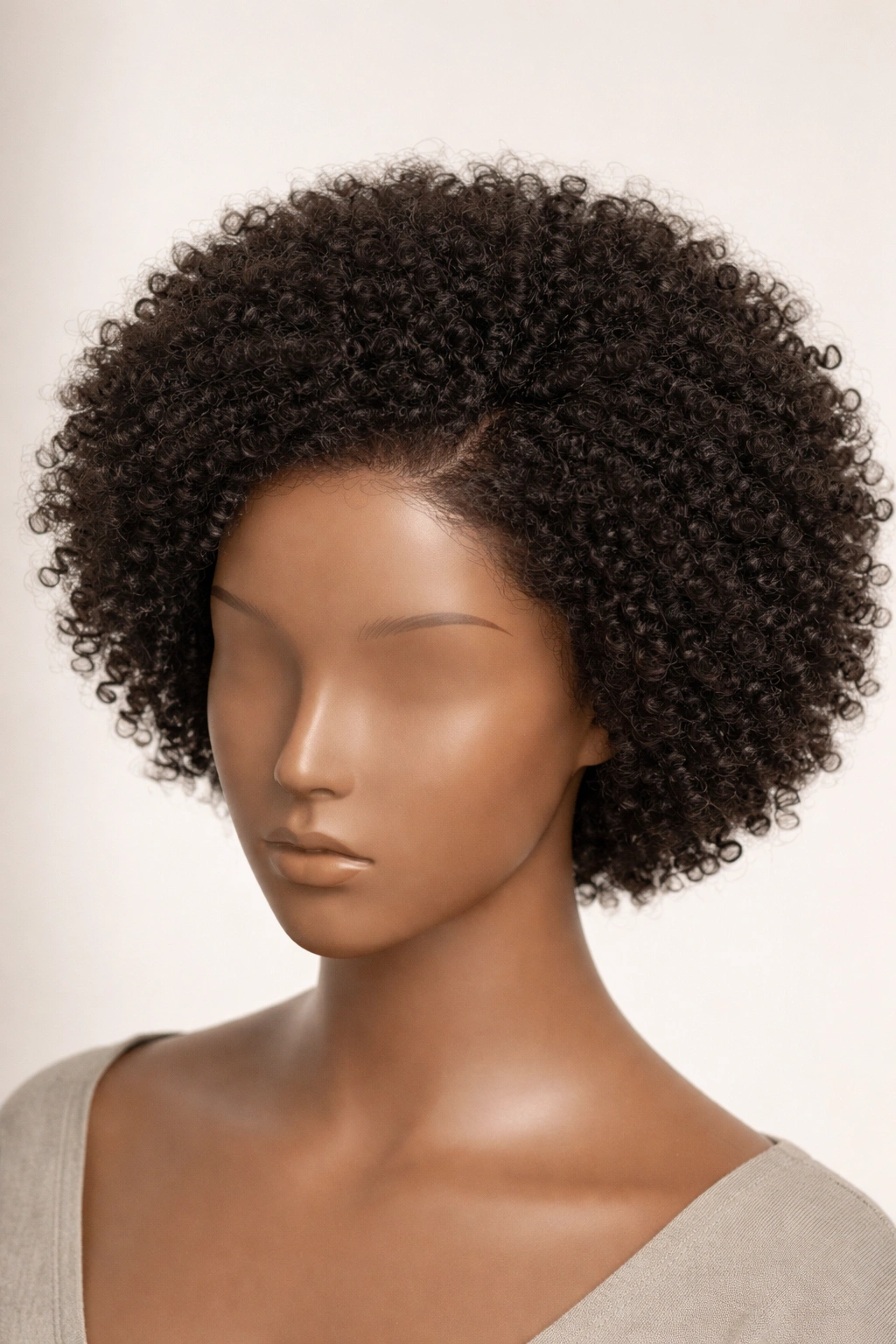
A wig does not need to be huge to look good. In fact, the smaller, tighter versions often read as more believable because they sit closer to the head and mimic the way real coils shrink.
Why It Works
A shape that stays close to the scalp
A low-density 4C coil afro gives you that dense, springy look without the puffed-up helmet effect. I’d look for 120% to 130% density if the goal is realism, not drama. Anything much higher starts to look like the hair is wearing you.
The hairline matters just as much as the curl pattern. A soft hairline, with a little unevenness at the front, feels human. Too much plucking can be a mess, though, so the point is not to create holes. The point is to make the front soften into the forehead instead of stopping dead.
Quick things to check
- 4C-like coil pattern with tight, irregular bends
- Matte fiber or human hair with very low shine
- Pre-plucked front that still has enough hair to cover the lace
- 4×4 or 5×5 closure if you want less lace to manage
- Shorter perimeter around the ears and nape for a real-world shape
Bold tip: keep the first inch at the front a little softer than the rest. That tiny bit of fuzz sells the whole illusion.
If you wear glasses, this style is a gift. It doesn’t fight the frames. It just sits there and behaves.
2. Tapered Curly Afro With Longer Top and Neat Sides
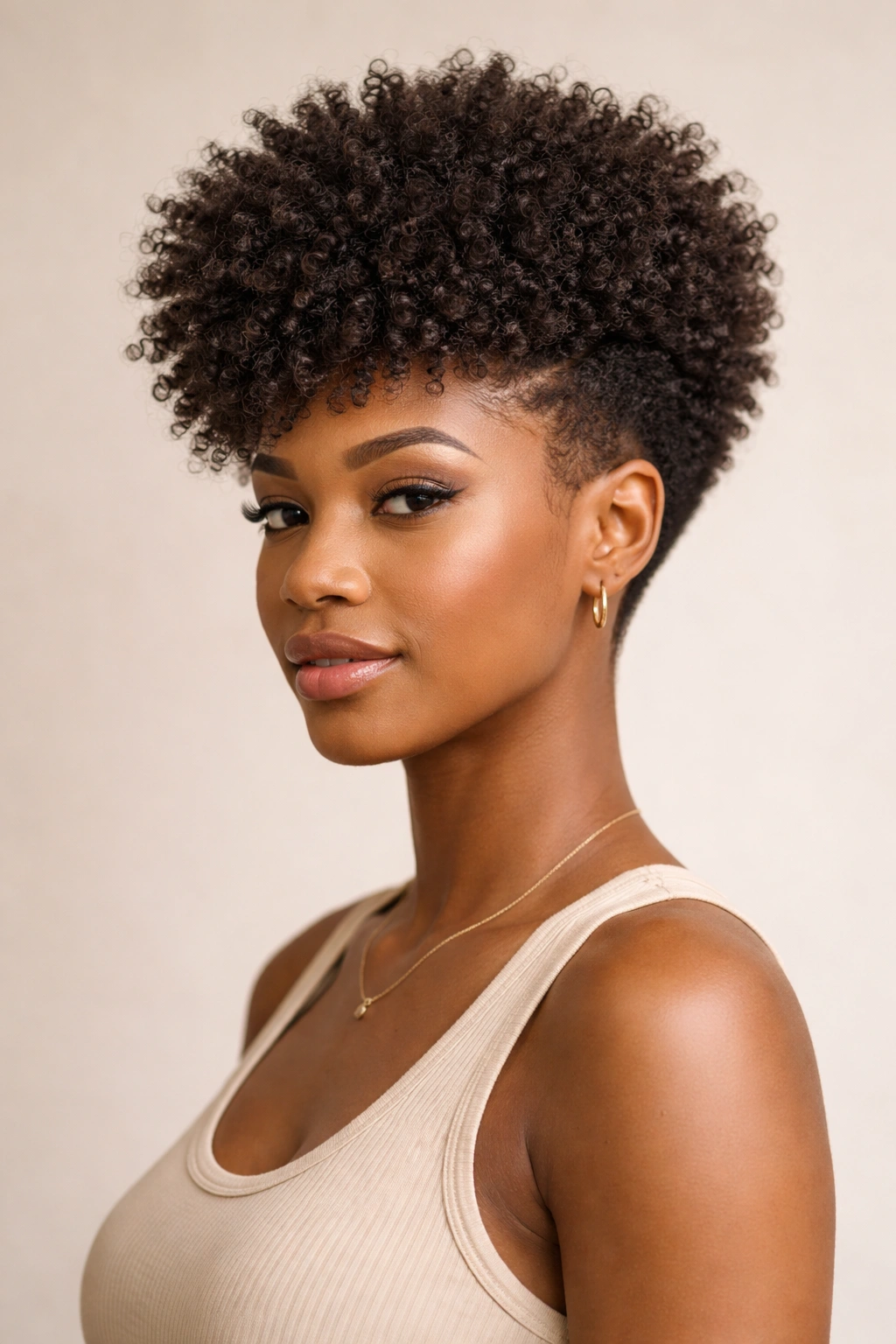
Tapered shapes do half the work for you. The eye expects shorter sides and more lift on top, so the wig feels like a real haircut instead of a block of hair dropped onto a head.
A tapered curly afro is one of the easiest styles to make look natural because it follows a shape people already recognize from real hair. The sides can sit around 2 to 3 inches, while the top stays around 6 to 8 inches, depending on how much drama you want. That contrast is what gives the style its life.
The trick is to keep the taper gentle. You do not want a harsh fade or a barber-shop lineup unless that is the exact look you’re after. Most natural-looking versions have a soft nape, slightly fuller crown, and curls that get a little looser as they move away from the scalp.
If you’re buying one, ask whether the unit was cut with shape already built in. A raw, all-one-length curly wig can be shaped at home, but it takes patience. A tapered unit saves you from fighting the outline later.
This style also flatters faces that need width near the temples and lift near the top. It gives structure without looking severe. That’s the sweet spot.
And yes, the edges matter. Keep them neat, not sharp. Sharp edges make the whole thing feel like it came from a display stand.
3. Shoulder-Length Kinky Curly Wig With a Hidden Part
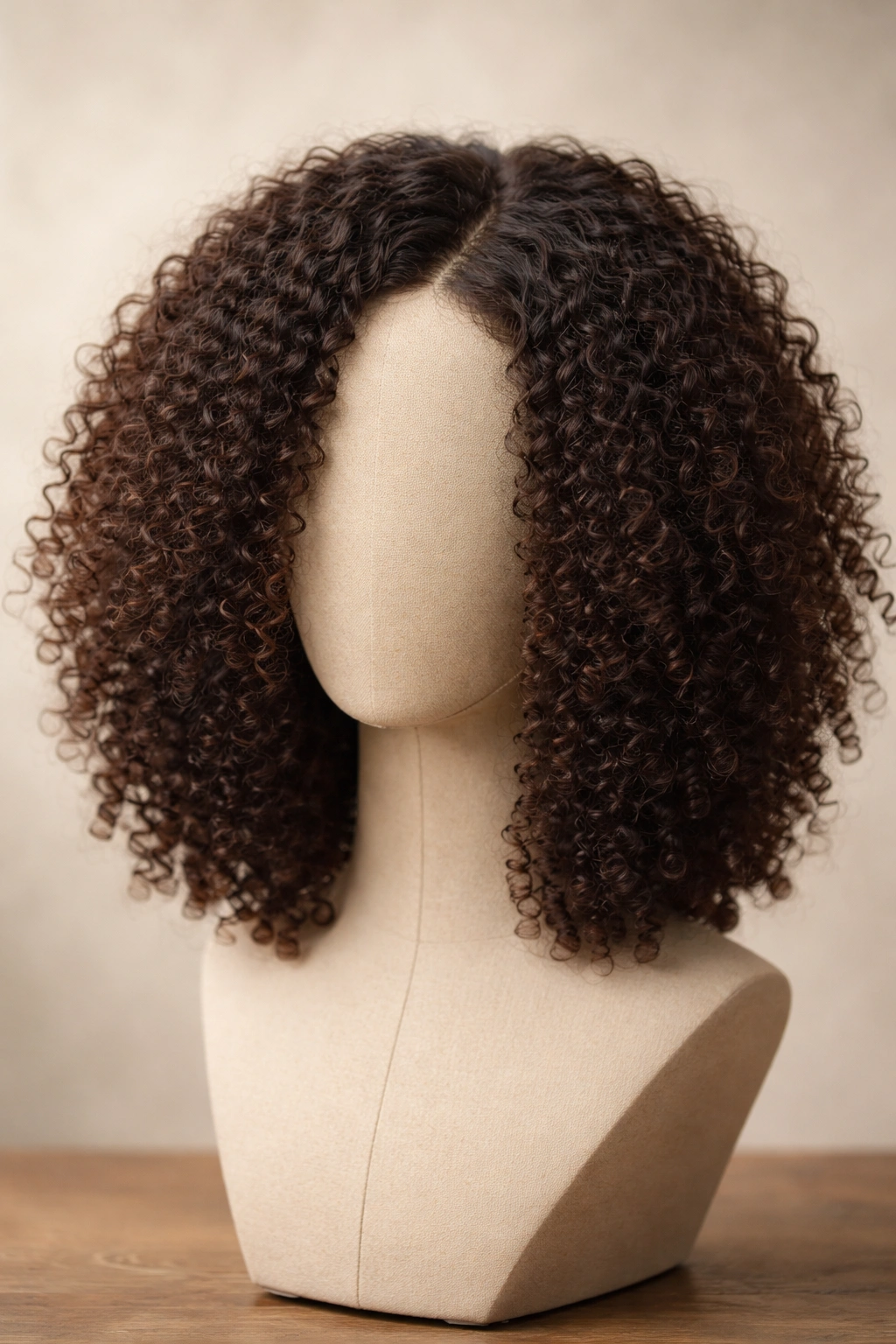
Why does a hidden part help so much? Because real afro-textured hair often hides the scalp more than it shows it. A very obvious part can make a curly wig feel staged, even when the fibers are excellent.
A shoulder-length kinky curly wig sits in a nice middle ground. It gives you shape, movement, and enough length for styling, but it does not drag the curl pattern down into long, stringy territory. The hidden part keeps the front from looking too organized. That’s the whole point. Natural hair is rarely that obedient.
How to wear it
A closure or lace front with a slightly off-center part usually looks better than a dead-center line. The part does not have to be dramatic. It can be a suggestion rather than a declaration. Brush a little root powder into the lace if the base is lighter than your skin, then leave a few curls to cross over the area. That is what breaks up the wig look.
I also like this style because it handles a little frizz without falling apart. In fact, a tiny bit of frizz makes it better. Too much smoothness is the real problem. Curls that are too polished start looking synthetic fast.
If you like wearing your hair with one side tucked behind the ear, this is a strong choice. It gives you enough length for that little tuck while still keeping the silhouette compact. No drama. No giant halo of hair. Just a shape that feels believable.
4. Rounded Medium Afro With Layered Ends
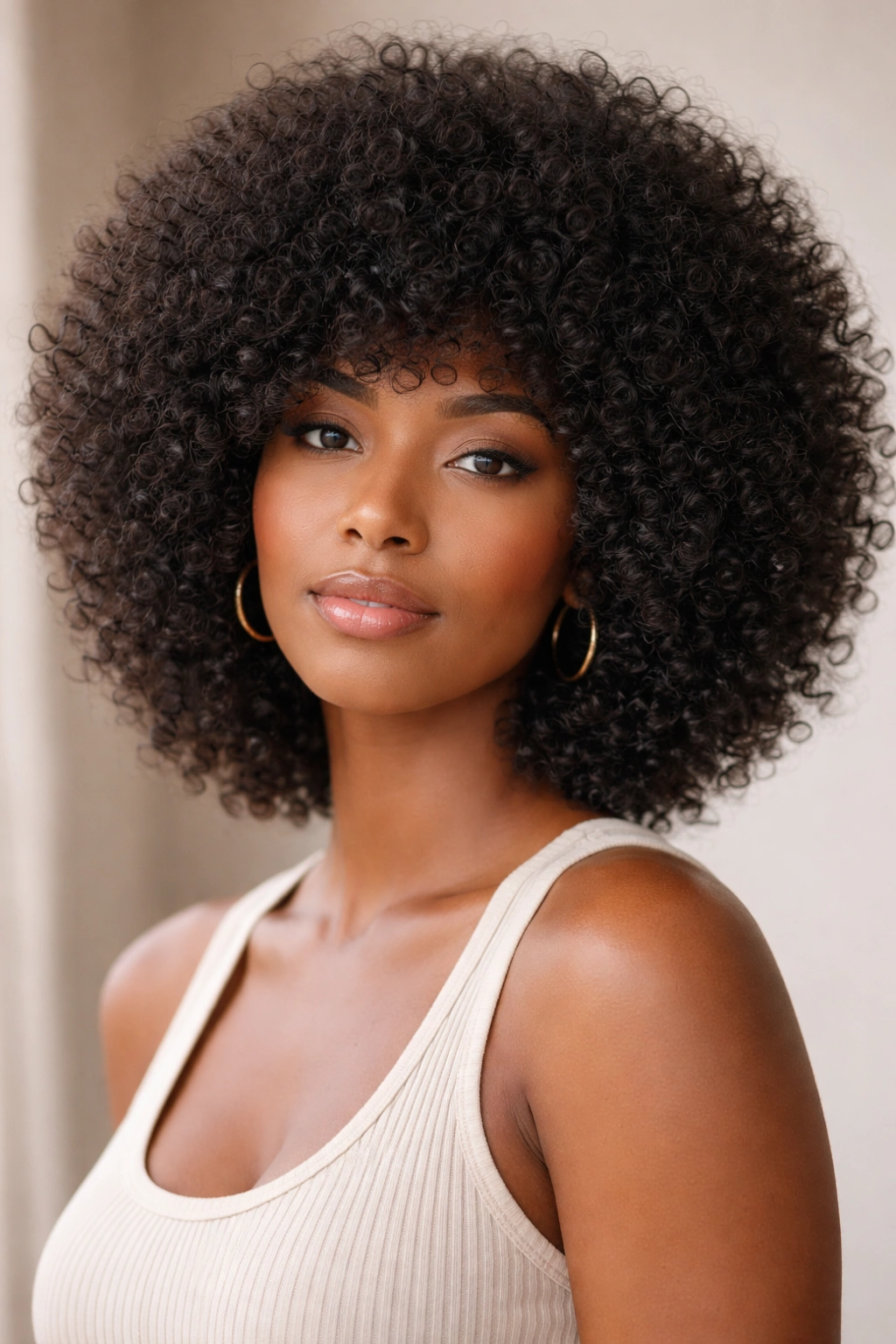
If you’ve ever put on a wig that felt like a helmet, you already know why layers matter. A rounded medium afro needs movement inside the shape, or the outline goes boxy fast.
Layers take away that stiff wall of hair and let the curls sit at slightly different levels. That difference is what makes the style feel like hair growing out of a scalp, not hair stacked on a cap. When the ends are cut in tiers, the wig catches air as you move. It stops looking like one single mass.
What to look for
- 130% to 150% density for a fuller but still believable shape
- Layered cut with shorter pieces near the crown
- Longer curls around the lower sides and back
- Low-gloss fiber so the shape matters more than the sheen
- Rounded silhouette instead of a square outline
The best versions are not perfectly symmetrical. A real afro has slight unevenness, even when it’s well cared for. One side may sit a touch higher. The front may puff a little more than the back. That tiny irregularity helps.
I would also skip heavy oils on this style. They drag the layers down and turn good curls into shiny clumps. Use a light mist and finger fluff it instead. That keeps the round shape full without making it wet-looking.
The most natural ones feel almost casual. Like you didn’t spend half the morning fighting them. That is a good sign.
5. Curly Bob With Blunt Ends and Minimal Shine
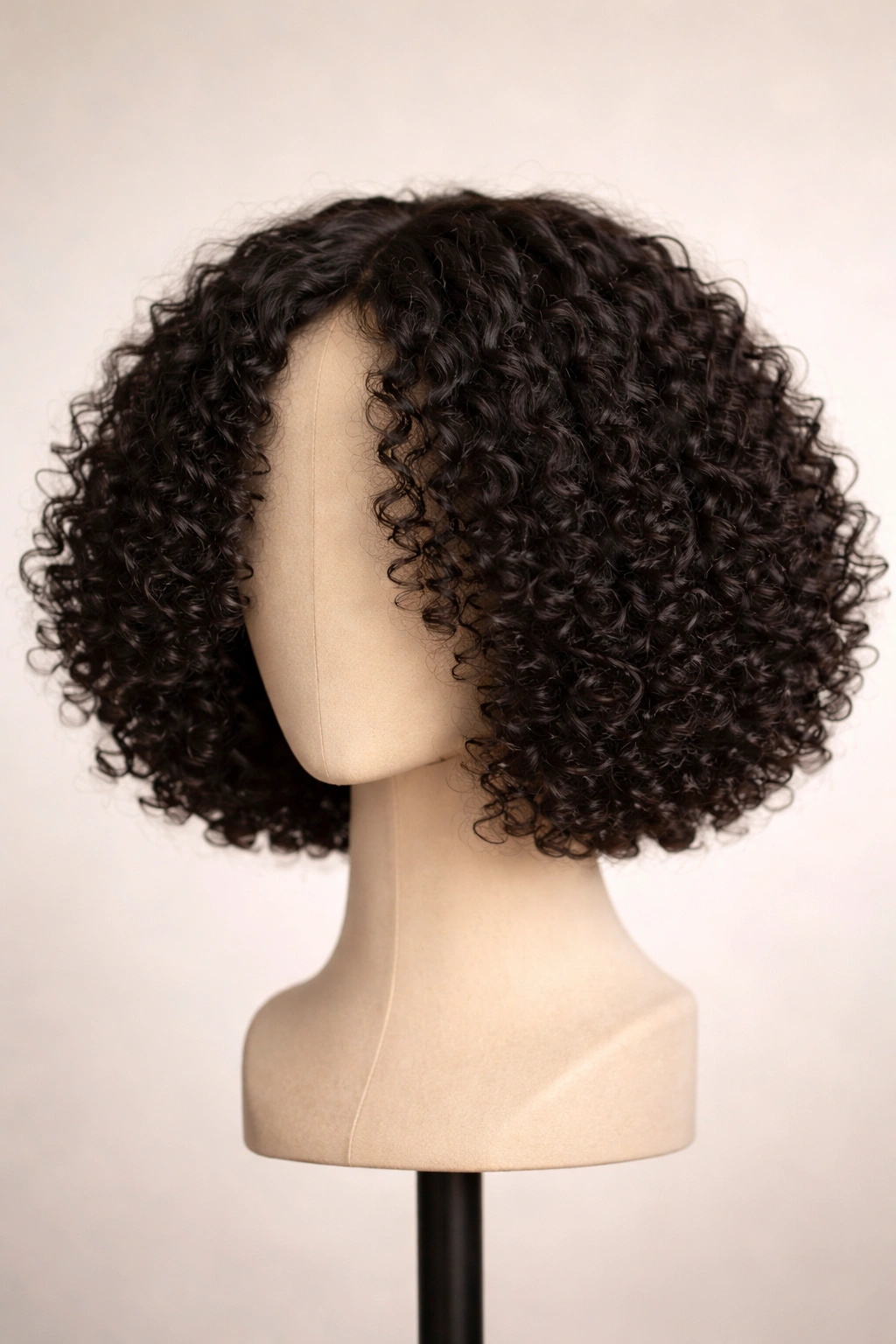
A curly bob wins by refusing to overdo it. It is short enough to stay neat, but not so short that it loses personality. That balance makes it one of the easiest curly afro wigs to wear without looking like you are trying too hard.
The blunt end is the part people underestimate. Done well, it gives the bob a clean edge that reads like a fresh trim. Done badly, it can look stiff and boxy. The difference usually comes down to texture and shine. A bob with a little surface movement and a matte finish feels like real hair. A glossy, too-uniform bob feels like store display hair.
I like this style on days when I want the wig to do the framing without swallowing my face. The curls can sit at cheek level or jaw level, which gives you shape without all the height. That shorter length also means less lace to manage and less tangling at the nape.
The best curly bobs usually have a little variation in curl size. Not much. Just enough to keep the eye from noticing repetition. If every curl is the exact same loop, the style gets a little plastic. Real hair has some difference. Always has.
This is also one of the better choices if you want a wig that can pass as your own hair from a distance. Short curly styles are often easier to sell because they mimic shrinkage and daily wear. They look lived-in without looking messy.
6. Side-Part Lace Front Afro With Soft Baby Hairs
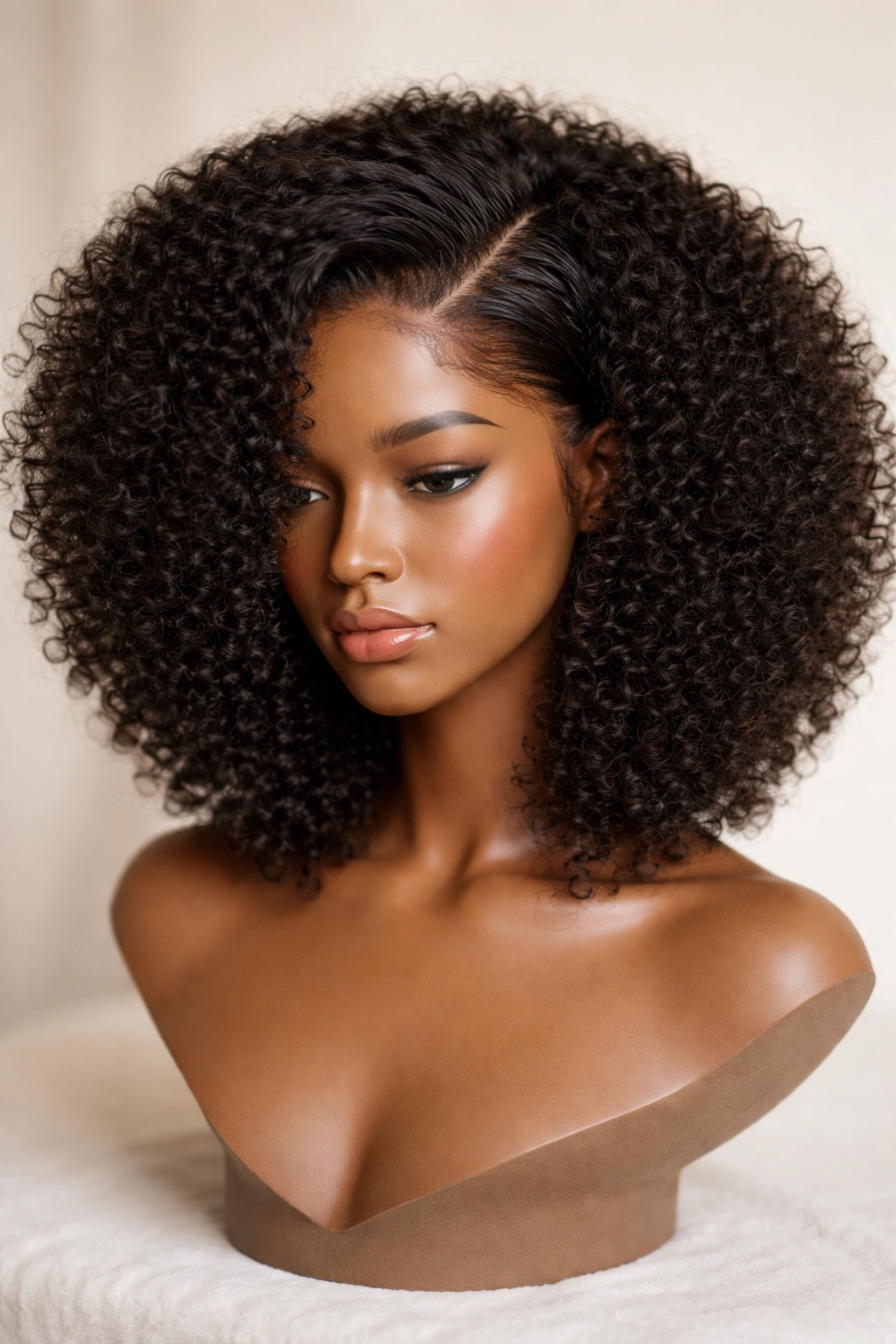
Side parts change the whole mood. A center part puts the lace and symmetry right in your face. A side part pushes the eye away from the middle and gives the wig a little more movement, which is why it often looks more like real hair.
A side-part lace front afro is especially useful if you want polish but not that rigid, freshly-installed feel. The part gives you shape. The curls cover the rest. The result feels softer because the scalp line is not the star of the show.
What makes it different
Unlike a center part, a side part lets the curls fall a little more naturally across the forehead. That means the lace does less obvious work. If the wig has 13×4 lace or 13×6 lace, even better, because you have room to place the part slightly off balance. That imbalance helps. Real hair is rarely split down the middle with perfect precision.
Soft baby hairs can help, but only if they stay soft. Thick, swoopy baby hairs look forced. A few fine pieces at the front are enough. Or skip them altogether and use a bit of lace tint or powder instead. That often reads cleaner.
This style is best if you want a look that can move from casual to dressy without much fuss. You can tuck one side back, let the other side fall forward, and the shape still holds.
My one hard opinion here: do not overpluck the front just because the lace is visible. A sparse hairline can look more fake than a dense one. You want enough hair to hide the base, not so little that you can count every knot.
7. Glueless Headband Afro Wig for an Easy Everyday Look
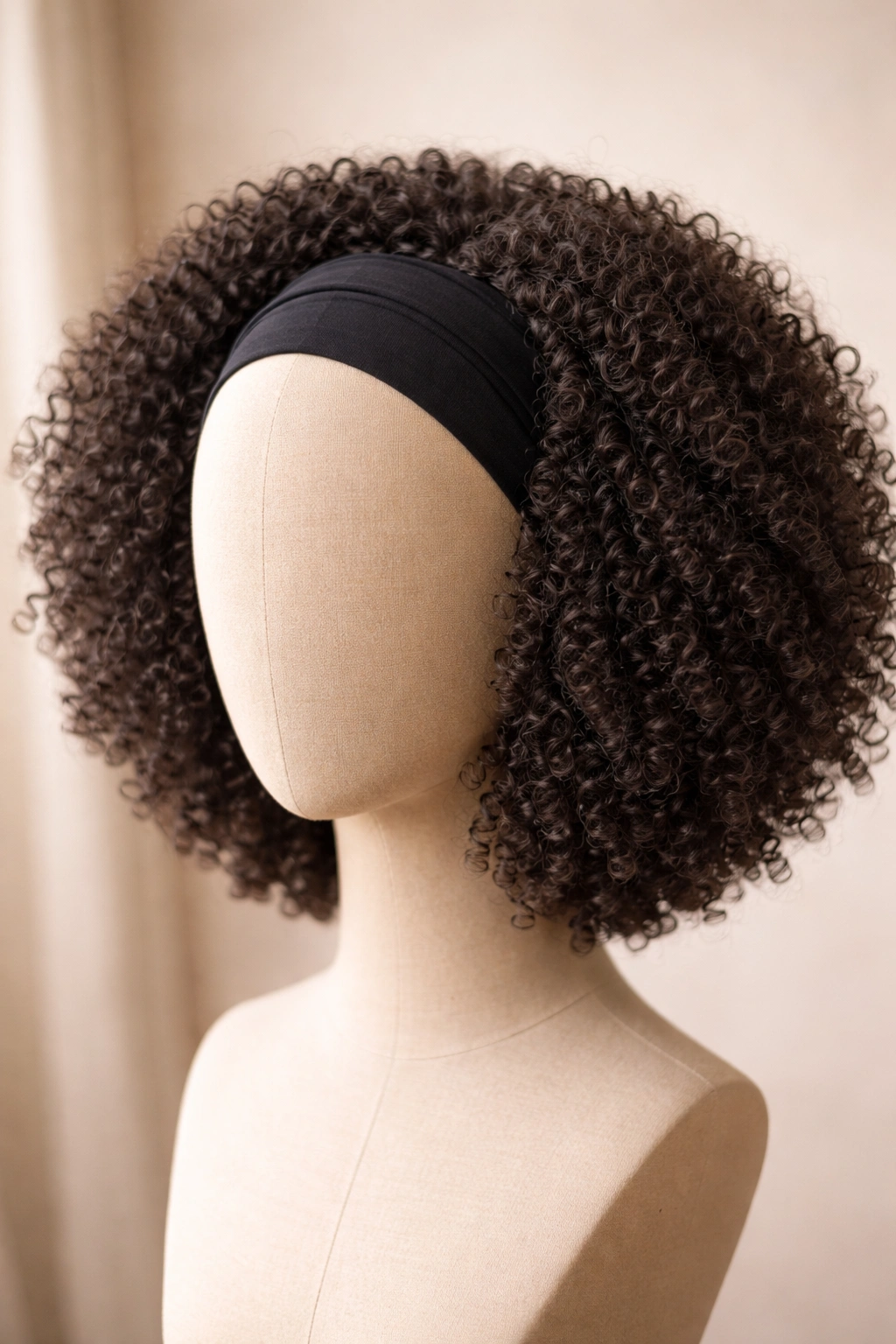
Some mornings you want a wig that behaves. A glueless headband afro does that without making you wrestle with adhesive, lace, or a mirror full of regret.
Why It Works
The band does the invisible work
A headband unit can look surprisingly natural when the band is chosen with care. A thick sports band can make the whole thing feel casual in the wrong way. A softer band in a fabric that looks like part of the outfit reads better. Think scarf-like, not gym-like.
This style also helps because it hides the front line completely. No lace to blend. No front edge to powder. The curls start where the band ends, and that clean separation can look more believable than a bad lace job.
Quick things to check
- Adjustable elastic band that sits flat without digging in
- Dense enough crown so the headband doesn’t look like it’s holding up a weak cap
- Tight curl pattern that can tolerate some finger fluffing
- Soft, matte fibers with a low glare under light
- Comfortable cap sizing so the wig doesn’t shift when you move
Bold tip: choose a headband that looks like an accessory, not a workaround. That one choice changes the whole read.
I reach for this style when speed matters. It is one of the few curly afro wigs that can look put together in minutes, and that is not a small thing. When it fits well, it feels easy in a way that almost never looks cheap.
8. Water-Wave Afro Wig With Dark Roots
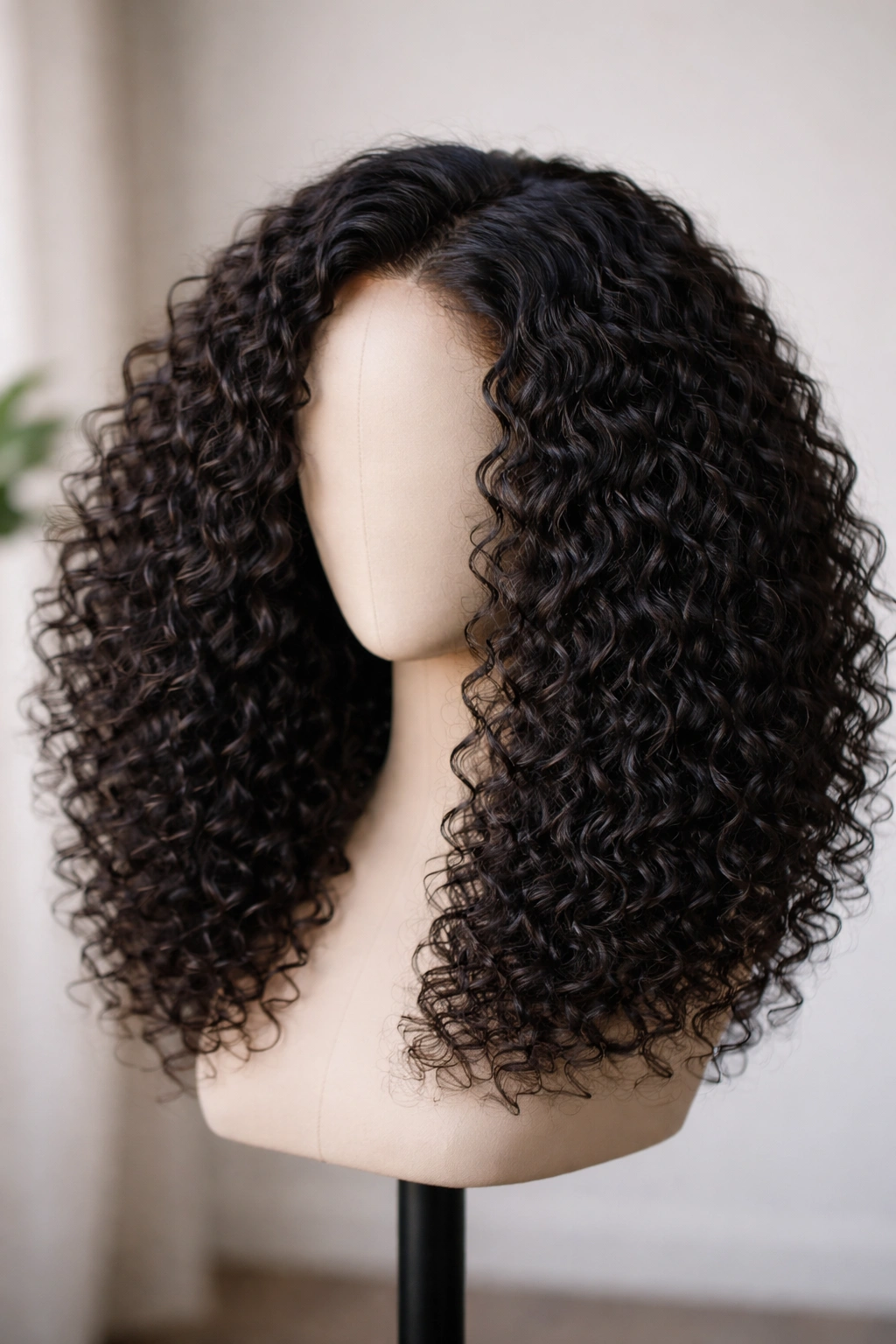
Dark roots do more than match grown-out hair. They add depth at the scalp, and that depth is one of the fastest ways to make a curly wig look believable.
Water-wave texture sits in a nice middle zone. It is looser than a tight coil, but not so loose that it turns into generic waves. The shape catches light in a broken-up way, which helps the wig read as hair with body instead of hair sprayed into one flat pattern. Add dark roots, and the whole thing suddenly has a place to begin.
This style is especially good when you want softness near the face. The waves fall in a way that does not scream for attention. They move. They separate a little. They settle. That quiet movement matters more than people admit.
I would keep the root color only one or two shades deeper than the mid-lengths. Too much contrast and it starts looking dyed for effect. Too little contrast and you lose the scalp illusion. That narrow middle ground is where this style does its best work.
A wide-tooth comb can help, but use it sparingly. Start at the ends and work up only if you need to. If you comb from the root down, the wave pattern collapses and the wig starts reading thin. Fingers are usually enough.
This is one of those styles where a little mess is a plus. The waves do not need to sit in perfect rows. They should look like they have been touched, worn, and settled into place.
9. Twist-Out Texture Afro Wig With Defined Clumps
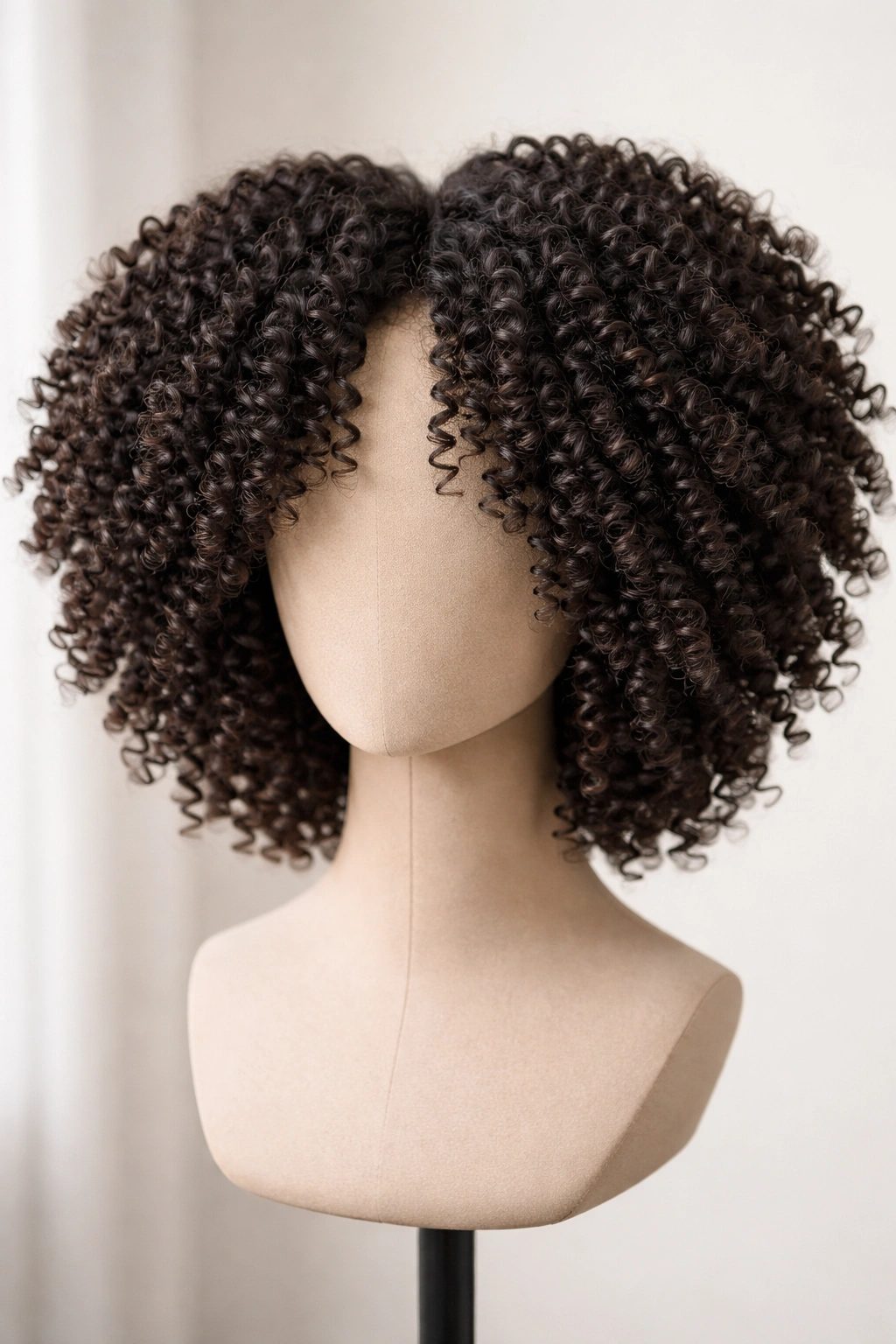
Why does twist-out texture read so well on a wig? Because the shape makes sense to the eye. The curls are not trying to pretend they came from nowhere. They look set, separated, and worn in a way that plenty of real natural hair is.
A twist-out style gives you those defined clumps that people often get after undoing two-strand twists. On a wig, that means the curl groupings can look intentional without looking artificial. The key is variation. The clumps should not be identical. A few smaller sections near the front, a few bigger ones near the crown, and the whole thing starts breathing a bit.
How to get the most from it
Use foam mousse or a light setting product if the wig needs shaping, then separate with your fingers once it dries. Do not brush it out. That destroys the texture and makes the wig puff in the wrong way.
A good twist-out wig should have:
- Uneven clump size for a more human finish
- Soft separation at the ends
- A little root lift so the scalp area does not flatten
- Low shine, especially if the fibers are synthetic
- Enough density to keep the texture from looking stringy
I like this style because it understands restraint. It says curly without shouting curly. That’s a nice change. It also photographs well in natural light because the clumps catch shadow differently, which helps the texture feel real.
If you want a wig that looks like it was styled the night before and worn the next day, this is one of the best bets.
10. Layered Halo Afro With Crown Lift
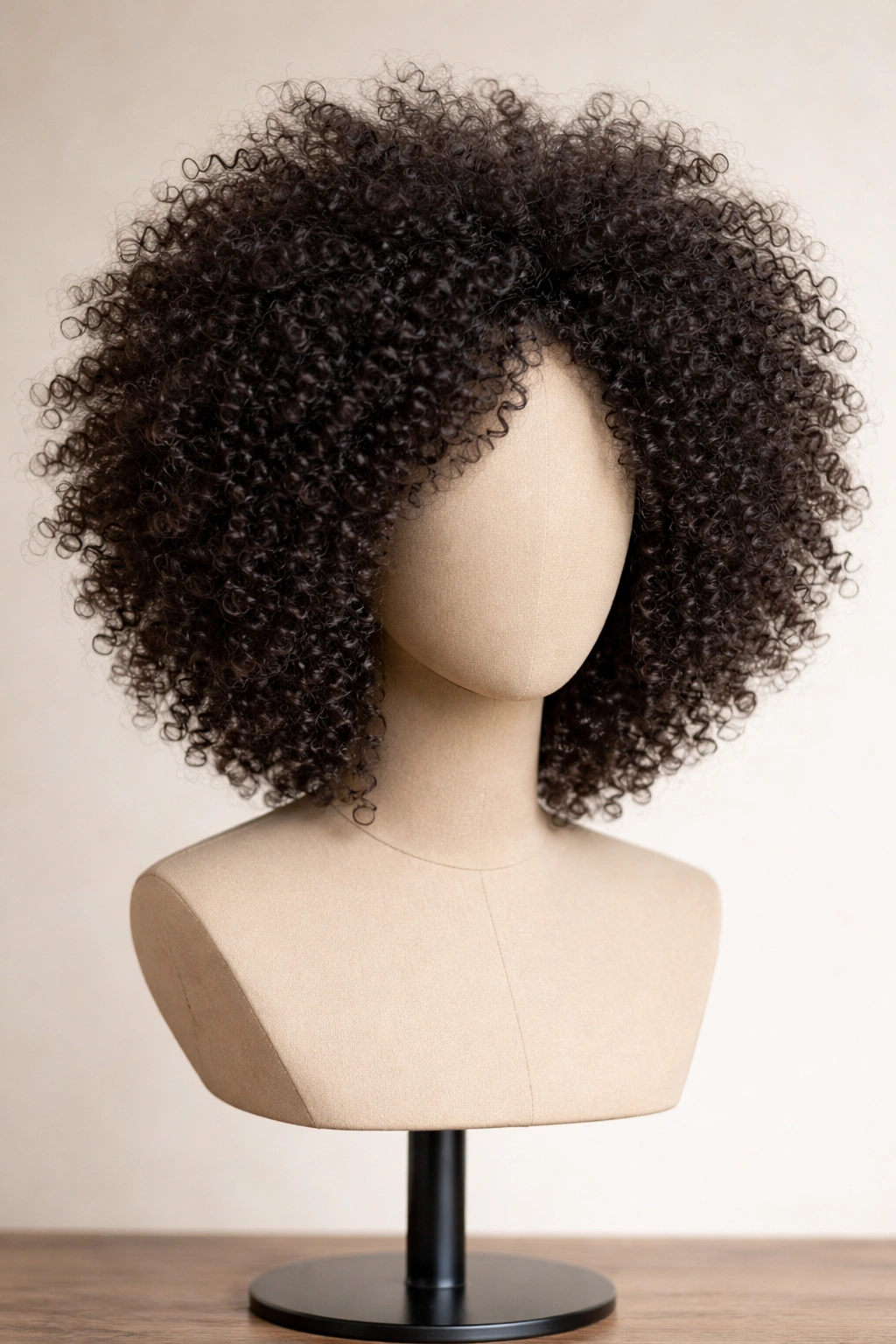
Picture a wig that sits low in the crown and makes your face look longer than it should. That is the problem the halo shape fixes.
A layered halo afro keeps the fullness around the perimeter while lifting the crown just enough to avoid a flat top. The result is a soft round shape that feels balanced. It doesn’t sit like a mushroom, and it doesn’t collapse into the head either. That middle ground is where it gets useful.
The mechanism behind the shape
The crown needs a little support, but not a stiff bump. A subtle root lift, built-in layers, and a slightly shorter top section help the wig stay open at the crown without looking teased into a cloud. The ends should fall outward a bit, then curl back in. That’s what creates the halo effect.
Key details to look for
- Shorter crown layers that create lift without bulk
- Longer outer curls that frame the face
- 130% to 150% density so the halo stays soft
- A small pick-friendly root zone at the crown
- Matte finish to keep the shape from looking synthetic
This style is useful if you want roundness without height. There’s a difference. Height can look theatrical. Roundness reads softer and closer to natural hair that has been stretched, picked, and worn. The halo shape gives you that.
I’d use a light hand with product here. Heavy creams flatten the crown and kill the airy shape. A mist of water and a touch of mousse is usually enough.
11. Salt-and-Pepper Curly Afro Wig With Natural Gray Blending
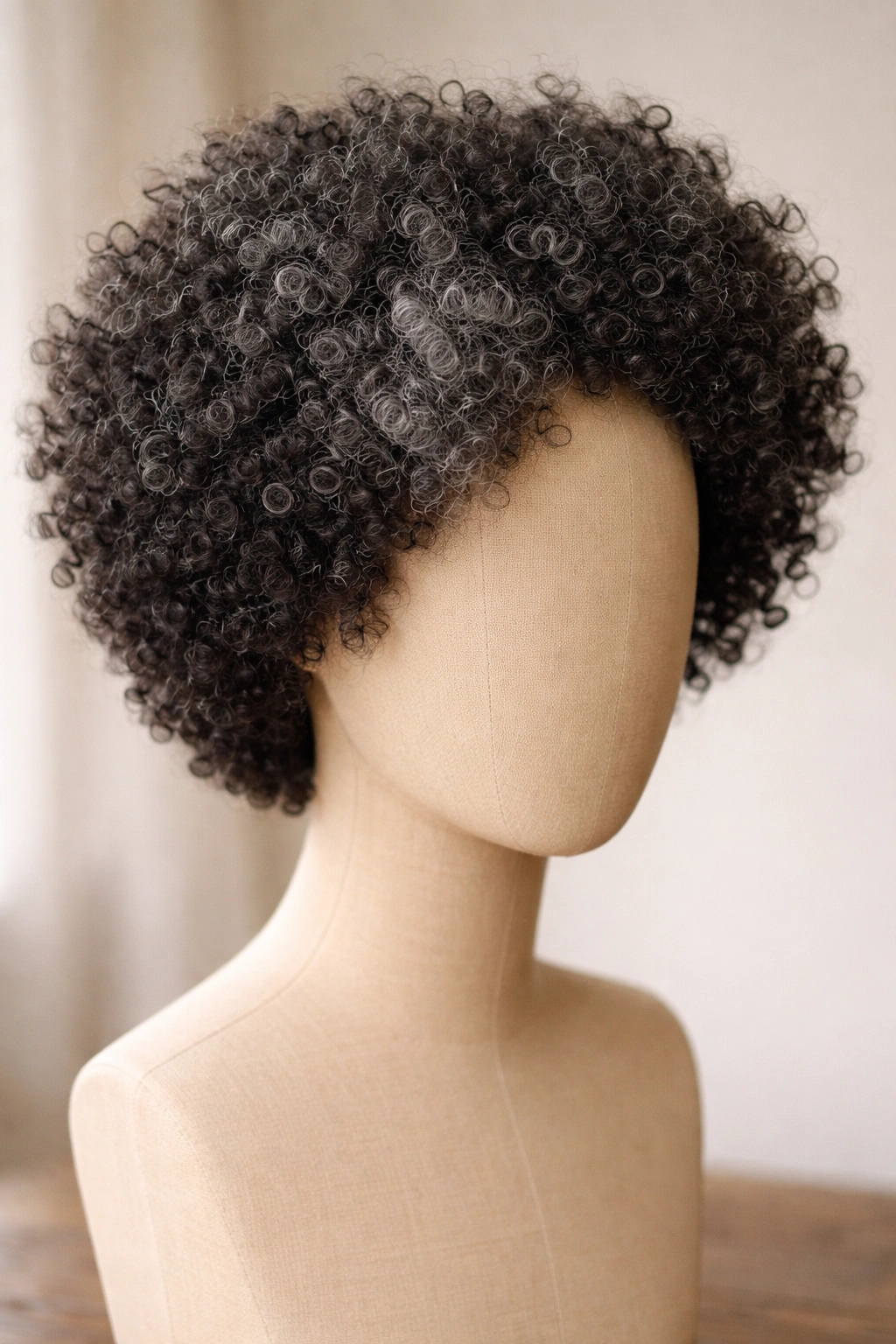
Gray blending is one of those things people either underdo or overdo. A little too much gray and the wig looks costume-like. A little too little and it misses the point entirely.
A salt-and-pepper curly afro works because human hair rarely comes in one flat color. Even dark hair has lighter strands, faded tips, and uneven tones. When gray is scattered through curls, the whole unit suddenly feels less artificial. The eye accepts variation faster than uniformity.
The best versions do not place gray in a straight stripe or a tidy patch. The silver should show up in uneven bits, sometimes near the temples, sometimes through the upper layers, sometimes tucked deeper in the curl. That randomness is what makes it convincing. Not chaos. Just enough irregularity to look real.
I also think this style is one of the most underrated ways to make a wig look natural on mature wearers. It doesn’t fight age. It follows it. That honesty gives the style a lot of credibility, and honestly, it looks better than pretending every curl is jet black forever.
If you want a softer version, choose a blend where gray makes up about 10% to 20% of the total tone. If you want stronger salt-and-pepper contrast, go higher, but keep the blend scattered rather than striped.
The roots should still look rooted. That sounds obvious, but it matters. Gray strands without depth at the base can look pasted on. A little shadow at the scalp fixes that.
12. Shoulder-Grazing Kinky Curl Wig With Face-Framing Pieces
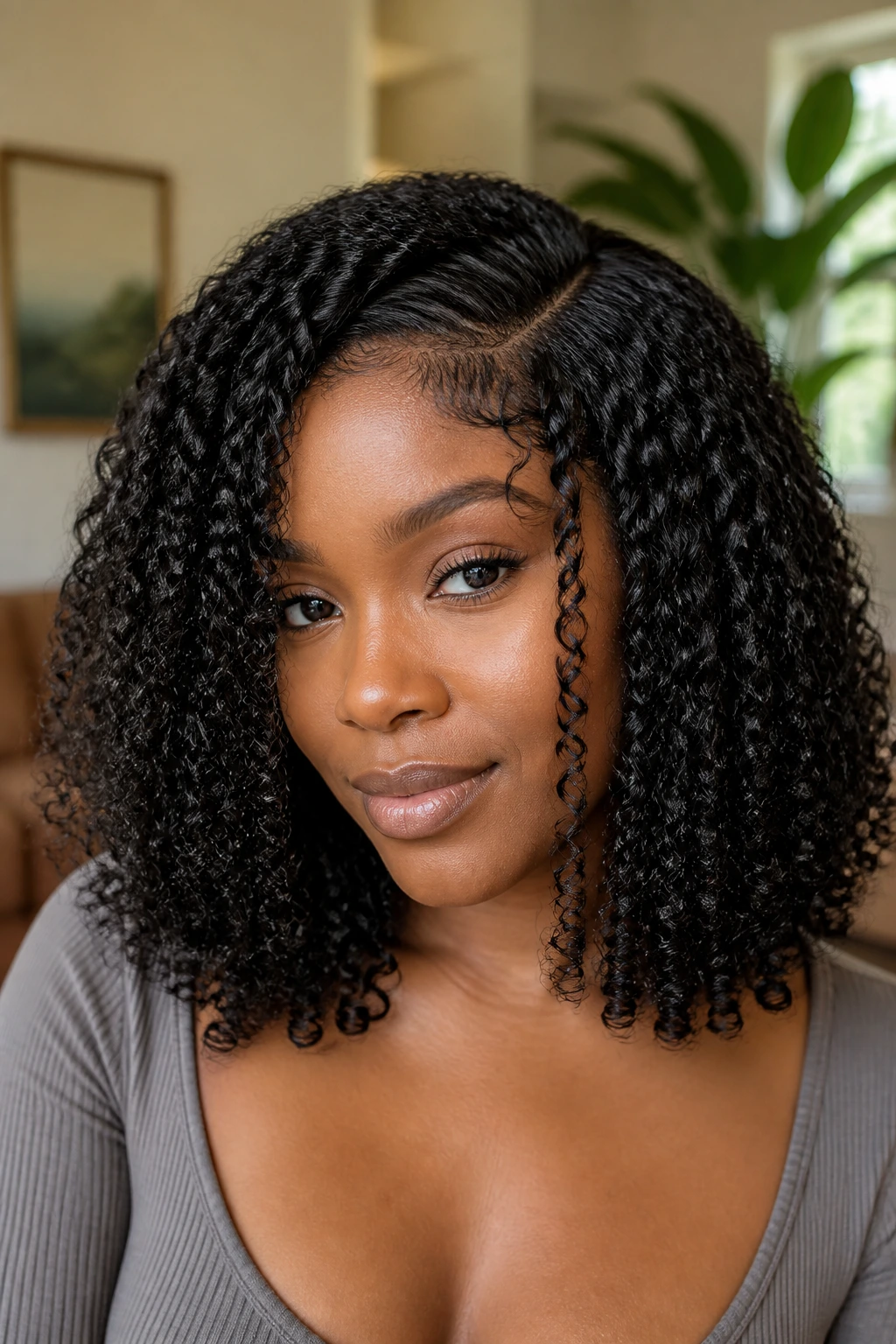
Face-framing pieces are the difference between shaped and shapeless. A blunt full afro can look bold, but it can also drown the face if the density is high or the outline is too even. A shoulder-grazing kinky curl wig softens that problem fast.
Unlike a fully rounded cut, this version lets the curls fall in a way that opens the cheekbones and jaw. The front pieces can start around the cheekbone and curve down toward the collarbone, which gives the wig a sense of direction. That movement helps the style feel like hair that has been cut with intention, not just worn with volume.
This is the style I’d point people to if they want a natural look with a little softness around the face. It works especially well when the curls are tight enough to hold shape but loose enough to move. Too tight and the style can get heavy. Too loose and it loses the afro feel.
A few things make this version hold up:
- Face-framing layers that start higher than the chin
- Shoulder length that keeps the silhouette manageable
- Moderate density so the curls do not crowd the face
- A slightly off-center part or no part at all
- Soft ends that do not look chopped with scissors from across the room
If you want the most believable version, avoid making every front piece the same length. Real hair usually falls in slightly different ways around the face. That unevenness helps, and it is one of those details people feel before they notice it.
The best curly afro wigs rarely look “done” in the polished sense. They look worn in, shaped, and moved around a little. That is the whole trick, and it is a good one to remember the next time a wig looks too perfect to trust.
